 Скачать презентацию FESP Forum for European Structural Proteomics Objective to
1c557486fadb75b120148ea912e28481.ppt
- Количество слайдов: 21



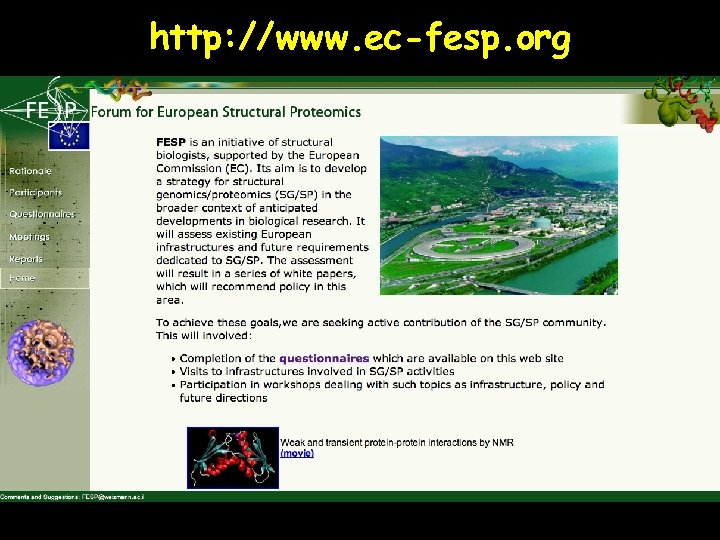
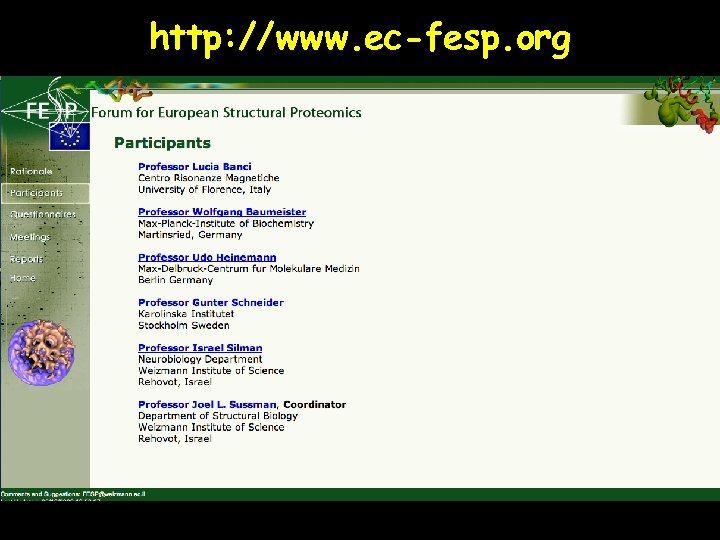
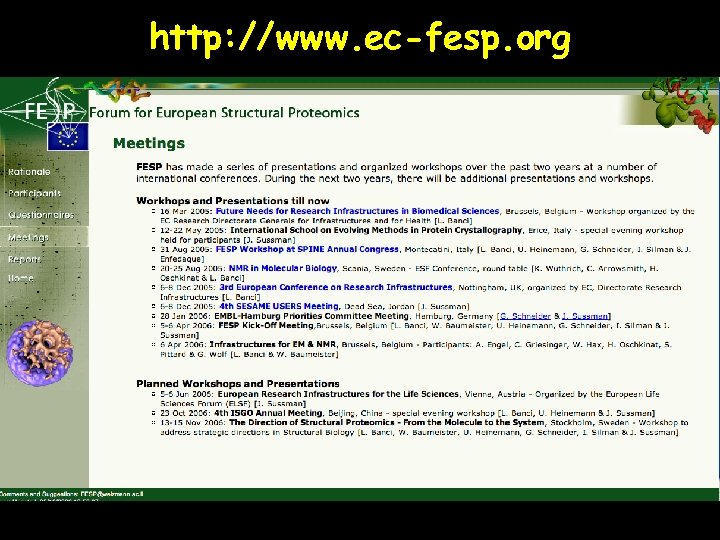
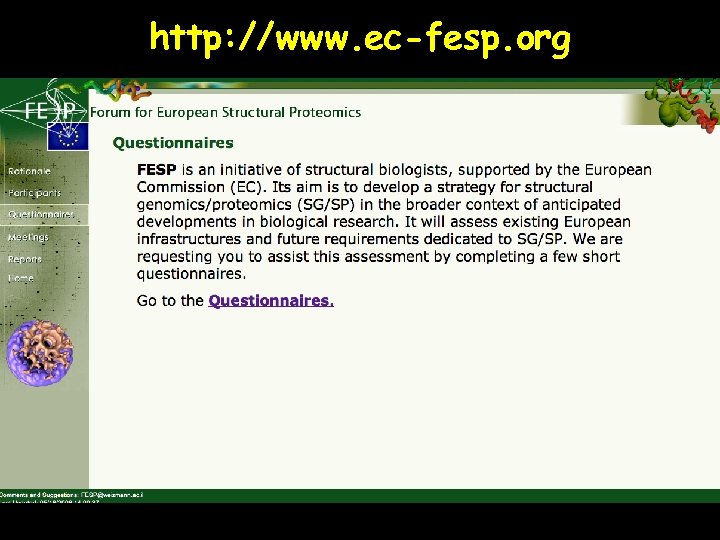
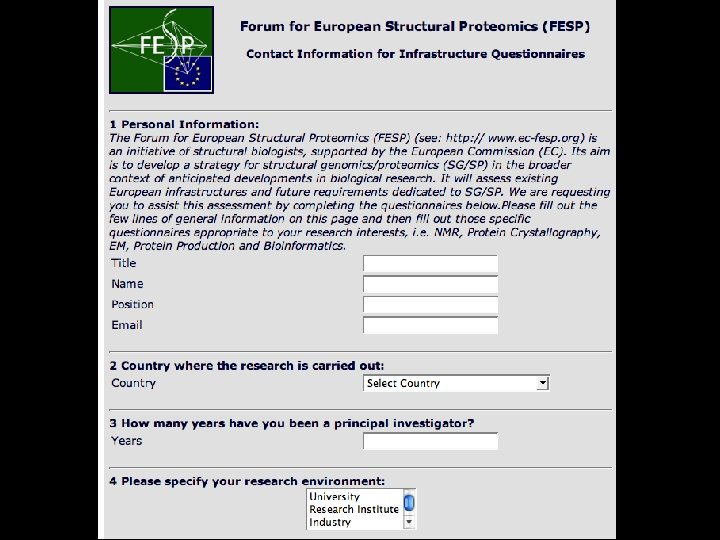
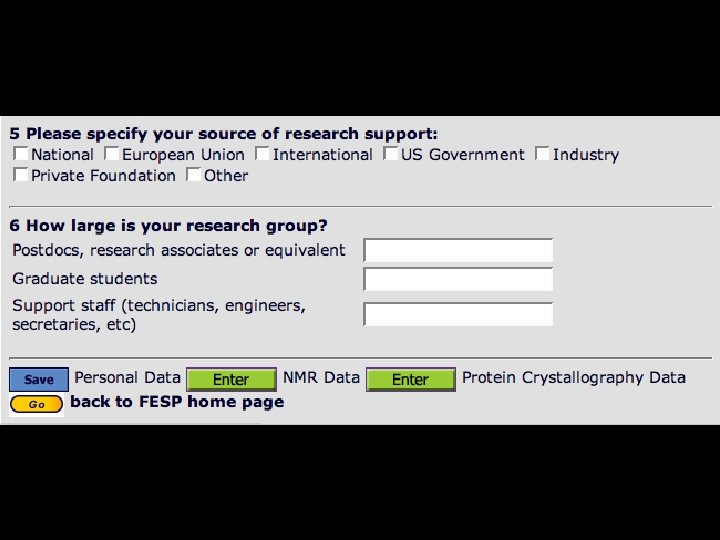
FESP Forum for European Structural Proteomics Objective to assess European infrastructures and recommend policy for the next decade* Who is coordinating FESP? Lucia Banci - Italy Wolfgang Baumeister - Germany Udo Heinemann - Germany Gunter Schneider - Sweden (Eurosync) Joel Sussman* & Israel Silman - Israel http: //www. ec-fesp. org *Funded by the EC as a SSA (specific support action)
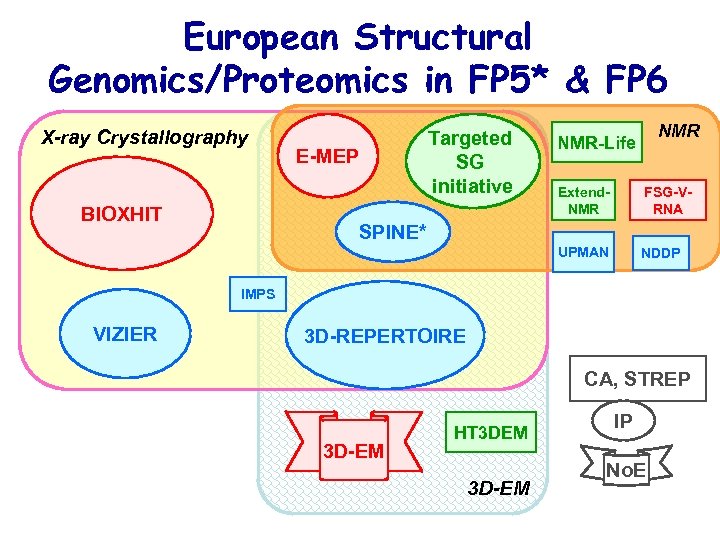
European Structural Genomics/Proteomics in FP 5* & FP 6 X-ray Crystallography E-MEP Targeted SG initiative NMR-Life FSG-VRNA UPMAN BIOXHIT Extend. NMR NDDP SPINE* IMPS VIZIER 3 D-REPERTOIRE CA, STREP 3 D-EM HT 3 DEM 3 D-EM IP No. E
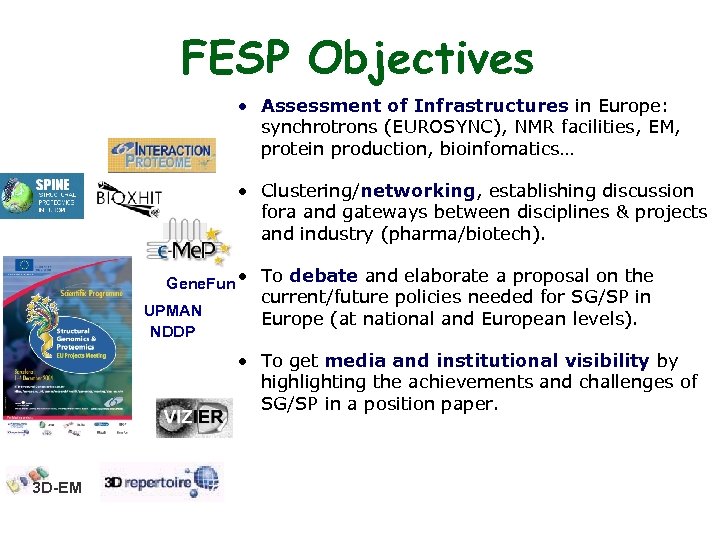
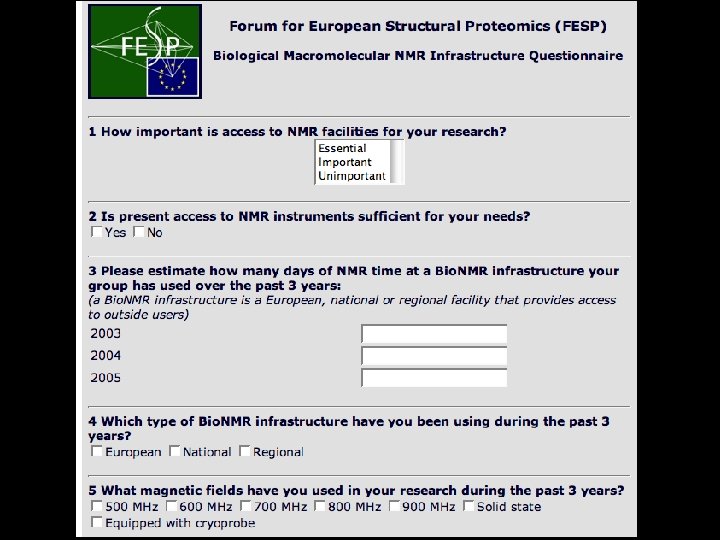
FESP Objectives · Assessment of Infrastructures in Europe: synchrotrons (EUROSYNC), NMR facilities, EM, protein production, bioinfomatics… · Clustering/networking, establishing discussion fora and gateways between disciplines & projects and industry (pharma/biotech). Gene. Fun · To debate and elaborate a proposal on the UPMAN NDDP current/future policies needed for SG/SP in Europe (at national and European levels). · To get media and institutional visibility by highlighting the achievements and challenges of SG/SP in a position paper. 3 D-EM
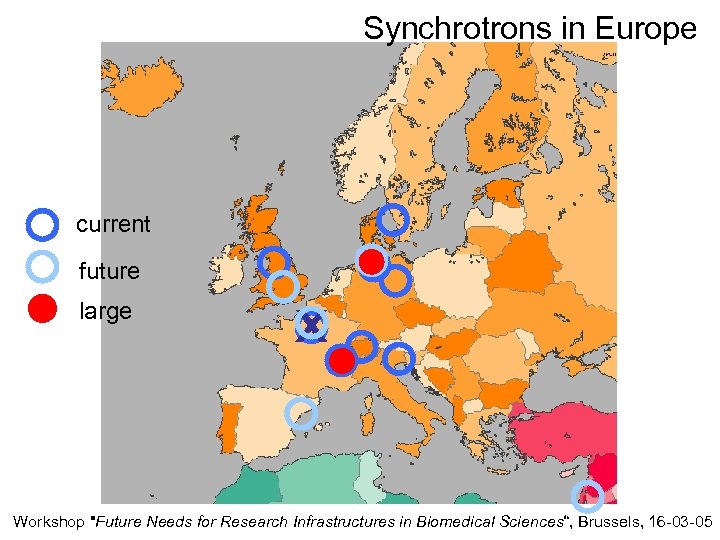
Synchrotrons in Europe current future large X Workshop "Future Needs for Research Infrastructures in Biomedical Sciences“, Brussels, 16 -03 -05
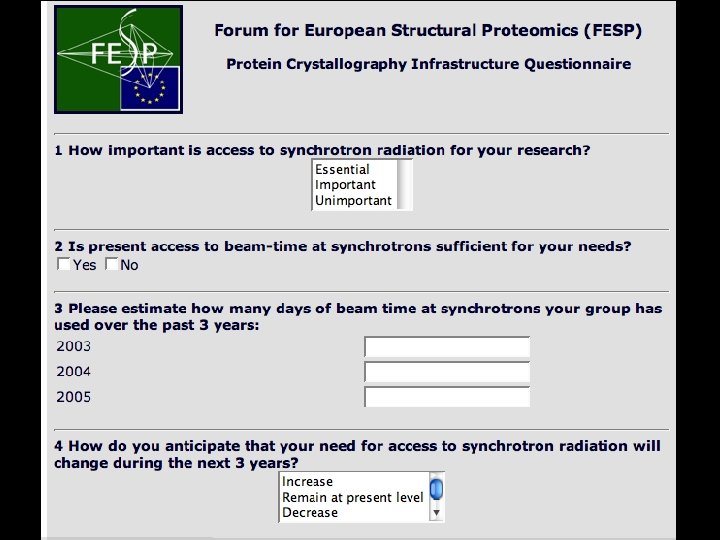
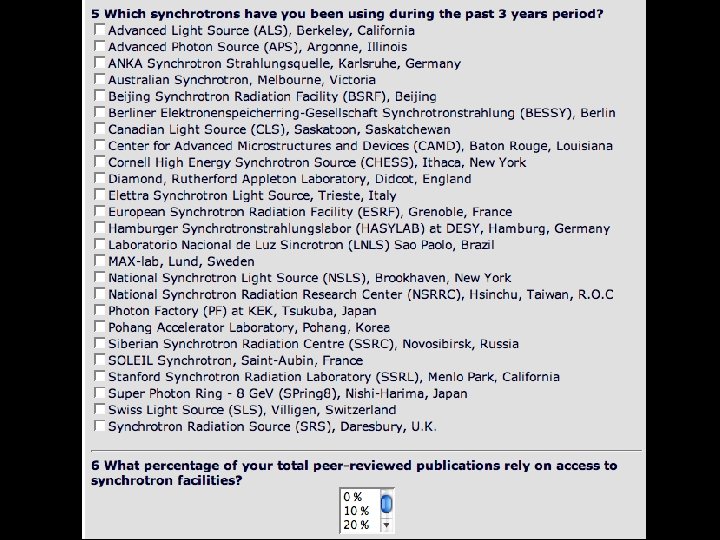
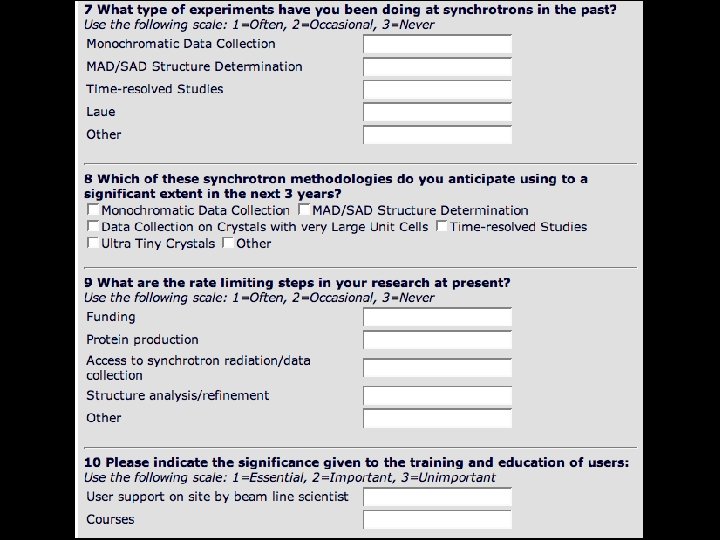
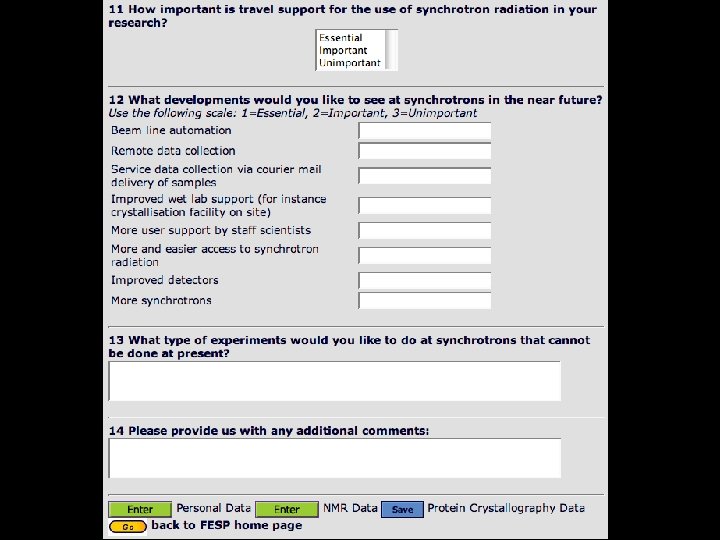
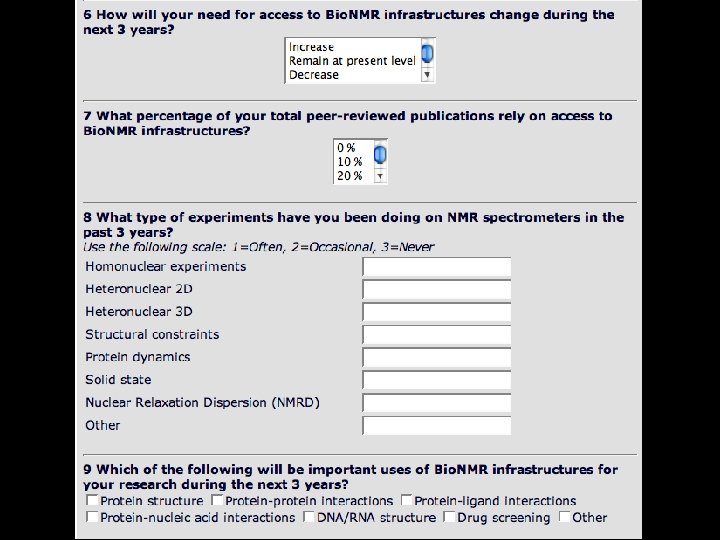
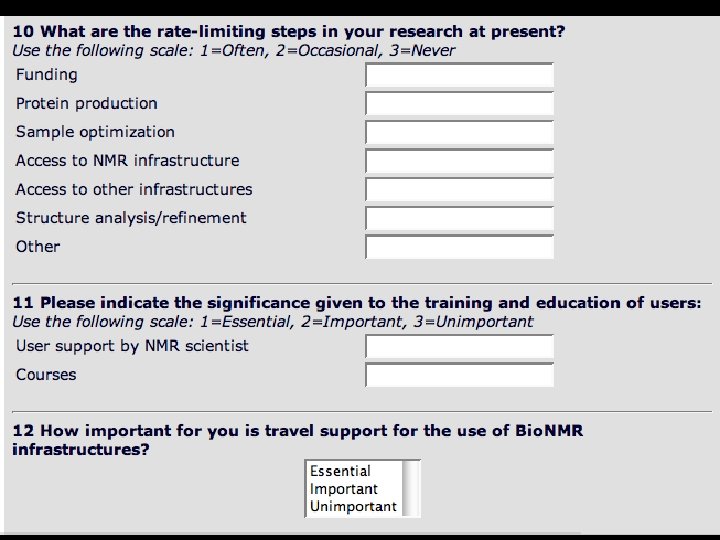
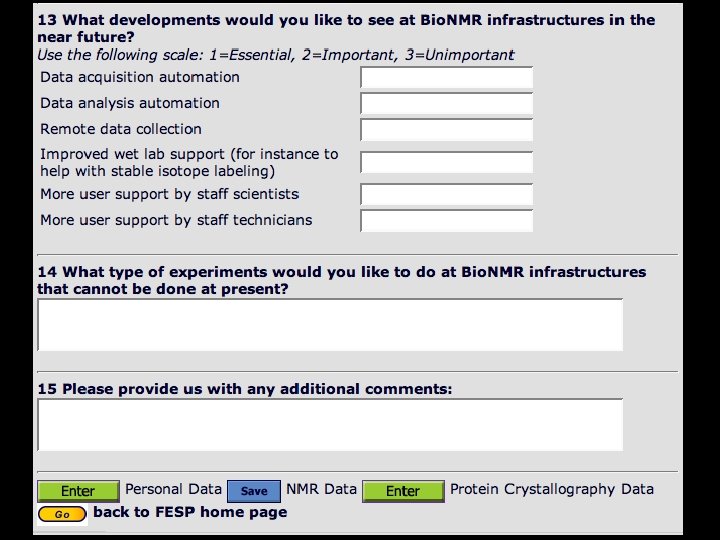
Euro. Sync • European Synchrotron Radiation Users Group – Steering Committee - 5 members – Reference Group -16 users, 4 synchrotron representatives • Objectives – – – Assessment of synchrotrons from a user’s perspective Survey of available MX beam lines in Europe Present/future status of these beam lines Current and future beam time requirements Type of beam lines and associated infrastructure for SG/SP users Is there a need for dedicated beam lines for SG/SP?
http: //www. ec-fesp. org
http: //www. ec-fesp. org
http: //www. ec-fesp. org
http: //www. ec-fesp. org
Dino Moras (Montecatini, IT, 31 -Aug-2005) What we need is to be able ’to see biomolecules & complexes dancing in the cell’ http: //www. ec-fesp. org
 Скачать презентацию FESP Forum for European Structural Proteomics Objective to
1c557486fadb75b120148ea912e28481.ppt