 Скачать презентацию Fermi National Accelerator Laboratory Colloquium April 29 2009
91199df5a7a585f74989a38060501b48.ppt
- Количество слайдов: 53



Fermi National Accelerator Laboratory Colloquium, April 29, 2009 Inventing an Energy Internet Concepts, Architectures and Protocols for Smart Energy Utilization Lefteri H. Tsoukalas Purdue University Consortium for the Intelligent Management of the Electric Power Grid (CIMEG) Purdue University, The University of Tennessee, Fisk University, Exelon, TVA, ANL http: //helios. ecn. purdue. edu/~cimeg Research Sponsored by Grants from EPRI/DOD, NSF, DOD, DOE
Outline • • • Global Energy Realities Conservation Smart Energy Internet Examples/Applications Summary
Global Energy Realities • World demand for energy: approximately 210 million barrels of oil equivalent (boe) per day (7. 5 boe ~ 1 mtoe - metric ton of oil equivalent). • World oil demand: ~ 85 million barrels of oil per day (MM bpd) • Aggregate world supply: ~85+ million barrels of oil per day (MM bpd) • International markets allocate resources by price – Need ~5% excess capacity for a stable market – Markets have difficulties directing capital towards infrastructural investments – Are we witnessing the beginning of a series of oilinduced market crises?
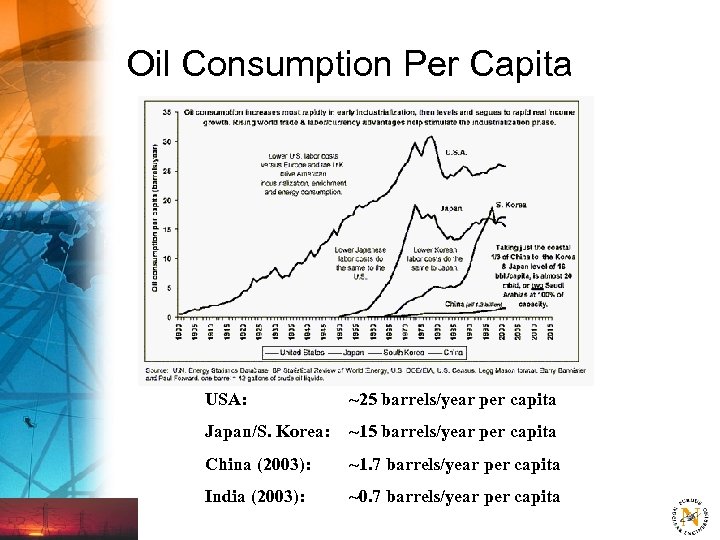
Oil Consumption Per Capita USA: ~25 barrels/year per capita Japan/S. Korea: ~15 barrels/year per capita China (2003): ~1. 7 barrels/year per capita India (2003): ~0. 7 barrels/year per capita
Global Energy Growth • Nearly 6. 6 billion people with modern needs • Growth in energy demand still has significant margins for growth – 12% of the world uses 54% of all energy – 33% of the world still has no access to modern energy – The other 45% uses 1/4 of the energy consumed by the remaining 12% • Energy use by world’s richest 12% – – U. S. : 65 boe energy person Japan: 32 boe energy person U. K. : 30 boe energy person Germany: 32 boe energy person
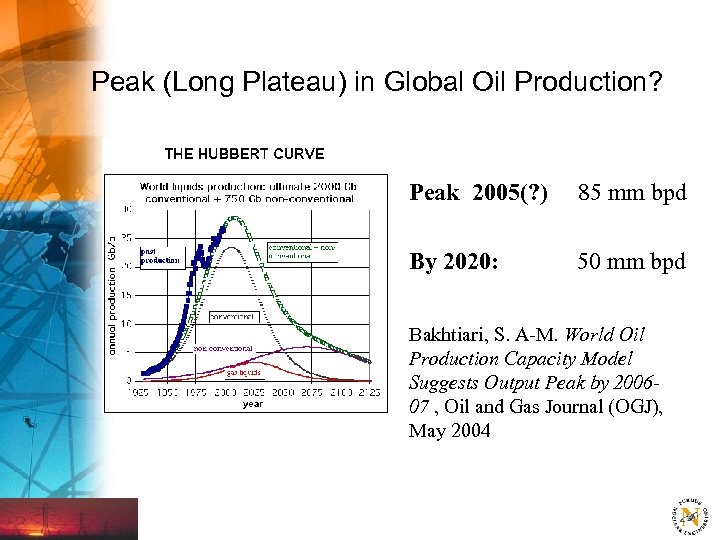
Peak (Long Plateau) in Global Oil Production? Peak 2005(? ) 85 mm bpd By 2020: 50 mm bpd Bakhtiari, S. A-M. World Oil Production Capacity Model Suggests Output Peak by 200607 , Oil and Gas Journal (OGJ), May 2004
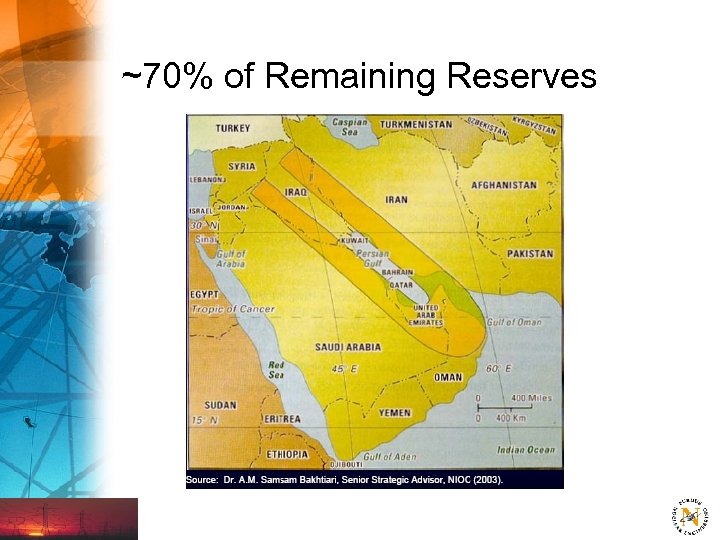
~70% of Remaining Reserves
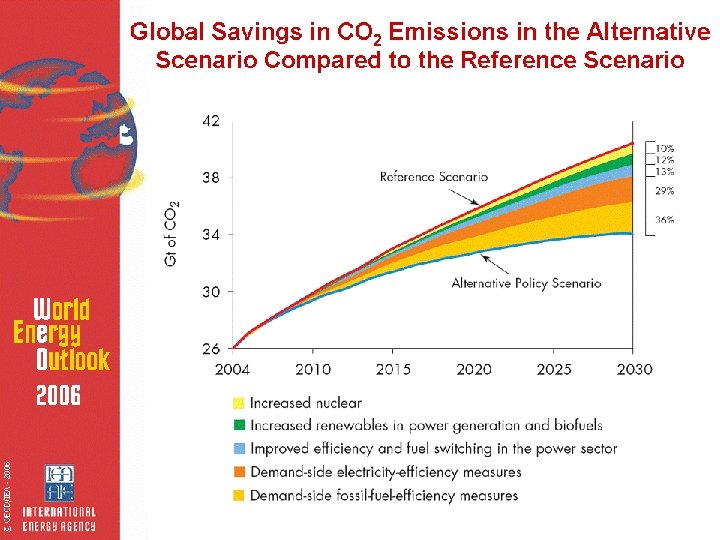
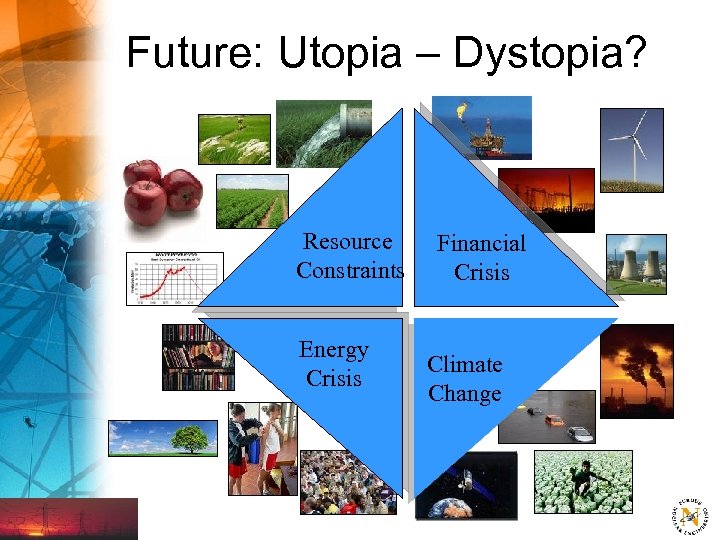
Future: Utopia – Dystopia? Resource Constraints Energy Crisis Financial Crisis Climate Change
First: Do More with Less • Conservation may be our greatest new energy discovery in the near future • Smart energy can facilitate further convergence of IT, power, and, transportation infrastructures • Smart energy can facilitate integrated utilization of new energy carriers – H 2, Alcohols, Biofuels • Can harvest energy usually wasted • Ambient energy MEMS
Electric Power Grid • Secure and reliable energy delivery becomes a pressing challenge – Increasing demands with higher quality of service – Declining resources • The North American electric power grid is operating under narrower safety margins – More potential for blackouts/brownouts – Efficient and effective management strategy needed • Current energy delivery infrastructure is a super complex system (more evolved than designed) – Lack of accurate and manageable models – Unpredictable and unstable dynamics • Can we build an inherently stable energy network?
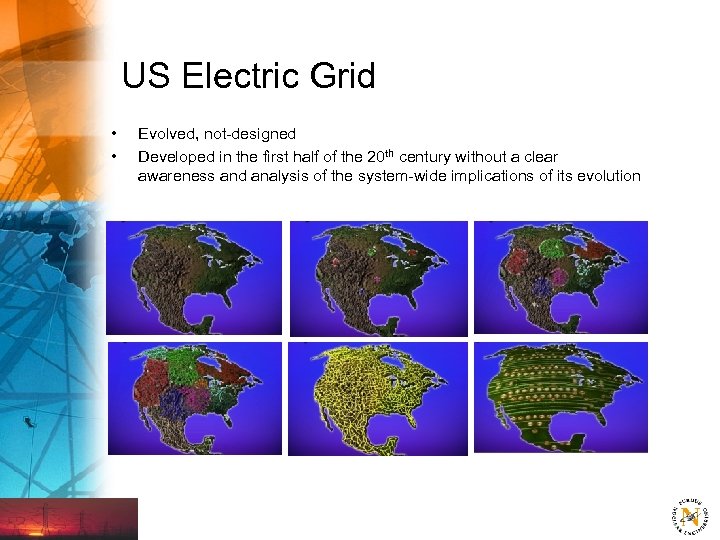
US Electric Grid • • Evolved, not-designed Developed in the first half of the 20 th century without a clear awareness and analysis of the system-wide implications of its evolution
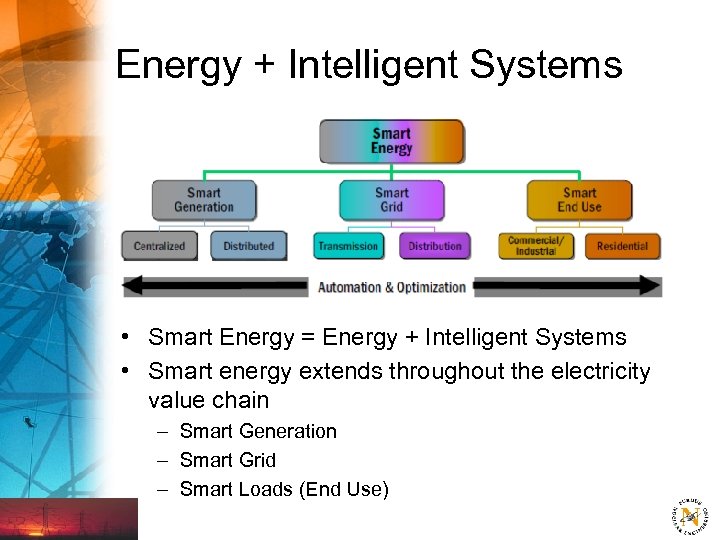
Energy + Intelligent Systems • Smart Energy = Energy + Intelligent Systems • Smart energy extends throughout the electricity value chain – Smart Generation – Smart Grid – Smart Loads (End Use)
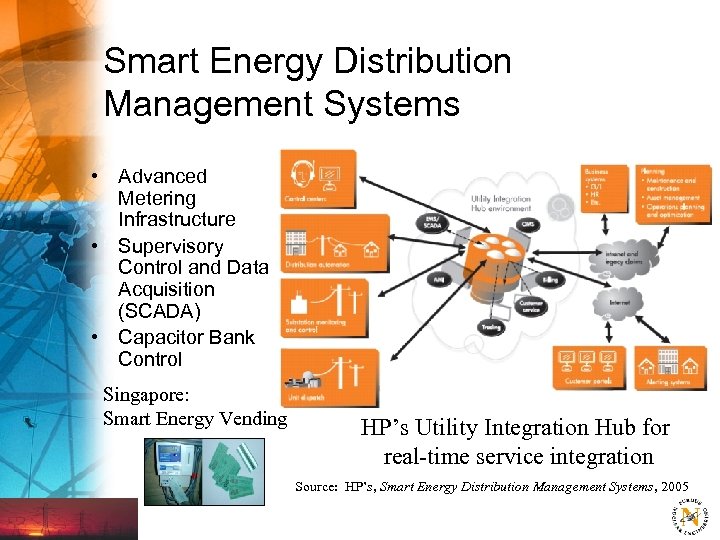
Smart Energy Distribution Management Systems • Advanced Metering Infrastructure • Supervisory Control and Data Acquisition (SCADA) • Capacitor Bank Control Singapore: Smart Energy Vending HP’s Utility Integration Hub for real-time service integration Source: HP’s, Smart Energy Distribution Management Systems, 2005
Smart Grids • Smart grids is an advanced concept – – – Detect and correct incipient problems at avery early stage Receive and respond to a broader range of information Possess rapid recovery capability Adapt to changes and reconfiguring accordingly Build-in reliability and security from design Provide operators advanced visualization aids • Most of these features can be found in the Information Internet – The Internet is also a super complex system – It is remarkably stable • Can we find an Internet-type network for energy systems?
An Energy Internet • Benefits of an Energy Internet – Reliability • Self-configuration and self-healing – Flexibility and efficiency • Customers can choose the service package that fits their budget and preferences • Service providers can create more profits through realtime interactions with customers • Marketers or brokers can collect more information to plan more user-oriented marketing strategies • The regulation agency can operate to its maximal capacity by focusing effectively on regulating issues – Transparency • All energy users are stakeholders in an Energy Internet
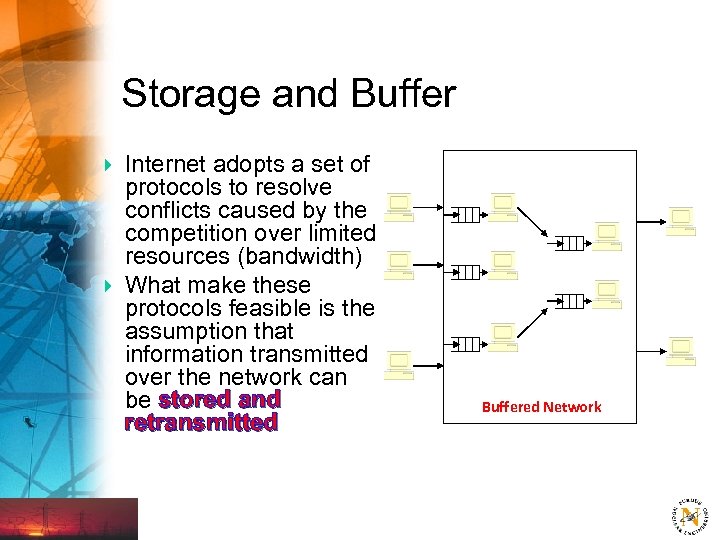
Storage and Buffer Internet adopts a set of protocols to resolve conflicts caused by the competition over limited resources (bandwidth) What make these protocols feasible is the assumption that information transmitted over the network can be stored and retransmitted Buffered Network
Energy Storage • Similar protocols could be developed for the power grid in order to – Resolve conflicts due to the competition over resources (peak demand), and – Identify and contain problems locally IF electricity can be stored in the grid(!) • Unfortunately, large scale storage of electricity is technologically and economically not feasible • Solution: a virtual buffer – Electricity can be virtually stored if enough information is gathered and utilized
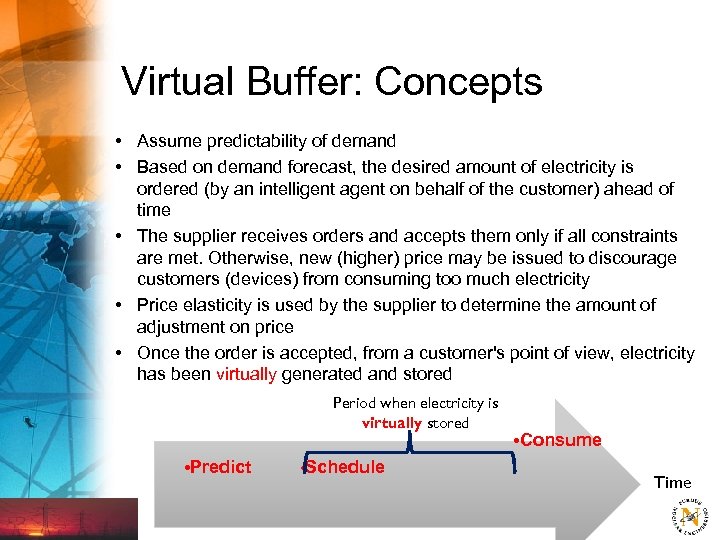
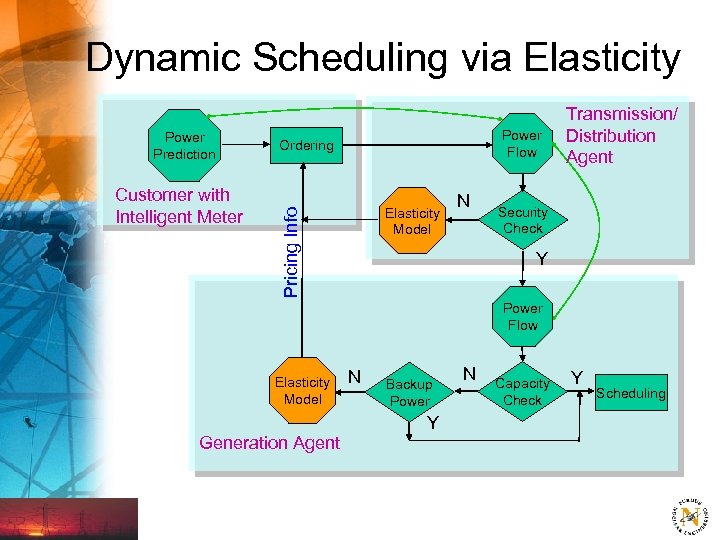
Virtual Buffer: Concepts • Assume predictability of demand • Based on demand forecast, the desired amount of electricity is ordered (by an intelligent agent on behalf of the customer) ahead of time • The supplier receives orders and accepts them only if all constraints are met. Otherwise, new (higher) price may be issued to discourage customers (devices) from consuming too much electricity • Price elasticity is used by the supplier to determine the amount of adjustment on price • Once the order is accepted, from a customer's point of view, electricity has been virtually generated and stored Period when electricity is virtually stored • Predict • Schedule • Consume Time
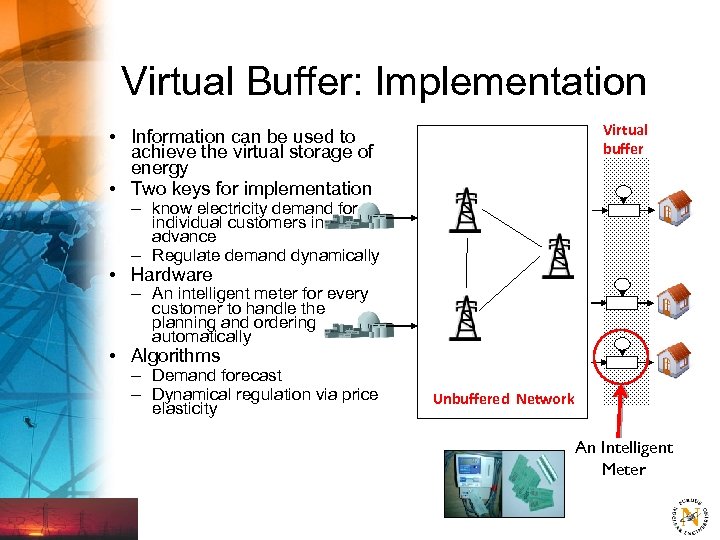
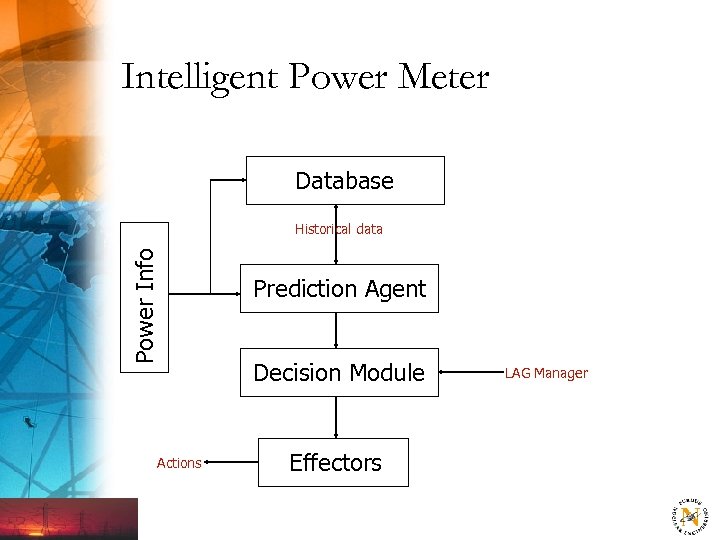
Virtual Buffer: Implementation Virtual buffer • Information can be used to achieve the virtual storage of energy • Two keys for implementation – know electricity demand for individual customers in advance – Regulate demand dynamically • Hardware – An intelligent meter for every customer to handle the planning and ordering automatically • Algorithms – Demand forecast – Dynamical regulation via price elasticity Unbuffered Network An Intelligent Meter
Example LAG
Customer ID’s
Long- and Short-term Elasticity • Long-term Elasticity – Average elasticity in within a long period (moths, years) – Usually is an overall index including a large number of customers – Good for long-term strategic planning – More reliable to estimate • Short-term Elasticity – Instant elasticity within a very short period (e. g. , minutes, hours) – Can be a local index for a particular customer – Critical for control of the power flow – Difficult to estimate
Managing Short-term Elasticity • Short-term price elasticity characterizes a particular customer’s nearly instantaneous responsiveness to the change of price • Short-term elasticity can be estimated from – Historical price-demand data – Psychological models of customer energy behaviors • The use of intelligent meters is important for – Increasing short-term elasticity => more effective for control – Regulating customers’ behavior => more reliable for prediction
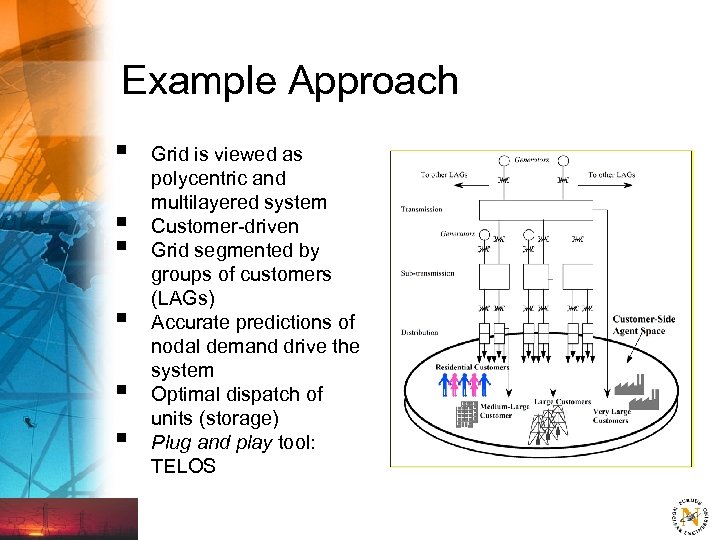
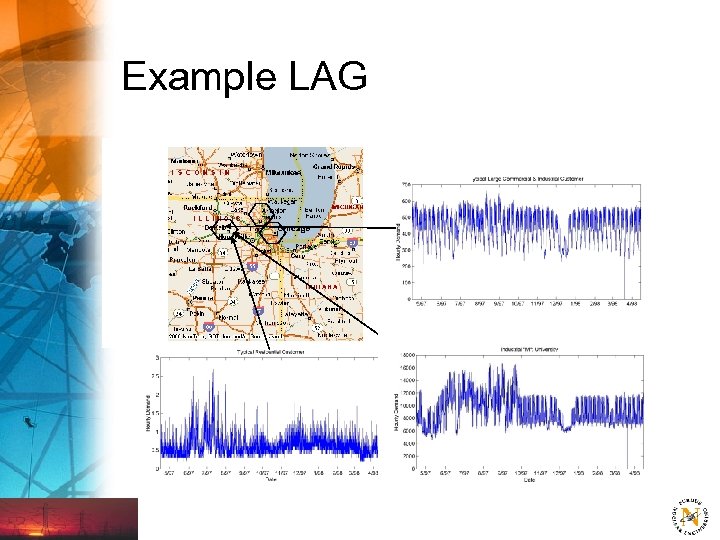
Example Approach § § § Grid is viewed as polycentric and multilayered system Customer-driven Grid segmented by groups of customers (LAGs) Accurate predictions of nodal demand drive the system Optimal dispatch of units (storage) Plug and play tool: TELOS
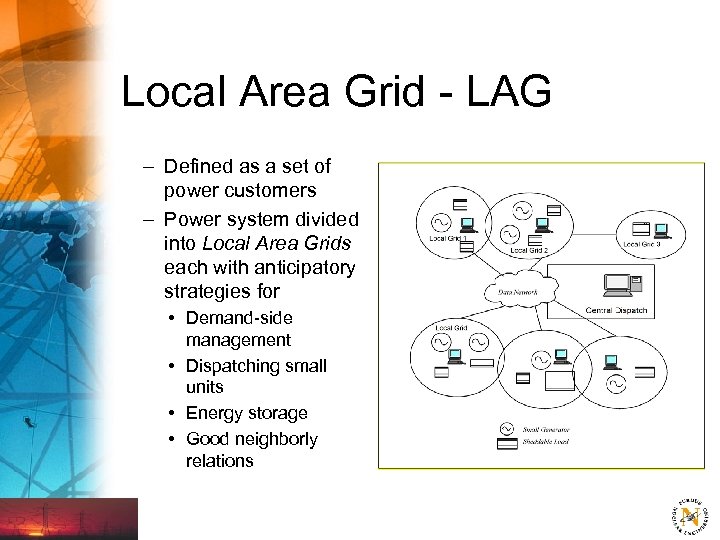
Local Area Grid - LAG – Defined as a set of power customers – Power system divided into Local Area Grids each with anticipatory strategies for • Demand-side management • Dispatching small units • Energy storage • Good neighborly relations
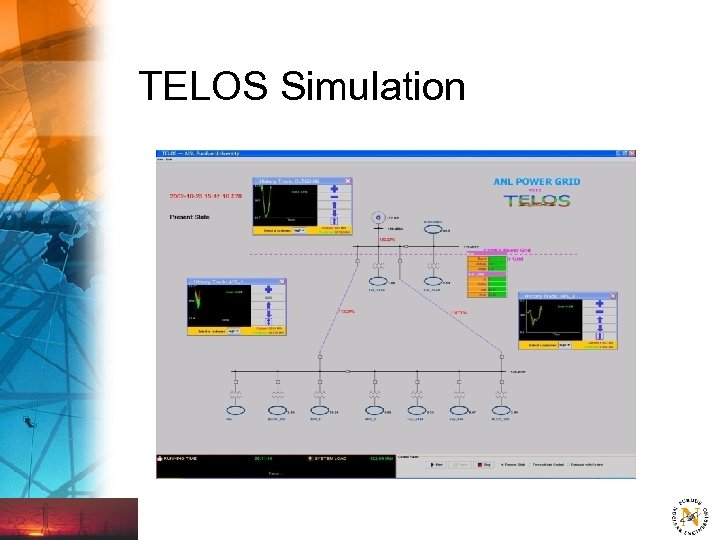
TELOS Design Requirements • TELOS = Transmission-distribution Entities with Learning and On-line Self-healing • Local Area Grid (LAG) • Customer-centric • System Model • Power System Calculations • User Interface • Automated Execution
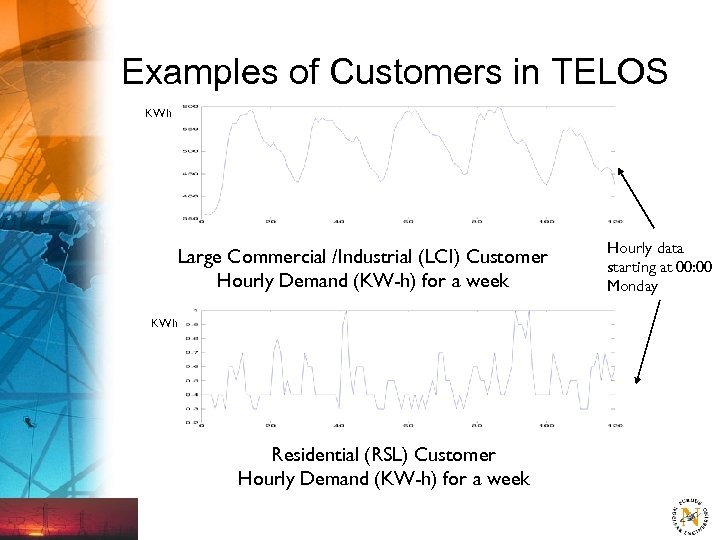
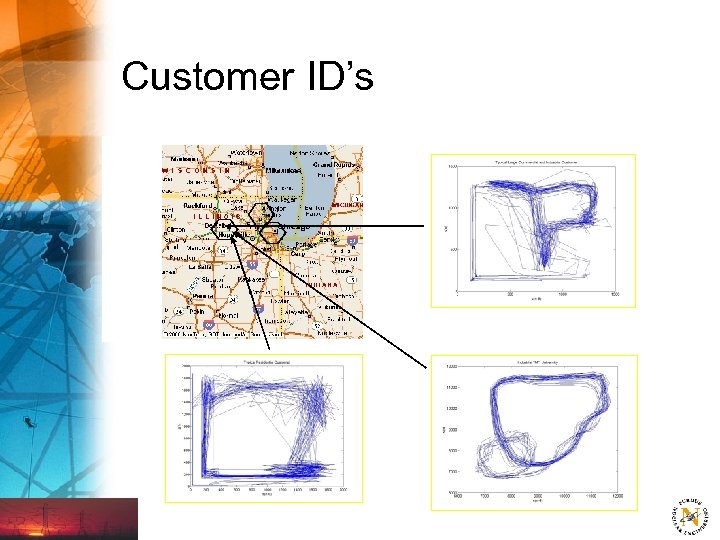
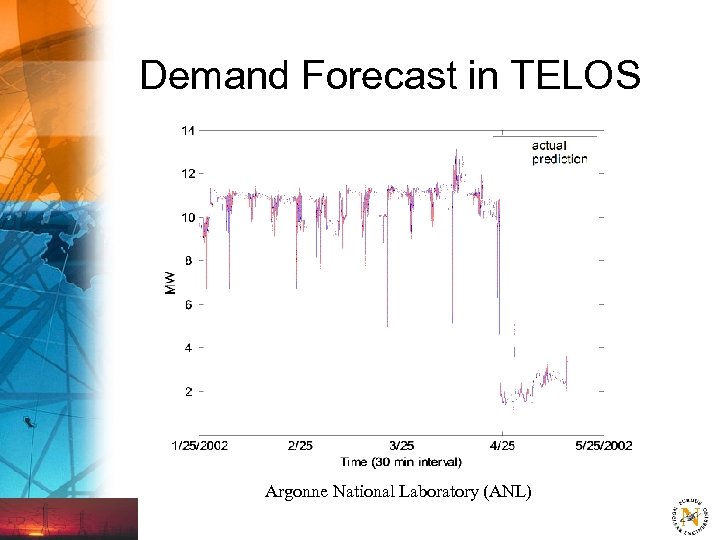
Examples of Customers in TELOS KWh Large Commercial /Industrial (LCI) Customer Hourly Demand (KW-h) for a week KWh Residential (RSL) Customer Hourly Demand (KW-h) for a week Hourly data starting at 00: 00 Monday
Intelligent Power Meter Database Power Info Historical data Actions Prediction Agent Decision Module Effectors LAG Manager
TELOS Simulation
Demand Forecast in TELOS Argonne National Laboratory (ANL)
Dynamic Scheduling via Elasticity Customer with Intelligent Meter Power Flow Ordering Elasticity Model Pricing Info Power Prediction N Transmission/ Distribution Agent Security Check Y Power Flow Elasticity Model Generation Agent N Backup Power Y N Capacity Check Y Scheduling
Convergence of IT and Power • Technological advancements – More information/data is available • Transmission and delivery system monitoring: SCADA, …. • Smart grid/smart meter – More analytical tools are available. • Economics models • Power system analysis tools • Can we build around current technologies a more reliable and efficient infrastructure? – Utilize complex systems theories (multi-agents) – Software (information infrastructure) upgrade
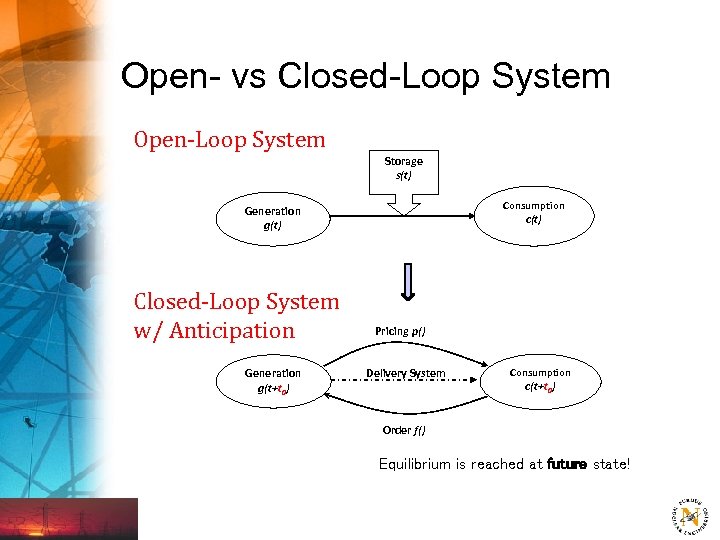
Open- vs Closed-Loop System Open-Loop System Storage s(t) Consumption Generation g(t) Closed-Loop System w/ Anticipation Generation g(t+t 0) c(t) Pricing p() Delivery System Consumption c(t+t 0) Order f() Equilibrium is reached at future state!
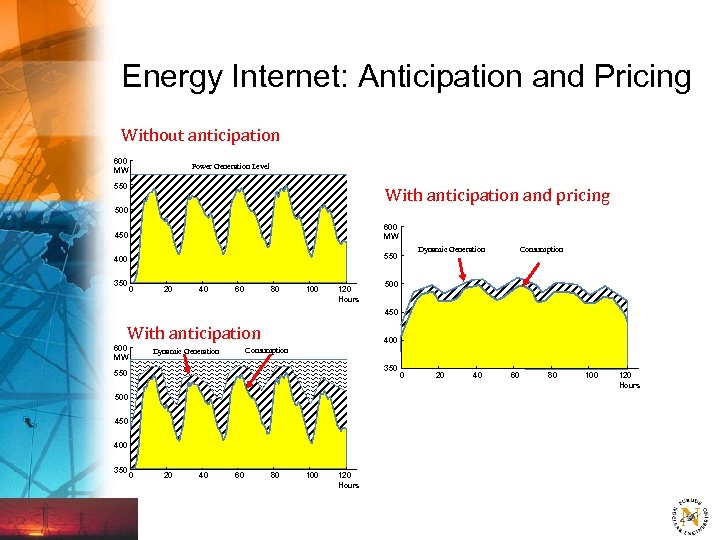
Energy Internet: Anticipation and Pricing Without anticipation 600 MW Power Generation Level 550 With anticipation and pricing 500 450 600 MW 400 550 350 0 20 40 60 80 100 120 Hours Dynamic Generation Consumption 500 450 With anticipation 600 MW 400 Consumption Dynamic Generation 350 500 450 400 350 0 20 40 60 80 100 120 Hours
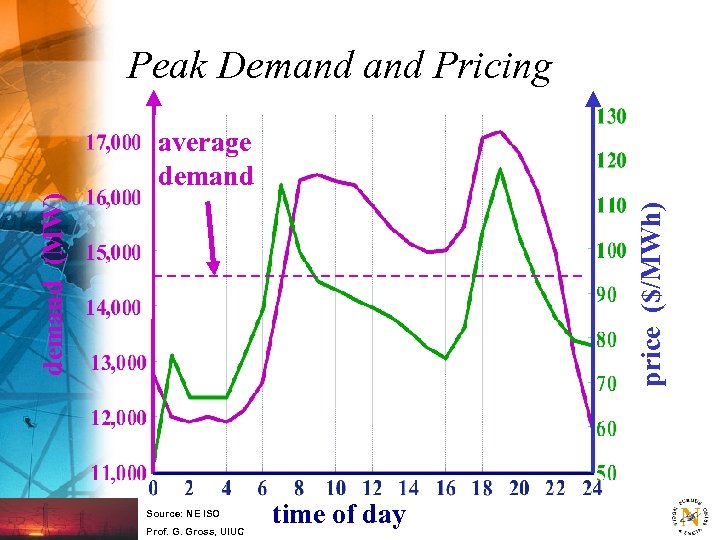
Peak Demand Pricing price ($/MWh) demand (MW) average demand Source: NE ISO Prof. G. Gross, UIUC time of day
Research Issues • Multi-agent based methodology • Asynchronous and autonomous system • Demand Side: Smart Meters – – Anticipation Programmable energy management Communication and negotiation Plug-ins • Supply Side – – (distributed) Power system analysis (distributed) Pricing models Renewables (solar, PV, geothermal…) Vehicle-to-grid
Outstanding Issues • Feasibility – Can system reach equilibrium? • Efficiency – How much electricity can be conserved (negawatts)? • Stability – How does the system react in unexpected events? • Scalability – What if the size of the system increases? • Cost – How much investment is needed for upgrading current infrastructure and evolving towards energy internet?
Summary • An Internet-like energy network, an Energy Internet, representing the smart convergence of Power and IT, is a technically plausible next step • Intelligent Systems can provide virtual energy storage (via anticipation) • The Energy Internet may positively shape a sustainable future through more transparent energy relations • All sources of primary energy will be needed to produce the most easily available energy we have, grid electricity • Nuclear power has a special role as an important source of emissions-free electricity with some sustainability features • Important nuclear physics advancements needed to enable global standards for future nuclear fuel cycles
Extra Slides Load Identification and Wavelets – Different types of load show a characteristic behavior on the change of wavelet coefficients with respect to scale – The type of load is possible to be identified with a neural-wavelet approach
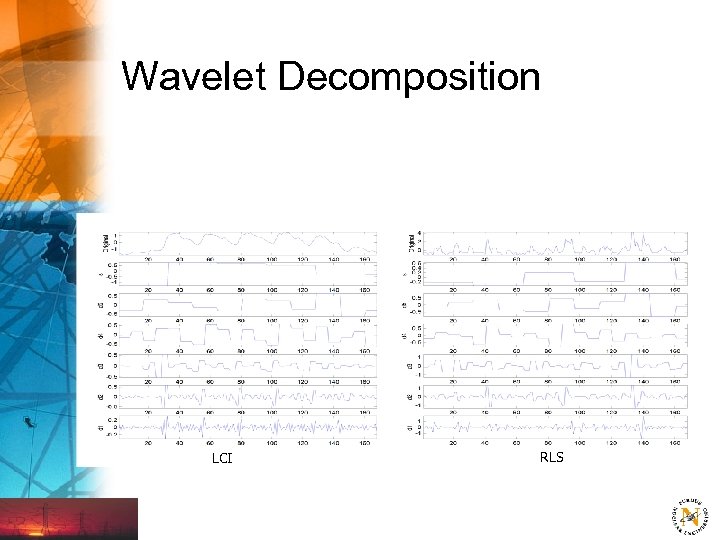
Wavelet Decomposition LCI RLS
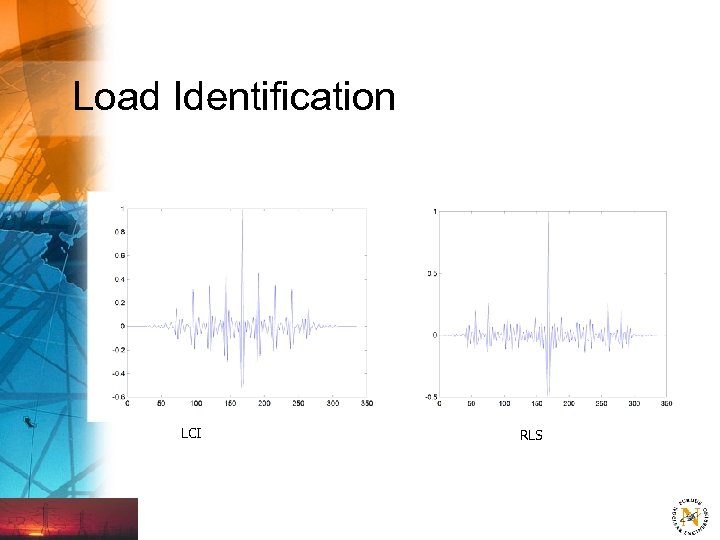
Load Identification LCI RLS
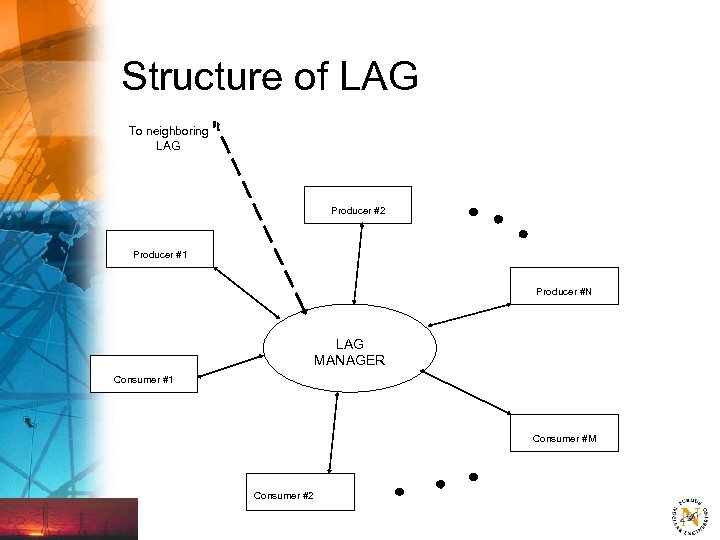
Structure of LAG To neighboring LAG Producer #2 Producer #1 Producer #N LAG MANAGER Consumer #1 Consumer #M Consumer #2
LAG Manager • Collects current demand supply data • Checks for grid stability based on predictions of individual customer demand available pathways • Makes decisions on when to dispatch local units and/or manage load based on demand/supply and contracts between customers and producers/providers • Sends decisions to individual agents
Interconnecting LAGs • Reliable network connections with adequate redundancy • Each LAG connecting to at least two neighboring LAGs • Neighboring LAG Manager should be able to take over in case of local fault
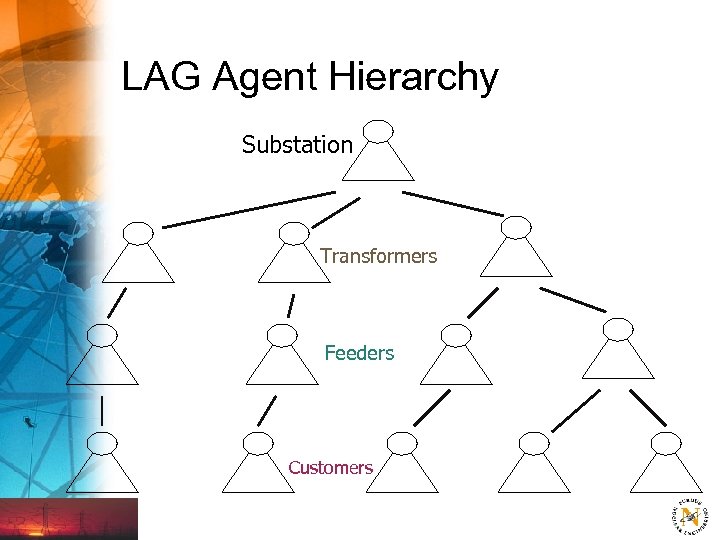
LAG Agent Hierarchy Substation Transformers Feeders Customers
Agent Functionalities • Customer Agent: contains a neurofuzzy predictor to predict future demand • Feeder Agent: sums up predicted demands of all customers connected to the feeder, performs internal overload check • Transformer Agent: sums up predictions of all the feeders
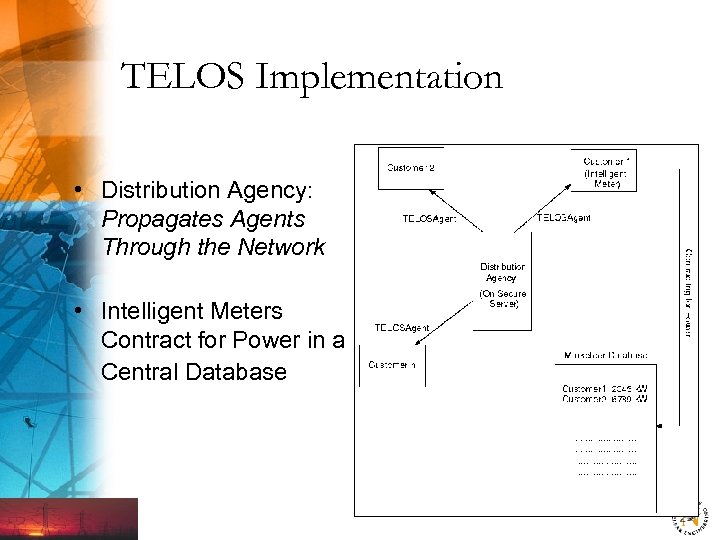
TELOS Implementation • Distribution Agency: Propagates Agents Through the Network • Intelligent Meters Contract for Power in a Central Database
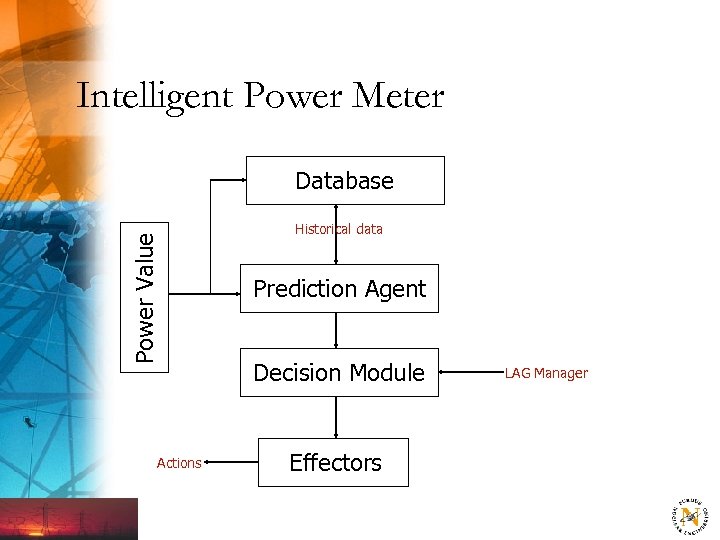
Intelligent Power Meter Power Value Database Actions Historical data Prediction Agent Decision Module Effectors LAG Manager
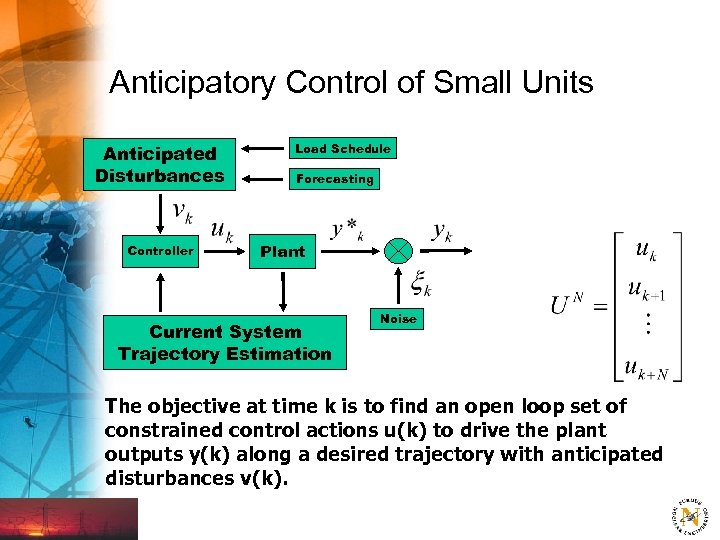
Anticipatory Control of Small Units Anticipated Disturbances Controller Load Schedule Forecasting Plant Current System Trajectory Estimation Noise The objective at time k is to find an open loop set of constrained control actions u(k) to drive the plant outputs y(k) along a desired trajectory with anticipated disturbances v(k).
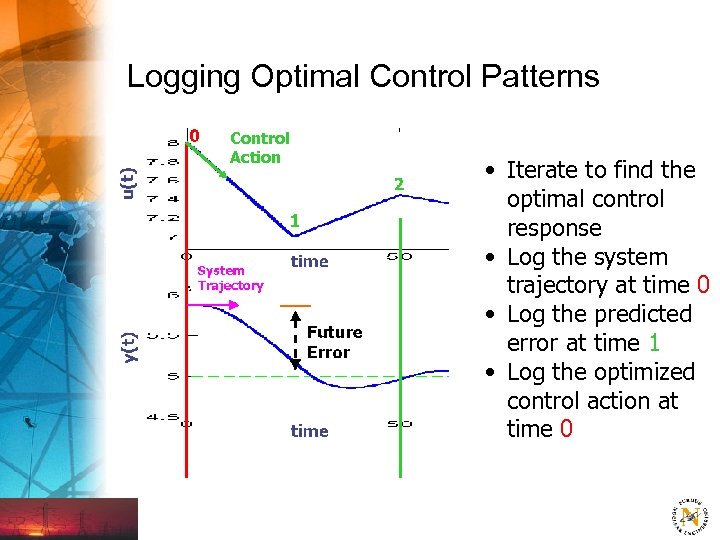
Logging Optimal Control Patterns Control Action • Iterate to find the optimal control response • Log the system trajectory at time 0 • Log the predicted error at time 1 • Log the optimized control action at time 0
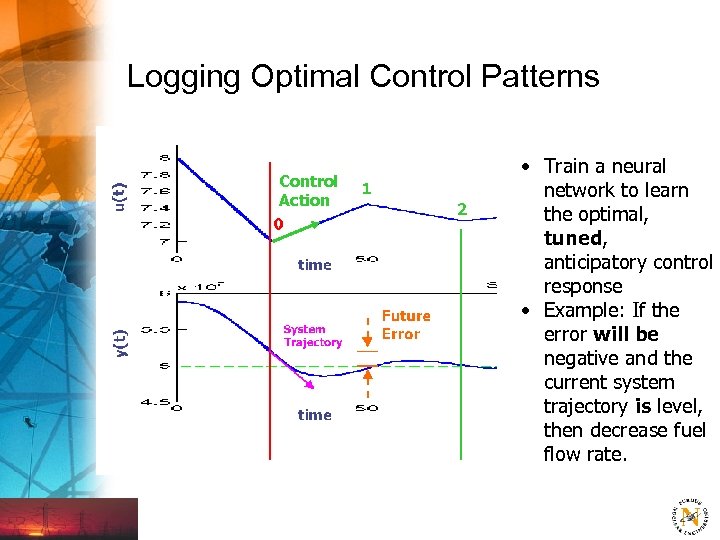
Logging Optimal Control Patterns Control Action • Train a neural network to learn the optimal, tuned, anticipatory control response • Example: If the error will be negative and the current system trajectory is level, then decrease fuel flow rate.
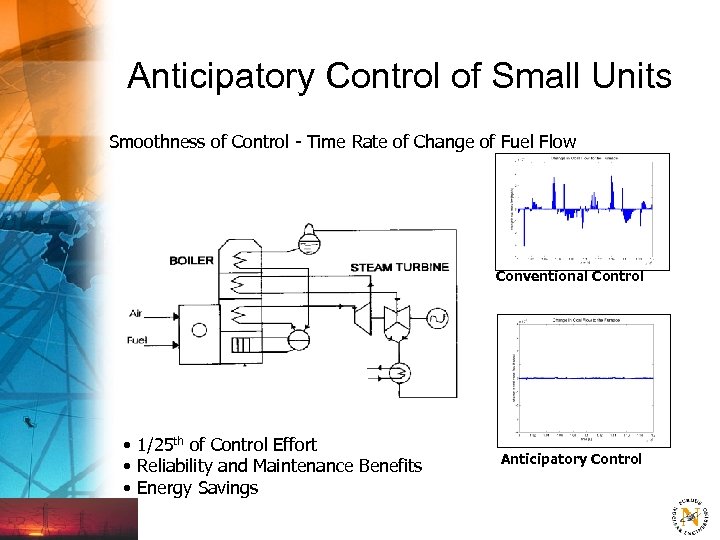
Anticipatory Control of Small Units Smoothness of Control - Time Rate of Change of Fuel Flow Conventional Control • 1/25 th of Control Effort • Reliability and Maintenance Benefits • Energy Savings Anticipatory Control
Скачать презентацию Fermi National Accelerator Laboratory Colloquium April 29 2009
91199df5a7a585f74989a38060501b48.ppt