


 Скачать презентацию Feminism Politicization of the sex-class identity Gender
ff7940c304ce54f011d0a2b2c29f0728.ppt
- Количество слайдов: 22
 Feminism
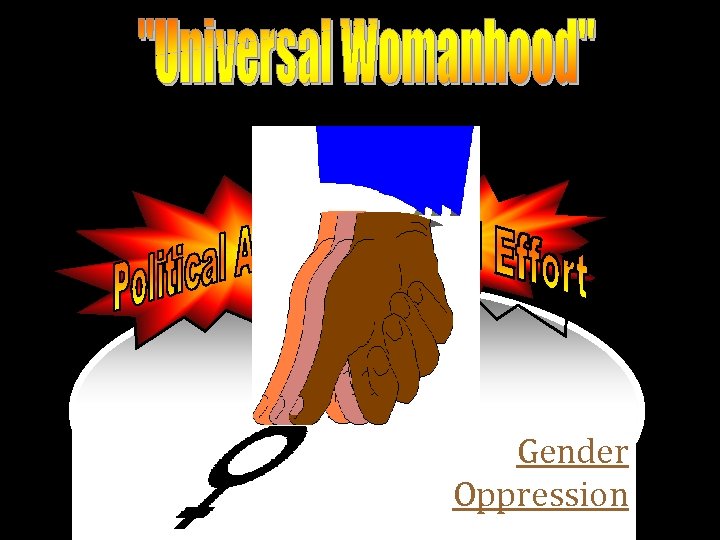 Politicization of the sex-class identity Gender Oppression
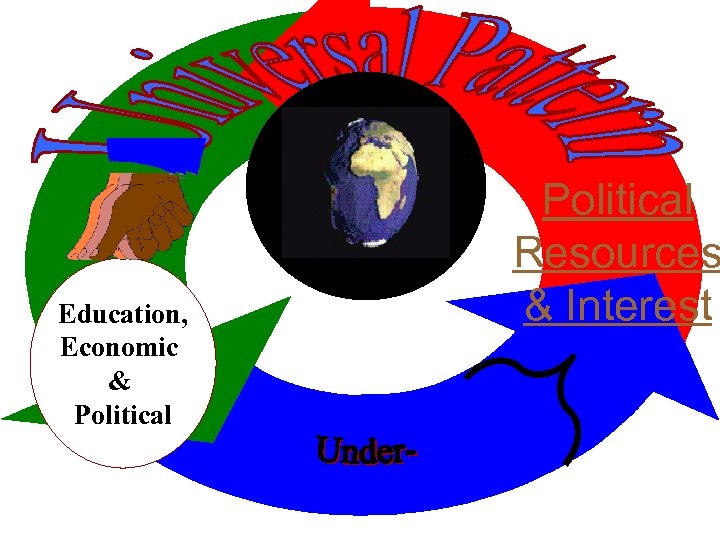 Education, Economic & Political Resources & Interest
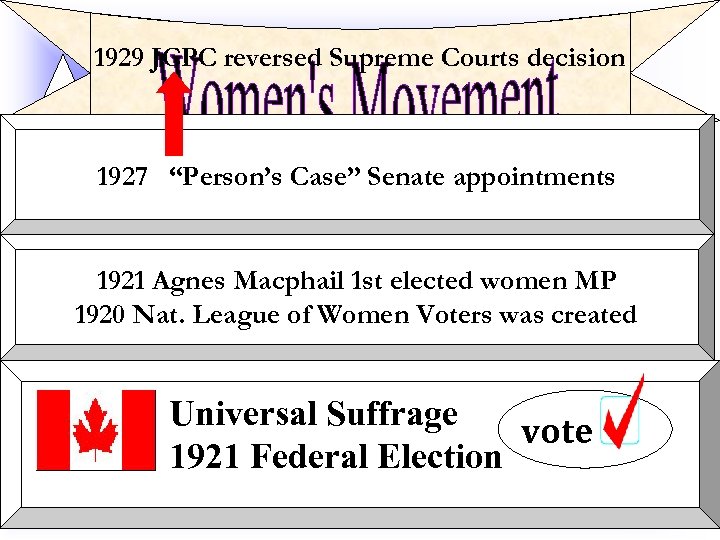 1929 JCPC reversed Supreme Courts decision 1927 “Person’s Case” Senate appointments 1921 Agnes Macphail 1 st elected women MP the Parl. 1866 British MP John Stuart Mill petitioned 1920 of the. League of Women Voters was created Nat. UK to grant suffrage to women 1830 s- 1860 s Movement to abolish slavery Universal Suffrage vote 1921 Federal Election 1800 s Organized women’s rights movement
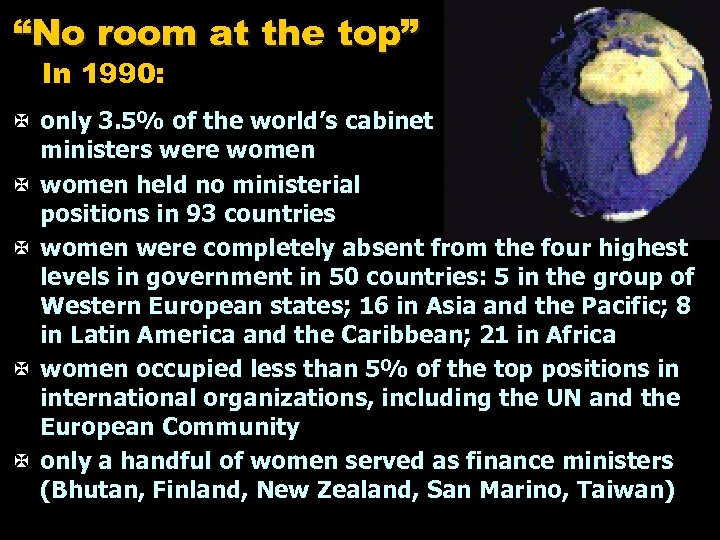 “No room at the top” In 1990: X only 3. 5% of the world’s cabinet ministers were women X women held no ministerial positions in 93 countries X women were completely absent from the four highest levels in government in 50 countries: 5 in the group of Western European states; 16 in Asia and the Pacific; 8 in Latin America and the Caribbean; 21 in Africa X women occupied less than 5% of the top positions in international organizations, including the UN and the European Community X only a handful of women served as finance ministers (Bhutan, Finland, New Zealand, San Marino, Taiwan)
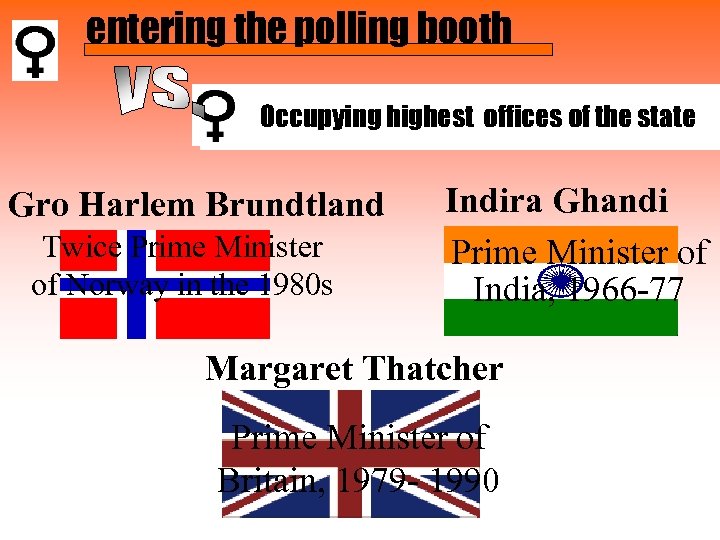 entering the polling booth Occupying highest offices of the state Gro Harlem Brundtland Twice Prime Minister of Norway in the 1980 s Indira Ghandi Prime Minister of India, 1966 -77 Margaret Thatcher Prime Minister of Britain, 1979 - 1990
 1830 s- 1860 s Movement to Abolish Slavery “The first organized movement for women’s rights came form the movement to abolish slavery. …. . women’s rights organizers broke down many conventional barriers to the public participation of black people and women. ” Rowbotham (1992)
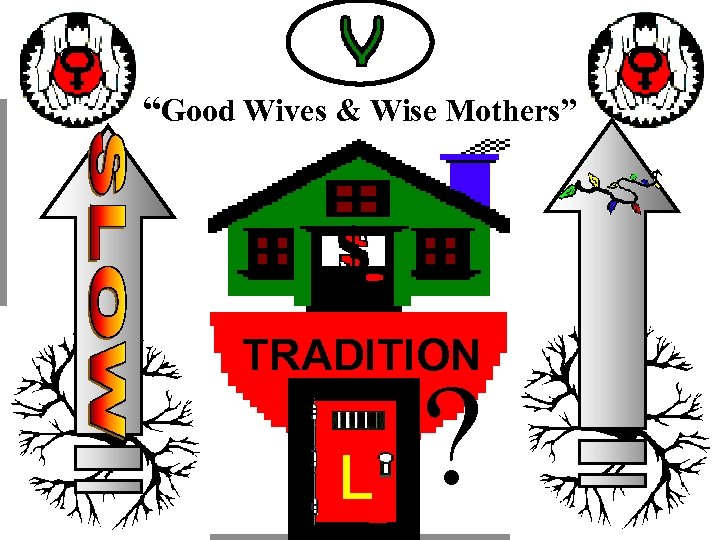
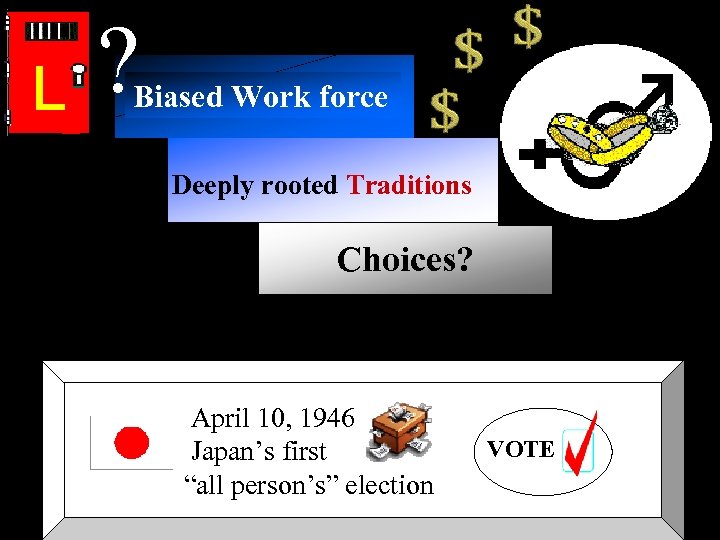
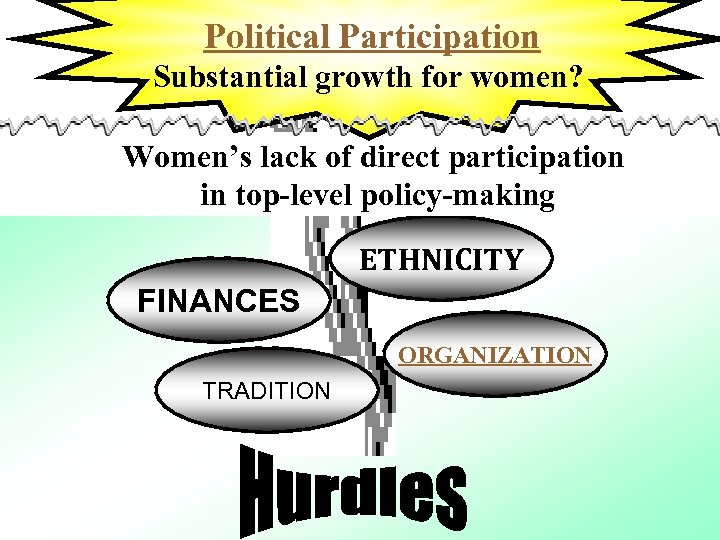 Political Participation Substantial growth for women? Women’s lack of direct participation in top-level policy-making ETHNICITY FINANCES ORGANIZATION TRADITION
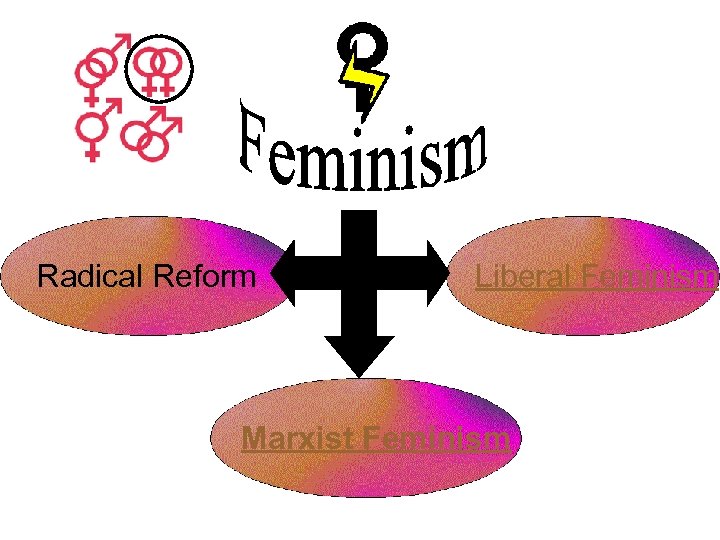
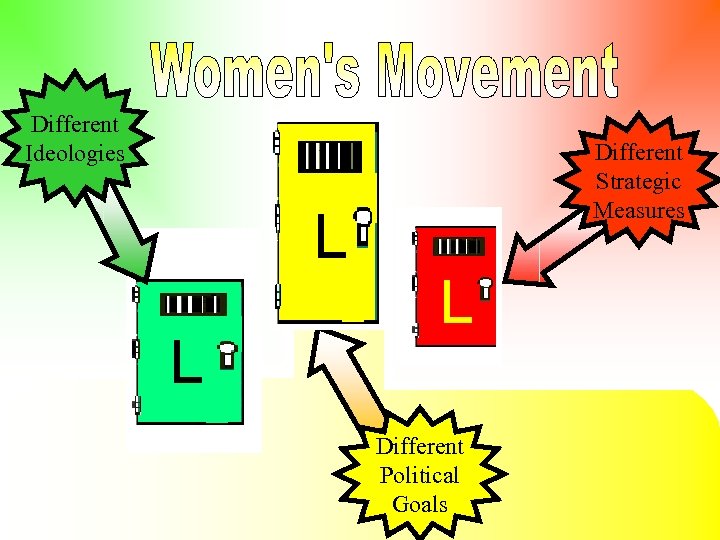 Different Ideologies Different Strategic Measures Different Political Goals
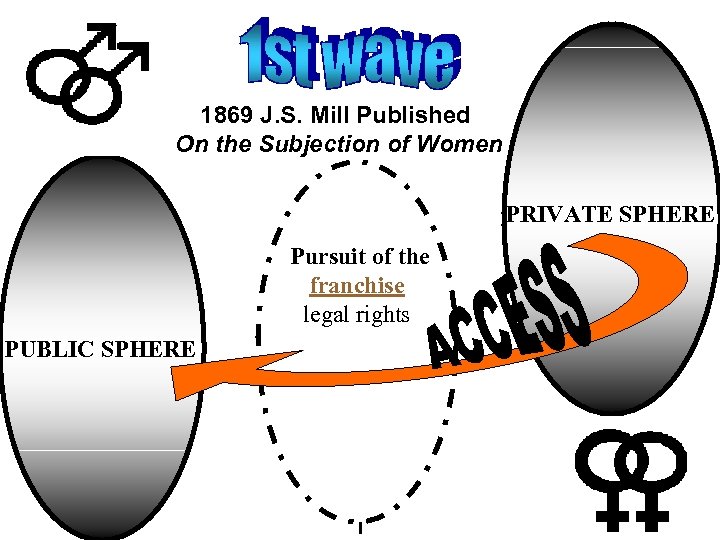 1869 J. S. Mill Published On the Subjection of Women PRIVATE SPHERE Pursuit of the franchise legal rights PUBLIC SPHERE
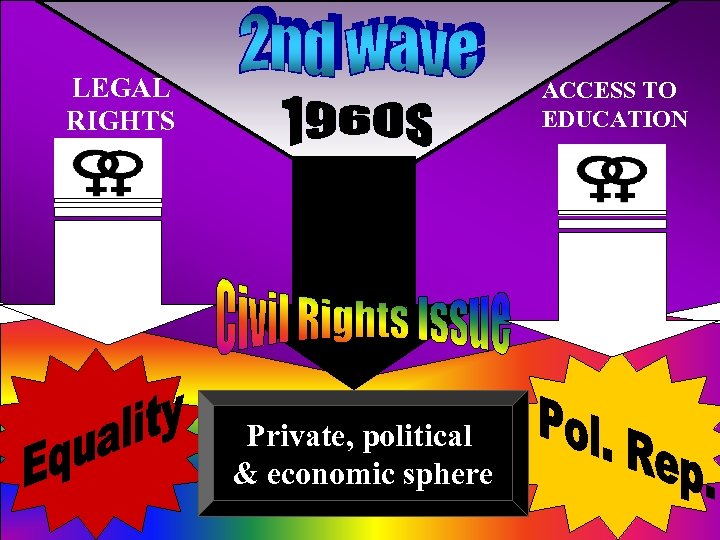 LEGAL RIGHTS ACCESS TO EDUCATION Private, political & economic sphere
 PRIVATE SPHERE PUBLIC SPHERE Sacrifice? Who occupies the private sphere? ?
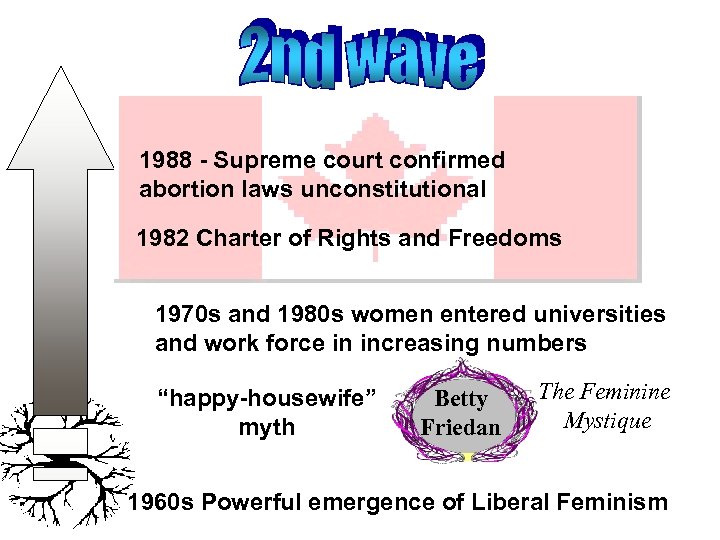 1988 - Supreme court confirmed abortion laws unconstitutional 1982 Charter of Rights and Freedoms 1970 s and 1980 s women entered universities and work force in increasing numbers “happy-housewife” myth Betty Friedan The Feminine Mystique 1960 s Powerful emergence of Liberal Feminism

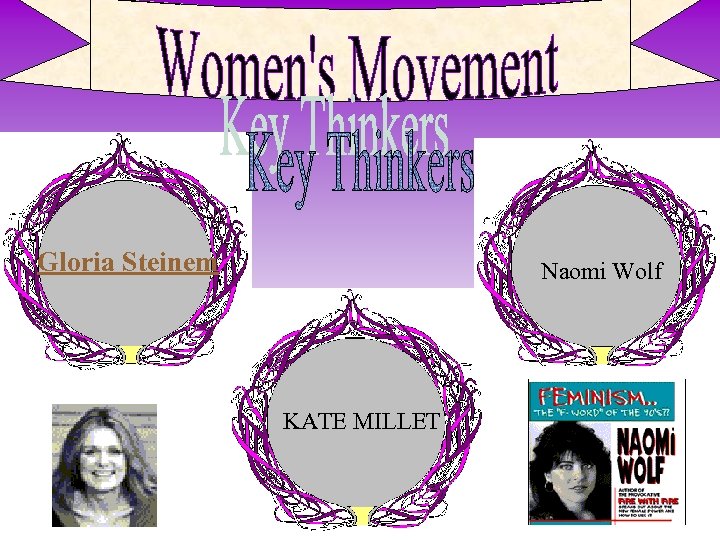 Gloria Steinem Naomi Wolf KATE MILLET
 The electoral gap in the US has been shown to be critical to the success of the Democratic Party and to the nomination and election of some women candidates. Largest & most activist women’s mvt in the world 1992: outgoing Congress had only 6. 4% women members incoming =11% in House, 7% in Senate.
 structural reforms WILL WOMEN SHARING POLITICAL POWER EQUALLY WITH MEN CHANGE THE WAY WE LIVE?
 & Political Leadership "Studies indicate that a ‘critical mass’ of from 3035% inclusion of women in political leadership and gov’t is needed to affect public policies. "Women should not settle for an in-name-only share of leadership…should use their positions to campaign for specific party commitments to the nomination, election and appt = # of men and women to national office, parls, cabs, courts, regional and st. legs, commissions, advisory groups. "Parties and women’s orgs should seek out potential women candidates for political office and provide them with training in pol. and ldsp skills, funding and campaign assistance creation within G of a ministry, dept. , or national commission on = for women to
 “Good Wives & Wise Mothers” $ TRADITION ?
 ? Biased Work force Deeply rooted Traditions Choices? April 10, 1946 Japan’s first “all person’s” election VOTE
 Radical Reform Liberal Feminism Marxist Feminism
 CYBER-FEMINISM