


 Скачать презентацию Female Community Health Program in Nepal National Vitamin
af936960291320641ee795a8be0d28d6.ppt
- Количество слайдов: 31
 Female Community Health Program in Nepal National Vitamin A Program Established in 1993 to reduce vitamin A deficiency to a level that. Ram Kumar Shrestha no longer constitutes a public health problem Ram Kumar Shrestha, Nepal
 Female Community Health Program in Nepal • Evolution of Female Community Health Program • Functional Structure of FCHVs • Approaches applied to revive FCHVs network at National level • Approaches used to maintain the motivation of FCHVs
 Evolution of Female Community Health Program
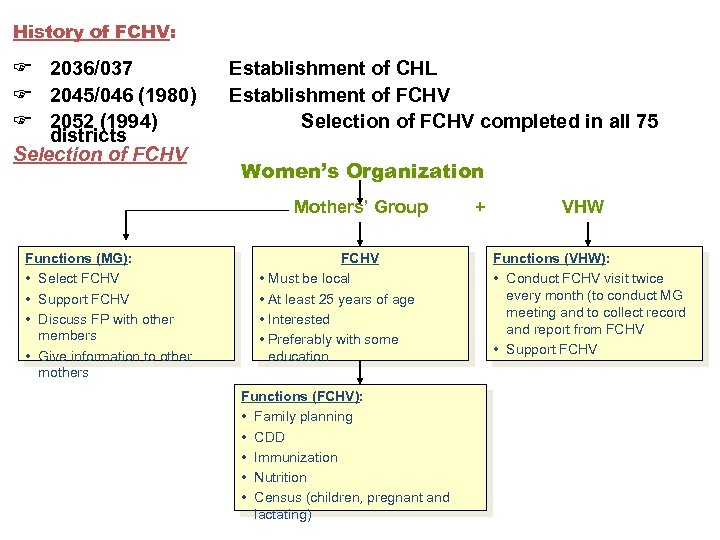 History of FCHV: F 2036/037 F 2045/046 (1980) F 2052 (1994) districts Selection of FCHV Establishment of CHL Establishment of FCHV Selection of FCHV completed in all 75 Women’s Organization Mothers’ Group Functions (MG): • Select FCHV • Support FCHV • Discuss FP with other members • Give information to other mothers FCHV • Must be local • At least 25 years of age • Interested • Preferably with some education Functions (FCHV): • Family planning • CDD • Immunization • Nutrition • Census (children, pregnant and lactating) + VHW Functions (VHW): • Conduct FCHV visit twice every month (to conduct MG meeting and to collect record and report from FCHV • Support FCHV
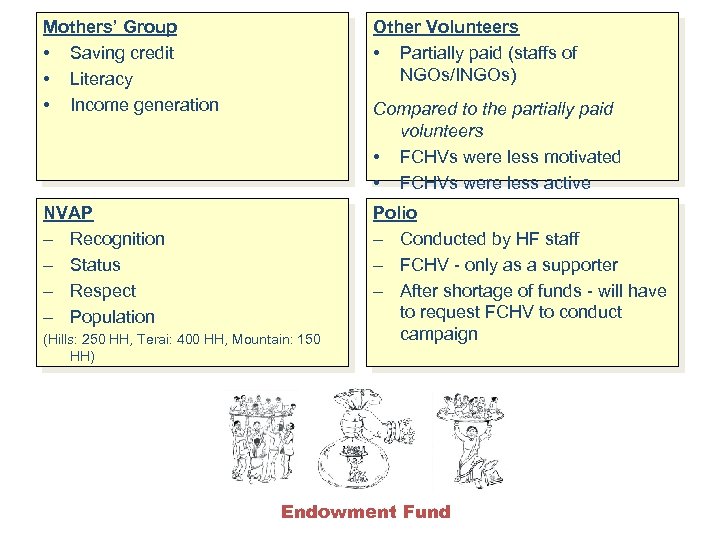 Mothers’ Group • Saving credit • Literacy • Income generation Other Volunteers • Partially paid (staffs of NGOs/INGOs) Compared to the partially paid volunteers • FCHVs were less motivated • FCHVs were less active • No attempt to support the FCHVs Polio NVAP – Recognition – Status – Respect – Population (Hills: 250 HH, Terai: 400 HH, Mountain: 150 HH) – Conducted by HF staff – FCHV - only as a supporter – After shortage of funds - will have to request FCHV to conduct campaign Endowment Fund
 Functional Structure of FCHVs
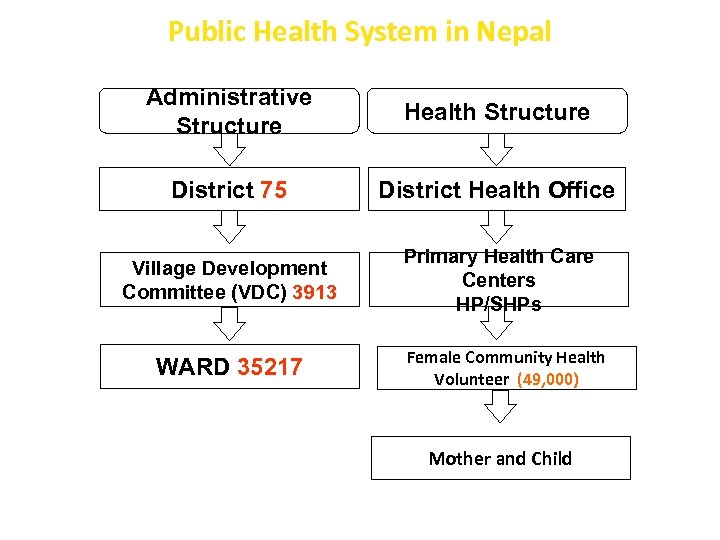 Public Health System in Nepal Administrative Structure Health Structure District 75 District Health Office Village Development Committee (VDC) 3913 Primary Health Care Centers HP/SHPs WARD 35217 Female Community Health Volunteer (49, 000) Mother and Child
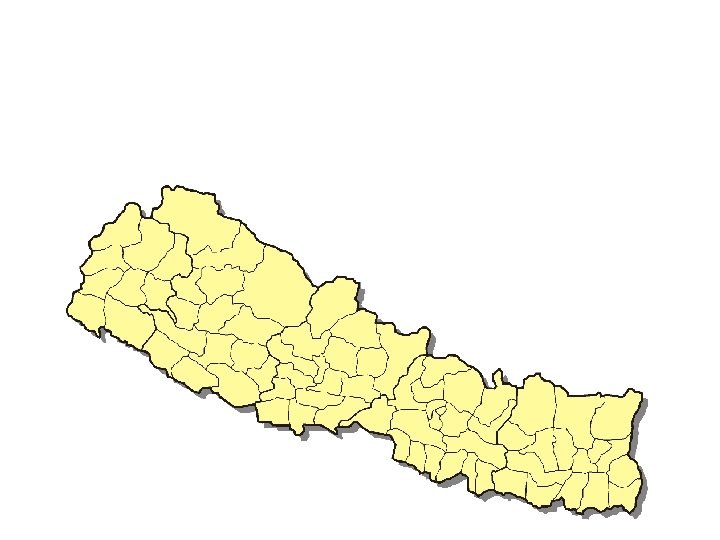 Female Community Health Volunteers Nepal MIDWESTERN REGION 75 Districts MID-WESTERN REGION CENTRAL REGION EASTERN REGION Ram Kumar Shrestha, Nepal
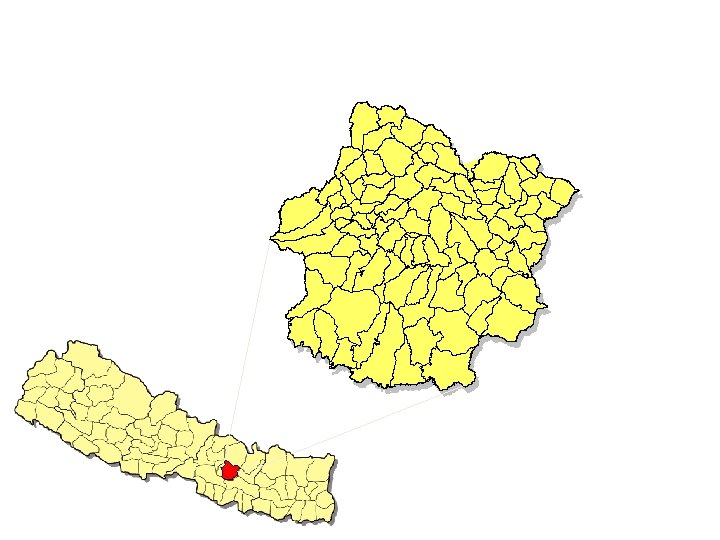 Female Community Health Volunteers Village Development Committees 3, 913 Ram Kumar Shrestha, Nepal
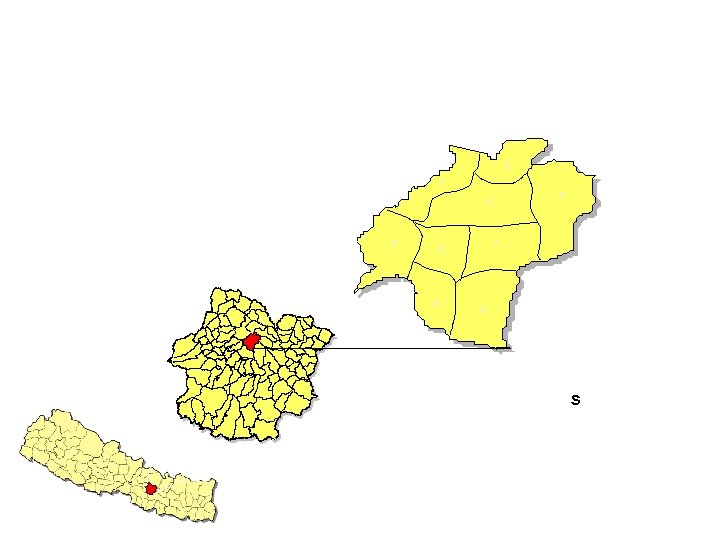 Female Community Health Volunteers 2 1 3 4 5 7 6 8 9 Wards 35, 217 Ram Kumar Shrestha, Nepal
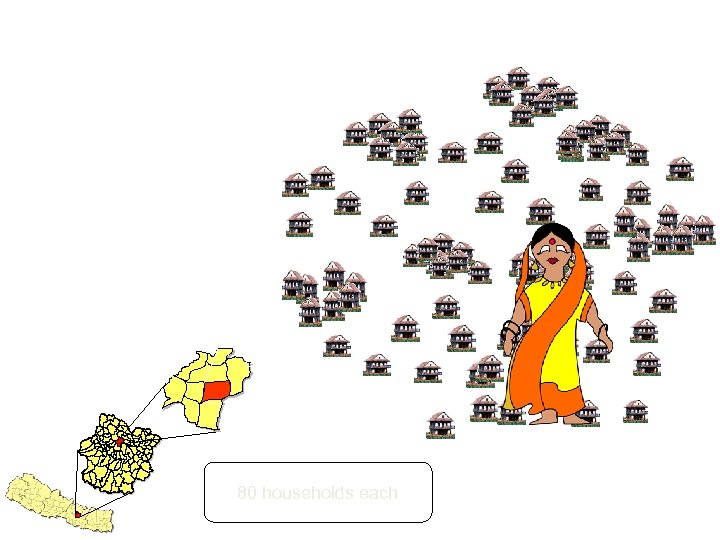 Female Community Health Volunteers Ward 80 households each FCHVs 44, 000 Ram Kumar Shrestha, Nepal
 Approaches applied to revive FCHVs network at National level
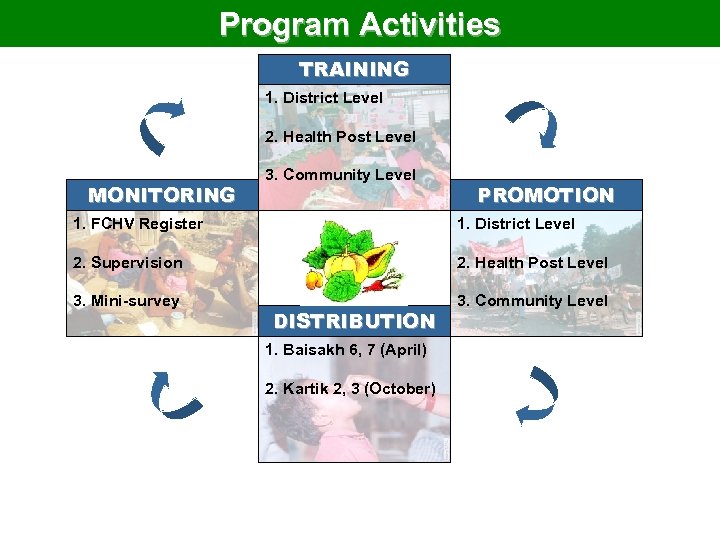 Program Activities TRAINING 1. District Level 2. Health Post Level MONITORING 3. Community Level PROMOTION 1. FCHV Register 1. District Level 2. Supervision 2. Health Post Level 3. Mini-survey 3. Community Level DISTRIBUTION 1. Baisakh 6, 7 (April) 2. Kartik 2, 3 (October) Note: This cycle happens twice a year with NTAG’s support and then the program is integrated into the Primary Health Care System of MOH. Ram Kumar Shrestha, Nepal
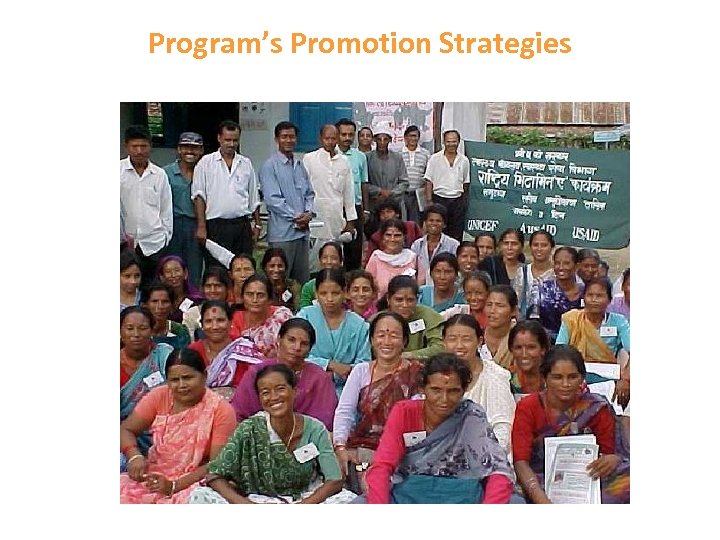 Program’s Promotion Strategies • Nationwide campaign to advertise the supplementation dates as well as to raise awareness on vitamin A • Occurs in three levels; national, district and community • Interpersonal Communication: the dominant promotion strategy • Use of Mass media such as TV, radio and posters and pamphlets before distribution Ram Kumar Shrestha, Nepal
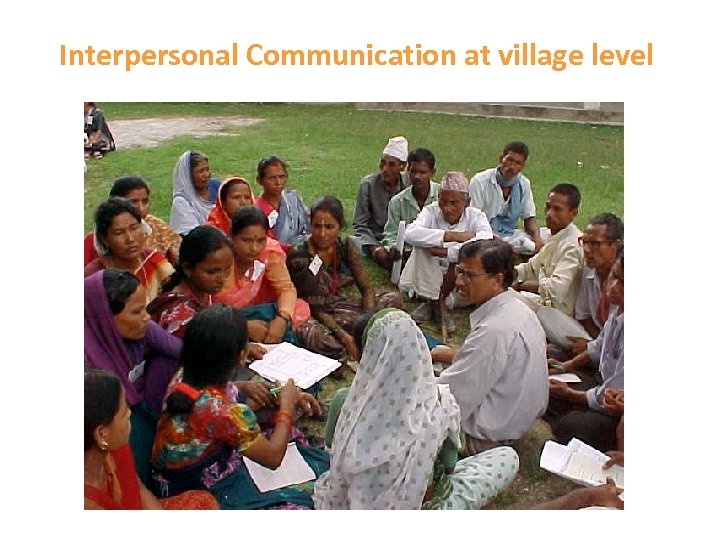 Interpersonal Communication at village level • FCHVs play the leading role for message dissemination • Interactive miking, magic shows, parades and theater performances and town criers are used • Schools, police, local business groups, women’s groups, community leaders are mobilized • Broadcast of vitamin A messages on radio and TV complements these promotion activities Ram Kumar Shrestha, Nepal
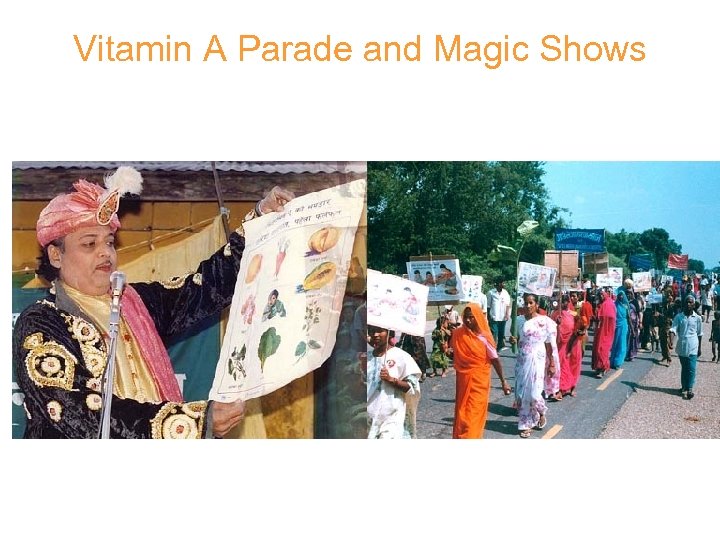 Vitamin A Parade and Magic Shows Ram Kumar Shrestha, Nepal
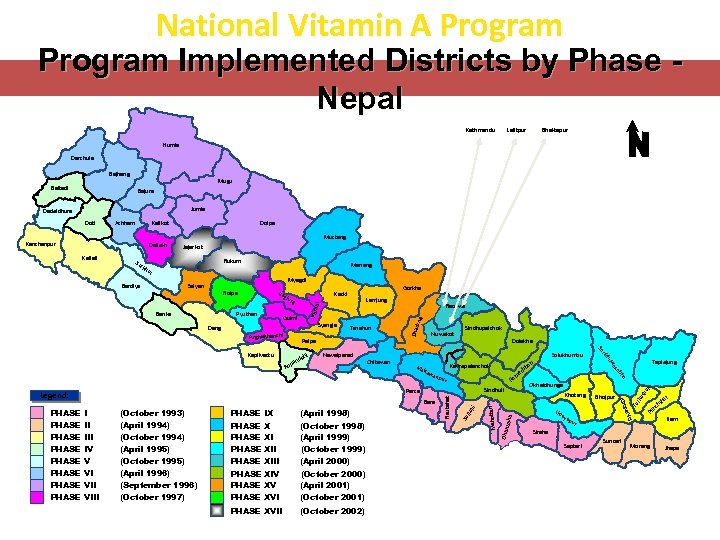 National Vitamin A Program Implemented Districts by Phase Nepal Kathmandu Lalitpur Bhaktapur Humla Darchula Bajhang Baitadi Mugu Bajura Jumla Dadeldhura Doti Achham Kalikot Dolpa Mustang Rukum rkh Manang et Myagdi Lamjung Syangja Dang Arghakhanchi Tanahun Rasuwa Nuwakot Palpa i Nawalparasi Solukhumbu anp ur m Ra Sindhuli PHASE III PHASE IV (October 1994) (April 1995) PHASE VII (October 1995) (April 1996) (September 1996) PHASE VIII (October 1997) PHASE IX (April 1998) PHASE XI (October 1998) (April 1999) PHASE XIII (October 1999) (April 2000) PHASE XIV PHASE XV (October 2000) (April 2001) PHASE XVI (October 2001) PHASE XVII (October 2002) i (October 1993) (April 1994) ah PHASE II Sa rl Bara Rautahat Parsa Taplejung ha kaw Legend: p a hh ec Kavrepalanchok ab Ma as Chitawan uw eh nd pa kh Ru Dolakha n Sa Kapilvastu Sindhupalchok Okhaldhunga m Gulmi Khotang Ud ay Bhojpur hu Pyuthan ng ta nku Te rh at Banke Gorkha Kaski glu Dha Ba Rolpa ri Salyan Mahotta Bardiya t Su Parba Kailali Jajarkot Dhan usha Dailekh Dha ding Kanchanpur ap ur ar P th ch an Ilam Siraha Saptari Sunsari Morang Jhapa
 Approaches used to maintain the motivation of FCHVs
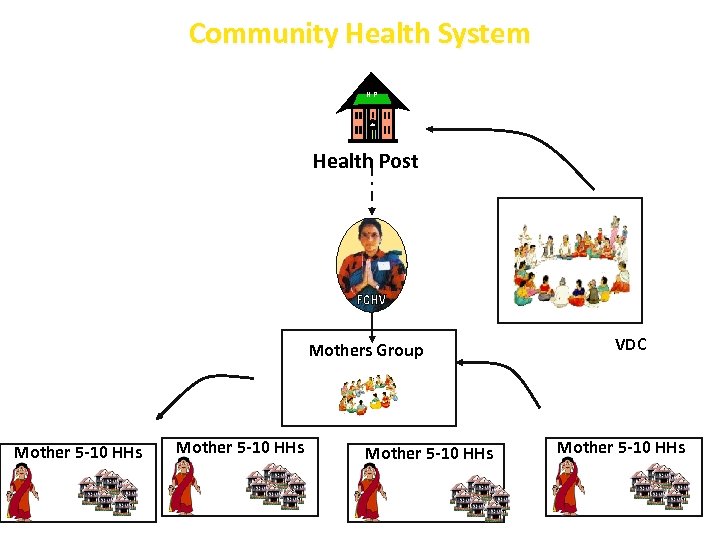 Community Health System HP Health Post Mothers Group Mother 5 -10 HHs VDC Mother 5 -10 HHs
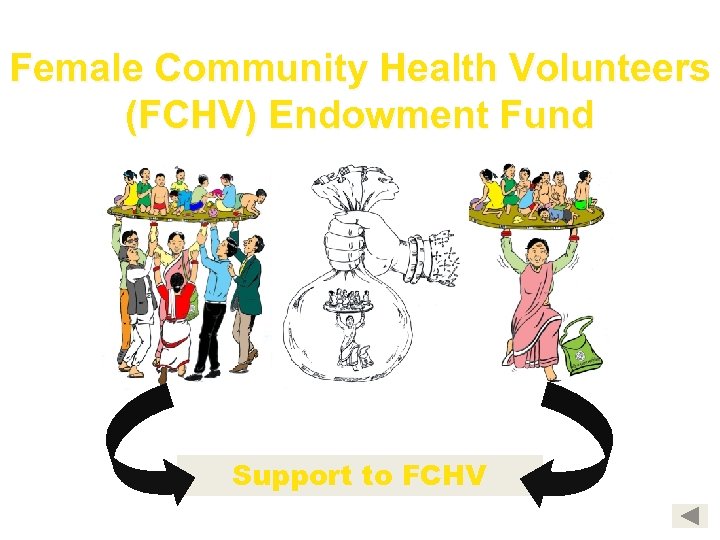 Female Community Health Volunteers (FCHV) Endowment Fund Support to FCHV
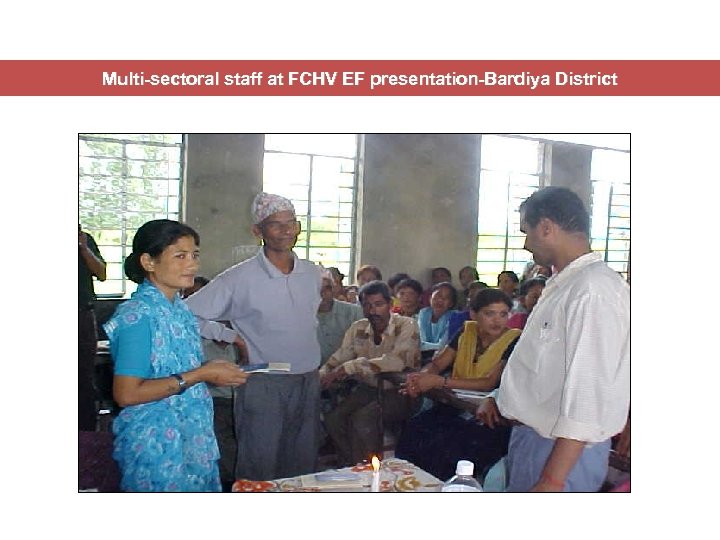 Multi-sectoral staff at FCHV EF presentation-Bardiya District
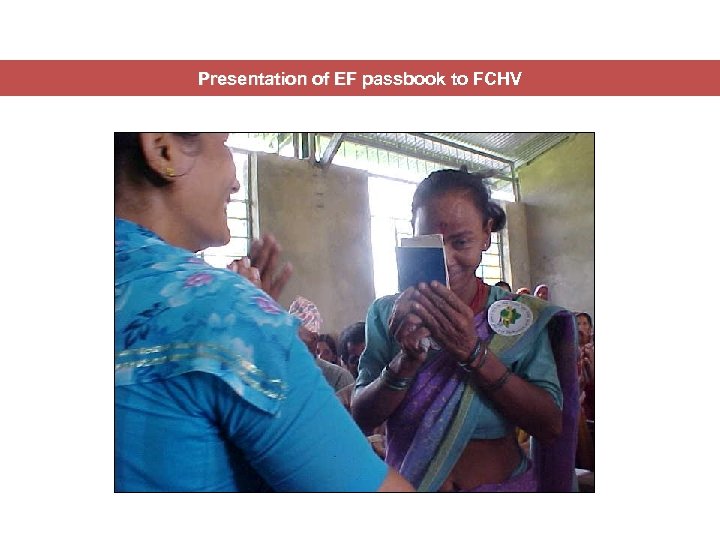 Presentation of EF passbook to FCHV
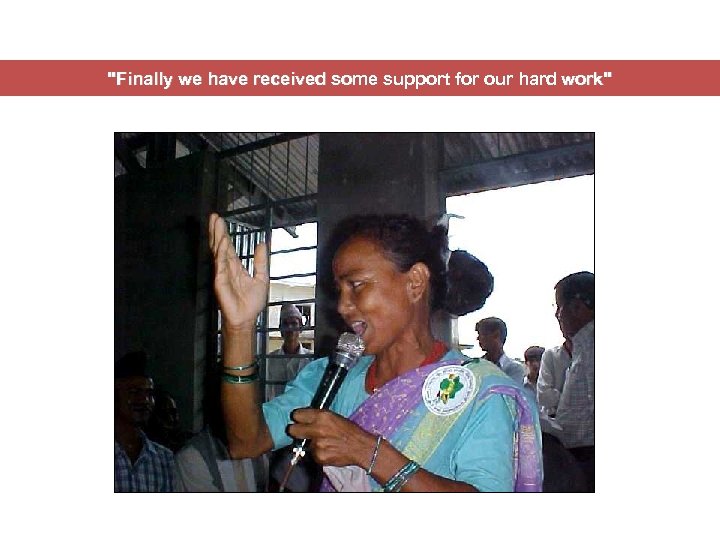 "Finally we have received some support for our hard work"
 Accomplishment • 49, 000 FCHVs actively participate in dosing vitamin A • Each round of supplementation reach 3. 6 million children with vitamin A capsule and 3. 1 million children with de-worming tablets • Coverage has been maintained above 90% for 13 years • Death averted 10, 000 – 15 000 each year
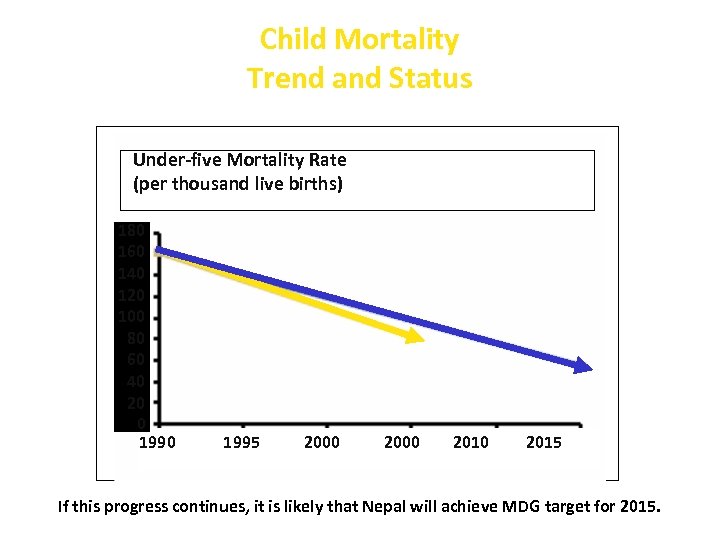 Child Mortality Trend and Status Under-five Mortality Rate (per thousand live births) 180 160 140 120 100 80 60 40 20 0 1995 2000 2010 2015 If this progress continues, it is likely that Nepal will achieve MDG target for 2015.
 Challenges • Mothers groups not revived • Community Health System requires strengthening • Implementers understanding the importance of Community Health System • Various Programs developing paralel structure(influencing govt. to change the system for their program) rather than developing support system to strengthen the existing system • Lack of coordination among various NGOs
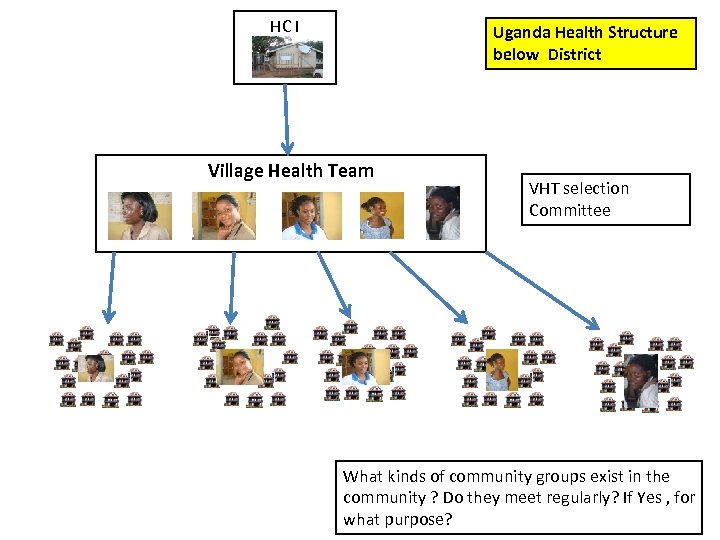 HC I Uganda Health Structure below District Village Health Team VHT selection Committee What kinds of community groups exist in the community ? Do they meet regularly? If Yes , for what purpose?
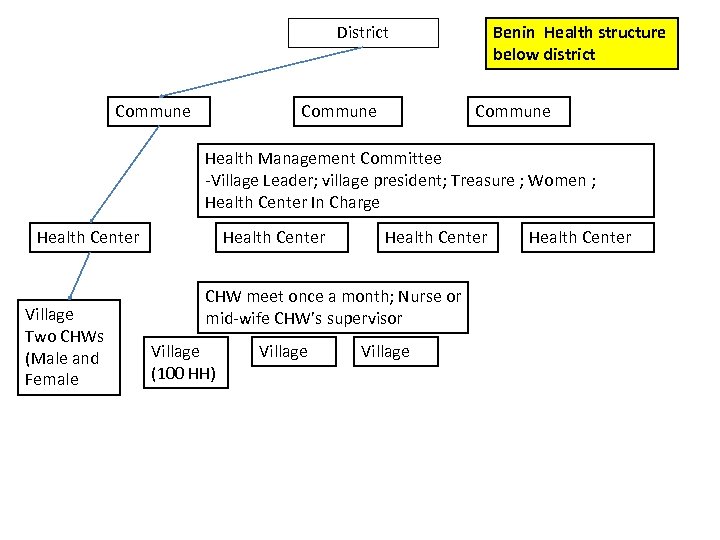 District Commune Benin Health structure below district Commune Health Management Committee -Village Leader; village president; Treasure ; Women ; Health Center In Charge Health Center Village Two CHWs (Male and Female Health Center CHW meet once a month; Nurse or mid-wife CHW’s supervisor Village (100 HH) Village Health Center
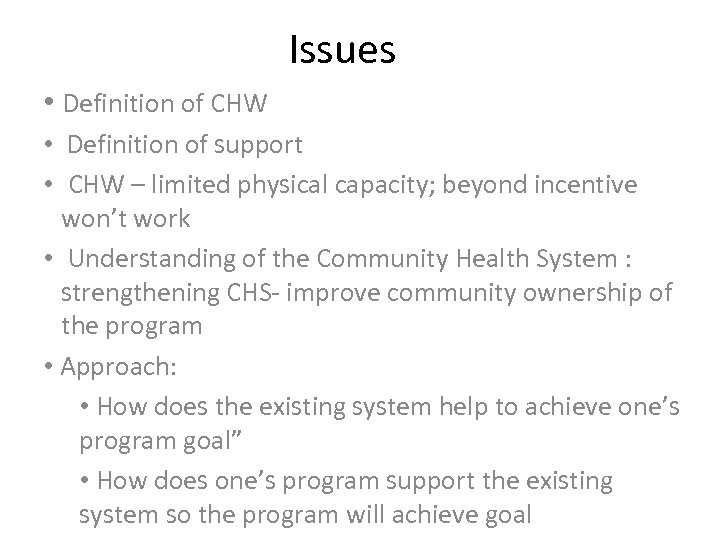 Issues • Definition of CHW • Definition of support • CHW – limited physical capacity; beyond incentive won’t work • Understanding of the Community Health System : strengthening CHS- improve community ownership of the program • Approach: • How does the existing system help to achieve one’s program goal” • How does one’s program support the existing system so the program will achieve goal
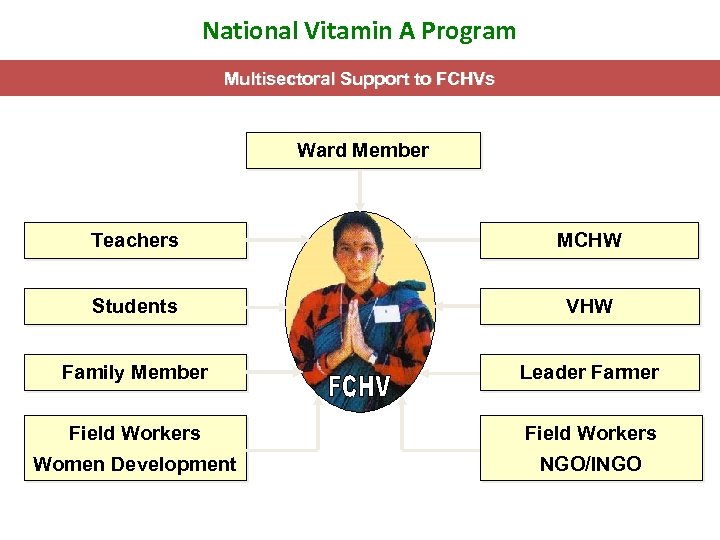 National Vitamin A Program Multisectoral Support to FCHVs Ward Member Teachers MCHW Students VHW Family Member Leader Farmer Field Workers Women Development NGO/INGO
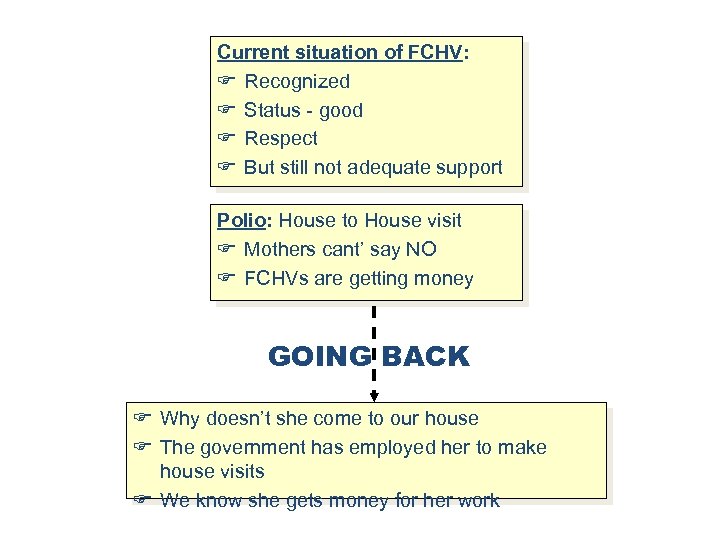 Current situation of FCHV: F Recognized F Status - good F Respect F But still not adequate support Polio: House to House visit F Mothers cant’ say NO F FCHVs are getting money GOING BACK F Why doesn’t she come to our house F The government has employed her to make house visits F We know she gets money for her work