


 Скачать презентацию Feeding the world Is there enough to nourish
ae828ea2eb149c3c789bd7a27f43fc38.ppt
- Количество слайдов: 39
 Feeding the world Is there enough to nourish everyone?
 Overview § World food production is adequate in quantity and quality (nutritional value) to feed the current human population. § Modern food problem is largely due to • Distribution Issues • Poverty in large part of the world
 § Some farmland is lost for food production • Suburban development (e. g. , CT where farming has been decreasing for years)
 Overview § Increases in food production have been accomplished: • Increasing area in production • Increasing production per unit area
 Soils § Definition: • Rock modified by biological, chemical and physical processes such that the material will support rooted plants § How long does it take to make soils? § 1 mm per 10 - 40 yrs
 Soils § To grow crops we need soils. What is soil? ~Weathered rock? • Chemical elements, including organics, required for plant growth • Air and water pass freely through the soil • Should retain water well • Fine clays help retain moisture, chemicals • Sands and coarse particles help with drainage
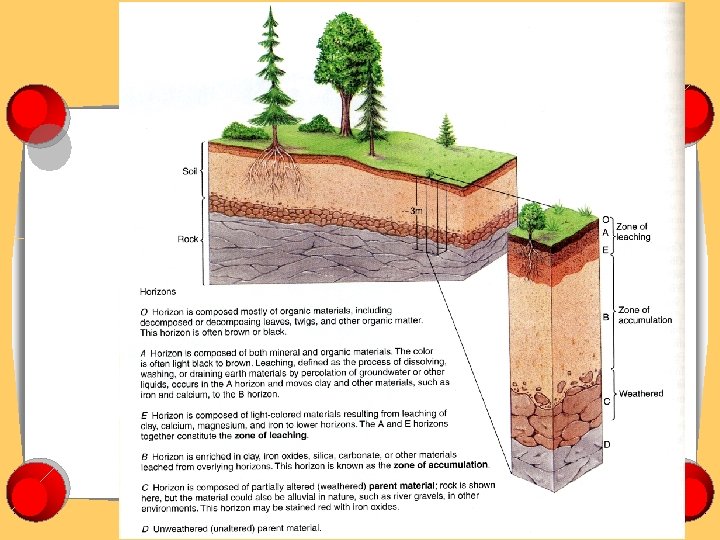
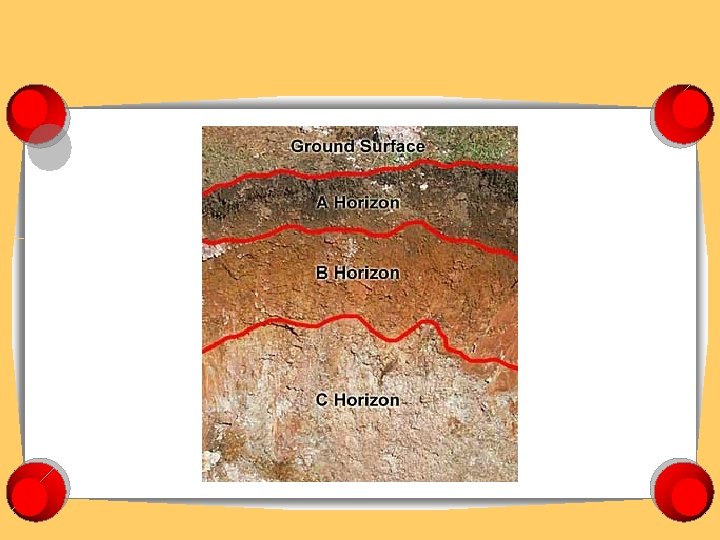
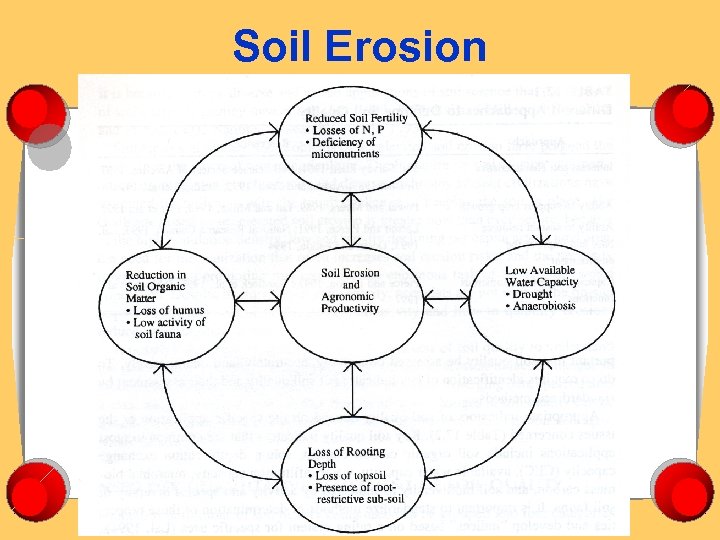
 Soils § Soils are damaged due to: • Removal of natural ground cover § Farming, Deforestation, Overgrazing • Erosion: wind and water • Acidification, excess leaching • Pollution
 Soils
Soils
 Soils
Soils
 Soils § Agriculture in the 20 th century has damaged more than 109 ha of land through erosion and soil loss
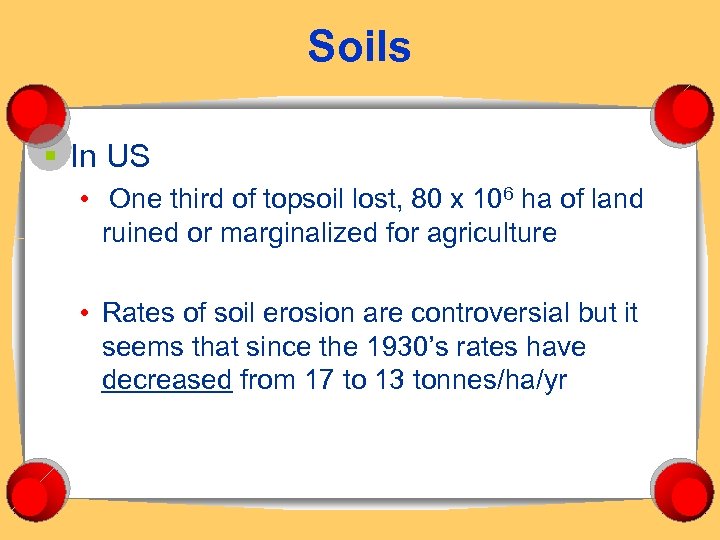 Soils § In US • One third of topsoil lost, 80 x 106 ha of land ruined or marginalized for agriculture • Rates of soil erosion are controversial but it seems that since the 1930’s rates have decreased from 17 to 13 tonnes/ha/yr
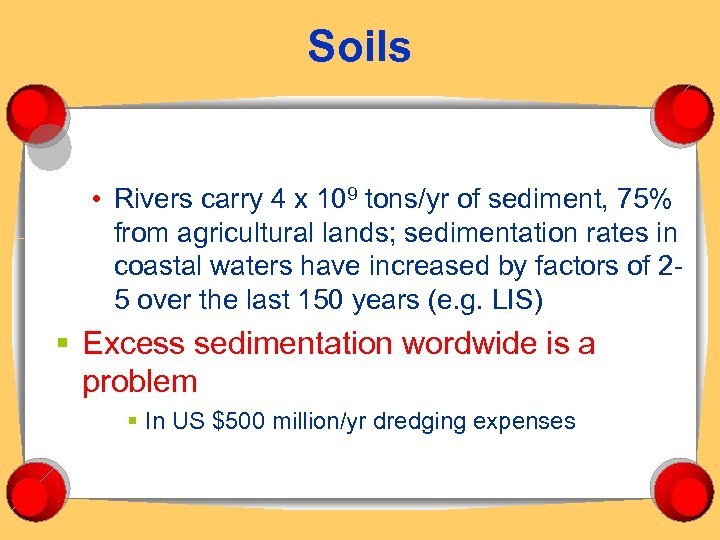 Soils • Rivers carry 4 x 10⁹ tons/yr of sediment, 75% from agricultural lands; sedimentation rates in coastal waters have increased by factors of 25 over the last 150 years (e. g. LIS) § Excess sedimentation wordwide is a problem § In US $500 million/yr dredging expenses
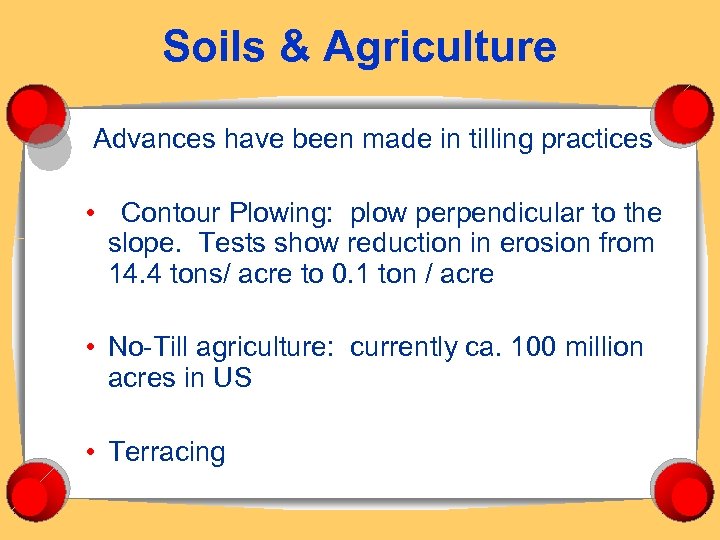 Soils & Agriculture Advances have been made in tilling practices • Contour Plowing: plow perpendicular to the slope. Tests show reduction in erosion from 14. 4 tons/ acre to 0. 1 ton / acre • No-Till agriculture: currently ca. 100 million acres in US • Terracing
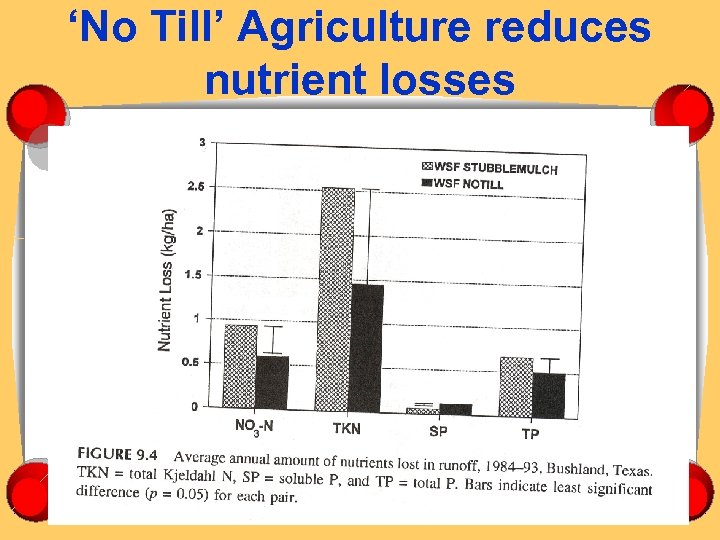 ‘No Till’ Agriculture reduces nutrient losses
 Soil Erosion
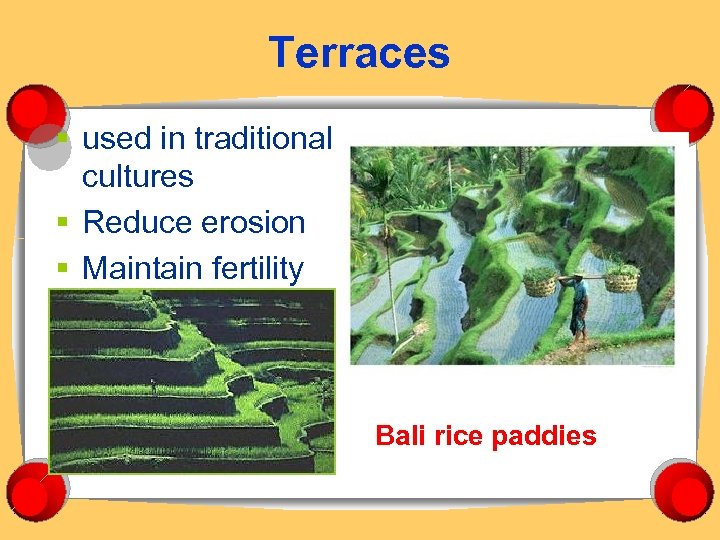 Terraces § used in traditional cultures § Reduce erosion § Maintain fertility Bali rice paddies
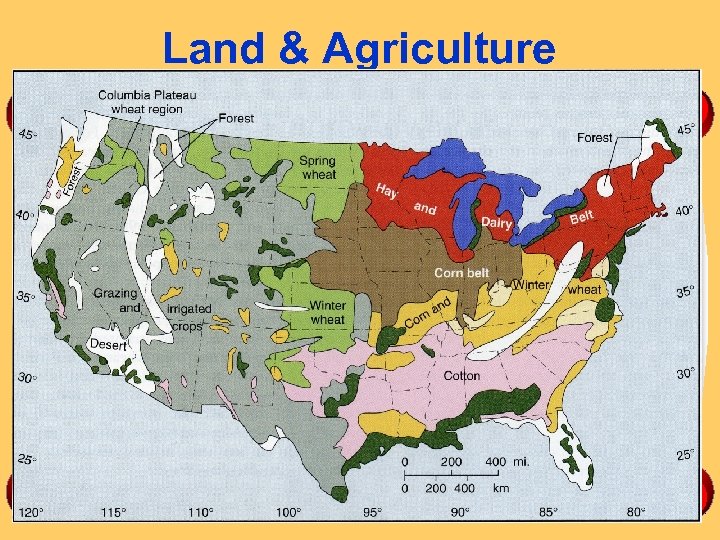
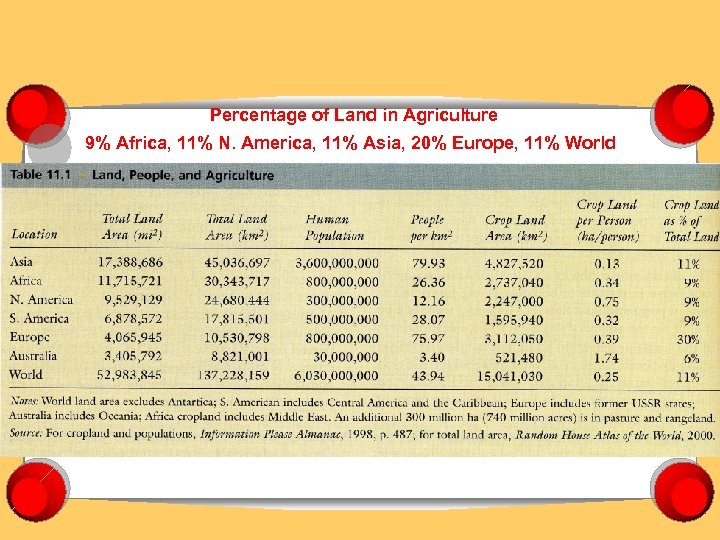 Percentage of Land in Agriculture 9% Africa, 11% N. America, 11% Asia, 20% Europe, 11% World



 Land & Agriculture
 Land & Agriculture
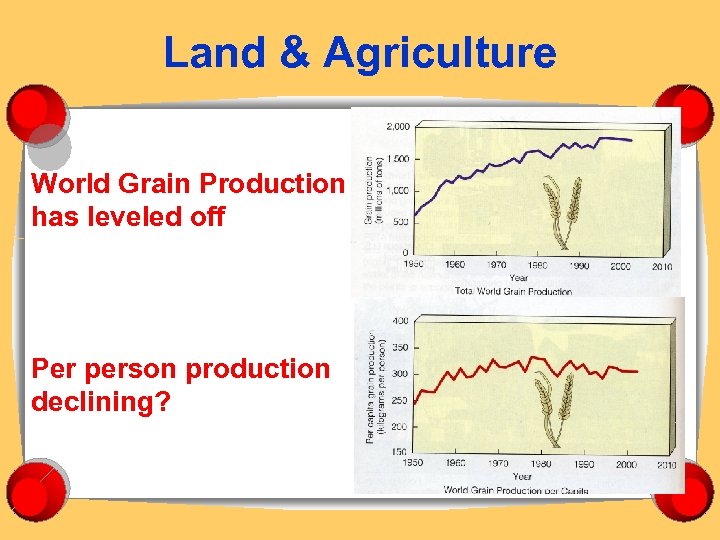 Land & Agriculture World Grain Production has leveled off Per person production declining?
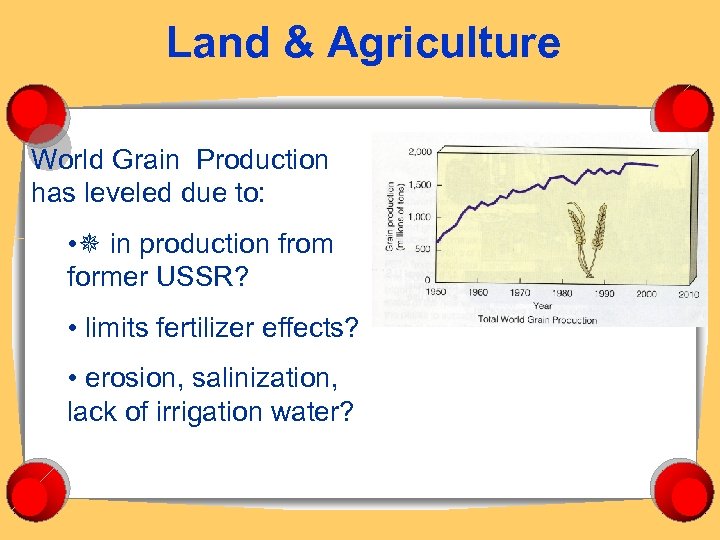 Land & Agriculture World Grain Production has leveled due to: • in production from former USSR? • limits fertilizer effects? • erosion, salinization, lack of irrigation water?
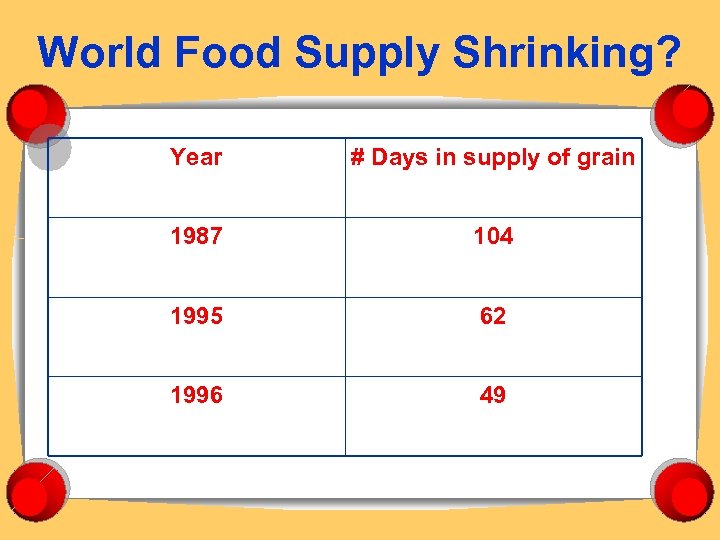 World Food Supply Shrinking? Year # Days in supply of grain 1987 104 1995 62 1996 49
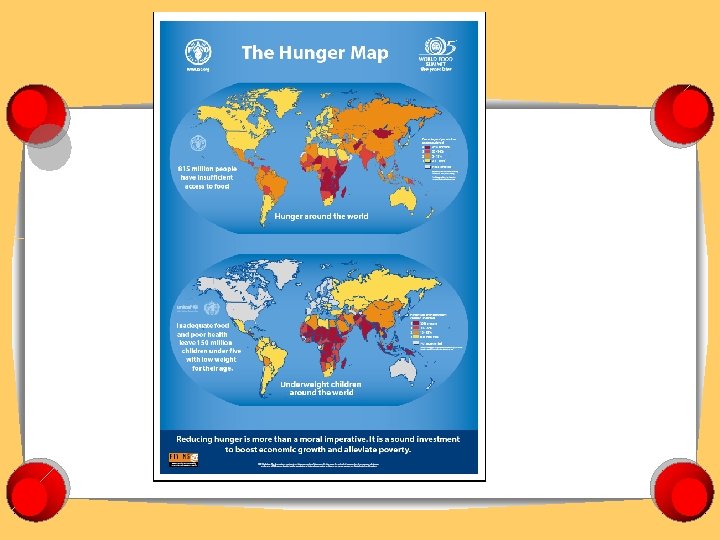
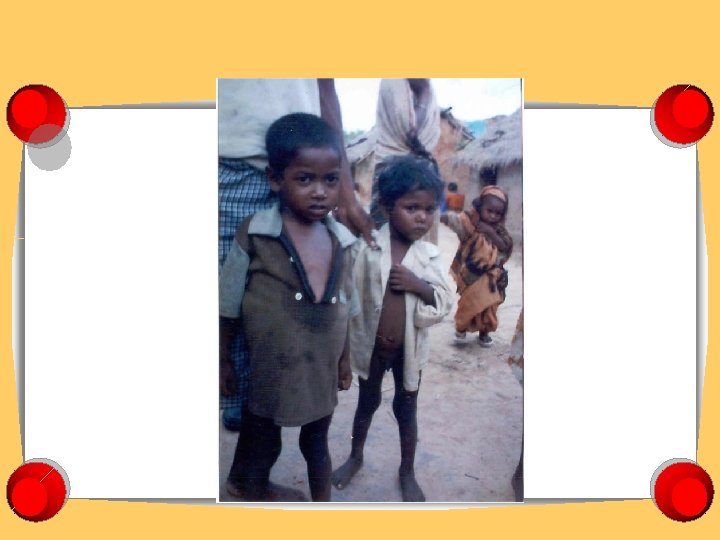
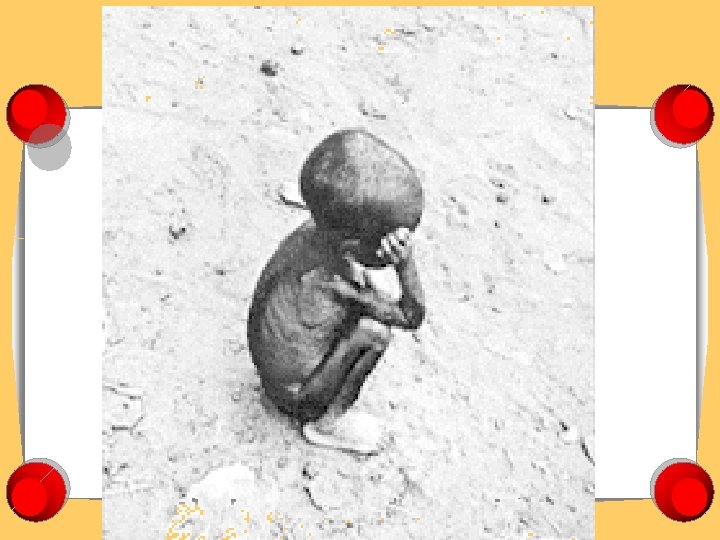
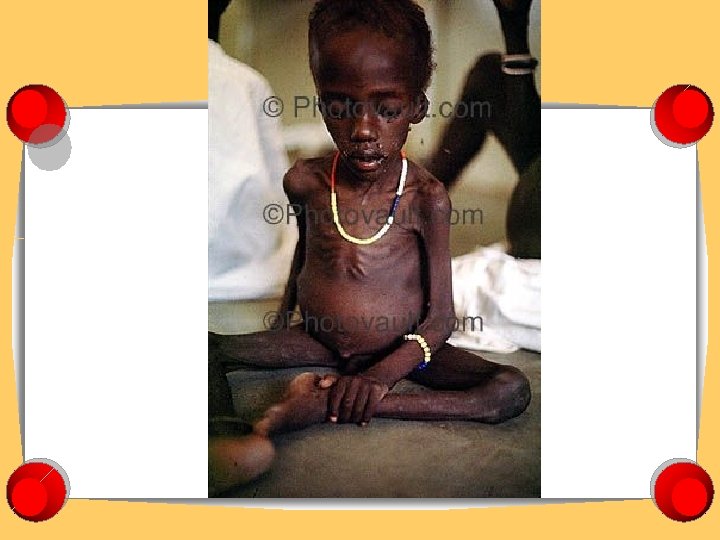
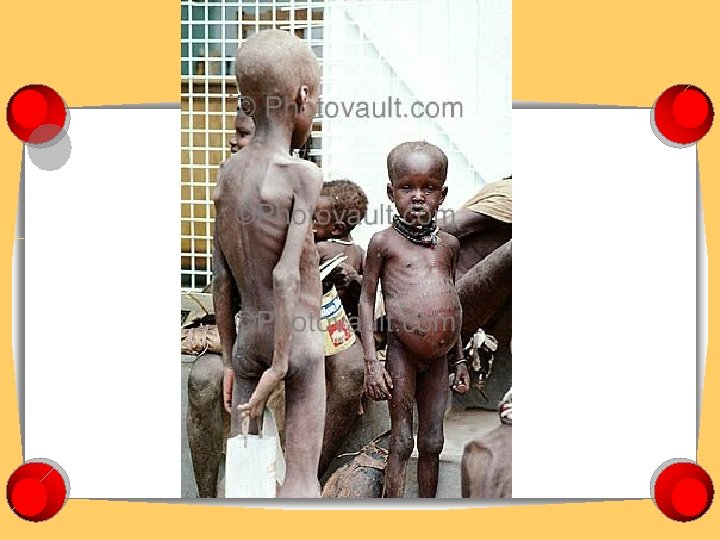
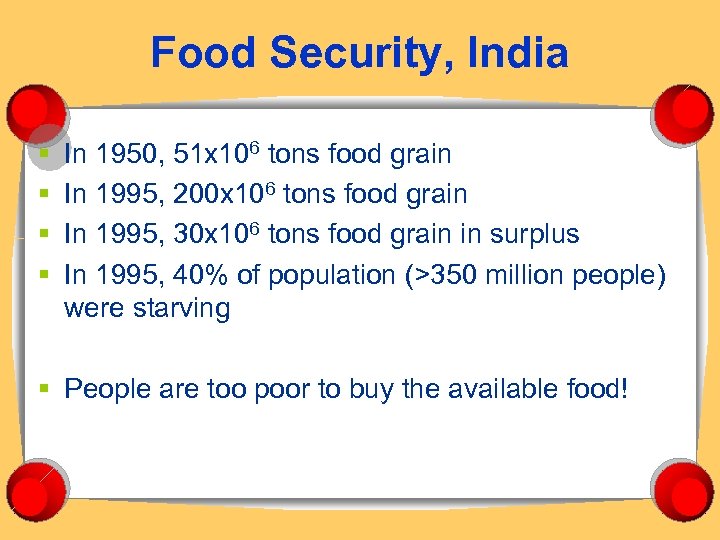 Food Security, India § § In 1950, 51 x 106 tons food grain In 1995, 200 x 106 tons food grain In 1995, 30 x 106 tons food grain in surplus In 1995, 40% of population (>350 million people) were starving § People are too poor to buy the available food!
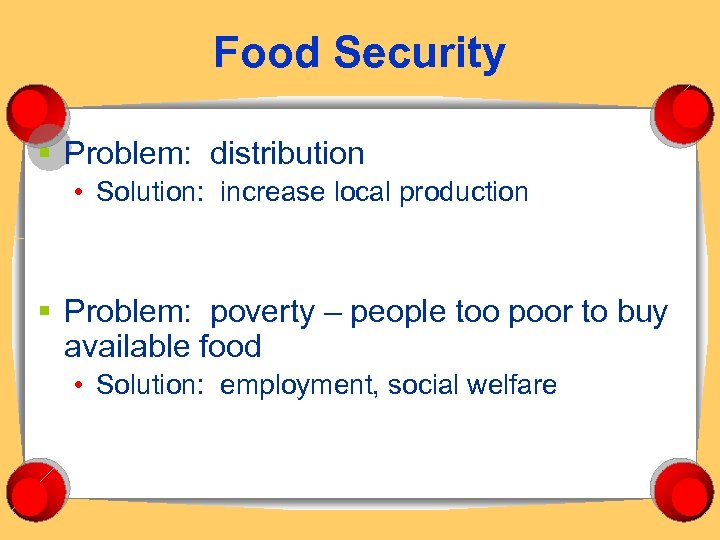 Food Security § Problem: distribution • Solution: increase local production § Problem: poverty – people too poor to buy available food • Solution: employment, social welfare
 Food Security: Can we meet the future demands? § By 2025, we will have to triple irrigated lands • Volume of water will equal the Nile or 10 Colorado Rivers § Water diversion will have competition from providing local drinking water and for local crops § In 2025, use of runoff to increase from 54% to 70% • Destruction of rivers, fisheries and aquatic species
 Genetically Modified (GM) Crops § Placement of foreign genes into crops (or other organism) § Enhance production and growth under usually deleterious climates or conditions § Disease and insect resistance
 Genetically Modified (GM) Crops § Panacea or Plague? ? ? • NAS panel (2002) says no strong evidence of environmental damage • Evidence for gene spreading (e. g. , GM genes in taco products) • Evidence for allergic responses in humans § Growth genes in cereal – shrimp – human allergy and immune response § Who owns the resources? ? ?
 Food production depends on soil, water and energy supplies - all are stressed!