


 Скачать презентацию Federal climate policy and your leverage on it
55009b5e356127d09b8847bc204b6e31.ppt
- Количество слайдов: 33
 Federal climate policy and your leverage on it Paul Higgins Senior Policy Fellow, The American Meteorological Society Contributor, www. Climate. Policy. org phiggins@ametsoc. org Climate. Policy. org An American Meteorological Society Project
 Recommended Reading • Dessler, A. E. , & Parson, E. A. The Science and Politics of Global Climate Change: A Guide to the Debate. Cambridge University Press, 2006. • Stavins, R. N. A U. S. cap-and trade system to address global climate change. The Hamilton Project, 2007. (http: //www. brookings. edu/papers/2007/10 climate_stavins. aspx) • Metcalf, G. E. A proposal for a U. S. carbon tax swap: an equitable tax reform to address global climate change. The Hamilton Project, 2007. (http: //ase. tufts. edu/econ/events/special. Events. Docs/metcalf. Carbon. Tax. pdf) • Aldy, J. E. , Barrett, S. , & Stavins, R. N. Thirteen Plus One: A Comparison of Global Climate Policy Architectures. Climate Policy 3(4): 373 -397. (http: //www. rff. org/Documents/RFF-DP-03 -26. pdf)
 Opportunities for civic engagement • Outreach to the public – Op-eds, letters to the editor, contributions to blogs/web commentary – Speak to local groups (Lions clubs, Rotarians, etc. ) • Outreach to Congress • AAAS Mass Media Fellowship – • AMS Summer Policy Colloquium & Leadership Development Program – • http: //www. aaas. org/programs/education/Mass. Media/index. shtml http: //www. ametsoc. org/spc AAAS Science & Technology Policy Fellowships (sponsored by AAAS, AMS, AGU, GSA, AGI, and others) – – http: //fellowships. aaas. org http: //www. ametsoc. org/csf Climate. Policy. org An American Meteorological Society Project
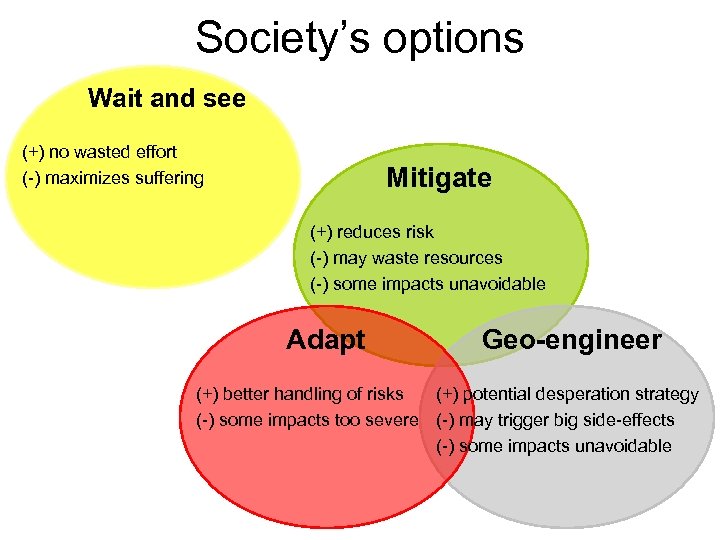 Society’s options Wait and see (+) no wasted effort (-) maximizes suffering Mitigate (+) reduces risk (-) may waste resources (-) some impacts unavoidable Adapt Geo-engineer (+) better handling of risks (+) potential desperation strategy (-) some impacts too severe (-) may trigger big side-effects (-) some impacts unavoidable
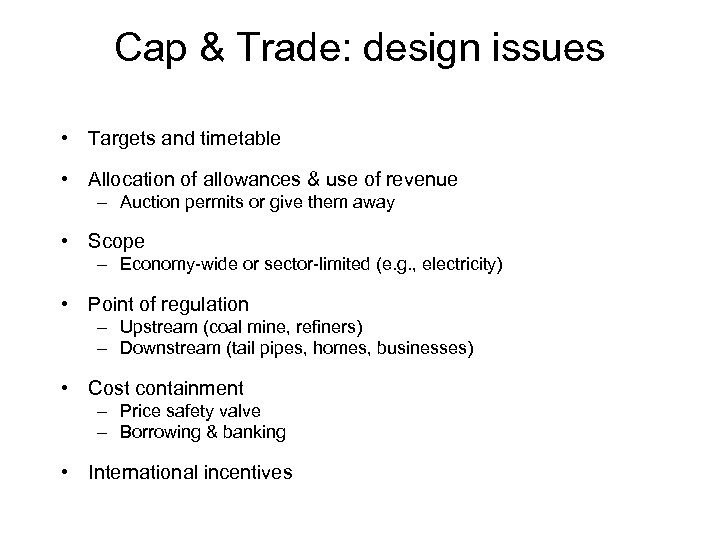 Cap & Trade: design issues • Targets and timetable • Allocation of allowances & use of revenue – Auction permits or give them away • Scope – Economy-wide or sector-limited (e. g. , electricity) • Point of regulation – Upstream (coal mine, refiners) – Downstream (tail pipes, homes, businesses) • Cost containment – Price safety valve – Borrowing & banking • International incentives
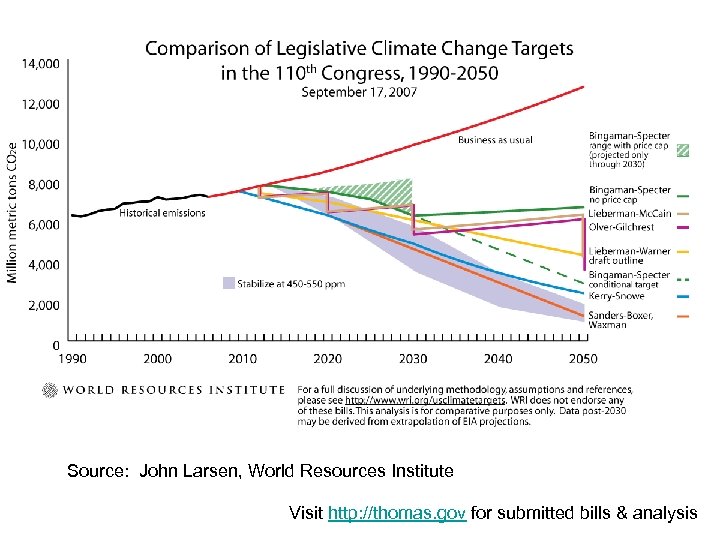 Source: John Larsen, World Resources Institute Visit http: //thomas. gov for submitted bills & analysis
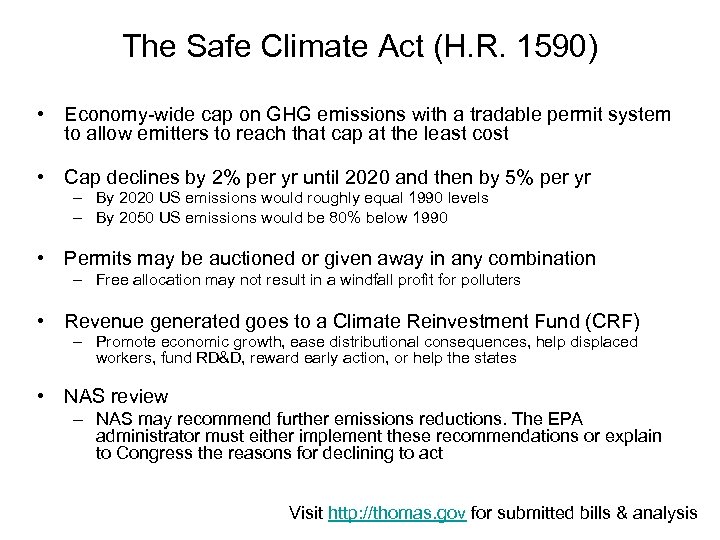 The Safe Climate Act (H. R. 1590) • Economy-wide cap on GHG emissions with a tradable permit system to allow emitters to reach that cap at the least cost • Cap declines by 2% per yr until 2020 and then by 5% per yr – By 2020 US emissions would roughly equal 1990 levels – By 2050 US emissions would be 80% below 1990 • Permits may be auctioned or given away in any combination – Free allocation may not result in a windfall profit for polluters • Revenue generated goes to a Climate Reinvestment Fund (CRF) – Promote economic growth, ease distributional consequences, help displaced workers, fund RD&D, reward early action, or help the states • NAS review – NAS may recommend further emissions reductions. The EPA administrator must either implement these recommendations or explain to Congress the reasons for declining to act Visit http: //thomas. gov for submitted bills & analysis
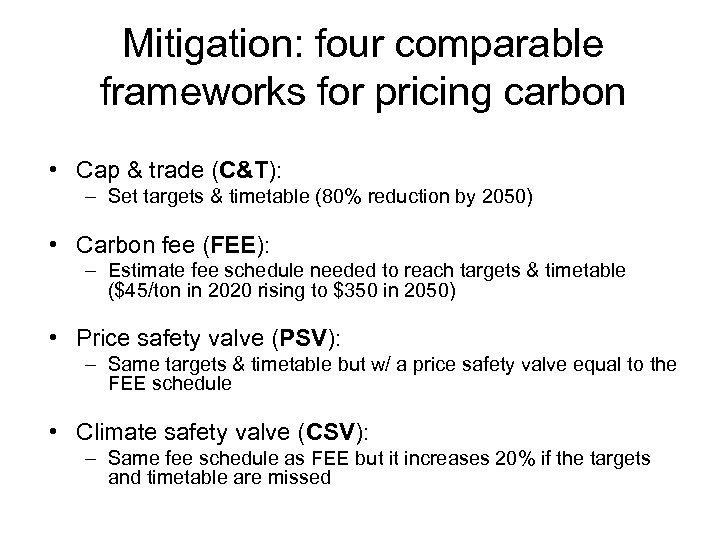 Mitigation: four comparable frameworks for pricing carbon • Cap & trade (C&T): – Set targets & timetable (80% reduction by 2050) • Carbon fee (FEE): – Estimate fee schedule needed to reach targets & timetable ($45/ton in 2020 rising to $350 in 2050) • Price safety valve (PSV): – Same targets & timetable but w/ a price safety valve equal to the FEE schedule • Climate safety valve (CSV): – Same fee schedule as FEE but it increases 20% if the targets and timetable are missed
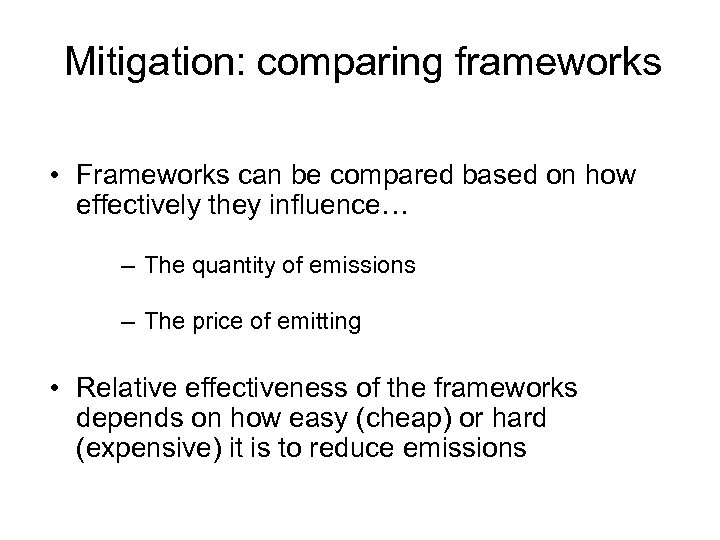 Mitigation: comparing frameworks • Frameworks can be compared based on how effectively they influence… – The quantity of emissions – The price of emitting • Relative effectiveness of the frameworks depends on how easy (cheap) or hard (expensive) it is to reduce emissions
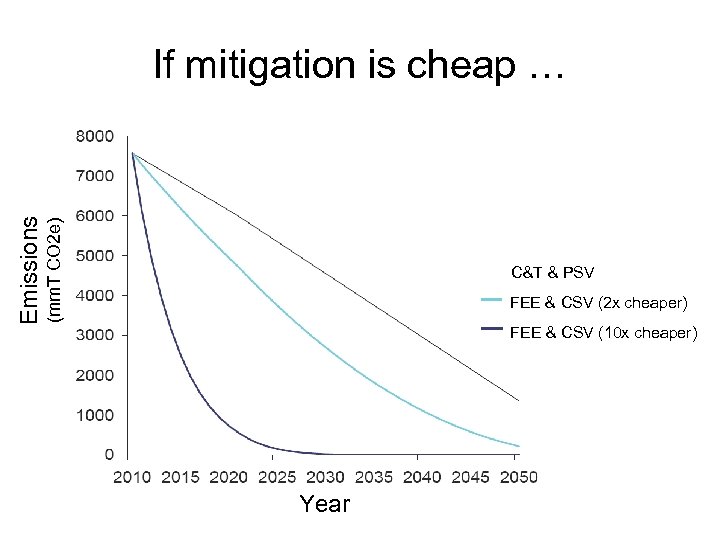 (mm. T CO 2 e) Emissions If mitigation is cheap … C&T & PSV FEE & CSV (2 x cheaper) FEE & CSV (10 x cheaper) Year
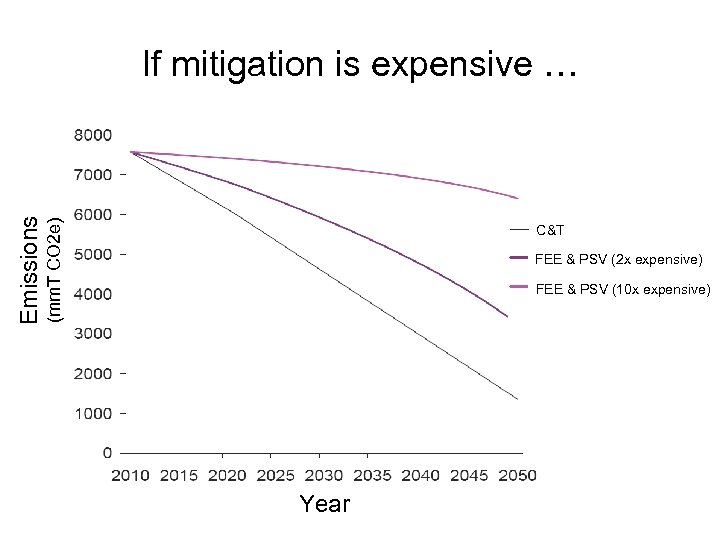 (mm. T CO 2 e) Emissions If mitigation is expensive … C&T FEE & harder 2 X PSV (2 x expensive) FEE & PSV (10 x expensive) 10 X harder 2 X harder w/sv 10 X harder w/sv Year
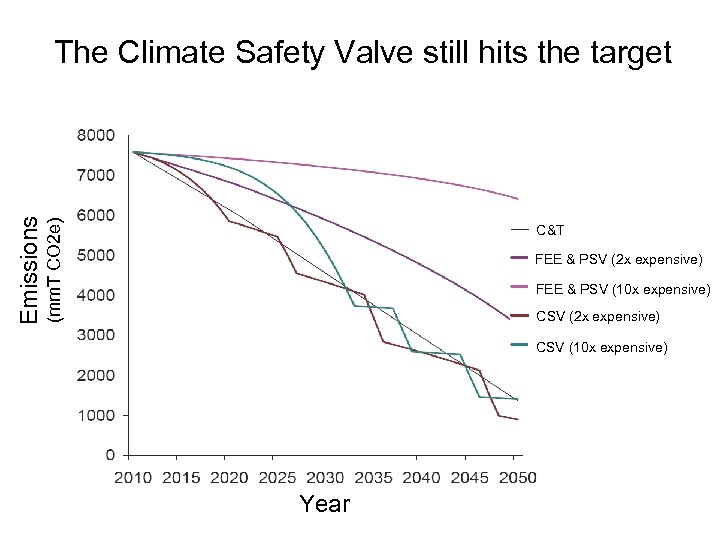 (mm. T CO 2 e) Emissions The Climate Safety Valve still hits the target C&T FEE & harder 2 X PSV (2 x expensive) FEE & PSV (10 x expensive) 10 X harder CSV (2 x expensive) 2 X harder w/sv CSV (10 x expensive) 10 X harder w/sv Year
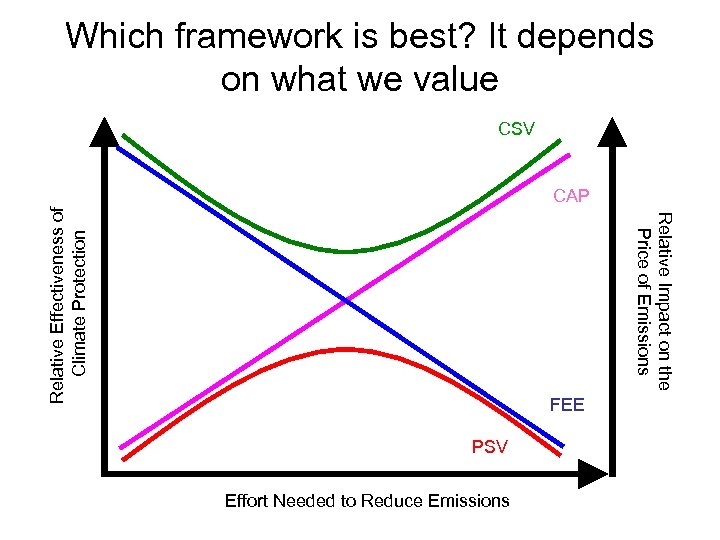 Which framework is best? It depends on what we value CSV Relative Impact on the Price of Emissions Relative Effectiveness of Climate Protection CAP FEE PSV Effort Needed to Reduce Emissions
 How about bills to enhance coping & avoiding the worst impacts? • Adaptation – Create an climate adaptation council within the office of the President (similar to the National Security council) that would assess current and future climate vulnerabilities and recommend strategies for improving our ability to cope • Geo-engineering – Establish a geo-engineering research program along with protective mechanisms to prevent and discourage the hasty deployment of geo-engineering solutions (e. g. , criminal penalties and trade sanctions)
 Three obstacles to action • Persistent gap in understanding between research & policy communities • Challenging distributional consequences: losers & winners of climate policy • International cooperation
 Obstacle #1: Persistent gap in understanding between research & policy communities • Culture of science • “Balance” in the media • Scientific arrogance/communication skills • Examples: the economics of climate change, & international responsibility for emissions • Possible solution: more civic engagement by scientists
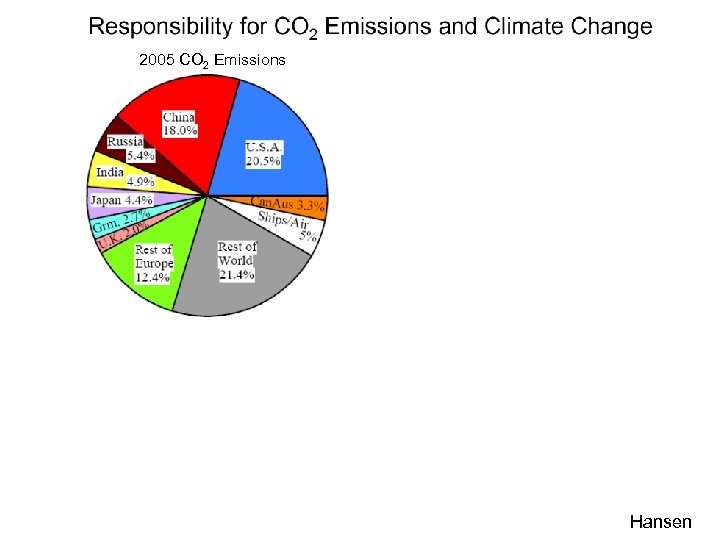 2005 CO 2 Emissions Hansen
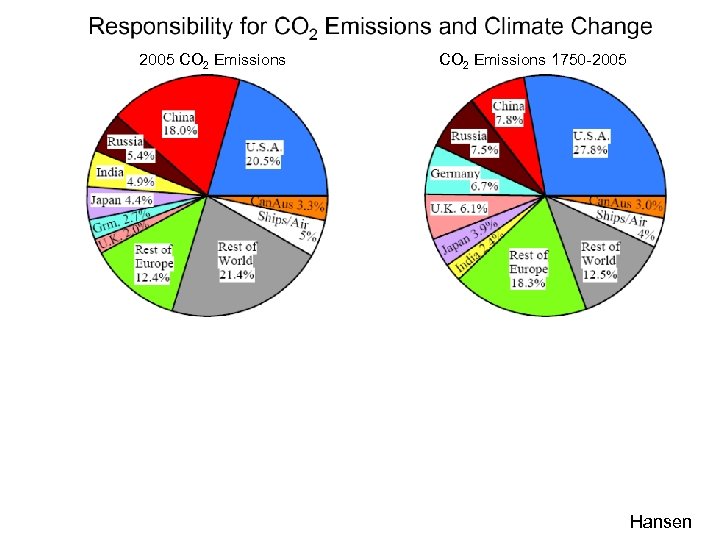 2005 CO 2 Emissions 1750 -2005 Hansen
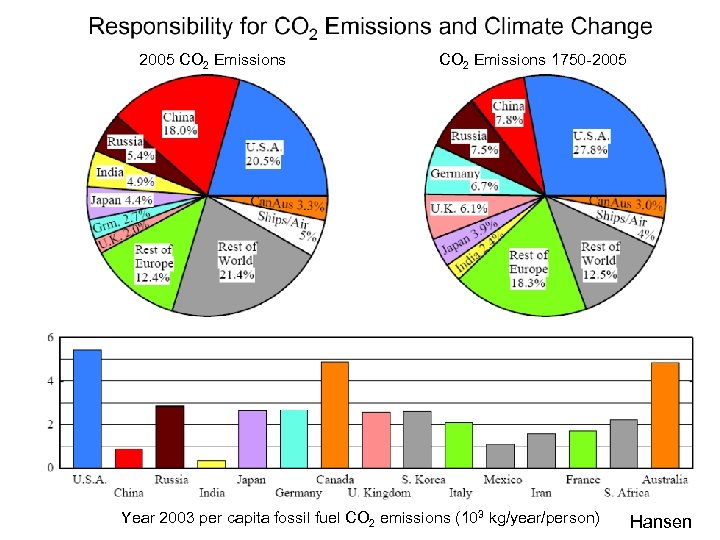 2005 CO 2 Emissions 1750 -2005 Year 2003 per capita fossil fuel CO 2 emissions (103 kg/year/person) Hansen
 Obstacle #2: differences between losers & winners of climate policy • Losers – – Know they’ll be hurt Care about few issues Politically Organized Powerful • Winners – – Don’t know they’ll gain Care about more issues Disorganized Politically weak Possible solution: Compensate losers & build a constituency with permits/revenues
 Obstacle #3: International cooperation • Problem: – Genuine need for a global effort – Political rhetoric against unilateral action (e. g. , the Byrd-Hagel resolution) • Possible solutions: – A conditional unilateral response – Border tax adjustments to deal with those who subsidize pollution – Encourage more accurate depiction of the problem
 Strategies for engaging Congress • Find the right staffers (usually the Legislative Assistant for energy and environment) – www. governmentguide. com • firstname_lastname@senatorslastname. senate. gov • firstname. lastname@mail. house. gov • Send a short message asking to talk/meet with them – Why you want to talk – Why they want to talk to you • You’re a constituent • You work on an important aspect of the issue • You work at an important institution in their district • Ways you may increase your effectiveness when meeting with staffers – Be clear about what you want the member to do – Be relevant (tie what you’re asking to larger issues that affect constituents) – Be aware that policy choices go beyond scientific understanding • Consider inviting the member (or the LA) to tour your research facility – Check with the Legislative Affairs Office for constraints or help
 Future career options • Science & engineering – Further our understanding & help develop next generation technologies that can reduce emissions • Business – Need for entrepreneurs who can provide the products & services that we want in ways that promote climate security (energy, transportation, especially) • Policy – Need for creative problem solvers/leaders who can develop approaches that will protect climate, boost the economy, and diffuse political obstacles • Writing – Inform decision makers and the public through journalism, books, etc. • Advocacy – Speak for the climate system and all who depend on it • Teaching – Educate & train the next generation of scientists & engineers, business owners, policy makers, writers, and advocates
 End
End
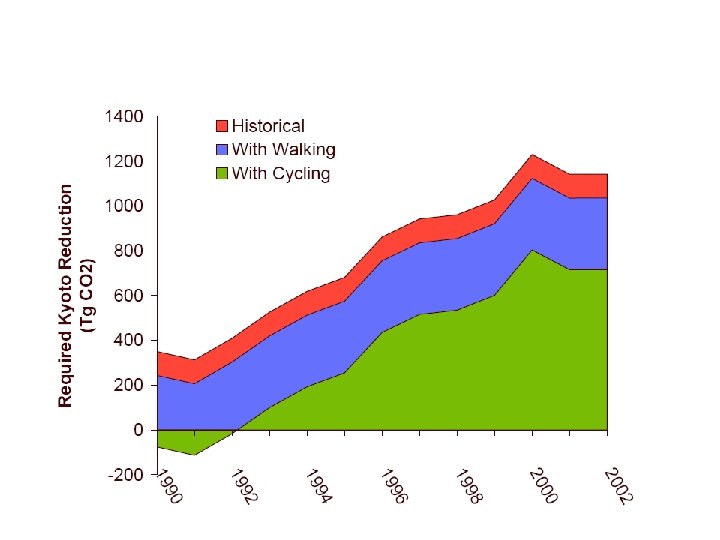
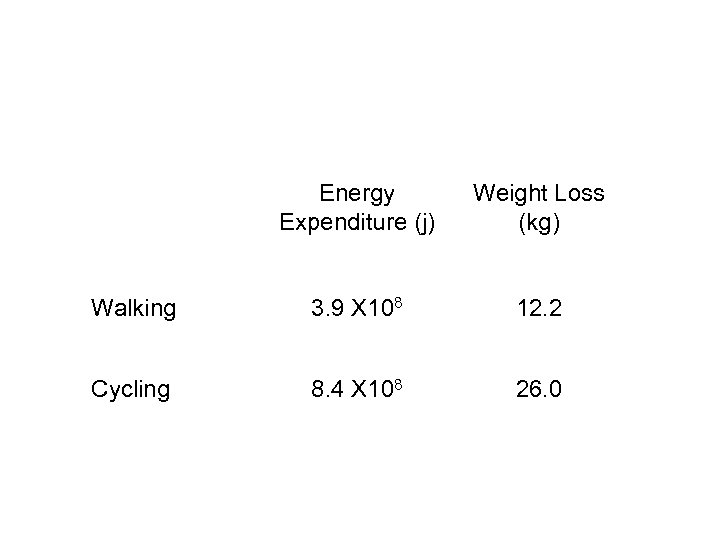
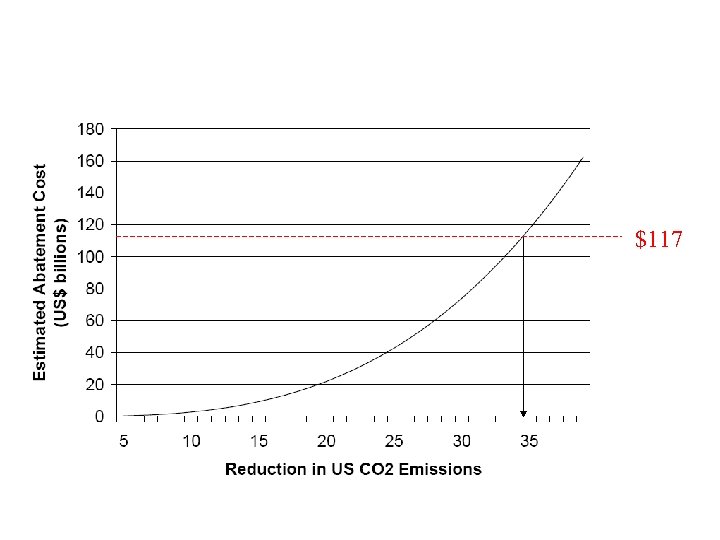
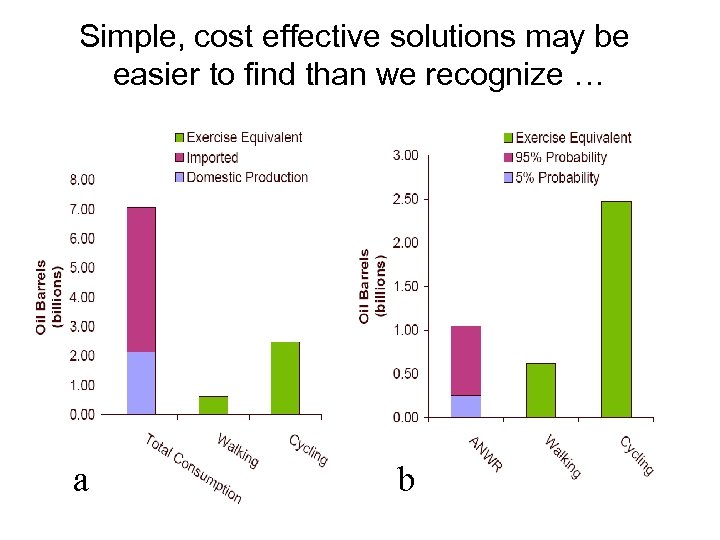 Simple, cost effective solutions may be easier to find than we recognize … a b
 Energy Expenditure (j) Weight Loss (kg) Walking 3. 9 X 10⁸ 12. 2 Cycling 8. 4 X 10⁸ 26. 0
 $117
$117
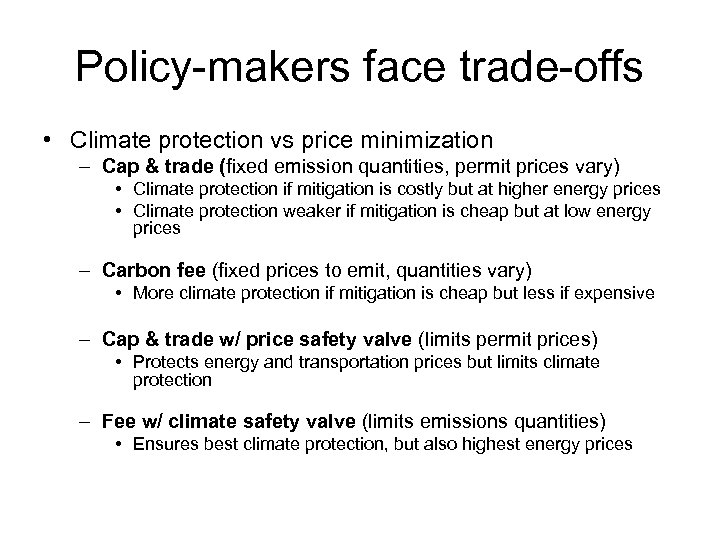 Policy-makers face trade-offs • Climate protection vs price minimization – Cap & trade (fixed emission quantities, permit prices vary) • Climate protection if mitigation is costly but at higher energy prices • Climate protection weaker if mitigation is cheap but at low energy prices – Carbon fee (fixed prices to emit, quantities vary) • More climate protection if mitigation is cheap but less if expensive – Cap & trade w/ price safety valve (limits permit prices) • Protects energy and transportation prices but limits climate protection – Fee w/ climate safety valve (limits emissions quantities) • Ensures best climate protection, but also highest energy prices
 Sample climate bills • Waxman’s Safe Climate Act (H. R. 1590) – One of ~10 bills that will mitigate by putting a price on greenhouse gas emissions • The Climate Pollution Reduction Act (a mock bill) • Thoughts on bill that could build adaptive capacity & responsibly explore geo-engineering • Visit http: //thomas. gov for submitted bills & analysis
 The Climate Pollution Reduction Act • Charges a fee to emit GHGs beginning in 2010 at $10 per ton (CO 2 e) • PHASE 1 (2010 and 2020): fee increases by $1. 00 each year – If less than 55% (40%) of global emissions are covered, the fee increases by $0. 75 ($0. 50) – If more than 70% (85%) of global emissions are covered, the fee increases by $1. 25 ($1. 50) • PHASE 2 (2021 and 2050): fee increases by $2. 00 each year – If less than 55% (40%) of global emissions are covered, the fee increases by $1. 50 ($1. 00) – If more than 70% (85%) of global emissions are covered, the fee increases by $2. 50 ($3. 00) • Includes a trade penalty for non-cooperation – All exports from countries that fail to charge a pollution fee will face border tax adjustments that equal the amount of pollution released during manufacture and shipment of that product • Revenue recycling – 25% of all collected pollution fees will be used to offset disaffected parties such as displaced workers, low-income members of society, and heavy energy consumers – 75% will be available to • reduce taxes on income or investment • reduce the budget deficit • fund low-emission technology development and deployment
 What impacts do we face? • Some possible positive outcomes – Reduced cold stress – Improved agricultural productivity in high latitudes – Better shipping lanes • But there are substantial risks of negative impacts – Human health (more heat stress, worse smog, changes to water quality/supply, impacts from severe storms, changes in vector borne diseases) – More intense storms – Rising sea levels – More floods and droughts – Ocean acidification (i. e. , coral and the fish that depend on them) – Stress to other biological systems that we depend on
 Will global warming be good? • It’s possible: – We could get lucky • Feedbacks mostly negative • Impacts mostly small or beneficial – Human ingenuity could help us cope & find new opportunities • But it’s unlikely, in my view – We might get unlucky • Feedbacks mostly positive • Impacts mostly large and harmful – Human society, and the systems that we depend on, are highly adapted to current climate conditions – Unlimited downside risk but only minor upside potential