 Скачать презентацию February 2013 Presentation of Erasmus centralised Actions Education
09440e60b9297065c572c358a22d6543.ppt
- Количество слайдов: 50



February 2013 Presentation of Erasmus centralised Actions Education, Audio-visual & Culture Executive Agency Gilles GERVAIS Programme Coordinator Athens 22 February 2013 1
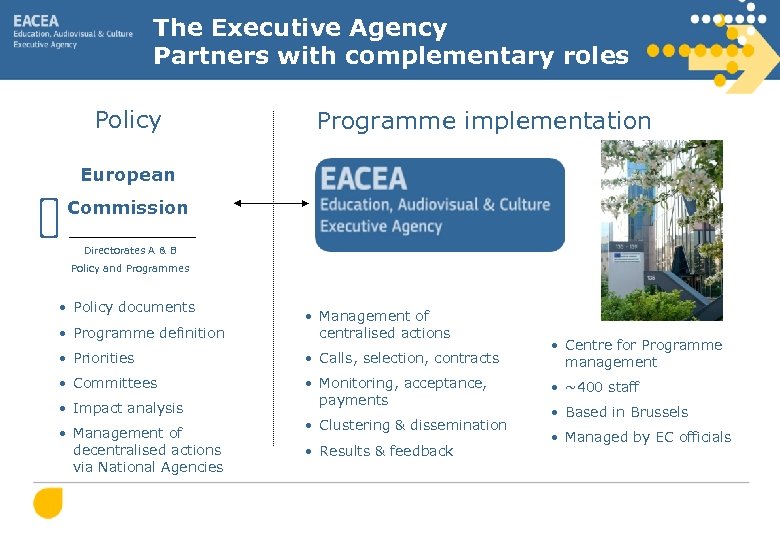
The Executive Agency Partners with complementary roles Policy Programme implementation European Commission Directorates A & B Policy and Programmes • Policy documents • Programme definition • Management of centralised actions • Priorities • Calls, selection, contracts • Centre for Programme management • Committees • Monitoring, acceptance, payments • ~400 staff • Impact analysis • Management of decentralised actions via National Agencies • Clustering & dissemination • Results & feedback • Based in Brussels • Managed by EC officials
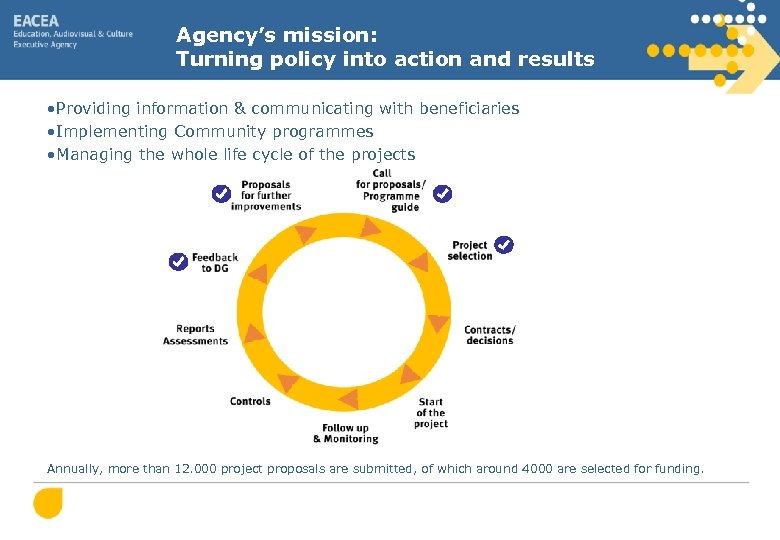
Agency’s mission: Turning policy into action and results • Providing information & communicating with beneficiaries • Implementing Community programmes • Managing the whole life cycle of the projects Annually, more than 12. 000 project proposals are submitted, of which around 4000 are selected for funding.
2013 – ERA Multilateral Projects Priorities 1. Increasing attainment levels and strengthening the social dimension of higher education 2. Improving quality & relevance of HE, including through cooperation between HEIs and labour market 3. Strengthening quality through mobility and crossborder cooperation 4. Knowledge Alliances 5. Improving governance and funding
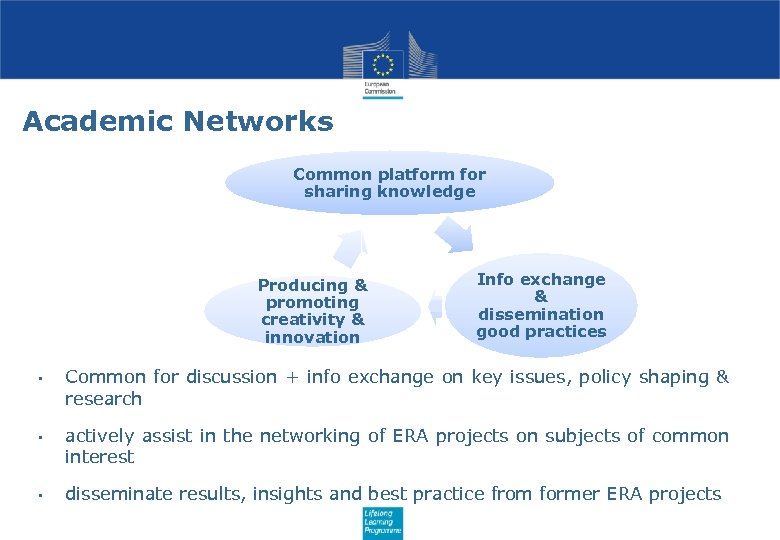
Academic Networks Common platform for sharing knowledge Producing & promoting creativity & innovation Info exchange & dissemination good practices • Common for discussion + info exchange on key issues, policy shaping & research • actively assist in the networking of ERA projects on subjects of common interest • disseminate results, insights and best practice from former ERA projects
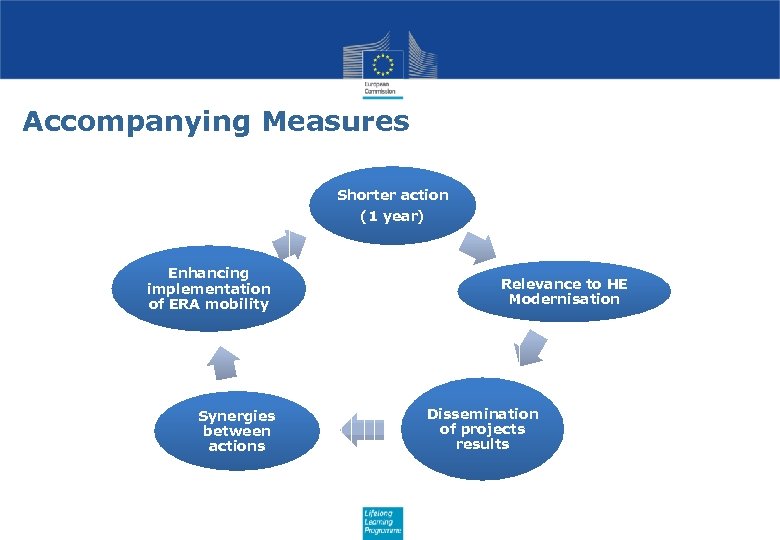
Accompanying Measures Shorter action (1 year) Enhancing implementation of ERA mobility Synergies between actions Relevance to HE Modernisation Dissemination of projects results
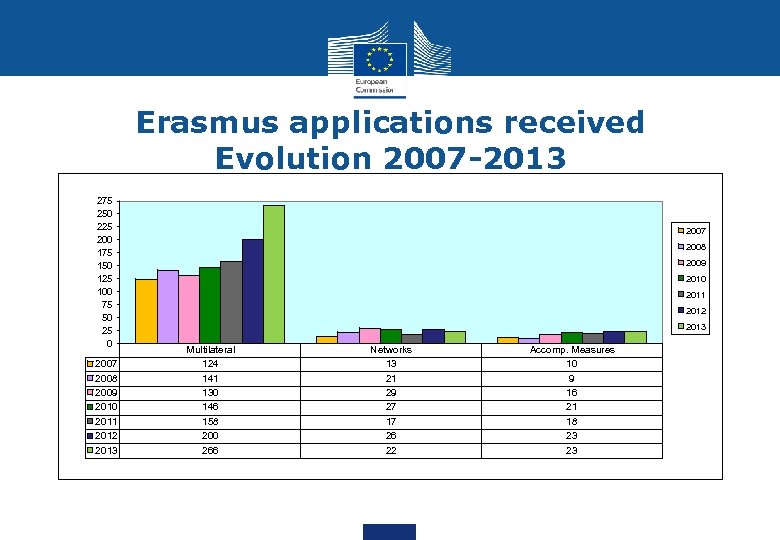
Erasmus applications received Evolution 2007 -2013 275 250 225 200 175 150 125 100 75 50 25 0 2007 2008 2009 2010 2011 2012 2013 Multilateral 124 141 130 146 158 200 266 Networks 13 21 29 27 17 26 22 Accomp. Measures 10 9 16 21 18 23 23
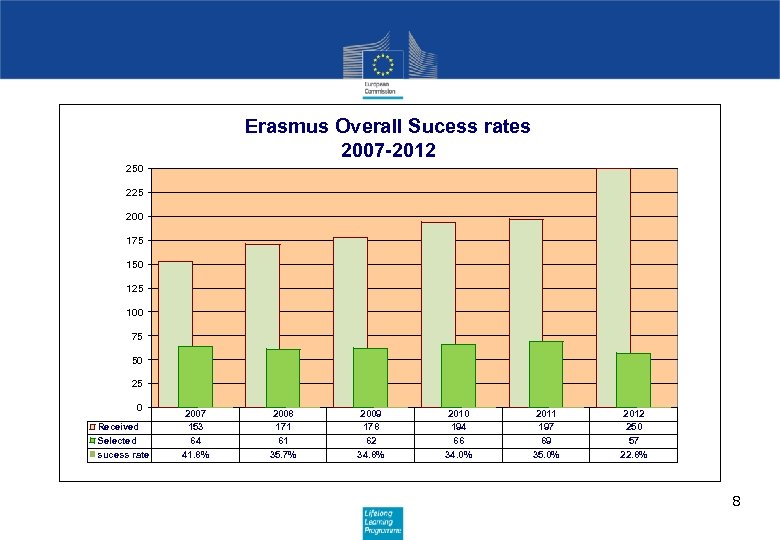
Erasmus Overall Sucess rates 2007 -2012 250 225 200 175 150 125 100 75 50 25 0 Received Selected sucess rate 2007 153 64 41. 8% 2008 171 61 35. 7% 2009 178 62 34. 8% 2010 194 66 34. 0% 2011 197 69 35. 0% 2012 250 57 22. 8% 8
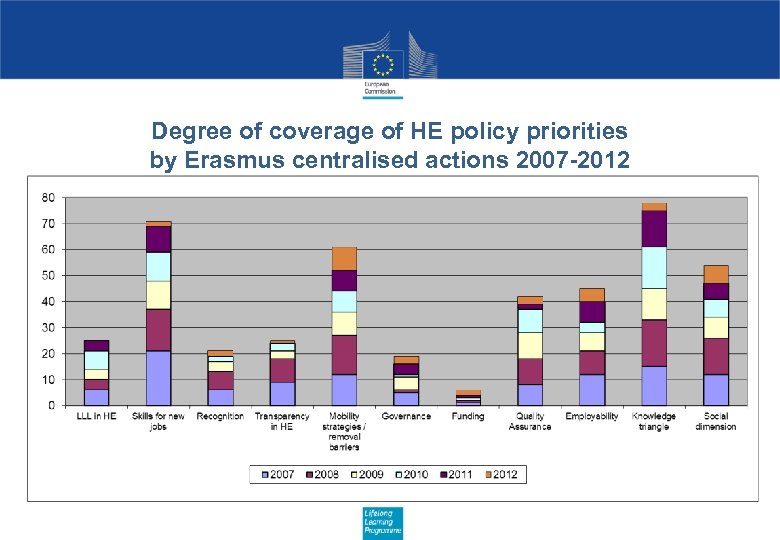
Degree of coverage of HE policy priorities by Erasmus centralised actions 2007 -2012
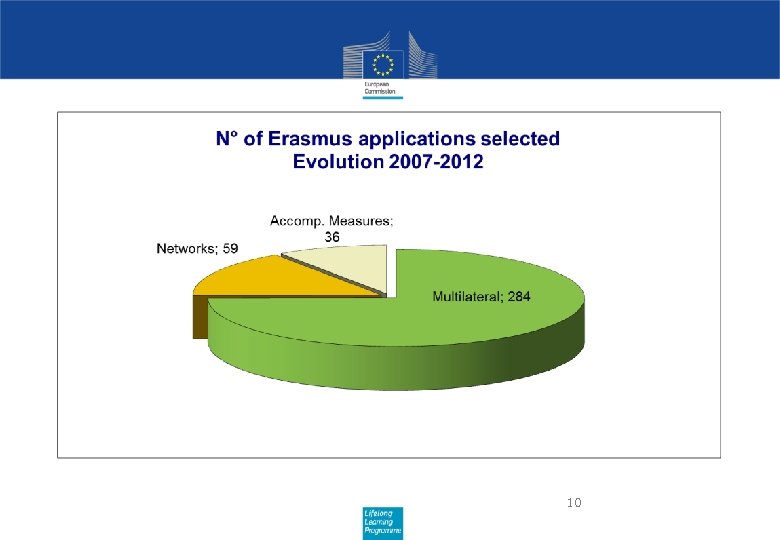
10
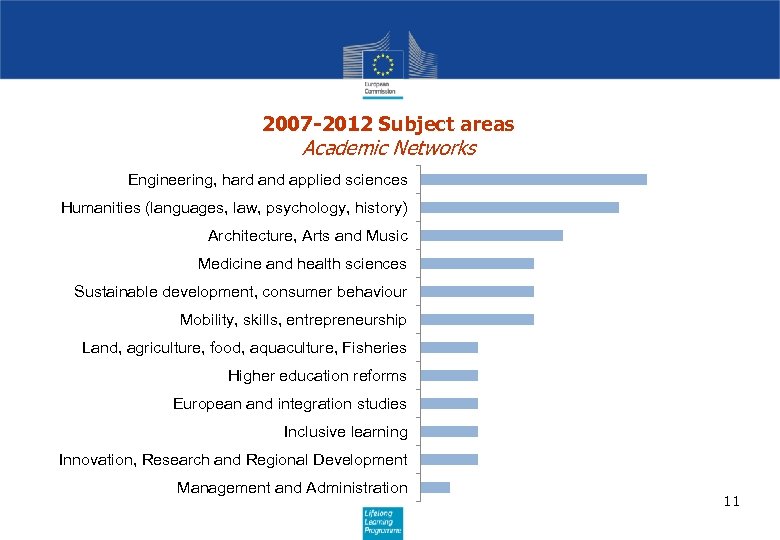
2007 -2012 Subject areas Academic Networks Engineering, hard and applied sciences Humanities (languages, law, psychology, history) Architecture, Arts and Music Medicine and health sciences Sustainable development, consumer behaviour Mobility, skills, entrepreneurship Land, agriculture, food, aquaculture, Fisheries Higher education reforms European and integration studies Inclusive learning Innovation, Research and Regional Development Management and Administration 11
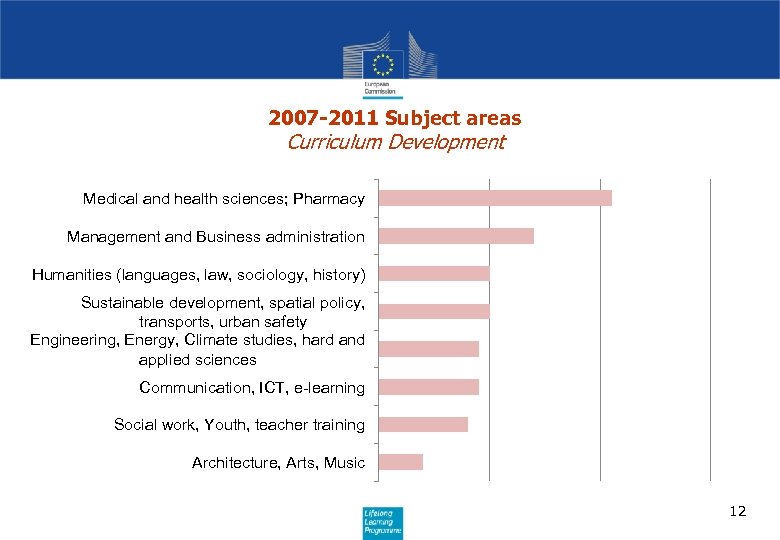
2007 -2011 Subject areas Curriculum Development Medical and health sciences; Pharmacy Management and Business administration Humanities (languages, law, sociology, history) Sustainable development, spatial policy, transports, urban safety Engineering, Energy, Climate studies, hard and applied sciences Communication, ICT, e-learning Social work, Youth, teacher training Architecture, Arts, Music 12
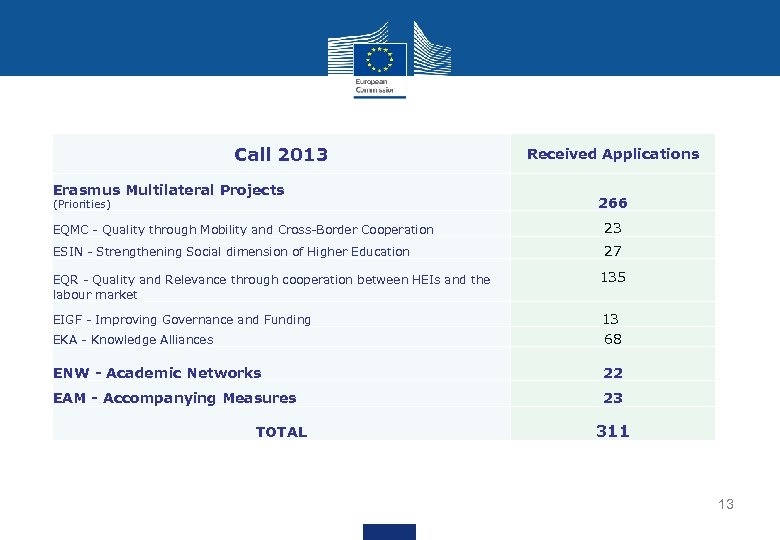
Call 2013 Erasmus Multilateral Projects (Priorities) Received Applications 266 EQMC - Quality through Mobility and Cross-Border Cooperation 23 ESIN - Strengthening Social dimension of Higher Education 27 EQR - Quality and Relevance through cooperation between HEIs and the labour market 135 EIGF - Improving Governance and Funding EKA - Knowledge Alliances 13 68 ENW - Academic Networks 22 EAM - Accompanying Measures 23 TOTAL 311 13
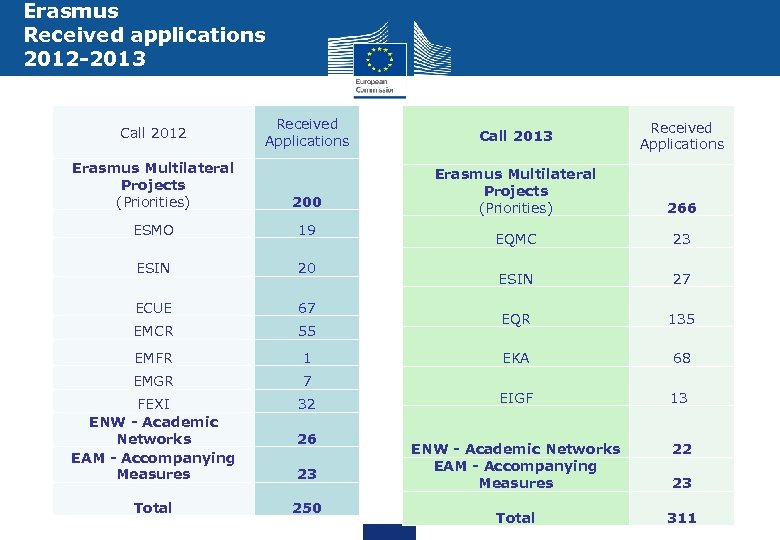
Erasmus Received applications 2012 -2013 Received Applications Call 2013 Erasmus Multilateral Projects (Priorities) 200 Erasmus Multilateral Projects (Priorities) 266 ESMO 19 EQMC 23 ESIN 20 ESIN 27 ECUE 67 EMCR 55 EQR 135 EMFR 1 EKA 68 EMGR 7 FEXI ENW - Academic Networks EAM - Accompanying Measures 32 EIGF 13 26 ENW - Academic Networks EAM - Accompanying Measures 22 Total 250 Total 311 Call 2012 23 Received Applications 23
15
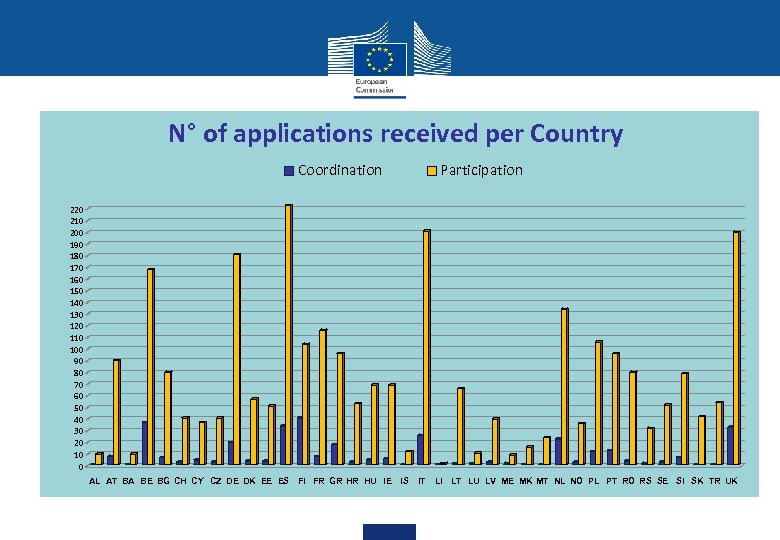
N° of applications received per Country Coordination Participation 220 210 200 190 180 170 160 150 140 130 120 110 100 90 80 70 60 50 40 30 20 10 0 AL AT BA BE BG CH CY CZ DE DK EE ES FI FR GR HR HU IE IS IT LI LT LU LV ME MK MT NL NO PL PT RO RS SE SI SK TR UK
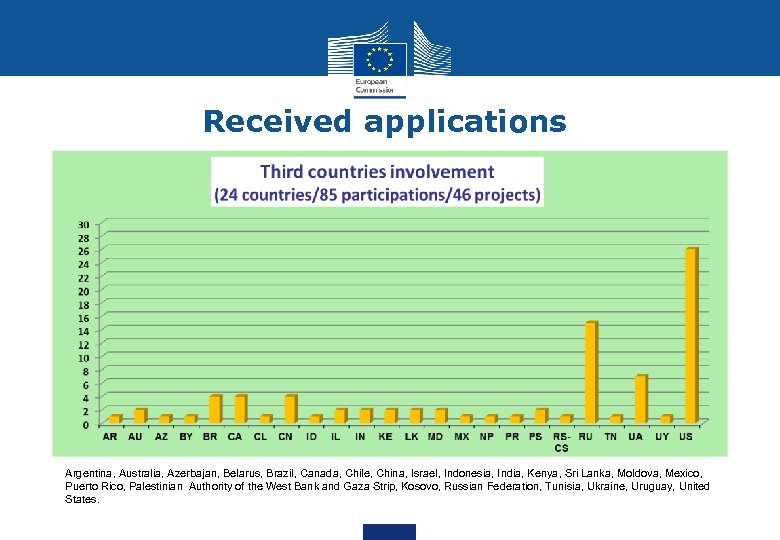
Received applications Argentina, Australia, Azerbajan, Belarus, Brazil, Canada, Chile, China, Israel, Indonesia, India, Kenya, Sri Lanka, Moldova, Mexico, Puerto Rico, Palestinian Authority of the West Bank and Gaza Strip, Kosovo, Russian Federation, Tunisia, Ukraine, Uruguay, United States.
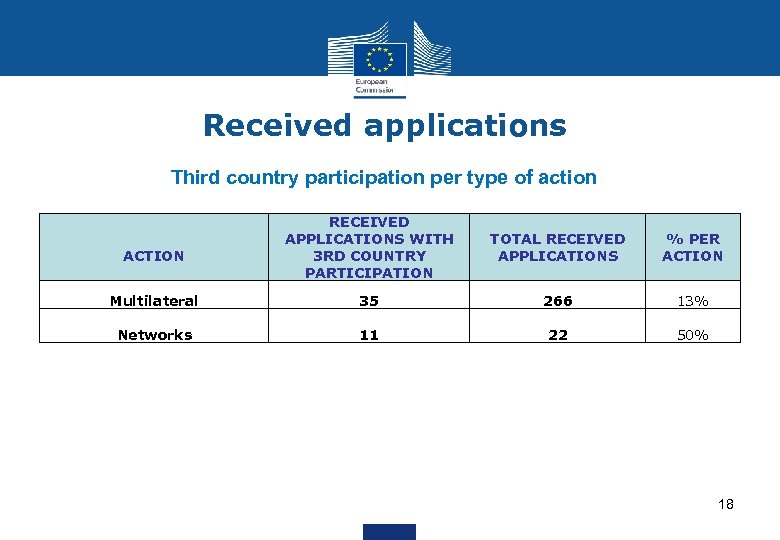
Received applications Third country participation per type of action RECEIVED APPLICATIONS WITH 3 RD COUNTRY PARTICIPATION TOTAL RECEIVED APPLICATIONS % PER ACTION Multilateral 35 266 13% Networks 11 22 50% ACTION 18
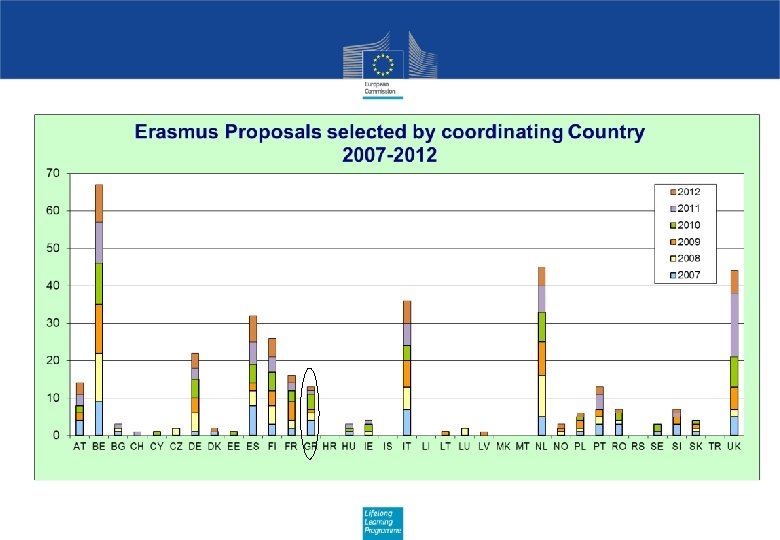
Greek institution implication in the Erasmus centralised actions
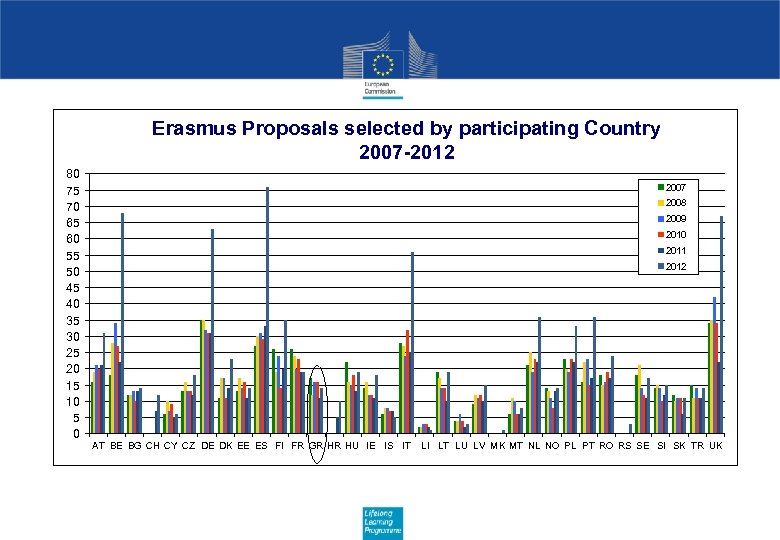
Erasmus Proposals selected by participating Country 2007 -2012 80 75 70 65 60 55 50 45 40 35 30 25 20 15 10 5 0 2007 2008 2009 2010 2011 2012 AT BE BG CH CY CZ DE DK EE ES FI FR GR HR HU IE IS IT LI LT LU LV MK MT NL NO PL PT RO RS SE SI SK TR UK
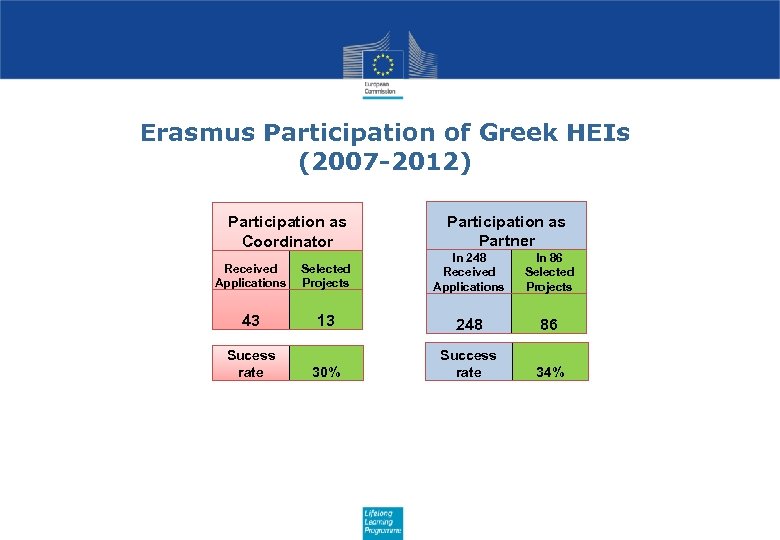
Erasmus Participation of Greek HEIs (2007 -2012) Participation as Coordinator Participation as Partner Received Applications Selected Projects In 248 Received Applications In 86 Selected Projects 43 13 248 86 30% Success rate 34% Sucess rate
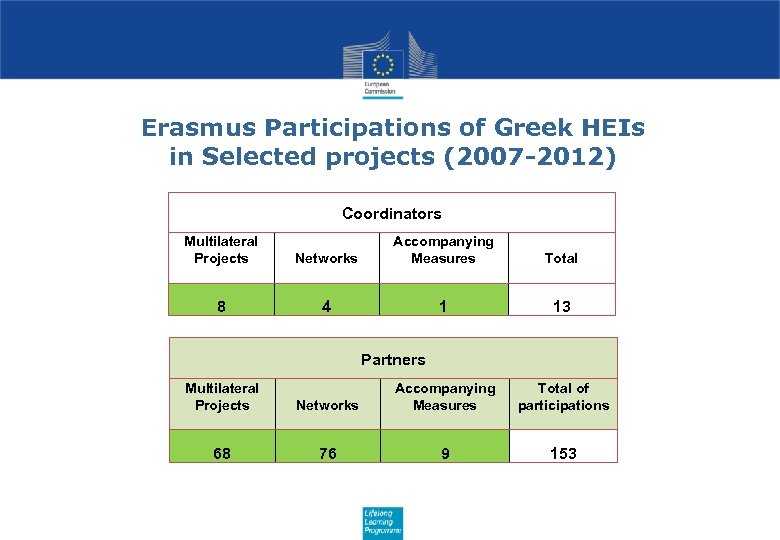
Erasmus Participations of Greek HEIs in Selected projects (2007 -2012) Coordinators Multilateral Projects 8 Networks Accompanying Measures Total 4 1 13 Total of participations 153 Partners Multilateral Projects Networks Accompanying Measures 68 76 9
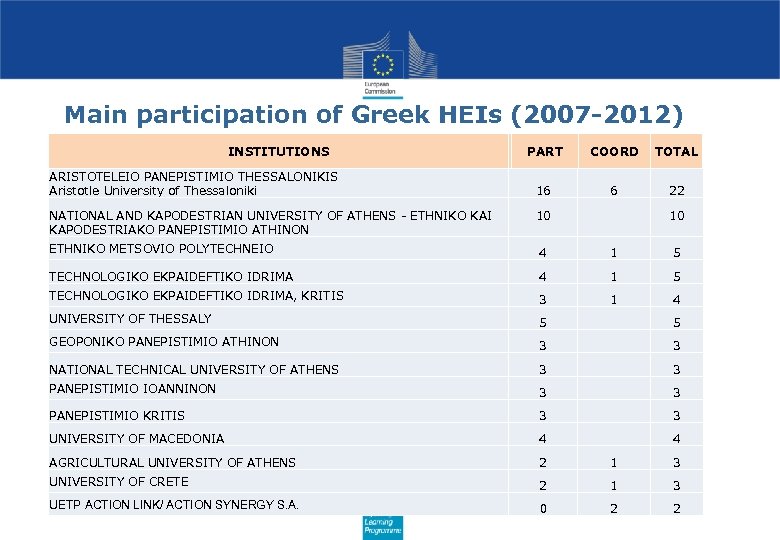
Main participation of Greek HEIs (2007 -2012) INSTITUTIONS ARISTOTELEIO PANEPISTIMIO THESSALONIKIS Aristotle University of Thessaloniki NATIONAL AND KAPODESTRIAN UNIVERSITY OF ATHENS - ETHNIKO KAI KAPODESTRIAKO PANEPISTIMIO ATHINON PART COORD TOTAL 16 6 22 10 10 ETHNIKO METSOVIO POLYTECHNEIO 4 1 5 TECHNOLOGIKO EKPAIDEFTIKO IDRIMA, KRITIS 3 1 4 UNIVERSITY OF THESSALY 5 5 GEOPONIKO PANEPISTIMIO ATHINON 3 3 NATIONAL TECHNICAL UNIVERSITY OF ATHENS 3 3 PANEPISTIMIO IOANNINON 3 3 PANEPISTIMIO KRITIS 3 3 UNIVERSITY OF MACEDONIA 4 4 AGRICULTURAL UNIVERSITY OF ATHENS 2 1 3 UNIVERSITY OF CRETE 2 1 3 UETP ACTION LINK/ ACTION SYNERGY S. A. 0 2 2
Examples of projects coordinated by Greek HEIs 25
• Education & Research in Biosystems Engineering in Europe; a. Thematic Network 134306 -LLP-1 -2007 -1 -GR-ERASMUS-ENW http: //www. erabee. aua. gr/index. htm Agricultural University of Athens The innovative and novel goal of the Thematic Network was to promote the critical transition from the traditional discipline of Agricultural Engineering to the emerging discipline of Bio-systems Engineering, exploiting along this direction the outcomes accomplished by the EU funded predecessor; the USAEE - Thematic Network. It also aimed at enhancing the compatibility among the new programmes of Biosystems Engineering, aiding their recognition and accreditation at European and International level and facilitating greater mobility of skilled personnel, researchers and students. 26
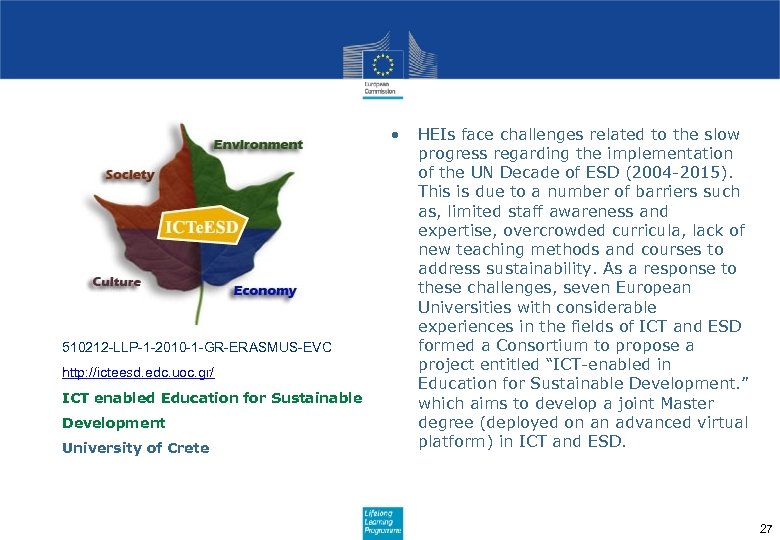
• 510212 -LLP-1 -2010 -1 -GR-ERASMUS-EVC http: //icteesd. edc. uoc. gr/ ICT enabled Education for Sustainable Development University of Crete HEIs face challenges related to the slow progress regarding the implementation of the UN Decade of ESD (2004 -2015). This is due to a number of barriers such as, limited staff awareness and expertise, overcrowded curricula, lack of new teaching methods and courses to address sustainability. As a response to these challenges, seven European Universities with considerable experiences in the fields of ICT and ESD formed a Consortium to propose a project entitled “ICT-enabled in Education for Sustainable Development. ” which aims to develop a joint Master degree (deployed on an advanced virtual platform) in ICT and ESD. 27
Architectural Design & Manufacturing: From the School Lab to the Fabrication Workshop 134540 -LLP-1 -2007 -1 -GR-ERASMUS-ECUE http: //www. f 2 f-continuum. eu/ The aim of the Project is to support the quality of the education and research on architectural design and construction offered by schools of architecture of the consortium by reinstating the channels of communication and information flow between schools of architecture and those enterprises who are applying digital fabrication technologies to produce new building materials, full scale components and prototypes as well as surface structures. The broad and publicized availability of these channels will also enable practising architects to be in a continuum of information from their life as students to their current life as professionals. Aristotle University of Thessaloniki 28
Joint Interface Third-Cycle Degrees 502271 -LLP-1 -2009 -1 -GR-ERASMUS-ECDSP http: //www. phdchem. eu/ Aristotle University of Thessaloniki The project is establishing a structured flexible scheme for trans-national interdisciplinary third-cycle studies promoting joint educational schemes and degrees for young researchers active at the interface of traditional subjects; and is enabling European universities to develop the knowledge and skills of Ph. D. students in crucial state-of-the-art areas. It is fostering interchange, co-operation and mobility between third-cycle tertiary education systems promoting innovation and the European dimension in education at interface subjects; is enhancing competitiveness and employability of highly-qualified young researchers having joint degrees. 29
UETPNET Promoting the collaboration between universities and enterprises through online tools 510635 -LLP-1 -2010 -1 -GR-ERASMUS-ECUE http: //www. uetpnet. eu/ UETP Action Link/ Action Synergy S. A • • UETPNET is a European Union education project about the promotion of the collaboration between universities and enterprises through online tools. The aim of the project is to promote the skills-based approach through the use of an online "matching skills" tool which will be used by the enterprises to describe their job positions in terms of skills and the universities to describe in terms of skills their qualifications 30
• ECTS DS Procedures & Selection 2012 & 2013 Overall Statistics Label Holders for Greece
European Credit Transfer System and/or Diploma Supplement Labels Ø The ECTS and Diploma Supplement Labels are honorary distinctions awarded by the Commission to HEIs which apply the ECTS and/or DS correctly Ø Applications for the ECTS/DS labels can be submitted by a HEI that has been awarded a Standard or an Extended Erasmus University Charter (Standard Charter and Student placements).
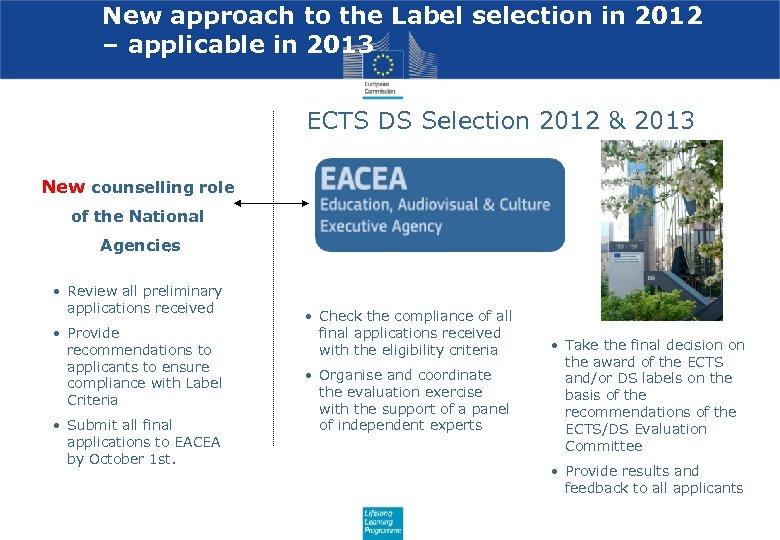
New approach to the Label selection in 2012 – applicable in 2013 ECTS DS Selection 2012 & 2013 New counselling role of the National Agencies • Review all preliminary applications received • Provide recommendations to applicants to ensure compliance with Label Criteria • Submit all final applications to EACEA by October 1 st. • Check the compliance of all final applications received with the eligibility criteria • Organise and coordinate the evaluation exercise with the support of a panel of independent experts • Take the final decision on the award of the ECTS and/or DS labels on the basis of the recommendations of the ECTS/DS Evaluation Committee • Provide results and feedback to all applicants
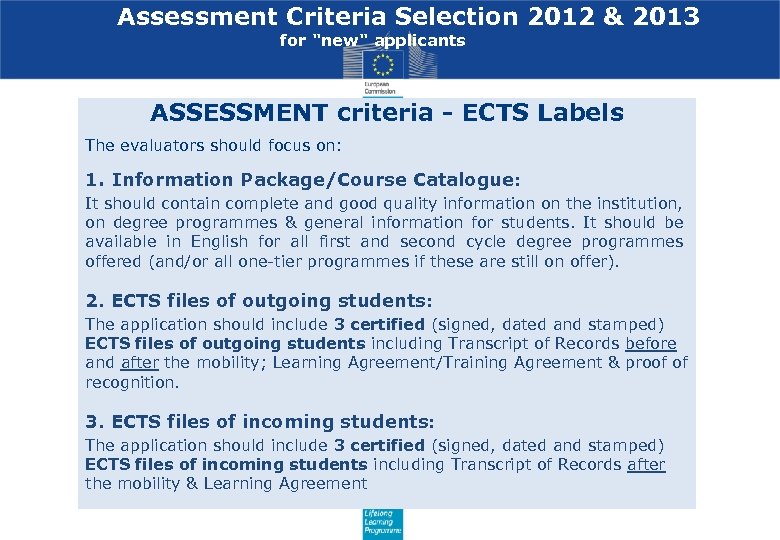
Assessment Criteria Selection 2012 & 2013 for "new" applicants ASSESSMENT criteria - ECTS Labels The evaluators should focus on: 1. Information Package/Course Catalogue: It should contain complete and good quality information on the institution, on degree programmes & general information for students. It should be available in English for all first and second cycle degree programmes offered (and/or all one-tier programmes if these are still on offer). 2. ECTS files of outgoing students: The application should include 3 certified (signed, dated and stamped) ECTS files of outgoing students including Transcript of Records before and after the mobility; Learning Agreement/Training Agreement & proof of recognition. 3. ECTS files of incoming students: The application should include 3 certified (signed, dated and stamped) ECTS files of incoming students including Transcript of Records after the mobility & Learning Agreement
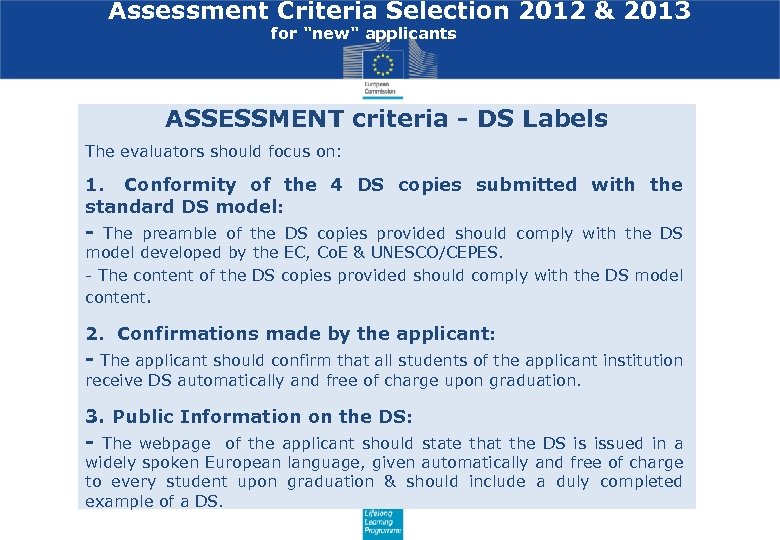
Assessment Criteria Selection 2012 & 2013 for "new" applicants ASSESSMENT criteria - DS Labels The evaluators should focus on: 1. Conformity of the 4 DS copies submitted with the standard DS model: - The preamble of the DS copies provided should comply with the DS model developed by the EC, Co. E & UNESCO/CEPES. - The content of the DS copies provided should comply with the DS model content. 2. Confirmations made by the applicant: - The applicant should confirm that all students of the applicant institution receive DS automatically and free of charge upon graduation. 3. Public Information on the DS: - The webpage of the applicant should state that the DS is issued in a widely spoken European language, given automatically and free of charge to every student upon graduation & should include a duly completed example of a DS.
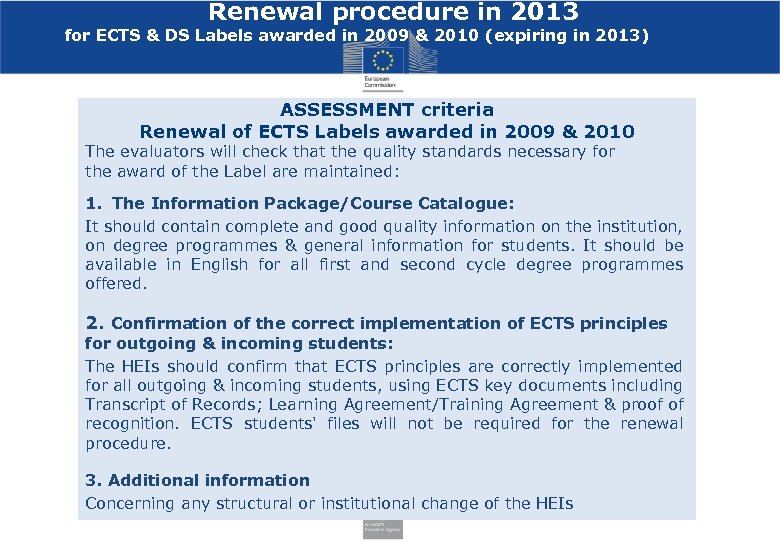
Renewal procedure in 2013 for ECTS & DS Labels awarded in 2009 & 2010 (expiring in 2013) ASSESSMENT criteria Renewal of ECTS Labels awarded in 2009 & 2010 The evaluators will check that the quality standards necessary for the award of the Label are maintained: 1. The Information Package/Course Catalogue: It should contain complete and good quality information on the institution, on degree programmes & general information for students. It should be available in English for all first and second cycle degree programmes offered. 2. Confirmation of the correct implementation of ECTS principles for outgoing & incoming students: The HEIs should confirm that ECTS principles are correctly implemented for all outgoing & incoming students, using ECTS key documents including Transcript of Records; Learning Agreement/Training Agreement & proof of recognition. ECTS students' files will not be required for the renewal procedure. 3. Additional information Concerning any structural or institutional change of the HEIs
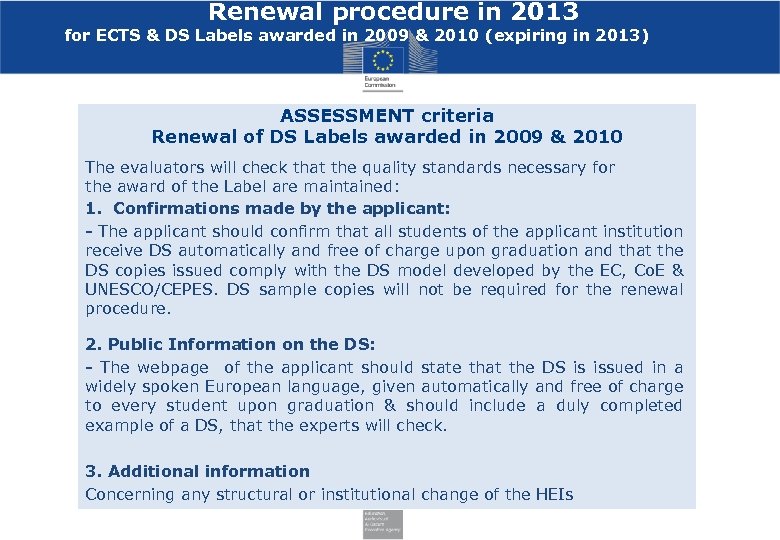
Renewal procedure in 2013 for ECTS & DS Labels awarded in 2009 & 2010 (expiring in 2013) ASSESSMENT criteria Renewal of DS Labels awarded in 2009 & 2010 The evaluators will check that the quality standards necessary for the award of the Label are maintained: 1. Confirmations made by the applicant: - The applicant should confirm that all students of the applicant institution receive DS automatically and free of charge upon graduation and that the DS copies issued comply with the DS model developed by the EC, Co. E & UNESCO/CEPES. DS sample copies will not be required for the renewal procedure. 2. Public Information on the DS: - The webpage of the applicant should state that the DS is issued in a widely spoken European language, given automatically and free of charge to every student upon graduation & should include a duly completed example of a DS, that the experts will check. 3. Additional information Concerning any structural or institutional change of the HEIs
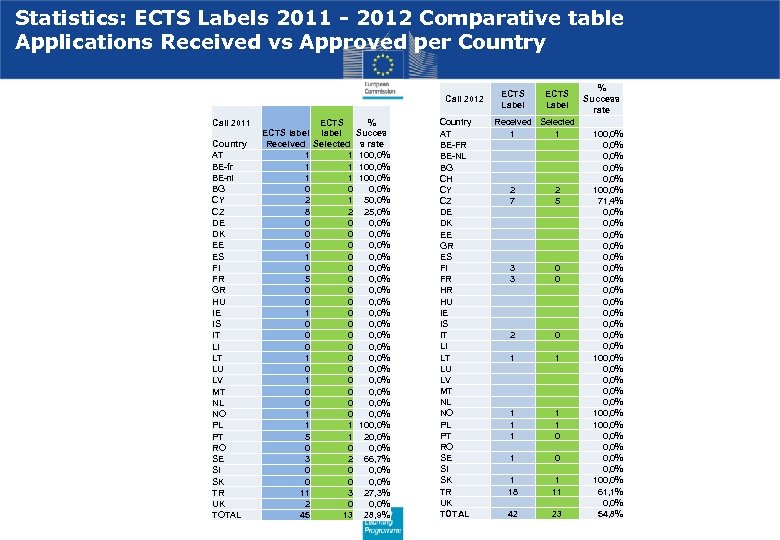
Statistics: ECTS Labels 2011 - 2012 Comparative table Applications Received vs Approved per Country Call 2012 Call 2011 Country AT BE-fr BE-nl BG CY CZ DE DK EE ES FI FR GR HU IE IS IT LI LT LU LV MT NL NO PL PT RO SE SI SK TR UK TOTAL ECTS % ECTS label Succes Received Selected s rate 1 1 100, 0% 0 0 0, 0% 2 1 50, 0% 8 2 25, 0% 0 0 0, 0% 1 0 0, 0% 0 0 0, 0% 5 0 0, 0% 0 0 0, 0% 1 0 0, 0% 0 0 0, 0% 1 1 100, 0% 5 1 20, 0% 0 0 0, 0% 3 2 66, 7% 0 0 0, 0% 11 3 27, 3% 2 0 0, 0% 45 13 28, 9% Country AT BE-FR BE-NL BG CH CY CZ DE DK EE GR ES FI FR HR HU IE IS IT LI LT LU LV MT NL NO PL PT RO SE SI SK TR UK TOTAL ECTS Label Received Selected 1 1 2 2 7 5 3 0 2 0 1 1 1 0 1 1 18 11 42 23 % Success rate 100, 0% 0, 0% 100, 0% 71, 4% 0, 0% 0, 0% 0, 0% 0, 0% 100, 0% 0, 0% 0, 0% 100, 0% 61, 1% 0, 0% 54, 8%
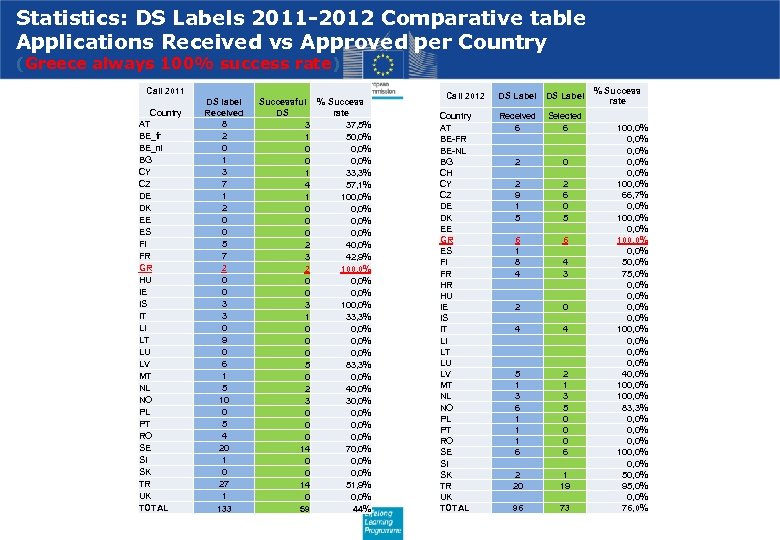
Statistics: DS Labels 2011 -2012 Comparative table Applications Received vs Approved per Country (Greece always 100% success rate) Call 2011 Country AT BE_fr BE_nl BG CY CZ DE DK EE ES FI FR GR HU IE IS IT LI LT LU LV MT NL NO PL PT RO SE SI SK TR UK TOTAL DS label Received 8 2 0 1 3 7 1 2 0 0 5 7 2 0 0 3 3 0 9 0 6 1 5 10 0 5 4 20 1 0 27 1 133 Successful % Success DS rate 3 37, 5% 1 50, 0% 0 0, 0% 1 33, 3% 4 57, 1% 1 100, 0% 0 0, 0% 2 40, 0% 3 42, 9% 2 100, 0% 0 0, 0% 3 100, 0% 1 33, 3% 0 0, 0% 5 83, 3% 0 0, 0% 2 40, 0% 3 30, 0% 0 0, 0% 14 70, 0% 0 0, 0% 14 51, 9% 0 0, 0% 59 44% Call 2012 Country AT BE-FR BE-NL BG CH CY CZ DE DK EE GR ES FI FR HR HU IE IS IT LI LT LU LV MT NL NO PL PT RO SE SI SK TR UK TOTAL DS Label Received Selected 6 6 2 0 2 2 9 6 1 0 5 5 6 6 1 8 4 4 3 2 0 4 4 5 2 1 1 3 3 6 5 1 0 1 0 6 6 2 1 20 19 96 73 % Success rate 100, 0% 0, 0% 100, 0% 66, 7% 0, 0% 100, 0% 50, 0% 75, 0% 0, 0% 100, 0% 40, 0% 100, 0% 83, 3% 0, 0% 100, 0% 50, 0% 95, 0% 0, 0% 76, 0%
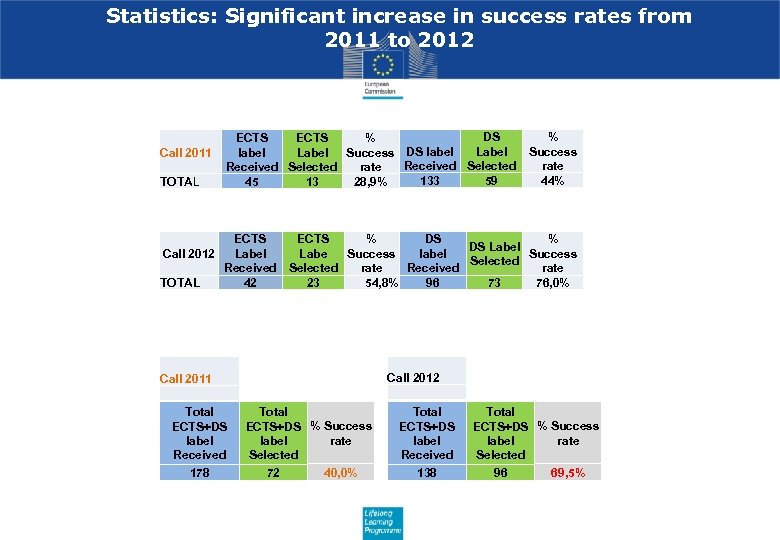
Statistics: Significant increase in success rates from 2011 to 2012 Call 2011 TOTAL DS ECTS % DS label Label Success Received Selected rate 133 59 45 13 28, 9% % Success rate 44% ECTS % DS Label Call 2012 Label Labe Success label Success Selected Received Selected rate Received rate TOTAL 42 23 54, 8% 96 73 76, 0% Call 2012 Call 2011 Total ECTS+DS label Received 178 Total ECTS+DS % Success rate label Selected 40, 0% 72 Total ECTS+DS label Received 138 Total ECTS+DS % Success rate label Selected 69, 5% 96
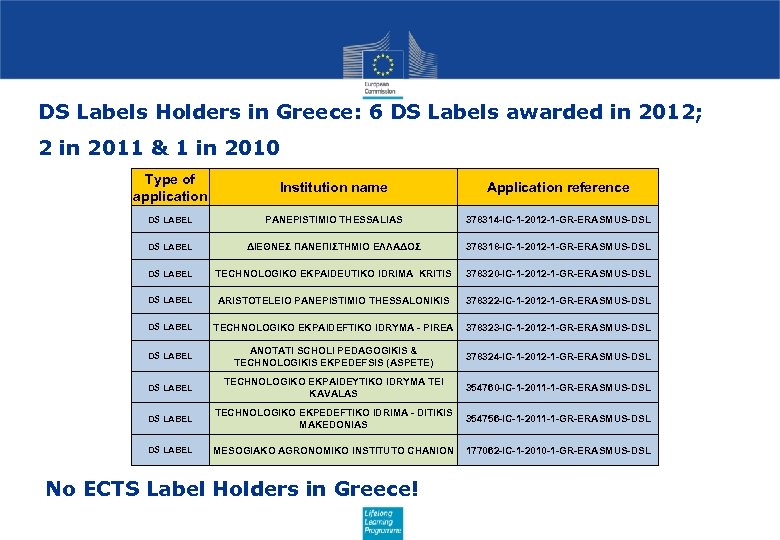
DS Labels Holders in Greece: 6 DS Labels awarded in 2012; 2 in 2011 & 1 in 2010 Type of application Institution name Application reference DS LABEL PANEPISTIMIO THESSALIAS 378314 -IC-1 -2012 -1 -GR-ERASMUS-DSL DS LABEL ΔΙΕΘΝΕΣ ΠΑΝΕΠΙΣΤΗΜΙΟ ΕΛΛΑΔΟΣ 378318 -IC-1 -2012 -1 -GR-ERASMUS-DSL DS LABEL TECHNOLOGIKO EKPAIDEUTIKO IDRIMA KRITIS 378320 -IC-1 -2012 -1 -GR-ERASMUS-DSL DS LABEL ARISTOTELEIO PANEPISTIMIO THESSALONIKIS 378322 -IC-1 -2012 -1 -GR-ERASMUS-DSL DS LABEL TECHNOLOGIKO EKPAIDEFTIKO IDRYMA - PIREA 378323 -IC-1 -2012 -1 -GR-ERASMUS-DSL DS LABEL ANOTATI SCHOLI PEDAGOGIKIS & TECHNOLOGIKIS EKPEDEFSIS (ASPETE) 378324 -IC-1 -2012 -1 -GR-ERASMUS-DSL DS LABEL TECHNOLOGIKO EKPAIDEYTIKO IDRYMA TEI KAVALAS 354760 -IC-1 -2011 -1 -GR-ERASMUS-DSL DS LABEL TECHNOLOGIKO EKPEDEFTIKO IDRIMA - DITIKIS MAKEDONIAS 354756 -IC-1 -2011 -1 -GR-ERASMUS-DSL DS LABEL MESOGIAKO AGRONOMIKO INSTITUTO CHANION 177062 -IC-1 -2010 -1 -GR-ERASMUS-DSL No ECTS Label Holders in Greece!
Project proposal design Quick fix… 42
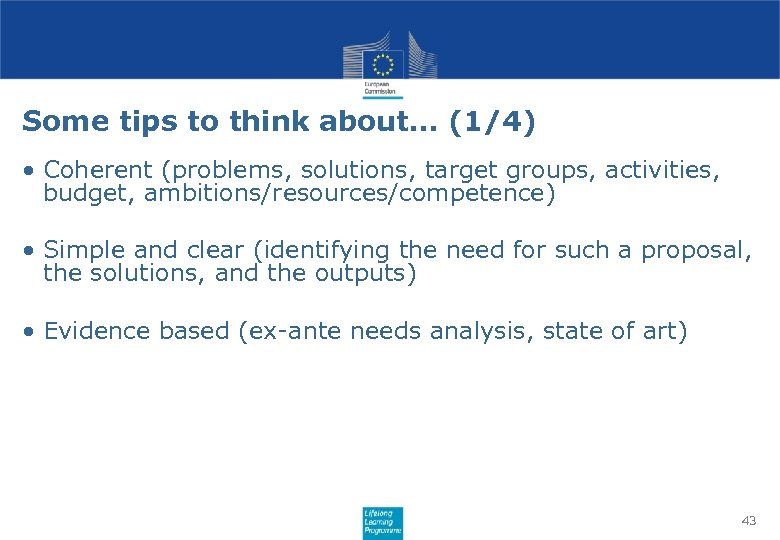
Some tips to think about… (1/4) • Coherent (problems, solutions, target groups, activities, budget, ambitions/resources/competence) • Simple and clear (identifying the need for such a proposal, the solutions, and the outputs) • Evidence based (ex-ante needs analysis, state of art) 43
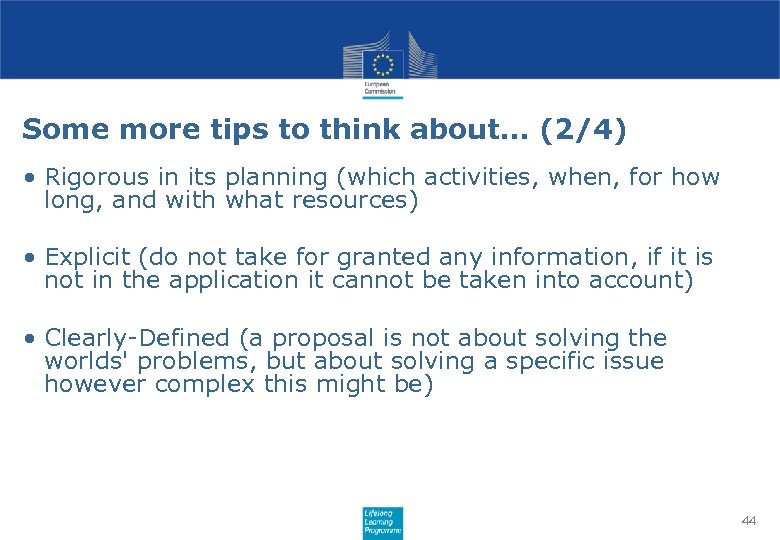
Some more tips to think about… (2/4) • Rigorous in its planning (which activities, when, for how long, and with what resources) • Explicit (do not take for granted any information, if it is not in the application it cannot be taken into account) • Clearly-Defined (a proposal is not about solving the worlds' problems, but about solving a specific issue however complex this might be) 44
Some more tips to think about… (3/4) • Read the Instructions for Applicants and the e-Form Guide • Make sure that the project clearly addresses ONE policy priority for Multilateral projects. • Skilled project manager (and team). • Most communications are sent to the co-ordinator’s address (contact person): make sure that you indicate the right person and the right address (both e-mail and postal) on the application form. 45
Some more tips to think about… (4/4) • Send the draft application to all partners before submitting it and get their approval. • If you include partners from candidate countries not yet accepted in the programme, make sure that you still have the minimum required number of partners without their participation. • Decide: this year or next? 46
Partners’ Communication • • • Communication must be frequent and effective. Set up regular conferences/video meetings. Use existing management tools (dropbox, sharepoint, moodle, Skype, private part of website, svn). Identify the tools to exchange information between partners at the earliest opportunity. 47
Coordinators’ experience 1. What were the main steps in putting together your Erasmus proposal? 2. What challenges did you encounter? 3. How did you ensure that the award criteria were properly addressed? 4. How much time did you need? 5. What’s your top tip for submitting an application? 48
Useful links LLP – Erasmus Programme – Executive Agency (EACEA) Website http: //eacea. ec. europa. eu/llp/erasmus_en. htm LLP – Erasmus Programme – Directory project compendia http: //eacea. ec. europa. eu/llp/results_projects/project_compendia_e n. php 49
More information on Erasmus financed projects: Erasmus Project Compendia http: //eacea. ec. europa. eu/llp/results_projects/project_compendi a_en. php Public part of Project Reports http: //eacea. ec. europa. eu/llp/project_reports_er asmus_en. php 50
Скачать презентацию February 2013 Presentation of Erasmus centralised Actions Education
09440e60b9297065c572c358a22d6543.ppt