 Скачать презентацию FDIC Money Smart for Young Adults Bank On
e18b136dd32e049ef724d4f15331f048.ppt
- Количество слайдов: 41



FDIC Money Smart for Young Adults Bank On It & Check It Out Building: Knowledge, Security, Confidence
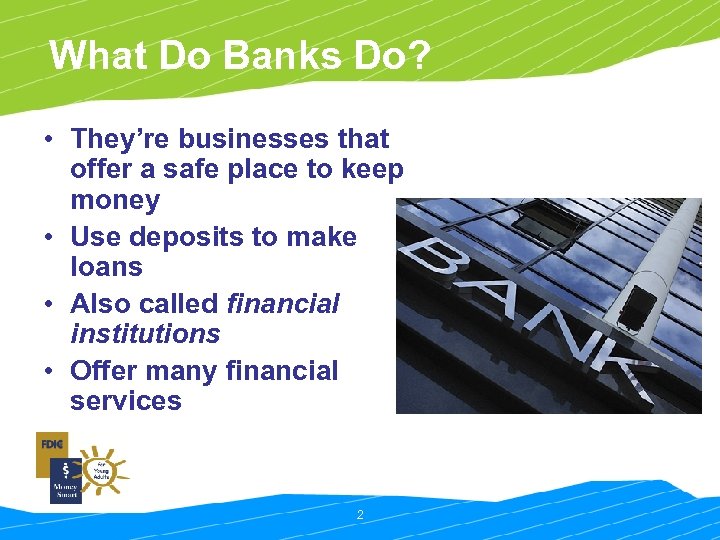
What Do Banks Do? • They’re businesses that offer a safe place to keep money • Use deposits to make loans • Also called financial institutions • Offer many financial services 2

Why keep your money in a bank? • • • Safety Convenience Lower cost Security Build your financial future 3

Types of Financial Institutions • Bank • Credit Union • Thrift (or savings and loan) 4
Opening and Maintaining a Bank Account 1. Open the account 2. Make deposits and withdrawals 3. Record interest and fees 4. Keep track of your balance 5
How Do I Open a Bank Account? Your bank should meet your needs, so ask yourself: • • What services does it offer? Is it near my home? Where are its ATMs? What are the fees for different accounts? • Is it insured by the FDIC? 6
Banking Terms • Deposit – put money into your account • Withdrawal – take money out of the bank • Balance – how much money you have in the bank • Fees – money charged for services • Overdraft – withdrawing more money than you have in your account 7
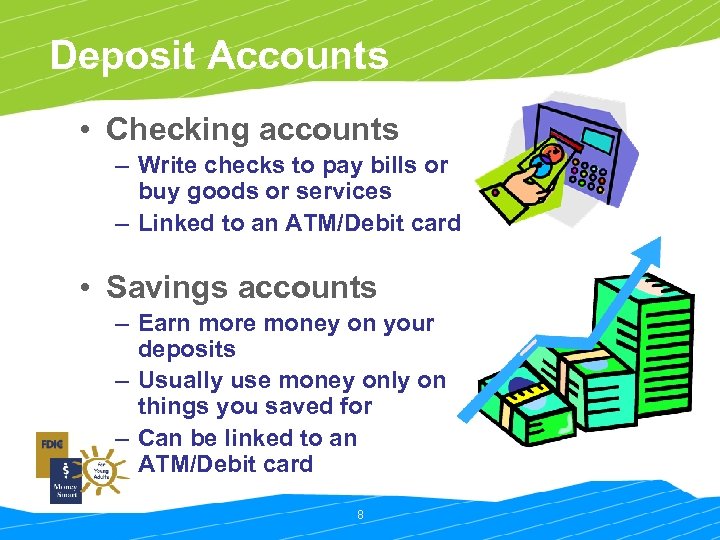
Deposit Accounts • Checking accounts – Write checks to pay bills or buy goods or services – Linked to an ATM/Debit card • Savings accounts – Earn more money on your deposits – Usually use money only on things you saved for – Can be linked to an ATM/Debit card 8
Other Banking Services • Direct deposit • Money orders • Electronic (phone and online) banking • ATMs • Money transfers • Debit cards and stored value cards • Loans 9
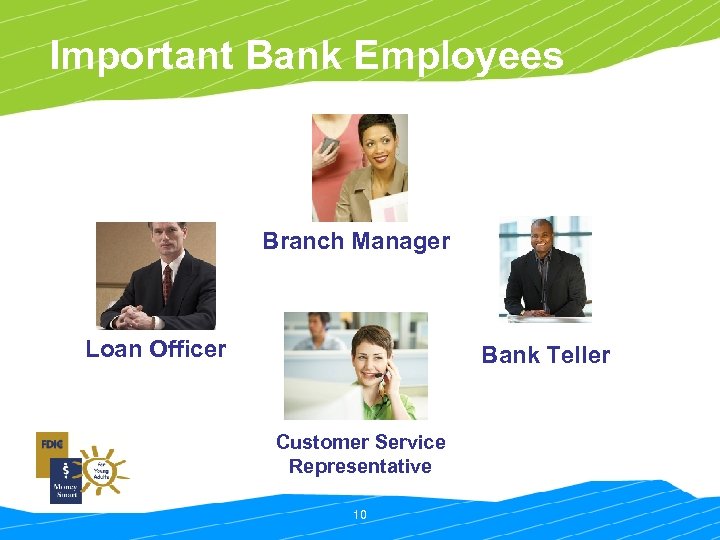
Important Bank Employees Branch Manager Loan Officer Bank Teller Customer Service Representative 10
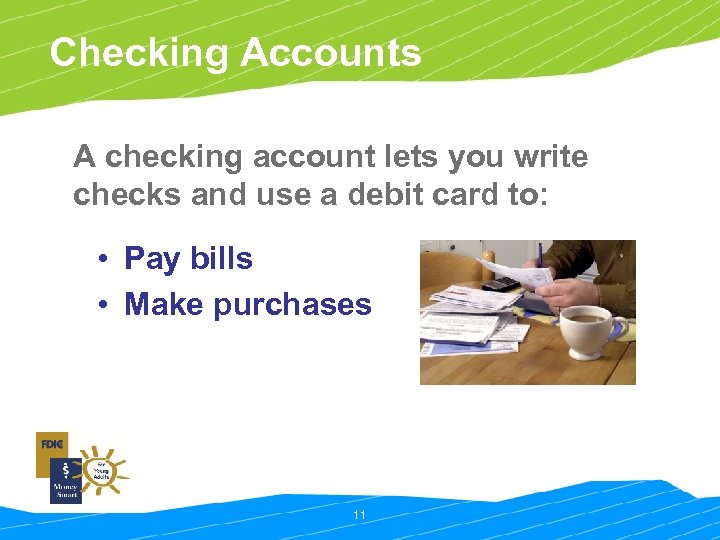
Checking Accounts A checking account lets you write checks and use a debit card to: • Pay bills • Make purchases 11
Benefits of Checking Accounts • Convenience • Cost • Better money management • Safety 12
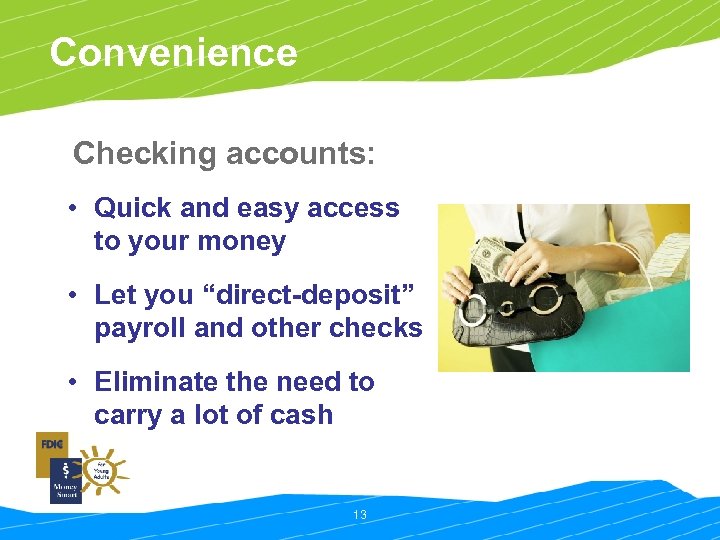
Convenience Checking accounts: • Quick and easy access to your money • Let you “direct-deposit” payroll and other checks • Eliminate the need to carry a lot of cash 13
Cost Less expensive than: • Services that cash checks • Buying money orders 14
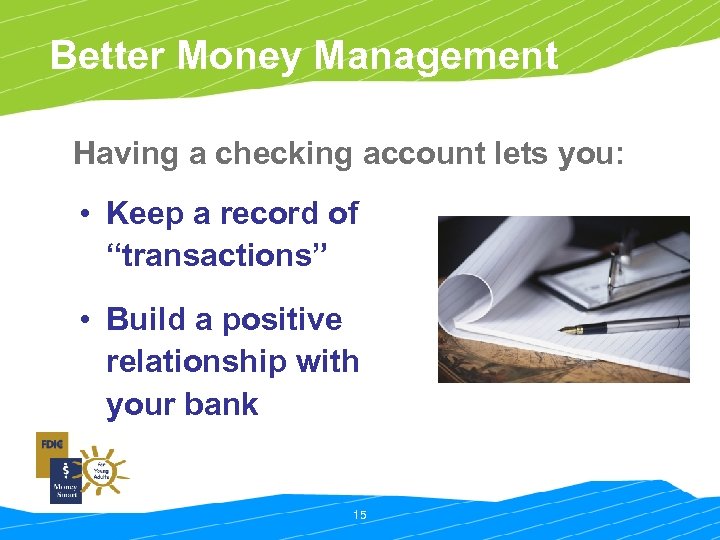
Better Money Management Having a checking account lets you: • Keep a record of “transactions” • Build a positive relationship with your bank 15
Safety Having a checking account: • Is safer than carrying large amounts of cash • Protects your checks and check card if they are lost or stolen • Means your money is insured up to the maximum amount allowed by law 16
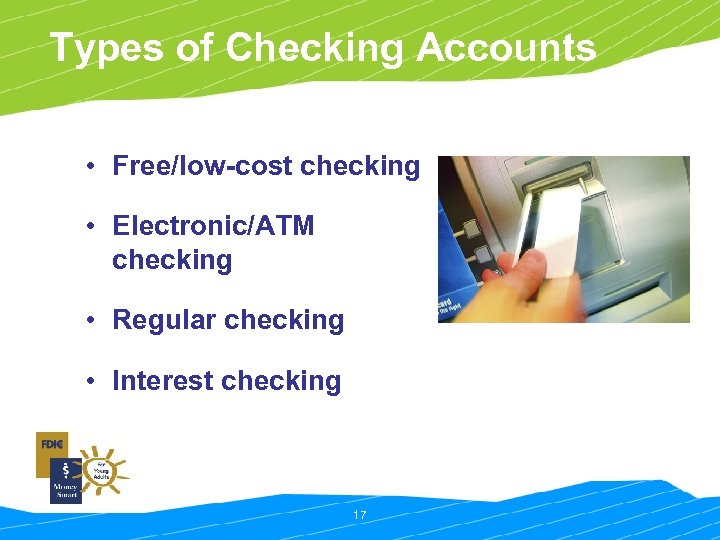
Types of Checking Accounts • Free/low-cost checking • Electronic/ATM checking • Regular checking • Interest checking 17
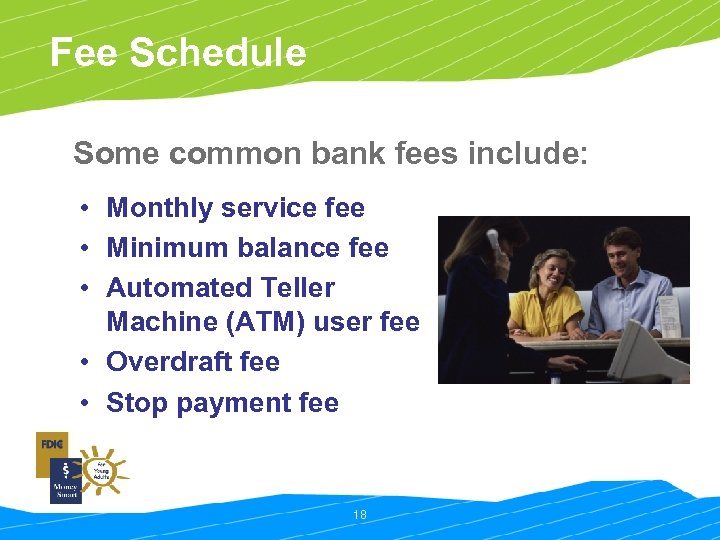
Fee Schedule Some common bank fees include: • Monthly service fee • Minimum balance fee • Automated Teller Machine (ATM) user fee • Overdraft fee • Stop payment fee 18
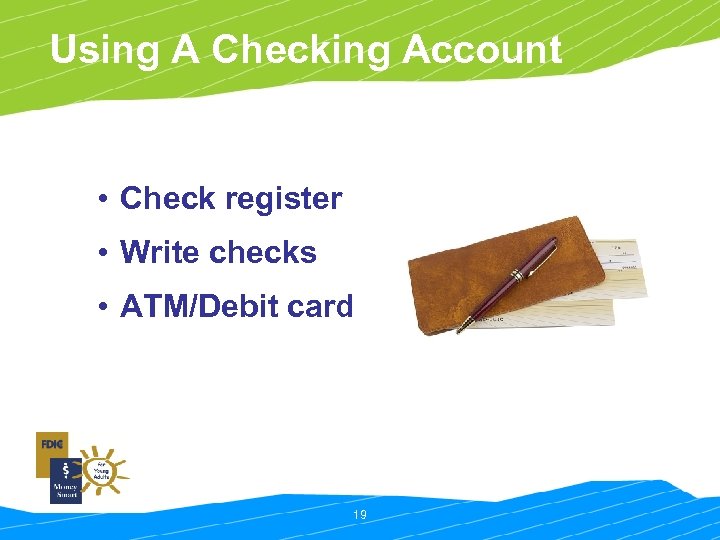
Using A Checking Account • Check register • Write checks • ATM/Debit card 19
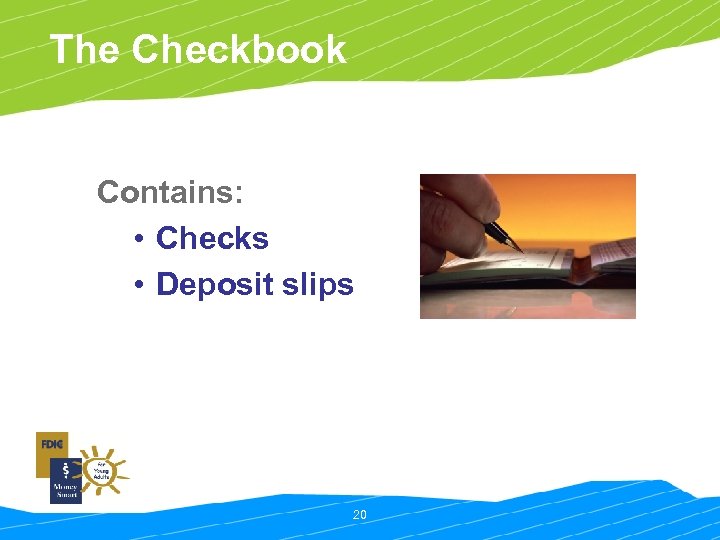
The Checkbook Contains: • Checks • Deposit slips 20
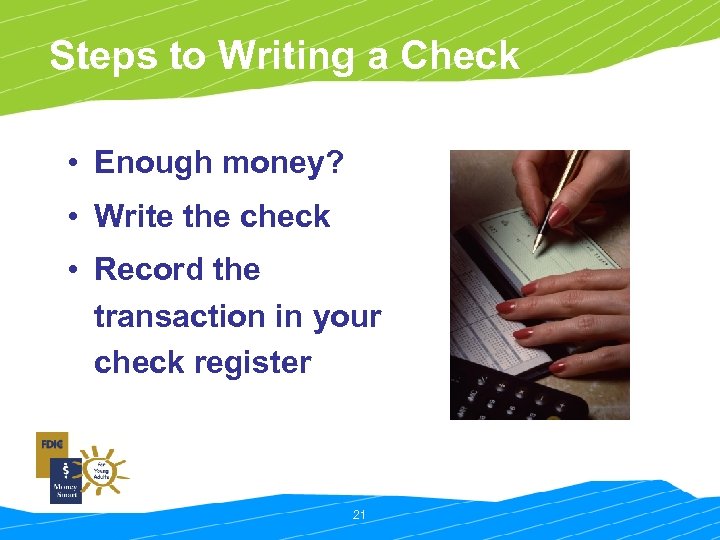
Steps to Writing a Check • Enough money? • Write the check • Record the transaction in your check register 21
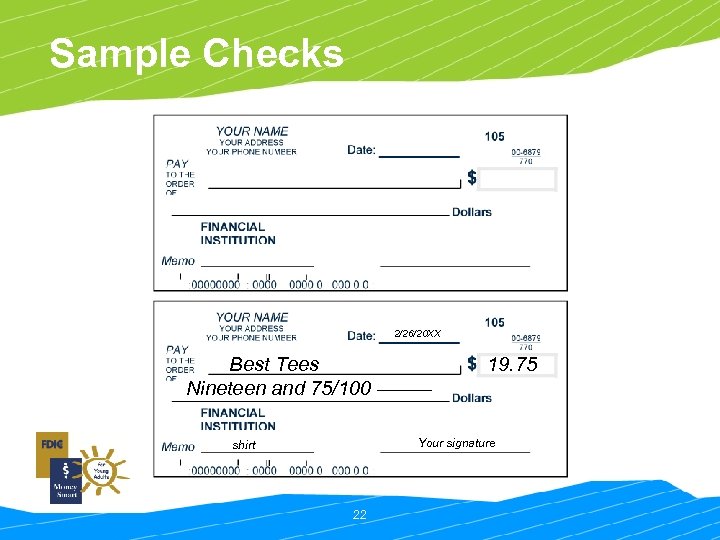
Sample Checks 2/26/20 XX Best Tees Nineteen and 75/100 19. 75 Your signature shirt 22
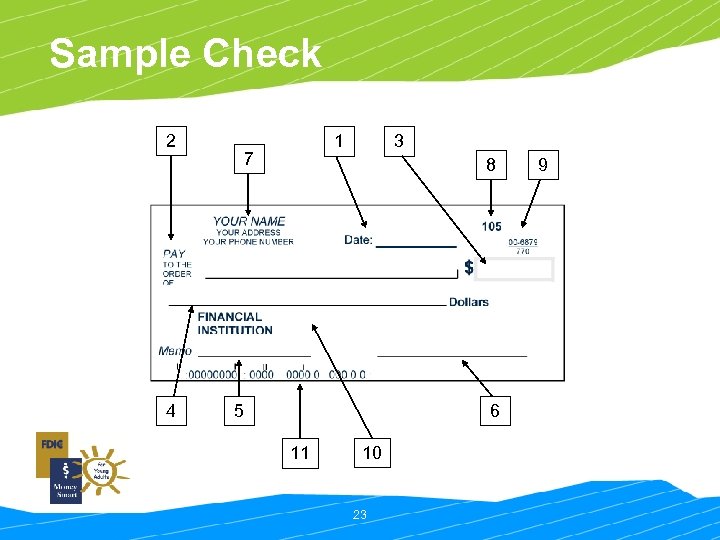
Sample Check 2 4 1 7 3 8 5 6 11 10 23 9
Electronic Banking • ATM transactions • Debit card transactions • Electronic bill pay 24
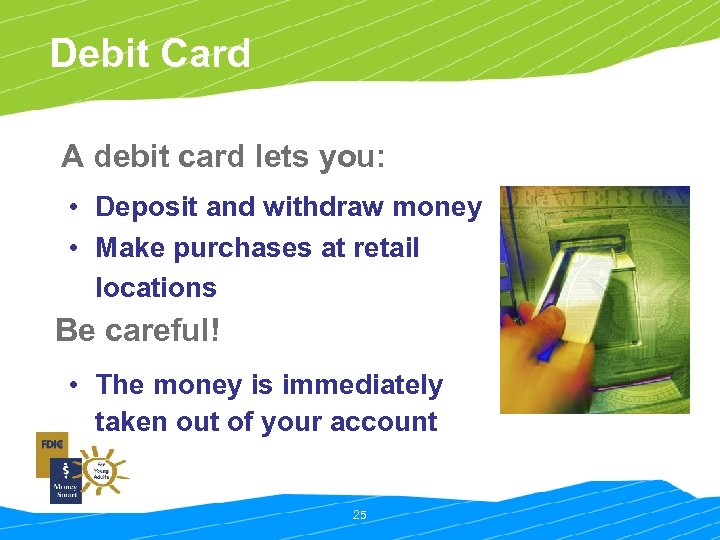
Debit Card A debit card lets you: • Deposit and withdraw money • Make purchases at retail locations Be careful! • The money is immediately taken out of your account 25
Electronic Bill Pay • Automatically pays your bills from your account – No postage – No late payments • Also pay bills online 26
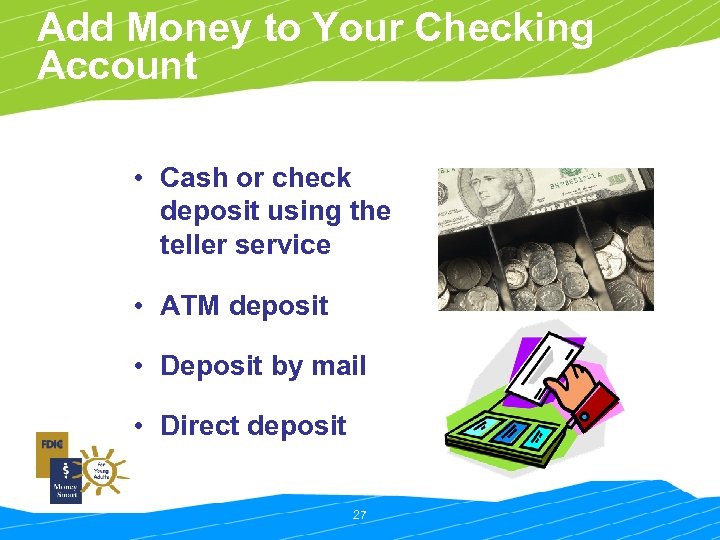
Add Money to Your Checking Account • Cash or check deposit using the teller service • ATM deposit • Deposit by mail • Direct deposit 27
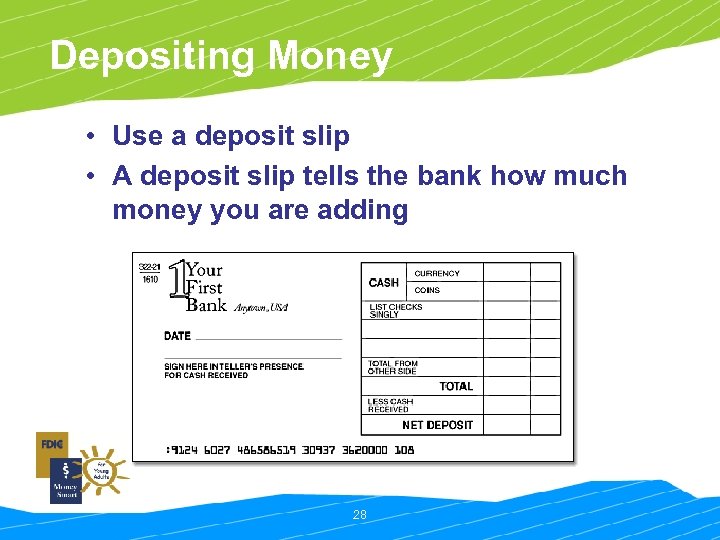
Depositing Money • Use a deposit slip • A deposit slip tells the bank how much money you are adding 28
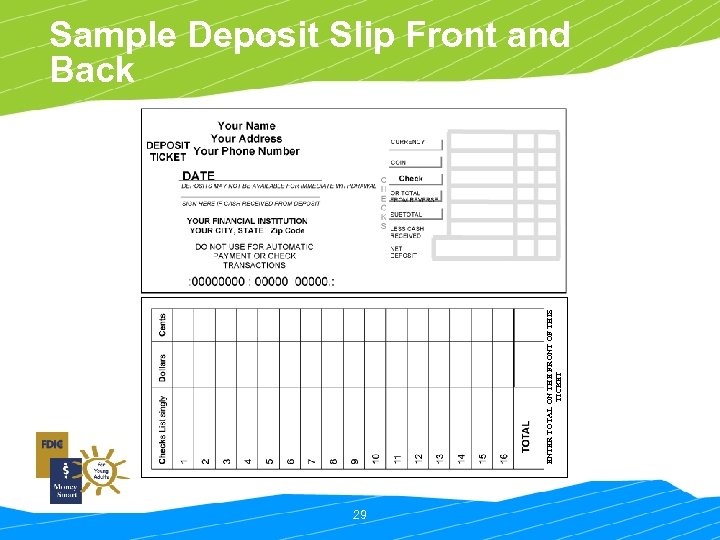
ENTER TOTAL ON THE FRONT OF THIS TICKET Sample Deposit Slip Front and Back 29
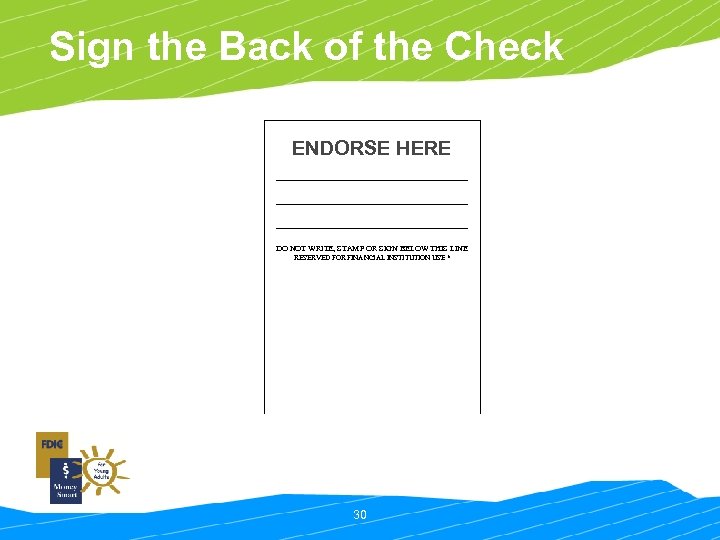
Sign the Back of the Check ENDORSE HERE DO NOT WRITE, STAMP OR SIGN BELOW THIS LINE RESERVED FOR FINANCIAL INSTITUTION USE * 30
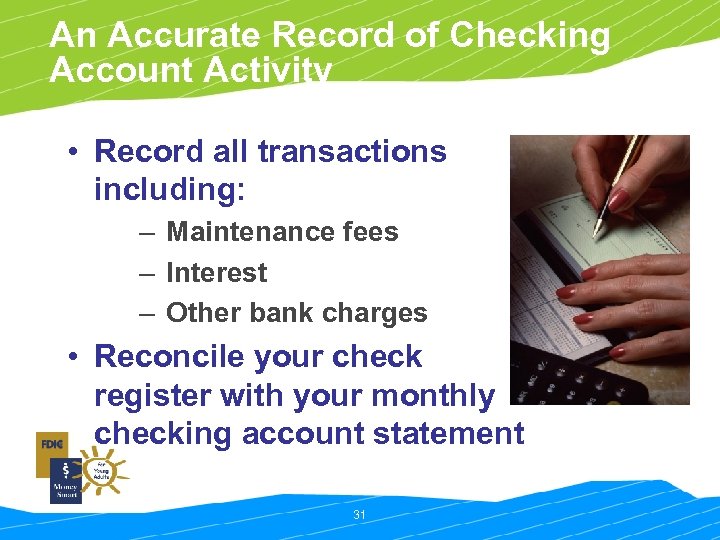
An Accurate Record of Checking Account Activity • Record all transactions including: – Maintenance fees – Interest – Other bank charges • Reconcile your check register with your monthly checking account statement 31
Checking Account Statement A monthly report from your bank listing: • Checks you wrote • Withdrawals and deposits • Debit card purchases • Bank fees 32
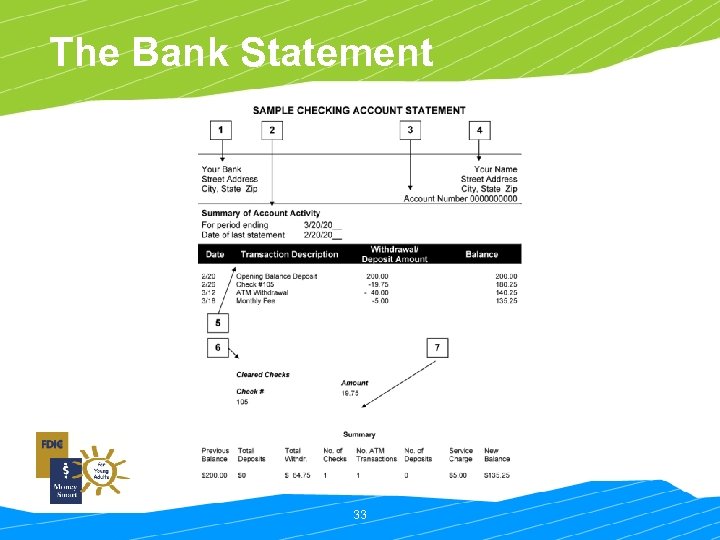
The Bank Statement 33
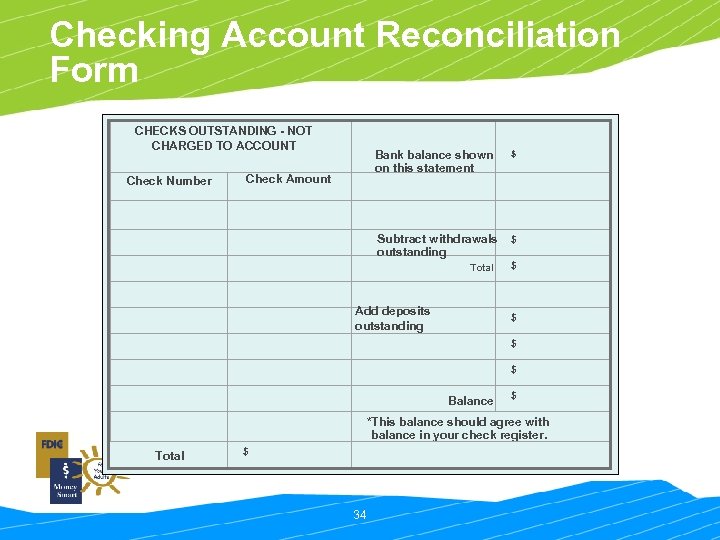
Checking Account Reconciliation Form CHECKS OUTSTANDING - NOT CHARGED TO ACCOUNT Bank balance shown on this statement Check Amount Check Number $ Subtract withdrawals outstanding $ $ $ Total $ Add deposits outstanding $ Balance $ *This balance should agree with balance in your check register. 34
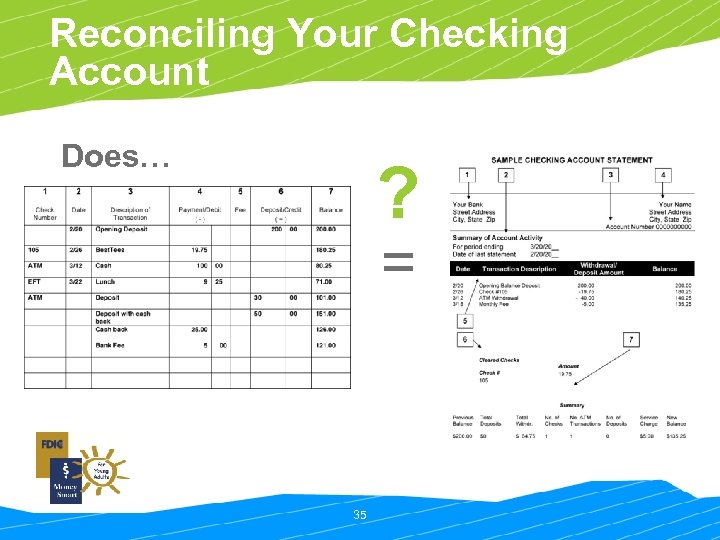
Reconciling Your Checking Account Does… ? = 35
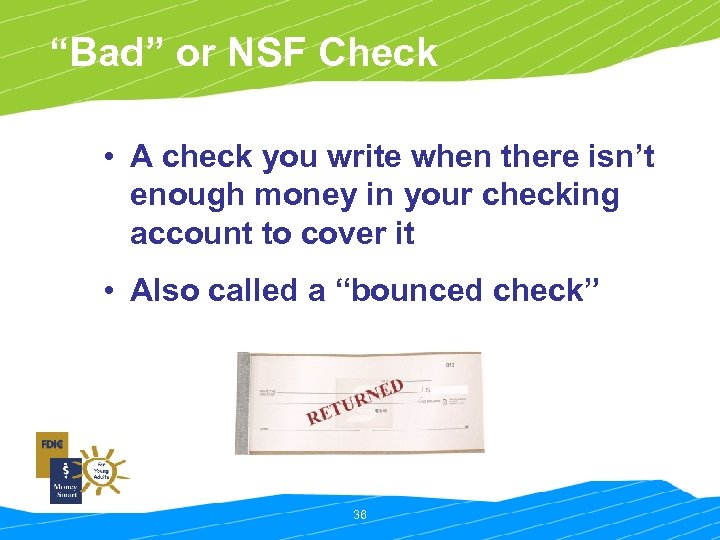
“Bad” or NSF Check • A check you write when there isn’t enough money in your checking account to cover it • Also called a “bounced check” 36
Consequences of Writing Bad Checks • Bad check fees • Negative activity reported • Bank closes your account • Civil and/or criminal prosecution • Merchants may not accept your checks • Your credit may be impacted 37
Key Things to Remember • Ask for help when you need it • Ask questions until you completely understand • Never sign anything until you understand it • Ask for written information to take home for review 38
Banking 2 Ø Fiscal Control department establishes new bank accounts with JP Morgan Chase Bank ØFiscal Control processes new account forms and signature cards ØRequires 2 signers (Admin Procedures 2245 and 2247) ØTypically Principal and Financial Clerk ØChief Financial Officer, Controller, and Fiscal Control Manager are alternate signers, if needed 39
Banking 2 Ø Fiscal Control department establishes new bank accounts with JP Morgan Chase Bank Ø Bank Account Management ØChanges to bank signature cards, online access, and procurement cards managed by Fiscal Control department 40
Banking 3 Ø Savings and Investments Accounts Ø Certificates of Deposit ØEstablished by Principal and School Financial Clerk per guidance of Student Council as noted in meeting minutes ØAccounts have specific maturity terms (i. e. 3 months, 6 months, 1 year) ØNotice is sent 30 days prior to maturity ØNo action taken results in CD rolling over with the same terms 41
Скачать презентацию FDIC Money Smart for Young Adults Bank On
e18b136dd32e049ef724d4f15331f048.ppt