


 Скачать презентацию Farming Frontier of 1862 160 acres
91a62bc345dba917005c5fea3f27c284.ppt
- Количество слайдов: 43

 Farming Frontier • of 1862 • 160 acres of public land fee to any family that settled on it for a period of 5 years • 1870 -1890 about 500, 000 families claimed land • About 2. 5 million families purchased land from railroads and speculators • Hardships – Extremes of weather, grasshoppers, loneliness, lack of water, lack of wood, falling prices, cost of new machinery, not enough land • Solutions – “soddies”, barbed wire (Glidden 1874), mail-order, windmills, steel plow, new strains of crops, dams, irrigation • 2/3 of homesteader farms failed by 1900 • Act • Land grants to promote development of western railroads
![New Agricultural Technology Steel Plow [“Sod Buster”] “Prairie Fan” Water Pump](https://present5.com/presentation/91a62bc345dba917005c5fea3f27c284/image-3.jpg "New Agricultural Technology Steel Plow [“Sod Buster”] “Prairie Fan” Water Pump") New Agricultural Technology Steel Plow [“Sod Buster”] “Prairie Fan” Water Pump
New Agricultural Technology Steel Plow [“Sod Buster”] “Prairie Fan” Water Pump
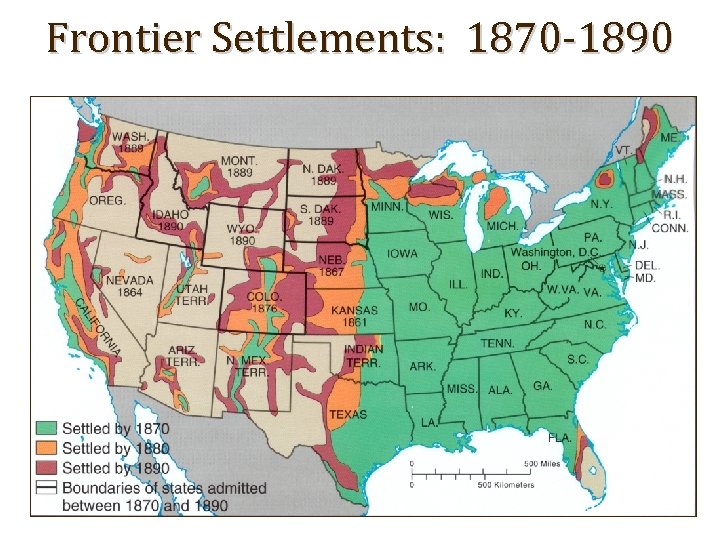 Frontier Settlements: 1870 -1890
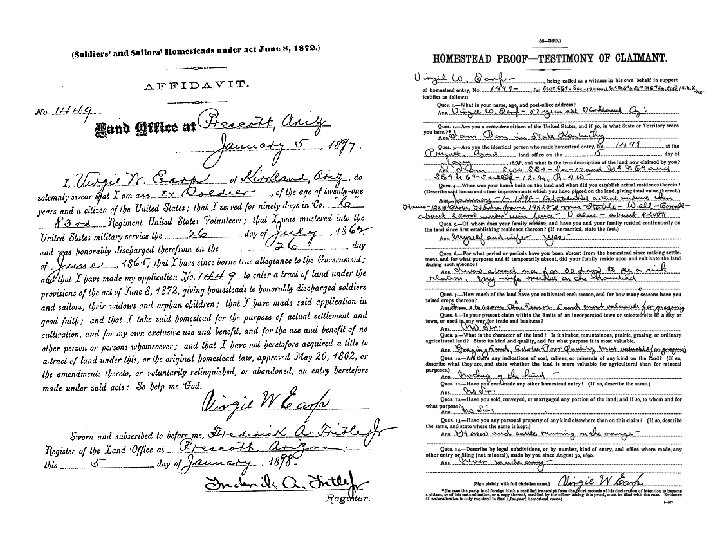
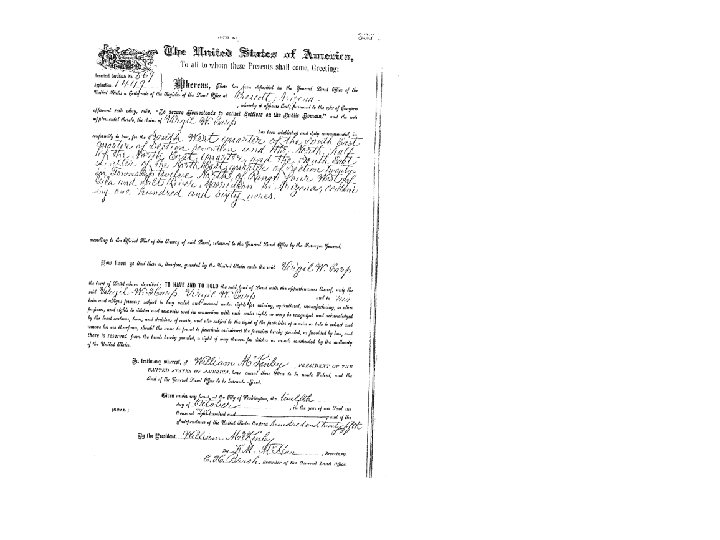
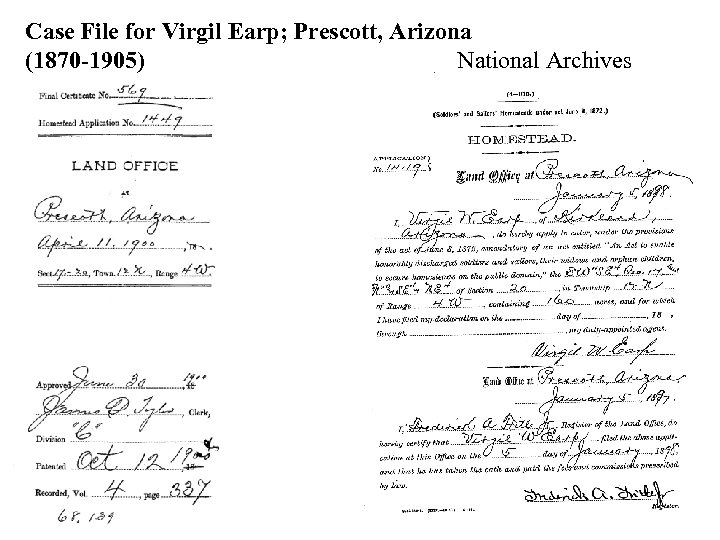 Case File for Virgil Earp; Prescott, Arizona (1870 -1905) National Archives
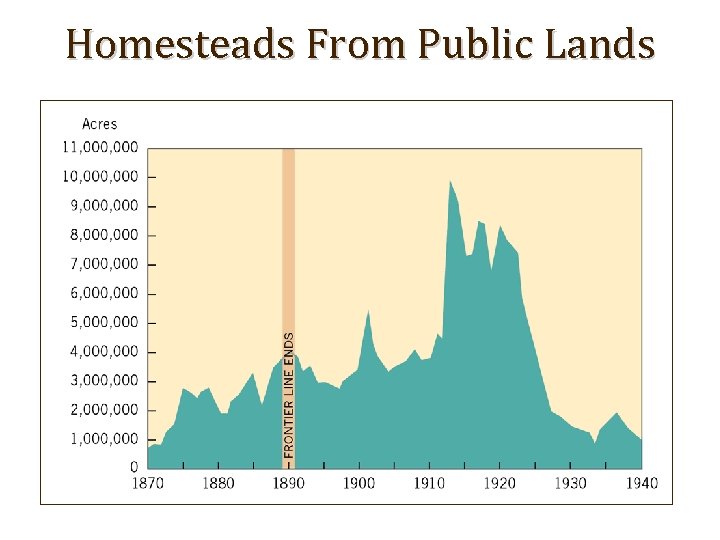 Homesteads From Public Lands
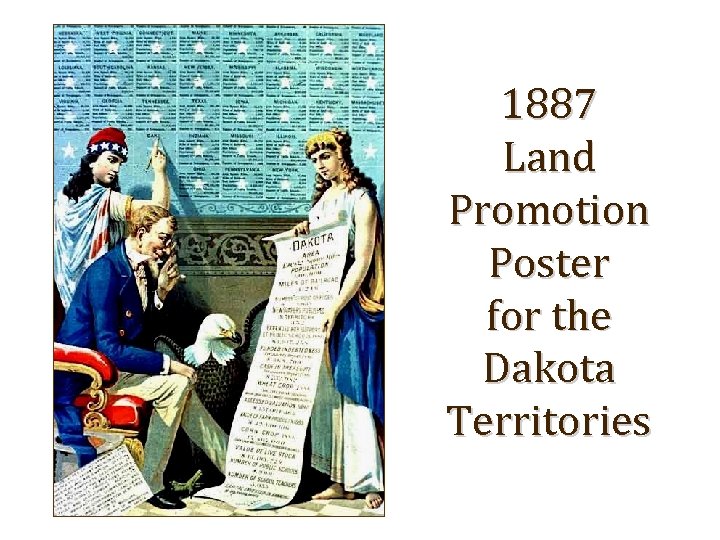 1887 Land Promotion Poster for the Dakota Territories
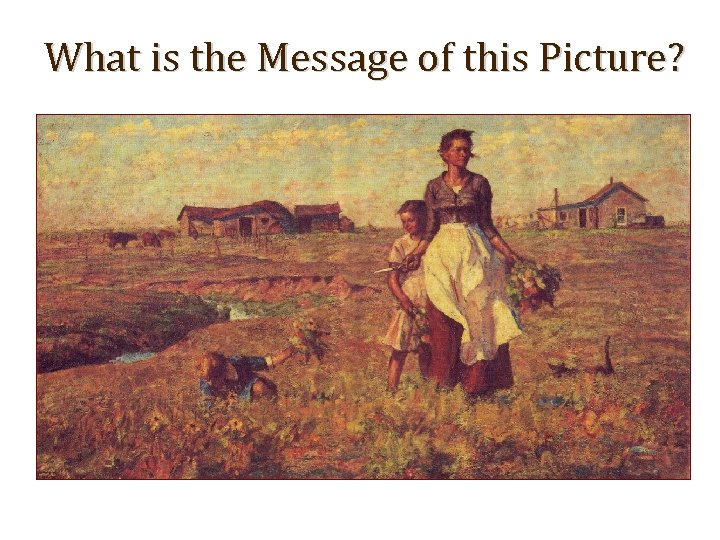 What is the Message of this Picture?
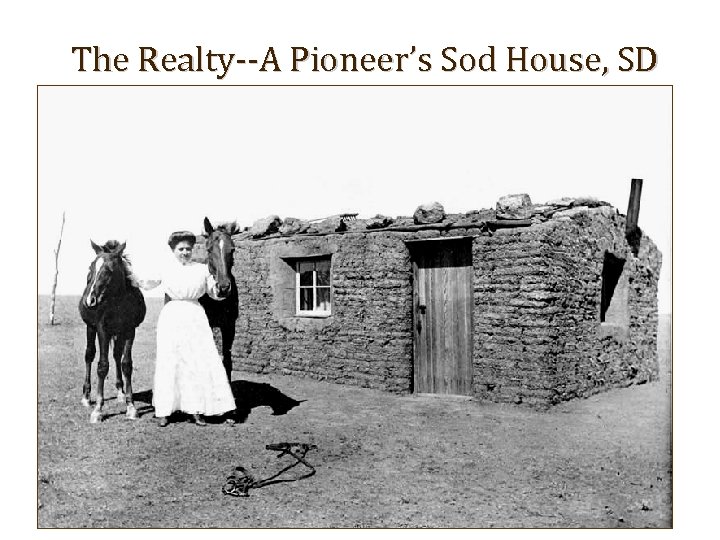 The Realty--A Pioneer’s Sod House, SD
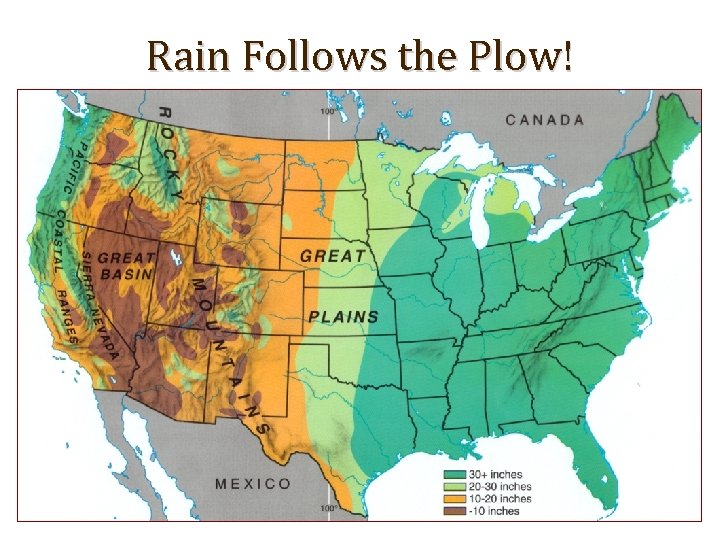 Rain Follows the Plow!
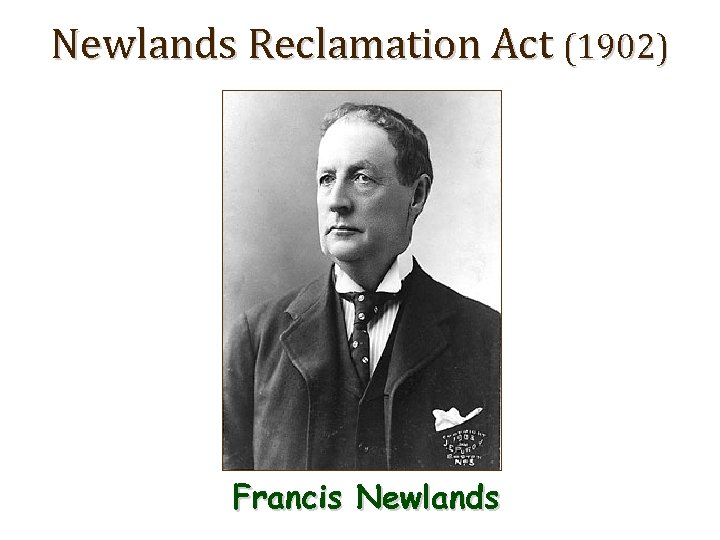 Newlands Reclamation Act (1902) Francis Newlands
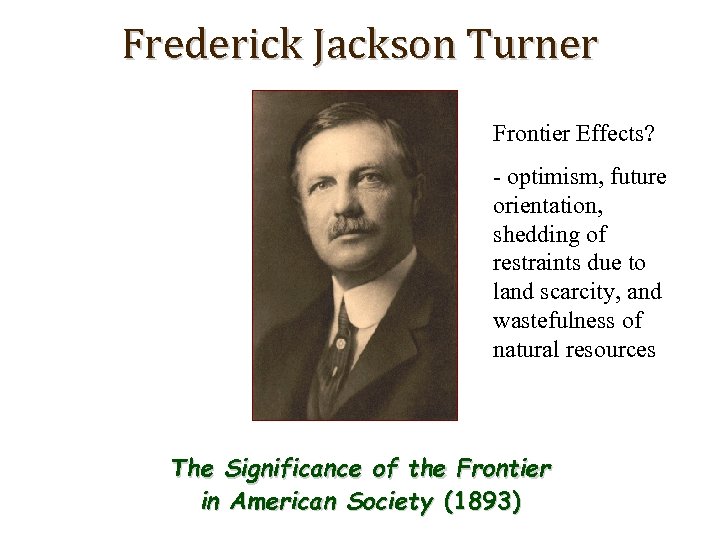 Frederick Jackson Turner Frontier Effects? - optimism, future orientation, shedding of restraints due to land scarcity, and wastefulness of natural resources The Significance of the Frontier in American Society (1893)
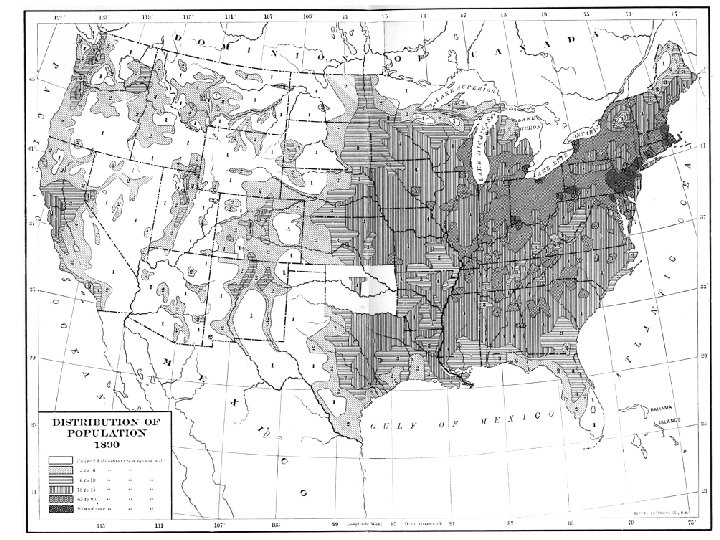
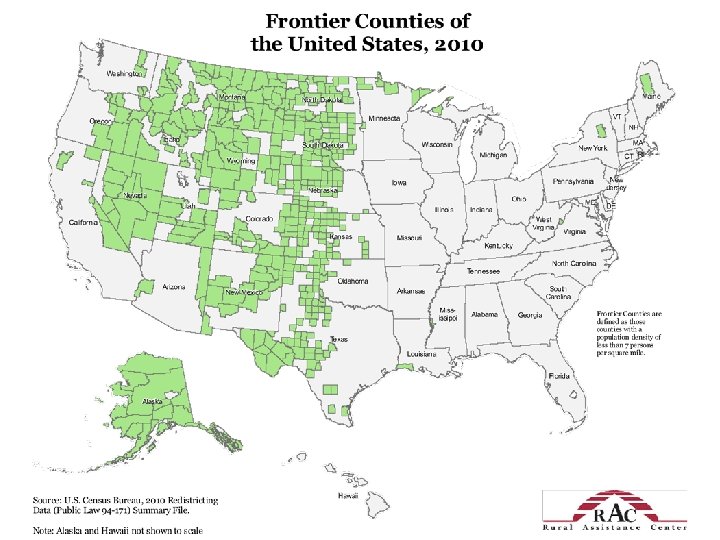
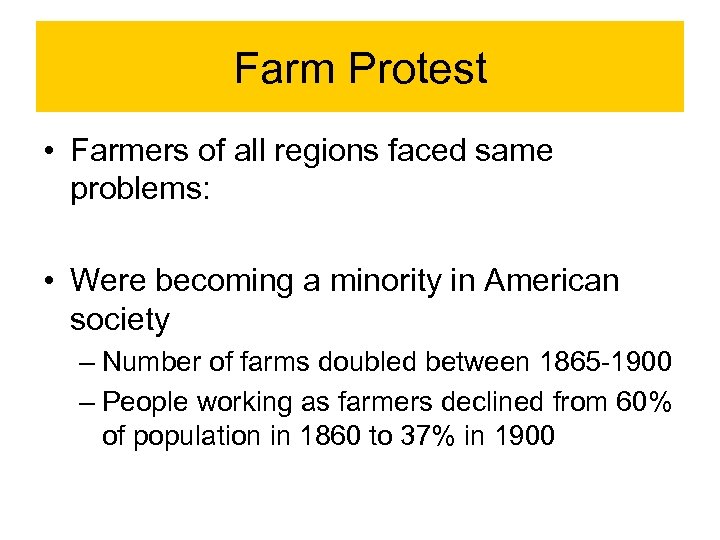 Farm Protest • Farmers of all regions faced same problems: • Were becoming a minority in American society – Number of farms doubled between 1865 -1900 – People working as farmers declined from 60% of population in 1860 to 37% in 1900
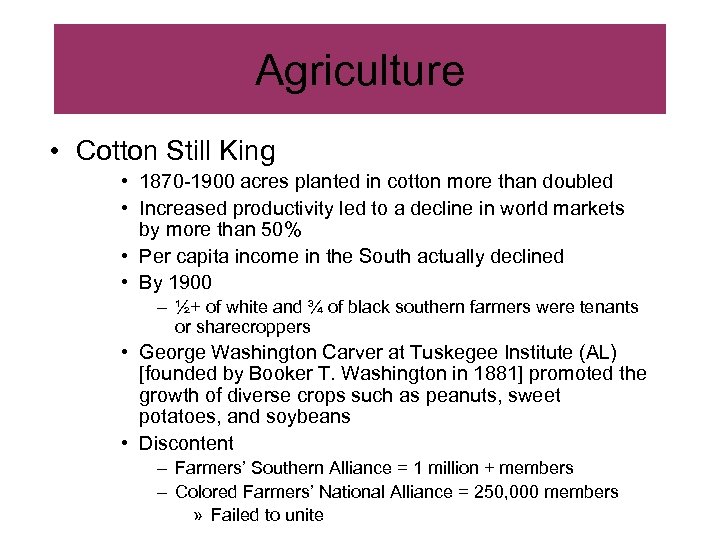 Agriculture • Cotton Still King • 1870 -1900 acres planted in cotton more than doubled • Increased productivity led to a decline in world markets by more than 50% • Per capita income in the South actually declined • By 1900 – ½+ of white and ¾ of black southern farmers were tenants or sharecroppers • George Washington Carver at Tuskegee Institute (AL) [founded by Booker T. Washington in 1881] promoted the growth of diverse crops such as peanuts, sweet potatoes, and soybeans • Discontent – Farmers’ Southern Alliance = 1 million + members – Colored Farmers’ National Alliance = 250, 000 members » Failed to unite
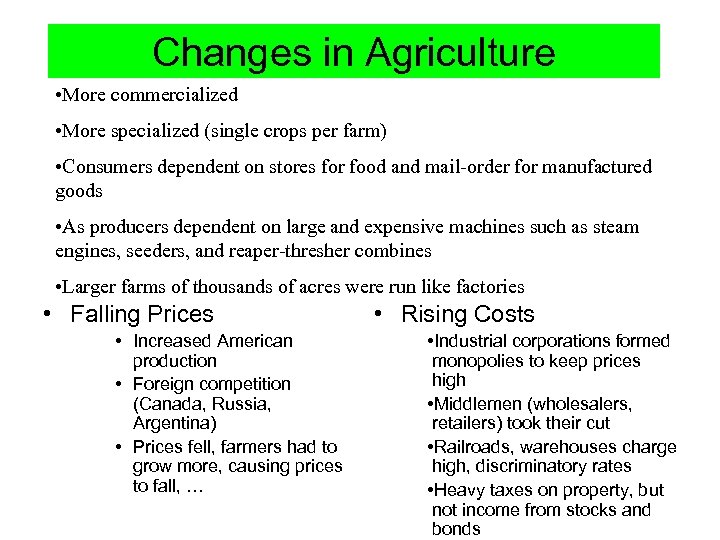 Changes in Agriculture • More commercialized • More specialized (single crops per farm) • Consumers dependent on stores for food and mail-order for manufactured goods • As producers dependent on large and expensive machines such as steam engines, seeders, and reaper-thresher combines • Larger farms of thousands of acres were run like factories • Falling Prices • Increased American production • Foreign competition (Canada, Russia, Argentina) • Prices fell, farmers had to grow more, causing prices to fall, … • Rising Costs • Industrial corporations formed monopolies to keep prices high • Middlemen (wholesalers, retailers) took their cut • Railroads, warehouses charge high, discriminatory rates • Heavy taxes on property, but not income from stocks and bonds
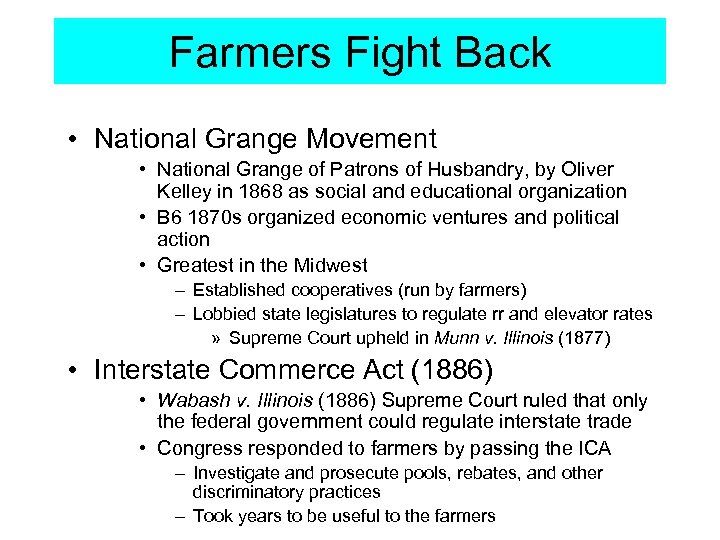 Farmers Fight Back • National Grange Movement • National Grange of Patrons of Husbandry, by Oliver Kelley in 1868 as social and educational organization • B 6 1870 s organized economic ventures and political action • Greatest in the Midwest – Established cooperatives (run by farmers) – Lobbied state legislatures to regulate rr and elevator rates » Supreme Court upheld in Munn v. Illinois (1877) • Interstate Commerce Act (1886) • Wabash v. Illinois (1886) Supreme Court ruled that only the federal government could regulate interstate trade • Congress responded to farmers by passing the ICA – Investigate and prosecute pools, rebates, and other discriminatory practices – Took years to be useful to the farmers
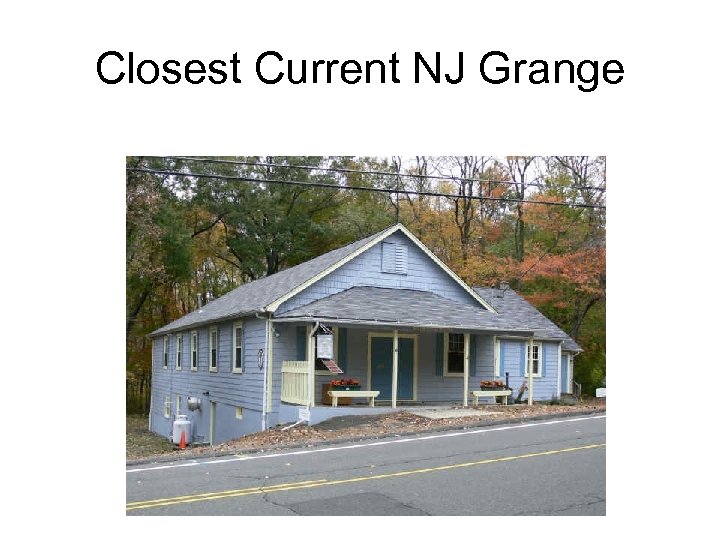 Closest Current NJ Grange
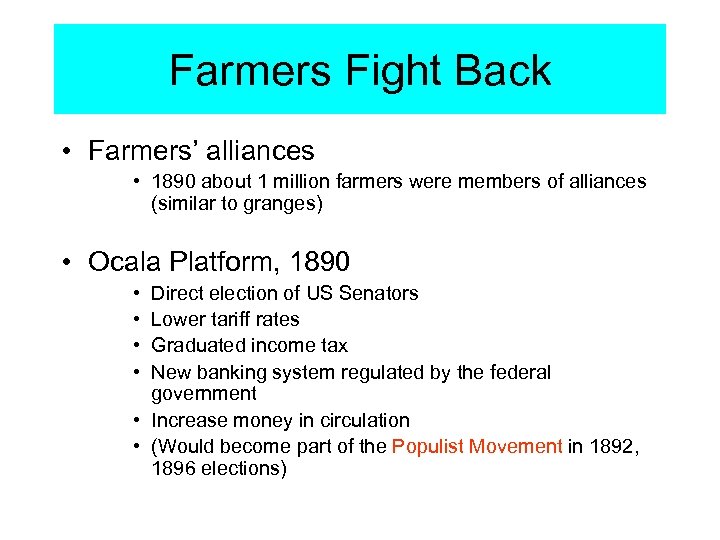 Farmers Fight Back • Farmers’ alliances • 1890 about 1 million farmers were members of alliances (similar to granges) • Ocala Platform, 1890 • • Direct election of US Senators Lower tariff rates Graduated income tax New banking system regulated by the federal government • Increase money in circulation • (Would become part of the Populist Movement in 1892, 1896 elections)
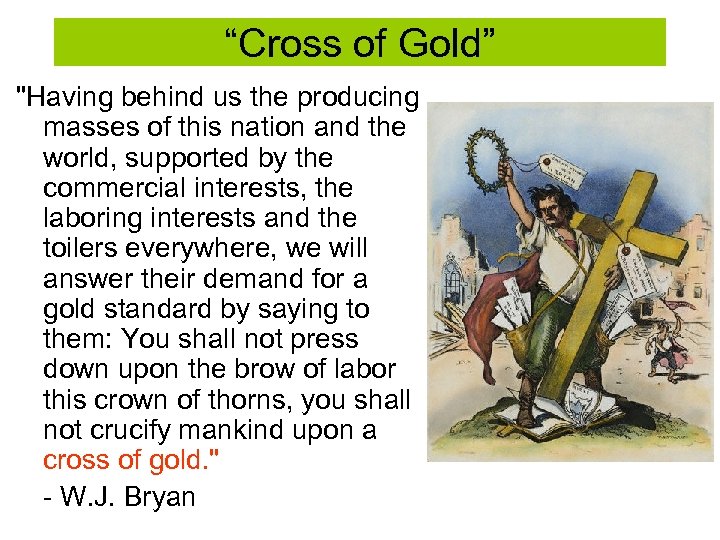 “Cross of Gold” "Having behind us the producing masses of this nation and the world, supported by the commercial interests, the laboring interests and the toilers everywhere, we will answer their demand for a gold standard by saying to them: You shall not press down upon the brow of labor this crown of thorns, you shall not crucify mankind upon a cross of gold. " - W. J. Bryan
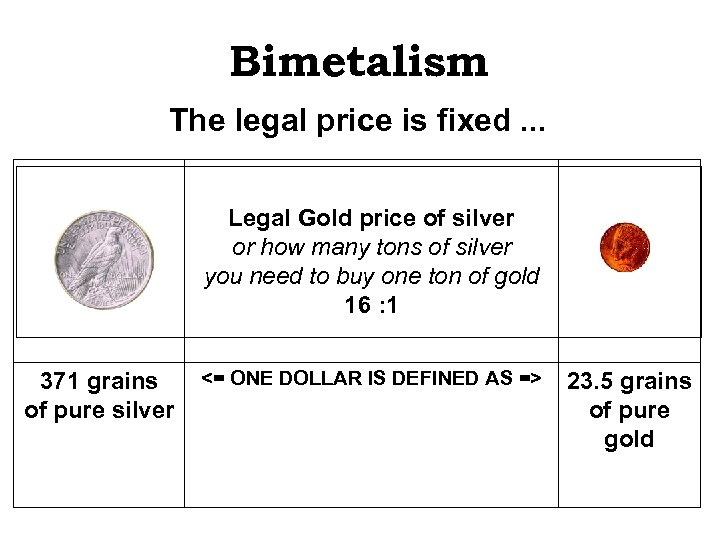 Bimetalism The legal price is fixed. . . Legal Gold price of silver or how many tons of silver you need to buy one ton of gold 16 : 1 371 grains of pure silver <= ONE DOLLAR IS DEFINED AS => 23. 5 grains of pure gold
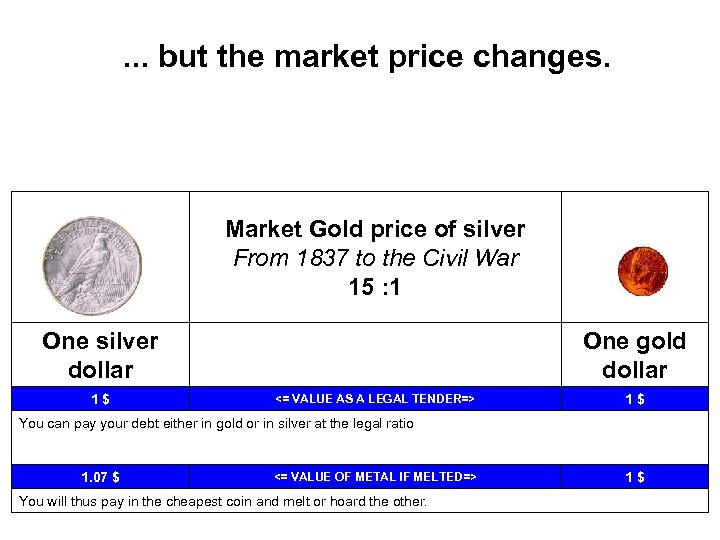 . . . but the market price changes. One gold dollar One silver dollar 1 $ Market Gold price of silver From 1837 to the Civil War 15 : 1 <= VALUE AS A LEGAL TENDER=> 1 $ You can pay your debt either in gold or in silver at the legal ratio 1. 07 $ <= VALUE OF METAL IF MELTED=> You will thus pay in the cheapest coin and melt or hoard the other. 1 $
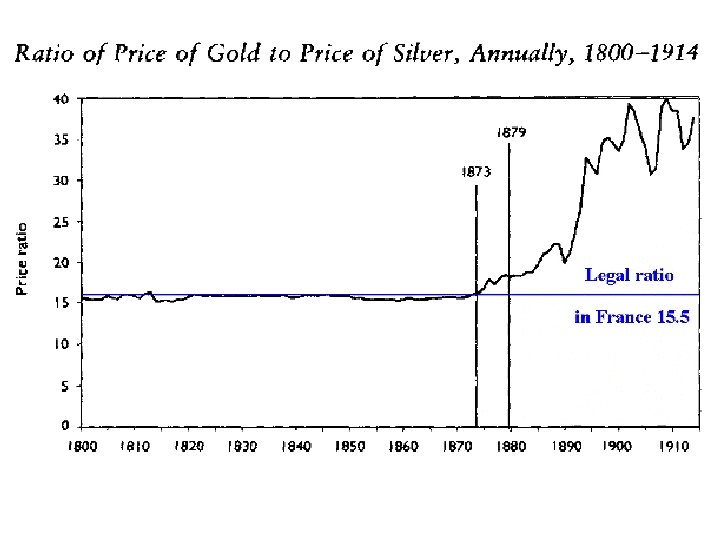
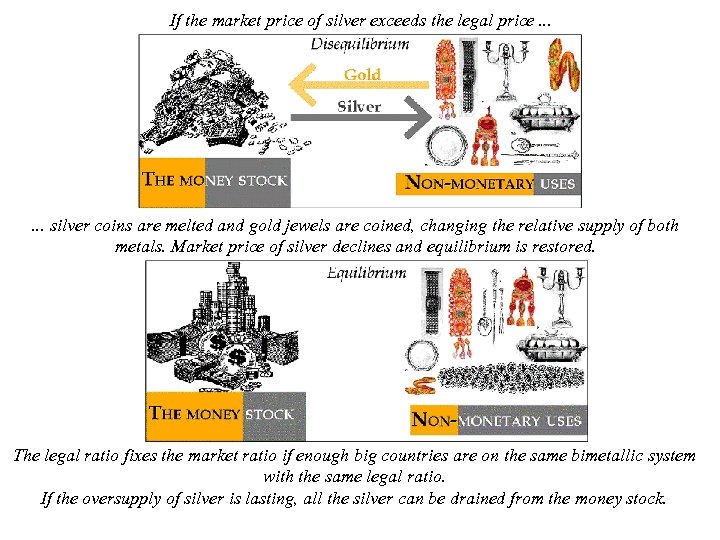 If the market price of silver exceeds the legal price. . . silver coins are melted and gold jewels are coined, changing the relative supply of both metals. Market price of silver declines and equilibrium is restored. The legal ratio fixes the market ratio if enough big countries are on the same bimetallic system with the same legal ratio. If the oversupply of silver is lasting, all the silver can be drained from the money stock.
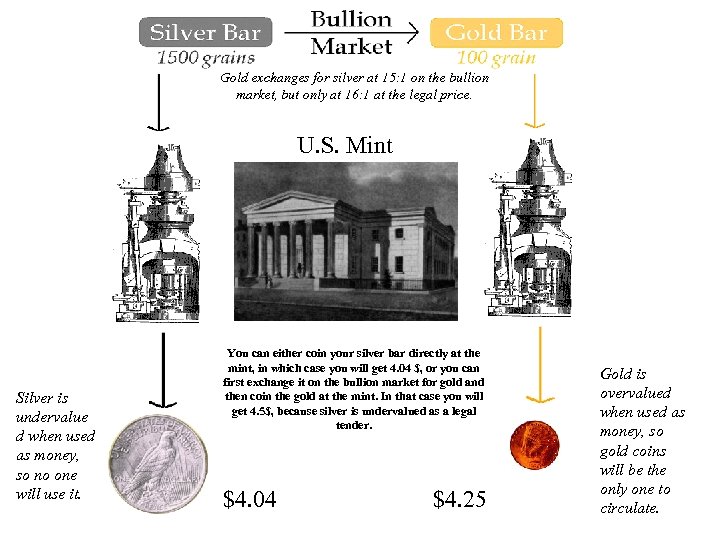 Gold exchanges for silver at 15: 1 on the bullion market, but only at 16: 1 at the legal price. U. S. Mint Silver is undervalue d when used as money, so no one will use it. You can either coin your silver bar directly at the mint, in which case you will get 4. 04 $, or you can first exchange it on the bullion market for gold and then coin the gold at the mint. In that case you will get 4. 5$, because silver is undervalued as a legal tender. $4. 04 $4. 25 Gold is overvalued when used as money, so gold coins will be the only one to circulate.
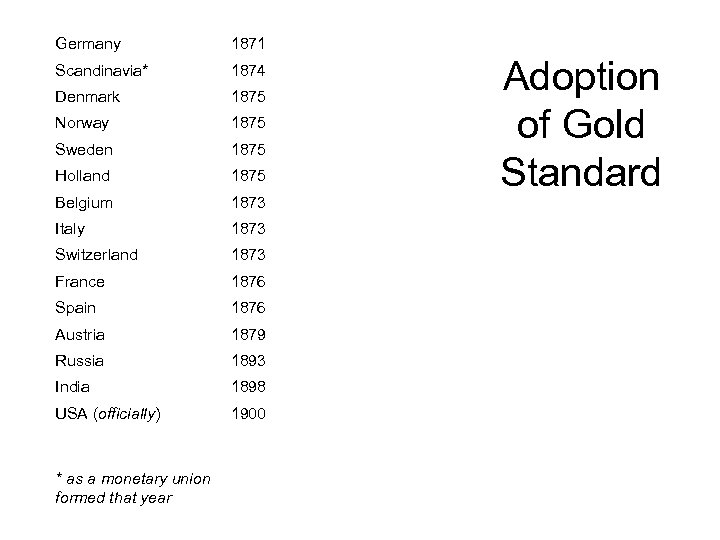 Germany 1871 Scandinavia* 1874 Denmark 1875 Norway 1875 Sweden 1875 Holland 1875 Belgium 1873 Italy 1873 Switzerland 1873 France 1876 Spain 1876 Austria 1879 Russia 1893 India 1898 USA (officially) 1900 * as a monetary union formed that year Adoption of Gold Standard
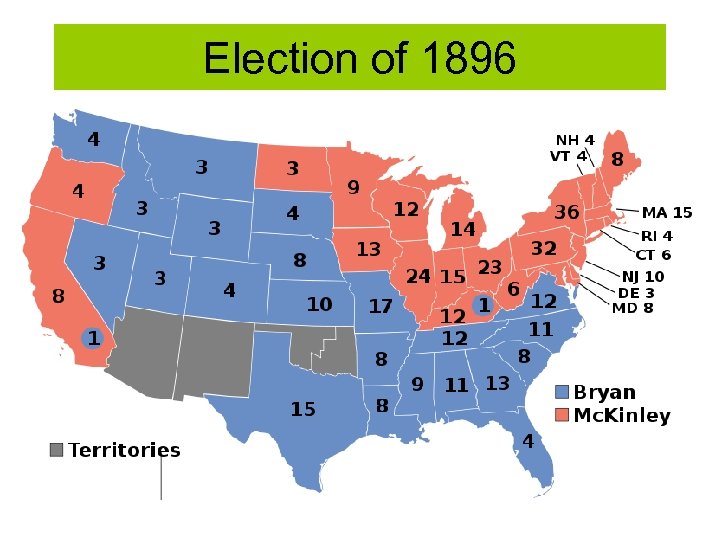 Election of 1896

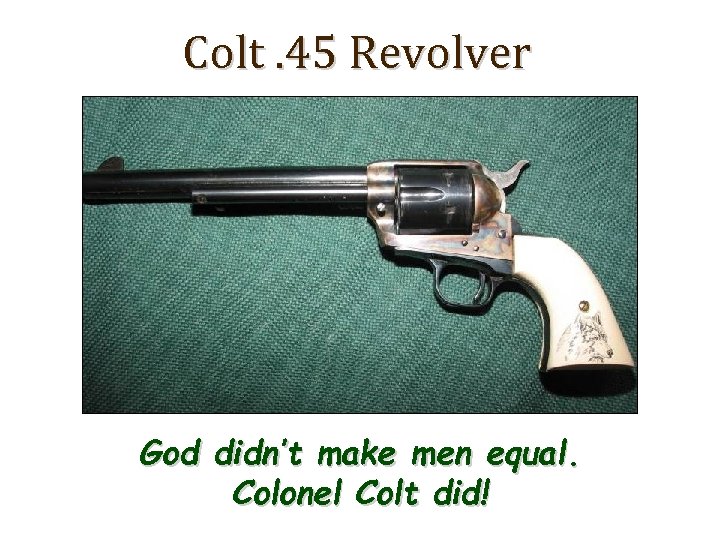 Colt. 45 Revolver God didn’t make men equal. Colonel Colt did!
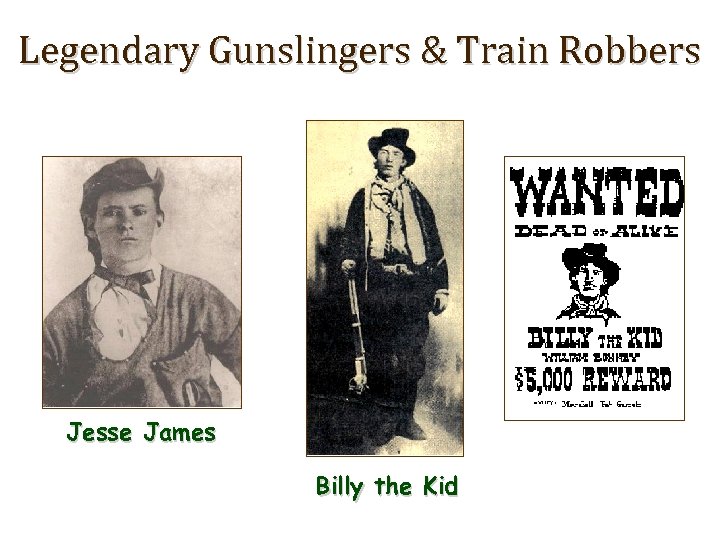 Legendary Gunslingers & Train Robbers Jesse James Billy the Kid
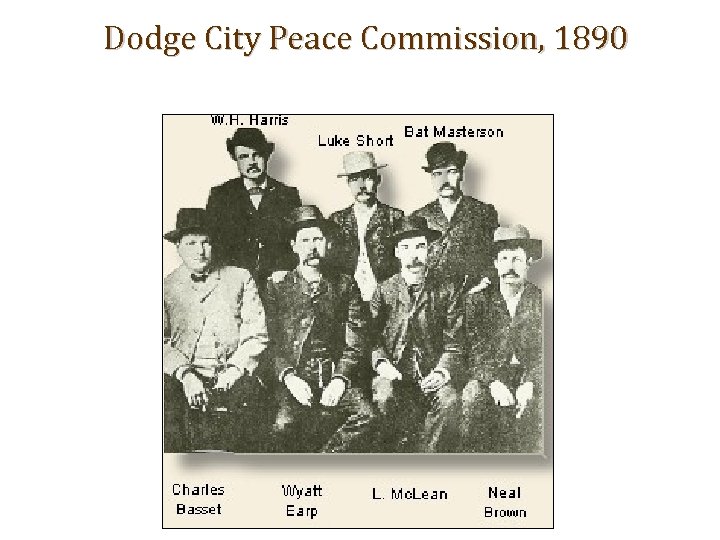 Dodge City Peace Commission, 1890

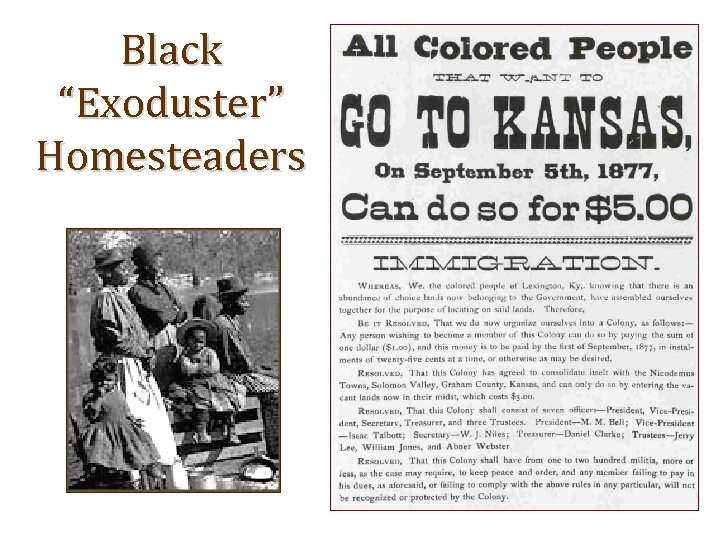 Black “Exoduster” Homesteaders
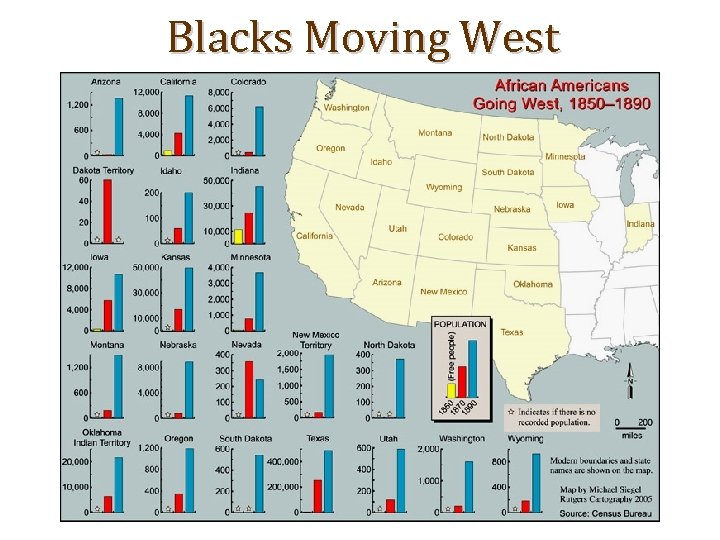 Blacks Moving West
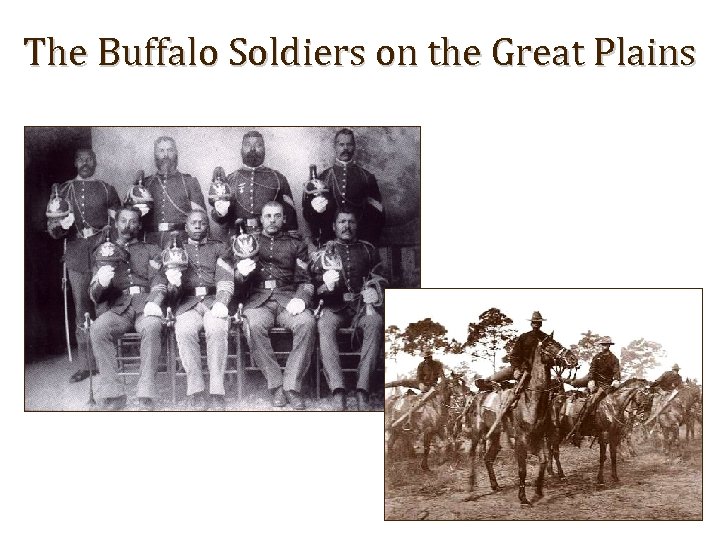 The Buffalo Soldiers on the Great Plains
 A Romantic View
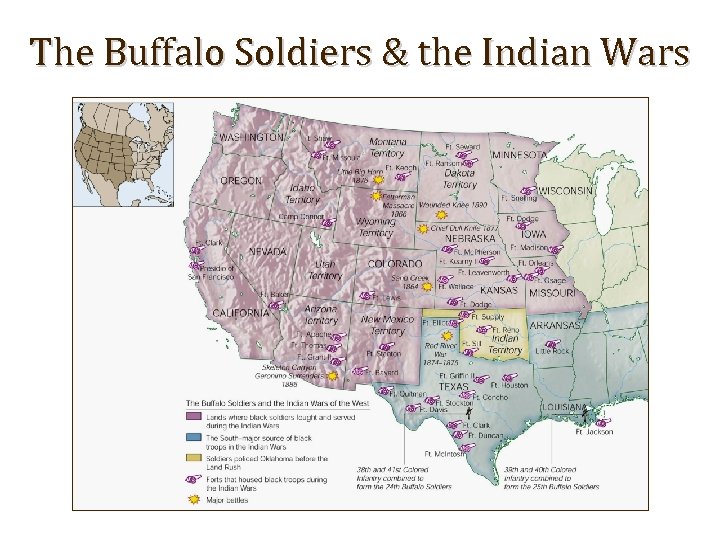 The Buffalo Soldiers & the Indian Wars
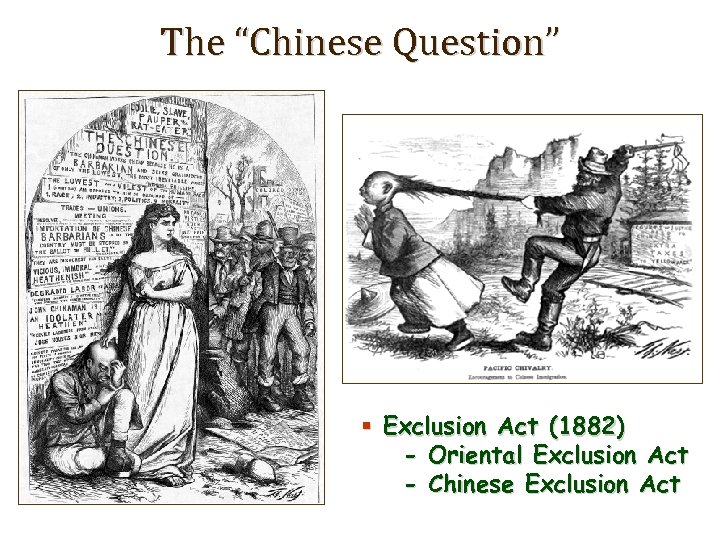 The “Chinese Question” § Exclusion Act (1882) - Oriental Exclusion Act - Chinese Exclusion Act
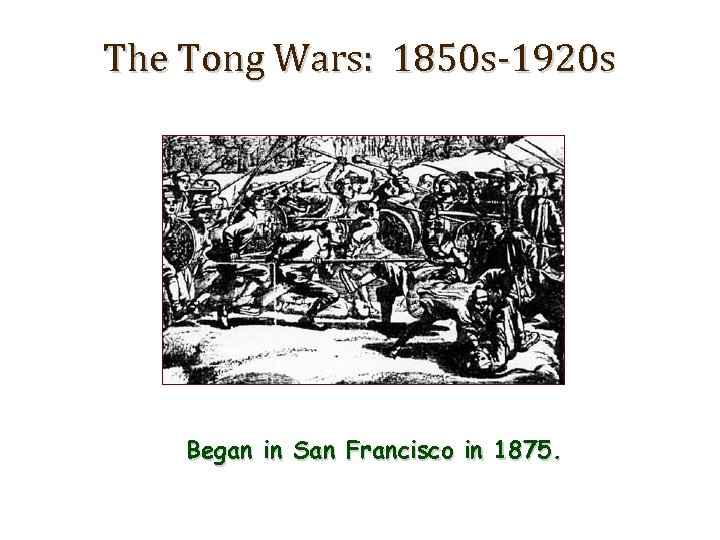 The Tong Wars: 1850 s-1920 s Began in San Francisco in 1875.
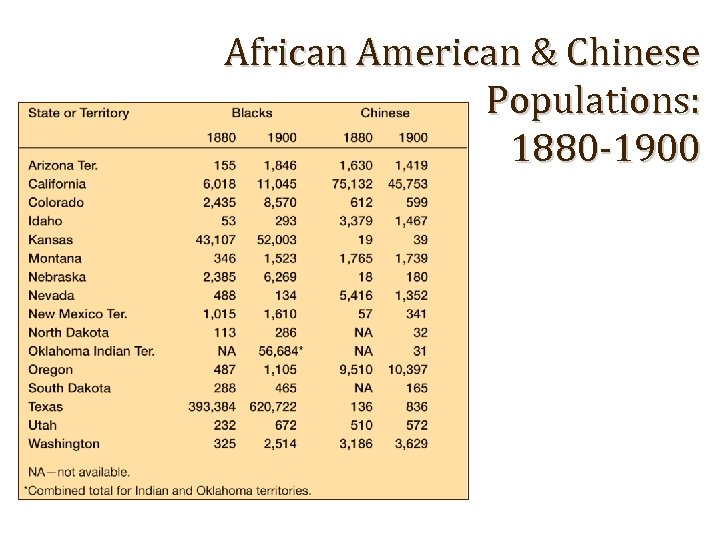 African American & Chinese Populations: 1880 -1900