


 Скачать презентацию Farm to School and School Wellness Policies Why
a485036c409bdaa2a83519a51f34b77c.ppt
- Количество слайдов: 26
 Farm to School and School Wellness Policies Why would you add farm to school language to your school wellness policy? 1
 Introduction Farm to school programs around the country have played a significant role in improving the quality of school meals and expanding nutrition education. 2
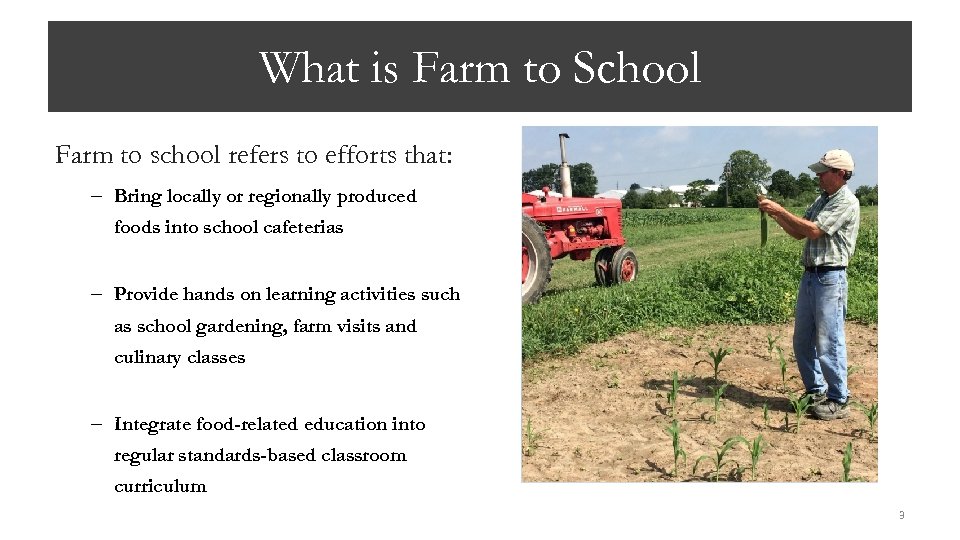 What is Farm to School Farm to school refers to efforts that: – Bring locally or regionally produced foods into school cafeterias – Provide hands on learning activities such as school gardening, farm visits and culinary classes – Integrate food-related education into regular standards-based classroom curriculum 3
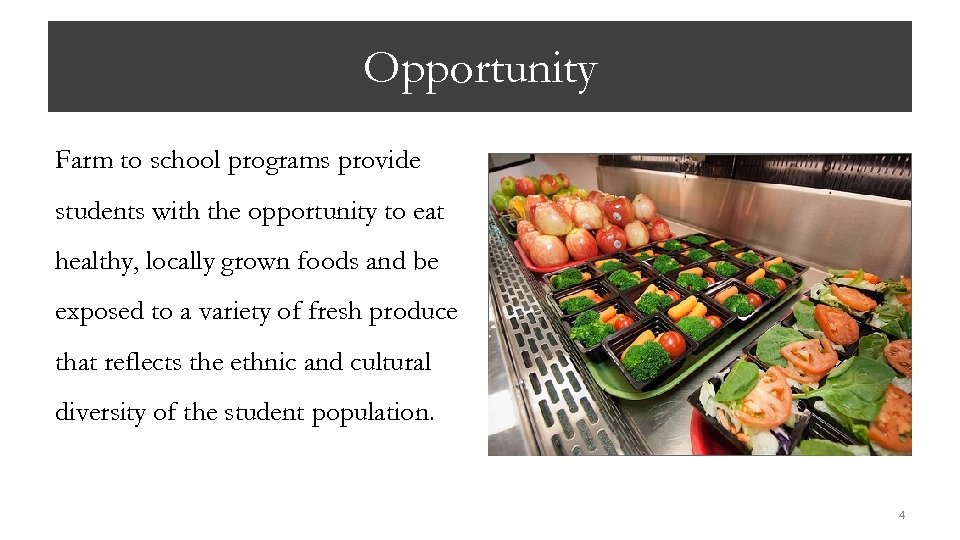 Opportunity Farm to school programs provide students with the opportunity to eat healthy, locally grown foods and be exposed to a variety of fresh produce that reflects the ethnic and cultural diversity of the student population. 4
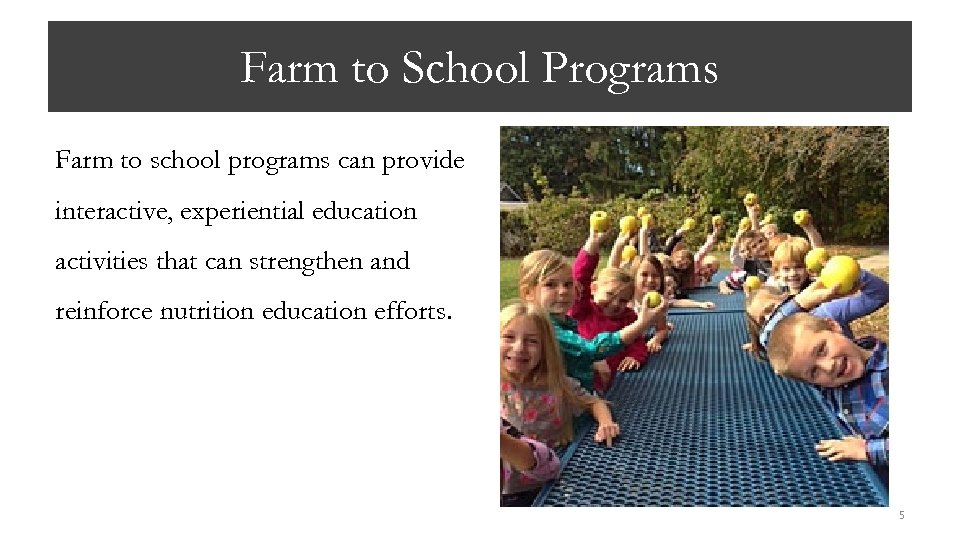 Farm to School Programs Farm to school programs can provide interactive, experiential education activities that can strengthen and reinforce nutrition education efforts. 5
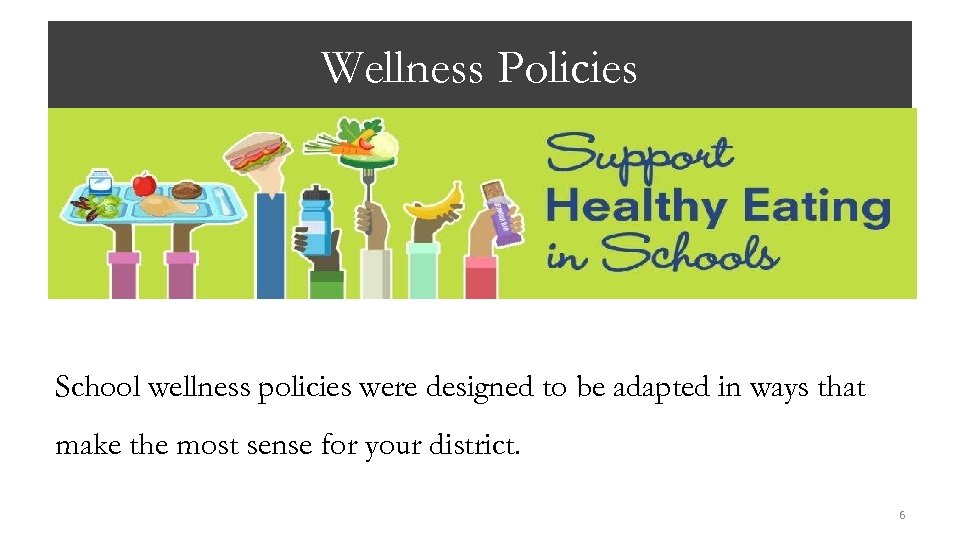 Wellness Policies School wellness policies were designed to be adapted in ways that make the most sense for your district. 6
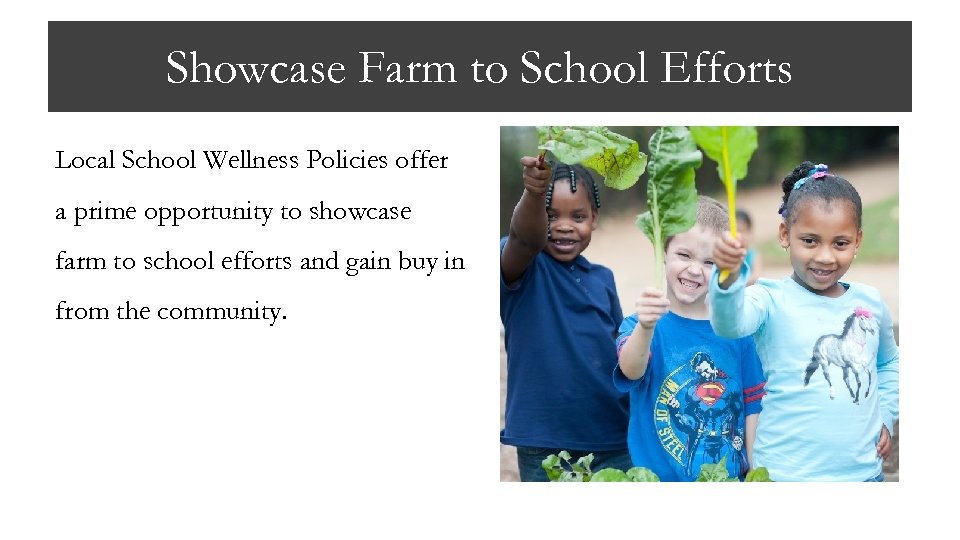 Showcase Farm to School Efforts Local School Wellness Policies offer a prime opportunity to showcase farm to school efforts and gain buy in from the community.
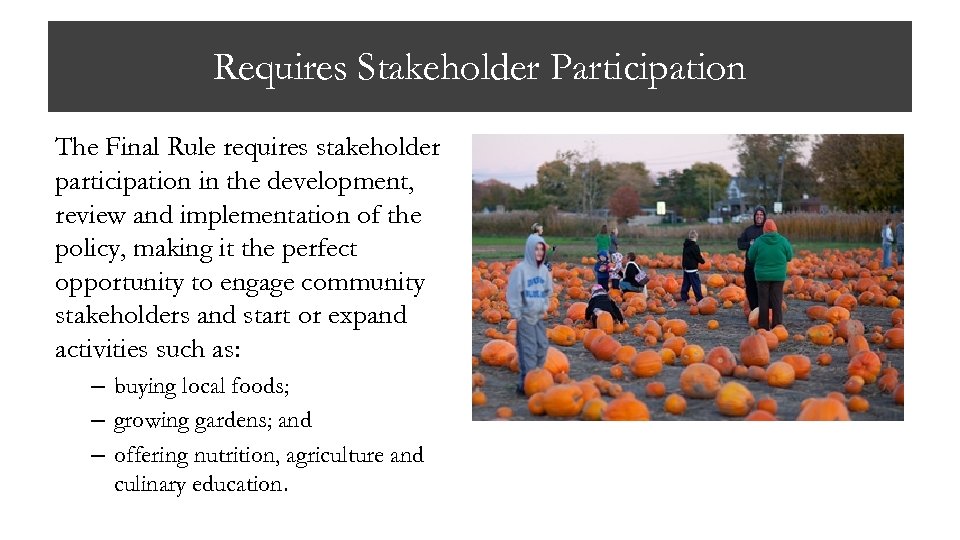 Requires Stakeholder Participation The Final Rule requires stakeholder participation in the development, review and implementation of the policy, making it the perfect opportunity to engage community stakeholders and start or expand activities such as: – buying local foods; – growing gardens; and – offering nutrition, agriculture and culinary education.
 Sample Language Resources: USDA>Resource Library> Farm to School> Wellness Policy Language https: //healthymeals. fns. usda. gov/farm-school-wellness-policy-language
 School District Support The school district supports the integration of a farm to school program into the school food program and the curricular and co-curricular activities as appropriate to facilitate the nutritional and educational goals of the school district. 10
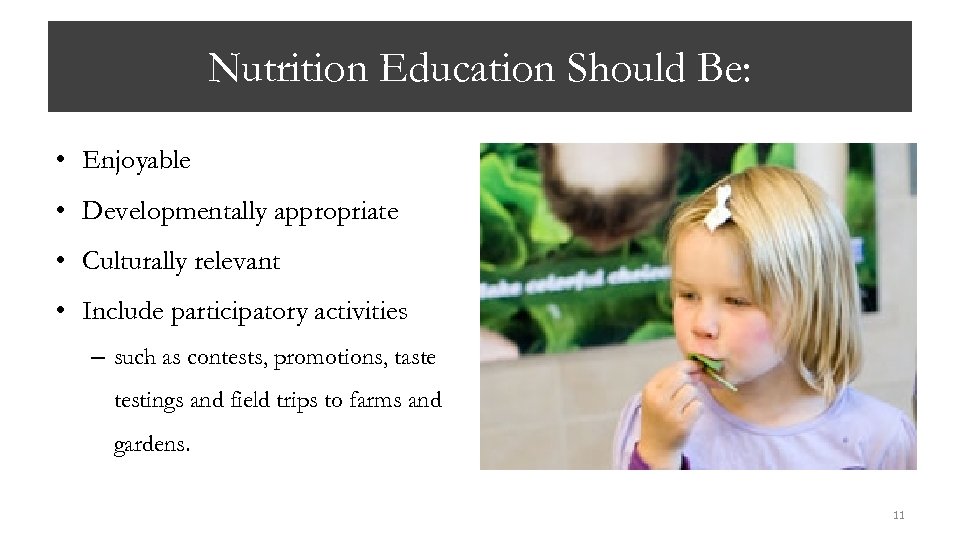 Nutrition Education Should Be: • Enjoyable • Developmentally appropriate • Culturally relevant • Include participatory activities – such as contests, promotions, taste testings and field trips to farms and gardens. 11
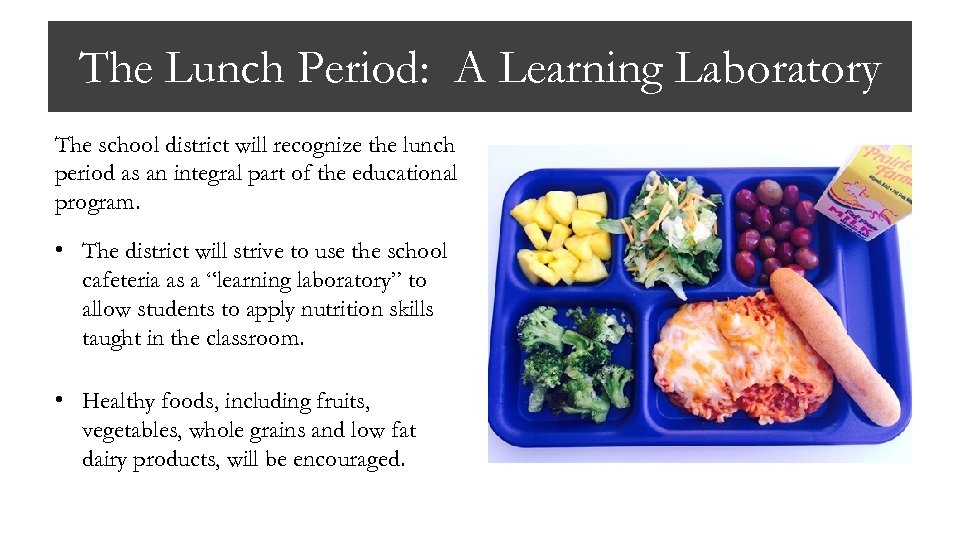 The Lunch Period: A Learning Laboratory The school district will recognize the lunch period as an integral part of the educational program. • The district will strive to use the school cafeteria as a “learning laboratory” to allow students to apply nutrition skills taught in the classroom. • Healthy foods, including fruits, vegetables, whole grains and low fat dairy products, will be encouraged.
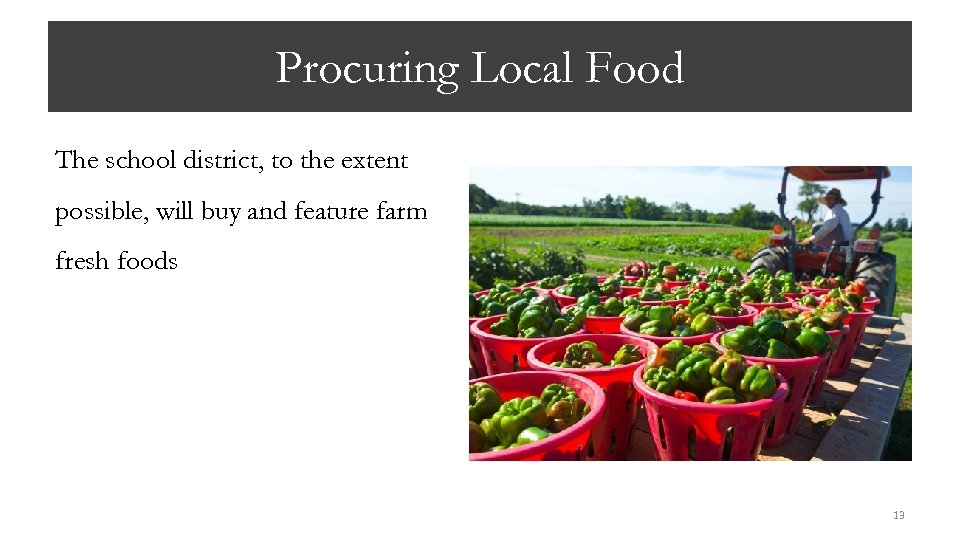 Procuring Local Food The school district, to the extent possible, will buy and feature farm fresh foods 13
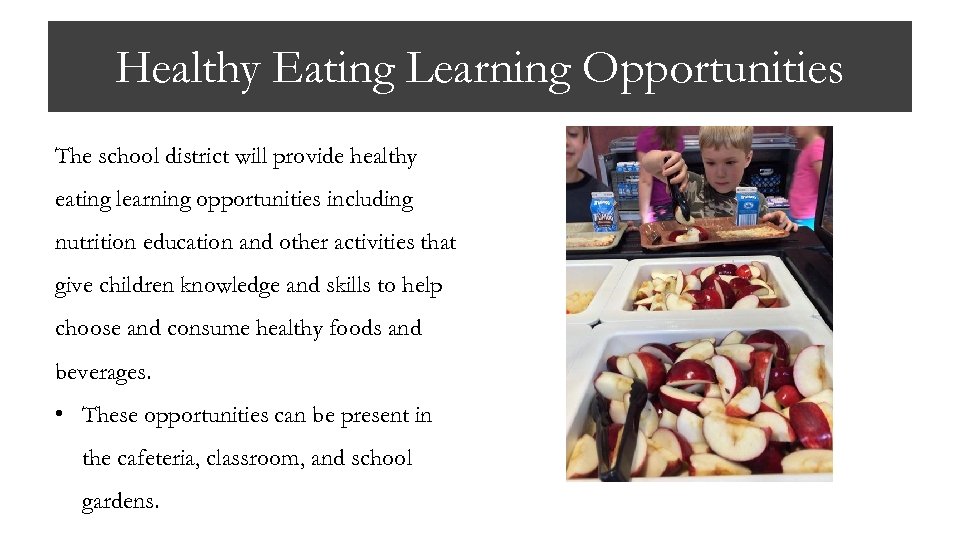 Healthy Eating Learning Opportunities The school district will provide healthy eating learning opportunities including nutrition education and other activities that give children knowledge and skills to help choose and consume healthy foods and beverages. • These opportunities can be present in the cafeteria, classroom, and school gardens.
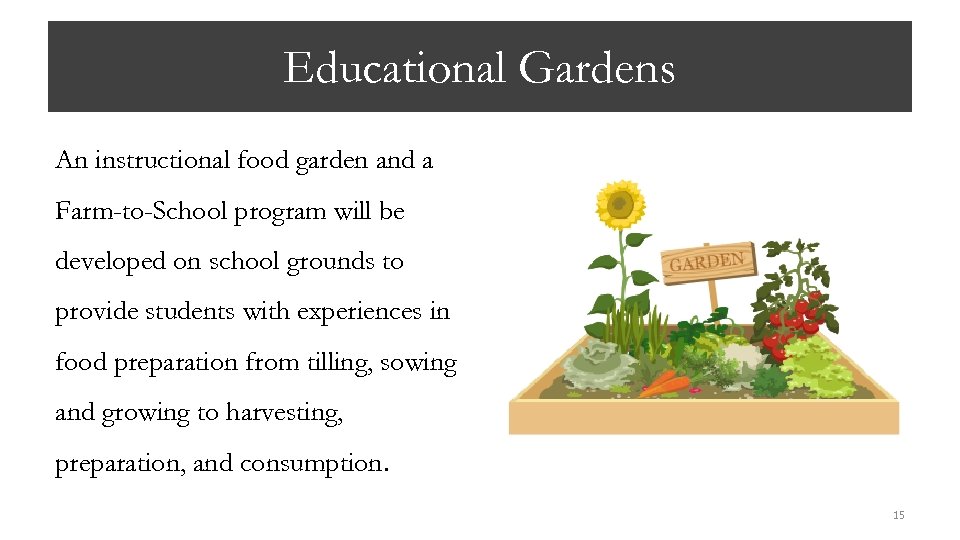 Educational Gardens An instructional food garden and a Farm-to-School program will be developed on school grounds to provide students with experiences in food preparation from tilling, sowing and growing to harvesting, preparation, and consumption. 15
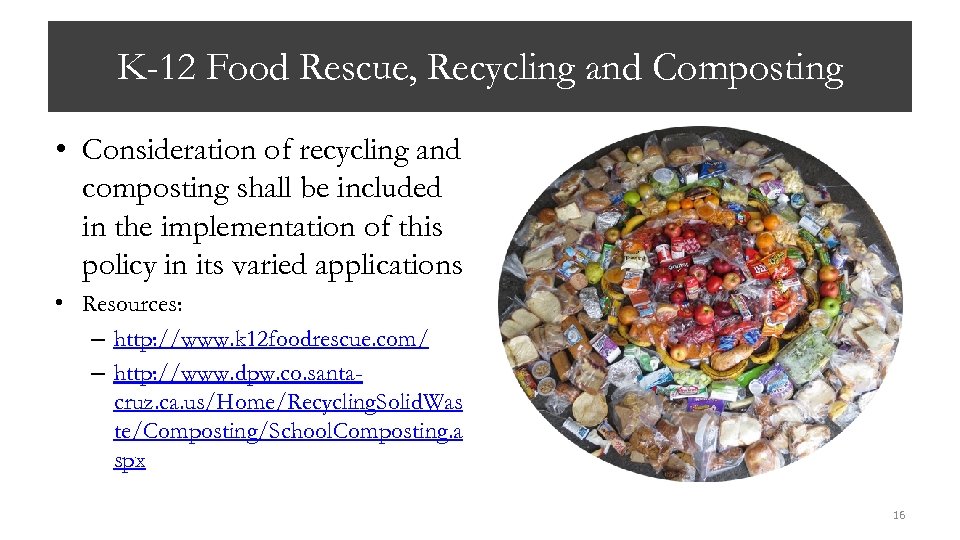 K-12 Food Rescue, Recycling and Composting • Consideration of recycling and composting shall be included in the implementation of this policy in its varied applications • Resources: – http: //www. k 12 foodrescue. com/ – http: //www. dpw. co. santacruz. ca. us/Home/Recycling. Solid. Was te/Composting/School. Composting. a spx 16
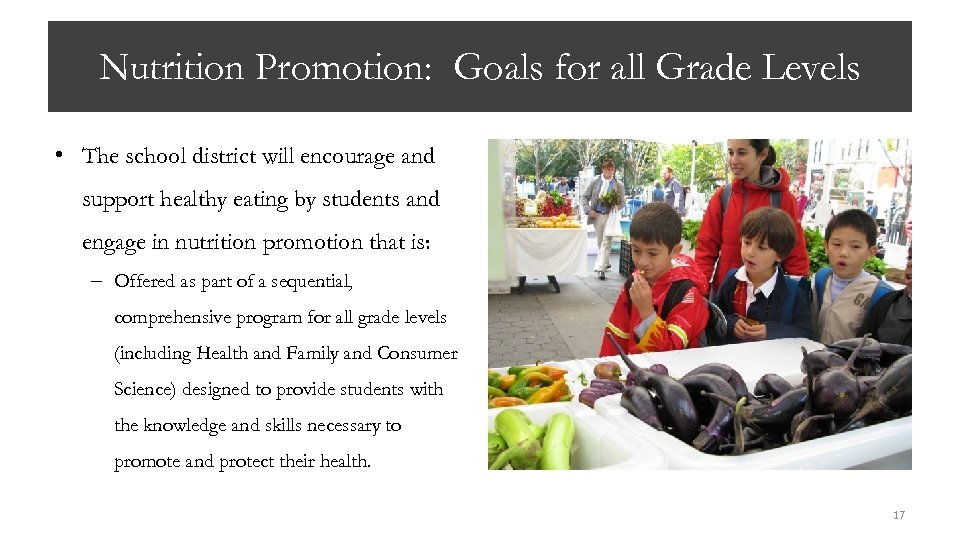 Nutrition Promotion: Goals for all Grade Levels • The school district will encourage and support healthy eating by students and engage in nutrition promotion that is: – Offered as part of a sequential, comprehensive program for all grade levels (including Health and Family and Consumer Science) designed to provide students with the knowledge and skills necessary to promote and protect their health. 17
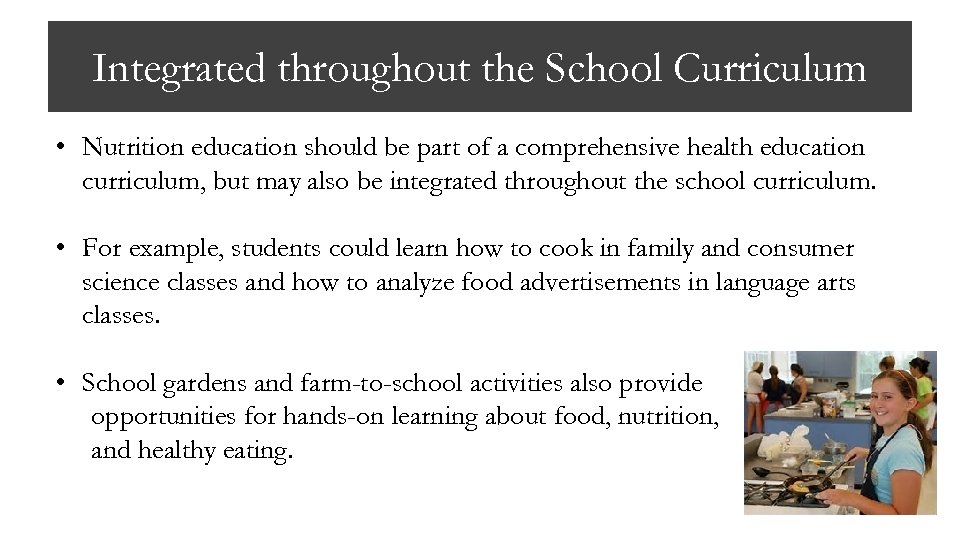 Integrated throughout the School Curriculum • Nutrition education should be part of a comprehensive health education curriculum, but may also be integrated throughout the school curriculum. • For example, students could learn how to cook in family and consumer science classes and how to analyze food advertisements in language arts classes. • School gardens and farm-to-school activities also provide opportunities for hands-on learning about food, nutrition, and healthy eating.
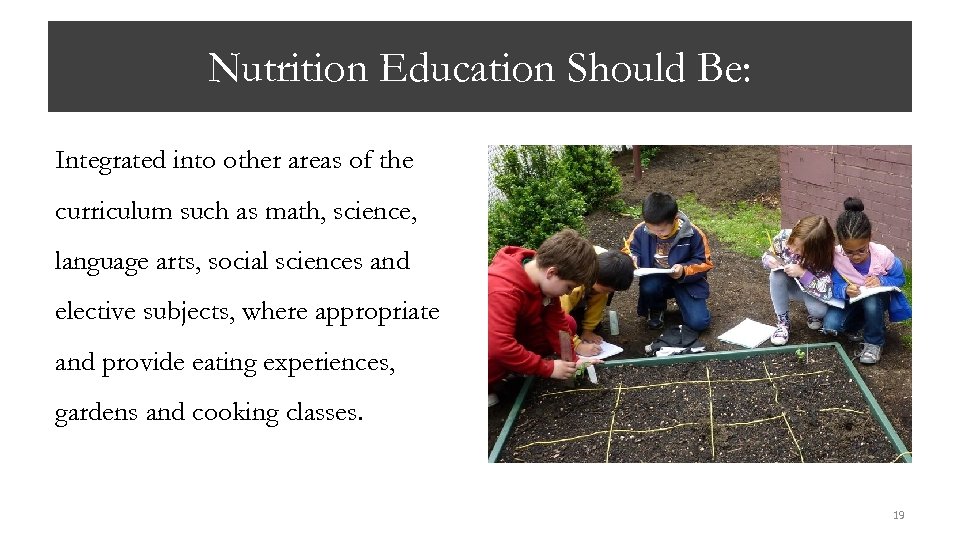 Nutrition Education Should Be: Integrated into other areas of the curriculum such as math, science, language arts, social sciences and elective subjects, where appropriate and provide eating experiences, gardens and cooking classes. 19
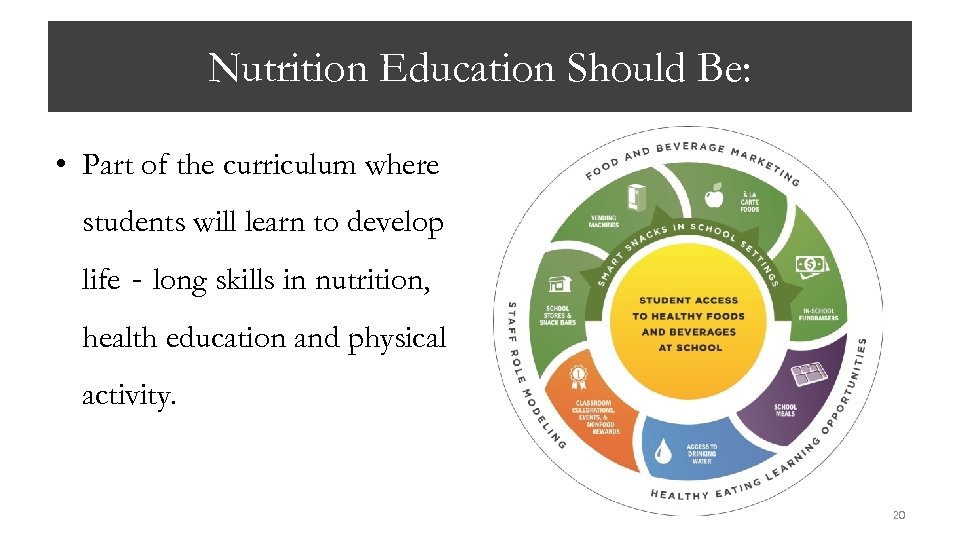 Nutrition Education Should Be: • Part of the curriculum where students will learn to develop life‐long skills in nutrition, health education and physical activity. 20
 Support and Sustainability The school district will support the sustainability of a farm to school program through activities including, but not limited to, fundraising, solicitation of community donations, use of existing resources, and allocation of school district funds. 21
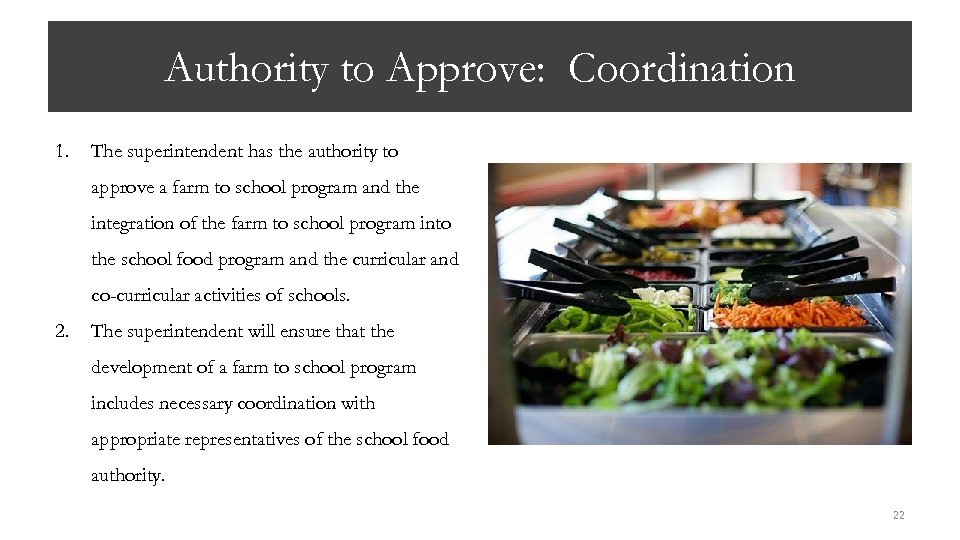 Authority to Approve: Coordination 1. The superintendent has the authority to approve a farm to school program and the integration of the farm to school program into the school food program and the curricular and co-curricular activities of schools. 2. The superintendent will ensure that the development of a farm to school program includes necessary coordination with appropriate representatives of the school food authority. 22
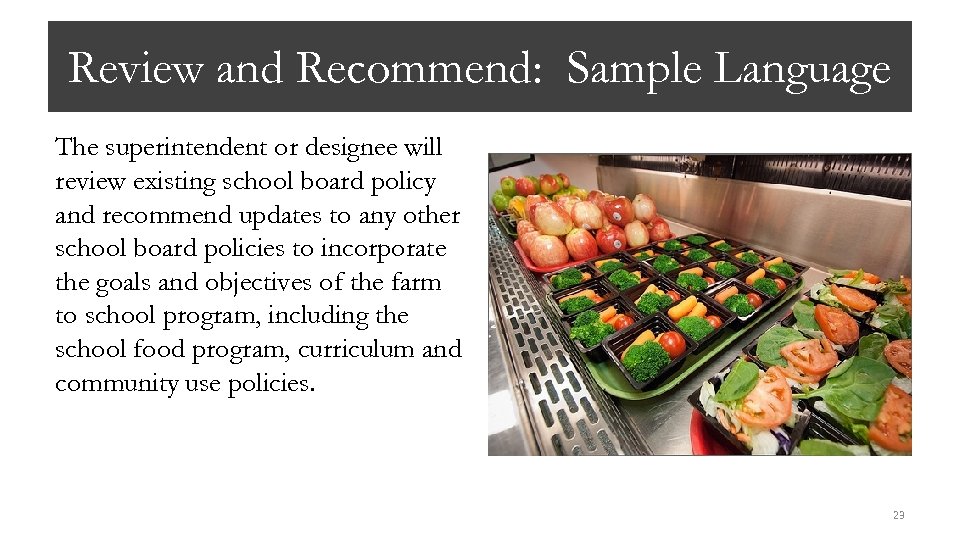 Review and Recommend: Sample Language The superintendent or designee will review existing school board policy and recommend updates to any other school board policies to incorporate the goals and objectives of the farm to school program, including the school food program, curriculum and community use policies. 23
 Develop Guidelines The superintendent, with the assistance of the School Guidelines will include: • Explanation of how the farm to school program fits the standards-based curriculum Wellness Committee, will and curriculum guidelines of the school develop guidelines for a farm to district; school program. • How the costs of the farm to school program will be funded; and • How the food obtained through a farm to school program will be used. 24
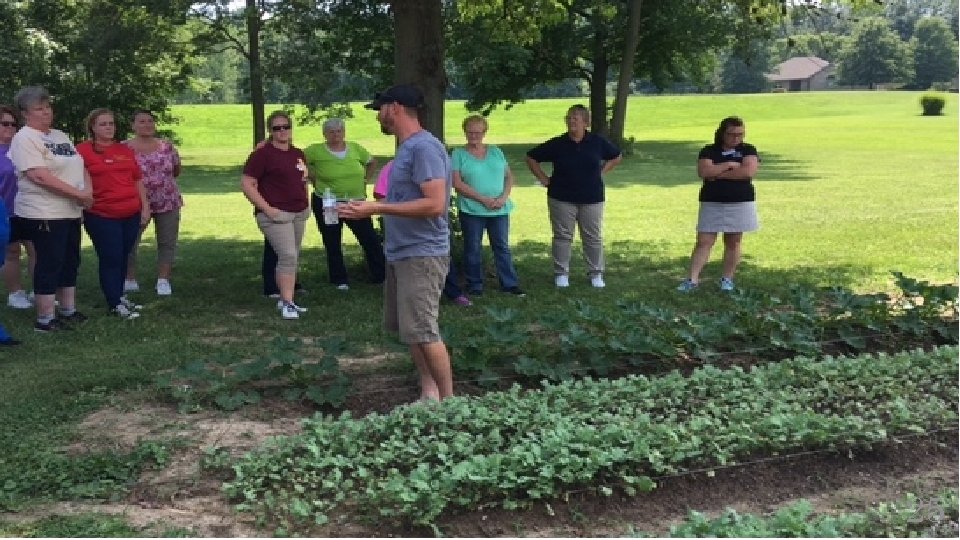 HOSTED 10 WEEK LONG CULINARY WORKSHOPS AFICIONADO FARM TOUR, NEWBURGH, INDIANA 25
 Contact Information LAURA HORMUTH, MS, RD Public Health Nutritionist Division of Nutrition and Physical Activity Indiana State Department of Health 317. 234. 3498 office 317. 233 -7477 fax lhormuth@isdh. in. gov 26