 Скачать презентацию FANRPAN Initiatives International Conference on The Changing Global
b7b586456b21d581044aae5d53294060.ppt
- Количество слайдов: 14



FANRPAN Initiatives International Conference on “The Changing Global Landscape in Rural Development: Critical Choices for Results-Oriented Research in Southern Africa” 24 – 26 November 2010, Pretoria, South Africa Ian Mashingaidze policy@fanrpan. org www. fanrpan. org
Food, Agriculture and Policy Analysis Network (FANRPAN) n Aim q n Vision q n A food secure southern Africa free from hunger and poverty Mission q n To promote appropriate agricultural and natural resources policy in order to reduce poverty, increase food security and enhance sustainable agricultural development in the SADC region To promote evidence based policy development in the Food Agriculture and Natural Resources sector How q q q facilitating linkages and partnerships between government and civil society building the capacity for policy analysis and policy dialogue in southern Africa Create capacity to demand evidence for policy development
1. The Household Vulnerability Index (HVI) The challenge of multiple vulnerabilities faced by rural communities, e. g. HIV/AIDS, climate change n Measuring household vulnerability n Evidence to inform policy development and response interventions HVI tool n A tool to assess household vulnerability on the basis of the five livelihoods assets (human, financial, natural, physical and social) n Measures the vulnerability of households and communities to the impact of diseases and shocks such as HIV/AIDS, erratic weather patterns and poverty n A total of 15 variables (called dimensions) are assessed, and a statistical score is calculated for each household. n The result, the HVI, is used to classify households into 3 categories: low , moderate and high vulnerability n HVI tool pilot in Lesotho, Swaziland Zimbabwe (2009 – 2010)
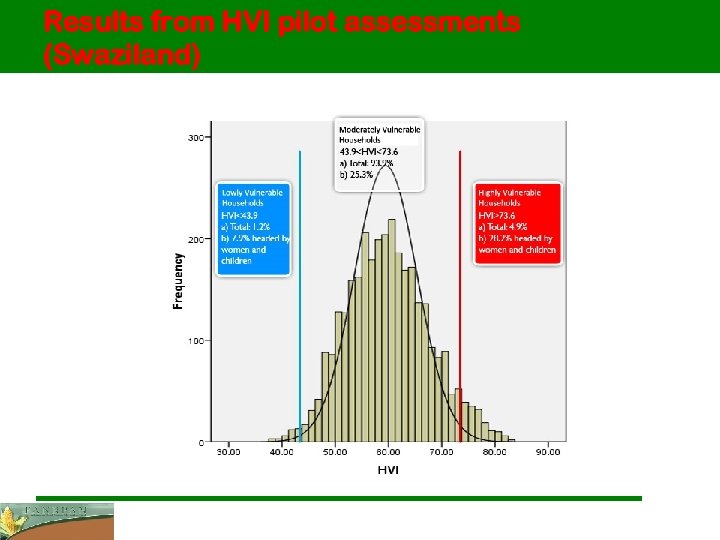
Results from HVI pilot assessments (Swaziland)
Roll out of HVI tool n n Lesotho: UNICEF to use HVI to target 60, 000 of the 200, 000 OVCs in the country for social protection (cash grants, bursaries, nutrition support, etc. ) FANRPAN: to use HVI data for modelling climate change impact scenarios. Results to be used to generate evidencebased policies and programmes to assist vulnerable households to manage the risk and vulnerability associated with climate change Support academia and research institutes to engage in policy analysis Stimulate policy makers to demand research evidence to inform policy processes
2. The Platform for African – European Partnership in Agricultural Research for Development n Objective: to build joint African-European multi-stakeholder partnerships in agricultural research for development contributing to achieving the MDGs 1. 2. 3. 4. 5. 6. 7. 8. End poverty and hunger Universal education Gender equality Child health Maternal health Combat HIV/AIDS Environmental sustainability Global partnership
Benefits of PAEPARD to stakeholders Beneficiaries of the partnerships n n African non-research (private sector, NGOs, Farmer associations)/African research scientists European non-research/European research scientists Benefits n Opportunities for partnership n Capacity building relevant to the stakeholder sectors n Information on calls for proposals n Knowledge and information sharing
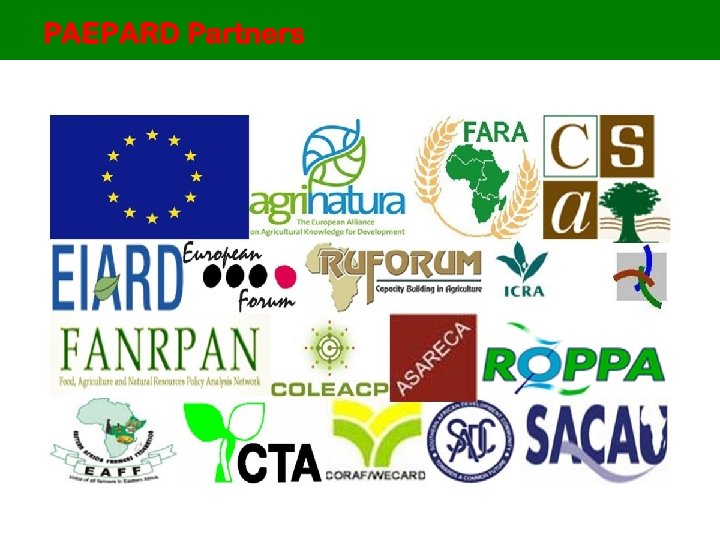
PAEPARD Partners
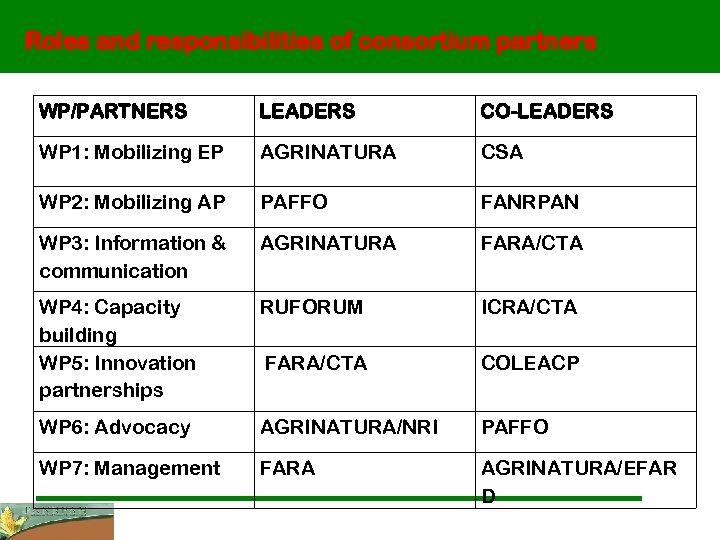
Roles and responsibilities of consortium partners WP/PARTNERS LEADERS CO-LEADERS WP 1: Mobilizing EP AGRINATURA CSA WP 2: Mobilizing AP PAFFO FANRPAN WP 3: Information & communication AGRINATURA FARA/CTA WP 4: Capacity building WP 5: Innovation partnerships RUFORUM ICRA/CTA FARA/CTA COLEACP WP 6: Advocacy AGRINATURA/NRI PAFFO WP 7: Management FARA AGRINATURA/EFAR D
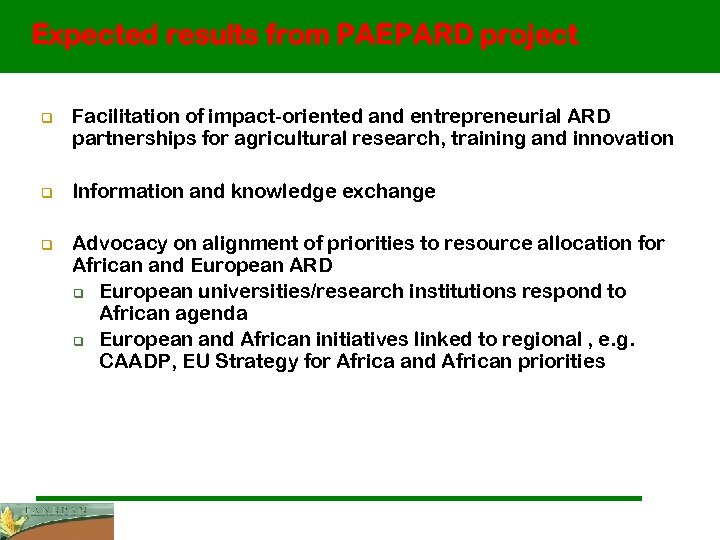
Expected results from PAEPARD project q q q Facilitation of impact-oriented and entrepreneurial ARD partnerships for agricultural research, training and innovation Information and knowledge exchange Advocacy on alignment of priorities to resource allocation for African and European ARD q European universities/research institutions respond to African agenda q European and African initiatives linked to regional , e. g. CAADP, EU Strategy for Africa and African priorities
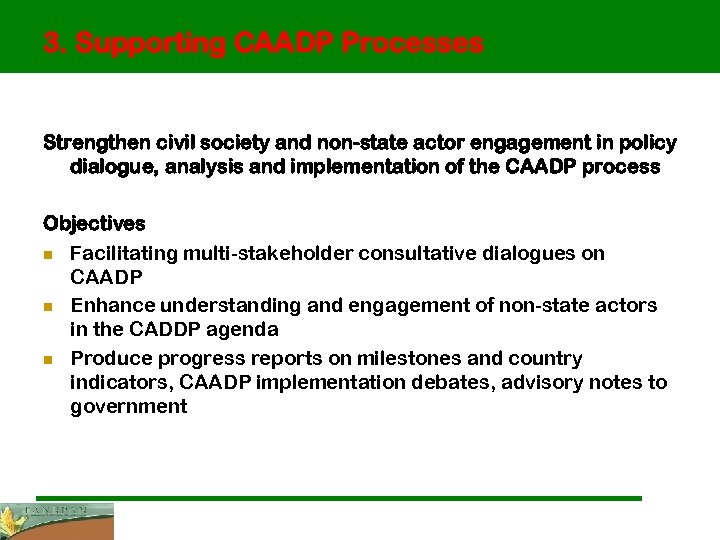
3. Supporting CAADP Processes Strengthen civil society and non-state actor engagement in policy dialogue, analysis and implementation of the CAADP process Objectives n Facilitating multi-stakeholder consultative dialogues on CAADP n Enhance understanding and engagement of non-state actors in the CADDP agenda n Produce progress reports on milestones and country indicators, CAADP implementation debates, advisory notes to government
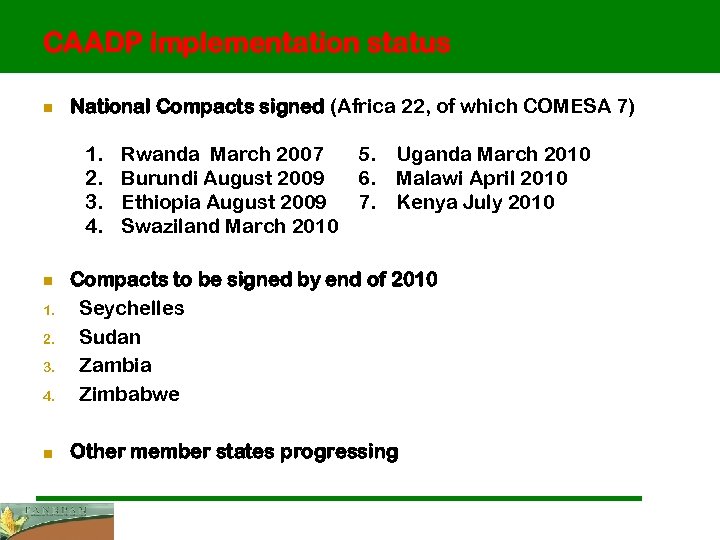
CAADP implementation status n National Compacts signed (Africa 22, of which COMESA 7) 1. 2. 3. 4. Rwanda March 2007 5. Burundi August 2009 6. Ethiopia August 2009 7. Swaziland March 2010 Uganda March 2010 Malawi April 2010 Kenya July 2010 4. Compacts to be signed by end of 2010 Seychelles Sudan Zambia Zimbabwe n Other member states progressing n 1. 2. 3.
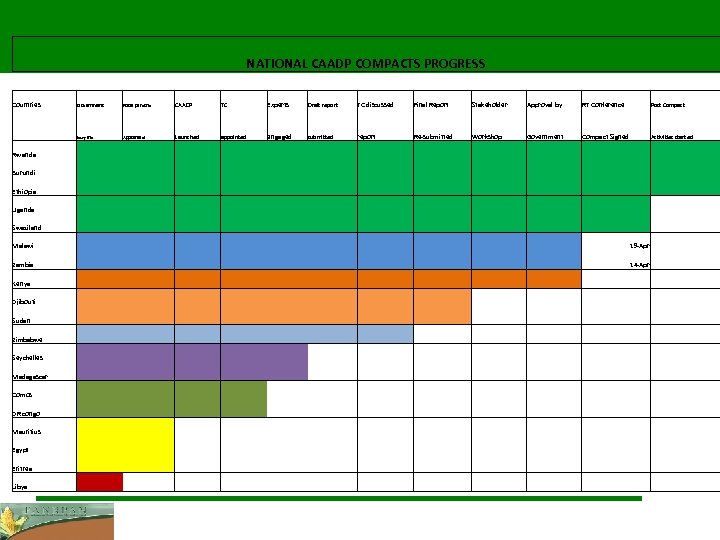
NATIONAL CAADP COMPACTS PROGRESS Countries Government Focal persons CAADP TC Experts Draft report TC discussed Final Report Stakeholder Approval by RT Conference Post Compact buy-Ins Appointed Launched appointed engaged submitted report Re-submitted Workshop Government Compact Signed Activities started Rwanda Burundi Ethiopia Uganda Swaziland Malawi 19 -Apr Zambia 14 -Apr Kenya Djibouti Sudan Zimbabwe Seychelles Madagascar Comos DR congo Mauritius Egypt Eritrea Libya
Thank you
Скачать презентацию FANRPAN Initiatives International Conference on The Changing Global
b7b586456b21d581044aae5d53294060.ppt