


 Скачать презентацию Family Planning in Pakistan What we know what
8cbf22311ab0c14728e9c685eb091009.ppt
- Количество слайдов: 16
 Family Planning in Pakistan: What we know, what we must do Dr. Adnan A. Khan Research and Development Solutions
 The Evidence to Policy and Action Grant Initiative USAID Small Grant (2011) to RADS Partners – Punjab and Sindh DOH and PWDs Areas – Family Planning and Immunization in the context of MNH Purpose - Institutionalize information generation and use and actions
 What is RADS doing Analysis- existing datasets, LHW, EPI data (Punjab and Sindh) Research on models of services Working with Do. H/PWD to understand their programmatic data and connect to program improvements Informed Advocacy to Politicians, communities Work with donors to address their information needs/efficiency
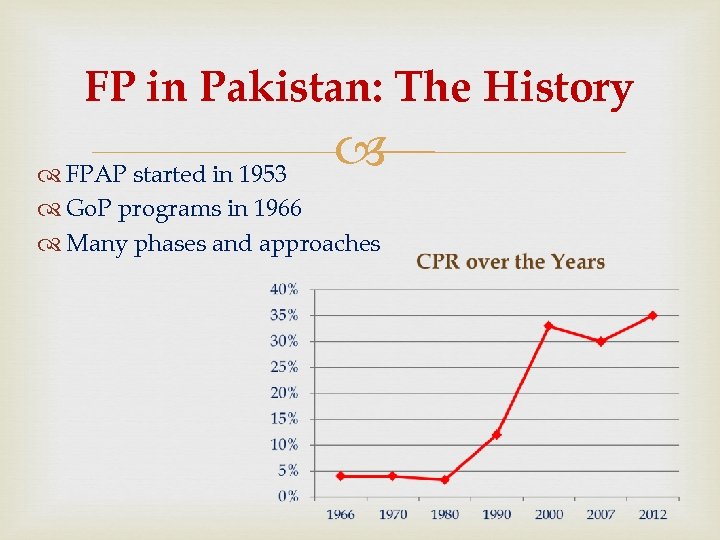 FP in Pakistan: The History FPAP started in 1953 Go. P programs in 1966 Many phases and approaches
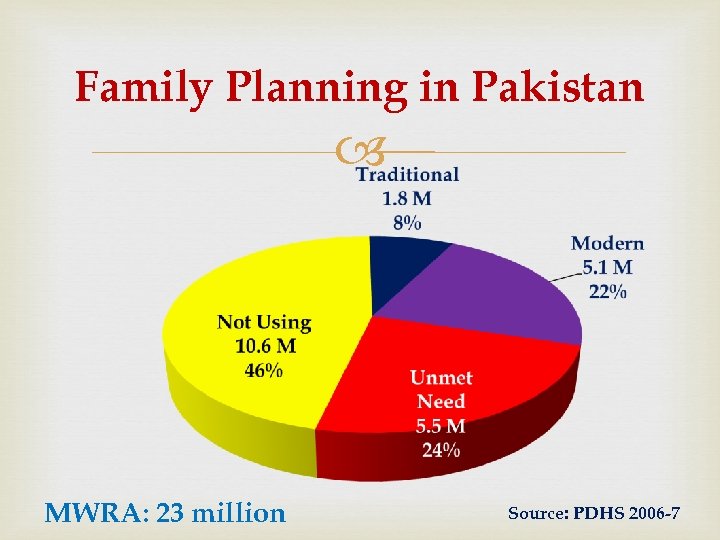 Family Planning in Pakistan MWRA: 23 million Source: PDHS 2006 -7
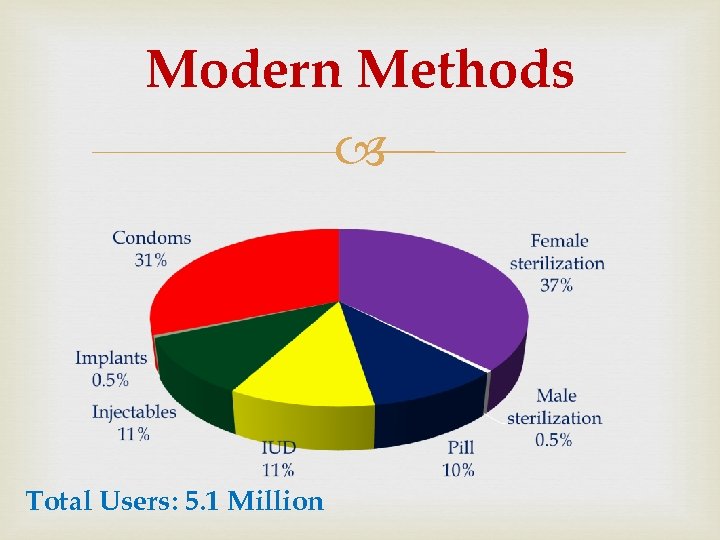 Modern Methods Total Users: 5. 1 Million
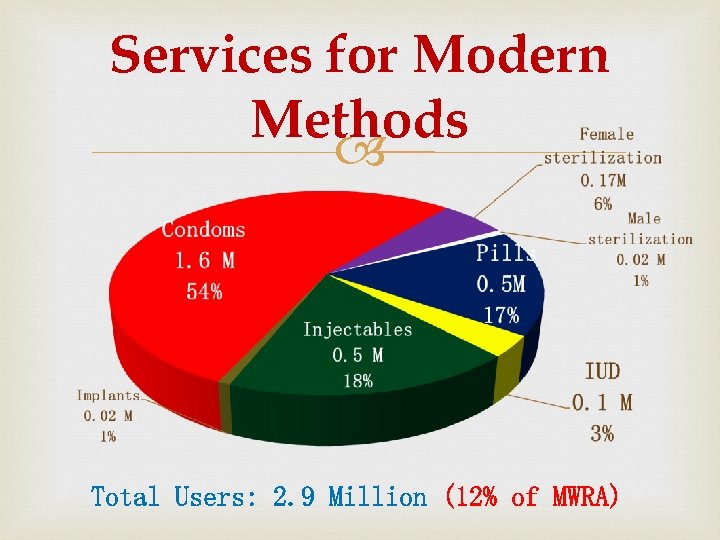 Services for Modern Methods Total Users: 2. 9 Million (12% of MWRA)
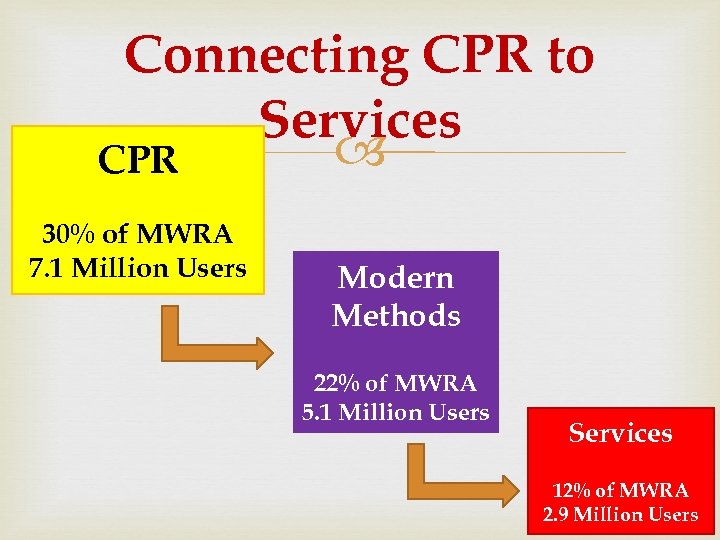 Connecting CPR to Services CPR 30% of MWRA 7. 1 Million Users Modern Methods 22% of MWRA 5. 1 Million Users Services 12% of MWRA 2. 9 Million Users
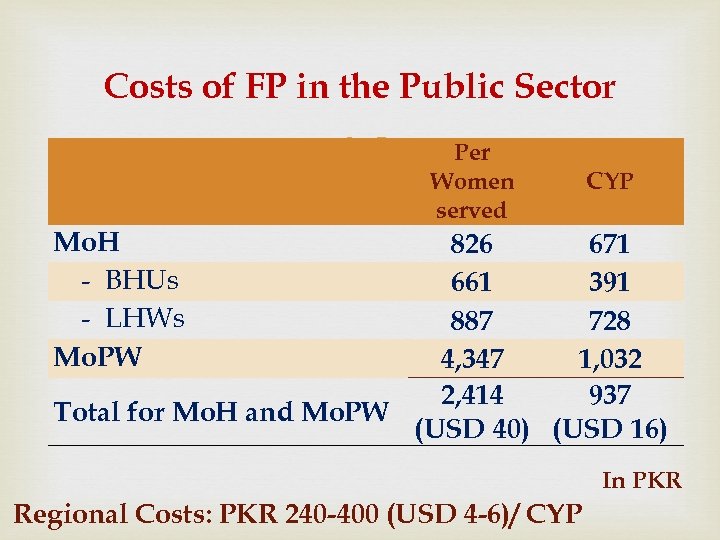 Costs of FP in the Public Sector Per Women served CYP Mo. H - BHUs - LHWs Mo. PW 826 671 661 391 887 728 4, 347 1, 032 2, 414 937 Total for Mo. H and Mo. PW (USD 40) (USD 16) In PKR Regional Costs: PKR 240 -400 (USD 4 -6)/ CYP
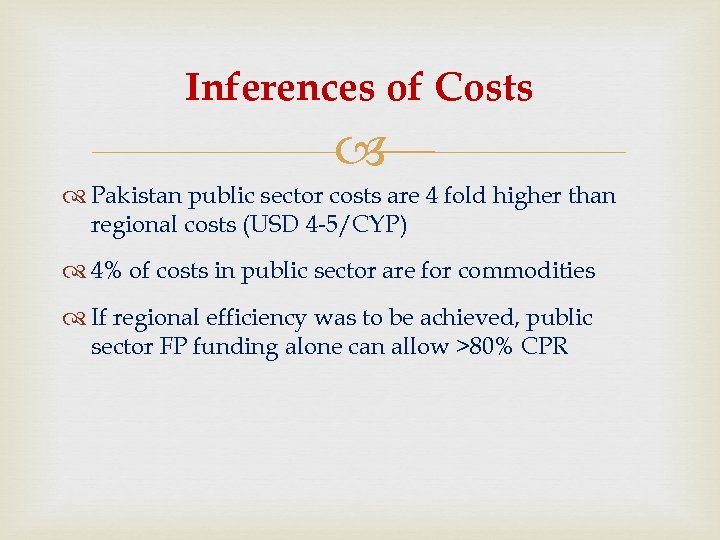 Inferences of Costs Pakistan public sector costs are 4 fold higher than regional costs (USD 4 -5/CYP) 4% of costs in public sector are for commodities If regional efficiency was to be achieved, public sector FP funding alone can allow >80% CPR
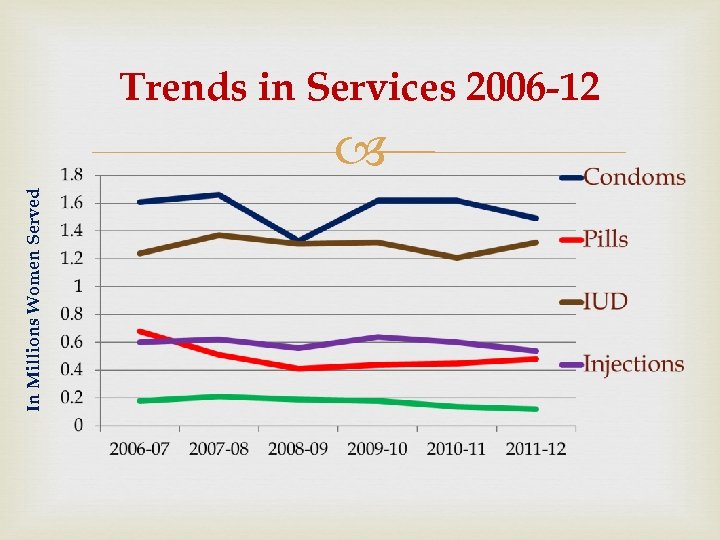 Trends in Services 2006 -12 In Millions Women Served
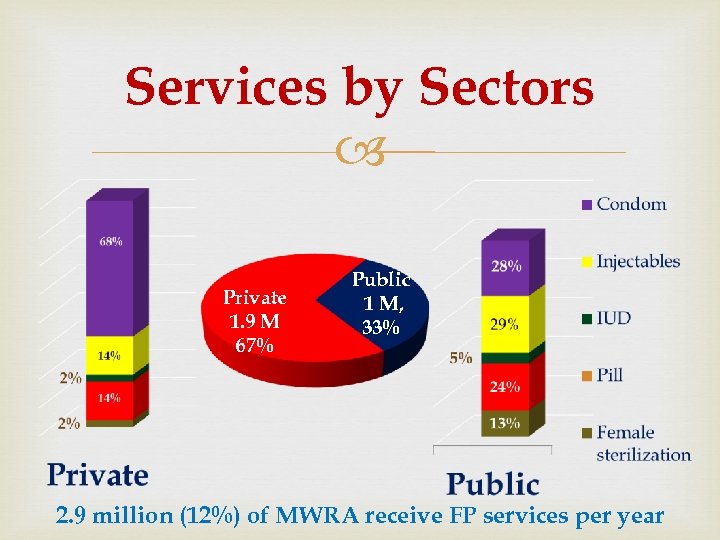 Services by Sectors Private 1. 9 M 67% Public 1 M, 33% 2. 9 million (12%) of MWRA receive FP services per year
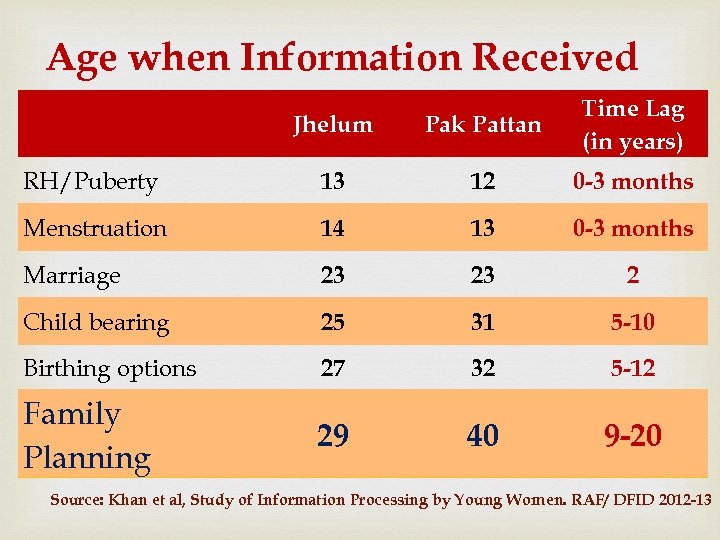 Age when Information Received Jhelum Pak Pattan Time Lag (in years) RH/Puberty 13 12 0 -3 months Menstruation 14 13 0 -3 months Marriage 23 23 2 Child bearing 25 31 5 -10 Birthing options 27 32 5 -12 Family Planning 29 40 9 -20 Source: Khan et al, Study of Information Processing by Young Women. RAF/ DFID 2012 -13
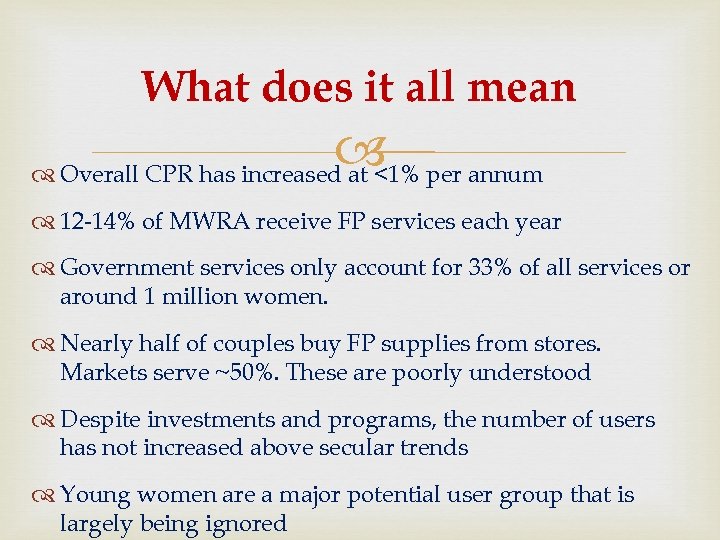 What does it all mean per annum Overall CPR has increased at <1% 12 -14% of MWRA receive FP services each year Government services only account for 33% of all services or around 1 million women. Nearly half of couples buy FP supplies from stores. Markets serve ~50%. These are poorly understood Despite investments and programs, the number of users has not increased above secular trends Young women are a major potential user group that is largely being ignored
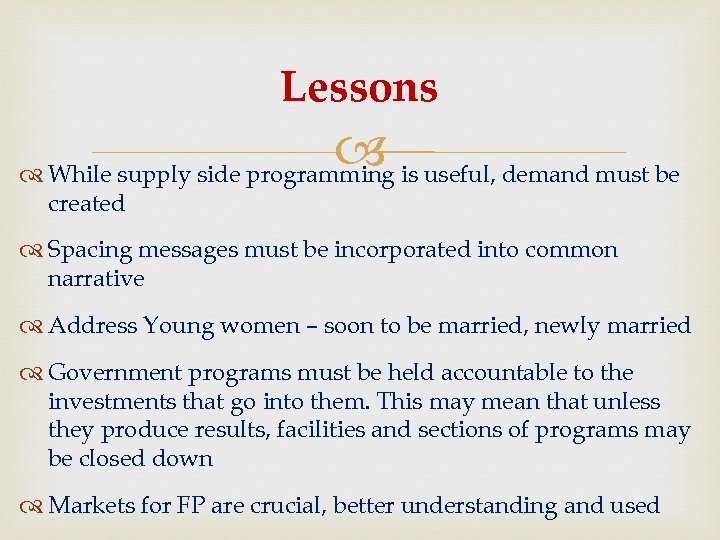 Lessons is useful, demand must be While supply side programming created Spacing messages must be incorporated into common narrative Address Young women – soon to be married, newly married Government programs must be held accountable to the investments that go into them. This may mean that unless they produce results, facilities and sections of programs may be closed down Markets for FP are crucial, better understanding and used
 Thank You