


 Скачать презентацию Family Formation Patterns Among Young People General Trends
4eebe85edc12cc060b9ae8c2b0cfdb43.ppt
- Количество слайдов: 43
 Family Formation Patterns Among Young People: General Trends and Emerging Issues in East and Southeast Asia Minja Kim Choe, East-West Center Expert Group Meeting on Adolescents, Youth and Development July 21, 2011 UN/DESA, New York 1
 Outline 1. Current patterns of family formation 2. Recent changes and patterns in selected countries 3. Correlates of changes and patterns 4. Consequences 5. Emerging issues 2
 Current patterns of family formation 1. Marriage 2. Childbearing 3
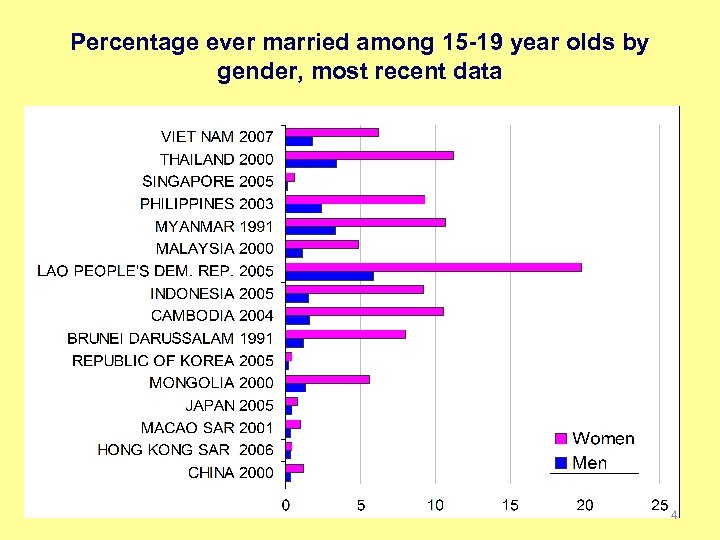 Percentage ever married among 15 -19 year olds by gender, most recent data 4
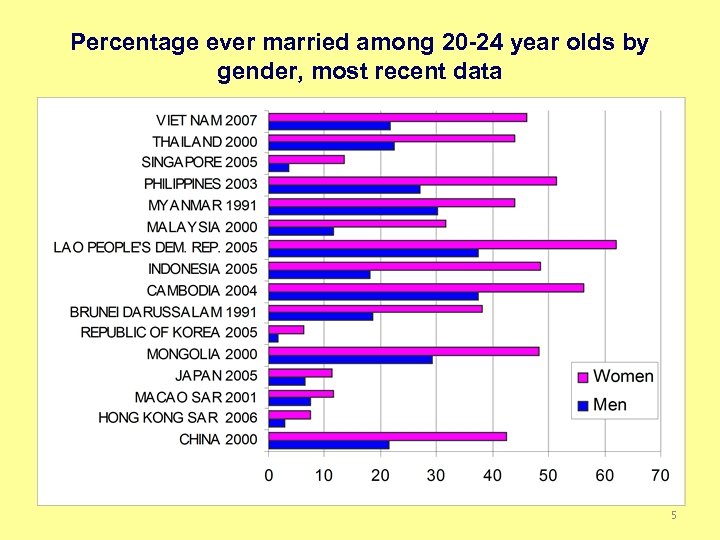 Percentage ever married among 20 -24 year olds by gender, most recent data 5
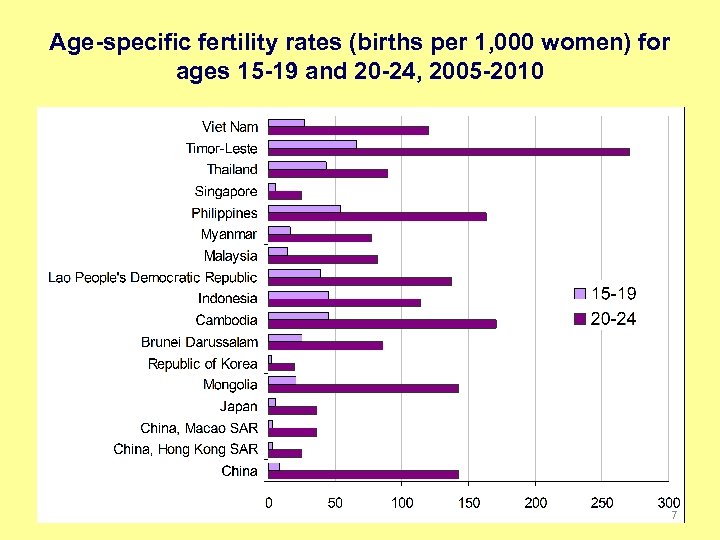 Age-specific fertility rates (births per 1, 000 women) for ages 15 -19 and 20 -24, 2005 -2010 7
 Recent changes and patterns in selected countries 8
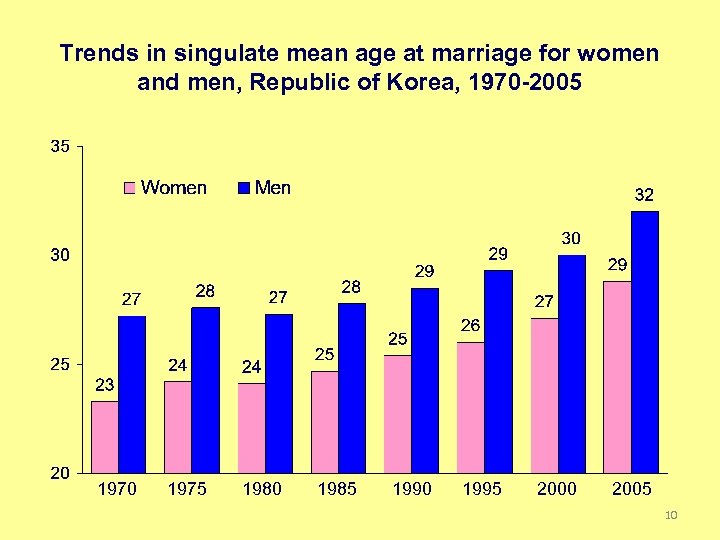 Trends in singulate mean age at marriage for women and men, Republic of Korea, 1970 -2005 1970 1975 1980 1985 1990 1995 2000 2005 10
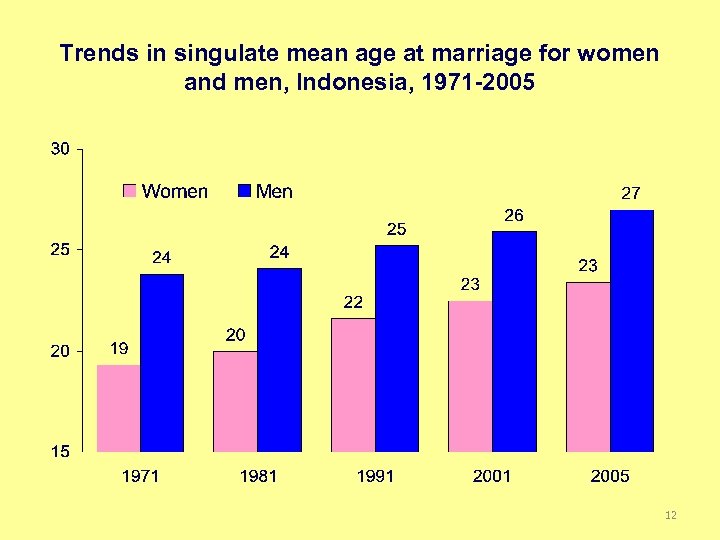 Trends in singulate mean age at marriage for women and men, Indonesia, 1971 -2005 12
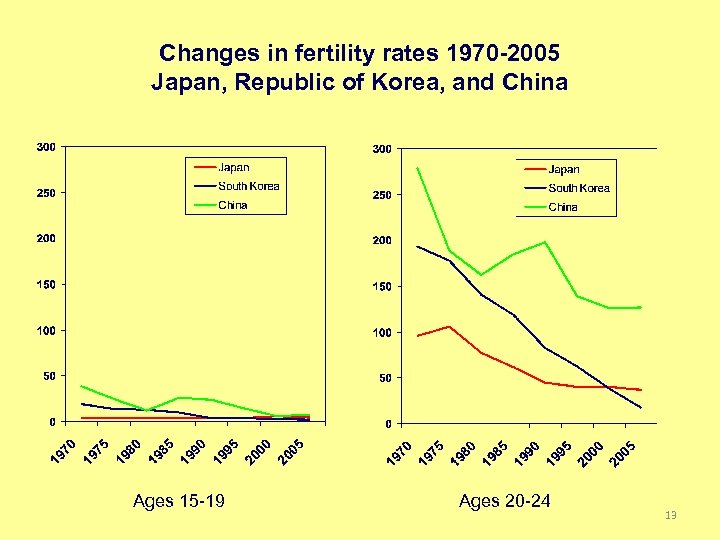 Changes in fertility rates 1970 -2005 Japan, Republic of Korea, and China Ages 15 -19 Ages 20 -24 13
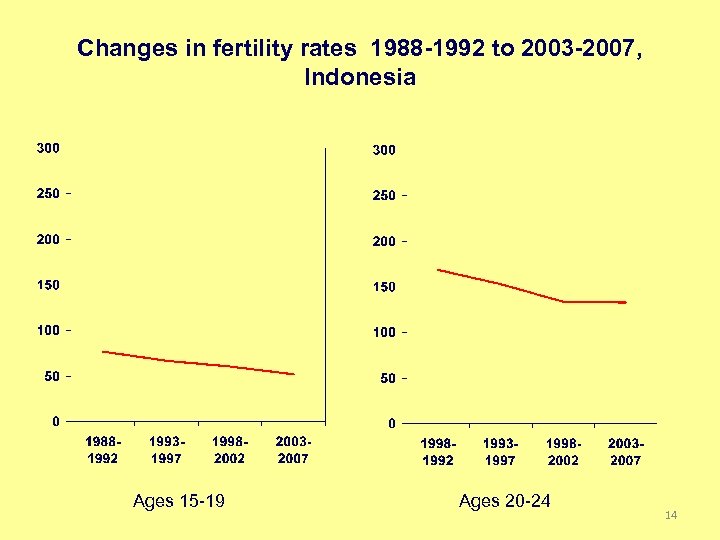 Changes in fertility rates 1988 -1992 to 2003 -2007, Indonesia Ages 15 -19 Ages 20 -24 14
 Correlates of patterns and changes – Education – Institutional aspect – Women’s labor force participation – Attitude 15
 Education 16
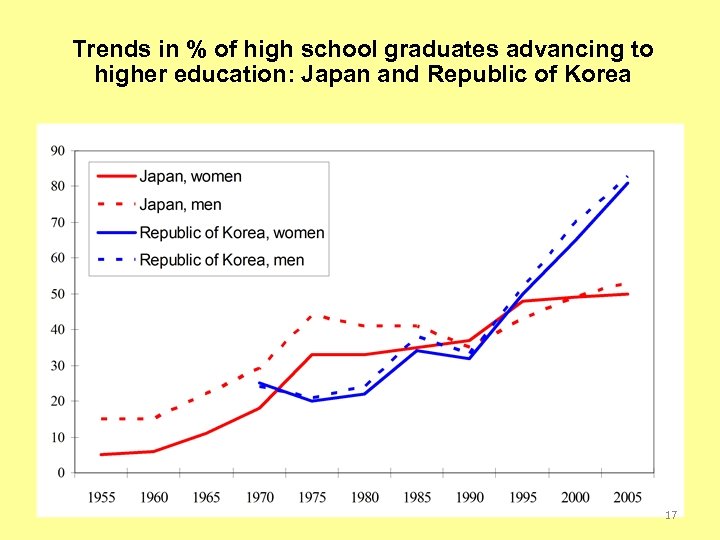 Trends in % of high school graduates advancing to higher education: Japan and Republic of Korea 17
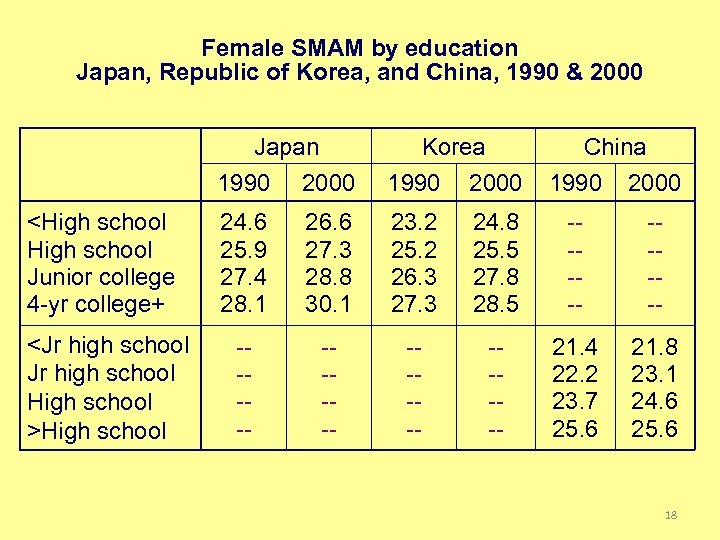 Female SMAM by education Japan, Republic of Korea, and China, 1990 & 2000 Japan 1990 2000 Korea 1990 2000 China 1990 2000
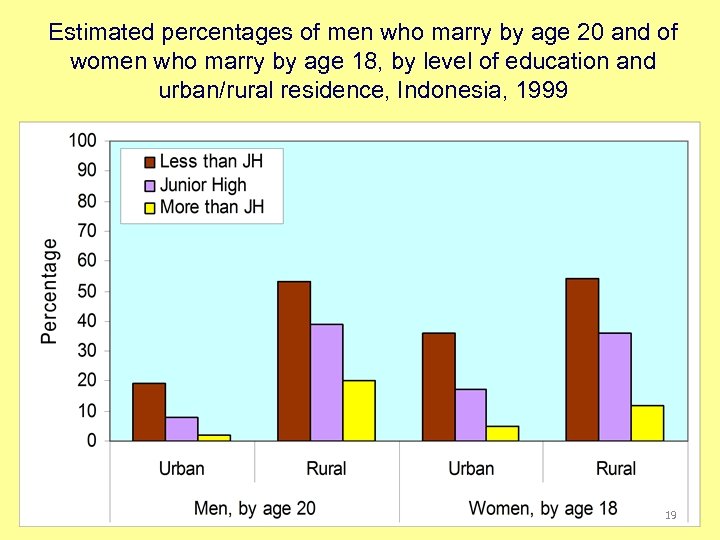 Estimated percentages of men who marry by age 20 and of women who marry by age 18, by level of education and urban/rural residence, Indonesia, 1999 19
 Institutional aspect 21
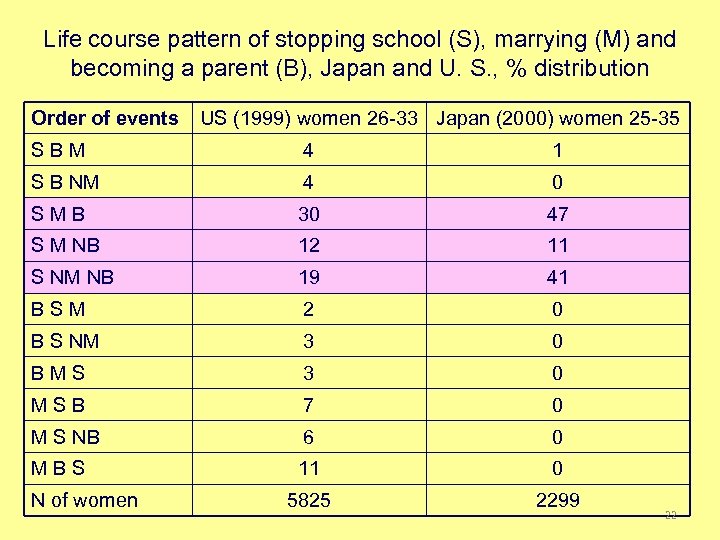 Life course pattern of stopping school (S), marrying (M) and becoming a parent (B), Japan and U. S. , % distribution Order of events US (1999) women 26 -33 Japan (2000) women 25 -35 SBM 4 1 S B NM 4 0 SMB 30 47 S M NB 12 11 S NM NB 19 41 BSM 2 0 B S NM 3 0 BMS 3 0 MSB 7 0 M S NB 6 0 MBS 11 0 5825 2299 N of women 22
 Labor force participation of women (Republic of Korea) 24
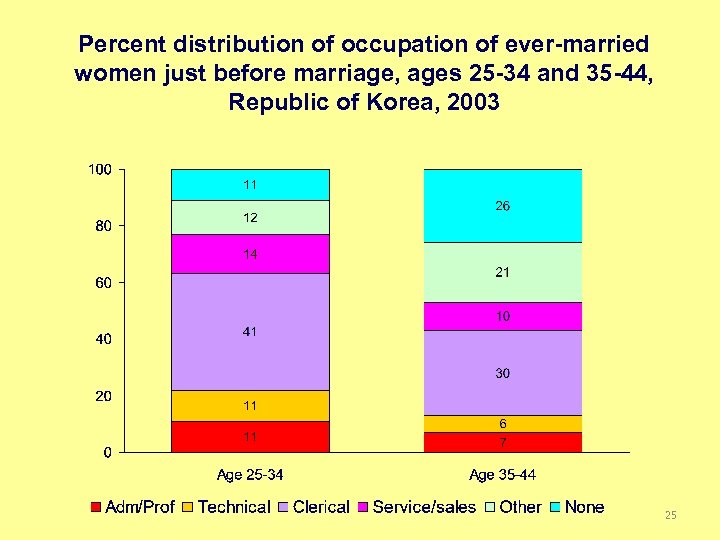 Percent distribution of occupation of ever-married women just before marriage, ages 25 -34 and 35 -44, Republic of Korea, 2003 25
 Attitude changes (Japan) 26
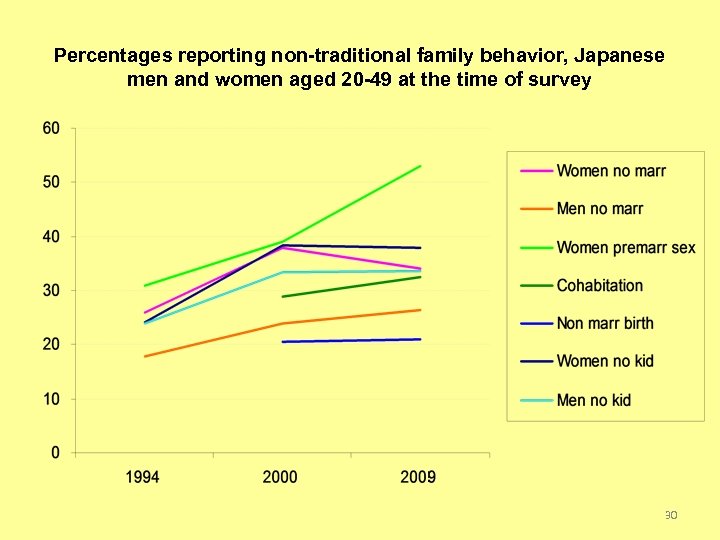 Percentages reporting non-traditional family behavior, Japanese men and women aged 20 -49 at the time of survey 30
 Summary of attitude change in Japan • Main streams – Preference to move away from institutional constraints • Other factors – Adjusting to difficult economic times – Importance of mother role for preschool children • Gender difference and potential impact on marriage and childbearing behavior • Implications on family and labor force policies 31
 Consequences – Fertility decline and population aging – Extended period of adolescence (Youth at risk) – Work and family 36
 Very low fertility Underachieved fertility preference 37
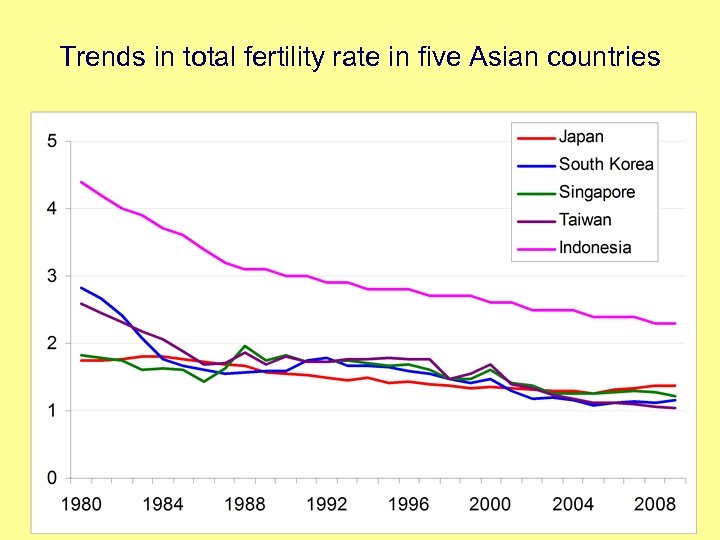 Trends in total fertility rate in five Asian countries 38
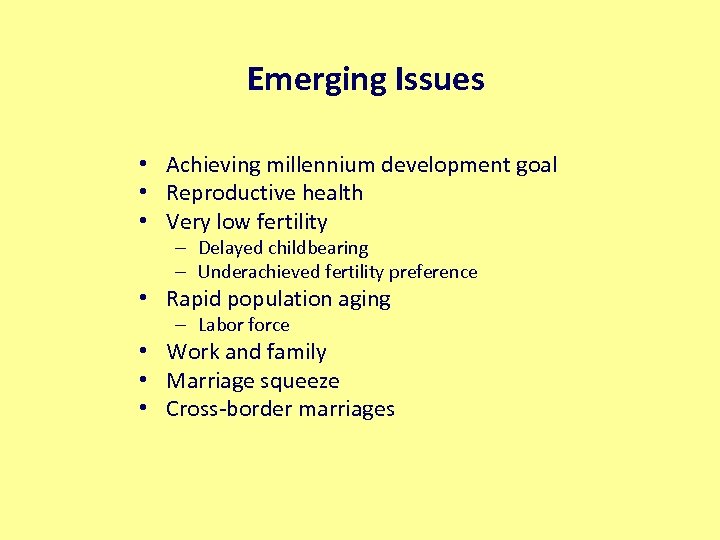 Emerging Issues • Achieving millennium development goal • Reproductive health • Very low fertility – Delayed childbearing – Underachieved fertility preference • Rapid population aging – Labor force • Work and family • Marriage squeeze • Cross-border marriages
 Reproductive health 40
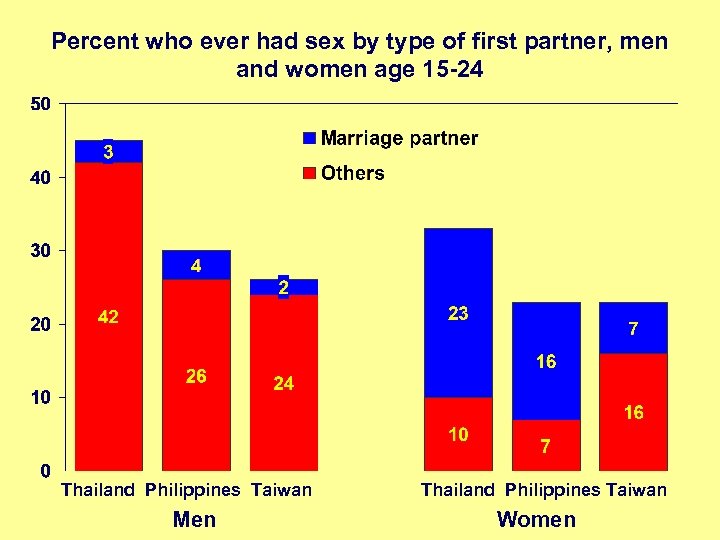 Percent who ever had sex by type of first partner, men and women age 15 -24 Thailand Philippines Taiwan Men Thailand Philippines Taiwan Women
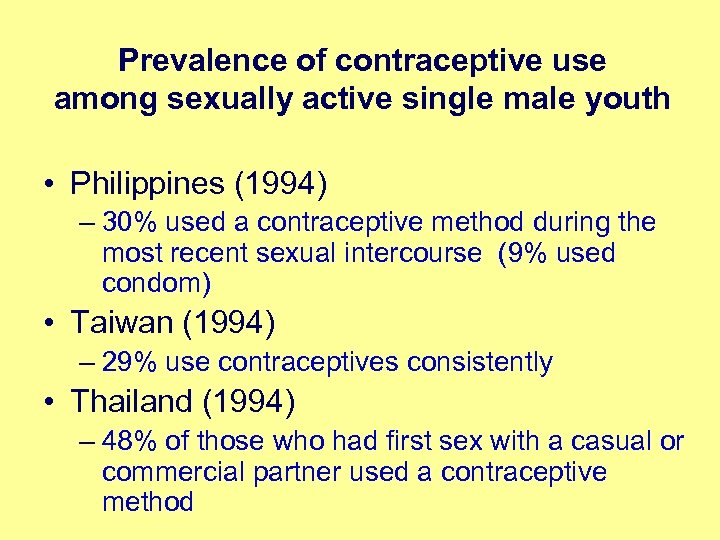 Prevalence of contraceptive use among sexually active single male youth • Philippines (1994) – 30% used a contraceptive method during the most recent sexual intercourse (9% used condom) • Taiwan (1994) – 29% use contraceptives consistently • Thailand (1994) – 48% of those who had first sex with a casual or commercial partner used a contraceptive method
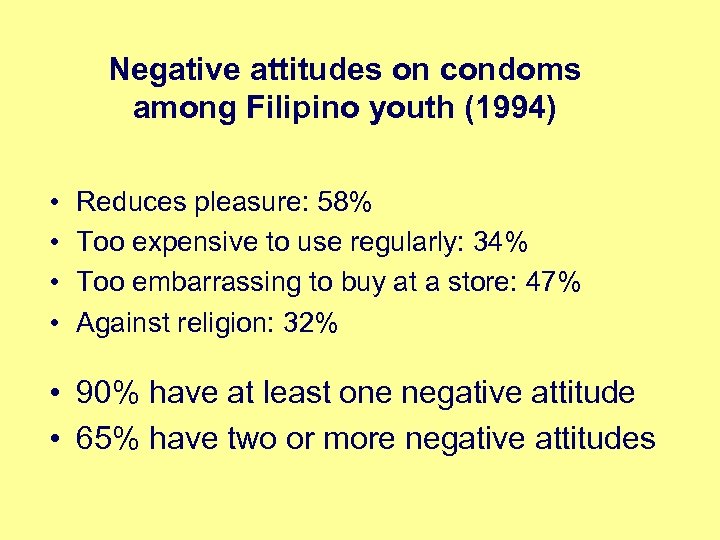 Negative attitudes on condoms among Filipino youth (1994) • • Reduces pleasure: 58% Too expensive to use regularly: 34% Too embarrassing to buy at a store: 47% Against religion: 32% • 90% have at least one negative attitude • 65% have two or more negative attitudes
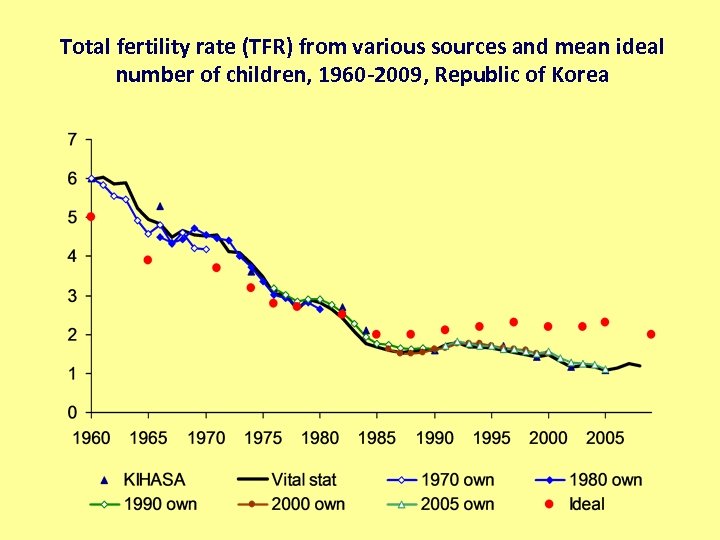 Total fertility rate (TFR) from various sources and mean ideal number of children, 1960 -2009, Republic of Korea
 Work and family 54
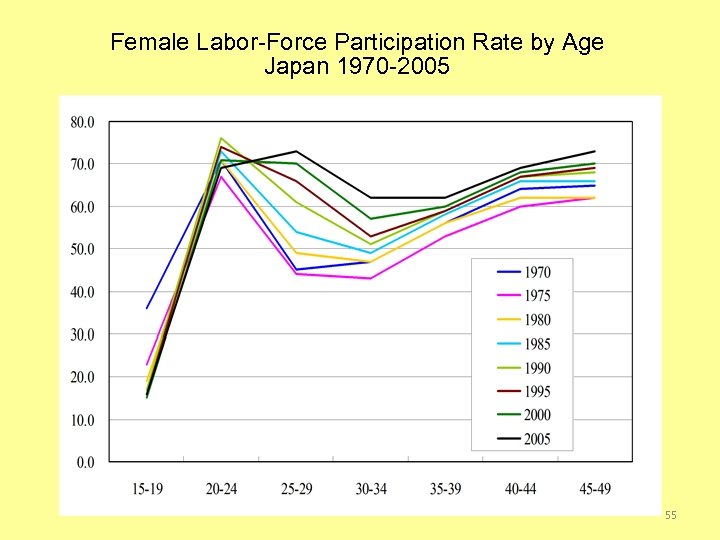 Female Labor-Force Participation Rate by Age Japan 1970 -2005 55
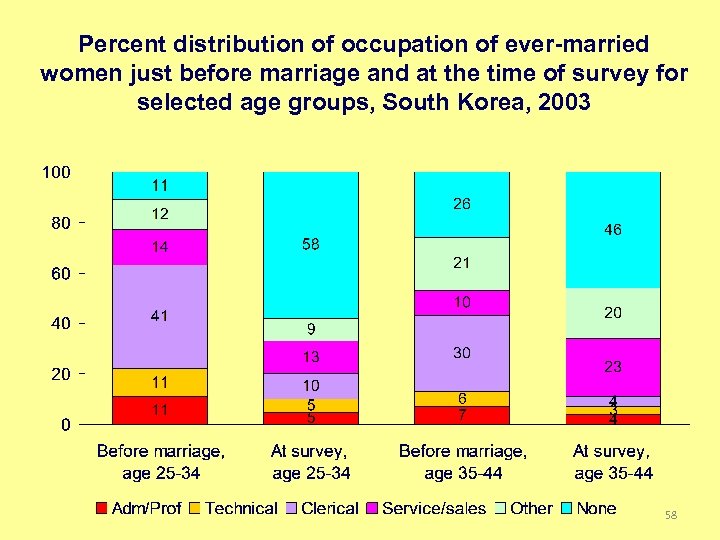 Percent distribution of occupation of ever-married women just before marriage and at the time of survey for selected age groups, South Korea, 2003 58
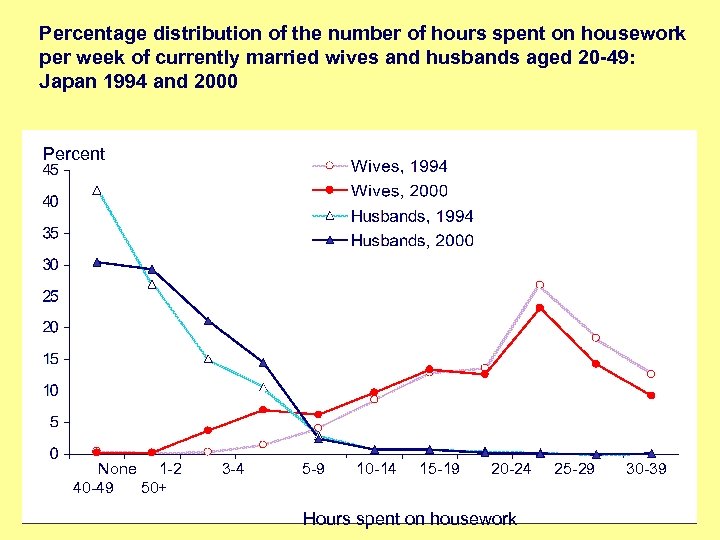 Percentage distribution of the number of hours spent on housework per week of currently married wives and husbands aged 20 -49: Japan 1994 and 2000 Percent None 1 -2 40 -49 50+ 3 -4 5 -9 10 -14 15 -19 20 -24 Hours spent on housework 25 -29 30 -39
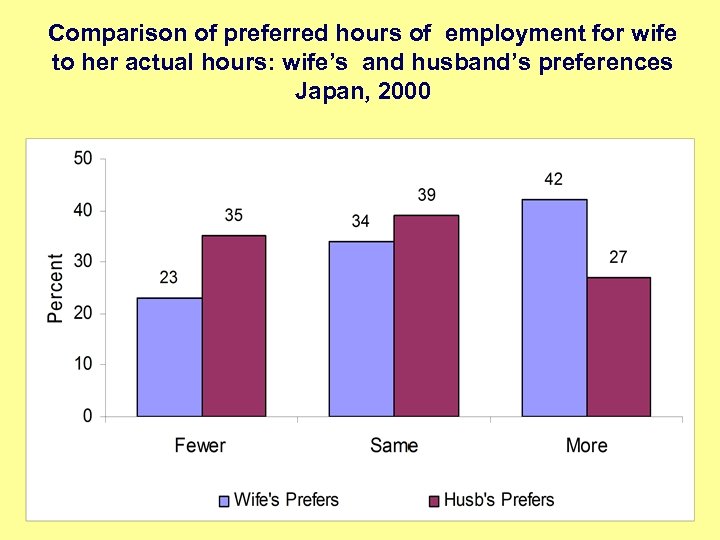 Comparison of preferred hours of employment for wife to her actual hours: wife’s and husband’s preferences Japan, 2000
 Marriage squeeze 65
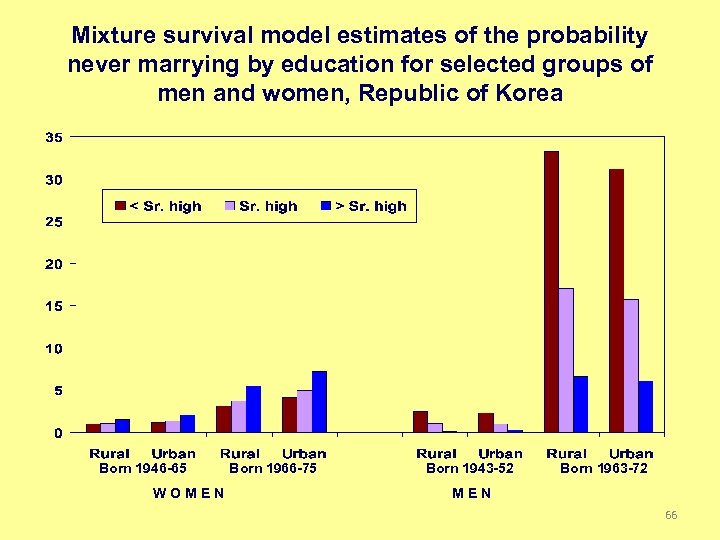 Mixture survival model estimates of the probability never marrying by education for selected groups of men and women, Republic of Korea Born 1946 -65 WOMEN Born 1966 -75 Born 1943 -52 Born 1963 -72 MEN 66
 • High sex ratio at birth and fluctuating cohort sizes will produce some degree of marriage squeeze for men in Republic of Korea, Taiwan, and China. • Gender difference in views on marriage and patterns of spouse matching will have larger effects on later marriage and less marriage. 67
 Cross-border marriages 68
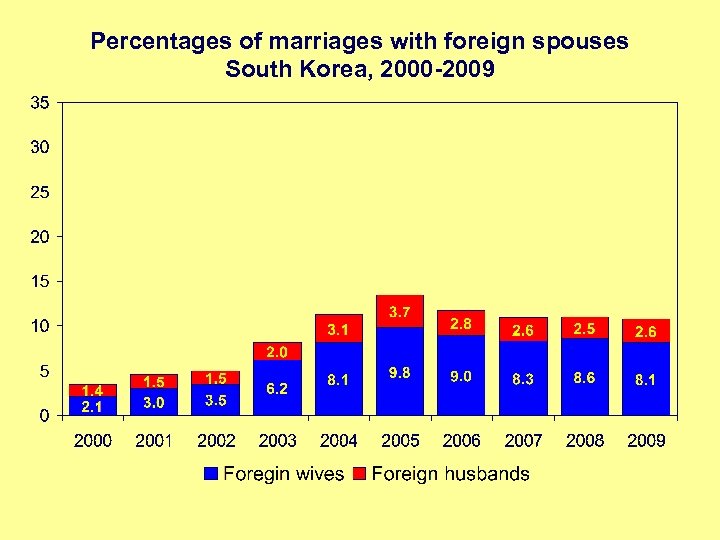 Percentages of marriages with foreign spouses South Korea, 2000 -2009
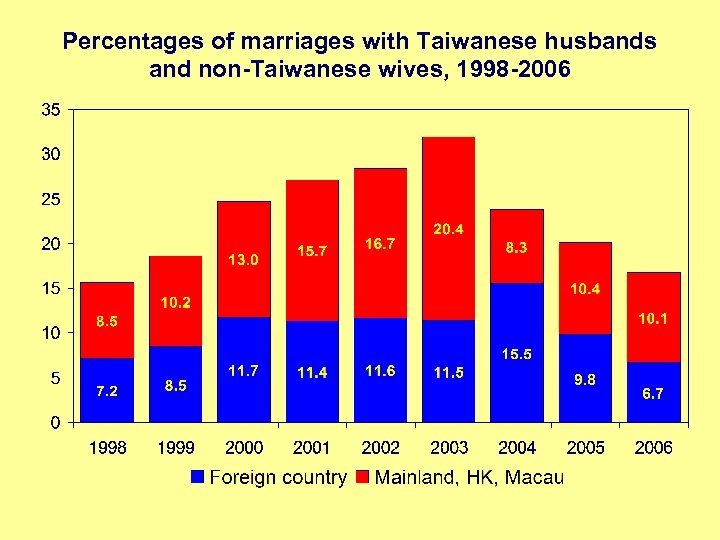 Percentages of marriages with Taiwanese husbands and non-Taiwanese wives, 1998 -2006