 Скачать презентацию Facts about the Match Introduction u Prior
c9fa3d6872b867f208308099e894bf14.ppt
- Количество слайдов: 21



Facts about the Match
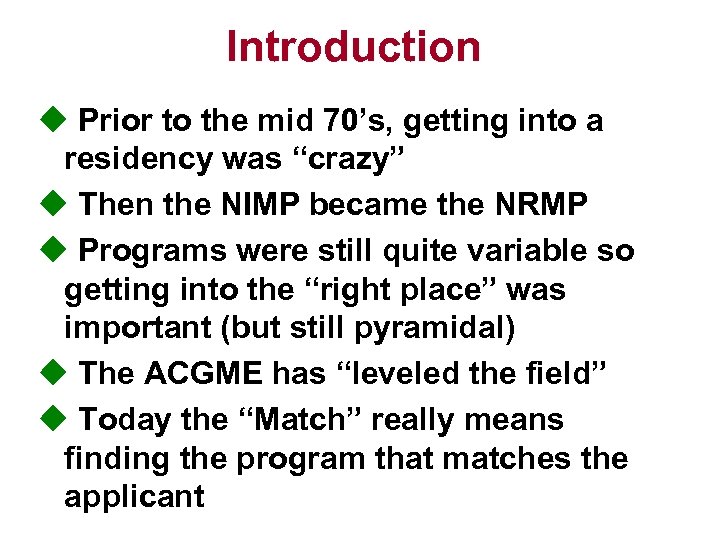
Introduction u Prior to the mid 70’s, getting into a residency was “crazy” u Then the NIMP became the NRMP u Programs were still quite variable so getting into the “right place” was important (but still pyramidal) u The ACGME has “leveled the field” u Today the “Match” really means finding the program that matches the applicant
Caveats u Students get information from many sources (Student Affairs, current residents, other students, parents, family doctor, etc) u Much of the information is WRONG
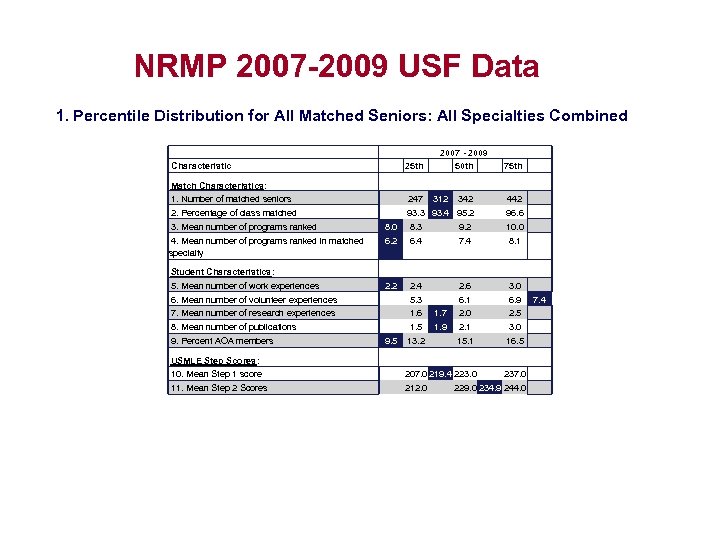
NRMP 2007 -2009 USF Data 1. Percentile Distribution for All Matched Seniors: All Specialties Combined Characteristic Match Characteristics: 1. Number of matched seniors 25 th 2007 - 2009 50 th 75 th 247 312 342 442 2. Percentage of class matched 93. 3 93. 4 95. 2 96. 6 3. Mean number of programs ranked 8. 0 8. 3 9. 2 10. 0 4. Mean number of programs ranked in matched specialty 6. 2 6. 4 7. 4 8. 1 Student Characteristics: 5. Mean number of work experiences 2. 2 2. 4 2. 6 3. 0 6. Mean number of volunteer experiences 5. 3 6. 1 6. 9 7. 4 7. Mean number of research experiences 1. 6 1. 7 2. 0 2. 5 8. Mean number of publications 1. 5 1. 9 2. 1 3. 0 9. 5 13. 2 15. 1 16. 5 207. 0 219. 4 223. 0 237. 0 212. 0 229. 0 234. 9 244. 0 9. Percent AOA members USMLE Step Scores: 10. Mean Step 1 score 11. Mean Step 2 Scores
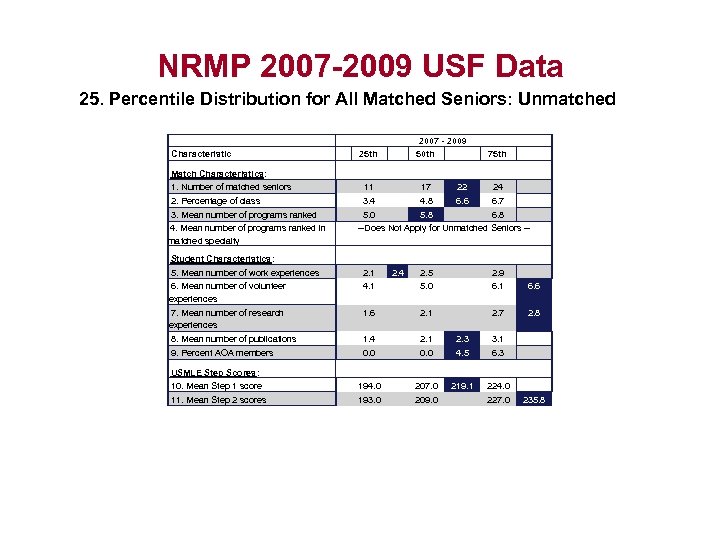
NRMP 2007 -2009 USF Data 25. Percentile Distribution for All Matched Seniors: Unmatched Characteristic 2007 - 2009 50 th 25 th 11 17 2. Percentage of class 3. 4 4. 8 3. Mean number of programs ranked 4. Mean number of programs ranked in matched specialty Match Characteristics: 1. Number of matched seniors Student Characteristics: 5. Mean number of work experiences 75 th 22 24 6. 6 6. 7 5. 0 5. 8 6. 8 --Does Not Apply for Unmatched Seniors -- 2. 1 2. 4 2. 5 2. 9 6. Mean number of volunteer experiences 4. 1 5. 0 6. 1 6. 6 7. Mean number of research experiences 1. 6 2. 1 2. 7 2. 8 8. Mean number of publications 1. 4 2. 1 2. 3 3. 1 9. Percent AOA members 0. 0 4. 5 6. 3 194. 0 207. 0 219. 1 224. 0 193. 0 209. 0 227. 0 235. 8 USMLE Step Scores: 10. Mean Step 1 score 11. Mean Step 2 scores
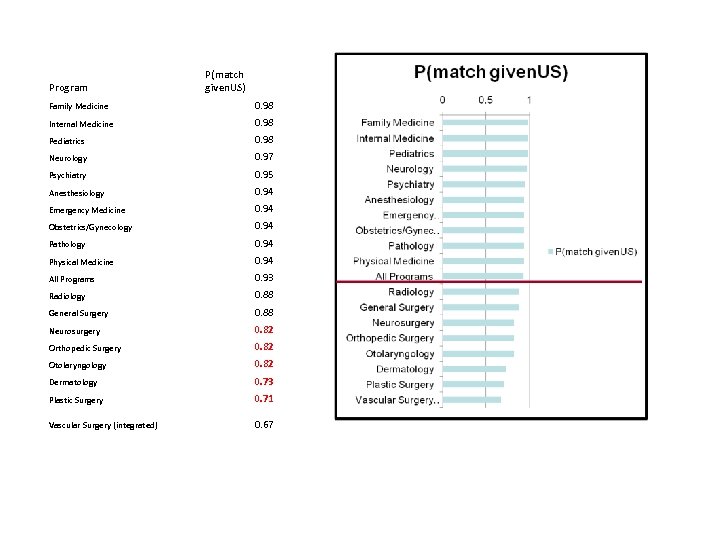
Program P(match given. US) Family Medicine 0. 98 Internal Medicine 0. 98 Pediatrics 0. 98 Neurology 0. 97 Psychiatry 0. 95 Anesthesiology 0. 94 Emergency Medicine 0. 94 Obstetrics/Gynecology 0. 94 Pathology 0. 94 Physical Medicine 0. 94 All Programs 0. 93 Radiology 0. 88 General Surgery 0. 88 Neurosurgery 0. 82 Orthopedic Surgery 0. 82 Otolaryngology 0. 82 Dermatology 0. 73 Plastic Surgery 0. 71 Vascular Surgery (integrated) 0. 67
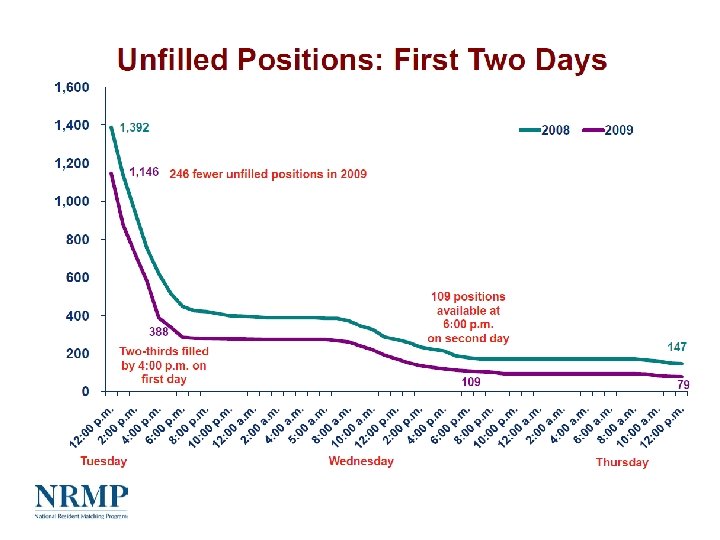
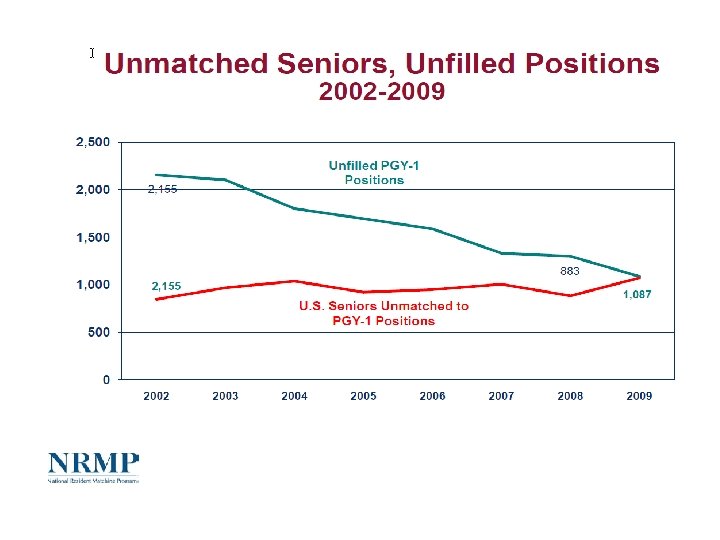
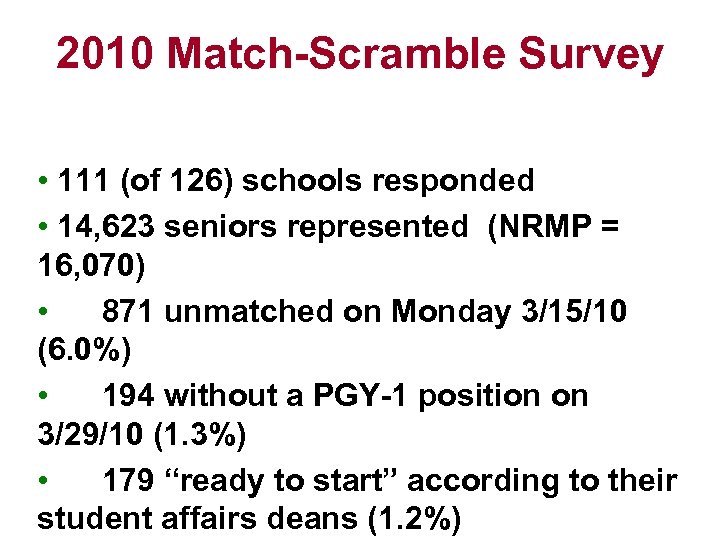
2010 Match-Scramble Survey • 111 (of 126) schools responded • 14, 623 seniors represented (NRMP = 16, 070) • 871 unmatched on Monday 3/15/10 (6. 0%) • 194 without a PGY-1 position on 3/29/10 (1. 3%) • 179 “ready to start” according to their student affairs deans (1. 2%)
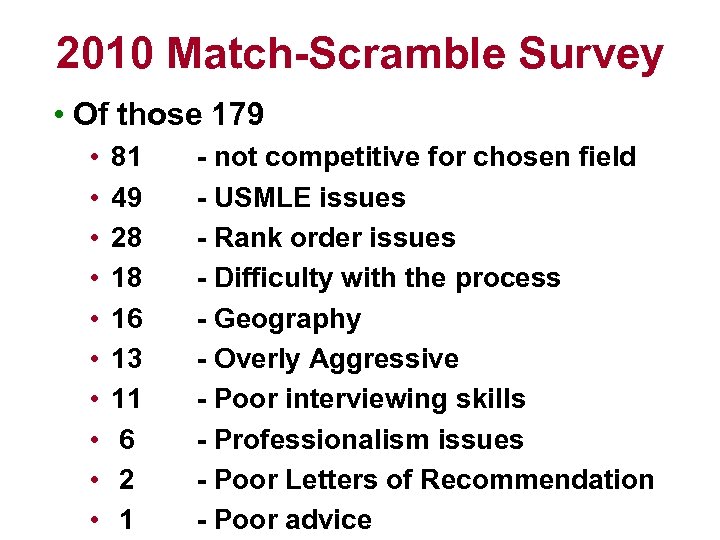
2010 Match-Scramble Survey • Of those 179 • • • 81 49 28 18 16 13 11 6 2 1 - not competitive for chosen field - USMLE issues - Rank order issues - Difficulty with the process - Geography - Overly Aggressive - Poor interviewing skills - Professionalism issues - Poor Letters of Recommendation - Poor advice
Things to consider u How competitive is the student u How competitive is the discipline u How much help is the student going to need, how do you help get it u Alternate Plan, where indicated u “What Color is Your Parachute-2010” by Richard Bolles ($12. 91 at Amazon) • Interviewing skills • Dress u Careers in Medicine (AAMC resource)
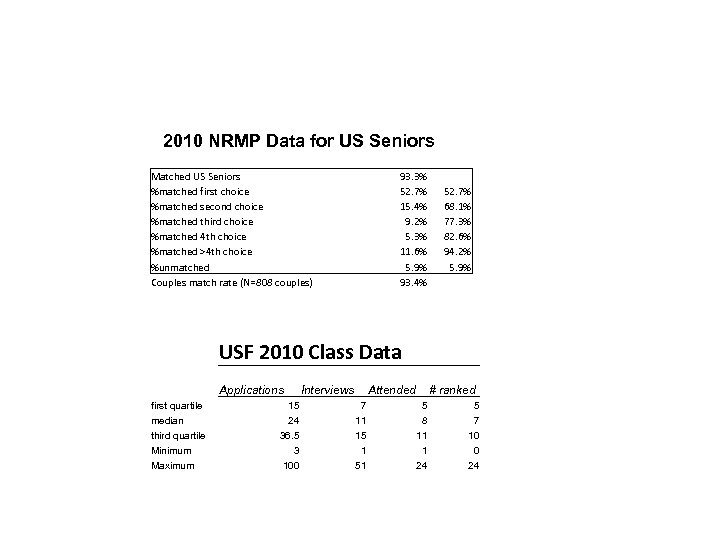
2010 NRMP Data for US Seniors Matched US Seniors %matched first choice %matched second choice %matched third choice %matched 4 th choice %matched >4 th choice %unmatched Couples match rate (N=808 couples) 93. 3% 52. 7% 15. 4% 9. 2% 5. 3% 11. 6% 5. 9% 93. 4% 52. 7% 68. 1% 77. 3% 82. 6% 94. 2% 5. 9% USF 2010 Class Data Applications first quartile median third quartile Minimum Maximum 15 24 36. 5 3 100 Interviews Attended 7 11 15 1 51 # ranked 5 8 11 1 24 5 7 10 0 24
Things to Address u Need to list at least 7 institutions that the student is willing to go to (or more) u Interviewing do’s and don’ts u How to put together a match list.
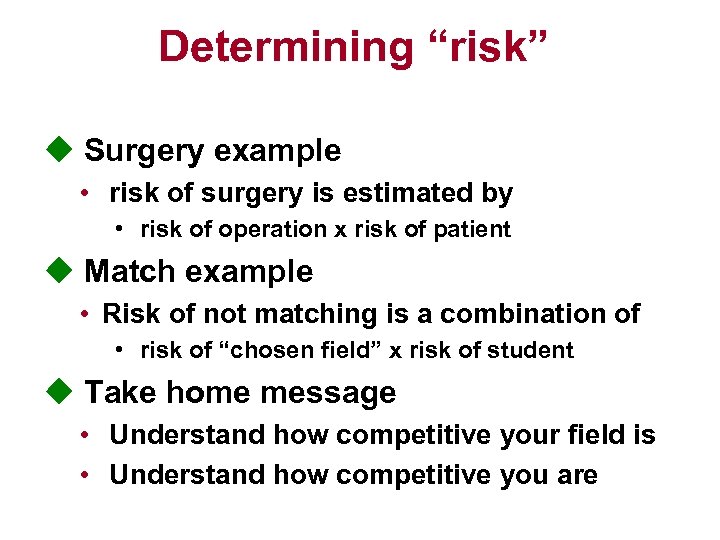
Determining “risk” u Surgery example • risk of surgery is estimated by • risk of operation x risk of patient u Match example • Risk of not matching is a combination of • risk of “chosen field” x risk of student u Take home message • Understand how competitive your field is • Understand how competitive you are
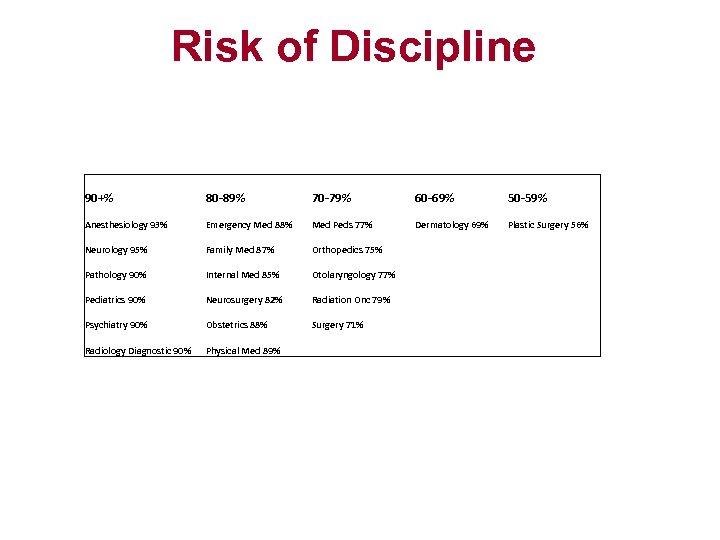
Risk of Discipline 90+% 80 -89% 70 -79% 60 -69% 50 -59% Anesthesiology 93% Emergency Med 88% Med Peds 77% Dermatology 69% Plastic Surgery 56% Neurology 95% Family Med 87% Orthopedics 75% Pathology 90% Internal Med 85% Otolaryngology 77% Pediatrics 90% Neurosurgery 82% Radiation Onc 79% Psychiatry 90% Obstetrics 88% Surgery 71% Radiology Diagnostic 90% Physical Med 89%
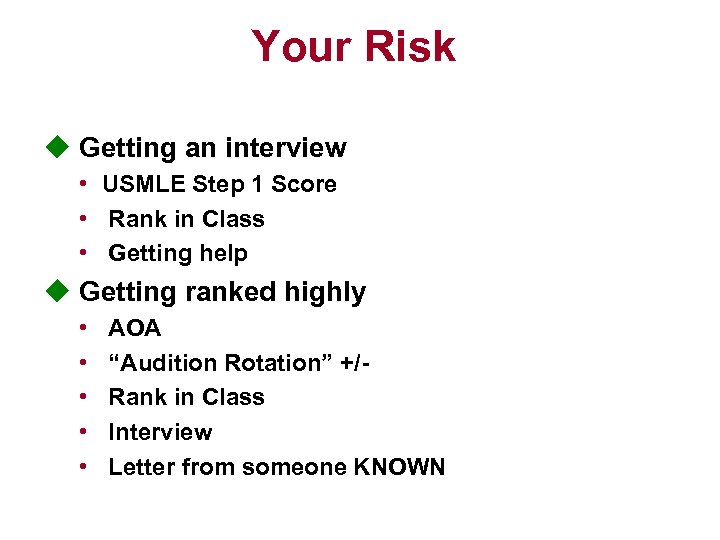
Your Risk u Getting an interview • USMLE Step 1 Score • Rank in Class • Getting help u Getting ranked highly • • • AOA “Audition Rotation” +/ Rank in Class Interview Letter from someone KNOWN
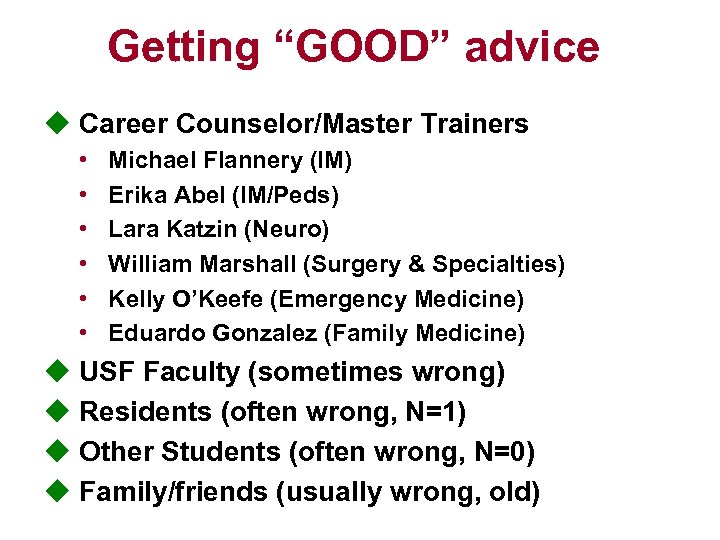
Getting “GOOD” advice u Career Counselor/Master Trainers • • • Michael Flannery (IM) Erika Abel (IM/Peds) Lara Katzin (Neuro) William Marshall (Surgery & Specialties) Kelly O’Keefe (Emergency Medicine) Eduardo Gonzalez (Family Medicine) u USF Faculty (sometimes wrong) u Residents (often wrong, N=1) u Other Students (often wrong, N=0) u Family/friends (usually wrong, old)
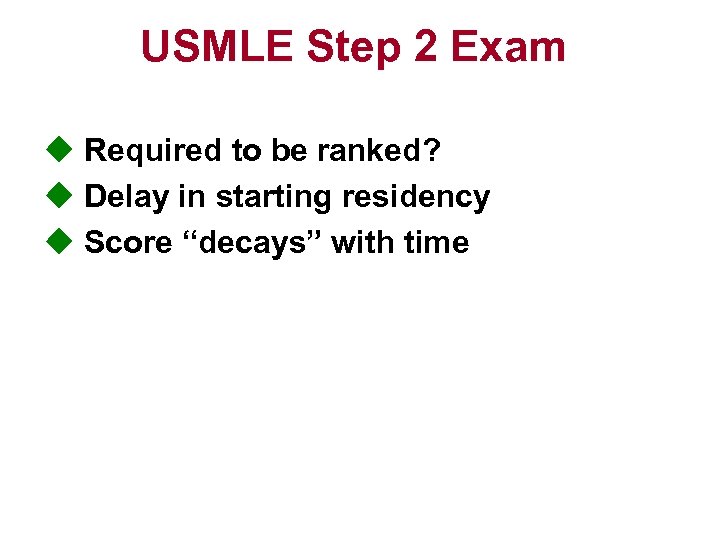
USMLE Step 2 Exam u Required to be ranked? u Delay in starting residency u Score “decays” with time
Summary u Get good advice u Understand the field and yourself u Meet with USF Chair and/or PD u Rank at least 7 programs u Have a developed “Plan B” u DON’T count on the scramble u Take Step 2 early
Скачать презентацию Facts about the Match Introduction u Prior
c9fa3d6872b867f208308099e894bf14.ppt