 Скачать презентацию Factors shaping organizational behavior Zubanov Alexander 114
Factors shaping organizational behavior.pptx
- Количество слайдов: 8



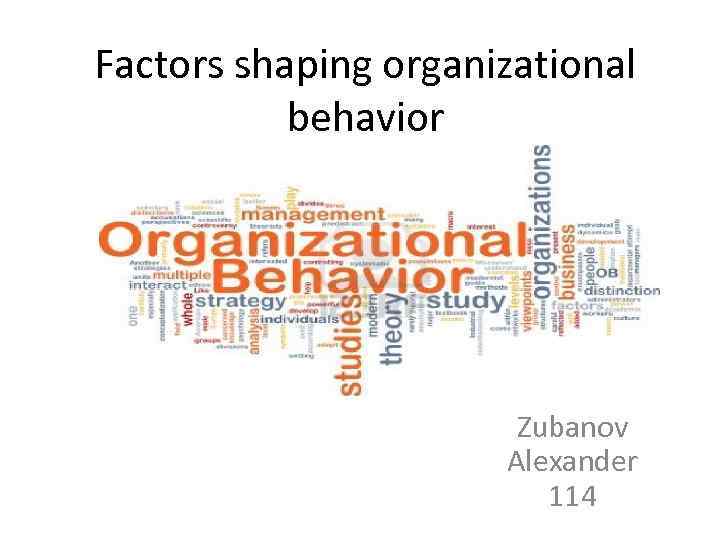
Factors shaping organizational behavior Zubanov Alexander 114
Organizational behavior follows principles of human behavior. Human behavior greatly influenced on the effectiveness of any organization. There is no organization without people. One important principle of psychology is that each person is different. Each person has unique perceptions, personality, life experiences, different attitudes, values, beliefs and aspiration levels. To be effective, managers must view each employee as a combination of behavioral factors.
Organizations as Social Systems The relationships among individuals and groups create expectations for the behavior of individuals. These expectations result in certain roles. There are leaders and followers in organization. Any boss had been a follower before he or she became a leader. Some people have both status and power.
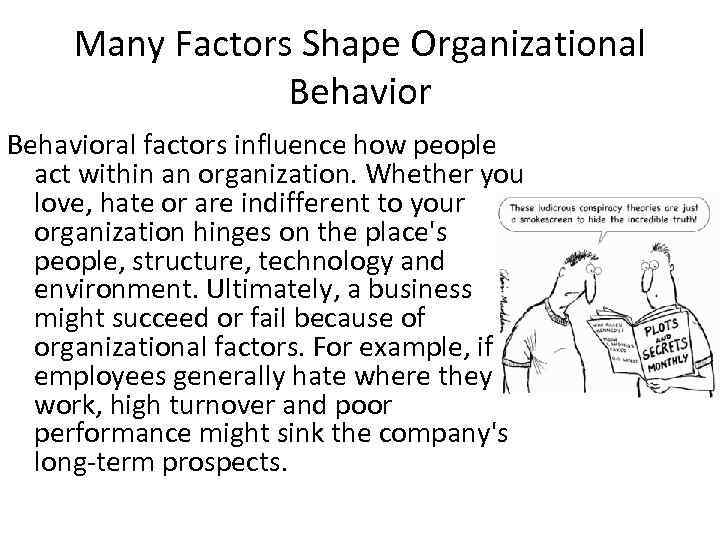
Many Factors Shape Organizational Behavioral factors influence how people act within an organization. Whether you love, hate or are indifferent to your organization hinges on the place's people, structure, technology and environment. Ultimately, a business might succeed or fail because of organizational factors. For example, if employees generally hate where they work, high turnover and poor performance might sink the company's long-term prospects.
People The people within an organization are one of the primary influences on the overall organizational behavior within a company. The interactions between individual employees is, in fact, one of the primary areas of study within the field of organizational behavior. Various personal characteristics that may influence organizational behavior include the education level of employees, their backgrounds, abilities and beliefs
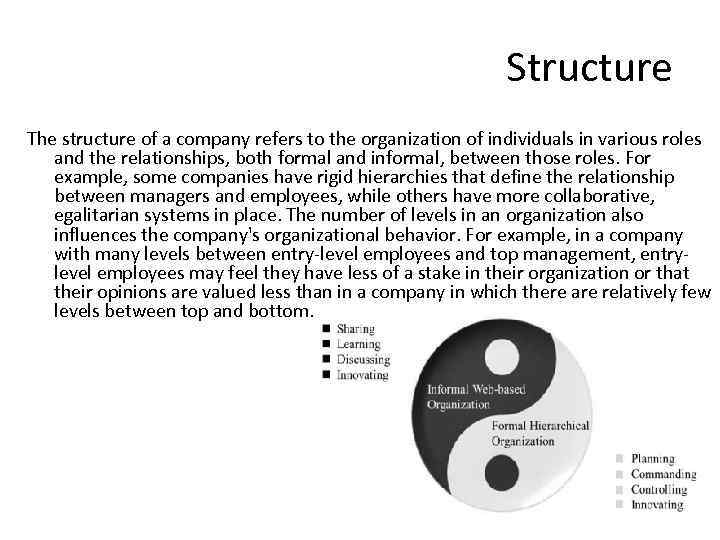
Structure The structure of a company refers to the organization of individuals in various roles and the relationships, both formal and informal, between those roles. For example, some companies have rigid hierarchies that define the relationship between managers and employees, while others have more collaborative, egalitarian systems in place. The number of levels in an organization also influences the company's organizational behavior. For example, in a company with many levels between entry-level employees and top management, entrylevel employees may feel they have less of a stake in their organization or that their opinions are valued less than in a company in which there are relatively few levels between top and bottom.
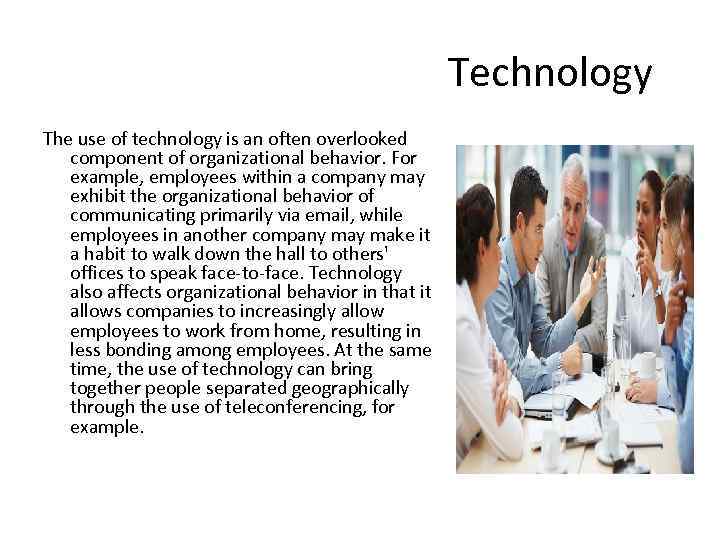
Technology The use of technology is an often overlooked component of organizational behavior. For example, employees within a company may exhibit the organizational behavior of communicating primarily via email, while employees in another company make it a habit to walk down the hall to others' offices to speak face-to-face. Technology also affects organizational behavior in that it allows companies to increasingly allow employees to work from home, resulting in less bonding among employees. At the same time, the use of technology can bring together people separated geographically through the use of teleconferencing, for example.
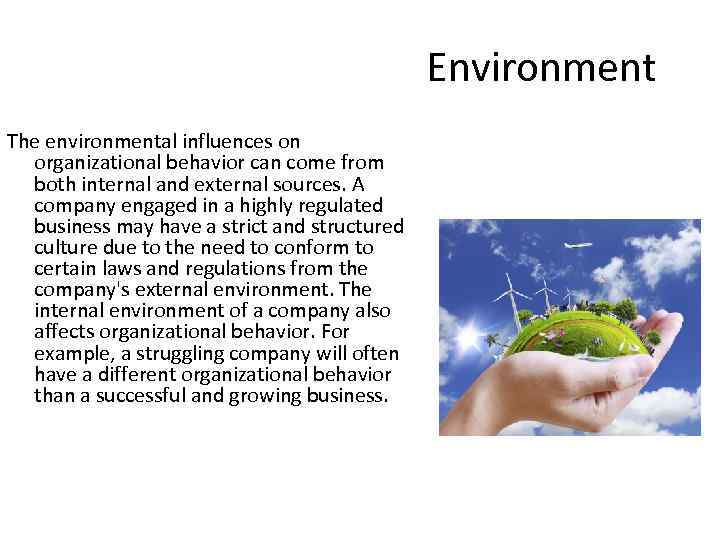
Environment The environmental influences on organizational behavior can come from both internal and external sources. A company engaged in a highly regulated business may have a strict and structured culture due to the need to conform to certain laws and regulations from the company's external environment. The internal environment of a company also affects organizational behavior. For example, a struggling company will often have a different organizational behavior than a successful and growing business.
Скачать презентацию Factors shaping organizational behavior Zubanov Alexander 114
Factors shaping organizational behavior.pptx