


 Скачать презентацию Factors associated with achievement in PISA 2006 n
c17ff5ee380b01b0f5d362b23601bf02.ppt
- Количество слайдов: 24
 Factors associated with achievement in PISA 2006 n Why? – – – Establishing links Identifying things we can change Valuable data in its own right n n E. g. bullying, parental interaction Caveat: univariate nature of analyses – Links between factors not examined – Especially important in the case of ESCS n School factors: – Presented in terms of number of students not number of schools
 Factors associated with achievement - overview n Student characteristics – At home & in school – Attitudes to & engagement in science – Trends over time n School characteristics – Enrolment – Resources – Science uptake and promotion
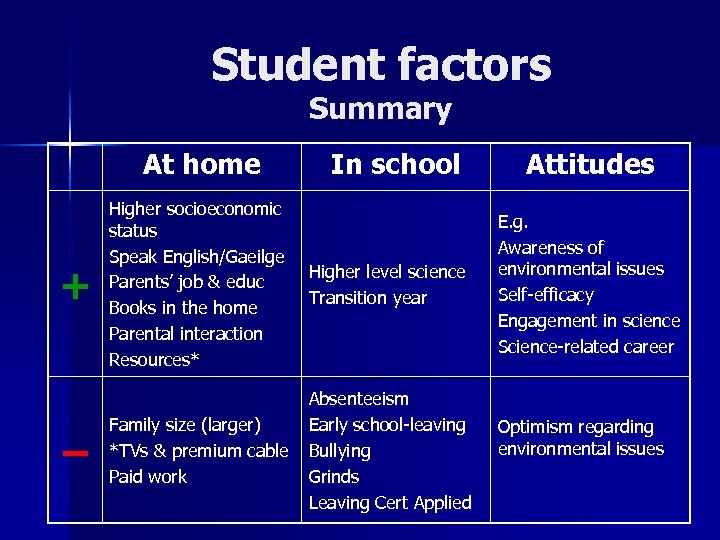 Student factors Summary At home + − In school Higher socioeconomic status Speak English/Gaeilge Parents’ job & educ Books in the home Parental interaction Resources* Higher level science Transition year Family size (larger) *TVs & premium cable Paid work Absenteeism Early school-leaving Bullying Grinds Leaving Cert Applied Attitudes E. g. Awareness of environmental issues Self-efficacy Engagement in science Science-related career Optimism regarding environmental issues
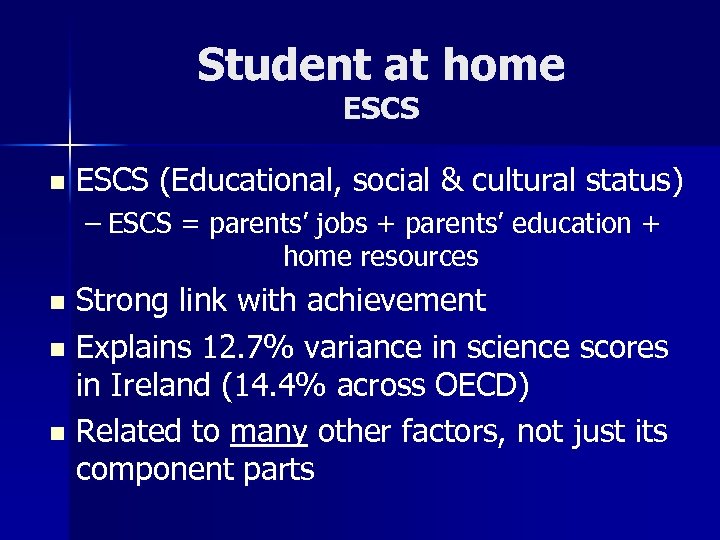 Student at home ESCS n ESCS (Educational, social & cultural status) – ESCS = parents’ jobs + parents’ education + home resources Strong link with achievement n Explains 12. 7% variance in science scores in Ireland (14. 4% across OECD) n Related to many other factors, not just its component parts n
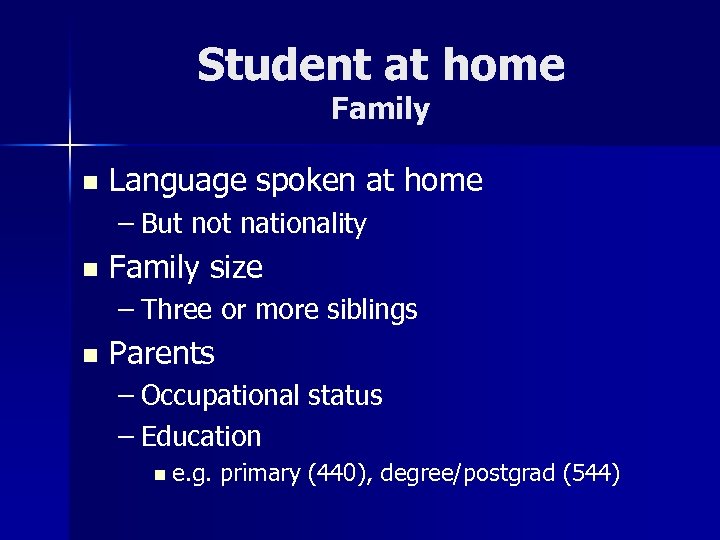 Student at home Family n Language spoken at home – But not nationality n Family size – Three or more siblings n Parents – Occupational status – Education n e. g. primary (440), degree/postgrad (544)
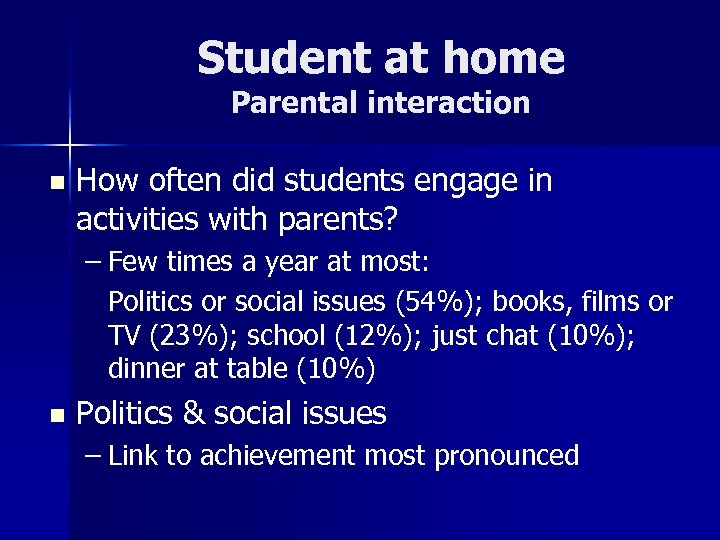 Student at home Parental interaction n How often did students engage in activities with parents? – Few times a year at most: Politics or social issues (54%); books, films or TV (23%); school (12%); just chat (10%); dinner at table (10%) n Politics & social issues – Link to achievement most pronounced
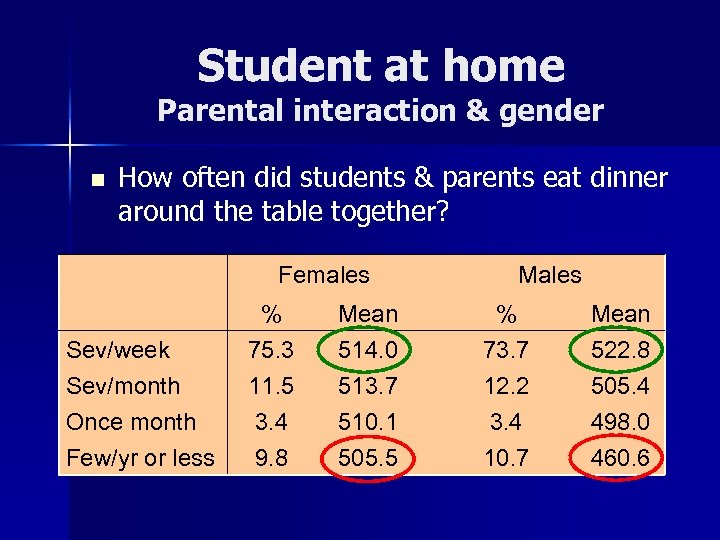 Student at home Parental interaction & gender n How often did students & parents eat dinner around the table together? Females Males Sev/week Sev/month % 75. 3 11. 5 Mean 514. 0 513. 7 % 73. 7 12. 2 Mean 522. 8 505. 4 Once month Few/yr or less 3. 4 9. 8 510. 1 505. 5 3. 4 10. 7 498. 0 460. 6
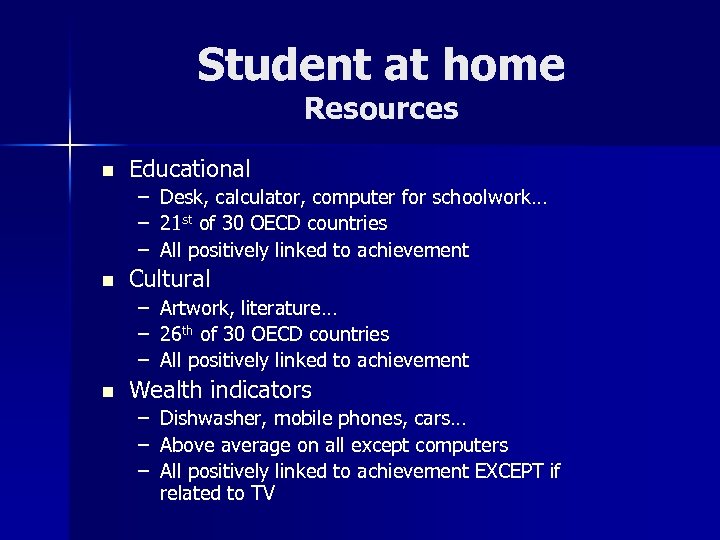 Student at home Resources n Educational – – – n Cultural – – – n Desk, calculator, computer for schoolwork… 21 st of 30 OECD countries All positively linked to achievement Artwork, literature… 26 th of 30 OECD countries All positively linked to achievement Wealth indicators – – – Dishwasher, mobile phones, cars… Above average on all except computers All positively linked to achievement EXCEPT if related to TV
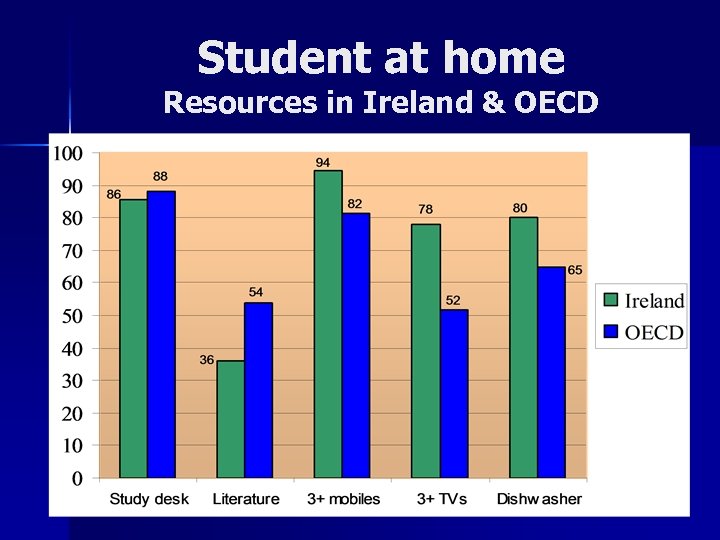 Student at home Resources in Ireland & OECD
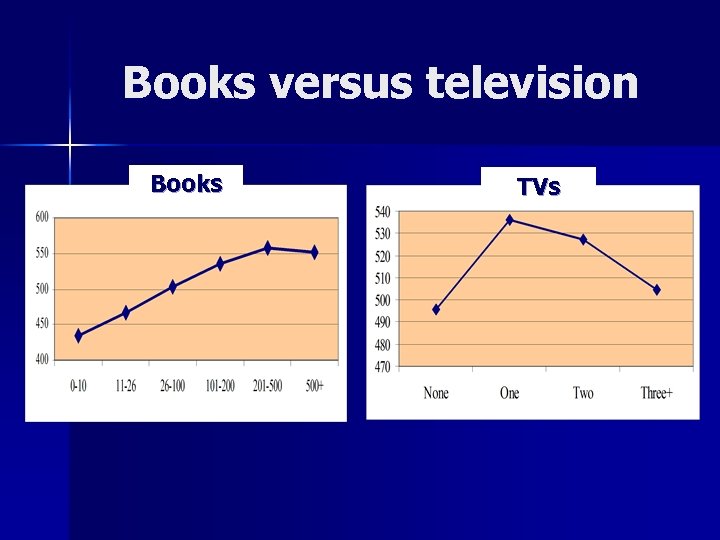 Books versus television Books TVs
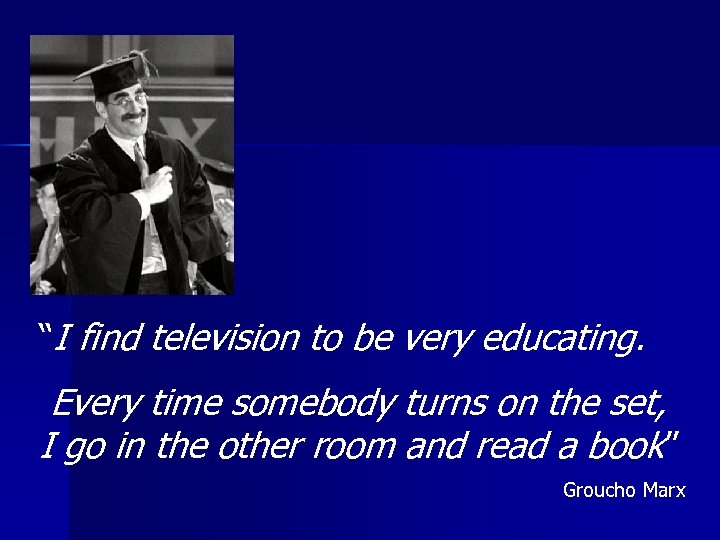 “I find television to be very educating. Every time somebody turns on the set, I go in the other room and read a book” Groucho Marx
 Student attitudes n Awareness of environmental issues – Irish students highest (males higher) n General value of science & self-efficacy – Average (males higher) n Self-efficacy – Culture and gender effects
 Student attitudes n Optimism regarding environmental issues – Negatively correlated with achievement n Engagement in science – Very low in Ireland – Only ‘interest’ index where males were higher
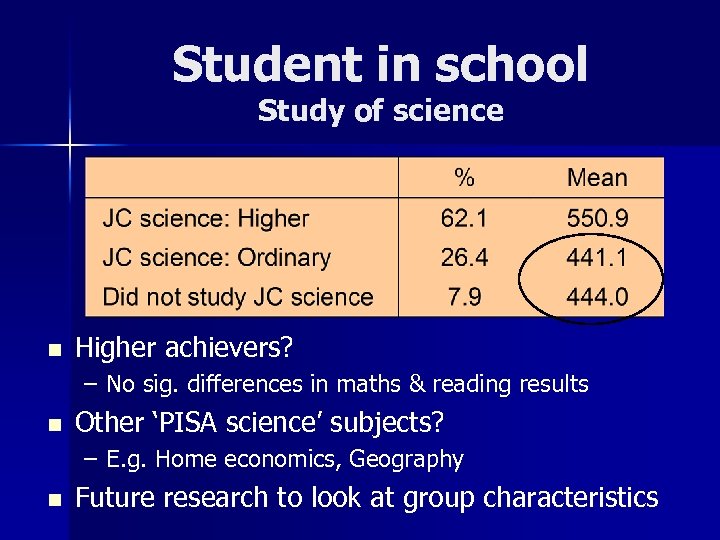 Student in school Study of science n Higher achievers? – No sig. differences in maths & reading results n Other ‘PISA science’ subjects? – E. g. Home economics, Geography n Future research to look at group characteristics
 Student in school or not? n Absenteeism – Negative link with achievement – Even 1 or 2 absences in previous fortnight n Stay for Leaving Certificate? – ‘Yes’ (90%) outperformed ‘No’ (2%) and even those who were ‘Unsure’ (8%)
 Student in school Bullying 43% reported experience of bullying by a fellow student in current term n Why so high? n – Not restricted to school hours – Presented with list of 6 forms of bullying – Large & representative sample n ‘Index’ of bullying created – Number of forms experienced by student
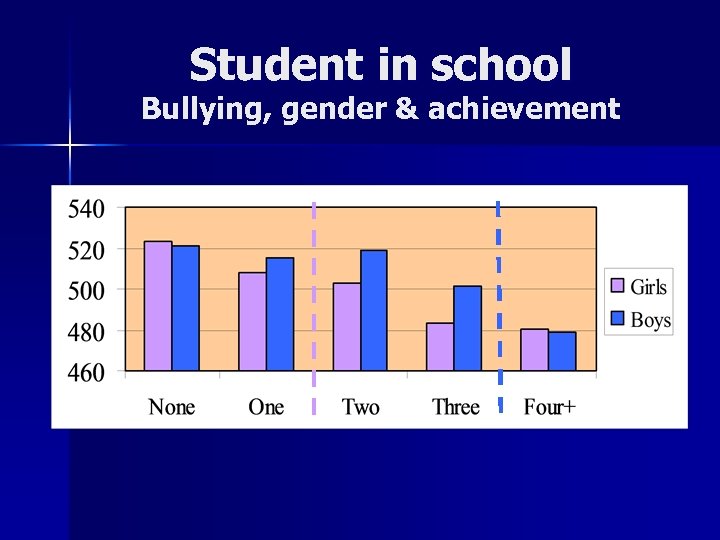 Student in school Bullying, gender & achievement
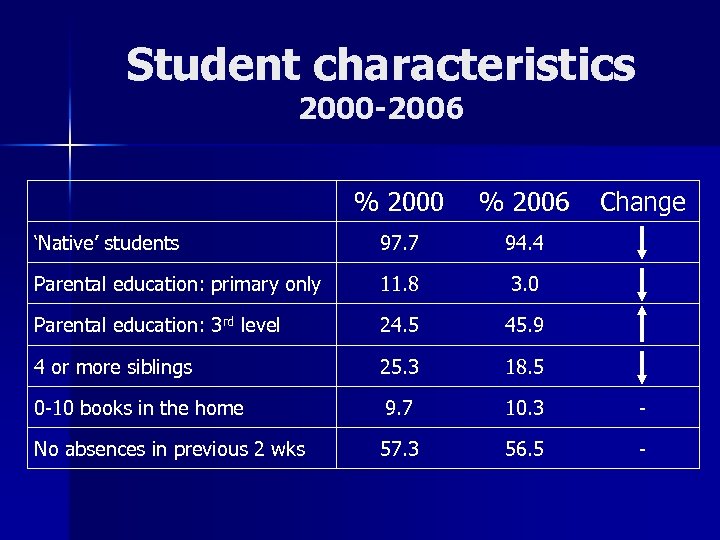 Student characteristics 2000 -2006 % 2000 % 2006 Change ‘Native’ students 97. 7 94. 4 Parental education: primary only 11. 8 3. 0 Parental education: 3 rd level 24. 5 45. 9 4 or more siblings 25. 3 18. 5 0 -10 books in the home 9. 7 10. 3 - No absences in previous 2 wks 57. 3 56. 5 -
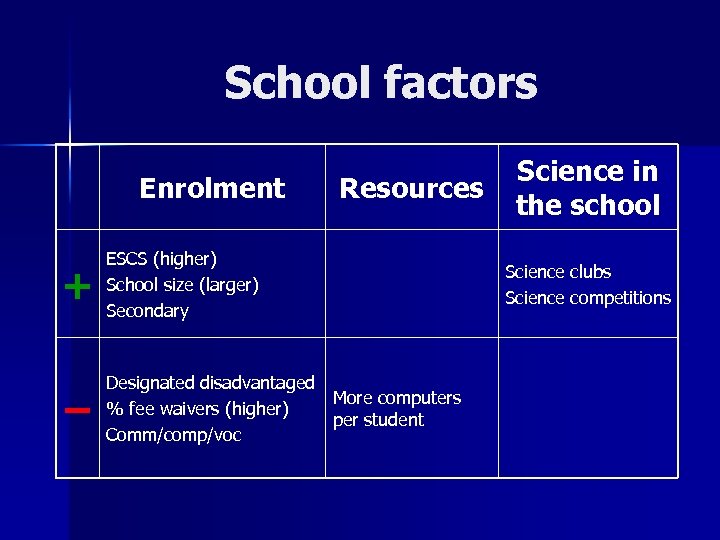 School factors Enrolment Resources + ESCS (higher) School size (larger) Secondary − Designated disadvantaged More computers % fee waivers (higher) per student Comm/comp/voc Science in the school Science clubs Science competitions
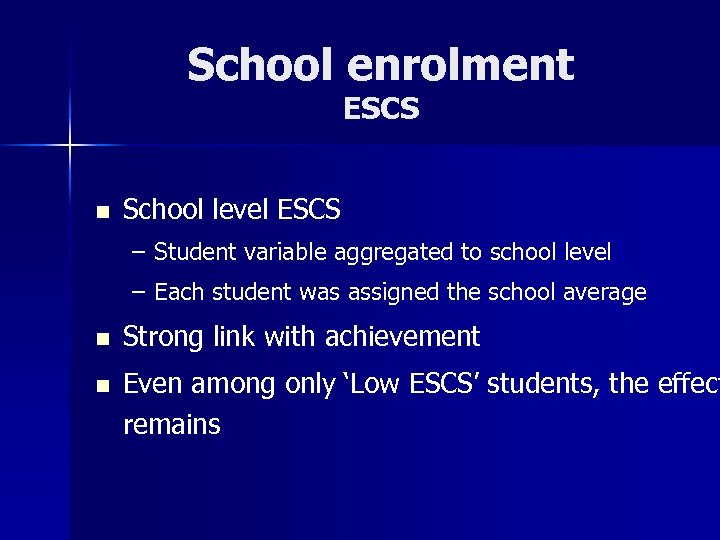 School enrolment ESCS n School level ESCS – Student variable aggregated to school level – Each student was assigned the school average n n Strong link with achievement Even among only ‘Low ESCS’ students, the effect remains
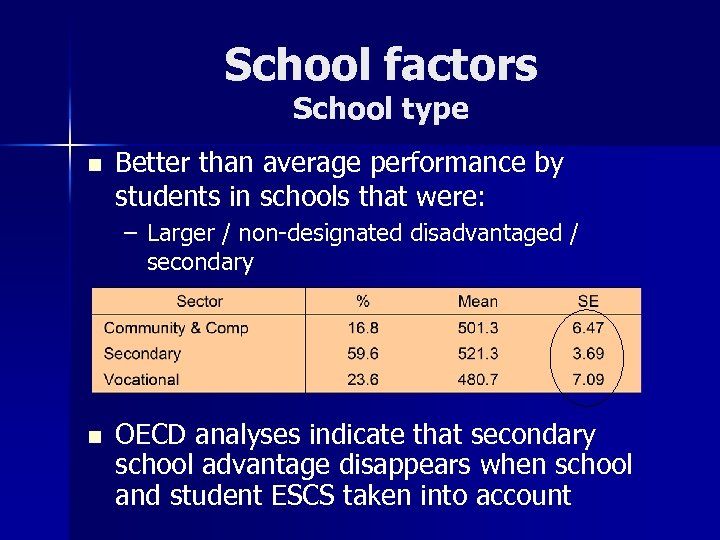 School factors School type n Better than average performance by students in schools that were: – Larger / non-designated disadvantaged / secondary n OECD analyses indicate that secondary school advantage disappears when school and student ESCS taken into account
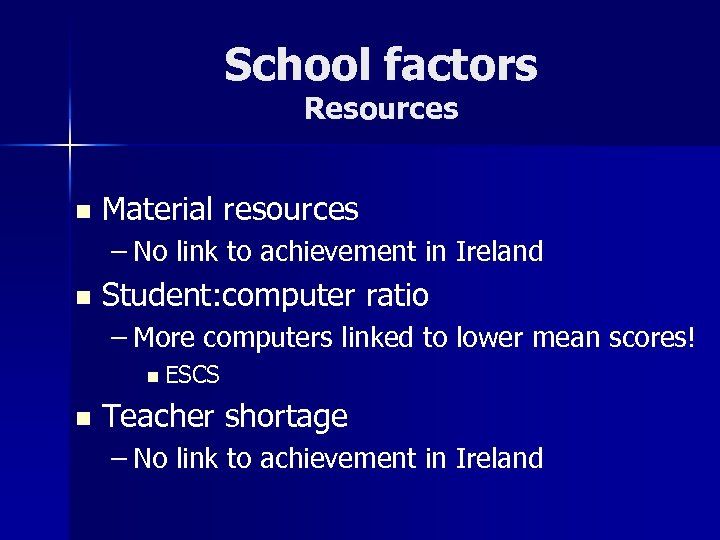 School factors Resources n Material resources – No link to achievement in Ireland n Student: computer ratio – More computers linked to lower mean scores! n ESCS n Teacher shortage – No link to achievement in Ireland
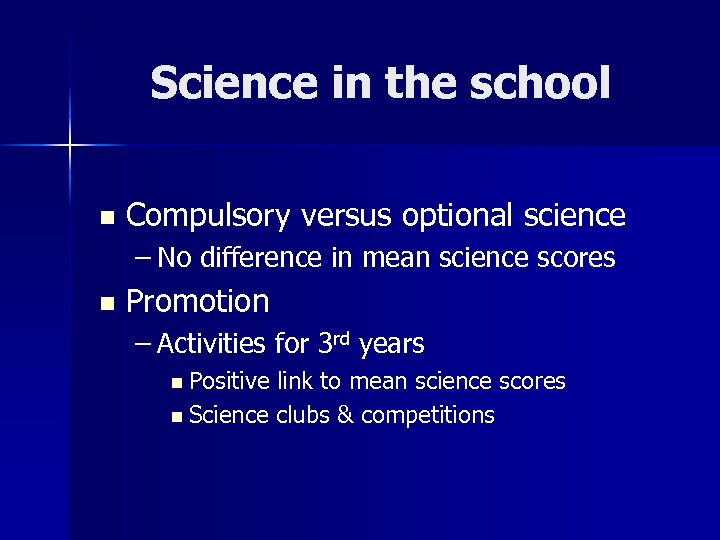 Science in the school n Compulsory versus optional science – No difference in mean science scores n Promotion – Activities for 3 rd years n Positive link to mean science scores n Science clubs & competitions
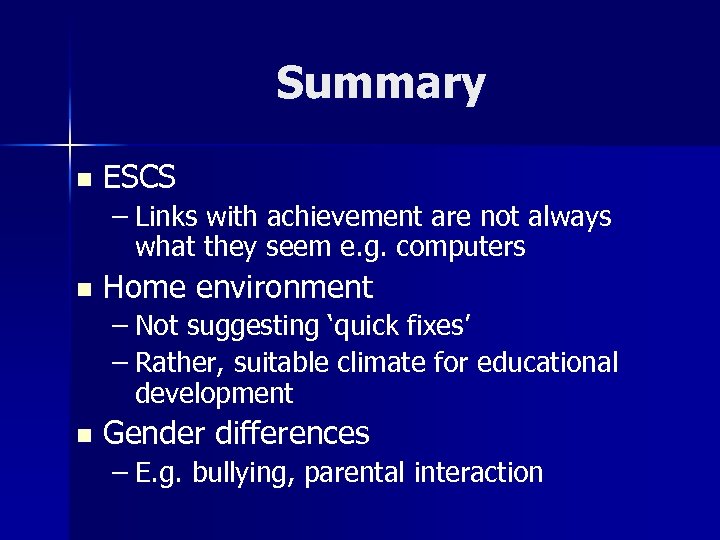 Summary n ESCS – Links with achievement are not always what they seem e. g. computers n Home environment – Not suggesting ‘quick fixes’ – Rather, suitable climate for educational development n Gender differences – E. g. bullying, parental interaction