 Скачать презентацию Façade Engineering Environmentally Sustainable Design MEETS BUILDING
7648fbbd6fe1583de1798006395ec14a.ppt
- Количество слайдов: 58



Façade Engineering Environmentally Sustainable Design
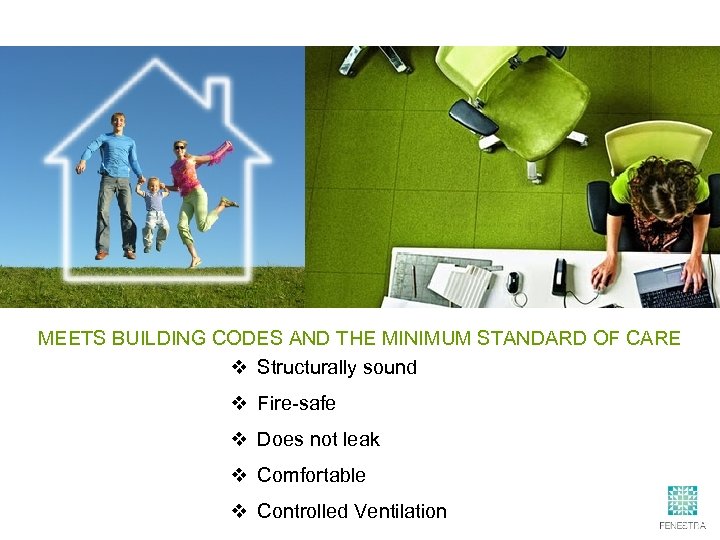
MEETS BUILDING CODES AND THE MINIMUM STANDARD OF CARE v Structurally sound v Fire-safe v Does not leak v Comfortable v Controlled Ventilation
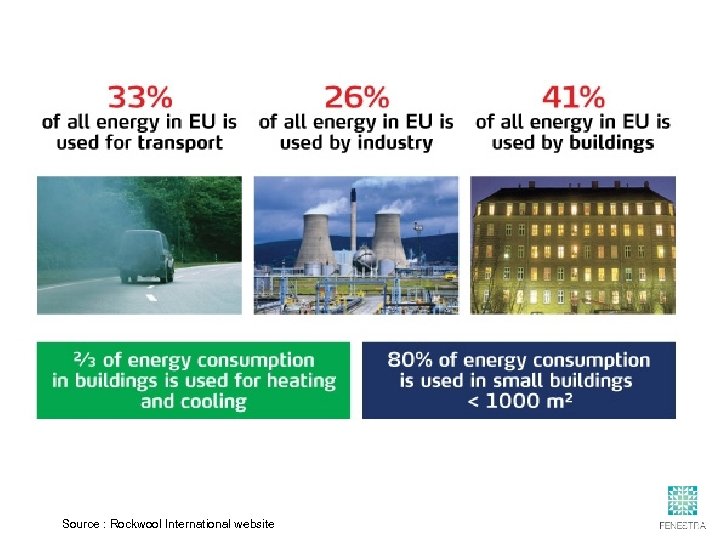
Source : Rockwool International website
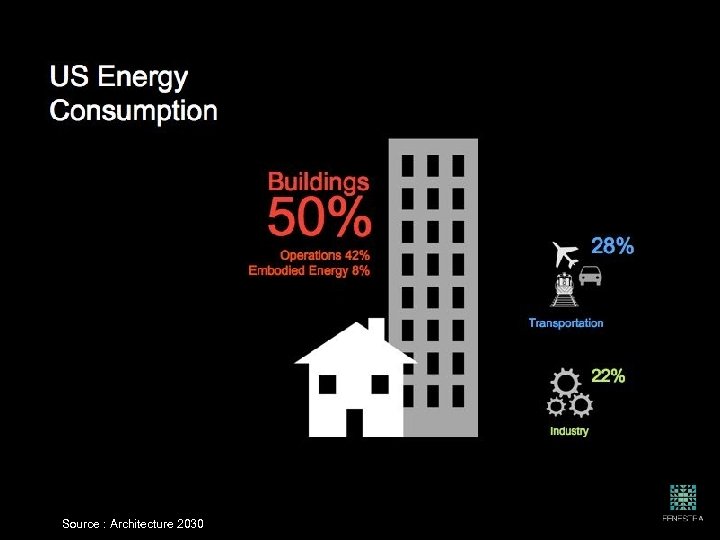
Source : Architecture 2030

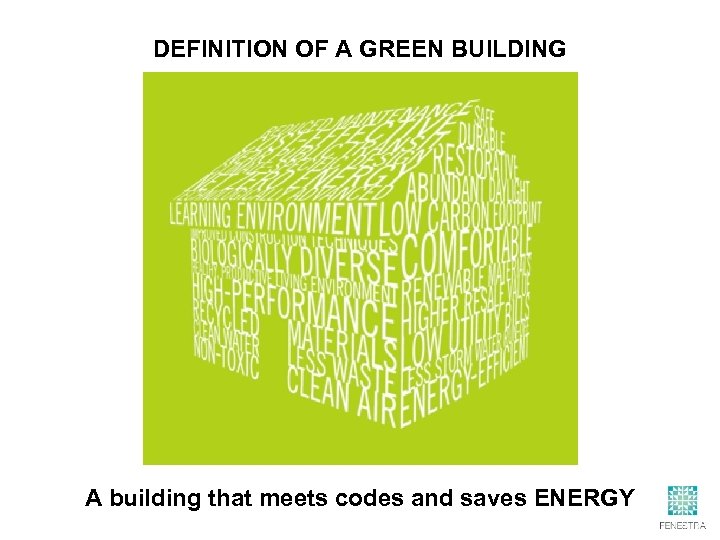
DEFINITION OF A GREEN BUILDING A building that meets codes and saves ENERGY
ü USE LESS GLASS !
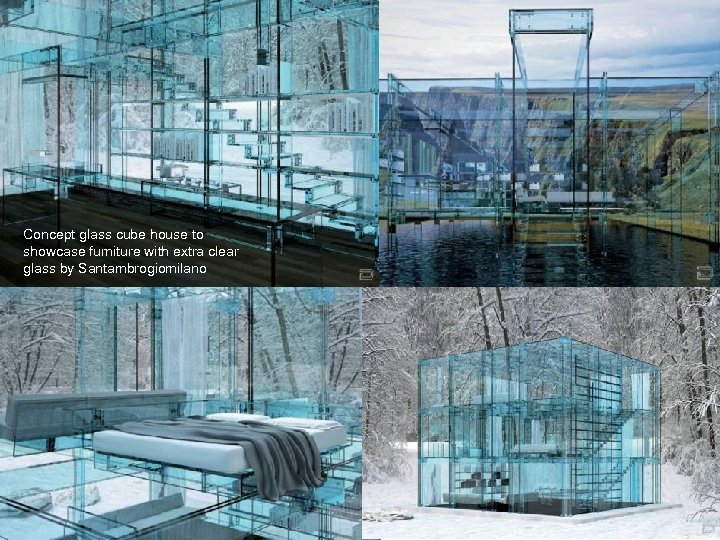
Concept glass cube house to showcase furniture with extra clear glass by Santambrogiomilano
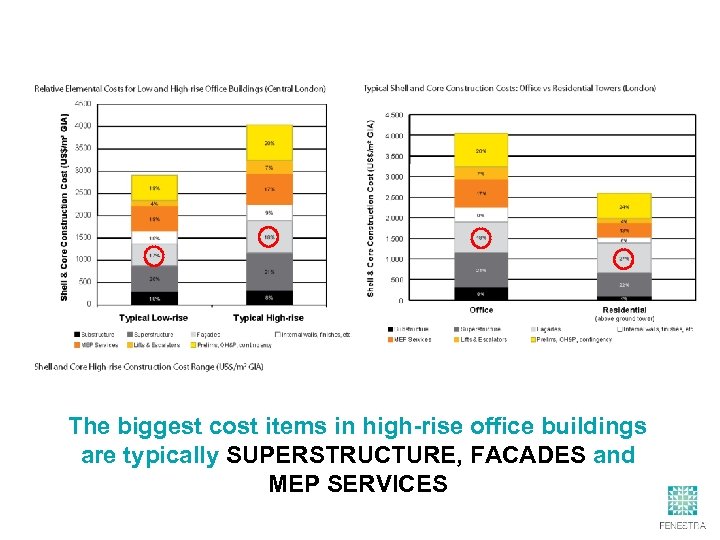
The biggest cost items in high-rise office buildings are typically SUPERSTRUCTURE, FACADES and MEP SERVICES
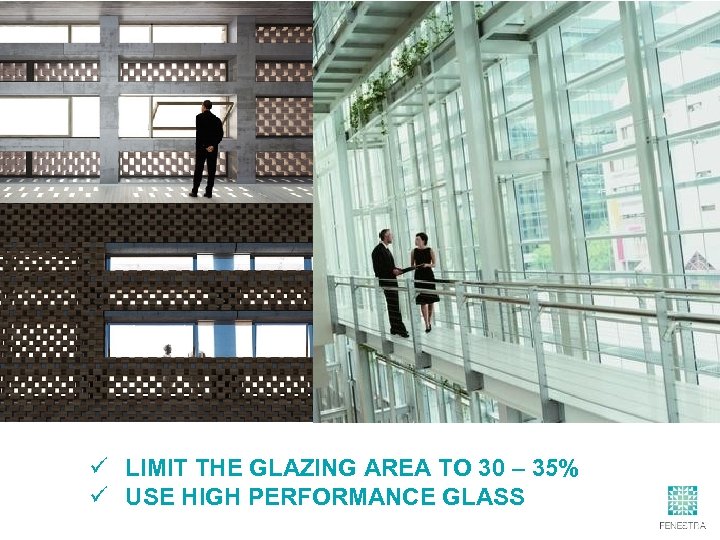
ü LIMIT THE GLAZING AREA TO 30 – 35% ü USE HIGH PERFORMANCE GLASS
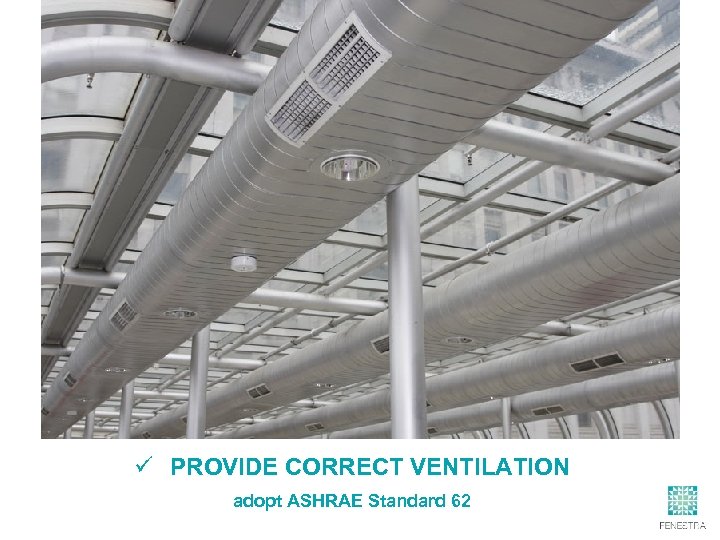
ü PROVIDE CORRECT VENTILATION adopt ASHRAE Standard 62
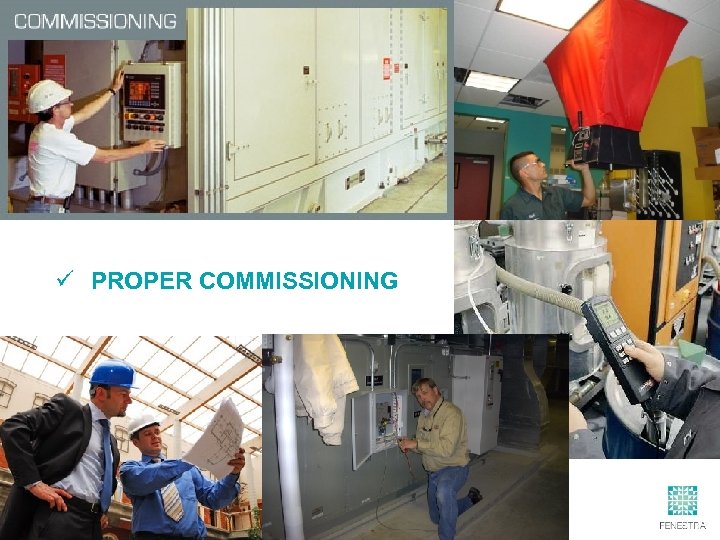
ü PROPER COMMISSIONING

The Impact of FAÇADES on Energy Efficiency of Buildings
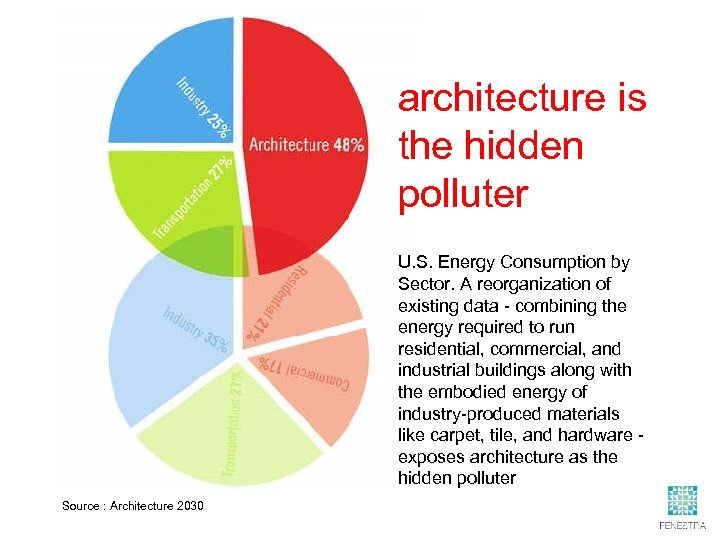
architecture is the hidden polluter U. S. Energy Consumption by Sector. A reorganization of existing data - combining the energy required to run residential, commercial, and industrial buildings along with the embodied energy of industry-produced materials like carpet, tile, and hardware - exposes architecture as the hidden polluter Source : Architecture 2030
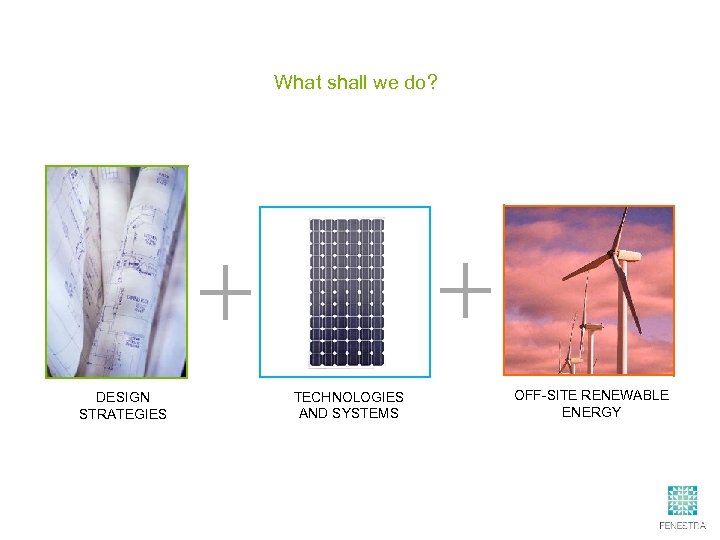
What shall we do? DESIGN STRATEGIES TECHNOLOGIES AND SYSTEMS OFF-SITE RENEWABLE ENERGY
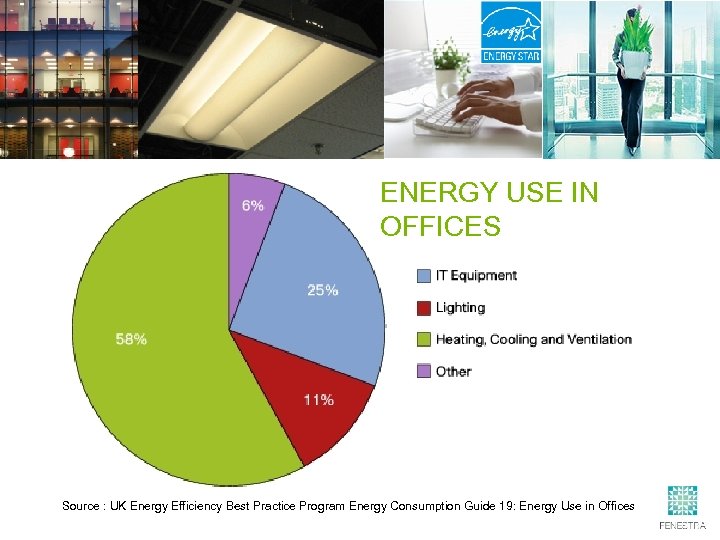
ENERGY USE IN OFFICES Source : UK Energy Efficiency Best Practice Program Energy Consumption Guide 19: Energy Use in Offices
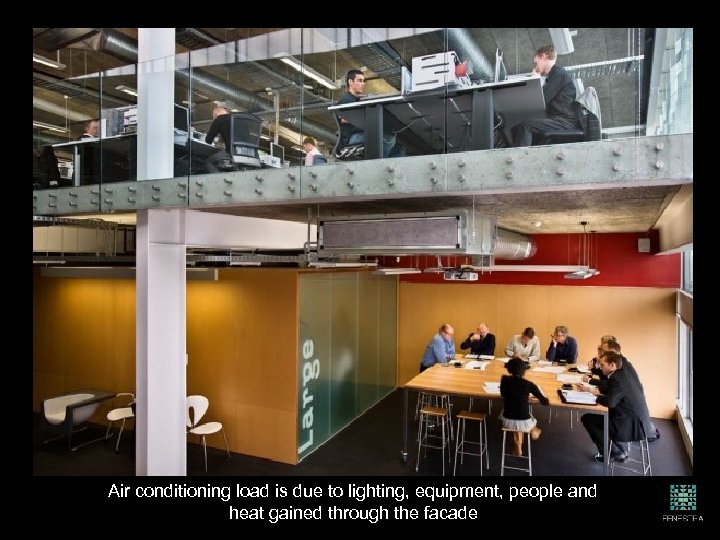
Air conditioning load is due to lighting, equipment, people and heat gained through the facade
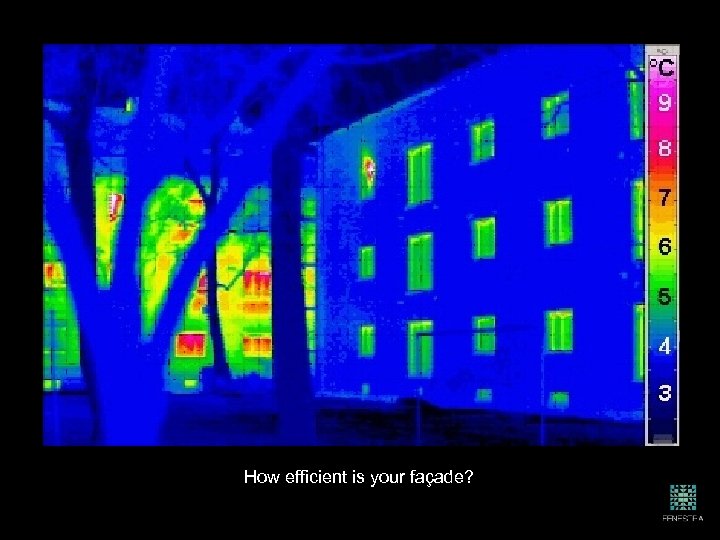
How efficient is your façade?
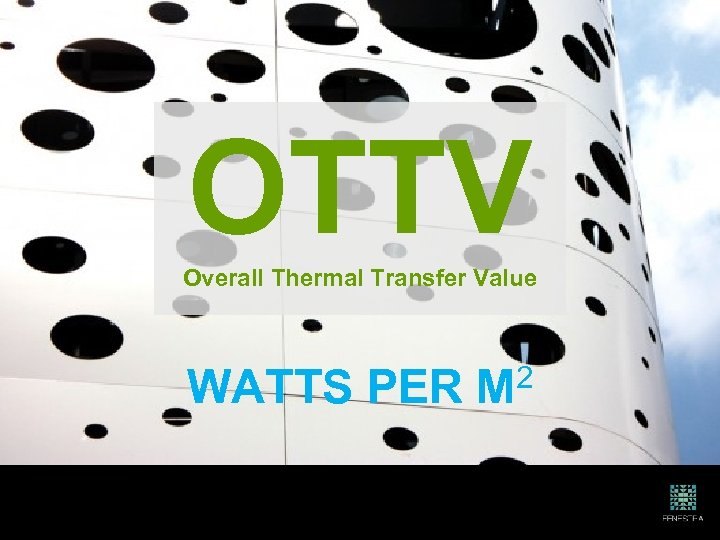
OTTV Overall Thermal Transfer Value WATTS PER M 2
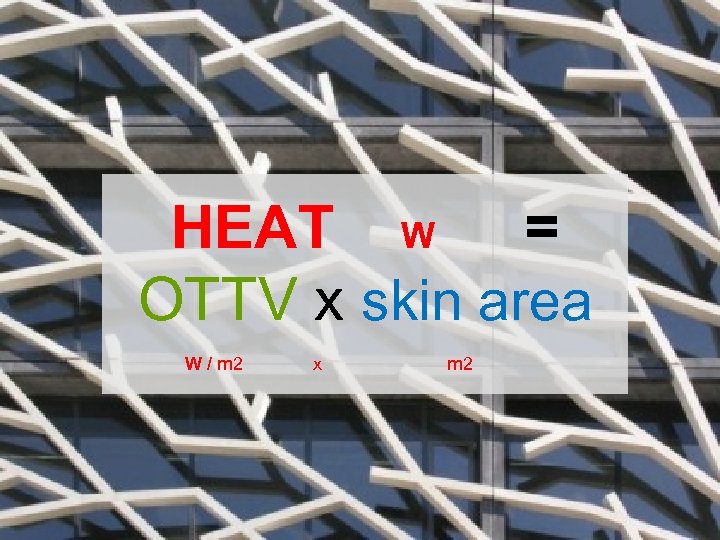
HEAT W = OTTV x skin area m 2 W / m 2 x
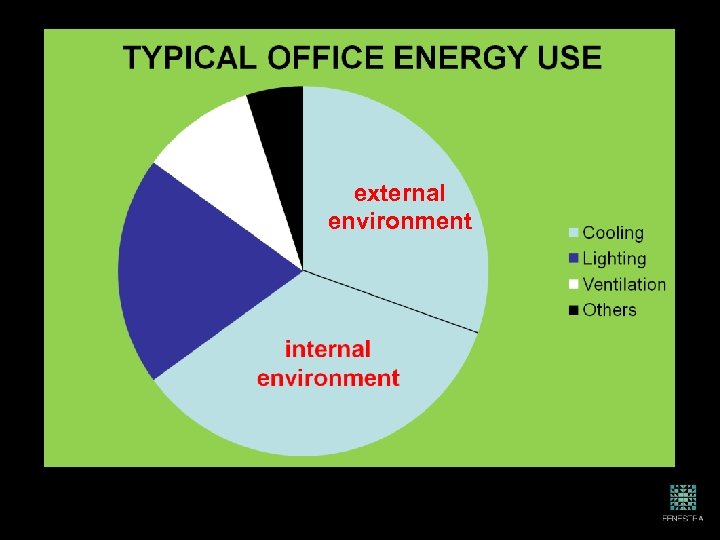
external environment
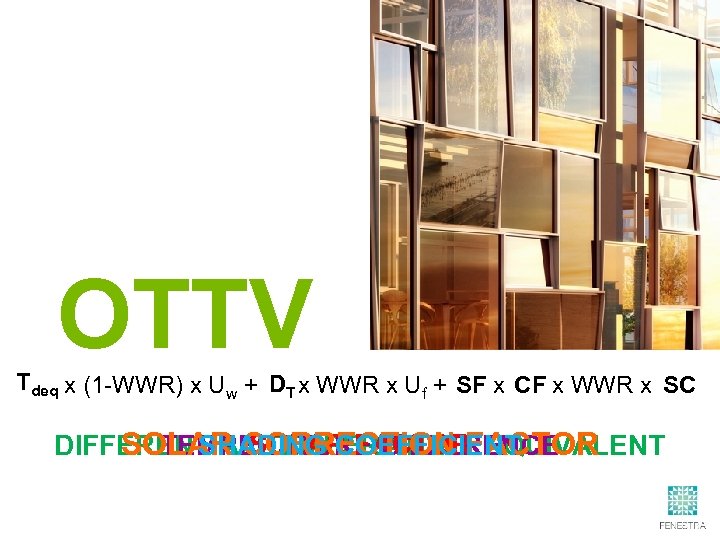
OTTV Tdeq DT SF CF x (1 -WWR) x Uw + x WWR x Uf + x x WWR x SC SOLAR FACTOR TEMPERATURE DIFFERENCE SHADING COEFFICIENT SOLAR CORRECTION FACTOR DIFFERENTIAL TEMPERATURE EQUIVALENT
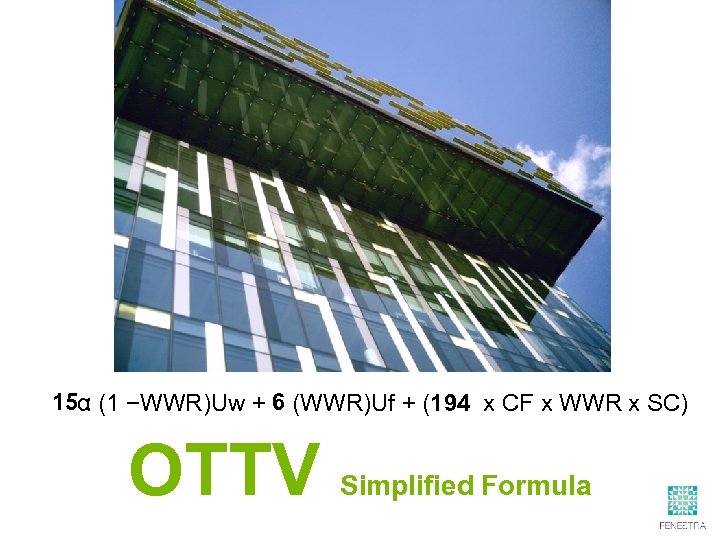
15 6 α (1 −WWR)Uw + (WWR)Uf + ( x CF x WWR x SC) 194 OTTV Simplified Formula
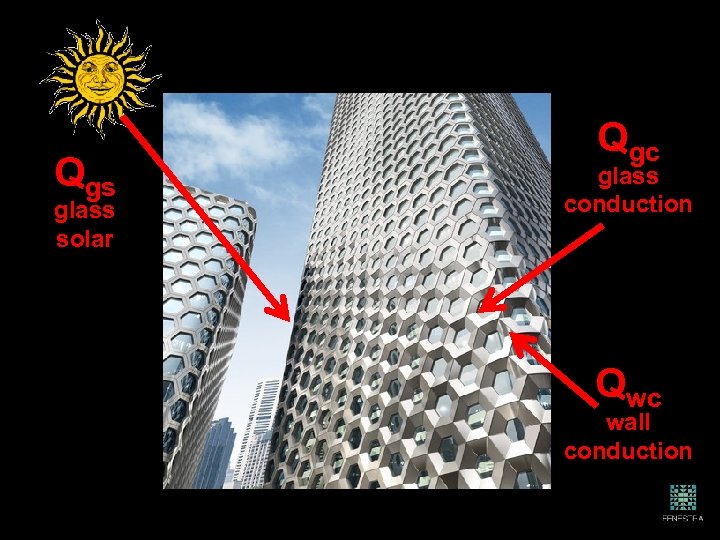
Qgs glass solar Qgc glass conduction Qwc wall conduction
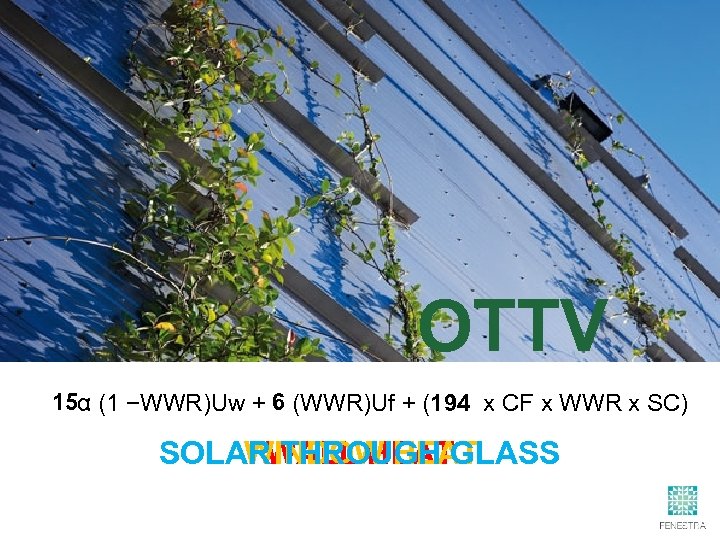
OTTV 15 6 α (1 −WWR)Uw + (WWR)Uf + ( x CF x WWR x SC) 194 SOLARWALL HEATGLASS WINDOW HEAT THROUGH
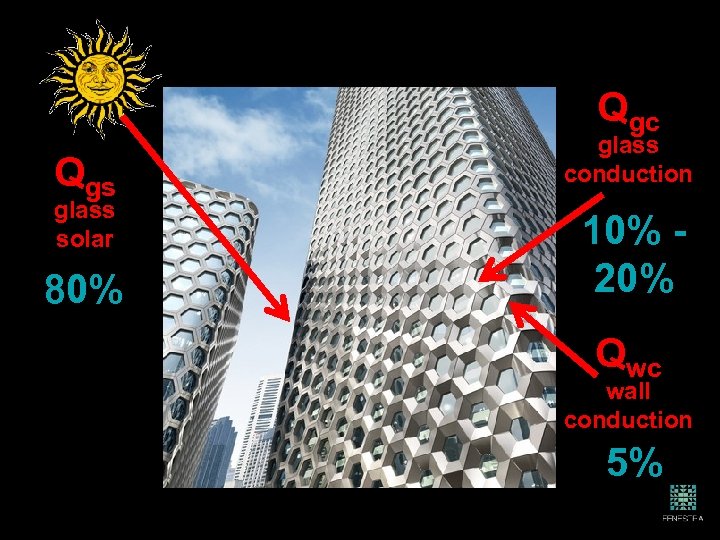
Qgc Qgs glass solar 80% glass conduction 10% 20% Qwc wall conduction 5%
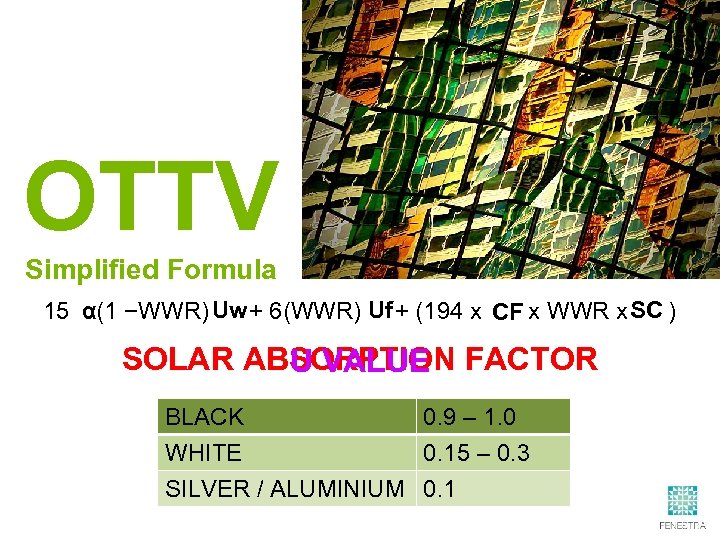
OTTV Simplified Formula Uw Uf SC α 15 (1 −WWR) + 6(WWR) + (194 x x WWR x ) CF SOLAR ABSORPTION FACTOR U VALUE BLACK 0. 9 – 1. 0 WHITE 0. 15 – 0. 3 SILVER / ALUMINIUM 0. 1
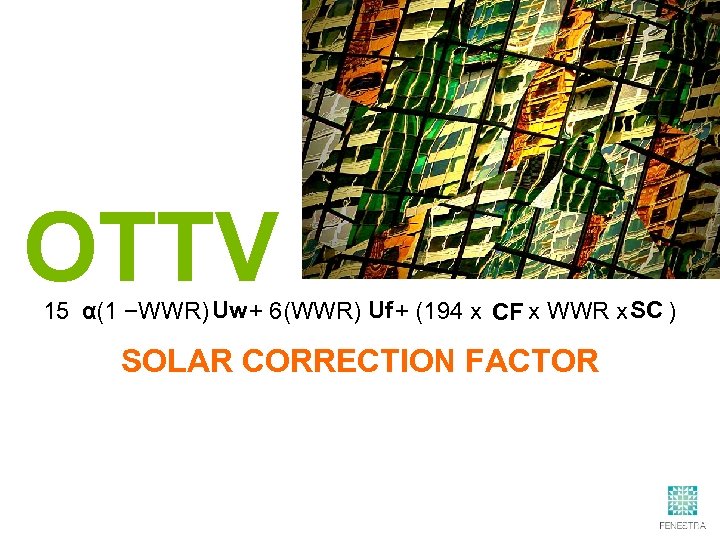
OTTV Uw Uf SC α 15 (1 −WWR) + 6(WWR) + (194 x x WWR x ) CF SOLAR CORRECTION FACTOR
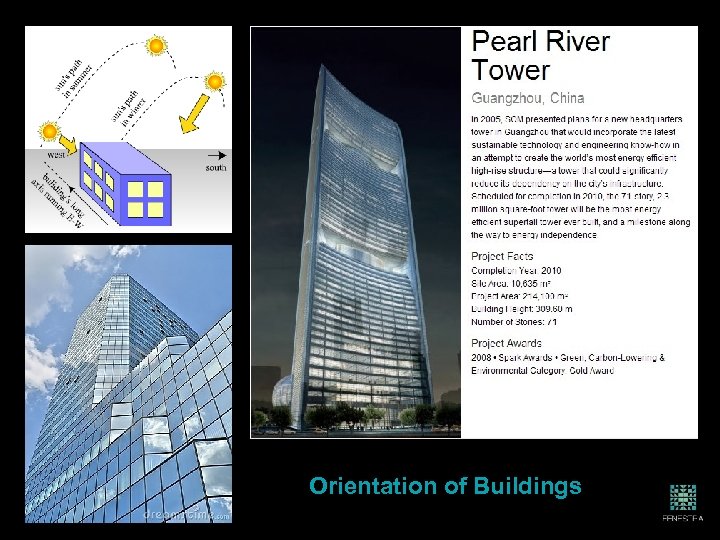
Orientation of Buildings
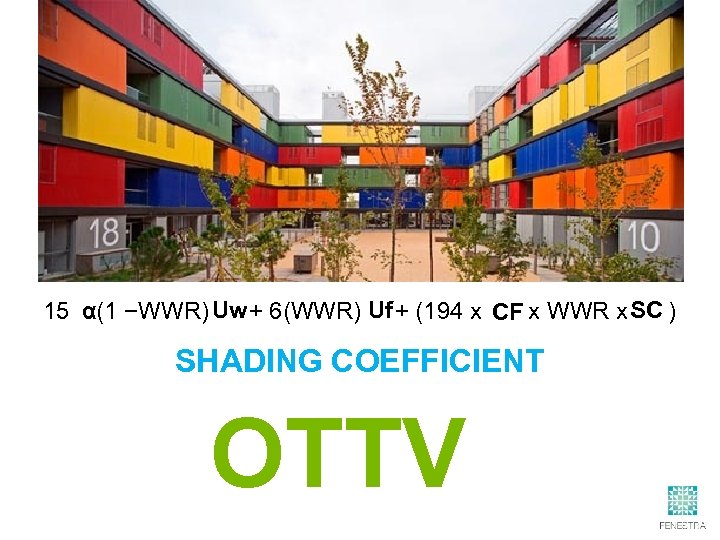
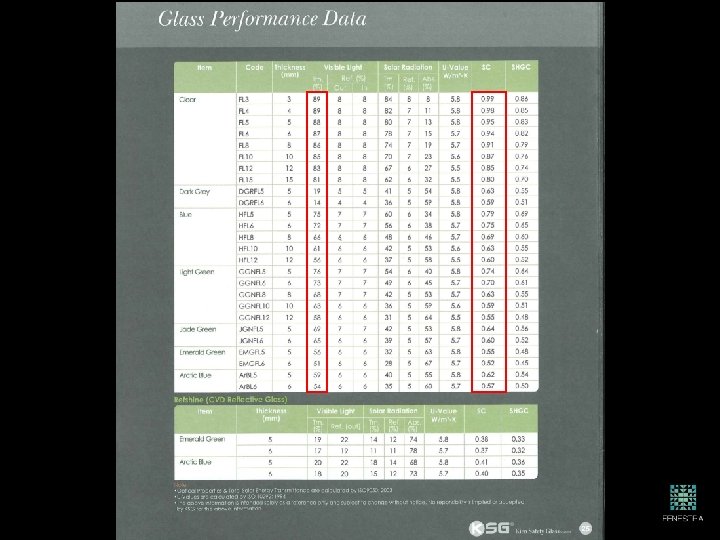
Uw Uf SC α 15 (1 −WWR) + 6(WWR) + (194 x x WWR x ) CF SHADING COEFFICIENT OTTV
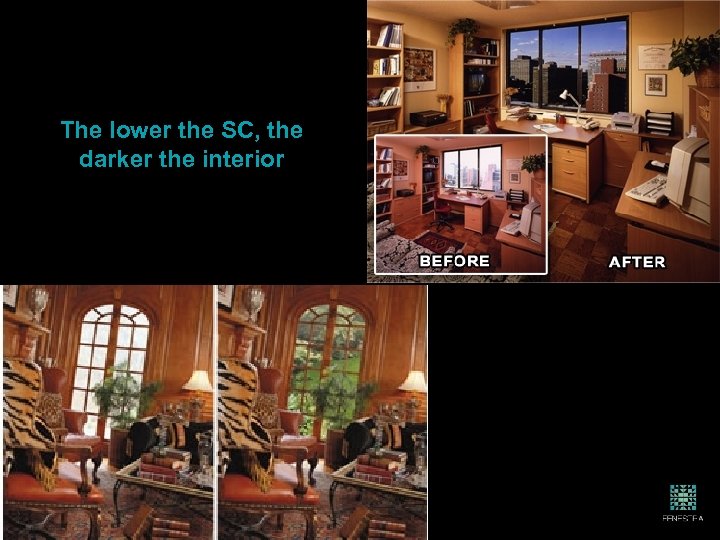
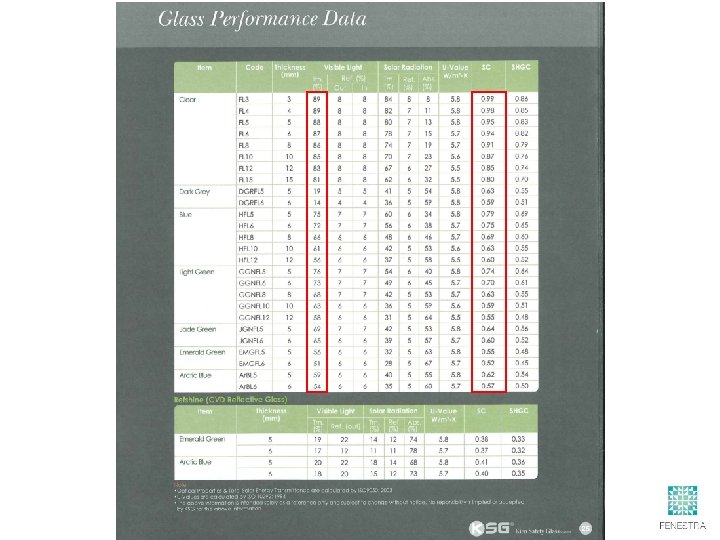
The lower the SC, the darker the interior
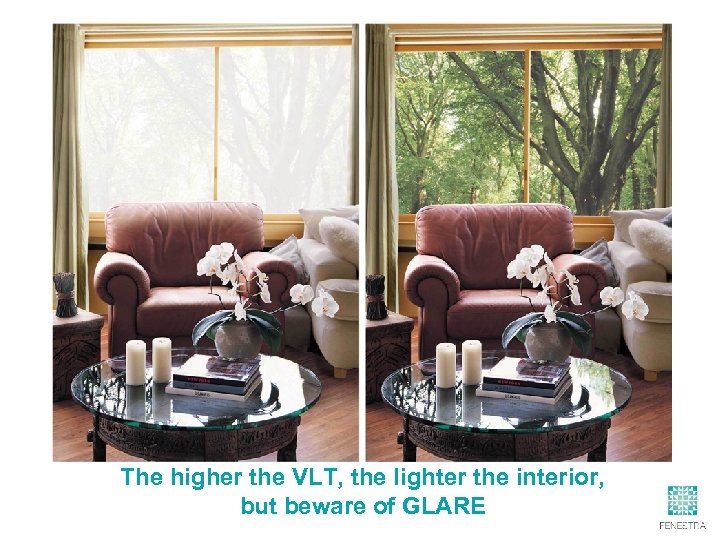
The higher the VLT, the lighter the interior, but beware of GLARE
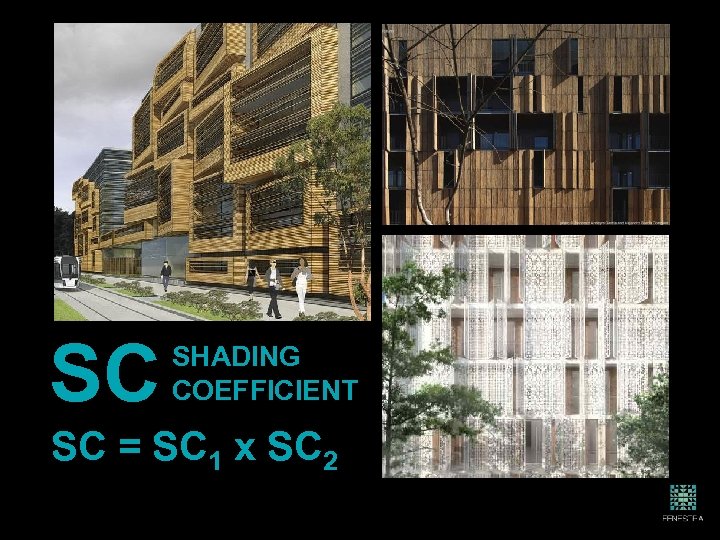
SC SHADING COEFFICIENT SC = SC 1 x SC 2
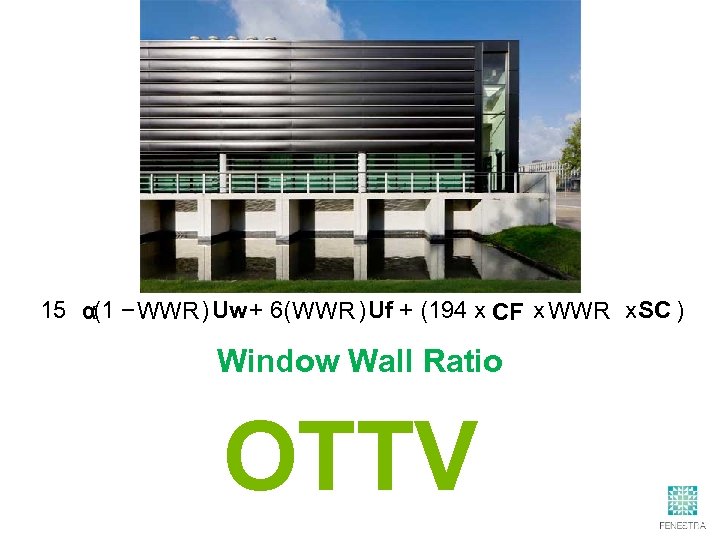
15 (1 − ) + 6( ) + (194 x x x ) Uw Uf α WWR WWR SC CF Window Wall Ratio OTTV
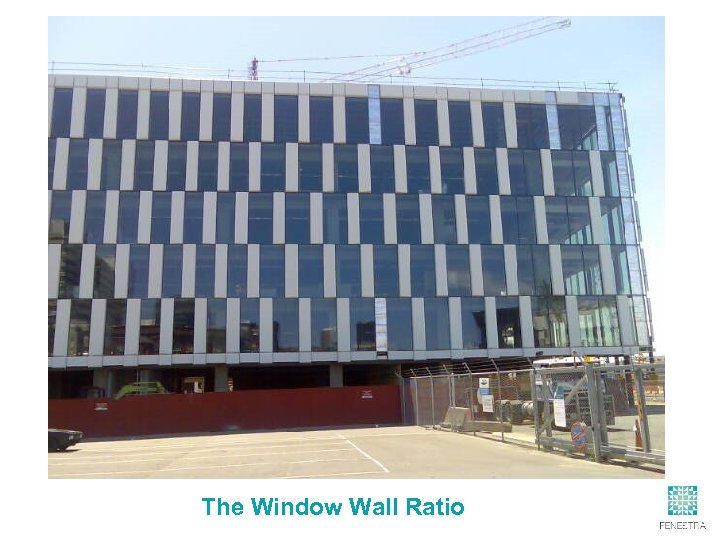
The Window Wall Ratio
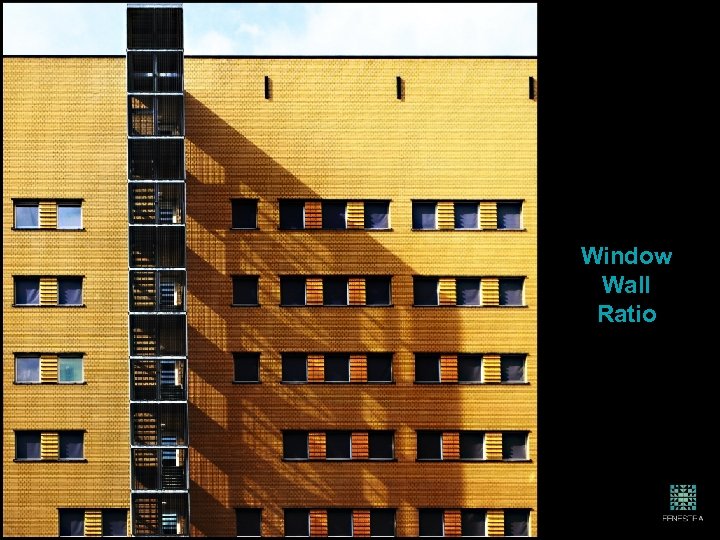
Window Wall Ratio
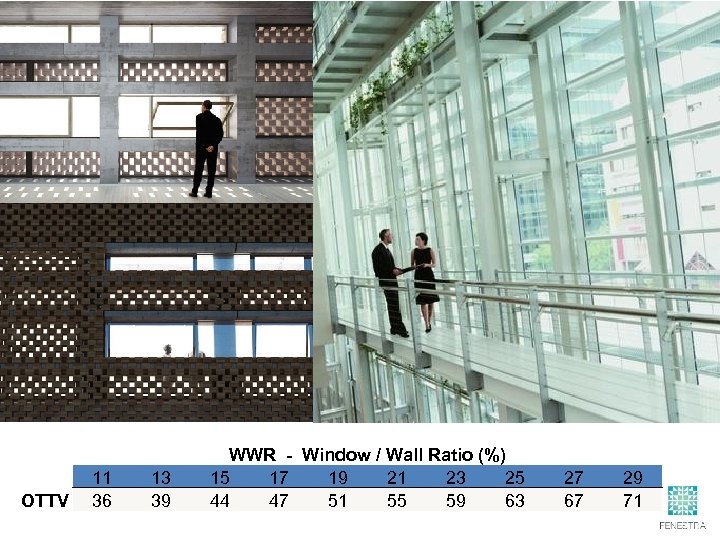
OTTV 11 36 13 39 WWR - Window / Wall Ratio (%) 15 17 19 21 23 25 44 47 51 55 59 63 27 67 29 71
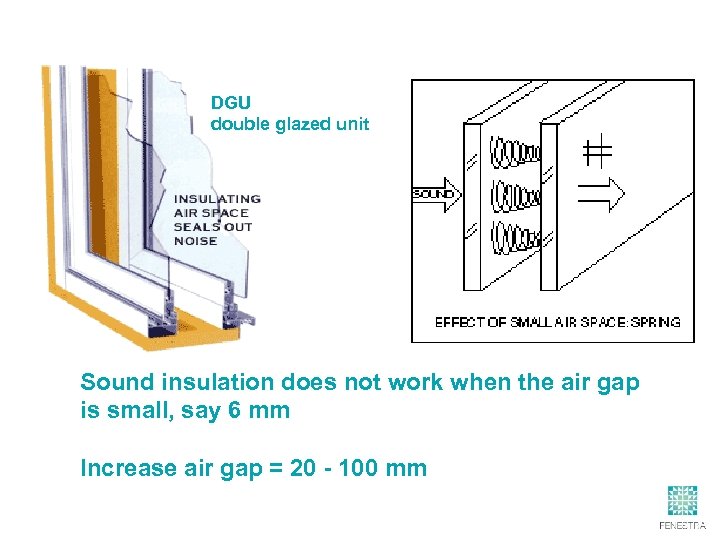
DGU double glazed unit Sound insulation does not work when the air gap is small, say 6 mm Increase air gap = 20 - 100 mm
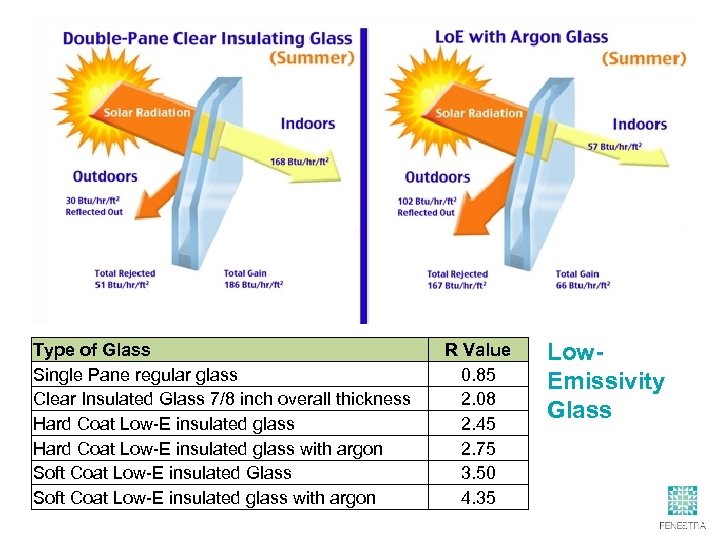
Type of Glass Single Pane regular glass Clear Insulated Glass 7/8 inch overall thickness Hard Coat Low-E insulated glass with argon Soft Coat Low-E insulated Glass Soft Coat Low-E insulated glass with argon R Value 0. 85 2. 08 2. 45 2. 75 3. 50 4. 35 Low. Emissivity Glass
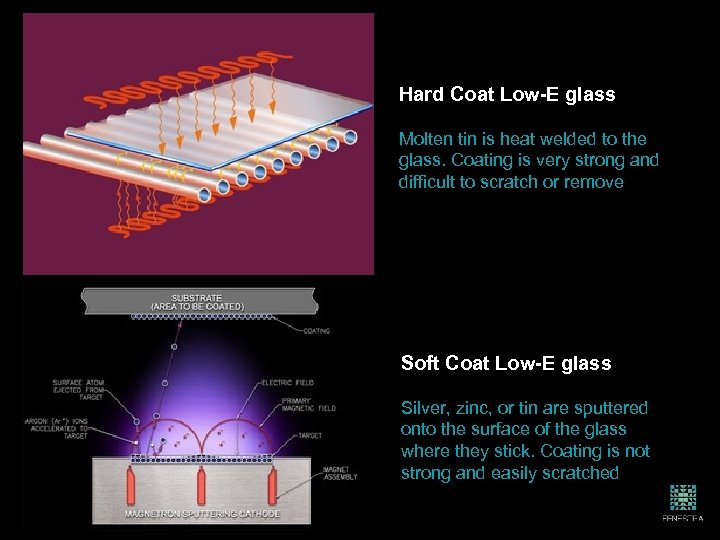
Hard Coat Low-E glass Molten tin is heat welded to the glass. Coating is very strong and difficult to scratch or remove Soft Coat Low-E glass Silver, zinc, or tin are sputtered onto the surface of the glass where they stick. Coating is not strong and easily scratched
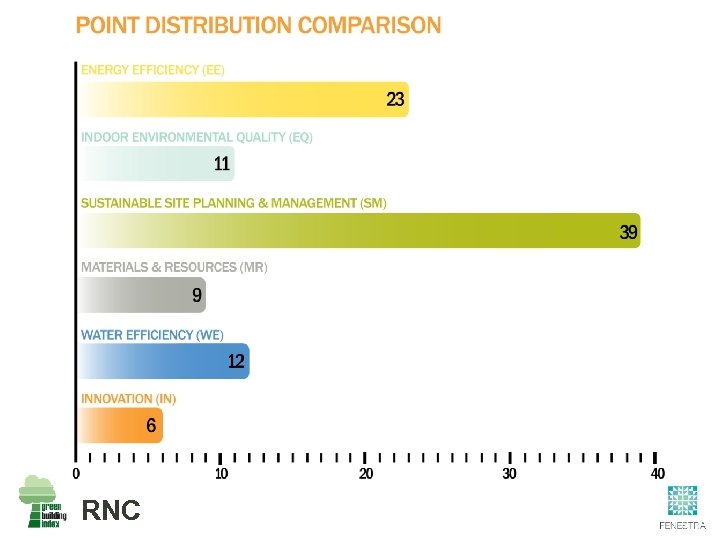
RNC
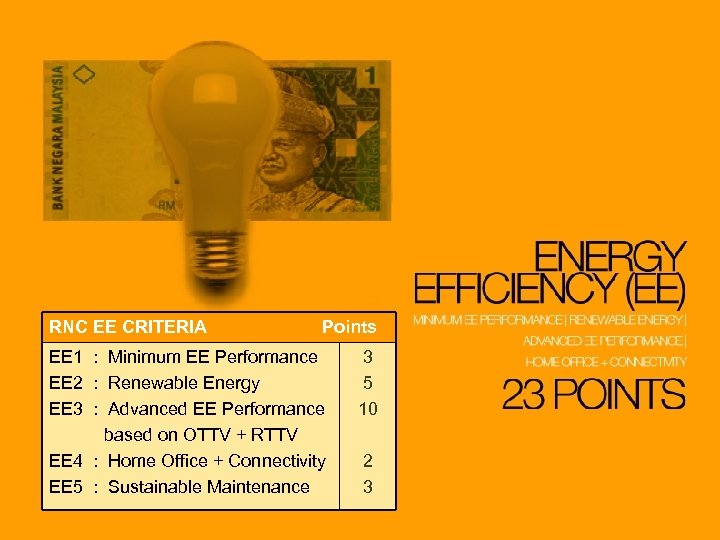
RNC EE CRITERIA Points EE 1 : Minimum EE Performance EE 2 : Renewable Energy EE 3 : Advanced EE Performance based on OTTV + RTTV EE 4 : Home Office + Connectivity EE 5 : Sustainable Maintenance NRNC 3 5 10 2 3
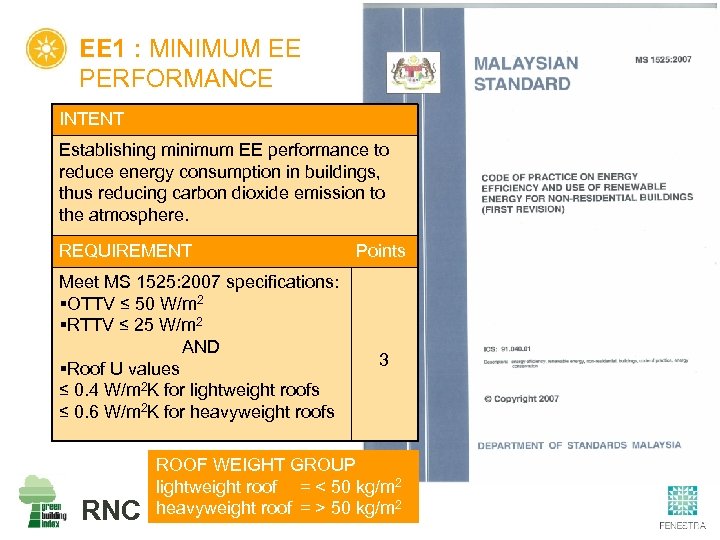
EE 1 : MINIMUM EE PERFORMANCE INTENT Establishing minimum EE performance to reduce energy consumption in buildings, thus reducing carbon dioxide emission to the atmosphere. REQUIREMENT Points Meet MS 1525: 2007 specifications: §OTTV ≤ 50 W/m 2 §RTTV ≤ 25 W/m 2 AND §Roof U values ≤ 0. 4 W/m 2 K for lightweight roofs ≤ 0. 6 W/m 2 K for heavyweight roofs RNC 3 ROOF WEIGHT GROUP lightweight roof = < 50 kg/m 2 heavyweight roof = > 50 kg/m 2
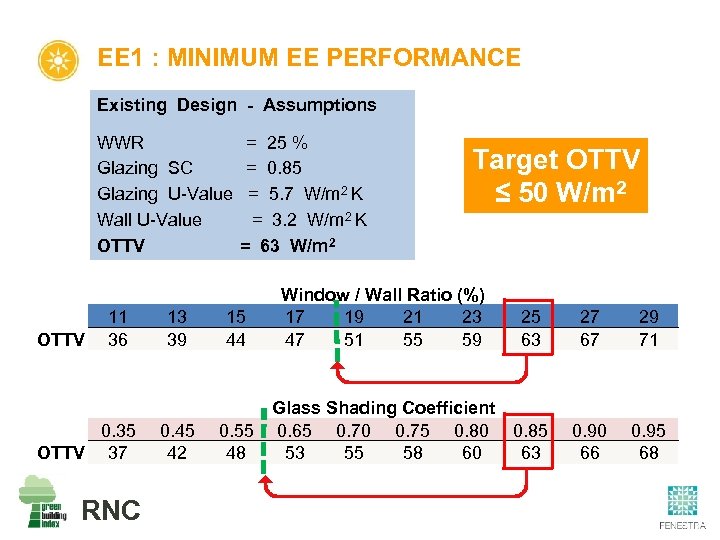
EE 1 : MINIMUM EE PERFORMANCE Existing Design - Assumptions WWR = 25 % Glazing SC = 0. 85 Glazing U-Value = 5. 7 W/m 2 K Wall U-Value = 3. 2 W/m 2 K OTTV = 63 W/m 2 OTTV 11 36 0. 35 OTTV 37 RNC 13 39 0. 45 42 Target OTTV ≤ 50 W/m 2 15 44 Window / Wall Ratio (%) 17 19 21 23 47 51 55 59 25 63 27 67 29 71 0. 55 48 Glass Shading Coefficient 0. 65 0. 70 0. 75 0. 80 53 55 58 60 0. 85 63 0. 90 66 0. 95 68
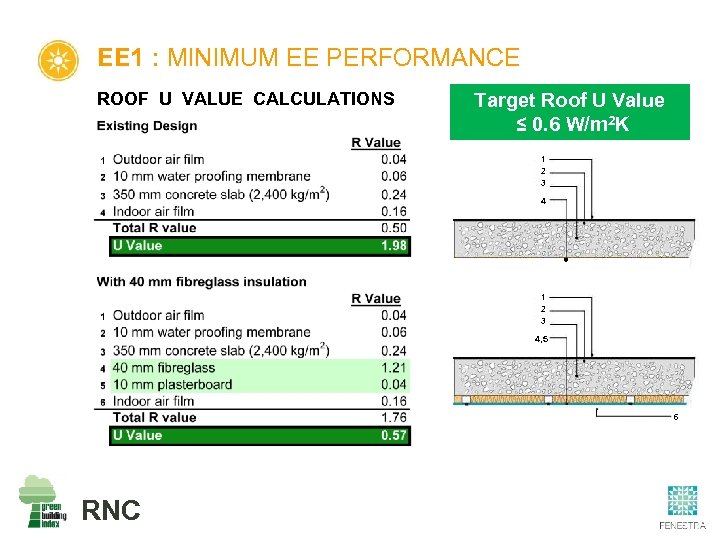
EE 1 : MINIMUM EE PERFORMANCE ROOF U VALUE CALCULATIONS Target Roof U Value ≤ 0. 6 W/m 2 K 1 2 3 4, 5 6 RNC
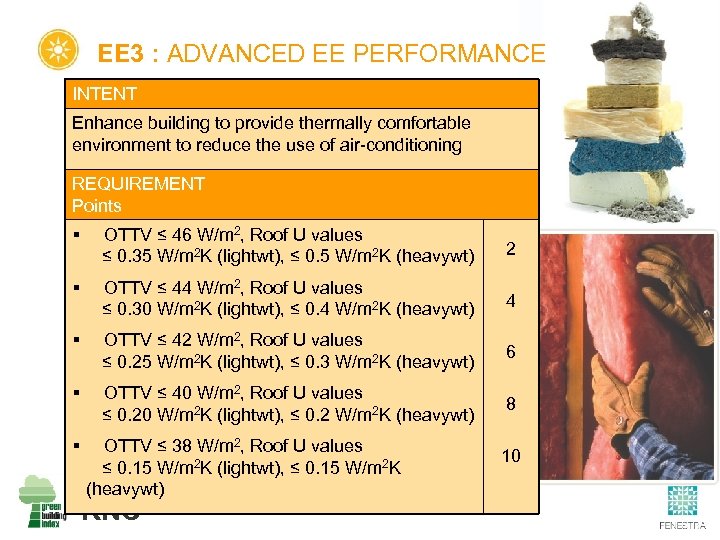
EE 3 : ADVANCED EE PERFORMANCE INTENT Enhance building to provide thermally comfortable environment to reduce the use of air-conditioning REQUIREMENT Points § OTTV ≤ 46 W/m 2, Roof U values ≤ 0. 35 W/m 2 K (lightwt), ≤ 0. 5 W/m 2 K (heavywt) 2 § OTTV ≤ 44 W/m 2, Roof U values ≤ 0. 30 W/m 2 K (lightwt), ≤ 0. 4 W/m 2 K (heavywt) 4 § OTTV ≤ 42 W/m 2, Roof U values ≤ 0. 25 W/m 2 K (lightwt), ≤ 0. 3 W/m 2 K (heavywt) 6 § OTTV ≤ 40 W/m 2, Roof U values ≤ 0. 20 W/m 2 K (lightwt), ≤ 0. 2 W/m 2 K (heavywt) 8 § OTTV ≤ 38 W/m 2, Roof U values ≤ 0. 15 W/m 2 K (lightwt), ≤ 0. 15 W/m 2 K (heavywt) RNC 10
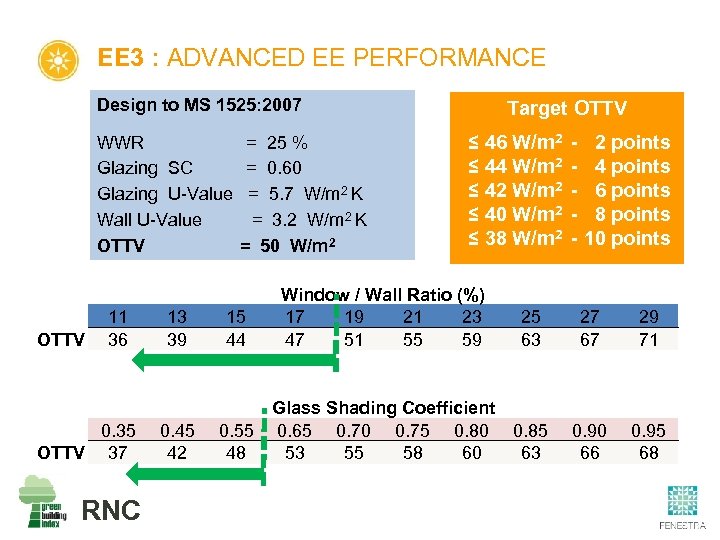
EE 3 : ADVANCED EE PERFORMANCE Design to MS 1525: 2007 WWR = 25 % Glazing SC = 0. 60 Glazing U-Value = 5. 7 W/m 2 K Wall U-Value = 3. 2 W/m 2 K OTTV = 50 W/m 2 OTTV 11 36 0. 35 OTTV 37 RNC 13 39 0. 45 42 Target OTTV ≤ 46 W/m 2 ≤ 44 W/m 2 ≤ 42 W/m 2 ≤ 40 W/m 2 ≤ 38 W/m 2 - 2 points - 4 points - 6 points - 8 points - 10 points 15 44 Window / Wall Ratio (%) 17 19 21 23 47 51 55 59 25 63 27 67 29 71 0. 55 48 Glass Shading Coefficient 0. 65 0. 70 0. 75 0. 80 53 55 58 60 0. 85 63 0. 90 66 0. 95 68
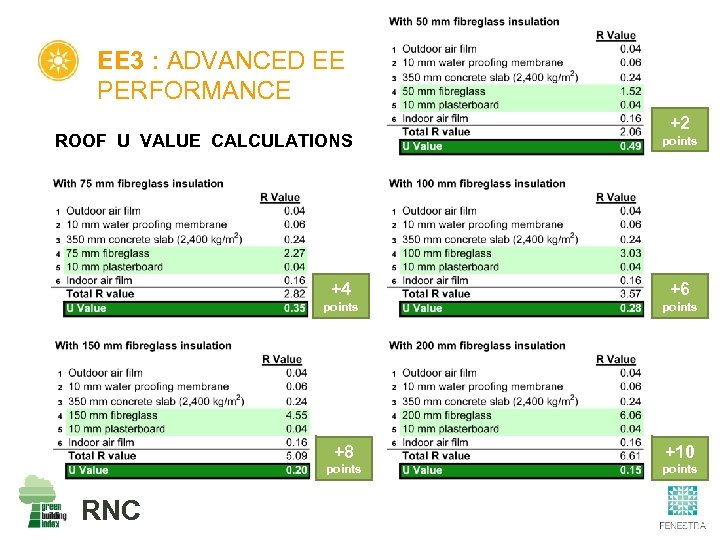
EE 3 : ADVANCED EE PERFORMANCE ROOF U VALUE CALCULATIONS +2 points +4 points +8 +10 points RNC +6 points
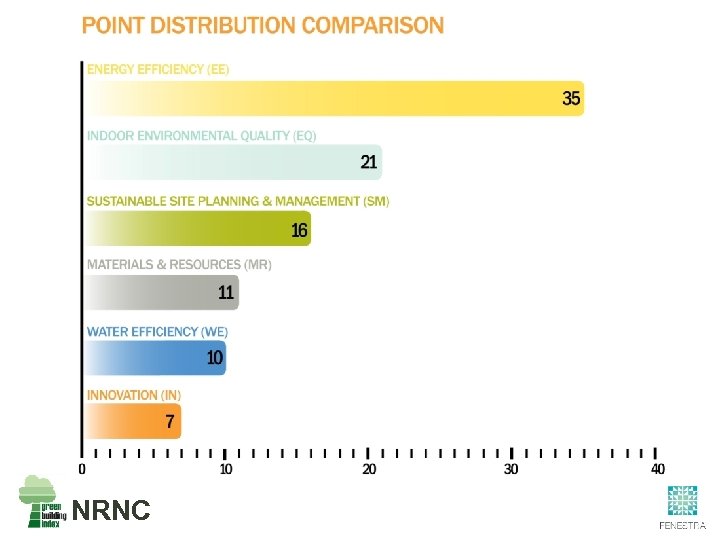
NRNC
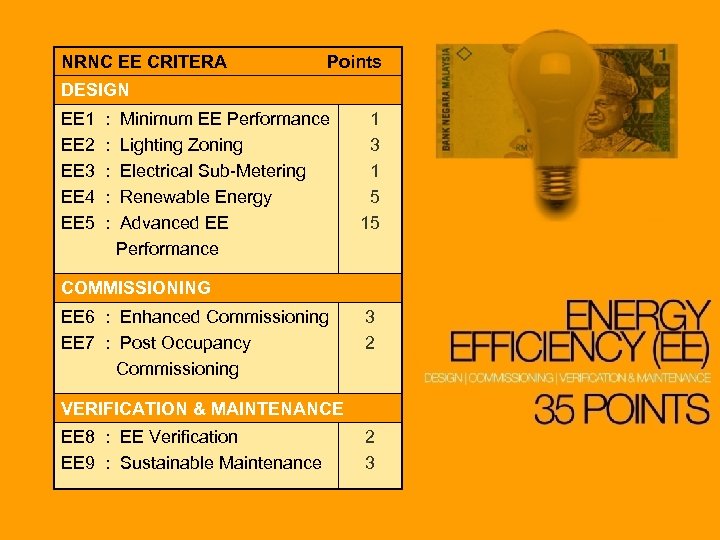
NRNC EE CRITERA Points DESIGN EE 1 : Minimum EE Performance EE 2 : Lighting Zoning EE 3 : Electrical Sub-Metering EE 4 : Renewable Energy EE 5 : Advanced EE Performance 1 3 1 5 15 COMMISSIONING EE 6 : Enhanced Commissioning EE 7 : Post Occupancy Commissioning 3 2 VERIFICATION & MAINTENANCE EE 8 : EE Verification EE 9 : Sustainable Maintenance 2 3
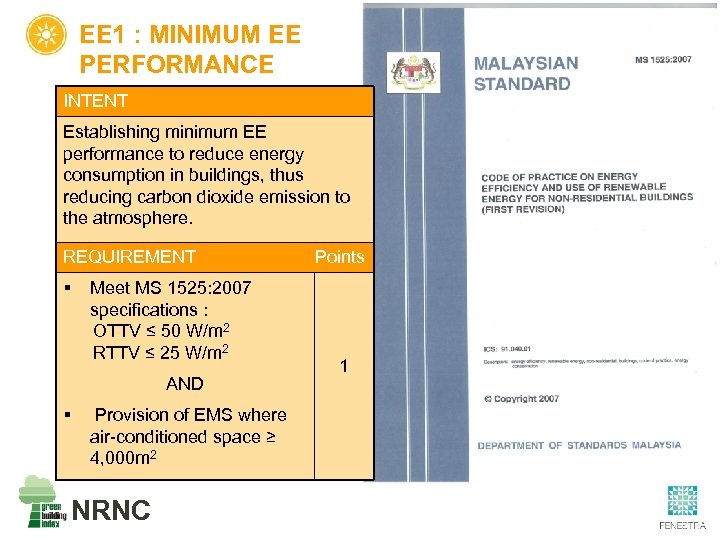
EE 1 : MINIMUM EE PERFORMANCE INTENT Establishing minimum EE performance to reduce energy consumption in buildings, thus reducing carbon dioxide emission to the atmosphere. REQUIREMENT Points § Meet MS 1525: 2007 specifications : OTTV ≤ 50 W/m 2 RTTV ≤ 25 W/m 2 AND § Provision of EMS where air-conditioned space ≥ 4, 000 m 2 NRNC 1
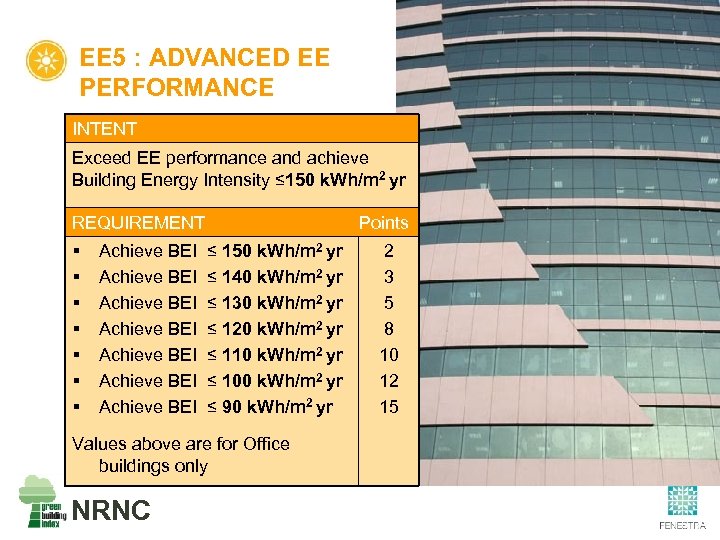
EE 5 : ADVANCED EE PERFORMANCE INTENT Exceed EE performance and achieve Building Energy Intensity ≤ 150 k. Wh/m 2 yr REQUIREMENT Points § § § § Achieve BEI ≤ 150 k. Wh/m 2 yr Achieve BEI ≤ 140 k. Wh/m 2 yr Achieve BEI ≤ 130 k. Wh/m 2 yr Achieve BEI ≤ 120 k. Wh/m 2 yr Achieve BEI ≤ 110 k. Wh/m 2 yr Achieve BEI ≤ 100 k. Wh/m 2 yr Achieve BEI ≤ 90 k. Wh/m 2 yr Values above are for Office buildings only NRNC 2 3 5 8 10 12 15
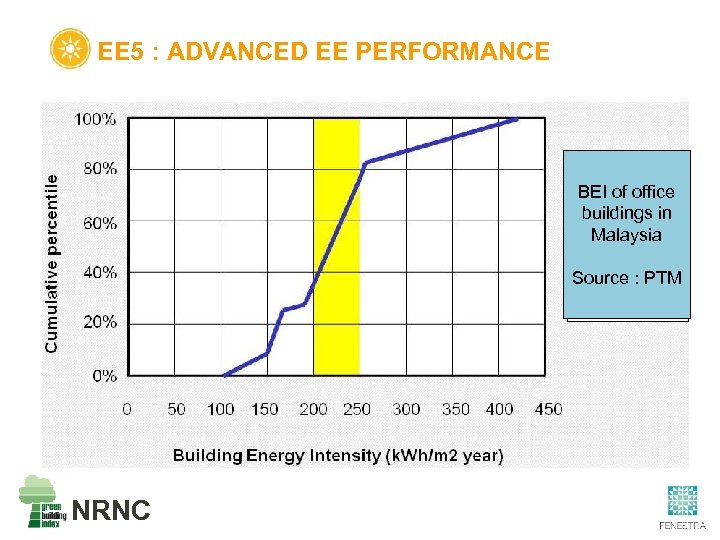
EE 5 : ADVANCED EE PERFORMANCE BEI of office buildings in Malaysia Source : PTM NRNC
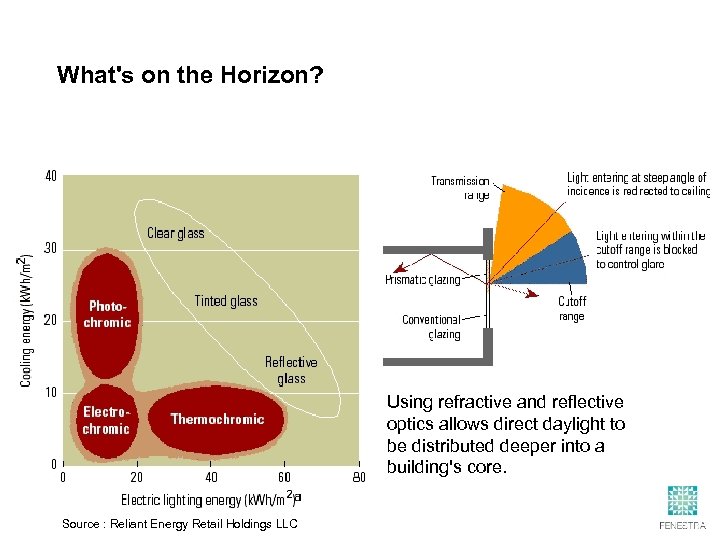
What's on the Horizon? Using refractive and reflective optics allows direct daylight to be distributed deeper into a building's core. Source : Reliant Energy Retail Holdings LLC
THANK YOU Fenestra Malaysia Sdn Bhd J-5 -12 Solaris Mont Kiara 2 Jalan Solaris 50480 Kuala Lumpur T +603 6205 1288 F +603 6205 1289 E info@fenestra. com. my
Скачать презентацию Façade Engineering Environmentally Sustainable Design MEETS BUILDING
7648fbbd6fe1583de1798006395ec14a.ppt