


 Скачать презентацию F Scorina Gomel State University History of computer
Презентация123456789(1).ppt
- Количество слайдов: 27
 F. Scorina Gomel State University “History of computer development” Anna Piskunova Kristina Trejtyak Gomel, 2013
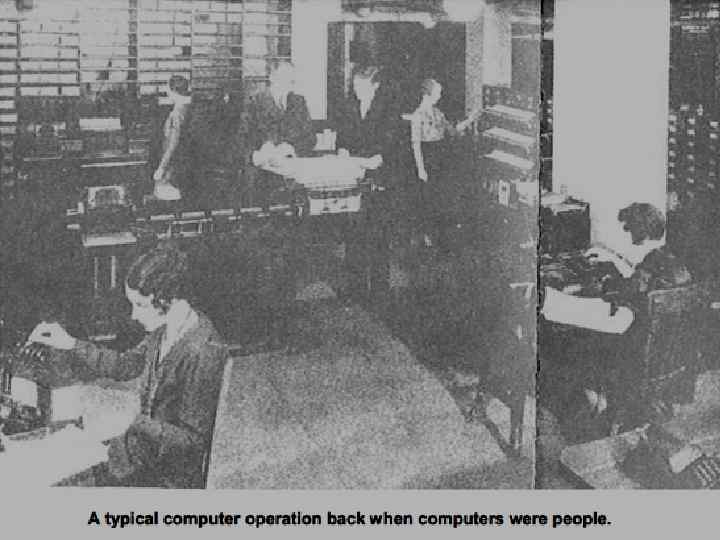
 The first computers were …people "Computer" was originally a job title: it was used to describe those human beings (usually women ) whose job it was to perform the repetitive calculations.
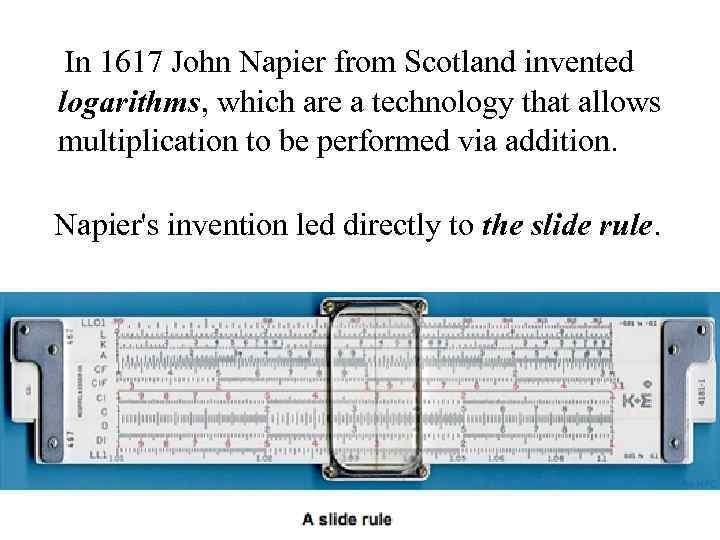 In 1617 John Napier from Scotland invented logarithms, which are a technology that allows multiplication to be performed via addition. Napier's invention led directly to the slide rule.
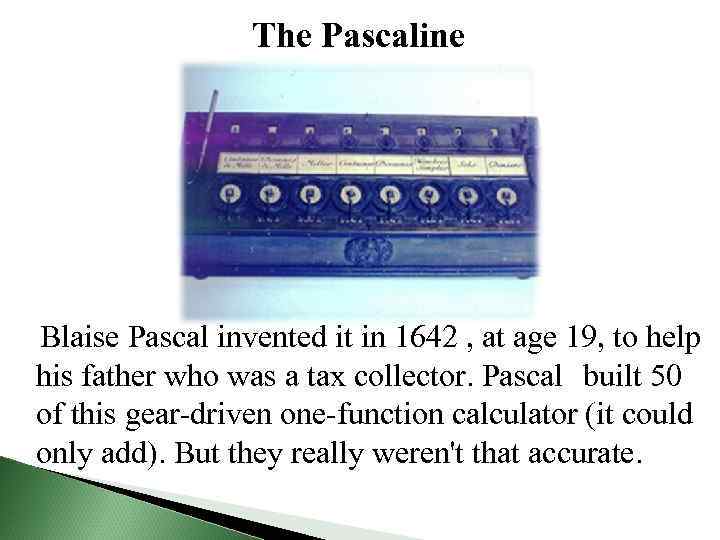 The Pascaline Blaise Pascal invented it in 1642 , at age 19, to help his father who was a tax collector. Pascal built 50 of this gear-driven one-function calculator (it could only add). But they really weren't that accurate.
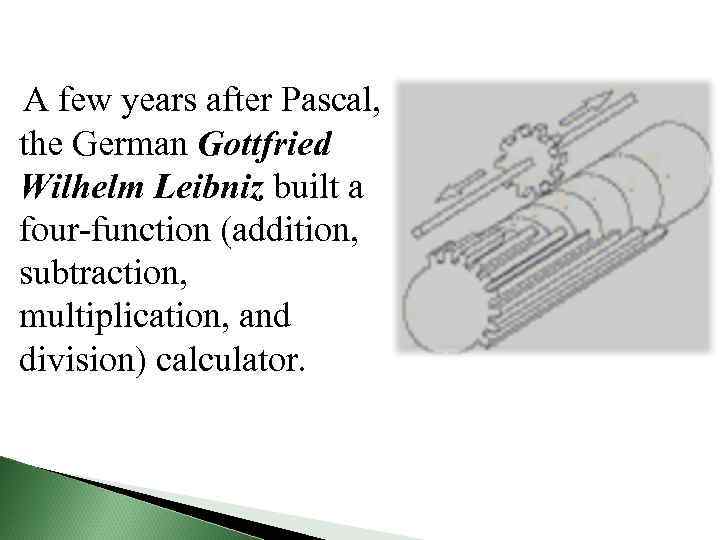 A few years after Pascal, the German Gottfried Wilhelm Leibniz built a four-function (addition, subtraction, multiplication, and division) calculator.
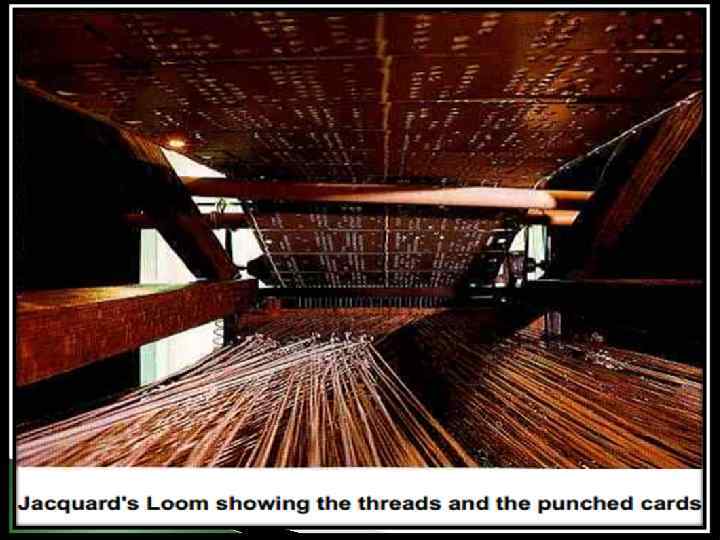
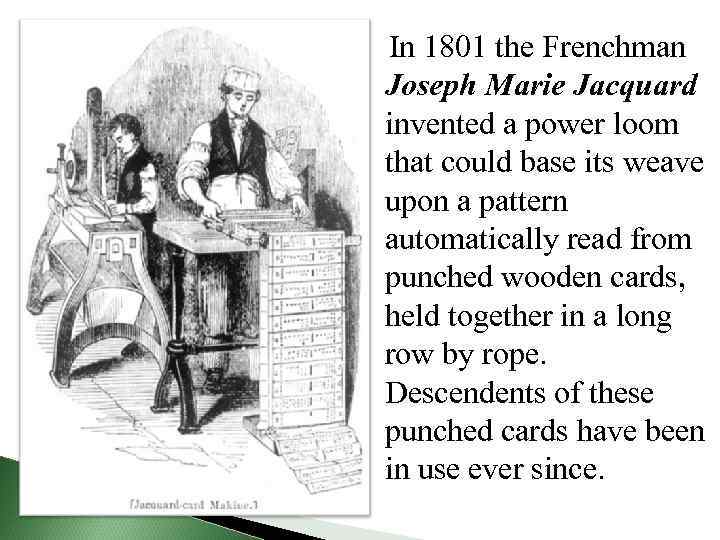 In 1801 the Frenchman Joseph Marie Jacquard invented a power loom that could base its weave upon a pattern automatically read from punched wooden cards, held together in a long row by rope. Descendents of these punched cards have been in use ever since.
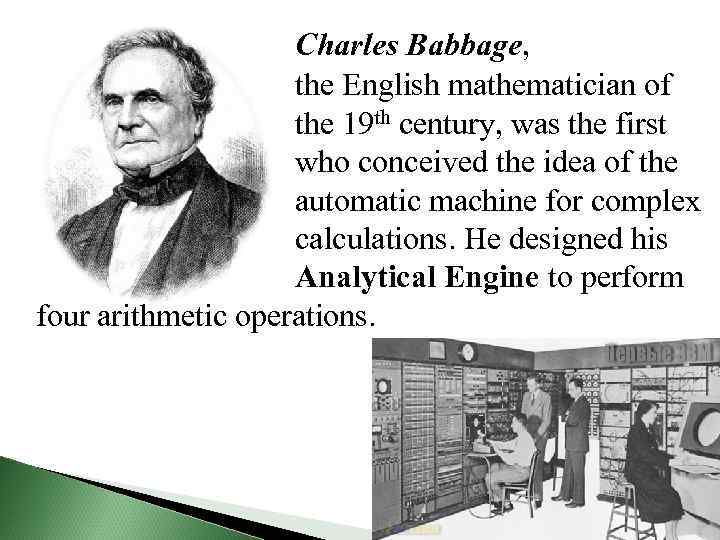 Charles Babbage, the English mathematician of the 19 th century, was the first who conceived the idea of the automatic machine for complex calculations. He designed his Analytical Engine to perform four arithmetic operations.
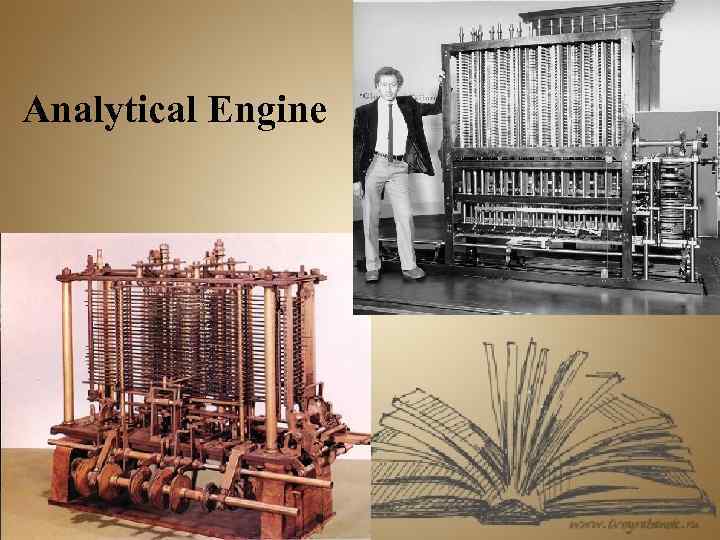 Analytical Engine
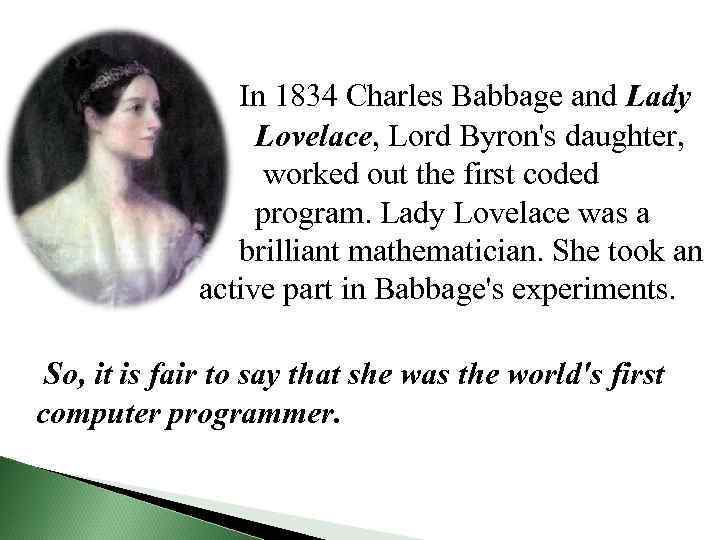 In 1834 Charles Babbage and Lady Lovelace, Lord Byron's daughter, worked out the first coded program. Lady Lovelace was a brilliant mathematician. She took an active part in Babbage's experiments. So, it is fair to say that she was the world's first computer programmer.
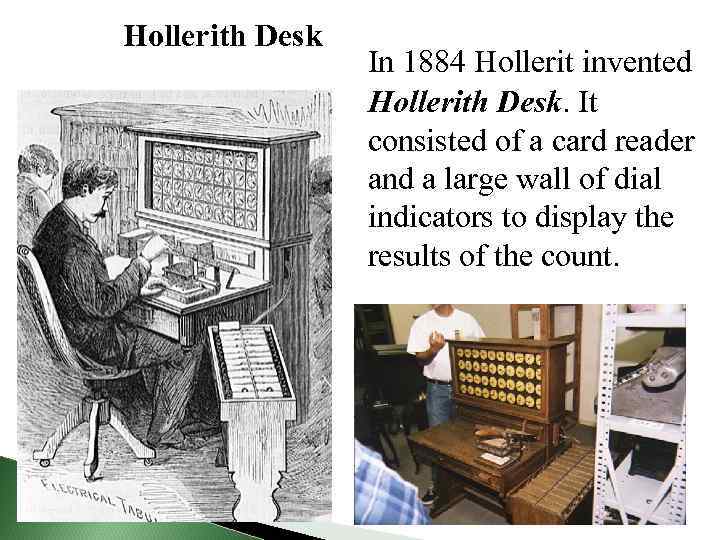 Hollerith Desk In 1884 Hollerit invented Hollerith Desk. It consisted of a card reader and a large wall of dial indicators to display the results of the count.
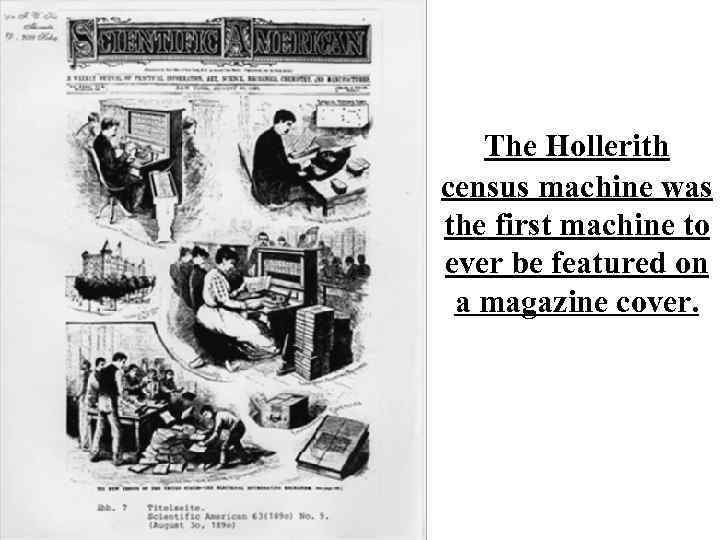 The Hollerith census machine was the first machine to ever be featured on a magazine cover.
 Hollerith built a company, the Tabulating Machine Company which eventually became International Business Machines, known today as IBM.
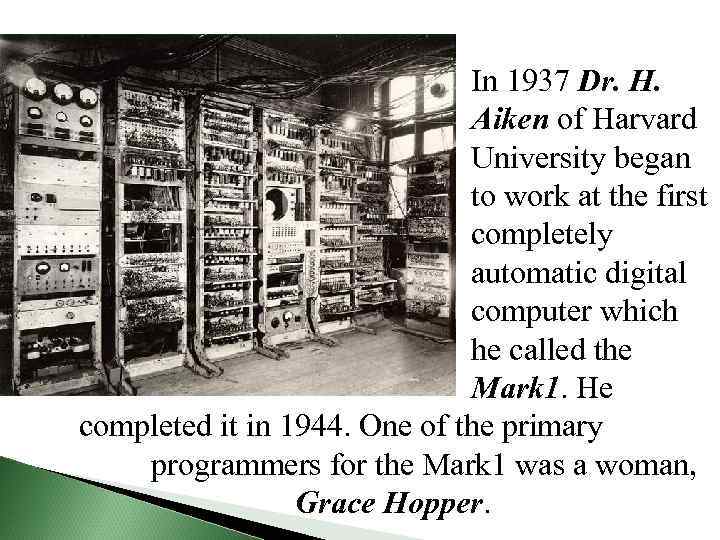 In 1937 Dr. H. Aiken of Harvard University began to work at the first completely automatic digital computer which he called the Mark 1. He completed it in 1944. One of the primary programmers for the Mark 1 was a woman, Grace Hopper.
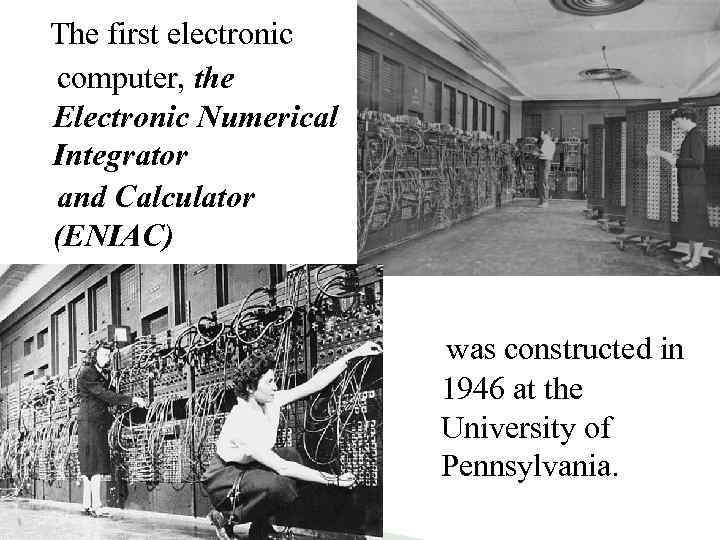 The first electronic computer, the Electronic Numerical Integrator and Calculator (ENIAC) was constructed in 1946 at the University of Pennsylvania.
 In 1945 John von Neuman worked out the concept of the saved program.
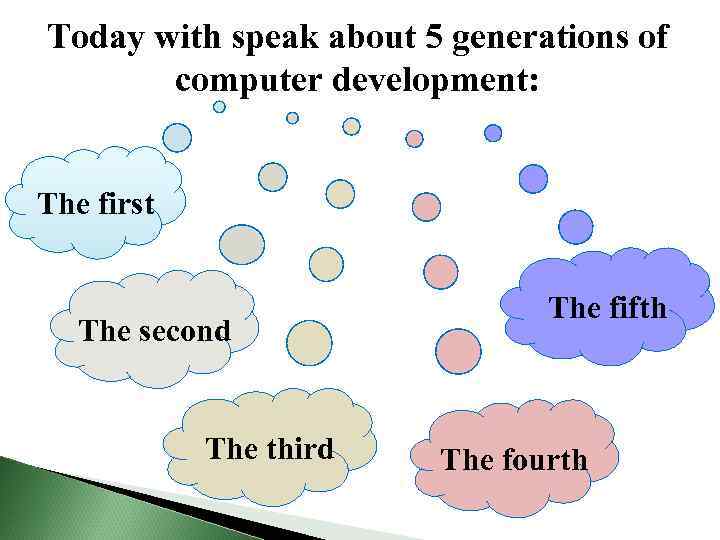 Today with speak about 5 generations of computer development: The first The second The third The fifth The fourth
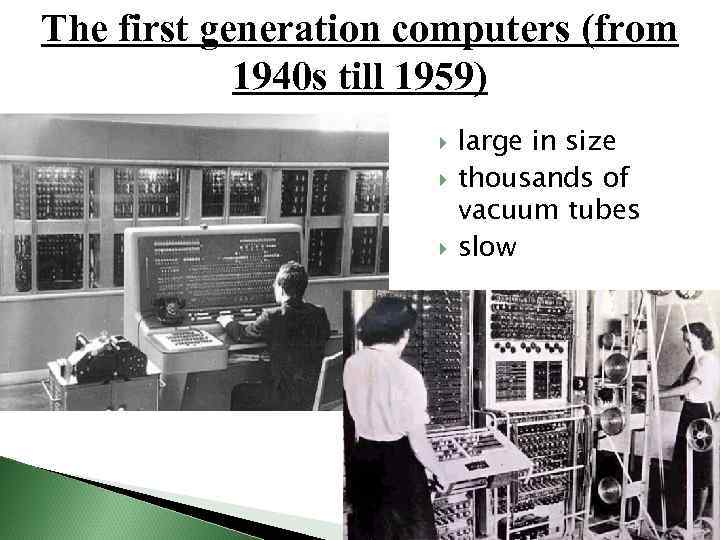 The first generation computers (from 1940 s till 1959) large in size thousands of vacuum tubes slow
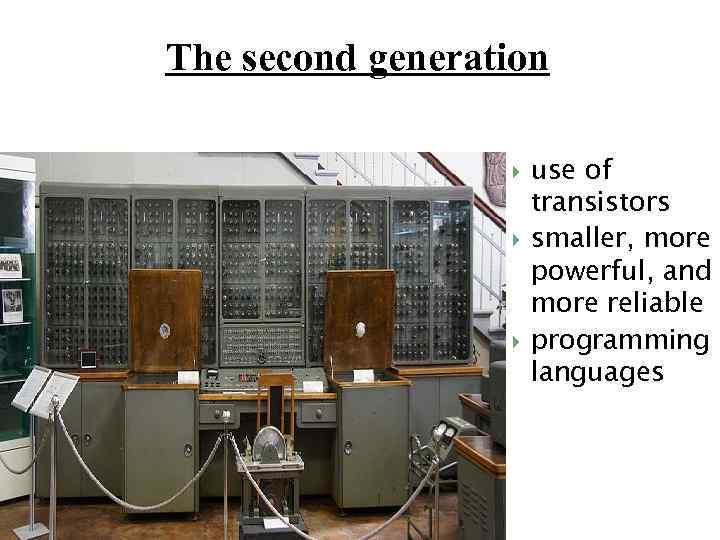 The second generation use of transistors smaller, more powerful, and more reliable programming languages
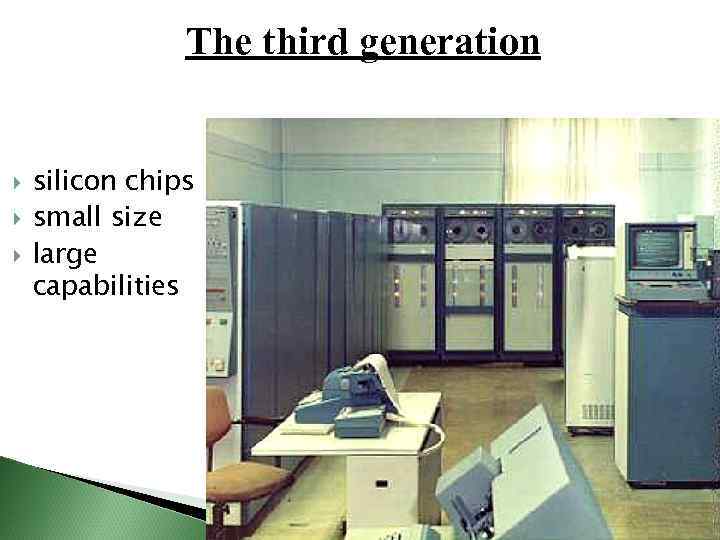 The third generation silicon chips small size large capabilities
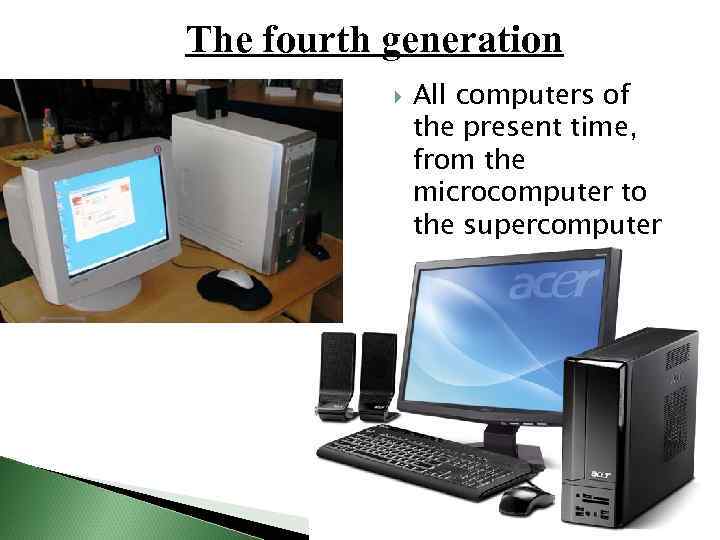 The fourth generation All computers of the present time, from the microcomputer to the supercomputer
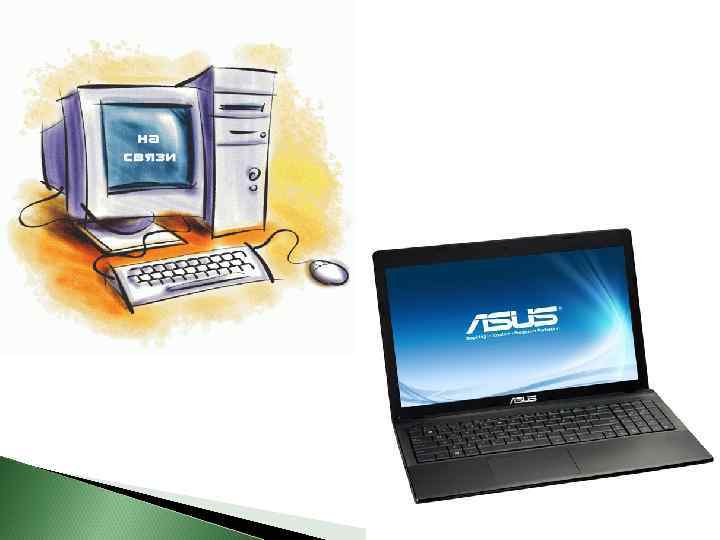
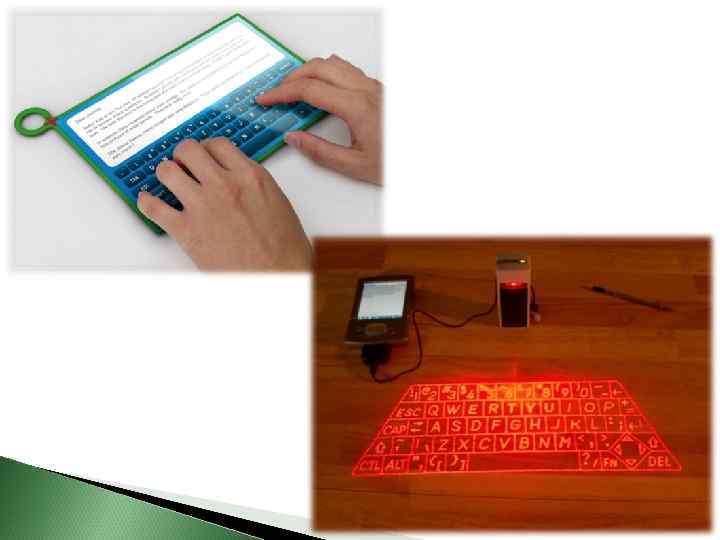
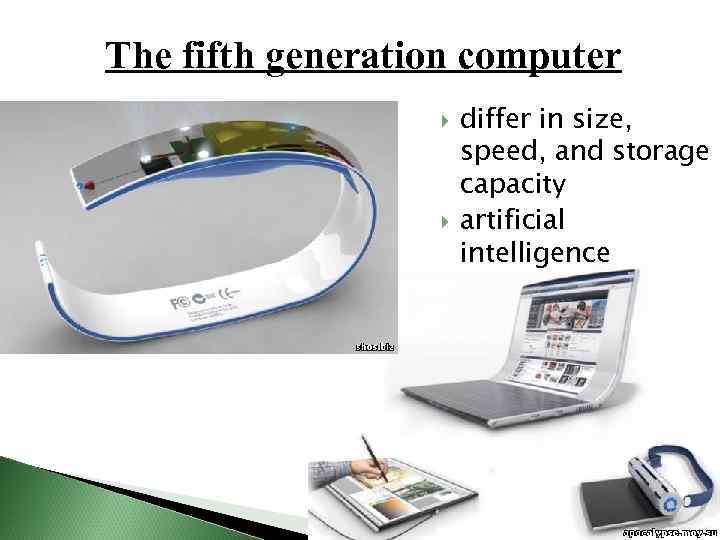 The fifth generation computer differ in size, speed, and storage capacity artificial intelligence
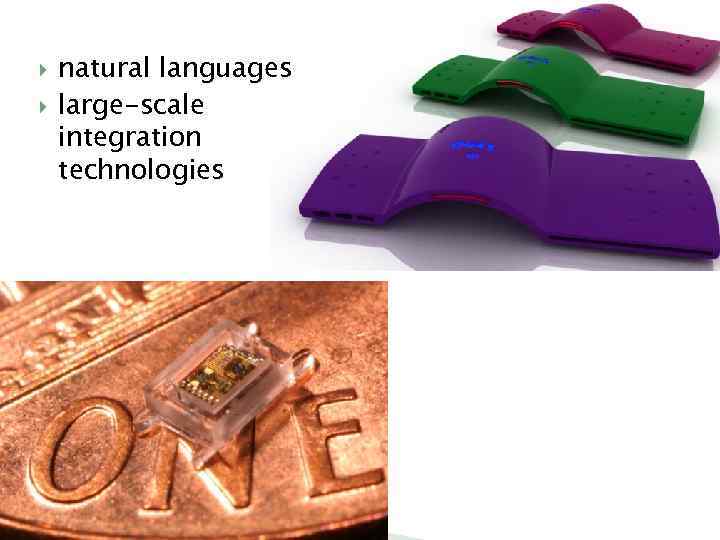 natural languages large-scale integration technologies
 The end