


 Скачать презентацию Ezra Restoration and Kingdom Worship Psalms 37
6aca203af780314c4b91bbdc915d5957.ppt
- Количество слайдов: 52
 Ezra Restoration and Kingdom Worship
 Psalms 37: The Cry of the Exiles • Psa 137: 1 -6 By the rivers of Babylon, There we sat down and wept, When we remembered Zion. Upon the willows in the midst of it We hung our harps. For there our captors demanded of us songs, And our tormentors mirth, saying, "Sing us one of the songs of Zion. " How can we sing the LORD'S song In a foreign land? If I forget you, O Jerusalem, May my right hand forget her skill. May my tongue cling to the roof of my mouth If I do not remember you, If I do not exalt Jerusalem Above my chief joy.
 Introduction • Author: Ezra is probably the compiler of this book (as well as I & II Chronicles and Nehemiah) • The Hebrew Bible recognizes Ezra and Nehemiah as one book. • The events of this book cover about 80 years.
 Content There are Two Major messages: 1. God’s faithfulness 2. Man’s Unfaithfulness
 Personal Application This book is a reminder of how easy it is to lose heart in God’s promises and to forget how He desires for us to be His special people, a royal priesthood, a holy nation (I Peter 2: 9). He desires that we walk in obedience so that His plans can be fulfilled and not delayed.
 Keys to the Book Key Word: TEMPLE The basic theme of Ezra is the restoration of the temple and the spiritual, moral and social restoration of the returned remnant in Jerusalem under the leadership of Zerubbabel.
 Key Verses 1: 3 'Whoever there is among you of all His people, may his God be with him! Let him go up to Jerusalem which is in Judah and rebuild the house of the LORD, the God of Israel; He is the God who is in Jerusalem. 7: 10 For Ezra had set his heart to study the law of the LORD and to practice it, and to teach His statutes and ordinances in Israel.
 Key Chapter: Ezra 6 • Ezra 6 records the completion and dedication of the temple, which stimulates the obedience of the remnant to keep the Passover and separate themselves.
 God’s Purpose in View • This post-exilic period graphically pictures what people encounter when they seek to recover what has been lost. Practical lessons abound in Ezra’s narrative concerning the restoration of worship. No subject is more fundamental to kingdom life among believers, whether at the personal or congregational level.
 How Worship was Restored by Judah’s Returning Exiles Principle 1: Worship recovery begins with redemption. The offering of sacrifices upon the brazen altar began before the temple foundation was laid (3: 6). This act clearly foreshadowed Calvary and how Christ died in our place for our sins. He is the “Lamb of God”. Worship renewal has to be built on a foundation of recognizing and celebrating our redemption in what Jesus Christ did on the cross.
 Principle 2: Worship Recovery Will Always Be Resisted. Ezra 4 & 5 tell of the political struggle that arose when God’s people sought to reinstate the worship of the Lord in Jerusalem. Resistance arose in: 1. Attempts to Discourage (4: 4) 2. Accusations of those that opposed the changes (4: 12, 15) 3. Complaints that the new wasn’t as good as the old
 Principle #2 Continued • When a congregation or a pastor seeks to renew their church as a center of praise, resistance can be expected from human and spiritual sources. *It should be recognized that this renewal effort should include aspects of the “old” worship respectfully restored.
 Principle #3 Worship Recovery is Released Through Prophecy • Jeremiah, Haggai and Zechariah played pivotal roles in the renewal of worship in Israel (1: 1 -5; 5: 1 -2). • Renewal of worship comes through anointed preaching and teaching which draws Christians to find refreshment in the presence of God.
 Ezra is a Type of Christ Because of the Life He Lived and the Roles He Fulfilled 1. He desired to seek the word of God and to obey it (7: 10). Christ described himself as the one who obeys the Father (John 5: 19) 2. Ezra was a priest (7: 11). Christ served in the role as our Great High Priest (Heb. 4: 14). 3. Ezra was a great spiritual reformer who called Israel to repentance. Christ also called Israel from dead traditionalism and moral impurity.
 The Kings of Persia During the Time of This Book Cyrus (559 -529 B. C. ) Ezra 1: 21 & 10: 1 Cambyses (529 -521 B. C. ) Not mentioned Darius I (521 -485) Ezra 4: 5, 24 Xerxea I/Ahasuerus (485 -464 B. C. ) Ezra 4: 6 (This is the king that made Esther his queen. ) Artaxerxes I (464 -423) Ezra 4: 7 -23 & 7: 1 (This is the king that sponsored the return of Ezra and of Nehemiah. )
 Main Sections I. The Release by King Cyrus of the exiles (covers a period of about 20 years) Chapters 1 -6 1. The Return Under Zerubbabel 1: 1 -2: 70 2. The Altar and Temple Reconstruction Process 3: 1 -6: 22 II. Sixty Years Later Ezra arrives in Jerusalem with his own delegation. Chapters 7 -10
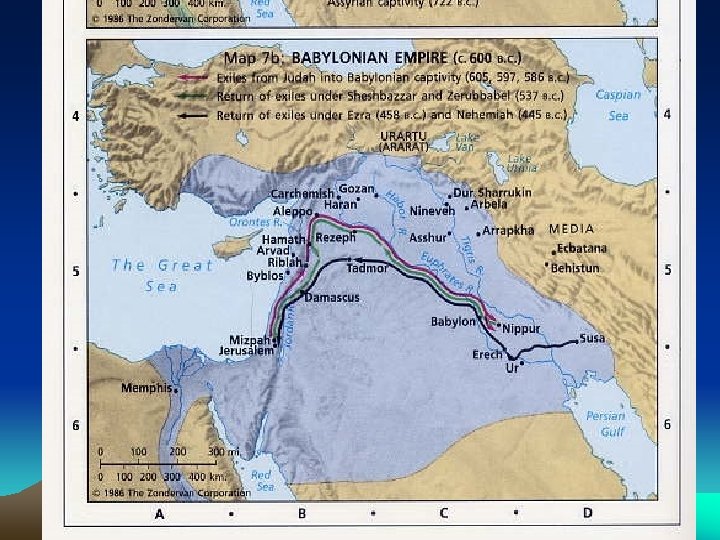
 Section I, Chapter 1 • First 3 verses are the same as 2 Chron. 36: 22, 23. • Verse 1 is referring to the 1 st year of Cyrus’s reign over Babylon in 538 B. C. (He was king of Persia from 559 -530). • Cyrus also gives them back their Temple treasures to take back to Jerusalem. • This return is in fulfillment of the prophecy of Jeremiah that said they would be in Babylonian captivity for 70 years.
 The Returnees Are Named and Numbered in Chapter 2 • 5, 000 -50, 000 people prepared to leave for Jerusalem • This list of returning people is repeated in Nehemiah 7 with slight differences of spelling • The Nehemiah listed here is not the same man that the book of Nehemiah refers to.
 Zerubbabel • Zerubbabel (538 BC) led the 1 st group who began construction of the temple, but were soon discouraged by non-Jewish inhabitants and ceased. Haggai and Zechariah were used of God to call the people to complete the task which they finally did in 515 B. C.
 Worship is Restored in Jerusalem. Chapter 3 • The altar is rebuilt first so that worship and sacrifice may begin again. • The Feast of Tabernacles is celebrated (rejoicing is commanded!) and starts the regular celebration of all the other festivals commanded by God.
 Chapt. 3 cont. -The Rebuilding of the Foundation of the Temple is Started • The people start to give money and supplies. • In the 2 nd year of their return they started the work of rebuilding the foundation of the temple. The Levites praised God and sang, giving thanks and the people shouted (a victory shout). • Some of the very old priests and Levites wept because this temple was not going to be as majestic as the Temple of Solomon.
 Examine and Apply 3: 3 • Ezr 3: 3 So they set up the altar on its foundation, for they were terrified because of the peoples of the lands; and they offered burnt offerings on it to the LORD, burnt offerings morning and evening. • We must remember that God will honor those who honor Him. At times the world will be hostile towards you and during those times you must hold to your faith, standing up for what is right.
 Ezra Links the Rebuilding of This Temple and the Building of the Temple of Solomon in Chapter 3 • Both building occasions takes place in conjunction with the Festival of Tabernacles. • In both cases cedar trees from Lebanon are floated down in the Mediterranean to Joppa and then hauled over land. • In both cases construction begins in “the second month. ”
 Chapter 4 Resistance to Rebuilding the Temple • Some Samaritans came to Zerubbabel and tried to offer their help in the rebuilding. (was this a real offer of help or a devise to cause trouble? ) Their offer was rejected which caused great resistance to arise. • 4: 8 -6: 18 was written in Aramaic rather than Hebrew because it was an official correspondence with the king Artaxerxes. • This part (3: 6 -23) of this section seems to be out of place chronologically. It refers to Artaxerxes who reigned after Darius (note v 24)
 Note 4: 4 -5 • Ezr 4: 4 -5 Then the people of the land discouraged the people of Judah, and frightened them from building, and hired counselors against them to frustrate their counsel all the days of Cyrus king of Persia, even until the reign of Darius king of Persia. • The world seeks to discourage and frustrate the purposes of God’s people. We must seek to get our counsel from God and shun the advice of the ungodly.
 Chapter 4 Cont. • In the letter sent to the king of Persia, Artaxerxes, various accusations were made against the Jewish exiles that had returned. • They stated that the Jews have always been rebellious and that if the city is restored they will not pay taxes and they will rebel against him and the empire will not extend over that region any longer.
 Chapter 5 Restoration of the Temple Resumed • Haggai and Zechariah prophesied to the Jews in Jerusalem to stir them up to do their task. The weapons of their warfare were not carnal, but spiritual. The building of the temple had been delayed 9 -15 years. • It is the business of the prophets to stir God’s people to do good and to encourage them.
 Chapter 5 cont. • The prophets got the people to start rebuilding and then more officials came asking them who gave them authority to do this. • The Jews didn’t want to quit and requested another letter be sent to Darius to ask that a further search be done to find a record of the original order issued by King Cyrus for the Jews to rebuild the Temple.
 Chapter 6 The Decree of Darius • A search was made for the original document, which was not found in Babylon (where it had been signed) but in Achmetha in the province of the Medes • King Darius orders that work should be allowed to continue and that tax money for the king be given to them to aid them in their work to complete the project. • Any man found to be hindering the work was to be hung on timber from his own house. • The new temple was finished 72 years after the destruction of Solomon’s temple. • The Passover is celebrated in remembrance of God’s delivering power.
 Lessons from Chapter 6 • The righteous must manifest submission even when facing hostile civil authority. • Our submission comes from the understanding that God can work beyond all authority to accomplish His will. • Give credit where credit is due. Ezra (the author of the book) gives credit to Haggai & Zechariah in 5: 1 -2 and 6: 14
 Chapter 7: The Man Ezra • Ezra served in some way to the Persian Government and thus had favor with some of it’s leaders. • The man Ezra was a priest, scribe and expert in the words of the commandments of the Lord (7: 11). This is the only person we know of in the O. T. that was both scribe and priest. • He led the 2 nd of 3 groups returning to Jerusalem from Babylon (60 years after the 1 st group returned). • His name meant “to help”
 Chapter 7 The Arrival of Ezra 60 Years Later • The genealogy of Ezra is given all the way back to Aaron (16 generations) to demonstrate his worthiness as a priest. • Ezra comes with Levites, singers, gatekeepers and Nethinim (means given or dedicated to the temple, they served under the Levites and did such things as shearing the sheep to be offered as sacrifices)
 Truths form Verse 10 Ezra 7: 10 For Ezra had set his heart to study the law of the LORD and to practice it, and to teach His statutes and ordinances in Israel. Ezra’s personal devotion and discipline in response to God’s calling (v 9 says the hand of God was upon him) qualify him to minister in Jerusalem. The opposite of discipline is demonstrated in Prov. 25: 28 “Like a city that is broken into and without walls Is a man who has no control over his spirit. ”
 Ezra 7: 11 -28 The Letter of Artaxerxes to Ezra • The Persian King gives Ezra all the supplies he needs and much more for the worship of God and the upkeep or enhancement of the Temple. • We must believe that God is able to work blessing for His people through civil authorities or other heathen individuals or groups.
 Chapter 8: 1 -20 Heads of the Families of Those Returning Named • The list shows that part of the groups were priests, some were royalty and others were common Hebrews. • V. 15 -20 shows how Ezra took time to assess the situation and confront problems. None of the sons of Levi (non-priests assistants) were assembled to leave for Jerusalem. He knew that he needed their help and he asked for help. • Leaders need others to come along side and help them fulfill God’s calling. (ask God for laborers).
 8: 21 -30 Fasting and Prayer • Ezra called a fast which demonstrates his faith and dependence on God. • Ezra demonstrates his humanness in v 22. • Ezr 8: 22 For I was ashamed to request from the king troops and horsemen to protect us from the enemy on the way, because we had said to the king, "The hand of our God is favorably disposed to all those who seek Him, but His power and His anger are against all those who forsake Him. " • “Hand of our God” occurs 6 times in chapter 7 & 8 demonstrating the explanation of “how” this came to pass.
 Fasting Ezra called for a fast. The purpose was 3 -fold 1. Petitioned God to lead them in a “right way”. They needed guidance. 2. Petitioned God to protect their little ones. They needed assistance. 3. They petitioned God to guard their possessions. They needed protection.
 Fasting Continued • Fasting is a sacrificial form of prayer warfare that produces results available in no other way. • Fasting involves a voluntary denial of nourishment while giving God time to seek Him. The duration could be 1 meal up to 40 days. • Spiritual leaders should employ corporate fasting when undertaking a major project or a significant season in the life of a congregation.
 Ezra Distributes the Gifts for the Temple • He weighs out the gold, silver and articles that are offerings for the house of God in Jerusalem. • He instructs them to guard them and keep them until they are weighed before the leaders of Jerusalem (Accountability) • Ezra kept all financial dealings “up front. ” We should also be careful to be upright in our stewardship of material things.
 8: 31 -36 The Return to Jerusalem • The journey took 3 ½ months • On the fourth day, the gifts they had brought with them were delivered in the house of God • Then they offered burnt-offerings and sinofferings, out of gratitude for the favor shown by God in the gracious restoration of His people Israel. • The sin-offerings were an atonement for the sins of all Israel, and the burnt-offerings typified the surrender of the entire nation to the service of the Lord.
 Chapter 9 Addressing the Issue of Intermarriage with Pagans • V. 1 -5 Ezra’s initial joy is quickly turned to remorse when he is informed that those who returned with Zerubbabel have disobeyed God’s commands. (Deut. 7: 1 -4) • He is saddened by the things that sadden God. • He tore his clothes, pulled out some of his own hair and sat astonished. • At the evening sacrifice he fell upon his knees and prayed, making a touching confession of sin before God, in the name of the congregation. • Be must be careful to not get calloused to sin.
 Chapt. 9 cont. • "O my God, I am ashamed and embarrassed to lift up my face to You, my God, for our iniquities have risen above our heads and our guilt has grown even to the heavens. "Since the days of our fathers to this day we have been in great guilt, and on account of our iniquities we, our kings and our priests have been given into the hand of the kings of the lands, to the sword, to captivity and to plunder and to open shame, as it is this day. …Now, our God, what shall we say after this? For we have forsaken Your commandments
 Their Sin Is Made Clear in V. 12 • They were giving their daughters as wives for the unclean people of the land taking the heathen women to be married to their sons. • They had allowed compromise so that they could get along with and prosper with the heathens of the land.
 Chapter 9 Cont. • Ezra reminds the people that they were a remnant that was preserved through the grace of God and now they are starting the cycle of sin all over again. Do they want to be wiped out completely? • Leaders must choose to intercede for God’s people. • Leaders must lead in the confession of sin as a model. • A servant leader “goes before” God’s people.
 Ezra’s Prayer Compares the Faithfulness of God and the Unfaithfulness of His People Ezra 9: 9. . “yet in our bondage our God has not forsaken us, but has extended loving kindness to us” Ezra 9: 10… “we have forsaken Your commandments” Ezra 9: 7, 13. . “Since the days of our fathers to this day we have been in great guilt, and on account of our iniquities” and “after all that has come upon us for our evil deeds and our great guilt” Ezra 9: 15. . “O LORD God of Israel, You are righteous
 Ezra is Concerned About “Holiness” • 8: 28 Holy people and holy vessels; “You are holy to the LORD, and the utensils are holy; ” • 9: 2 Holy Seed For they have taken some of their daughters as wives for themselves and for their sons, so that the holy race has intermingled with the peoples of the lands; indeed, the hands of the princes and the rulers have been foremost in this unfaithfulness. " • 9: 8 His Holy Place; "But now for a brief moment grace has been shown from the LORD our God, to leave us an escaped remnant and to give us a peg in His holy place, that our God may enlighten our eyes and grant us a little reviving in our bondage.
 There is Also an Emphasis on Separation • Ezra 6: 21 The sons of Israel who returned from exile and all those who had separated themselves from the impurity of the nations of the land to join them, to seek the LORD God of Israel, ate the Passover. • Ezra 9: 1 Now when these things had been completed, the princes approached me, saying, "The people of Israel and the priests and the Levites have not separated themselves from the peoples of the lands, according to their abominations, those of the Canaanites, the Hittites, the Perizzites, the Jebusites, the Ammonites, the Moabites, the Egyptians and the Amorites. • Ezra 10: 11"Now therefore, make confession to the LORD God of your fathers and do His will; and separate yourselves from the peoples of the land from the foreign wives. “ • Ezra 10: 8 the message is “Separate yourself from then (heathen wives) or separate from us”
 Use of Ma’al: Disloyal • Ezra 9: 2"For they have taken some of their daughters as wives for themselves and for their sons, so that the holy race has intermingled with the peoples of the lands; indeed, the hands of the princes and the rulers have been foremost in this unfaithfulness. " • Ezra 9: 4 “Then everyone who trembled at the words of the God of Israel on account of the unfaithfulness of the exiles gathered to me, and I sat appalled until the evening offering. ” • Ezra 10: 6 “Then Ezra rose from before the house of God and went into the chamber of Jehohanan the son of Eliashib. Although he went there, he did not eat bread nor drink water, for he was mourning over the unfaithfulness of the exiles. ”
 Chapter 10: 1 -17 Confessions of Improper Marriages Ezra’s example of genuine repentance affects the people -They cried bitterly and trembled -Some start to confess the sins of the nation -Others call for men to put away their “strange” wives (meaning heathen) The severity of the transgression called for a severe repentance They were given 3 months to set things straight and to make a trespass offering for their sin
 Things to Learn from Chapter 10 • The repentance and exhortation of one good man can affect many • The preservation of Yahweh worship was more important than preserving family units (Matt 10: 34 -37) "He who loves father or mother more than Me is not worthy of Me; and he who loves son or daughter more than Me is not worthy of Me. ” • Sin must be taken seriously, dealt with thoroughly, repented of and steps taken to right the wrongs sin has brought about. • To continue in sin is a perversion of forgiveness.
 Modern Readers • There is some criticism of Ezra as being too harsh, too unrealistic, too legalistic, racist, etc. • We must remember that this community had lost all stability and cohesion. • Unrestrained intermarriage would only dilute their beliefs and unleash a torrent of sin • Ezra was concerned with a matter of spiritual survival. Good leaders see the “big picture” not just the present problem.