 Скачать презентацию Extensible Rendering and Pre-visualization of Art
cd007527c68b41e747a6f5e7ab471cdf.ppt
- Количество слайдов: 61



>
Extensible Rendering and Pre-visualization of Art Daniel Horowitz > NVIDIA Corporation > Khronos COLLADA FX Workgroup Chairman >
Efficient Next-Gen Content More content > Done better > Done sooner >
Industry Trends More sophisticated technology > Higher consumer expectation > More engine and art complexity > Increasing dev staff > Explosive growth on art staff > Increasing time-to-market > Increasing costs > Increasing risk >
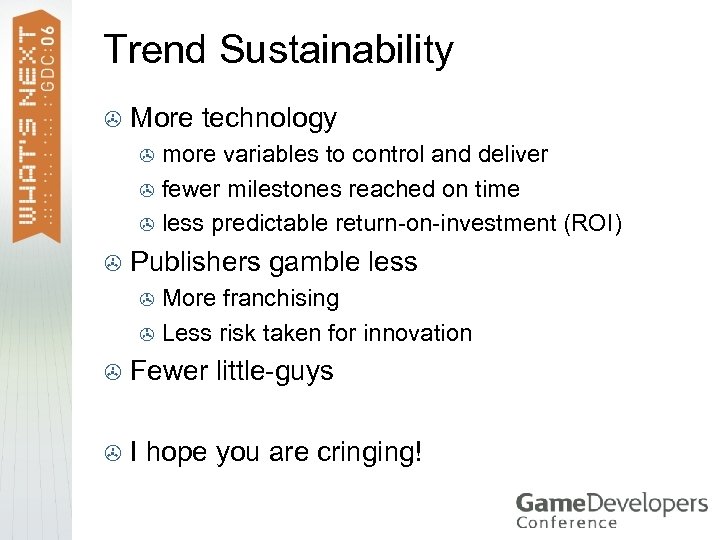
Trend Sustainability > More technology more variables to control and deliver > fewer milestones reached on time > less predictable return-on-investment (ROI) > > Publishers gamble less More franchising > Less risk taken for innovation > > Fewer little-guys > I hope you are cringing!

Breaking the Trend
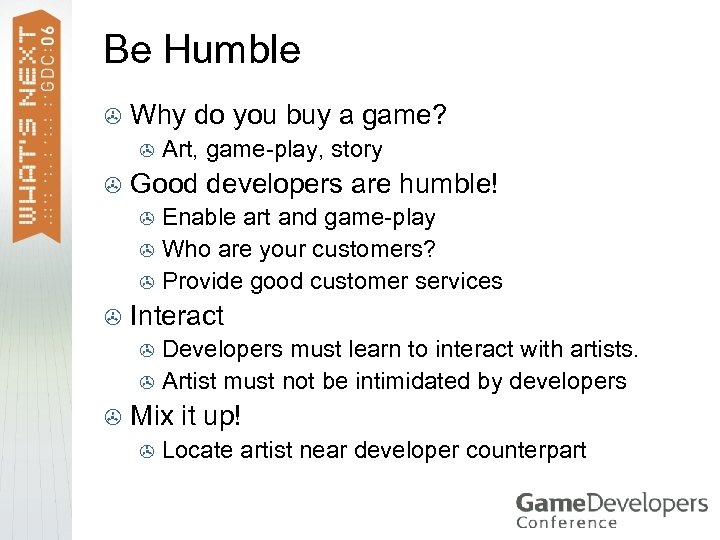
Be Humble > Why do you buy a game? > > Art, game-play, story Good developers are humble! Enable art and game-play > Who are your customers? > Provide good customer services > > Interact Developers must learn to interact with artists. > Artist must not be intimidated by developers > > Mix it up! > Locate artist near developer counterpart

A Better Tools for the Job
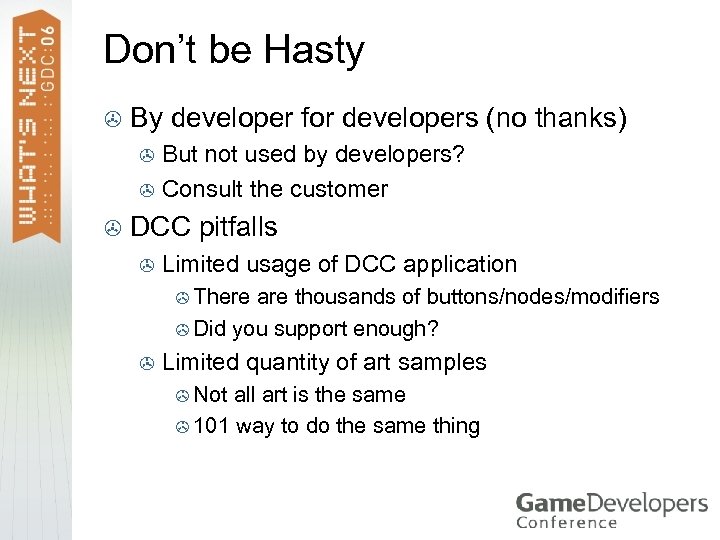
Don’t be Hasty > By developer for developers (no thanks) But not used by developers? > Consult the customer > > DCC pitfalls > Limited usage of DCC application > There are thousands of buttons/nodes/modifiers > Did you support enough? > Limited quantity of art samples > Not all art is the same > 101 way to do the same thing
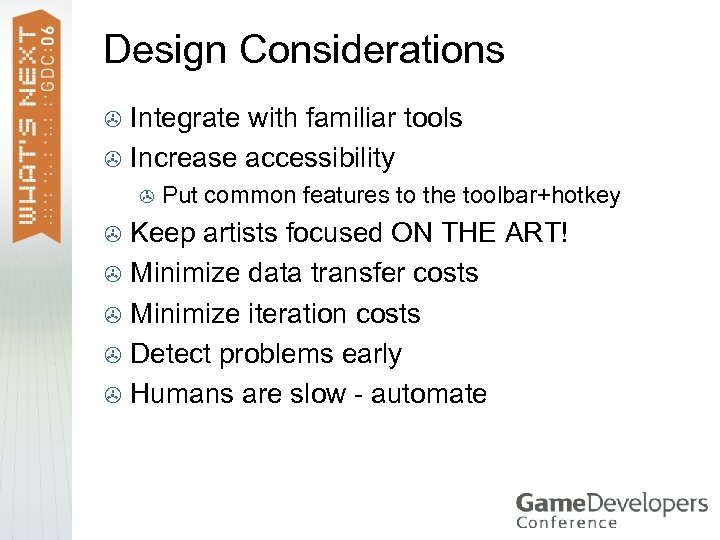
Design Considerations Integrate with familiar tools > Increase accessibility > > Put common features to the toolbar+hotkey Keep artists focused ON THE ART! > Minimize data transfer costs > Minimize iteration costs > Detect problems early > Humans are slow - automate >
Design Considerations > Reduce “brain to screen time” Visualize soon > Visualize often > > Speed conscious Modularity updates are key to real-time > Optional 1 -click update for extreme cases > > Beware of Tools Limitation Threading issues (Photoshop, Maya) > 3 D API co-existence issues > > Separate owner threads
The Many Shades of Preview > External viewer Is this your game? > Export & launch > File-watching > Pipes, tmp files, TCP/IP > Internal viewer > Native DCC viewer plug-ins > > Provide a playground for models
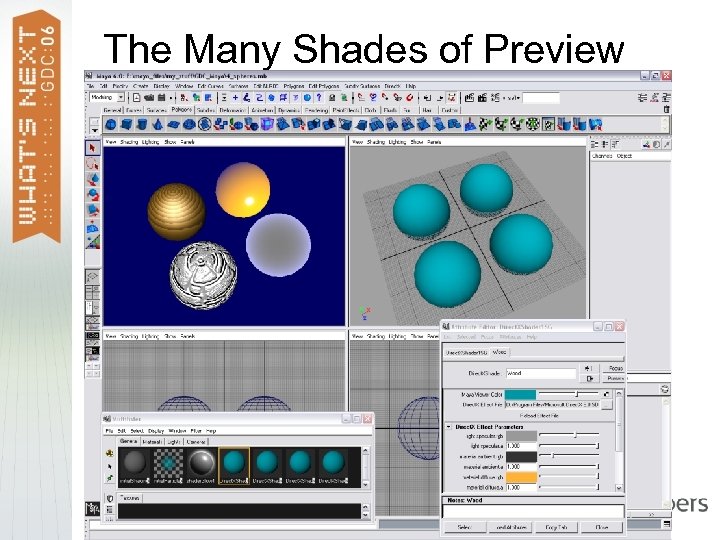
The Many Shades of Preview
Building a Better Material > Integrate with familiar tools Material assignment > Material customization > Minimize time-to-preview > Author-time vs. Run-time > > > Minimize the visual difference Enable preproduction without a run-time
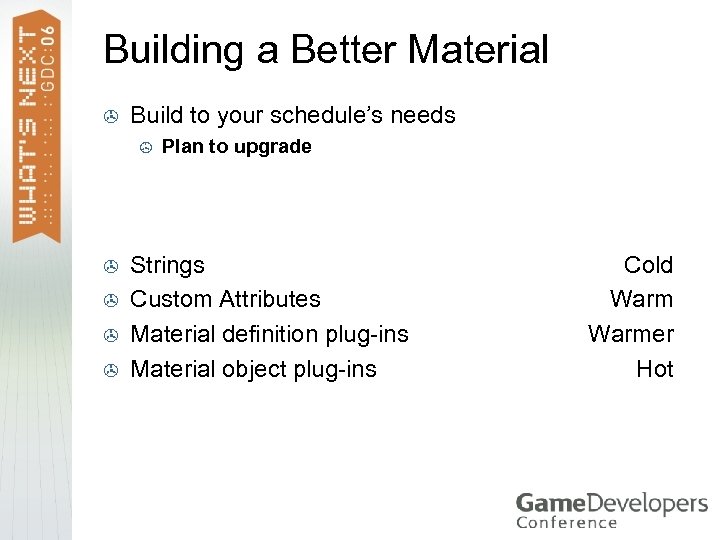
Building a Better Material > Build to your schedule’s needs > > > Plan to upgrade Strings Custom Attributes Material definition plug-ins Material object plug-ins Cold Warmer Hot
Building a Better Material Strings > > Messy names Parsing Prone to spelling errors Compared with options or without?
Building a Better Material Custom attributes Increased flexibility > Provides tags and name+value pairs > Still prone to spelling errors > Hard to locate > > Reduce errors Use scripts to add, minimize, and build UI > Prefix names and tags >
Building a Better Material definition plug-ins Integrated > Familiar > Accessible > Definitions come from file > Object’s values live in DCC app > > Ex. Direct. X Maya Preview Pipeline
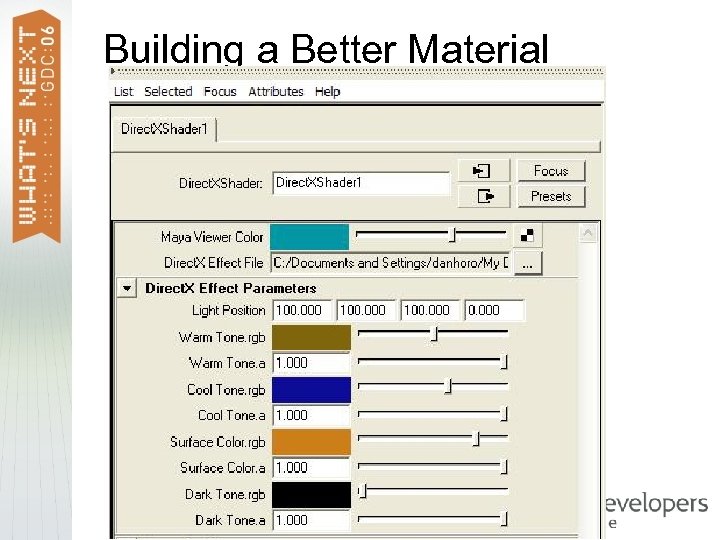
Building a Better Material
Building a Better Material object plug-ins Pros of ‘material definition plug-in’ > Material Objects come from file > > reference material definition files Export references, not duplicates > Direct use of assets >
The Shader You Never Knew > How can an app load an unknown shader? Are vertex declaration semantics enough? > What are these parameters? > Are the passes operated in order? > What other API calls are needed? >
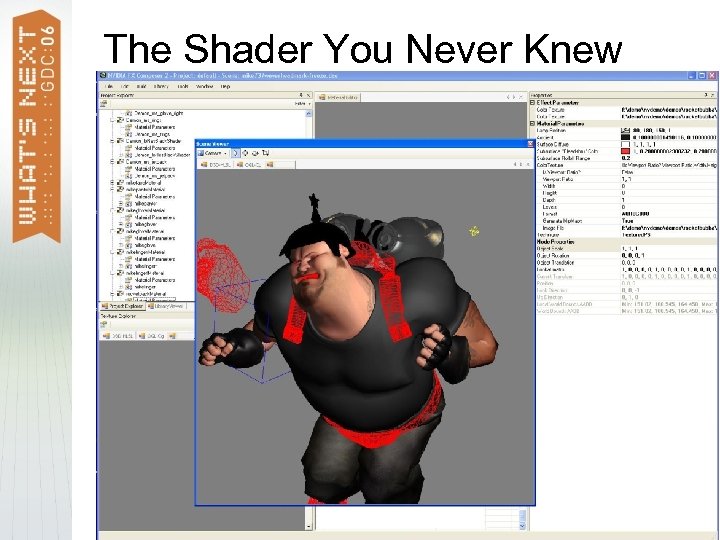
The Shader You Never Knew
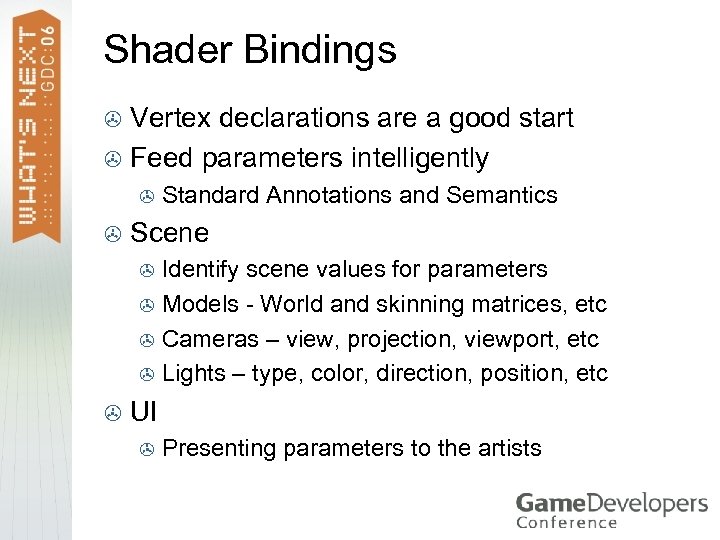
Shader Bindings Vertex declarations are a good start > Feed parameters intelligently > > > Standard Annotations and Semantics Scene Identify scene values for parameters > Models - World and skinning matrices, etc > Cameras – view, projection, viewport, etc > Lights – type, color, direction, position, etc > > UI > Presenting parameters to the artists
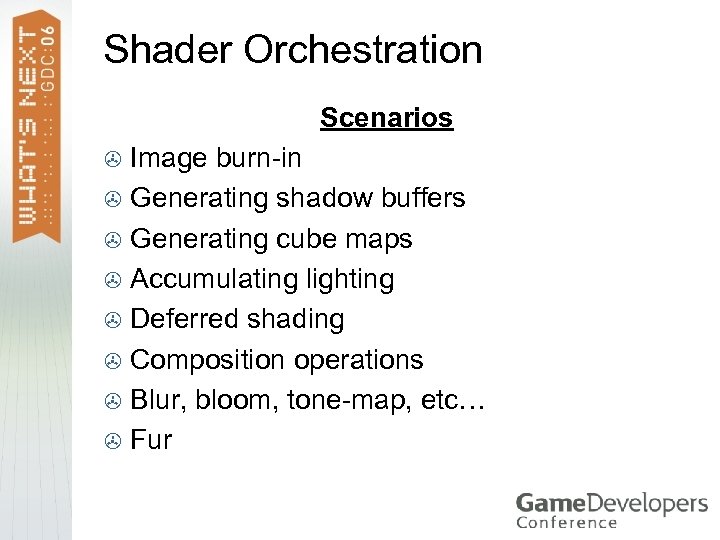
Shader Orchestration Scenarios Image burn-in > Generating shadow buffers > Generating cube maps > Accumulating lighting > Deferred shading > Composition operations > Blur, bloom, tone-map, etc… > Fur >
Shader Orchestration Themes > Producing and consuming textures > Same geometry, different shader > Different geometry, same shader > Scheduling passes
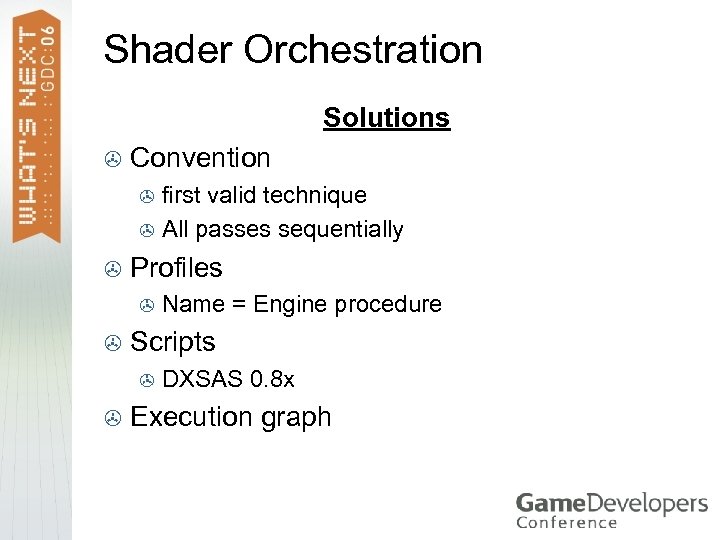
Shader Orchestration Solutions > Convention first valid technique > All passes sequentially > > Profiles > > Scripts > > Name = Engine procedure DXSAS 0. 8 x Execution graph
Shader Orchestration Execution graphs Modular operations are nodes > Graph traversal orders nodes > Edges carry data between nodes > Nodes may utilize render when evaluated >
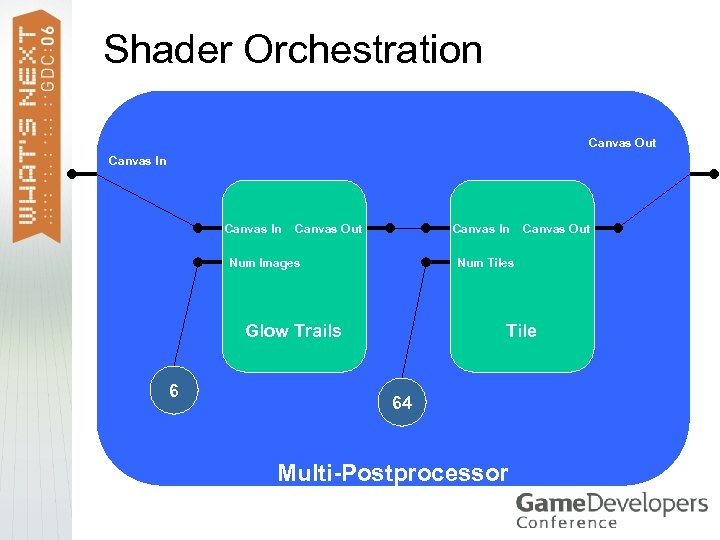
Shader Orchestration Canvas Out Canvas In Num Images Num Tiles Glow Trails 6 Canvas Out Tile 64 Multi-Postprocessor
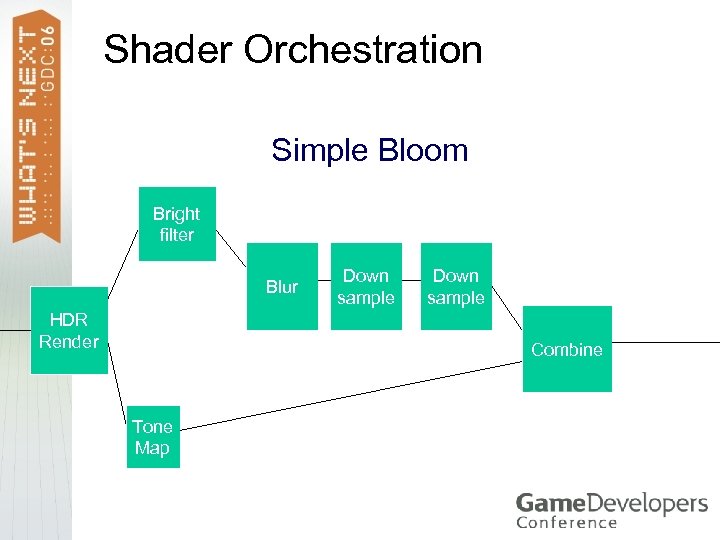
Shader Orchestration Simple Bloom Bright filter Blur HDR Render Down sample Combine Tone Map
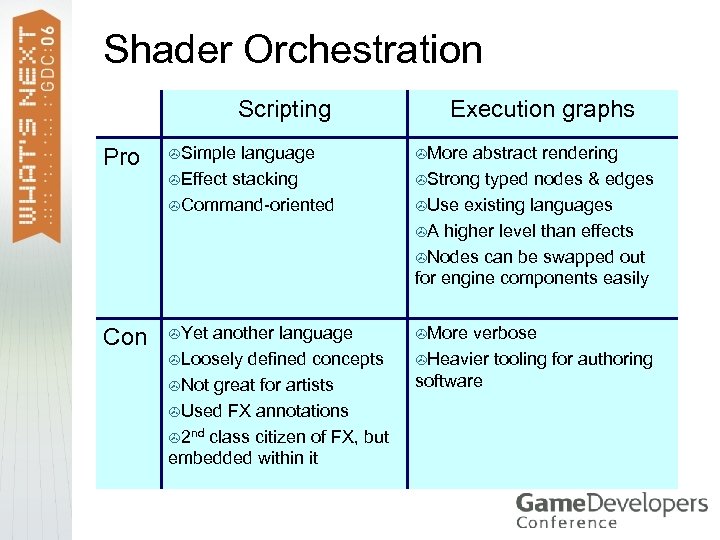
Shader Orchestration Scripting Execution graphs Pro >Simple language >Effect stacking >Command-oriented >More Con >Yet >More another language >Loosely defined concepts >Not great for artists >Used FX annotations >2 nd class citizen of FX, but embedded within it abstract rendering >Strong typed nodes & edges >Use existing languages >A higher level than effects >Nodes can be swapped out for engine components easily verbose >Heavier tooling for authoring software
Modular Shaders > Shader Fragment Libraries Support #include > Standard Includes > > Ex. > #include<Sas. fxh> Environment defines #ifdef & #ifndef > Ex. SAS_PRESENT > > Optimize Shared parameters > Leverage pre-shading >
Count Your Blessings Detect modeling problems early > “Bless” the artist’s model on request > Water tight > UV issues – stretch, skew, tangency > Exceeding bone & poly count > Naming conventions > Layer checks – LOD? >
Count Your Blessings > Visualize the problem No cryptic messages: “Error on vert #13” > Highlight > > Wire-frame > Transparent > Depth polygons bias > Fix model if artist desires/authorizes > Validate in automated build pipeline
Art Debugged Visualize post-export data > Allow the artist to validate post-export > Preview mechanism can enable this fast > > > Internal micro-export pre-viewer Visualizer > Normals, tangents, binormals > Edges, adjacencies, creases > Points, Bounds, Transforms > Texture visualizer (more on this later)
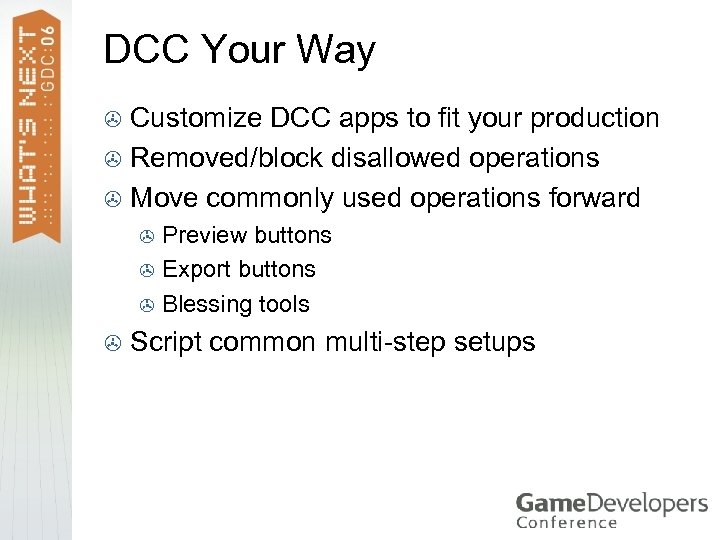
DCC Your Way Customize DCC apps to fit your production > Removed/block disallowed operations > Move commonly used operations forward > Preview buttons > Export buttons > Blessing tools > > Script common multi-step setups
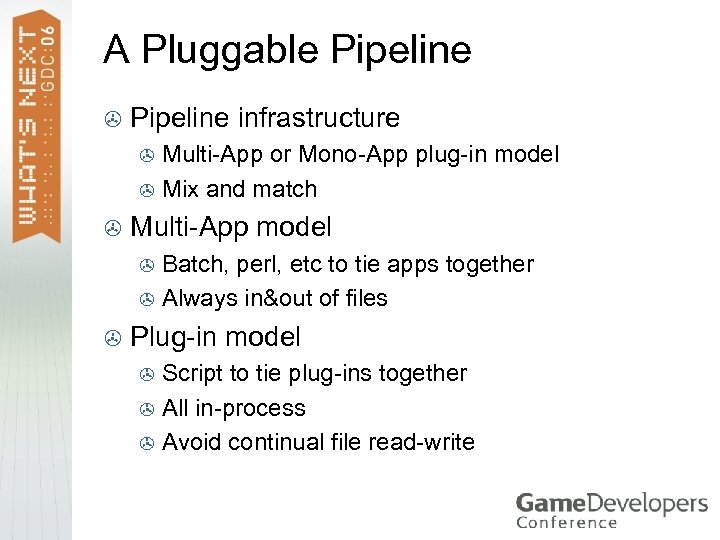
A Pluggable Pipeline > Pipeline infrastructure Multi-App or Mono-App plug-in model > Mix and match > > Multi-App model Batch, perl, etc to tie apps together > Always in&out of files > > Plug-in model Script to tie plug-ins together > All in-process > Avoid continual file read-write >
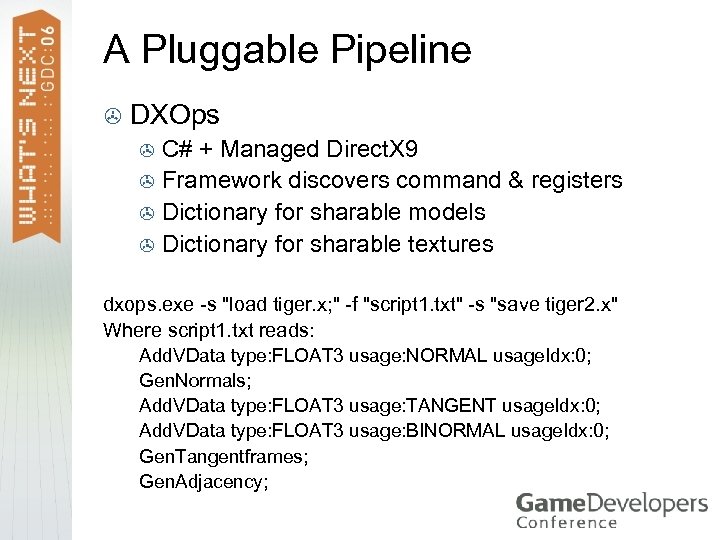
A Pluggable Pipeline > DXOps C# + Managed Direct. X 9 > Framework discovers command & registers > Dictionary for sharable models > Dictionary for sharable textures > dxops. exe -s "load tiger. x; " -f "script 1. txt" -s "save tiger 2. x" Where script 1. txt reads: Add. VData type: FLOAT 3 usage: NORMAL usage. Idx: 0; Gen. Normals; Add. VData type: FLOAT 3 usage: TANGENT usage. Idx: 0; Add. VData type: FLOAT 3 usage: BINORMAL usage. Idx: 0; Gen. Tangentframes; Gen. Adjacency;
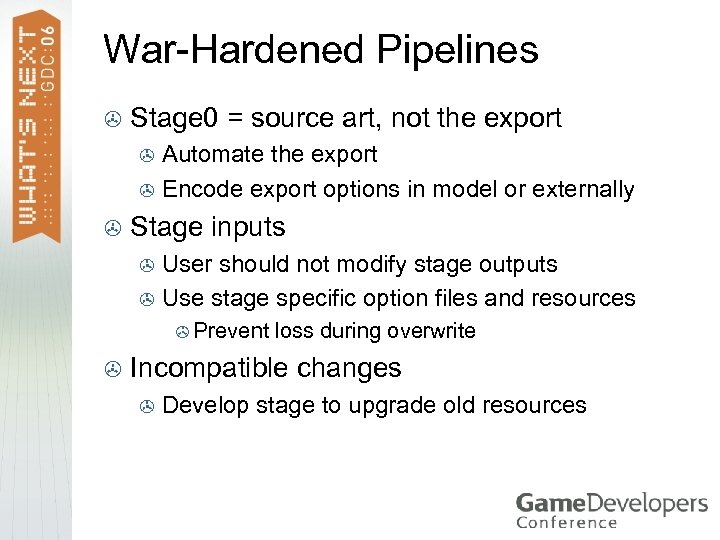
War-Hardened Pipelines > Stage 0 = source art, not the export Automate the export > Encode export options in model or externally > > Stage inputs User should not modify stage outputs > Use stage specific option files and resources > > Prevent > loss during overwrite Incompatible changes > Develop stage to upgrade old resources
War-Hardened Pipelines > Separate features into small assets Geometry, animations, material definitions, materials objects, particle systems, etc > Better asset/source control > More sharing via references > Different tools for different jobs > > Max (model cages) > ZBrush (model high-res) > Fx. Composer (Materials) > Maya (animations)
Pipeline Evolution Khronos Group’s COLLADA > COLLAborative Design Activity > XML > High adoption rate > Modern features > Designed for lossless exchange > Extended user data > Not a run-time format

Testimonial and Tips For Content Creation and Communication > Marcus Ghaly Gas Powered Games
Realizing You Need Tools > Hitting milestones can mask inefficiencies > > All the assets are in for the milestone so our process works perfectly, right? Use of brute-force instead of automation lengthy multi-step processes introduce errors > derivative art proliferates those errors > > Automation, automation > while still giving control to the artists
The Producer/Consumer Model Producers > Realize that you are not the consumer command line anyone? > dev-centric documentation? > Error: g_tex. Count <= tex. Index > > Error: Dude, you used too many textures. So, find out what your consumer wants? > How does the consumer think? > artist friendly terminology > GUI / hotkeys > tool layout >
The Producer/Consumer Model Consumers > Realize that: > YOU ARE THE CONSUMER You have a say in how your tools work > But in order for this to work: > > YOU MUST GIVE FEEDBACK Explain the impact on your schedule > Fight for your right to export >
Totally Awesome Tools:
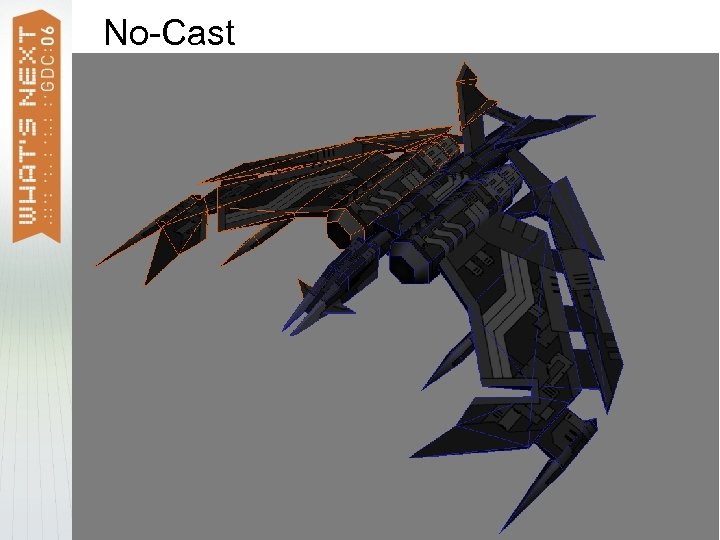
No-Cast
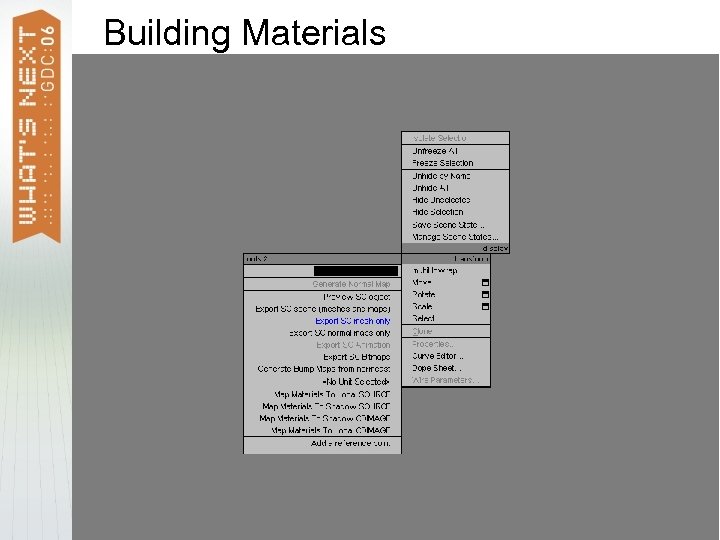
Building Materials
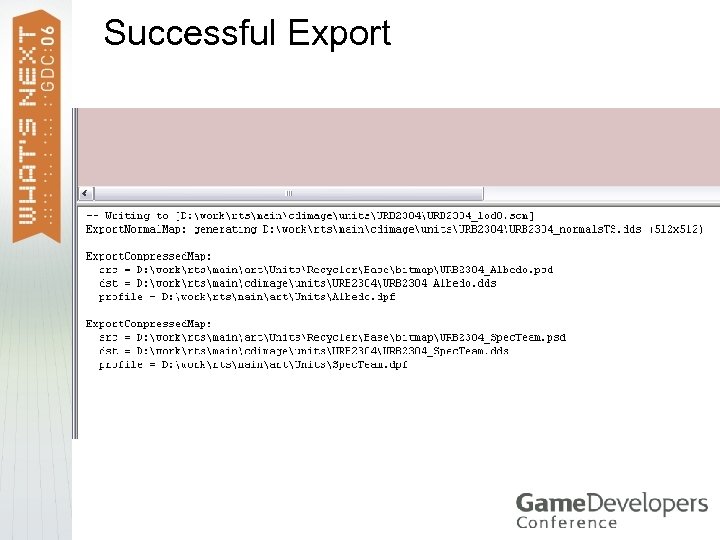
Successful Export
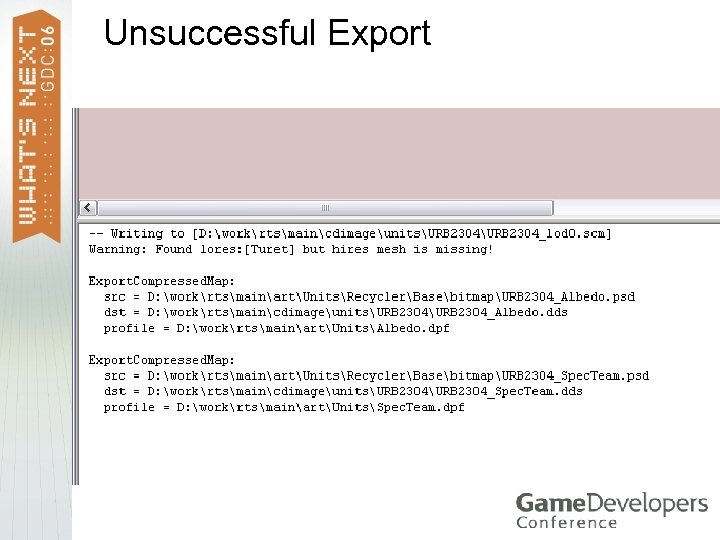
Unsuccessful Export
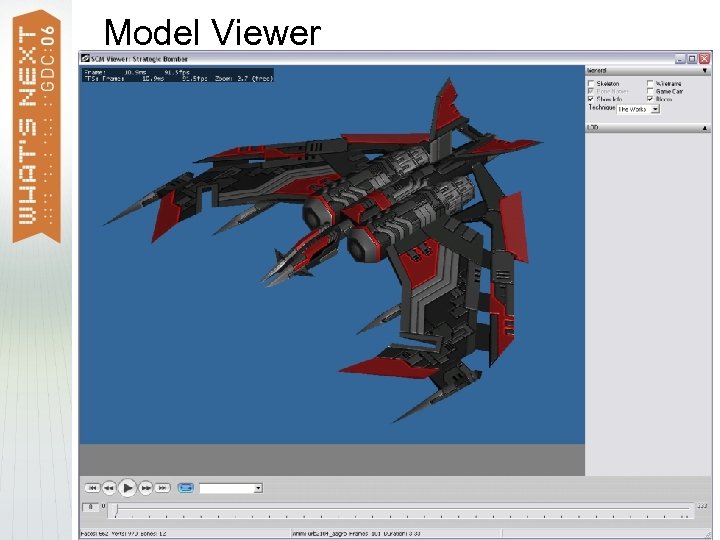
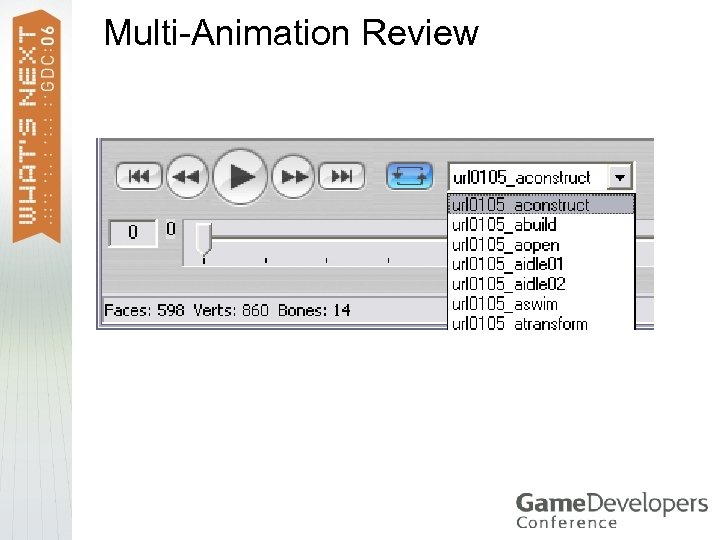
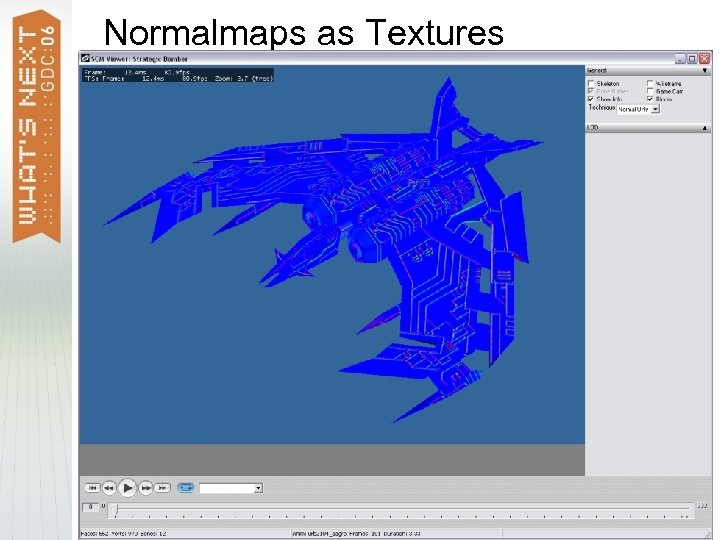
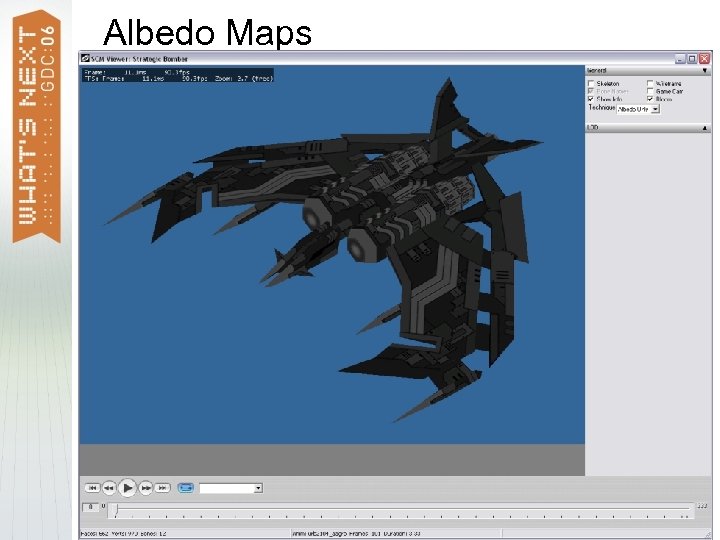
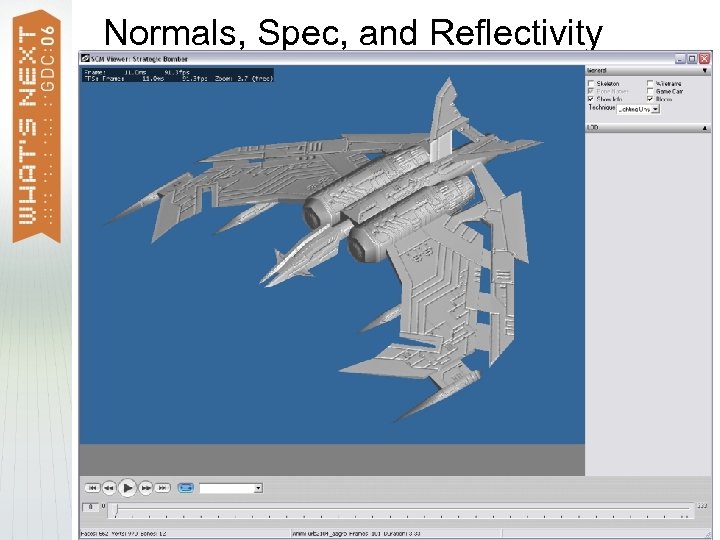
Model Viewer
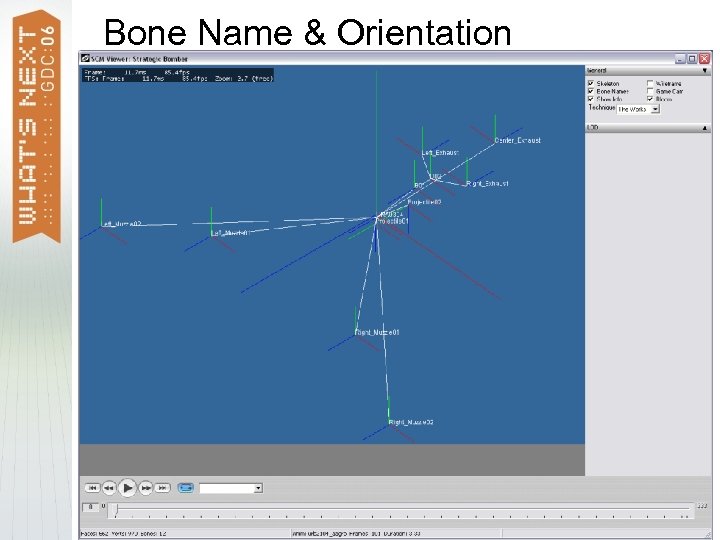
Bone Name & Orientation
Multi-Animation Review
Normalmaps as Textures
Albedo Maps
Normals, Spec, and Reflectivity
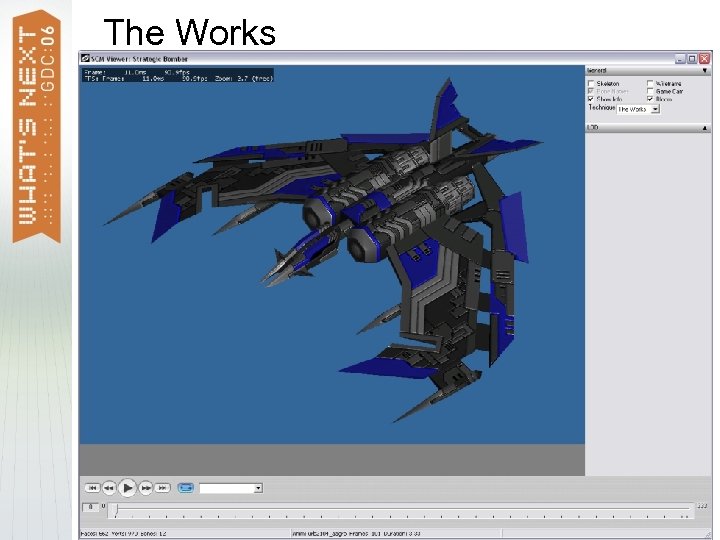
The Works
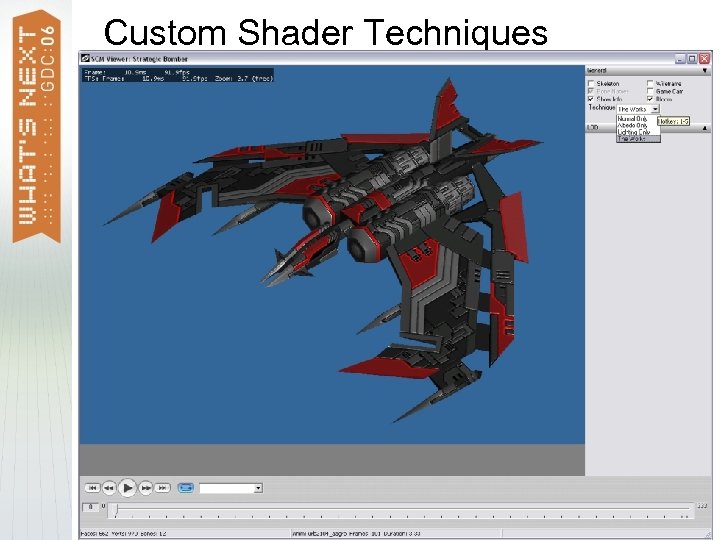
Custom Shader Techniques

What’s Your Game Plan?
Random Acts of Technology Do you have a plan for tool development > Is there a timeline – micro and macro > Is there an official method for tools requests, bug fixing and tracking > Does this method allow a back and forth of ideas > > > prototype with the artist early How else are your teams interfacing with each other
Bad Conversations Art: My file didn’t export so I redid the whole model. It took me 3 extra days. > Dev: do you have to broken file? > Art: no I threw it away > > Consider an error reporting mechanism
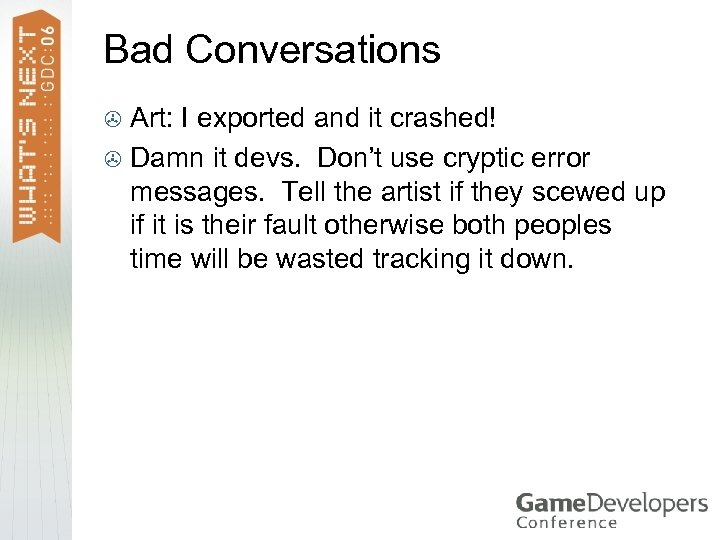
Bad Conversations Art: I exported and it crashed! > Damn it devs. Don’t use cryptic error messages. Tell the artist if they scewed up if it is their fault otherwise both peoples time will be wasted tracking it down. >
Скачать презентацию Extensible Rendering and Pre-visualization of Art
cd007527c68b41e747a6f5e7ab471cdf.ppt