 Скачать презентацию Extended-Spectrum-β-Lactamase producing Enterobacteriaceae in neonates and association with
737f0471e15bf5e92cefdd9368f7b92d.ppt
- Количество слайдов: 15



Extended-Spectrum-β-Lactamase producing Enterobacteriaceae in neonates and association with maternal urine cultures. Alex Guri 1, Natalie Flaks-Manov 2, Adi Ghilai 2, Moshe Hoshen 2, Ariel Benis 2, Orna Flidel 3, Pnina Ciobotaru 4, Oren Zimhony 4 1. Division of Pediatrics, Kaplan Medical Centre, Rehovot, Israel 2. Clalit Research Institute, Chief Physician's Office, Clalit Health Services, Tel Aviv 3. Neonatology Department, Kaplan Medical Centre, Rehovot, Israel 4. Infectious Diseases Unit, Kaplan Medical Centre, Rehovot, Israel

Disclosure X No, nothing to disclose Yes, please specify: Company Name Honoraria/ Expenses Consulting/ Advisory Board Funded Research Royalties/ Patent Stock Options Ownership/ Equity Position Employee Other (please specify)
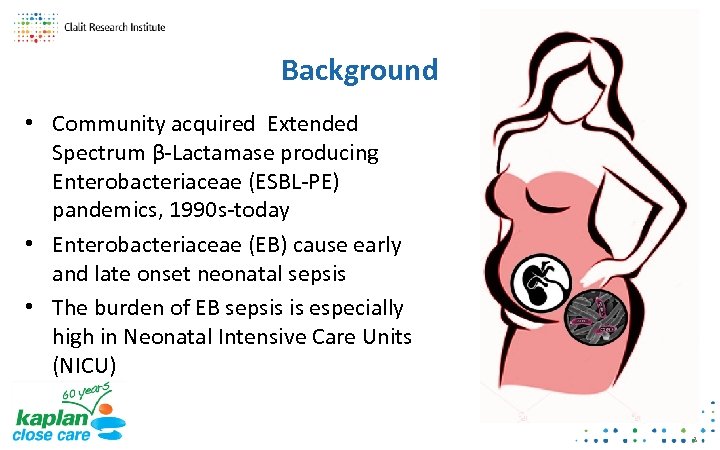
Background • Community acquired Extended Spectrum β-Lactamase producing Enterobacteriaceae (ESBL-PE) pandemics, 1990 s-today • Enterobacteriaceae (EB) cause early and late onset neonatal sepsis • The burden of EB sepsis is especially high in Neonatal Intensive Care Units (NICU) 3
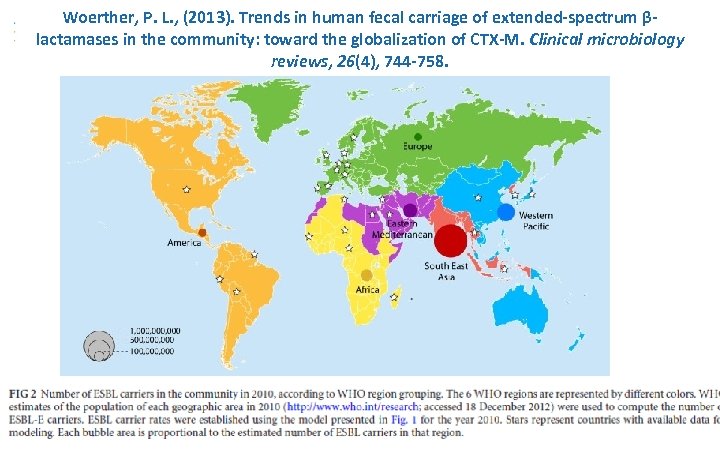
Woerther, P. L. , (2013). Trends in human fecal carriage of extended-spectrum βlactamases in the community: toward the globalization of CTX-M. Clinical microbiology reviews, 26(4), 744 -758. 4
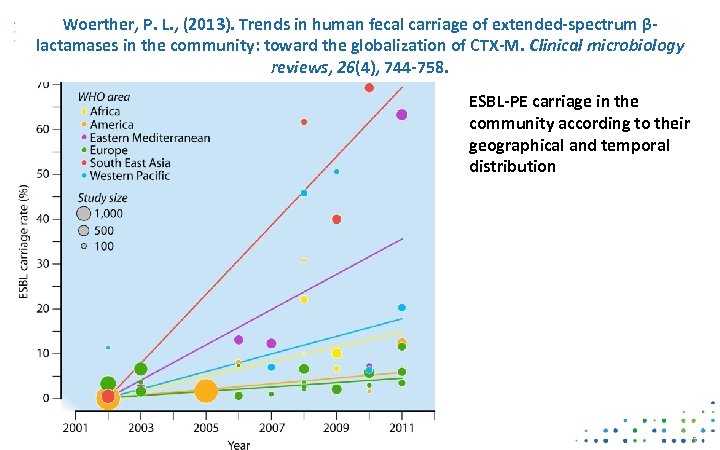
Woerther, P. L. , (2013). Trends in human fecal carriage of extended-spectrum βlactamases in the community: toward the globalization of CTX-M. Clinical microbiology reviews, 26(4), 744 -758. ESBL-PE carriage in the community according to their geographical and temporal distribution 5
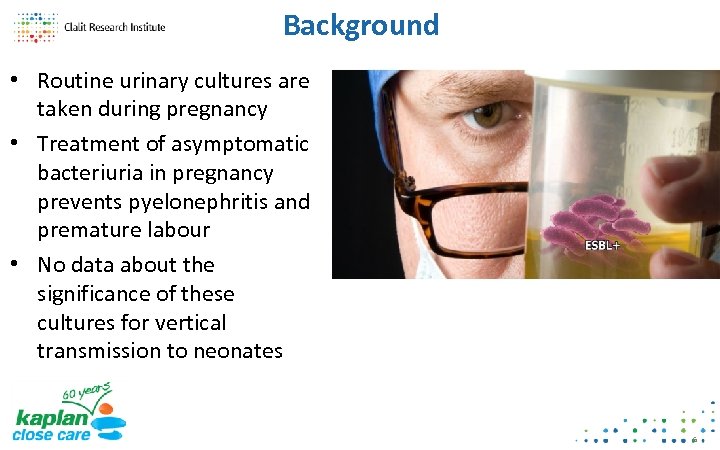
Background • Routine urinary cultures are taken during pregnancy • Treatment of asymptomatic bacteriuria in pregnancy prevents pyelonephritis and premature labour • No data about the significance of these cultures for vertical transmission to neonates 6
Objectives • Primary - to find out association between the presence of ESBL-PE in gestational urine cultures and ESBL-PE in the corresponding neonates' cultures • Secondary - to analyze the effect of ESBL-PE on neonatal morbidity and mortality 7
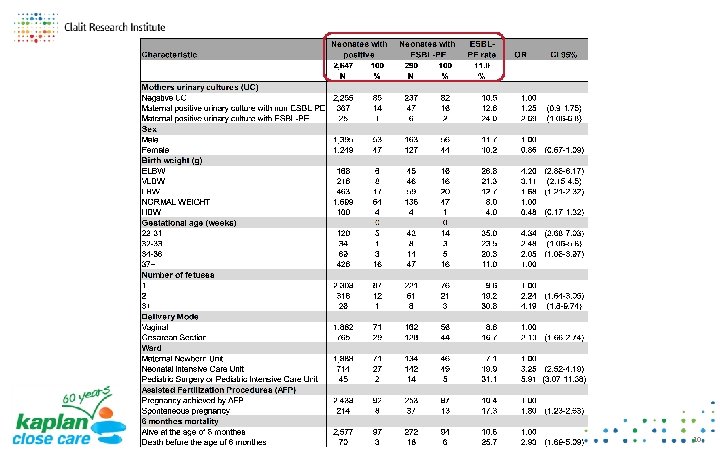
Methods • Retrospective cohort study of neonates born during the years 2009 -2013 whose mothers had performed urinary cultures within one year prior to delivery • Data were obtained from the centralized Clalit Health Services warehouse • The cohort included only neonates who had any type of positive EB culture during the first three months after birth 8
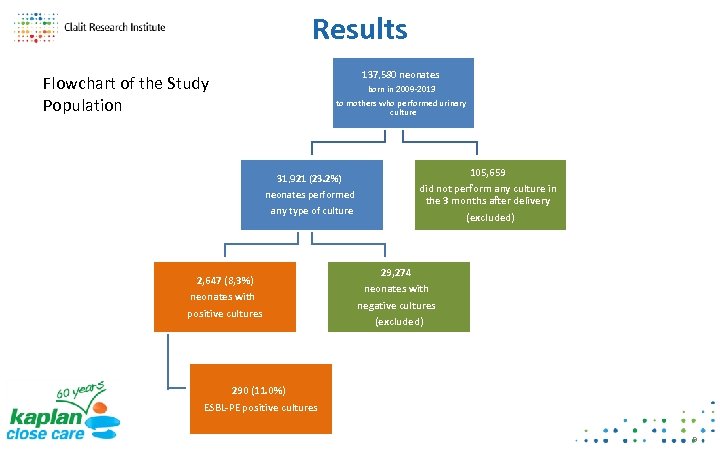
Results 137, 580 neonates Flowchart of the Study Population born in 2009 -2013 to mothers who performed urinary culture 31, 921 (23. 2%) neonates performed any type of culture 2, 647 (8, 3%) neonates with positive cultures 105, 659 did not perform any culture in the 3 months after delivery (excluded) 29, 274 neonates with negative cultures (excluded) 290 (11. 0%) ESBL-PE positive cultures 9
10
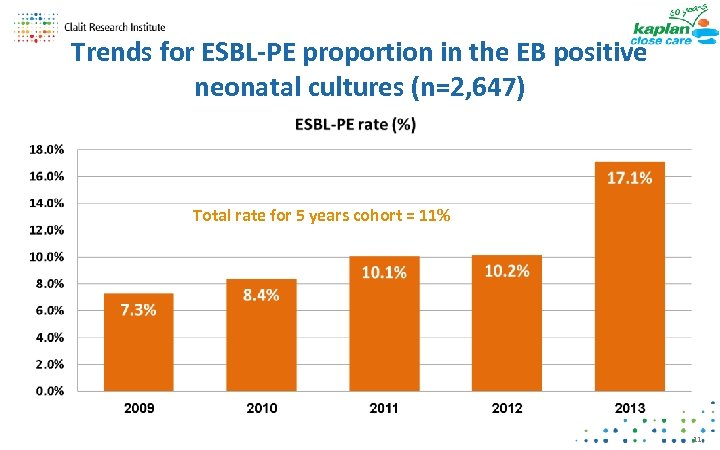
Trends for ESBL-PE proportion in the EB positive neonatal cultures (n=2, 647) Total rate for 5 years cohort = 11% 11
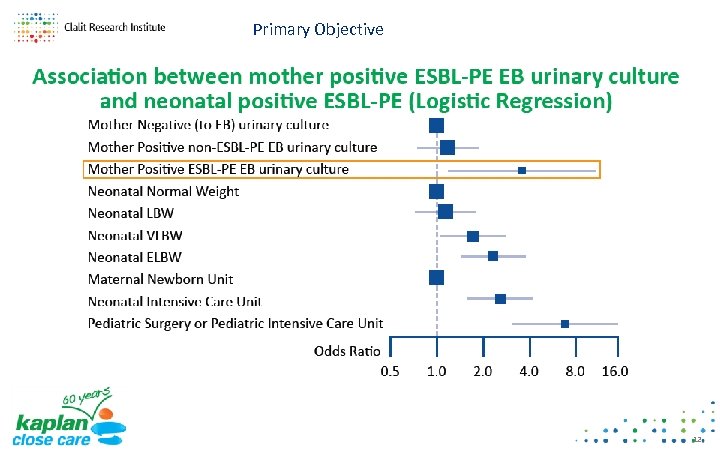
Primary Objective 12
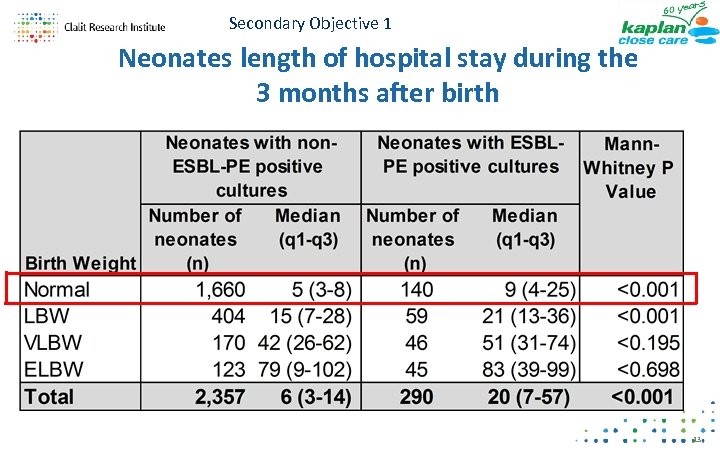
Secondary Objective 1 Neonates length of hospital stay during the 3 months after birth 13
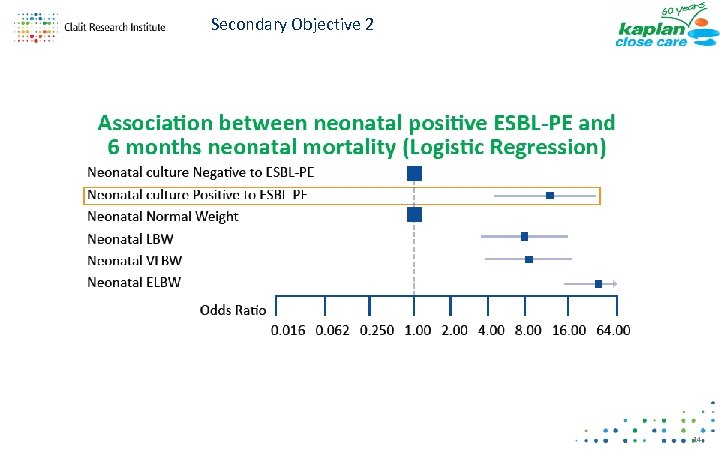
Secondary Objective 2 14
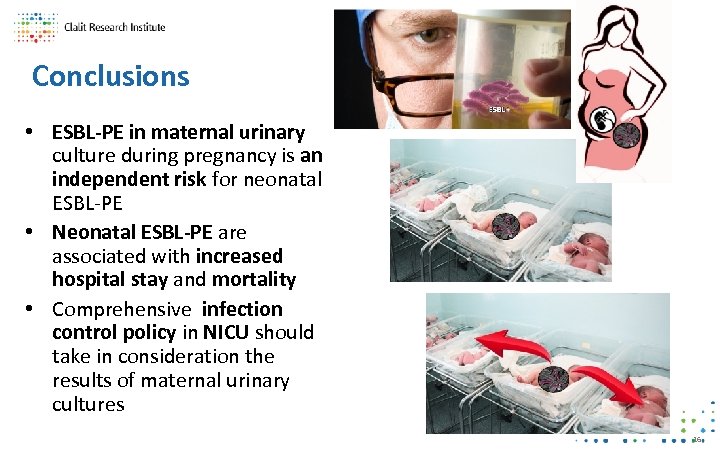
Conclusions • ESBL-PE in maternal urinary culture during pregnancy is an independent risk for neonatal ESBL-PE • Neonatal ESBL-PE are associated with increased hospital stay and mortality • Comprehensive infection control policy in NICU should take in consideration the results of maternal urinary cultures 16
Скачать презентацию Extended-Spectrum-β-Lactamase producing Enterobacteriaceae in neonates and association with
737f0471e15bf5e92cefdd9368f7b92d.ppt