 Скачать презентацию Expressing likes and dislikes El Verbo GUSTAR
76ad3e08b77212f6d68250bef4f8d449.ppt
- Количество слайдов: 15



Expressing likes and dislikes
El Verbo “GUSTAR” • En español gustar means “to be pleasing” • In English, the equivalent is “to like”
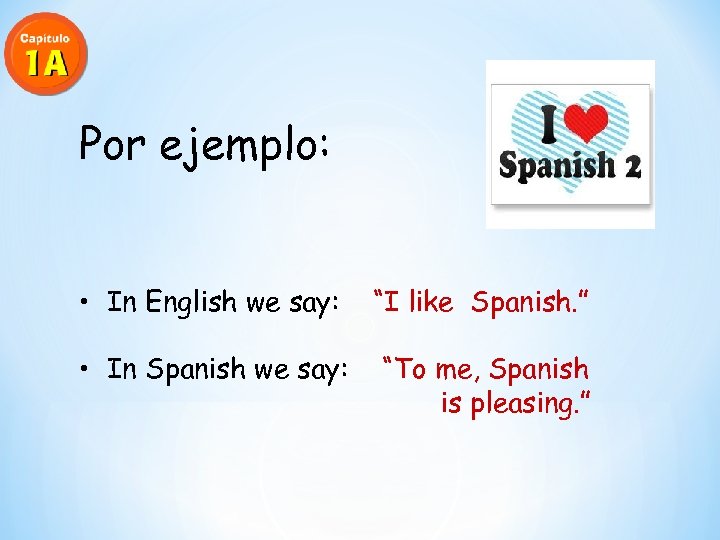
Por ejemplo: • In English we say: “I like Spanish. ” • In Spanish we say: “To me, Spanish is pleasing. ”
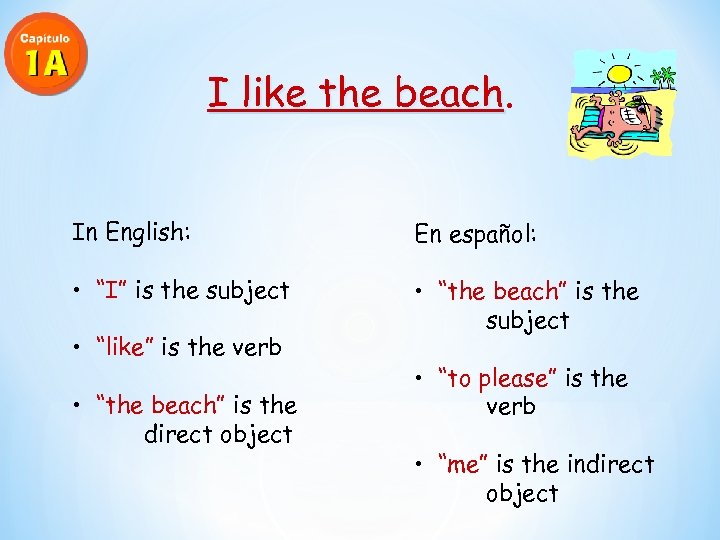
I like the beach In English: En español: • “I” is the subject • “the beach” is the subject • “like” is the verb • “the beach” is the direct object • “to please” is the verb • “me” is the indirect object
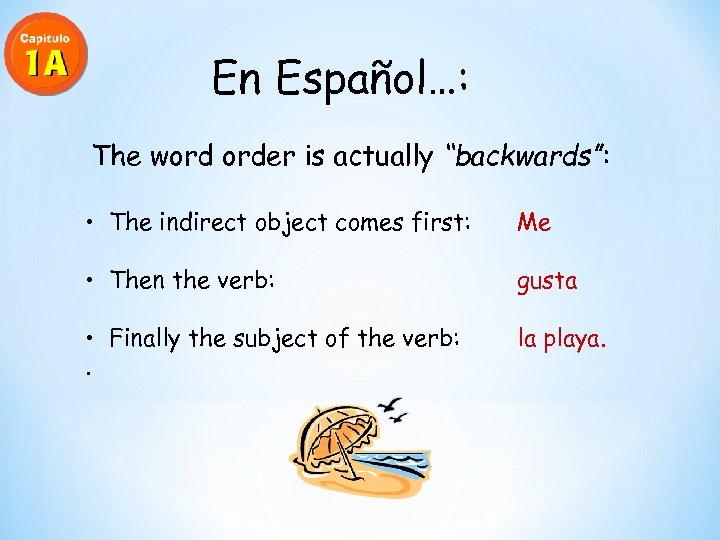
En Español…: The word order is actually “backwards”: • The indirect object comes first: Me • Then the verb: gusta • Finally the subject of the verb: . la playa.
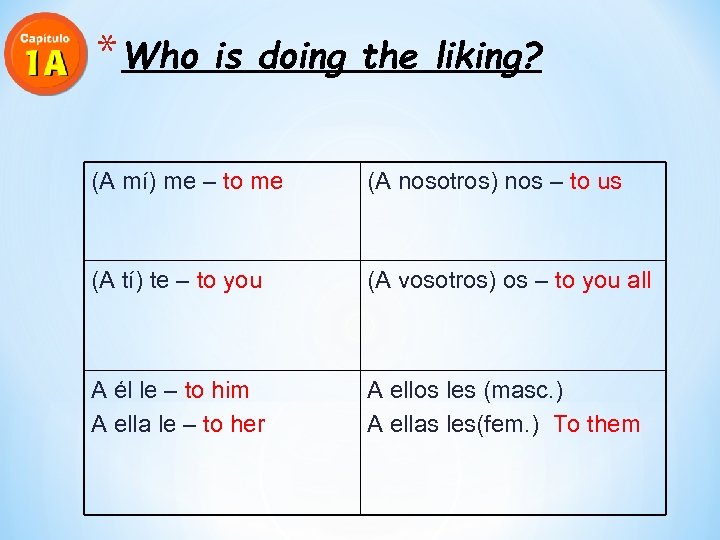
* Who is doing the liking? (A mí) me – to me (A nosotros) nos – to us (A tí) te – to you (A vosotros) os – to you all A él le – to him A ella le – to her A ellos les (masc. ) A ellas les(fem. ) To them
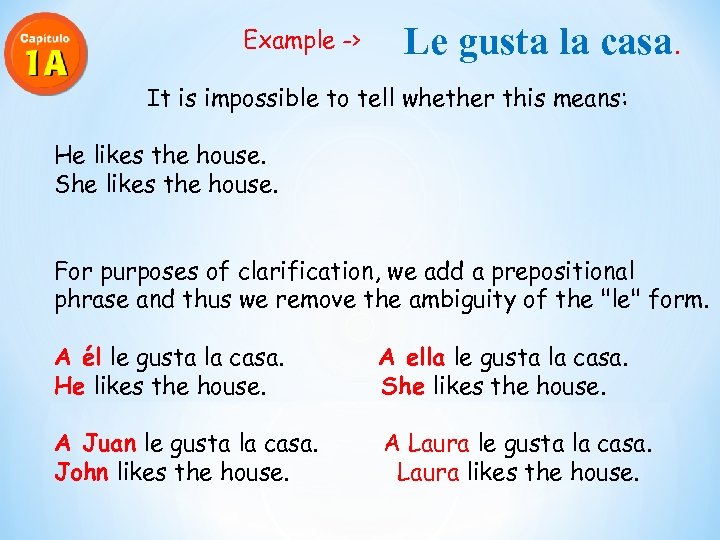
Example -> Le gusta la casa. It is impossible to tell whether this means: He likes the house. She likes the house. For purposes of clarification, we add a prepositional phrase and thus we remove the ambiguity of the "le" form. A él le gusta la casa. He likes the house. A ella le gusta la casa. She likes the house. A Juan le gusta la casa. John likes the house. A Laura le gusta la casa. Laura likes the house.
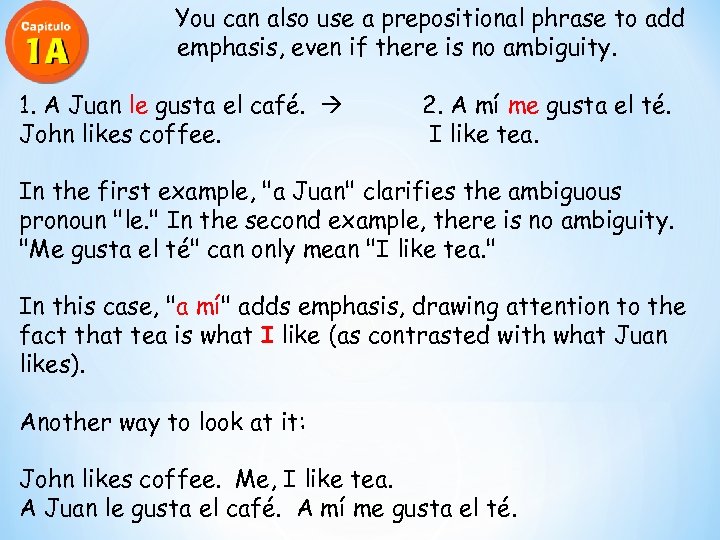
You can also use a prepositional phrase to add emphasis, even if there is no ambiguity. 1. A Juan le gusta el café. John likes coffee. 2. A mí me gusta el té. I like tea. In the first example, "a Juan" clarifies the ambiguous pronoun "le. " In the second example, there is no ambiguity. "Me gusta el té" can only mean "I like tea. " In this case, "a mí" adds emphasis, drawing attention to the fact that tea is what I like (as contrasted with what Juan likes). Another way to look at it: John likes coffee. Me, I like tea. A Juan le gusta el café. A mí me gusta el té.
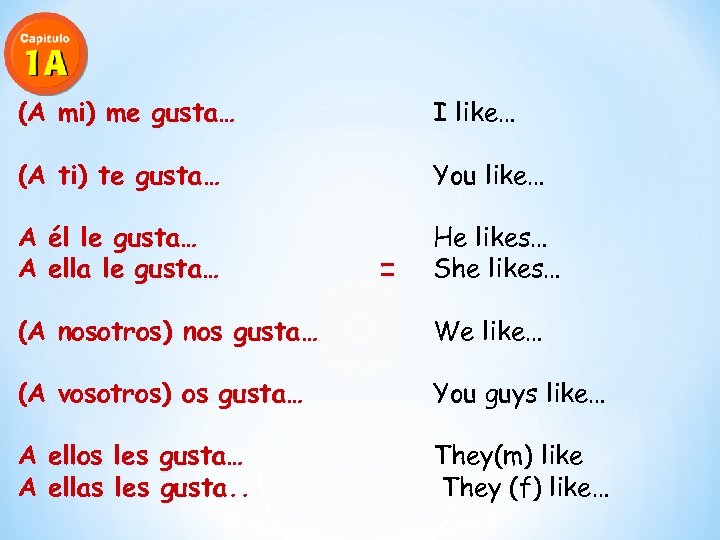
(A mi) me gusta… I like… (A ti) te gusta… You like… A él le gusta… A ella le gusta… He likes… She likes… = (A nosotros) nos gusta… We like… (A vosotros) os gusta… You guys like… A ellos les gusta… A ellas les gusta. . They(m) like They (f) like…
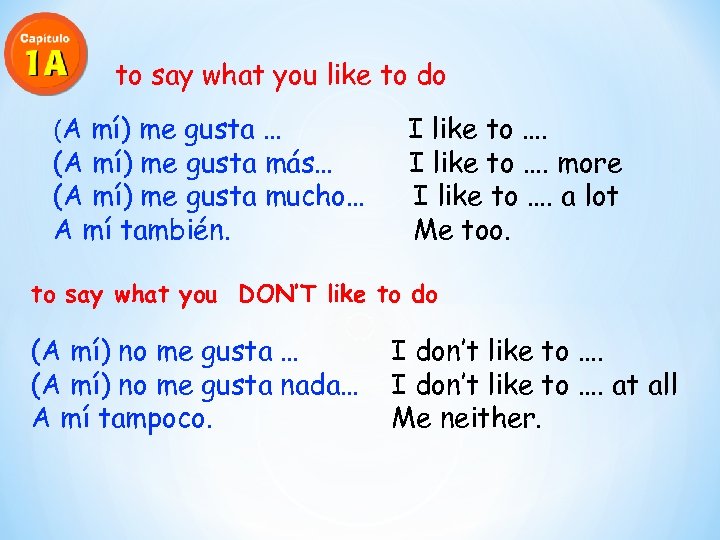
to say what you like to do (A mí) me gusta … (A mí) me gusta más… (A mí) me gusta mucho… A mí también. I like to …. more I like to …. a lot Me too. to say what you DON’T like to do (A mí) no me gusta … (A mí) no me gusta nada… A mí tampoco. I don’t like to …. at all Me neither.
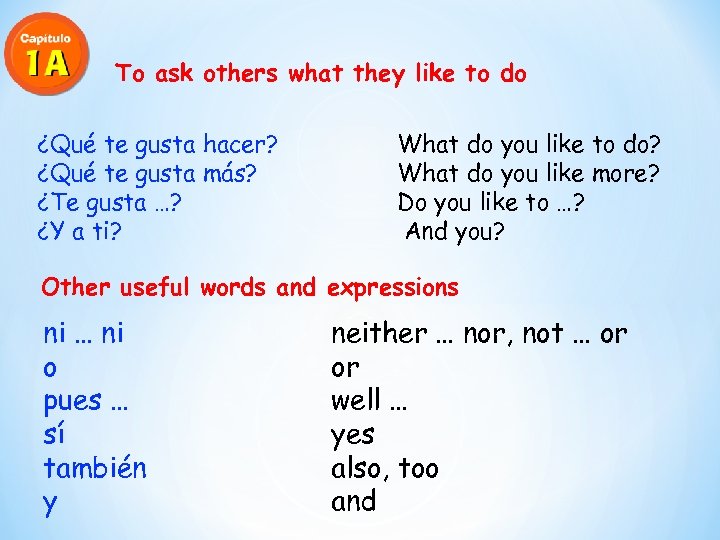
To ask others what they like to do ¿Qué te gusta hacer? ¿Qué te gusta más? ¿Te gusta …? ¿Y a ti? What do you like to do? What do you like more? Do you like to …? And you? Other useful words and expressions ni … ni o pues … sí también y neither … nor, not … or or well … yes also, too and
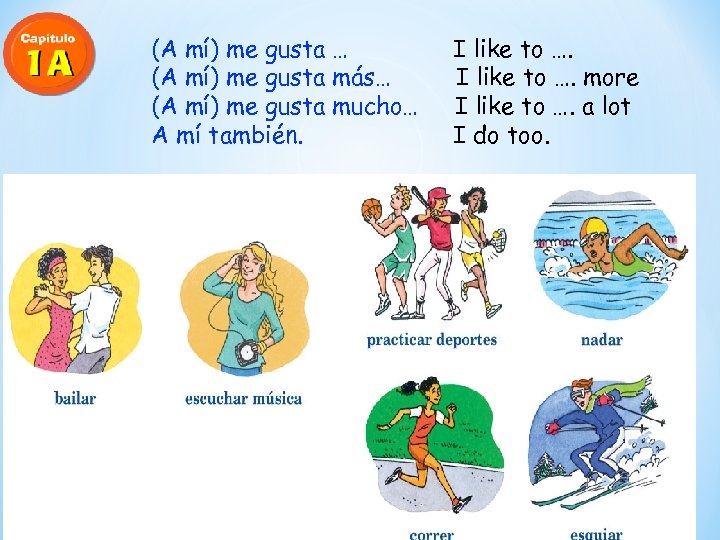
(A mí) me gusta … (A mí) me gusta más… (A mí) me gusta mucho… A mí también. I like to …. more I like to …. a lot I do too.
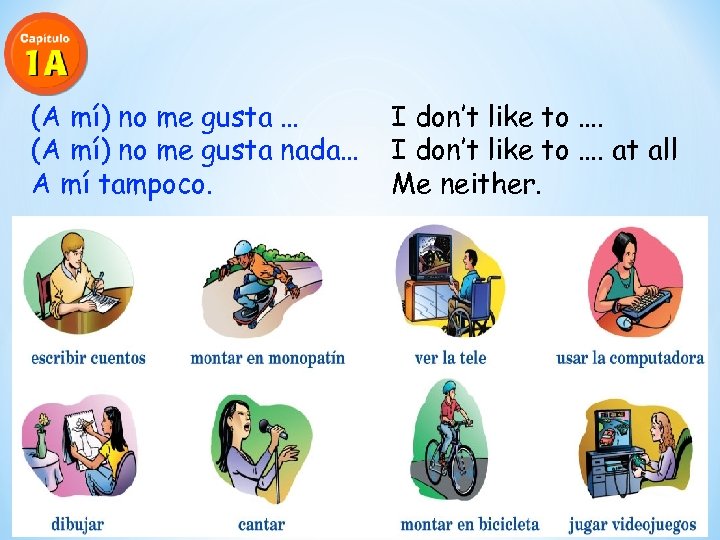
(A mí) no me gusta … (A mí) no me gusta nada… A mí tampoco. I don’t like to …. at all Me neither.
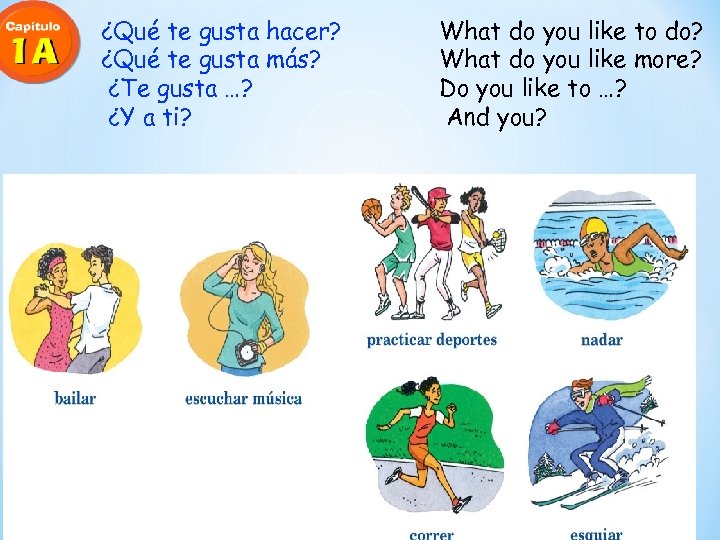
¿Qué te gusta hacer? ¿Qué te gusta más? ¿Te gusta …? ¿Y a ti? What do you like to do? What do you like more? Do you like to …? And you?
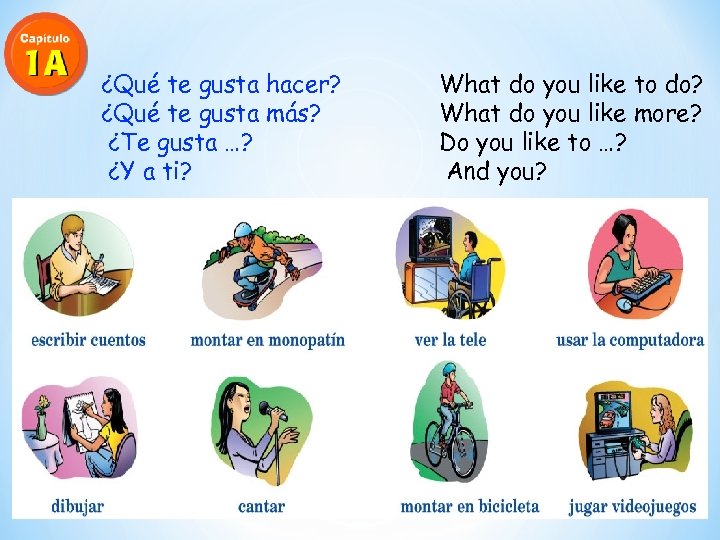
¿Qué te gusta hacer? ¿Qué te gusta más? ¿Te gusta …? ¿Y a ti? What do you like to do? What do you like more? Do you like to …? And you?
Скачать презентацию Expressing likes and dislikes El Verbo GUSTAR
76ad3e08b77212f6d68250bef4f8d449.ppt