


 Скачать презентацию Experimental animal research in Almazov Centre Michael Galagudza
Institute of Experimental Medicine 2016.ppt
- Количество слайдов: 22
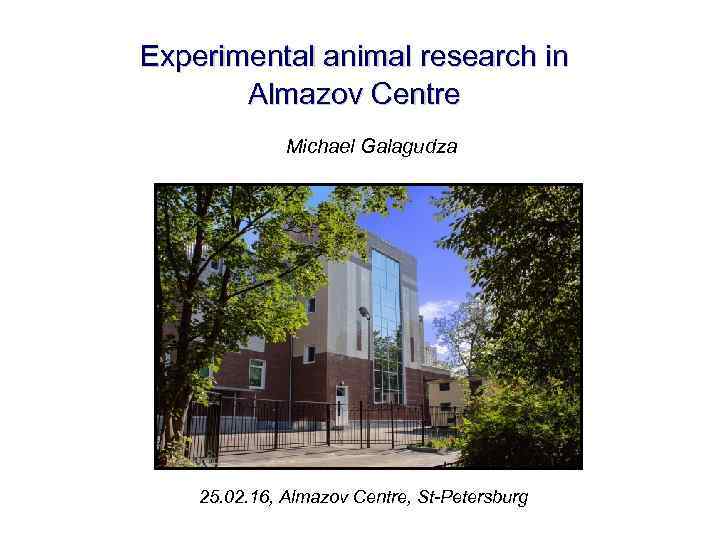 Experimental animal research in Almazov Centre Michael Galagudza 25. 02. 16, Almazov Centre, St-Petersburg
 Structure of the Institute of Experimental Medicine • Division of Experimental Physiology and Pharmacology – 10 employees; • Animal house – 6 employees; • Laboratory of Myocardial Metabolism – 8 employees; • Laboratory of Microcirculation – 8 employees; • Laboratory of Mathematical Modeling – 8 employees; • Laboratory of Nanotechnology – 6 employees; • Laboratory of Systemic Hemodynamics – 6 employees; • Laboratory of Bioprosthetics and Cardioprotection – 6 employees. TOTALLY 58 employees
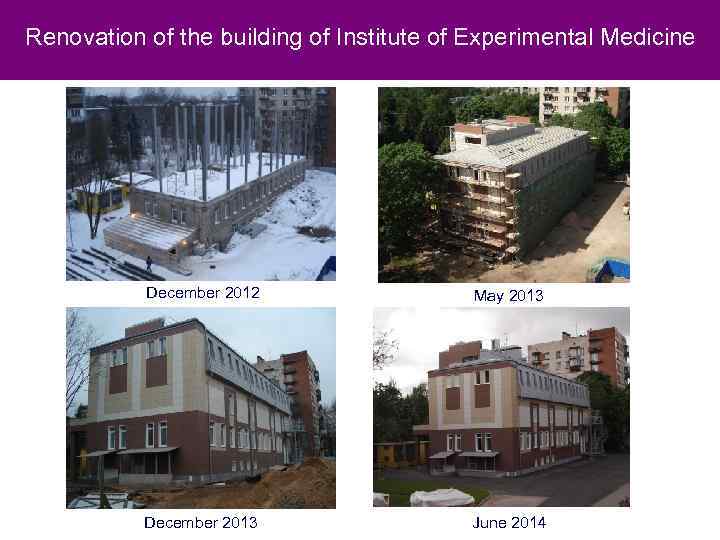 Renovation of the building of Institute of Experimental Medicine December 2012 May 2013 Январь 2013 г. December 2013 June 2014
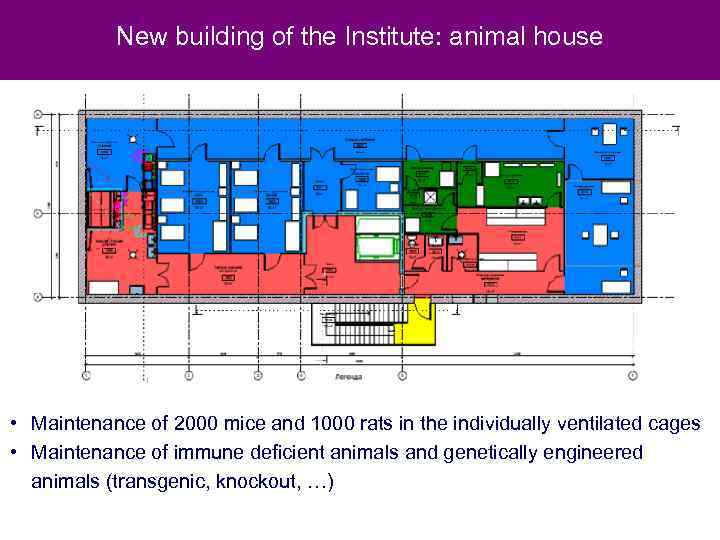 New building of the Institute: animal house • Maintenance of 2000 mice and 1000 rats in the individually ventilated cages • Maintenance of immune deficient animals and genetically engineered animals (transgenic, knockout, …)
 The technological principles of SPF barrier facility • ABSL-1 biosafety level • Individually ventilated cages • Cleanrooms of 8 th and 6 th classes according to ISO definition • Barrier system (showers, pressure gradients, sticky pads, etc. • Backing up all main technological processes • The SPF animals are received from certified breeders only • External health monitoring program • Sterilization of all materials coming to the clean area • Regular education/training of the personnel
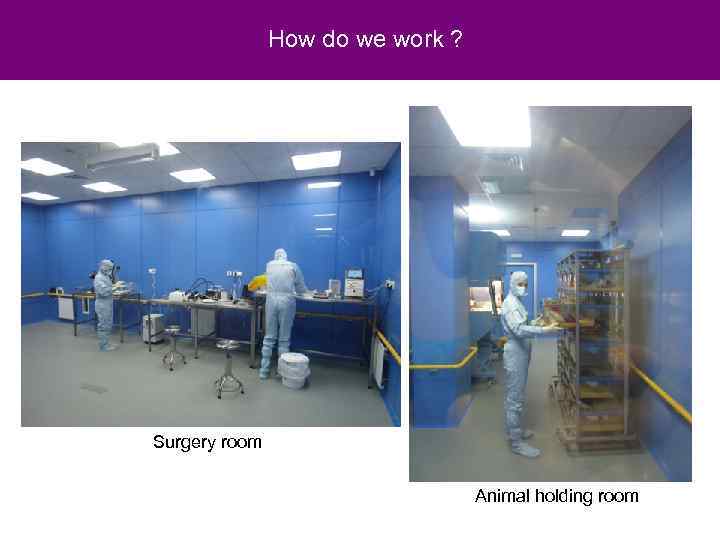 How do we work ? Surgery room Animal holding room
 New building of the Institute: novel opportunities • Aseptic surgical models in chronic experiments • Complete characterization of cardiovascular system: - Echo - MRI - LDF - cardiac catheterization (PV loops) - isolated heart, in vitro vessel reactivity • Assessment of acute and chronic toxicity • Investigation of specific activity of the drugs • Specific forms of toxicity
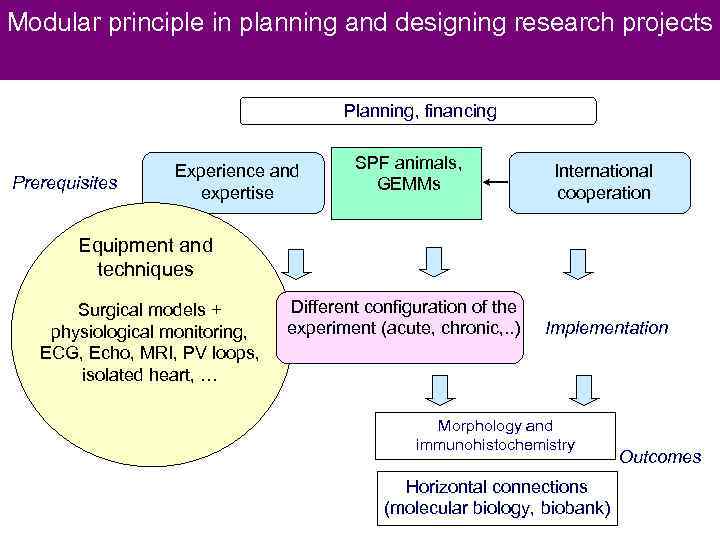 Modular principle in planning and designing research projects Planning, financing Prerequisites SPF animals, GEMMs International cooperation Different configuration of the experiment (acute, chronic, . . ) Implementation Experience and expertise Equipment and techniques Surgical models + physiological monitoring, ECG, Echo, MRI, PV loops, isolated heart, … Morphology and immunohistochemistry Horizontal connections (molecular biology, biobank) Outcomes
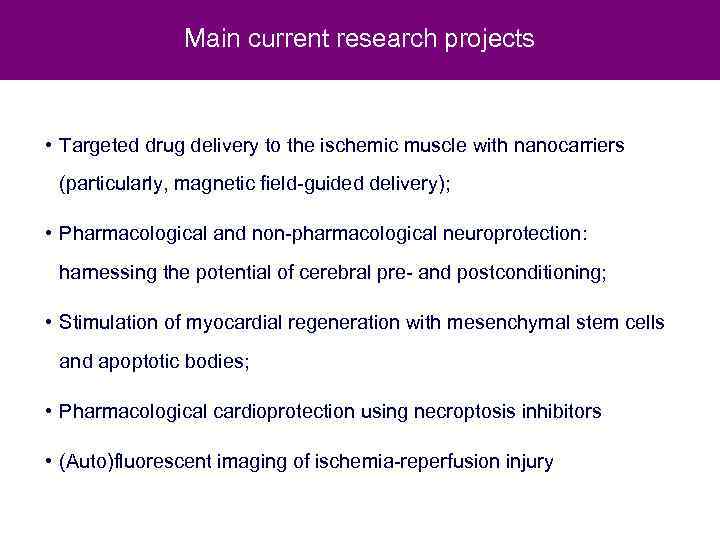 Main current research projects • Targeted drug delivery to the ischemic muscle with nanocarriers (particularly, magnetic field-guided delivery); • Pharmacological and non-pharmacological neuroprotection: harnessing the potential of cerebral pre- and postconditioning; • Stimulation of myocardial regeneration with mesenchymal stem cells and apoptotic bodies; • Pharmacological cardioprotection using necroptosis inhibitors • (Auto)fluorescent imaging of ischemia-reperfusion injury
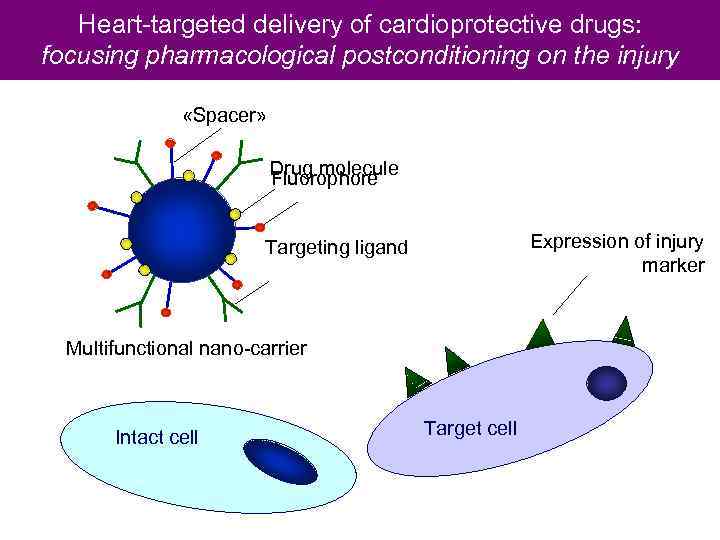 Heart-targeted delivery of cardioprotective drugs: focusing pharmacological postconditioning on the injury «Spacer» Drug molecule Fluorophore Expression of injury marker Targeting ligand Multifunctional nano-carrier Intact cell Target cell
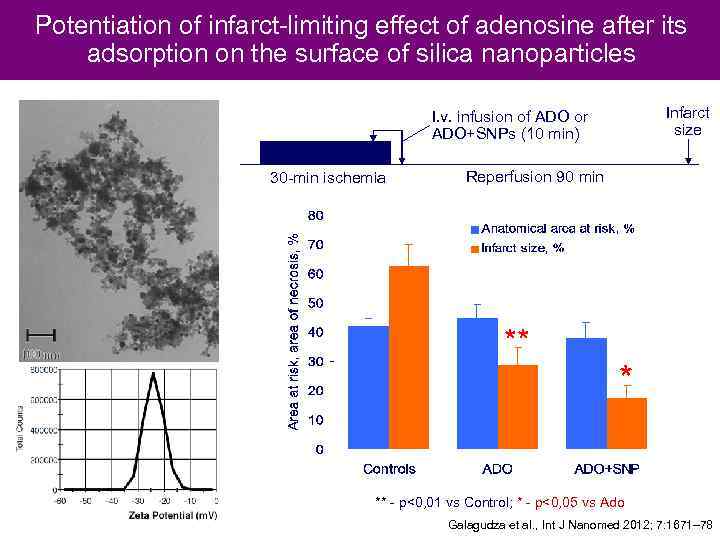 Potentiation of infarct-limiting effect of adenosine after its adsorption on the surface of silica nanoparticles Infarct size I. v. infusion of ADO or ADO+SNPs (10 min) 30 -min ischemia Reperfusion 90 min ** * ** - р<0, 01 vs Control; * - р<0, 05 vs Ado Galagudza et al. , Int J Nanomed 2012; 7: 1671– 78
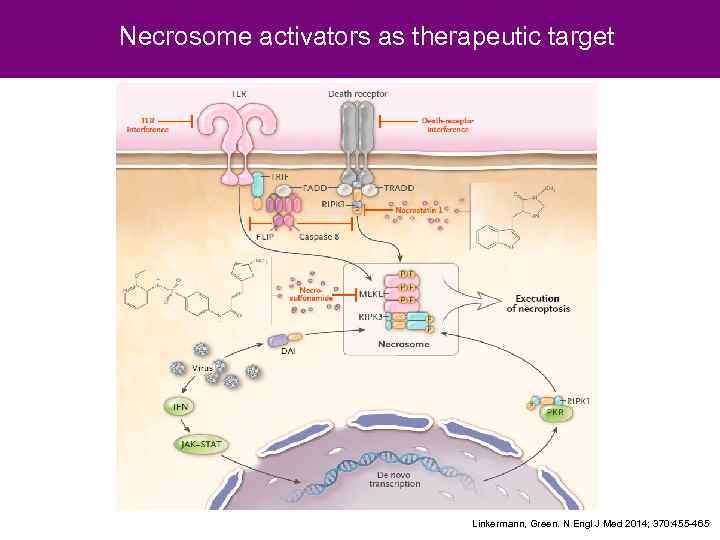 Necrosome activators as therapeutic target Linkermann, Green. N Engl J Med 2014; 370: 455 -465
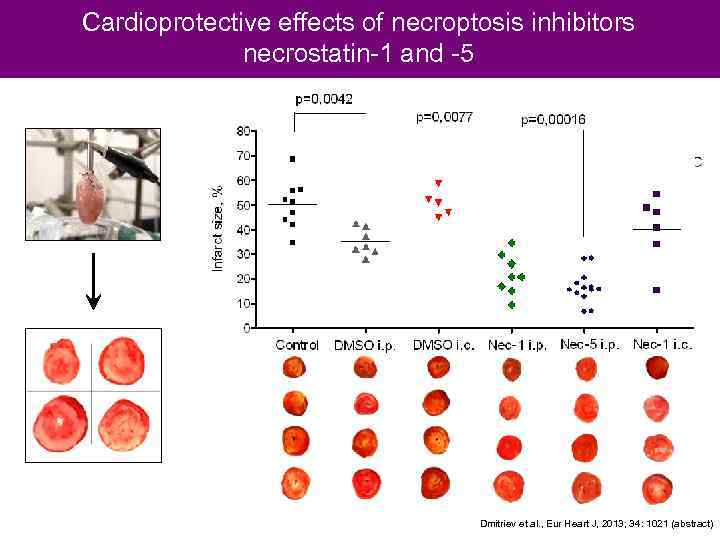 Cardioprotective effects of necroptosis inhibitors necrostatin-1 and -5 Dmitriev et al. , Eur Heart J, 2013; 34: 1021 (abstract)
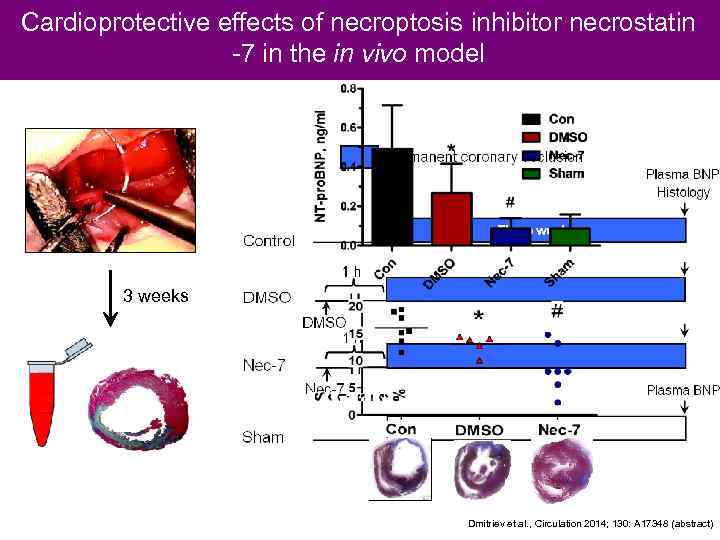 Cardioprotective effects of necroptosis inhibitor necrostatin -7 in the in vivo model 3 weeks Dmitriev et al. , Circulation 2014; 130: A 17348 (abstract)
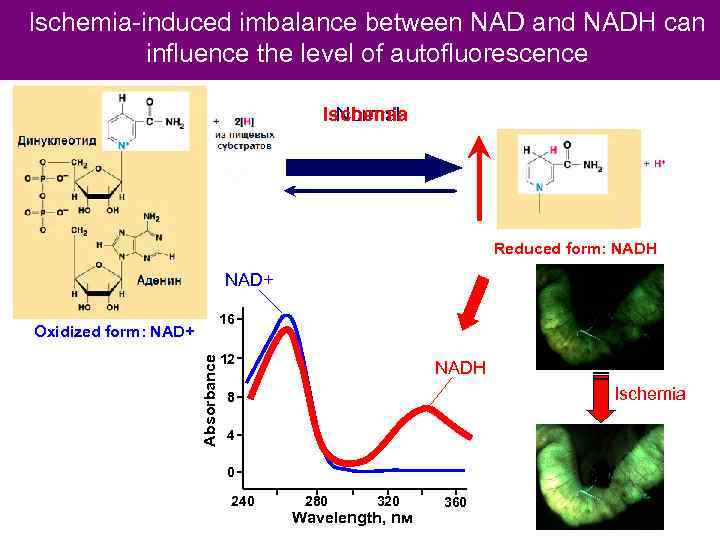 Ischemia-induced imbalance between NAD and NADH can influence the level of autofluorescence Ischemia Normal Reduced form: NADH NAD+ 16 Absorbance Oxidized form: NAD+ 12 NADH Ischemia 8 4 0 240 280 320 Wavelength, nм 360
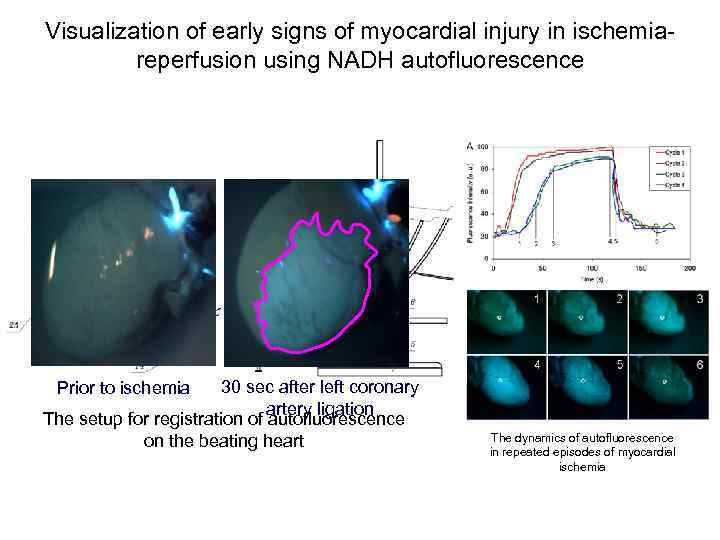 Visualization of early signs of myocardial injury in ischemiareperfusion using NADH autofluorescence 30 sec after left coronary artery ligation The setup for registration of autofluorescence on the beating heart Prior to ischemia The dynamics of autofluorescence in repeated episodes of myocardial ischemia
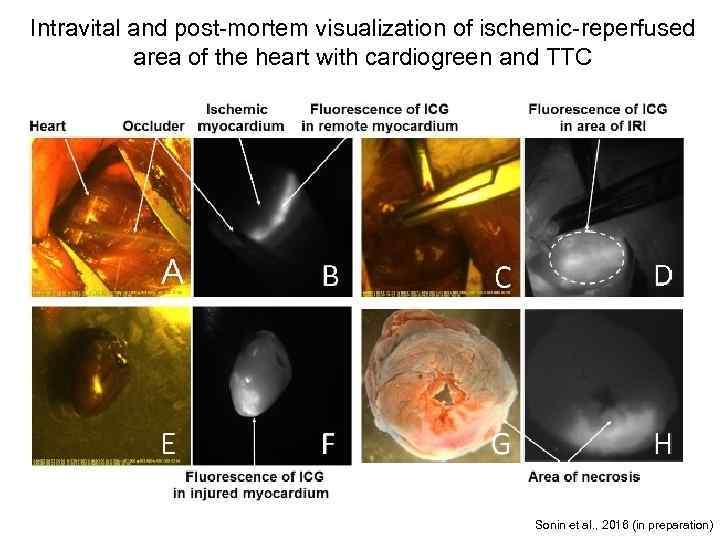 Intravital and post-mortem visualization of ischemic-reperfused area of the heart with cardiogreen and TTC Sonin et al. , 2016 (in preparation)
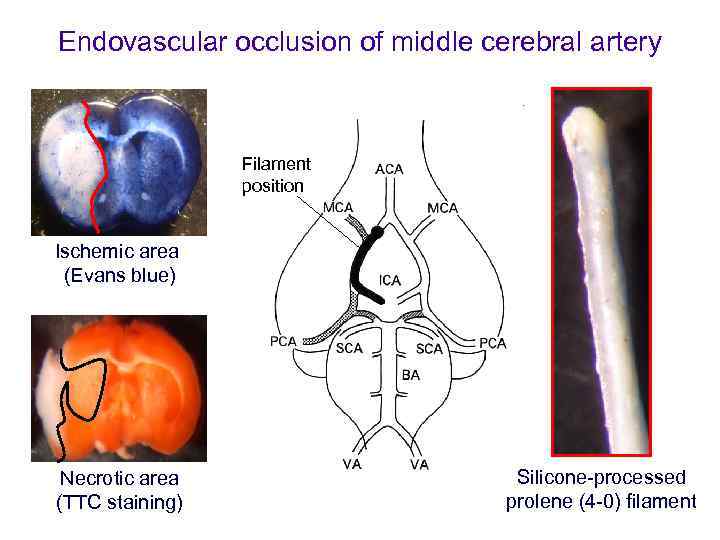 Endovascular occlusion of middle cerebral artery Filament position Ischemic area (Evans blue) Necrotic area (TTC staining) Silicone-processed prolene (4 -0) filament
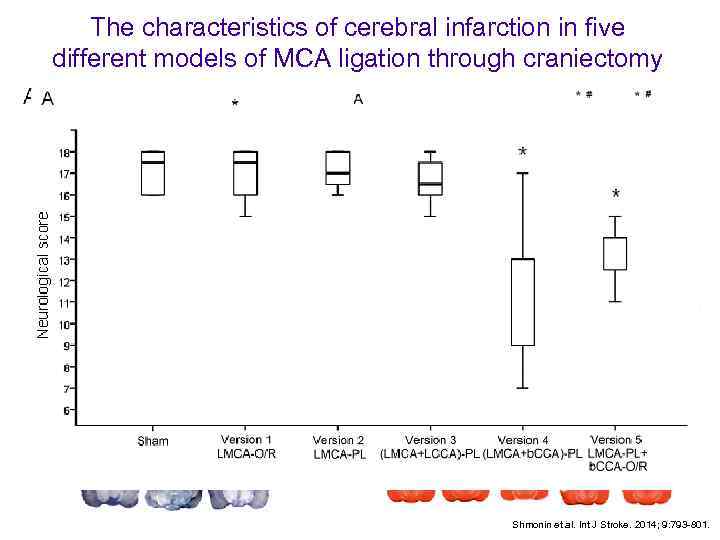 The characteristics of cerebral infarction in five different models of MCA ligation through craniectomy Shmonin et al. Int J Stroke. 2014; 9: 793 -801.
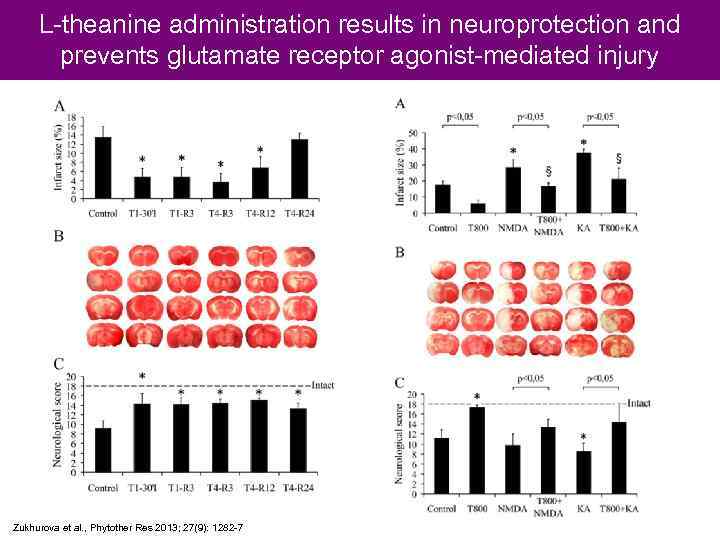 L-theanine administration results in neuroprotection and prevents glutamate receptor agonist-mediated injury Zukhurova et al. , Phytother Res 2013; 27(9): 1282 -7
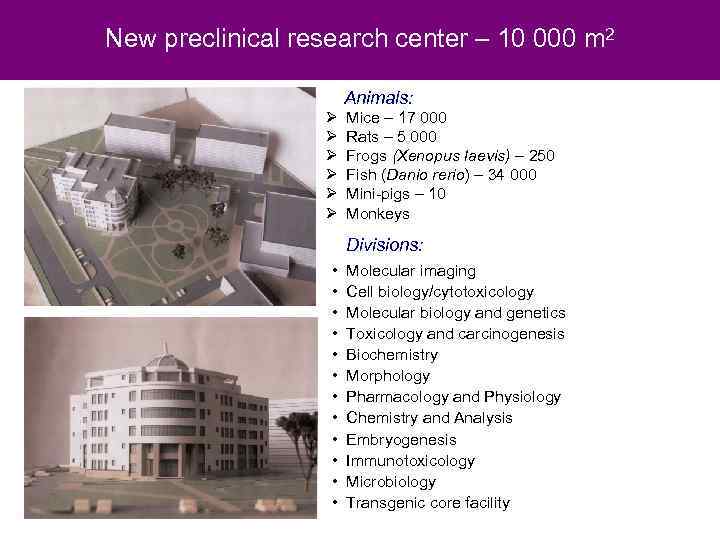 New preclinical research center – 10 000 m 2 Animals: Ø Ø Ø Mice – 17 000 Rats – 5 000 Frogs (Xenopus laevis) – 250 Fish (Danio rerio) – 34 000 Mini-pigs – 10 Monkeys Divisions: • • • Molecular imaging Cell biology/cytotoxicology Molecular biology and genetics Toxicology and carcinogenesis Biochemistry Morphology Pharmacology and Physiology Chemistry and Analysis Embryogenesis Immunotoxicology Microbiology Transgenic core facility
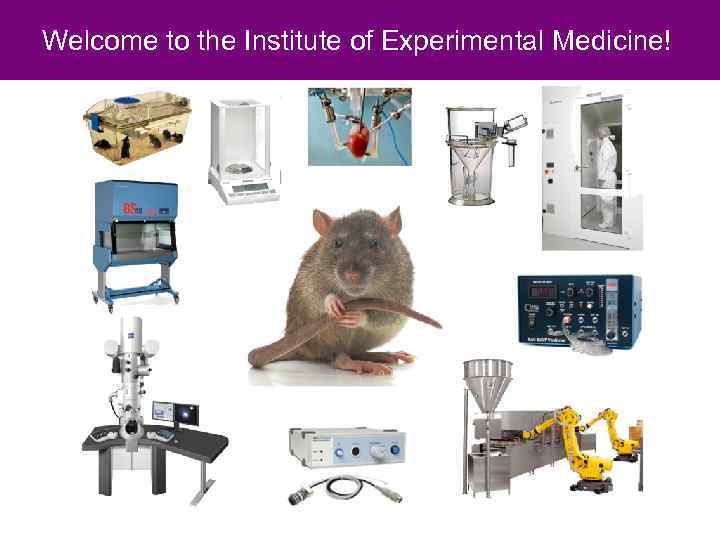 Welcome to the Institute of Experimental Medicine!