 Скачать презентацию Experiences with 9 years of global data collection
0b0ed2ace253af83ad2f05ffbf7bfb3f.ppt
- Количество слайдов: 35



Experiences with 9 years of global data collection www. fibl. org Helga Willer, Fi. BL
www. fibl. org Programme 6. 30 - 6. 35 pm Introduction Lukas Kilcher, Fi. BL. Frick, Switzerland 6. 35 -6. 40 pm Introduction: Experiences with 9 years of global data collection Helga Willer, Fi. BL 6. 40 -6. 50 pm Collection of the African data: Experiences of the 2008 survey Hervé Bouagnimbeck, IFOAM 6. 50 -7. 00 pm Data based on information from operators: Opportunities and challenges Munshimbwe Chitalu, Organic Producers and Processors Association of Zambia (OPPAZ), Coordinator/Chief Executive Officer 7. 00 -7. 10 pm Data based on information from inspection bodies: Opportunities and challenges Anne Macey, Canadian Organic Growers 7. 10 -7. 20 pm Options for increased cooperation with inspection/certification bodies Michel Reynaud, Ecocert Discussion
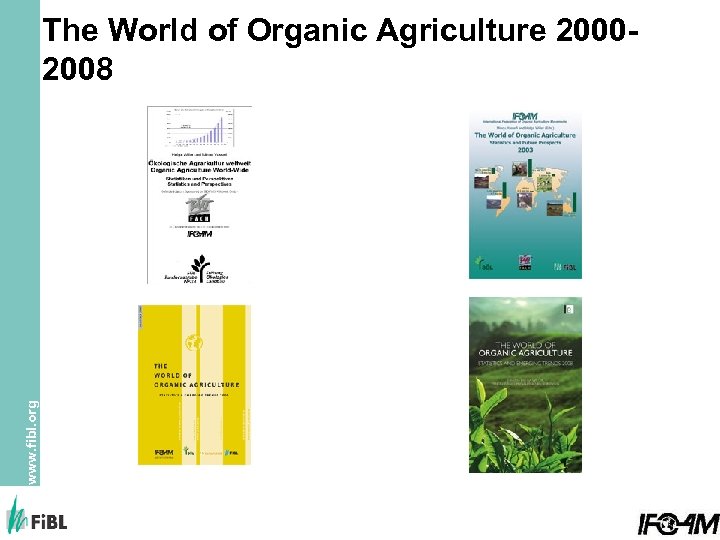
www. fibl. org The World of Organic Agriculture 20002008
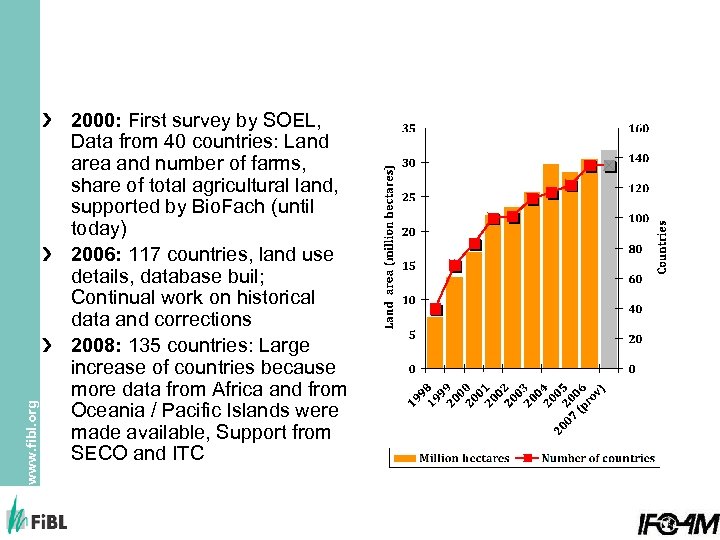
www. fibl. org 2000: First survey by SOEL, Data from 40 countries: Land area and number of farms, share of total agricultural land, supported by Bio. Fach (until today) 2006: 117 countries, land use details, database buil; Continual work on historical data and corrections 2008: 135 countries: Large increase of countries because more data from Africa and from Oceania / Pacific Islands were made available, Support from SECO and ITC
Information currently available, future ? Currently available Totals by country and continent global Shares by country Farms Land use by country Crop information www. fibl. org www. organic-world. net
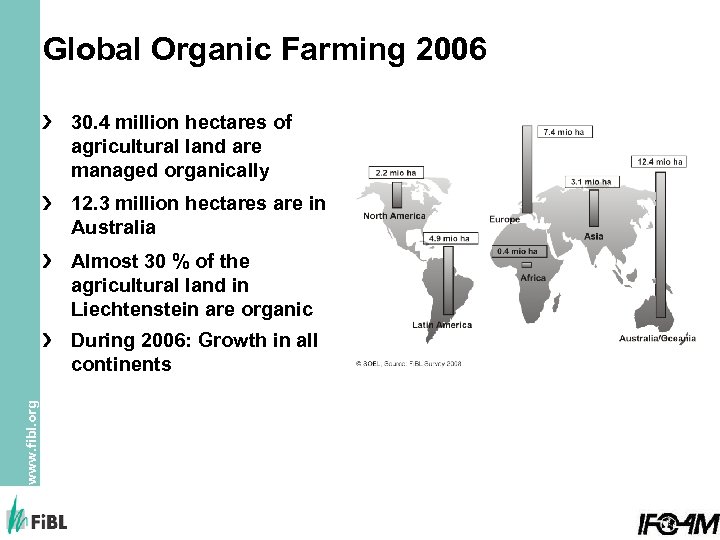
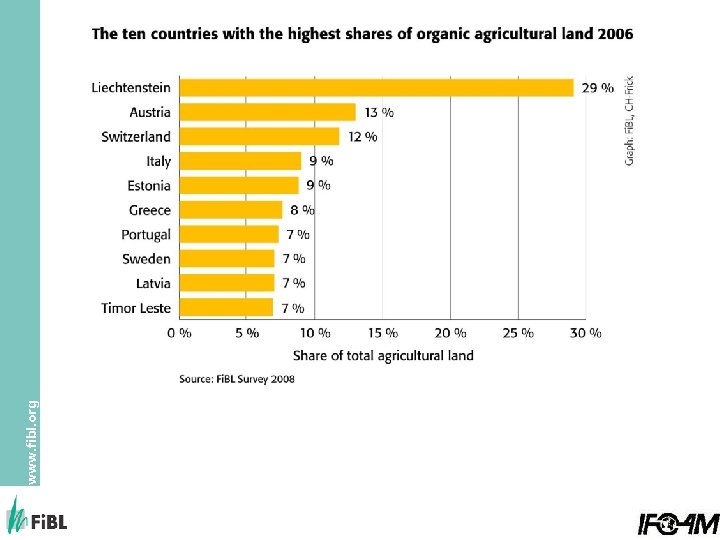
Global Organic Farming 2006 30. 4 million hectares of agricultural land are managed organically 12. 3 million hectares are in Australia Almost 30 % of the agricultural land in Liechtenstein are organic www. fibl. org During 2006: Growth in all continents
www. fibl. org
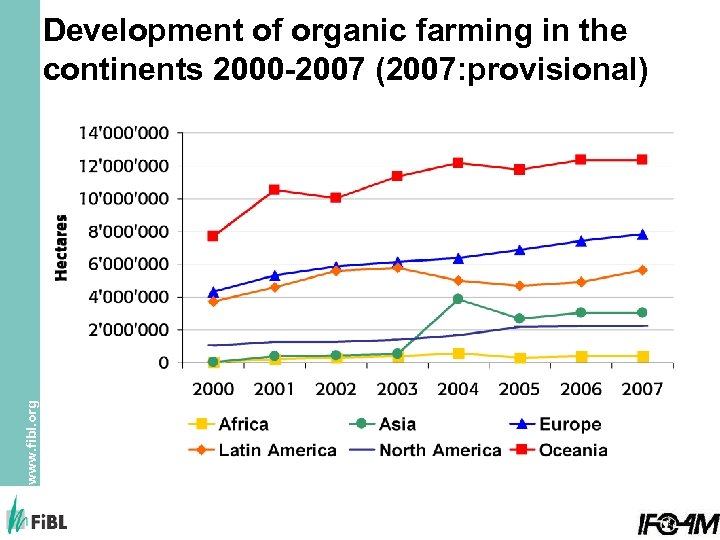
www. fibl. org Development of organic farming in the continents 2000 -2007 (2007: provisional)
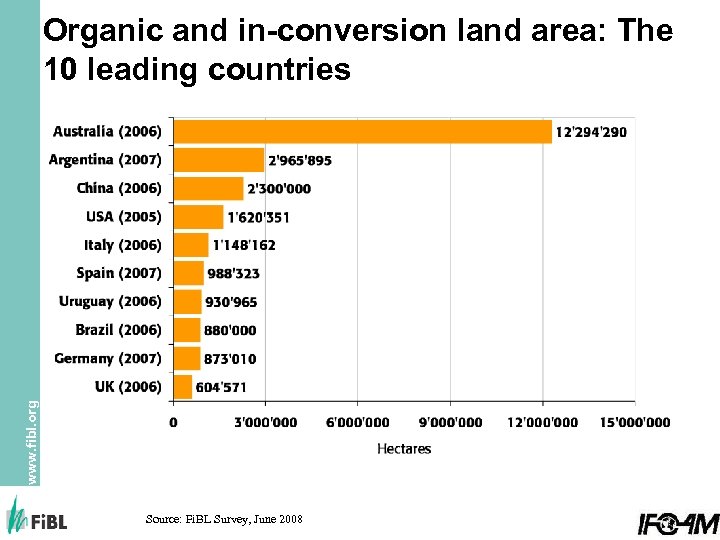
www. fibl. org Organic and in-conversion land area: The 10 leading countries Source: Fi. BL Survey, June 2008
www. fibl. org
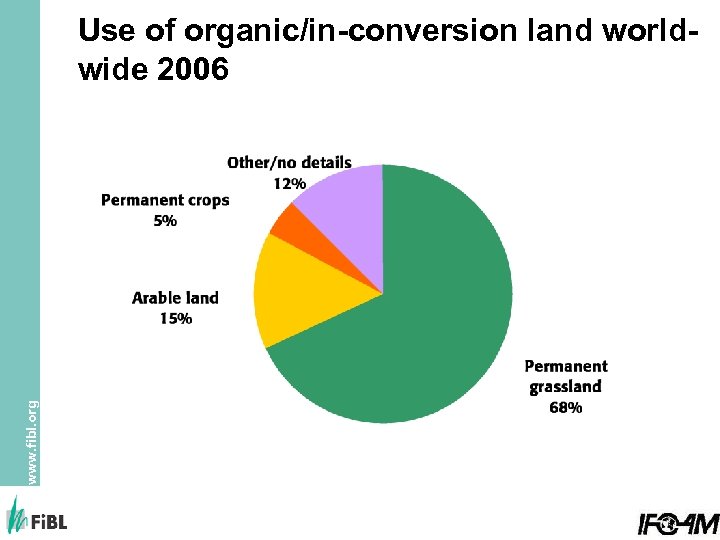
www. fibl. org Use of organic/in-conversion land worldwide 2006
www. fibl. org
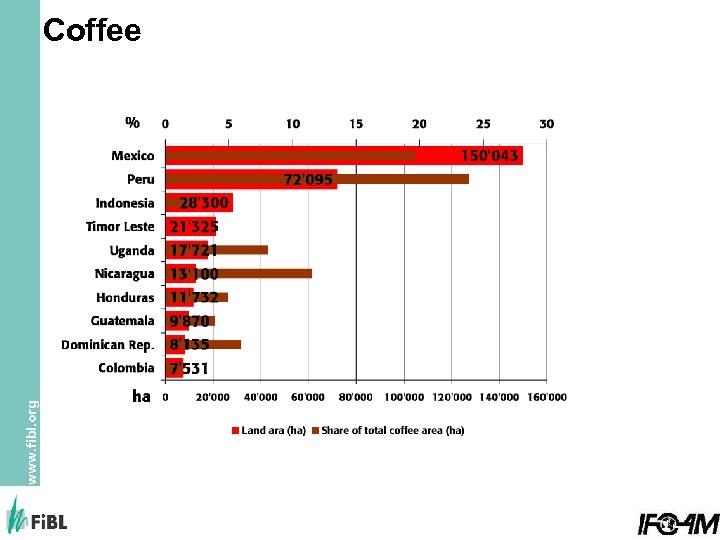
www. fibl. org Coffee
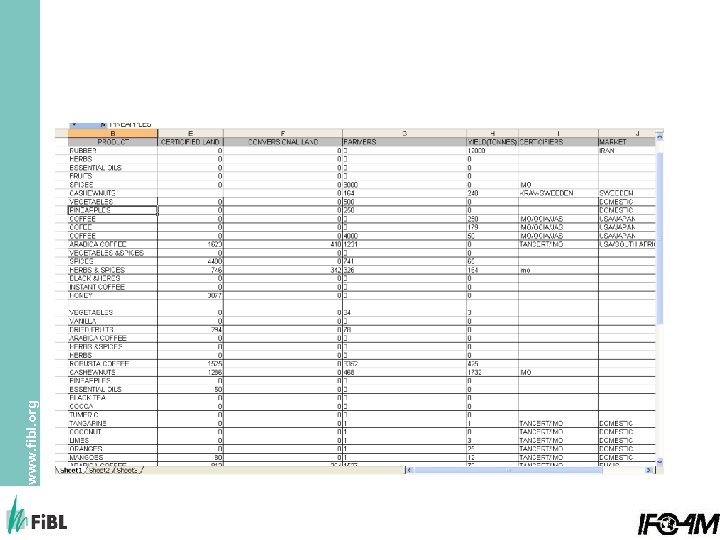
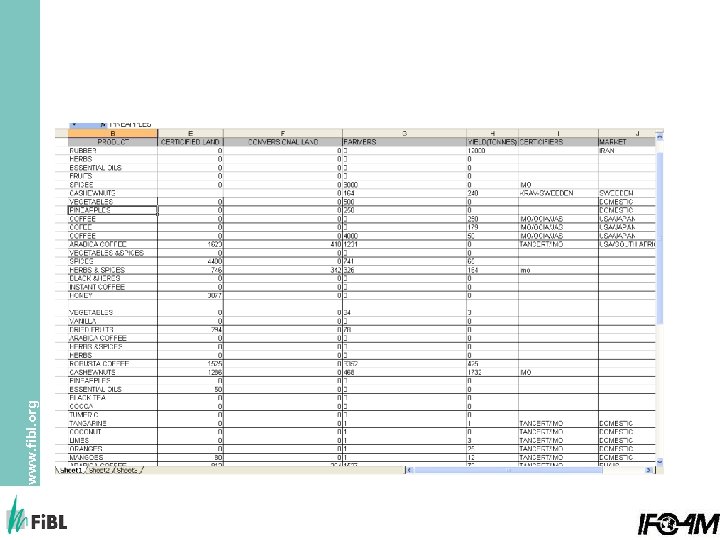
How do we collect the data Originally all kinds of sources were used. 2008: Either experts from the country (government or private), or official organic farming statistics (USDA, Eurostat) www. fibl. org If no country experts are available we try to get the data from the certifiers ourselves: But: we do not have an overview which certifiers are active in the country, so these are uncomplete data
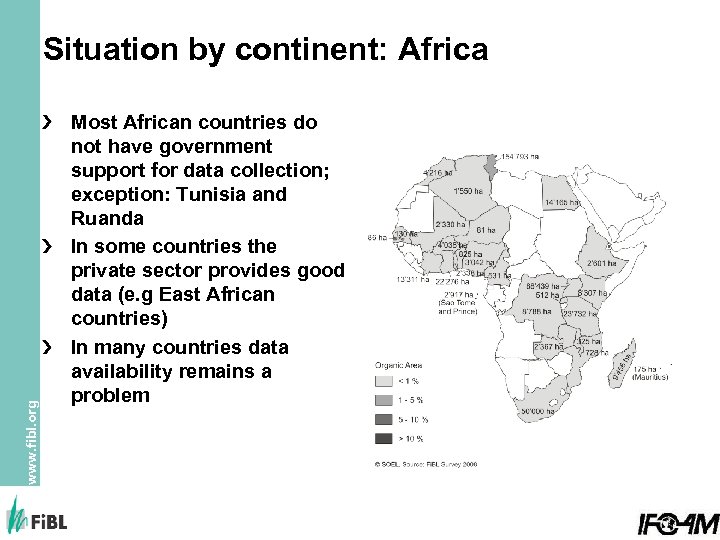
www. fibl. org Situation by continent: Africa Most African countries do not have government support for data collection; exception: Tunisia and Ruanda In some countries the private sector provides good data (e. g East African countries) In many countries data availability remains a problem
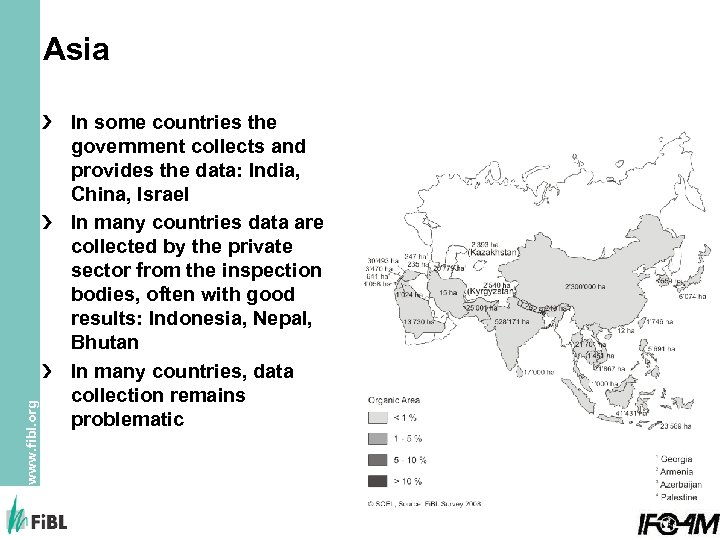
www. fibl. org Asia In some countries the government collects and provides the data: India, China, Israel In many countries data are collected by the private sector from the inspection bodies, often with good results: Indonesia, Nepal, Bhutan In many countries, data collection remains problematic
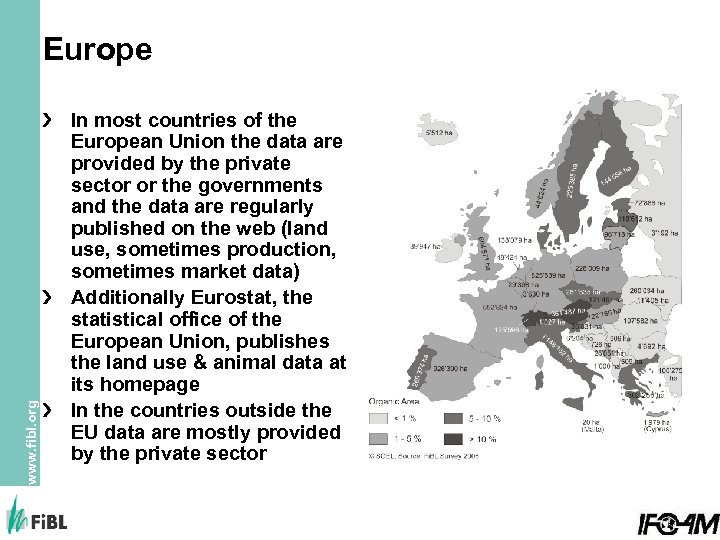
www. fibl. org Europe In most countries of the European Union the data are provided by the private sector or the governments and the data are regularly published on the web (land use, sometimes production, sometimes market data) Additionally Eurostat, the statistical office of the European Union, publishes the land use & animal data at its homepage In the countries outside the EU data are mostly provided by the private sector
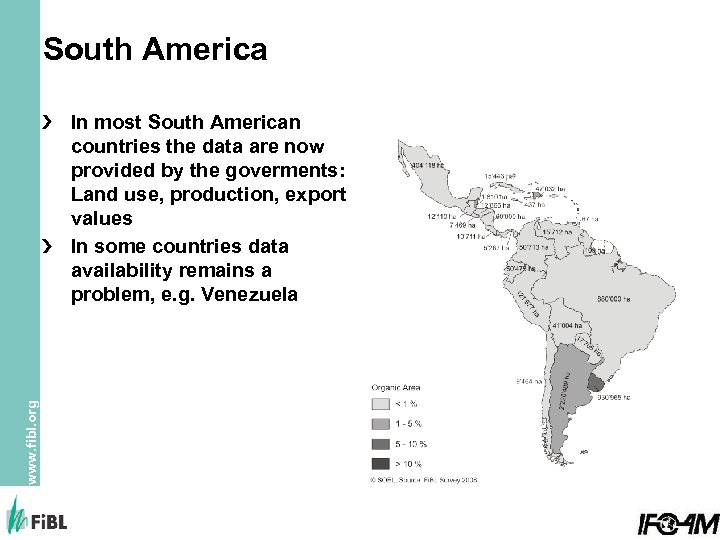
South America www. fibl. org In most South American countries the data are now provided by the goverments: Land use, production, export values In some countries data availability remains a problem, e. g. Venezuela
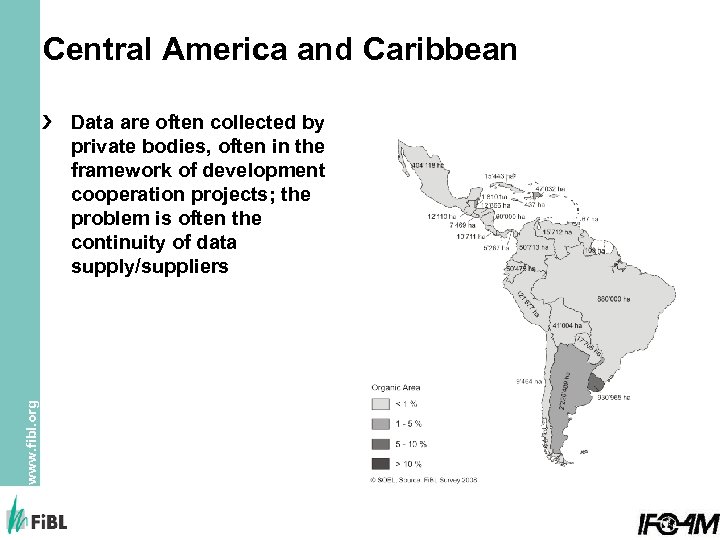
Central America and Caribbean www. fibl. org Data are often collected by private bodies, often in the framework of development cooperation projects; the problem is often the continuity of data supply/suppliers
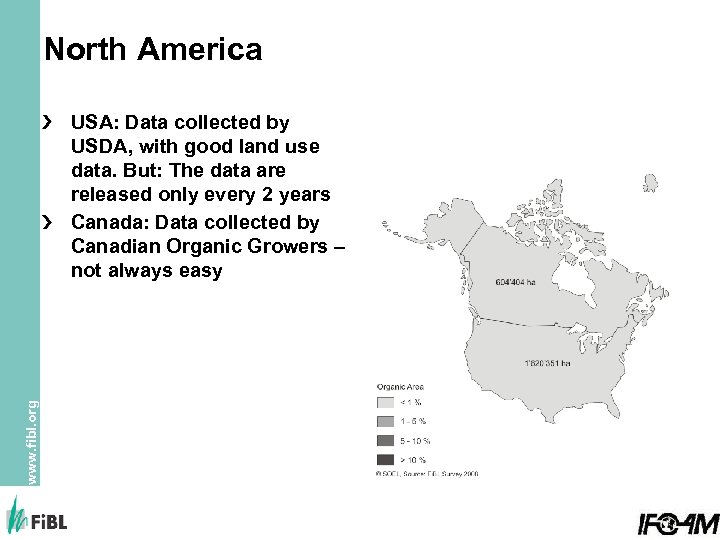
North America www. fibl. org USA: Data collected by USDA, with good land use data. But: The data are released only every 2 years Canada: Data collected by Canadian Organic Growers – not always easy
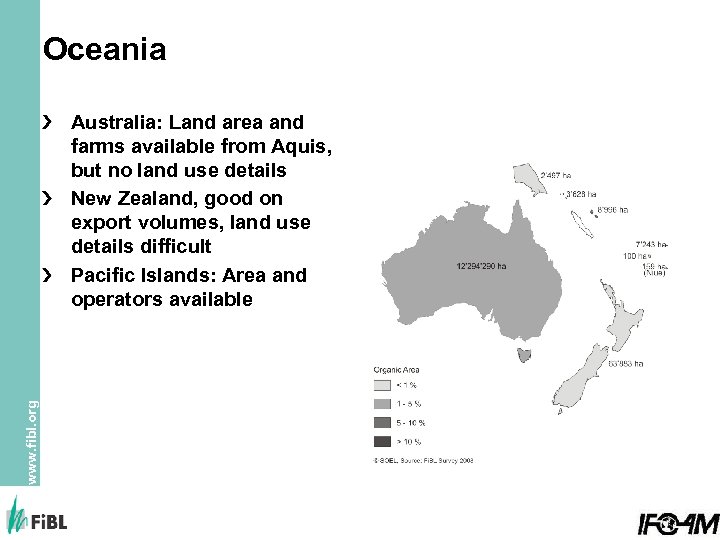
Oceania www. fibl. org Australia: Land area and farms available from Aquis, but no land use details New Zealand, good on export volumes, land use details difficult Pacific Islands: Area and operators available
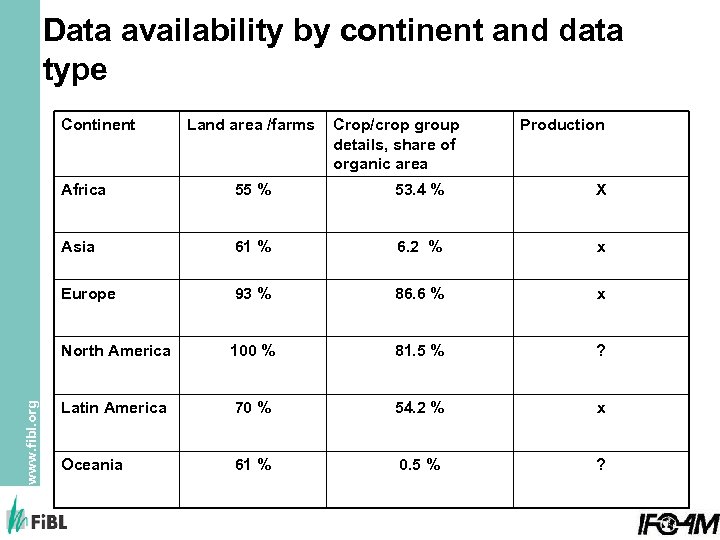
Data availability by continent and data type Continent Land area /farms Crop/crop group details, share of organic area Production 55 % 53. 4 % X Asia 61 % 6. 2 % x Europe 93 % 86. 6 % x North America www. fibl. org Africa 100 % 81. 5 % ? Latin America 70 % 54. 2 % x Oceania 61 % 0. 5 % ?
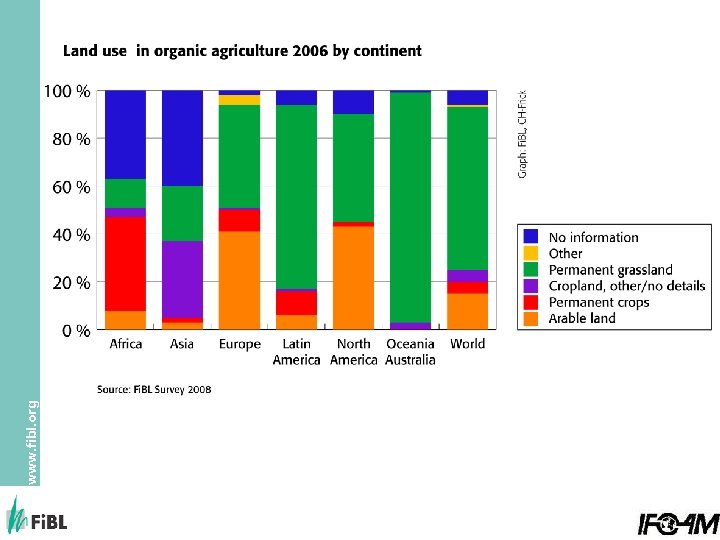
www. fibl. org Classification of land use data In 2006 land use / crop data were collected for the first time At that time a classifcation system was developed according to the data received, inspired by the Eurostat classification and the FAO system Major revision now in cooperation with the ZMP, German market data collection body Important for international classification or any classification: Do not aggregate data but provide lowest possible level. Outlook: Develop a classification system for processed foods/final products in order to process data on volumes and market values
Outlook www. fibl. org Improve cooperation and information exchange with data suppliers Develop classification system further, particularly for processed/final products Improve database, make data better accessible via the internet and other channels Expand scope of data collected Full organic – in conversion status Production data, i. e. volumes Exports / imports; volumes, values Market values of crops
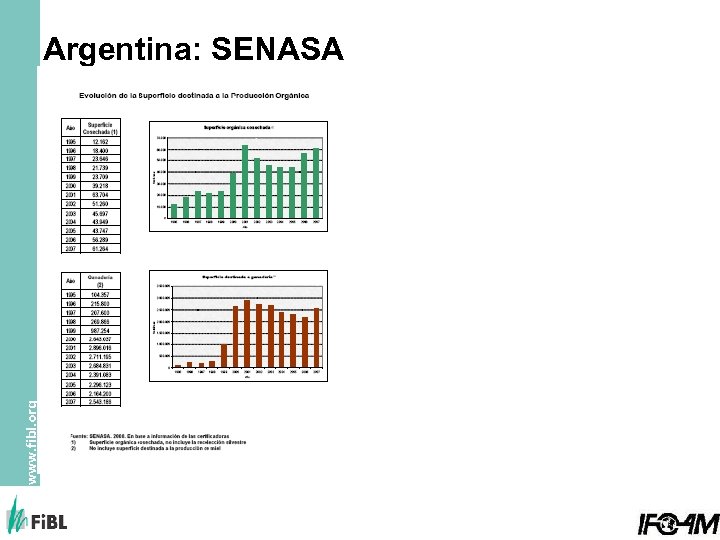
www. fibl. org Argentina: SENASA
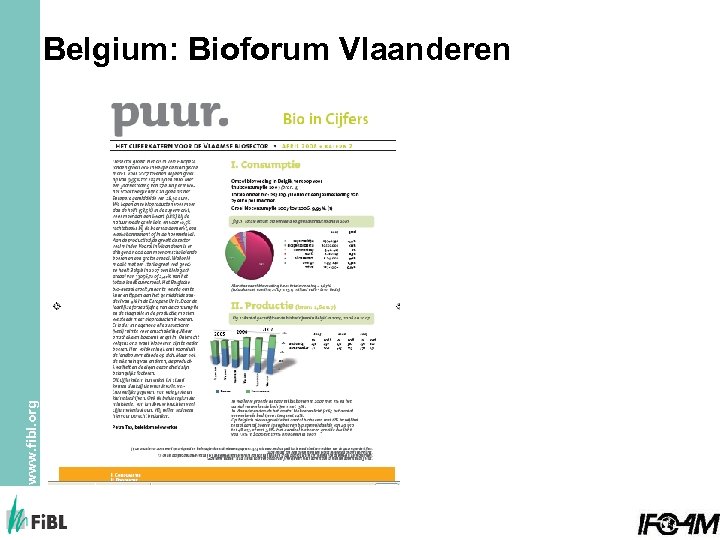
www. fibl. org Belgium: Bioforum Vlaanderen
www. fibl. org Bio-Markt: Anteile wertmässig per 2007
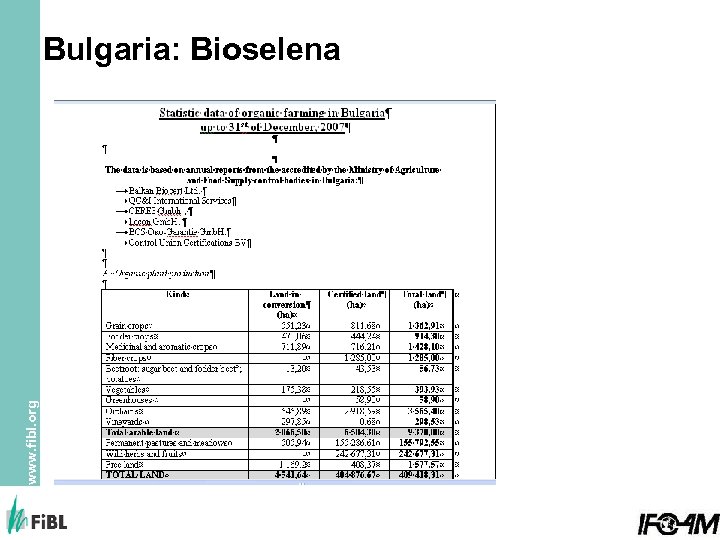
www. fibl. org Bulgaria: Bioselena
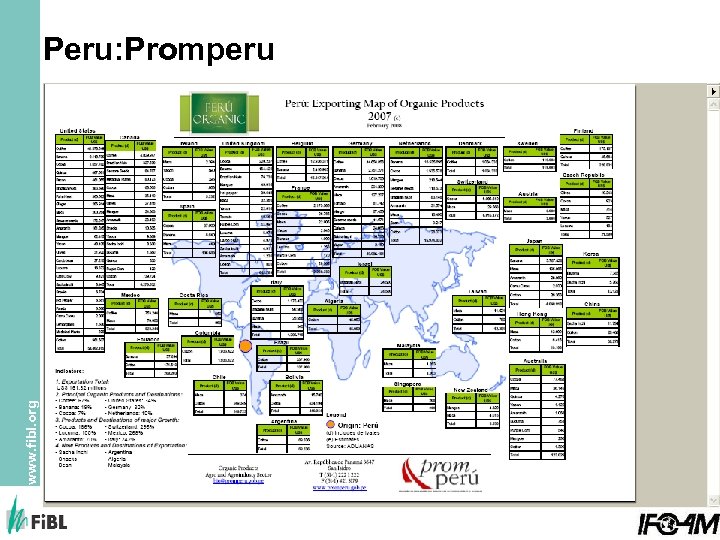
www. fibl. org Peru: Promperu
www. fibl. org
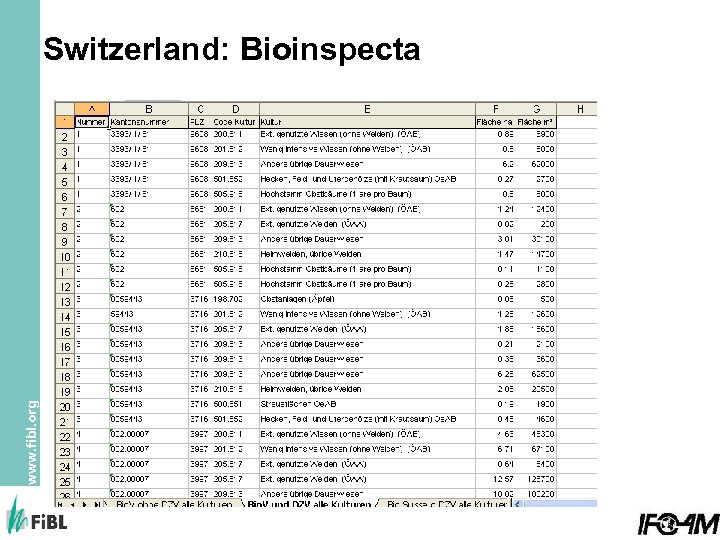
www. fibl. org Switzerland: Bioinspecta
www. fibl. org
www. fibl. org
www. fibl. org Individual farm data
www. fibl. org
Скачать презентацию Experiences with 9 years of global data collection
0b0ed2ace253af83ad2f05ffbf7bfb3f.ppt