


 Скачать презентацию Experiences of FER-a in the implemetation of the
430f86f9ca9f4e4b4e1daee97fe60e85.ppt
- Количество слайдов: 71
 Experiences of FER-a in the implemetation of the Bologna process Vedran Mornar November 8 th, 2007
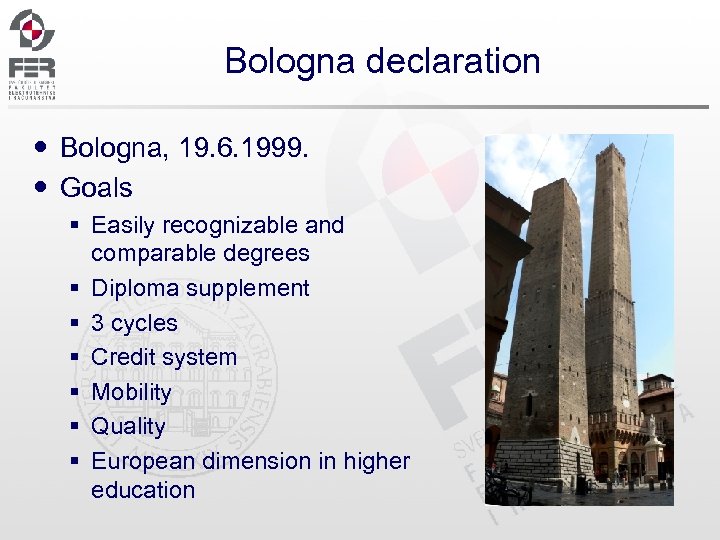 Bologna declaration Bologna, 19. 6. 1999. Goals § Easily recognizable and comparable degrees § Diploma supplement § 3 cycles § Credit system § Mobility § Quality § European dimension in higher education
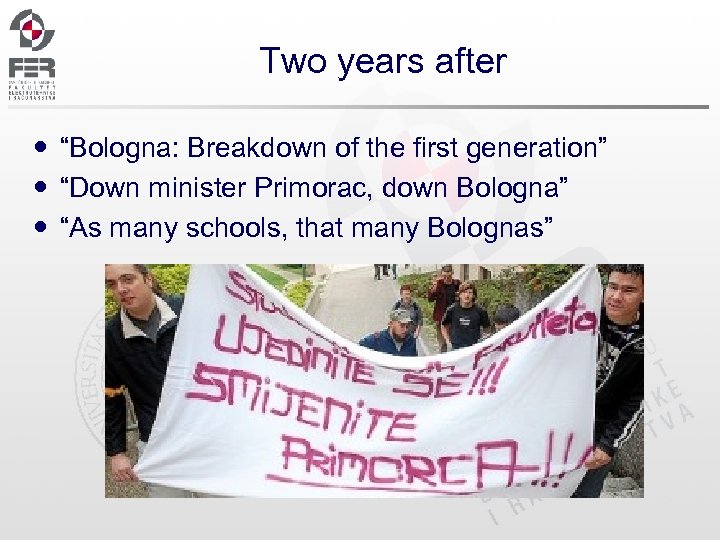 Two years after “Bologna: Breakdown of the first generation” “Down minister Primorac, down Bologna” “As many schools, that many Bolognas”
 Is it so?
 There are ’s
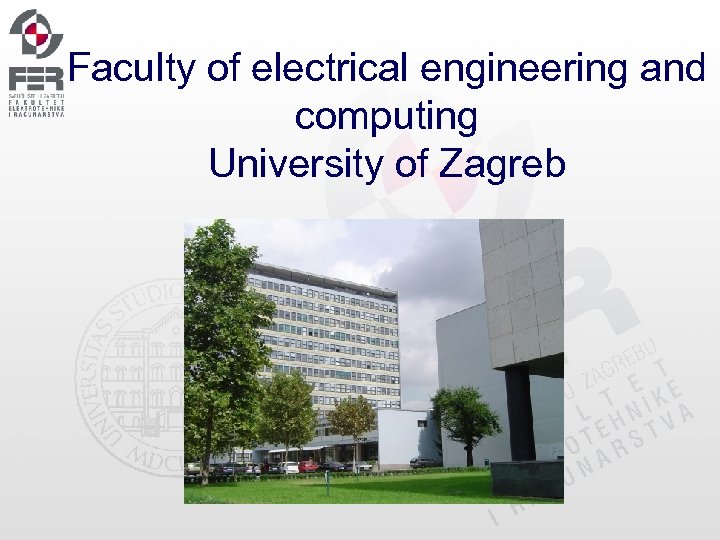 Faculty of electrical engineering and computing University of Zagreb
 University of Zagreb Founded in 1669 33 constituents, 60000 students So far: § 200. 000 graduates § 18. 000 magisters § 8. 000 doctors 50% of scientific production in Croatia
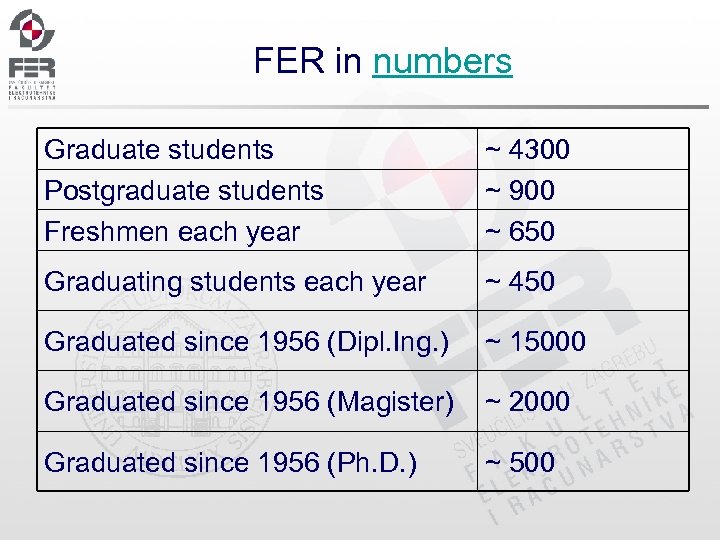 FER in numbers Graduate students Postgraduate students Freshmen each year ~ 4300 ~ 900 ~ 650 Graduating students each year ~ 450 Graduated since 1956 (Dipl. Ing. ) ~ 15000 Graduated since 1956 (Magister) ~ 2000 Graduated since 1956 (Ph. D. ) ~ 500
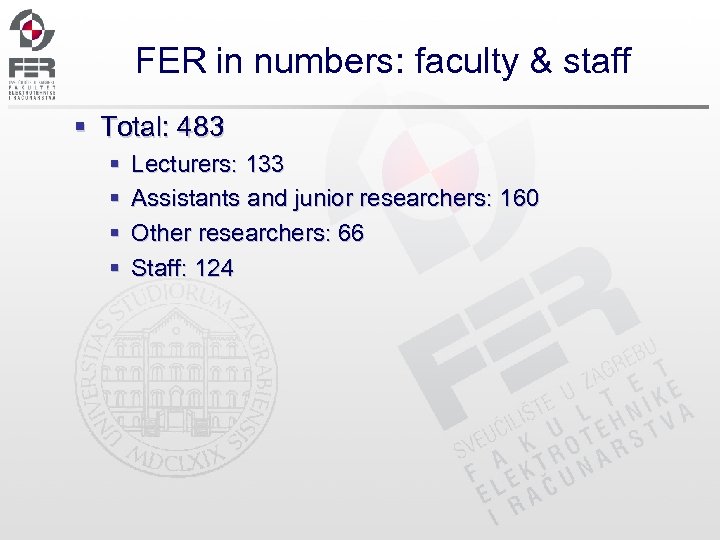 FER in numbers: faculty & staff § Total: 483 § § Lecturers: 133 Assistants and junior researchers: 160 Other researchers: 66 Staff: 124
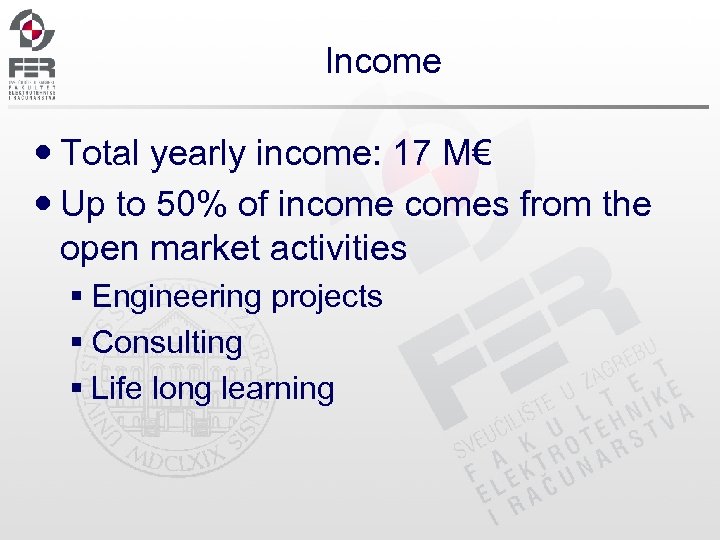 Income Total yearly income: 17 M€ Up to 50% of incomes from the open market activities § Engineering projects § Consulting § Life long learning
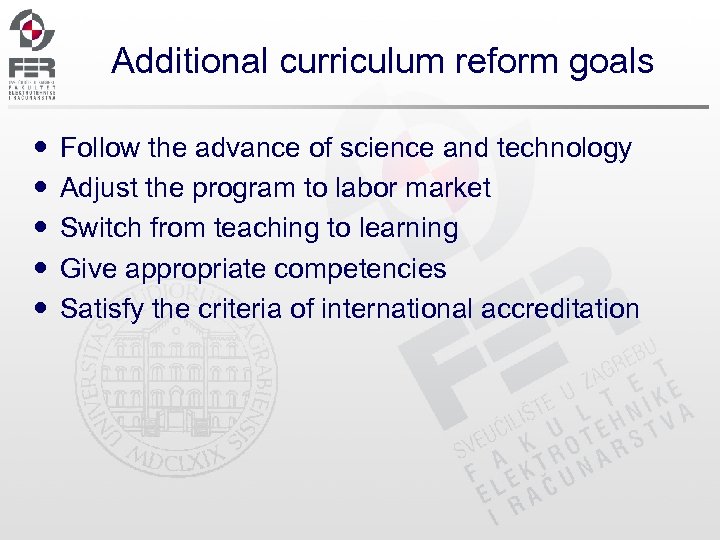 Additional curriculum reform goals Follow the advance of science and technology Adjust the program to labor market Switch from teaching to learning Give appropriate competencies Satisfy the criteria of international accreditation
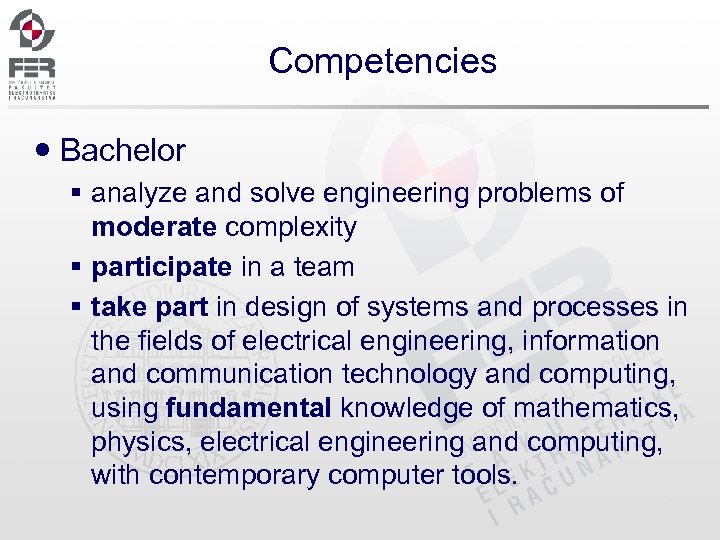 Competencies Bachelor § analyze and solve engineering problems of moderate complexity § participate in a team § take part in design of systems and processes in the fields of electrical engineering, information and communication technology and computing, using fundamental knowledge of mathematics, physics, electrical engineering and computing, with contemporary computer tools.
 Competencies Master § analyze and solve complex engineering problems § lead a team § design the systems and processes in the fields of electrical engineering, information and communication technology and computing, using advanced knowledge of mathematics, physics, electrical engineering and computing, with contemporary computer tools.
 Study programs since 2005. /2006. § 3 + 2 + 3 § Bachelor level (3 years) § Electrical engineering and information technology § Computing First year common to all the students Specialization in 3. year with course modules
 Study programs since 2005. /2006. § Master level (2 years) § Electrical engineering and information technology § Automation § Control and robotics § Electronical and computer engineering § Power systems
 Study programs since 2005. /2006. § Master level (2 years) § Information and communication technology § Information processing § Telecommunications and informatics § Wireless technologies
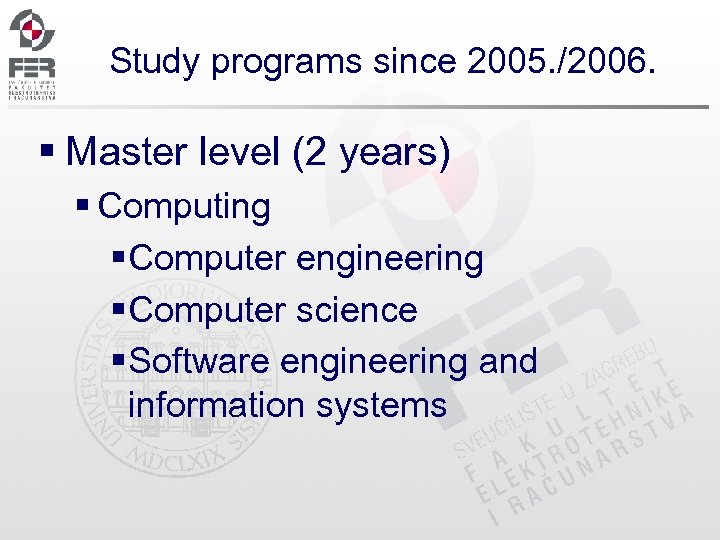 Study programs since 2005. /2006. § Master level (2 years) § Computing § Computer engineering § Computer science § Software engineering and information systems
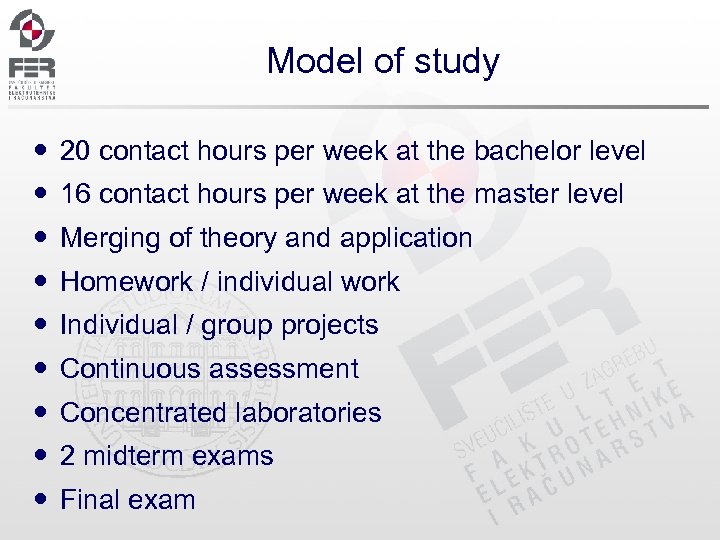 Model of study 20 contact hours per week at the bachelor level 16 contact hours per week at the master level Merging of theory and application Homework / individual work Individual / group projects Continuous assessment Concentrated laboratories 2 midterm exams Final exam
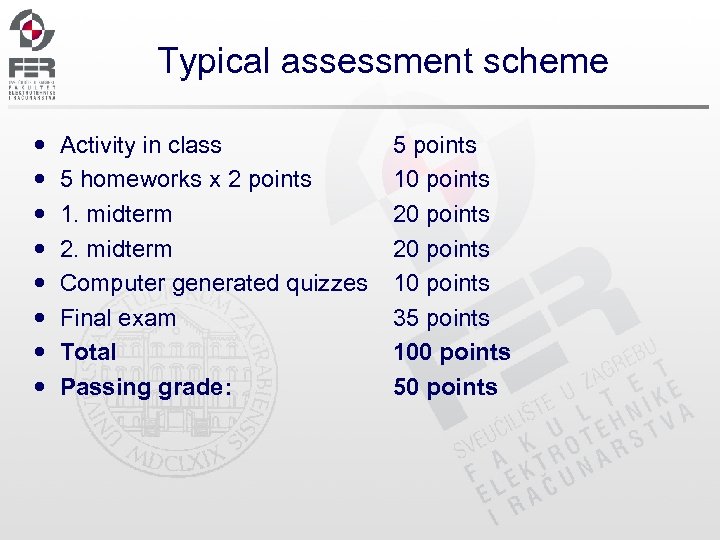 Typical assessment scheme Activity in class 5 homeworks x 2 points 1. midterm 2. midterm Computer generated quizzes Final exam Total Passing grade: 5 points 10 points 20 points 10 points 35 points 100 points 50 points
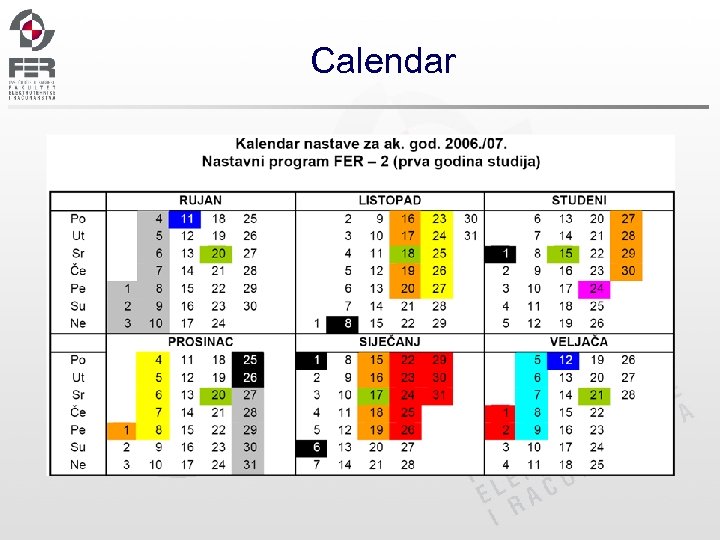 Calendar
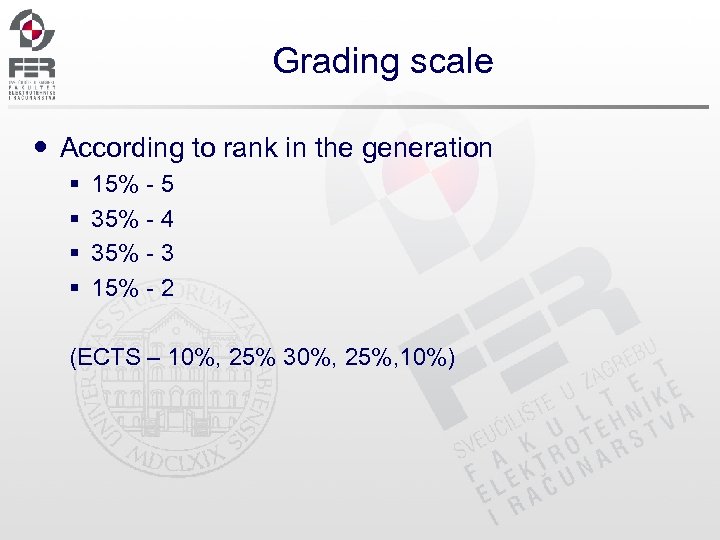 Grading scale According to rank in the generation § § 15% - 5 35% - 4 35% - 3 15% - 2 (ECTS – 10%, 25% 30%, 25%, 10%)
 But how to do it, with > 1000 students in a generation?
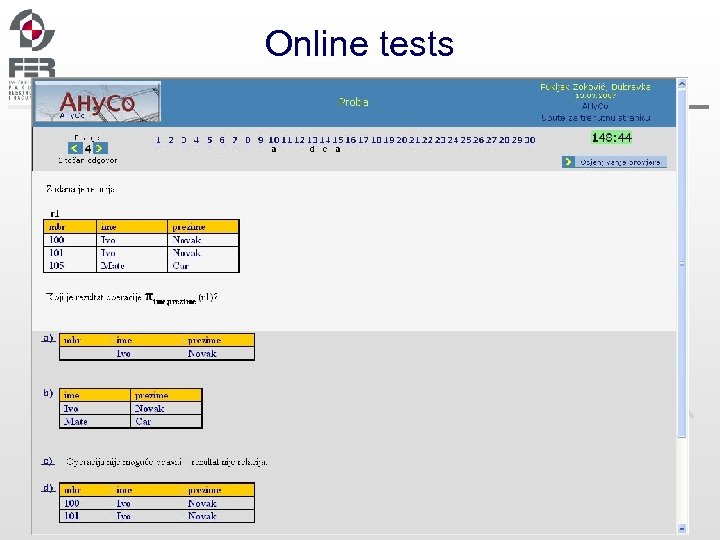
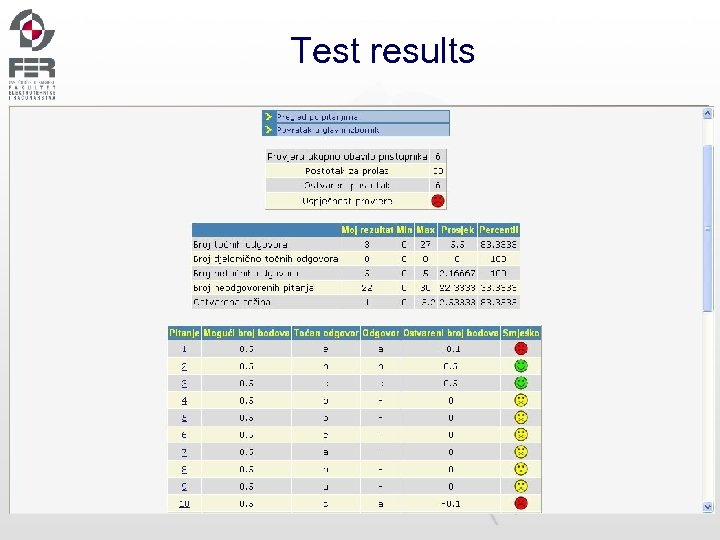
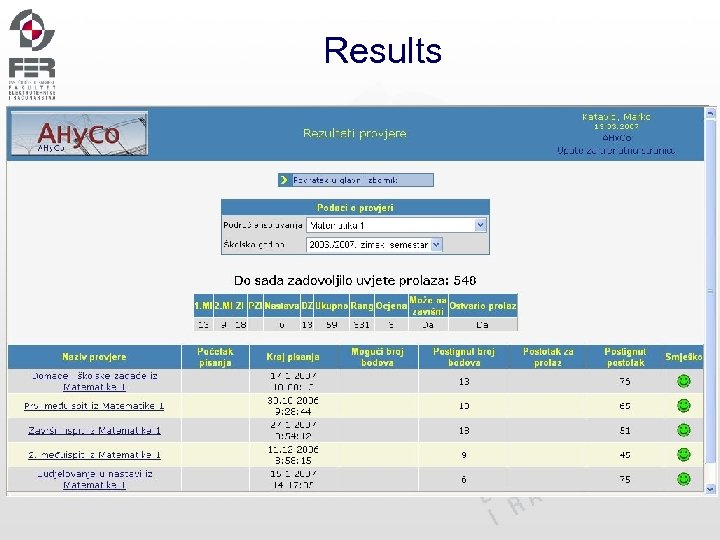
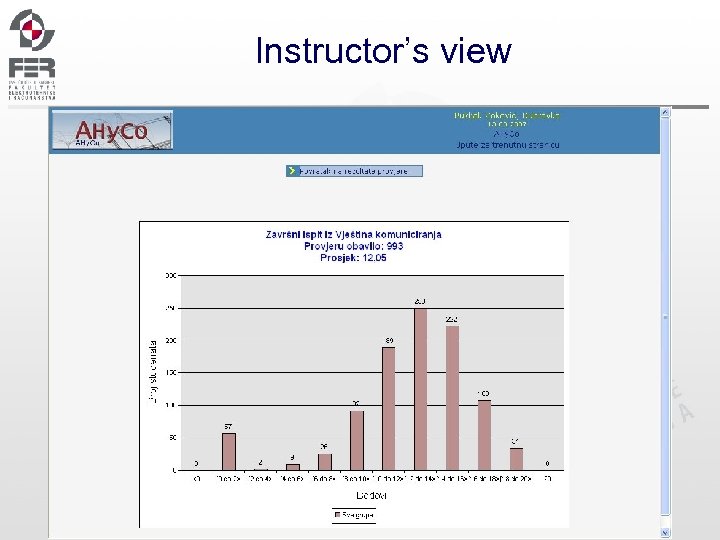
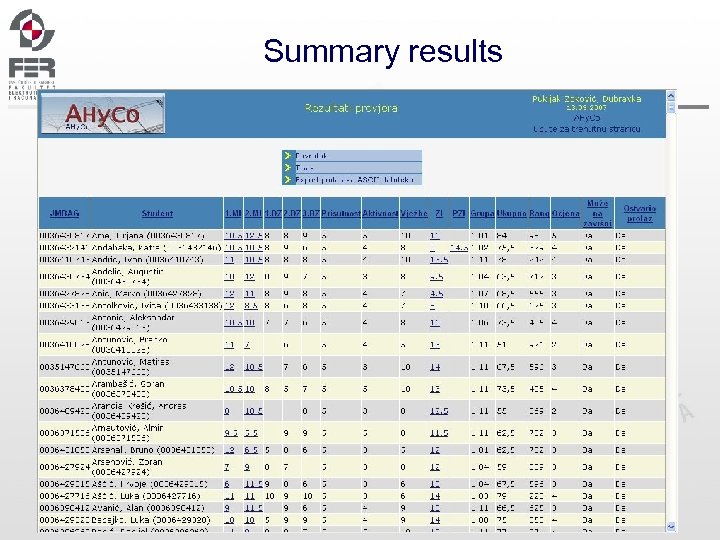
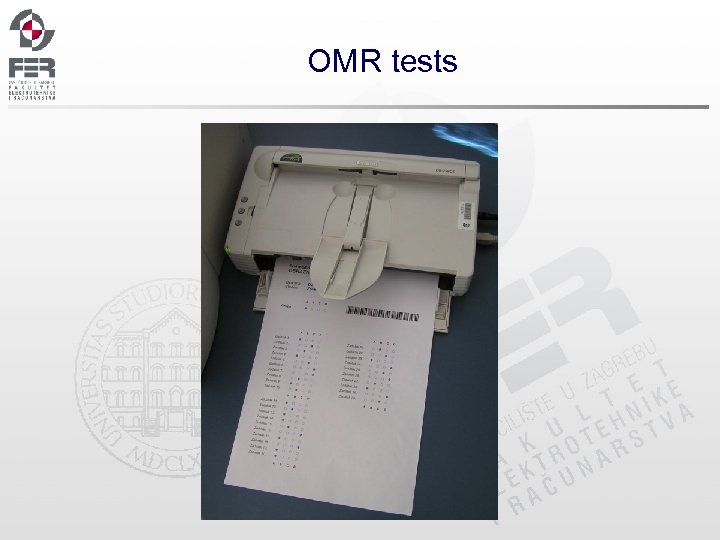
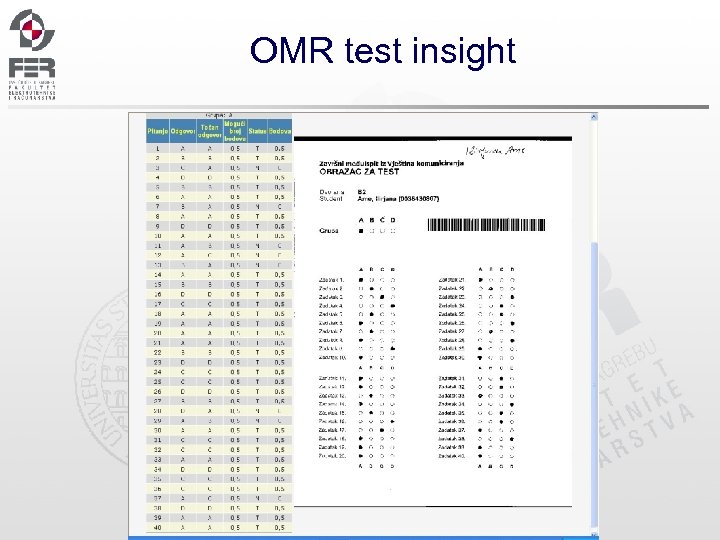
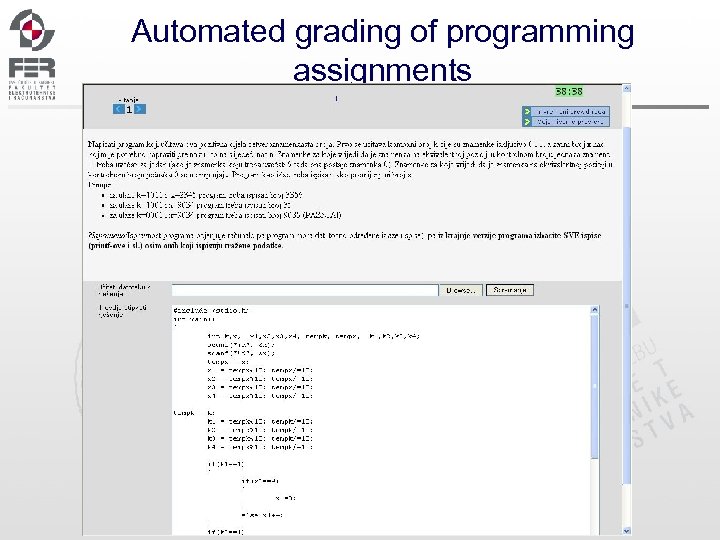
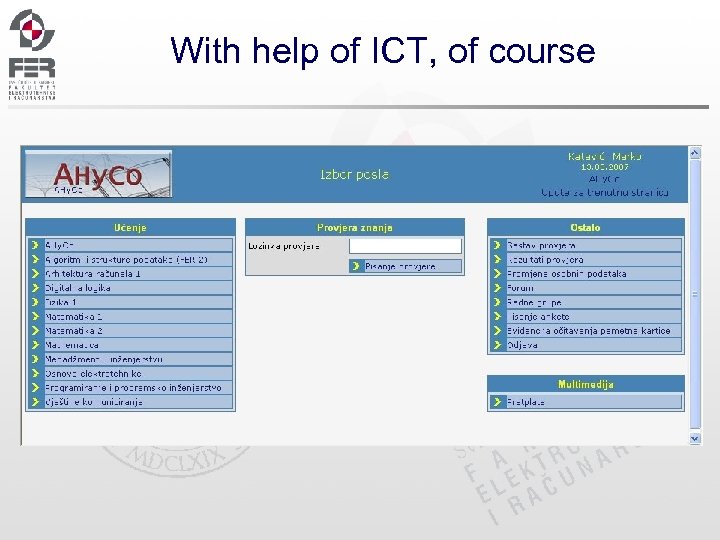 With help of ICT, of course
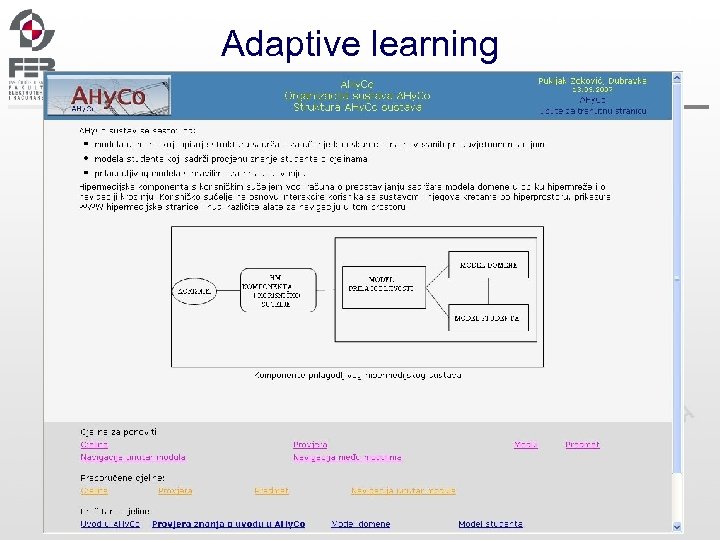 Adaptive learning
 Online tests
 Test results
 Results
 Instructor’s view
 Summary results
 OMR tests
 OMR test insight
 Automated grading of programming assignments
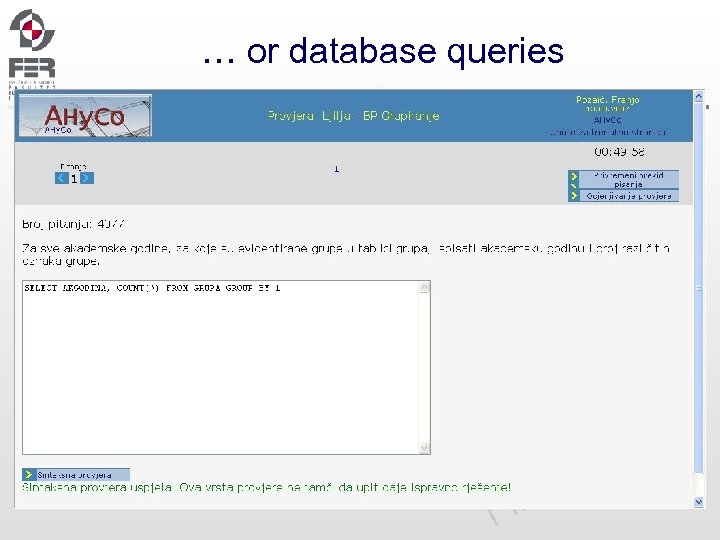 … or database queries
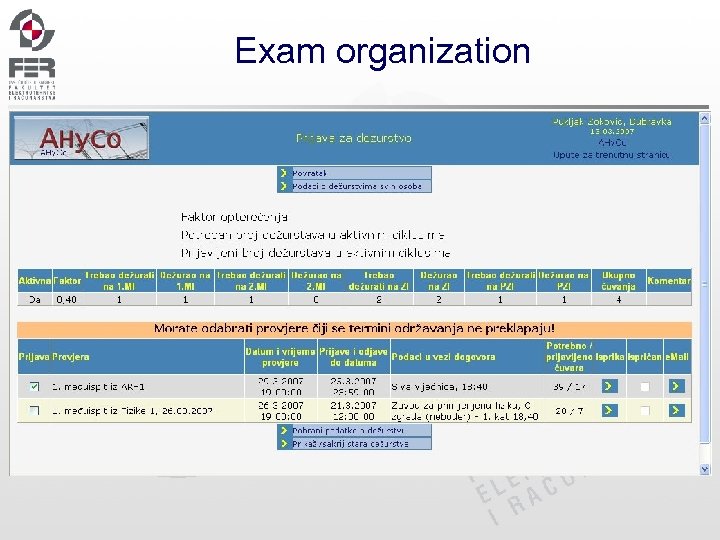 Exam organization
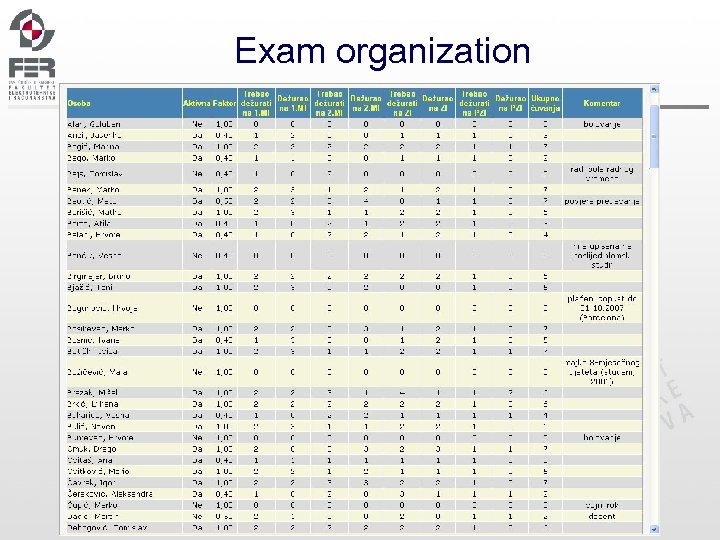 Exam organization
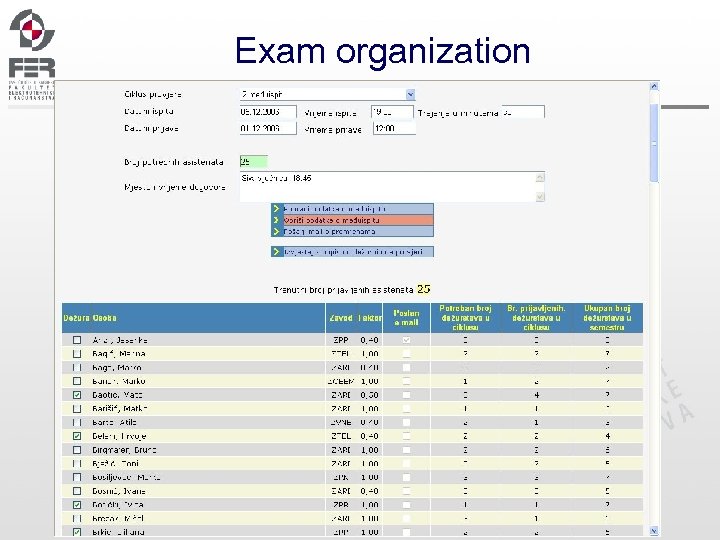 Exam organization
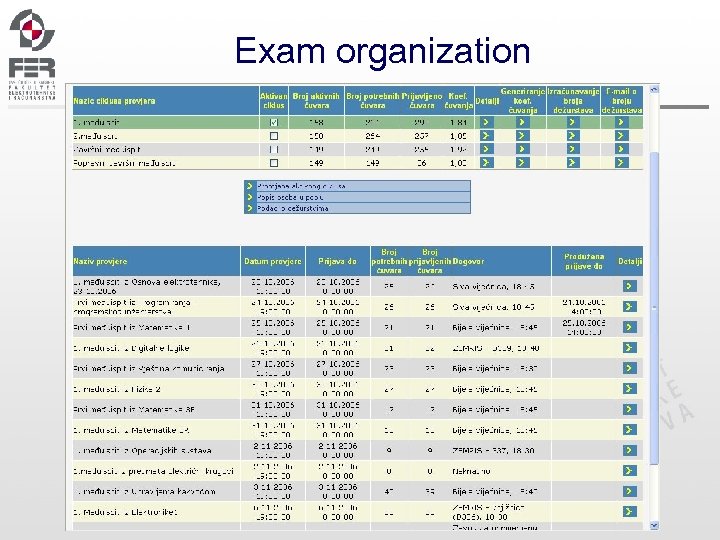 Exam organization
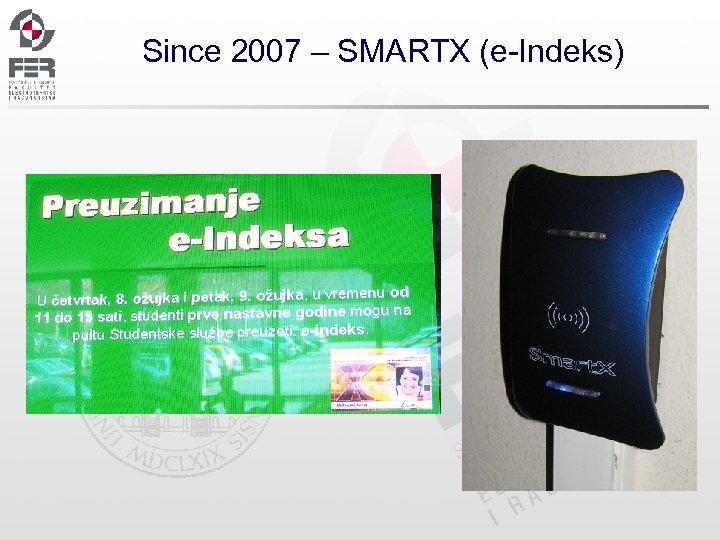 Since 2007 – SMARTX (e-Indeks)
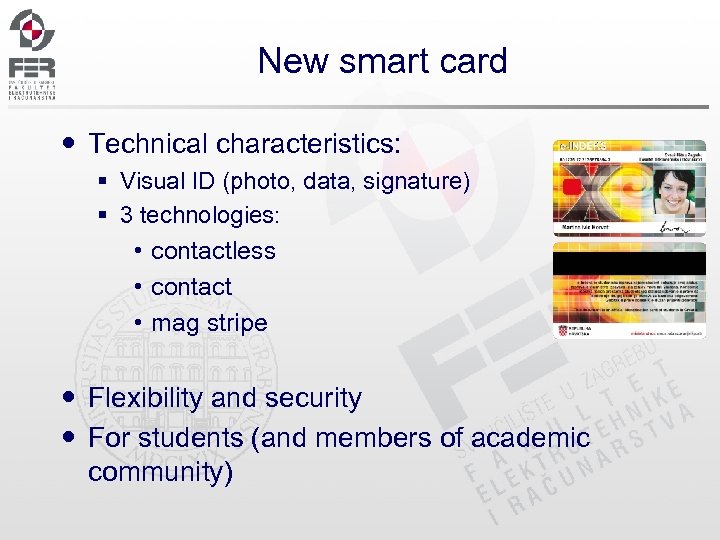 New smart card Technical characteristics: § Visual ID (photo, data, signature) § 3 technologies: • contactless • contact • mag stripe Flexibility and security For students (and members of academic community)
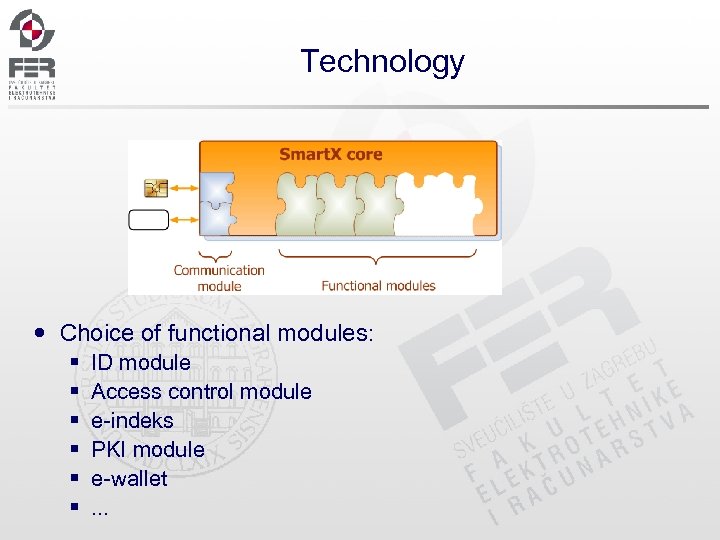 Technology Choice of functional modules: § § § ID module Access control module e-indeks PKI module e-wallet . . .
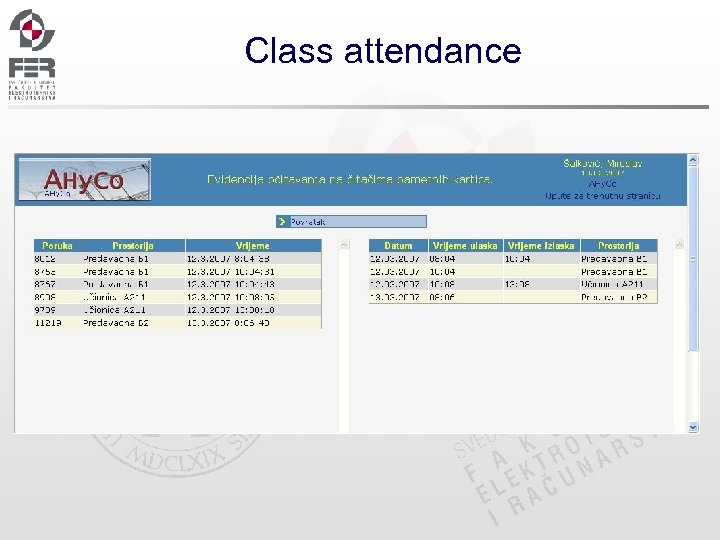
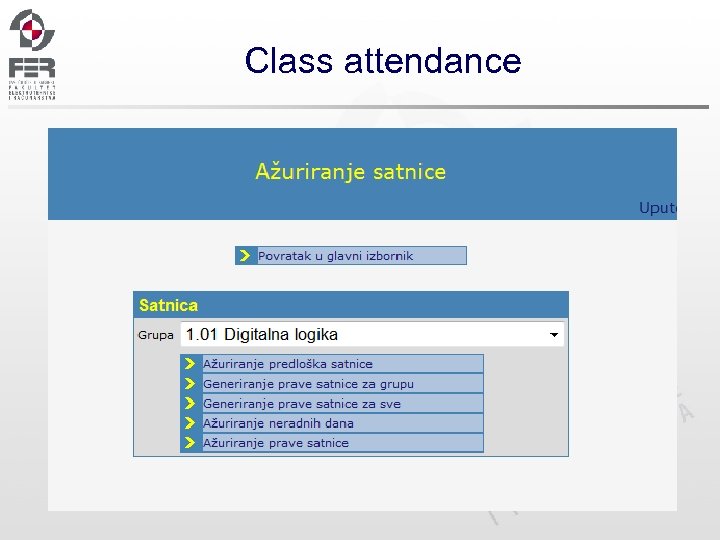
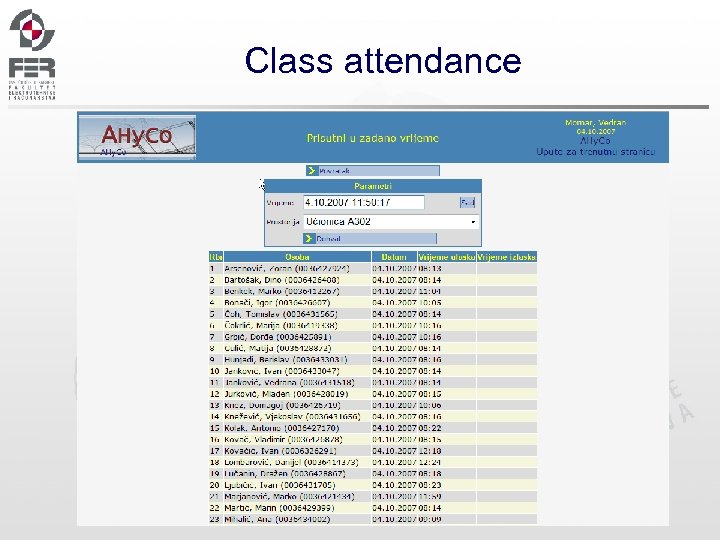
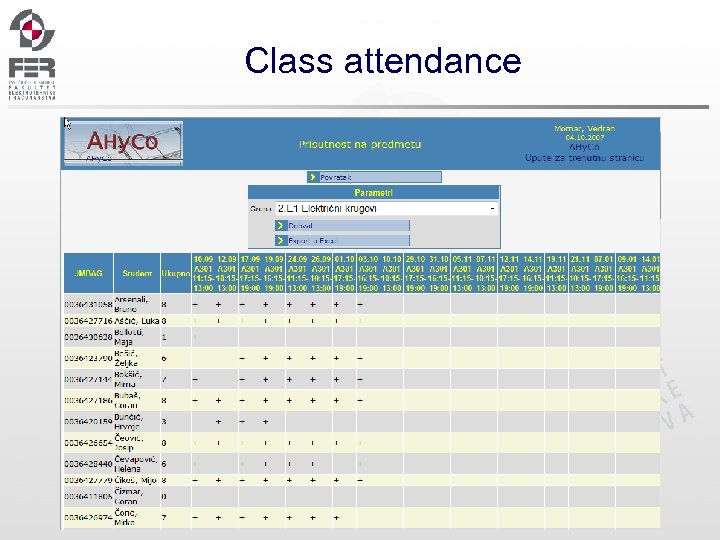
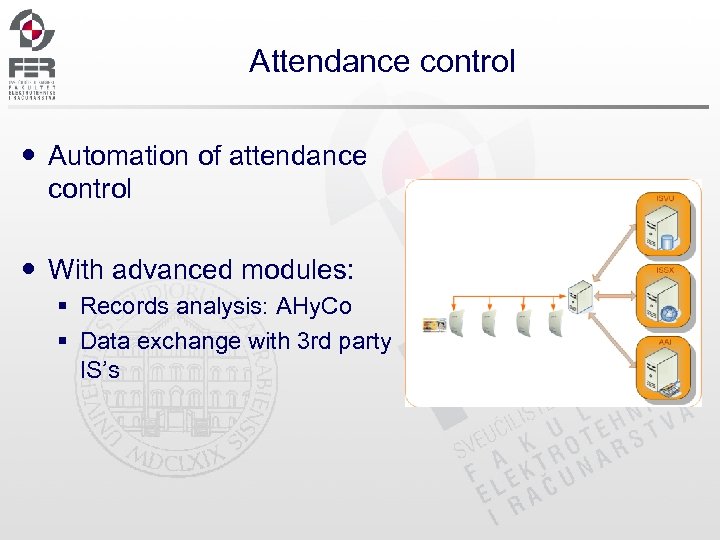 Attendance control Automation of attendance control With advanced modules: § Records analysis: AHy. Co § Data exchange with 3 rd party IS’s
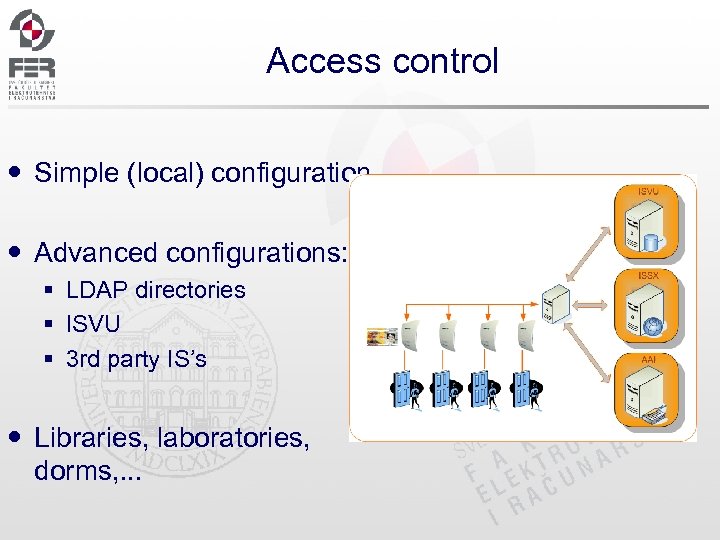 Access control Simple (local) configuration Advanced configurations: § LDAP directories § ISVU § 3 rd party IS’s Libraries, laboratories, dorms, . . .
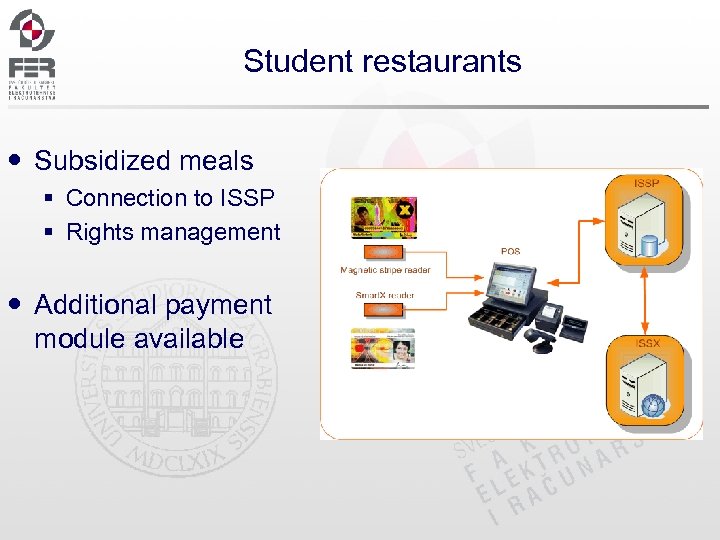 Student restaurants Subsidized meals § Connection to ISSP § Rights management Additional payment module available
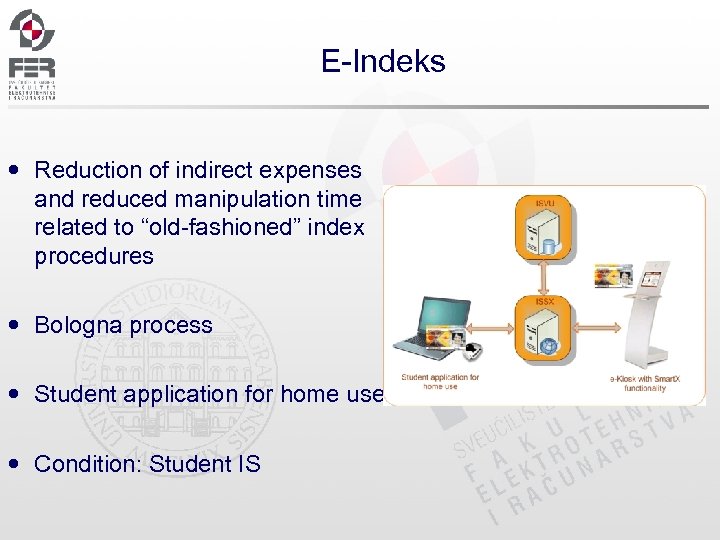 E-Indeks Reduction of indirect expenses and reduced manipulation time related to “old-fashioned” index procedures Bologna process Student application for home use Condition: Student IS
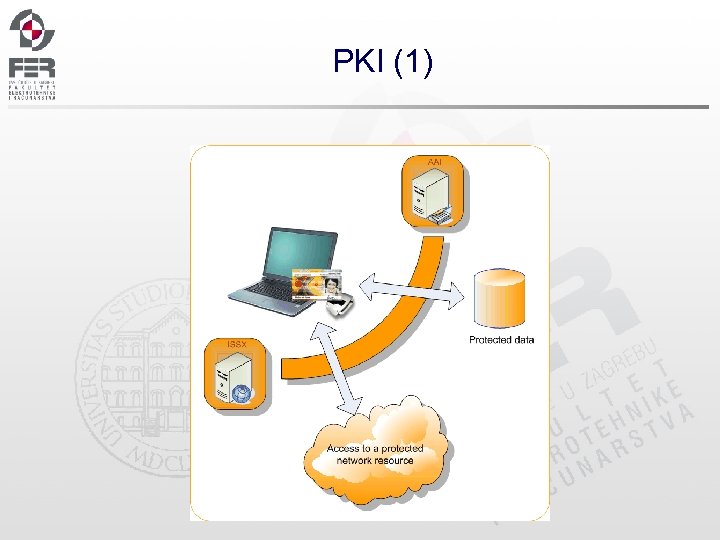 PKI (1)
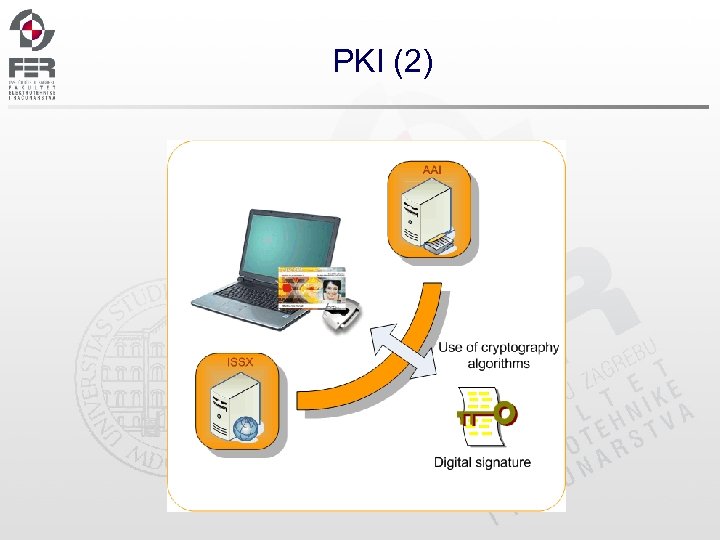 PKI (2)
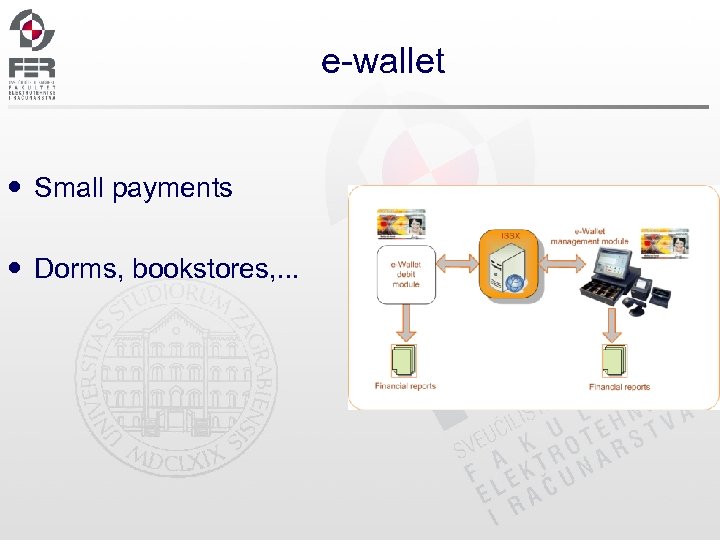 e-wallet Small payments Dorms, bookstores, . . .
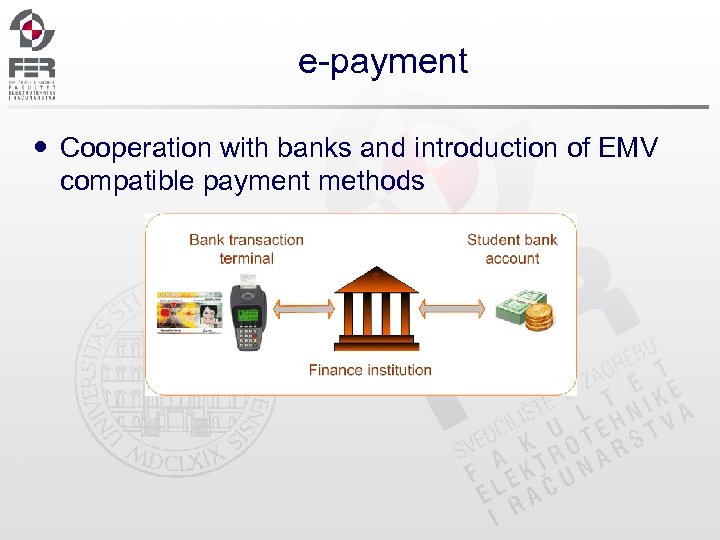 e-payment Cooperation with banks and introduction of EMV compatible payment methods
 Class attendance
 Class attendance
 Class attendance
 Class attendance
 Quality management QM bord – permanent body of the Faculty Procedures § Questionnaires • Initial questionnaire • Midterm questionaire • Final questionnaire § Internal evaluation § Yearly course report – self-assesment
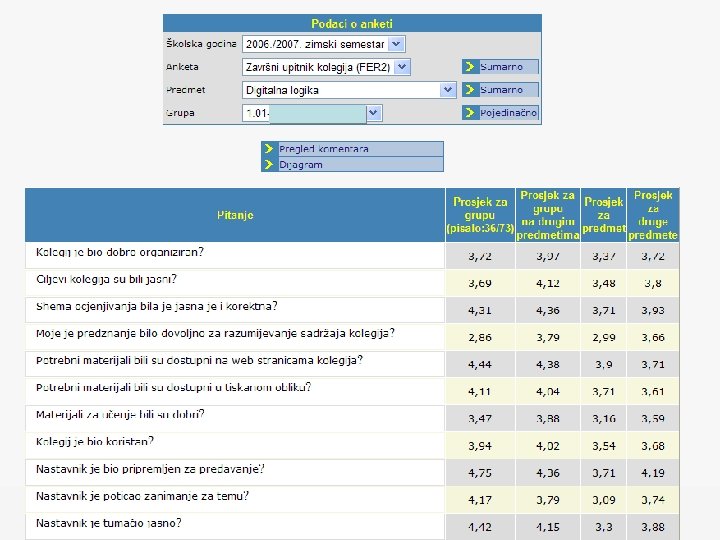 Rezultati
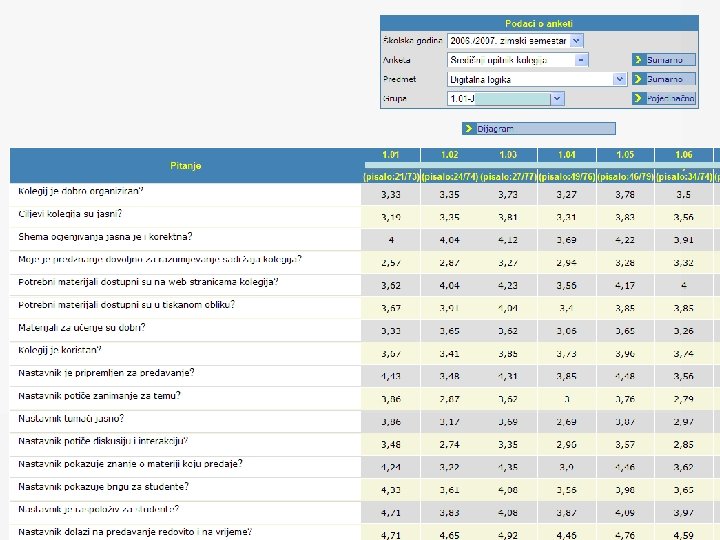 Rezultati
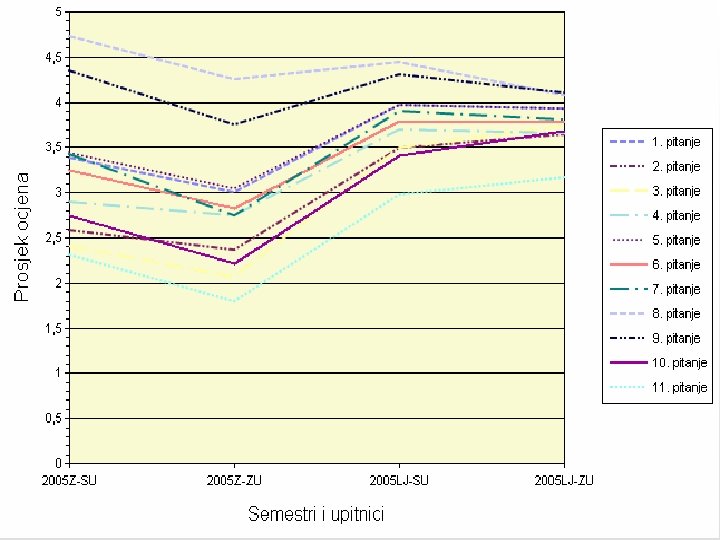 Rezultati
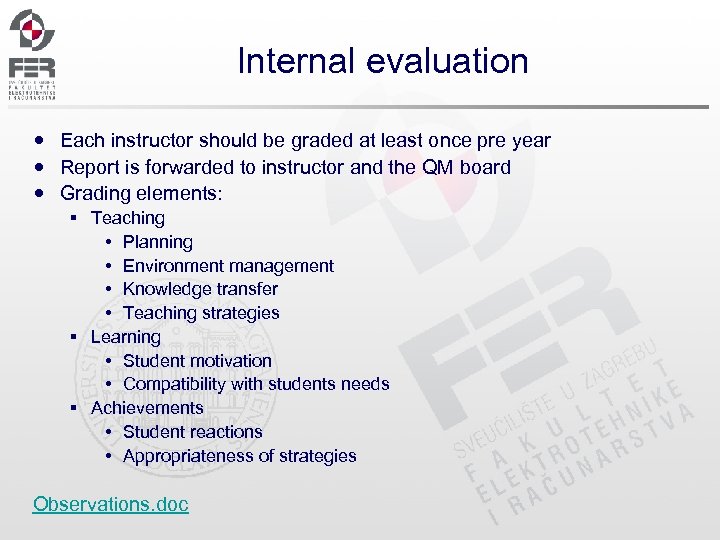 Internal evaluation Each instructor should be graded at least once pre year Report is forwarded to instructor and the QM board Grading elements: § Teaching • Planning • Environment management • Knowledge transfer • Teaching strategies § Learning • Student motivation • Compatibility with students needs § Achievements • Student reactions • Appropriateness of strategies Observations. doc
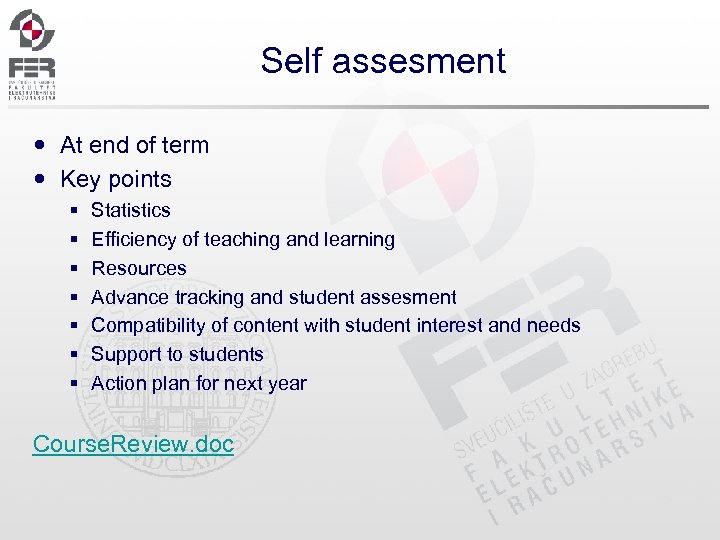 Self assesment At end of term Key points § § § § Statistics Efficiency of teaching and learning Resources Advance tracking and student assesment Compatibility of content with student interest and needs Support to students Action plan for next year Course. Review. doc
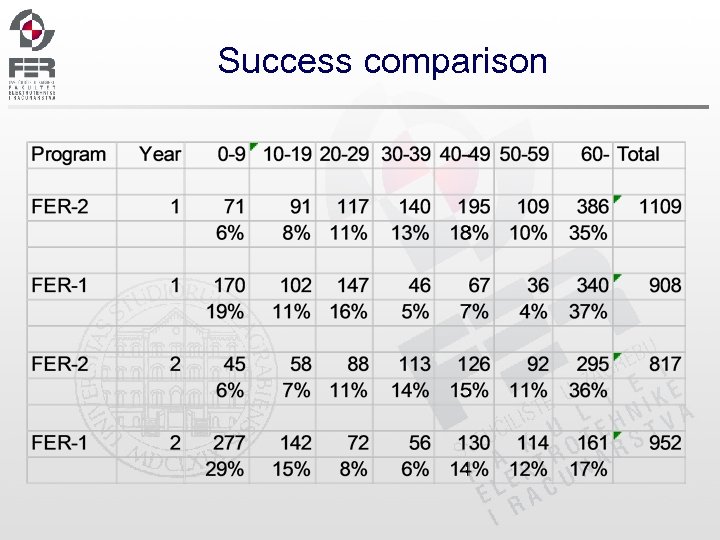 Success comparison
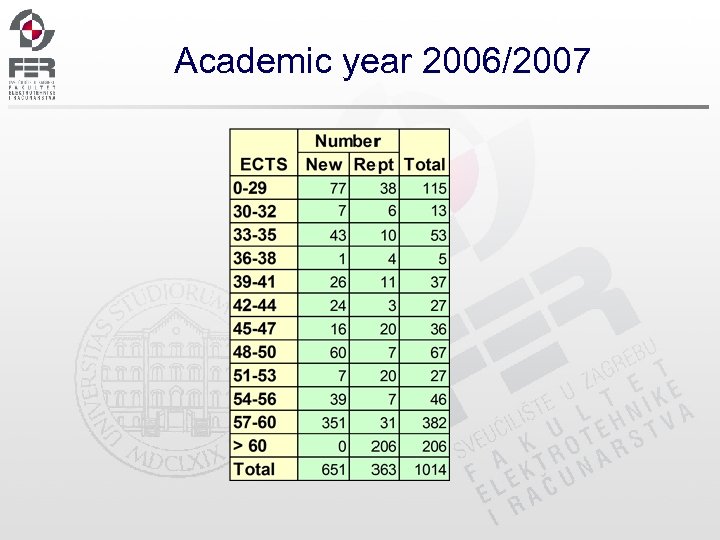 Academic year 2006/2007
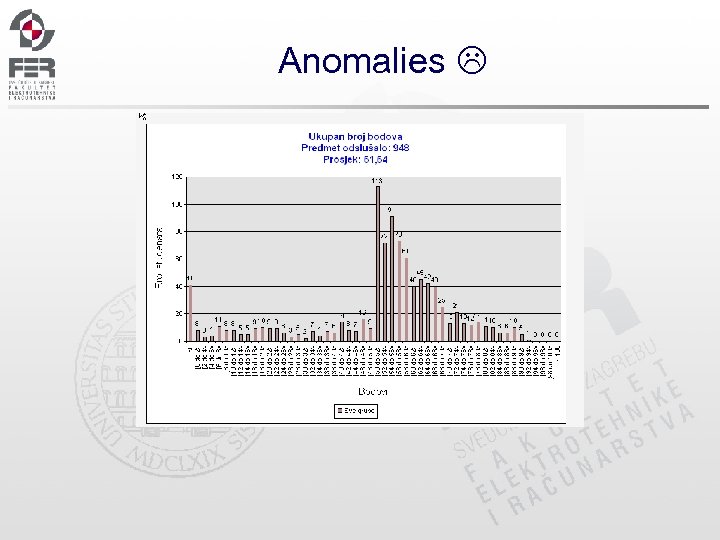 Anomalies
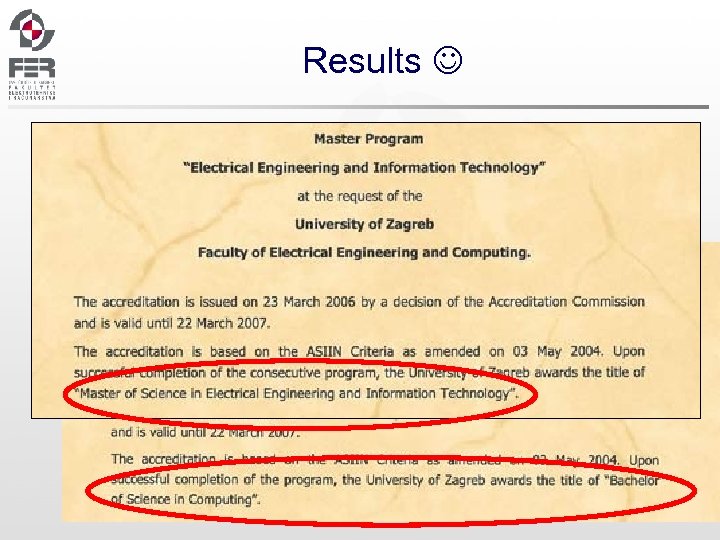
 ASIIN - Akkreditierungsagentur für Studiengänge der Ingenieurwissenschaften, der Informatik, der Naturwissenschaften und der Mathematik Only German accreditation agency for engineering, computing, natural sciences and mathematics Acknowledged by German accreditation council (Akkreditierungsrat) International relations with: § FEANI - Fédération Européenne d'Associations Nationales d'Ingénieurs § Washington Accord – includes ABET, since 1989 § EUR-ACE – Project of accreditation of technical programs
 ASIIN technical committees TC 1: Mechanical engineering/ Process engineering TC 2: Electrical engineering / Information technology TC 3: Civil Engineering / Surveying TC 4: Informatics TC 5: Phys. Technologies, Materials and Process Engineering TC 6: Industrial Engineering TC 7: Information Management
 Key evaluation points Curriculum Reasons for study programs Program outcomes Enrollment conditions Assesment methods Quality control Human resources Spatial resources Equipment Financial data Diploma supplement
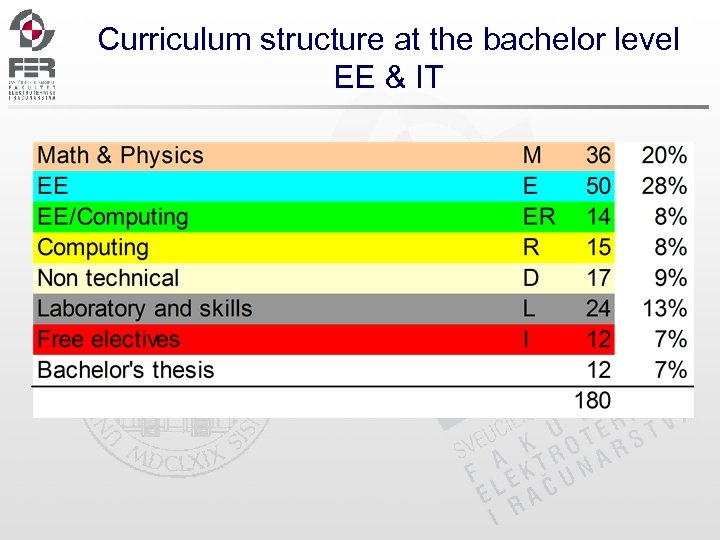 Curriculum structure at the bachelor level EE & IT
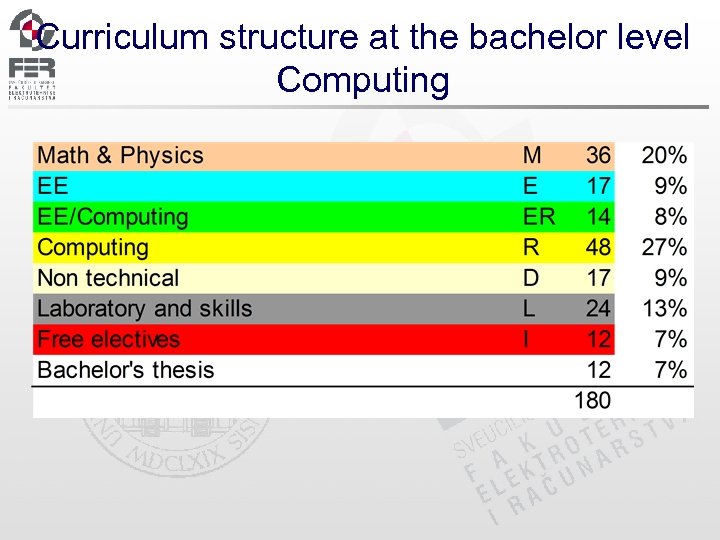 Curriculum structure at the bachelor level Computing
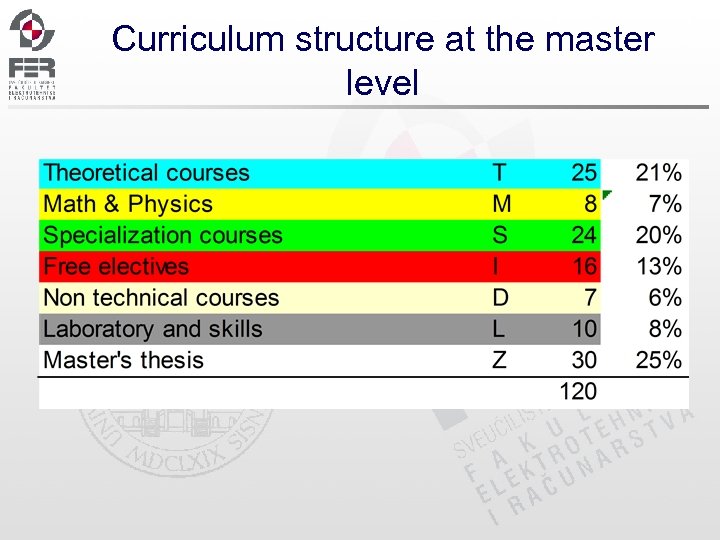 Curriculum structure at the master level
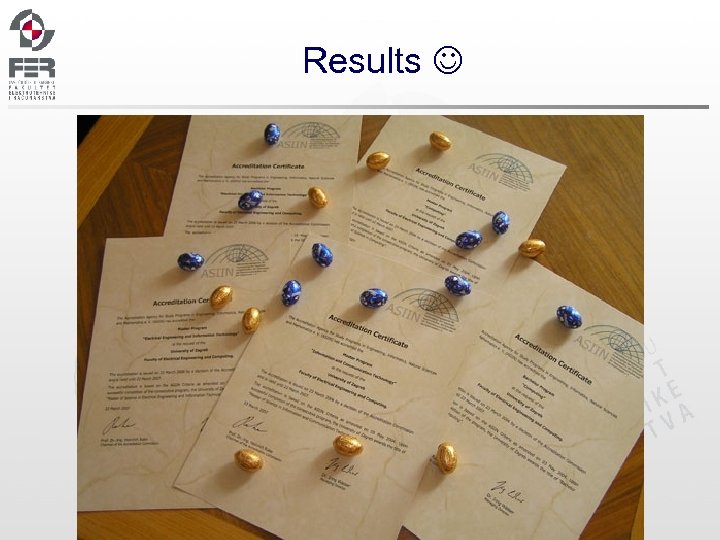 Results
 Results
 Experiences of FER-a in the implemetation of the Bologna process Vedran Mornar November 8 th, 2007