


 Скачать презентацию Experience Upgrade Gerrit J van Nieuwenhuizen For
1651aa058df0ab36b0f6c78865510f8d.ppt
- Количество слайдов: 30
 Experience & Upgrade Gerrit J. van Nieuwenhuizen For the PHOBOS collaboration RHIC future detectors R&D Workshop Brookhaven National Laboratory November 13 -14, 2001
 The PHOBOS collaboration ARGONNE NATIONAL LABORATORY " " BROOKHAVEN NATIONAL LABORATORY " Birger Back, Nigel George, Alan Wuosmaa " Mark Baker, Donald Barton, Alan Carroll, Joel Corbo, Stephen Gushue, Dale Hicks, Burt Holzman, Robert Pak, Marc Rafelski, Louis Remsberg, Peter Steinberg, Andrei Sukhanov Andrzej Budzanowski, Roman Holynski, Jerzy Michalowski, Andrzej Olszewski, Pawel Sawicki , Marek Stodulski, Adam Trzupek, Barbara Wosiek, Krzysztof Wozniak Wit Busza (Spokesperson), Patrick Decowski, Kristjan " INSTITUTE OF NUCLEAR PHYSICS, KRAKOW " " " MASSACHUSETTS INSTITUTE OF TECHNOLOGY " " " NATIONAL CENTRAL UNIVERSITY, TAIWAN " " UNIVERSITY OF ROCHESTER " UNIVERSITY OF ILLINOIS AT CHICAGO " UNIVERSITY OF MARYLAND " " " Gulbrandsen, Conor Henderson, Jay Kane , Judith Katzy, Piotr Kulinich, Johannes Muelmenstaedt, Heinz Pernegger, Michel Rbeiz, Corey Reed, Christof Roland, Gunther Roland, Leslie Rosenberg, Pradeep Sarin, Stephen Steadman, George Stephans, Gerrit van Nieuwenhuizen, Carla Vale, Robin Verdier, Bernard Wadsworth, Bolek Wyslouch Chia Ming Kuo, Willis Lin, Jaw-Luen Tang Joshua Hamblen , Erik Johnson, Nazim Khan, Steven Manly, Inkyu Park, Wojtek Skulski, Ray Teng, Frank Wolfs Russell Betts, Edmundo Garcia, Clive Halliwell, David Hofman, Richard Hollis, Aneta Iordanova, Wojtek Kucewicz, Don Mc. Leod, Rachid Nouicer, Michael Reuter, Joe Sagerer Richard Bindel, Alice Mignerey
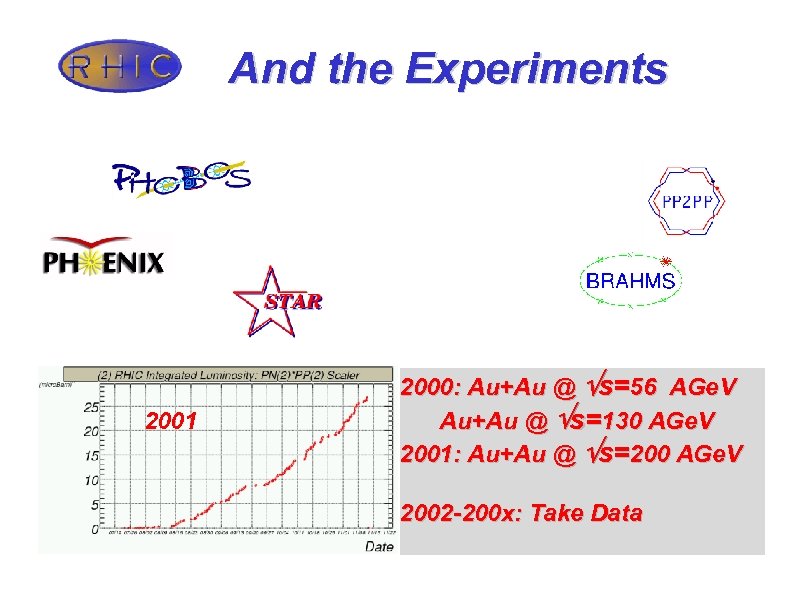 And the Experiments 2001 2000: Au+Au @ Ös=56 AGe. V Au+Au @ Ös=130 AGe. V 2001: Au+Au @ Ös=200 AGe. V 2002 -200 x: Take Data
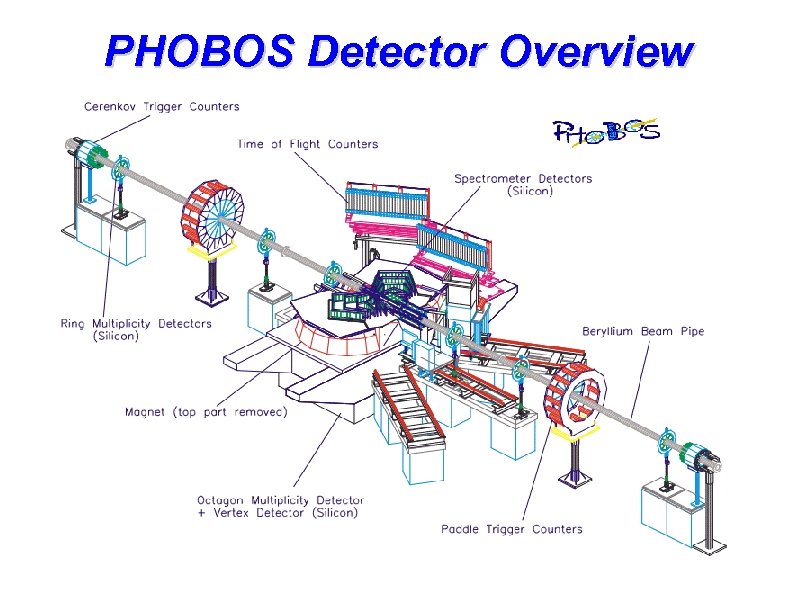 PHOBOS Detector Overview
 Silicon Sensor Tasks " " Measuring charged particle multiplicity with Octagon/Rings Determining the interaction point with Vertex Detector Do 3 d-tracking with Spectrometer Arms Use d. E/dx for particle identification
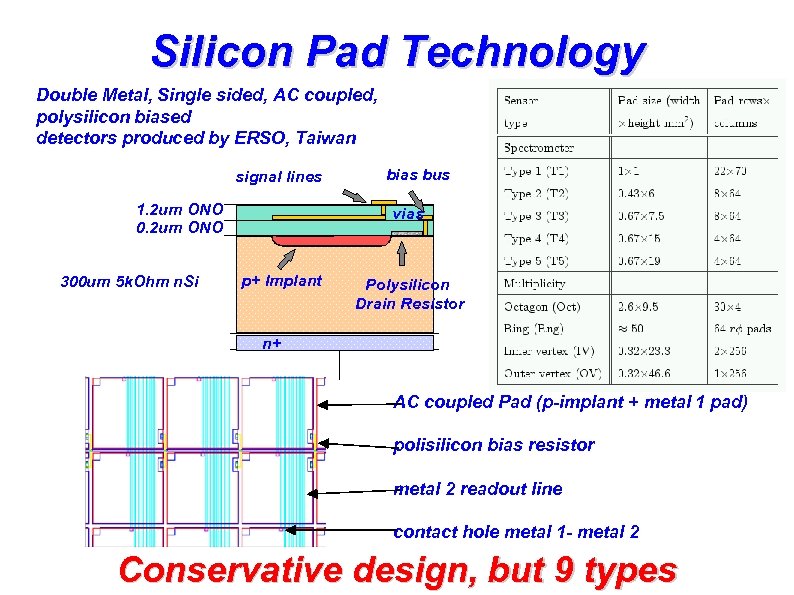 Silicon Pad Technology Double Metal, Single sided, AC coupled, polysilicon biased detectors produced by ERSO, Taiwan signal lines 1. 2 um ONO 0. 2 um ONO 300 um 5 k. Ohm n. Si bias bus vias p+ Implant Polysilicon Drain Resistor n+ AC coupled Pad (p-implant + metal 1 pad) polisilicon bias resistor metal 2 readout line contact hole metal 1 - metal 2 Conservative design, but 9 types
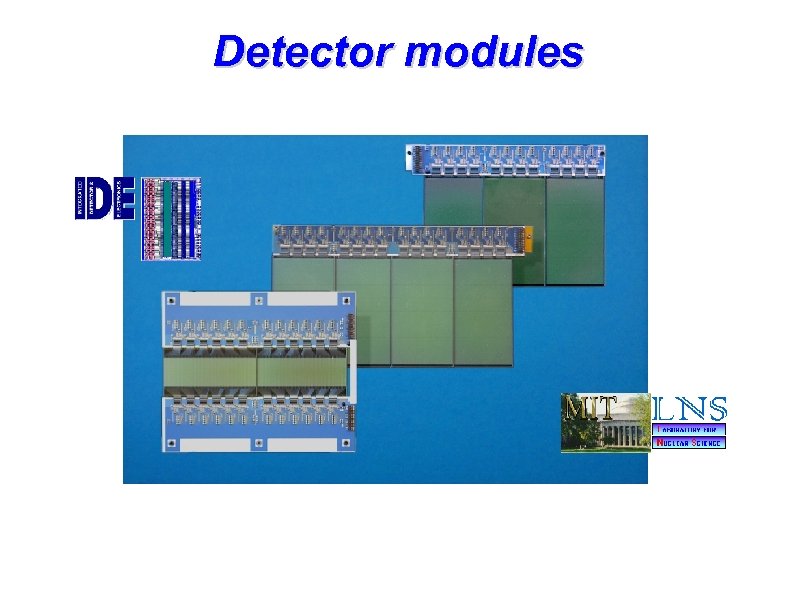 Detector modules
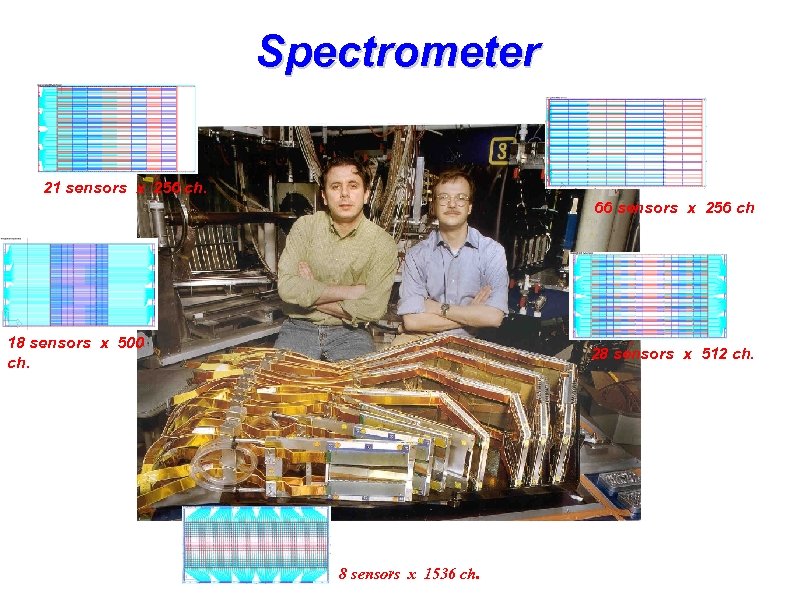 Spectrometer 21 sensors x 256 ch. 66 sensors x 256 ch 18 sensors x 500 ch. 28 sensors x 512 ch. 8 sensors x 1536 ch.
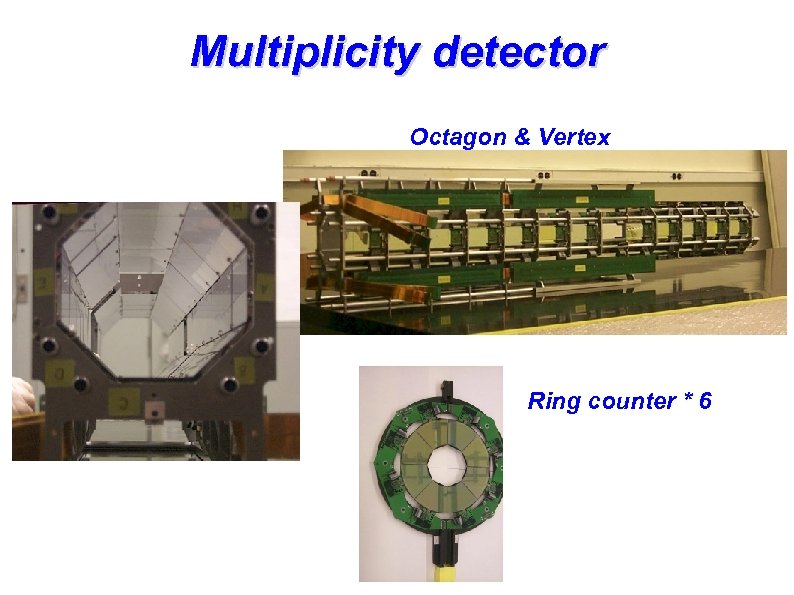 Multiplicity detector Octagon & Vertex Ring counter * 6
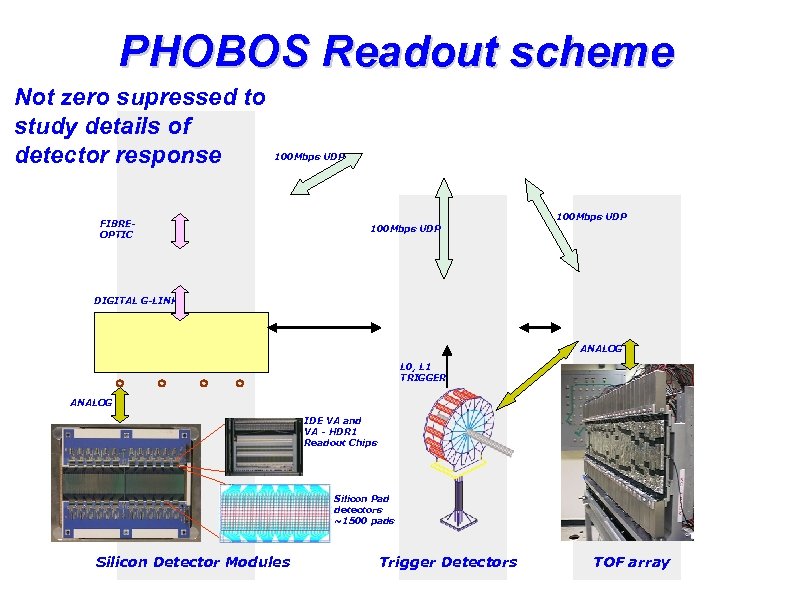 PHOBOS Readout scheme Not zero supressed to study details of detector response 100 Mbps UDP FIBREOPTIC 100 Mbps UDP DIGITAL G-LINK ANALOG L 0, L 1 TRIGGER ANALOG IDE VA and VA - HDR 1 Readout Chips Silicon Pad detectors ~1500 pads Silicon Detector Modules Trigger Detectors TOF array
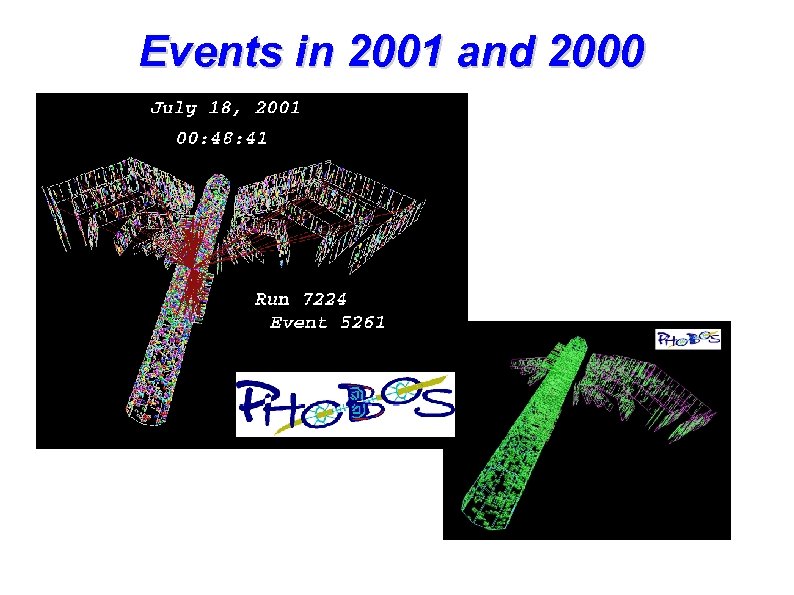 Events in 2001 and 2000
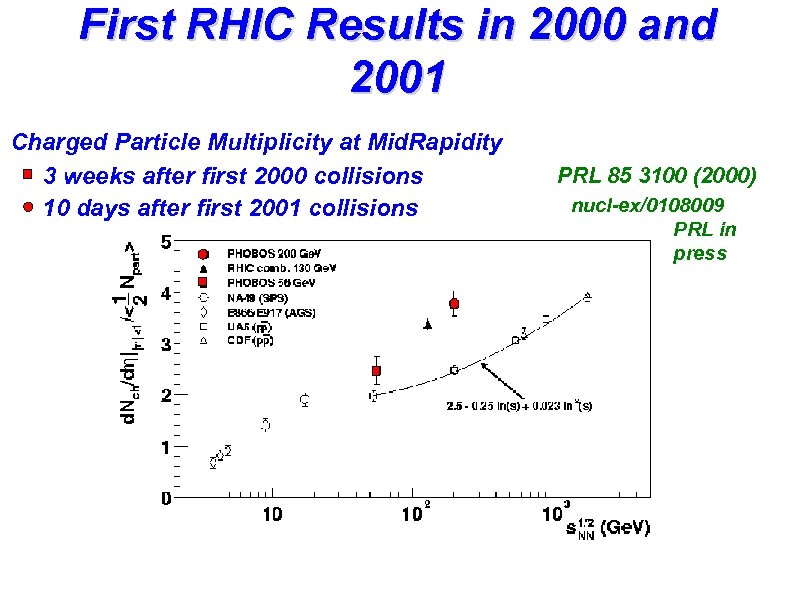 First RHIC Results in 2000 and 2001 Charged Particle Multiplicity at Mid. Rapidity 3 weeks after first 2000 collisions 10 days after first 2001 collisions PRL 85 3100 (2000) nucl-ex/0108009 PRL in press
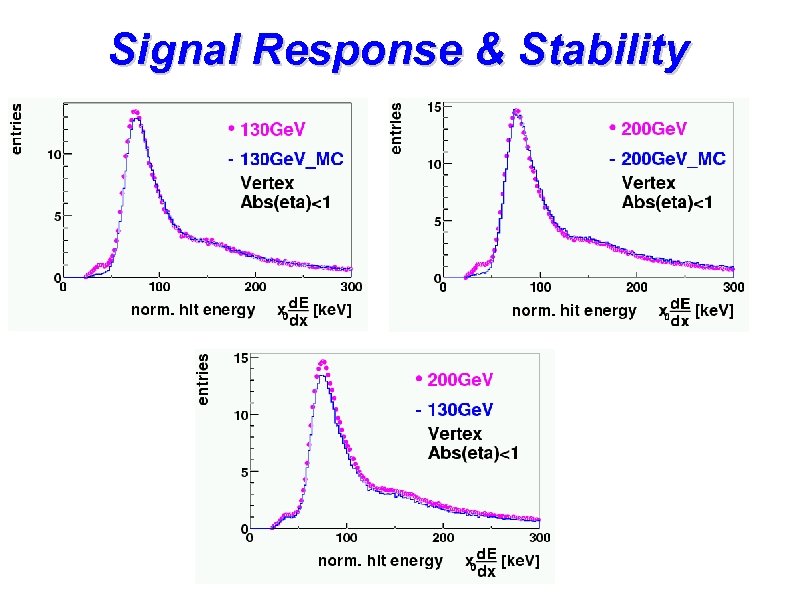 Signal Response & Stability
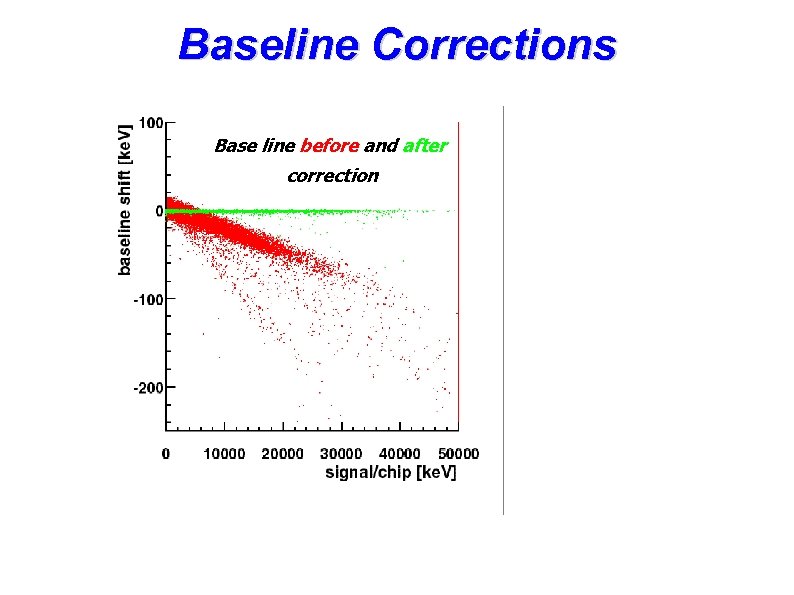 Baseline Corrections Base line before and after correction
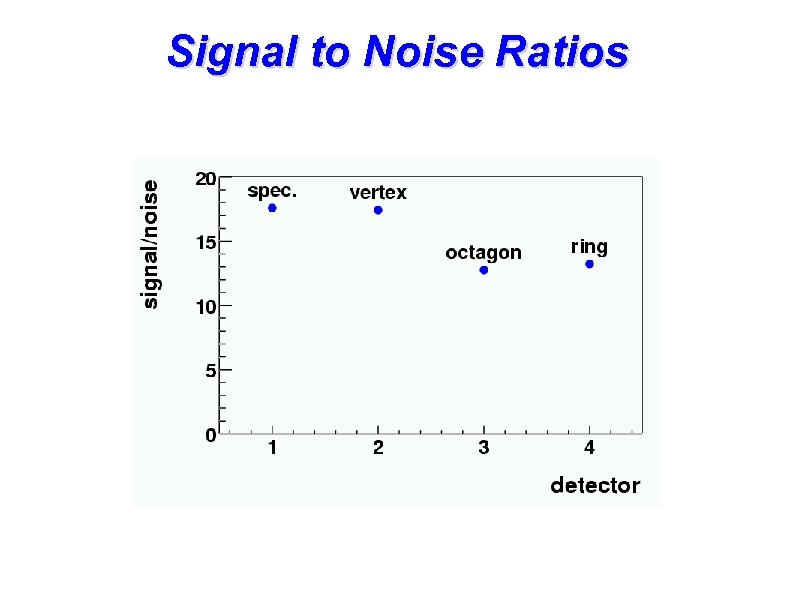 Signal to Noise Ratios
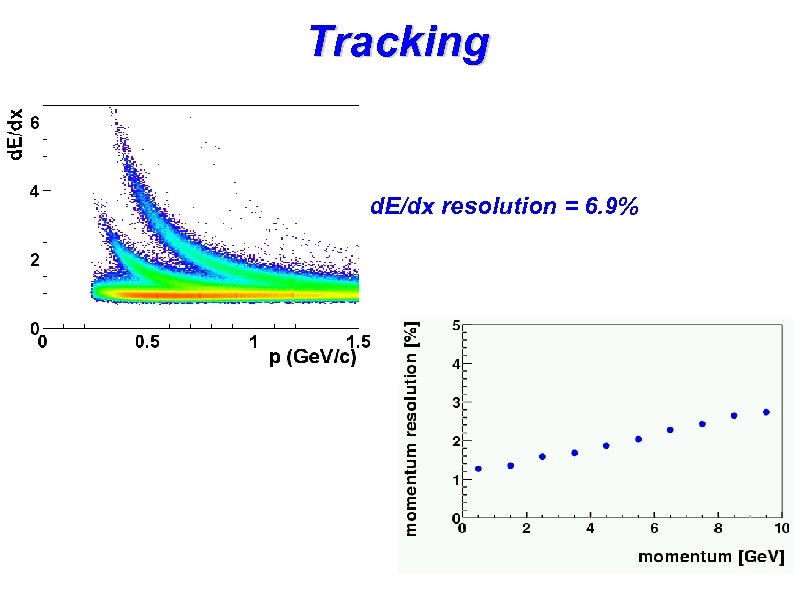 Tracking d. E/dx resolution = 6. 9%
 Latchup Protection Circuitry " " " Trying to protect VA chips by quickly switching off strings of chips when current gradients too high With current RHIC running this happens every 1 -2 hours Highly dependent on beam quality If not too many strings are affected then a quick reset is possible, otherwise the silicon system has to be switched off/on Not a single chip lost until. .
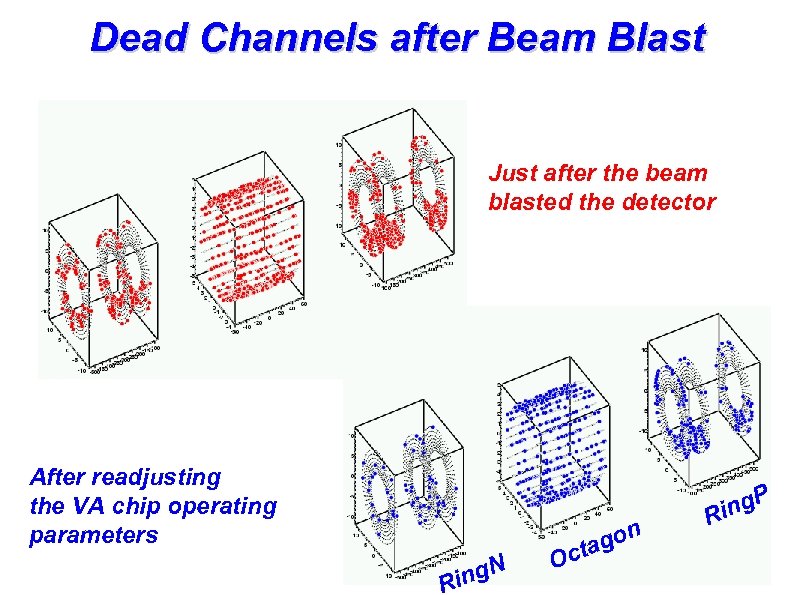 Dead Channels after Beam Blast Just after the beam blasted the detector After readjusting the VA chip operating parameters Ri ng. N Oc gon ta P ing R
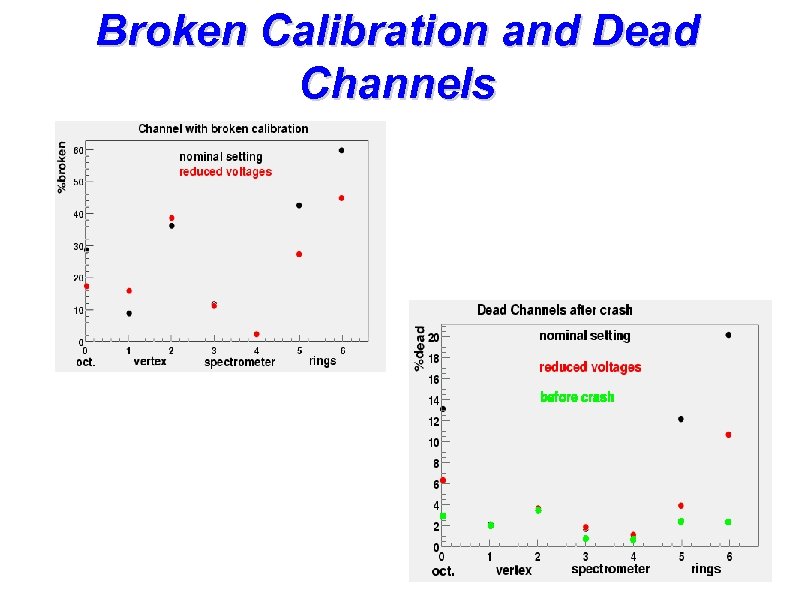 Broken Calibration and Dead Channels
 Damage report " " " Gain Calibrations is broken for many channels Most of the channels exhibit same mip peak after applying the old gain on beam data after blast Amount of dead channels went from 1% to 2% (~2800 out of 137000) Most likely huge hit signals doing damage, not the integrated radiation dose We survived the first blast and the second and the third and. . .
 Performance Conclusions " " " Well understood signal response of detector (down to few % level) leads to quick and reliable physics results Not zero suppressing was crucial for offline analysis of detector response Very stable system until the beam gets dumped in it (1% extra dead) Low maintenance system, turn-key operation Happy Silicon = Happy PHysicists
 Charm Upgrade Motivation ¥ Charm cross-section in Au+Au@ RHIC uncertain ¥ Hidden charm is major part of RHIC program ¥ Total charm production essential normalization ¥ Hidden charm/open charm is O(0. 01) ¥ Gap in RHIC experimental program ¥ no true micro-vertexing so far (3 -inch beampipe)
 Charm facts ¥ ¥ d. N/dy (cc) in central Au+Au @ RHIC approx. 1 (PRL 81(1998) 1801) Decay length: ¥ 0. 13 mm for D 0 (m=1. 86 Ge. V) ¥ 0. 32 mm for D+/- (m=1. 87 Ge. V) ¥ Channels (BR O(5%)) ¥ D -> K+pi Full kinematic reconstruction of D mesons ¥ Needs large acceptance ¥ D -> (di-)muon(s) + X ¥ ¥ D -> electron + X ¥ Best suited for small acceptance near mid-rapidity
 Schematic Upgrade Layout
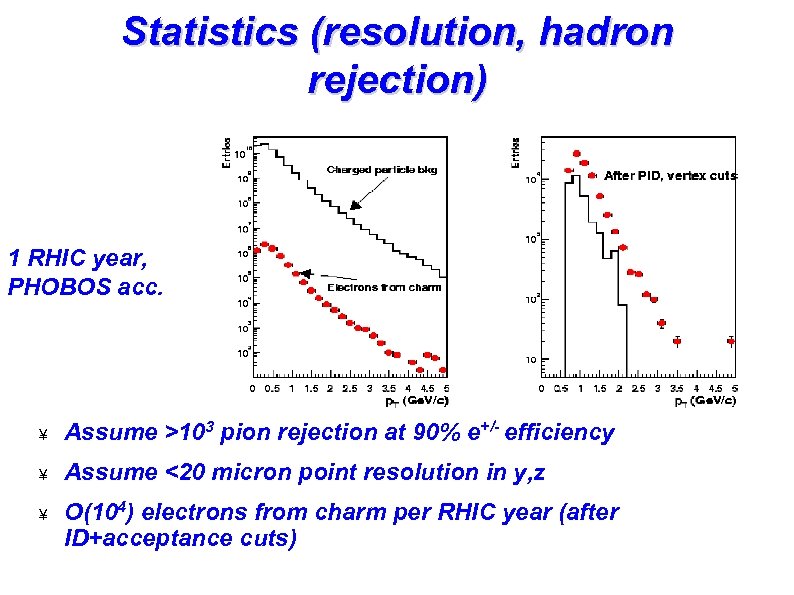 Statistics (resolution, hadron rejection) 1 RHIC year, PHOBOS acc. ¥ Assume >103 pion rejection at 90% e+/- efficiency ¥ Assume <20 micron point resolution in y, z ¥ O(104) electrons from charm per RHIC year (after ID+acceptance cuts)
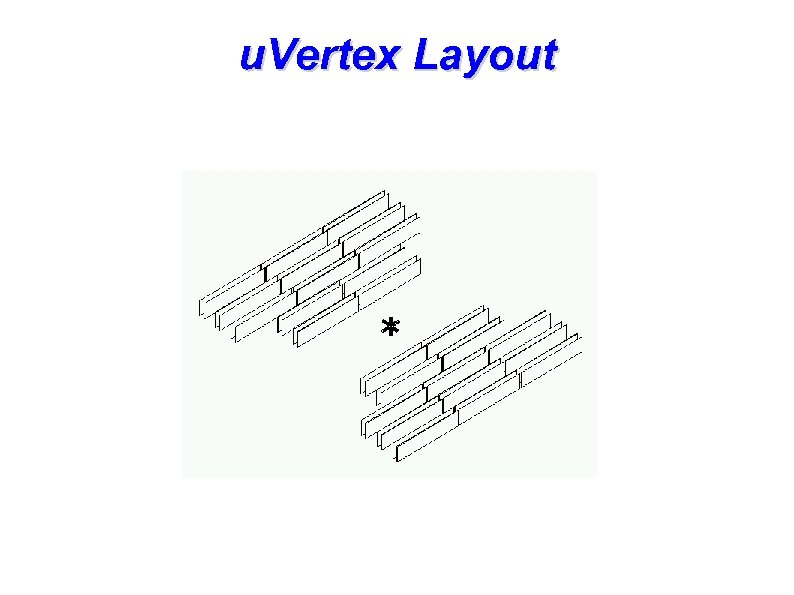 u. Vertex Layout
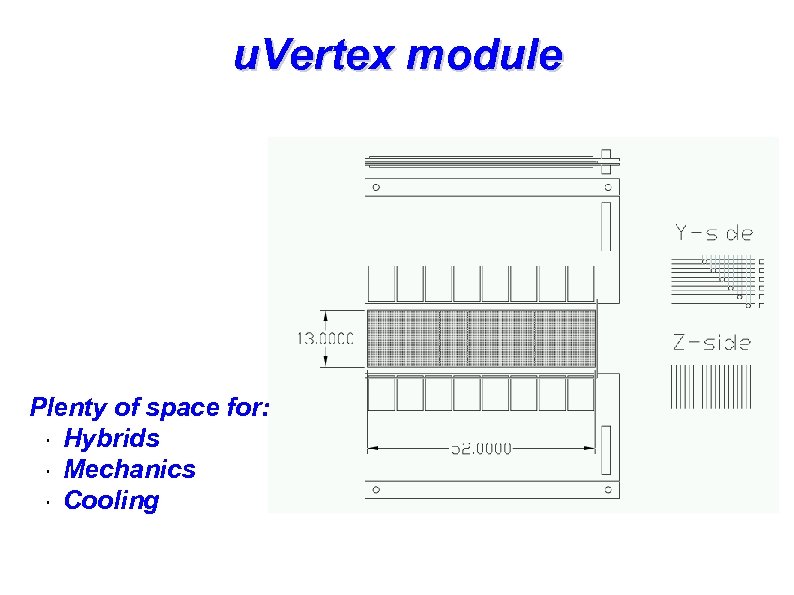 u. Vertex module Plenty of space for: " Hybrids " Mechanics " Cooling
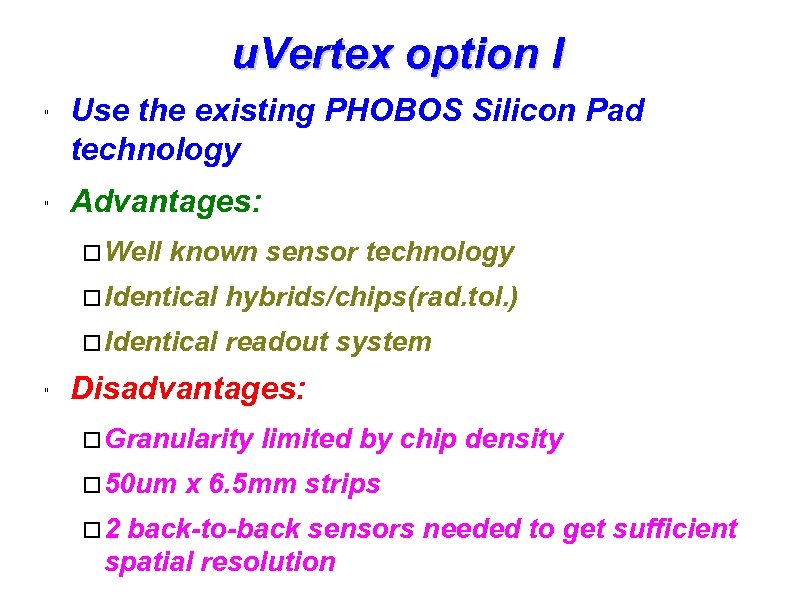 u. Vertex option I " " Use the existing PHOBOS Silicon Pad technology Advantages: Well known sensor technology Identical " hybrids/chips(rad. tol. ) readout system Disadvantages: Granularity 50 um 2 limited by chip density x 6. 5 mm strips back-to-back sensors needed to get sufficient spatial resolution
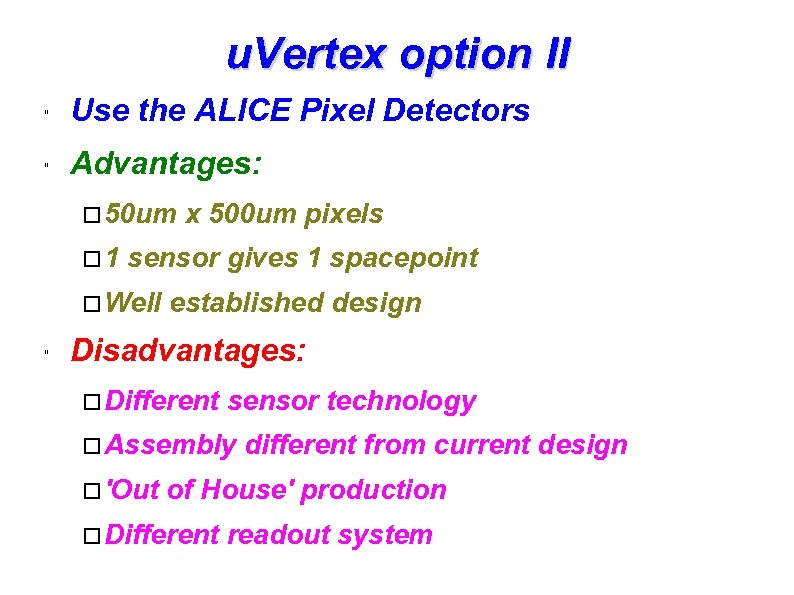 u. Vertex option II " Use the ALICE Pixel Detectors " Advantages: 50 um 1 sensor gives 1 spacepoint Well " x 500 um pixels established design Disadvantages: Different sensor technology Assembly 'Out different from current design of House' production Different readout system
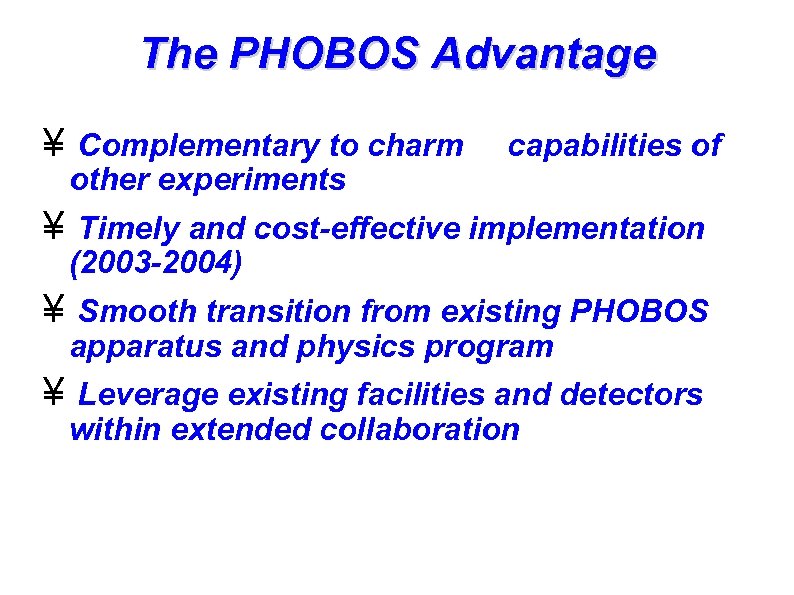 The PHOBOS Advantage ¥ Complementary to charm other experiments capabilities of ¥ Timely and cost-effective implementation (2003 -2004) ¥ Smooth transition from existing PHOBOS apparatus and physics program ¥ Leverage existing facilities and detectors within extended collaboration