 Скачать презентацию Exercise Telecenter to Bridge the Digital Divide
f6562eee2c90579c566f87171d03a053.ppt
- Количество слайдов: 67



Exercise Telecenter to Bridge the Digital Divide – from the ICT Point of View Dr. Han-Chieh Chao Professor & Chair, Dept. of EE National Dong Hwa University E-mail: hcc@mail. ndhu. edu. tw
Past Trend… H. B. Chen, H. C. Chao and David Lin “An Alternative Method for Connection Between TANet, ” TANet’ 95 Proceedings, Chungli﹐ Taiwan﹐ F 18 -F 25, Oct. 23 -24 1. l A way to provide NAT through Modem Dialup C. Y. Lin, H. B. Chen, H. C. Chao, Su Chang, and Michelle T. Kao, "An Authentication Method for Securing the Consistency between Remote Access Servers and E-mail Servers Accounts, " 1997 International Conference on Computer Systems Technology for Industrial Applications -- Internet and Multimedia (CSIA’ 97), Hsinchu, Taiwan, pp. 234 -238, April 23 -25, 1997. 2. l Radius Appliations Han C. Chao, Wei-Ming Chen, H. B. Chen and Michelle Kao, “The Economical Multi-link Internet (Intranet) Access Solutions for Medium-Small Business, Rural Educational Institutes and Native Taiwanese Communities in Taiwan” Proceedings of the 14 th International Conference on Advanced Science and Technology (ICAST’ 98), Chicago, USA, pp. 273 -280, April 3 -5, 1998. 3. l NT based Modem “Trunk Mode”
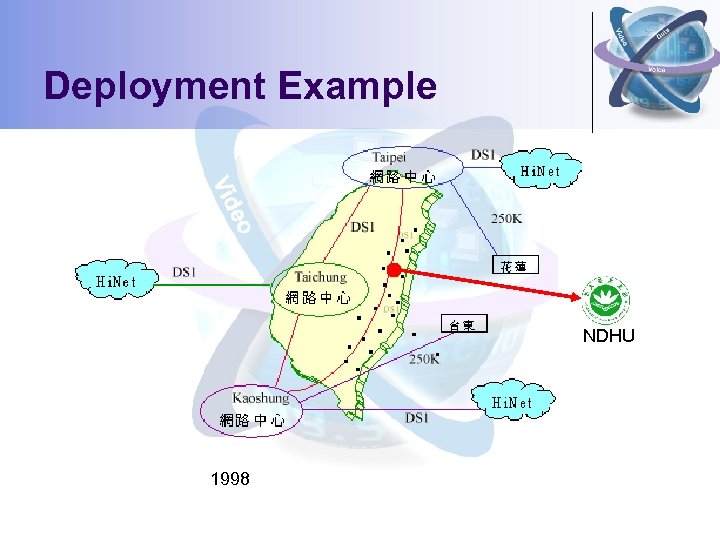
Deployment Example NDHU 1998
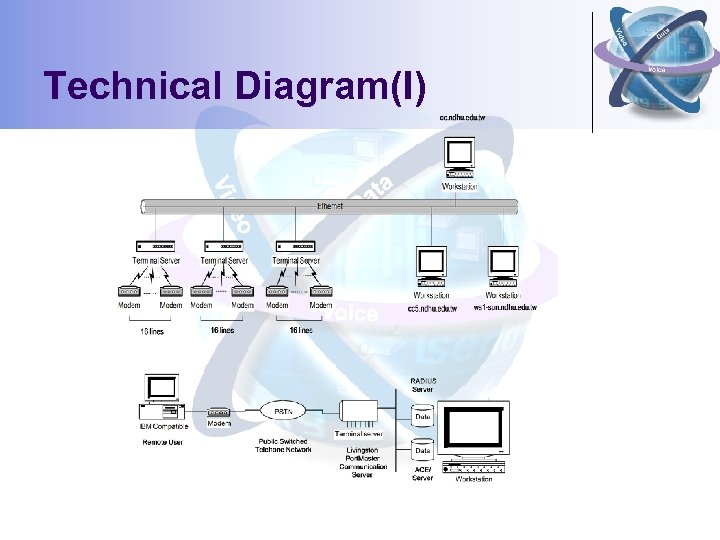
Technical Diagram(I)
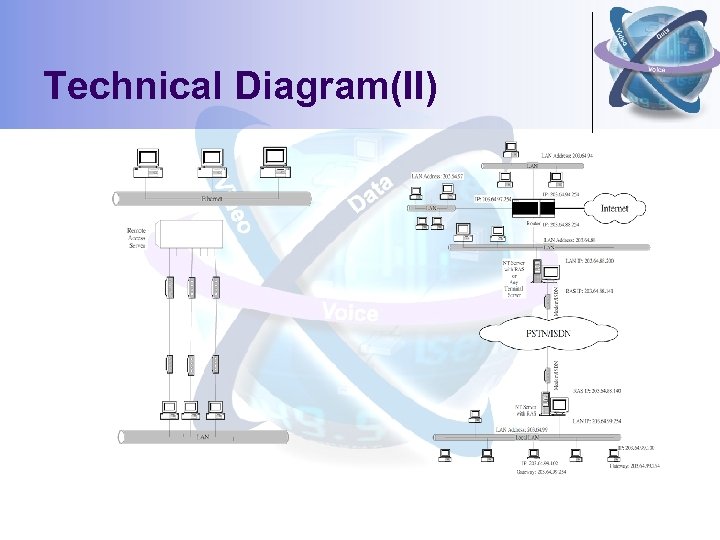
Technical Diagram(II)
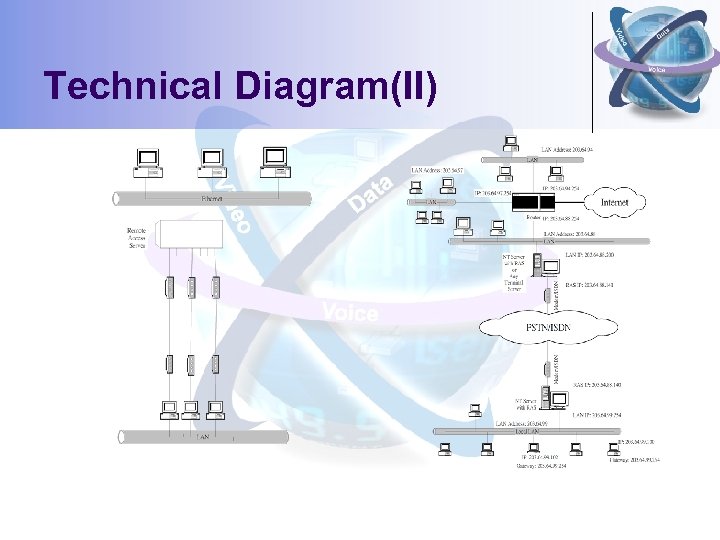
Technical Diagram(II)
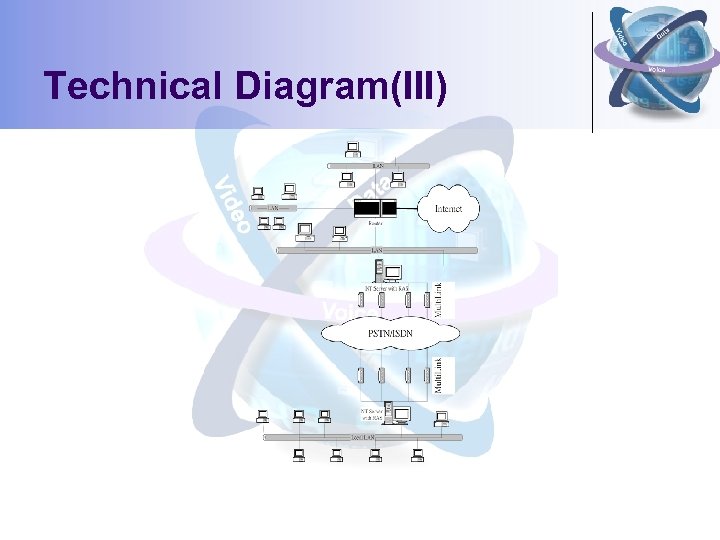
Technical Diagram(III)
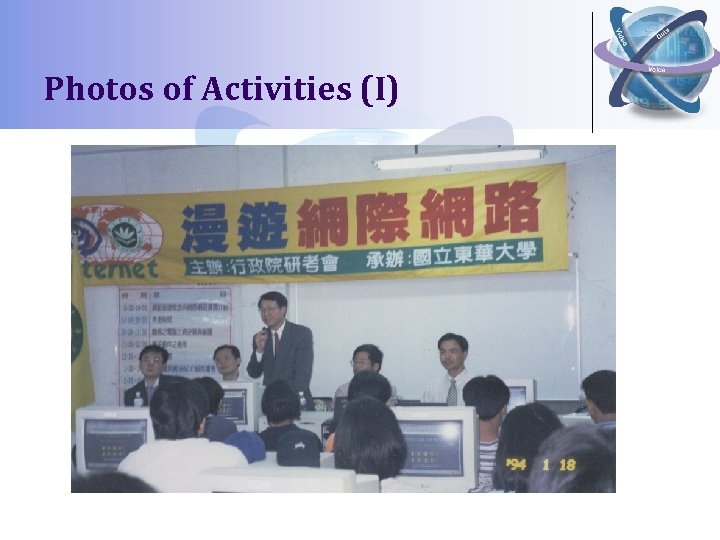
Photos of Activities (I)
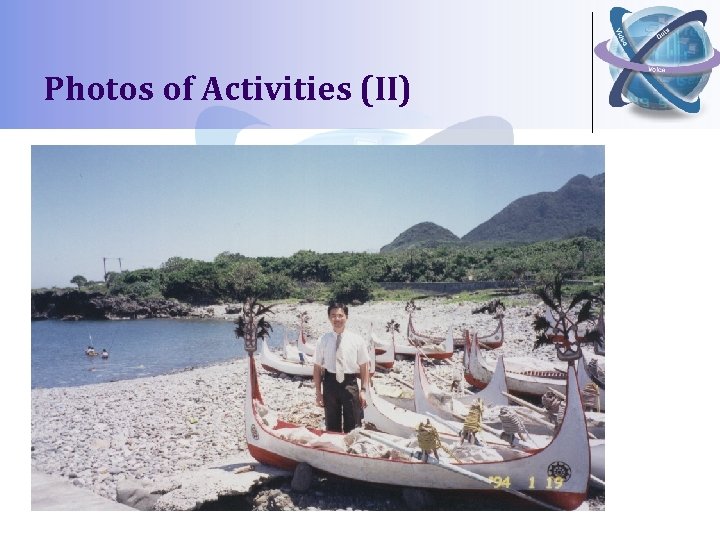
Photos of Activities (II)
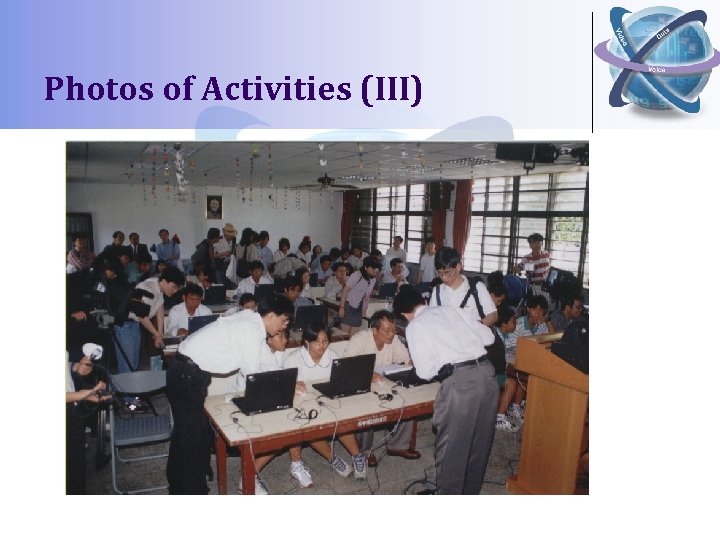
Photos of Activities (III)
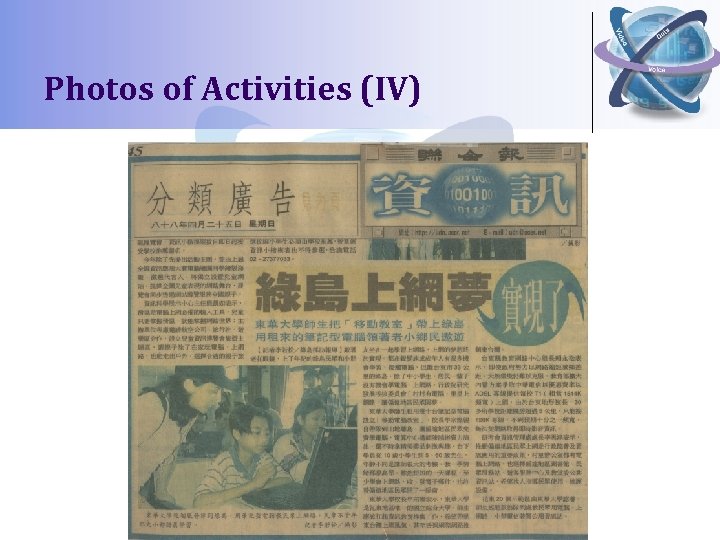
Photos of Activities (IV)
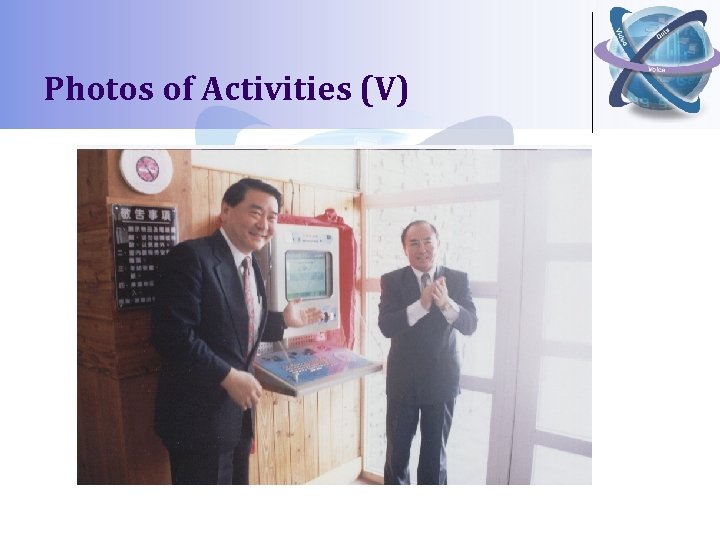
Photos of Activities (V)
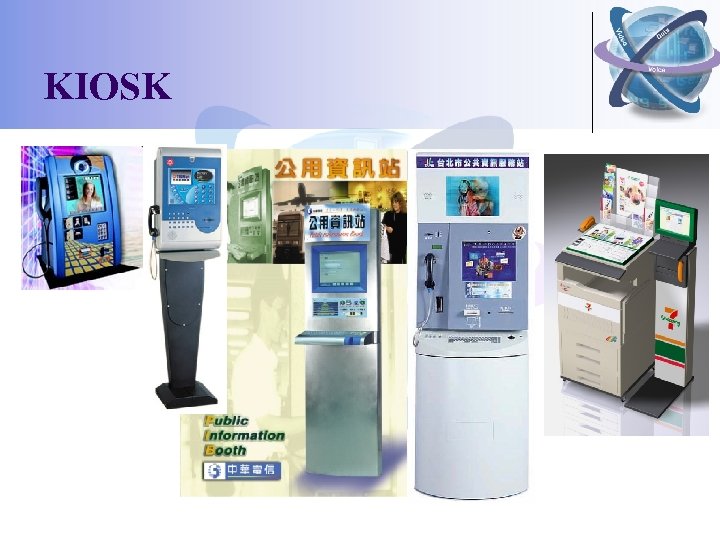
KIOSK
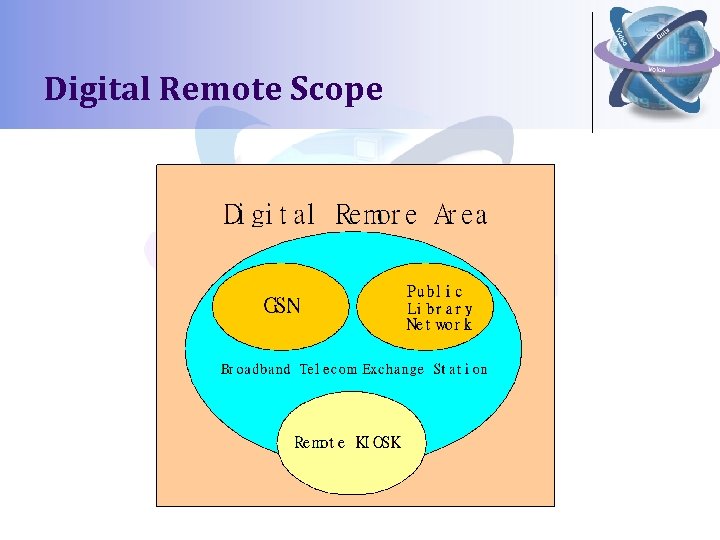
Digital Remote Scope
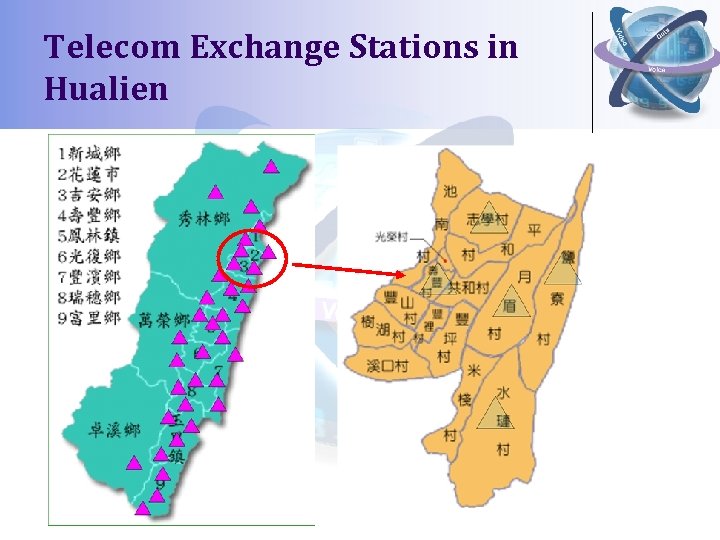
Telecom Exchange Stations in Hualien
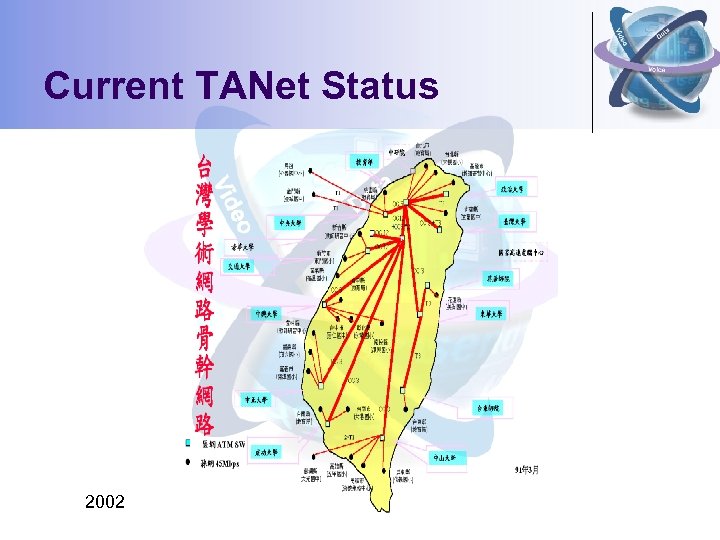
Current TANet Status 2002
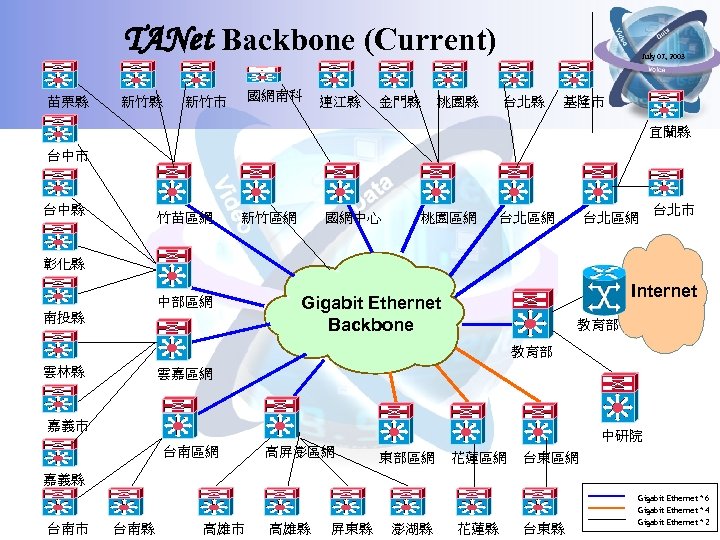
TANet Backbone (Current) 苗栗縣 新竹縣 國網南科 新竹市 連江縣 金門縣 桃園縣 July 07, 2003 台北縣 基隆市 宜蘭縣 台中市 台中縣 竹苗區網 新竹區網 國網中心 桃園區網 台北區網 台北市 彰化縣 中部區網 南投縣 Internet Gigabit Ethernet Backbone 教育部 雲林縣 雲嘉區網 嘉義市 中研院 台南區網 高屏澎區網 東部區網 花蓮區網 台東區網 嘉義縣 台南市 台南縣 高雄市 高雄縣 屏東縣 澎湖縣 花蓮縣 台東縣 Gigabit Ethernet * 6 Gigabit Ethernet * 4 Gigabit Ethernet * 2
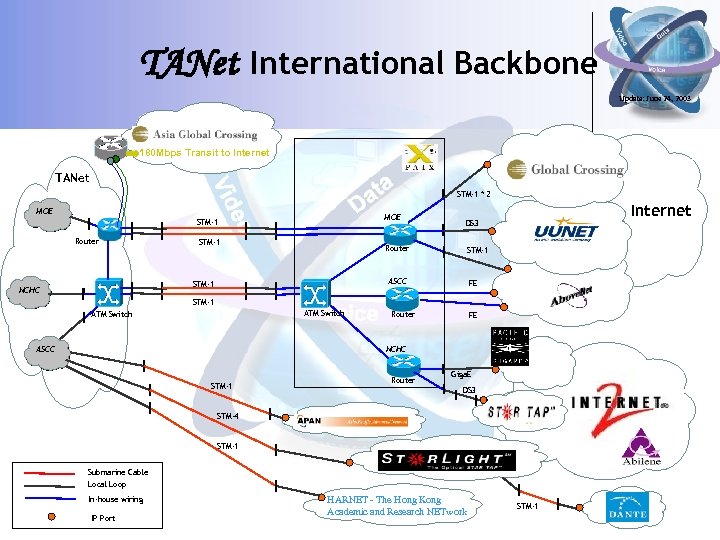
TANet International Backbone Update: June 24, 2003 180 Mbps Transit to Internet TANet STM-1 * 2 MOE STM-1 Router STM-1 ASCC STM-1 NCHC Internet DS 3 FE STM-1 ATM Switch ASCC Router FE NCHC STM-1 Router Giga. E DS 3 STM-4 STM-1 Submarine Cable Local Loop In-house wiring IP Port HARNET - The Hong Kong Academic and Research NETwork STM-1
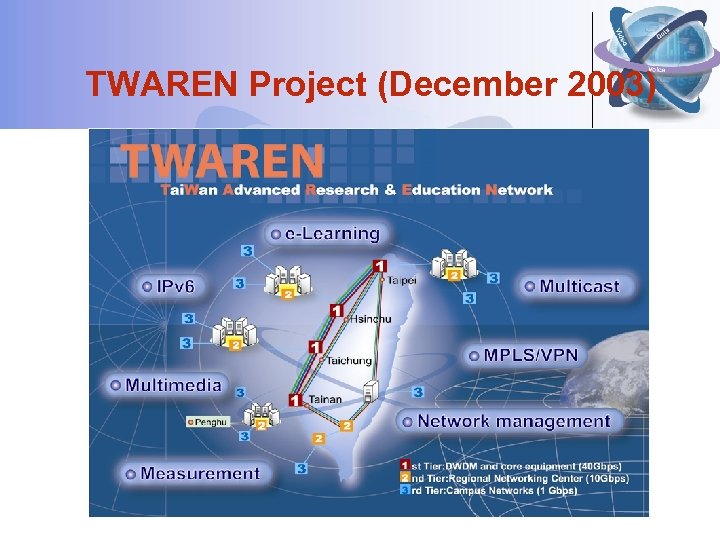
TWAREN Project (December 2003)
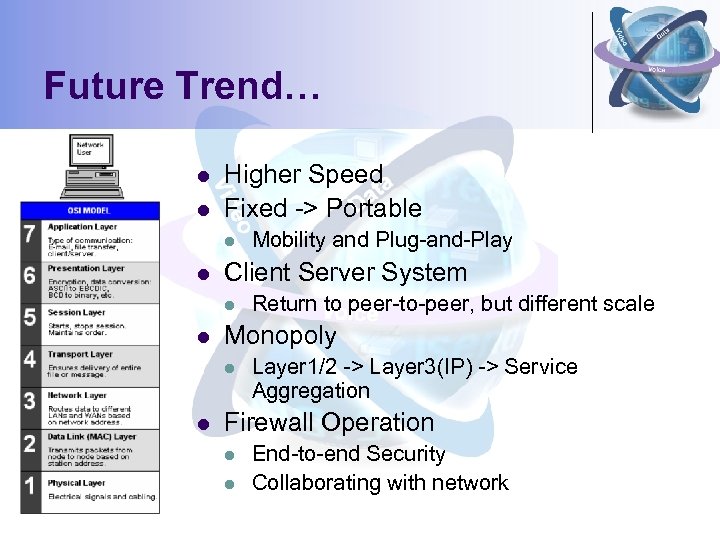
Future Trend… l l Higher Speed Fixed -> Portable l l Client Server System l l Return to peer-to-peer, but different scale Monopoly l l Mobility and Plug-and-Play Layer 1/2 -> Layer 3(IP) -> Service Aggregation Firewall Operation l l End-to-end Security Collaborating with network
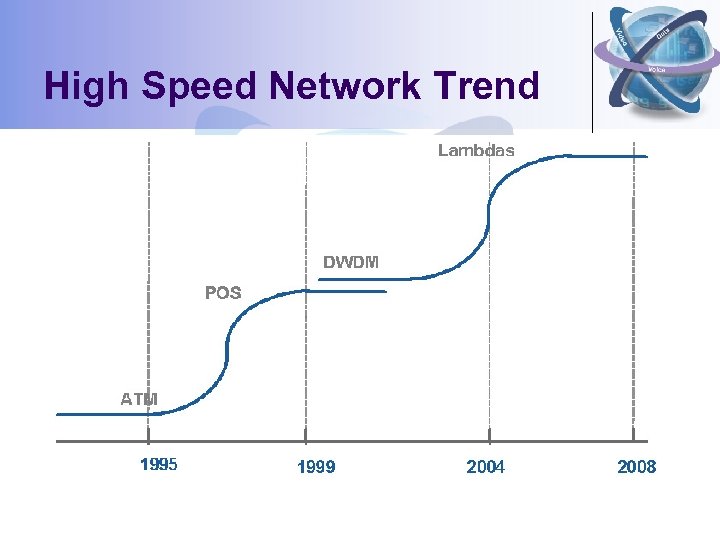
High Speed Network Trend
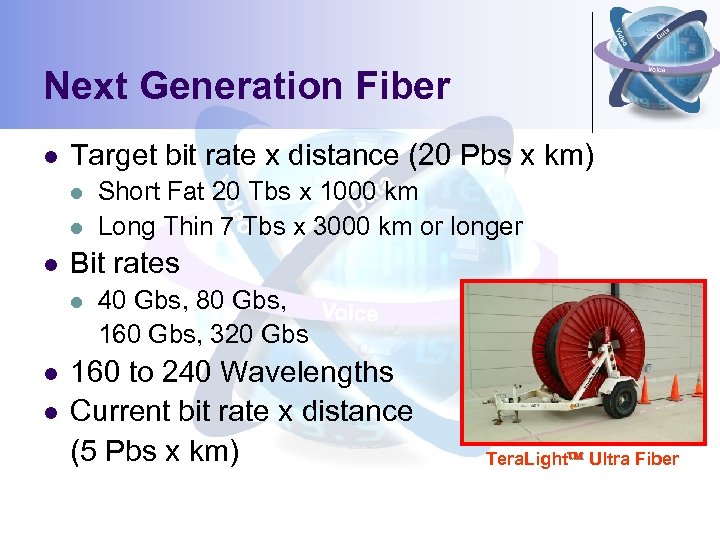
Next Generation Fiber l Target bit rate x distance (20 Pbs x km) l l l Bit rates l l l Short Fat 20 Tbs x 1000 km Long Thin 7 Tbs x 3000 km or longer 40 Gbs, 80 Gbs, 160 Gbs, 320 Gbs 160 to 240 Wavelengths Current bit rate x distance (5 Pbs x km) Tera. Light Ultra Fiber
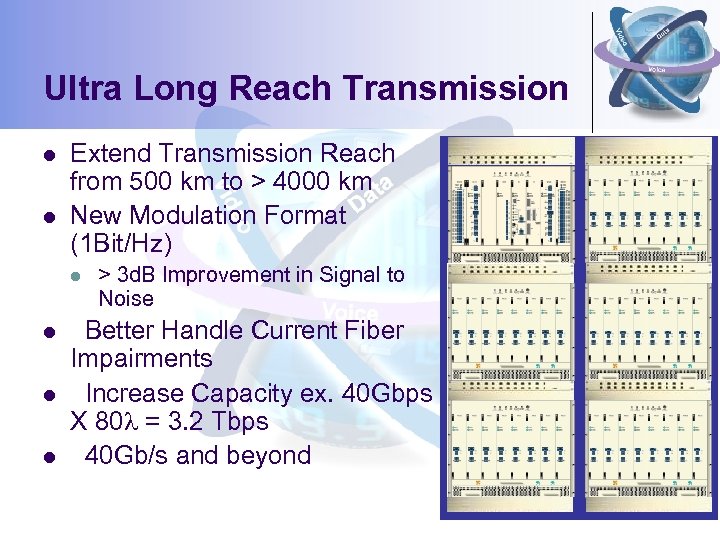
Ultra Long Reach Transmission l l Extend Transmission Reach from 500 km to > 4000 km New Modulation Format (1 Bit/Hz) l l > 3 d. B Improvement in Signal to Noise Better Handle Current Fiber Impairments Increase Capacity ex. 40 Gbps X 80 = 3. 2 Tbps 40 Gb/s and beyond
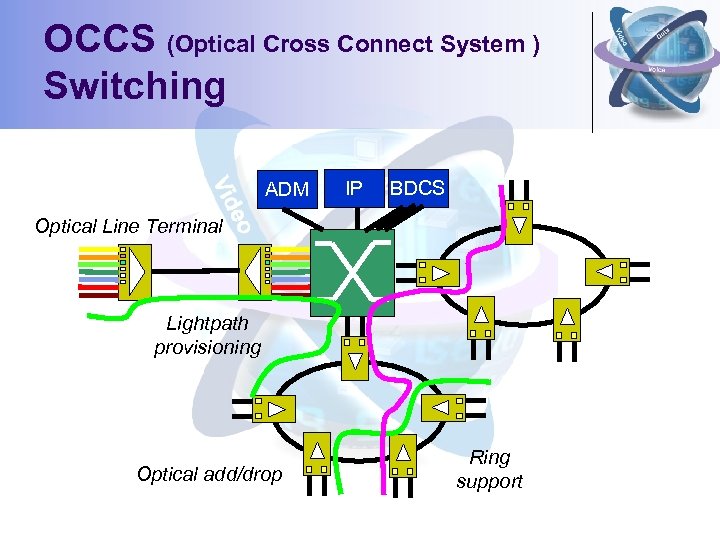
OCCS (Optical Cross Connect System ) Switching ADM IP BDCS Optical Line Terminal Lightpath provisioning Optical add/drop Ring support
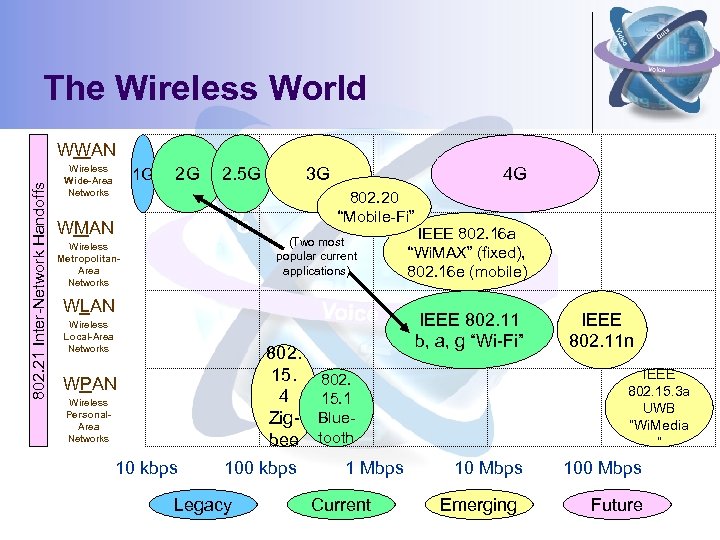
The Wireless World 802. 21 Inter-Network Handoffs WWAN Wireless Wide-Area Networks 1 G 2 G 2. 5 G 3 G 4 G 802. 20 “Mobile-Fi” WMAN (Two most popular current applications) Wireless Metropolitan. Area Networks WLAN Wireless Local-Area Networks 802. 15. 802. 4 15. 1 Zig- Bluebee tooth WPAN Wireless Personal. Area Networks 10 kbps 100 kbps Legacy 1 Mbps Current IEEE 802. 16 a “Wi. MAX” (fixed), 802. 16 e (mobile) IEEE 802. 11 b, a, g “Wi-Fi” IEEE 802. 11 n IEEE 802. 15. 3 a UWB “Wi. Media ” 10 Mbps 100 Mbps Emerging Future
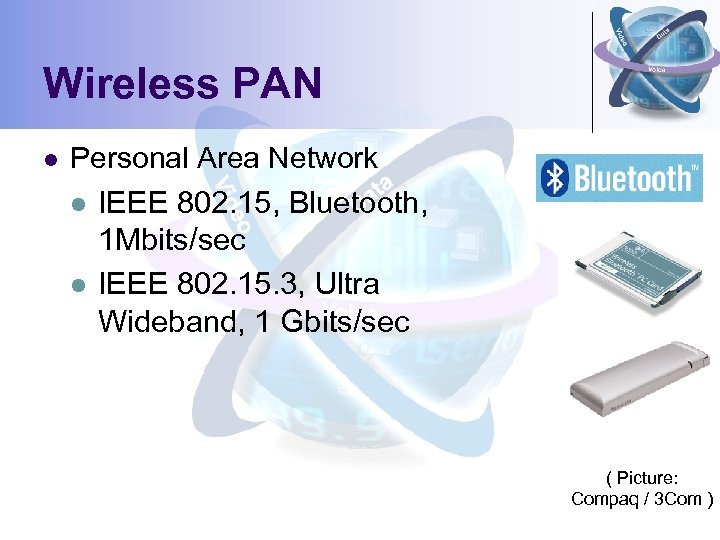
Wireless PAN l Personal Area Network l IEEE 802. 15, Bluetooth, 1 Mbits/sec l IEEE 802. 15. 3, Ultra Wideband, 1 Gbits/sec ( Picture: Compaq / 3 Com )
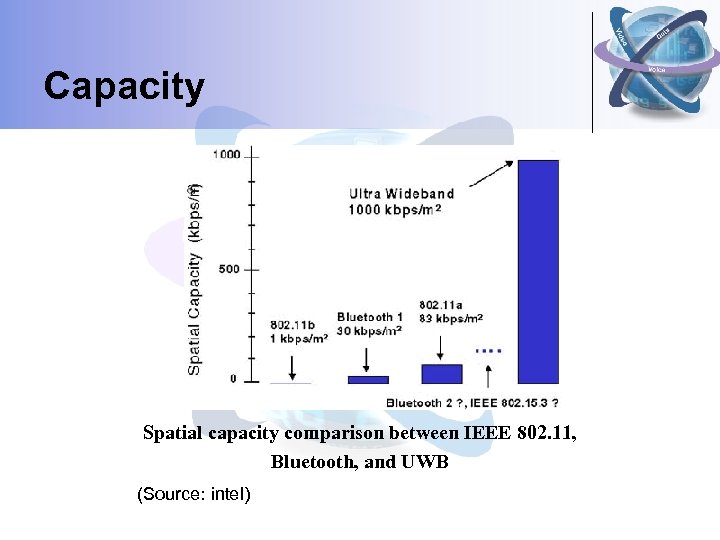
Capacity Spatial capacity comparison between IEEE 802. 11, Bluetooth, and UWB (Source: intel)
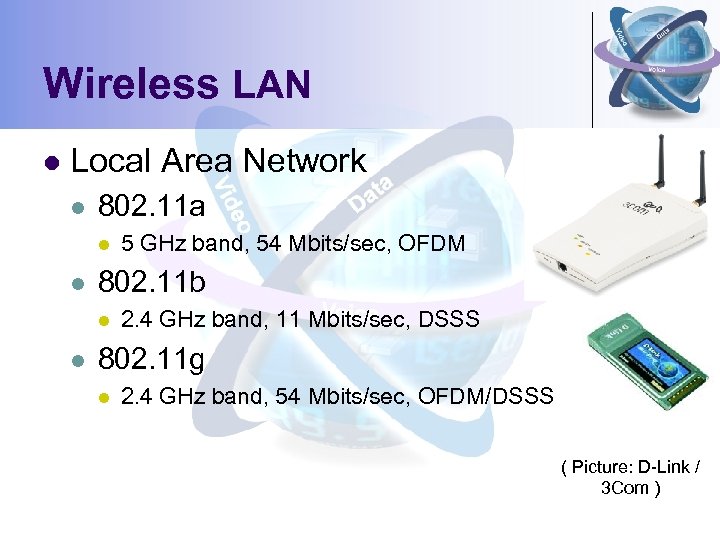
Wireless LAN l Local Area Network l 802. 11 a l l 802. 11 b l l 5 GHz band, 54 Mbits/sec, OFDM 2. 4 GHz band, 11 Mbits/sec, DSSS 802. 11 g l 2. 4 GHz band, 54 Mbits/sec, OFDM/DSSS ( Picture: D-Link / 3 Com )
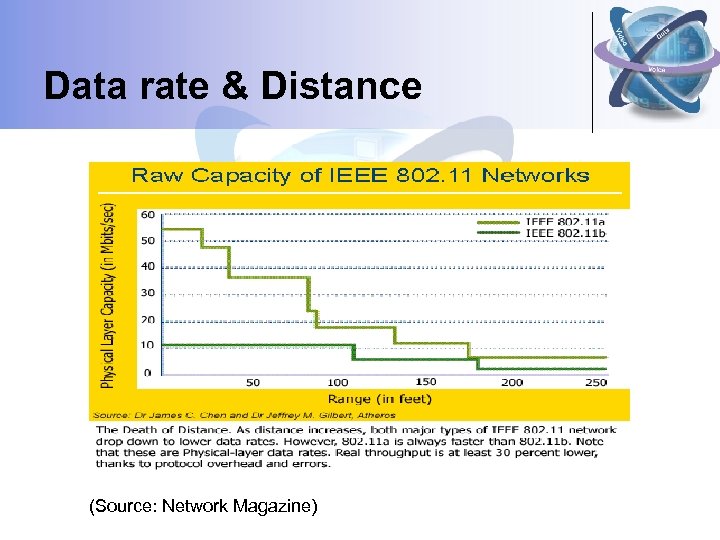
Data rate & Distance (Source: Network Magazine)
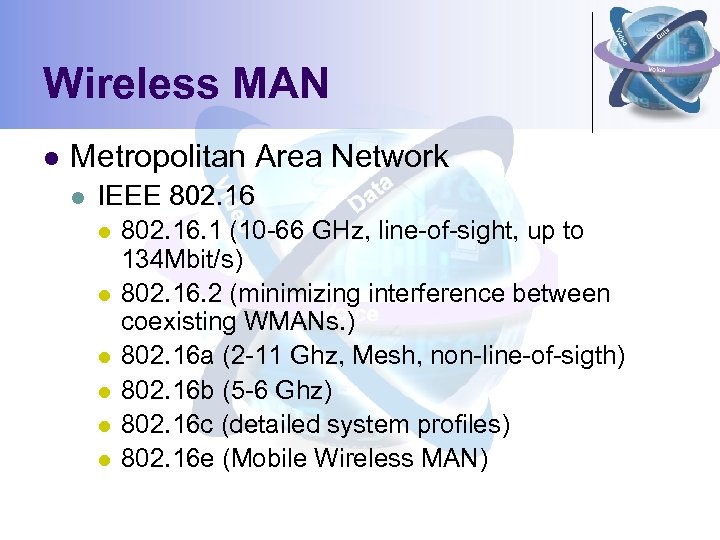
Wireless MAN l Metropolitan Area Network l IEEE 802. 16 l l l 802. 16. 1 (10 -66 GHz, line-of-sight, up to 134 Mbit/s) 802. 16. 2 (minimizing interference between coexisting WMANs. ) 802. 16 a (2 -11 Ghz, Mesh, non-line-of-sigth) 802. 16 b (5 -6 Ghz) 802. 16 c (detailed system profiles) 802. 16 e (Mobile Wireless MAN)
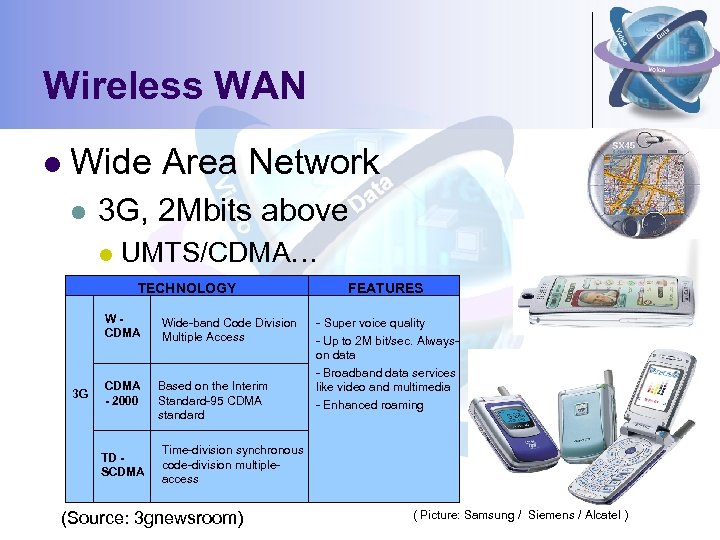
Wireless WAN l Wide Area Network l 3 G, 2 Mbits above l UMTS/CDMA… TECHNOLOGY WCDMA 3 G CDMA - 2000 TD SCDMA Wide-band Code Division Multiple Access Based on the Interim Standard-95 CDMA standard FEATURES - Super voice quality - Up to 2 M bit/sec. Alwayson data - Broadband data services like video and multimedia - Enhanced roaming Time-division synchronous code-division multipleaccess (Source: 3 gnewsroom) ( Picture: Samsung / Siemens / Alcatel )
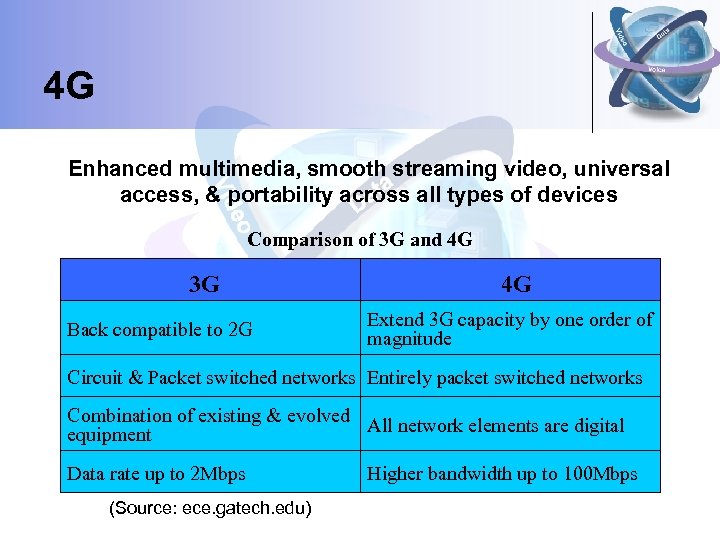
4 G Enhanced multimedia, smooth streaming video, universal access, & portability across all types of devices Comparison of 3 G and 4 G 3 G Back compatible to 2 G 4 G Extend 3 G capacity by one order of magnitude Circuit & Packet switched networks Entirely packet switched networks Combination of existing & evolved All network elements are digital equipment Data rate up to 2 Mbps (Source: ece. gatech. edu) Higher bandwidth up to 100 Mbps
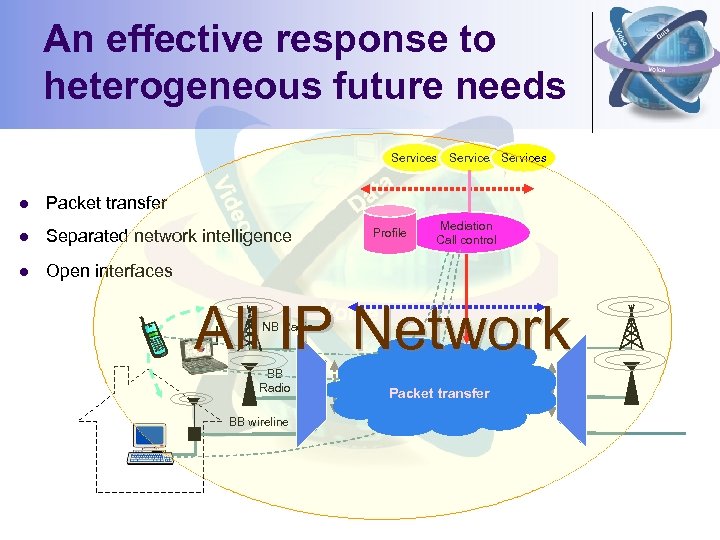
An effective response to heterogeneous future needs Services l Packet transfer l Separated network intelligence l Open interfaces Profile Mediation Call control All IP Network NB Radio BB wireline Packet transfer
IP Is the New Public UNI (Network Connection) l Public IP Networks Require l Routing functions on the edge l l Consistent interface to subscriber applications Application-Aware Dynamic Service Delivery l End-End Across The Network § l Public IP Networks Must Provide l Application-aware priority for IP flows l Application specific behavior for different IP Flows l Deliver bandwidth, and access privileges as required § l Per application Dynamic signaling to support application requirements l Deliver services where and when they are needed § l Network Changes Behavior As Necessary By requesting them from smart network elements Public IP Networks Cannot Use a Hop-by-Hop Internet Architecture l Routers alone won’t support what needs to be done
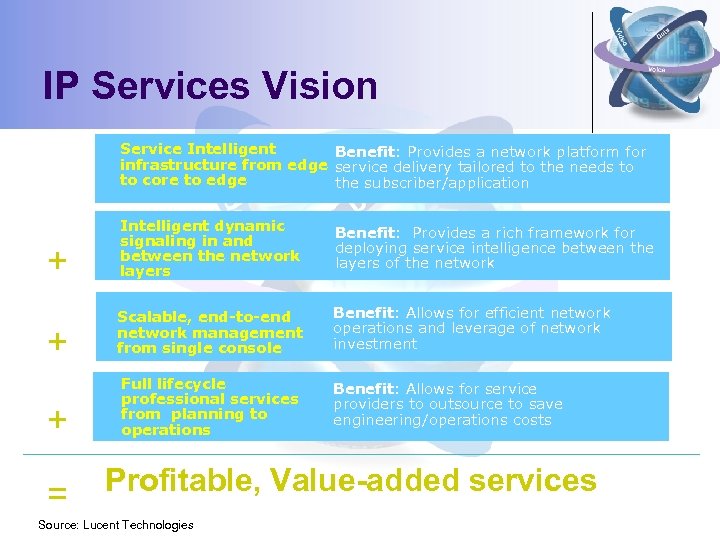
IP Services Vision Service Intelligent Benefit: Provides a network platform for infrastructure from edge service delivery tailored to the needs to to core to edge the subscriber/application + Intelligent dynamic signaling in and between the network layers Benefit: Provides a rich framework for deploying service intelligence between the layers of the network + Scalable, end-to-end network management from single console Benefit: Allows for efficient network operations and leverage of network investment + Full lifecycle professional services from planning to operations Benefit: Allows for service providers to outsource to save engineering/operations costs = Profitable, Value-added services Source: Lucent Technologies
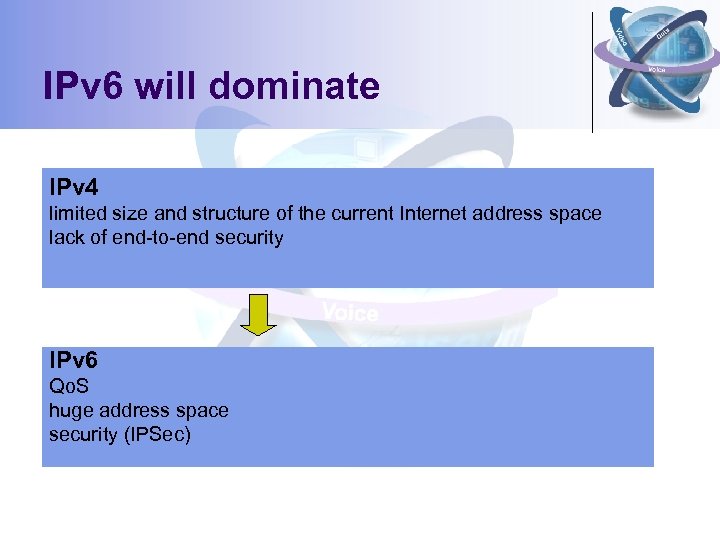
IPv 6 will dominate IPv 4 limited size and structure of the current Internet address space lack of end-to-end security IPv 6 Qo. S huge address space security (IPSec)
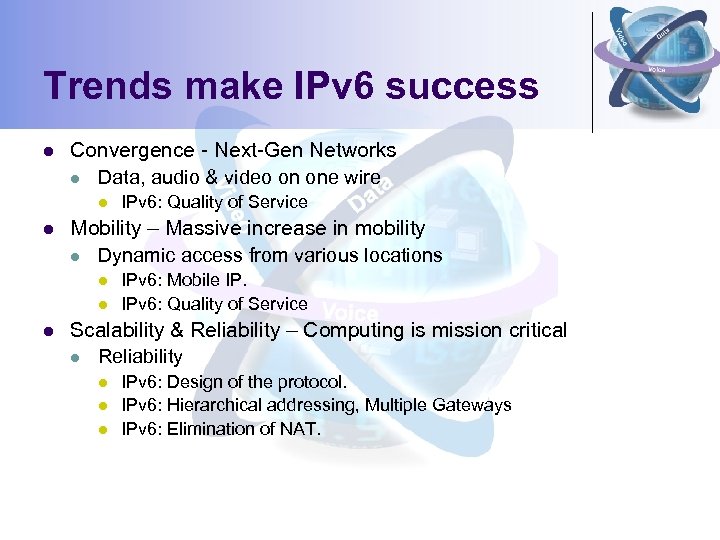
Trends make IPv 6 success l Convergence - Next-Gen Networks l Data, audio & video on one wire l l Mobility – Massive increase in mobility l Dynamic access from various locations l l l IPv 6: Quality of Service IPv 6: Mobile IP. IPv 6: Quality of Service Scalability & Reliability – Computing is mission critical l Reliability l l l IPv 6: Design of the protocol. IPv 6: Hierarchical addressing, Multiple Gateways IPv 6: Elimination of NAT.
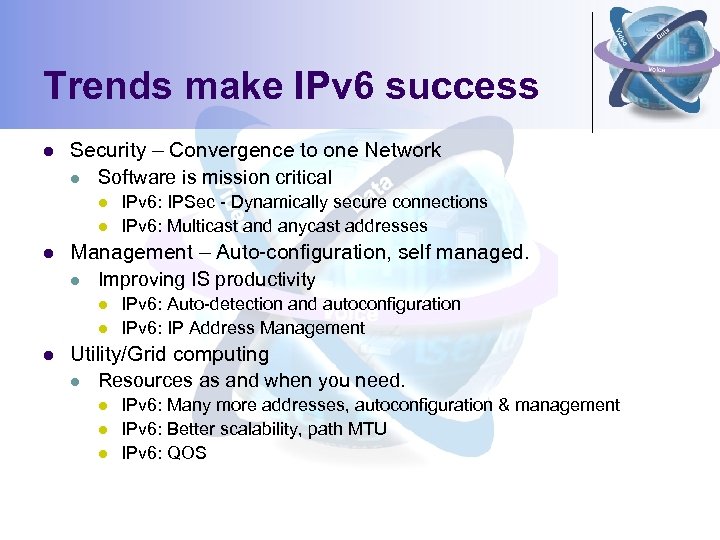
Trends make IPv 6 success l Security – Convergence to one Network l Software is mission critical l Management – Auto-configuration, self managed. l Improving IS productivity l l l IPv 6: IPSec - Dynamically secure connections IPv 6: Multicast and anycast addresses IPv 6: Auto-detection and autoconfiguration IPv 6: IP Address Management Utility/Grid computing l Resources as and when you need. l l l IPv 6: Many more addresses, autoconfiguration & management IPv 6: Better scalability, path MTU IPv 6: QOS
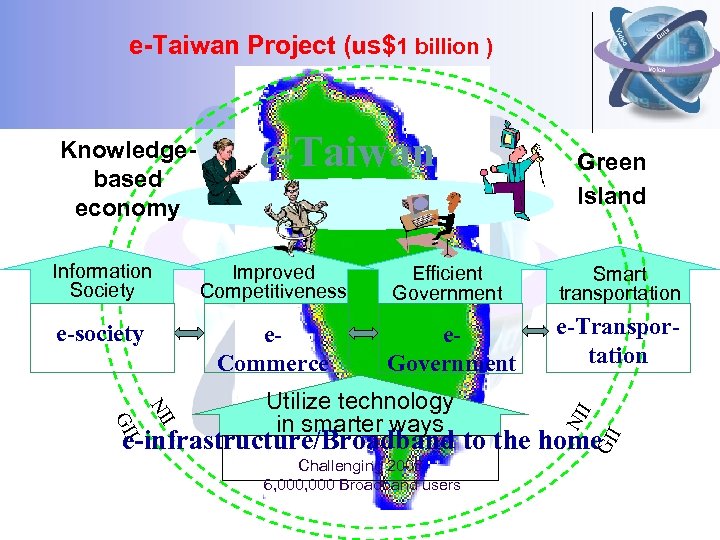
e-Taiwan Project (us$1 billion ) Knowledgebased economy e-Taiwan Green Island Improved Competitiveness Efficient Government Smart transportation e-society e. Commerce e. Government e-Transportation NI I NI GI Utilize technology in smarter ways I Information Society Challenging 2008 6, 000 Broadband users GI I I e-infrastructure/Broadband to the home
Users Driven Top Down
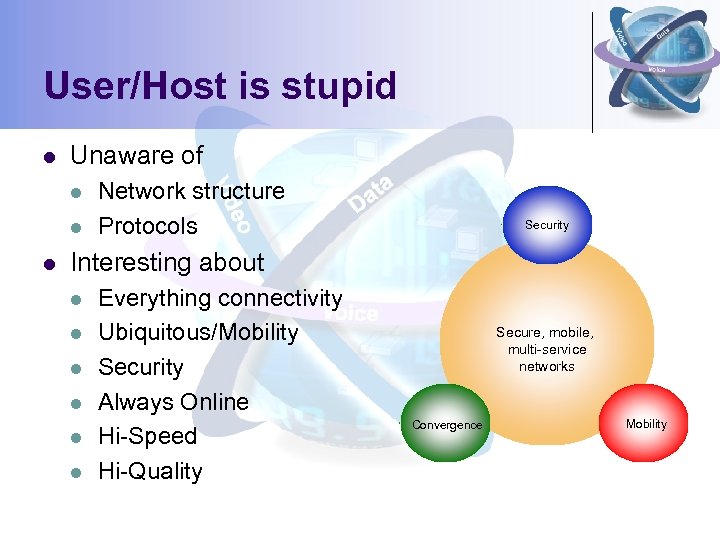
User/Host is stupid l Unaware of l l l Network structure Protocols Security Interesting about l l l Everything connectivity Ubiquitous/Mobility Security Always Online Hi-Speed Hi-Quality Secure, mobile, multi-service networks Convergence Mobility
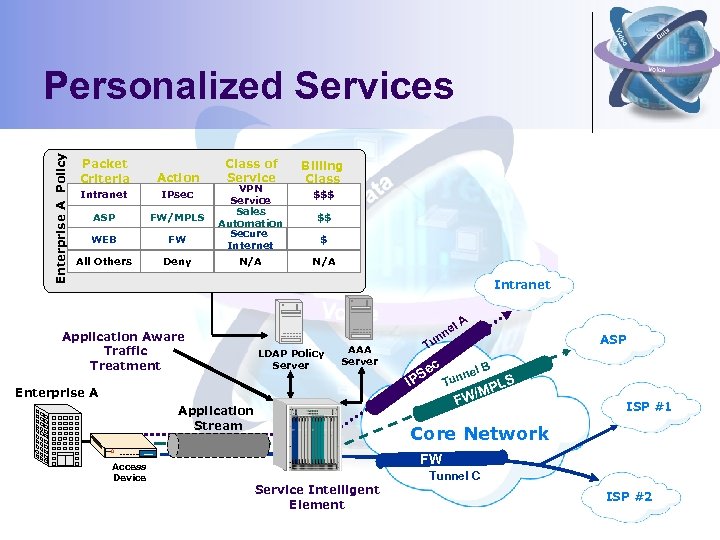
Enterprise A Policy Personalized Services Packet Criteria Action Intranet IPsec ASP FW/MPLS WEB FW All Others Deny Class of Service VPN Service Sales Automation Secure Internet N/A Billing Class $$$ $$ $ N/A Intranet Application Aware Traffic Treatment l. A LDAP Policy Server e nn c e PS I Enterprise A Application Stream Access Device ASP Tu AAA Server l. B ne Tun LS /MP FW LSP ISP #1 Core Network FW Service Intelligent Element Tunnel C ISP #2
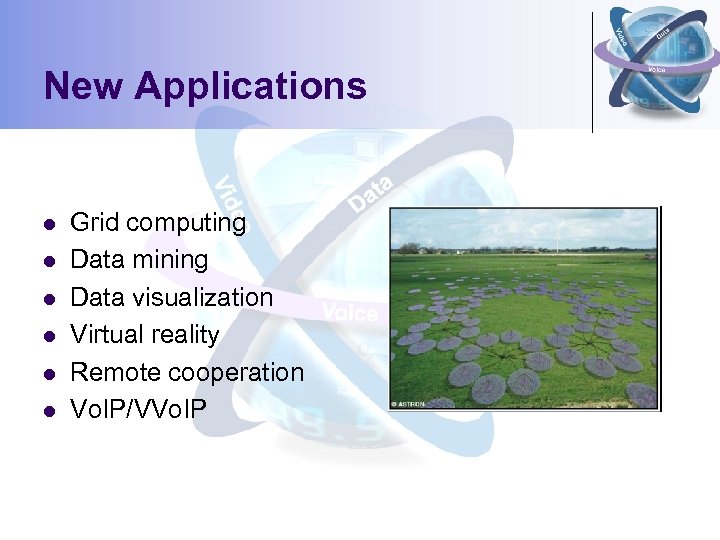
New Applications l l l Grid computing Data mining Data visualization Virtual reality Remote cooperation Vo. IP/VVo. IP
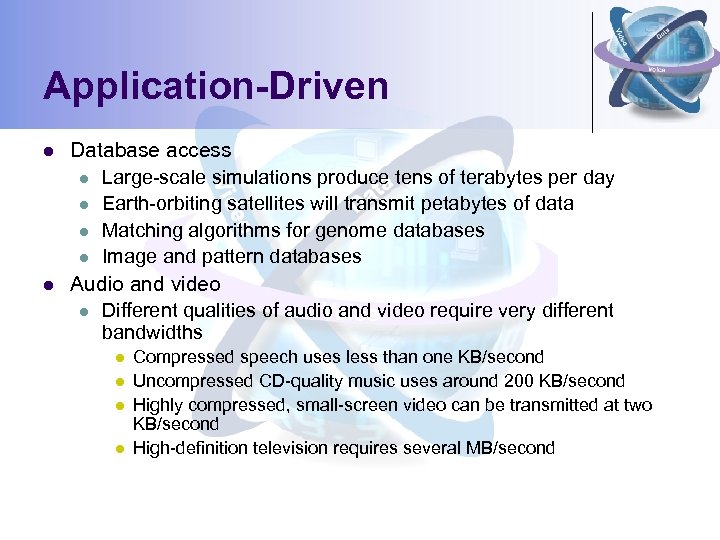
Application-Driven l l Database access l Large-scale simulations produce tens of terabytes per day l Earth-orbiting satellites will transmit petabytes of data l Matching algorithms for genome databases l Image and pattern databases Audio and video l Different qualities of audio and video require very different bandwidths l l Compressed speech uses less than one KB/second Uncompressed CD-quality music uses around 200 KB/second Highly compressed, small-screen video can be transmitted at two KB/second High-definition television requires several MB/second
Application-Driven l Real-time collaboration l l l Groups want to interact across time and space l Virtual enterprises l Desktop videoconferencing l Distance-independent learning Control and synchronization of audio and video streams Shared access to information Managed interactions Maintenance of history and audit trails Support of distributed protocols to provide consistency
Application-Driven l Distributed computing l Now l l Future l l Tight interconnection of processing elements on a backplane of a single high-performance computer or in a physically connected cluster Geographically separated elements Tele-Immersion l Users in a different locations will collaborate in a shared, virtual or simulated environment as if they are in the same room l Must combine audio, video, virtual worlds, and simulations l Requires huge bandwidth, very fast responses, and guarantees of delivery
Application-Driven l Scenarios l l l Remote instrument control Distributed simulation Environmental crises management Public information access Collaborative R&D
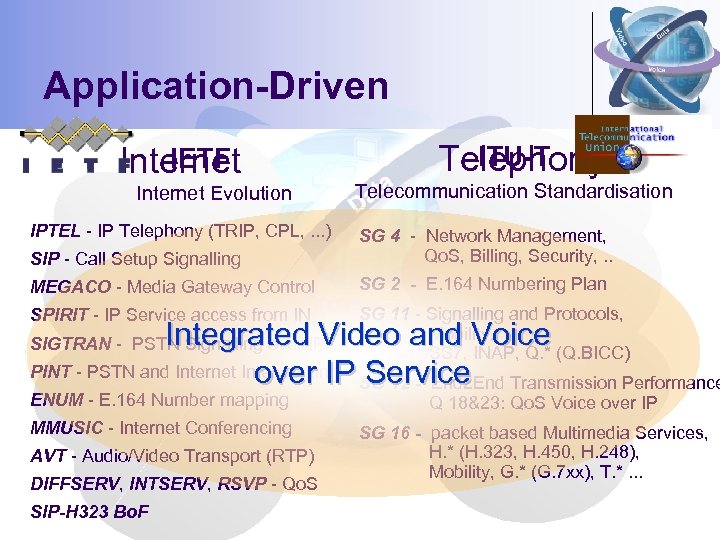
Application-Driven. IETF Internet Evolution IPTEL - IP Telephony (TRIP, CPL, . . . ) ITU-T Telephony Telecommunication Standardisation. SIP - Call Setup Signalling SG 4 - Network Management, Qo. S, Billing, Security, . . MEGACO - Media Gateway Control SG 2 - E. 164 Numbering Plan SPIRIT - IP Service access from IN SG 11 - Signalling and Protocols, Mobility, SS 7, INAP, Q. * (Q. BICC) Integrated Video and Voice PINT - PSTN and Internet Interworking Service over IP SG 12 - End 2 End Transmission Performance SIGTRAN - PSTN Signalling over IP ENUM - E. 164 Number mapping MMUSIC - Internet Conferencing AVT - Audio/Video Transport (RTP) DIFFSERV, INTSERV, RSVP - Qo. S SIP-H 323 Bo. F Q 18&23: Qo. S Voice over IP SG 16 - packet based Multimedia Services, H. * (H. 323, H. 450, H. 248), Mobility, G. * (G. 7 xx), T. *. . .
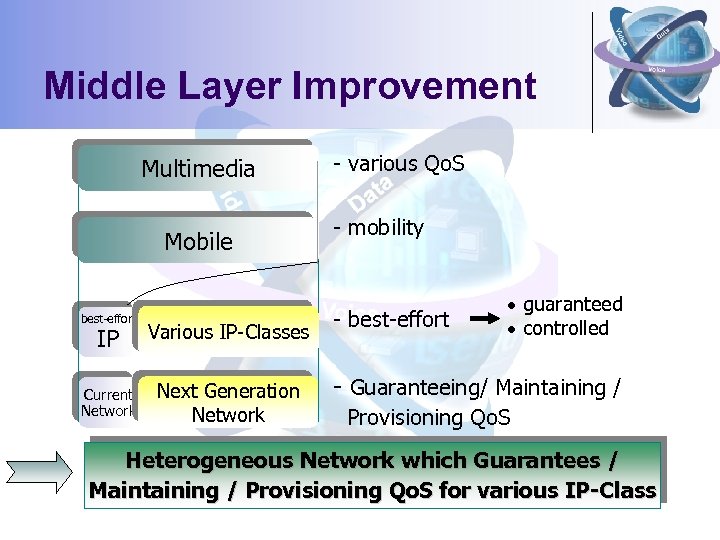
Middle Layer Improvement Multimedia Mobile best-effort IP Various IP-Classes Current Network Next Generation Network - various Qo. S - mobility - best-effort guaranteed controlled - Guaranteeing/ Maintaining / Provisioning Qo. S Heterogeneous Network which Guarantees / Maintaining / Provisioning Qo. S for various IP-Class
Qo. S l Intserv/Diffserv integrated network l l Qo. S refers to delay (latency), jitter (variance), and availability Need for reliable and timely delivery of control signals, telemetry, and human-oriented data streams (audio, video, tactile)
IP Mobility l l l Hierarchical Mobile. IPv 6 AAA interactions Fast/Smooth/Seamless Handoffs Header Compression Enable Mobile. IPv 6 to act as mobility technology within and between cellular networks – All-IP Cellular Networks
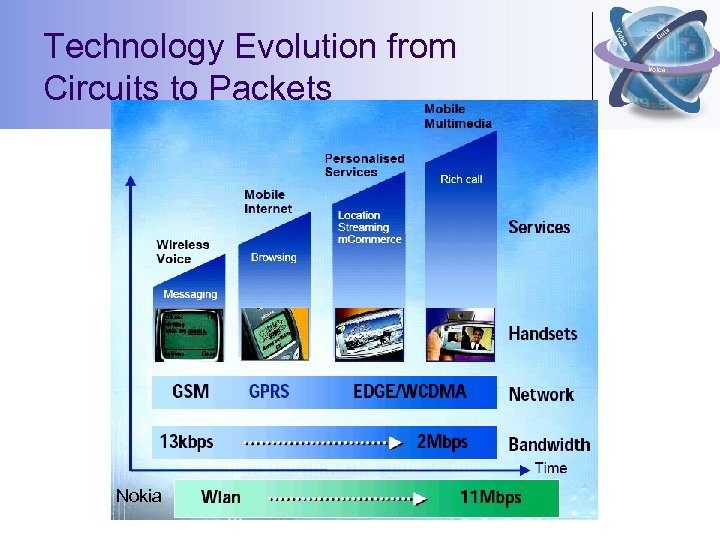
Technology Evolution from Circuits to Packets Nokia
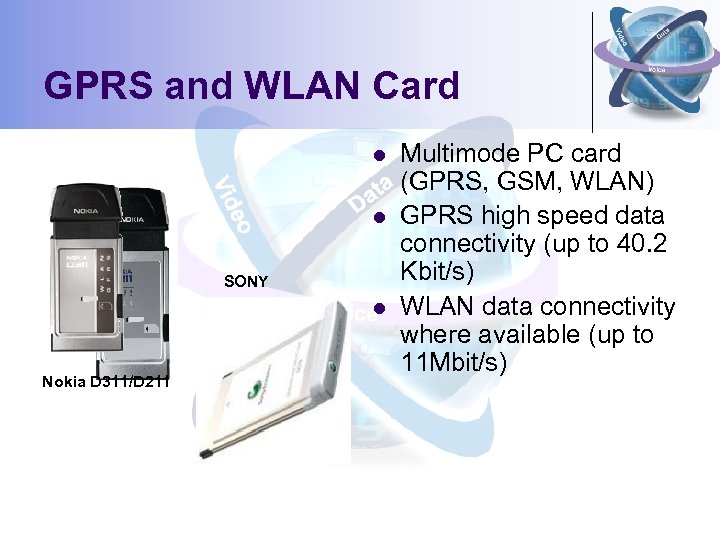
GPRS and WLAN Card l l SONY l Nokia D 311/D 211 Multimode PC card (GPRS, GSM, WLAN) GPRS high speed data connectivity (up to 40. 2 Kbit/s) WLAN data connectivity where available (up to 11 Mbit/s)
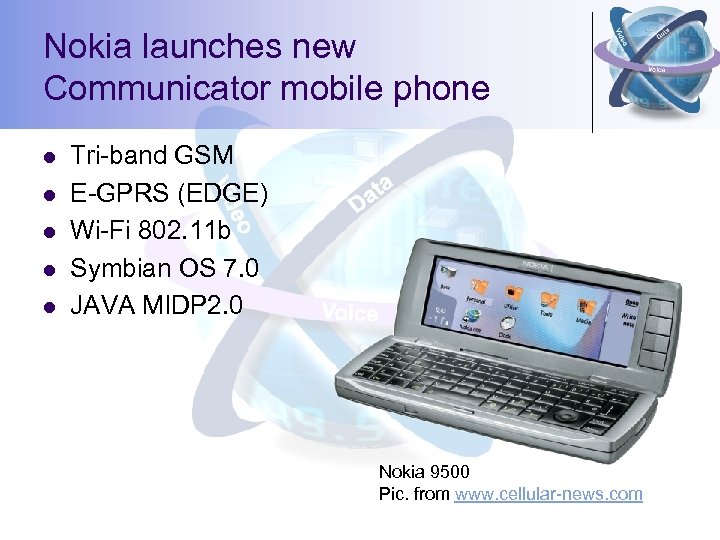
Nokia launches new Communicator mobile phone l l l Tri-band GSM E-GPRS (EDGE) Wi-Fi 802. 11 b Symbian OS 7. 0 JAVA MIDP 2. 0 Nokia 9500 Pic. from www. cellular-news. com
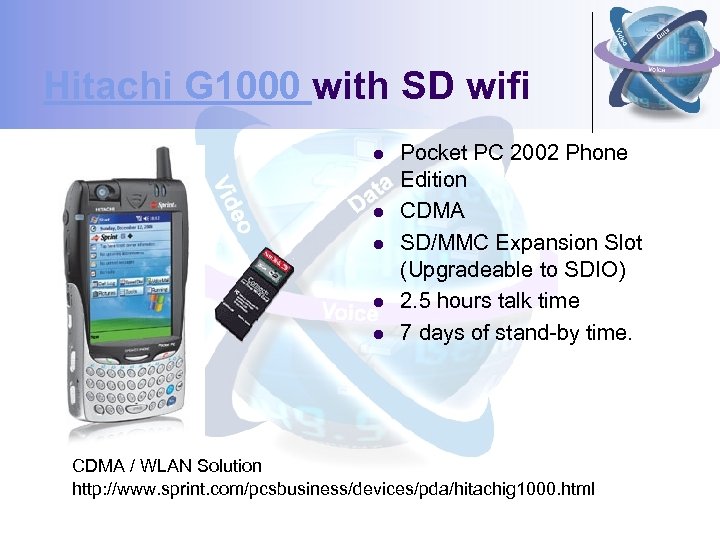
Hitachi G 1000 with SD wifi l l l Pocket PC 2002 Phone Edition CDMA SD/MMC Expansion Slot (Upgradeable to SDIO) 2. 5 hours talk time 7 days of stand-by time. CDMA / WLAN Solution http: //www. sprint. com/pcsbusiness/devices/pda/hitachig 1000. html
NTT Do. Co. Mo, NEC plan dual 3 G/WLAN handset l l l • • • W-CDMA / IEEE 802. 11 b User will be able to use VOIP when in range of a WLAN access point. Once out of range, it will use the standard 3 G network. No indication has been made yet whether the handset will be able to seamless transfer voice calls between WLAN and 3 G. http: //www. mobileburn. com/news. jsp? Id=559 http: //www. infoworld. com/article/03/12/03/HN 3 gwlanhandset_1. html http: //www. computerweekly. com/Article 126993. htm
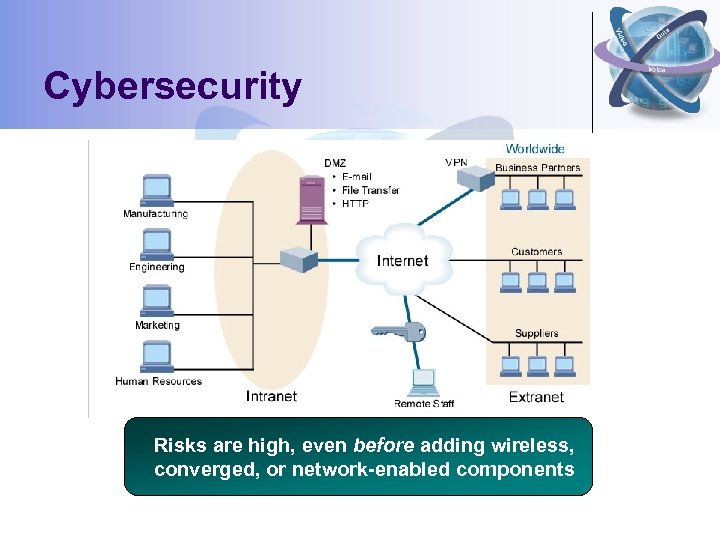
Cybersecurity Risks are high, even before adding wireless, converged, or network-enabled components
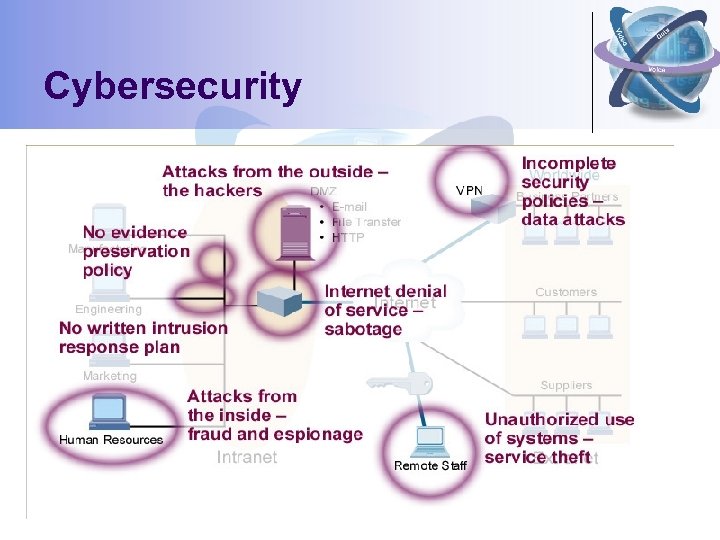
Cybersecurity
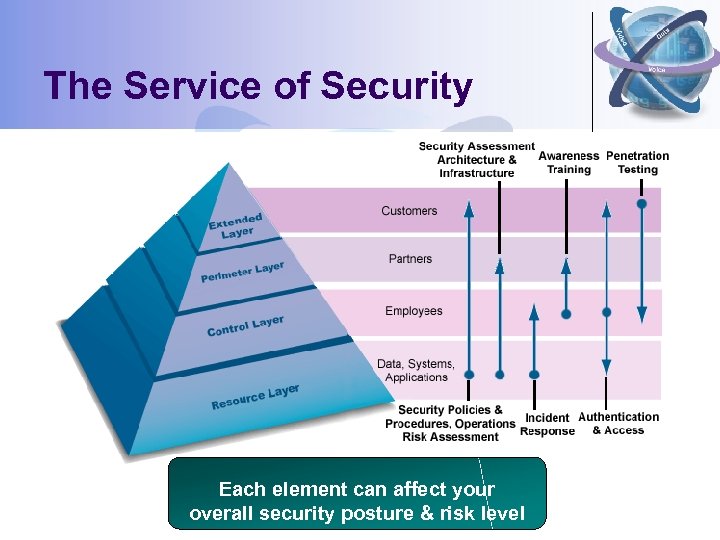
The Service of Security Each element can affect your overall security posture & risk level
Other Technologies l Multicasting l l Adaptive resource management l l Application-to-application multicast rather than host-to-host Internet Traffic Engineering Virtual networking l Construction of multiple networks on a common infrastructure, allowing organizations to easily set up private networking domains governed by organization-specific policies
Conclusion
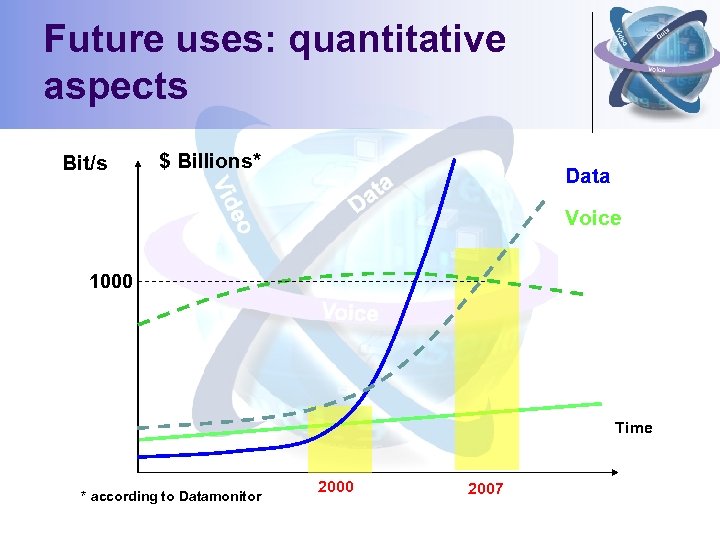
Future uses: quantitative aspects Bit/s $ Billions* Data Voice 1000 Time * according to Datamonitor 2000 2007
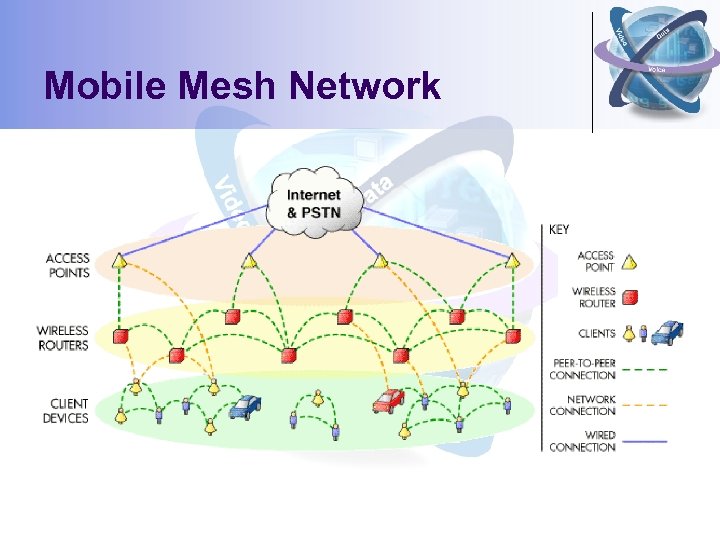
Mobile Mesh Network
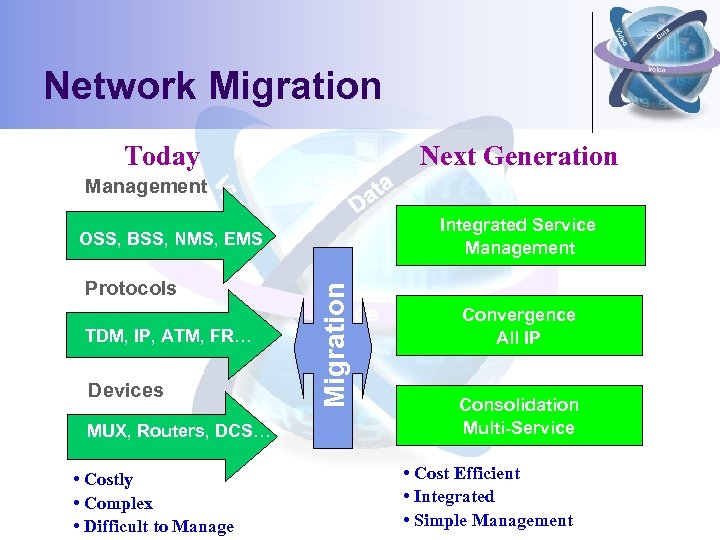
Network Migration Today Next Generation Management Integrated Service Management Protocols TDM, IP, ATM, FR… Devices MUX, Routers, DCS… • Costly • Complex • Difficult to Manage Migration OSS, BSS, NMS, EMS Convergence All IP Consolidation Multi-Service • Cost Efficient • Integrated • Simple Management
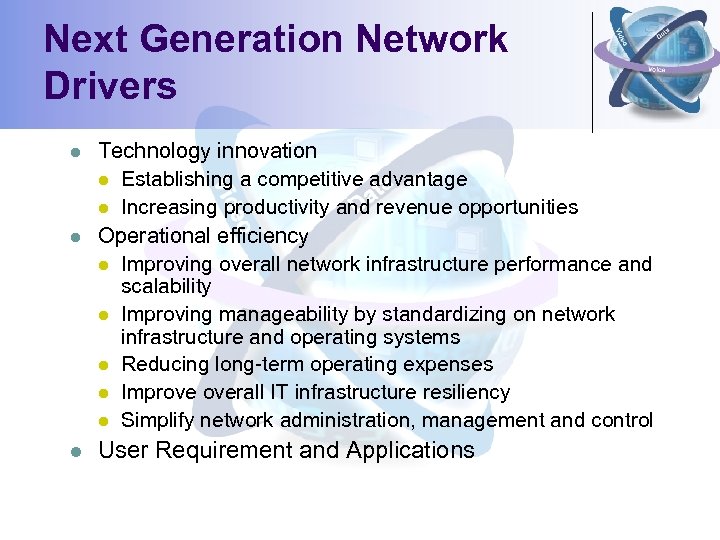
Next Generation Network Drivers l l l Technology innovation l Establishing a competitive advantage l Increasing productivity and revenue opportunities Operational efficiency l Improving overall network infrastructure performance and scalability l Improving manageability by standardizing on network infrastructure and operating systems l Reducing long-term operating expenses l Improve overall IT infrastructure resiliency l Simplify network administration, management and control User Requirement and Applications
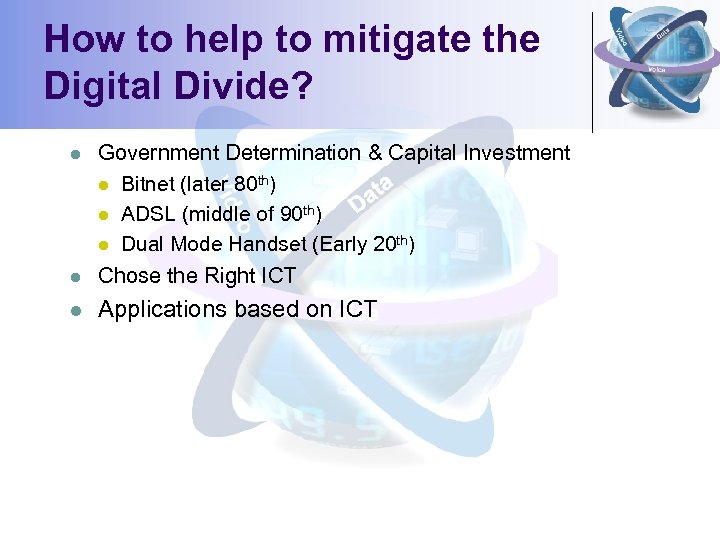
How to help to mitigate the Digital Divide? l Government Determination & Capital Investment l Bitnet (later 80 th) l ADSL (middle of 90 th) l Dual Mode Handset (Early 20 th) Chose the Right ICT l Applications based on ICT l
If it's green, it's biology, If it stinks, it's chemistry, If it has numbers it's math, If it doesn't work, it's technology Thank you! Comments?
Скачать презентацию Exercise Telecenter to Bridge the Digital Divide
f6562eee2c90579c566f87171d03a053.ppt