


 Скачать презентацию EXAMINATION REFORMS AND CONTINUOUS AND COMPREHENSIVE EVALUATION Page
6f818139a6e97cec8b66adde5a8872c7.ppt
- Количество слайдов: 35
 EXAMINATION REFORMS AND CONTINUOUS AND COMPREHENSIVE EVALUATION Page 1
 External Examinations ‘are largely inappropriate for the knowledge society of the 21 st century and its need for innovative problem solvers‘ n Evaluation of Scholastic learning only on marks. n Ability of child not evaluated. n Limited Techniques of Evaluation do not identify learner’s level of attainment. n Resulting in Pass/Fail. n Causing frustration and humiliation. 2
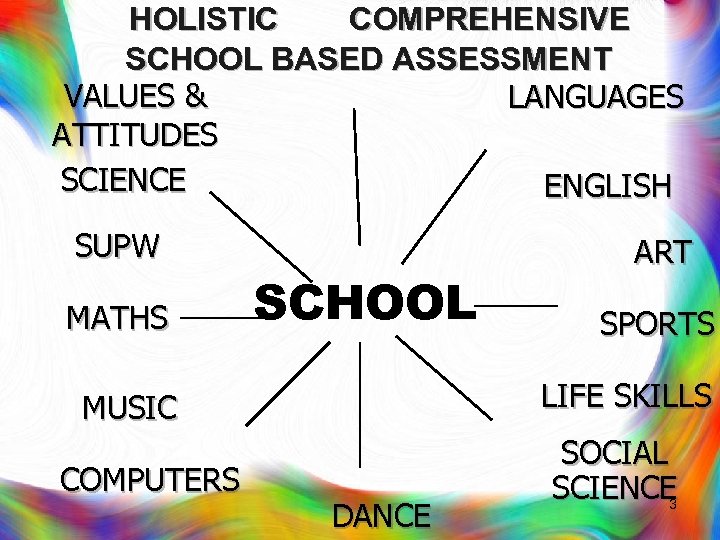 HOLISTIC COMPREHENSIVE SCHOOL BASED ASSESSMENT VALUES & LANGUAGES ATTITUDES SCIENCE ENGLISH SUPW MATHS SCHOOL SPORTS LIFE SKILLS MUSIC COMPUTERS ART DANCE SOCIAL SCIENCE 3
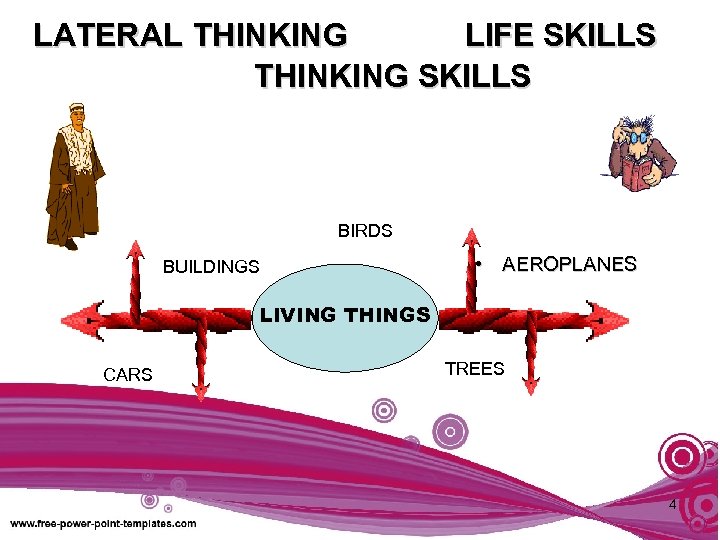 LATERAL THINKING LIFE SKILLS THINKING SKILLS BIRDS BUILDINGS • AEROPLANES LIVING THINGS CARS TREES 4
 • Continuous and Comprehensive evaluation refers to a system of school based assessment that covers all aspects of student’s development. • It emphasizes two fold objectives. 1. Continuity in evaluation and assessment of broad based learning. 2. 2. Behavioural out come. 5
 FEATURES OF CCE Continuous • Continual—from the beginning and during the instructional process • Periodicity—frequency /term Page 6
 Comprehensive It means that the scheme attempts to cover both the scholastic & the co scholastic aspects of students growth Since abilities, aptitudes & attitudes manifest themselves in forms other than the written word, the term refers to application of variety of tools & techniques • It includes 1. Scholastic - Subject specific areas. 2. Co-Scholastic - Life skills, attitudes & values and other co curricular activities 3. Includes a variety of tools and techniques for assessment of the learners. 7
 Scholastic • Academic • Work experience • Physical • Art and Health Education Co Scholastic • Life Skills • Attitudes • Outdoor and Values Activities #
 Scholastic Evaluation Formative Assessment : • Assessment which is carried throughout the year by the teacher formally and informally in a non threatening and supportive environment • It is diagnostic and remedial Summative Assessment: n n End of term or end of the year exams Feedback on learning (assessment of learning) to teacher and parents 9
 FORMATIVE ASSESSMENT (FA) Will comprise of : • Class work/Homework • Oral questions/Quizzes • Projects • Assignments/Tests • Open book Examinations • Field trips/surveys • Seminars/Symposiums 10
 SUMMATIVE ASSESSMENT(SA) Will be Term End Examination: • Curriculum and syllabus as circulated by the board • Question papers to be prepared by schools as per the CBSE format and have to be only from the Question Bank to be sent by CBSE. • Exam to be conducted by schools • Evaluation of Answer scripts will be done within the school. 11
 • Academic year will have terms - • TERM : April to September • TERM: October to March Page 12
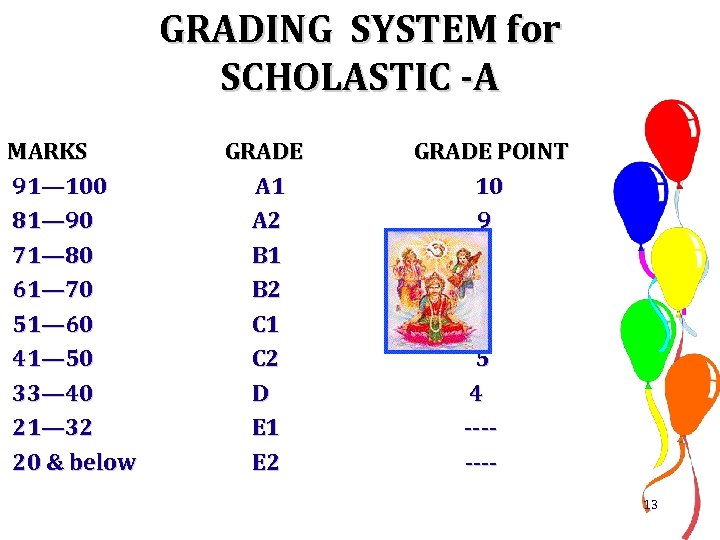 GRADING SYSTEM for SCHOLASTIC -A MARKS 91— 100 81— 90 71— 80 61— 70 51— 60 41— 50 33— 40 21— 32 20 & below GRADE A 1 A 2 B 1 B 2 C 1 C 2 D E 1 E 2 GRADE POINT 10 9 8 7 6 5 4 ------13
 GRADING SYSTEM ADVANTAGES Minimize misclassification of students on the basis of marks. Ø ØEliminate unhealthy cut throat competition among high achievers. ØReduce societal pressure and provide the learner with more flexibility. ØLead to a better learning environment. 14
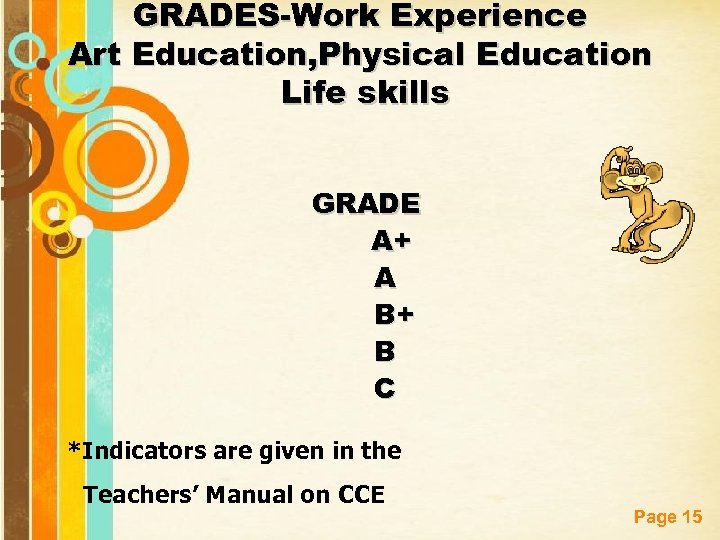 GRADES-Work Experience Art Education, Physical Education Life skills GRADE A+ A B+ B C *Indicators are given in the Teachers’ Manual on CCE Page 15
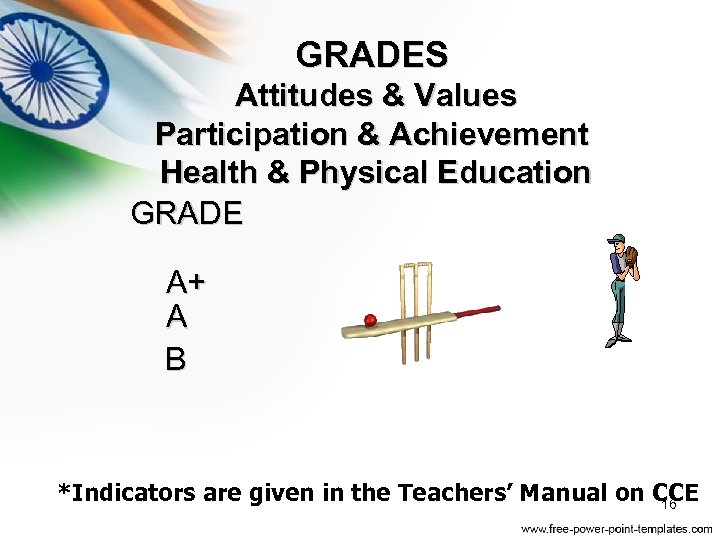 GRADES Attitudes & Values Participation & Achievement Health & Physical Education GRADE A+ A B *Indicators are given in the Teachers’ Manual on CCE 16
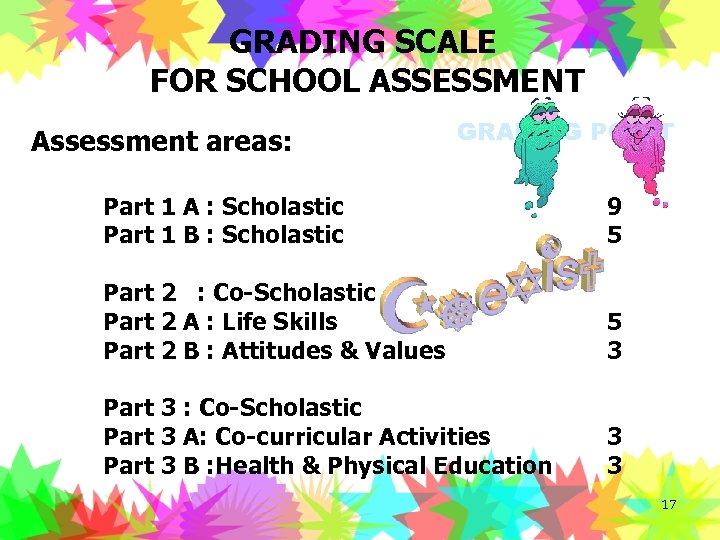 GRADING SCALE FOR SCHOOL ASSESSMENT Assessment areas: GRADING POINT Part 1 A : Scholastic Part 1 B : Scholastic 9 5 Part 2 : Co-Scholastic Part 2 A : Life Skills Part 2 B : Attitudes & Values 5 3 Part 3 : Co-Scholastic Part 3 A: Co-curricular Activities Part 3 B : Health & Physical Education 3 3 17
 CONTINUATION OF STD IX IN STD X 2010 -2011 • Certificate of Continuous and Comprehensive evaluation to be issued on pre-printed Board stationery. • Once completed for both years (IX & X) to be sent to the Regional office for signature of Board official. 18
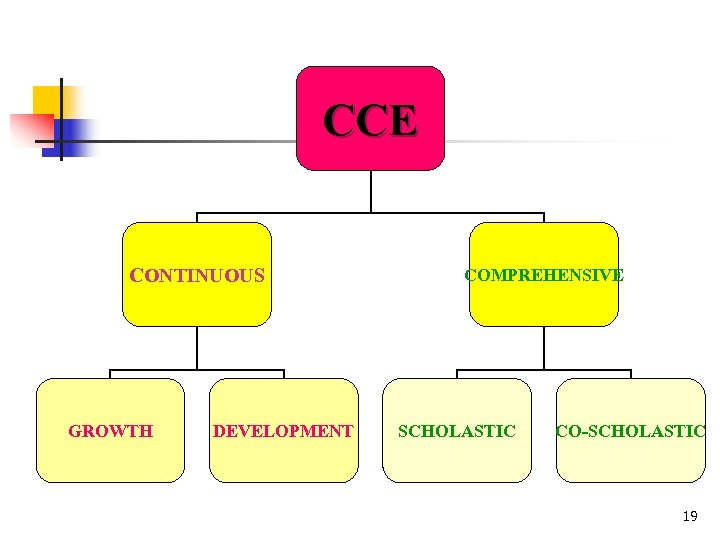 CCE CONTINUOUS GROWTH DEVELOPMENT COMPREHENSIVE SCHOLASTIC CO-SCHOLASTIC 19
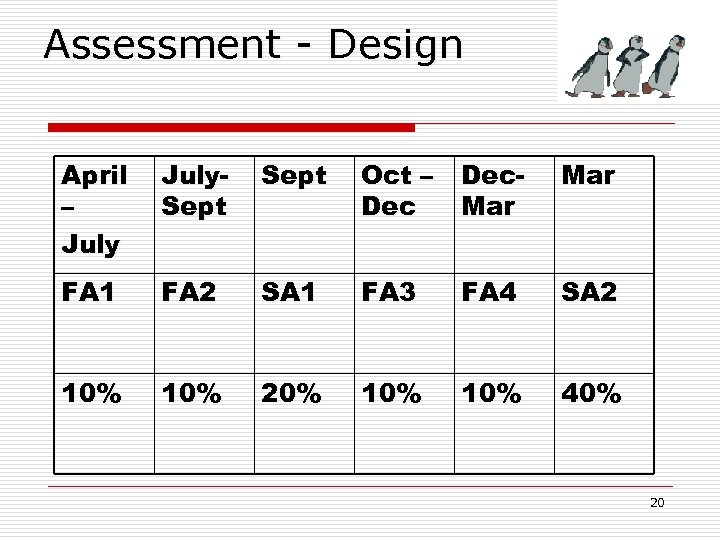 Assessment - Design April – July. Sept Oct – Dec. Mar FA 1 FA 2 SA 1 FA 3 FA 4 SA 2 10% 20% 10% 40% 20
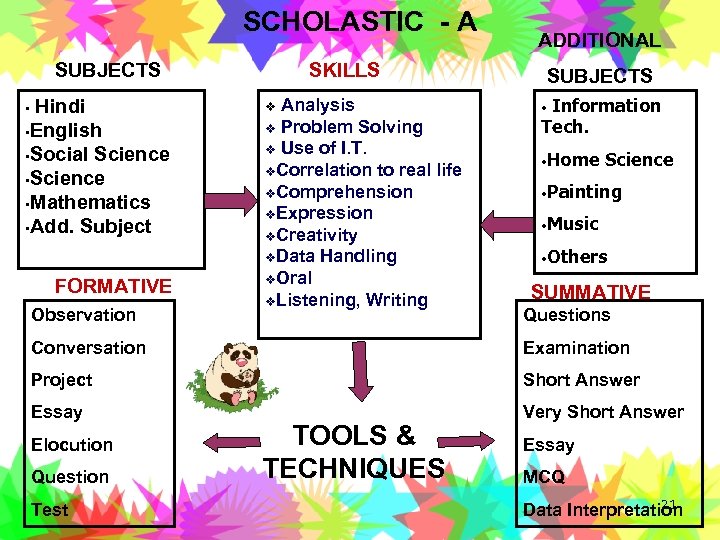 SCHOLASTIC - A SUBJECTS Hindi • English • Social Science • Mathematics • Add. Subject • FORMATIVE Observation SKILLS Analysis v Problem Solving v Use of I. T. v. Correlation to real life v. Comprehension v. Expression v. Creativity v. Data Handling v. Oral v. Listening, Writing v ADDITIONAL SUBJECTS Information Tech. • • Home Science • Painting • Music • Others SUMMATIVE Questions Conversation Examination Project Short Answer Essay Very Short Answer Elocution Question Test TOOLS & TECHNIQUES Essay MCQ 21 Data Interpretation
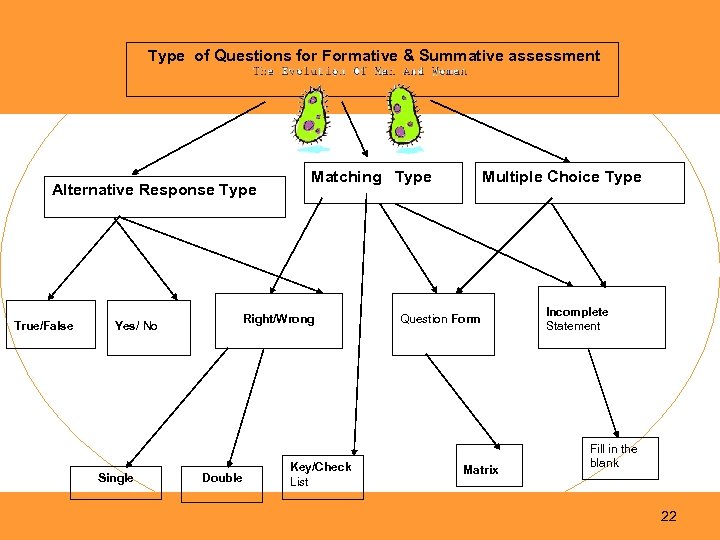 Type of Questions for Formative & Summative assessment Alternative Response Type True/False Right/Wrong Yes/ No Single Matching Type Double Key/Check List Multiple Choice Type Question Form Matrix Incomplete Statement Fill in the blank 22
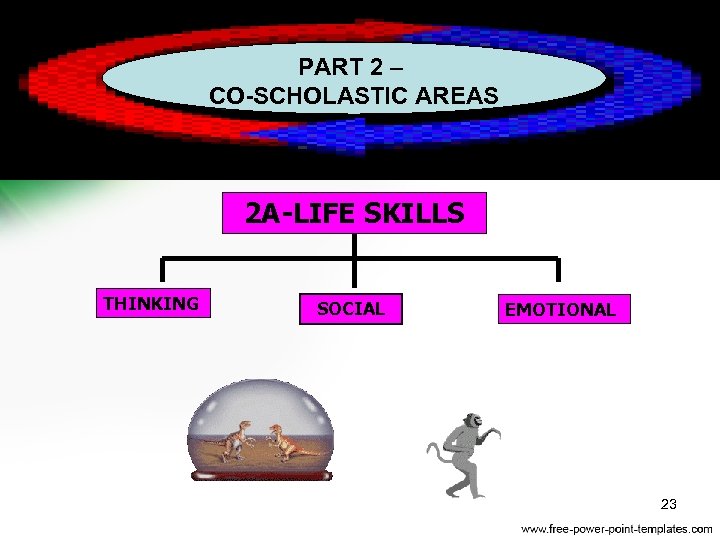 PART 2 – CO-SCHOLASTIC AREAS 2 A-LIFE SKILLS THINKING SOCIAL EMOTIONAL 23
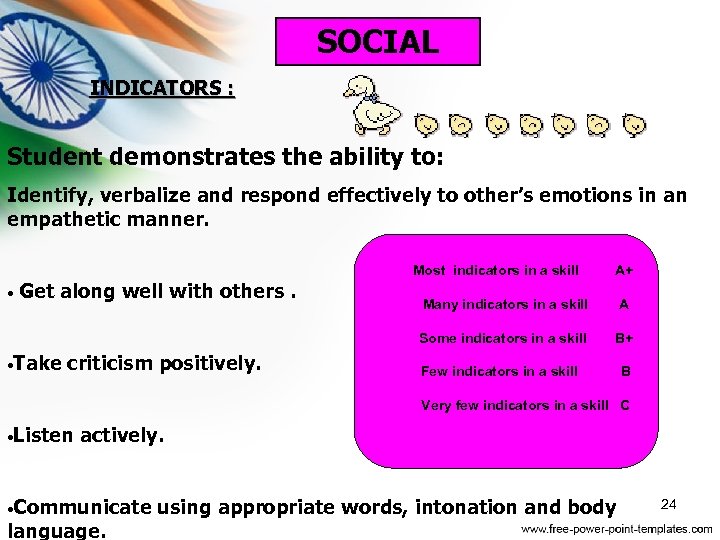 SOCIAL INDICATORS : Student demonstrates the ability to: Identify, verbalize and respond effectively to other’s emotions in an empathetic manner. Most indicators in a skill • Get along well with others. A+ criticism positively. A Some indicators in a skill • Take Many indicators in a skill B+ Few indicators in a skill B Very few indicators in a skill C • Listen actively. • Communicate language. using appropriate words, intonation and body 24
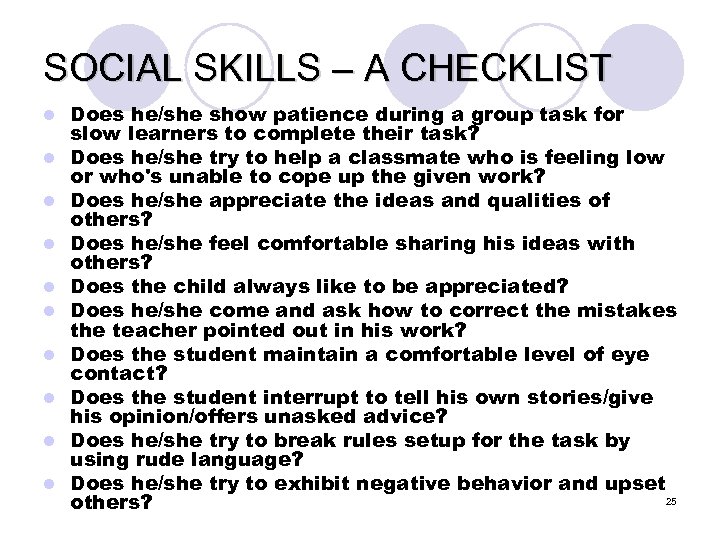 SOCIAL SKILLS – A CHECKLIST l l l l l Does he/she show patience during a group task for slow learners to complete their task? Does he/she try to help a classmate who is feeling low or who's unable to cope up the given work? Does he/she appreciate the ideas and qualities of others? Does he/she feel comfortable sharing his ideas with others? Does the child always like to be appreciated? Does he/she come and ask how to correct the mistakes the teacher pointed out in his work? Does the student maintain a comfortable level of eye contact? Does the student interrupt to tell his own stories/give his opinion/offers unasked advice? Does he/she try to break rules setup for the task by using rude language? Does he/she try to exhibit negative behavior and upset 25 others?
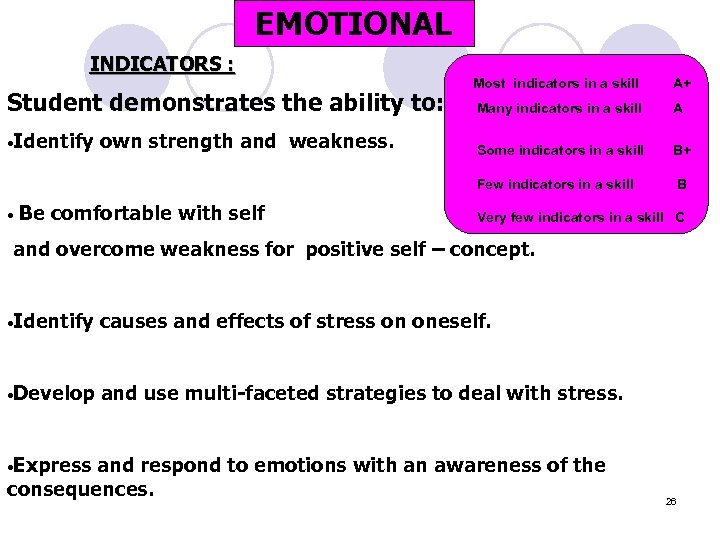 EMOTIONAL INDICATORS : • Identify • own strength and weakness. Be comfortable with self A+ Many indicators in a skill A Some indicators in a skill B+ Few indicators in a skill Student demonstrates the ability to: Most indicators in a skill B Very few indicators in a skill C and overcome weakness for positive self – concept. • Identify causes and effects of stress on oneself. • Develop and use multi-faceted strategies to deal with stress. • Express and respond to emotions with an awareness of the consequences. 26
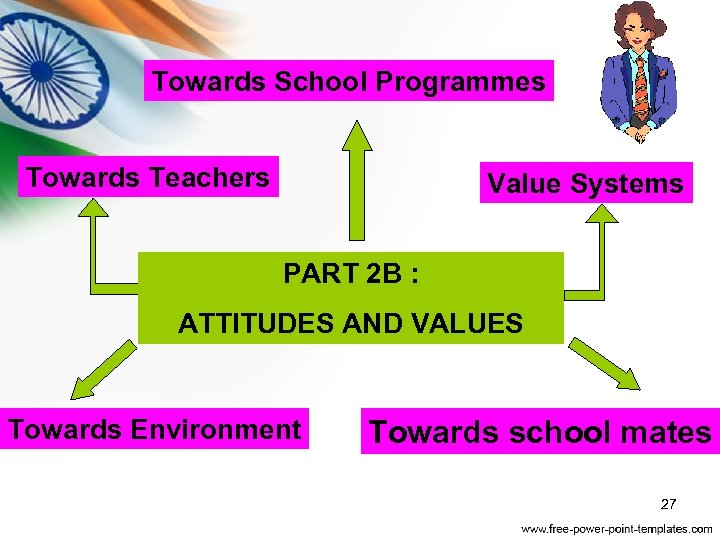 Towards School Programmes Towards Teachers Value Systems PART 2 B : ATTITUDES AND VALUES Towards Environment Towards school mates 27
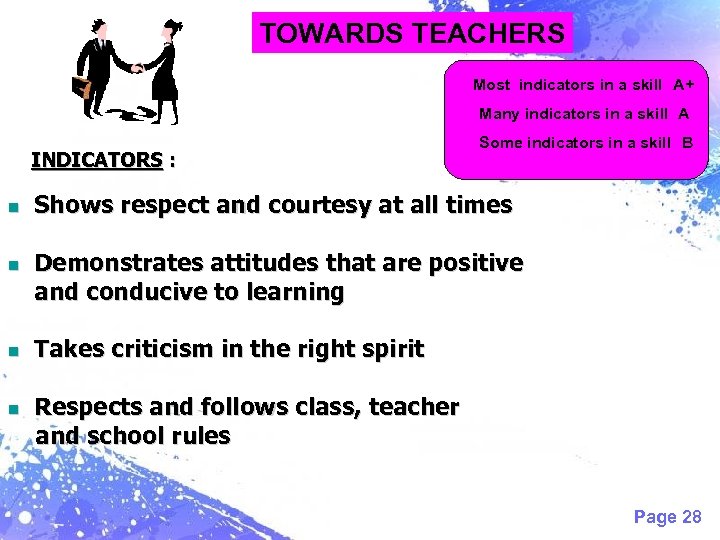 TOWARDS TEACHERS Most indicators in a skill A+ Many indicators in a skill A INDICATORS : n n Some indicators in a skill B Shows respect and courtesy at all times Demonstrates attitudes that are positive and conducive to learning Takes criticism in the right spirit Respects and follows class, teacher and school rules Page 28
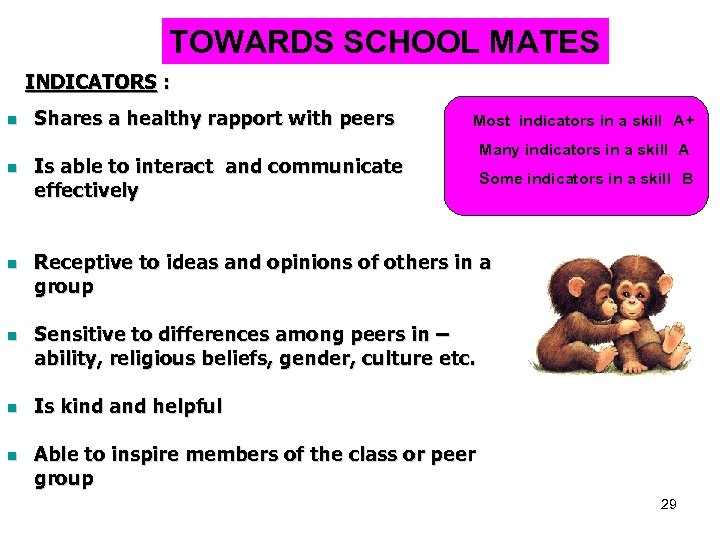 TOWARDS SCHOOL MATES INDICATORS : n n n Shares a healthy rapport with peers Most indicators in a skill A+ Is able to interact and communicate effectively Many indicators in a skill A Some indicators in a skill B Receptive to ideas and opinions of others in a group Sensitive to differences among peers in – ability, religious beliefs, gender, culture etc. Is kind and helpful Able to inspire members of the class or peer group 29
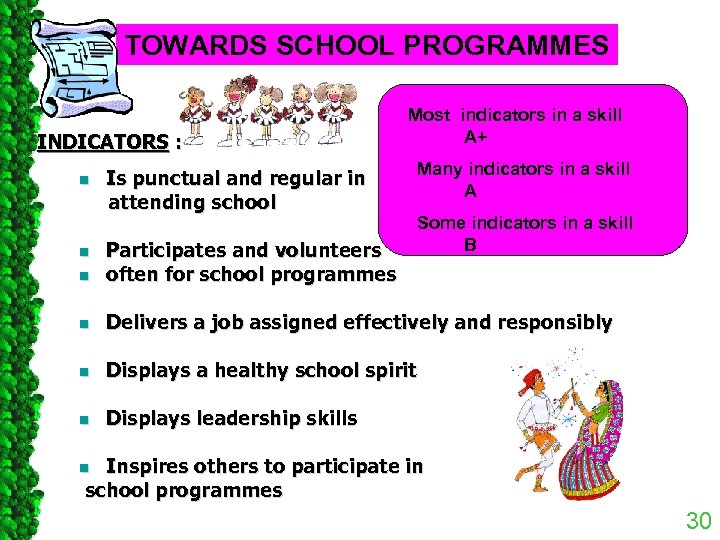 TOWARDS SCHOOL PROGRAMMES INDICATORS : n Is punctual and regular in attending school Most indicators in a skill A+ Many indicators in a skill A Some indicators in a skill B n Participates and volunteers often for school programmes n Delivers a job assigned effectively and responsibly n Displays a healthy school spirit n Displays leadership skills n Inspires others to participate in school programmes n 30
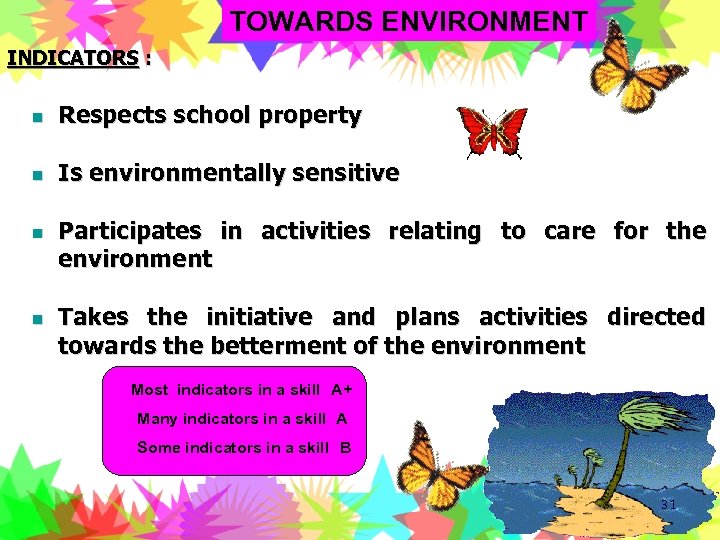 TOWARDS ENVIRONMENT INDICATORS : n Respects school property n Is environmentally sensitive n n Participates in activities relating to care for the environment Takes the initiative and plans activities directed towards the betterment of the environment Most indicators in a skill A+ Many indicators in a skill A Some indicators in a skill B 31
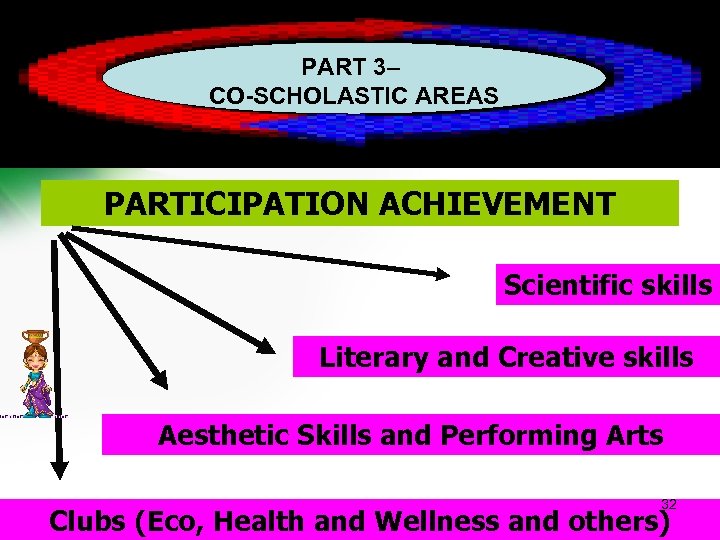 PART-3 CO-SCHOLASTIC AREAS PART 3– CO-SCHOLASTIC AREAS PARTICIPATION ACHIEVEMENT Scientific skills Literary and Creative skills Aesthetic Skills and Performing Arts 32 Clubs (Eco, Health and Wellness and others)
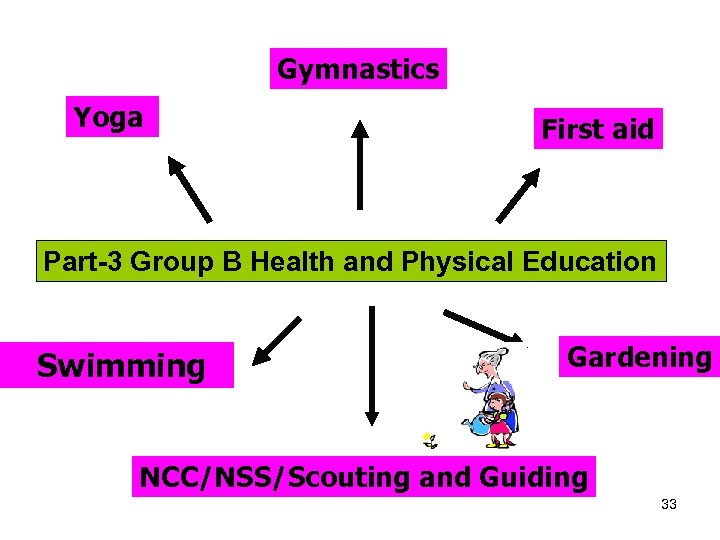 Gymnastics Yoga First aid Part-3 Group B Health and Physical Education Swimming Gardening NCC/NSS/Scouting and Guiding 33
 WHAT IS A DESCRIPTIVE INDICATOR? It is a concise remark given by the teacher on traits of the student listed in Scholastic B and Co Scholastic Areas 34
 www. cbse. nic. in 35