 Скачать презентацию exam 2 review resource economics nonrenewable
954b959ae6025808f98347084532b6ec.ppt
- Количество слайдов: 19




exam 2 review
resource economics • nonrenewable vs. renewable – maximize pv of net benefit – renewable includes growth functions • characterize efficient allocations • compare to market allocations • discuss policy to make market allocations more efficient
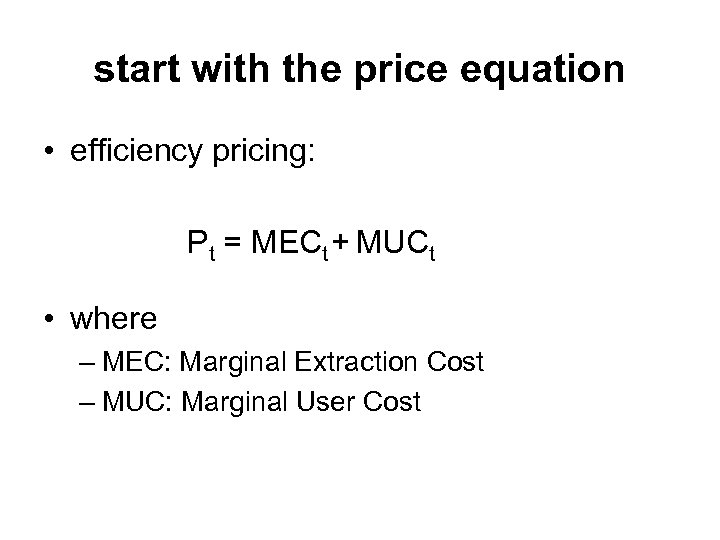
start with the price equation • efficiency pricing: Pt = MECt + MUCt • where – MEC: Marginal Extraction Cost – MUC: Marginal User Cost
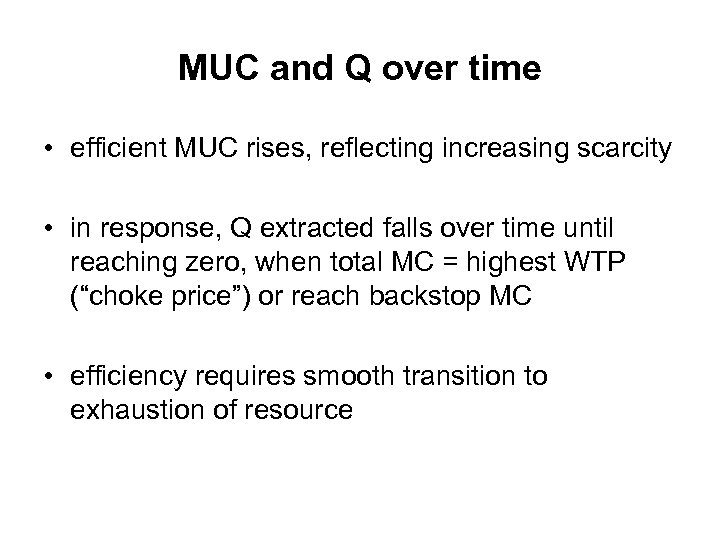
MUC and Q over time • efficient MUC rises, reflecting increasing scarcity • in response, Q extracted falls over time until reaching zero, when total MC = highest WTP (“choke price”) or reach backstop MC • efficiency requires smooth transition to exhaustion of resource
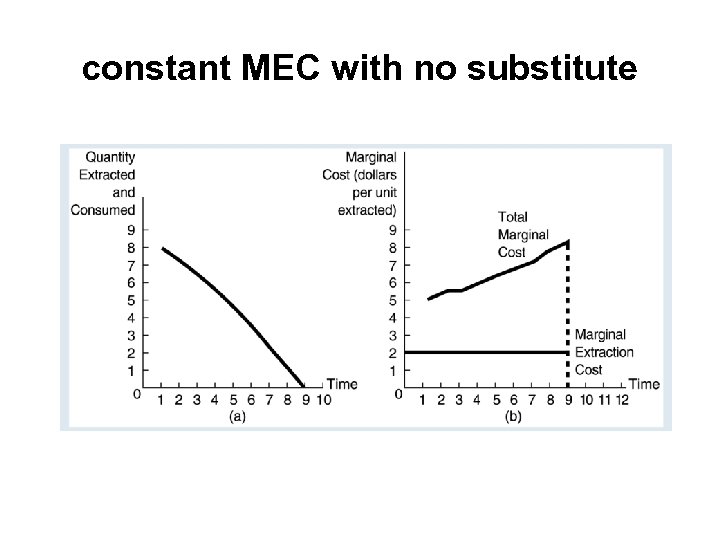
constant MEC with no substitute
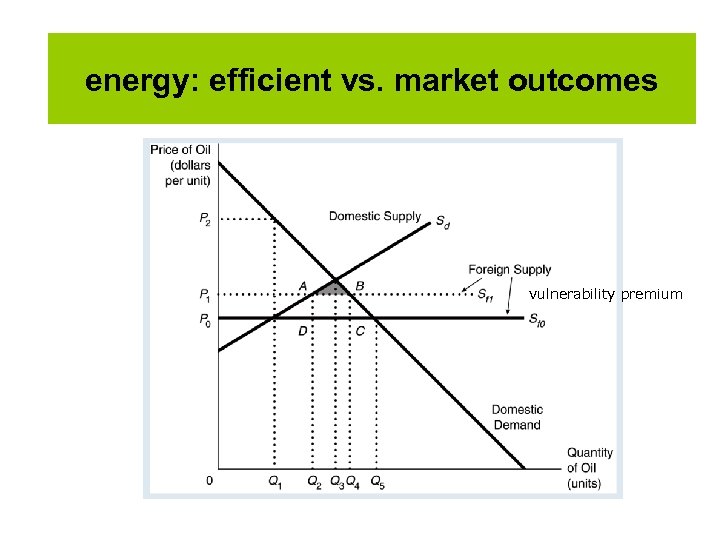
energy: efficient vs. market outcomes vulnerability premium
water efficient allocations: surface vs. groundwater • surface water – how to allocate a renewable supply among competing uses – intergenerational effects less important (future supplies depend on natural phenomenon, e. g. rain, rather than current allocation) • groundwater – withdrawing now affects future supply
efficient allocation: surface water 1. balance btw users • marginal net benefit equal across users 2. handle variability • above-average and below-average flows must be accommodated
efficient allocation: groundwater • if withdrawal > recharge, eventual exhaust resource • MEC rises over time as water table falls • pumping would stop: – no water left – MC pumping > benefit of water or MC of backstop resource (desalination) • price rises over time until choke price or switch point
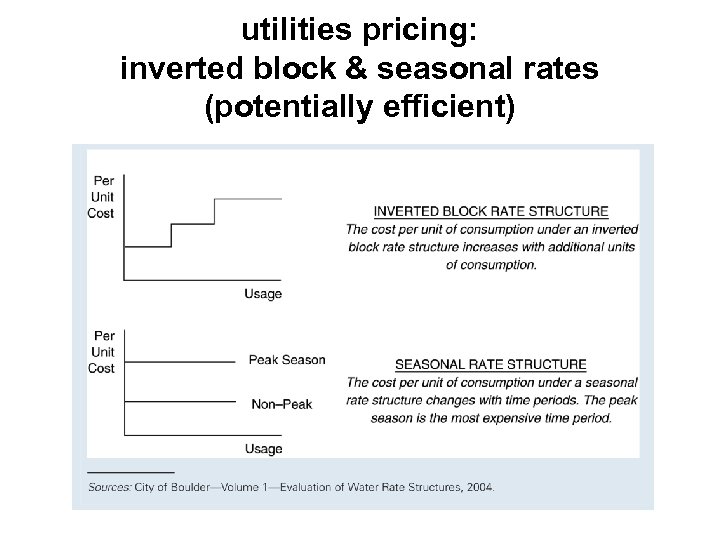
utilities pricing: inverted block & seasonal rates (potentially efficient)
forests: biological harvest rule • MAI = cumulative volume end of decade / cumulative yrs of growth • harvest when MAI maximized
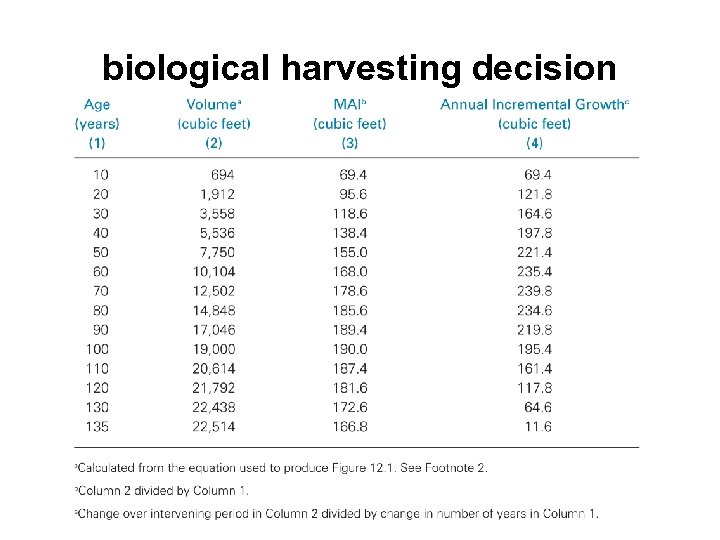
biological harvesting decision
economic harvesting rule • harvest at age that maximizes PV of net benefits 1. planting costs • • borne immediately no discounting 2. harvesting costs • • time of harvest discounted
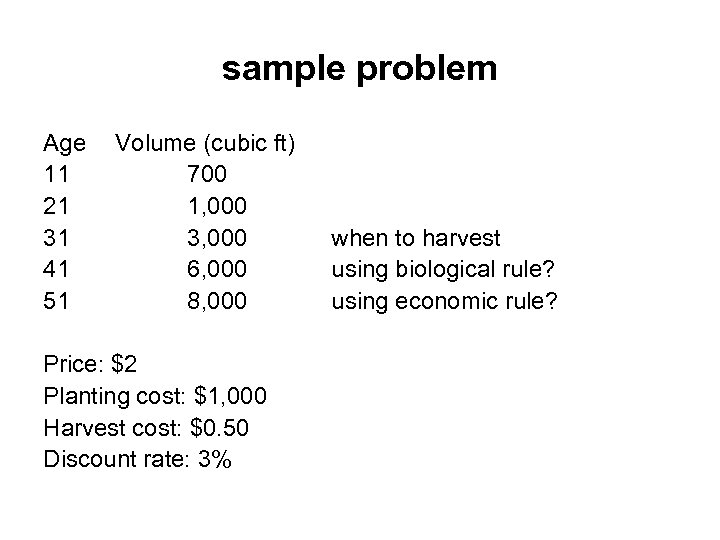
sample problem Age 11 21 31 41 51 Volume (cubic ft) 700 1, 000 3, 000 6, 000 8, 000 Price: $2 Planting cost: $1, 000 Harvest cost: $0. 50 Discount rate: 3% when to harvest using biological rule? using economic rule?
optimal harvest age • discounting shortens optimal harvest time – less tolerant of slow timber growth – comparing no harvest (increase in value of timber) to harvest (sell and invest) • high discount rates also destroy incentive to replant
fisheries: biological vs. economic harvest • biology: “maximum sustainable yield” (MSY) – yields maximum growth – largest catch that can be perpetually sustained • economics: maximize net benefit
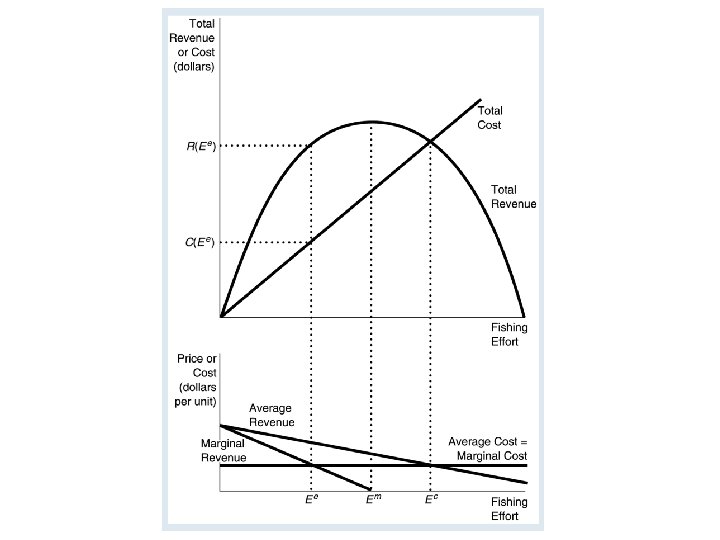
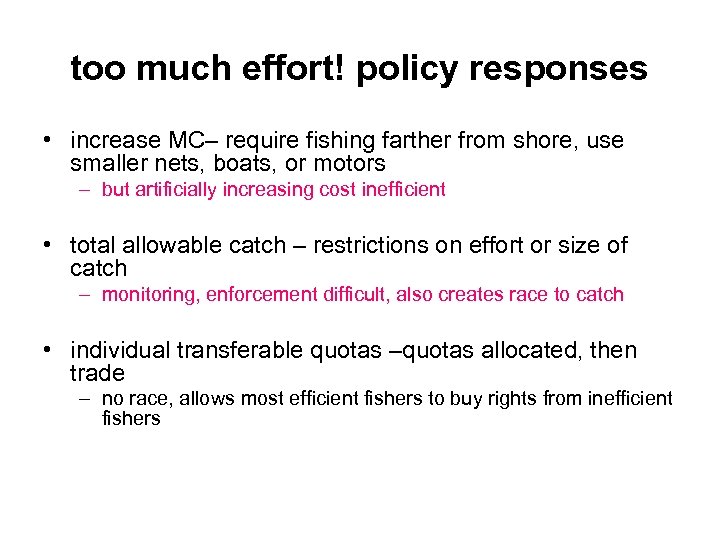
too much effort! policy responses • increase MC– require fishing farther from shore, use smaller nets, boats, or motors – but artificially increasing cost inefficient • total allowable catch – restrictions on effort or size of catch – monitoring, enforcement difficult, also creates race to catch • individual transferable quotas –quotas allocated, then trade – no race, allows most efficient fishers to buy rights from inefficient fishers
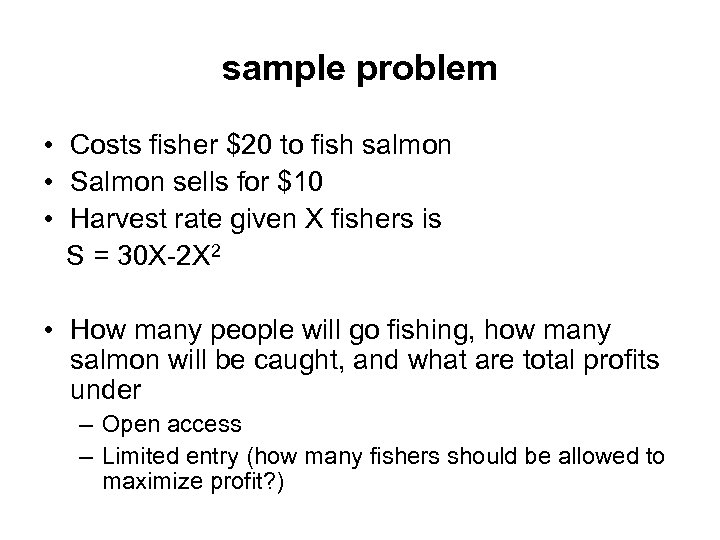
sample problem • Costs fisher $20 to fish salmon • Salmon sells for $10 • Harvest rate given X fishers is S = 30 X-2 X 2 • How many people will go fishing, how many salmon will be caught, and what are total profits under – Open access – Limited entry (how many fishers should be allowed to maximize profit? )
Скачать презентацию exam 2 review resource economics nonrenewable
954b959ae6025808f98347084532b6ec.ppt