 Скачать презентацию Evolvability and Sensor Evolution University of Birmingham 25
f7e79857208812e929f6f77092a33d5c.ppt
- Количество слайдов: 35



Evolvability and Sensor Evolution University of Birmingham 25 April 2003 Electroreception: Functional, evolutionary and information processing perspectives Mark E. Nelson Beckman Institute Univ. of Illinois, Urbana-Champaign
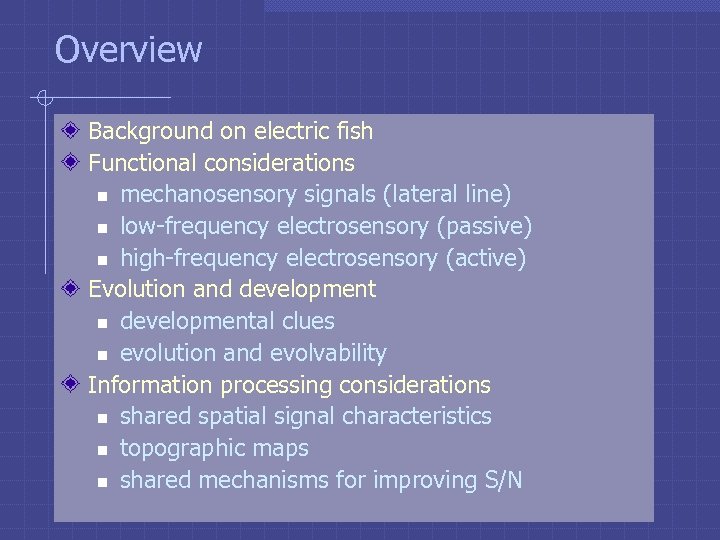
Overview Background on electric fish Functional considerations n mechanosensory signals (lateral line) n low-frequency electrosensory (passive) n high-frequency electrosensory (active) Evolution and development n developmental clues n evolution and evolvability Information processing considerations n shared spatial signal characteristics n topographic maps n shared mechanisms for improving S/N
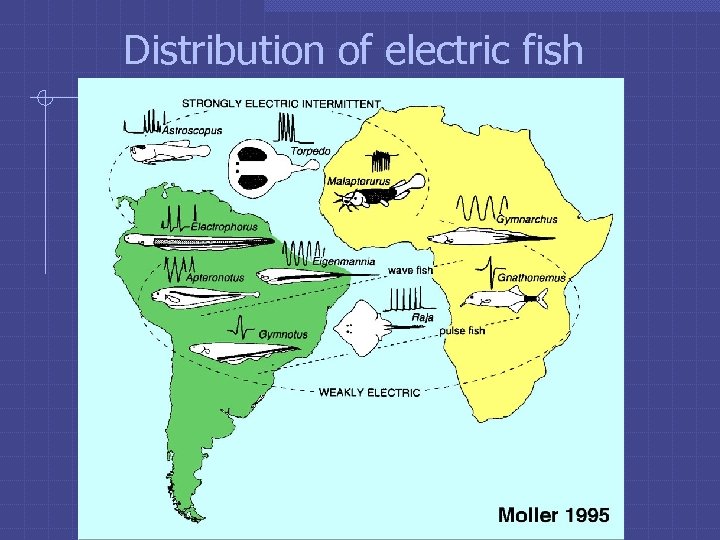
Distribution of electric fish
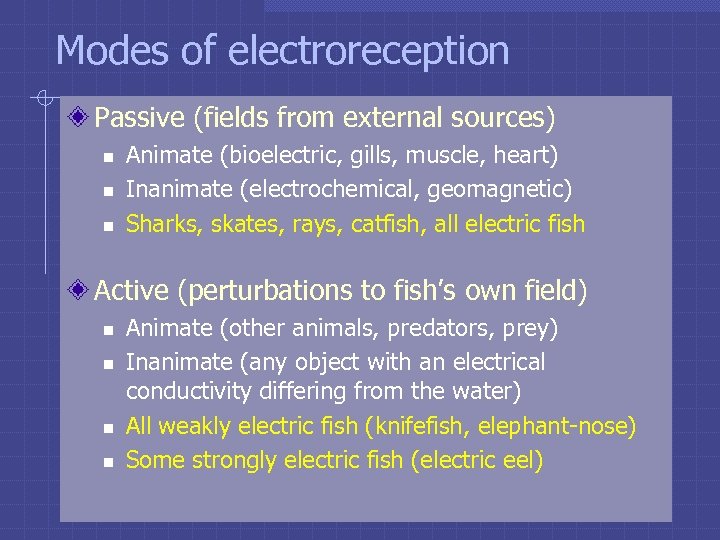
Modes of electroreception Passive (fields from external sources) n n n Animate (bioelectric, gills, muscle, heart) Inanimate (electrochemical, geomagnetic) Sharks, skates, rays, catfish, all electric fish Active (perturbations to fish’s own field) n n Animate (other animals, predators, prey) Inanimate (any object with an electrical conductivity differing from the water) All weakly electric fish (knifefish, elephant-nose) Some strongly electric fish (electric eel)
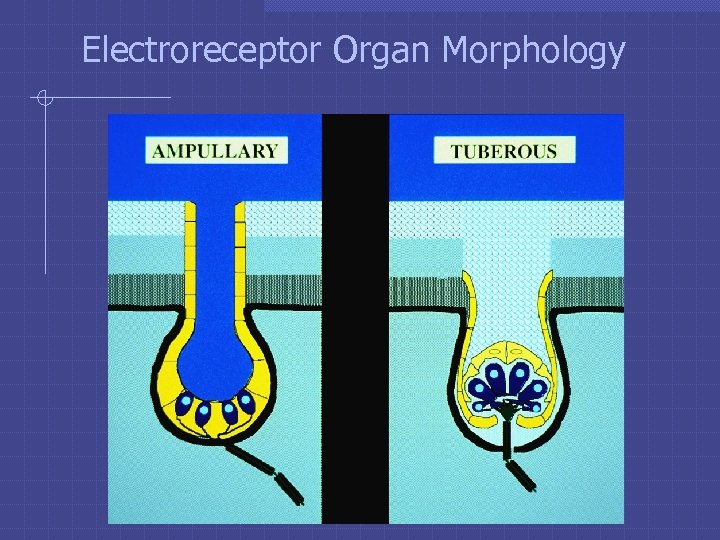
Electroreceptor Organ Morphology
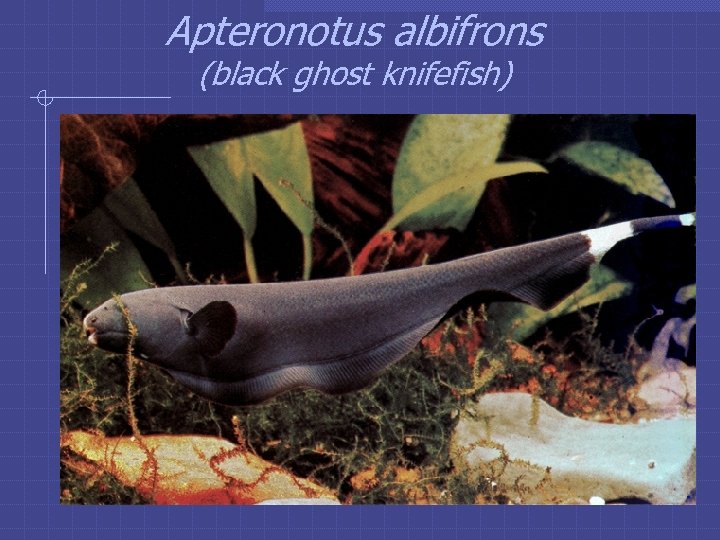
Apteronotus albifrons (black ghost knifefish)

Functional considerations Active Electrolocation
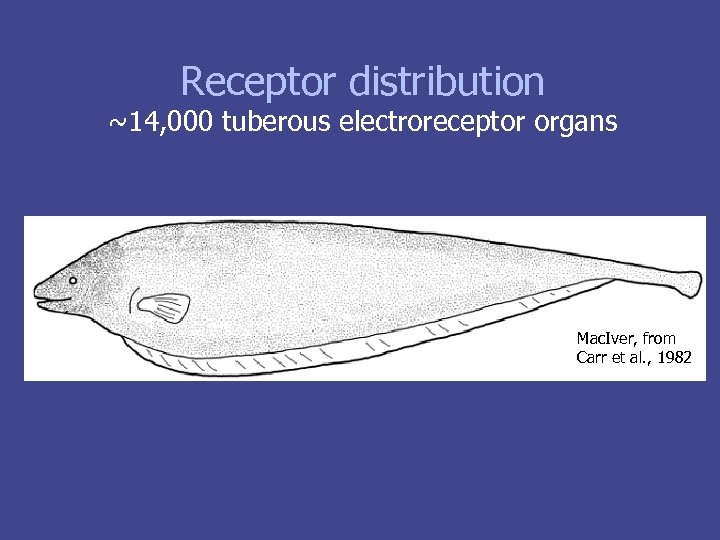
Receptor distribution mechano Low freq E ~14, 000 tuberous electroreceptor organs Mac. Iver, from Carr et al. , 1982
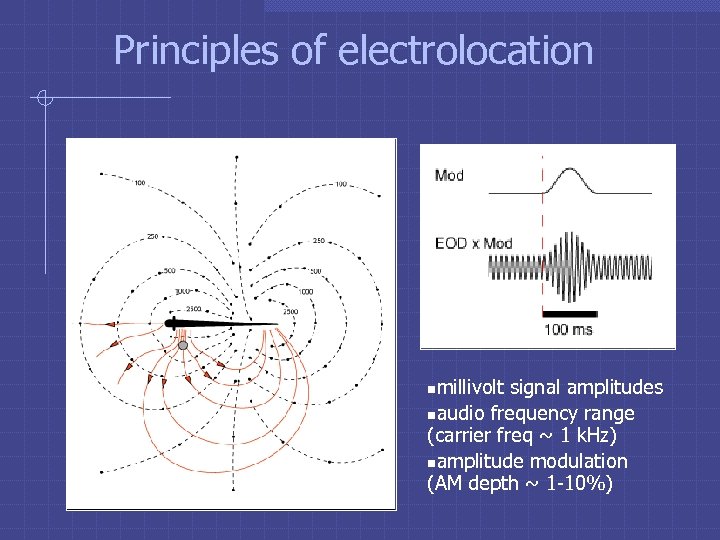
Principles of electrolocation millivolt signal amplitudes naudio frequency range (carrier freq ~ 1 k. Hz) namplitude modulation (AM depth ~ 1 -10%) n
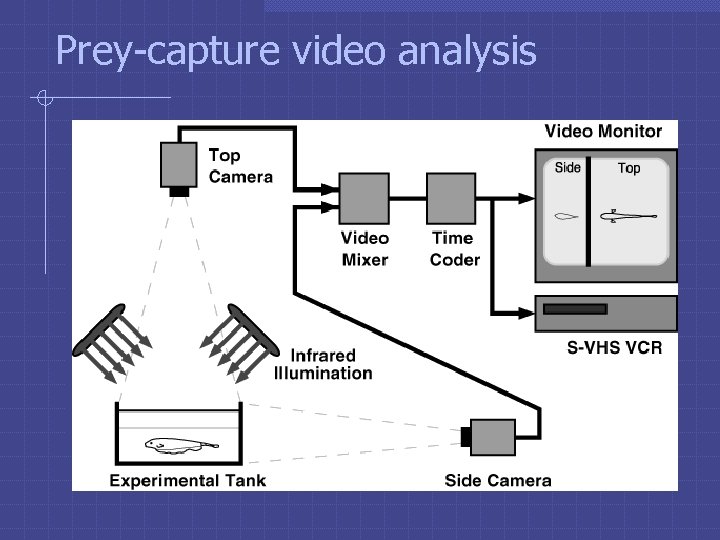
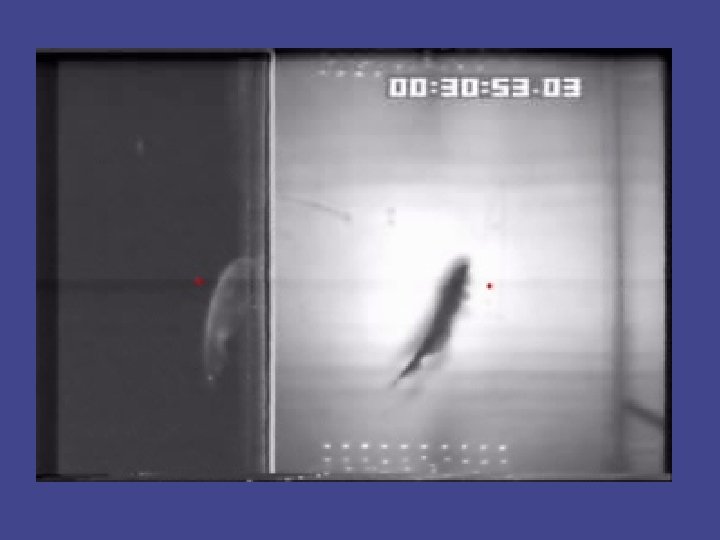
Prey-capture video analysis
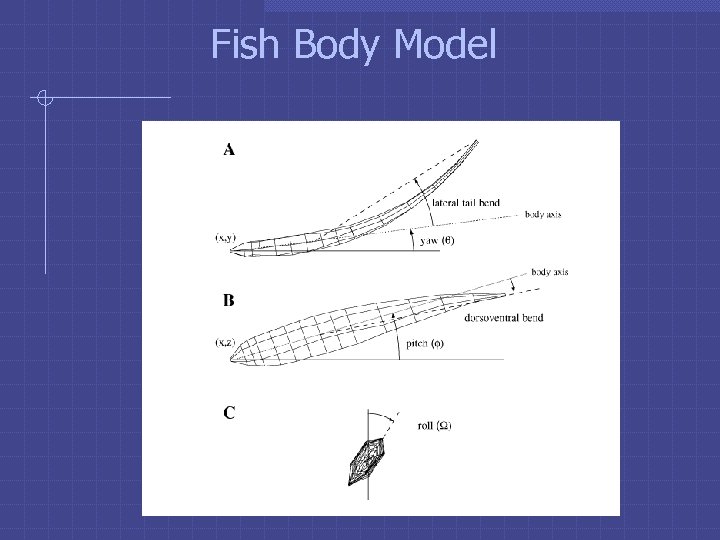
Fish Body Model
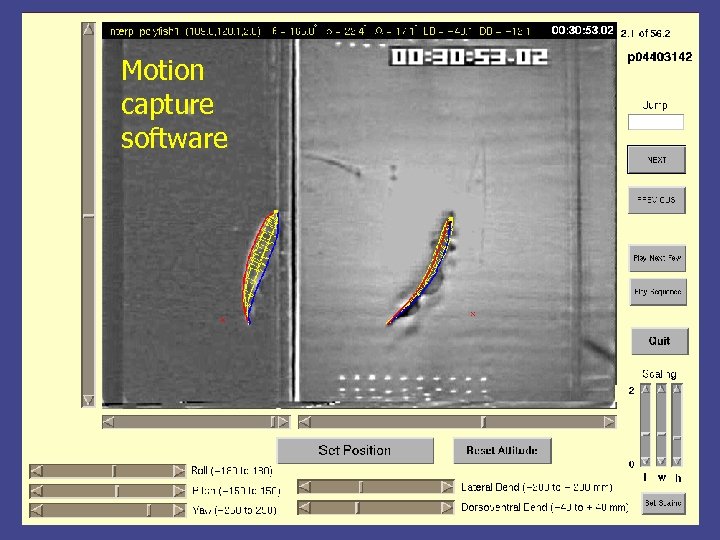
Motion capture software
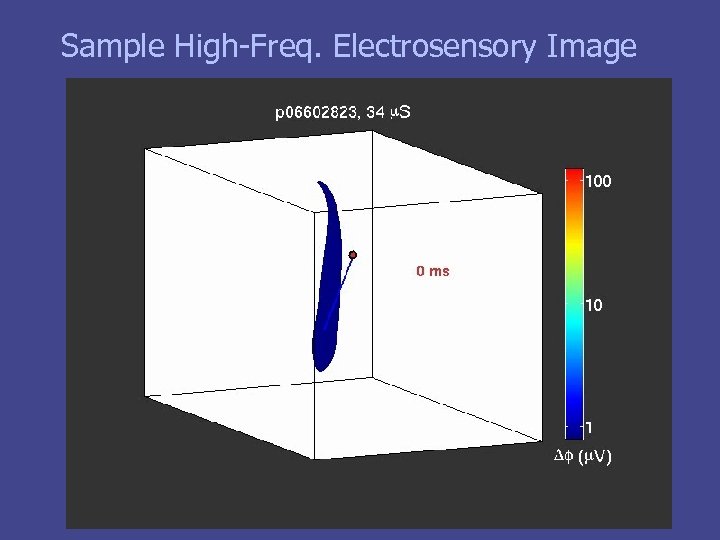
Sample High-Freq. Electrosensory Image

Functional considerations Physical Characteristics of the Target
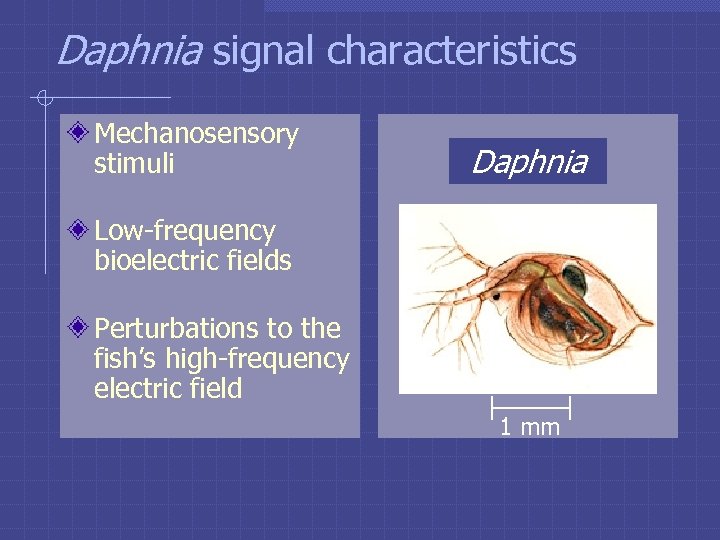
Daphnia signal characteristics Mechanosensory stimuli Daphnia Low-frequency bioelectric fields Perturbations to the fish’s high-frequency electric field 1 mm
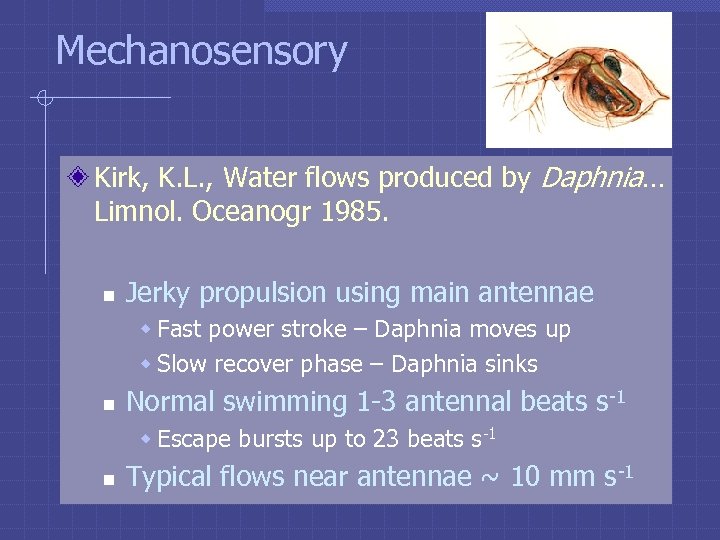
Mechanosensory Kirk, K. L. , Water flows produced by Daphnia… Limnol. Oceanogr 1985. n Jerky propulsion using main antennae w Fast power stroke – Daphnia moves up w Slow recover phase – Daphnia sinks n Normal swimming 1 -3 antennal beats s-1 w Escape bursts up to 23 beats s-1 n Typical flows near antennae ~ 10 mm s-1
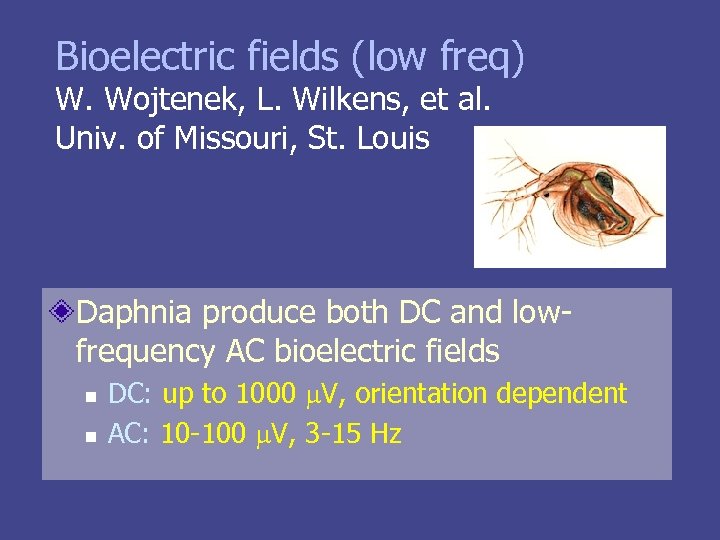
Bioelectric fields (low freq) W. Wojtenek, L. Wilkens, et al. Univ. of Missouri, St. Louis Daphnia produce both DC and lowfrequency AC bioelectric fields n n DC: up to 1000 m. V, orientation dependent AC: 10 -100 m. V, 3 -15 Hz
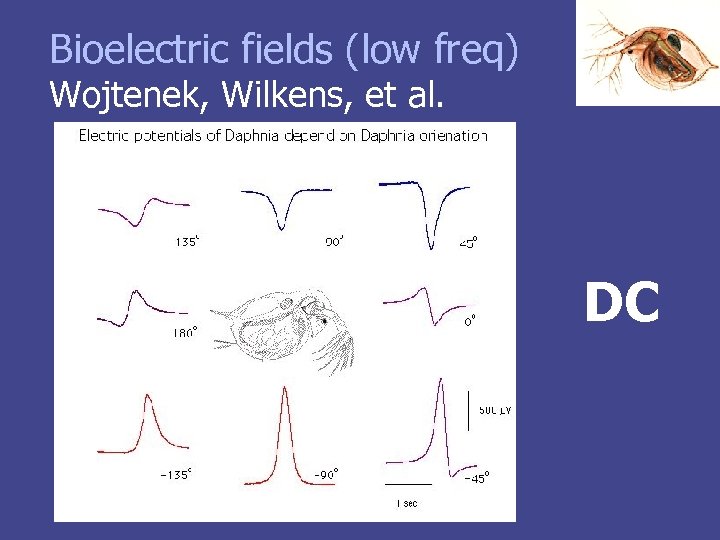
Bioelectric fields (low freq) Wojtenek, Wilkens, et al. DC
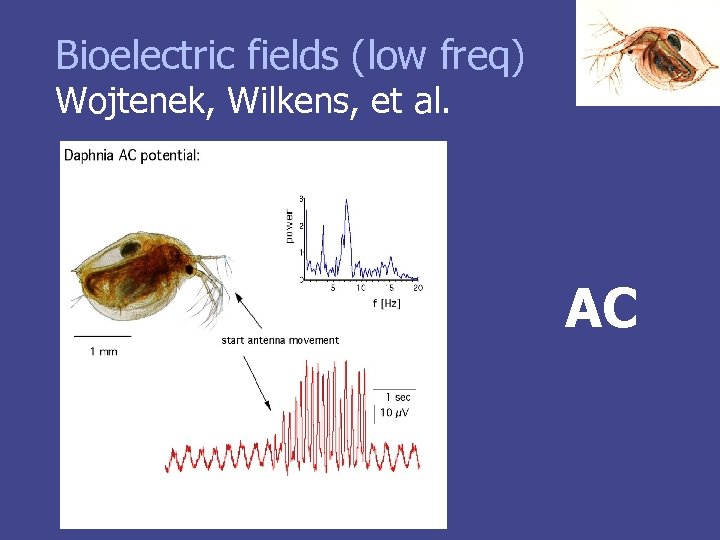
Bioelectric fields (low freq) Wojtenek, Wilkens, et al. AC
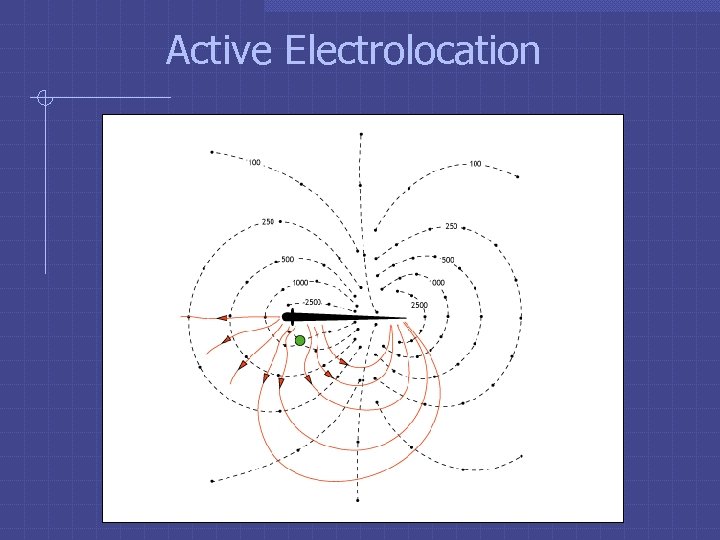
Active Electrolocation
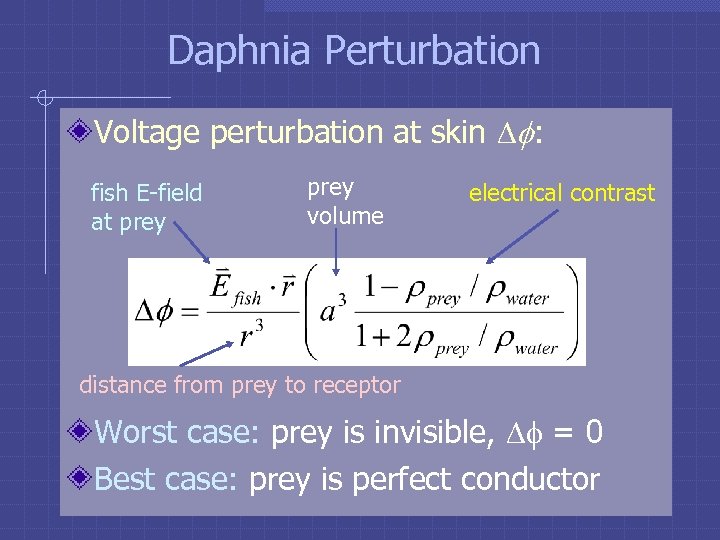
Daphnia Perturbation Voltage perturbation at skin Df: fish E-field at prey volume electrical contrast distance from prey to receptor Worst case: prey is invisible, Df = 0 Best case: prey is perfect conductor
Evolutionary and developmental considerations Electrosensory / Mechanosensory Relationships
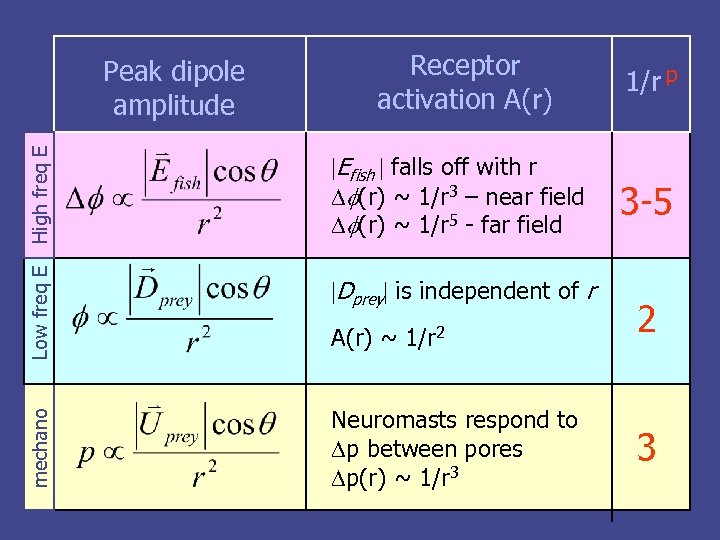
3 -5 High freq E 1/r p |Efish | falls off with r Df(r) ~ 1/r 3 – near field Df(r) ~ 1/r 5 - far field Low freq E Receptor activation A(r) |Dprey| is independent of r mechano Peak dipole amplitude Neuromasts respond to Dp between pores Dp(r) ~ 1/r 3 A(r) ~ 1/r 2 2 3
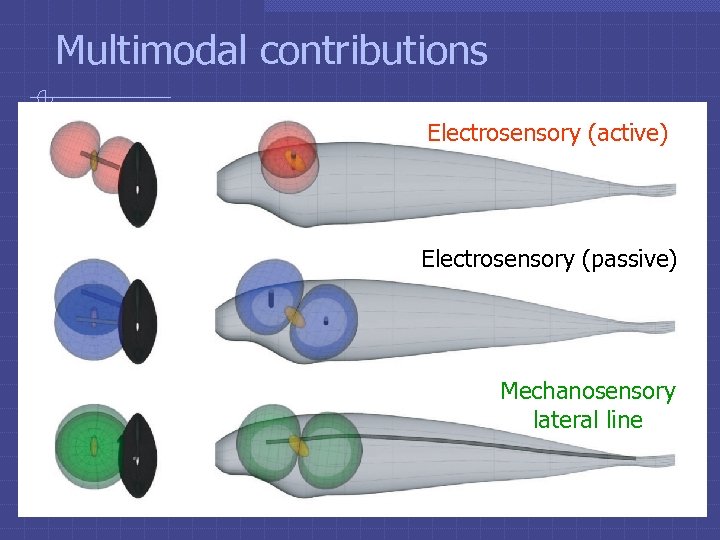
Multimodal contributions Electrosensory (active) Electrosensory (passive) Mechanosensory lateral line
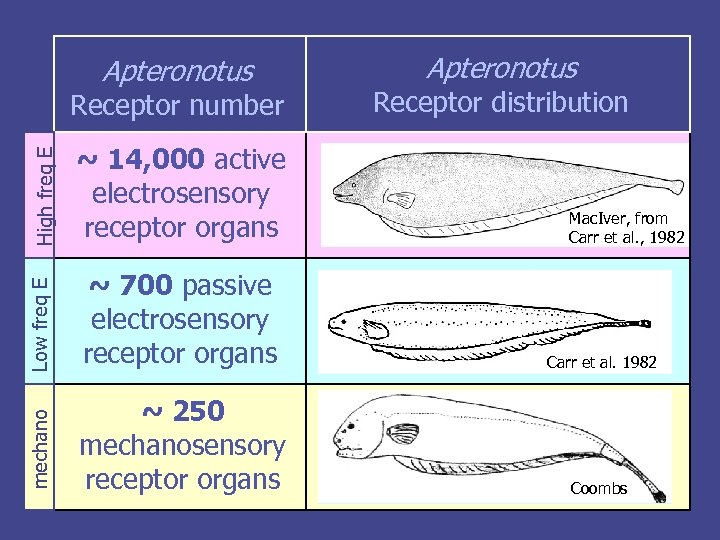
Apteronotus High freq E bb ~ 14, 000 active electrosensory receptor organs Low freq E Receptor distribution ~ 700 passive electrosensory receptor organs Carr et al. 1982 mechano Receptor number ~ 250 mechanosensory receptor organs Coombs Mac. Iver, from Carr et al. , 1982
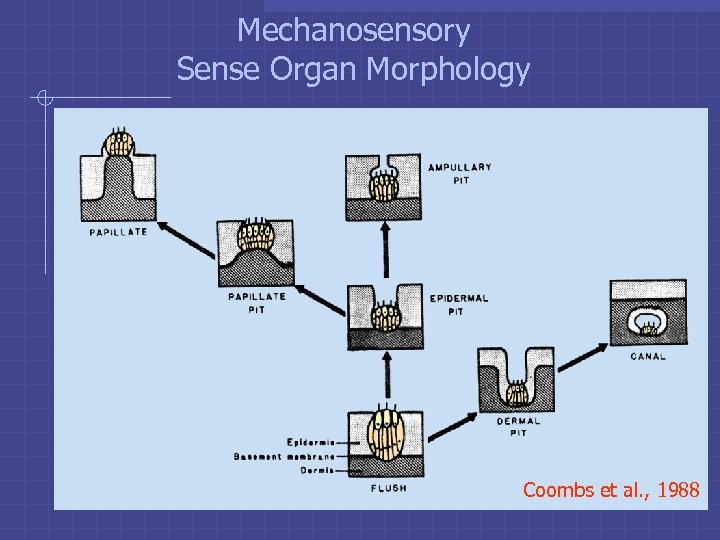
Mechanosensory Sense Organ Morphology Coombs et al. , 1988
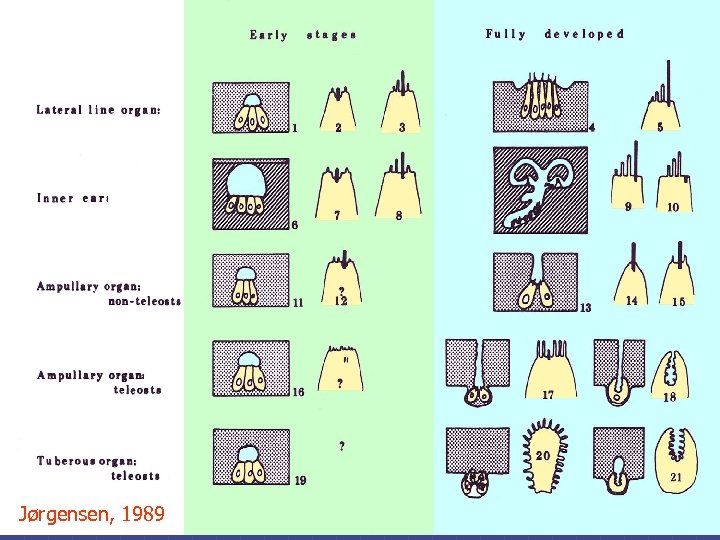
Ontongeny Jørgensen, 1989
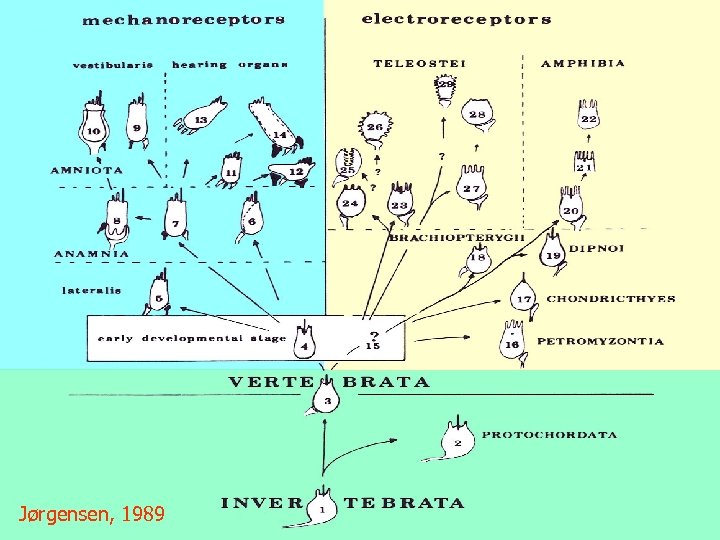
Phylogeny Jørgensen, 1989
Information processing considerations Central processing of Electrosensory and Mechanosensory Signals
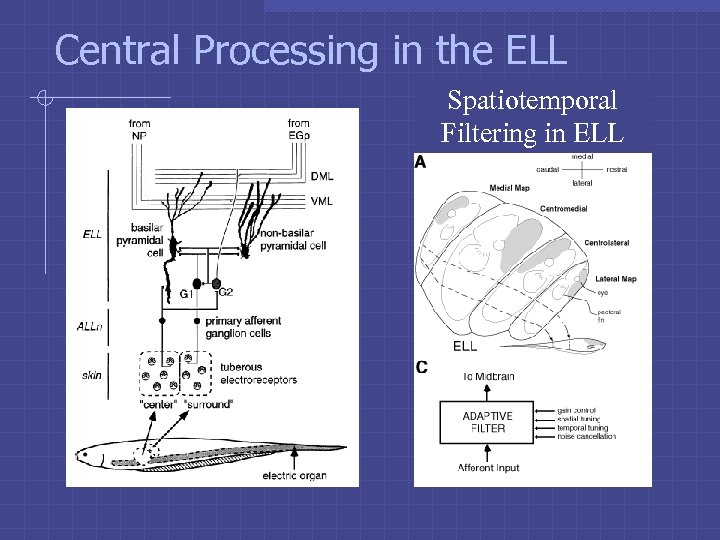
Central Processing in the ELL Spatiotemporal Filtering in ELL
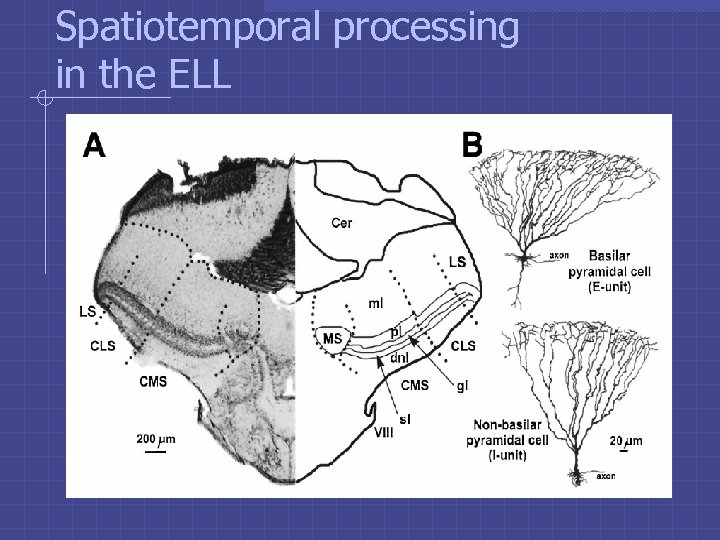
Spatiotemporal processing in the ELL
Conclusions I: General insights into evolution of the electric sense n n n although it may seem exotic to us, electric sensing was an early discovery in the course of vertebrate evolution the electrosensory system is closely related to the lateral line system of fish and hearing and balance in terrestrial animals receptor cell and receptor organ plasticity seem to be central to evolvability of different modalities and submodalities
Conclusions II: Information processing in electrosensory & mechanosensory systems n share similar spatial processing properties w dipole nature of the stimuli w topographic maps n differ in temporal processing (different time scales, different propagation delays) w mechanosensory 1 Hz vs. electrosensory 1000 Hz w speed of sound vs. speed of light n share similar neural mechanisms for improving signal -to-noise ratios w spatiotemporal integration w adaptive noise suppression

Acknowledgements Sheryl Coombs, collaborator at Loyola Malcolm Mac. Iver (former grad student, new faculty member at Northwestern) Ruediger Krahe, Niklas Ludtke, Ling Chen, Kevin Christie, Jonathan House (current Nelson lab members) NIMH and NSF
Скачать презентацию Evolvability and Sensor Evolution University of Birmingham 25
f7e79857208812e929f6f77092a33d5c.ppt