


 Скачать презентацию Evolution of Common Home Office Technology Used for Online
d58a08a37c54aa93980285e3b1ed5ef1.ppt
- Количество слайдов: 16
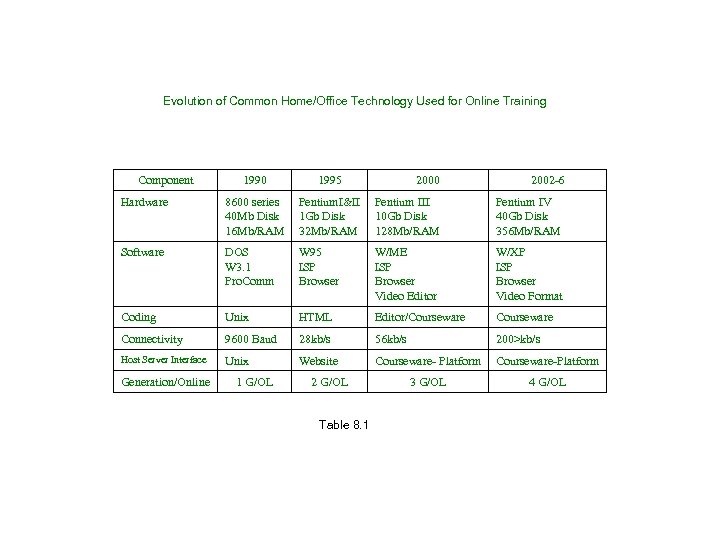 Evolution of Common Home/Office Technology Used for Online Training Component 1990 1995 2000 2002 -6 Hardware 8600 series 40 Mb Disk 16 Mb/RAM Pentium. I&II 1 Gb Disk 32 Mb/RAM Pentium III 10 Gb Disk 128 Mb/RAM Pentium IV 40 Gb Disk 356 Mb/RAM Software DOS W 3. 1 Pro. Comm W 95 ISP Browser W/ME ISP Browser Video Editor W/XP ISP Browser Video Format Coding Unix HTML Editor/Courseware Connectivity 9600 Baud 28 kb/s 56 kb/s 200>kb/s Host Server Interface Unix Website Courseware- Platform Courseware-Platform 3 G/OL 4 G/OL Generation/Online 1 G/OL 2 G/OL Table 8. 1
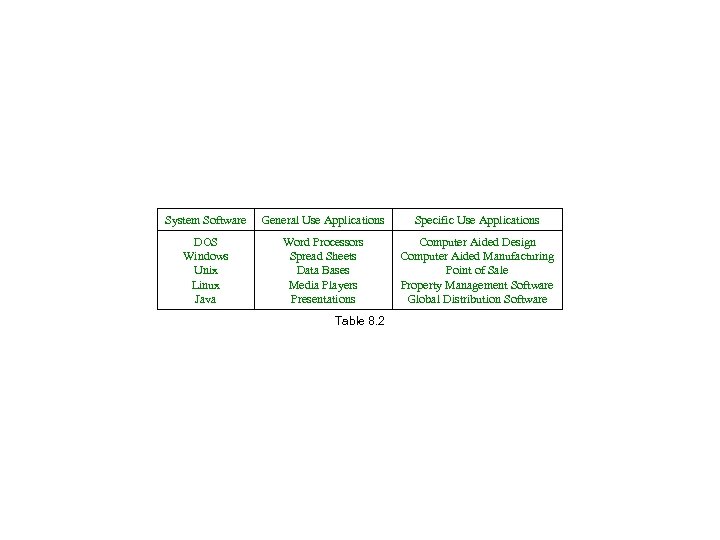 System Software General Use Applications Specific Use Applications DOS Windows Unix Linux Java Word Processors Spread Sheets Data Bases Media Players Presentations Computer Aided Design Computer Aided Manufacturing Point of Sale Property Management Software Global Distribution Software Table 8. 2
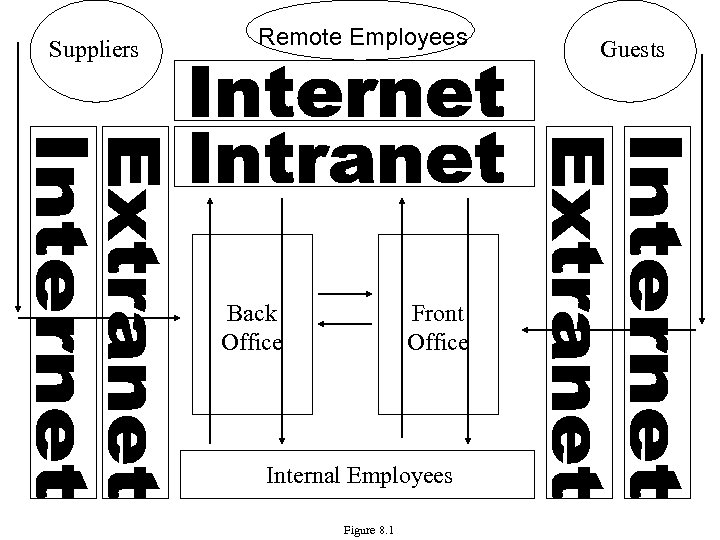 Suppliers Remote Employees Back Office Front Office Internal Employees Figure 8. 1 Guests
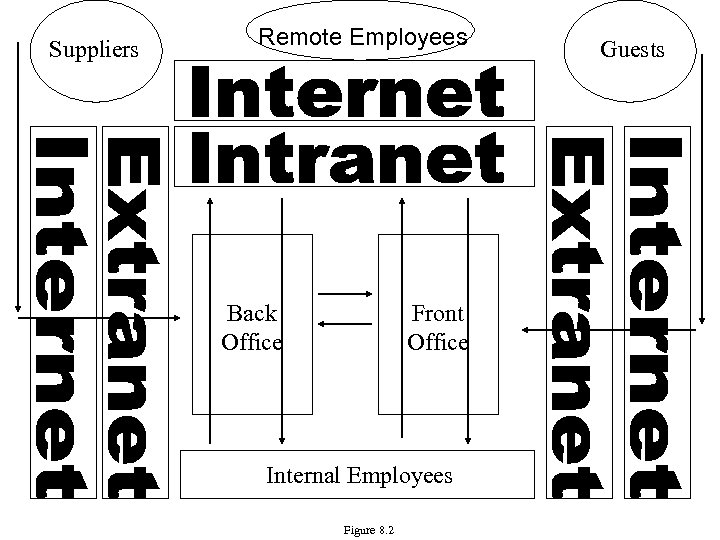 Suppliers Remote Employees Back Office Front Office Internal Employees Figure 8. 2 Guests
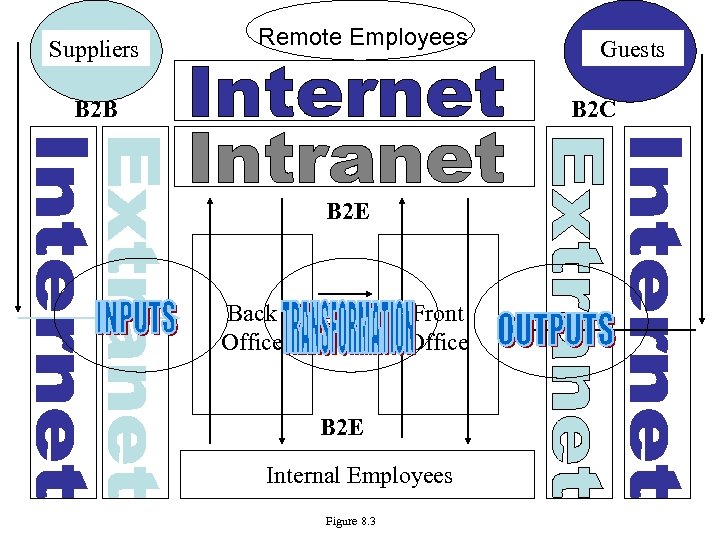 Suppliers Remote Employees B 2 B Guests B 2 C B 2 E Back Office Front Office B 2 E Internal Employees Figure 8. 3
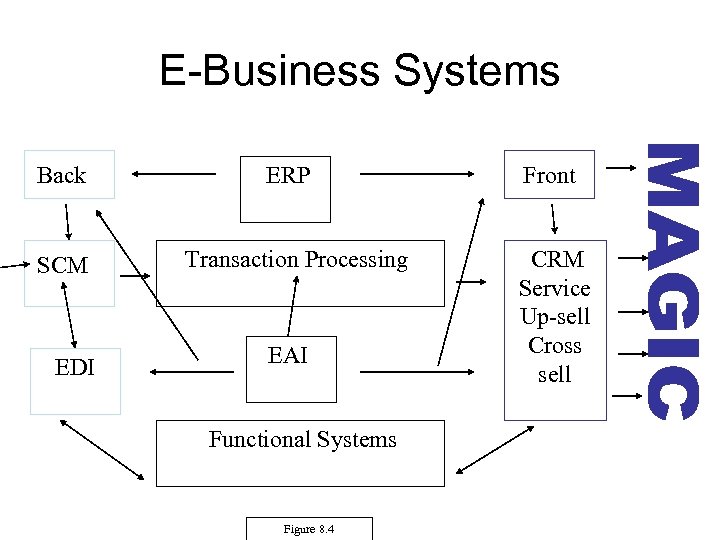 E-Business Systems Back SCM EDI ERP Transaction Processing EAI Functional Systems Figure 8. 4 Front CRM Service Up-sell Cross sell
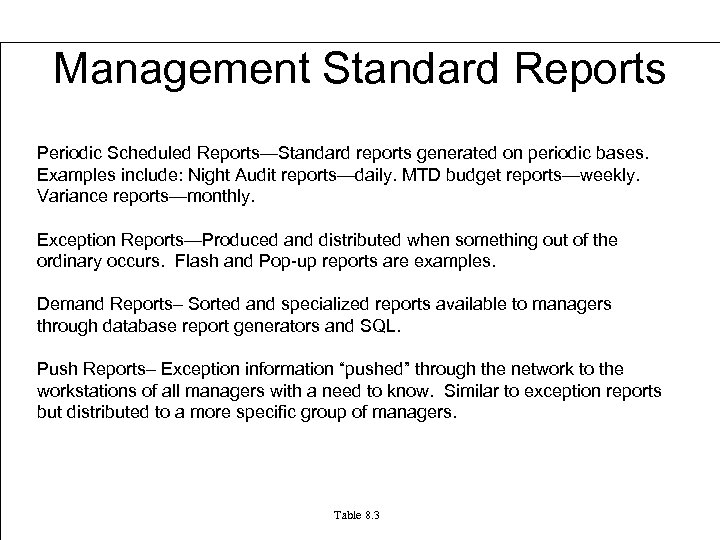 Management Standard Reports Periodic Scheduled Reports—Standard reports generated on periodic bases. Examples include: Night Audit reports—daily. MTD budget reports—weekly. Variance reports—monthly. Exception Reports—Produced and distributed when something out of the ordinary occurs. Flash and Pop-up reports are examples. Demand Reports– Sorted and specialized reports available to managers through database report generators and SQL. Push Reports– Exception information “pushed” through the network to the workstations of all managers with a need to know. Similar to exception reports but distributed to a more specific group of managers. Table 8. 3
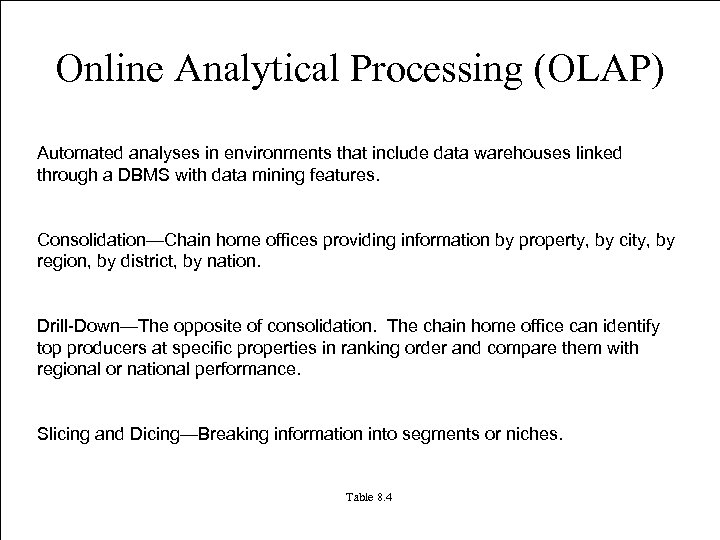 Online Analytical Processing (OLAP) Automated analyses in environments that include data warehouses linked through a DBMS with data mining features. Consolidation—Chain home offices providing information by property, by city, by region, by district, by nation. Drill-Down—The opposite of consolidation. The chain home office can identify top producers at specific properties in ranking order and compare them with regional or national performance. Slicing and Dicing—Breaking information into segments or niches. Table 8. 4
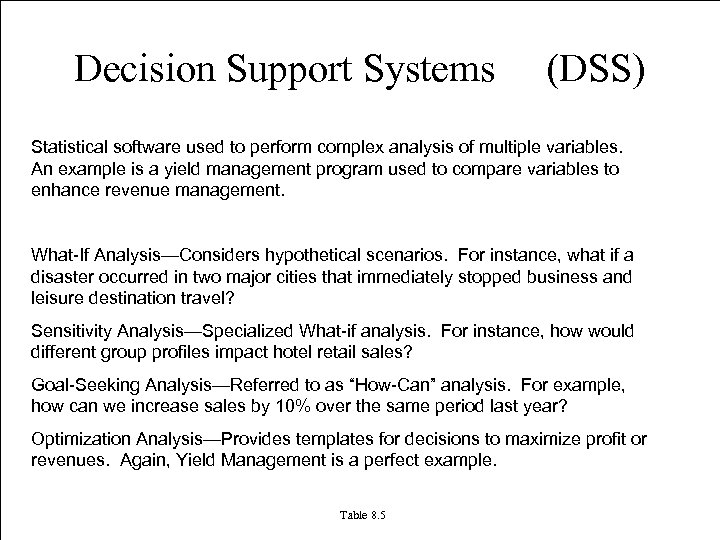 Decision Support Systems (DSS) Statistical software used to perform complex analysis of multiple variables. An example is a yield management program used to compare variables to enhance revenue management. What-If Analysis—Considers hypothetical scenarios. For instance, what if a disaster occurred in two major cities that immediately stopped business and leisure destination travel? Sensitivity Analysis—Specialized What-if analysis. For instance, how would different group profiles impact hotel retail sales? Goal-Seeking Analysis—Referred to as “How-Can” analysis. For example, how can we increase sales by 10% over the same period last year? Optimization Analysis—Provides templates for decisions to maximize profit or revenues. Again, Yield Management is a perfect example. Table 8. 5
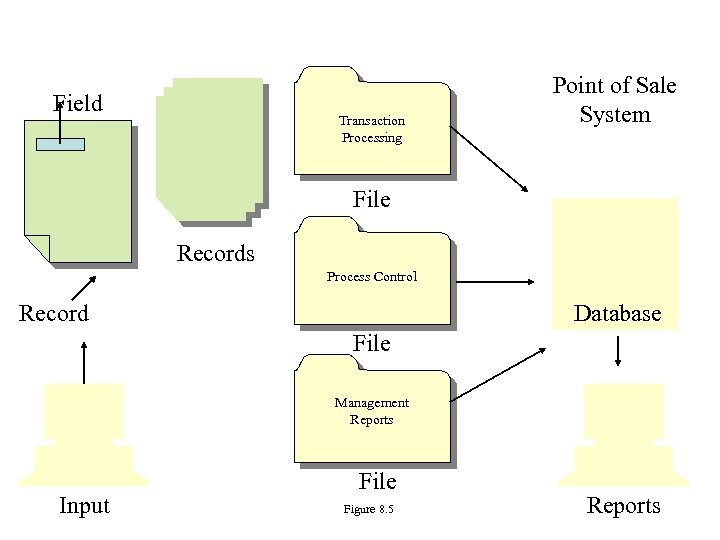 Field Transaction Processing Point of Sale System File Records Process Control Record Database File Management Reports Input File Figure 8. 5 Reports
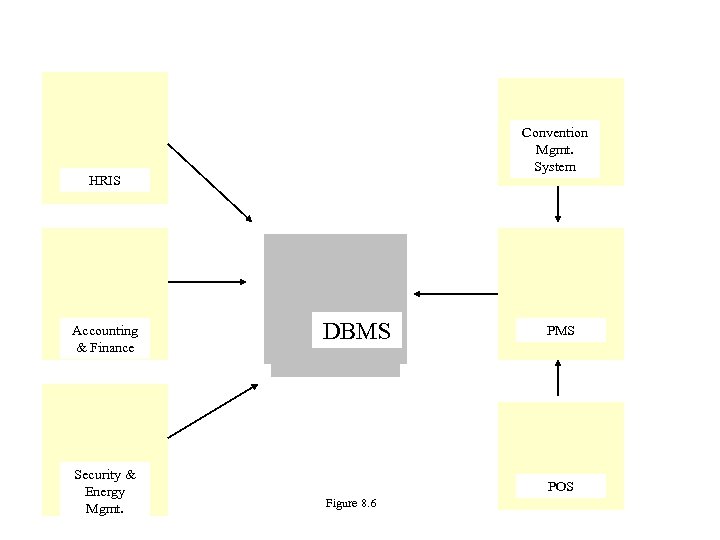 Convention Mgmt. System HRIS Accounting & Finance Security & Energy Mgmt. DBMS POS Figure 8. 6
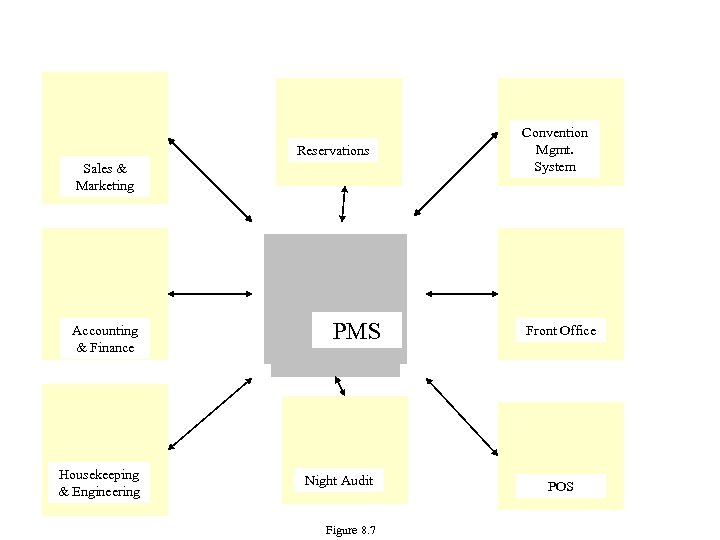 Reservations Sales & Marketing Accounting & Finance Housekeeping & Engineering PMS Night Audit Figure 8. 7 Convention Mgmt. System Front Office POS
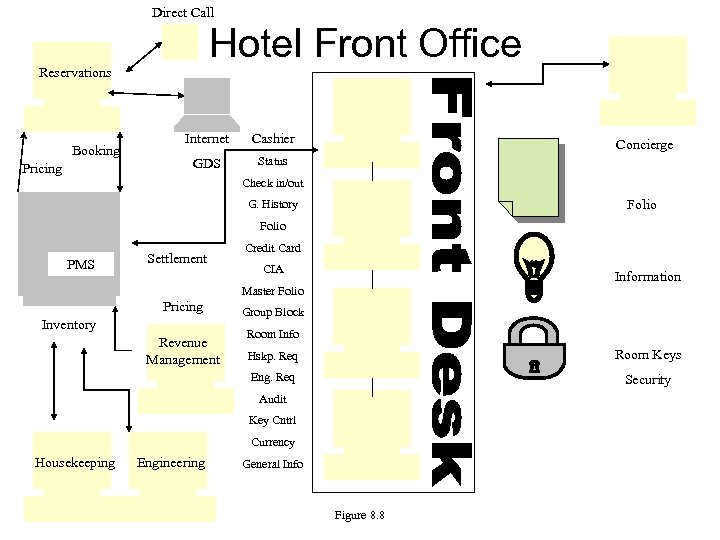 Direct Call Hotel Front Office Reservations Booking Pricing Internet Cashier GDS Status Concierge Check in/out Folio G. History Folio PMS Settlement Credit Card CIA Information Master Folio Pricing Inventory Revenue Management Group Block Room Info Hskp. Req Room Keys Eng. Req Security Audit Key Cntrl Currency Housekeeping Engineering General Info Figure 8. 8
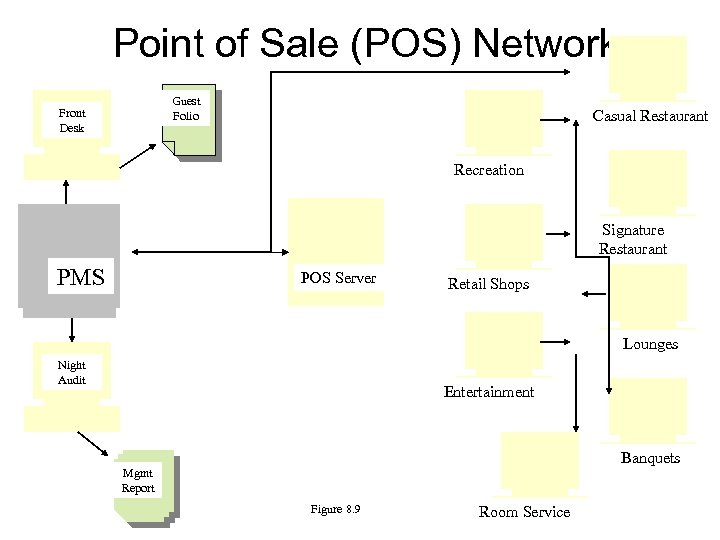 Point of Sale (POS) Network Guest Folio Front Desk Casual Restaurant Recreation Signature Restaurant PMS POS Server Retail Shops Lounges Night Audit Entertainment Banquets Mgmt Report Figure 8. 9 Room Service
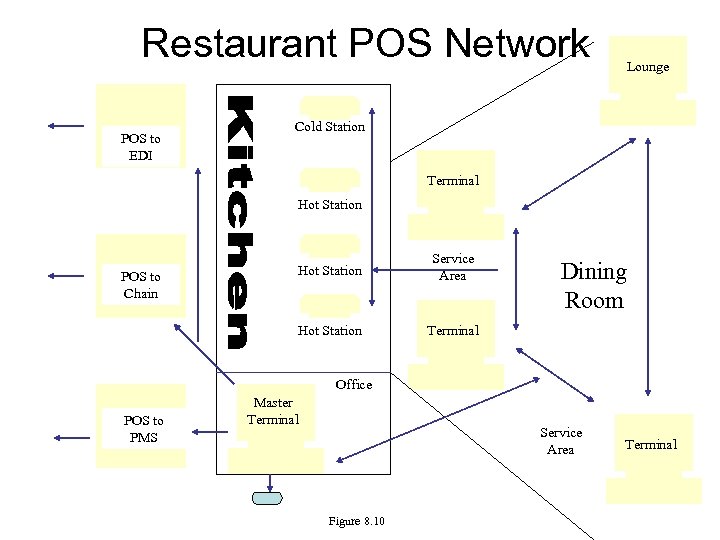 Restaurant POS Network POS to EDI Lounge Cold Station Terminal Hot Station Service Area Hot Station POS to Chain Hot Station Terminal Dining Room Office POS to PMS Master Terminal Service Area Figure 8. 10 Terminal
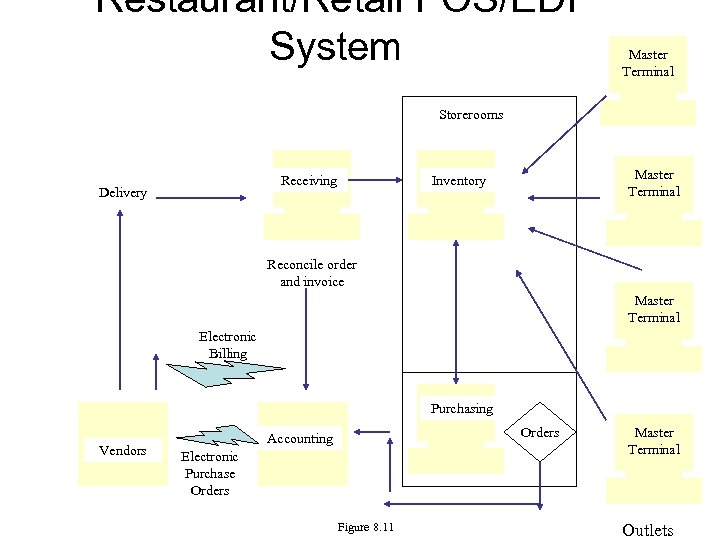 Restaurant/Retail POS/EDI System Master Terminal Storerooms Receiving Delivery Master Terminal Inventory Reconcile order and invoice Master Hot Station Terminal Electronic Billing Purchasing Vendors Orders Accounting Electronic Purchase Orders Figure 8. 11 Master Terminal Outlets