


 Скачать презентацию Even an Unnecessary Crisis Created an Opportunity to
05e92dd4f403509eb8b1ebf84c39439f.ppt
- Количество слайдов: 93
 Even an Unnecessary Crisis Created an Opportunity to Apply the Shock Doctrine: The U. S. States' Fiscal Crisis and the Attack on Collective Bargaining Rights of Public Employees Jeffrey Keefe Rutgers University
 Great Recession 2007 -? • Great Recession officially began in December 2007 and ended in June 2009, according to the NBER. • Over the course of the recession, the nation’s gross domestic product (GDP) went from $13. 4 trillion during the fourth quarter of 2007 to $12. 8 trillion in the second quarter of 2009, a decline of 4. 1 percent. • Since the official end of the recession in June 2009, the GDP has reversed its decline and as of the first quarter of 2011, it surpassed prerecession levels.
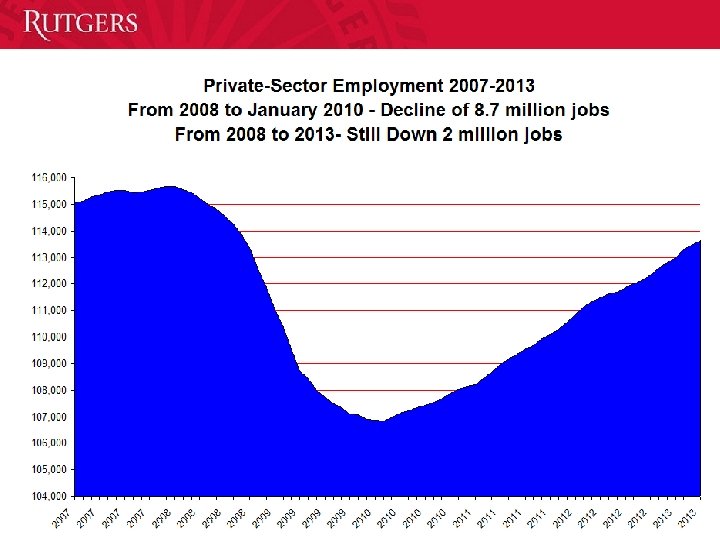
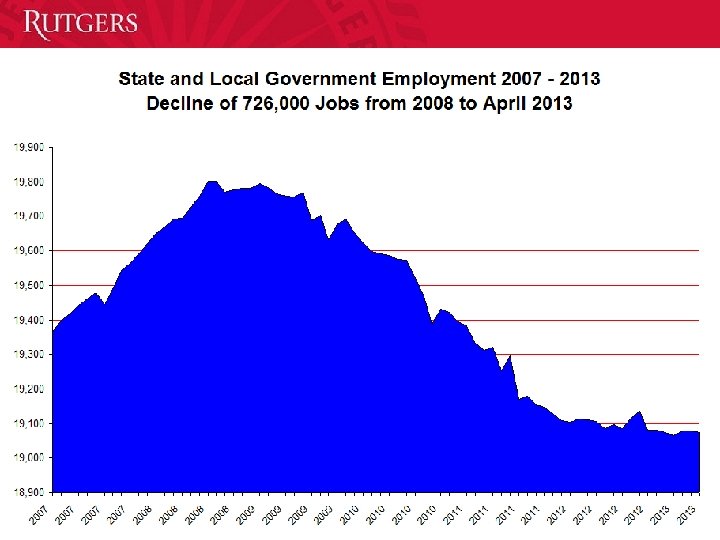
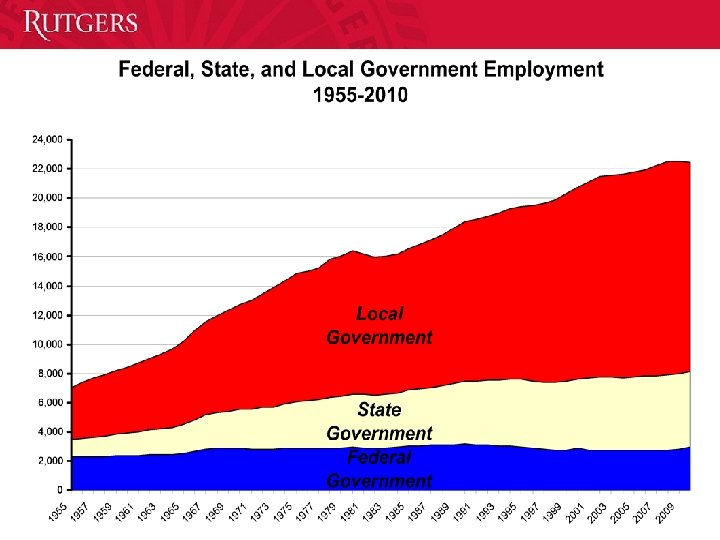
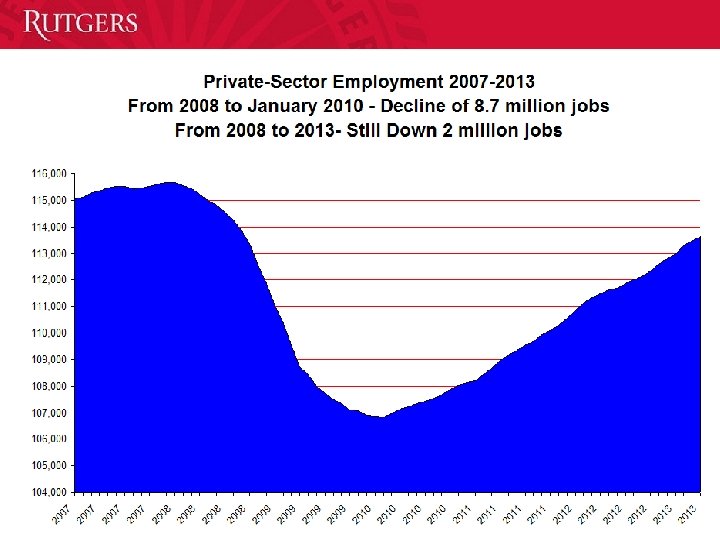
 Recession Ends Without Jobs Recovery • Total private employment declined by 10% (a loss of 11. 7 million jobs) from June 2007 to January 2010. • In April 2013, private employment had partially recovered but was still down 3% (3. 4 million jobs). • Lagging the decline in private employment, state and local government employment began its decline in July 2008 and has continued to decline through April 2013, with a loss of 726, 000 jobs (3. 7% of employment).
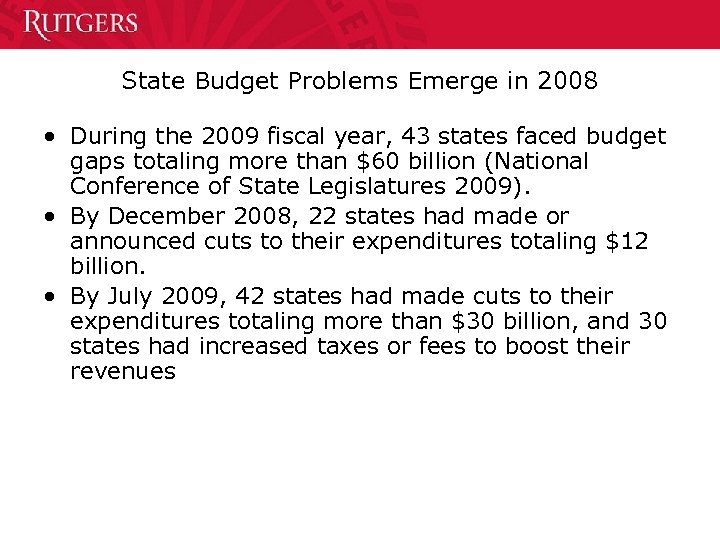 State Budget Problems Emerge in 2008 • During the 2009 fiscal year, 43 states faced budget gaps totaling more than $60 billion (National Conference of State Legislatures 2009). • By December 2008, 22 states had made or announced cuts to their expenditures totaling $12 billion. • By July 2009, 42 states had made cuts to their expenditures totaling more than $30 billion, and 30 states had increased taxes or fees to boost their revenues
 7
7
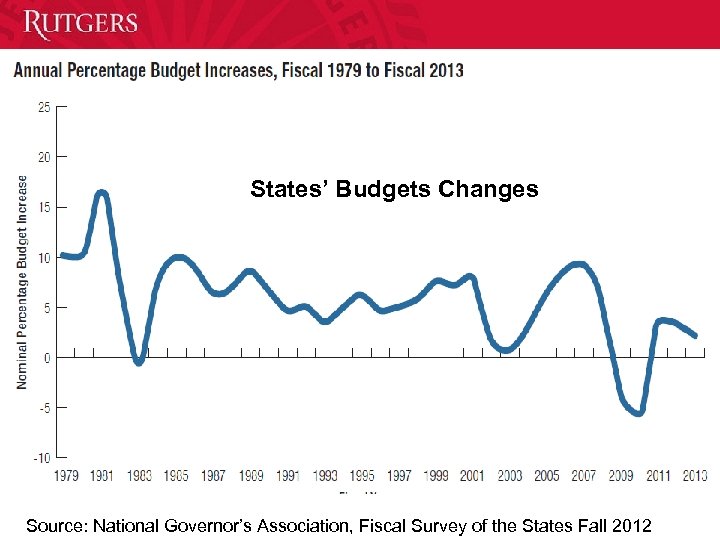 States’ Budgets Changes Source: National Governor’s Association, Fiscal Survey of the States Fall 2012
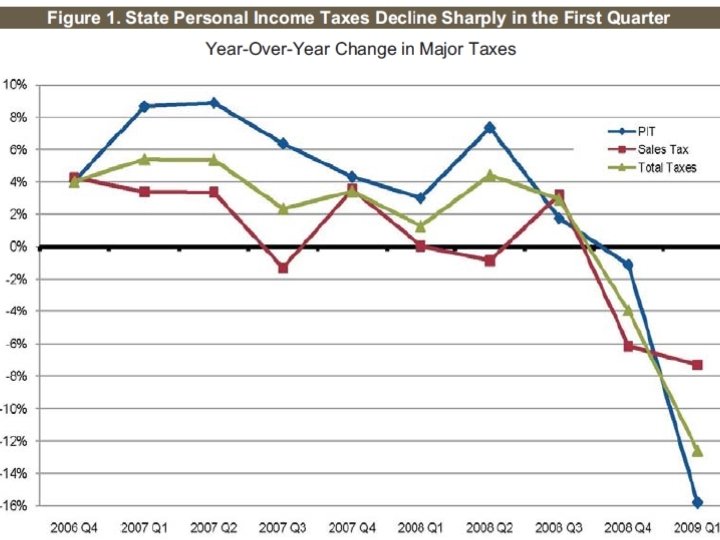
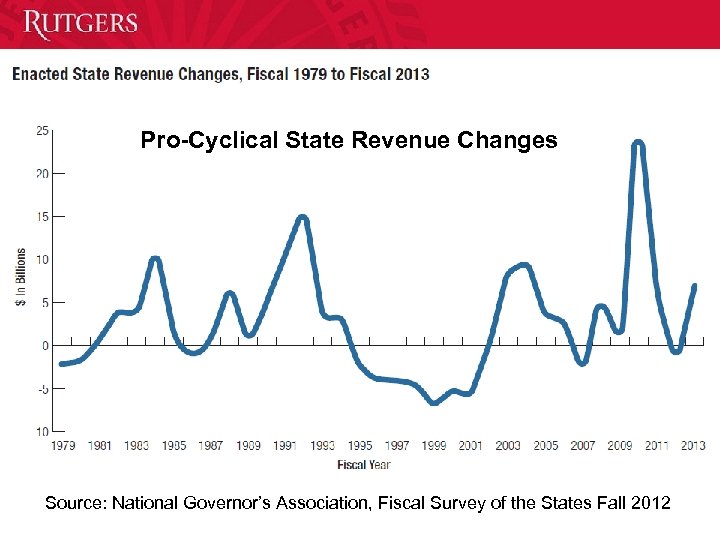 Pro-Cyclical State Revenue Changes Source: National Governor’s Association, Fiscal Survey of the States Fall 2012
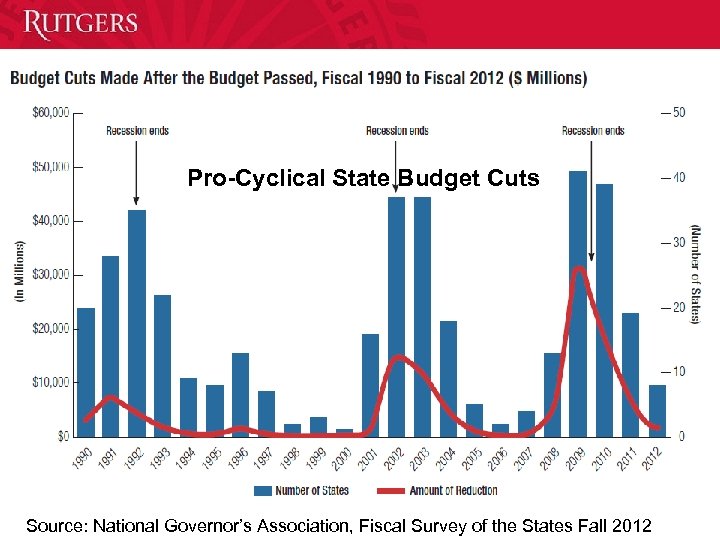 Pro-Cyclical State Budget Cuts Source: National Governor’s Association, Fiscal Survey of the States Fall 2012
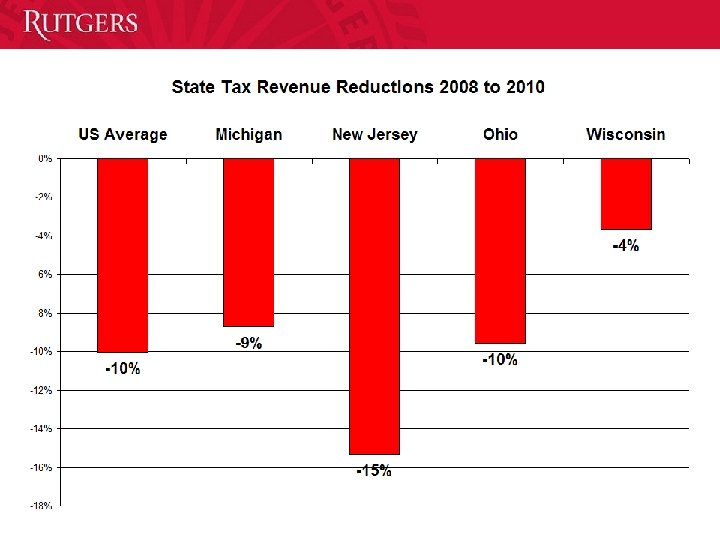
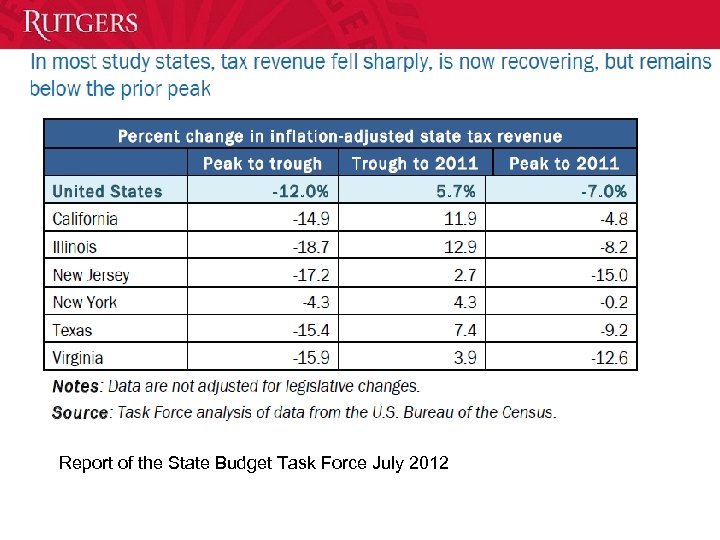 Report of the State Budget Task Force July 2012
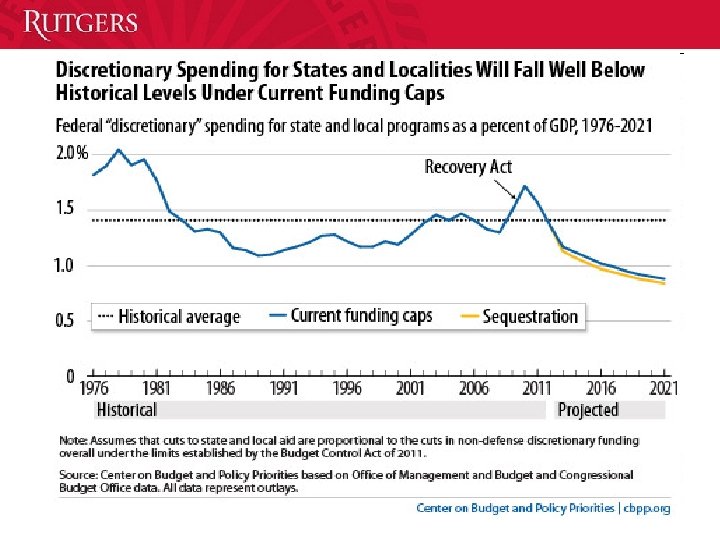
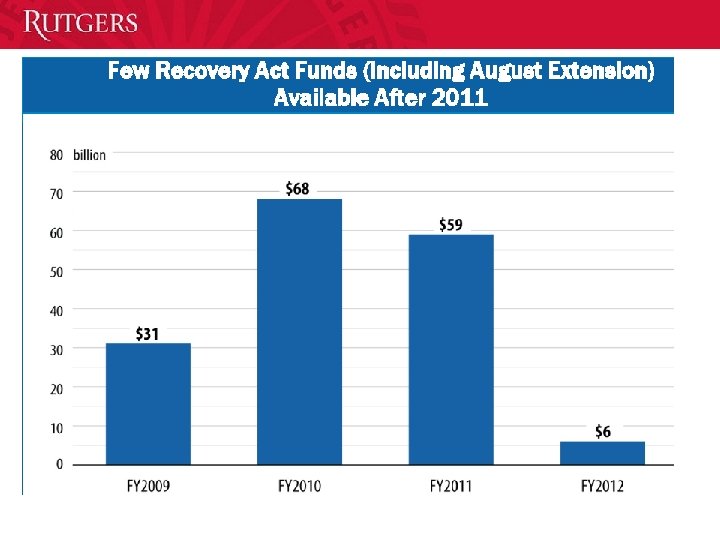
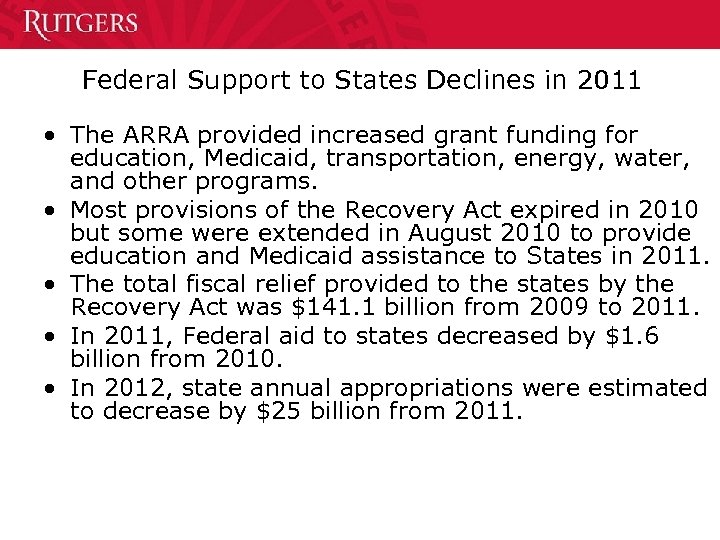 Federal Support to States Declines in 2011 • The ARRA provided increased grant funding for education, Medicaid, transportation, energy, water, and other programs. • Most provisions of the Recovery Act expired in 2010 but some were extended in August 2010 to provide education and Medicaid assistance to States in 2011. • The total fiscal relief provided to the states by the Recovery Act was $141. 1 billion from 2009 to 2011. • In 2011, Federal aid to states decreased by $1. 6 billion from 2010. • In 2012, state annual appropriations were estimated to decrease by $25 billion from 2011.
 Did State Fiscal Relief During Recessions Increase Employment? Evidence from the American Recovery and Reinvestment Act • The American Recovery and Reinvestment Act (ARRA) of 2009 included $88 billion of aid to state governments administered through the Medicaid reimbursement process. • Baseline econometric specifications suggest that $100, 000 of marginal spending by states increased employment by 3. 8 job-years, 3. 2 of which are outside the government, health, and education sectors. • Gabriel Chodorow-Reich, Laura Feiveson, Zachary Liscow, and William Gui Woolston August 2011
 Do US Elites Want Full-Employment? • • 2010 - Record Profit Share, Declining Labor Share 2013 Record Stock Market Valuations 2009 - Record Low Bond Rates Little Inflation Decline in Federal Budget Deficits Labor Costs Decline No Restructurings or Indictments for Too Big-To. Fail Banks or Bankers
 What Do You Do, If You Are a Republican Governor in 2010 • • • State Faces a Massive Revenue Shortfall Oppose any Federal Stimulus Refuse to Increase Taxes or Fees Advocate Tax Cuts to Restore the Economy And States Are Constitutionally Required to Balance the Budget?
 New Jersey Republicans Devise a Governing Strategy The election of Christie in 2009 challenges how to govern without revenue
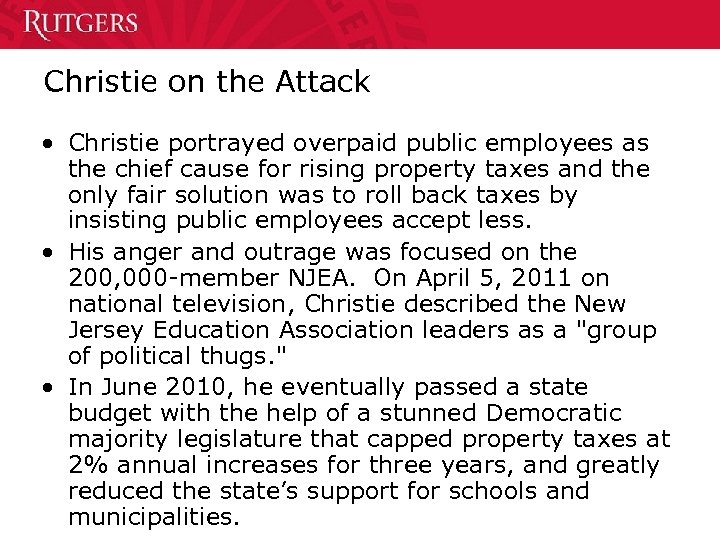 Christie on the Attack • Christie portrayed overpaid public employees as the chief cause for rising property taxes and the only fair solution was to roll back taxes by insisting public employees accept less. • His anger and outrage was focused on the 200, 000 -member NJEA. On April 5, 2011 on national television, Christie described the New Jersey Education Association leaders as a "group of political thugs. " • In June 2010, he eventually passed a state budget with the help of a stunned Democratic majority legislature that capped property taxes at 2% annual increases for three years, and greatly reduced the state’s support for schools and municipalities.
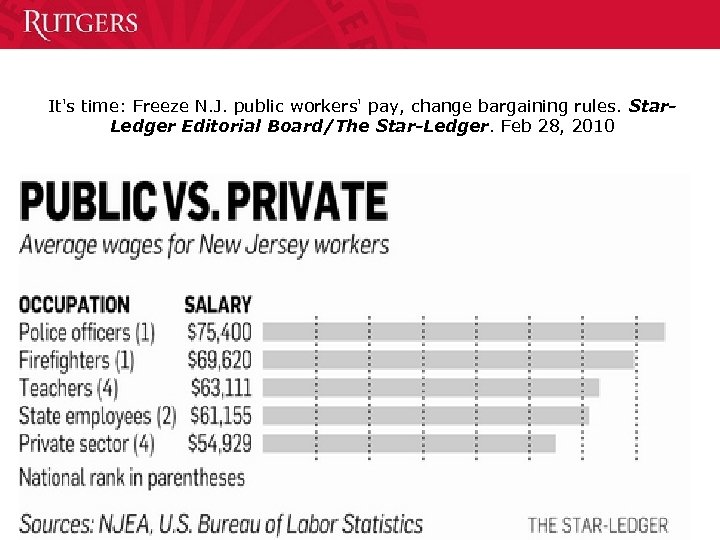 It's time: Freeze N. J. public workers' pay, change bargaining rules. Star. Ledger Editorial Board/The Star-Ledger. Feb 28, 2010 24
 In the Fall of 2010 NJ Reform of Collective Bargaining • Both Governor Christie and the Star Ledger targeted collective bargaining for reform. • Their concern, however, was not basic collective bargaining rights, but police and fire interest arbitration. • They argued interest arbitration produce exorbitantly expensive contracts, because arbitrators were giving greater weight to community pay comparisons rather than the government’s ability to pay when fashioning awards. • They sought a series of reforms, including capping wage increases to 2% per year. • The reforms were enacted into law in December 2010
 Narrowing the Scope of a Narrow Scope Collective Bargaining Law • Pension were never covered by collective bargaining • In June 2011, employee contributions were significantly increased for all defined benefit plans. • Health Insurance was bargainable, but in June 2011 legislation structured employee contributions for the next four years effectively removing health insurance from bargaining. • Democrats insured employee contributions were progressive ranging from 10% to 35%.
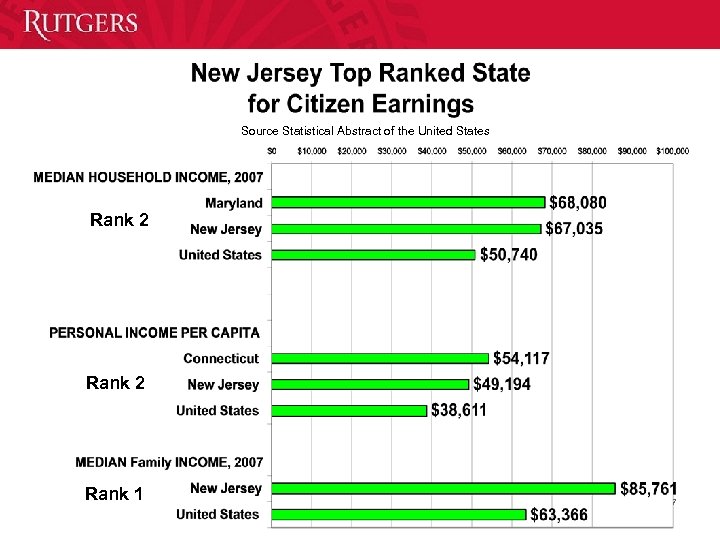 Source Statistical Abstract of the United States Rank 2 Rank 1 27
 The Spring Offensive of 2011 And the Public Responses
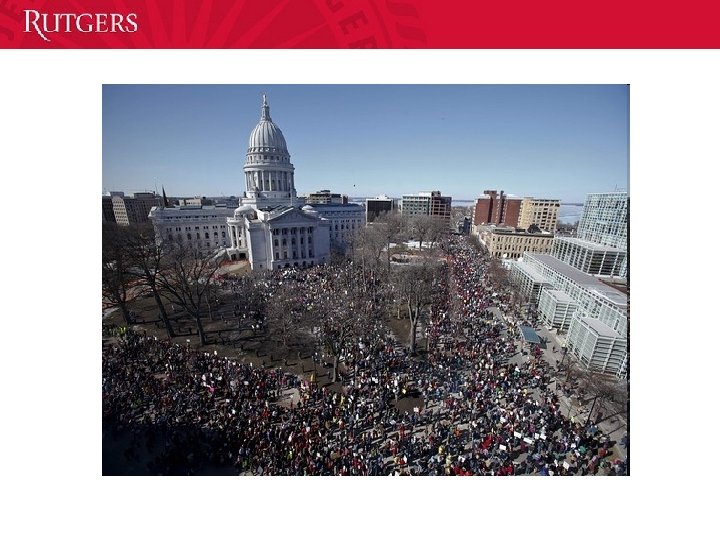
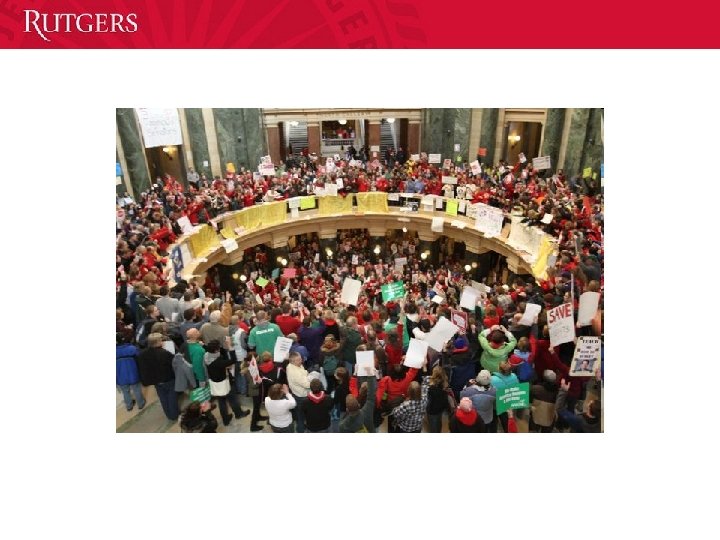
 Wisconsin’s Budget Repair Bill • The most onerous collective bargaining law was passed in Wisconsin as part of the "Budget-Repair Bill" introduced on February 15, 2011. • The Wisconsin law for non-public safety employees limits bargaining to only one subject: wages, which is limited to only base wages and excludes any other wage or compensation issue. • The law also requires annual union certification elections by bargaining unit, prohibits dues deduction by any public employer, prohibits union security clauses, mandates one year nonrenewable contracts, repeals interest arbitration, outlaws all strikes, and repeals collective bargaining rights for the University of Wisconsin System faculty and academic staff
 Ohio SB 5 • The Ohio State Senate passed SB 5 with a vote of seventeen to sixteen, and then the bill passed the House by a margin of fiftythree to forty-four. • After reconciliation, it was signed into law on March 31 , 2011, by newly elected Governor John Kasich.
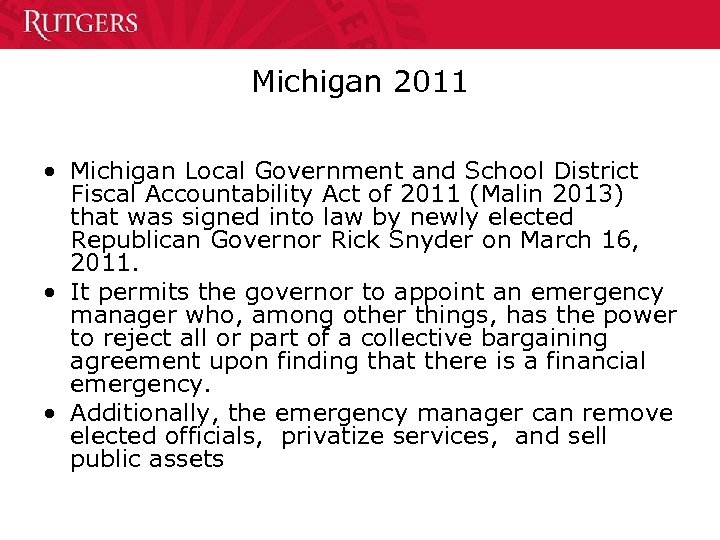 Michigan 2011 • Michigan Local Government and School District Fiscal Accountability Act of 2011 (Malin 2013) that was signed into law by newly elected Republican Governor Rick Snyder on March 16, 2011. • It permits the governor to appoint an emergency manager who, among other things, has the power to reject all or part of a collective bargaining agreement upon finding that there is a financial emergency. • Additionally, the emergency manager can remove elected officials, privatize services, and sell public assets
 What Did the Public Think? Are Public Employees Overpaid?
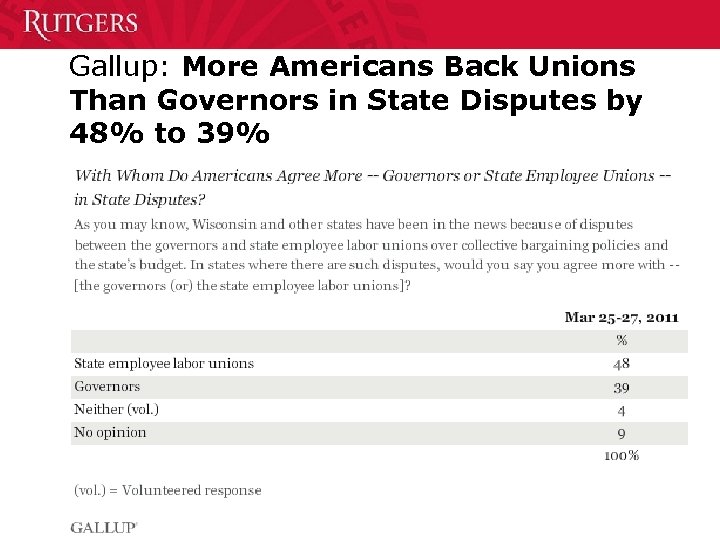 Gallup: More Americans Back Unions Than Governors in State Disputes by 48% to 39%
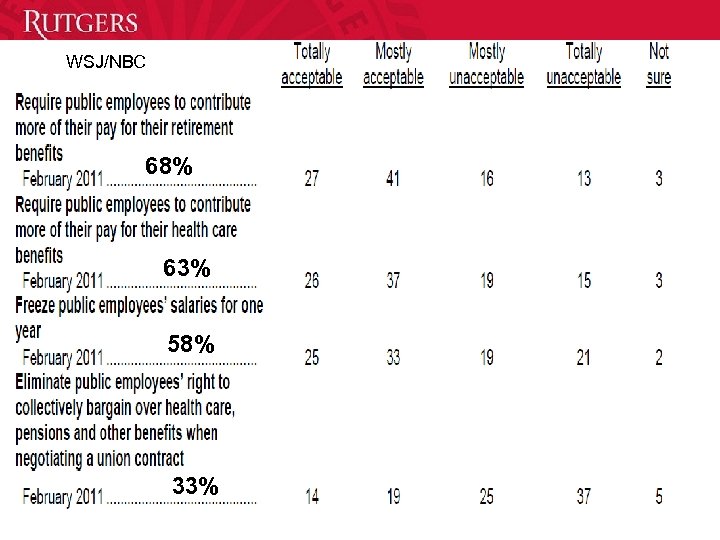 WSJ/NBC 68% 63% 58% 33%
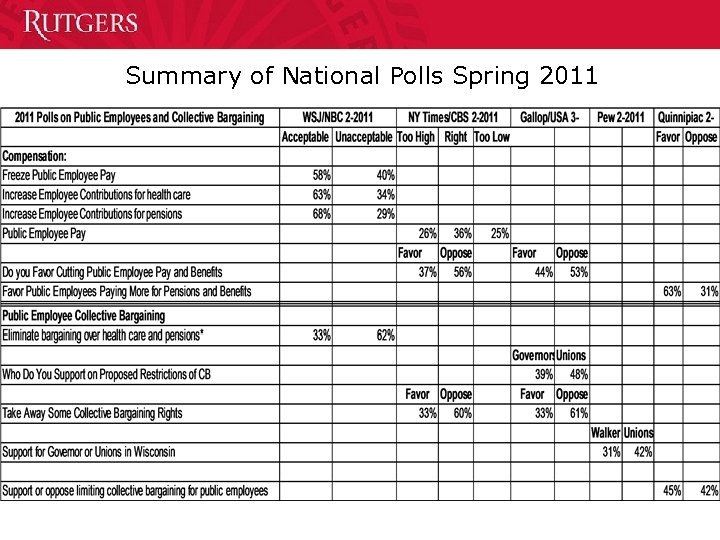 Summary of National Polls Spring 2011
 Labor’s Response Collective Bargaining?
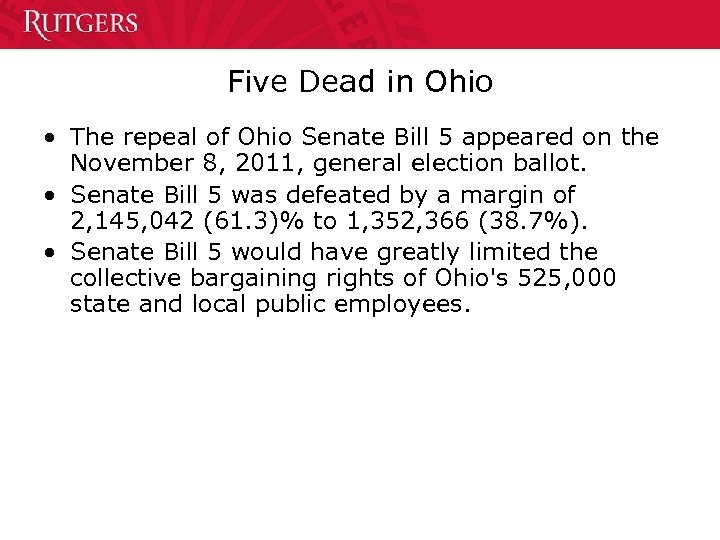 Five Dead in Ohio • The repeal of Ohio Senate Bill 5 appeared on the November 8, 2011, general election ballot. • Senate Bill 5 was defeated by a margin of 2, 145, 042 (61. 3)% to 1, 352, 366 (38. 7%). • Senate Bill 5 would have greatly limited the collective bargaining rights of Ohio's 525, 000 state and local public employees.
 Wisconsin Recalls • The enactment of the law lead to numerous political and legal battles between the Governor Scott Walker, and a reinvigorated labor movement in coalition with many community organizations. • Walker survived a recall vote in June 2012; however, the majority of the state Senate switched back to Democratic control through the recall process
 Michigan’s Referendum • While the opponents won the referendum, to end Michigan Local Government and School District Fiscal Accountability Act of 2011 • Governor Snyder then used the lame duck Republican legislature to pass a modified Emergency Manager Law, and the City of Detroit has since been placed under its requirements. • Referendum on a Constitutional Amendment to include collective bargaining rights failed. • The lame duck legislature passed a Michigan Right to Work Law. • The City of Detroit has filed for Bankruptcy challenging its pension obligations for current and former employees
 Michigan’s Clever New Law • The new bill offers financially troubled local governments the ability to choose from four options: accept an emergency manager, undergo bankruptcy, enter into a mediation process, or join the state in a partnership under a consent agreement. • Choosing one of these options is mandatory if the local government meets the Bill's criteria, it is not allowed to opt out of the program. • Though the Bill’s governor oversight is essentially what voters rejected during the 2012 general election, the new bill is not subject to referendum because it contains appropriations in the form of providing for emergency managers' salaries.
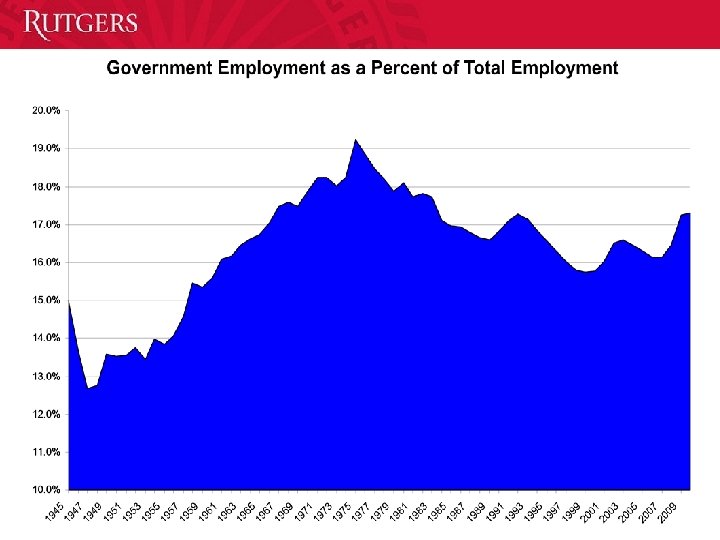
 Why the Criticism of Public Employment and Employees? Is There Too Much Government?
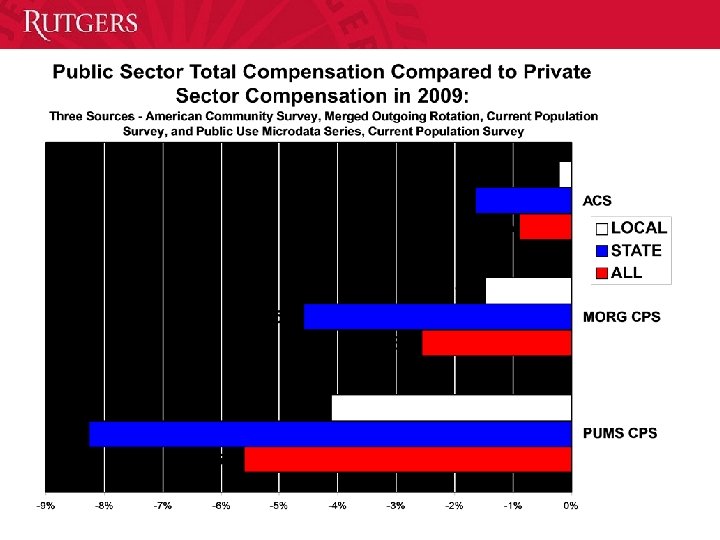
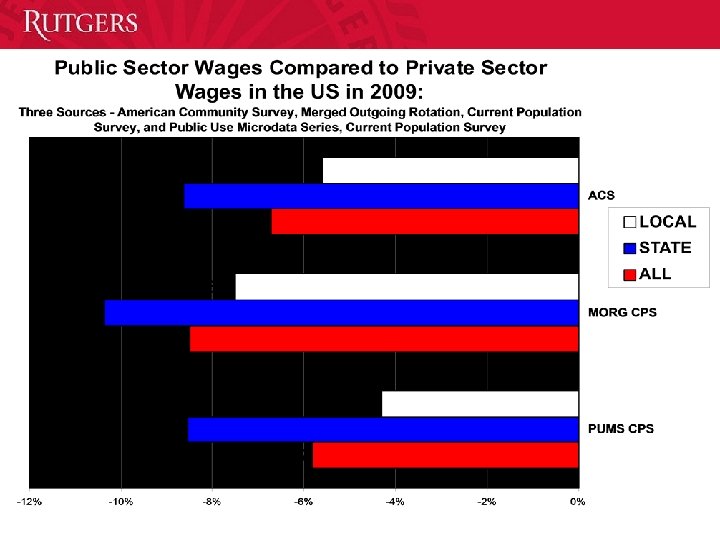
 New Jersey Private and Public Employee Compensation Compared Professor Jeffrey Keefe, Ph. D. School of Management and Labor Relations Rutgers University 51
 Are New Jersey Public Employees Overpaid? • Compared to Whom? Similar New Jersey Private Sector Employees • What do we need to make a comparison? Wages and Salaries are Insufficient Employer Cost of Employing a Worker • How Should We Make the Comparison? 52
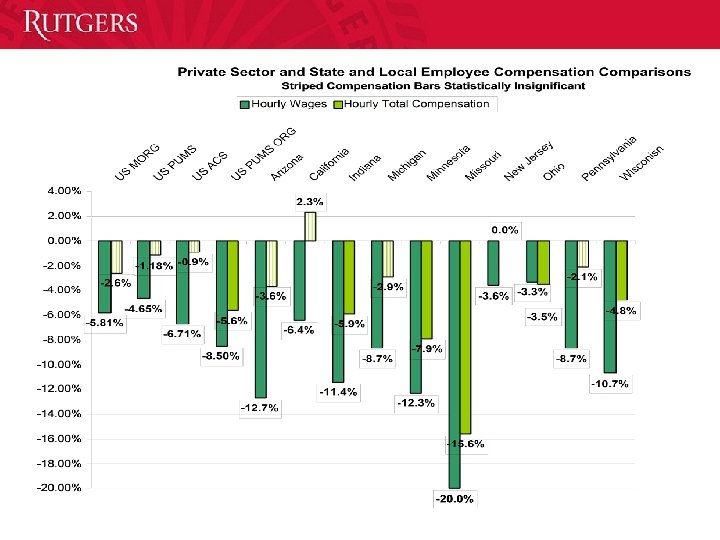
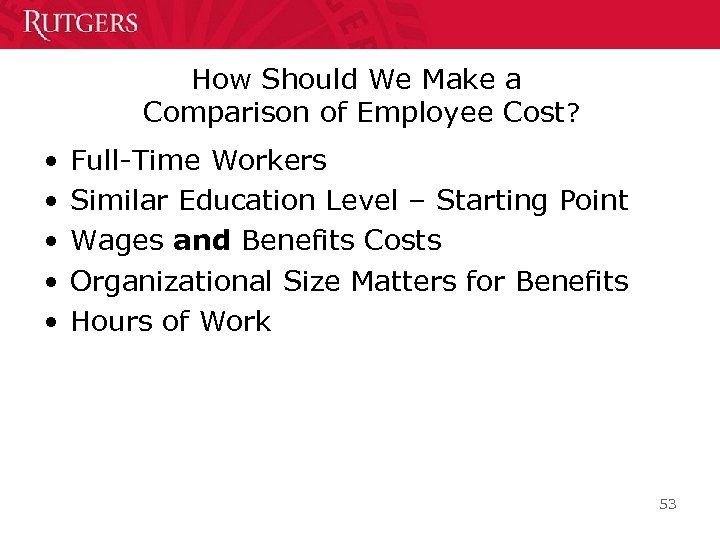 How Should We Make a Comparison of Employee Cost? • • • Full-Time Workers Similar Education Level – Starting Point Wages and Benefits Costs Organizational Size Matters for Benefits Hours of Work 53
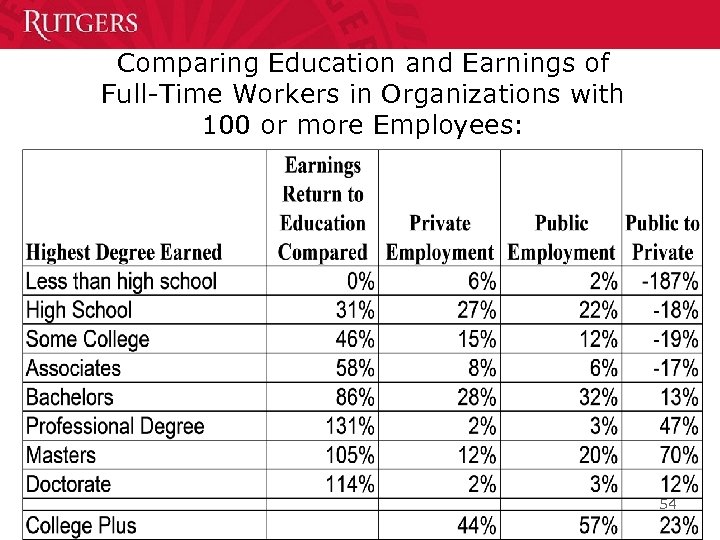 Comparing Education and Earnings of Full-Time Workers in Organizations with 100 or more Employees: 54
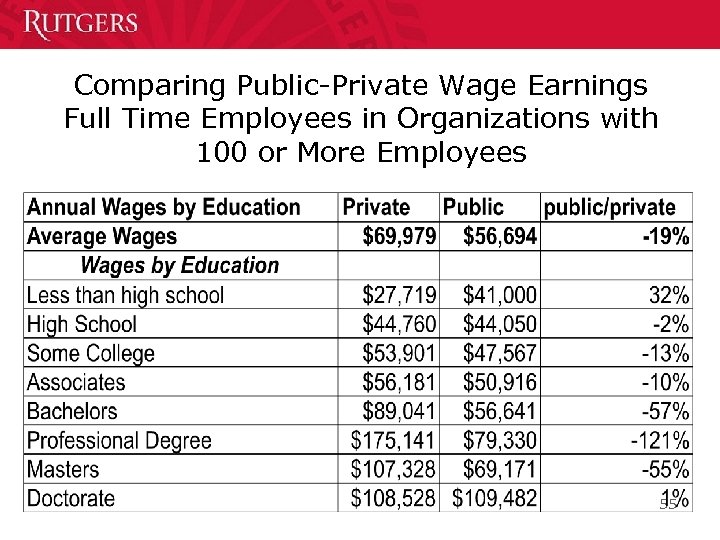 Comparing Public-Private Wage Earnings Full Time Employees in Organizations with 100 or More Employees 55
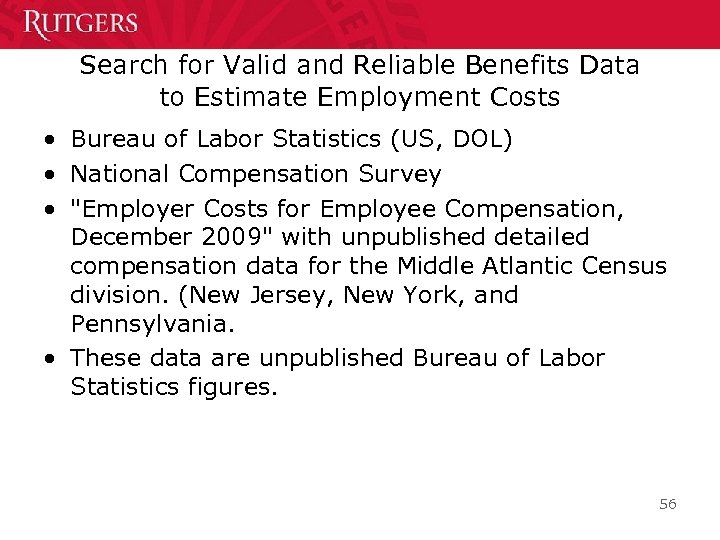 Search for Valid and Reliable Benefits Data to Estimate Employment Costs • Bureau of Labor Statistics (US, DOL) • National Compensation Survey • "Employer Costs for Employee Compensation, December 2009" with unpublished detailed compensation data for the Middle Atlantic Census division. (New Jersey, New York, and Pennsylvania. • These data are unpublished Bureau of Labor Statistics figures. 56
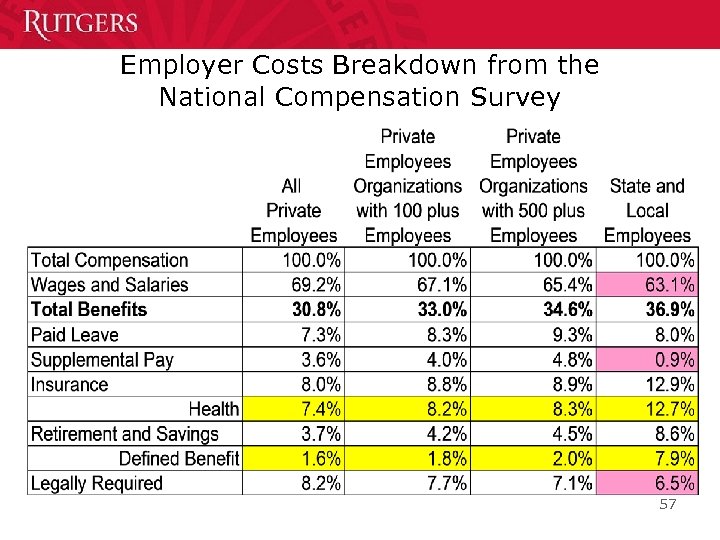 Employer Costs Breakdown from the National Compensation Survey 57
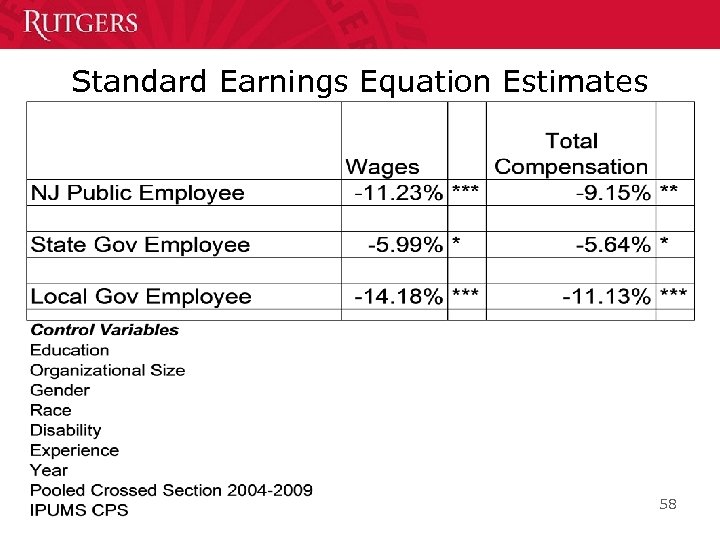 Standard Earnings Equation Estimates 58
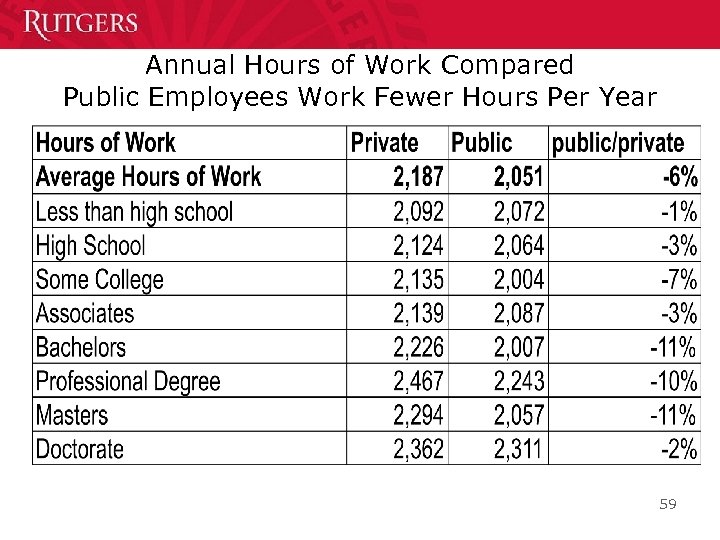 Annual Hours of Work Compared Public Employees Work Fewer Hours Per Year 59
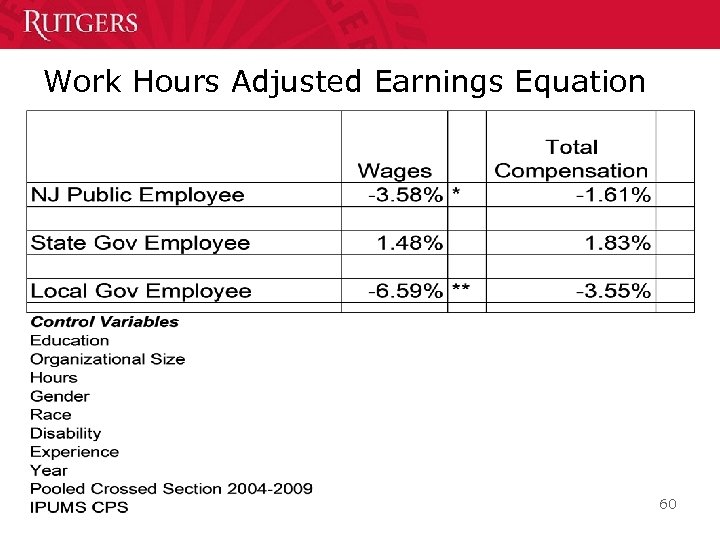 Work Hours Adjusted Earnings Equation 60
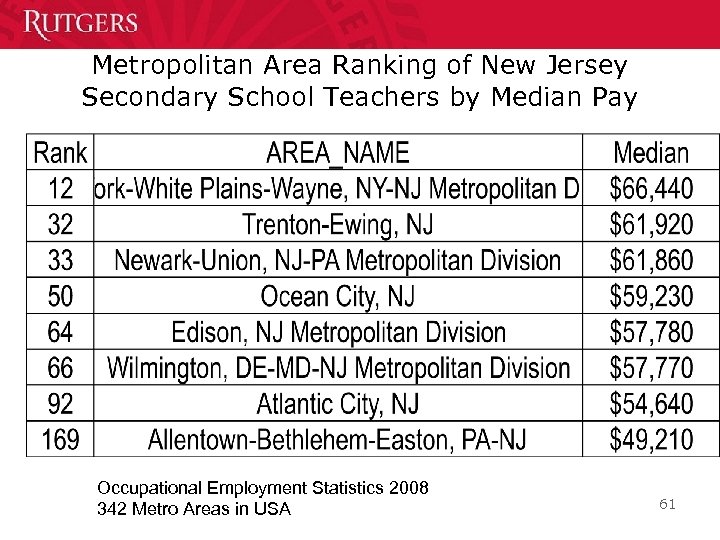 Metropolitan Area Ranking of New Jersey Secondary School Teachers by Median Pay Occupational Employment Statistics 2008 342 Metro Areas in USA 61
 Debunking the Myth of the Over Compensated Public Employee Professor Jeffrey Keefe, Ph. D. School of Management and Labor Relations Rutgers University Prepared for the Conference: Public Sector Employment in Times of Crisis University of Richmond School of Law 62
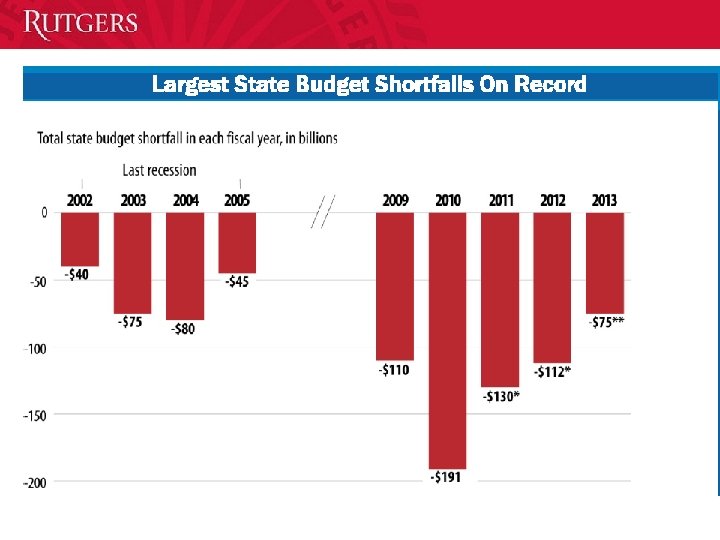
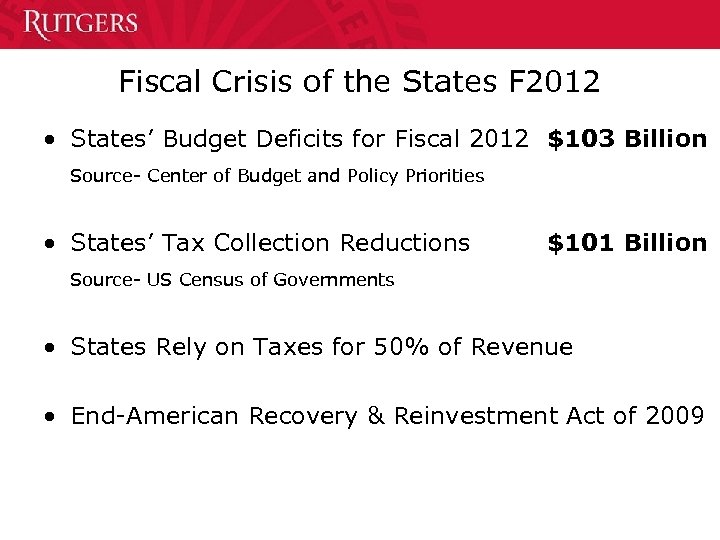 Fiscal Crisis of the States F 2012 • States’ Budget Deficits for Fiscal 2012 $103 Billion Source- Center of Budget and Policy Priorities • States’ Tax Collection Reductions $101 Billion Source- US Census of Governments • States Rely on Taxes for 50% of Revenue • End-American Recovery & Reinvestment Act of 2009
 The States’ Fiscal Crises? STATES CONTINUE TO FEEL RECESSION’S IMPACT By Elizabeth Mc. Nichol, Phil Oliff, and Nicholas Johnson March 9, 2011 Center on Budget and Policy Priorities
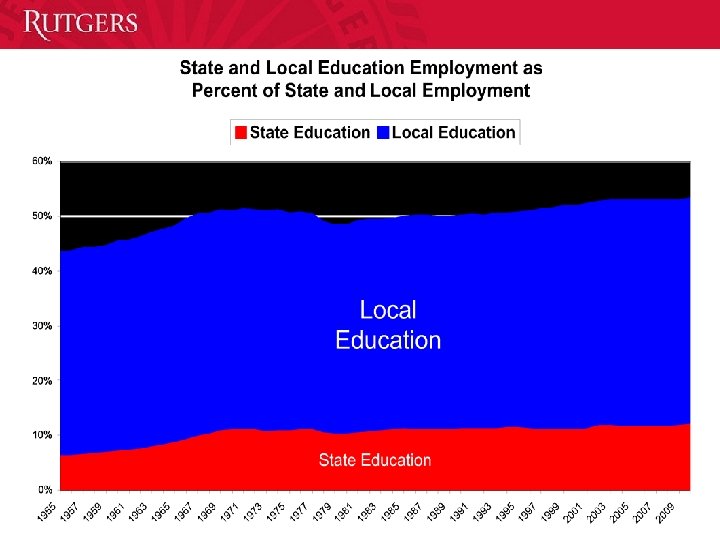
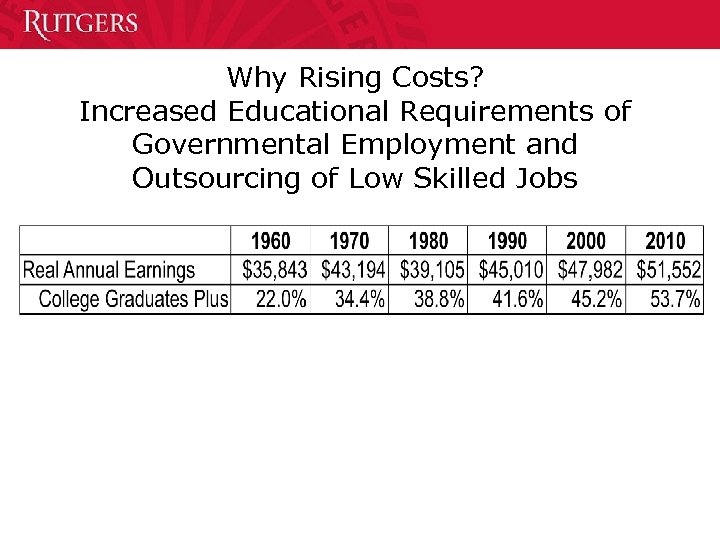 Why Rising Costs? Increased Educational Requirements of Governmental Employment and Outsourcing of Low Skilled Jobs
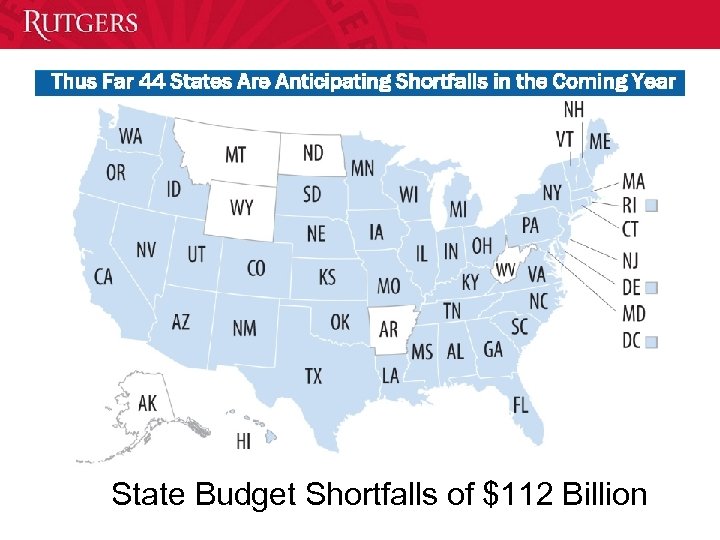 State Budget Shortfalls of $112 Billion
 Employment Stability in Public Sector Rational Human Resource Policy Or Excessive Compensating Differential?
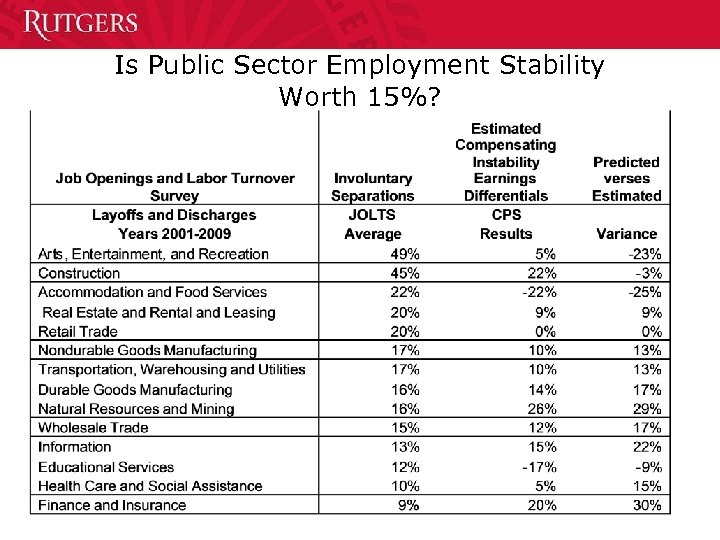 Is Public Sector Employment Stability Worth 15%?
 Compensating Differential for Employment Stability? • The finance and insurance industry, which should have the largest job-stability penalty, has the third largest premium. • The accommodation and food services industry, which should have a large instability premium, in fact, has the largest penalty.
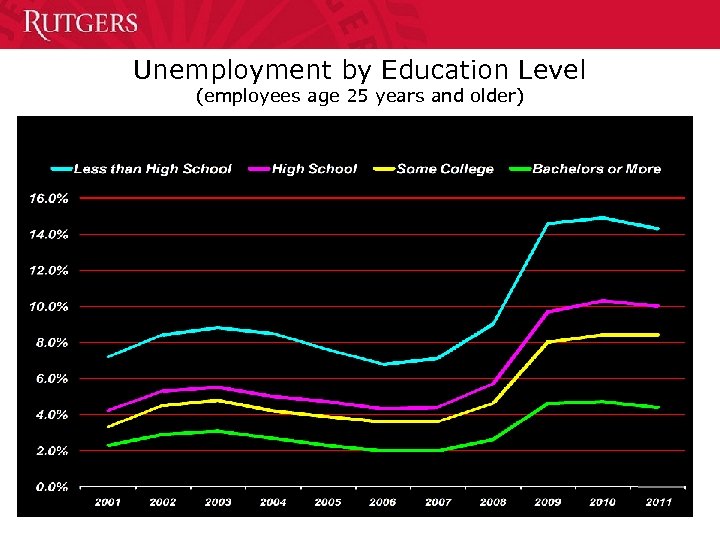 Unemployment by Education Level (employees age 25 years and older)
 Are Public Employee Pensions Underfunded by $300 Billion? Actuaries vs. Finance Economists
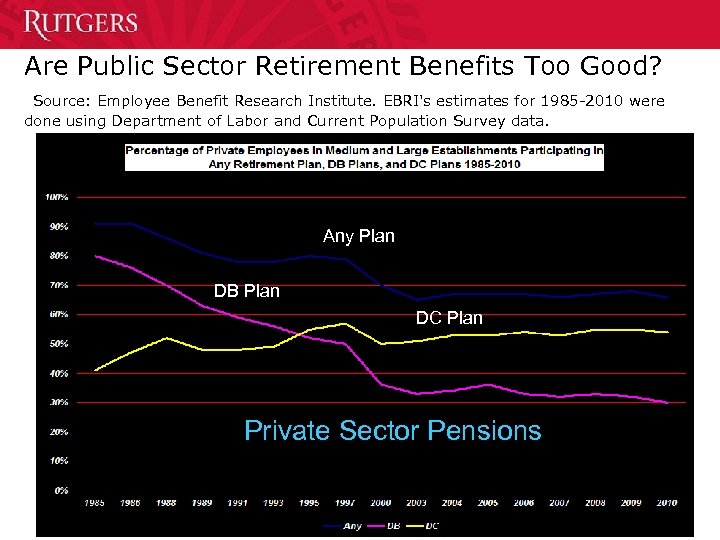 Are Public Sector Retirement Benefits Too Good? Source: Employee Benefit Research Institute. EBRI's estimates for 1985 -2010 were done using Department of Labor and Current Population Survey data. Any Plan DB Plan DC Plans DC Plan Any Plan Private Sector Pensions DB Plans
 GAO Funded Status of State and Local Pension and Health Benefits 2008 • Most state and local government pension plans have enough invested resources set aside to keep up with the benefits they are scheduled to pay over the next several decades, but governments offering retiree health benefits generally have large unfunded liabilities. • Many experts consider a funded ratio of about 80 percent or better to be sound for government pensions. • We found that 58 percent of 65 large pension plans were funded to that level in 2006, a decrease since 2000. • Low funded ratios would eventually require the government employer to improve funding, for example, by reducing benefits or by increasing contributions
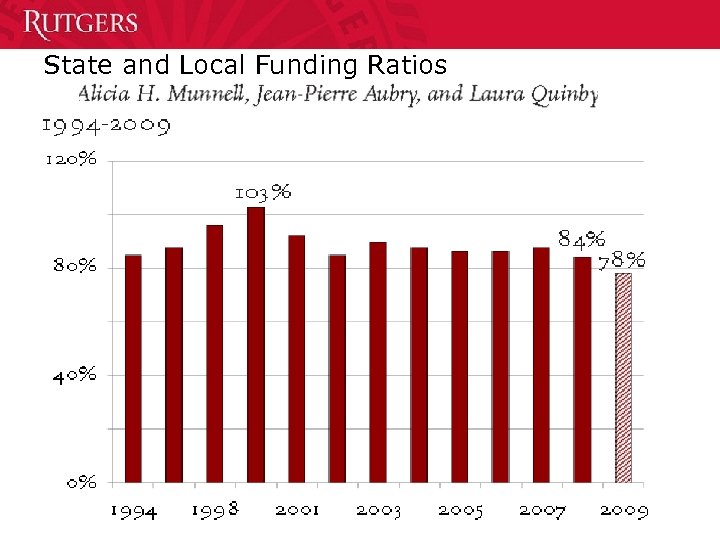 State and Local Funding Ratios
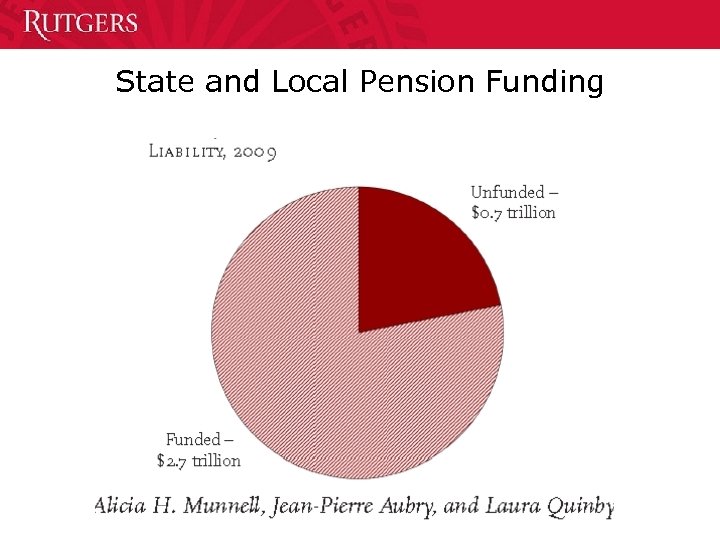 State and Local Pension Funding
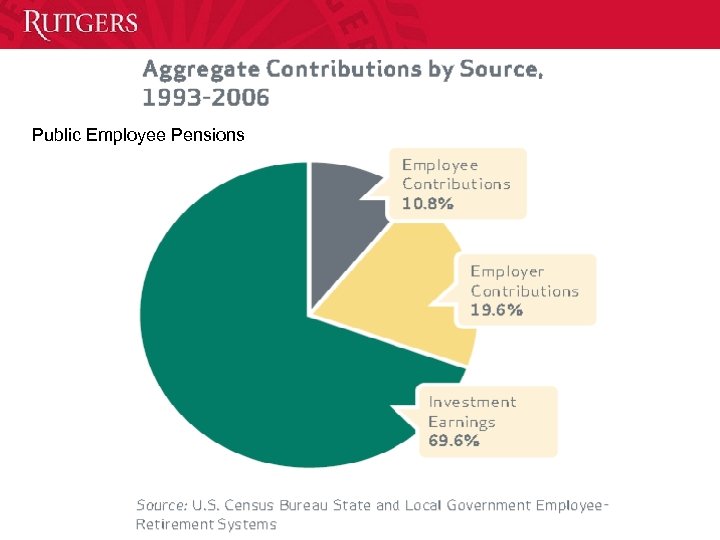 Public Employee Pensions
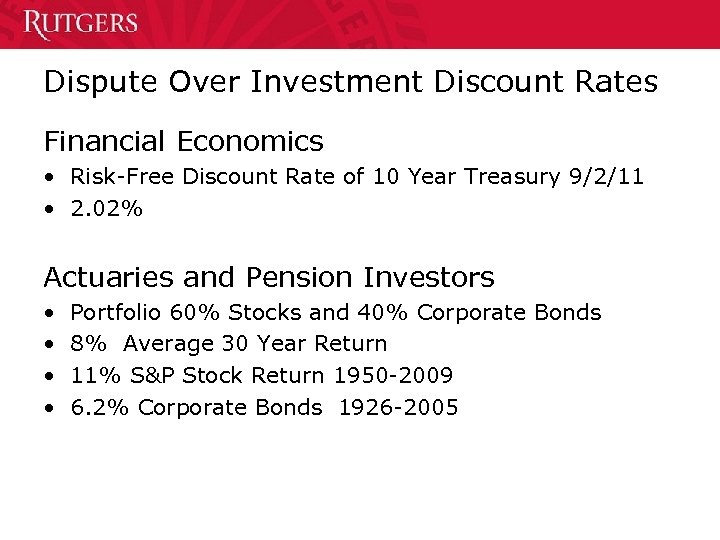 Dispute Over Investment Discount Rates Financial Economics • Risk-Free Discount Rate of 10 Year Treasury 9/2/11 • 2. 02% Actuaries and Pension Investors • • Portfolio 60% Stocks and 40% Corporate Bonds 8% Average 30 Year Return 11% S&P Stock Return 1950 -2009 6. 2% Corporate Bonds 1926 -2005
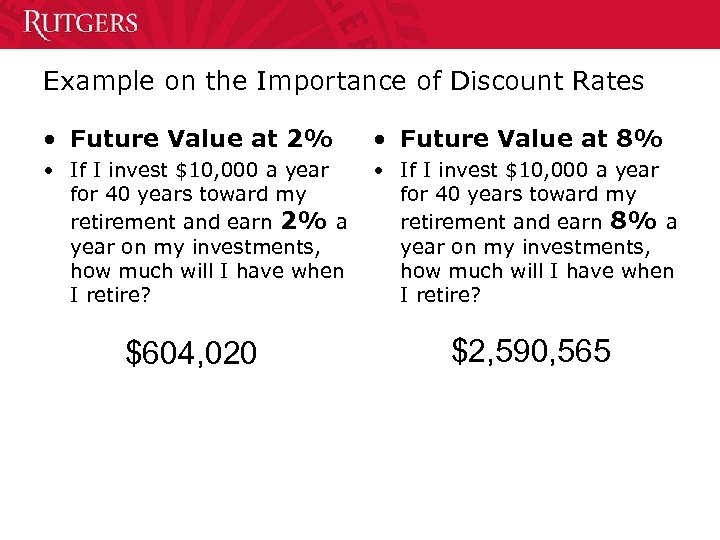 Example on the Importance of Discount Rates • Future Value at 2% • Future Value at 8% • If I invest $10, 000 a year for 40 years toward my retirement and earn 2% a year on my investments, how much will I have when I retire? • If I invest $10, 000 a year for 40 years toward my retirement and earn 8% a year on my investments, how much will I have when I retire? $604, 020 $2, 590, 565
 In Most States Public Employee Pensions Are Not A Subject of Collective Bargaining Invidious and Envious Comparisons As the Private Sector Defined Benefit Plan Disappears
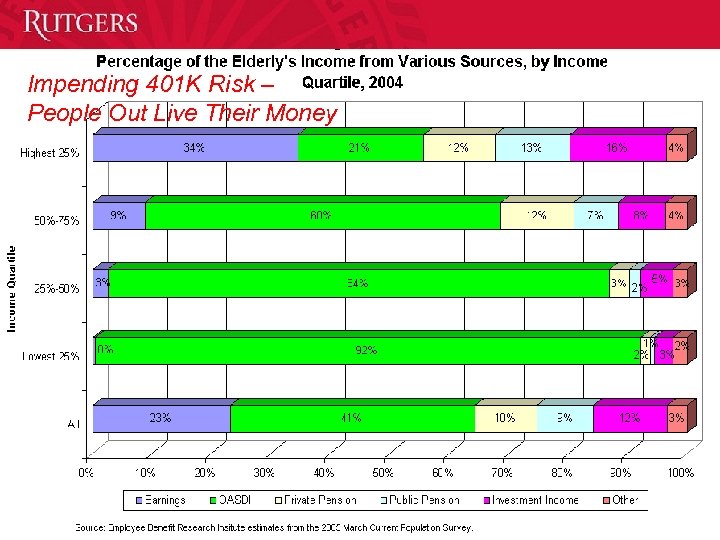 Impending 401 K Risk – People Out Live Their Money
 Survey Top Coding Understates Private Sector Compensation In the Winner Take All Economy Public Employees Do Not Get to Play the Game
 The richest 1 percent of tax filers claimed 80 percent of all income gains reported in federal tax returns between 1980 and 2005 Source: Piketty Thomas and Emmanuel Saez. 2003. “Income Inequality in the United States. ” The Quarterly Journal of Economics. 118. no. 1 (February), pp. 1 -39.
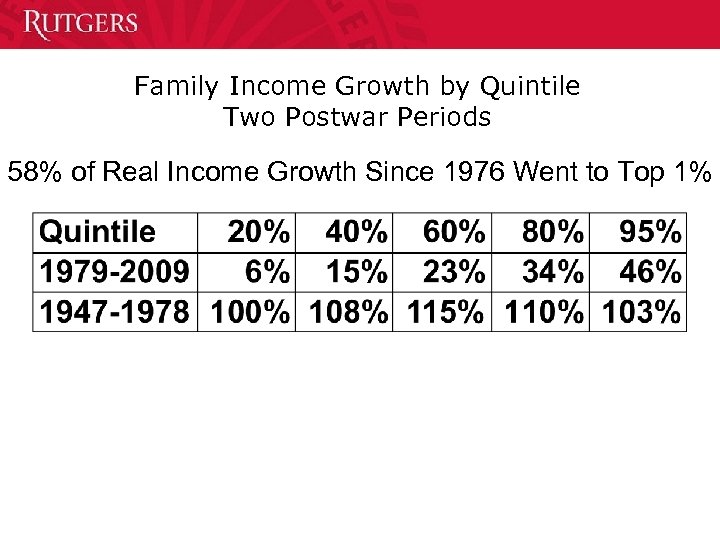 Family Income Growth by Quintile Two Postwar Periods 58% of Real Income Growth Since 1976 Went to Top 1%
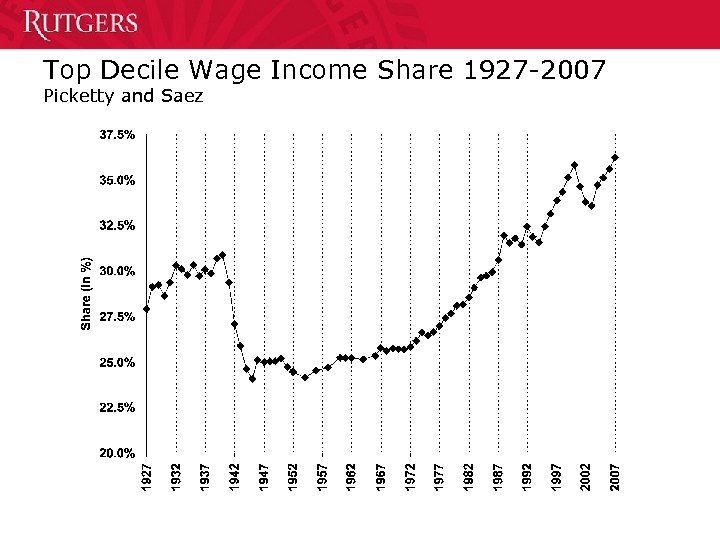 Top Decile Wage Income Share 1927 -2007 Picketty and Saez
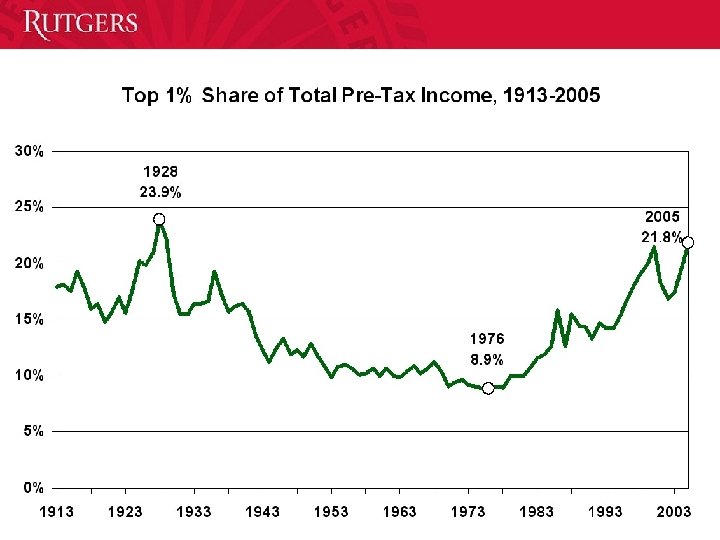
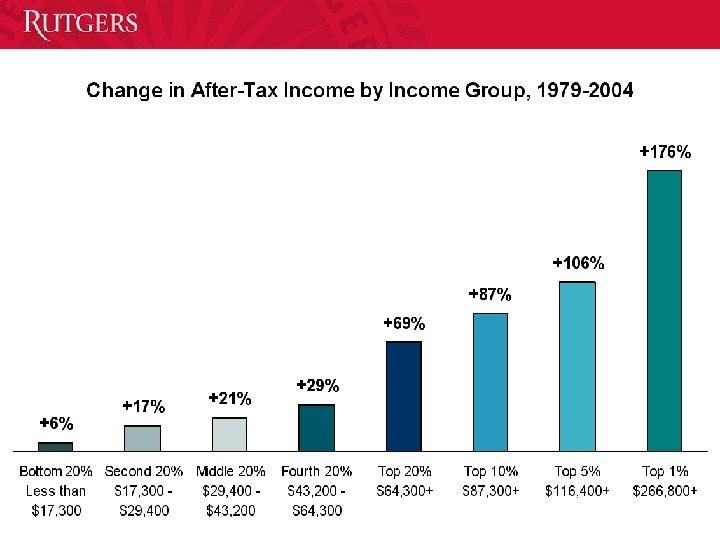
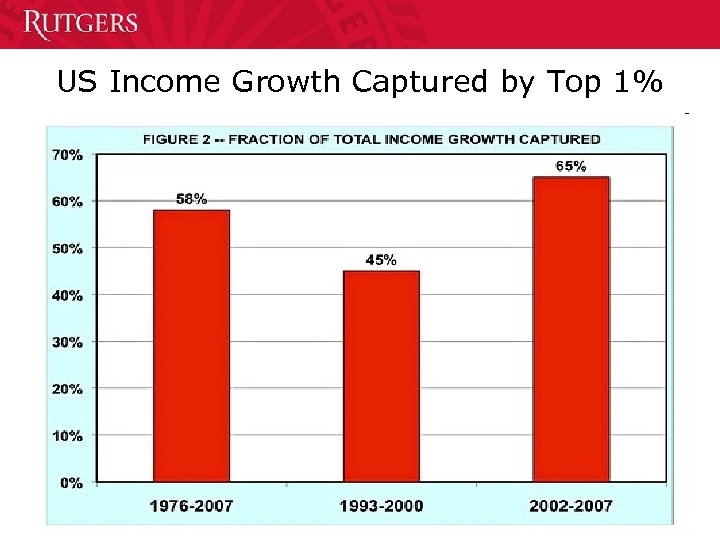 US Income Growth Captured by Top 1%
 Are Public Employees Overpaid? Occupational Controls?
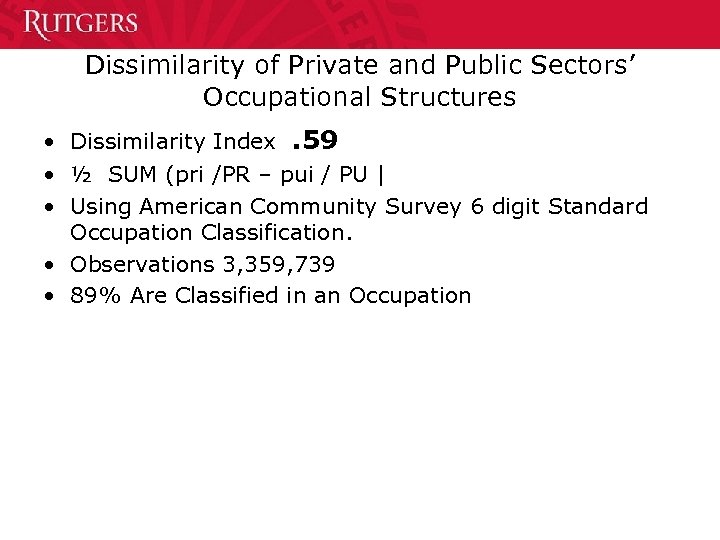 Dissimilarity of Private and Public Sectors’ Occupational Structures • Dissimilarity Index. 59 • ½ SUM (pri /PR – pui / PU | • Using American Community Survey 6 digit Standard Occupation Classification. • Observations 3, 359, 739 • 89% Are Classified in an Occupation
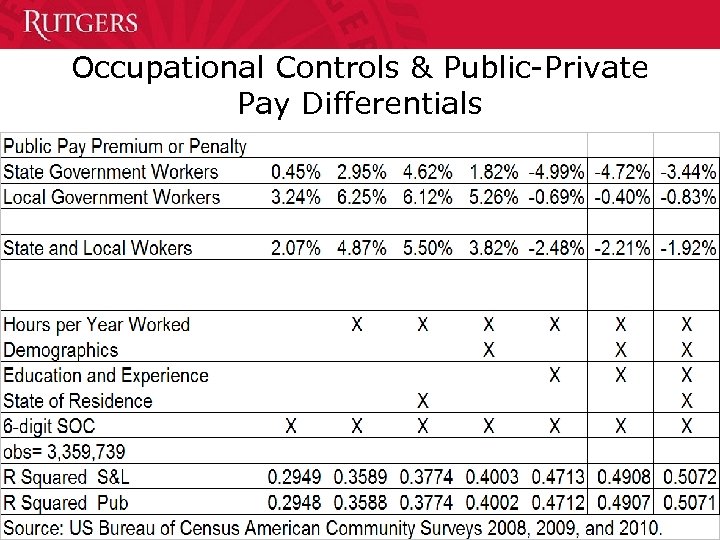 Occupational Controls & Public-Private Pay Differentials
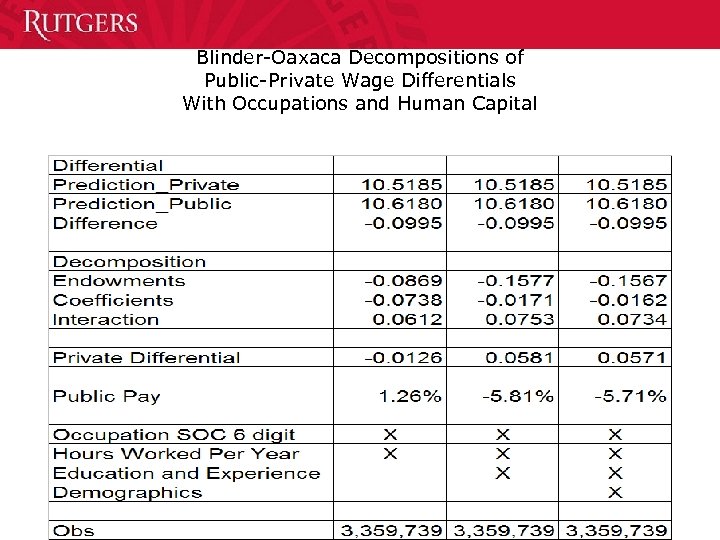 Blinder-Oaxaca Decompositions of Public-Private Wage Differentials With Occupations and Human Capital