 Скачать презентацию Evaporative Emission Standards for Boats Mike Samulski Office
3da76e03a8b582bfd00440b4dc1556d0.ppt
- Количество слайдов: 34



Evaporative Emission Standards for Boats Mike Samulski Office of Transportation and Air Quality International Boat Builders’ Exhibition & Conference Session 309: Boat Fuel Systems October 7, 2008 1
Outline • • 2 Overview of new program Evaporative emission types New Standards Program details Small businesses Certification Questions
Final Rule • On September 4, 2008, EPA Administrator Steve Johnson signed, into law, new exhaust and evaporative emission standards for spark-ignition marine engines and vessels. • These standards apply only to new engines and vessels sold for use in the United States. • The standards will help reduce harmful health effects of ozone and carbon monoxide from these products. 3
Final Standards: Overview • HC+NOx exhaust emission standards for SI marine engines are similar in stringency to existing standards in California • New CO exhaust emission standards for all SI marine engines • New Not-to-Exceed provisions • New evaporative emission standards 4
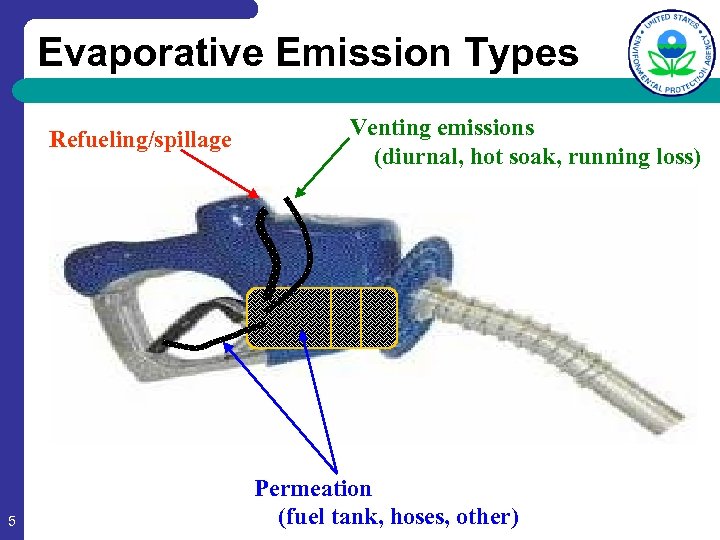
Evaporative Emission Types Refueling/spillage 5 Venting emissions (diurnal, hot soak, running loss) Permeation (fuel tank, hoses, other)
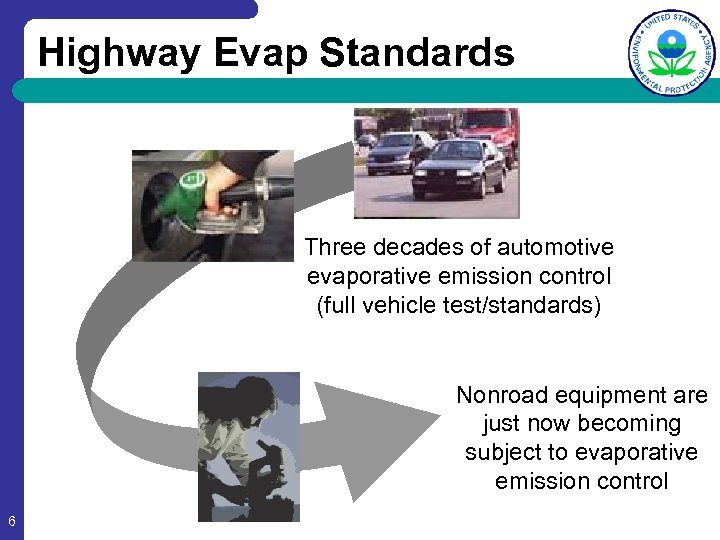
Highway Evap Standards Three decades of automotive evaporative emission control (full vehicle test/standards) Nonroad equipment are just now becoming subject to evaporative emission control 6
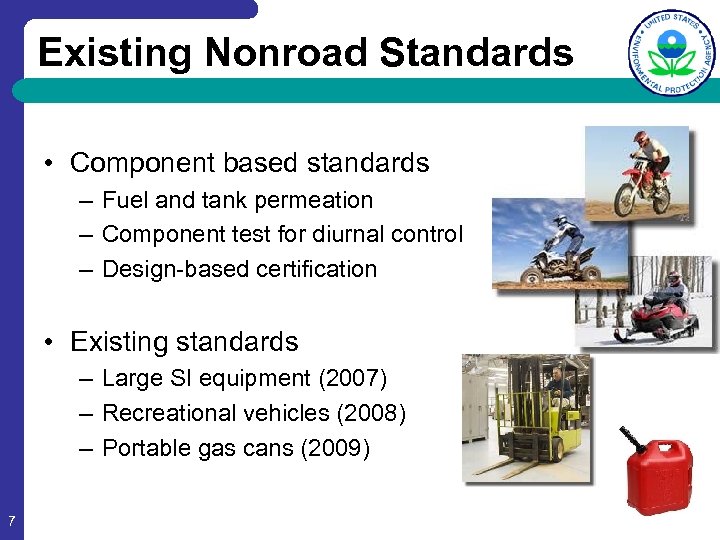
Existing Nonroad Standards • Component based standards – Fuel and tank permeation – Component test for diurnal control – Design-based certification • Existing standards – Large SI equipment (2007) – Recreational vehicles (2008) – Portable gas cans (2009) 7
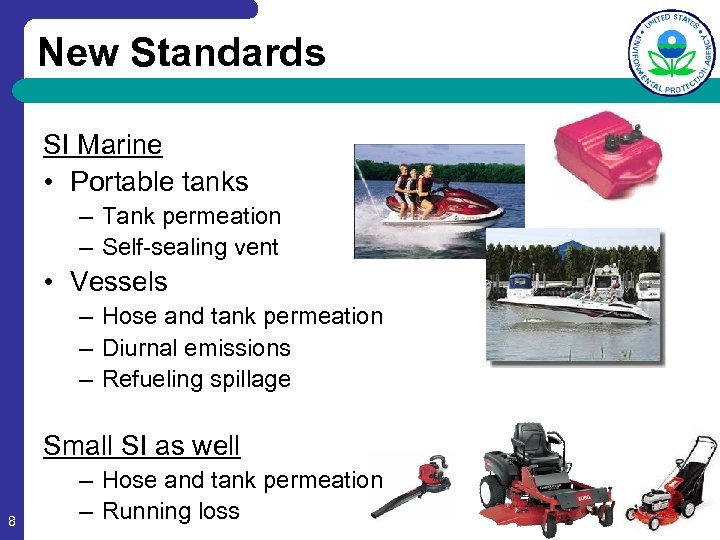
New Standards SI Marine • Portable tanks – Tank permeation – Self-sealing vent • Vessels – Hose and tank permeation – Diurnal emissions – Refueling spillage Small SI as well 8 – Hose and tank permeation – Running loss
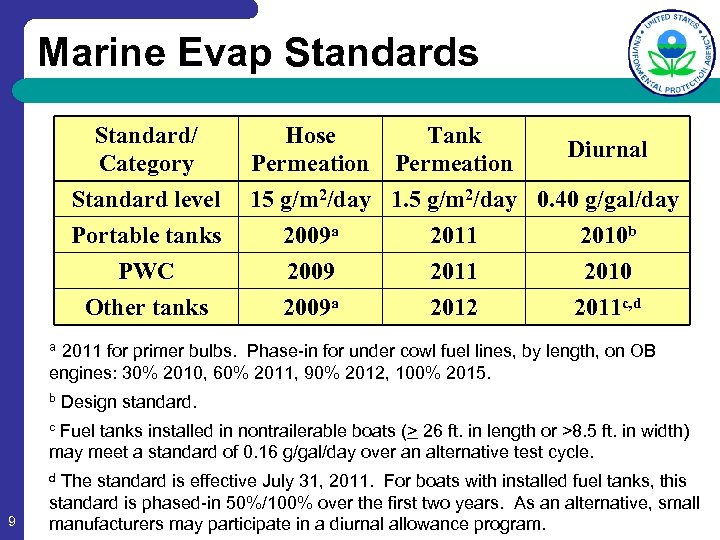
Marine Evap Standards Standard/ Category Standard level Portable tanks PWC Other tanks Hose Permeation Tank Permeation Diurnal 15 g/m 2/day 1. 5 g/m 2/day 0. 40 g/gal/day 2009 a 2011 2010 b 2009 2011 2010 2009 a 2012 2011 c, d a 2011 for primer bulbs. Phase-in for under cowl fuel lines, by length, on OB engines: 30% 2010, 60% 2011, 90% 2012, 100% 2015. b Design standard. Fuel tanks installed in nontrailerable boats (> 26 ft. in length or >8. 5 ft. in width) may meet a standard of 0. 16 g/gal/day over an alternative test cycle. c The standard is effective July 31, 2011. For boats with installed fuel tanks, this standard is phased-in 50%/100% over the first two years. As an alternative, small manufacturers may participate in a diurnal allowance program. d 9
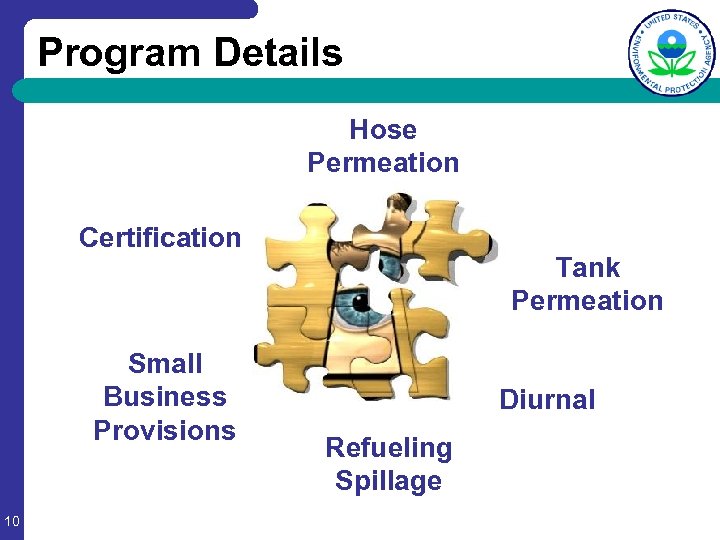
Program Details Hose Permeation Certification Small Business Provisions 10 Tank Permeation Diurnal Refueling Spillage
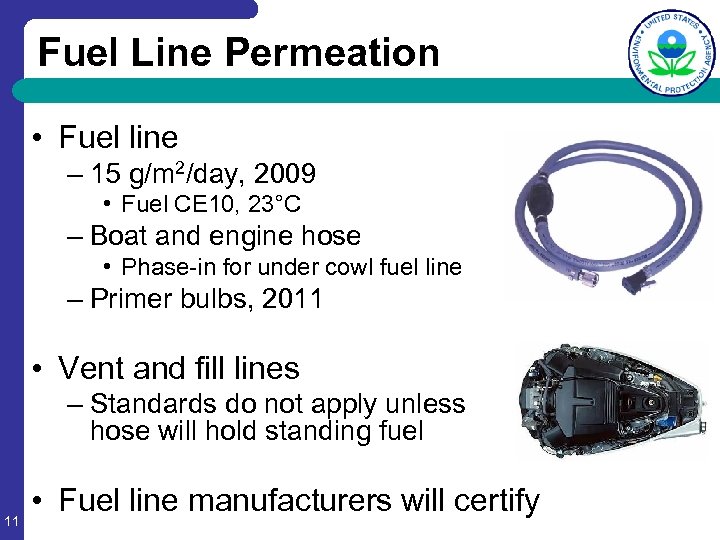
Fuel Line Permeation • Fuel line – 15 g/m 2/day, 2009 • Fuel CE 10, 23°C – Boat and engine hose • Phase-in for under cowl fuel line – Primer bulbs, 2011 • Vent and fill lines – Standards do not apply unless hose will hold standing fuel 11 • Fuel line manufacturers will certify
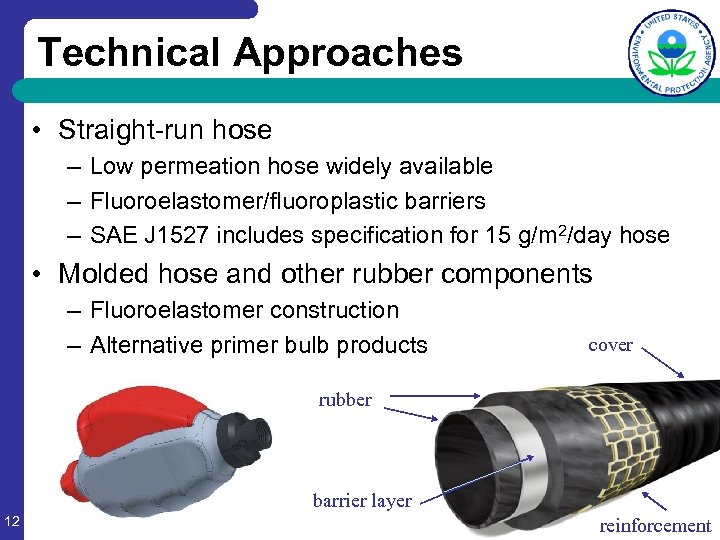
Technical Approaches • Straight-run hose – Low permeation hose widely available – Fluoroelastomer/fluoroplastic barriers – SAE J 1527 includes specification for 15 g/m 2/day hose • Molded hose and other rubber components – Fluoroelastomer construction – Alternative primer bulb products cover rubber barrier layer 12 reinforcement
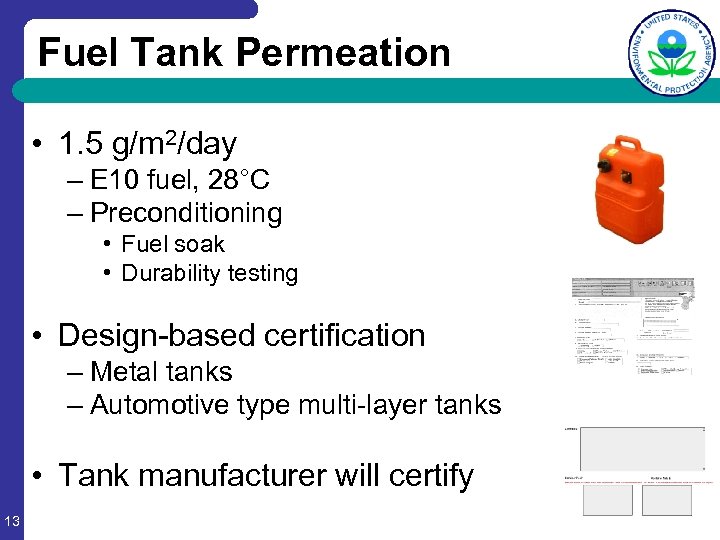
Fuel Tank Permeation • 1. 5 g/m 2/day – E 10 fuel, 28°C – Preconditioning • Fuel soak • Durability testing • Design-based certification – Metal tanks – Automotive type multi-layer tanks • Tank manufacturer will certify 13
Technical Approaches • • • 14 Multi-layer constructions Alternative materials Barrier treatments Barrier platelets Coatings Nanocomposites
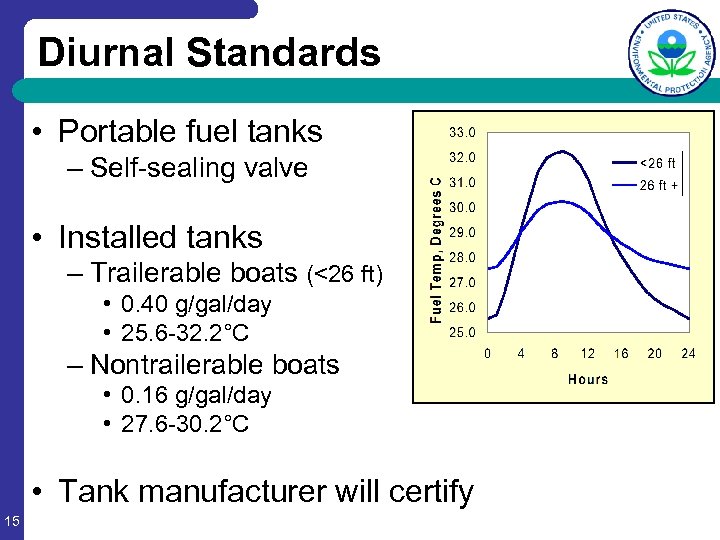
Diurnal Standards • Portable fuel tanks – Self-sealing valve • Installed tanks – Trailerable boats (<26 ft) • 0. 40 g/gal/day • 25. 6 -32. 2°C – Nontrailerable boats • 0. 16 g/gal/day • 27. 6 -30. 2°C • Tank manufacturer will certify 15
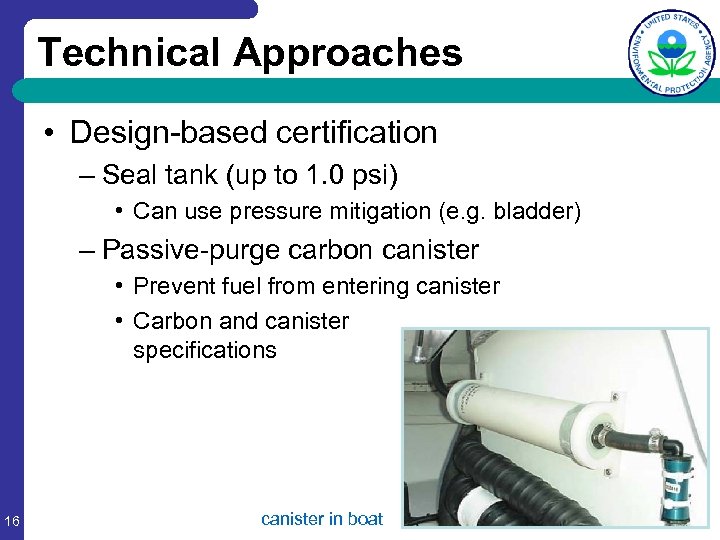
Technical Approaches • Design-based certification – Seal tank (up to 1. 0 psi) • Can use pressure mitigation (e. g. bladder) – Passive-purge carbon canister • Prevent fuel from entering canister • Carbon and canister specifications 16 canister in boat
Refueling • Fuel nozzle standards – Marinas must use standard nozzles whenever they replace existing nozzles or install new ones – Same to those already used for motor vehicle pumps • Standardized dimensions • Automatic shut-off • System integration – Fuel systems should be designed to allow flow to nozzle for automatic shut-off – Will help with carbon canister installation designs and reduce spillage 17
System Integration • Industry consensus standards – SAE J 1527 addresses hose permeation – ABYC H 24 potential vehicle for specifying best practices for fuel system designs – NMMA certification • Canister installation standards – Industry is developing canister installation practices in context of EPA & USCG standards – ABYC is assessing fuel/air separators and fuel system designs for spillage control 18
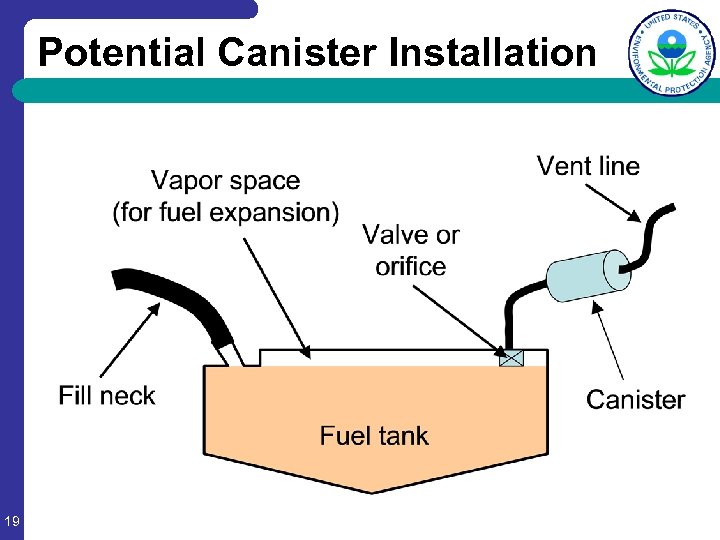
Potential Canister Installation 19
Small Businesses • Small Business Regulatory Enforcement Fairness Act – Convened SBREFA Panels in 2001 and 2006 – Representatives from engine, boat, tank, and hose manufacturers • Rule includes all recommendations from panel report 20 – – – Appropriate lead time Broad definition of emission family Compliance progress review for fuel tanks Engineering design-based certification for tanks Fuel tank credit program Hardship provisions
Certification Procedures The ABCs of getting a Certificate of Conformity with EPA emission regulations… 21
Certification Procedures • The basics: – If your product is subject to EPA emissions standards, you must obtain a Certificate of Conformity before you introduce it into US Commerce. • Must demonstrate compliance with the applicable regulation. – Certificates are issued by the Compliance and Innovative Solutions Division (CISD), Office of Transportation and Air Quality. • CISD’s Heavy-Duty and Nonroad Engines Group processes the Applications for Certification for Marine SI – You must certify every model year or production period 22
How do I certify? • To obtain a Certificate of Conformity: 1. Read the regulations! • • • SD/I & components: 40 CFR Parts 1045, 1060, 1065 and 1068 OB/PWC: add 40 CFR Part 91 http: //epa. gov/otaq/marinesi. htm 2. Request an EPA Manufacturer Code: • • http: //epa. gov/otaq/verify/mfr-code. htm Contact: Mr. Petersen, 734. 214. 4204; petersen. pete@epa. gov 3. Determine: • • 23 Engine Families/Permeation Families The type of Certificate you need: – Exhaust, Evaporative (fuel lines, fuel tanks), or both
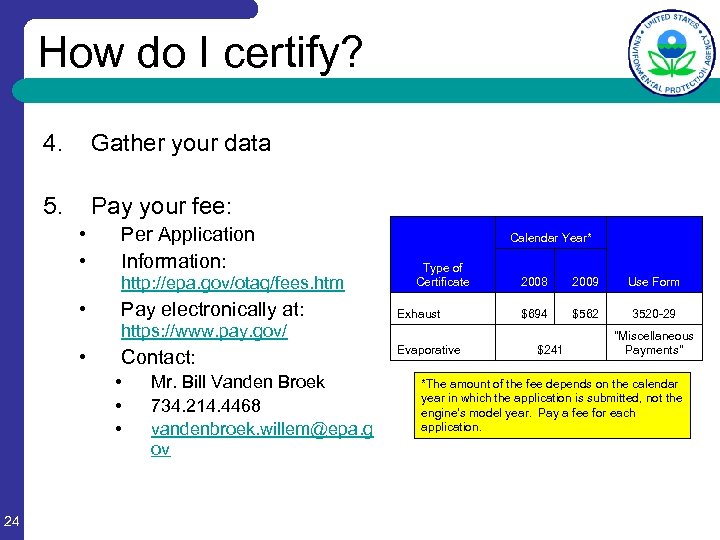
How do I certify? 4. Gather your data 5. Pay your fee: • • Per Application Information: http: //epa. gov/otaq/fees. htm • Pay electronically at: Calendar Year* Type of Certificate Exhaust 2008 2009 Use Form $694 $562 3520 -29 https: //www. pay. gov/ • Contact: • • • 24 Mr. Bill Vanden Broek 734. 214. 4468 vandenbroek. willem@epa. g ov Evaporative $241 "Miscellaneous Payments" *The amount of the fee depends on the calendar year in which the application is submitted, not the engine’s model year. Pay a fee for each application.
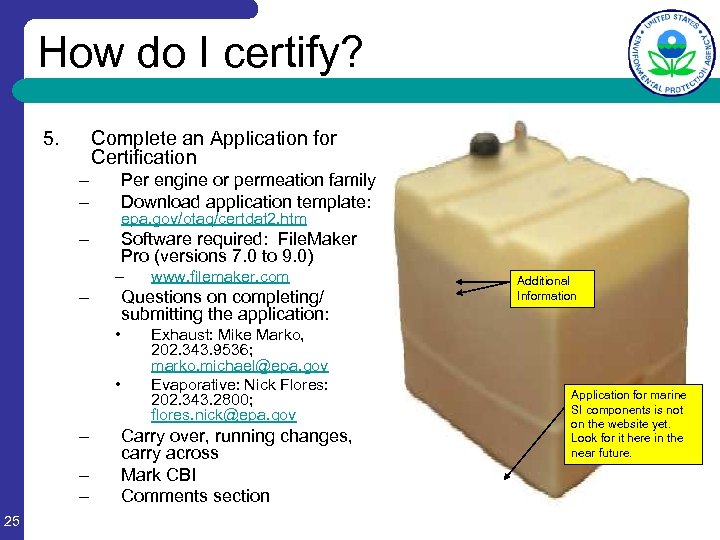
How do I certify? 5. Complete an Application for Certification – – Per engine or permeation family Download application template: – Software required: File. Maker Pro (versions 7. 0 to 9. 0) epa. gov/otaq/certdat 2. htm – – Questions on completing/ submitting the application: • • – – – 25 www. filemaker. com Exhaust: Mike Marko, 202. 343. 9536; marko. michael@epa. gov Evaporative: Nick Flores: 202. 343. 2800; flores. nick@epa. gov Carry over, running changes, carry across Mark CBI Comments section Additional Information Application for marine SI components is not on the website yet. Look for it here in the near future.
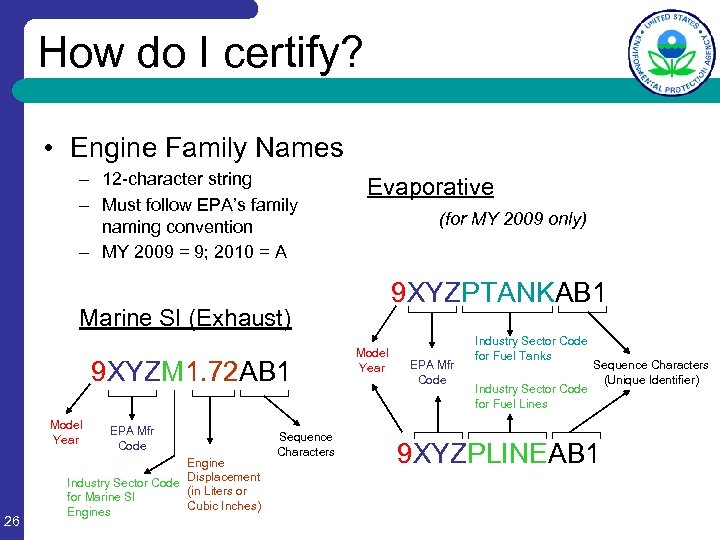
How do I certify? • Engine Family Names – 12 -character string – Must follow EPA’s family naming convention – MY 2009 = 9; 2010 = A Evaporative (for MY 2009 only) 9 XYZPTANKAB 1 Marine SI (Exhaust) 9 XYZM 1. 72 AB 1 Model Year 26 EPA Mfr Code Engine Industry Sector Code Displacement (in Liters or for Marine SI Cubic Inches) Engines Sequence Characters Model Year EPA Mfr Code Industry Sector Code for Fuel Tanks Industry Sector Code for Fuel Lines Sequence Characters (Unique Identifier) 9 XYZPLINEAB 1
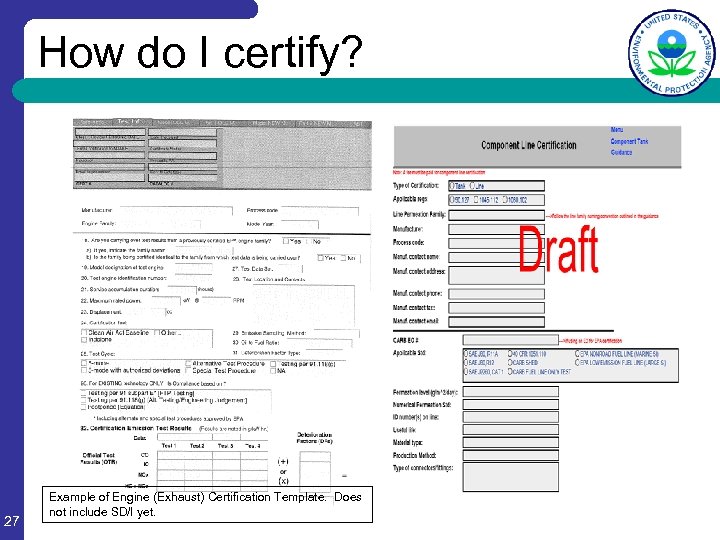
How do I certify? 27 Example of Engine (Exhaust) Certification Template. Does not include SD/I yet.
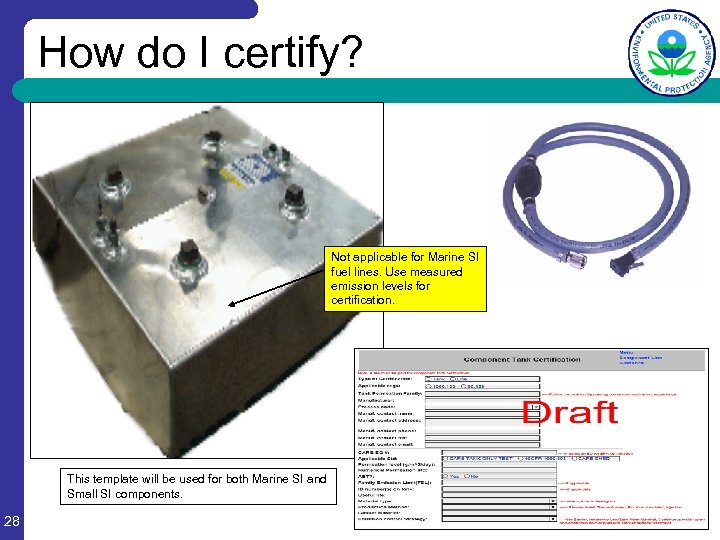
How do I certify? Not applicable for Marine SI fuel lines. Use measured emission levels for certification. This template will be used for both Marine SI and Small SI components. 28
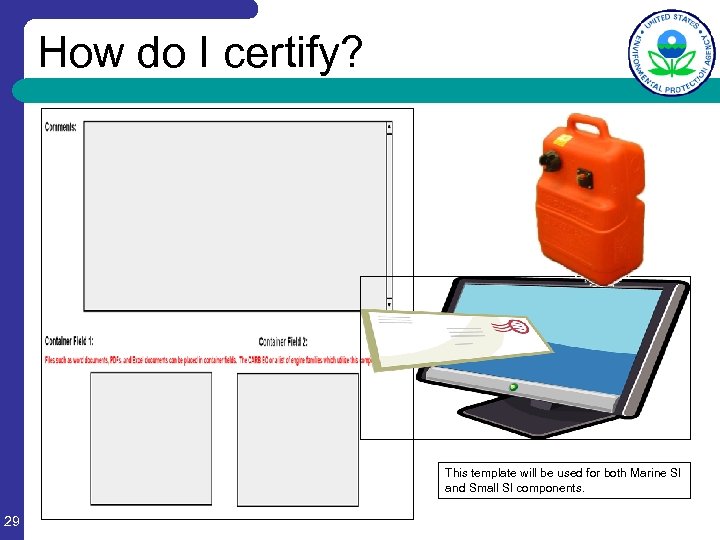
How do I certify? This template will be used for both Marine SI and Small SI components. 29
How do I certify? 5. Submit your application – Complete application = template + signed Statement of Compliance – To submit: • Email complete application to: Application-SI_Cert@epa. gov – Subject line: MSI-Company name-# of submissions & Process Code » Example: “MSI-Buy. My. Boat-3 new submissions” – One industry and process code per e-mail • May submit by mail – Allow at least 60 days from the time EPA receives a complete application for processing 30
EPA Review • Mike Marko or Nick Flores receive the applications and check them for completeness – Contact them if you have questions about the templates or need to know where your cert is • If you have a question about Marine SI regulations, contact: Nydia Yanira Reyes – reyes-morales. nydia@epa. gov (e-mail preferred) – 202. 343. 9264 • Send special requests to: – Ms. Khesha Jennings, Manager, Heavy-Duty and Nonroad Engines Group • jennings. khesha@epa. gov 31
EPA Review • Please keep in mind that once you certify, you must comply with all parts of the regulation(s) that apply to your product, such as: – – – – – 32 Labeling Requirements Average, Banking and Trading (AB&T) Production-line Testing (PLT) In-use Testing Warranties Defect Reports & Recalls Owner’s Manual requirements Selective Enforcement Audits Recordkeeping, etc
Other useful information Heavy-Duty and Nonroad Engines Group Regular Mail: US EPA 1200 Pennsylvania Avenue, NW Mail Code 6403 J Washington, DC 20460 Courier Address: US EPA 1310 L Street, NW, Mail Code 6405 J Washington, DC 20005 33 Fax: 202. 343. 2804 • • • To submit: – AB&T: abt_engine@epa. gov – PLT (OB/PWC): plt@epa. gov Cert data available @: www. epa. gov/otaq/certdata. htm Imports Line: 734. 214. 4100 – Email-imports@epa. gov Exemptions: David Hurlin – 734. 214. 4098 CBI: Robert Doyle, 202. 343. 9258 – Doyle. robert@epa. gov
Questions http: //www. epa. gov/otaq/marinesi. htm For general program questions: Mike Samulski, Samulski. Michael@epa. gov 34 For questions regarding certification: Nydia Reyes-Morales, Reyes-Morales. Nydia@epa. gov
Скачать презентацию Evaporative Emission Standards for Boats Mike Samulski Office
3da76e03a8b582bfd00440b4dc1556d0.ppt