


 Скачать презентацию Evaluation of the Pregnancy Risk Assessment Monitoring System
f0fdd2c9dc9c4bce3aeeffae68410fbe.ppt
- Количество слайдов: 18
 Evaluation of the Pregnancy Risk Assessment Monitoring System (PRAMS) as a Surveillance System for Pregnancy Intention By: Olivia Sappenfield, MPH Office of Data Translation Bureau of Family Health and Nutrition Massachusetts Department of Public Health
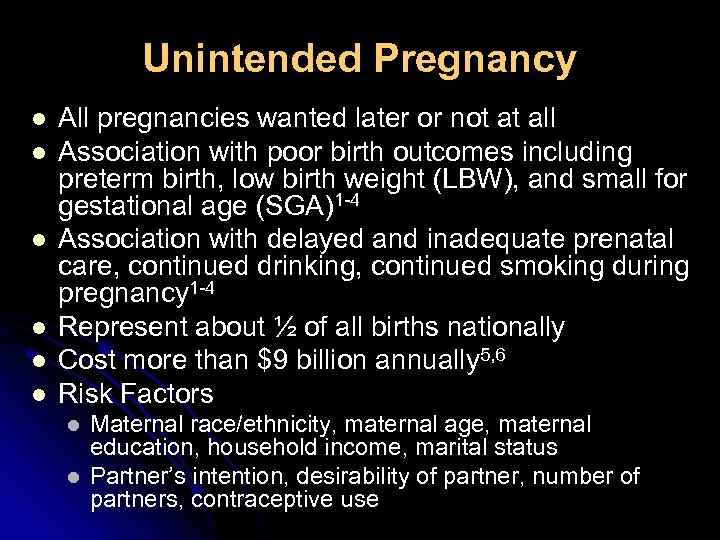 Unintended Pregnancy l l l All pregnancies wanted later or not at all Association with poor birth outcomes including preterm birth, low birth weight (LBW), and small for gestational age (SGA)1 -4 Association with delayed and inadequate prenatal care, continued drinking, continued smoking during pregnancy 1 -4 Represent about ½ of all births nationally Cost more than $9 billion annually 5, 6 Risk Factors l l Maternal race/ethnicity, maternal age, maternal education, household income, marital status Partner’s intention, desirability of partner, number of partners, contraceptive use
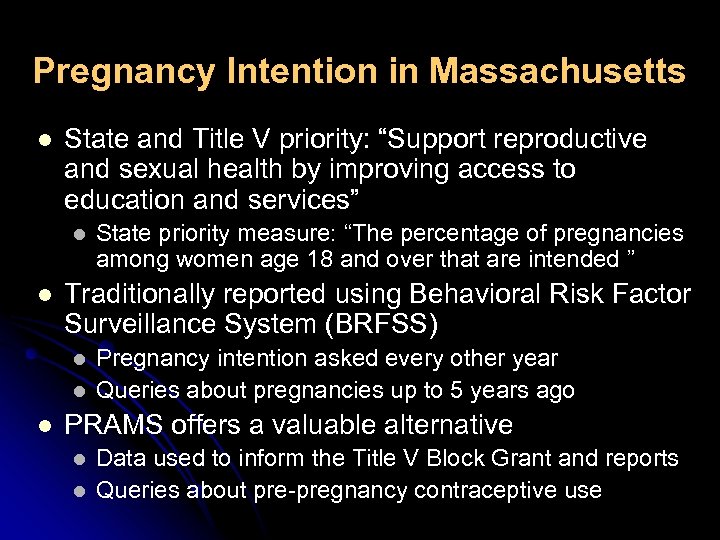 Pregnancy Intention in Massachusetts l State and Title V priority: “Support reproductive and sexual health by improving access to education and services” l l Traditionally reported using Behavioral Risk Factor Surveillance System (BRFSS) l l l State priority measure: “The percentage of pregnancies among women age 18 and over that are intended ” Pregnancy intention asked every other year Queries about pregnancies up to 5 years ago PRAMS offers a valuable alternative l l Data used to inform the Title V Block Grant and reports Queries about pre-pregnancy contraceptive use
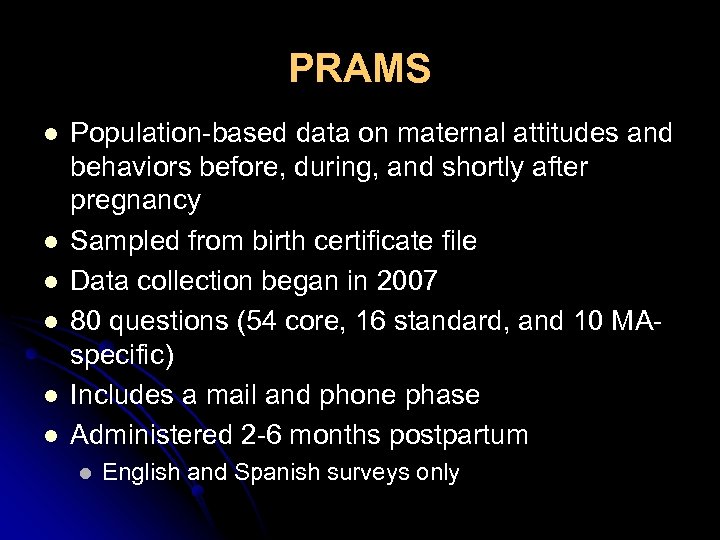 PRAMS l l l Population-based data on maternal attitudes and behaviors before, during, and shortly after pregnancy Sampled from birth certificate file Data collection began in 2007 80 questions (54 core, 16 standard, and 10 MAspecific) Includes a mail and phone phase Administered 2 -6 months postpartum l English and Spanish surveys only
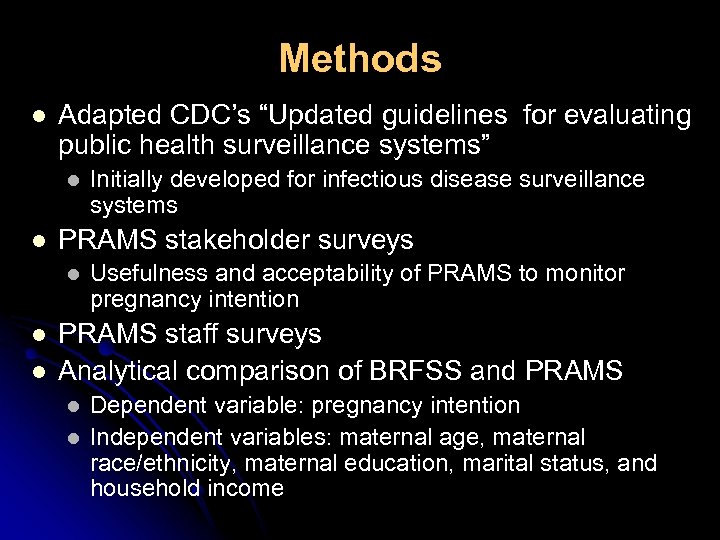 Methods l Adapted CDC’s “Updated guidelines for evaluating public health surveillance systems” l l PRAMS stakeholder surveys l l l Initially developed for infectious disease surveillance systems Usefulness and acceptability of PRAMS to monitor pregnancy intention PRAMS staff surveys Analytical comparison of BRFSS and PRAMS l l Dependent variable: pregnancy intention Independent variables: maternal age, maternal race/ethnicity, maternal education, marital status, and household income
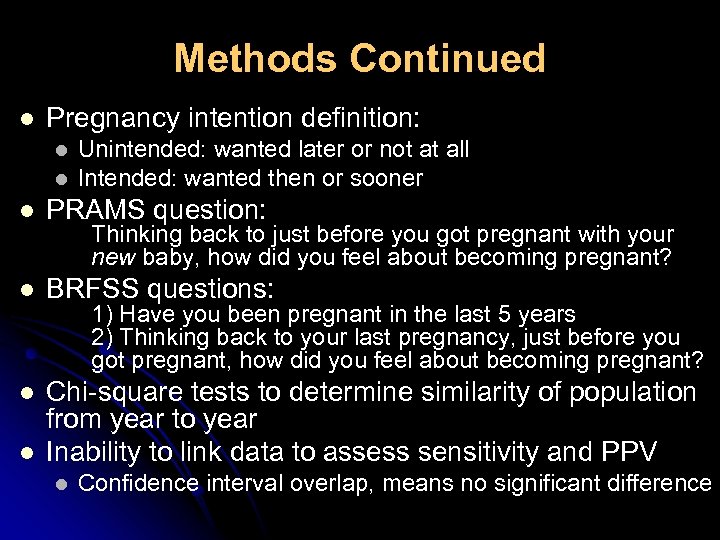 Methods Continued l Pregnancy intention definition: l l Unintended: wanted later or not at all Intended: wanted then or sooner l PRAMS question: l BRFSS questions: l Chi-square tests to determine similarity of population from year to year Inability to link data to assess sensitivity and PPV l Thinking back to just before you got pregnant with your new baby, how did you feel about becoming pregnant? 1) Have you been pregnant in the last 5 years 2) Thinking back to your last pregnancy, just before you got pregnant, how did you feel about becoming pregnant? l Confidence interval overlap, means no significant difference
 Results
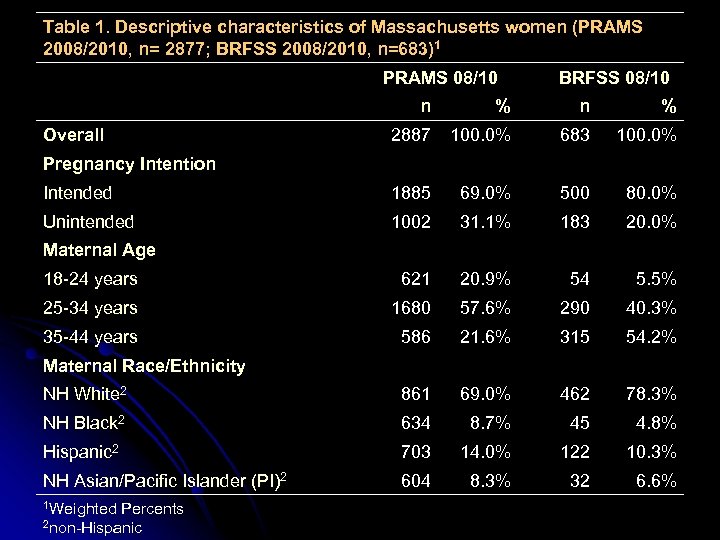 Table 1. Descriptive characteristics of Massachusetts women (PRAMS 2008/2010, n= 2877; BRFSS 2008/2010, n=683)1 PRAMS 08/10 n % 2887 Intended Unintended BRFSS 08/10 n % 100. 0% 683 100. 0% 1885 69. 0% 500 80. 0% 1002 31. 1% 183 20. 0% 18 -24 years 621 20. 9% 54 5. 5% 25 -34 years 1680 57. 6% 290 40. 3% 35 -44 years 586 21. 6% 315 54. 2% NH White 2 861 69. 0% 462 78. 3% NH Black 2 634 8. 7% 45 4. 8% Hispanic 2 703 14. 0% 122 10. 3% NH Asian/Pacific Islander (PI)2 604 8. 3% 32 6. 6% Overall Pregnancy Intention Maternal Age Maternal Race/Ethnicity 1 Weighted Percents 2 non-Hispanic
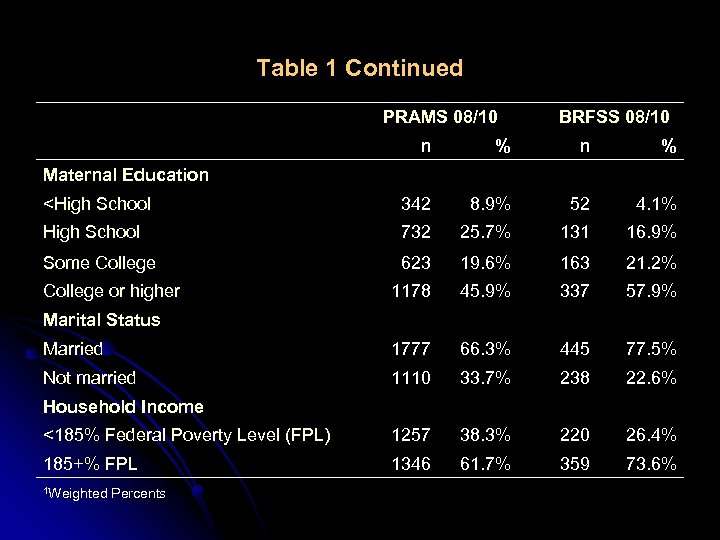 Table 1 Continued PRAMS 08/10 n %
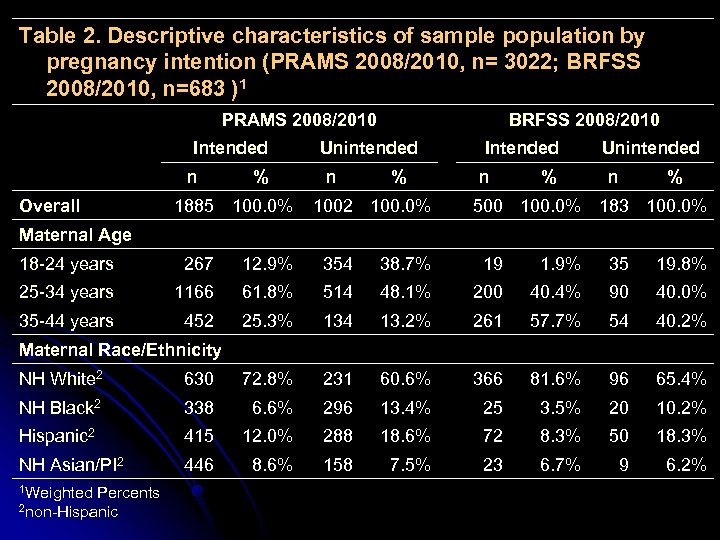 Table 2. Descriptive characteristics of sample population by pregnancy intention (PRAMS 2008/2010, n= 3022; BRFSS 2008/2010, n=683 )1 PRAMS 2008/2010 Intended Overall n % 1885 100. 0% Unintended n % 1002 100. 0% BRFSS 2008/2010 Intended n % Unintended n % 500 100. 0% 183 100. 0% Maternal Age 18 -24 years 267 12. 9% 354 38. 7% 19 1. 9% 35 19. 8% 25 -34 years 1166 61. 8% 514 48. 1% 200 40. 4% 90 40. 0% 35 -44 years 452 25. 3% 134 13. 2% 261 57. 7% 54 40. 2% Maternal Race/Ethnicity NH White 2 630 72. 8% 231 60. 6% 366 81. 6% 96 65. 4% NH Black 2 338 6. 6% 296 13. 4% 25 3. 5% 20 10. 2% Hispanic 2 415 12. 0% 288 18. 6% 72 8. 3% 50 18. 3% NH Asian/PI 2 446 8. 6% 158 7. 5% 23 6. 7% 9 6. 2% 1 Weighted Percents 2 non-Hispanic
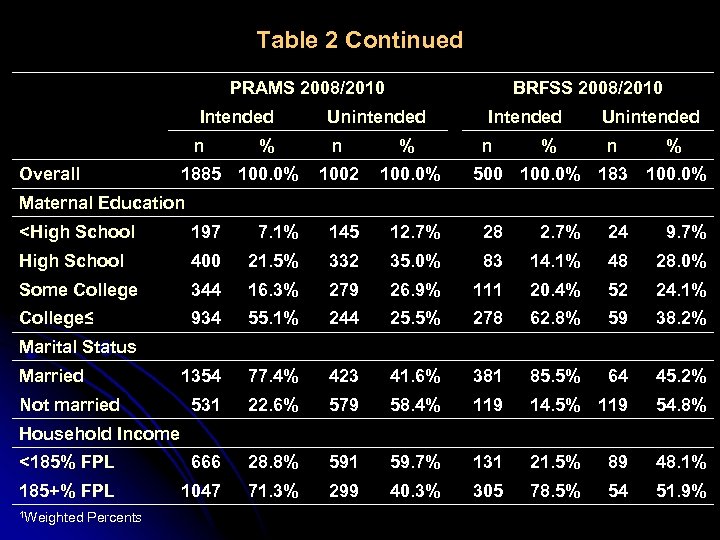 Table 2 Continued PRAMS 2008/2010 Intended n Overall % 1885 100. 0% Unintended n % 1002 100. 0% BRFSS 2008/2010 Intended n % Unintended n 500 100. 0% 183 % 100. 0% Maternal Education
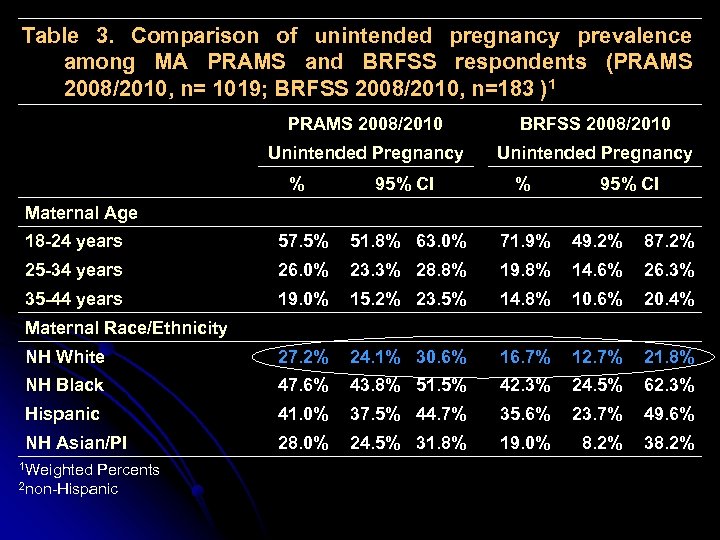 Table 3. Comparison of unintended pregnancy prevalence among MA PRAMS and BRFSS respondents (PRAMS 2008/2010, n= 1019; BRFSS 2008/2010, n=183 )1 PRAMS 2008/2010 Unintended Pregnancy BRFSS 2008/2010 Unintended Pregnancy % 95% CI Maternal Age 18 -24 years 57. 5% 51. 8% 63. 0% 71. 9% 49. 2% 87. 2% 25 -34 years 26. 0% 23. 3% 28. 8% 19. 8% 14. 6% 26. 3% 35 -44 years 19. 0% 15. 2% 23. 5% 14. 8% 10. 6% 20. 4% NH White 27. 2% 24. 1% 30. 6% 16. 7% 12. 7% 21. 8% NH Black 47. 6% 43. 8% 51. 5% 42. 3% 24. 5% 62. 3% Hispanic 41. 0% 37. 5% 44. 7% 35. 6% 23. 7% 49. 6% NH Asian/PI 28. 0% 24. 5% 31. 8% 19. 0% 8. 2% 38. 2% Maternal Race/Ethnicity 1 Weighted Percents 2 non-Hispanic
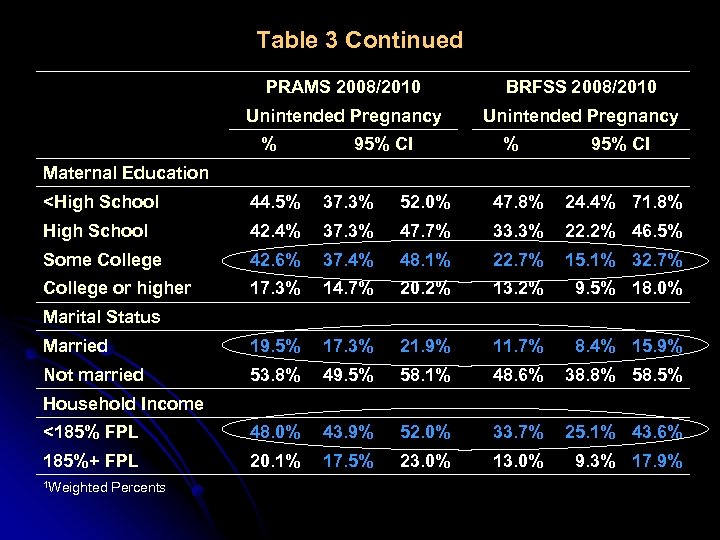 Table 3 Continued PRAMS 2008/2010 Unintended Pregnancy BRFSS 2008/2010 Unintended Pregnancy % 95% CI Maternal Education
 Other Attributes l Flexibility l l l Timeliness l l Response rate consistently above 65% Question response rate between 97. 5% and 95% Representativeness l l l 2 -6 months postpartum vs. up to 5 years postpartum Women surveyed postpartum – recall bias Data Quality l l PRAMS conducted annually States able to include state-specific questions CDC changes to core questions (Phases) Can adapt to add questions on emerging issues (e. g. H 1 N 1) Population-based, oversamples by race/ethnicity Deliveries ending in live birth Other Attributes: Simplicity, Acceptability, and Stability
 Conclusion: PRAMS is an Acceptable System for Monitoring Pregnancy Intention l l l Considered an acceptable data source by researchers and by its study population Timely surveillance system for state-level data on postpartum women Prevalence of unintended pregnancy overlapped for all indicators except <185%FPL and certain subgroups (married, some college education, and NHW) l l l Concern because poorer women are more at risk of unintended pregnancy Similarly represented less educated women and minority women, who are also more at risk Can provide estimates for the magnitude of morbidity associated with pregnancy intention l l Inform reproductive health programs Used in home-visiting programs to assist in developing reproductive life plans
 Strengths and Limitations of PRAMS l Retrospectively collects data-recall bias Collects data soon after delivery l Capable of detecting trends that signal changes in pregnancy intention l l Currently no “partner questions” l l Ability to change PRAMS questions every year Does not collect data on fetal death, spontaneous abortion, or induced abortion Live births used for family planning programs l Live births used for population contraceptive need l
 References 1. 2. 3. 4. 5. 6. D'Angelo D. V. , Gilbert B. C. , Rochat R. W. , Santelli J. S. , Herold J. M. Differences between mistimed and unwanted pregnancies among women who have live births. Perspectives on Sexual and Reproductive Health. 2004; 36(5): 192 -7. Kost K. , Landry D. J. , Darroch J. E. The effects of pregnancy planning status on birth outcomes and infant care. Family Planning Perspectives. 1998; 30(5): 223 -30. 4. Sable M. R. , Spencer J. C. , Stockbauer J. W. , et al. Pregnancy wantedness and adverse pregnancy outcomes: differences by race and medicaid status. Family Planning Perspectives. 1997; 29: 76 -81. Shah P. S. , Balkhair T. , Ohlsson A. , et al. Intention to become pregnant and low birth weight and preterm birth: a systematic review. Maternal and Child Health Journal. 2011; 15: 205 -16. Finer L. B. , Kost K. Unintended pregnancy rates at the state level. Perspectives on Sexual and Reproductive Health. 2011: 43(2): 78 -87. Monea E. , Thomas A. Unintended pregnancy and taxpayer spending. Perspectives on Sexual and Reproductive Health. 43(2): 88 -93.
 Questions & Comments Acknowledgements: l l l Susan Manning, MD, MPH Emily Lu, MPH Hafsatou Diop, MD, MPH MA PRAMS Advisory Committee MA PRAMS Staff Feel free to contact me at: Olivia Sappenfield olivia. sappenfield@state. ma. us