


 Скачать презентацию Evaluation of Private Property I I Sources for Sanitary
0818cf21cf1c9a3ccb8fca5ece468b82.ppt
- Количество слайдов: 34
 Evaluation of Private Property I/I Sources for Sanitary Sewer Evaluation Study City of Grand Rapids – E. Leonard Heights Area Presenter: Jay Zawacki, CDM Michigan Inc. MI AWWA / MWEA Annual Conference August 13, 2010
 Overview n Project Background n SSES Objectives n Private Property Evaluation Strategies n Private Property I/I Findings n SSES Alternatives Considered and Selected
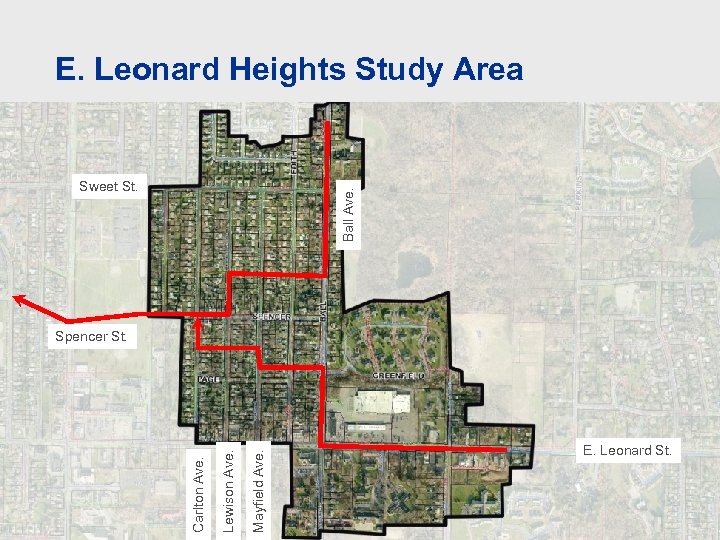 E. Leonard Heights Study Area Ball Ave. Sweet St. Mayfield Ave. Lewison Ave. Carlton Ave. Spencer St. E. Leonard St.
 Project Background n History of chronic basement backups in the study area n Grand Rapids recognized and began program to address these issues: – Inspections of homes – Voluntary installation of check valves and sump pumps n Comprehensive “system-wide” evaluation being performed
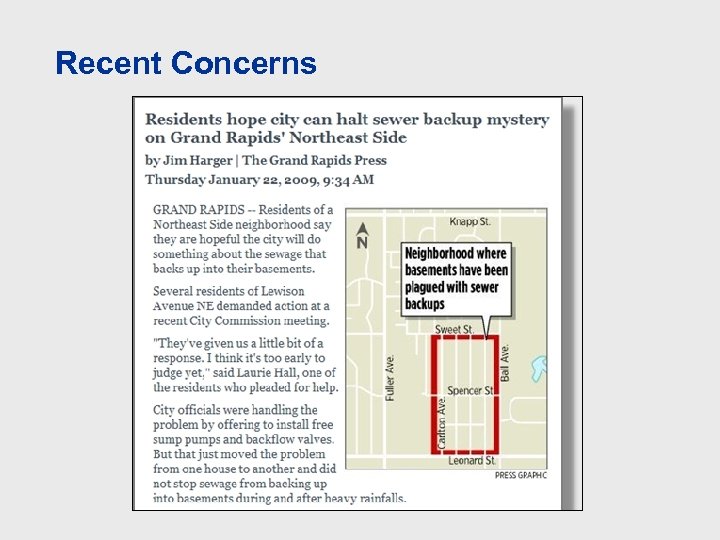 Recent Concerns
 Project Objectives n Engage the public – Public meetings – Citizen committee n Quantify the sources of Inflow/Infiltration (I/I) – Homeowner survey and inspections – Sewer flow and sump pump monitoring – Inspect the sewers and manholes n Analyze the problem and develop alternatives n Select the best solution
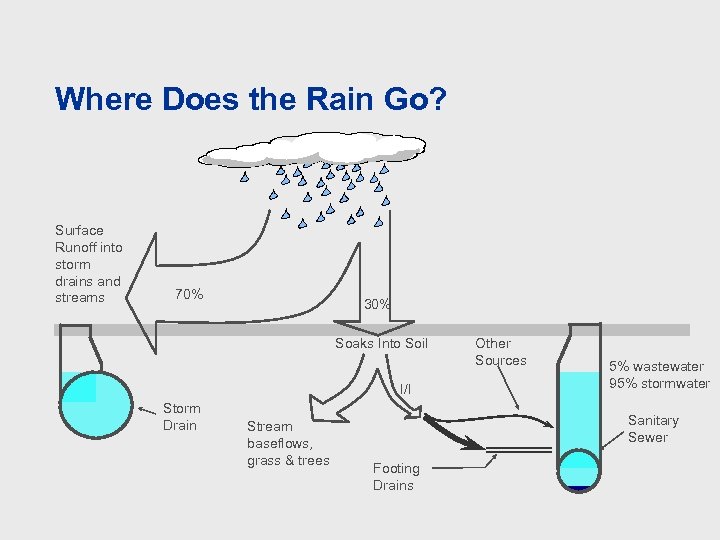 Where Does the Rain Go? Surface Runoff into storm drains and streams 70% 30% Soaks Into Soil I/I Storm Drain Stream baseflows, grass & trees Other Sources 5% wastewater 95% stormwater Sanitary Sewer Footing Drains
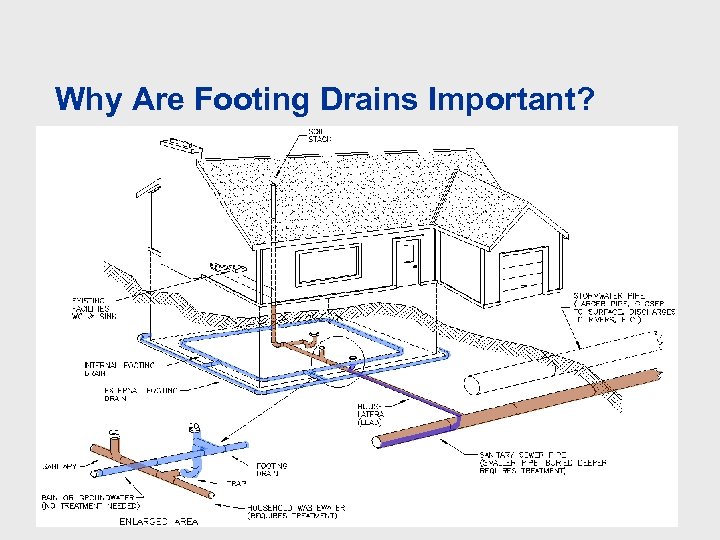 Why Are Footing Drains Important?
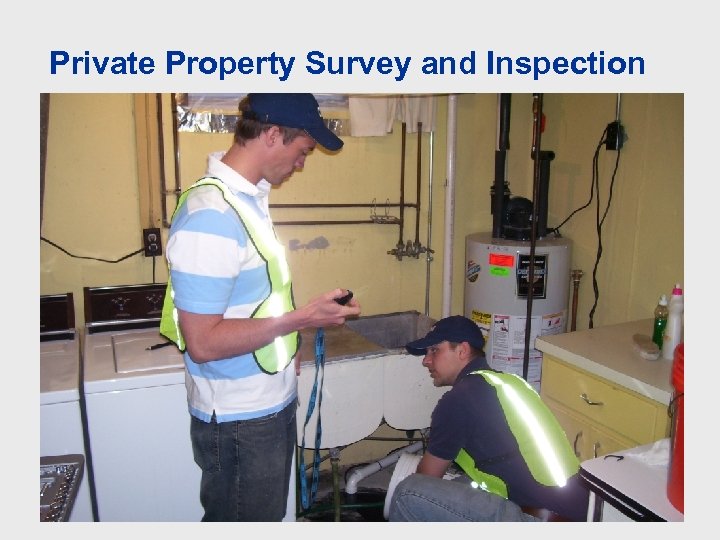
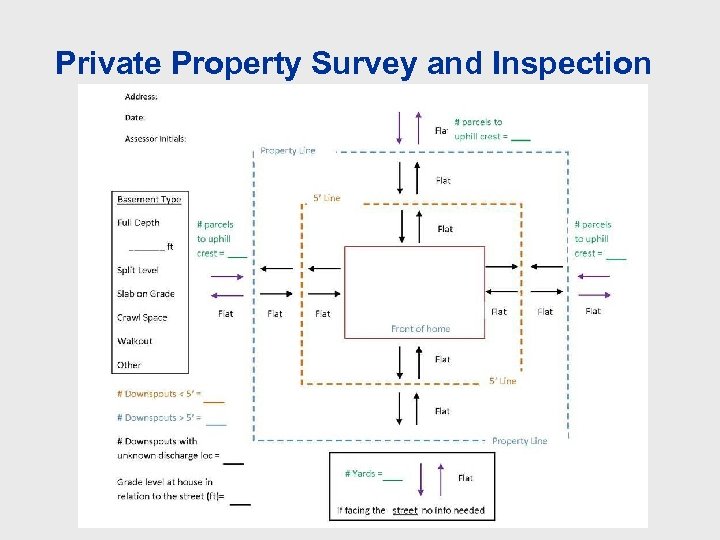
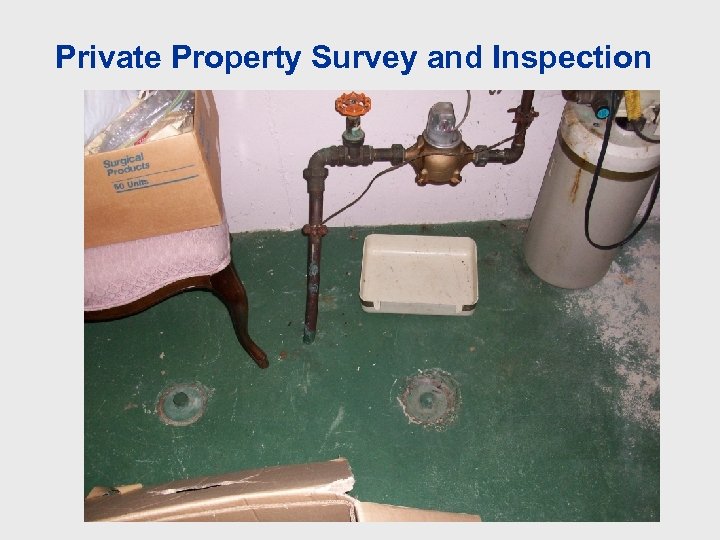
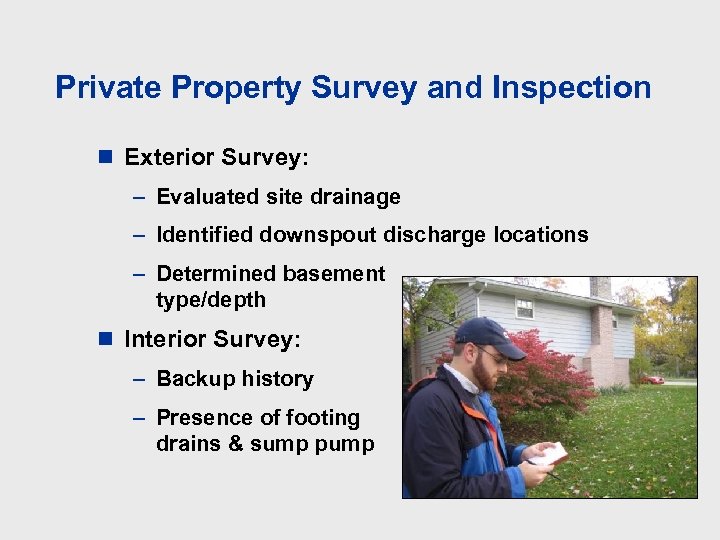 Private Property Survey and Inspection n Exterior Survey: – Evaluated site drainage – Identified downspout discharge locations – Determined basement type/depth n Interior Survey: – Backup history – Presence of footing drains & sump pump
 Private Property Survey and Inspection
 Private Property Survey and Inspection
 Private Property Survey and Inspection
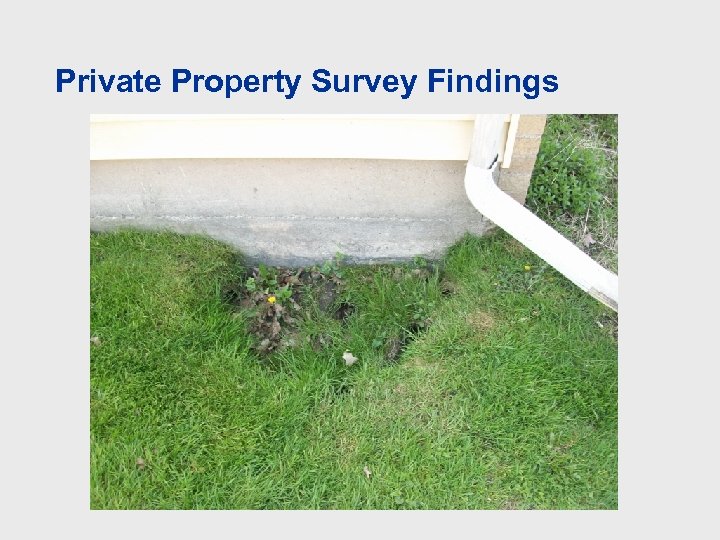
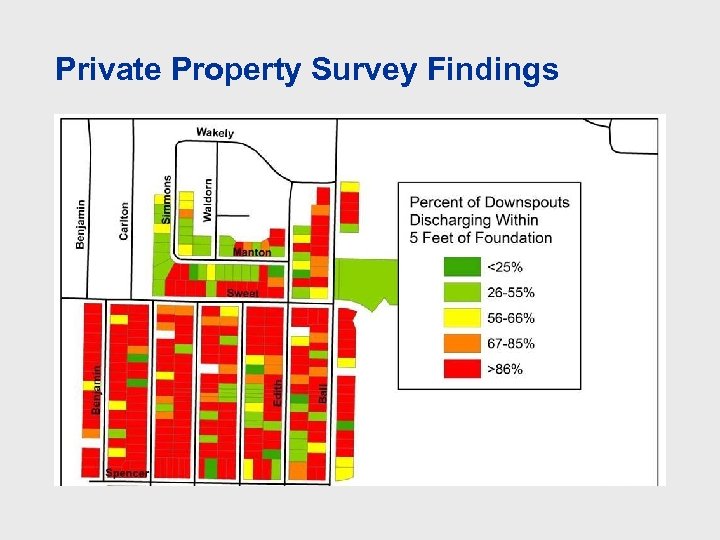
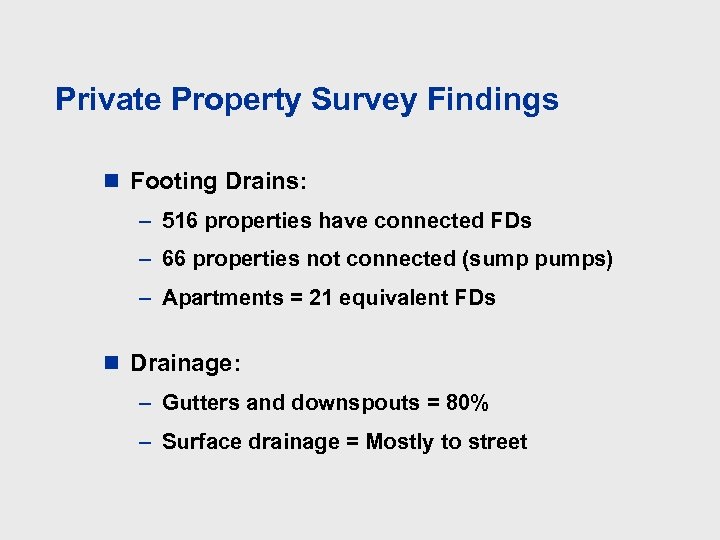 Private Property Survey Findings n Footing Drains: – 516 properties have connected FDs – 66 properties not connected (sump pumps) – Apartments = 21 equivalent FDs n Drainage: – Gutters and downspouts = 80% – Surface drainage = Mostly to street
 Private Property Survey Findings
 Private Property Survey Findings
 Sewer and Manhole Survey n Evaluated I/I conditions at each sewer manhole n Reviewed I/I conditions of sewer pipes using video inspection and PACP coding n Determined material and condition of selected house lateral connections
 Sewer and Manhole Survey Findings n Sewers in good shape n Some structural and maintenance issues found, provided to city for correction n Some evidence of limited infiltration at pipe joints n House lead inspections identified no substantial I/I sources n Street flooding can cause significant flow into manhole covers
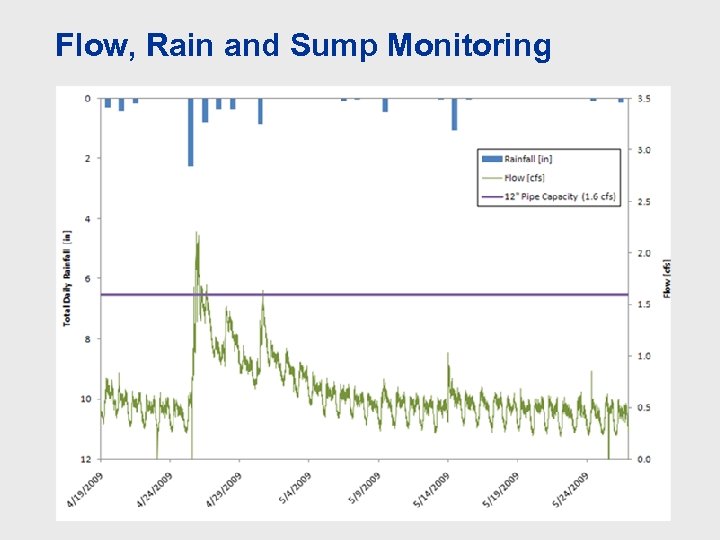
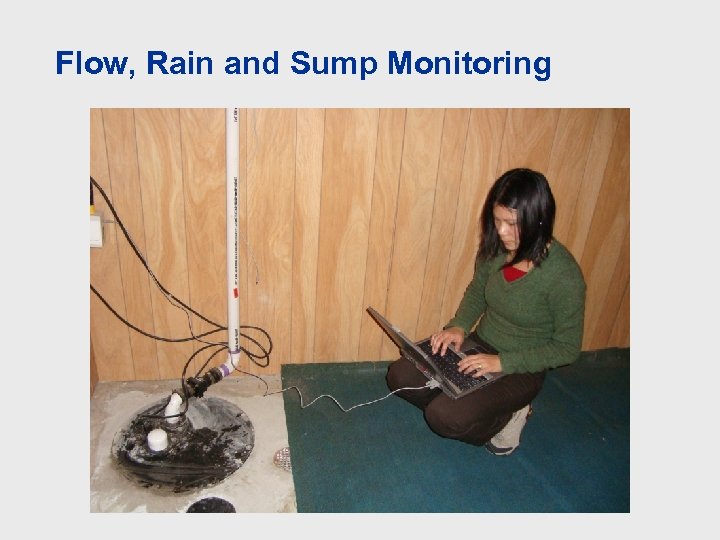
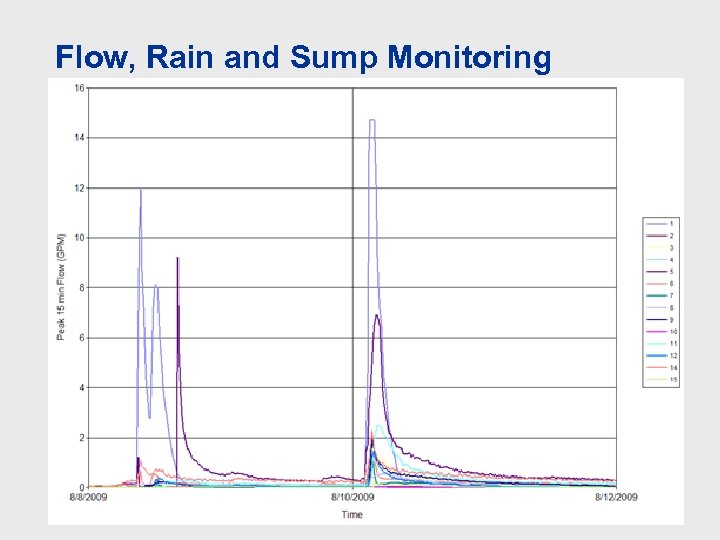
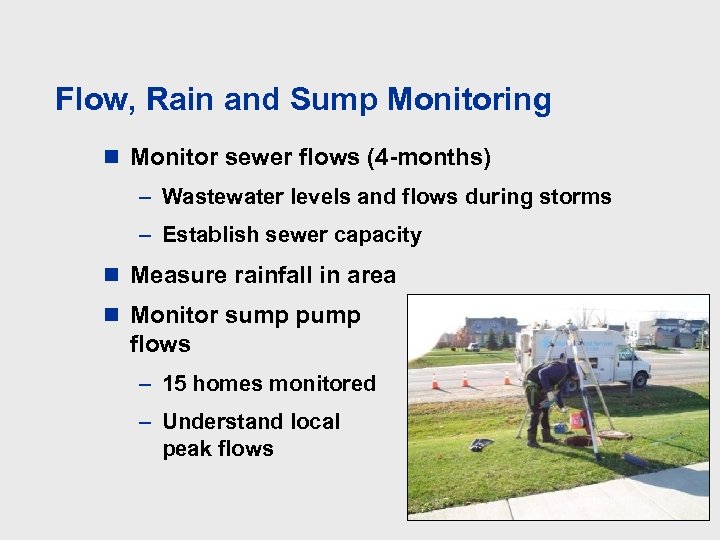 Flow, Rain and Sump Monitoring n Monitor sewer flows (4 -months) – Wastewater levels and flows during storms – Establish sewer capacity n Measure rainfall in area n Monitor sump pump flows – 15 homes monitored – Understand local peak flows
 Flow, Rain and Sump Monitoring
 Flow, Rain and Sump Monitoring
 Flow, Rain and Sump Monitoring
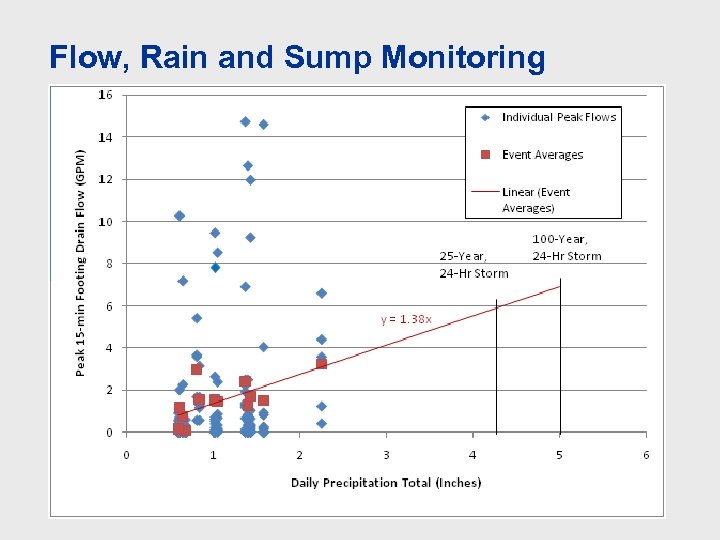 Flow, Rain and Sump Monitoring
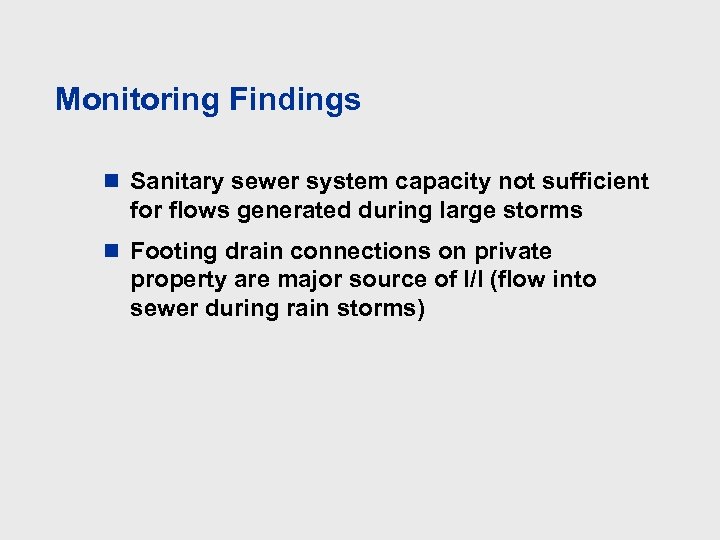 Monitoring Findings n Sanitary sewer system capacity not sufficient for flows generated during large storms n Footing drain connections on private property are major source of I/I (flow into sewer during rain storms)
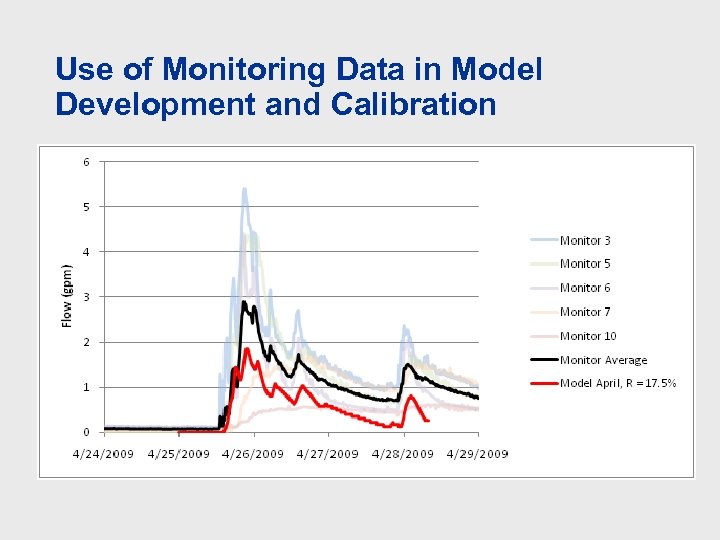 Use of Monitoring Data in Model Development and Calibration
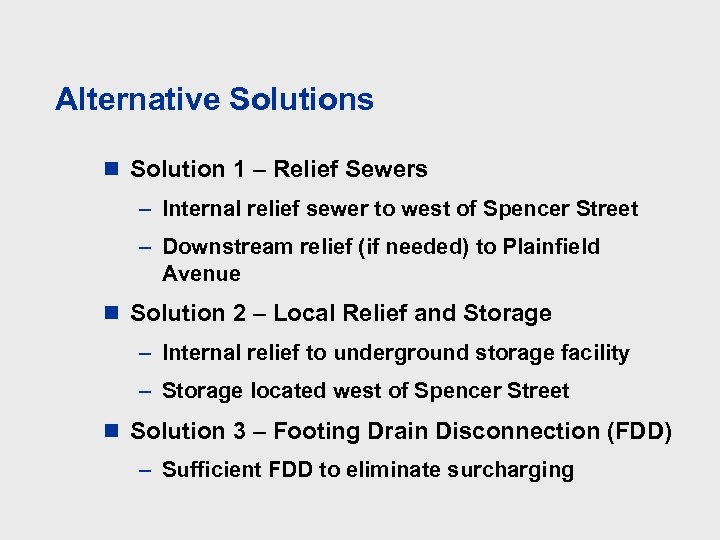 Alternative Solutions n Solution 1 – Relief Sewers – Internal relief sewer to west of Spencer Street – Downstream relief (if needed) to Plainfield Avenue n Solution 2 – Local Relief and Storage – Internal relief to underground storage facility – Storage located west of Spencer Street n Solution 3 – Footing Drain Disconnection (FDD) – Sufficient FDD to eliminate surcharging
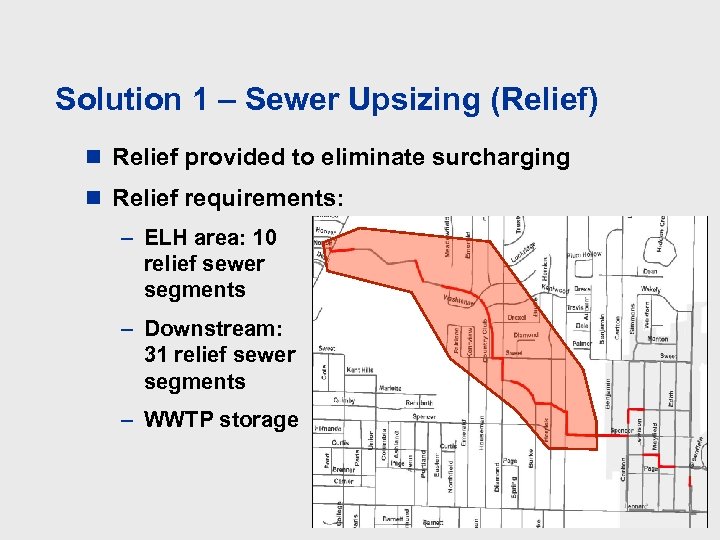 Solution 1 – Sewer Upsizing (Relief) n Relief provided to eliminate surcharging n Relief requirements: – ELH area: 10 relief sewer segments – Downstream: 31 relief sewer segments – WWTP storage
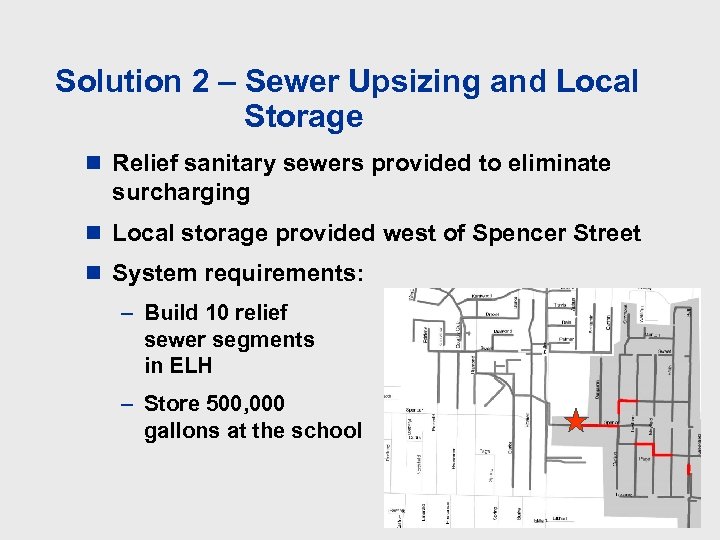 Solution 2 – Sewer Upsizing and Local Storage n Relief sanitary sewers provided to eliminate surcharging n Local storage provided west of Spencer Street n System requirements: – Build 10 relief sewer segments in ELH – Store 500, 000 gallons at the school
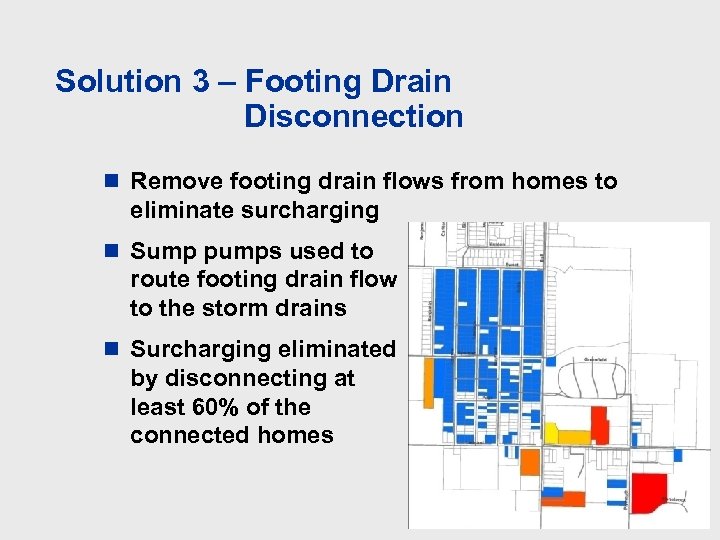 Solution 3 – Footing Drain Disconnection n Remove footing drain flows from homes to eliminate surcharging n Sump pumps used to route footing drain flow to the storm drains n Surcharging eliminated by disconnecting at least 60% of the connected homes
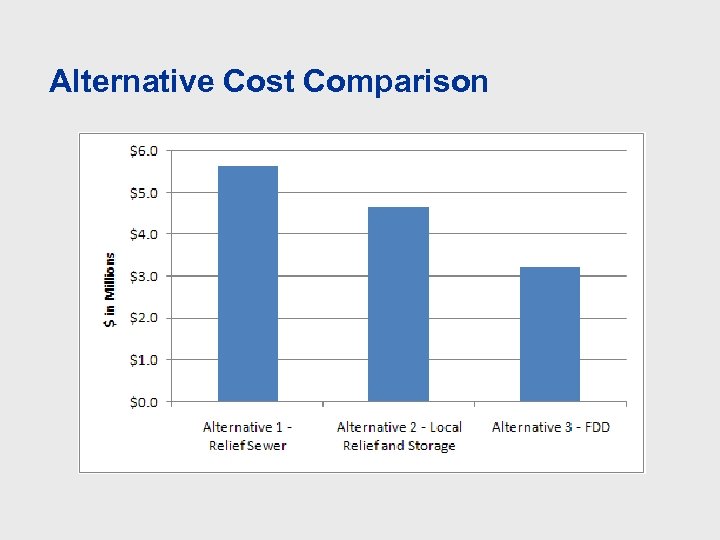 Alternative Cost Comparison
 Selection Matrix used to Quantify Preferences of Citizens and City Staff n Quality of Life n Level of protection for private property n Reliability under large storms n Sustainability of solution n Costs (Construction, O&M, homeowner costs) n Construction n Time until solution is effective n Impacts on streets and public areas n Need to work on private property
 Recommended Solution – FDD n Perform minimum of 310 FDDs in E. Leonard Heights neighborhood n Consider backup sump pump in each home n Include backup check valve for homes previously flooded or at risk for flooding n Provide manhole liners for street flooding areas n All sump pumps will discharge to storm system to eliminate freezing problems in winter n Program is mandatory
 Benefits – FDD n Addresses root cause of excessive I/I (Green solution) n Can be implemented more quickly than other options n Lower costs for treatment and no additional storage required at WWTP n Least impact on rate payers n Brings older homes into compliance with existing plumbing codes
 Concerns – FDD n Water in basement during power outage: – Evaluating legal implications of providing backup sump pumps for all FDD homes n Sump pump replacement cost: – Pumps typically last 5 -10 years before replacement needed n Increased street flooding: – Flows from sump pumps could increase street flooding levels by an average of 1/8” – Could upgrade upstream stormwater storage to address additional sump pump flow
 Questions? Jay Zawacki – CDM Michigan Inc. zawackijr@cdm. com (734) 205 -2701