


 Скачать презентацию Evaluation of Language Access Policies Procedures for
271486ee67f518c03a06b342b66fdf2c.ppt
- Количество слайдов: 49
 Evaluation of Language Access Policies & Procedures for a National Nonprofit Organization Martha E. Burton Santibáñez Michelle A. Scott, MA, RN International Medical Interpreters Association (IMIA) Conference October 11, 2008
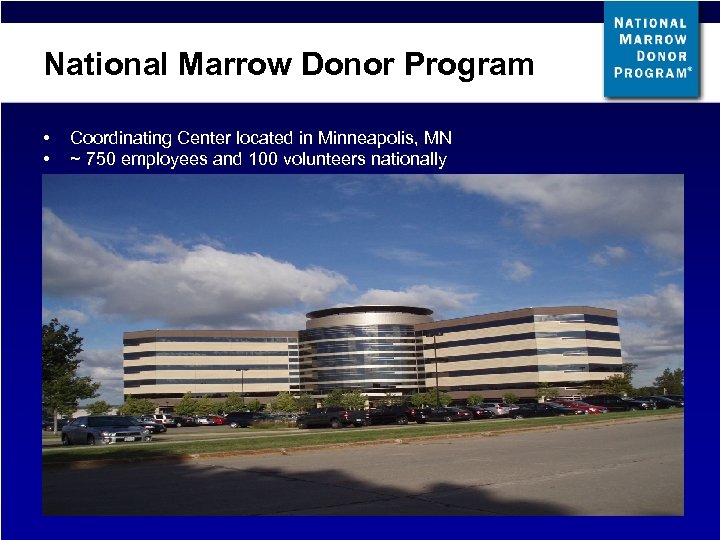 National Marrow Donor Program • • Coordinating Center located in Minneapolis, MN ~ 750 employees and 100 volunteers nationally
 Meaningful Access? • How does the National Marrow Donor Program® (NMDP) ensure meaningful access to cell therapies for all of the people we serve or encounter? – Evaluate the process for development of accessible materials – Prioritize which documents should be translated/made accessible first – Assess which strategies would be most effective for our audiences – Implement recommendations
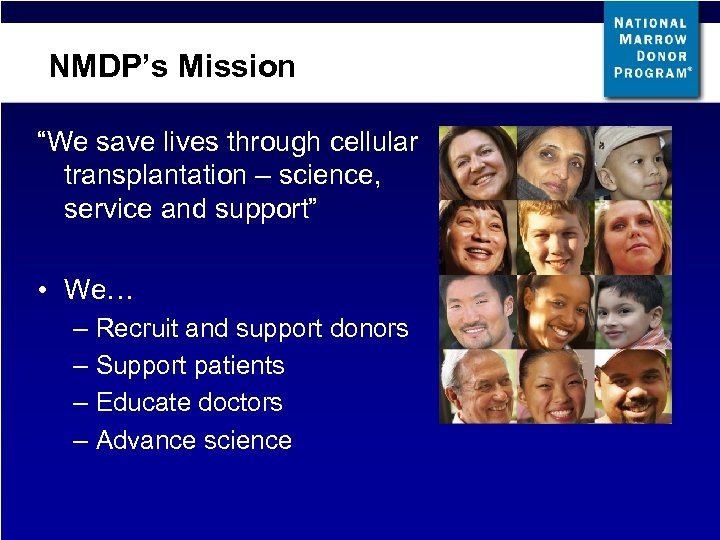 NMDP’s Mission “We save lives through cellular transplantation – science, service and support” • We… – Recruit and support donors – Support patients – Educate doctors – Advance science
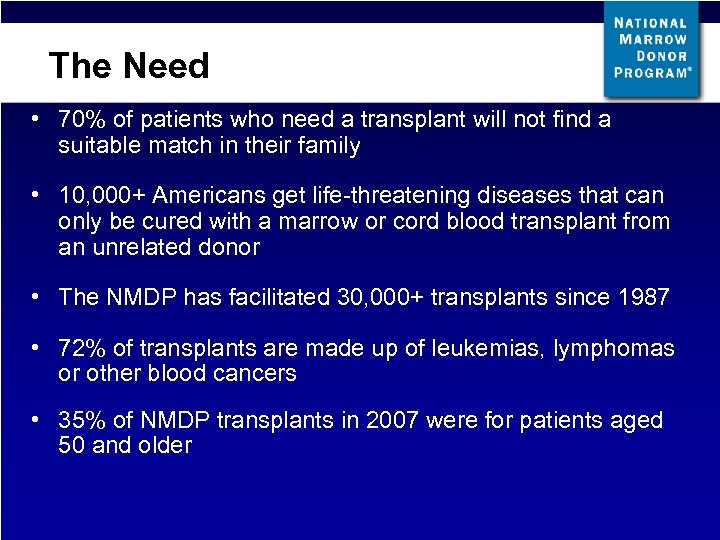 The Need • 70% of patients who need a transplant will not find a suitable match in their family • 10, 000+ Americans get life-threatening diseases that can only be cured with a marrow or cord blood transplant from an unrelated donor • The NMDP has facilitated 30, 000+ transplants since 1987 • 72% of transplants are made up of leukemias, lymphomas or other blood cancers • 35% of NMDP transplants in 2007 were for patients aged 50 and older
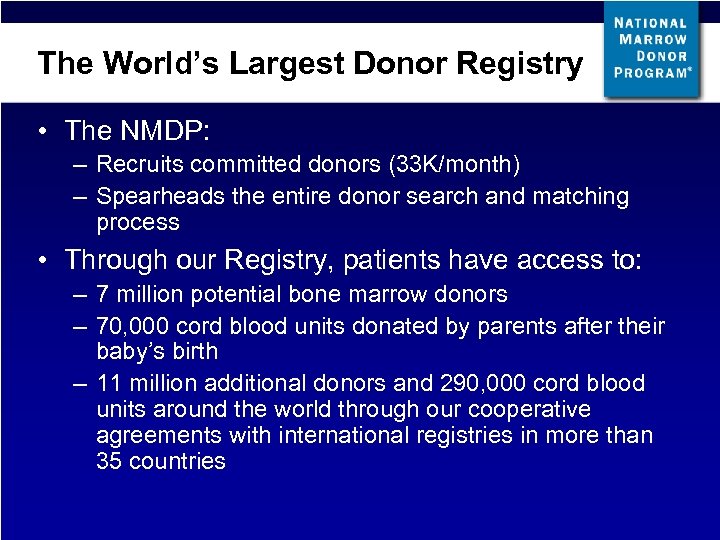 The World’s Largest Donor Registry • The NMDP: – Recruits committed donors (33 K/month) – Spearheads the entire donor search and matching process • Through our Registry, patients have access to: – 7 million potential bone marrow donors – 70, 000 cord blood units donated by parents after their baby’s birth – 11 million additional donors and 290, 000 cord blood units around the world through our cooperative agreements with international registries in more than 35 countries
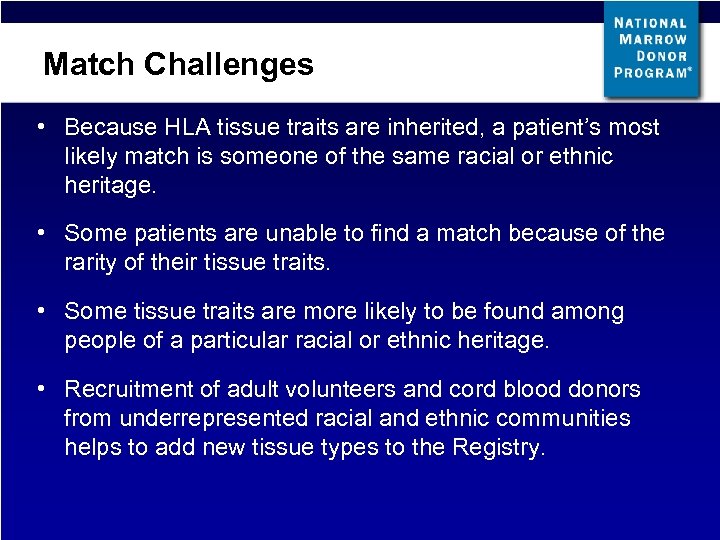 Match Challenges • Because HLA tissue traits are inherited, a patient’s most likely match is someone of the same racial or ethnic heritage. • Some patients are unable to find a match because of the rarity of their tissue traits. • Some tissue traits are more likely to be found among people of a particular racial or ethnic heritage. • Recruitment of adult volunteers and cord blood donors from underrepresented racial and ethnic communities helps to add new tissue types to the Registry.
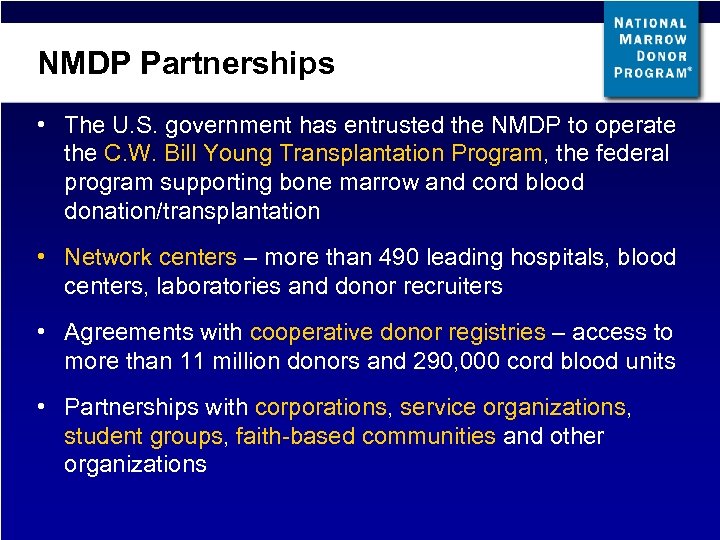 NMDP Partnerships • The U. S. government has entrusted the NMDP to operate the C. W. Bill Young Transplantation Program, the federal program supporting bone marrow and cord blood donation/transplantation • Network centers – more than 490 leading hospitals, blood centers, laboratories and donor recruiters • Agreements with cooperative donor registries – access to more than 11 million donors and 290, 000 cord blood units • Partnerships with corporations, service organizations, student groups, faith-based communities and other organizations
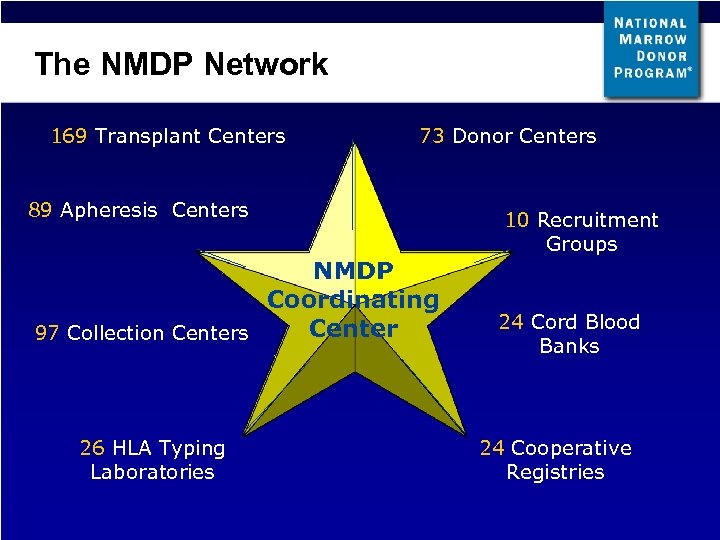 The NMDP Network 169 Transplant Centers 73 Donor Centers 89 Apheresis Centers NMDP Coordinating Center 97 Collection Centers 26 HLA Typing Laboratories 10 Recruitment Groups 24 Cord Blood Banks 24 Cooperative Registries
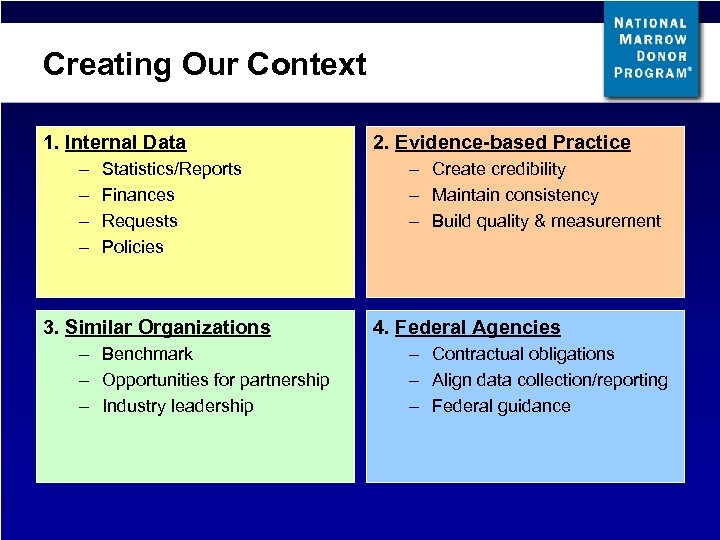 Creating Our Context 1. Internal Data – – Statistics/Reports Finances Requests Policies 3. Similar Organizations – Benchmark – Opportunities for partnership – Industry leadership 2. Evidence-based Practice – Create credibility – Maintain consistency – Build quality & measurement 4. Federal Agencies – Contractual obligations – Align data collection/reporting – Federal guidance
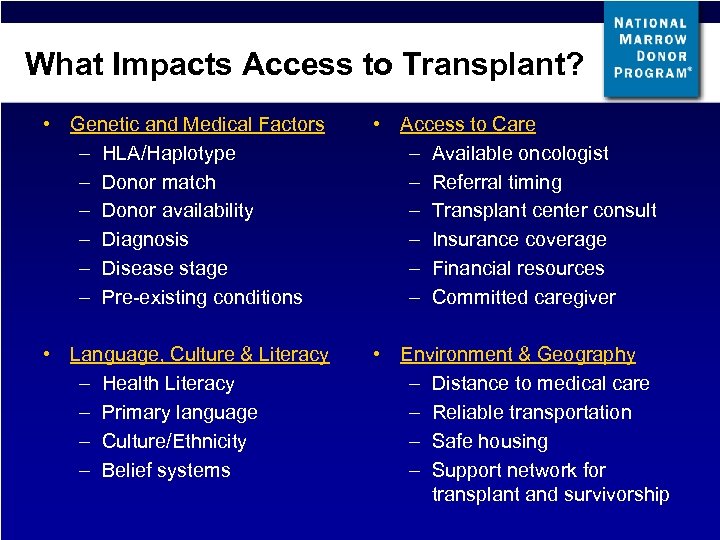 What Impacts Access to Transplant? • Genetic and Medical Factors – HLA/Haplotype – Donor match – Donor availability – Diagnosis – Disease stage – Pre-existing conditions • Access to Care – Available oncologist – Referral timing – Transplant center consult – Insurance coverage – Financial resources – Committed caregiver • Language, Culture & Literacy – Health Literacy – Primary language – Culture/Ethnicity – Belief systems • Environment & Geography – Distance to medical care – Reliable transportation – Safe housing – Support network for transplant and survivorship
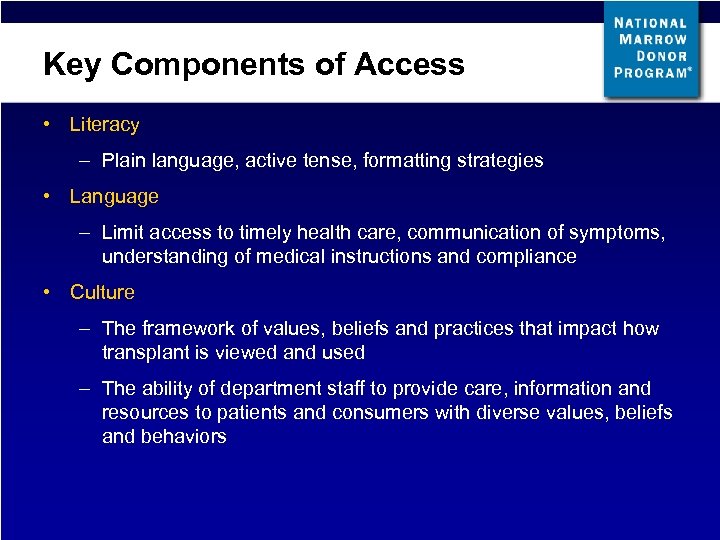 Key Components of Access • Literacy – Plain language, active tense, formatting strategies • Language – Limit access to timely health care, communication of symptoms, understanding of medical instructions and compliance • Culture – The framework of values, beliefs and practices that impact how transplant is viewed and used – The ability of department staff to provide care, information and resources to patients and consumers with diverse values, beliefs and behaviors
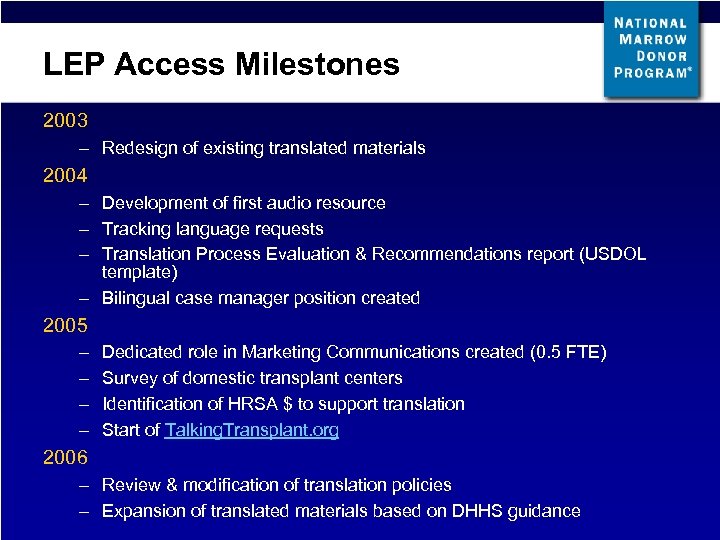 LEP Access Milestones 2003 – Redesign of existing translated materials 2004 – Development of first audio resource – Tracking language requests – Translation Process Evaluation & Recommendations report (USDOL template) – Bilingual case manager position created 2005 – – Dedicated role in Marketing Communications created (0. 5 FTE) Survey of domestic transplant centers Identification of HRSA $ to support translation Start of Talking. Transplant. org 2006 – Review & modification of translation policies – Expansion of translated materials based on DHHS guidance
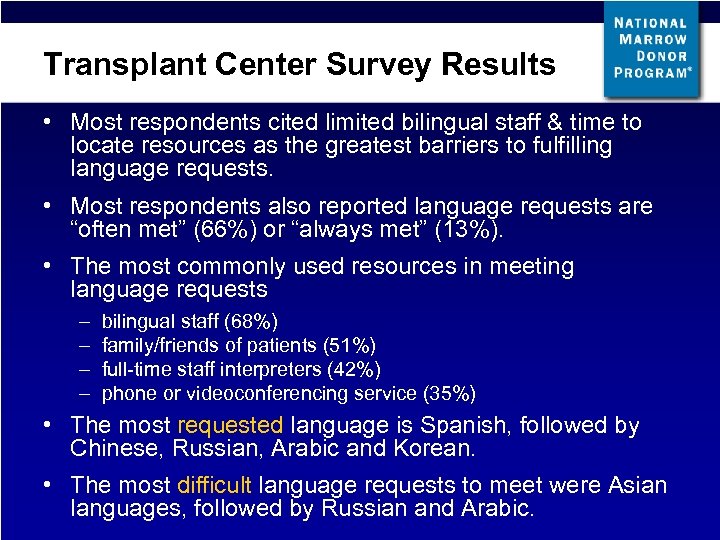 Transplant Center Survey Results • Most respondents cited limited bilingual staff & time to locate resources as the greatest barriers to fulfilling language requests. • Most respondents also reported language requests are “often met” (66%) or “always met” (13%). • The most commonly used resources in meeting language requests – – bilingual staff (68%) family/friends of patients (51%) full-time staff interpreters (42%) phone or videoconferencing service (35%) • The most requested language is Spanish, followed by Chinese, Russian, Arabic and Korean. • The most difficult language requests to meet were Asian languages, followed by Russian and Arabic.
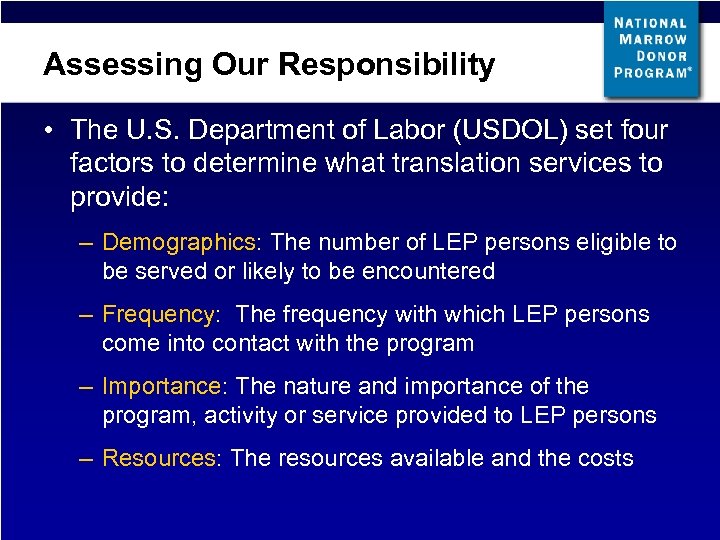 Assessing Our Responsibility • The U. S. Department of Labor (USDOL) set four factors to determine what translation services to provide: – Demographics: The number of LEP persons eligible to be served or likely to be encountered – Frequency: The frequency with which LEP persons come into contact with the program – Importance: The nature and importance of the program, activity or service provided to LEP persons – Resources: The resources available and the costs
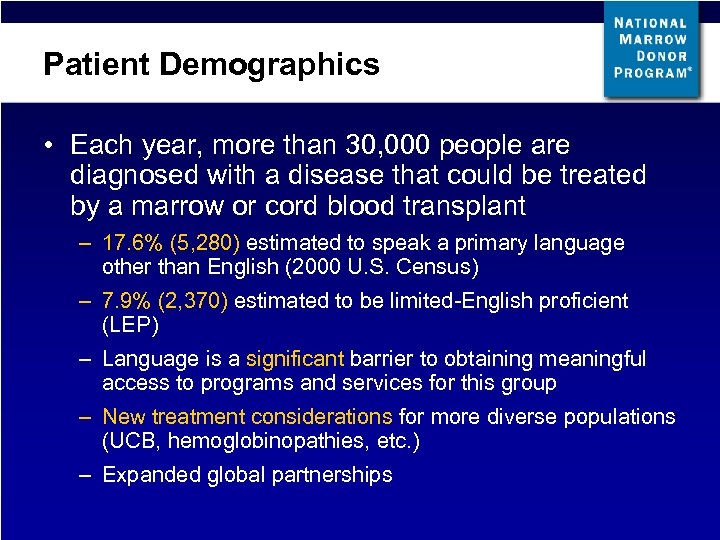 Patient Demographics • Each year, more than 30, 000 people are diagnosed with a disease that could be treated by a marrow or cord blood transplant – 17. 6% (5, 280) estimated to speak a primary language other than English (2000 U. S. Census) – 7. 9% (2, 370) estimated to be limited-English proficient (LEP) – Language is a significant barrier to obtaining meaningful access to programs and services for this group – New treatment considerations for more diverse populations (UCB, hemoglobinopathies, etc. ) – Expanded global partnerships
 Frequency of Contact • LEP persons contact the OPA through a variety of access points, including: – www. marrow. org/patient: over 1, 000 hits/month on translated resources pages – Case managers, toll-free phone number: 20 contacts/month – Office of Patient Advocacy resources: almost 700 non -English language resources sent each month • The level of need was disproportionately low given the number of expected contacts
 Resource or Service Importance • The more important the activity, information, services or program, or the greater possible consequences of contact with LEP individuals, the more important it is that language services are provided – Prioritize vital services – Identify “gateway” documents
 Importance & Availability of Resources • The level of need is rated high due to the consequences of inaccessible treatment • Must balance need vs. available resources – – General program income Sunk costs (NMDP staff time) Federal funding contracts (Navy, HRSA) External grants (CDC, NCI) • Applied federal “reasonable steps” standard: do the costs imposed substantially exceed the benefits? • Carefully explore the most cost-effective means of delivering competent and accurate language services • Determine capacity to develop and maintain quality, medically accurate documents
 Setting LEP Priorities • Factors considered by NMDP in addition to broad U. S. Census demographics – OMB-designated racial or ethnic minority group – Low access to transplant – High LEP within a language community – Anticipated changes in language population size within the next 5 years – High levels of transplantable diagnoses within a language group – Geographic distribution of languages in relation to individual transplant centers
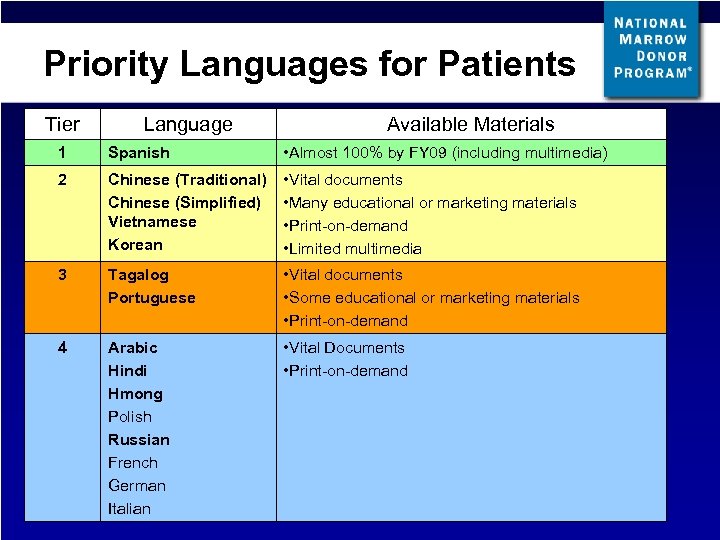 Priority Languages for Patients Tier Language Available Materials 1 Spanish • Almost 100% by FY 09 (including multimedia) 2 Chinese (Traditional) Chinese (Simplified) Vietnamese Korean • Vital documents • Many educational or marketing materials • Print-on-demand • Limited multimedia 3 Tagalog Portuguese • Vital documents • Some educational or marketing materials • Print-on-demand 4 Arabic Hindi Hmong Polish Russian French German Italian • Vital Documents • Print-on-demand
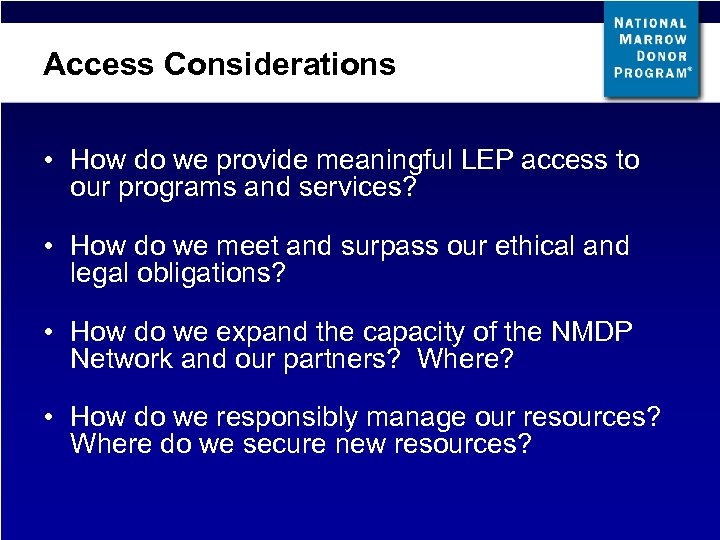 Access Considerations • How do we provide meaningful LEP access to our programs and services? • How do we meet and surpass our ethical and legal obligations? • How do we expand the capacity of the NMDP Network and our partners? Where? • How do we responsibly manage our resources? Where do we secure new resources?
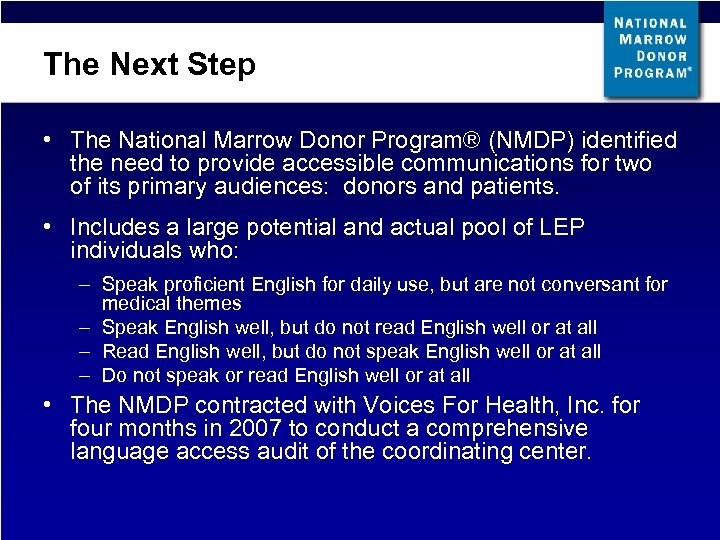 The Next Step • The National Marrow Donor Program® (NMDP) identified the need to provide accessible communications for two of its primary audiences: donors and patients. • Includes a large potential and actual pool of LEP individuals who: – Speak proficient English for daily use, but are not conversant for medical themes – Speak English well, but do not read English well or at all – Read English well, but do not speak English well or at all – Do not speak or read English well or at all • The NMDP contracted with Voices For Health, Inc. for four months in 2007 to conduct a comprehensive language access audit of the coordinating center.
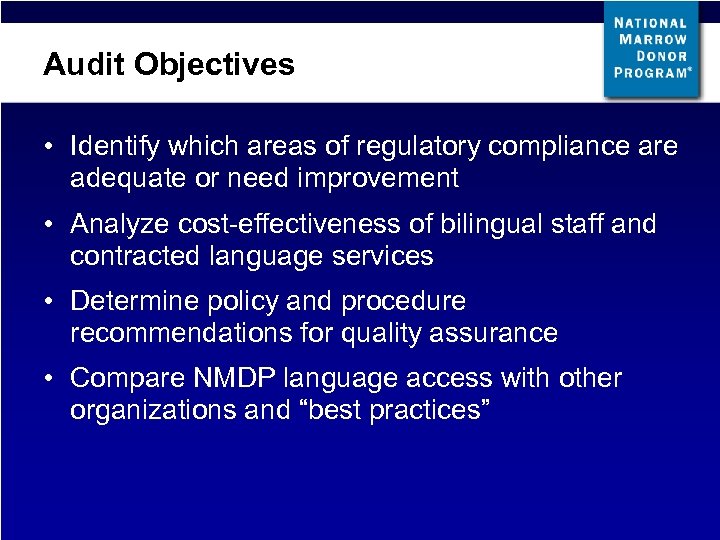 Audit Objectives • Identify which areas of regulatory compliance are adequate or need improvement • Analyze cost-effectiveness of bilingual staff and contracted language services • Determine policy and procedure recommendations for quality assurance • Compare NMDP language access with other organizations and “best practices”
 Guiding Questions – Compliance • Is the NMDP in compliance with the LEP language accommodation requirements of Title VI? • Which areas are adequate and which need improvement? • Is the NMDP in compliance with ADA requirements for deaf and hard-of-hearing clients? • Which areas are adequate and which need improvement?
 Guiding Questions – Effective Resource Utilization • Are personnel at the NMDP utilized effectively from cost and quality considerations? • Does the NMDP receive adequate contract services from cost and quality considerations?
 Guiding Questions – Quality Assurance • What policies and procedures need to be implemented to assure quality of oral and written communication to LEP and deaf clients? • Who should be responsible for implementing quality assurance measures?
 Guiding Questions – Best Practices • How does language accommodation by the NMDP compare with other organizations with similar target communities and scope of work? • What practices can the NMDP model after organizations recognized for “Best Practices”?
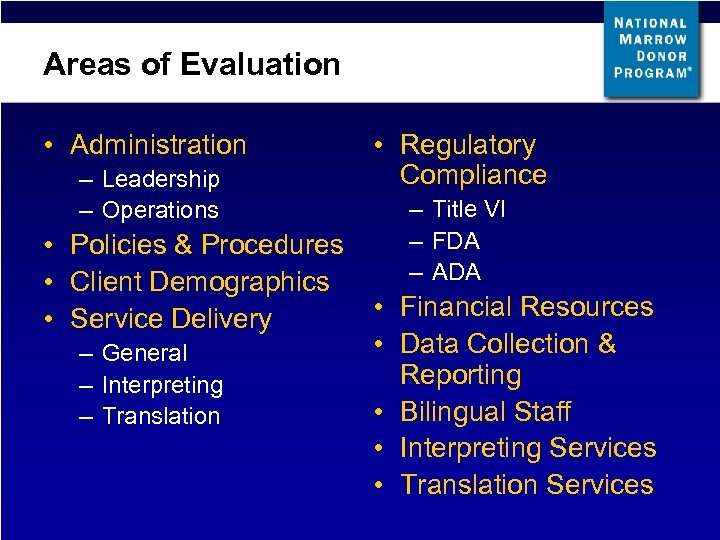 Areas of Evaluation • Administration – Leadership – Operations • Policies & Procedures • Client Demographics • Service Delivery – General – Interpreting – Translation • Regulatory Compliance – Title VI – FDA – ADA • Financial Resources • Data Collection & Reporting • Bilingual Staff • Interpreting Services • Translation Services
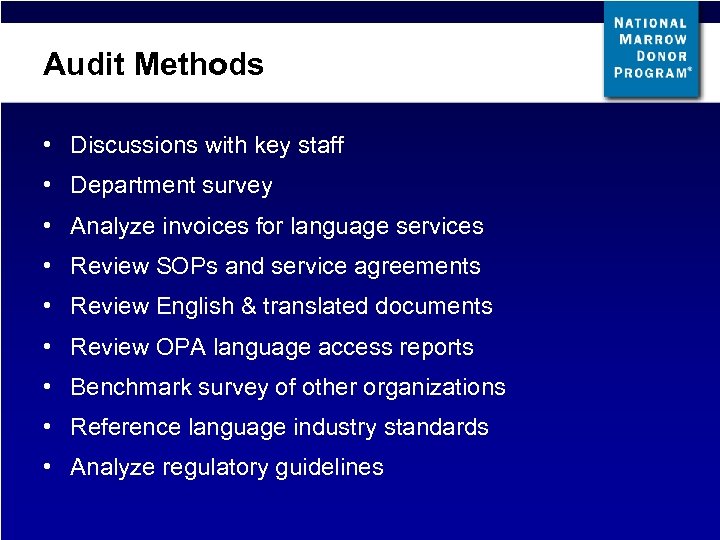 Audit Methods • Discussions with key staff • Department survey • Analyze invoices for language services • Review SOPs and service agreements • Review English & translated documents • Review OPA language access reports • Benchmark survey of other organizations • Reference language industry standards • Analyze regulatory guidelines
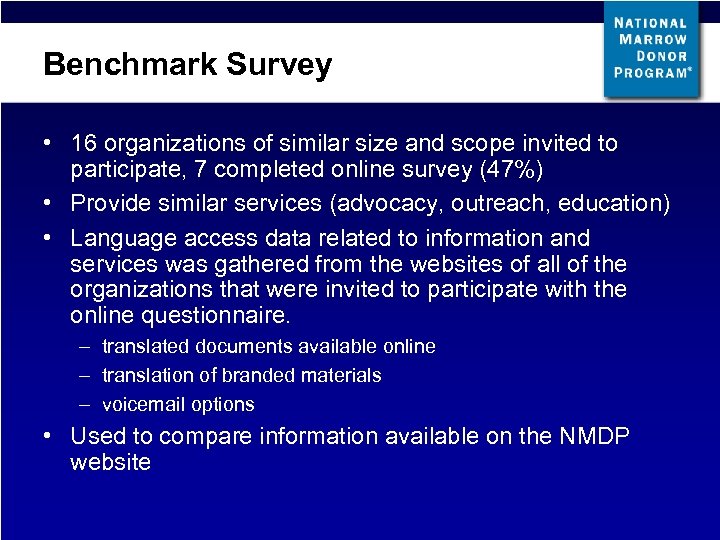 Benchmark Survey • 16 organizations of similar size and scope invited to participate, 7 completed online survey (47%) • Provide similar services (advocacy, outreach, education) • Language access data related to information and services was gathered from the websites of all of the organizations that were invited to participate with the online questionnaire. – translated documents available online – translation of branded materials – voicemail options • Used to compare information available on the NMDP website
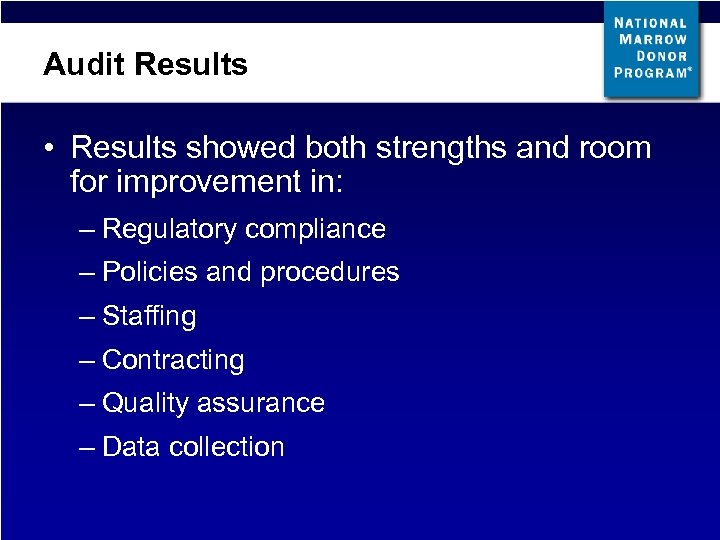 Audit Results • Results showed both strengths and room for improvement in: – Regulatory compliance – Policies and procedures – Staffing – Contracting – Quality assurance – Data collection
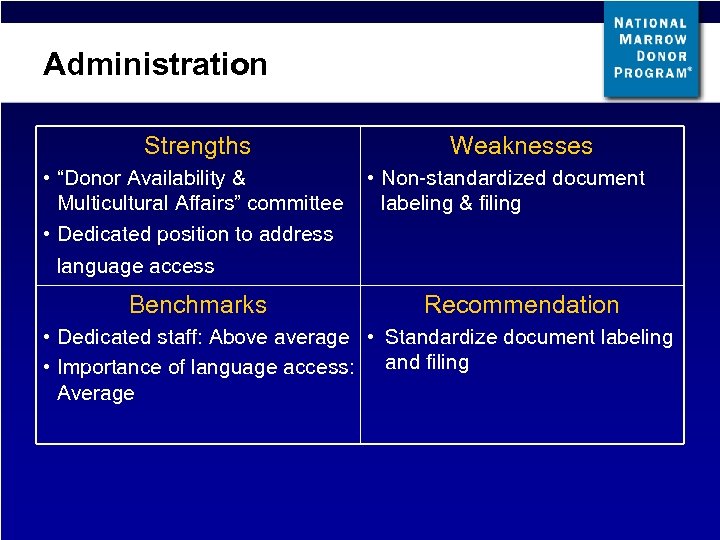 Administration Strengths • “Donor Availability & Multicultural Affairs” committee • Dedicated position to address language access Benchmarks Weaknesses • Non-standardized document labeling & filing Recommendation • Dedicated staff: Above average • Standardize document labeling • Importance of language access: and filing Average
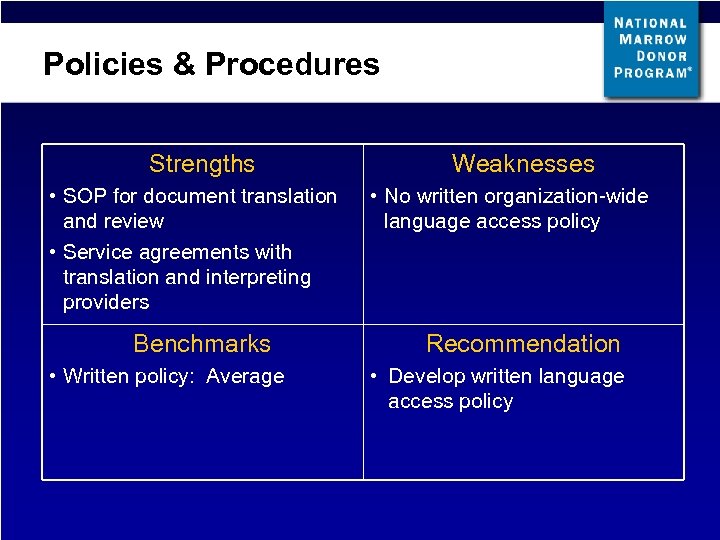 Policies & Procedures Strengths • SOP for document translation and review • Service agreements with translation and interpreting providers Benchmarks • Written policy: Average Weaknesses • No written organization-wide language access policy Recommendation • Develop written language access policy
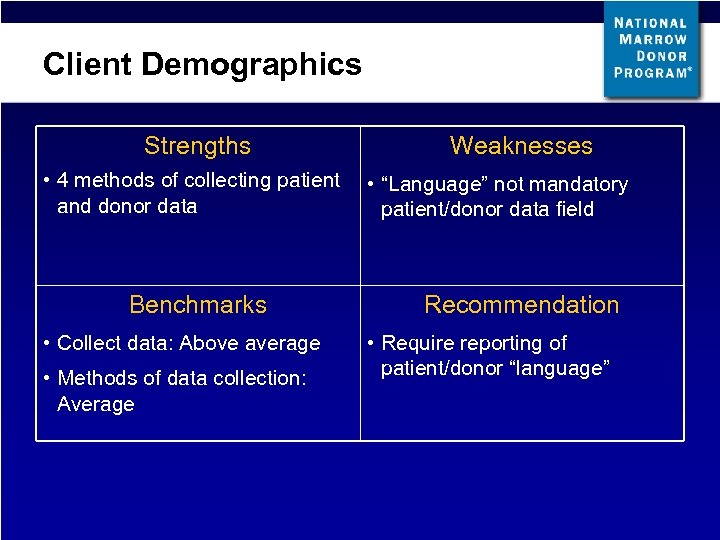 Client Demographics Strengths • 4 methods of collecting patient and donor data Benchmarks • Collect data: Above average • Methods of data collection: Average Weaknesses • “Language” not mandatory patient/donor data field Recommendation • Require reporting of patient/donor “language”
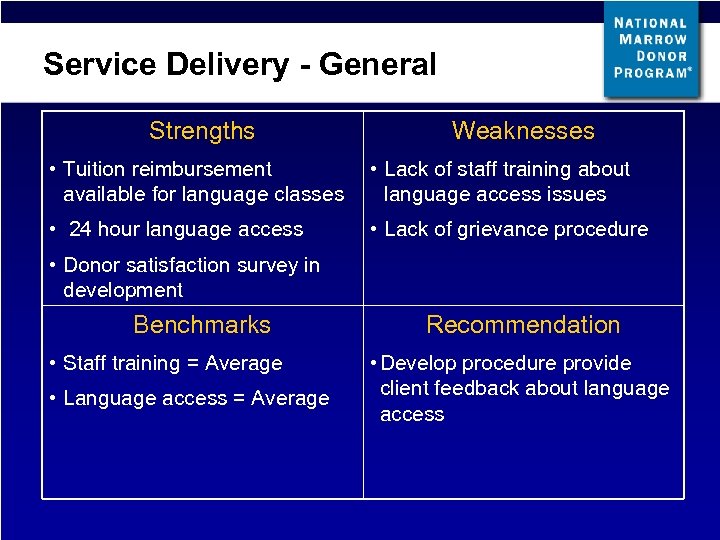 Service Delivery - General Strengths Weaknesses • Tuition reimbursement available for language classes • Lack of staff training about language access issues • 24 hour language access • Lack of grievance procedure • Donor satisfaction survey in development Benchmarks • Staff training = Average • Language access = Average Recommendation • Develop procedure provide client feedback about language access
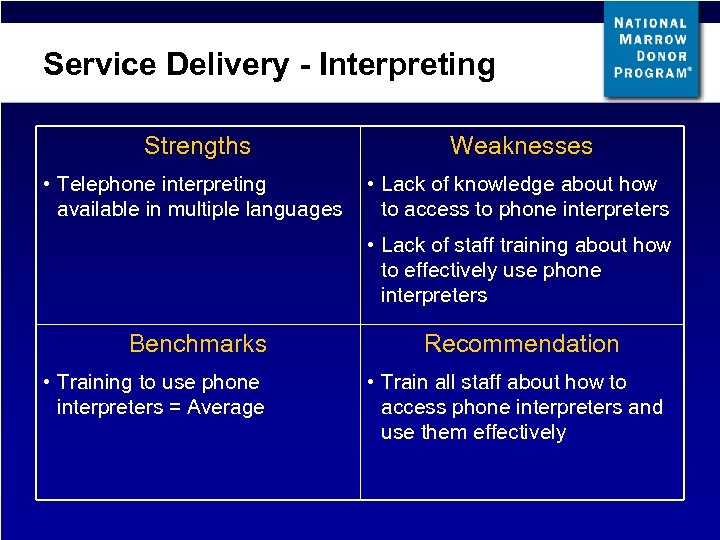 Service Delivery - Interpreting Strengths Weaknesses • Telephone interpreting available in multiple languages • Lack of knowledge about how to access to phone interpreters • Lack of staff training about how to effectively use phone interpreters Benchmarks • Training to use phone interpreters = Average Recommendation • Train all staff about how to access phone interpreters and use them effectively
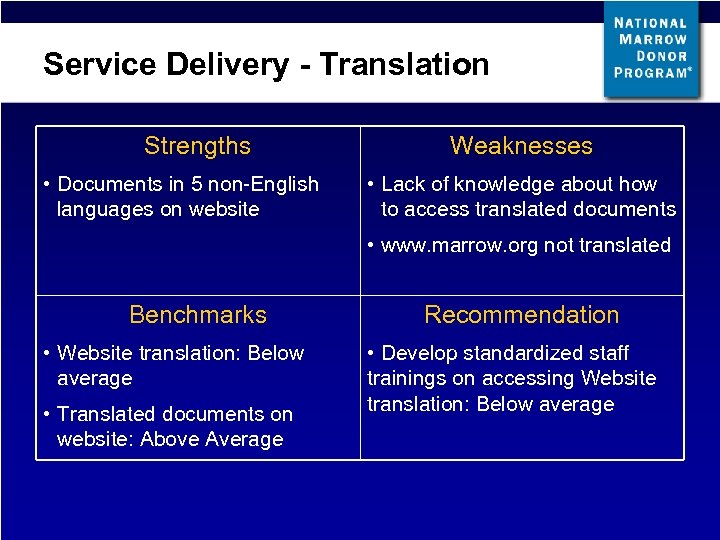 Service Delivery - Translation Strengths • Documents in 5 non-English languages on website Weaknesses • Lack of knowledge about how to access translated documents • www. marrow. org not translated Benchmarks • Website translation: Below average • Translated documents on website: Above Average Recommendation • Develop standardized staff trainings on accessing Website translation: Below average
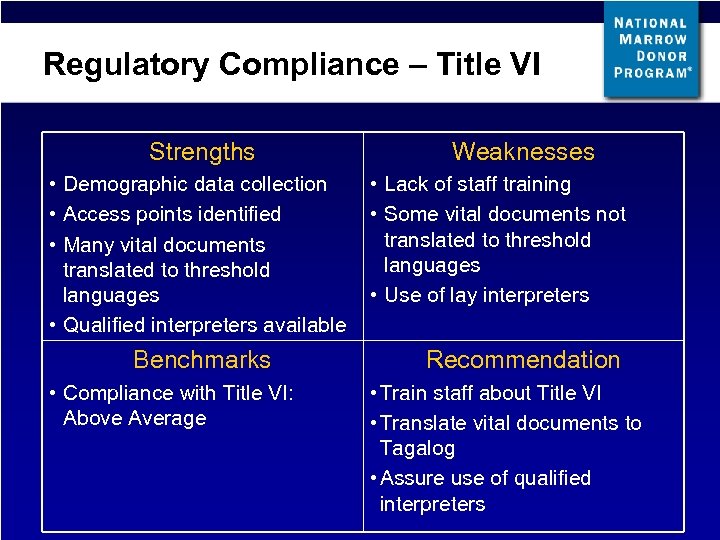 Regulatory Compliance – Title VI Strengths • Demographic data collection • Access points identified • Many vital documents translated to threshold languages • Qualified interpreters available Benchmarks • Compliance with Title VI: Above Average Weaknesses • Lack of staff training • Some vital documents not translated to threshold languages • Use of lay interpreters Recommendation • Train staff about Title VI • Translate vital documents to Tagalog • Assure use of qualified interpreters
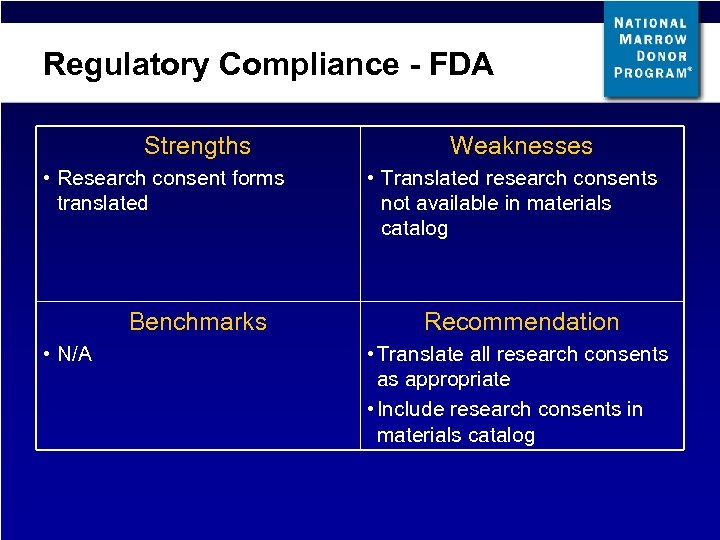 Regulatory Compliance - FDA Strengths • Research consent forms translated Benchmarks • N/A Weaknesses • Translated research consents not available in materials catalog Recommendation • Translate all research consents as appropriate • Include research consents in materials catalog
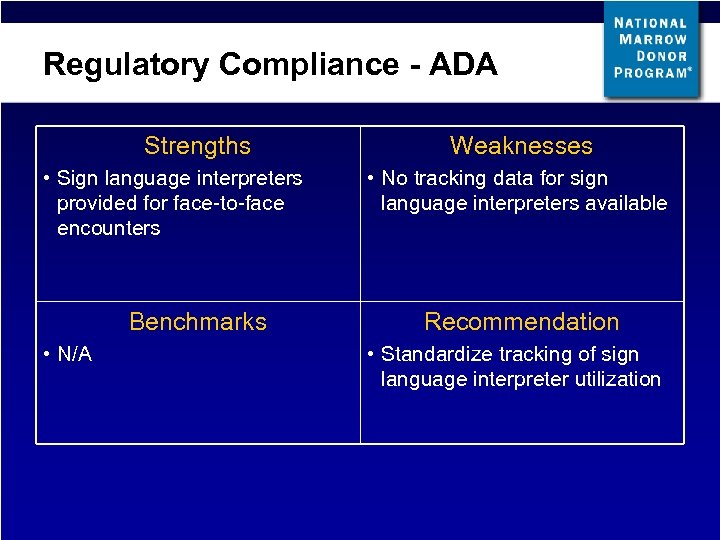 Regulatory Compliance - ADA Strengths • Sign language interpreters provided for face-to-face encounters Benchmarks • N/A Weaknesses • No tracking data for sign language interpreters available Recommendation • Standardize tracking of sign language interpreter utilization
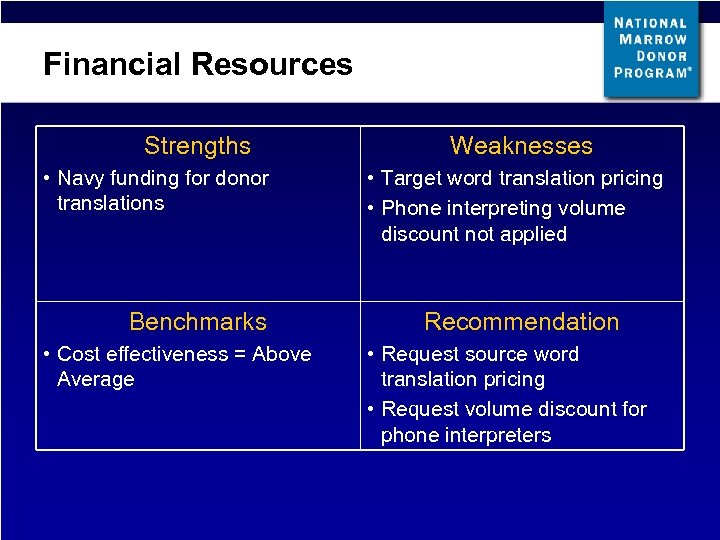 Financial Resources Strengths • Navy funding for donor translations Benchmarks • Cost effectiveness = Above Average Weaknesses • Target word translation pricing • Phone interpreting volume discount not applied Recommendation • Request source word translation pricing • Request volume discount for phone interpreters
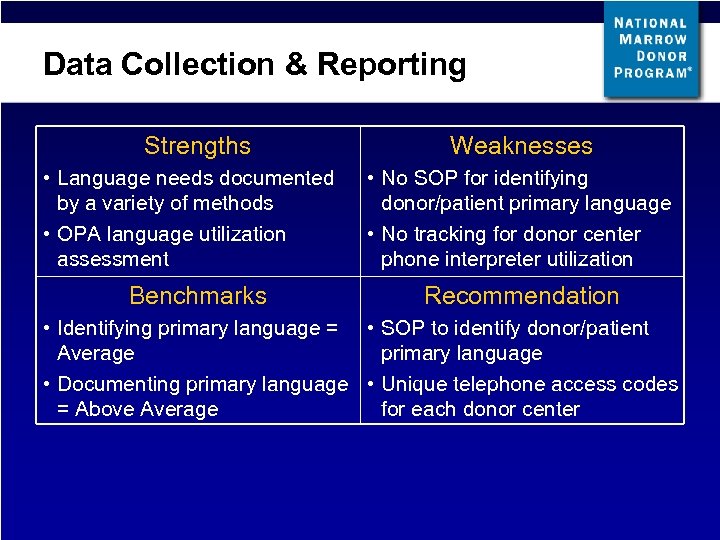 Data Collection & Reporting Strengths • Language needs documented by a variety of methods • OPA language utilization assessment Benchmarks Weaknesses • No SOP for identifying donor/patient primary language • No tracking for donor center phone interpreter utilization Recommendation • Identifying primary language = • SOP to identify donor/patient Average primary language • Documenting primary language • Unique telephone access codes = Above Average for each donor center
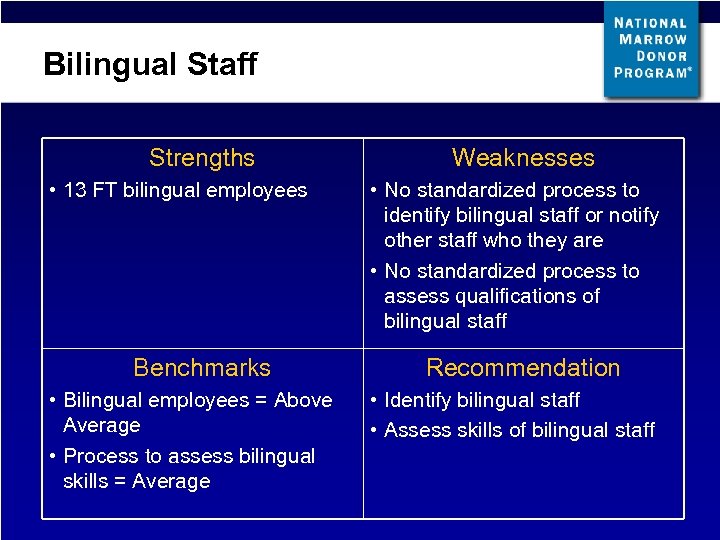 Bilingual Staff Strengths • 13 FT bilingual employees Benchmarks • Bilingual employees = Above Average • Process to assess bilingual skills = Average Weaknesses • No standardized process to identify bilingual staff or notify other staff who they are • No standardized process to assess qualifications of bilingual staff Recommendation • Identify bilingual staff • Assess skills of bilingual staff
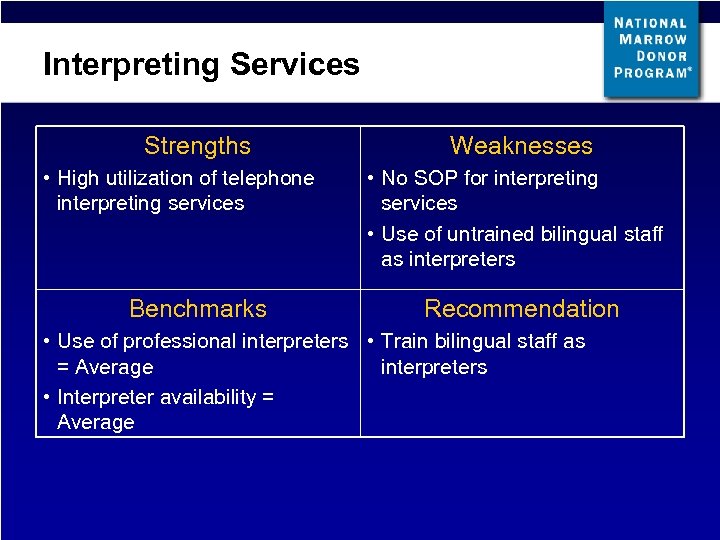 Interpreting Services Strengths • High utilization of telephone interpreting services Benchmarks Weaknesses • No SOP for interpreting services • Use of untrained bilingual staff as interpreters Recommendation • Use of professional interpreters • Train bilingual staff as = Average interpreters • Interpreter availability = Average
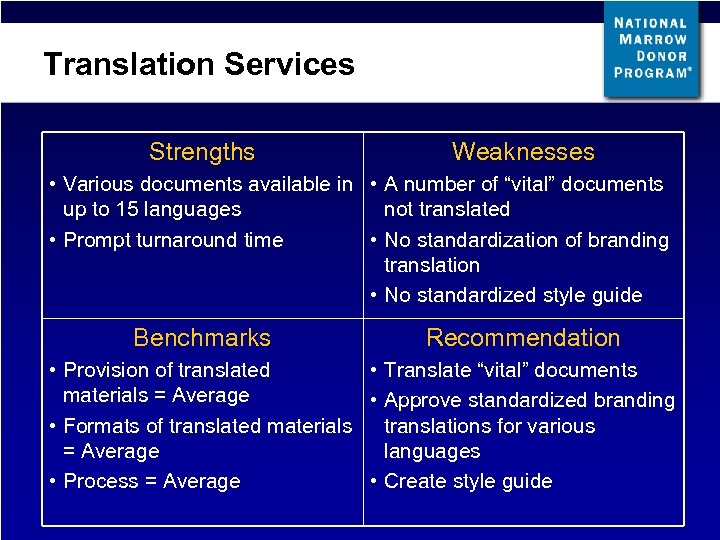 Translation Services Strengths Weaknesses • Various documents available in • A number of “vital” documents up to 15 languages not translated • Prompt turnaround time • No standardization of branding translation • No standardized style guide Benchmarks Recommendation • Provision of translated • Translate “vital” documents materials = Average • Approve standardized branding • Formats of translated materials translations for various = Average languages • Process = Average • Create style guide
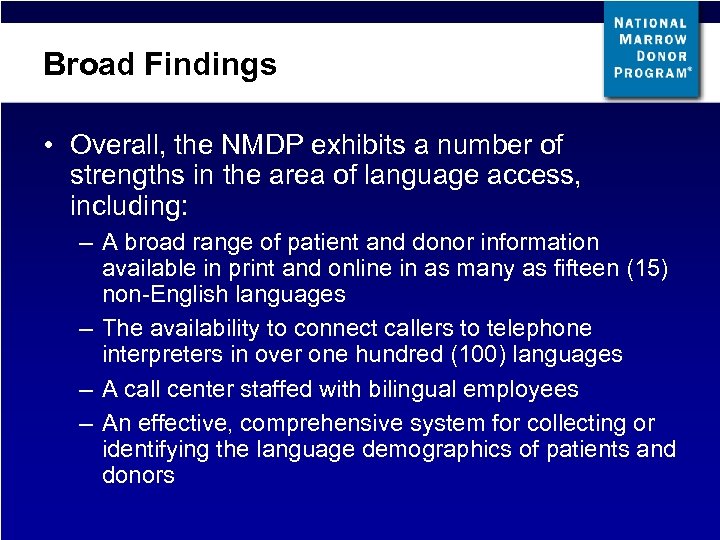 Broad Findings • Overall, the NMDP exhibits a number of strengths in the area of language access, including: – A broad range of patient and donor information available in print and online in as many as fifteen (15) non-English languages – The availability to connect callers to telephone interpreters in over one hundred (100) languages – A call center staffed with bilingual employees – An effective, comprehensive system for collecting or identifying the language demographics of patients and donors
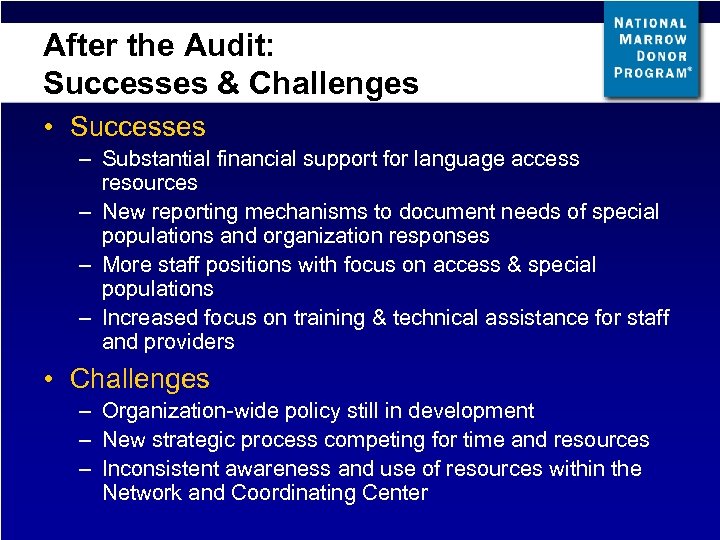 After the Audit: Successes & Challenges • Successes – Substantial financial support for language access resources – New reporting mechanisms to document needs of special populations and organization responses – More staff positions with focus on access & special populations – Increased focus on training & technical assistance for staff and providers • Challenges – Organization-wide policy still in development – New strategic process competing for time and resources – Inconsistent awareness and use of resources within the Network and Coordinating Center
 Contact Information Michelle A. Scott, RN, MA President & CEO Voices For Health, Inc. Ph: 800 -VFH-3347 E-mail: michelle@voicesforhealth. com Web: www. voicesforhealth. com Martha E. Burton Santibáñez Program Specialist – Medically Underserved Populations Office of Patient Advocacy National Marrow Donor Program Ph: 612 -617 -8336 E-mail: mburton@nmdp. org Web: marrow. org/patient