Скачать презентацию EVALUATION AND MANAGEMENT OF SYNCOPE or how to
ebaf5e24bd04f20be1af398651c84e6b.ppt
- Количество слайдов: 47
 EVALUATION AND MANAGEMENT OF SYNCOPE (or, how to transform an unfulfilling workup into a productive and rewarding experience) Oliver Z. Graham Department of Internal Medicine
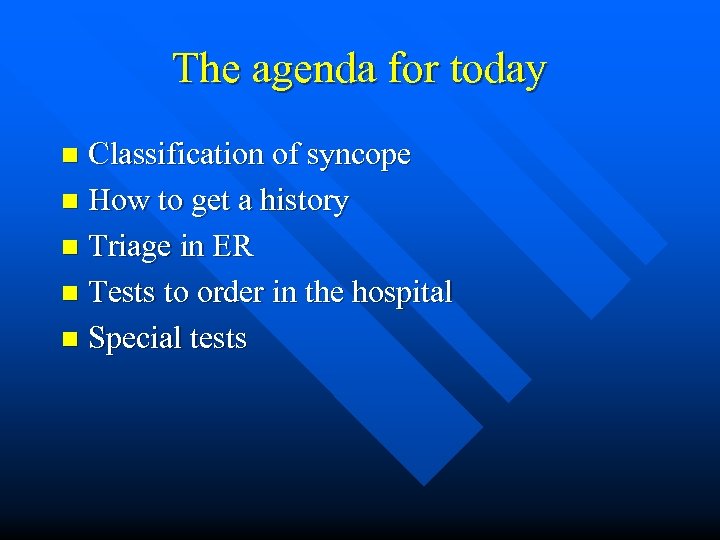 The agenda for today Classification of syncope n How to get a history n Triage in ER n Tests to order in the hospital n Special tests n
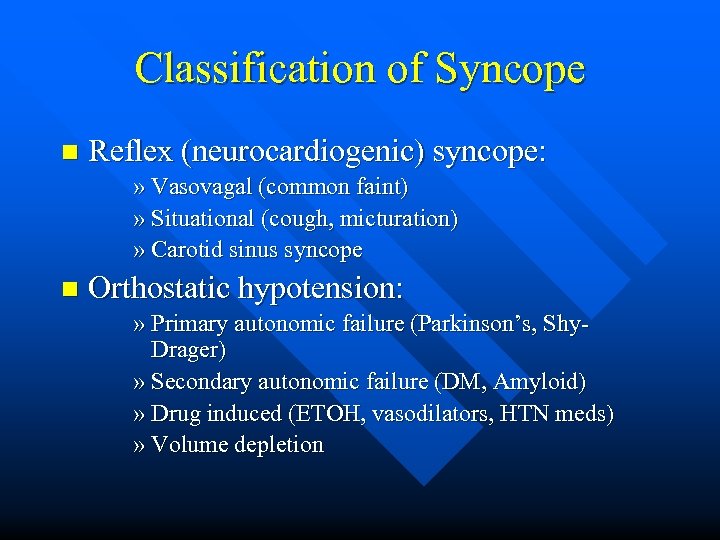 Classification of Syncope n Reflex (neurocardiogenic) syncope: » Vasovagal (common faint) » Situational (cough, micturation) » Carotid sinus syncope n Orthostatic hypotension: » Primary autonomic failure (Parkinson’s, Shy. Drager) » Secondary autonomic failure (DM, Amyloid) » Drug induced (ETOH, vasodilators, HTN meds) » Volume depletion
 Classification of Syncope, part 2 n Cardiac Syncope » Bradycardia » Tachycardia » Structural Disease (valvular dz, MI, pulm HTN, PE) Vascular steal syndromes n Loss of conciousness, NOT syncope n » Seizure » Intoxication » Metabolic disorders
 A case study 72 YO man with history of hyperlipidemia, HTN comes into the ER after a syncopal episode. He was with his wife, walking to the car, when he “passed out”. He seems to be in a bad mood, and is not forthcoming with his answers. His wife is in the waiting room. n What is your next step? n
 Good history is CRITICAL in syncope evaluation!! n You ask the wife to come in to get more information. She says that her husband was feeling fine when he woke up this AM. They went to a friends house, they left the house, as he was walking up the hill to his parked car he complained of palpiations then suddenly fell onto his left side and became unresponsive. He then had some “jerking” of his hands and legs that lasted a few seconds. Soon thereafter he woke up, and had no post-event confusion.
 Taking the history: Before the spell n n n What position was the patient in when spell began? (if recumbent not orthostatic/unlikely vasovagal) Prodrome of cerebral hypoperfusion? (lightheadedness, dizziness, nausea, weakness more consistent with vasovagal) Sudden onset, no prodrome? (Cardiac) Palpitations (suggestive cardiac/vasovagal) Associated with exertion? (Cardiac) Emotional or painful stimulus (vasovagal) Prolonged motionless standing (vasovagal) Straining at urination (situational) Rapid change in posture (orthostatic) With rapid head turning (carotid sinus syncope) Arm movement (subclavian steal)
 Taking the history: During the spell n “Movement” during syncopal episode does not always mean seizure!! – Seizure: typically about 1 min, rhythmic synchronous movements – Cerebral Hypoperfusion: jerking rarely lasts more than 30 sec, asynchronous, non -rhythmic
 Taking the history: After the spell n Recovery of orientation usually rapid in true syncope n Seizures: Typically 2 -20 min period post-ictal confusion
 Initial Workup n Physical examination – – n Orthostatic blood pressure Heart exam (AS murmur, pulm HTN, S 3/S 4) Neuro examination Consider stool guiac EKG – Should be done on all patients, occasionally very helpful n Labs – CBC, Basic panel, ? Troponin … no real guidance from experts, pretty low yield n With good hx/PE/EKG: can make dx in 50% of cases!
 The case, continued BP 163/94 Pulse 87 98% RA. Not orthostatic n Heart, Lung, abdominal, neuro exam unremarkable. n Basic panel, CBC, troponin unremarkable. n EKG – LBBB n What do you do next? n
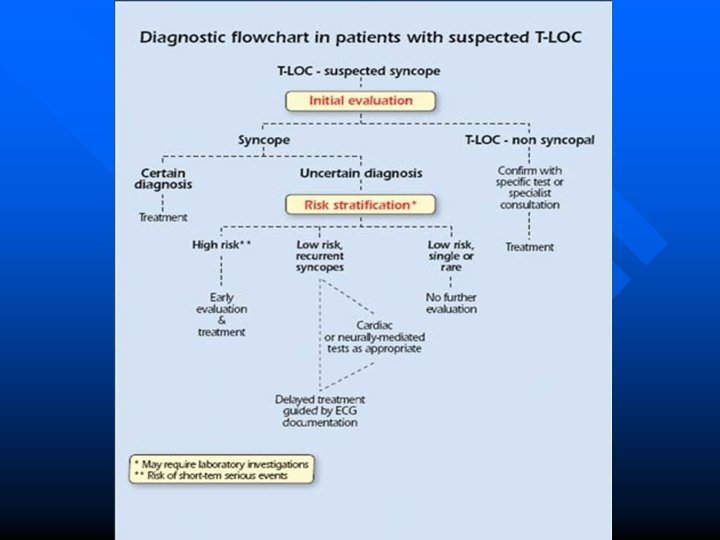
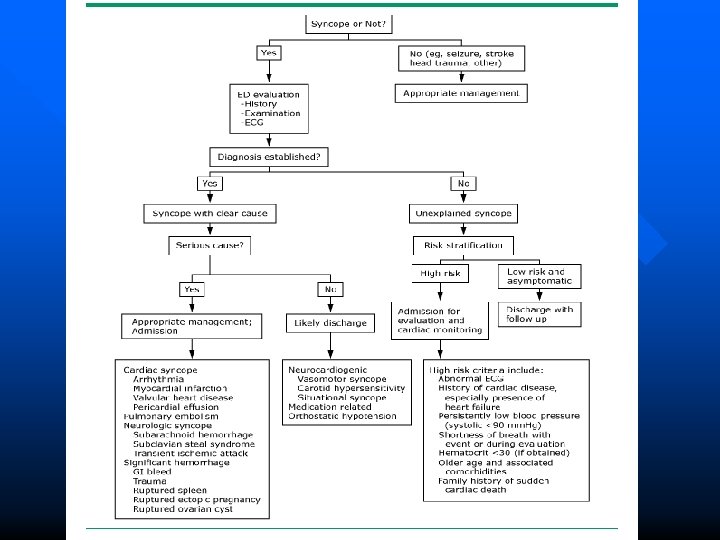
 The basic approach to syncope 1. 2. 3. 4. 5. Get good history, PE, EKG If you think you know what is doing on (vasovagal, orthostatic, etc) – TREAT If unclear, assess risk factors for adverse events Significant risk factors – Admit for tele, echo, +/- stress test If all this negative, discharge and consider stopping workup (if one episode) or ordering a lot more tests (if recurrent episodes)
 Unexplained Syncope: Who are you really worried about? n Structural heart disease and primary electrical disease are the major risk factors for sudden death – In young patients in whom this has been excluded have an excellent prognosis n Multiple methods have been proposed to assess risk – none have been fully validated – In all scoring systems: STRUCTURAL HEART DISEASE or ABNORMAL EKG are major risk factors for adverse events
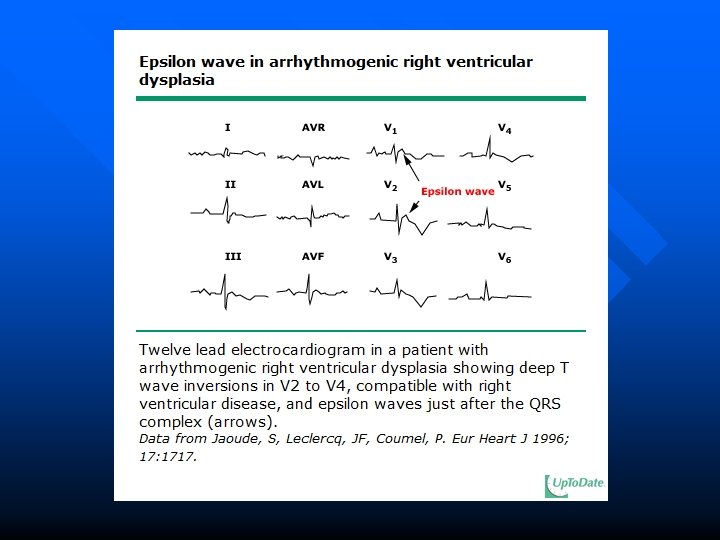
 Who to admit – “High Risk” Pts n n Documented or suspected structural heart disease or coronary artery disease Abnormal EKG – Bundle branch block – Sinus bradycardia or sinoatrial block (in absence of meds or physical training) – Weird stuff: WPW, Brugada, right ventricular dysplasia – Prolonged or short QTc – Ischemia n Clinical Features – – – – Syncope during exertion or supine* Palpitations during syncope* Family history of sudden death* Severe anemia or electrolyte disturbance* ? Age > 65 -70 (a bit arbitrary)** Serious injury** Frequent and recurrent symptoms** *European Society of Cardiology **Various other guidelines
 San Francisco Syncope Rules To Guide Inpatient Admission 1. 2. 3. 4. 5. n n n C – (History of Congestive heart failure) H – (Hematocrit < 30%) E – Abnormal ECG S – Shortness of breath S – SBP < 90 1 st validation study: 96% sensitive, 62% specific for predicting serious outcome at 7 days 2 nd validation study: not as good Main point: “further validation is needed before can be widely applied…[but] advantage is that it is easy to remember” (Mayo Clinic Proceedings, 2009)
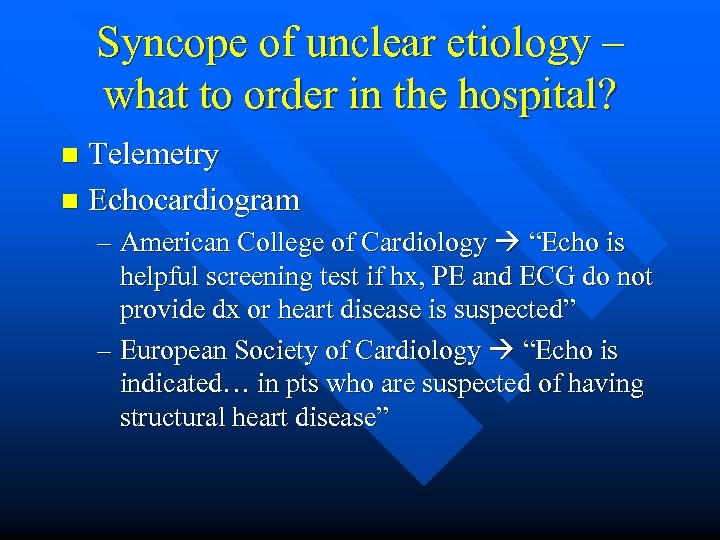 Syncope of unclear etiology – what to order in the hospital? Telemetry n Echocardiogram n – American College of Cardiology “Echo is helpful screening test if hx, PE and ECG do not provide dx or heart disease is suspected” – European Society of Cardiology “Echo is indicated… in pts who are suspected of having structural heart disease”
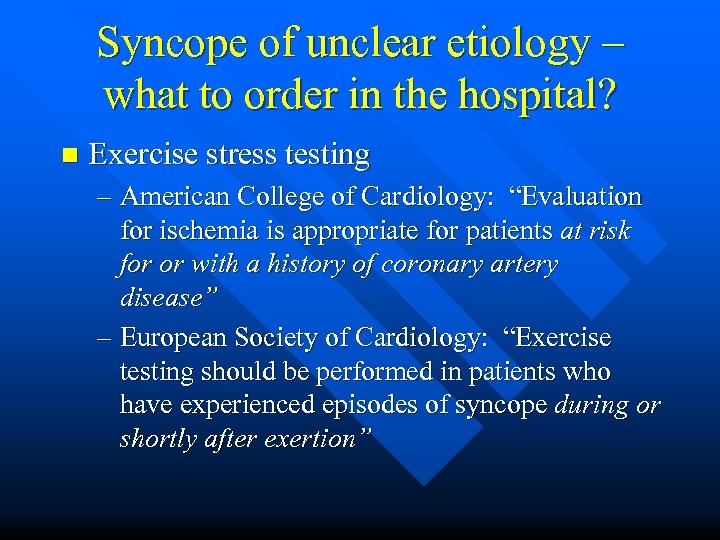 Syncope of unclear etiology – what to order in the hospital? n Exercise stress testing – American College of Cardiology: “Evaluation for ischemia is appropriate for patients at risk for or with a history of coronary artery disease” – European Society of Cardiology: “Exercise testing should be performed in patients who have experienced episodes of syncope during or shortly after exertion”
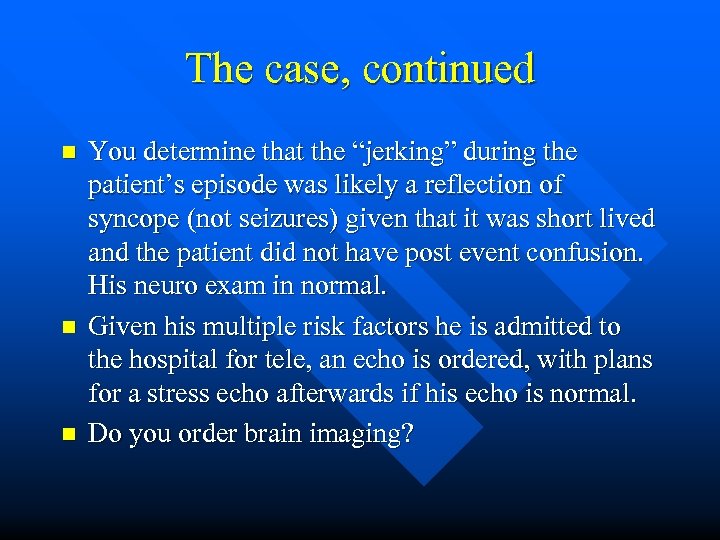 The case, continued n n n You determine that the “jerking” during the patient’s episode was likely a reflection of syncope (not seizures) given that it was short lived and the patient did not have post event confusion. His neuro exam in normal. Given his multiple risk factors he is admitted to the hospital for tele, an echo is ordered, with plans for a stress echo afterwards if his echo is normal. Do you order brain imaging?
 Cerebrovascular disorders and syncope n n Subclavian steal: vigorous arm movement, reroutes blood flow to arm through vertebral artery secondary to stenosis of subclavian artery TIA of carotid artery: can rarely cause LOC when almost all cerebral arteries are occluded and transient obstruction of remaining vessel may affect conciousness in standing position TIA of vertebrobasilar system: can cause LOC ALL of these syndromes are associated with postevent focal neurological findings
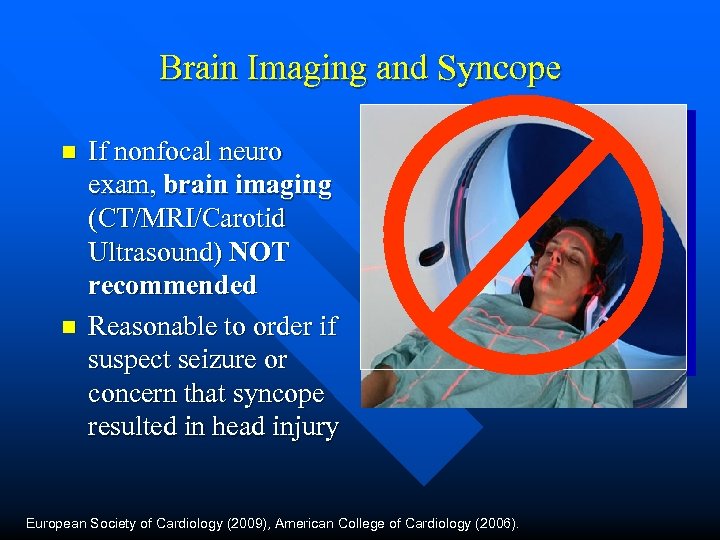 Brain Imaging and Syncope n n If nonfocal neuro exam, brain imaging (CT/MRI/Carotid Ultrasound) NOT recommended Reasonable to order if suspect seizure or concern that syncope resulted in head injury European Society of Cardiology (2009), American College of Cardiology (2006).
 Another case study You see a 62 YO man with a syncopal episode two nights ago. On his way the bathroom during the night, he felt very dizzy and the next thing he remembered was waking up on the floor in the hallway to the bathroom. n PE 135/72, Pulse 76 97% RA Heart, Lungs, Abd, Neuro exam unremarkable. EKG: Normal n What do you do next?
 Recent Study on Syncope n 2106 patients’ charts over 65 years old evaluated for syncope in ER, different tests evaluated for their “cost effectiveness” and utility Mendu ML, et al. Archives Intern Med. 2009; 169: 1299.
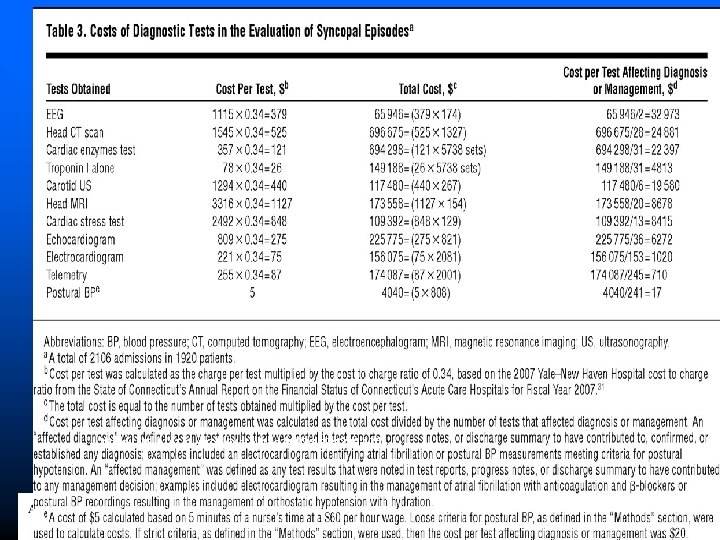 Mendu, M. L. et al. Arch Intern Med 2009; 169: 1299 -1305. Copyright restrictions may apply.
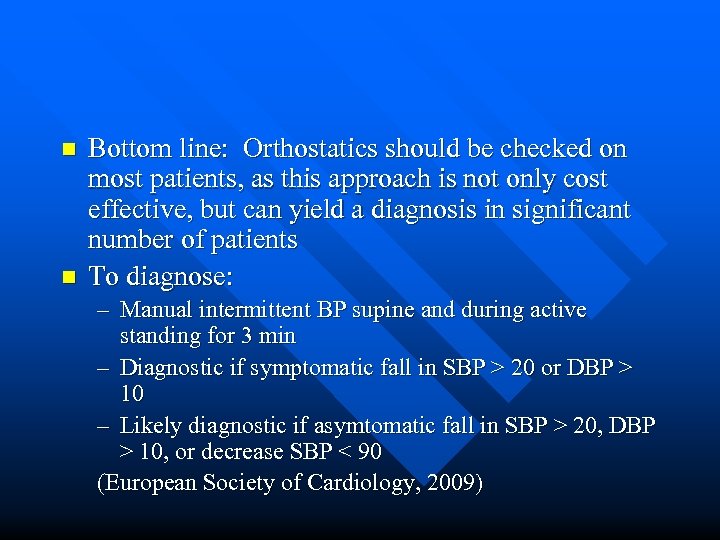 n n Bottom line: Orthostatics should be checked on most patients, as this approach is not only cost effective, but can yield a diagnosis in significant number of patients To diagnose: – Manual intermittent BP supine and during active standing for 3 min – Diagnostic if symptomatic fall in SBP > 20 or DBP > 10 – Likely diagnostic if asymtomatic fall in SBP > 20, DBP > 10, or decrease SBP < 90 (European Society of Cardiology, 2009)
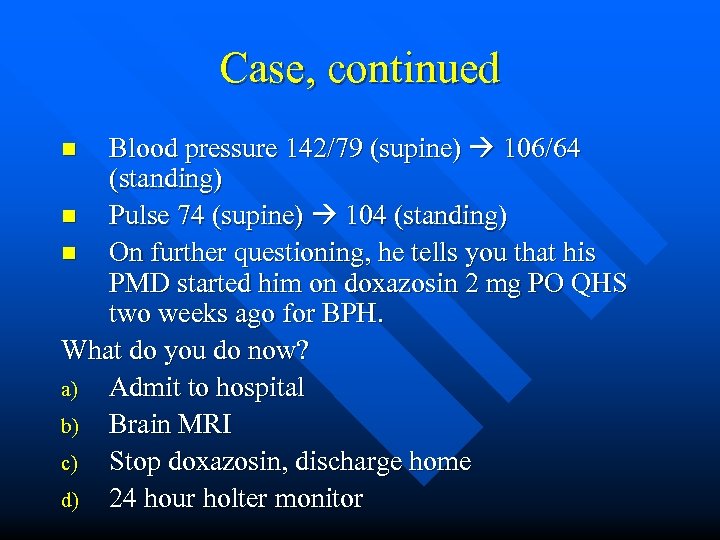 Case, continued Blood pressure 142/79 (supine) 106/64 (standing) n Pulse 74 (supine) 104 (standing) n On further questioning, he tells you that his PMD started him on doxazosin 2 mg PO QHS two weeks ago for BPH. What do you do now? a) Admit to hospital b) Brain MRI c) Stop doxazosin, discharge home d) 24 hour holter monitor n
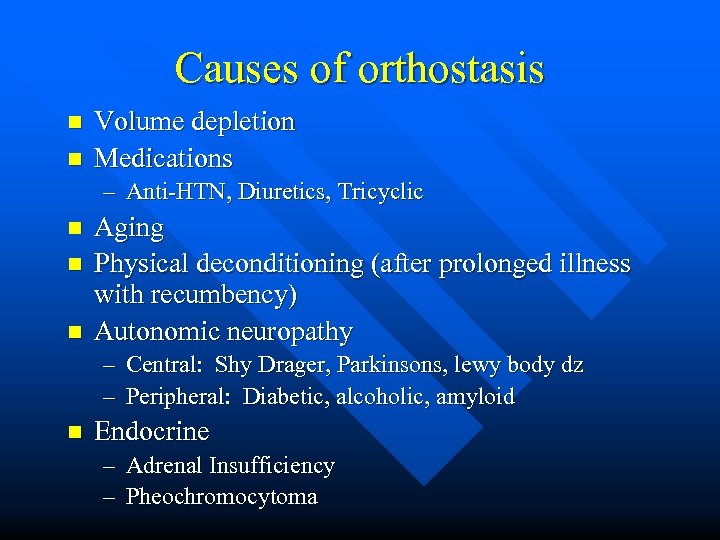 Causes of orthostasis n n Volume depletion Medications – Anti-HTN, Diuretics, Tricyclic n n n Aging Physical deconditioning (after prolonged illness with recumbency) Autonomic neuropathy – Central: Shy Drager, Parkinsons, lewy body dz – Peripheral: Diabetic, alcoholic, amyloid n Endocrine – Adrenal Insufficiency – Pheochromocytoma
 Syncope in the Elderly Orthostatic hypotension may be cause in 30% of elderly patients n Polypharmacy with HTN or depression meds often a contributor – Review meds carefully! n For frail, older patients “evaluation should be modified according to prognosis and expectation of benefit” n
 Another case A 19 YO college student is evaluated in the ER after collapsing suddenly while waiting in line at a New Kids on the Block concert. Prior to this happening, he felt diaphoretic, lightheaded, he then sat on the ground and lost conciousness. He exhibited some “twitching” movements when he lost conciousness, then woke up immediately. n PE VSS, no orthostasis. Cardiac and neuro exam WNL. EKG WNL. What do you do? a) Echocardiogram b) EEG c) ETT d) Tilt-table e) Nothing n
 “Mass Fainting at Rock Concerts” New England Journal of Medicine 1995; 332: 1721 n n Methods: Infirmary interview of 40 of the 400 people who fainted during a German concert by New Kids On The Block Results: – All were girls between 11 -17 YO – Many still breathing rapidly backstage during interview n Reported combination provoking factors – – n Sleeplessness during previous night Fasting since early AM Long periods of standing in large crowds Hyperventilation Dx: ROCK CONCERT SYNCOPE – Multifactorial pathophysiology – Preventitive measures: sleep, sit, eat, keep cool
 n You see a 76 YO man with H/O HTN in clinic, he tells you he had a syncopal episode a few weeks earlier. He was standing in a grocery store and lost conciousness without any preceding symptoms. He has two other episodes in the past 3 years, one while sitting, one during a walk. He reports no orthostatic symptoms, CP or CHF sx.
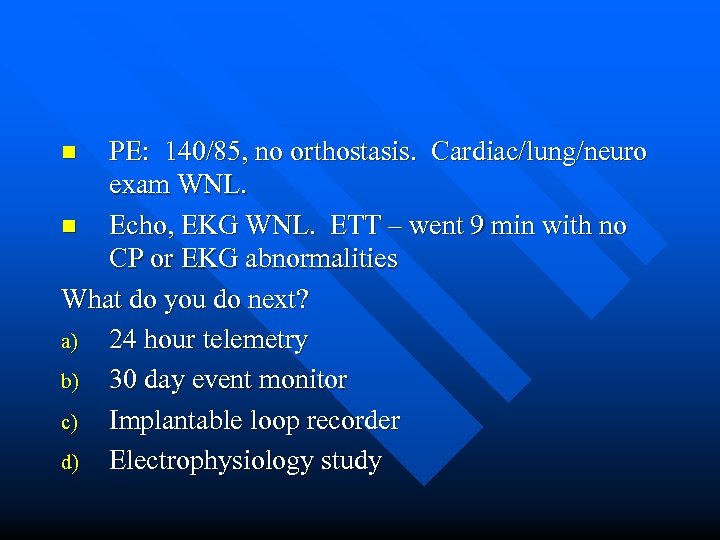 PE: 140/85, no orthostasis. Cardiac/lung/neuro exam WNL. n Echo, EKG WNL. ETT – went 9 min with no CP or EKG abnormalities What do you do next? a) 24 hour telemetry b) 30 day event monitor c) Implantable loop recorder d) Electrophysiology study n
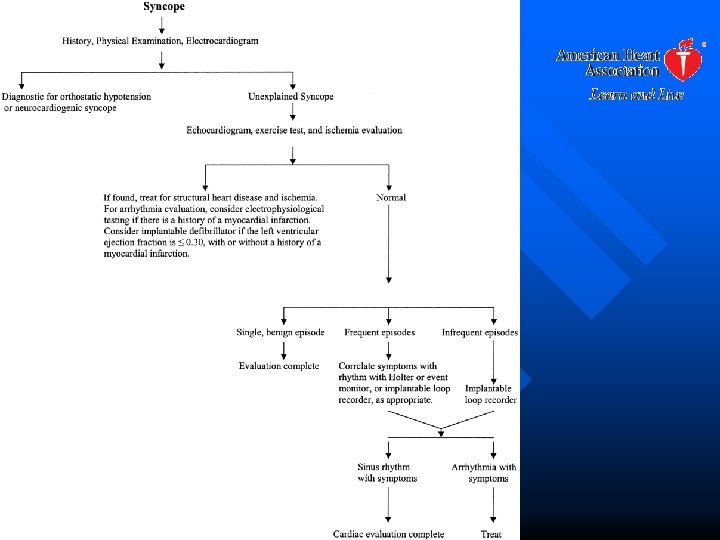 Copyright © 2006 American Heart Association
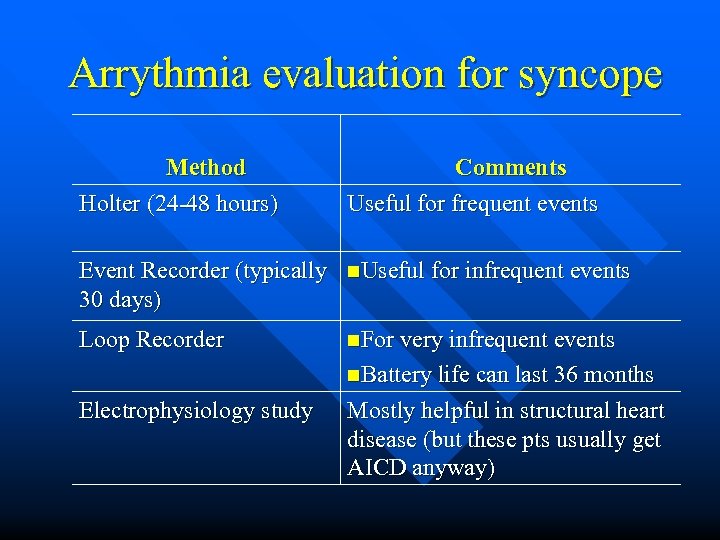 Arrythmia evaluation for syncope Method Holter (24 -48 hours) Comments Useful for frequent events Event Recorder (typically 30 days) n. Useful for infrequent events Loop Recorder n. For very infrequent events n. Battery life can last 36 months Electrophysiology study Mostly helpful in structural heart disease (but these pts usually get AICD anyway)
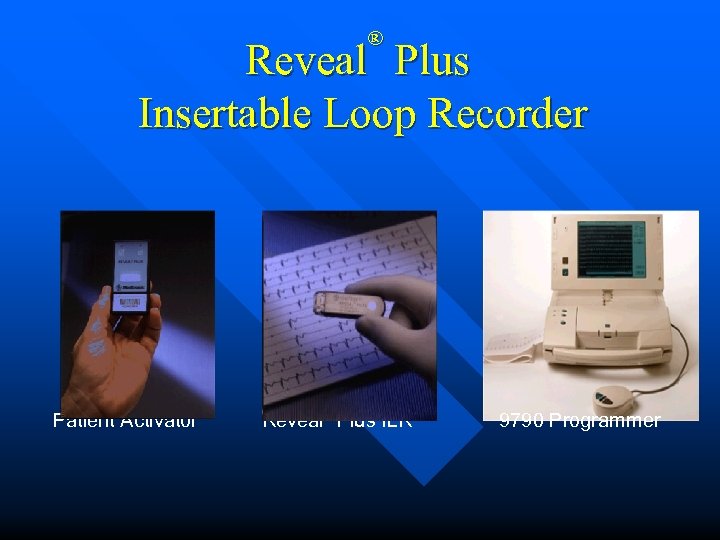 ® Reveal Plus Insertable Loop Recorder Patient Activator Reveal® Plus ILR 9790 Programmer
 Using the Implantable Loop Recorder n n One study: 60 patients assigned to “conventional” testing (tilt table, prolonged monitoring, EPS) vs ILR. Dx was found in 55% with ILR vs 19% with conventional tests Per ESC: ILR “may be more cost effective than a strategy using conventional investigation” and can be considered in “an early phase of evaluation in patients with recurrent syncope of uncertain origin”
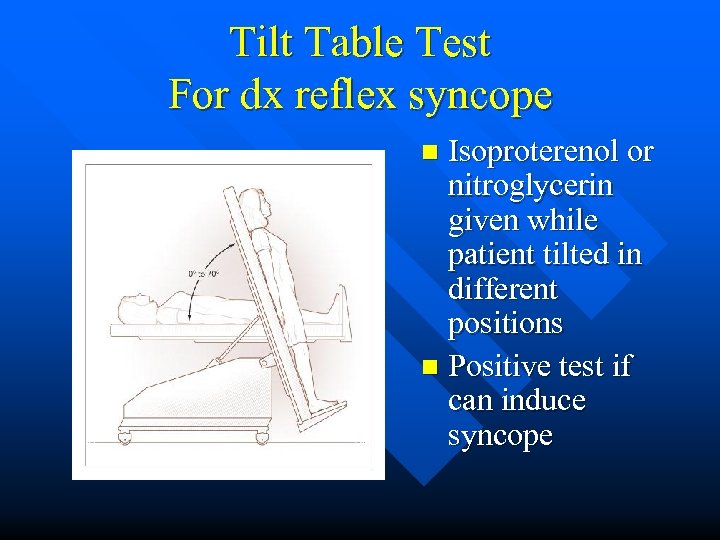 Tilt Table Test For dx reflex syncope Isoproterenol or nitroglycerin given while patient tilted in different positions n Positive test if can induce syncope n
 Tilt table test – Indications (Per European Society Cardiology) n Unexplained syncopal episode in – high risk setting (ie airplane pilot) – recurrent episodes after cardiac causes have been excluded
 Main points A good history, EKG is essential n Strongly consider getting orthostatic BP n If you know what is going on: TREAT! You don’t need to order a lot of tests. n If etiology unclear use risk factors to determine if you should do further testing n If significant risk factors: admit, tele, echo, +/- ETT n Don’t routinely get neuroimaging n Usually save further testing for recurrent episodes n
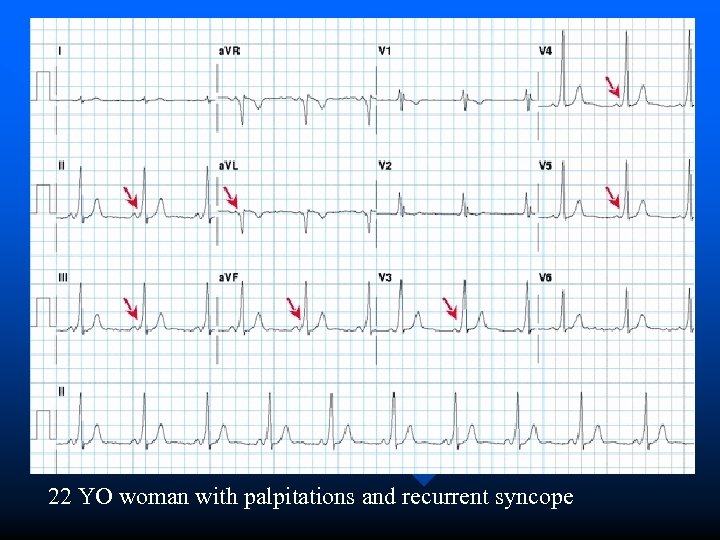 22 YO woman with palpitations and recurrent syncope
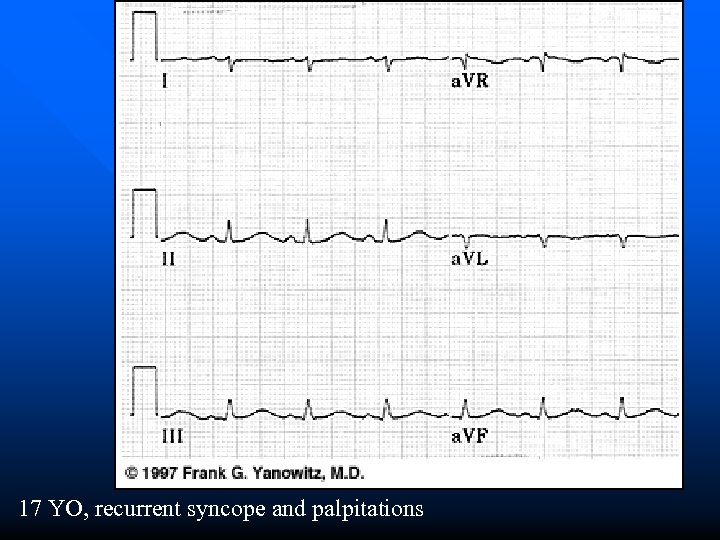 17 YO, recurrent syncope and palpitations
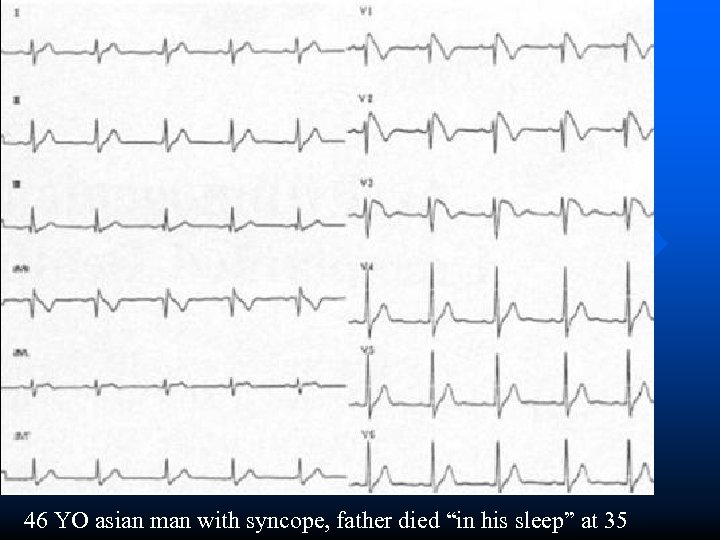 46 YO asian man with syncope, father died “in his sleep” at 35
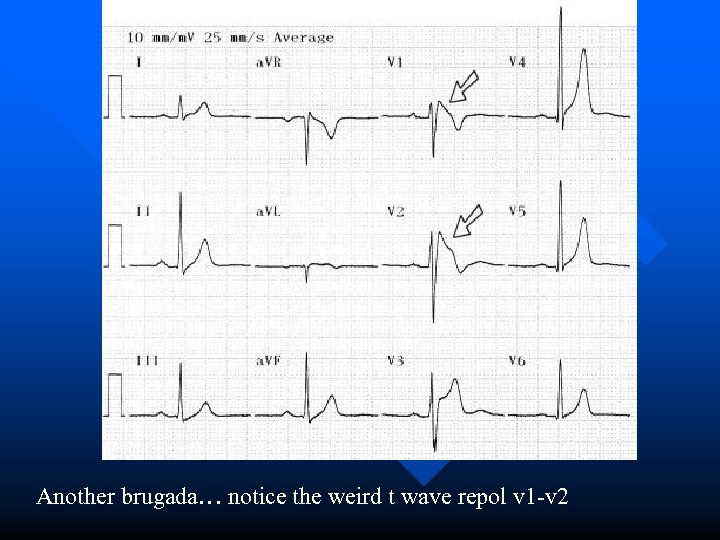 Another brugada… notice the weird t wave repol v 1 -v 2
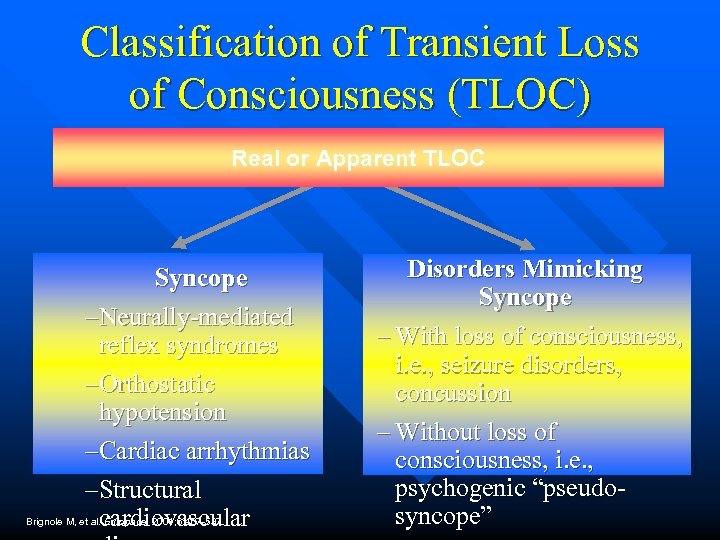 Classification of Transient Loss of Consciousness (TLOC) Real or Apparent TLOC Syncope –Neurally-mediated reflex syndromes –Orthostatic hypotension –Cardiac arrhythmias –Structural cardiovascular Brignole M, et al. Europace, 2004; 6: 467 -537. Disorders Mimicking Syncope – With loss of consciousness, i. e. , seizure disorders, concussion – Without loss of consciousness, i. e. , psychogenic “pseudosyncope”
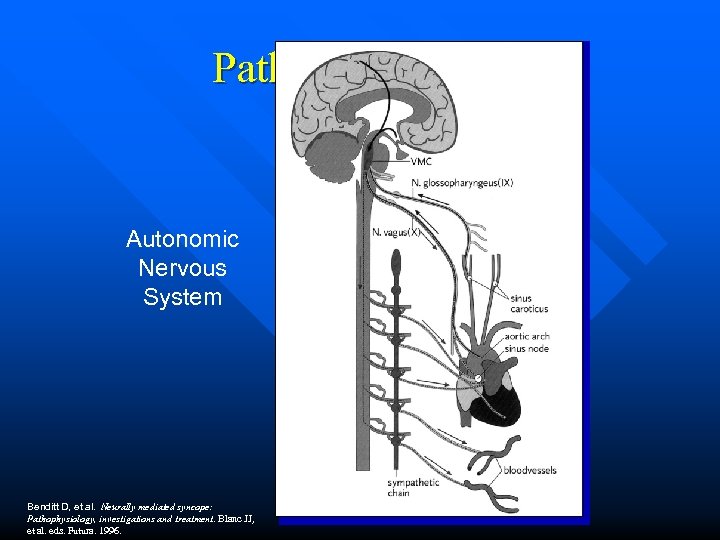 Pathophysiology Autonomic Nervous System Benditt D, et al. Neurally mediated syncope: Pathophysiology, investigations and treatment. Blanc JJ, et al. eds. Futura. 1996.