


 Скачать презентацию EVALUATING ENVIRONMENTAL INITIATIVES OF GERMAN HOTELS Prof Dr
f0f926a888c7b05f178818112d8e14bd.ppt
- Количество слайдов: 17
 EVALUATING ENVIRONMENTAL INITIATIVES OF GERMAN HOTELS Prof. Dr. Joseph Chen Mr. Willy Legrand Mr. Philip Sloan Dr. Josephine Zhou Department of Hospitality Management 01 th of July 2004
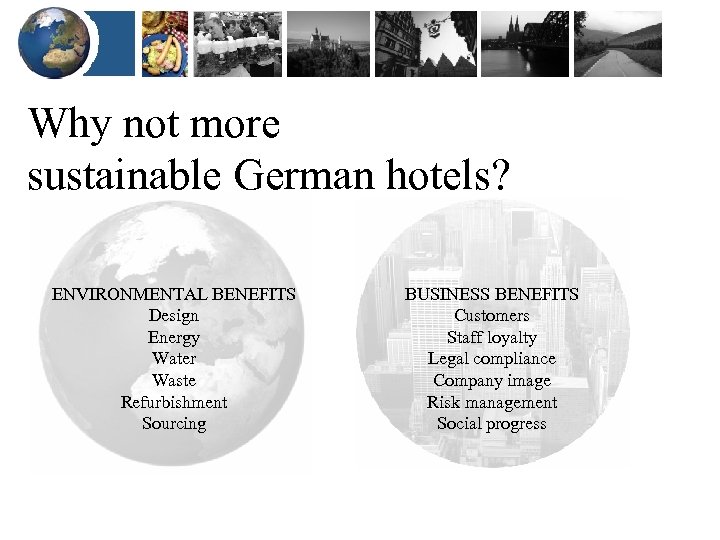 Why not more sustainable German hotels? ENVIRONMENTAL BENEFITS Design Energy Water Waste Refurbishment Sourcing BUSINESS BENEFITS Customers Staff loyalty Legal compliance Company image Risk management Social progress
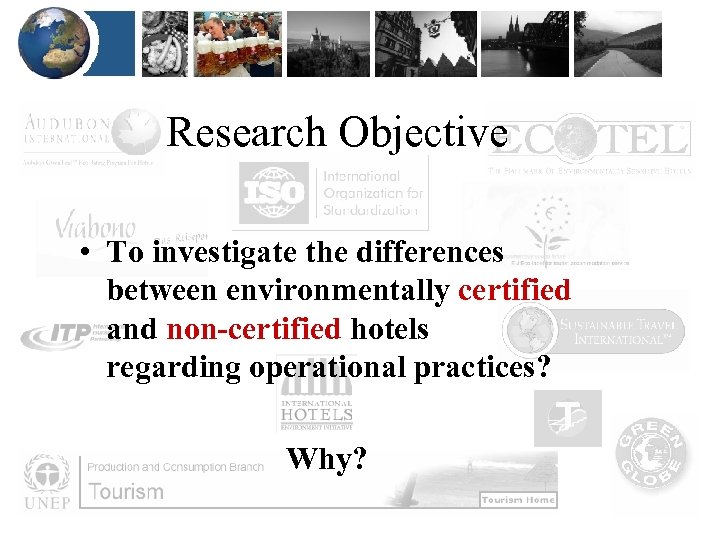 Research Objective • To investigate the differences between environmentally certified and non-certified hotels regarding operational practices? Why?
 METHODOLOGY
 Sample Population • Type of Hotels Sampled: – Independently-owned properties • Size of Hotels Sampled: – 100 to 500 rooms • Category of Hotels Sampled: – 3 to 5 stars DEHOGA (Deutsche Hotel & Gaststätten Verband) Rating • Location of Hotels Sampled: – Germany
 Research Approach • Survey – E-mail with attachment – Follow-up (Phone Calls) – One and two weeks after e-mail • Number of Hotels Contacted – 250
 Study Instrument • Questionnaire Development – Two-stage approach • Focus group survey and in-depth interviews • Pilot test with 10 hoteliers from cities of Bonn and Cologne – Reliability and Validity • Pilot test • Focus group survey and expert interviews
 FINDINGS
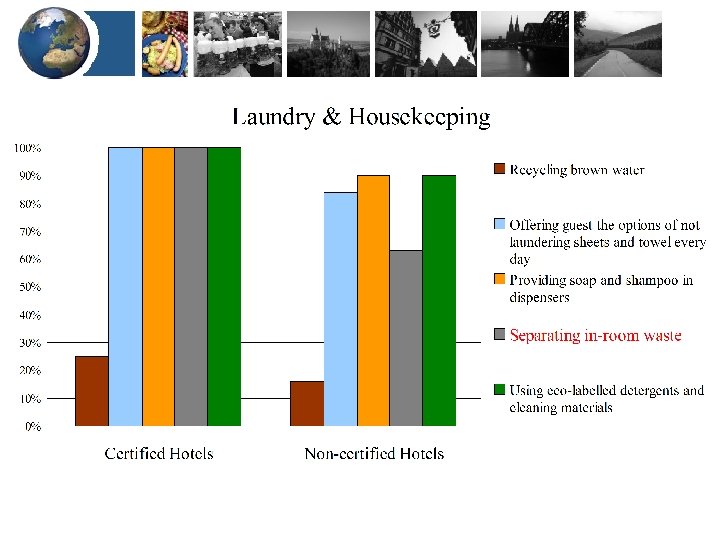
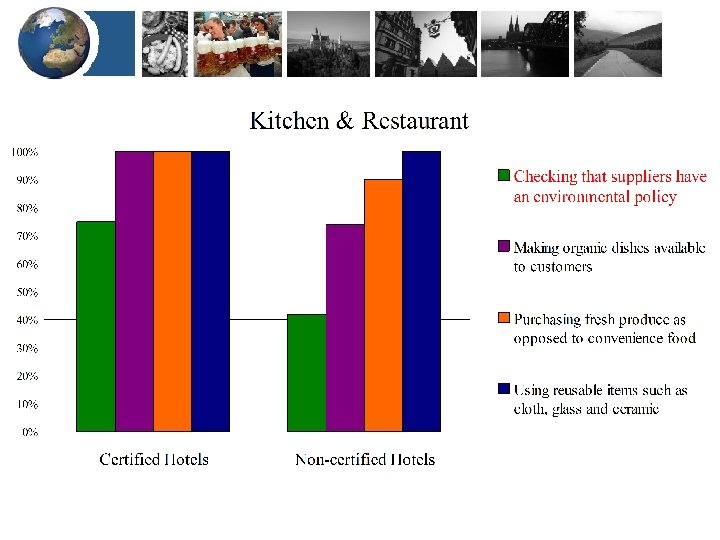
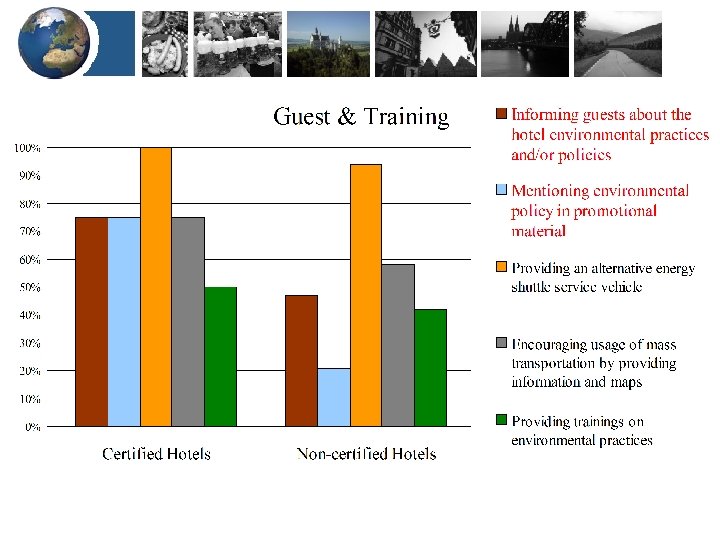
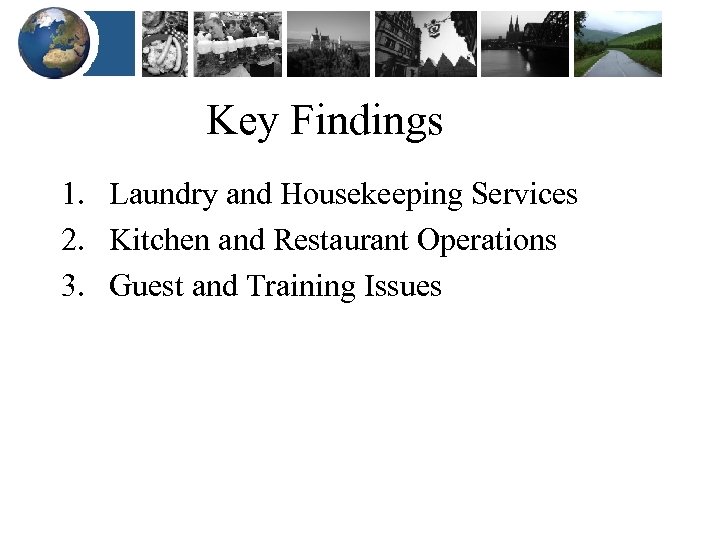 Key Findings 1. Laundry and Housekeeping Services 2. Kitchen and Restaurant Operations 3. Guest and Training Issues
 DISCUSSION
 Key Discussion Point • To certify or not to certify? Value to decision makers Perception/Awareness Cost/Investment Education/Communication
 FUTURE RESEARCH
 Suggestions for Future Study • Cost-benefit analysis of environmental certification • Consumer perception/Eco-product image
 Thank you for your attention • • • Prof. Dr. Joseph Chen Mr. Willy Legrand Mr. Philip Sloan Dr. Josephine Zhou Department of Hospitality Management • 01 th of July 2004