 Скачать презентацию European Heart Journal De belangrijkste studies voor
ec9d8309f2f154c630c3e576d2e84476.ppt
- Количество слайдов: 27




European Heart Journal : De belangrijkste studies voor de huisarts. Frans Van de Werf, MD, Ph. D University of Leuven, Belgium

Antwoord: l Er zijn er geen ! 3/18/2018
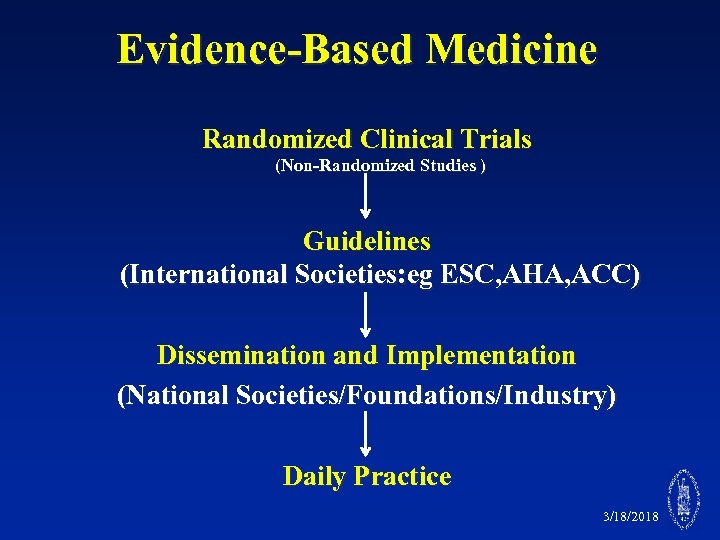
Evidence-Based Medicine Randomized Clinical Trials (Non-Randomized Studies ) Guidelines (International Societies: eg ESC, AHA, ACC) Dissemination and Implementation (National Societies/Foundations/Industry) Daily Practice 3/18/2018
Treatment of Heart Diseases • Surveys indicate that the current level of implementation of guidelines in daily practice is poor: gap between evidence and practice
Reasons for suboptimal implementation of guidelines • • Insufficient dissemination Lack of uniformity among guidelines produced by different societies (ACC, AHA, ESC, National Societies) • Disagreement with “experts” • Guidelines interpreted as interference with clinical freedom • • Daily clinical practice might deviates from what is described in the guidelines Socio-economic and socio-demographic issues
Reasons for conducting trials in non-Western countries: • • • Decrease in incidence of CHD in Western countries Increasing costs of trials in Western countries Competition among different trials in Western countries Pressure to finish enrollment in short period of time to obtain early product registration High incidence of CHD in Eastern Europe, Latin America and increasing incidence in Asia Financial incentives for investigators of non-Western countries to participate
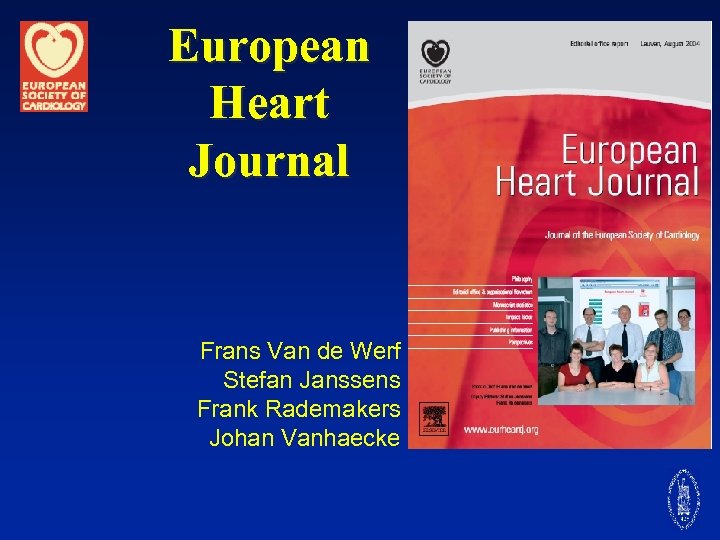
European Heart Journal Frans Van de Werf Stefan Janssens Frank Rademakers Johan Vanhaecke
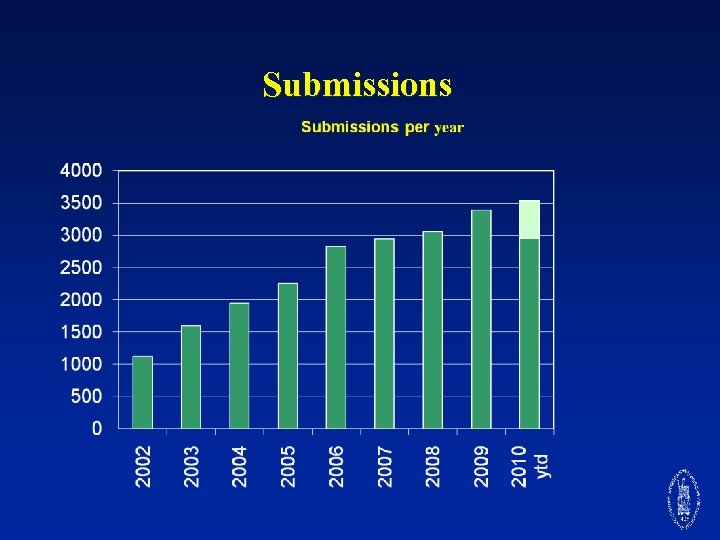
Submissions
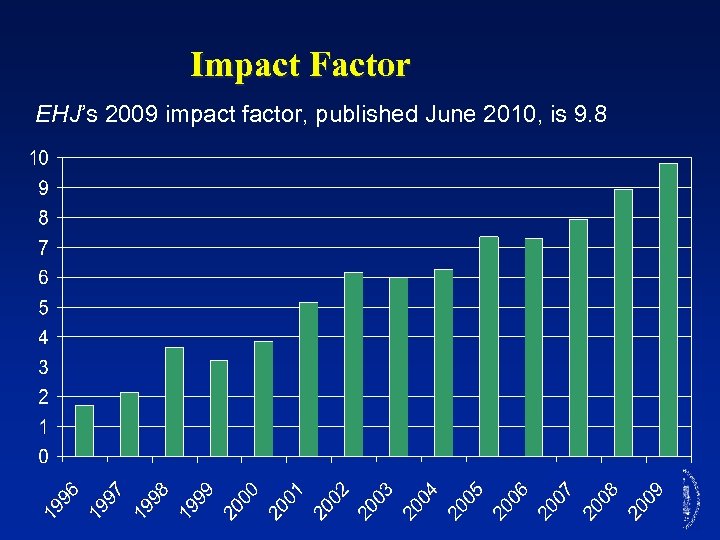
Impact Factor EHJ’s 2009 impact factor, published June 2010, is 9. 8
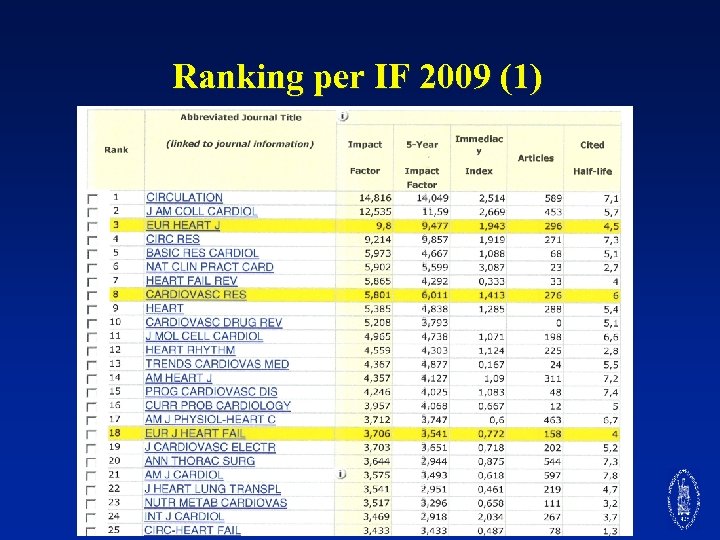
Ranking per IF 2009 (1)
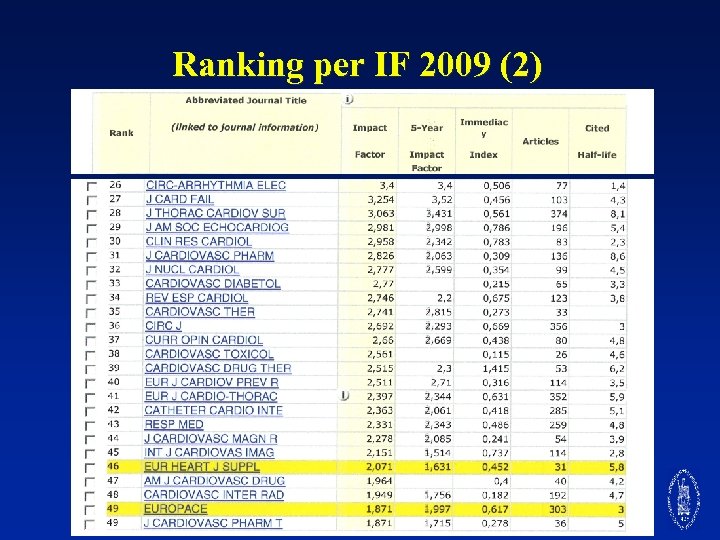
Ranking per IF 2009 (2)
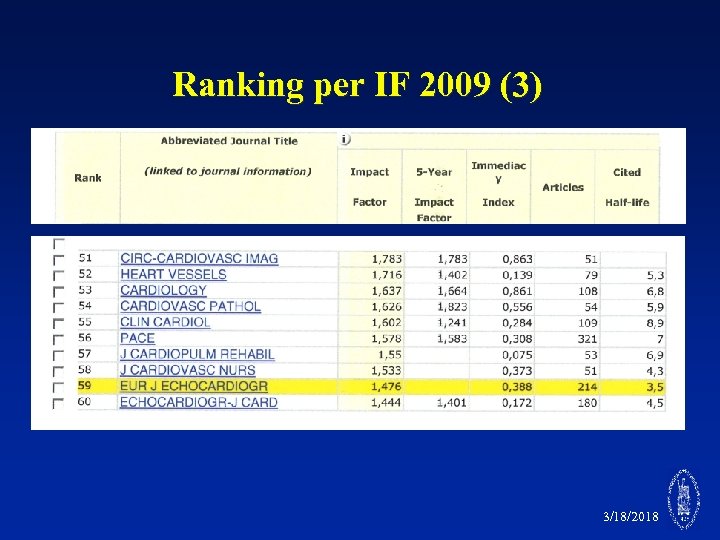
Ranking per IF 2009 (3) 3/18/2018
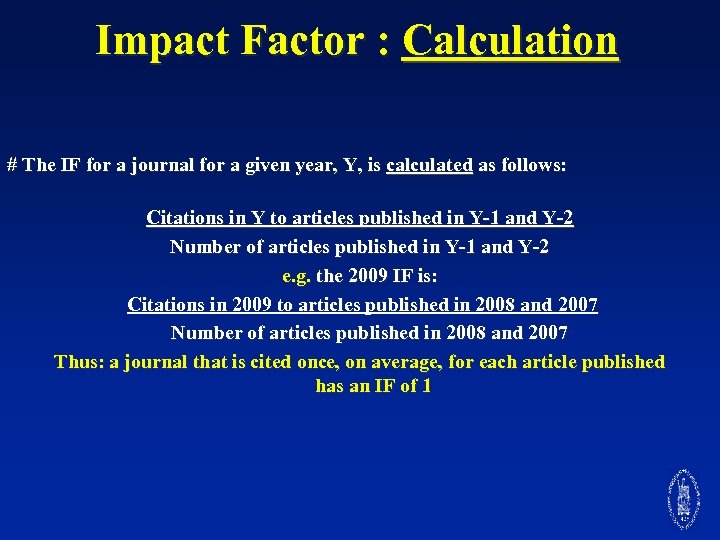
Impact Factor : Calculation # The IF for a journal for a given year, Y, is calculated as follows: Citations in Y to articles published in Y-1 and Y-2 Number of articles published in Y-1 and Y-2 e. g. the 2009 IF is: Citations in 2009 to articles published in 2008 and 2007 Number of articles published in 2008 and 2007 Thus: a journal that is cited once, on average, for each article published has an IF of 1
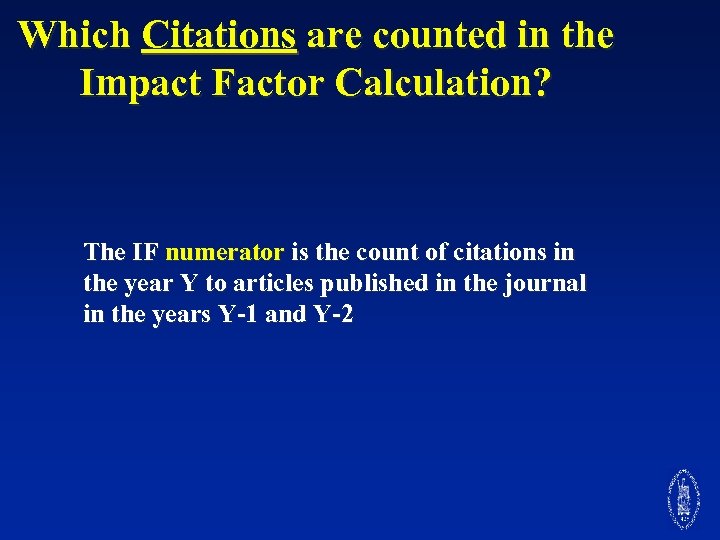
Which Citations are counted in the Impact Factor Calculation? The IF numerator is the count of citations in the year Y to articles published in the journal in the years Y-1 and Y-2
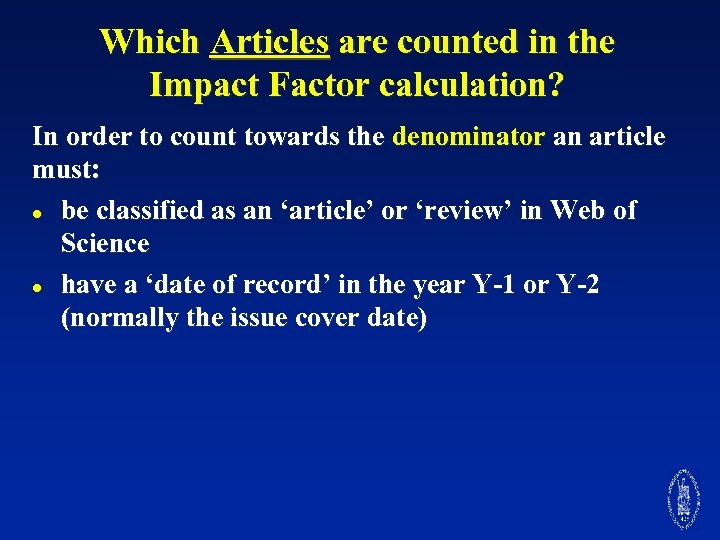
Which Articles are counted in the Impact Factor calculation? In order to count towards the denominator an article must: l be classified as an ‘article’ or ‘review’ in Web of Science l have a ‘date of record’ in the year Y-1 or Y-2 (normally the issue cover date)
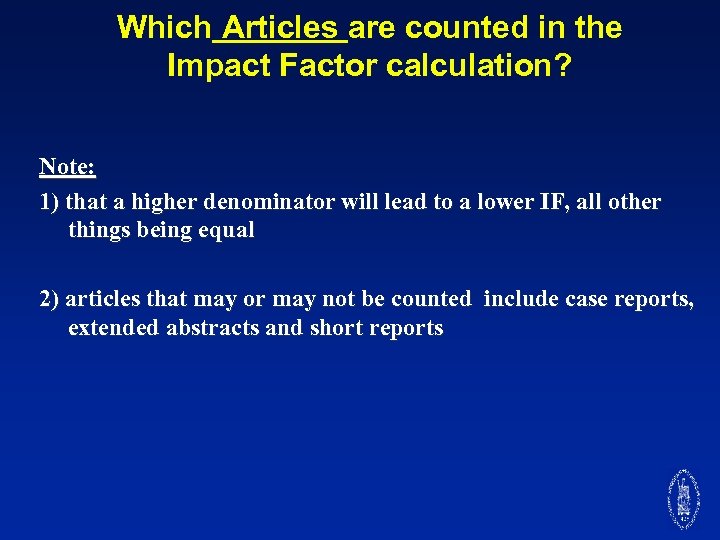
Which Articles are counted in the Impact Factor calculation? Note: 1) that a higher denominator will lead to a lower IF, all other things being equal 2) articles that may or may not be counted include case reports, extended abstracts and short reports
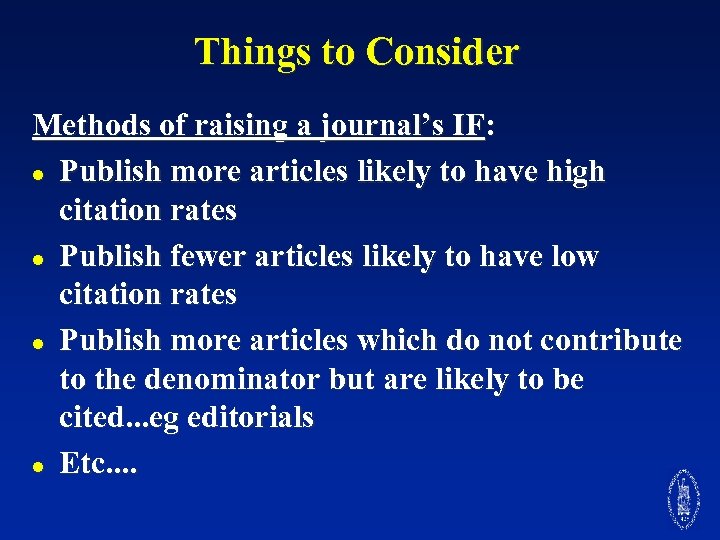
Things to Consider Methods of raising a journal’s IF: l Publish more articles likely to have high citation rates l Publish fewer articles likely to have low citation rates l Publish more articles which do not contribute to the denominator but are likely to be cited. . . eg editorials l Etc. .
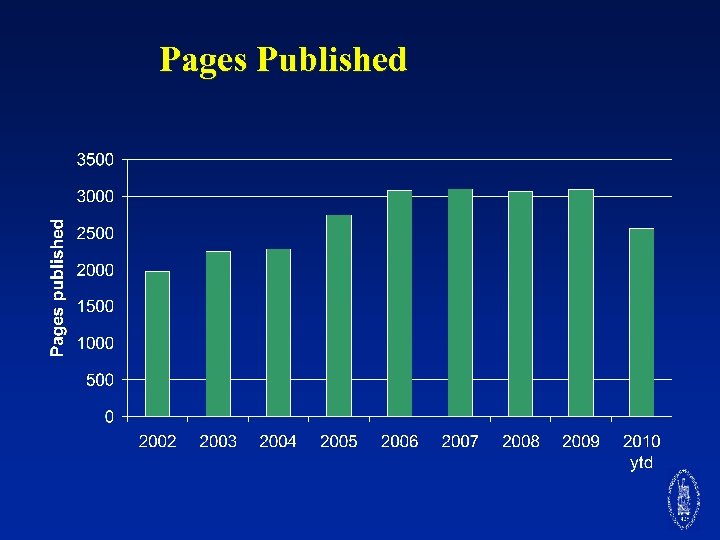
Pages Published
IF: Merits. Results are widely (though not freely) available. . It is an objective measure.
IF: Misuse l l The IF averages over all articles and thus underestimates the citations of the top cited while exaggerating the number of citations of the average publication. The absolute value of an IF is meaningless. A journal with an IF of 2 would not be very impressive in Cardiology, while it would in Oceanography.
IF : misuse (2) l l The comparison of IFs between different fields is invalid. Yet such comparisons have been widely used for the evaluation of not merely journals, but of scientists and university departments. Though the IF was originally intended as an objective measure of the reputability of a journal, it is now being increasingly applied to measure the productivity of scientists. The way it is used is to examine the IFs of the journals in which the scientist's articles have been published.
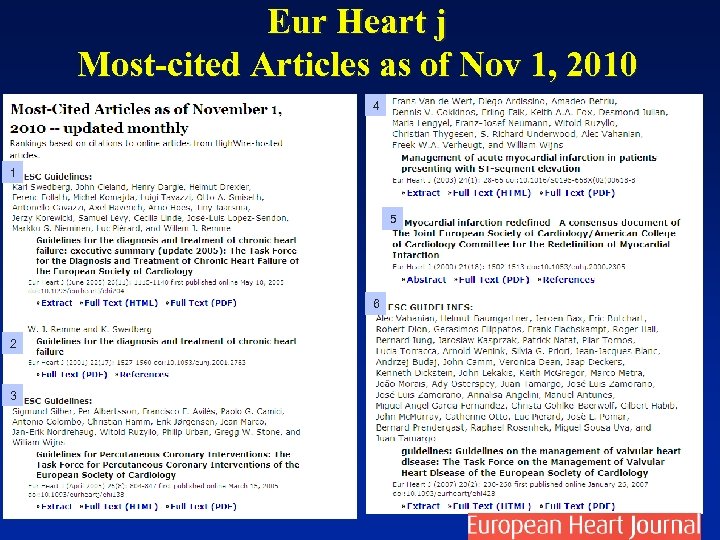
Eur Heart j Most-cited Articles as of Nov 1, 2010 4 1 5 6 2 3 3/18/2018
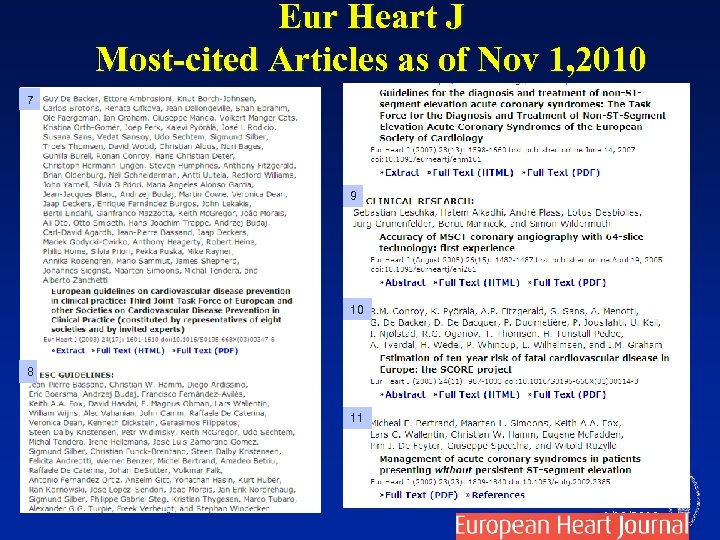
Eur Heart J Most-cited Articles as of Nov 1, 2010 7 9 10 8 11 3/18/2018
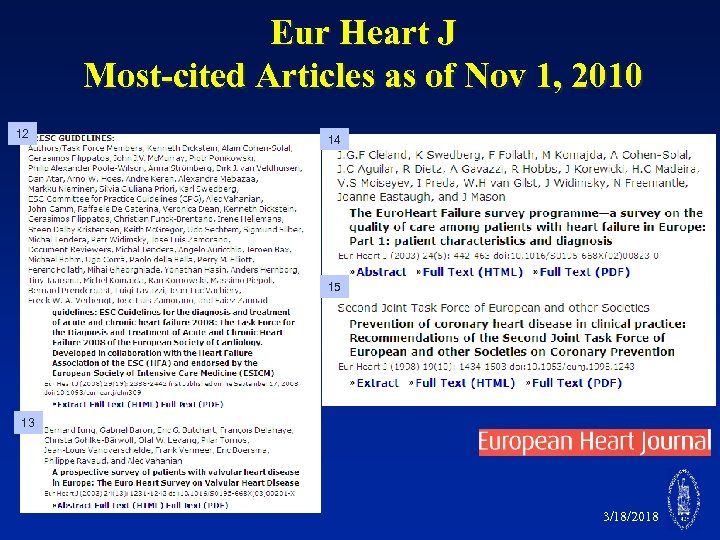
Eur Heart J Most-cited Articles as of Nov 1, 2010 12 14 15 13 3/18/2018
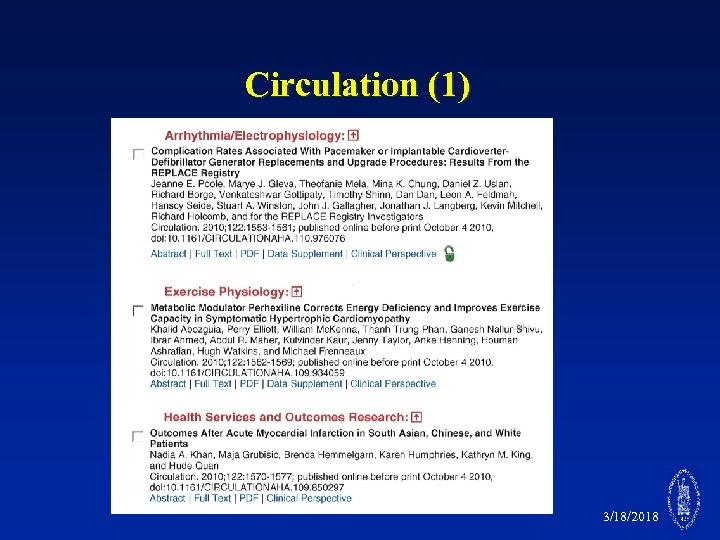
Circulation (1) 3/18/2018
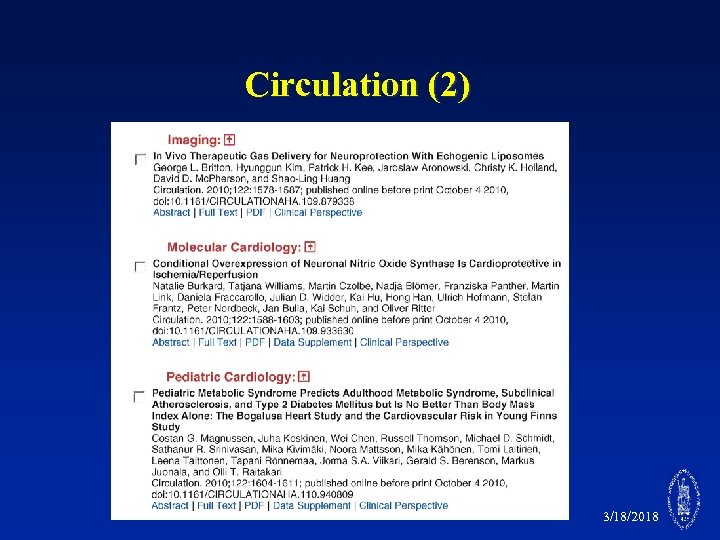
Circulation (2) 3/18/2018
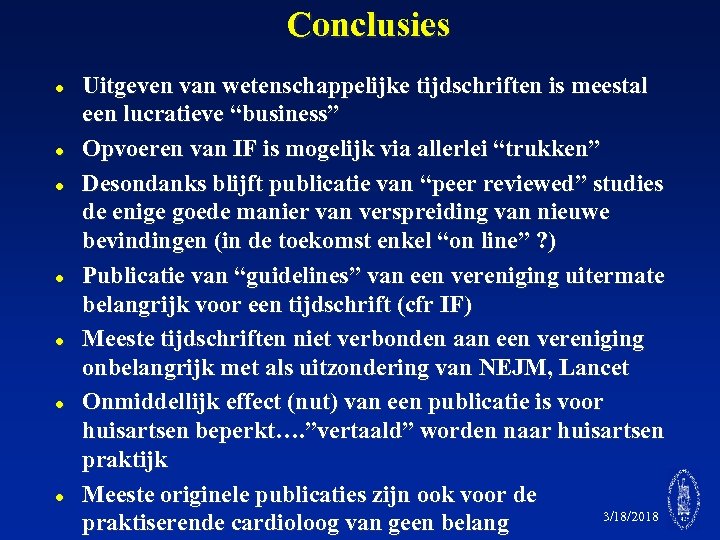
Conclusies l l l l Uitgeven van wetenschappelijke tijdschriften is meestal een lucratieve “business” Opvoeren van IF is mogelijk via allerlei “trukken” Desondanks blijft publicatie van “peer reviewed” studies de enige goede manier van verspreiding van nieuwe bevindingen (in de toekomst enkel “on line” ? ) Publicatie van “guidelines” van een vereniging uitermate belangrijk voor een tijdschrift (cfr IF) Meeste tijdschriften niet verbonden aan een vereniging onbelangrijk met als uitzondering van NEJM, Lancet Onmiddellijk effect (nut) van een publicatie is voor huisartsen beperkt…. ”vertaald” worden naar huisartsen praktijk Meeste originele publicaties zijn ook voor de 3/18/2018 praktiserende cardioloog van geen belang
Скачать презентацию European Heart Journal De belangrijkste studies voor
ec9d8309f2f154c630c3e576d2e84476.ppt