


 Скачать презентацию European Economics REVIEW GAME Winnin G t Ea
a6e0d7d46ddddeb690e377ef1de11a1e.ppt
- Количество слайдов: 56
 European Economics REVIEW GAME Winnin. G t. Ea. M RECEi. VEs +5 points on to. Mo. RRo. W’s t. Est and Cand. Y!
 RULES of PLAY § 2 teams equally split by DNM, M, and E standards. § 1 player from each team goes to the front of the room and sits in the HOT seat to answer the question. §The team whose player answers the question correctly earns points for their team. §Sportsmanship points are awarded and taken away (no whispering answers if it’s not your turn, no arguing with the teacher, and no arguing with teammates or opponents).
 HOW THE GAME IS PLAYED § 1 person from each team comes up to the front. § The question will be projected on the screen § The first team member to hit the easy button is allowed first chance to answer the question. § If they answer the question correctly they are awarded points § If they answer the question incorrectly they lose points and the other team has a chance to steal for DOUBLE the points! § At the end of the game the team that has the most points WINS the bonus points on the test and the candy.

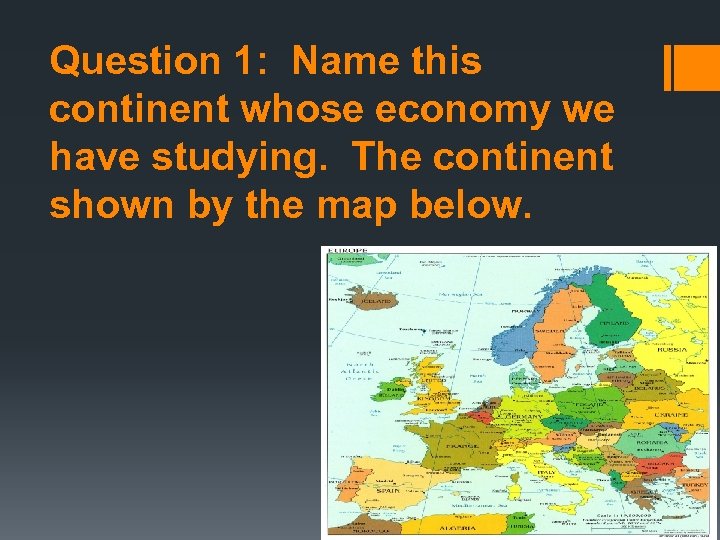 Question 1: Name this continent whose economy we have studying. The continent shown by the map below.
 Answer 1: Europe
 Question 2: The study of how people, businesses, and countries use limited resources is known as ______.
 Answer 2: Economics
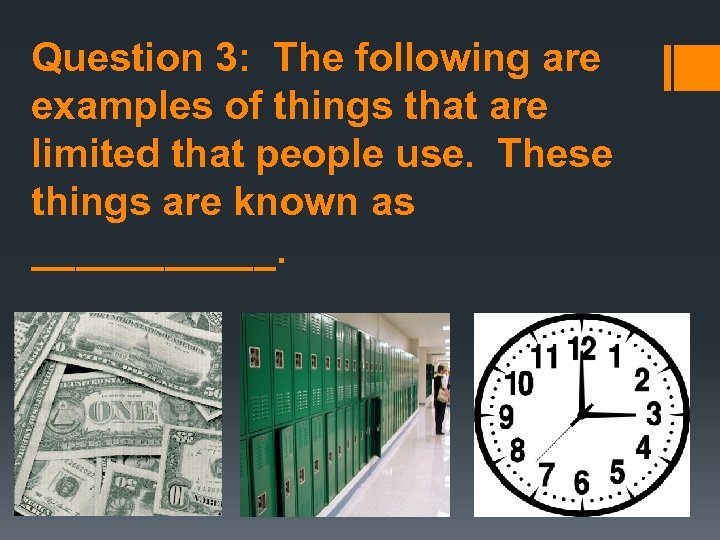 Question 3: The following are examples of things that are limited that people use. These things are known as ______.
 Answer 3: Resources
 Question 4: The three basic economic questions ask:
 Answer 4: 1. What to produce/What is produced? 2. How to produce it? 3. For whom to produce it?
 Question 5: If a room has 38 students, but only 35 desks that means there is a ____ of desks.
 Answer 5: §Scarcity-A small and inadequate amount. 35 desks for 38 students is a scarce (small and inadequate amount).
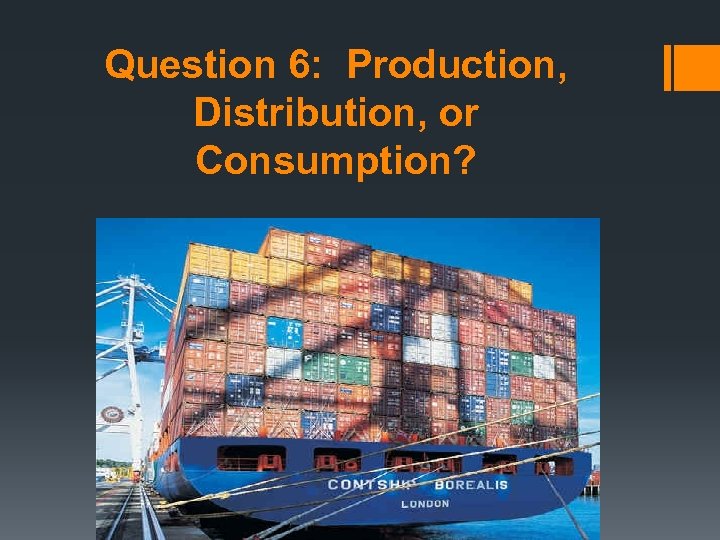 Question 6: Production, Distribution, or Consumption?
 Answer 6: Distribution The commercial activity of transporting and selling goods from a producer to a consumer.
 Question 7: §Most countries fall in between a command a market economic system. The combination of command market economic systems are known as ______.
 Answer 7: §Mixed economy
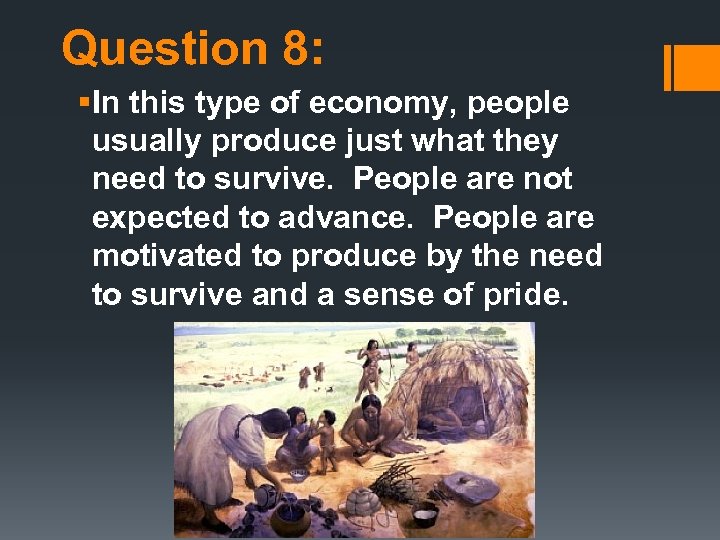 Question 8: §In this type of economy, people usually produce just what they need to survive. People are not expected to advance. People are motivated to produce by the need to survive and a sense of pride.
 Answer 8: §Traditional Economy
 Question 9: §Explain the difference between a want and a need and give 2 examples of EACH.
 Answer 9: §A want is something that is desired and a need is something that is necessary for survival. §WANTS—Electronics, Toys, Car §NEEDS—Food/water, shelter, clothes
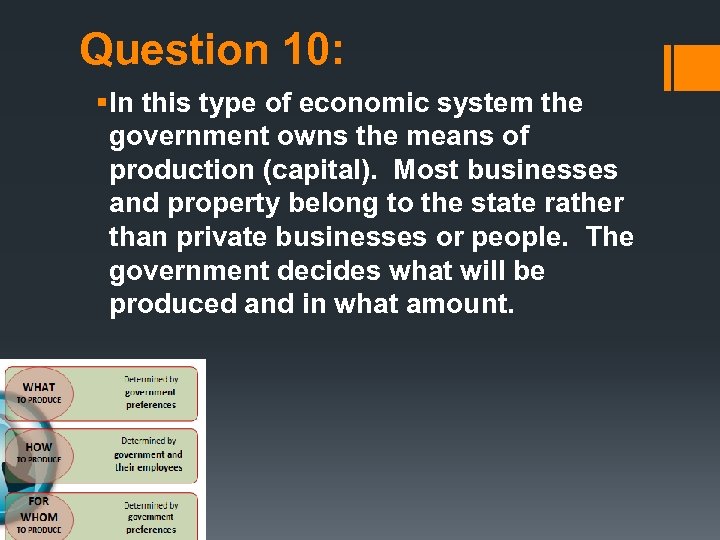 Question 10: § In this type of economic system the government owns the means of production (capital). Most businesses and property belong to the state rather than private businesses or people. The government decides what will be produced and in what amount.
 Answer 10: §Command Economy
 Question 11: §If 2 friends order a large pizza that has 10 slices and each friend has 3 slices that leaves 4 slices leftover. There is now an ______ of pizza.
 Answer 11: §Abundance—The property of a more than adequate quantity or supply. Since there were 4 slices of pizza leftover that means there was an abundance.
 Question 12: §This type of economic system allows for private ownership of business and property. This type of economy has very little government regulation. Market demand determines what will be produced rather than the government.
 Answer 12: §Market Economy
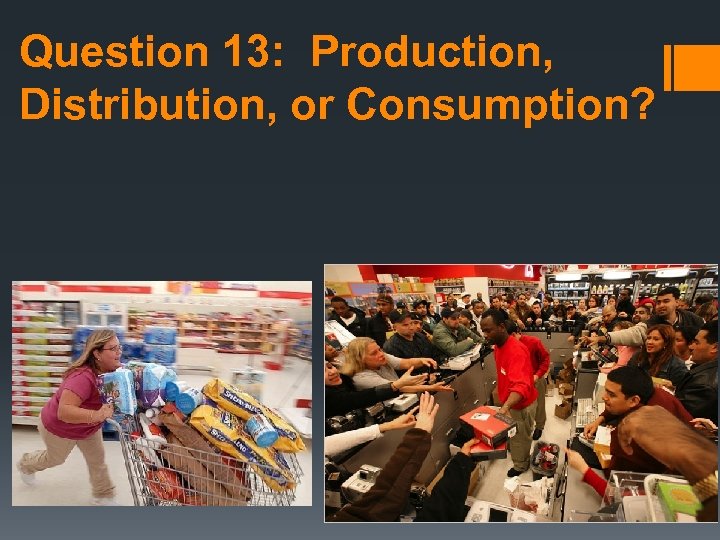 Question 13: Production, Distribution, or Consumption?
 Answer 13: §Consumption
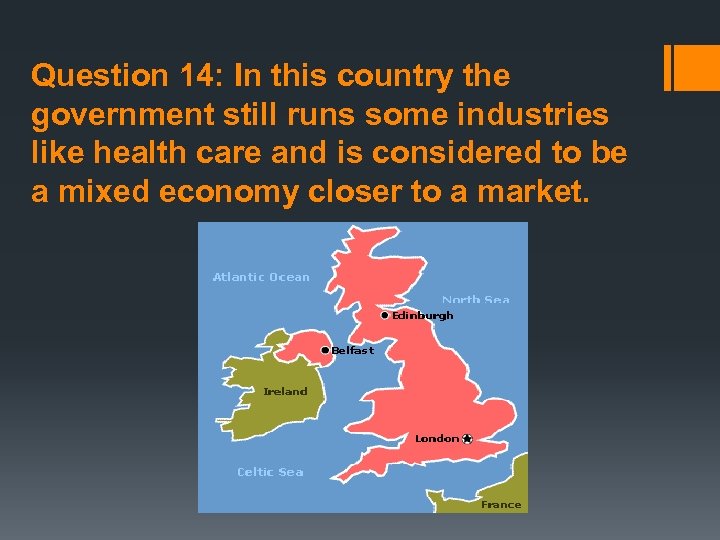 Question 14: In this country the government still runs some industries like health care and is considered to be a mixed economy closer to a market.
 Answer 14: §The United Kingdom’s economy is a mixed economy.
 Question 15: What is the difference between a good and a service? Give two examples of both.
 Answer 15: §Good—Something that can be purchased and used. §Service—Something someone pays for in return for a job being performed for them. §GOOD—Car, Television, Box of cereal §SERVICE—Haircut, oil change, gutter cleaning, manicure/pedicure, trash pick -up,
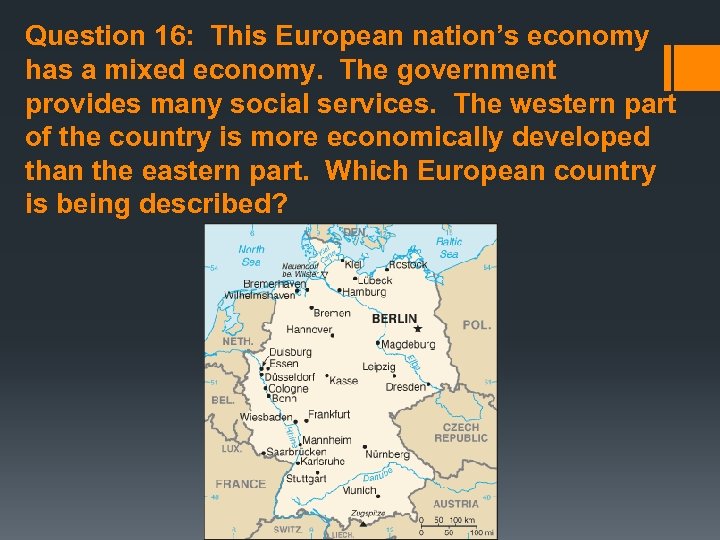 Question 16: This European nation’s economy has a mixed economy. The government provides many social services. The western part of the country is more economically developed than the eastern part. Which European country is being described?
 Answer 16: §Germany
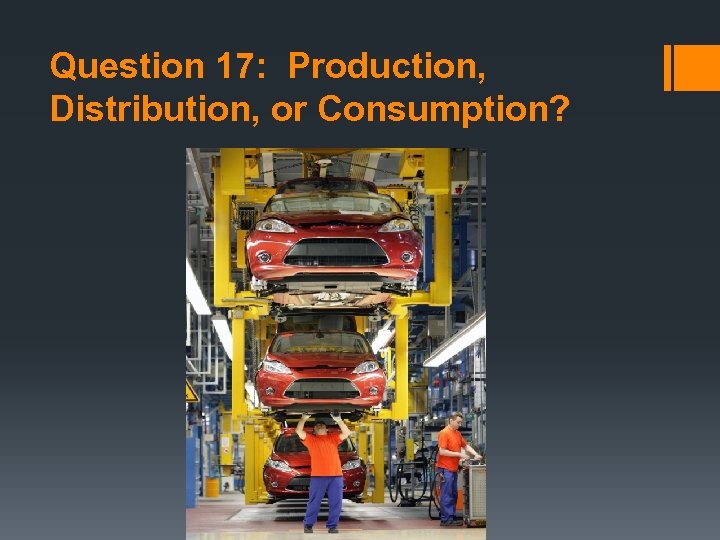 Question 17: Production, Distribution, or Consumption?
 Answer 17: §Production
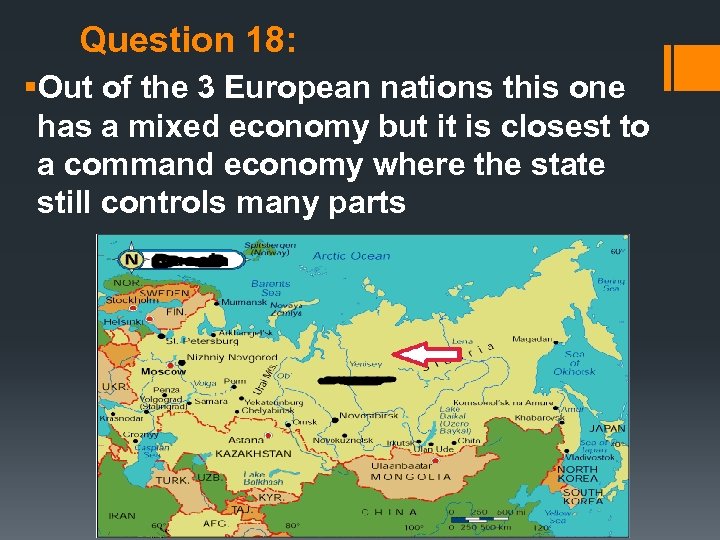 Question 18: §Out of the 3 European nations this one has a mixed economy but it is closest to a command economy where the state still controls many parts
 Answer 19: §Russia
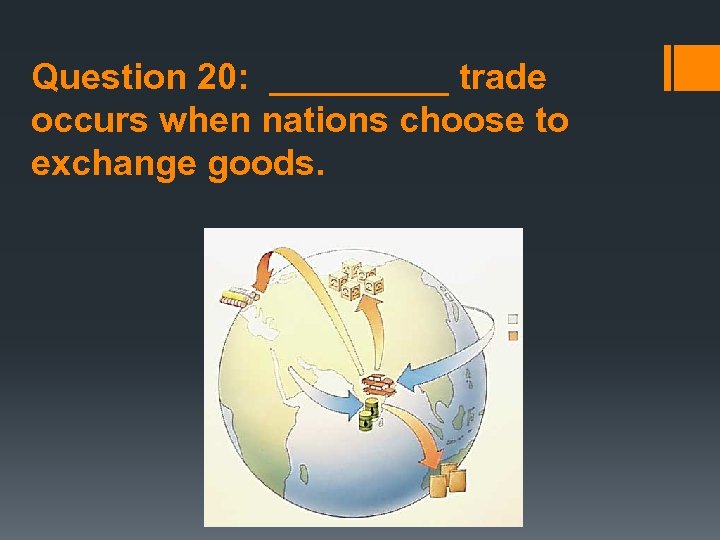 Question 20: _____ trade occurs when nations choose to exchange goods.
 Answer 20: §International trade
 Question 21: §_____ are goods that a country buys from producers in another country and ____ are goods that producers in one country ship to another country.
 Answer 21: §Imports are goods that a country buys from producers in another country. Exports are goods that producers in one country ship to another country.
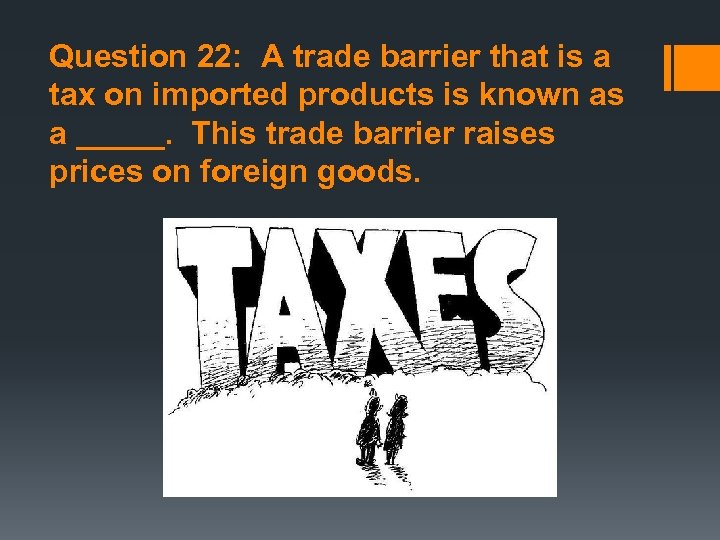 Question 22: A trade barrier that is a tax on imported products is known as a _____. This trade barrier raises prices on foreign goods.
 Answer 22: §Tariff
 Question 23: The Alps, Pyrenees, and the Urals are three examples of this type of natural/physical trade barrier. These natural/physical trade barriers are hard to cross and make it harder for people in different communities to trade. What type of natural/physical trade barrier are these?
 Answer 23: §Mountains
 Question 24: §This type of trade barrier are limits on trade. They restrict the amount of a foreign good that may be imported in a given amount of time.
 Answer 24: §Quota
 Question 25: §A trade barrier that is the most drastic/severe is when nations refuse to trade with a certain country at all. This is a(an) _______.
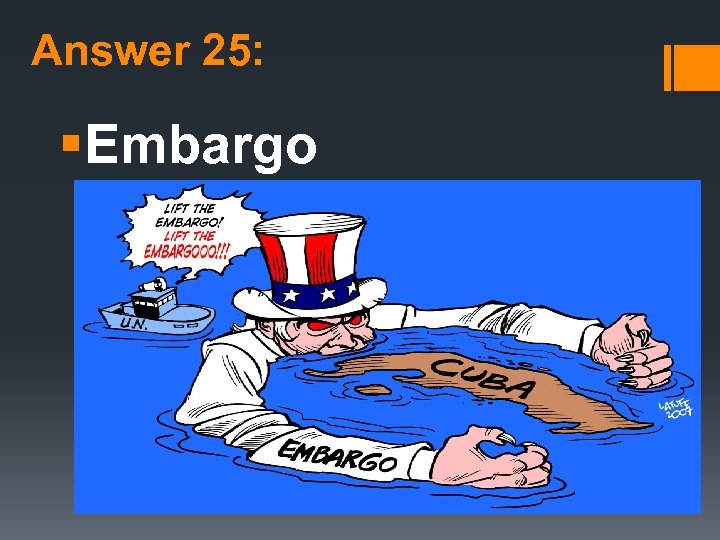 Answer 25: §Embargo
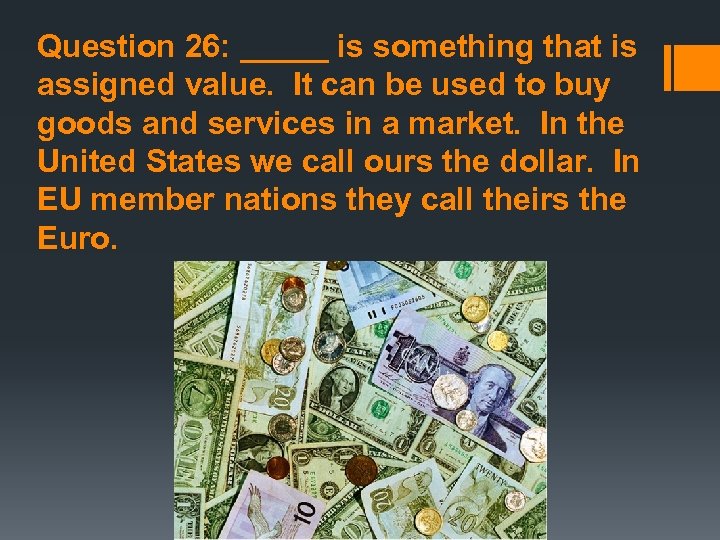 Question 26: _____ is something that is assigned value. It can be used to buy goods and services in a market. In the United States we call ours the dollar. In EU member nations they call theirs the Euro.
 Answer 26: §Currency
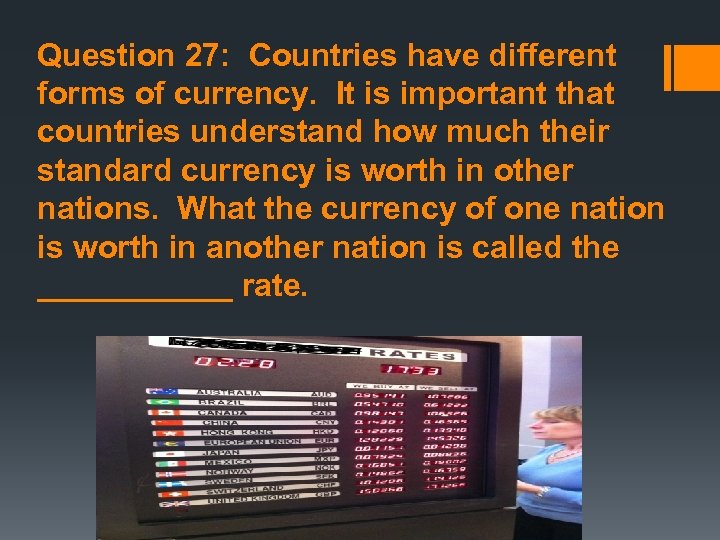 Question 27: Countries have different forms of currency. It is important that countries understand how much their standard currency is worth in other nations. What the currency of one nation is worth in another nation is called the ______ rate.
 Answer 27 §Exchange Rate