 Скачать презентацию euro ba n qu a project Knowledge Management
f53795241c6280fe495490dfec58efa0.ppt
- Количество слайдов: 25



euro. ba. n. qu. a. project Knowledge Management and Human Performance Improvement at CGD E-Learning Strategy and implementation process Athens, 15 th February 2008
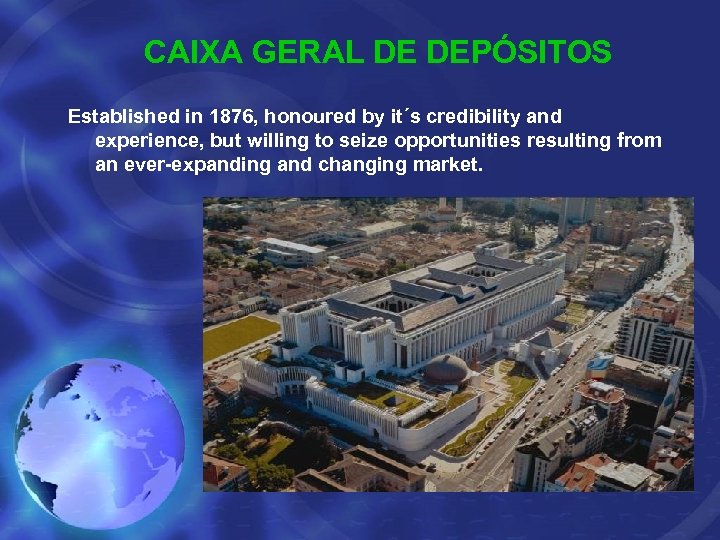
CAIXA GERAL DE DEPÓSITOS Established in 1876, honoured by it´s credibility and experience, but willing to seize opportunities resulting from an ever-expanding and changing market.

Caixa is the leading Portuguese financial institution Developing bonds and relationships with people in over 21 countries.
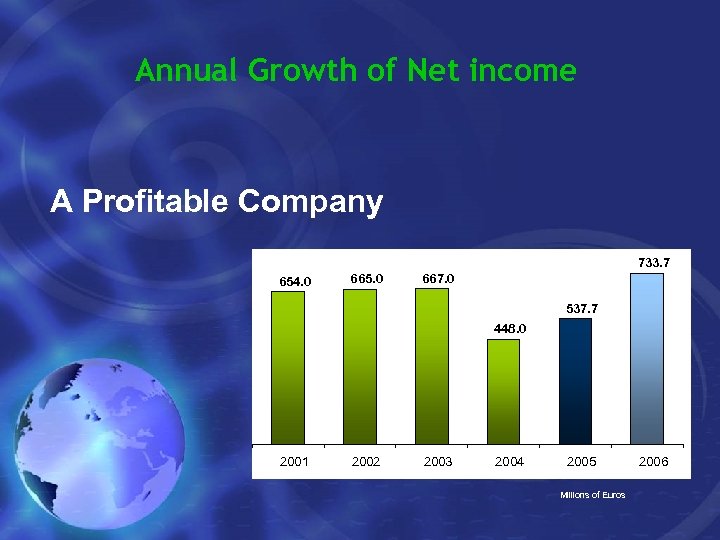
Annual Growth of Net income A Profitable Company 733. 7 654. 0 665. 0 667. 0 537. 7 448. 0 2001 2002 2003 2004 2005 Millions of Euros 2006
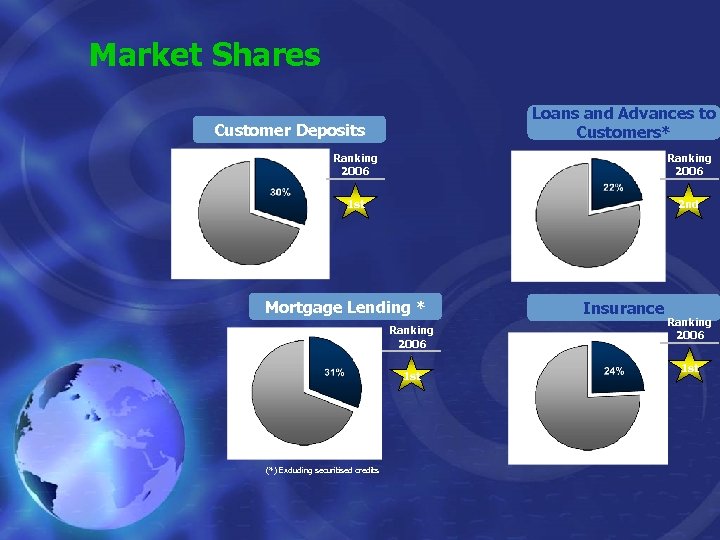
Market Shares Loans and Advances to Customers* Customer Deposits Ranking 2006 1 st 2 nd Mortgage Lending * Ranking 2006 1 st (*) Excluding securitised credits Insurance Ranking 2006 1 st
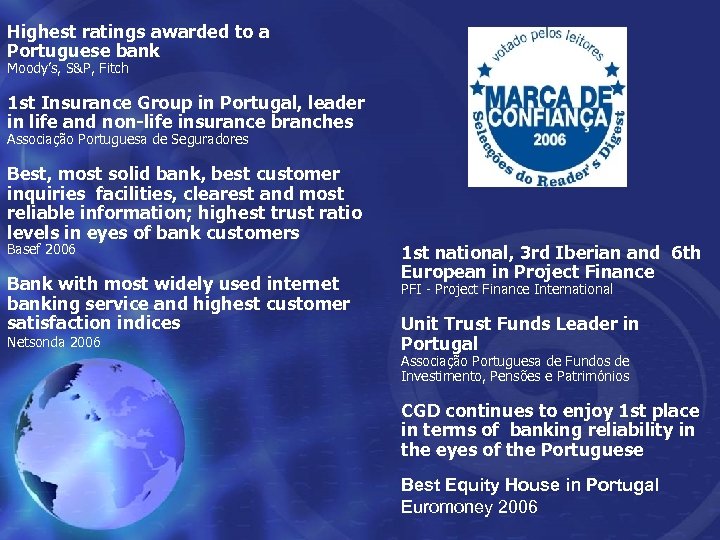
Highest ratings awarded to a Portuguese bank Moody’s, S&P, Fitch 1 st Insurance Group in Portugal, leader in life and non-life insurance branches Associação Portuguesa de Seguradores Best, most solid bank, best customer inquiries facilities, clearest and most reliable information; highest trust ratio levels in eyes of bank customers Basef 2006 Bank with most widely used internet banking service and highest customer satisfaction indices Netsonda 2006 1 st national, 3 rd Iberian and 6 th European in Project Finance PFI - Project Finance International Unit Trust Funds Leader in Portugal Associação Portuguesa de Fundos de Investimento, Pensões e Patrimónios CGD continues to enjoy 1 st place in terms of banking reliability in the eyes of the Portuguese Best Equity House in Portugal Euromoney 2006
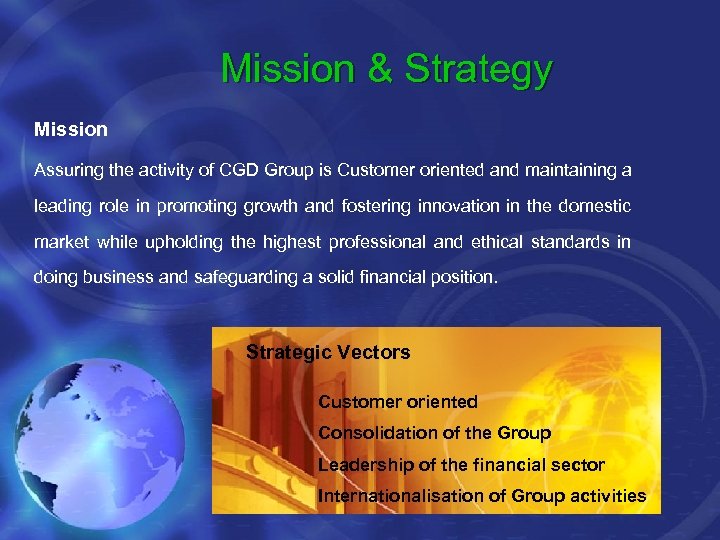
Mission & Strategy Mission Assuring the activity of CGD Group is Customer oriented and maintaining a leading role in promoting growth and fostering innovation in the domestic market while upholding the highest professional and ethical standards in doing business and safeguarding a solid financial position. Strategic Vectors Customer oriented Consolidation of the Group Leadership of the financial sector Internationalisation of Group activities
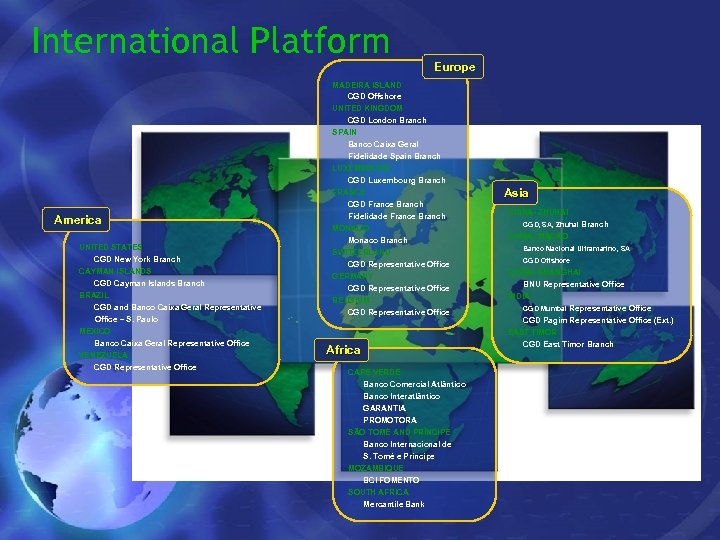
International Platform America UNITED STATES CGD New York Branch CAYMAN ISLANDS CGD Cayman Islands Branch BRAZIL CGD and Banco Caixa Geral Representative Office – S. Paulo MEXICO Banco Caixa Geral Representative Office VENEZUELA CGD Representative Office Europe MADEIRA ISLAND CGD Offshore UNITED KINGDOM CGD London Branch SPAIN Banco Caixa Geral Fidelidade Spain Branch LUXEMBOURG CGD Luxembourg Branch FRANCE CGD France Branch Fidelidade France Branch MONACO Monaco Branch SWITZERLAND CGD Representative Office GERMANY CGD Representative Office BELGIUM CGD Representative Office Africa CAPE VERDE Banco Comercial Atlântico Banco Interatlântico GARANTIA PROMOTORA SÃO TOMÉ AND PRÍNCIPE Banco Internacional de S. Tomé e Príncipe MOZAMBIQUE BCI FOMENTO SOUTH AFRICA Mercantile Bank Asia CHINA- ZHUHAI CGD, SA, Zhuhai Branch CHINA- MACAO Banco Nacional Ultramarino, SA CGD Offshore CHINA- SHANGHAI BNU Representative Office INDIA CGD Mumbai Representative Office CGD Pagim Representative Office (Ext. ) EAST TIMOR CGD East Timor Branch
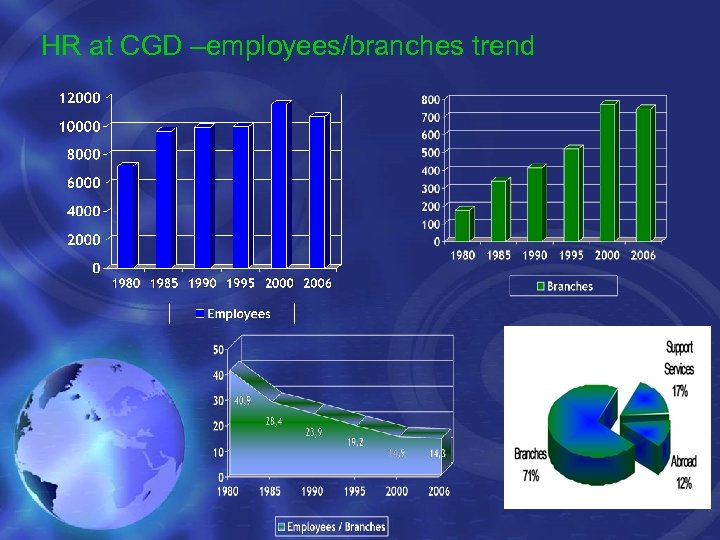
HR at CGD –employees/branches trend
E-Learning Strategy Defining and implementing a (new) training model that effectively supports the development of competences and knowledge of CGD Group employees through a blended learning strategy, taking advantage of the synergies between remote learning and instructor led training, as well as the implementation of a technological solution.
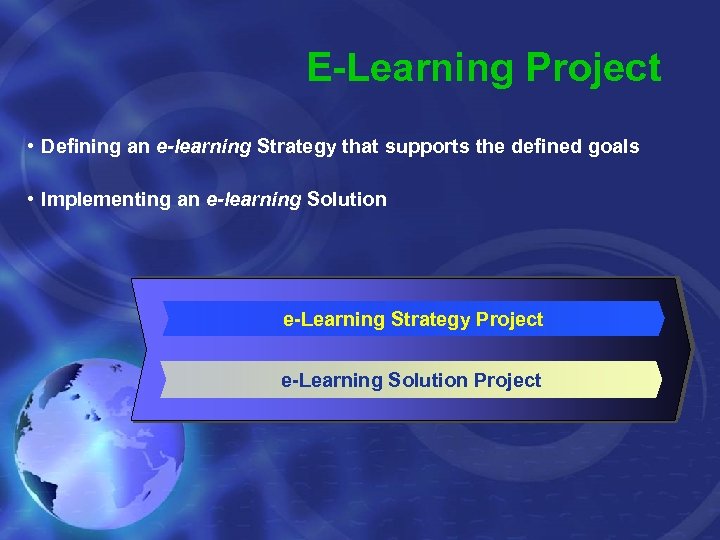
E-Learning Project • Defining an e-learning Strategy that supports the defined goals • Implementing an e-learning Solution e-Learning Strategy Project e-Learning Solution Project
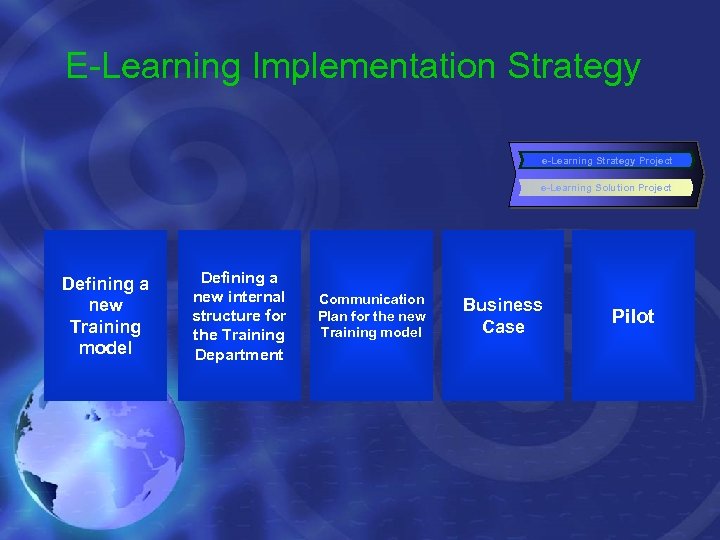
E-Learning Implementation Strategy e-Learning Strategy Project e-Learning Solution Project Defining a new Training model Defining a new internal structure for the Training Department Communication Plan for the new Training model Business Case Pilot
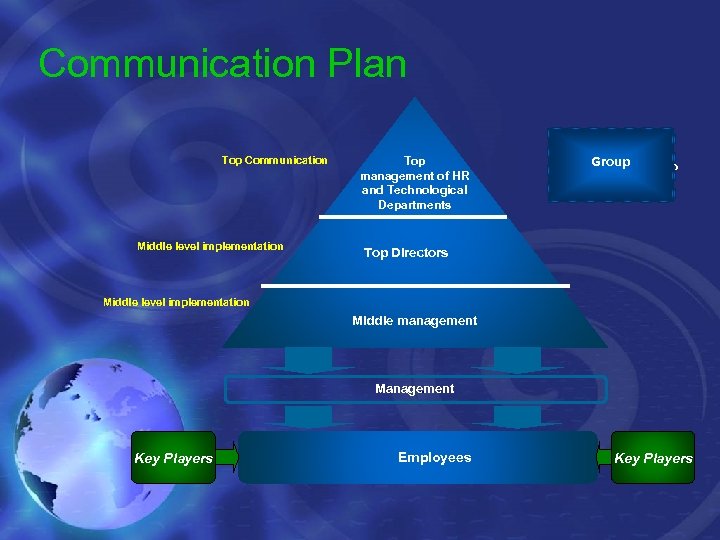
Communication Plan Top Communication Middle level implementation Top management of HR and Technological Departments Group Empresas do Grupo Top Directors Middle level implementation Middle management Management - Key Players Employees Colaboradores Key Players
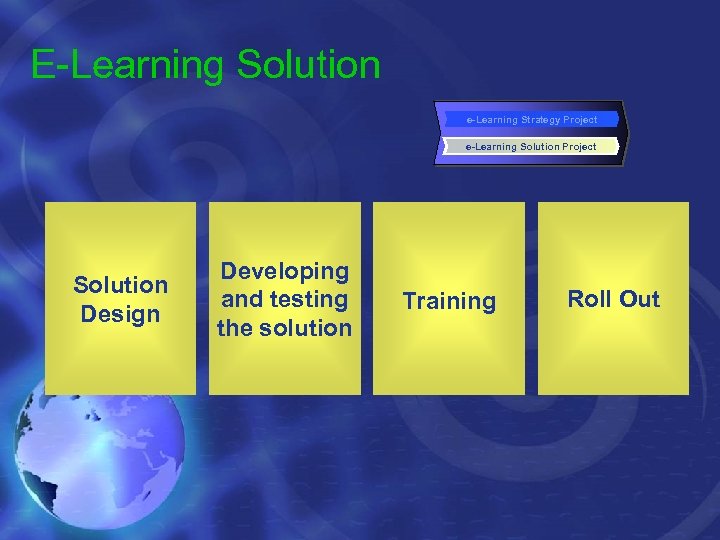
E-Learning Solution e-Learning Strategy Project e-Learning Solution Project Solution Design Developing and testing the solution Training Roll Out
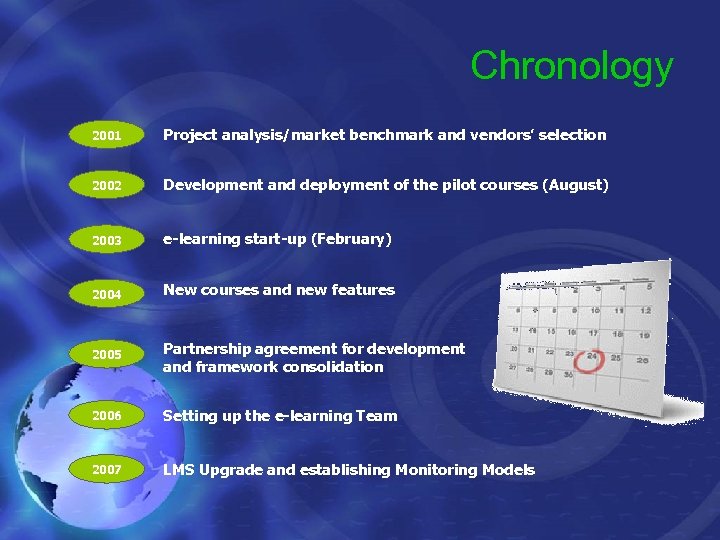
Chronology 2001 Project analysis/market benchmark and vendors’ selection 2002 Development and deployment of the pilot courses (August) 2003 e-learning start-up (February) 2004 New courses and new features 2005 Partnership agreement for development and framework consolidation 2006 Setting up the e-learning Team 2007 LMS Upgrade and establishing Monitoring Models
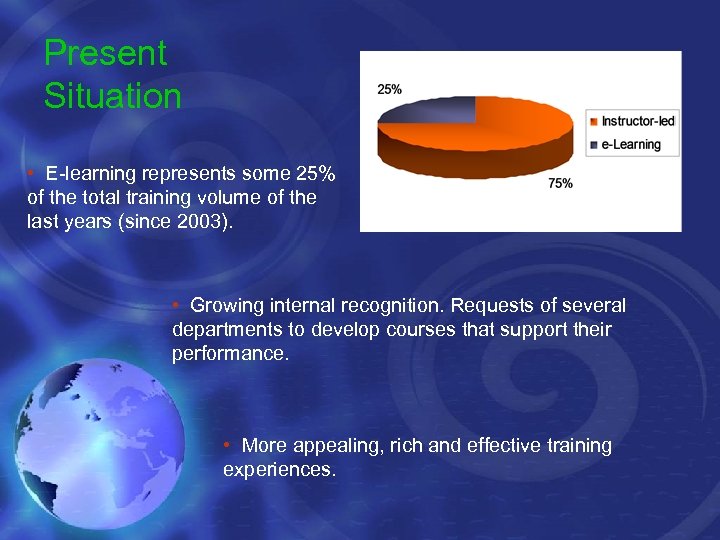
Present Situation • E-learning represents some 25% of the total training volume of the last years (since 2003). • Growing internal recognition. Requests of several departments to develop courses that support their performance. • More appealing, rich and effective training experiences.
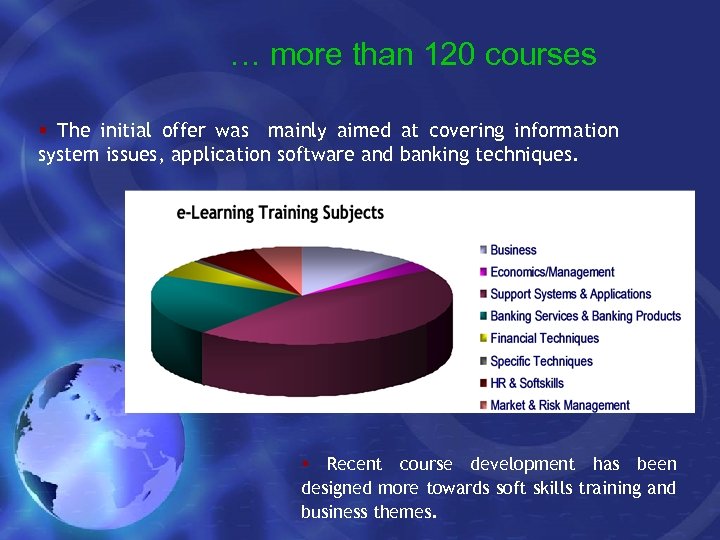
… more than 120 courses § The initial offer was mainly aimed at covering information system issues, application software and banking techniques. § Recent course development has been designed more towards soft skills training and business themes.
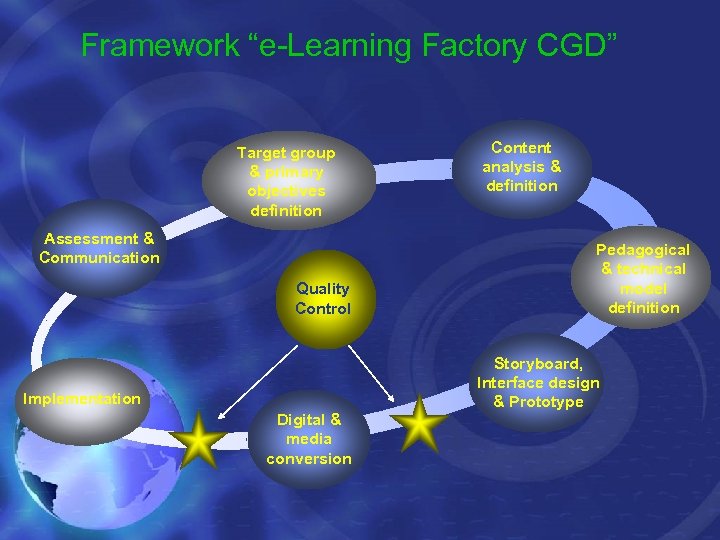
Framework “e-Learning Factory CGD” Target group & primary objectives definition Assessment & Communication Quality Control Content analysis & definition Pedagogical & technical model definition Storyboard, Interface design & Prototype Implementation Digital & media conversion
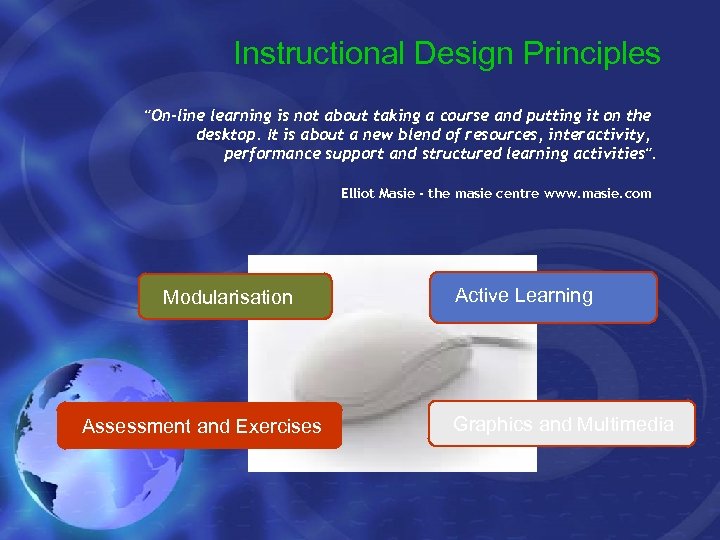
Instructional Design Principles "On-line learning is not about taking a course and putting it on the desktop. It is about a new blend of resources, interactivity, performance support and structured learning activities". Elliot Masie - the masie centre www. masie. com Modularisation Assessment and Exercises Active Learning Graphics and Multimedia
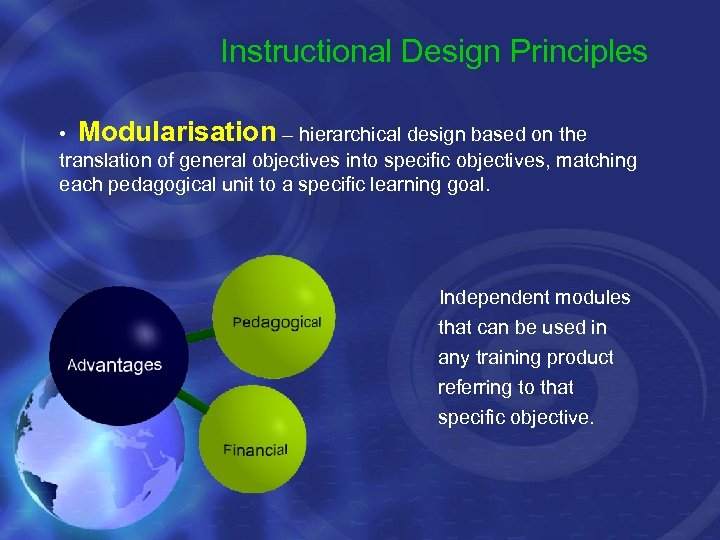
Instructional Design Principles • Modularisation – hierarchical design based on the translation of general objectives into specific objectives, matching each pedagogical unit to a specific learning goal. Independent modules that can be used in any training product referring to that specific objective.
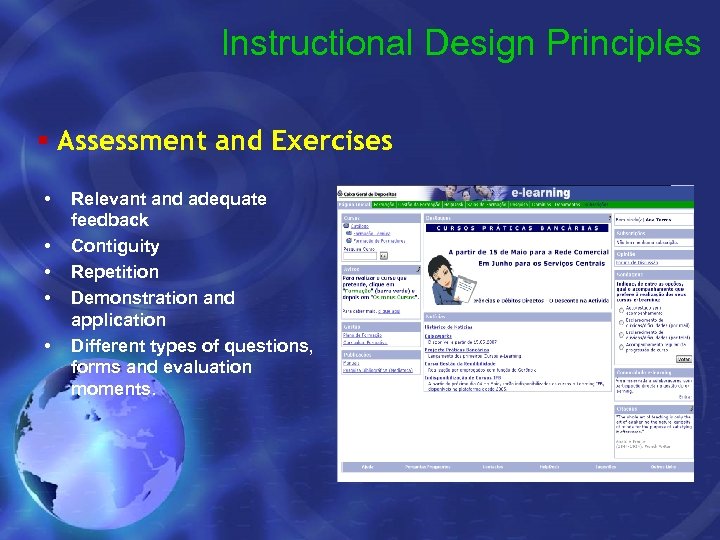
Instructional Design Principles § Assessment and Exercises • • • Relevant and adequate feedback Contiguity Repetition Demonstration and application Different types of questions, forms and evaluation moments.
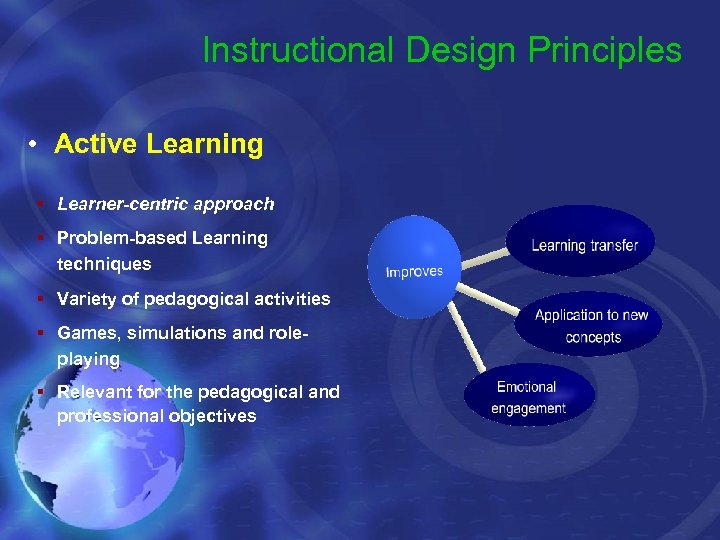
Instructional Design Principles • Active Learning § Learner-centric approach § Problem-based Learning techniques § Variety of pedagogical activities § Games, simulations and roleplaying § Relevant for the pedagogical and professional objectives
Instructional Design Principles • Graphic Aspects and Multimedia • Use of contextualised and limited media elements • Consistent use of simbology • Use of metaphors, avatars and pictures to obtain a higher emotional engagement • Principle of contiguity • Consistent use of colour palette
Challenges • Promoting richer and more appealing learning experiences • Promoting the SME’s engagement and skills development in the e-Learning process • Aligning the training production cycle with the business time-to-market cycle • Sustaining communicational mechanisms to motivate e-learners • Facilitating the collaborative interactions and defining a flexible tutoring model for large numbers
Obrigado! Thank you! EFHARISTO • José Ribeiro Rodrigues jose. ribeiro. rodrigues@cgd. pt
Скачать презентацию euro ba n qu a project Knowledge Management
f53795241c6280fe495490dfec58efa0.ppt