


 Скачать презентацию Etruscan and Roman Italian Peninsula End of
2dfbf15b39ddb345480cb4d24c38e079.ppt
- Количество слайдов: 28
 Etruscan and Roman
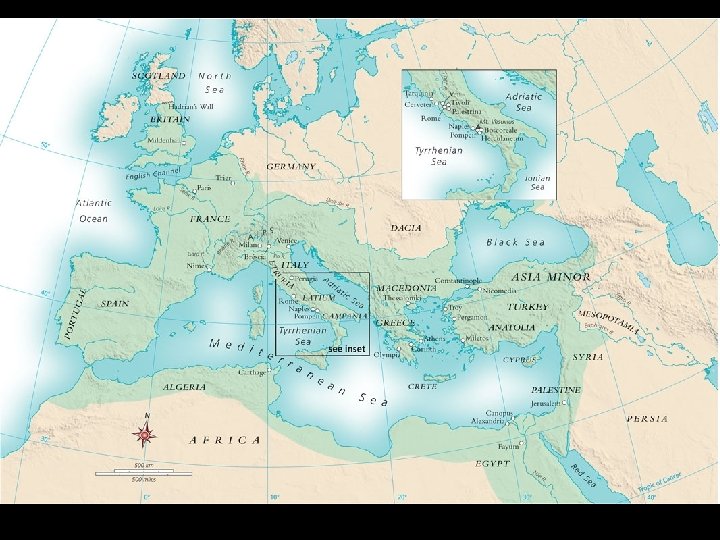
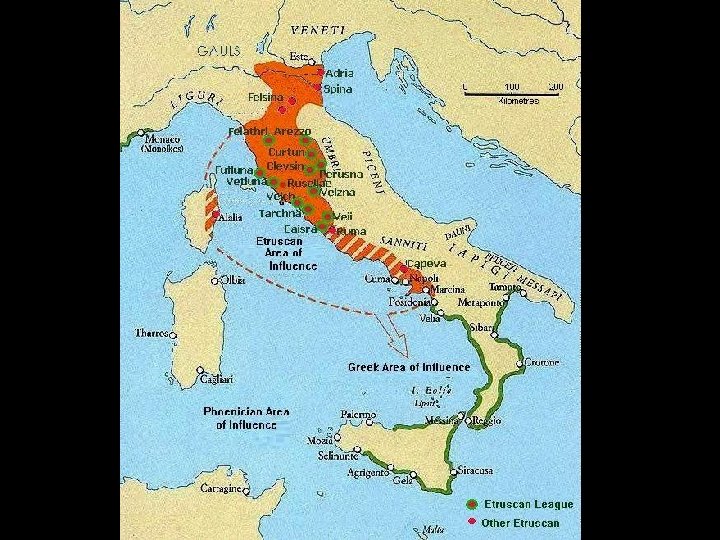
 Italian Peninsula End of bronze age (1000 BCE) – north &west occupied by northern people central areas by various peoples, italic languages, Latin too c. 750 BCE - Greeks established colonies in Sicily and the mainland The Etruscans 7 th, 6 th cent. BCE – one people get control of most of north and central Italy, Etruria, and then down till Campania Wealthy farmers and metal workers – bought art made by the Greeks (originals and had copies made); borrowed Greek architecture techniques (temples), Greek gods and heroes Rome 509 BCE – formation of the Roman Republic 5 th cent to end of 3 rd cent. BCE – gradual expansion of Rome and integration of Etruscans into Roman culture; Romans commission and buy much art from Etruscans Impossible to make clear distinctions between Greek, Etruscan and Roman art
 Our sources (1 st and 2 nd cent. CE) Vitruvius (Roman), Ten Books on Architecture, compilation of Etruscan and Roman architecture Pliny the Elder (Roman), Naturalis Historia, encyclopedia including art Pliny the Younger (Roman) (domestic architecture) Ovid (Roman), Metamorphoses (Greek and Roman myths and transformations) Virgil (Roman), Aeneid, (Greek v. Roman characters) Pausanias (Greek), writer and traveler, descriptions of Greece Plutarch (Greek) (art v. artist)
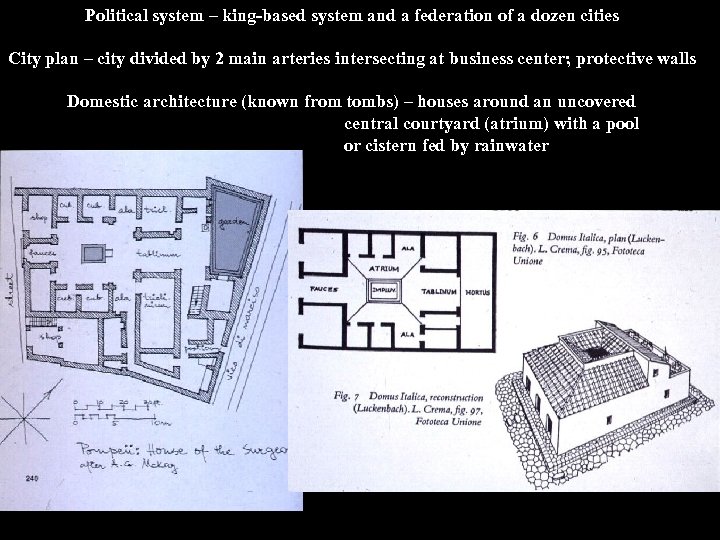 Political system – king-based system and a federation of a dozen cities City plan – city divided by 2 main arteries intersecting at business center; protective walls Domestic architecture (known from tombs) – houses around an uncovered central courtyard (atrium) with a pool or cistern fed by rainwater
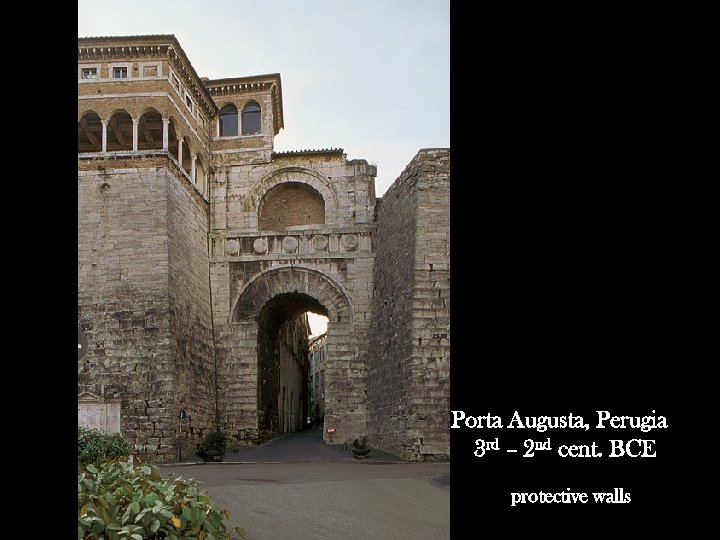 Porta Augusta, Perugia 3 rd – 2 nd cent. BCE protective walls
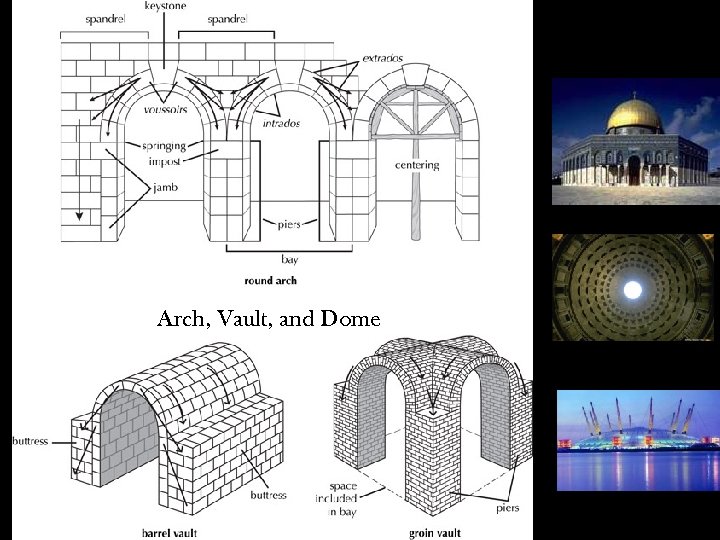 Arch, Vault, and Dome
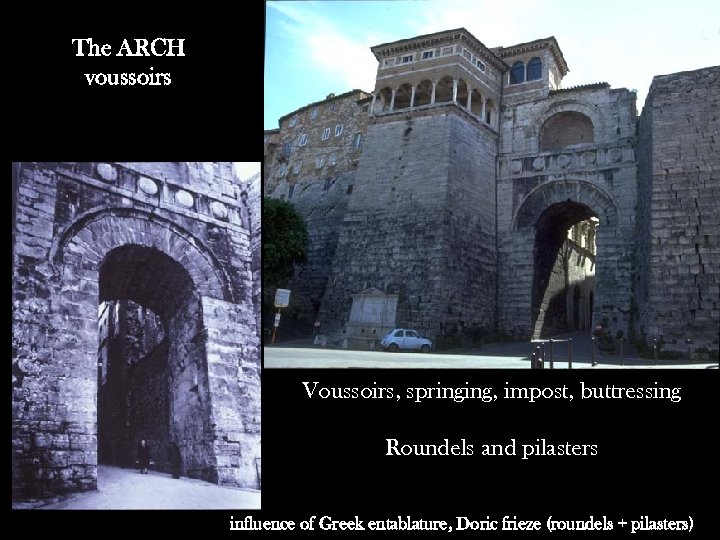 The ARCH voussoirs Voussoirs, springing, impost, buttressing Roundels and pilasters influence of Greek entablature, Doric frieze (roundels + pilasters)
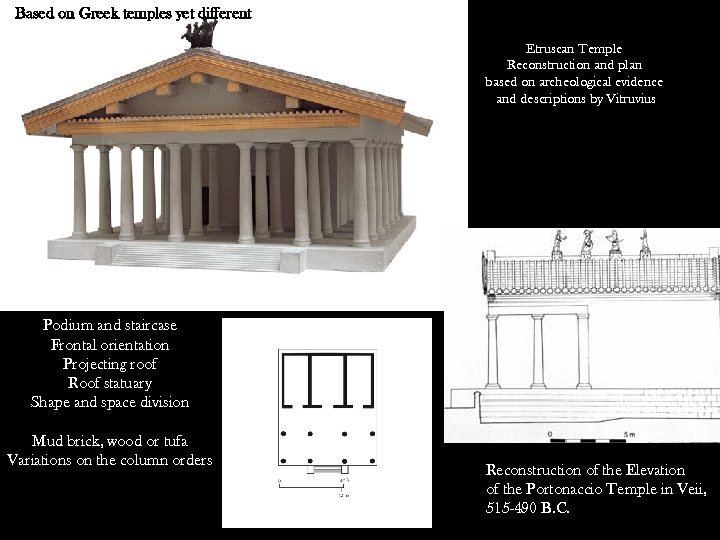 Based on Greek temples yet different Etruscan Temple Reconstruction and plan based on archeological evidence and descriptions by Vitruvius Podium and staircase Frontal orientation Projecting roof Roof statuary Shape and space division Mud brick, wood or tufa Variations on the column orders Reconstruction of the Elevation of the Portonaccio Temple in Veii, 515 -490 B. C.
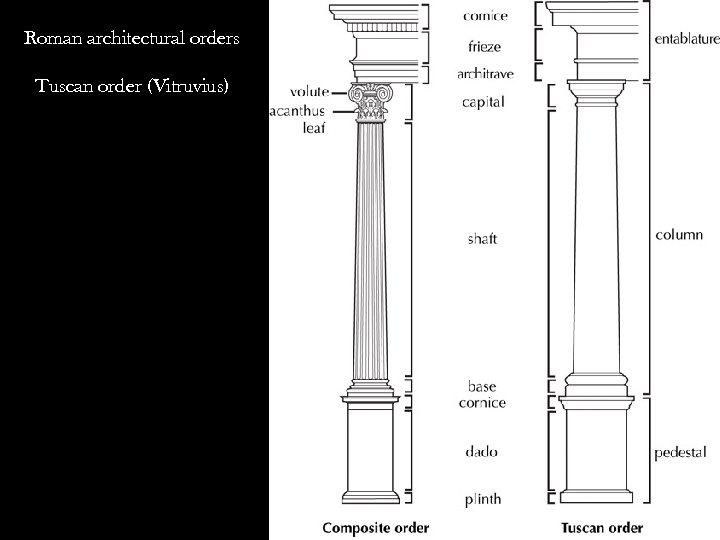 Roman architectural orders Tuscan order (Vitruvius)
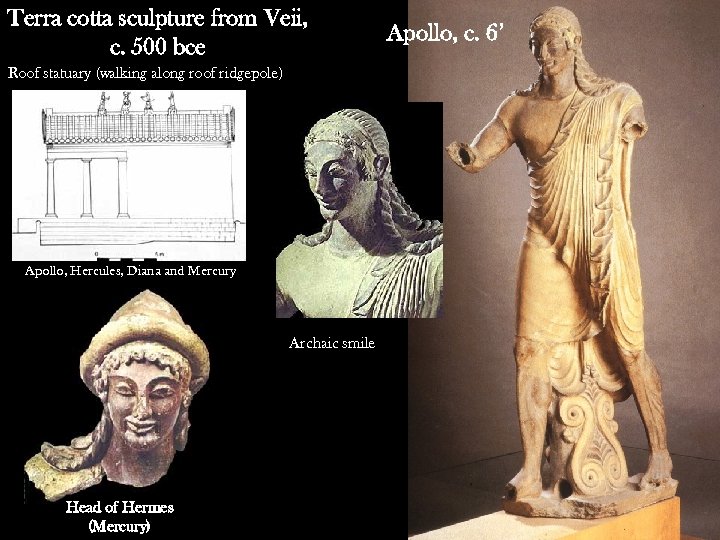 Terra cotta sculpture from Veii, c. 500 bce Roof statuary (walking along roof ridgepole) Apollo, Hercules, Diana and Mercury Archaic smile Head of Hermes (Mercury) Apollo, c. 6’
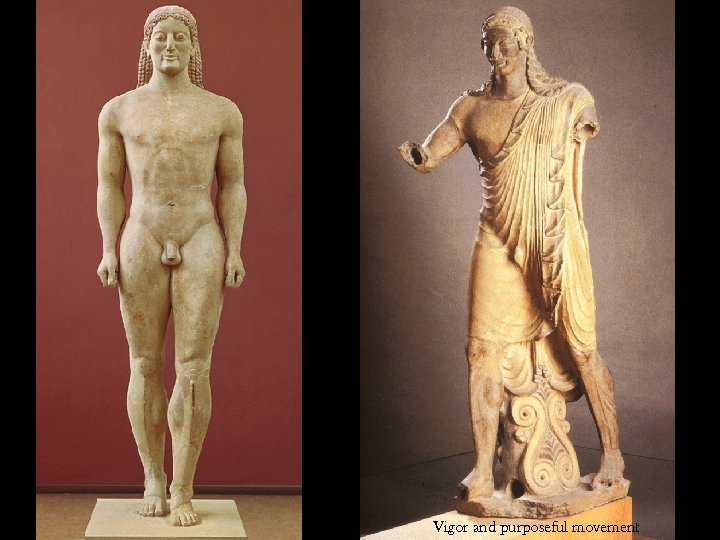 Vigor and purposeful movement
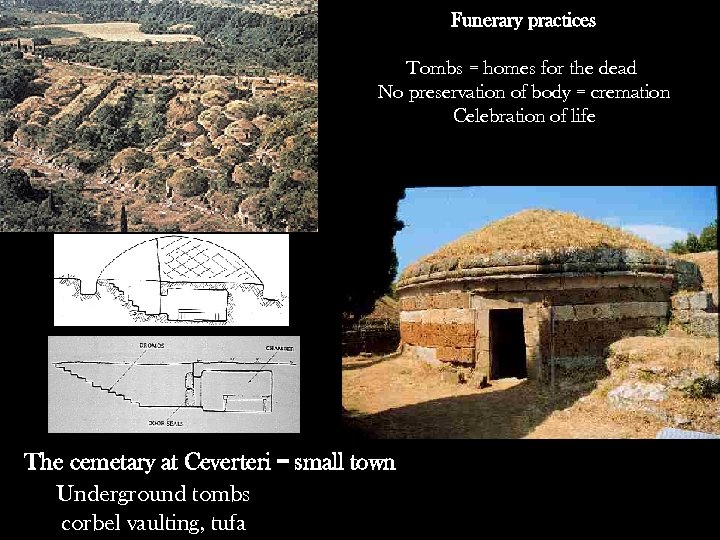 Funerary practices Tombs = homes for the dead No preservation of body = cremation Celebration of life The cemetary at Ceverteri = small town Underground tombs corbel vaulting, tufa
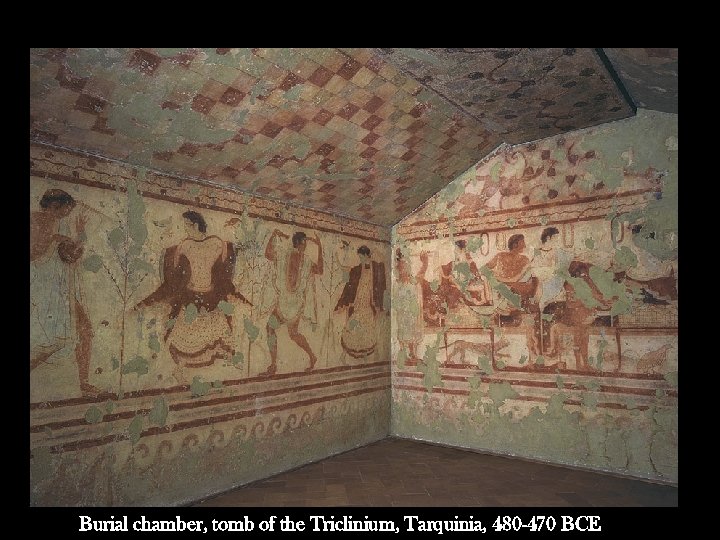 Burial chamber, tomb of the Triclinium, Tarquinia, 480 -470 BCE
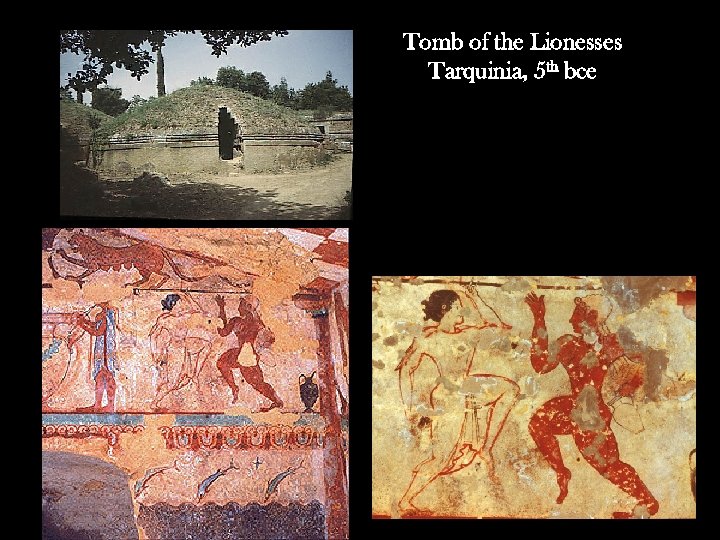 Tomb of the Lionesses Tarquinia, 5 th bce
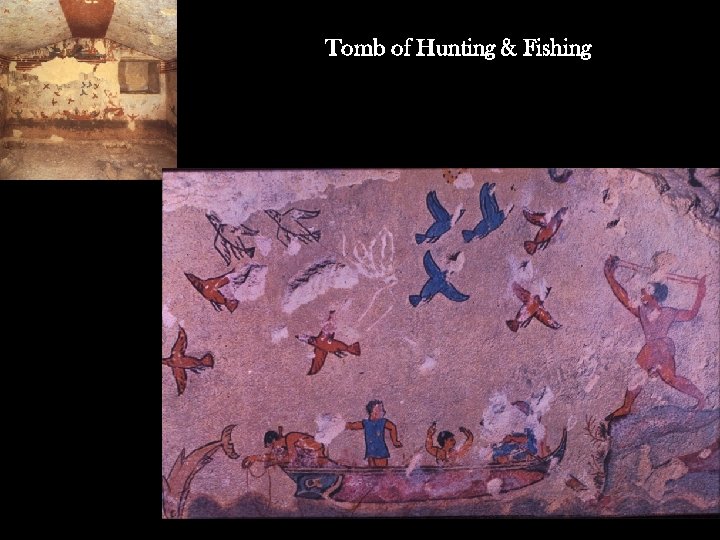 Tomb of Hunting & Fishing
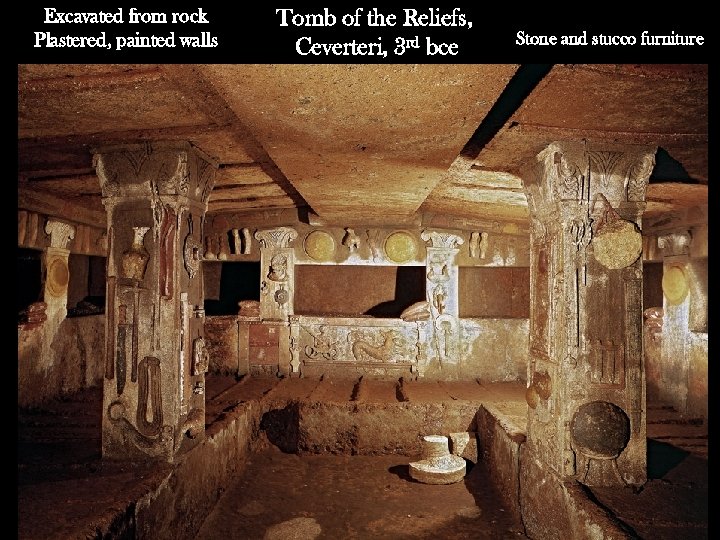 Excavated from rock Plastered, painted walls Tomb of the Reliefs, Ceverteri, 3 rd bce Stone and stucco furniture
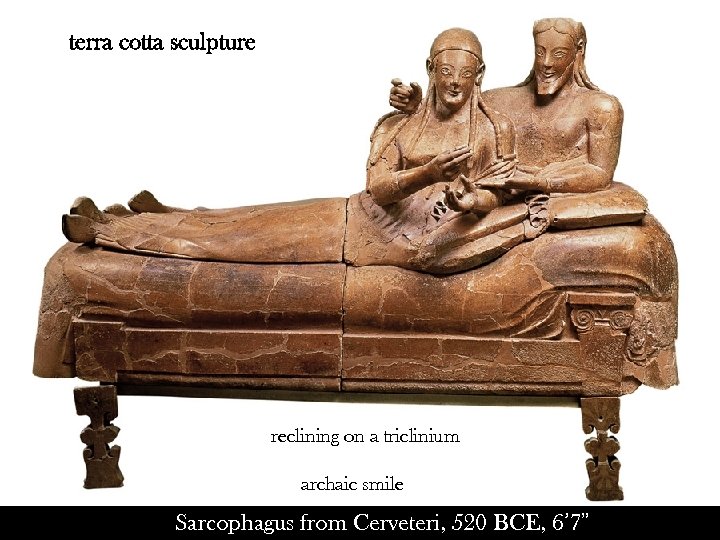 terra cotta sculpture reclining on a triclinium archaic smile Sarcophagus from Cerveteri, 520 BCE, 6’ 7”
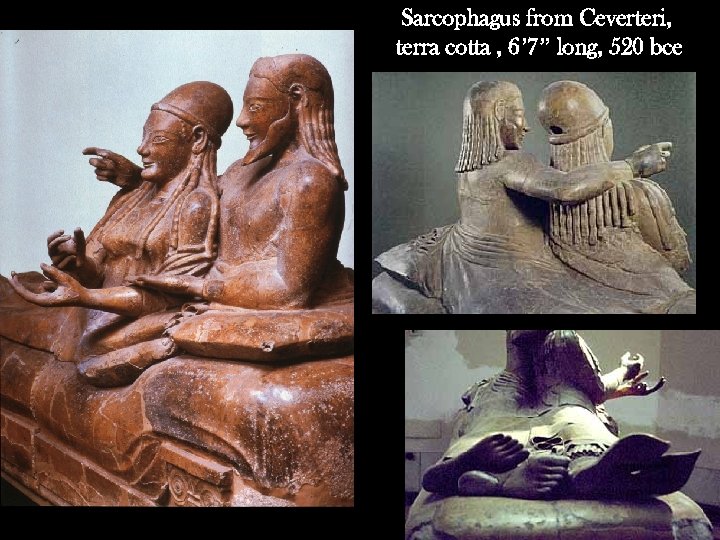 Sarcophagus from Ceverteri, terra cotta , 6’ 7” long, 520 bce
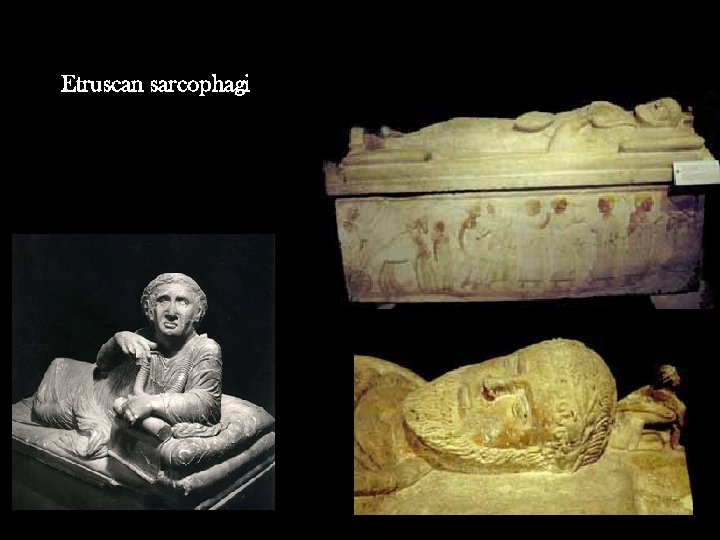 Etruscan sarcophagi
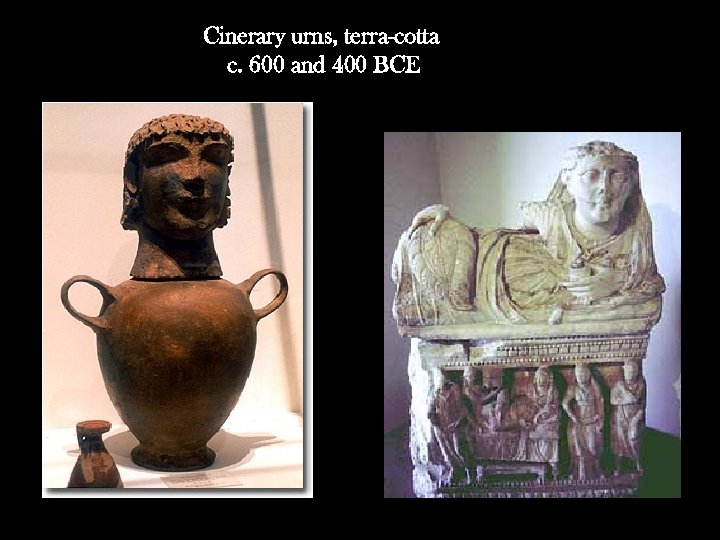 Cinerary urns, terra-cotta c. 600 and 400 BCE
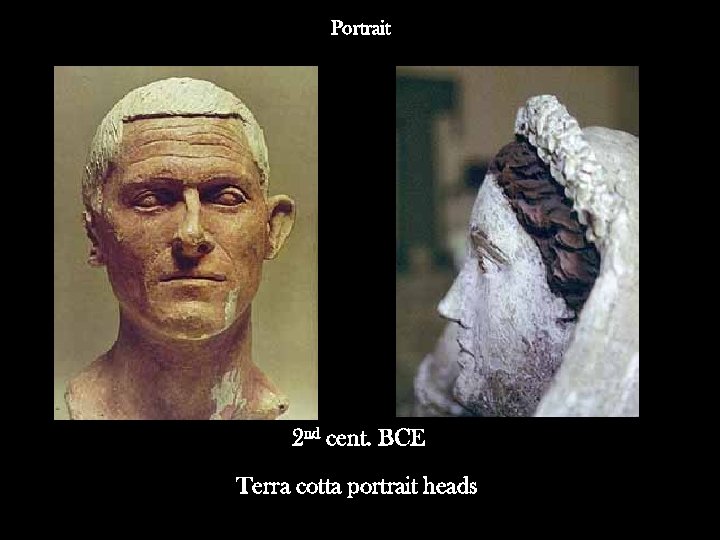 Portrait 2 nd cent. BCE Terra cotta portrait heads
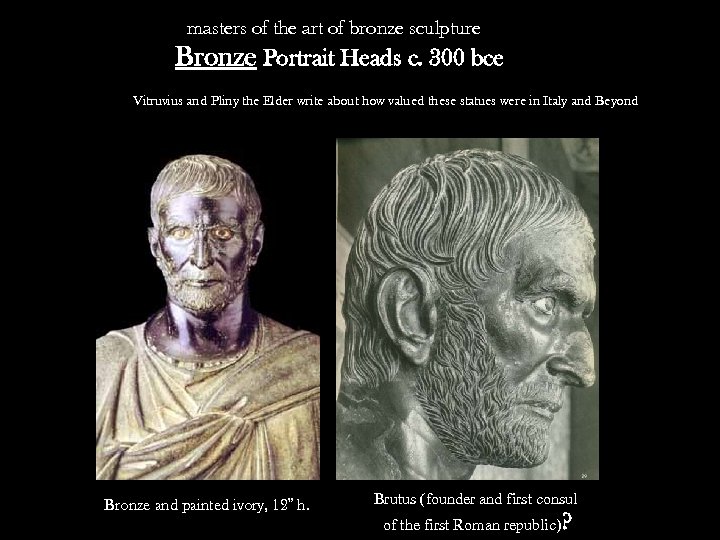 masters of the art of bronze sculpture Bronze Portrait Heads c. 300 bce Vitruvius and Pliny the Elder write about how valued these statues were in Italy and Beyond Bronze and painted ivory, 12” h. Brutus (founder and first consul of the first Roman republic)?
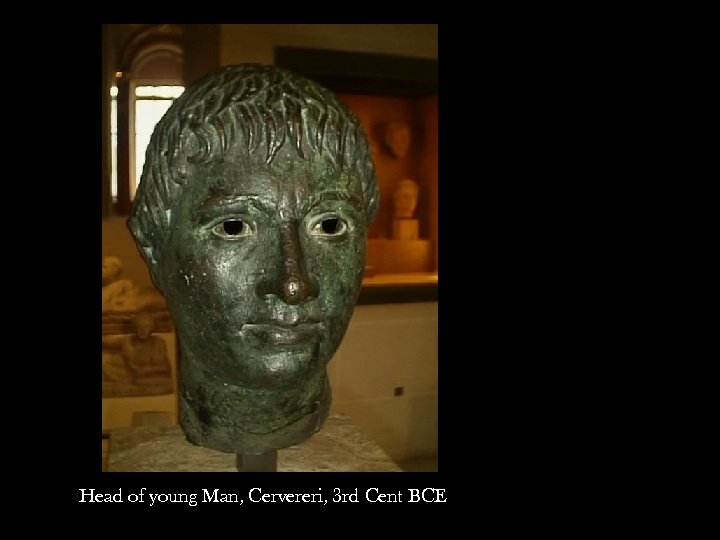 Head of young Man, Cervereri, 3 rd Cent BCE
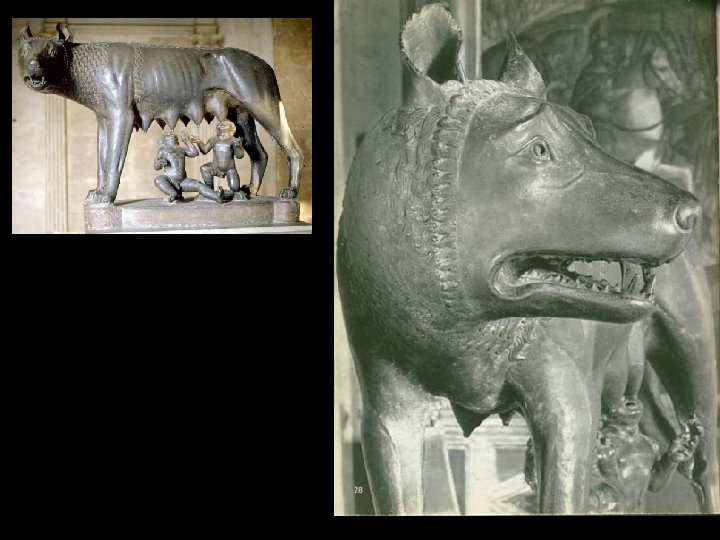
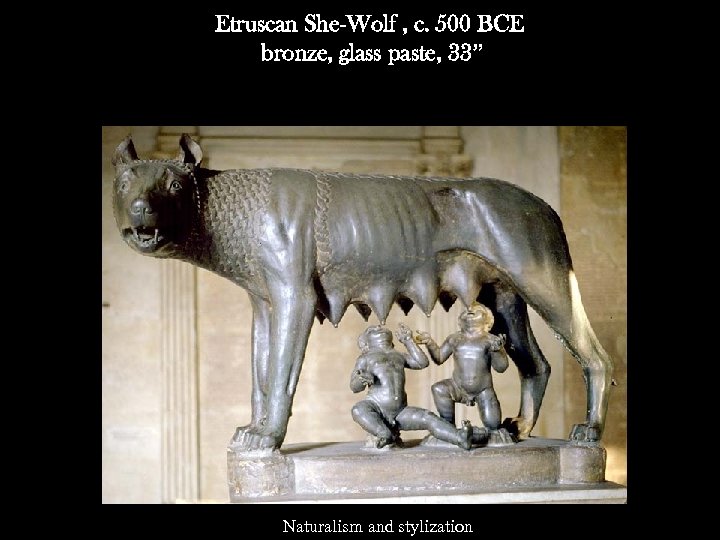 Etruscan She-Wolf , c. 500 BCE bronze, glass paste, 33” Naturalism and stylization
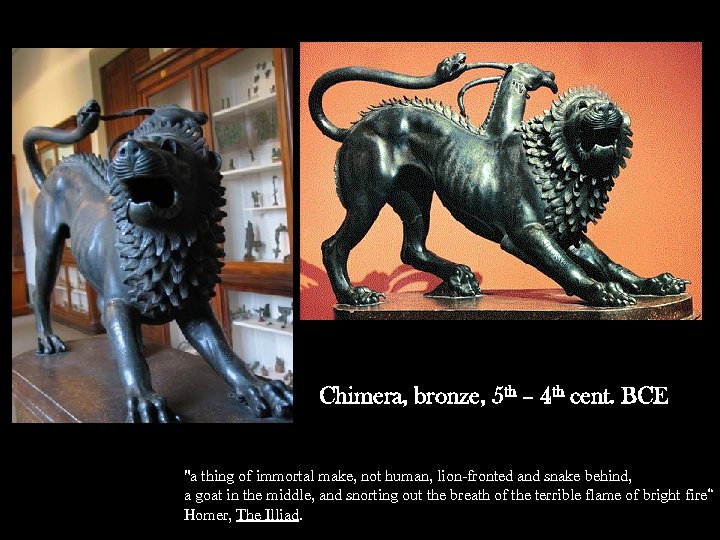 Chimera, bronze, 5 th – 4 th cent. BCE "a thing of immortal make, not human, lion-fronted and snake behind, a goat in the middle, and snorting out the breath of the terrible flame of bright fire“ Homer, The Illiad.