 Скачать презентацию ETHNIC FESTIVALS AND HOLIDAYS THE US BYSTROVA MARIA
этнические праздники и фестивали Быстрова Мария.pptx
- Количество слайдов: 37



ETHNIC FESTIVALS AND HOLIDAYS THE US BYSTROVA MARIA
KWANZAA
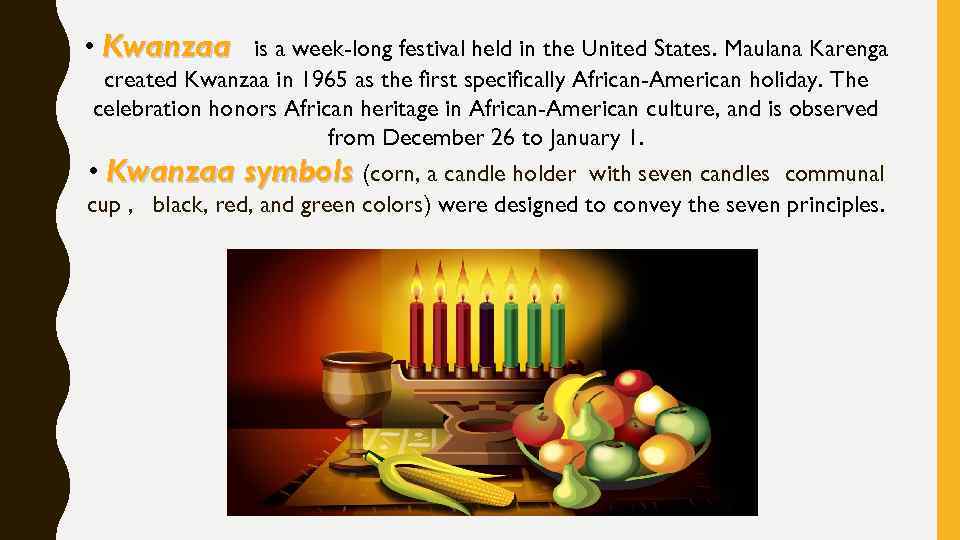
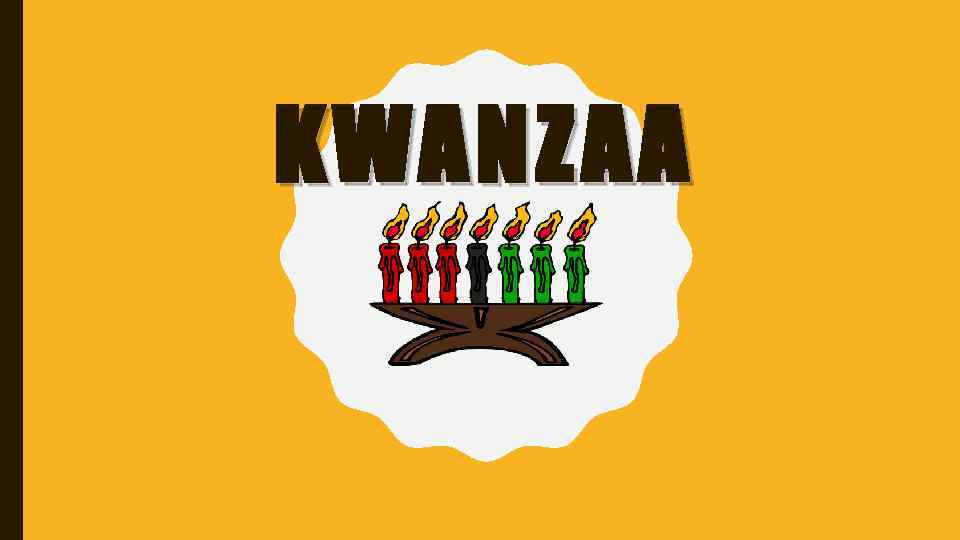
• Kwanzaa is a week-long festival held in the United States. Maulana Karenga created Kwanzaa in 1965 as the first specifically African-American holiday. The celebration honors African heritage in African-American culture, and is observed from December 26 to January 1. • Kwanzaa symbols (corn, a candle holder with seven candles communal cup , black, red, and green colors) were designed to convey the seven principles.
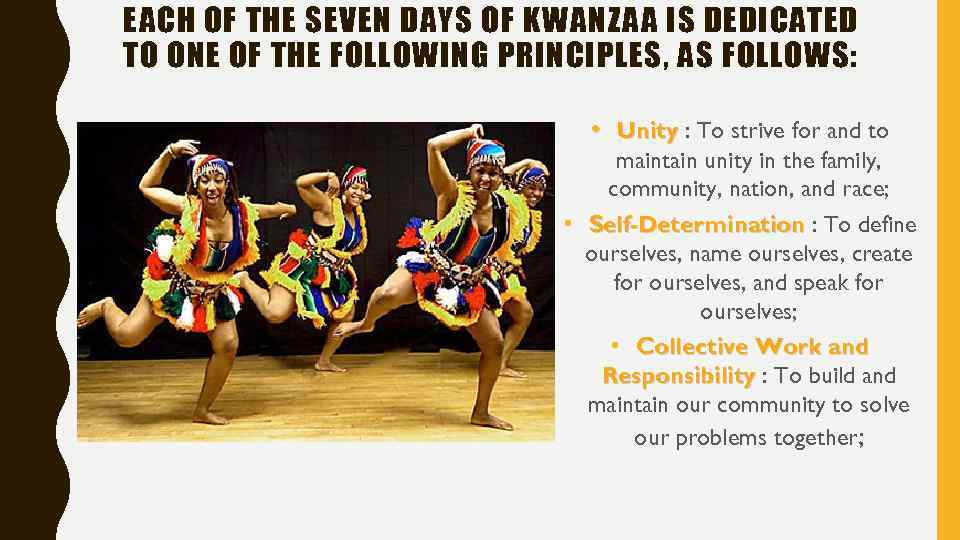
EACH OF THE SEVEN DAYS OF KWANZAA IS DEDICATED TO ONE OF THE FOLLOWING PRINCIPLES, AS FOLLOWS: • Unity : To strive for and to maintain unity in the family, community, nation, and race; • Self-Determination : To define ourselves, name ourselves, create for ourselves, and speak for ourselves; • Collective Work and Responsibility : To build and maintain our community to solve our problems together;
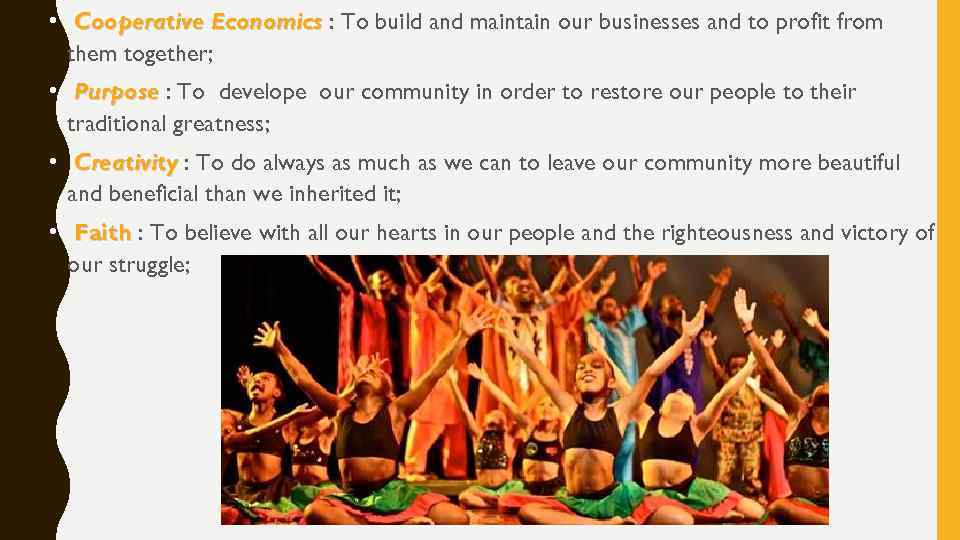
• Cooperative Economics : To build and maintain our businesses and to profit from them together; • Purpose : To develope our community in order to restore our people to their traditional greatness; • Creativity : To do always as much as we can to leave our community more beautiful and beneficial than we inherited it; • Faith : To believe with all our hearts in our people and the righteousness and victory of our struggle;
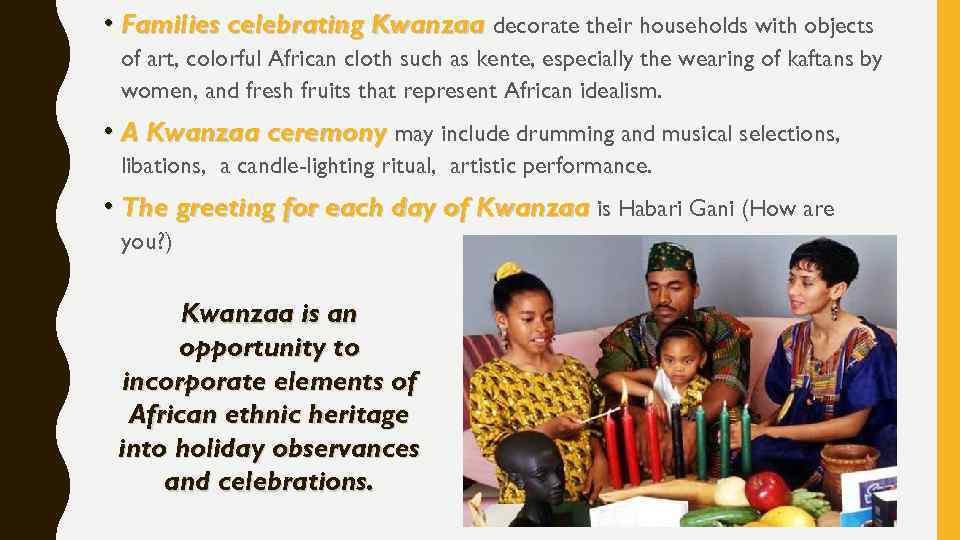
• Families celebrating Kwanzaa decorate their households with objects of art, colorful African cloth such as kente, especially the wearing of kaftans by women, and fresh fruits that represent African idealism. • A Kwanzaa ceremony may include drumming and musical selections, libations, a candle-lighting ritual, artistic performance. • The greeting for each day of Kwanzaa is Habari Gani (How are you? ) Kwanzaa is an opportunity to incorporate elements of African ethnic heritage into holiday observances and celebrations.
NISEI WEEK
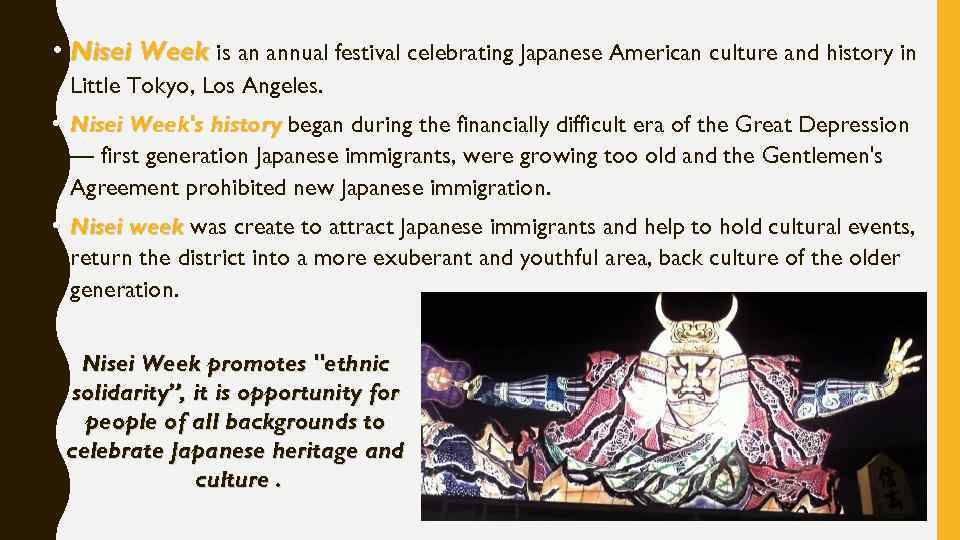
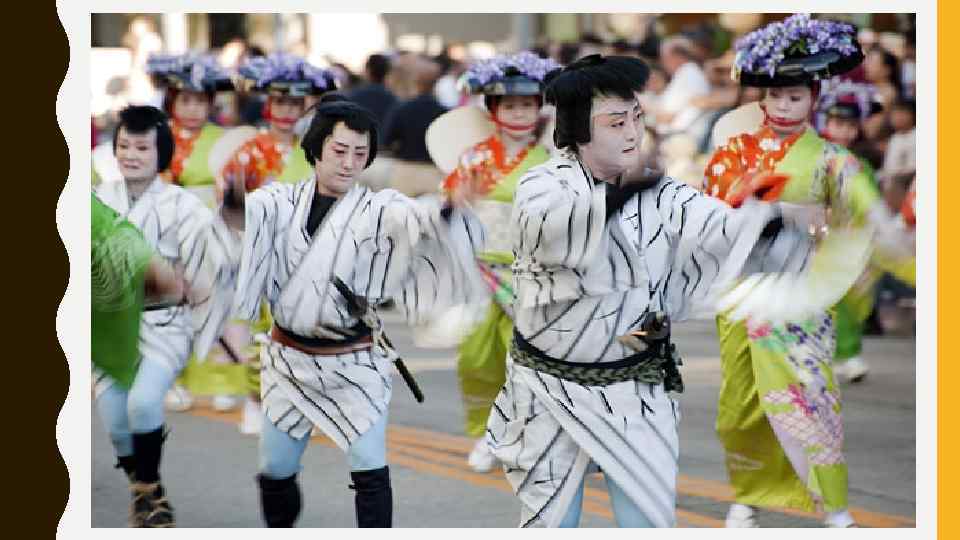
• Nisei Week is an annual festival celebrating Japanese American culture and history in Little Tokyo, Los Angeles. • Nisei Week's history began during the financially difficult era of the Great Depression — first generation Japanese immigrants, were growing too old and the Gentlemen's Agreement prohibited new Japanese immigration. • Nisei week was create to attract Japanese immigrants and help to hold cultural events, return the district into a more exuberant and youthful area, back culture of the older generation. Nisei Week promotes "ethnic solidarity”, it is opportunity for people of all backgrounds to celebrate Japanese heritage and culture.
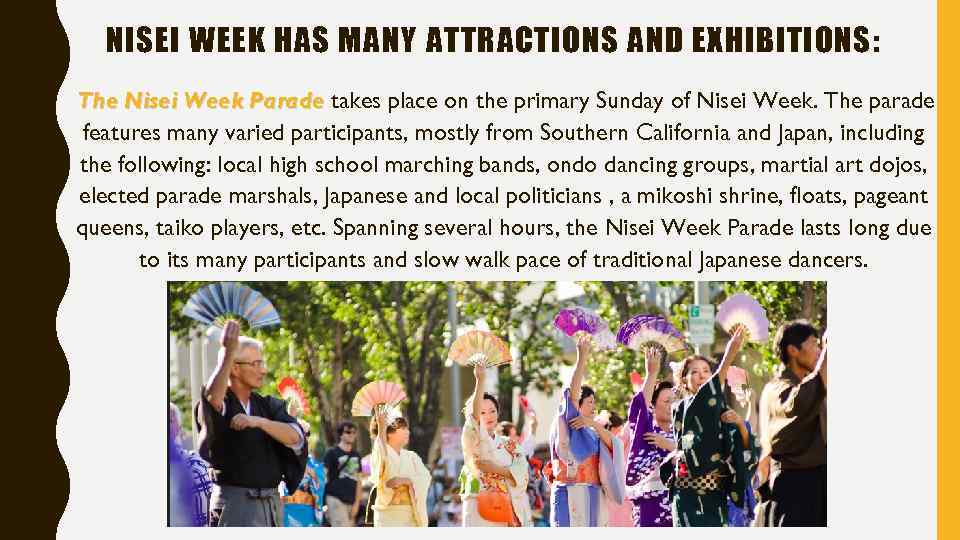
NISEI WEEK HAS MANY ATTRACTIONS AND EXHIBITIONS: The Nisei Week Parade takes place on the primary Sunday of Nisei Week. The parade features many varied participants, mostly from Southern California and Japan, including the following: local high school marching bands, ondo dancing groups, martial art dojos, elected parade marshals, Japanese and local politicians , a mikoshi shrine, floats, pageant queens, taiko players, etc. Spanning several hours, the Nisei Week Parade lasts long due to its many participants and slow walk pace of traditional Japanese dancers.
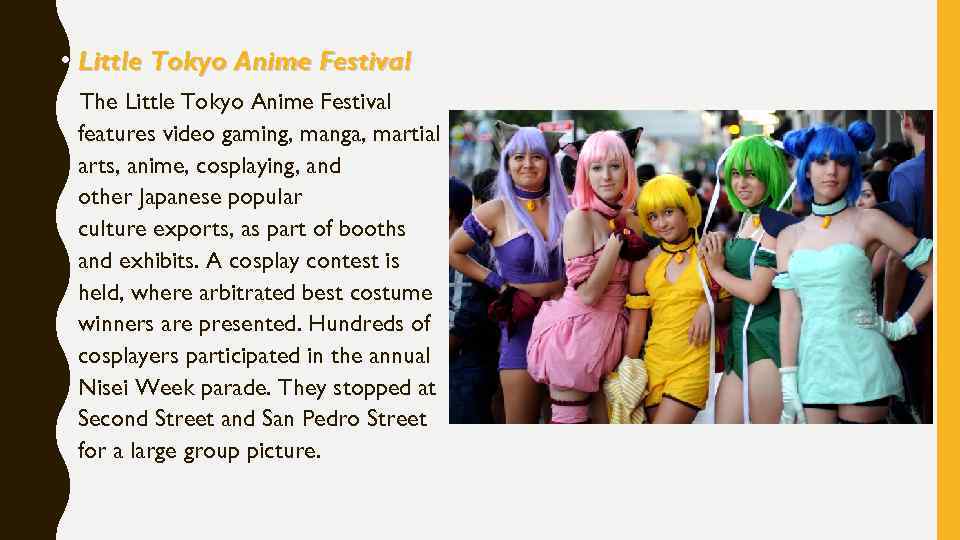
• Little Tokyo Anime Festival The Little Tokyo Anime Festival features video gaming, manga, martial arts, anime, cosplaying, and other Japanese popular culture exports, as part of booths and exhibits. A cosplay contest is held, where arbitrated best costume winners are presented. Hundreds of cosplayers participated in the annual Nisei Week parade. They stopped at Second Street and San Pedro Street for a large group picture.
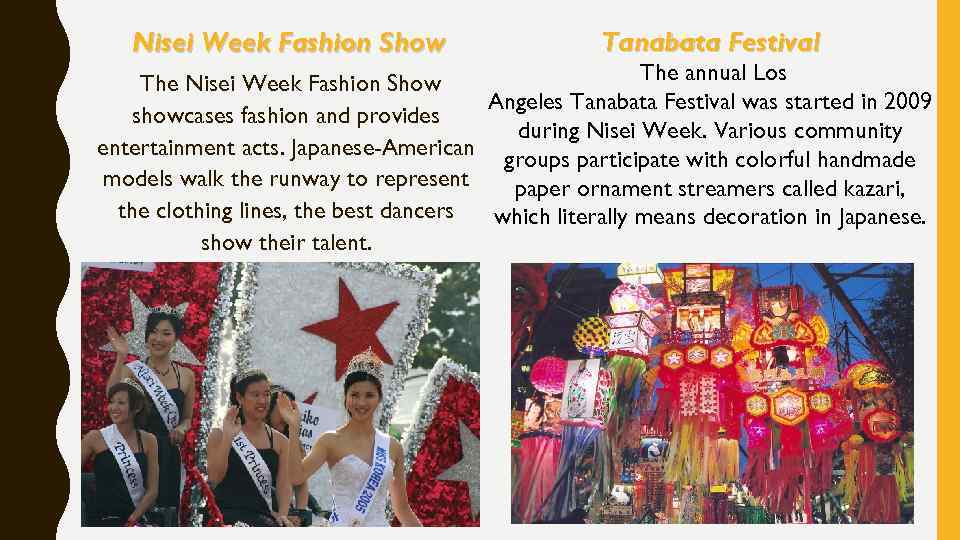
Nisei Week Fashion Show Tanabata Festival The annual Los The Nisei Week Fashion Show Angeles Tanabata Festival was started in 2009 showcases fashion and provides during Nisei Week. Various community entertainment acts. Japanese-American groups participate with colorful handmade models walk the runway to represent paper ornament streamers called kazari, the clothing lines, the best dancers which literally means decoration in Japanese. show their talent.
S AIN T PATR ICK'S DA Y
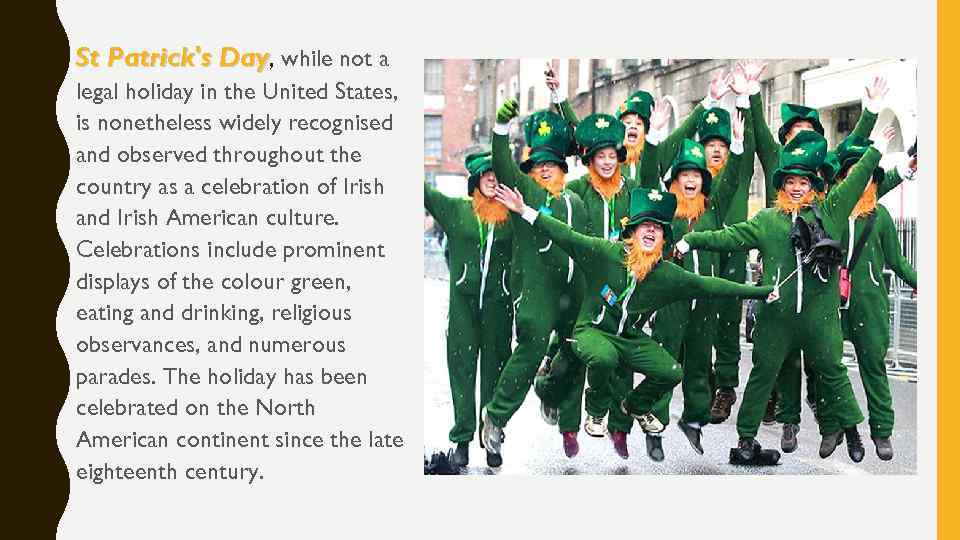
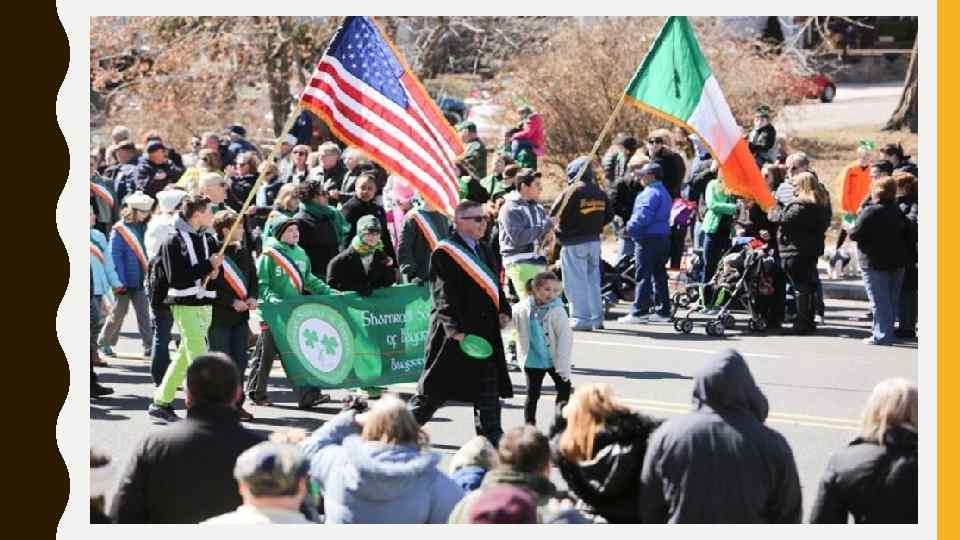
St Patrick's Day, while not a legal holiday in the United States, is nonetheless widely recognised and observed throughout the country as a celebration of Irish and Irish American culture. Celebrations include prominent displays of the colour green, eating and drinking, religious observances, and numerous parades. The holiday has been celebrated on the North American continent since the late eighteenth century.
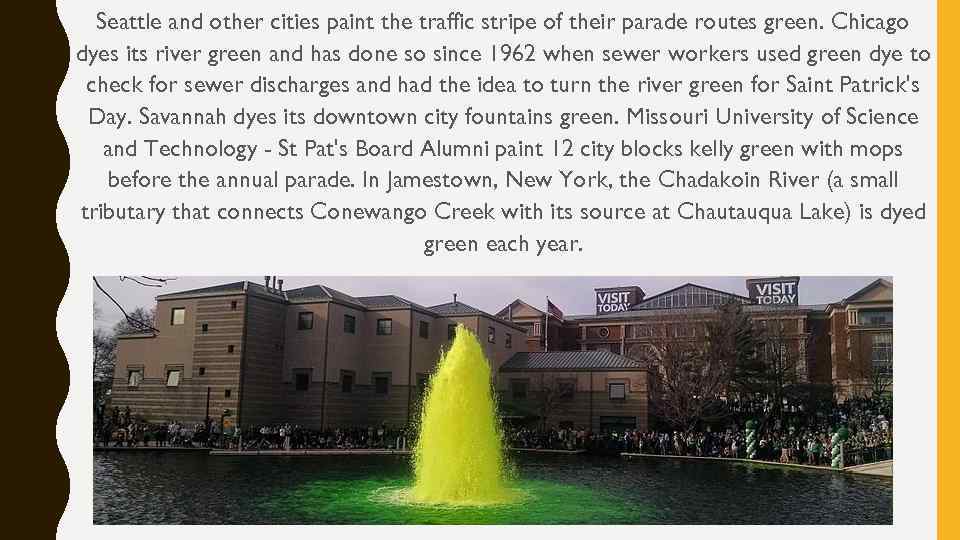
Seattle and other cities paint the traffic stripe of their parade routes green. Chicago dyes its river green and has done so since 1962 when sewer workers used green dye to check for sewer discharges and had the idea to turn the river green for Saint Patrick's Day. Savannah dyes its downtown city fountains green. Missouri University of Science and Technology - St Pat's Board Alumni paint 12 city blocks kelly green with mops before the annual parade. In Jamestown, New York, the Chadakoin River (a small tributary that connects Conewango Creek with its source at Chautauqua Lake) is dyed green each year.
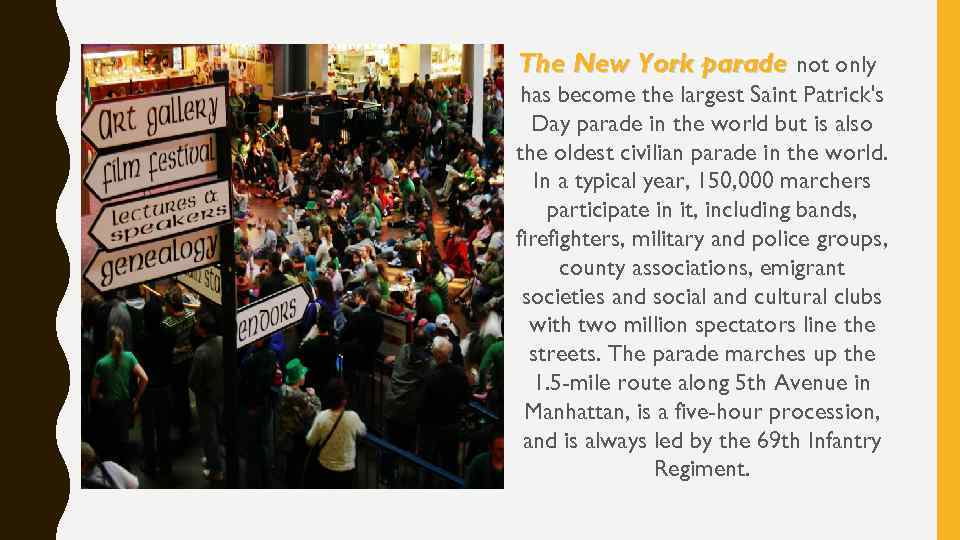
The New York parade not only has become the largest Saint Patrick's Day parade in the world but is also the oldest civilian parade in the world. In a typical year, 150, 000 marchers participate in it, including bands, firefighters, military and police groups, county associations, emigrant societies and social and cultural clubs with two million spectators line the streets. The parade marches up the 1. 5 -mile route along 5 th Avenue in Manhattan, is a five-hour procession, and is always led by the 69 th Infantry Regiment.
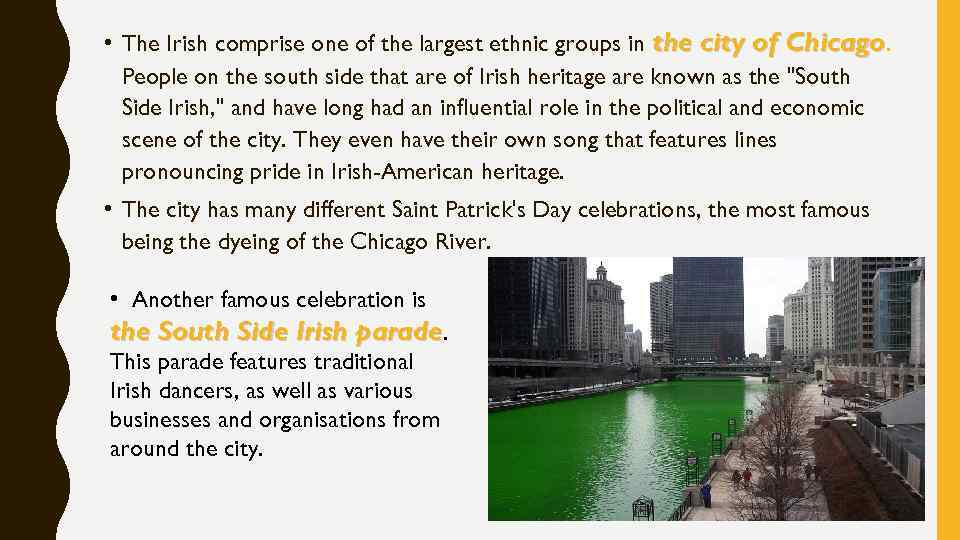
• The Irish comprise one of the largest ethnic groups in the city of Chicago People on the south side that are of Irish heritage are known as the "South Side Irish, " and have long had an influential role in the political and economic scene of the city. They even have their own song that features lines pronouncing pride in Irish-American heritage. • The city has many different Saint Patrick's Day celebrations, the most famous being the dyeing of the Chicago River. • Another famous celebration is the South Side Irish parade. This parade features traditional Irish dancers, as well as various businesses and organisations from around the city.
ETHNIC FESTIVALS AND HOLIDAYS RUSSIA

KAMWA
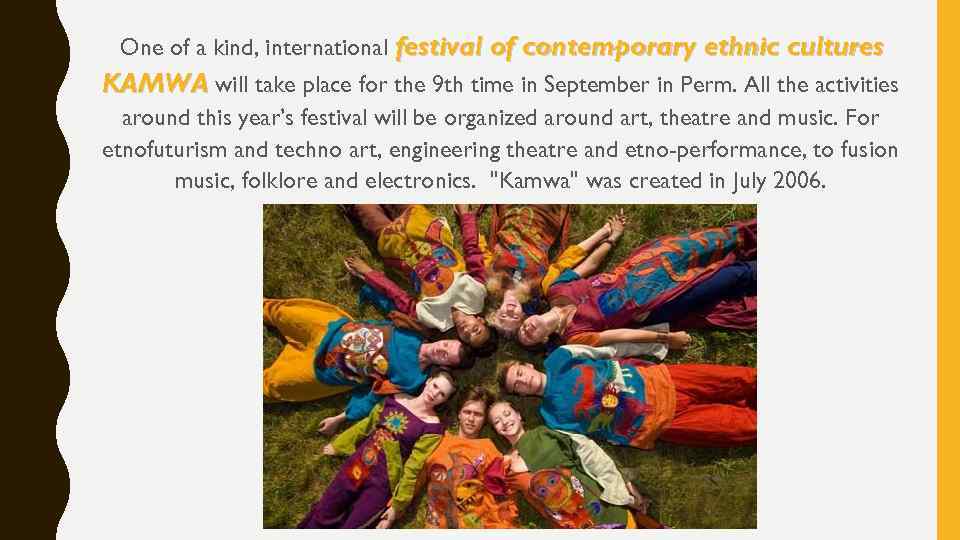
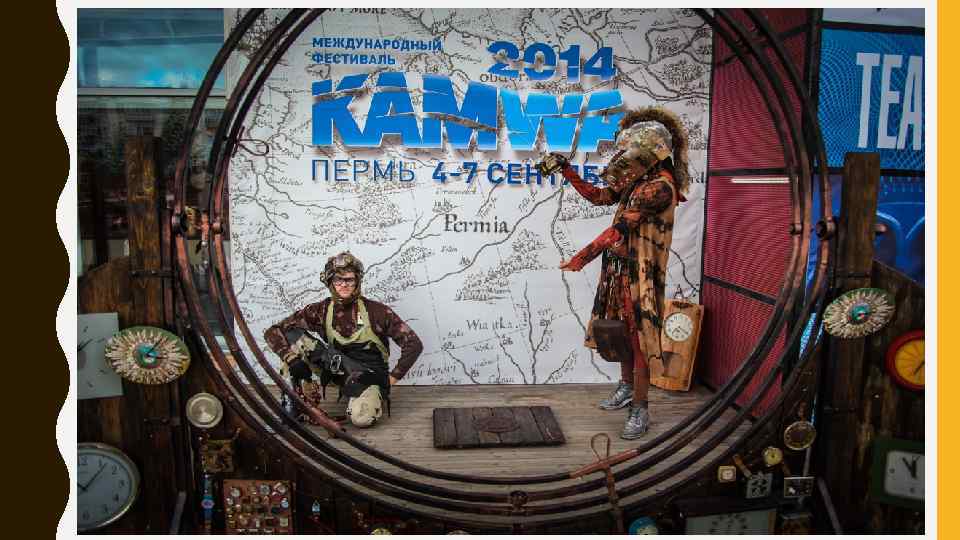
One of a kind, international festival of contemporary ethnic cultures KAMWA will take place for the 9 th time in September in Perm. All the activities around this year’s festival will be organized around art, theatre and music. For etnofuturism and techno art, engineering theatre and etno-performance, to fusion music, folklore and electronics. "Kamwa" was created in July 2006.
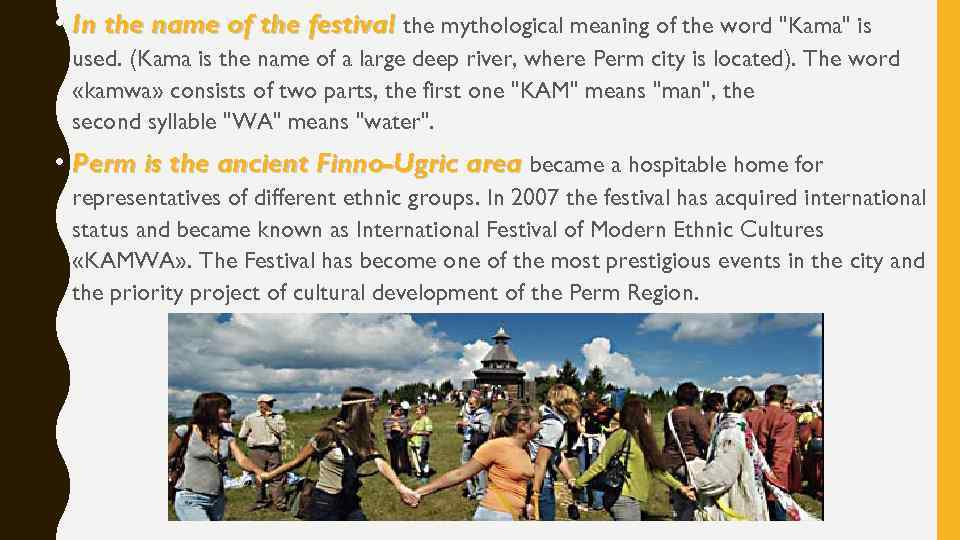
• In the name of the festival the mythological meaning of the word "Kama" is used. (Kama is the name of a large deep river, where Perm city is located). The word «kamwa» consists of two parts, the first one "KAM" means "man", the second syllable "WA" means "water". • Perm is the ancient Finno-Ugric area became a hospitable home for representatives of different ethnic groups. In 2007 the festival has acquired international status and became known as International Festival of Modern Ethnic Cultures «KAMWA» . The Festival has become one of the most prestigious events in the city and the priority project of cultural development of the Perm Region.
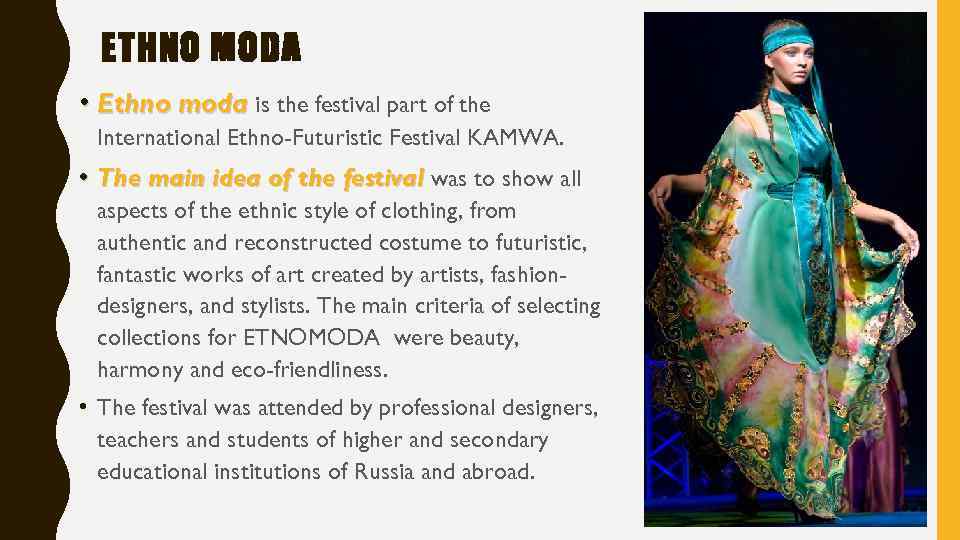
ETHNO MODA • Ethno moda is the festival part of the International Ethno-Futuristic Festival KAMWA. • The main idea of the festival was to show all aspects of the ethnic style of clothing, from authentic and reconstructed costume to futuristic, fantastic works of art created by artists, fashiondesigners, and stylists. The main criteria of selecting collections for ETNOMODA were beauty, harmony and eco-friendliness. • The festival was attended by professional designers, teachers and students of higher and secondary educational institutions of Russia and abroad.
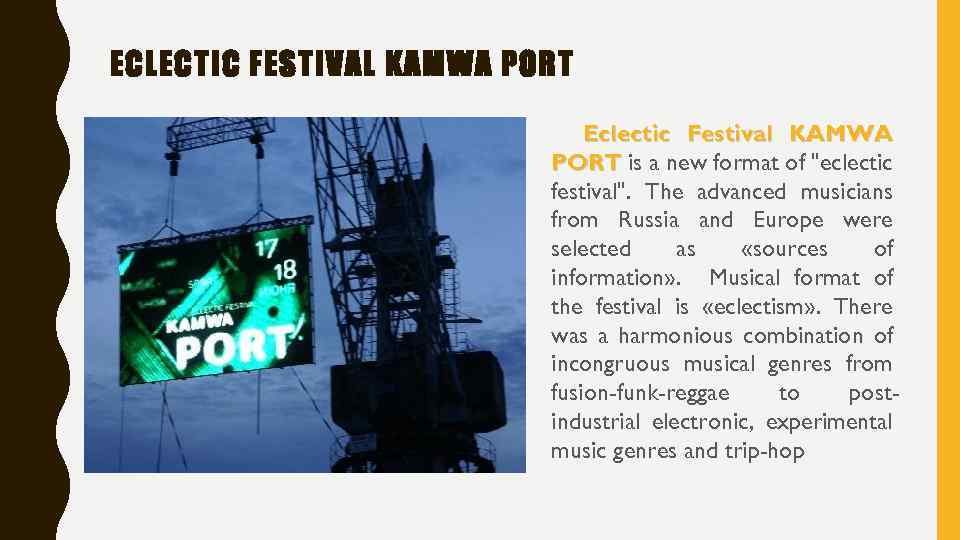
ECLECTIC FESTIVAL KAMWA PORT Eclectic Festival KAMWA PORT is a new format of "eclectic festival". The advanced musicians from Russia and Europe were selected as «sources of information» . Musical format of the festival is «eclectism» . There was a harmonious combination of incongruous musical genres from fusion-funk-reggae to postindustrial electronic, experimental music genres and trip-hop
KUPALA NIGHT
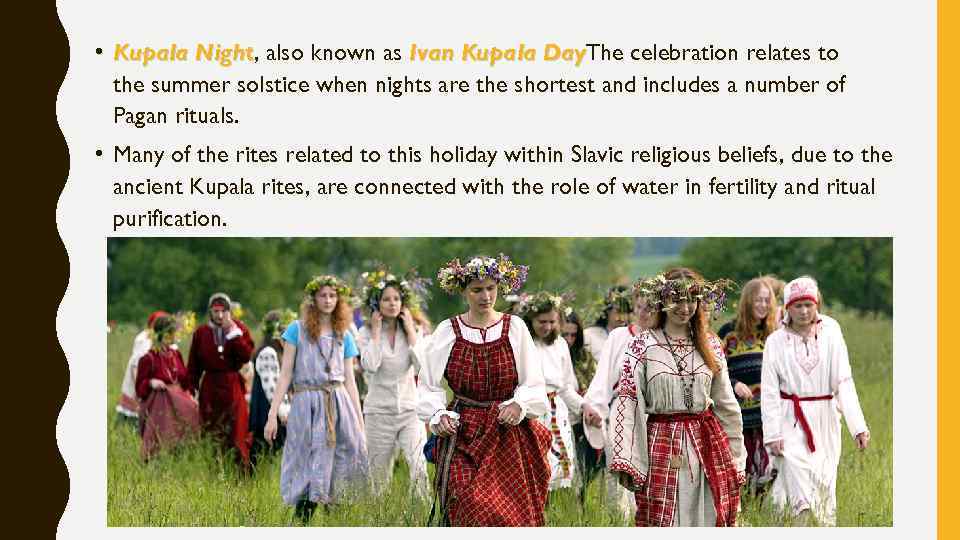
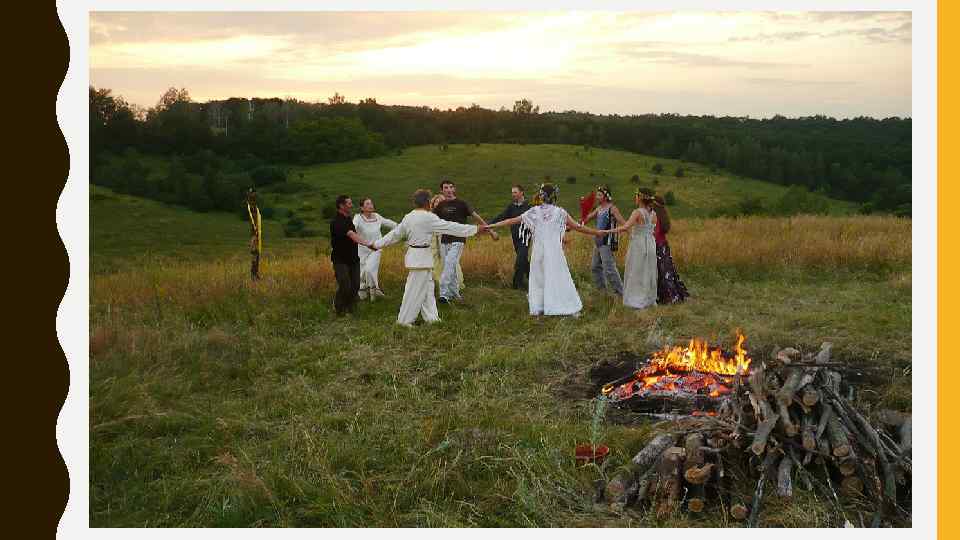
• Kupala Night, also known as Ivan Kupala Day. The celebration relates to Night Day the summer solstice when nights are the shortest and includes a number of Pagan rituals. • Many of the rites related to this holiday within Slavic religious beliefs, due to the ancient Kupala rites, are connected with the role of water in fertility and ritual purification.
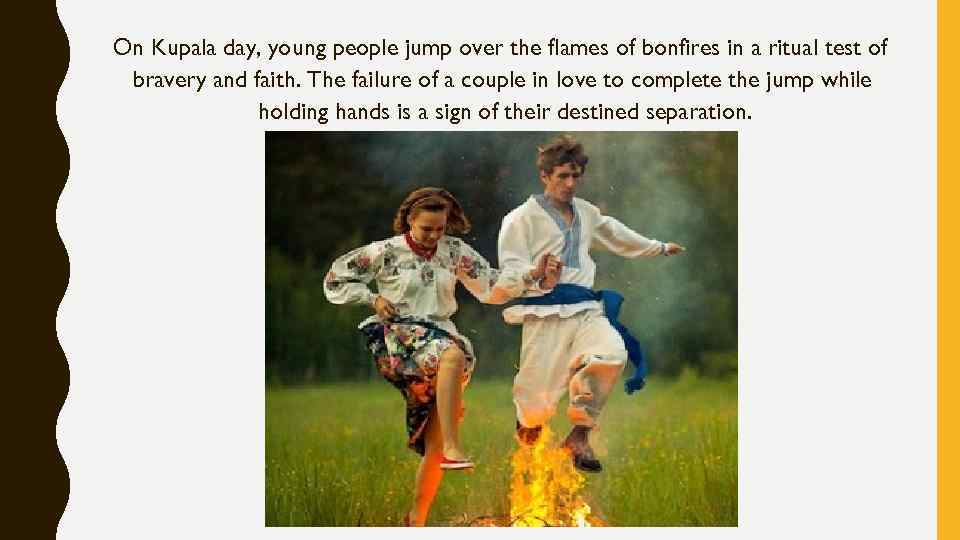
On Kupala day, young people jump over the flames of bonfires in a ritual test of bravery and faith. The failure of a couple in love to complete the jump while holding hands is a sign of their destined separation.
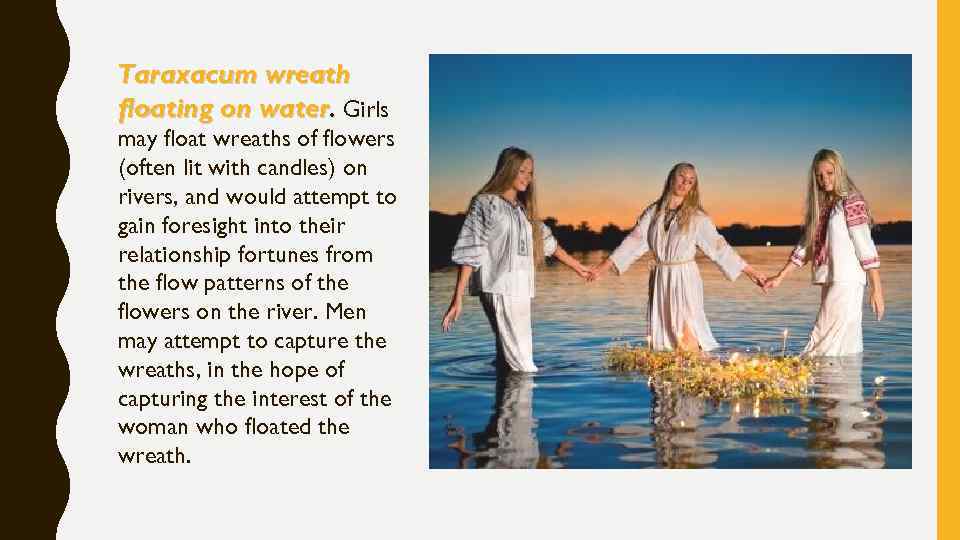
Taraxacum wreath floating on water. Girls may float wreaths of flowers (often lit with candles) on rivers, and would attempt to gain foresight into their relationship fortunes from the flow patterns of the flowers on the river. Men may attempt to capture the wreaths, in the hope of capturing the interest of the woman who floated the wreath.
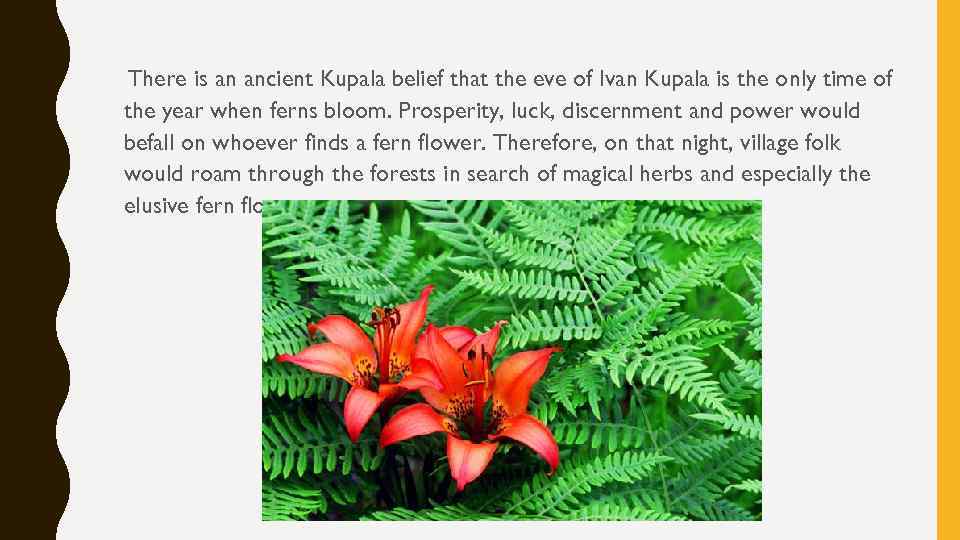
There is an ancient Kupala belief that the eve of Ivan Kupala is the only time of the year when ferns bloom. Prosperity, luck, discernment and power would befall on whoever finds a fern flower. Therefore, on that night, village folk would roam through the forests in search of magical herbs and especially the elusive fern flower.
MIR SIBIRII
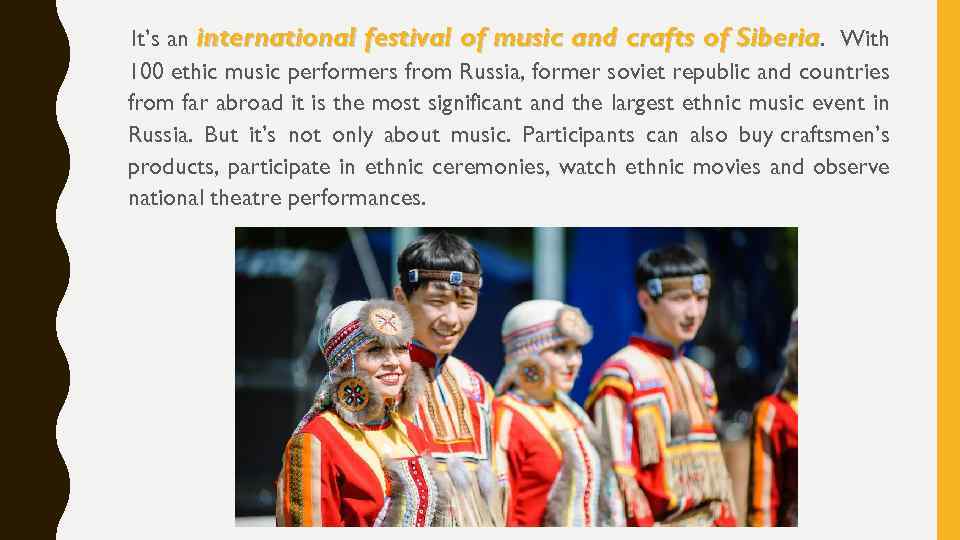
It’s an international festival of music and crafts of Siberia. With 100 ethic music performers from Russia, former soviet republic and countries from far abroad it is the most significant and the largest ethnic music event in Russia. But it’s not only about music. Participants can also buy craftsmen’s products, participate in ethnic ceremonies, watch ethnic movies and observe national theatre performances.
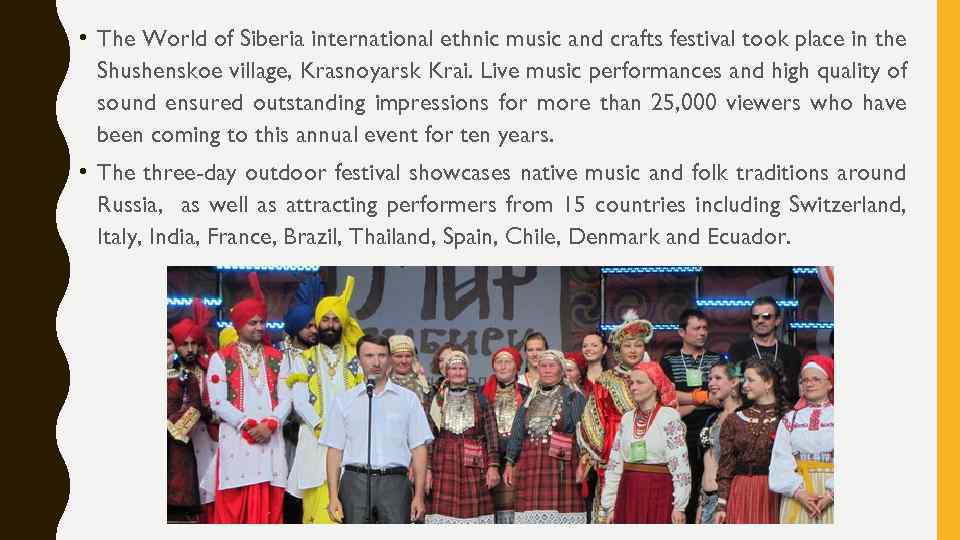
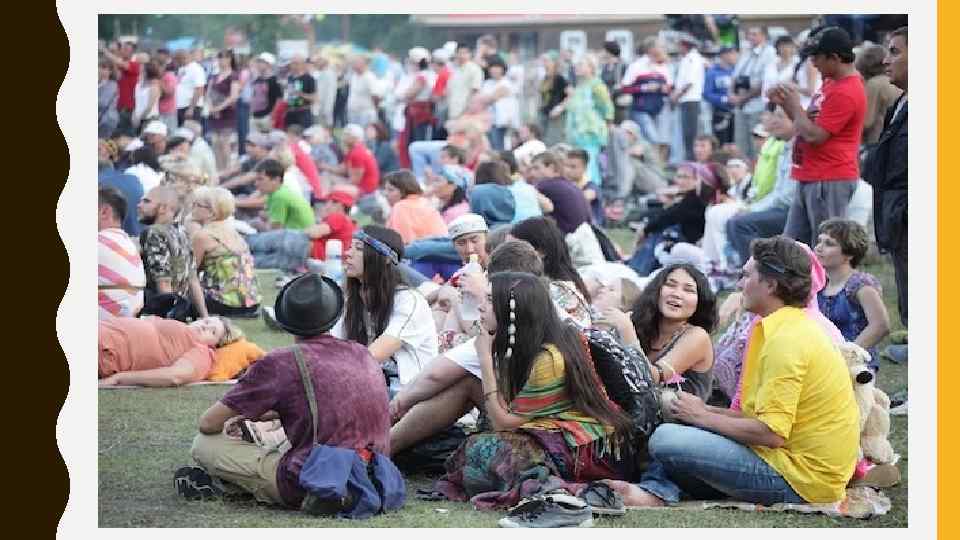
• The World of Siberia international ethnic music and crafts festival took place in the Shushenskoe village, Krasnoyarsk Krai. Live music performances and high quality of sound ensured outstanding impressions for more than 25, 000 viewers who have been coming to this annual event for ten years. • The three-day outdoor festival showcases native music and folk traditions around Russia, as well as attracting performers from 15 countries including Switzerland, Italy, India, France, Brazil, Thailand, Spain, Chile, Denmark and Ecuador.
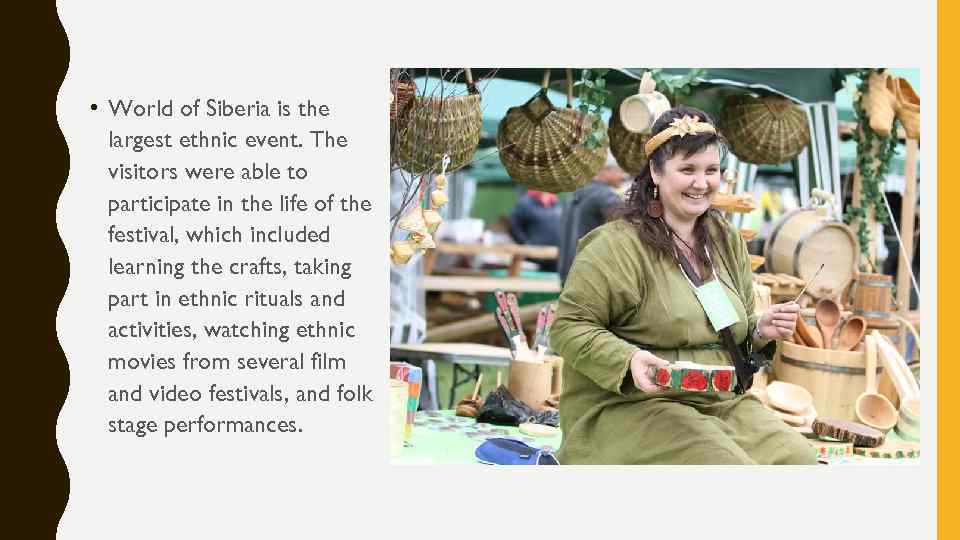
• World of Siberia is the largest ethnic event. The visitors were able to participate in the life of the festival, which included learning the crafts, taking part in ethnic rituals and activities, watching ethnic movies from several film and video festivals, and folk stage performances.
 Скачать презентацию ETHNIC FESTIVALS AND HOLIDAYS THE US BYSTROVA MARIA
этнические праздники и фестивали Быстрова Мария.pptx