


 Скачать презентацию Estimating Social and Economic Effects Planning Step 6
3fbe92ffced11dd326271321d5934fcd.ppt
- Количество слайдов: 86
 Estimating Social and Economic Effects Planning Step 6 1
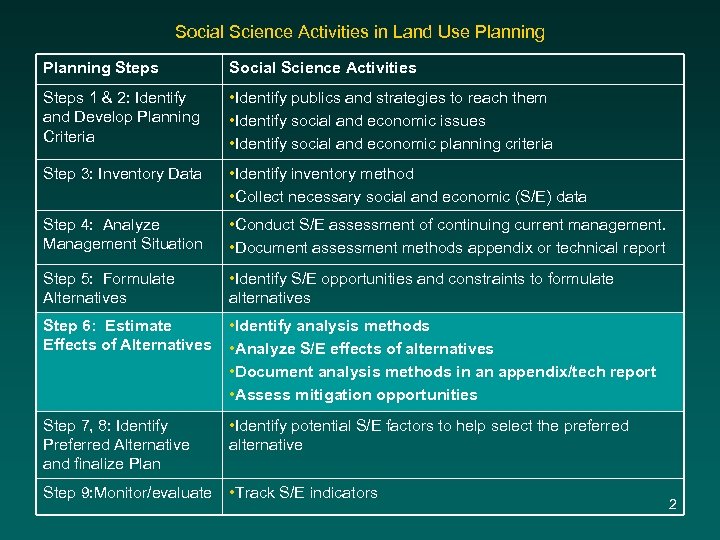 Social Science Activities in Land Use Planning Steps Social Science Activities Steps 1 & 2: Identify and Develop Planning Criteria • Identify publics and strategies to reach them • Identify social and economic issues • Identify social and economic planning criteria Step 3: Inventory Data • Identify inventory method • Collect necessary social and economic (S/E) data Step 4: Analyze Management Situation • Conduct S/E assessment of continuing current management. • Document assessment methods appendix or technical report Step 5: Formulate Alternatives • Identify S/E opportunities and constraints to formulate alternatives Step 6: Estimate Effects of Alternatives • Identify analysis methods • Analyze S/E effects of alternatives • Document analysis methods in an appendix/tech report • Assess mitigation opportunities Step 7, 8: Identify Preferred Alternative and finalize Plan • Identify potential S/E factors to help select the preferred alternative Step 9: Monitor/evaluate • Track S/E indicators 2
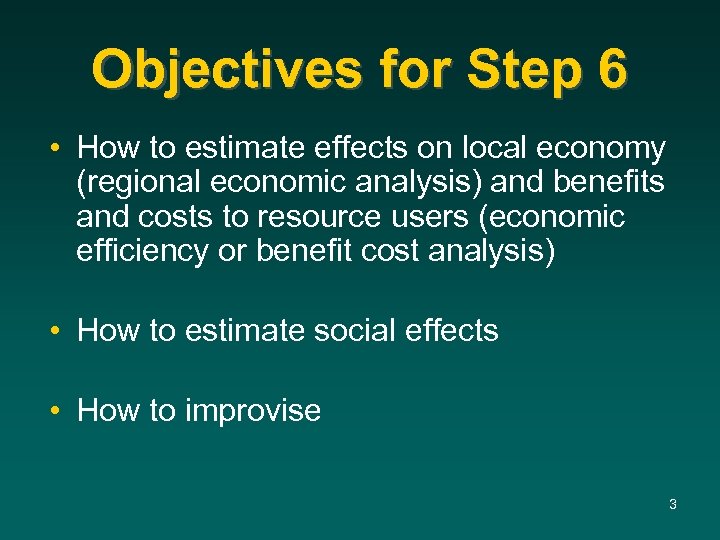 Objectives for Step 6 • How to estimate effects on local economy (regional economic analysis) and benefits and costs to resource users (economic efficiency or benefit cost analysis) • How to estimate social effects • How to improvise 3
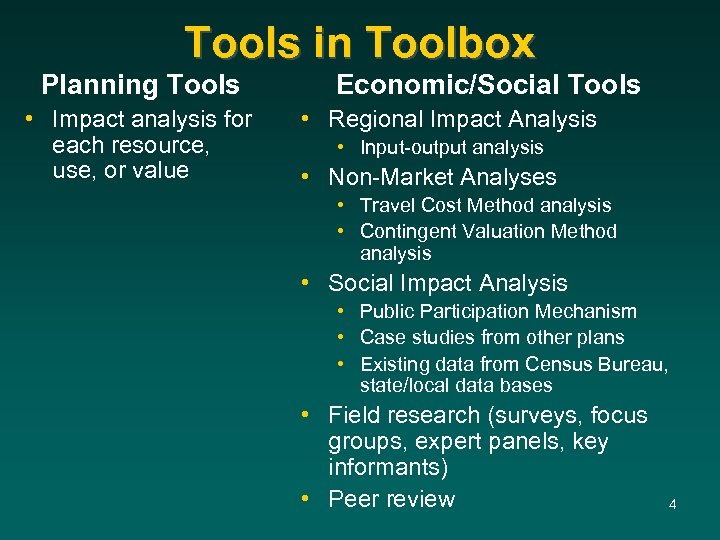 Tools in Toolbox Planning Tools • Impact analysis for each resource, use, or value Economic/Social Tools • Regional Impact Analysis • Input-output analysis • Non-Market Analyses • Travel Cost Method analysis • Contingent Valuation Method analysis • Social Impact Analysis • Public Participation Mechanism • Case studies from other plans • Existing data from Census Bureau, state/local data bases • Field research (surveys, focus groups, expert panels, key informants) • Peer review 4
 Impact Assessment The purpose of impact analysis is to assess the social and economic consequences of implementing the various alternatives identified in the planning process (H-1601 -1, BLM Land Use Planning Handbook) 5
 Two Categories of Economic Effects • Measure regional economic impacts of market transactions on local jobs and income • Input-Output analysis • Measure changes in market and nonmarket value of resources to users • Benefit-Cost Analysis 6
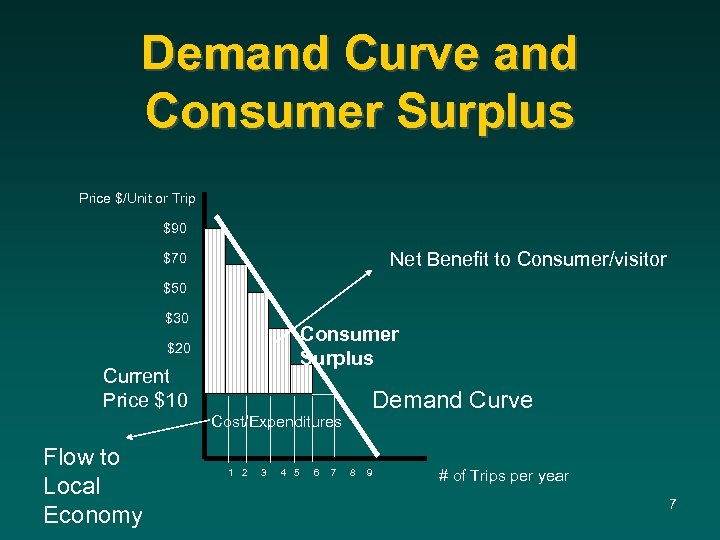 Demand Curve and Consumer Surplus Price $/Unit or Trip $90 Net Benefit to Consumer/visitor $70 $50 $30 Consumer Surplus $20 Current Price $10 Demand Curve Cost/Expenditures Flow to Local Economy 1 2 3 4 5 6 7 8 9 # of Trips per year 7
 Regional Impact Analysis • Regional economic modeling of effects on local economy • Input/Output Analysis • IMPLAN • REMI • Input Output Model • Primary Data • Secondary Data • Combination of both Primary and Secondary Data 8
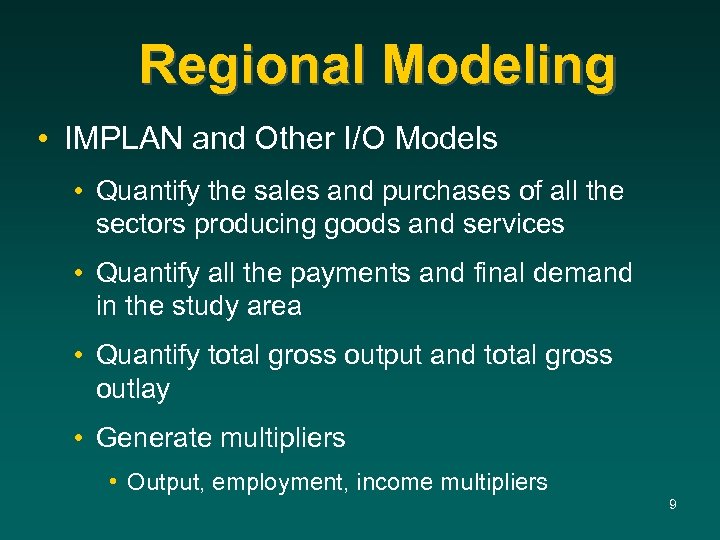 Regional Modeling • IMPLAN and Other I/O Models • Quantify the sales and purchases of all the sectors producing goods and services • Quantify all the payments and final demand in the study area • Quantify total gross output and total gross outlay • Generate multipliers • Output, employment, income multipliers 9
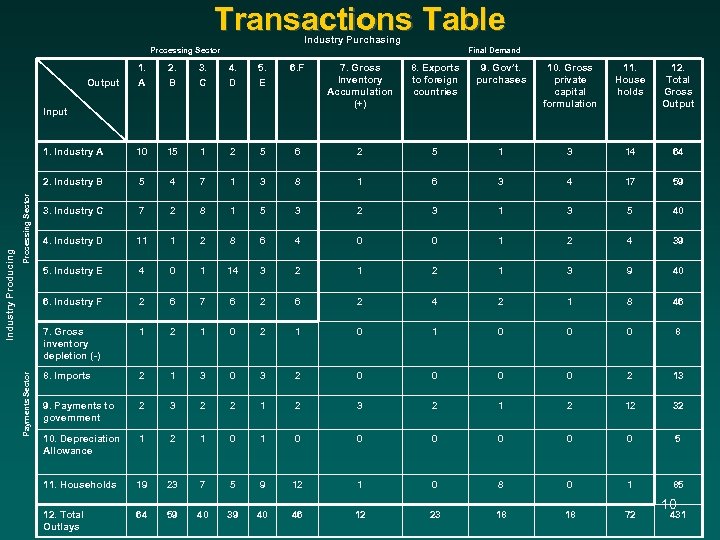 Transactions Table Industry Purchasing Processing Sector Final Demand 1. A 2. B 3. C 4. D 5. E 6. F 7. Gross Inventory Accumulation (+) 8. Exports to foreign countries 9. Gov’t. purchases 10. Gross private capital formulation 11. House holds 12. Total Gross Output 1. Industry A 10 15 1 2 5 6 2 5 1 3 14 64 2. Industry B 5 4 7 1 3 8 1 6 3 4 17 59 3. Industry C 7 2 8 1 5 3 2 3 1 3 5 40 4. Industry D 11 1 2 8 6 4 0 0 1 2 4 39 5. Industry E 4 0 1 14 3 2 1 3 9 40 6. Industry F 2 6 7 6 2 4 2 1 8 46 7. Gross inventory depletion (-) 1 2 1 0 1 0 0 0 8 8. Imports 2 1 3 0 3 2 0 0 2 13 9. Payments to government 2 3 2 2 1 2 3 2 12 32 10. Depreciation Allowance 1 2 1 0 0 0 0 5 11. Households 19 23 7 5 9 12 1 0 8 0 1 85 12. Total Outlays 64 59 40 39 40 46 12 23 18 18 72 Output Processing Sector Payments Sector Industry Producing Input 10 431
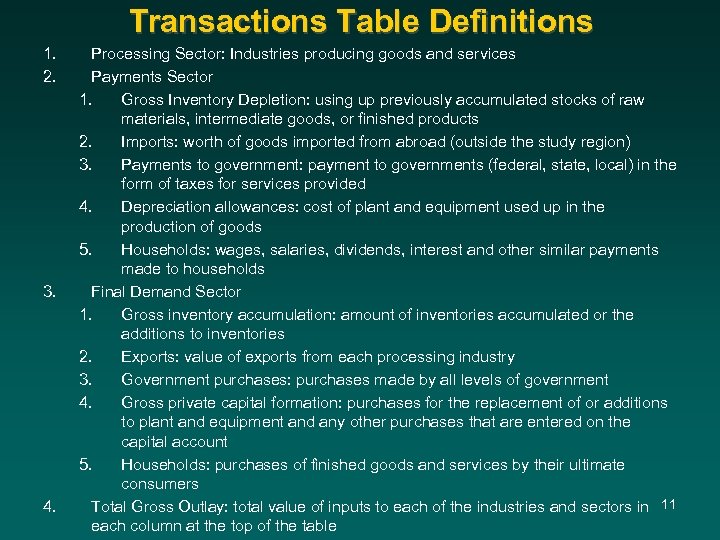 Transactions Table Definitions 1. 2. 3. 4. Processing Sector: Industries producing goods and services Payments Sector 1. Gross Inventory Depletion: using up previously accumulated stocks of raw materials, intermediate goods, or finished products 2. Imports: worth of goods imported from abroad (outside the study region) 3. Payments to government: payment to governments (federal, state, local) in the form of taxes for services provided 4. Depreciation allowances: cost of plant and equipment used up in the production of goods 5. Households: wages, salaries, dividends, interest and other similar payments made to households Final Demand Sector 1. Gross inventory accumulation: amount of inventories accumulated or the additions to inventories 2. Exports: value of exports from each processing industry 3. Government purchases: purchases made by all levels of government 4. Gross private capital formation: purchases for the replacement of or additions to plant and equipment and any other purchases that are entered on the capital account 5. Households: purchases of finished goods and services by their ultimate consumers Total Gross Outlay: total value of inputs to each of the industries and sectors in 11 each column at the top of the table
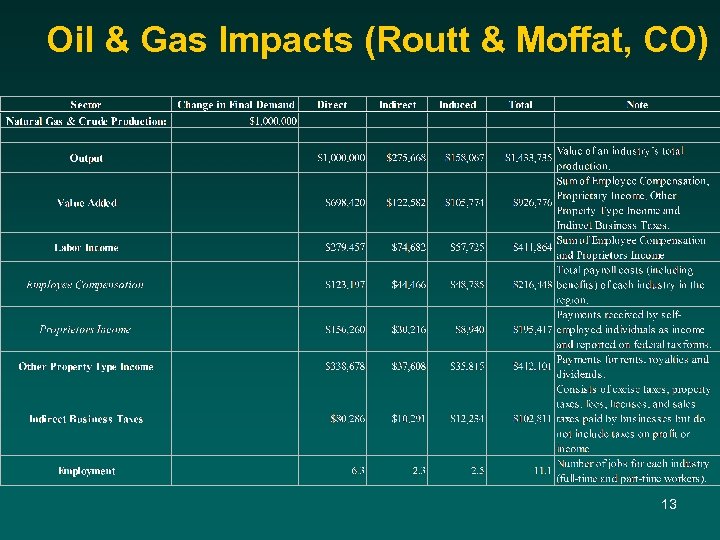
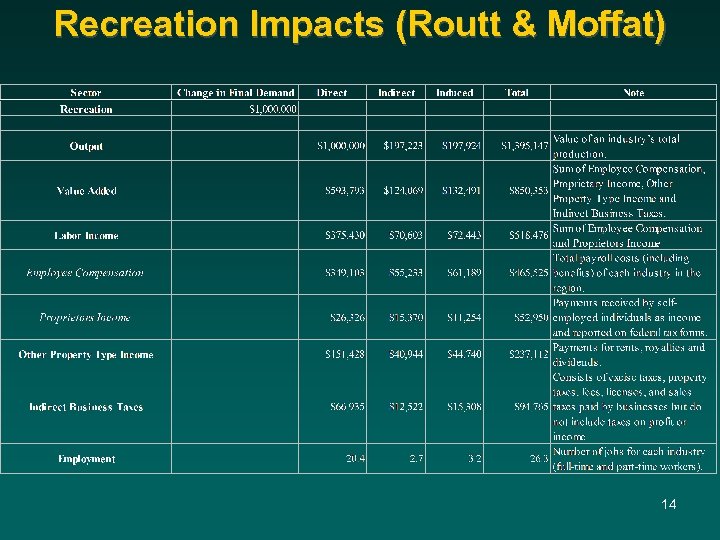
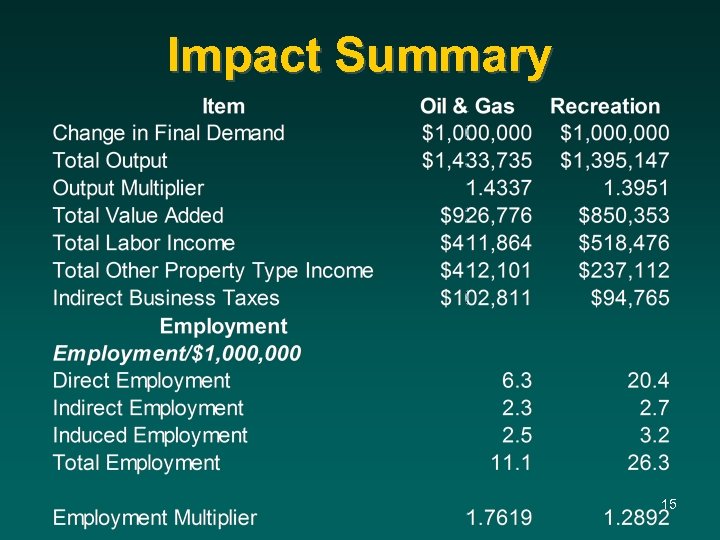
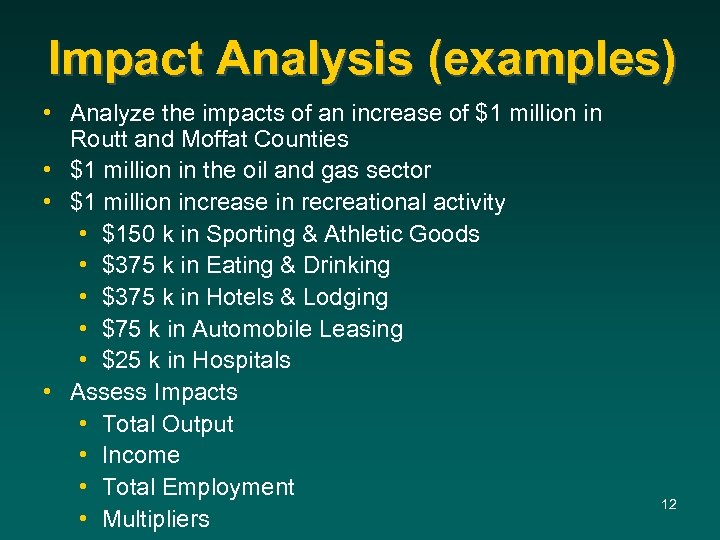 Impact Analysis (examples) • Analyze the impacts of an increase of $1 million in Routt and Moffat Counties • $1 million in the oil and gas sector • $1 million increase in recreational activity • $150 k in Sporting & Athletic Goods • $375 k in Eating & Drinking • $375 k in Hotels & Lodging • $75 k in Automobile Leasing • $25 k in Hospitals • Assess Impacts • Total Output • Income • Total Employment • Multipliers 12
 Oil & Gas Impacts (Routt & Moffat, CO) 13
 Recreation Impacts (Routt & Moffat) 14
 Impact Summary 15
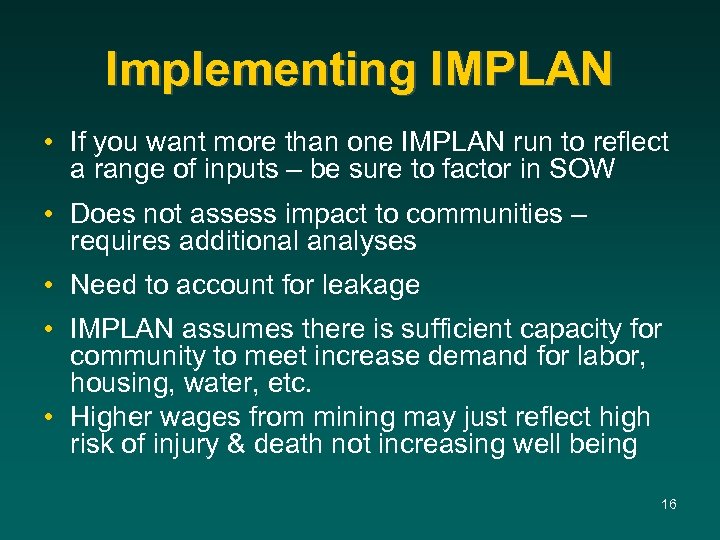 Implementing IMPLAN • If you want more than one IMPLAN run to reflect a range of inputs – be sure to factor in SOW • Does not assess impact to communities – requires additional analyses • Need to account for leakage • IMPLAN assumes there is sufficient capacity for community to meet increase demand for labor, housing, water, etc. • Higher wages from mining may just reflect high risk of injury & death not increasing well being 16
 Topics for Discussion • What does it cost? • Primary data model • Calibrated model • Secondary data model • Analysis time? • Do other agencies use IMPLAN? • Who provides the input data? • When do you use IMPLAN? 17
 Summary of Regional Economic Analysis • Regional analysis • Quantifies the local economic impacts (jobs, income) associated with each alternative • Ranking mechanism • Provides a mechanism for ranking alternatives based on local economic impacts 18
 Cautionary Note on Cumulative Regional Economic Effects • Cumulative impacts – Cumulative impacts must be considered to put impacts in perspective • Example - Development of simultaneous oil & gas fields in the same general area – Impacts associated with project employment being local or imported » Infrastructure » Social Services » Housing, etc 19
 Techniques for Valuing Market & Non-Market Resources and Measuring Changes in Values 20
 Components of Total Economic Value • Public lands can provide public goods and other non-market resources; benefits to users not reflected in regional economic impact analysis • The total economic value of resources include: • On-site use value • Off-site value • Passive use values are at least half the total economic value for unique resource • Passive use values important for unique natural resources on BLM land 21
 Why Total Economic Values Matter in RMPs • RMP is designed to allocate federal land resources that are owned by all U. S. citizens not just local residents • While economic effects person may be higher locally, aggregate effects of RMP alternative is often higher nonlocally because there are far more non-local users and non-users affected. • Non market values represent economic benefits to user groups which may not be adequately reflected in local area spending in regional economic analysis (backpackers may spend less than RV campers, but hikers may have higher consumer surplus if their expenditures are lower) 22
 Measuring Components of Total Economic Value • On Site Use Value • Travel Cost Method for Estimating Recreation Demand & Benefits • Contingent Valuation Method (Direct Questioning) • Passive Use Value • Contingent Valuation Method 23
 Use of Non-Market Valuation by Federal Agencies • Travel Cost and Contingent Valuation Method recommended in 1979 for use by Federal agencies (COE, Bureau of Reclamation) • NOAA panel recommended CVM for passive use value (Panel included two Nobel Laureates) • NPS & Bur Reclamation have used CVM for Olympic NP, Grand Canyon NP • USFWS used CVM for wolf reintroduction EIS 24
 Travel Cost Method (TCM) • Uses variations in visitor travel costs to trace out a demand curve for recreation • From demand curve the net WTP or consumer surplus can be calculated • Can determine how # trips and value per trip changes with management, fishing or hunting quality, water quality, facilities, etc. 25
 Data Needs & Sources for TCM • Using Existing Data for Zonal TCM • Visitor Zip Codes from permit data, trail registers, visitor registers, fee receipts • Visitor Zip Codes, County of Origin from surveys conducted by others • Survey Data for TCM • add questions to Fish & Game Agencies surveys • BLM Visitor Surveys (example next page) 26
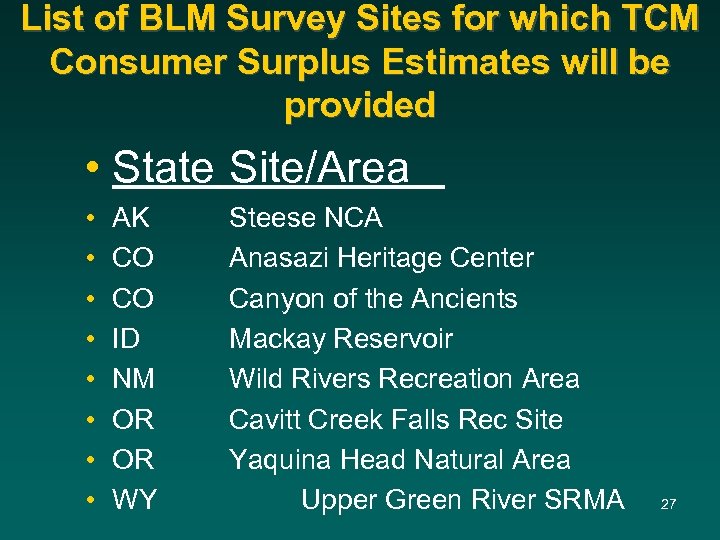 List of BLM Survey Sites for which TCM Consumer Surplus Estimates will be provided • State Site/Area • • AK CO CO ID NM OR OR WY Steese NCA Anasazi Heritage Center Canyon of the Ancients Mackay Reservoir Wild Rivers Recreation Area Cavitt Creek Falls Rec Site Yaquina Head Natural Area Upper Green River SRMA 27
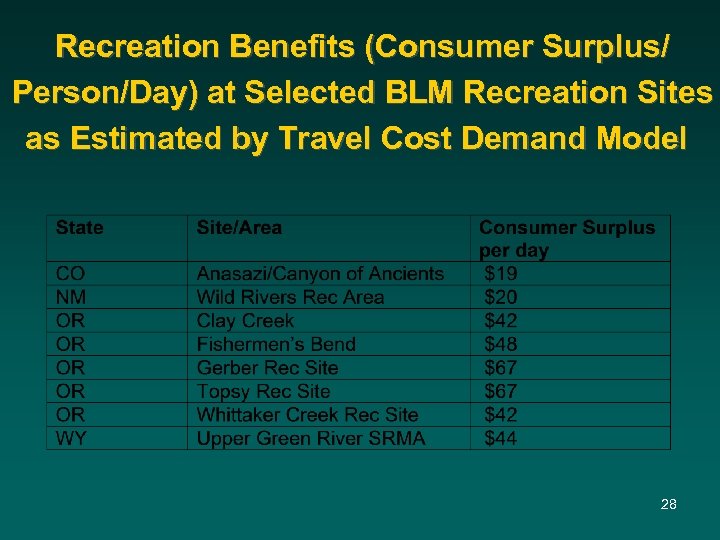 Recreation Benefits (Consumer Surplus/ Person/Day) at Selected BLM Recreation Sites as Estimated by Travel Cost Demand Model 28
 Contingent Valuation Surveys • Involves a random sample of public to determine what a majority of people who own the resource and pay taxes think about the resource trade-offs. • Not a public opinion poll • Measures what people would sacrifice (↑ taxes or ↑ gasoline prices) to protect the area • Changes nature of the debate from "Wildlife vs. People” to one recognizing people care about wildlife or wilderness or intact ecosystems • Thousands of applications including to T&E species, wilderness, water quality, air quality, recreation 29
 Using Benefit Transfer of Existing Values to Planning Area • Benefit transfer is the application of values estimated using TCM & CVM for similar resources to your resource area • Recreation use benefits estimates from BLM site list, USFS, USFWS or literature if: • Your field office offers the same mix of recreation activities and similar quality as an area for which estimates exist • IF YES, use the value from the site/area that most closely matches your field office • If NOT, use average value from USFS list (next page) • Air, water quality benefits (EPA website) 30
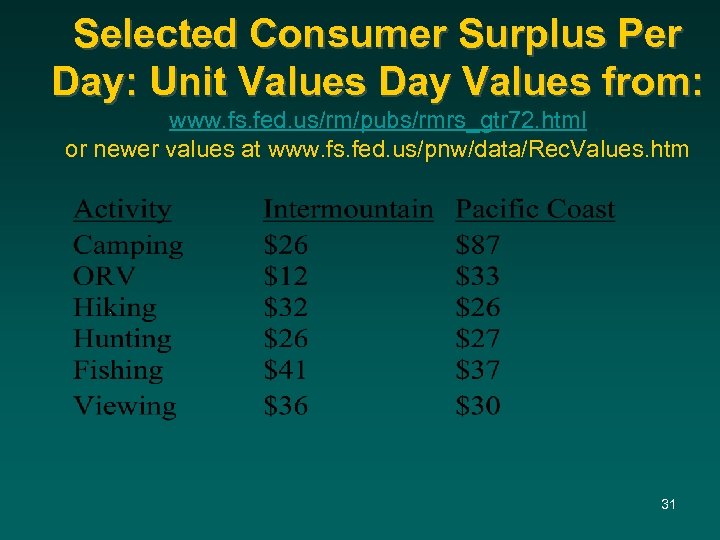 Selected Consumer Surplus Per Day: Unit Values Day Values from: www. fs. fed. us/rm/pubs/rmrs_gtr 72. html or newer values at www. fs. fed. us/pnw/data/Rec. Values. htm 31
 Class Discussion • Which values would you measure? • Which method would you use? • Who would you sample? • Upland game bird hunting in the county • Local river rafting • Premier multi-day whitewater rafting • The only high desert resident elk herd in U. S. likely to be adversely affected by mineral leasing 32
 Key Points (Economics) • Economic effects of each alternative include: • Changes in local jobs and income estimated using Regional Impact Analysis, such as Input-Output models • Benefits or costs to resource users estimated using Travel Cost Method, Contingent Valuation Method, or benefit transfer. • Benefits or costs to non-users of unique resources estimated by CVM or benefit transfer • Can compare alternatives based on their contribution to local economies, and national benefits & costs 33
 Social Impact Assessment • Definition • Types of dependent variables to consider • Examples of impact analyses from RMPs • Social Impact Assessment (SIA) exercise • How to estimate social effects 34
 Social Impacts Definition The consequences to human populations of any public or private actions that alter the ways in which people live, work, play, relate to one another, organize to meet their needs and generally cope as members of society. The term also includes cultural impacts involving changes to the norms, values, and beliefs that guide and rationalize their cognition of themselves and their society (Interorganizational Committee on Principles and Guidelines 2003). 35
 Dependent Variables in a Social Impacts Analysis (SIA) • Set of actions contained in an alternative is an independent variable (agent of change) • Changes in other resource areas (outputs, conditions, opportunities) can lead to social effects • Level and type of social impact depends not just on the change in the dependent variables, but on how people and institutions evaluate and respond to the change 36
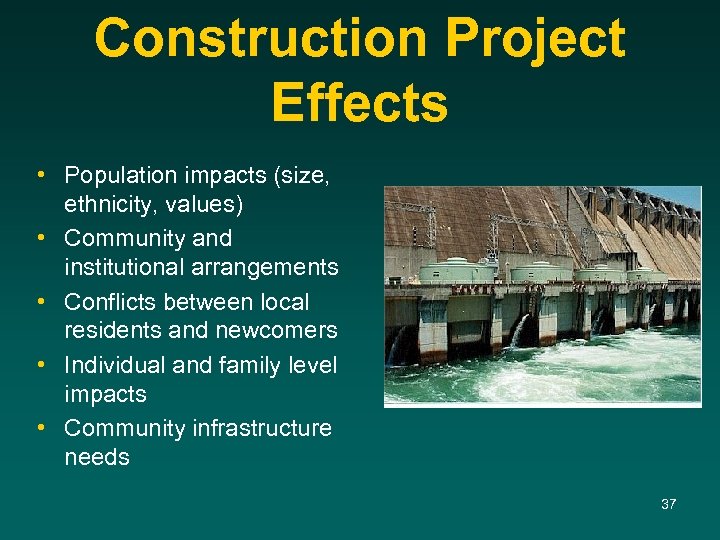 Construction Project Effects • Population impacts (size, ethnicity, values) • Community and institutional arrangements • Conflicts between local residents and newcomers • Individual and family level impacts • Community infrastructure needs 37
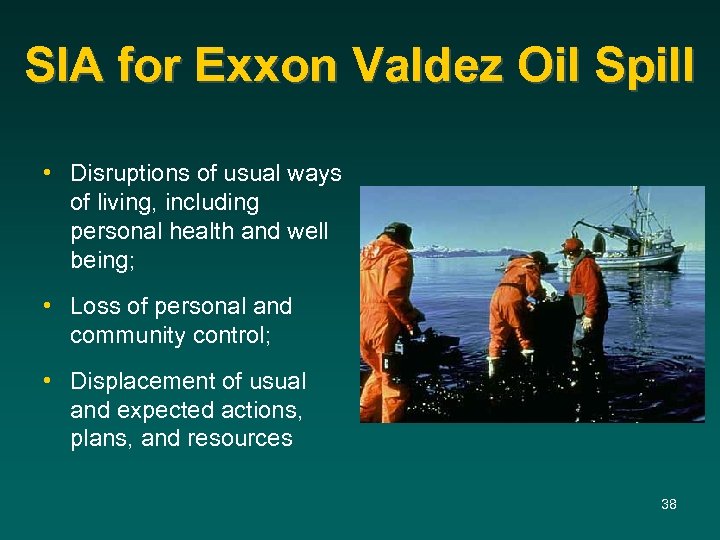 SIA for Exxon Valdez Oil Spill • Disruptions of usual ways of living, including personal health and well being; • Loss of personal and community control; • Displacement of usual and expected actions, plans, and resources 38
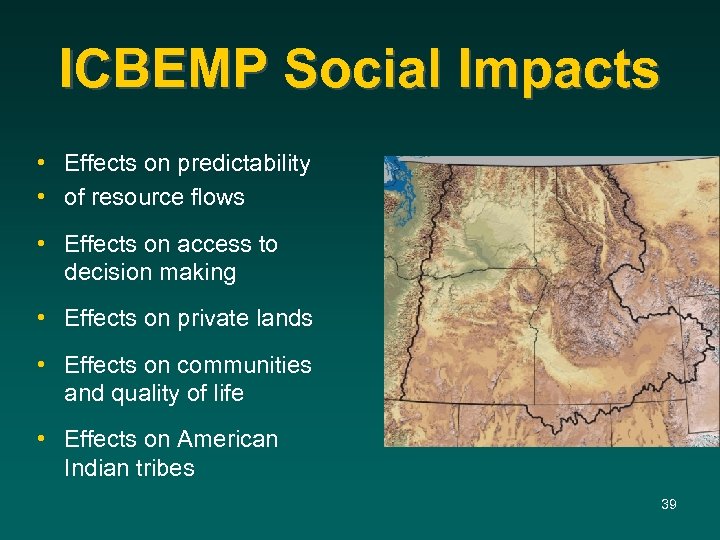 ICBEMP Social Impacts • Effects on predictability • of resource flows • Effects on access to decision making • Effects on private lands • Effects on communities and quality of life • Effects on American Indian tribes 39
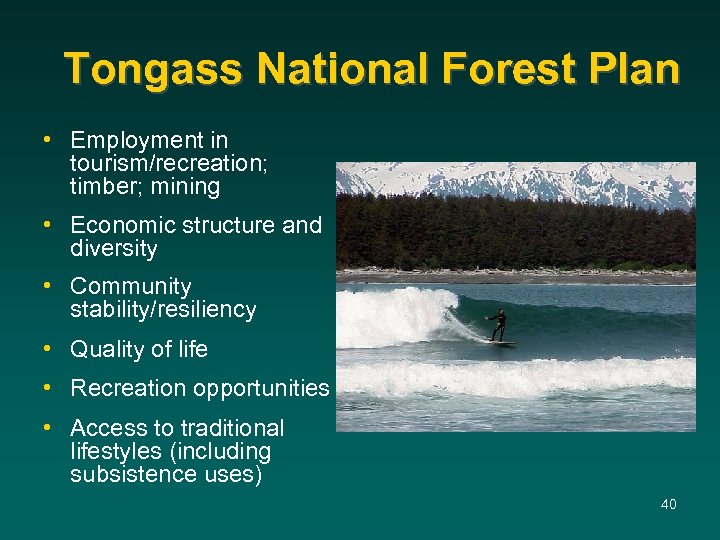 Tongass National Forest Plan • Employment in tourism/recreation; timber; mining • Economic structure and diversity • Community stability/resiliency • Quality of life • Recreation opportunities • Access to traditional lifestyles (including subsistence uses) 40
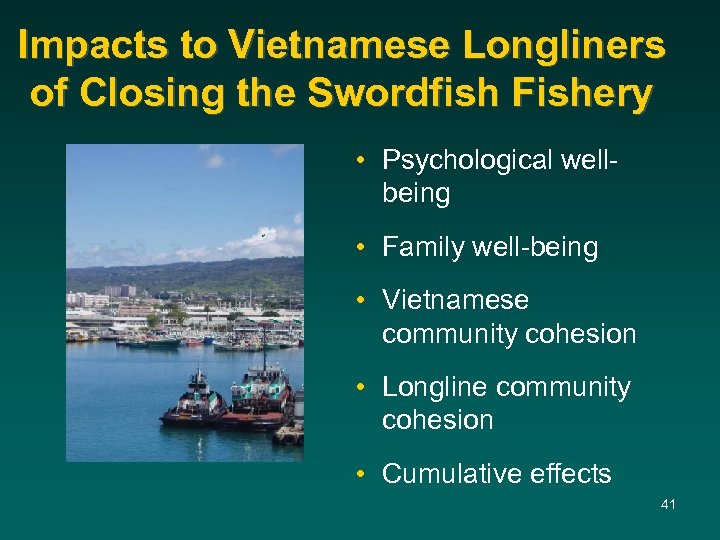 Impacts to Vietnamese Longliners of Closing the Swordfish Fishery • Psychological wellbeing • Family well-being • Vietnamese community cohesion • Longline community cohesion • Cumulative effects 41
 SIA Example: Dillon RMP 42
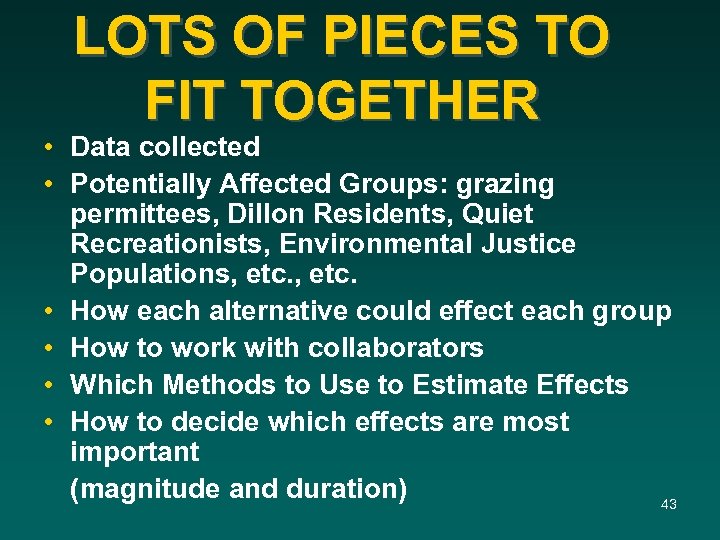 LOTS OF PIECES TO FIT TOGETHER • Data collected • Potentially Affected Groups: grazing permittees, Dillon Residents, Quiet Recreationists, Environmental Justice Populations, etc. • How each alternative could effect each group • How to work with collaborators • Which Methods to Use to Estimate Effects • How to decide which effects are most important (magnitude and duration) 43
 SIA Thinking Process 44
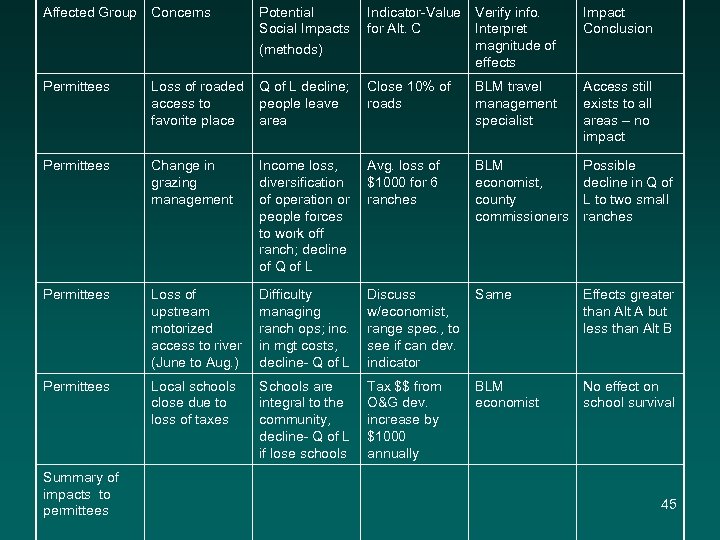 Affected Group Concerns Potential Social Impacts (methods) Indicator-Value Verify info. for Alt. C Interpret magnitude of effects Impact Conclusion Permittees Loss of roaded access to favorite place Q of L decline; people leave area Close 10% of roads BLM travel management specialist Access still exists to all areas – no impact Permittees Change in grazing management Income loss, diversification of operation or people forces to work off ranch; decline of Q of L Avg. loss of $1000 for 6 ranches BLM economist, county commissioners Possible decline in Q of L to two small ranches Permittees Loss of upstream motorized access to river (June to Aug. ) Difficulty managing ranch ops; inc. in mgt costs, decline- Q of L Discuss w/economist, range spec. , to see if can dev. indicator Same Effects greater than Alt A but less than Alt B Permittees Local schools close due to loss of taxes Schools are integral to the community, decline- Q of L if lose schools Tax $$ from O&G dev. increase by $1000 annually BLM economist No effect on school survival Summary of impacts to permittees 45
 Social Effects to Society as a Whole • May be greater than the sum of the effects to individual groups • “Adoption of Alternative B or C could add to the concern of some residents about increasing government control over public lands. Very small towns that are experiencing continued population decline and are highly dependent on agriculture could find their population decline accelerated. The potential loss of open space, if ranches were sold and developed in some manner, could add to the ongoing loss of open space under these alternatives. ” Dillon RMP 46
 SIA Thinking Process, cont. • Need 1 table for each potentially affected group for each alternative • Way to document SIA process—keep for your records • Not as complex as it seems—some duplication among alternatives; groups • May use some other typology for social effects (such as by community) • Leads to the next two tables 47
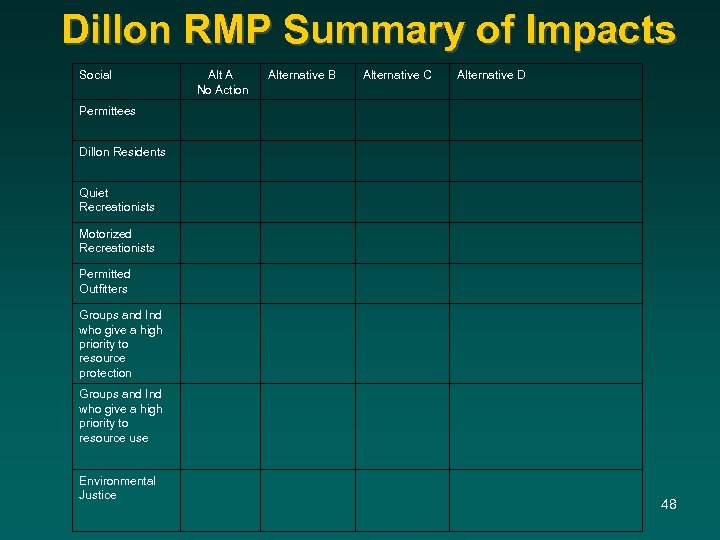 Dillon RMP Summary of Impacts Social Alt A No Action Alternative B Alternative C Alternative D Permittees Dillon Residents Quiet Recreationists Motorized Recreationists Permitted Outfitters Groups and Ind who give a high priority to resource protection Groups and Ind who give a high priority to resource use Environmental Justice 48
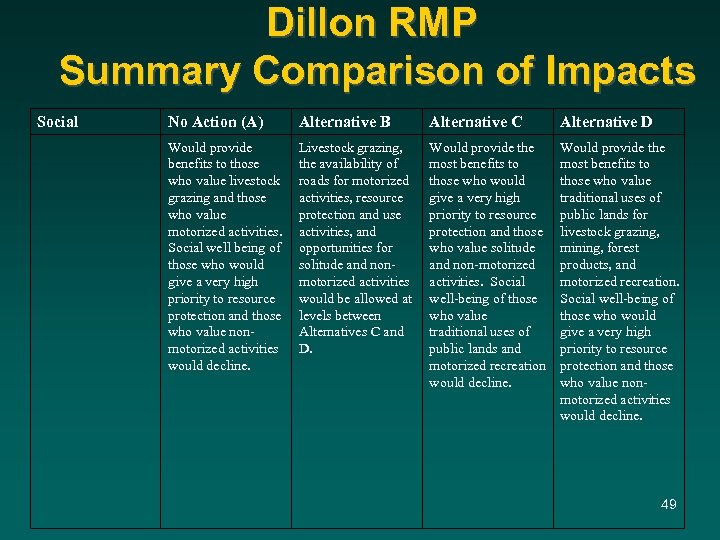 Dillon RMP Summary Comparison of Impacts Social No Action (A) Alternative B Alternative C Alternative D Would provide benefits to those who value livestock grazing and those who value motorized activities. Social well being of those who would give a very high priority to resource protection and those who value nonmotorized activities would decline. Livestock grazing, the availability of roads for motorized activities, resource protection and use activities, and opportunities for solitude and nonmotorized activities would be allowed at levels between Alternatives C and D. Would provide the most benefits to those who would give a very high priority to resource protection and those who value solitude and non-motorized activities. Social well-being of those who value traditional uses of public lands and motorized recreation would decline. Would provide the most benefits to those who value traditional uses of public lands for livestock grazing, mining, forest products, and motorized recreation. Social well-being of those who would give a very high priority to resource protection and those who value nonmotorized activities would decline. 49
 Methods Used in Dillion RMP • Cause and Effects Web and “thinking process chart” to focus the analysis • Discussions with potentially affected groups/individuals • Case Studies (including SIAs on the same area or those with similar issues) • Experts: BLM resource people, university experts • Verification of conclusions by different sources 50
 Collaboration in the Dillon SIA • Early review of methods and results by county commissioner’s representative • Discussions with RAC members (represent different perspectives, developed the alternatives for Travel Mgt), county planners; commissioners; state and federal government reps • ID team rep attended all team discussions 51
 Dillon Social Impact Sections • Assumptions for Social Analysis (pp 286286) • Impacts Common to All Alternatives (p 302) • Impacts from Alternative A—No Action (pp 317 -317) • Impacts from Alternative B—Proposed Action (pp 333 -334) • Environmental Justice (p 301) • Cumulative Impacts (p 368) • Methods Section (conspicuous by its absence) 52
 Dillon SIA Critique • Focus too much on attitudes (“real” and “perceived” effects) • More focus on the actual social effects rather than the resource changes driving them (problem with all the sections in RMPs) • Improved summaries by affected group 53
 Hints for SIA in RMPs • Bring together all the effects on a particular group (may not occur anyplace else) • Work closely with resource specialists to enhance understanding • May need to describe effects in terms of communities of interest (affected groups), communities of place, or use some other method 54
 More Hints for SIA in RMPs • Verify conclusions by using different ways to look at a particular issue and using a variety of information sources • Focus the analysis on the most important effects • Teasing out the effects of relatively minor changes against a moving background can be a challenge • Timing can be a challenge because the social analyst needs the results of other specialists’ analysis before they may be done 55
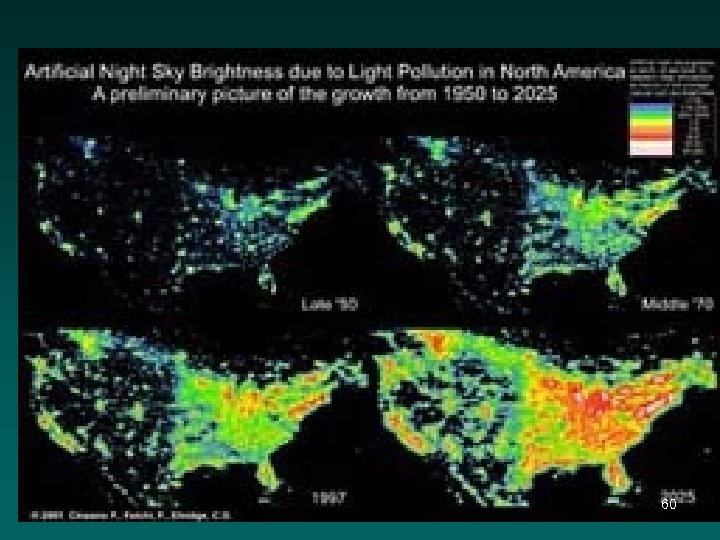
 New Issues or Old Issues with New Twists • Sense of Place • Light and Noise Pollution (physical measurements and psychological effects) • Cumulative Effects • Environmental Justice (efforts to expand the covered populations) 56
 Special Places – Sense of Place • “The attachments people have to the land” (Leibert, 1997) • Responsive to public values • Useful for Alternative Development, Mitigation • King Range RMP discusses this • Upper Columbia River Basin Project developed several papers on this 57
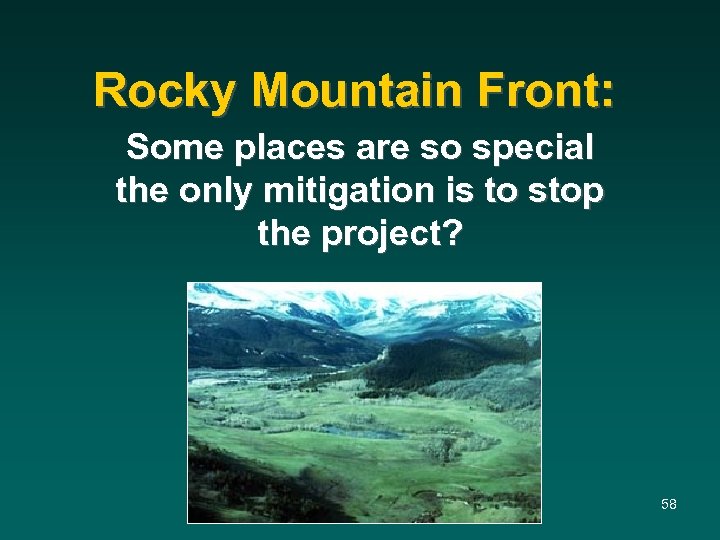 Rocky Mountain Front: Some places are so special the only mitigation is to stop the project? 58
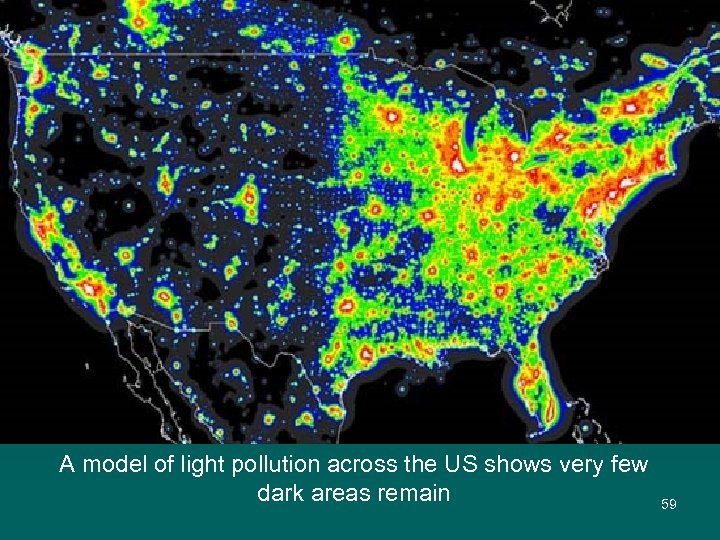 A model of light pollution across the US shows very few dark areas remain 59
 60
60
 Watch for Cumulative Effects • Proposed actions that may have minor social impacts in themselves must be considered as potentially contributing to cumulatively significant change • Another change to present results by affected group • If you do a good job on the social effects analysis you will have met the requirements for Environmental Justice 61
 Environmental Justice Watch for disproportionate negative impacts on low-income, minority, or tribal populations 62
 Environmental Justice “Each federal agency shall make achieving environmental justice part of its mission by identifying and addressing, as appropriate, disproportionately high and adverse human health or environmental effects of its programs, policies, and activities on minority populations and low income populations. ” --- Executive Order 12898 (1994, amended 1995) 63
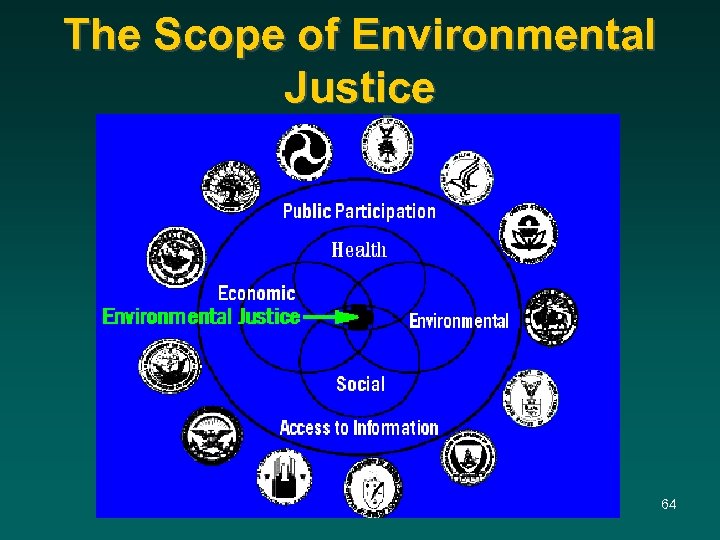 The Scope of Environmental Justice 64
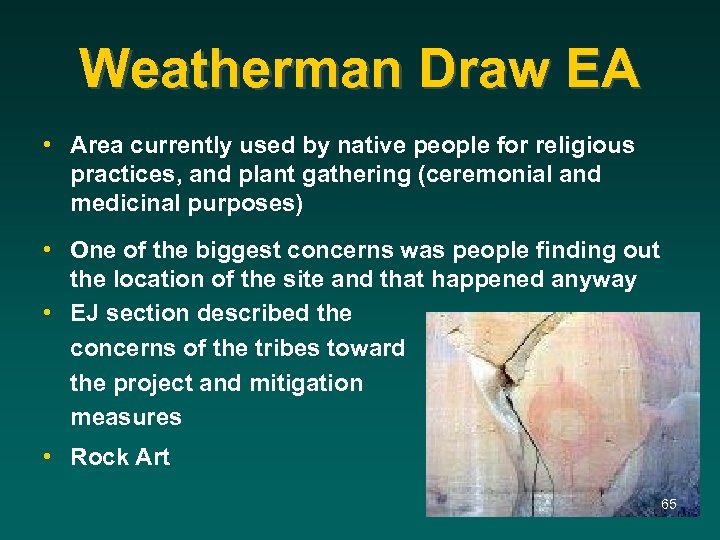 Weatherman Draw EA • Area currently used by native people for religious practices, and plant gathering (ceremonial and medicinal purposes) • One of the biggest concerns was people finding out the location of the site and that happened anyway • EJ section described the concerns of the tribes toward the project and mitigation measures • Rock Art 65
 More Environmental Justice • Not limited to effects on human health • Easy to describe minority and low income populations using census data • Much more difficult to discuss impacts • Must be a relationship between BLM activities and the EJ population • Don’t assume affected populations will attend meetings or hearings; may have to proactively engage 66
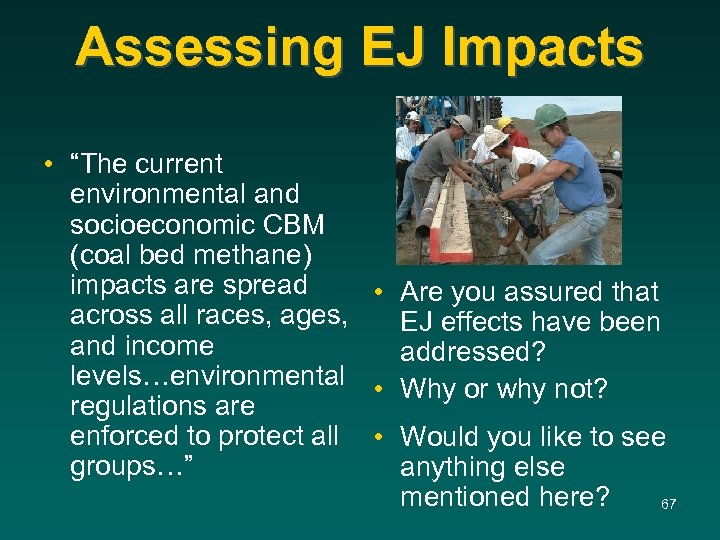 Assessing EJ Impacts • “The current environmental and socioeconomic CBM (coal bed methane) impacts are spread • Are you assured that across all races, ages, EJ effects have been and income addressed? levels…environmental • Why or why not? regulations are enforced to protect all • Would you like to see groups…” anything else mentioned here? 67
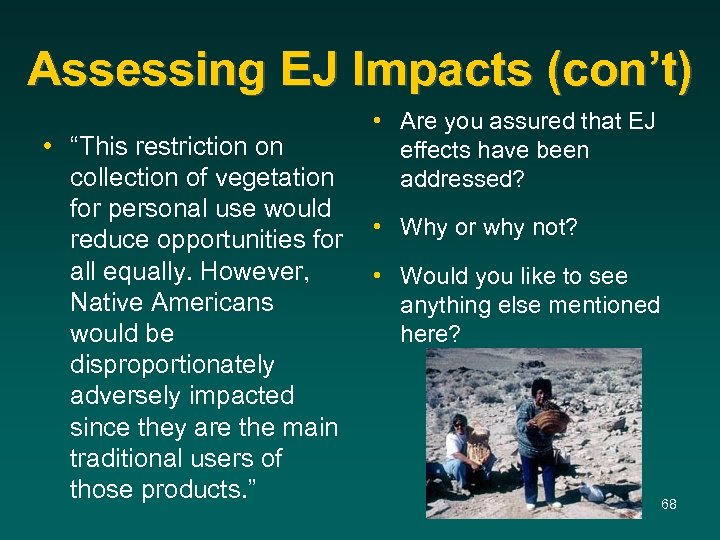 Assessing EJ Impacts (con’t) • “This restriction on collection of vegetation for personal use would reduce opportunities for all equally. However, Native Americans would be disproportionately adversely impacted since they are the main traditional users of those products. ” • Are you assured that EJ effects have been addressed? • Why or why not? • Would you like to see anything else mentioned here? 68
 SIA Exercise King Range National Conservation Area 69
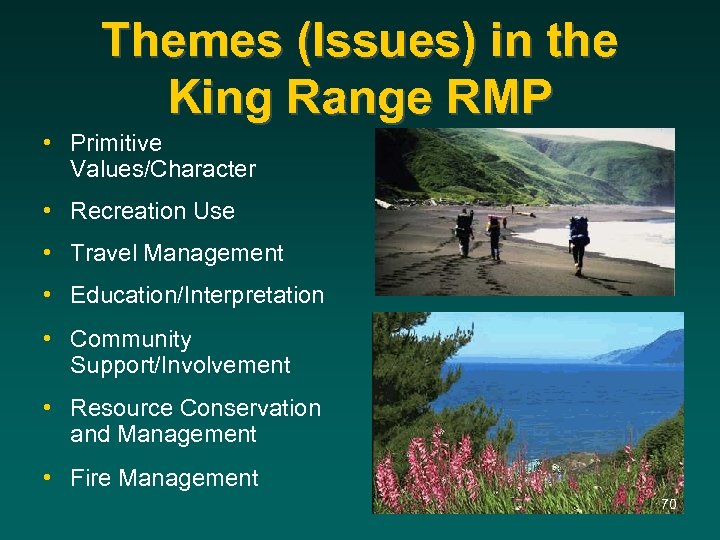 Themes (Issues) in the King Range RMP • Primitive Values/Character • Recreation Use • Travel Management • Education/Interpretation • Community Support/Involvement • Resource Conservation and Management • Fire Management 70
 Techniques for Estimating Social Impacts • Search for other EISs and reports that assess the effects of similar actions or projects • Describe similarities and differences in the study settings and management alternatives before drawing comparisons to estimate impacts • Use techniques/ information sources that follow 71
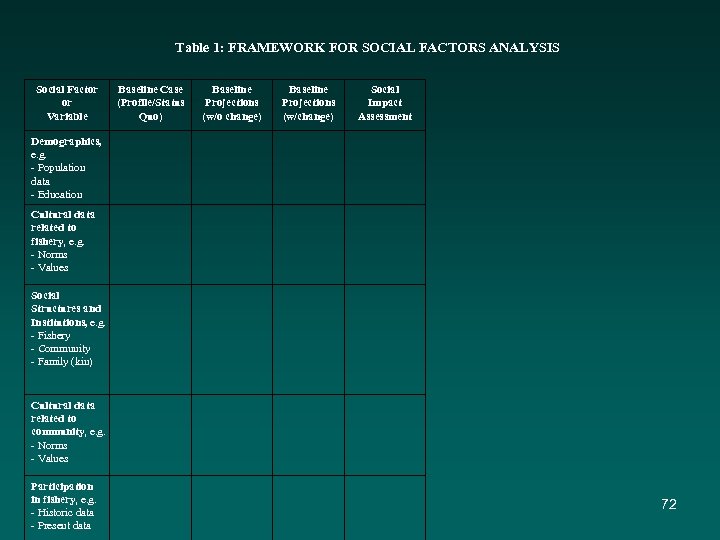 Table 1: FRAMEWORK FOR SOCIAL FACTORS ANALYSIS Social Factor or Variable Baseline Case (Profile/Status Quo) Baseline Projections (w/o change) Baseline Projections (w/change) Social Impact Assessment Demographics, e. g. - Population data - Education Cultural data related to fishery, e. g. - Norms - Values Social Structures and Institutions, e. g. - Fishery - Community - Family (kin) Cultural data related to community, e. g. - Norms - Values Participation in fishery, e. g. - Historic data - Present data 72
 Techniques/Information Sources • Overall public meetings and correspondence • Stakeholder outreach/involvement results • Case studies of impacts from other plans • Information contained in state and local plans • Field research (surveys, focus groups, expert panels, key informants) • Peer review of draft impact assessment • Quality of Life/ Resiliency issues 73
 Overall Project Public Meetings and Correspondence • Use scoping meetings, newsletters and comment sheets, and other project public contacts as an avenue for collecting information impacts • If the public reviews draft alternatives, ask for concerns and comments regarding possible social or economic impacts 74
 Use the Stakeholder Outreach/Involvement Program • Continue to communicate with stakeholders as you have been • Ask about their concerns regarding impacts, what could be done to reduce, avoid or enhance those effects, and how they might respond • Use their quotes in the impact write-up 75
 Case Studies of Impacts from Research and Other Plans • Adapt ideas and frameworks from other EISs on RMPs and other plans & projects • A sizeable literature has been developed on impact assessment • The literature can be especially useful as a basis for making predictions about behavior (why people are expected to respond a certain way) 76
 Information Contained in State and Local Plans • Regional and local plans contain goals that describe where they hope to be in the future • Assess whether and how an alternative will facilitate/impede/not affect those goals • Relatively easy to do and reflects concern for interactions between public land management and communities • Follow up by asking for local review of your conclusions (or let happen through Draft EIS) 77
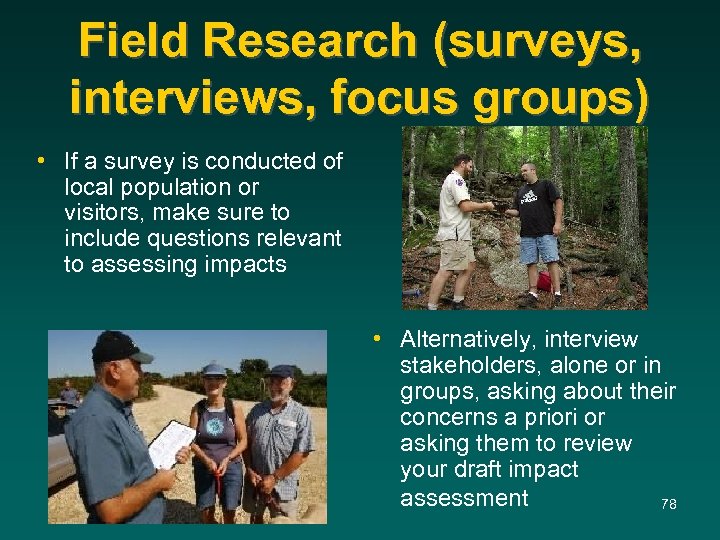 Field Research (surveys, interviews, focus groups) • If a survey is conducted of local population or visitors, make sure to include questions relevant to assessing impacts • Alternatively, interview stakeholders, alone or in groups, asking about their concerns a priori or asking them to review your draft impact assessment 78
 Expert Panels • Efficient and potentially effective way to identify social impacts • Be aware of Federal Advisory Committee Act implications in design of panel and its deliberations • Don’t consider it to constitute the impact assessment, but to be major source of information for it 79
 Tongass NF Panel Example • Panel composed of 5 community experts meeting for 2 days • Information packet prepared and overview of alternatives presented • Estimated 9 types of effects on 32 communities of 9 management alternatives • Members rated effects as positive, negative, or neutral for each criterion • Panel members gave individual ratings (not consensus) 80
 Peer Review of Draft SIA • Most likely, impact assessment will include speculation (also called professional judgment) about major types of effects on major subgroups of the affected population • Peer review by social scientists will go a long way toward increasing your comfort level (and legal requirements of the Data Quality Act) 81
 Resiliency As An Intervener • Resiliency at any scale can determine whether a change constitutes a significant impact • Define your indicators of resiliency indicators and how they mediate effects • History of dealing successfully with past change is one indicator of resiliency that avoids negative labels 82
 Tips and Tricks • Insist that outputs from other effects analyses be identified before the social & economic analyses can be finished • It’s better to be roughly correct on important issues than to be precisely correct on unimportant ones • Don’t guess or try to use common sense; always have some basis for estimating impacts 83
 More Tips and Tricks • Beware of using county-level data to describe effects on communities • Don’t just repeat the features of the alternative in the effects analysis • Be wary of attaching global labels like positive or negative to effects; changes are perceived differently by different people or groups • People posture, act strategically, and don’t necessarily know how they will respond adapt! 84
 Still More Tips and Tricks • Use assumptions liberally where needed and state them clearly; reveal data gaps • Re-read each line of the draft SIA and ask yourself if you could defend that line on the witness stand • If you don’t have someone qualified to do the social and economic analyses, don’t worry--your appellants probably will… 85
 Exercise 4 86