 Скачать презентацию Establishing a vineyard in the Puget Sound Appellation
ac88fd221bfa8b86fb9e90bf2603421d.ppt
- Количество слайдов: 108



Establishing a vineyard in the Puget Sound Appellation WWHA Jan-2008 Mike Lempriere mike@Perennial. Vintners. com Slides will be available at: http: //www. PSWG. org/
Agenda • • • • • Must do & Must read Puget Sound Appeallation and its winegrowing history Jargon Location, Soil, Slope/aspect Layout (row/plant spacing) Vineyard floor Pests Organic certification Trellising Styles, Posts/wires Irrigation Grape Varietal selection Rootstocks & grafting Acquiring plant material & making cuttings Initial area preparation Planting, pruning Recommended: Organizations, Vendors, Products References Methods
Must do • Puget Sound Wine. Growers: – Become a member ($50) – Subscribe to public mailing list (free) http: //www. pswg. org/ • BIVW annual PS AVA grape growing class 02 Feb-2008. Call the winery and sign up ASAP (additional class may be scheduled if demand): http: //www. bainbridgevineyards. com/ • Another PS grape growing class, Steve Snyder (scheduled for Mar-2008): http: //www. Hollywood. Hill. com/
Must read • WSU Mt. Vernon EB 2001 - Gary Moulton http: //pubs. wsu. edu/ – In search box, enter "grapes“. – Click on EB 2001 – free PDF download. Discusses cool climate grape choices, pruning. Overall an excellent introductory reference. • Oregon Viticulture – Edward Hellman http: //bookstore. ucdavis. edu/Display. cfm? item. Id=905 – I wish this had been available when I got started. – Everything you need/want to know is here. – Skip chapters on specific OR planting areas.
Must read (cont. ) • The Grape Grower – Lon Rombough An excellent reference with detailed discussions on pests, trellising, unusual varieties, and has an overall strong emphasis on organic methods. http: //www. Bunch. Grapes. com/ – Buy directly from author – Also available at http: //www. powells. com/ • Greg Jones climatological study for Olympic Cellars. – Study is not listed on the Olympic Cellars website, but it is buried there if you know the URL: http: //www. Olympic. Cellars. com/istore/grapestudypt 1_page 57 VXD. pdf – Can be found by external search engine. – Free PDF download.
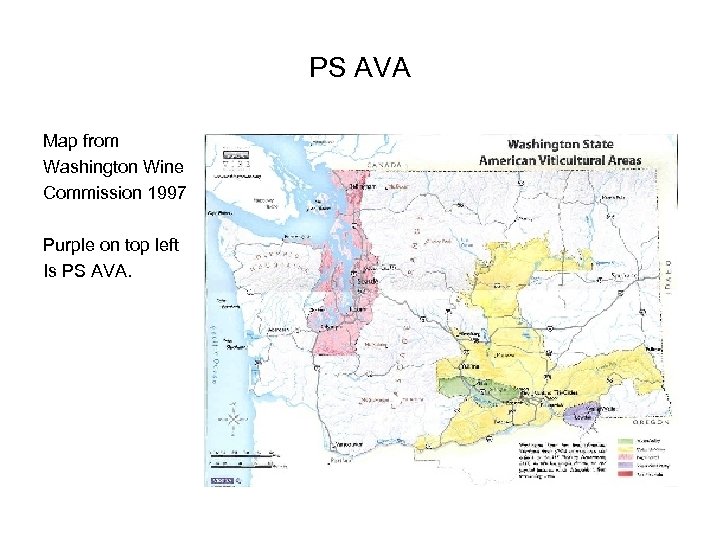
PS AVA Map from Washington Wine Commission 1997 Purple on top left Is PS AVA.
PS AVA (cont. ) • Approx 500 wineries in WA State – Approx 120 in PS AVA. – Only 2 produce 100% PS AVA wines. – 14 produce PS AVA wines in addition to non-PS AVA wines.
PS AVA history • Earliest vineyards in WA state were western WA – Earliest known, 1825 Fort Vancouver. – 1890’s, Lambert Evans, Stretch Island/Grapeview. – Hoodsport Winery still makes a small amount of wine from the descendents of those original plantings. • In WA state, Prohibition: – Began in 1916, ending commercial winemaking. – Was Repealed 05 -Dec-1933. • WA winemaking resurgance - Associated Vintners, 1969. – Old style was sweet, new was premium vinifera.
PS AVA history (cont. ) • Gerard Bentryn of BIVW established the first PS AVA vineyard/winery of the “modern era” 1975. • Gerard used his experience as a climatologist and wrote the PS AVA petition in 1995. – The borders follow the 600’ elevation line. – The 600’ elevation line fairly closely matches the 60” isoyet (annual rainfall line). – (Bear in mind that most of that 60” falls outside of the growing season. )
PS AVA climate • Rainfall typical 37” (Sea. Tac weather station) – Most rainfall in winter – outside of growing season • Growing season typical 210 days • GDD typical 2050 (Sea. Tac) (more on GDD later) • In general, PS AVA climate similar to – France: • Nantes (Loire / Atlantic) • Champagne • Chablis – Northern Rhine in Germany • except longer dry Autumn
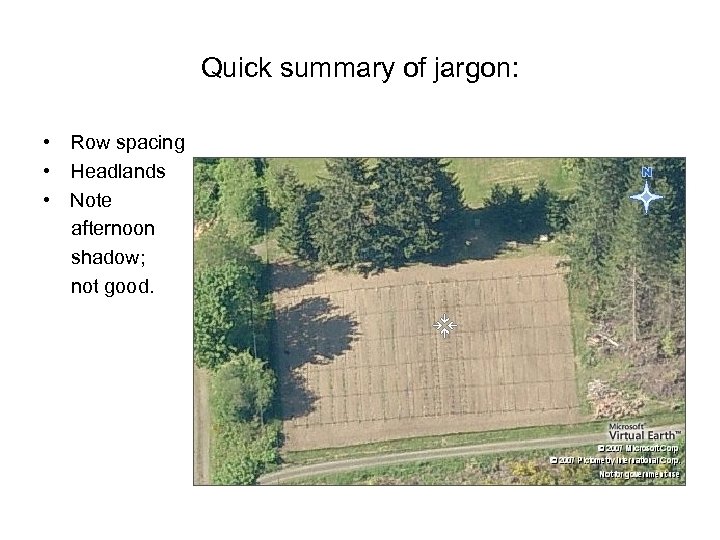
Quick summary of jargon: • Row spacing • Headlands • Note afternoon shadow; not good.
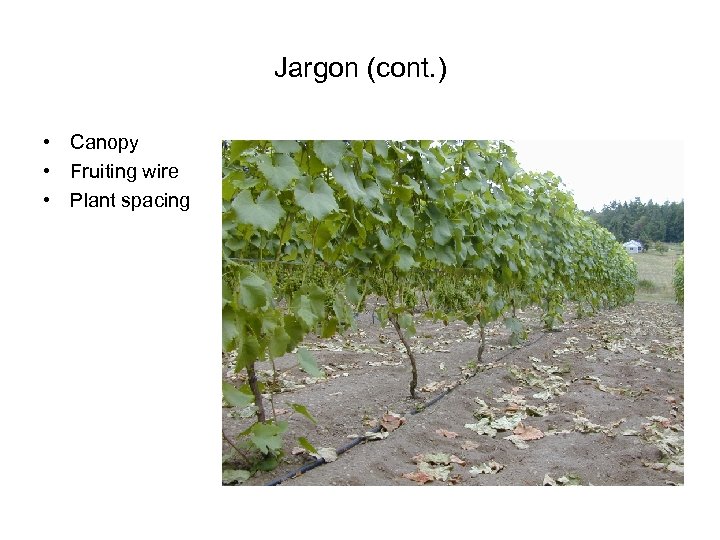
Jargon (cont. ) • Canopy • Fruiting wire • Plant spacing
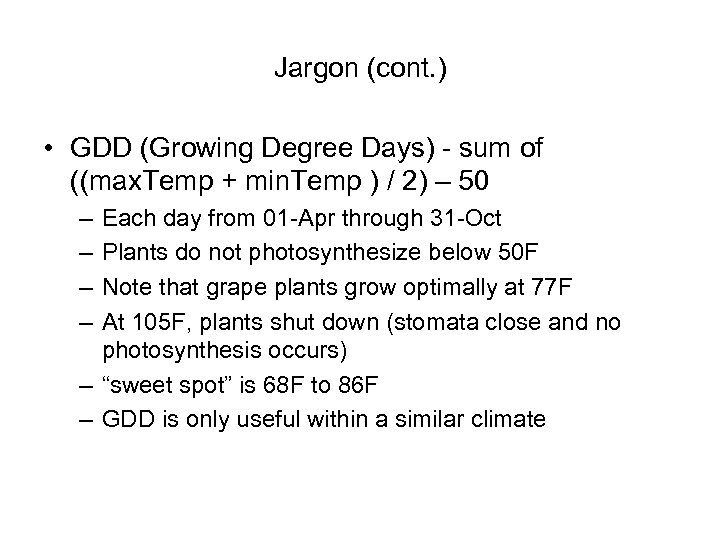
Jargon (cont. ) • GDD (Growing Degree Days) - sum of ((max. Temp + min. Temp ) / 2) – 50 – – Each day from 01 -Apr through 31 -Oct Plants do not photosynthesize below 50 F Note that grape plants grow optimally at 77 F At 105 F, plants shut down (stomata close and no photosynthesis occurs) – “sweet spot” is 68 F to 86 F – GDD is only useful within a similar climate
Jargon (cont. ) • Vigor - strictly means to grow fast, though often misused to indicate lush/thick foliage. • Vitis Vinifera – The primary species of grape used for winemaking
Location • Streams/wetlands; may be mandatory “riparian setbacks” (buffer area that must remain native) – Stream nearby? Take care to note when it fills in Autumn, and when it dries out in Spring to determine salmon spawning status. – Check with city and county.
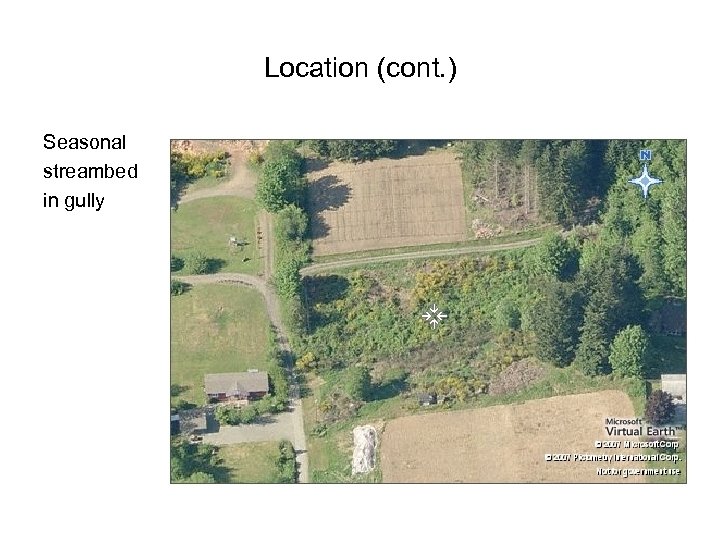
Location (cont. ) Seasonal streambed in gully
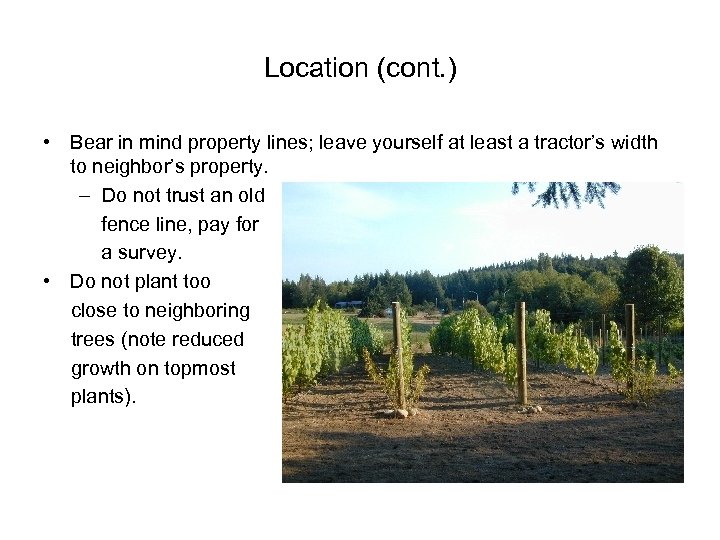
Location (cont. ) • Bear in mind property lines; leave yourself at least a tractor’s width to neighbor’s property. – Do not trust an old fence line, pay for a survey. • Do not plant too close to neighboring trees (note reduced growth on topmost plants).
Location (cont. ) • PS AVA is a cool climate – everything we do is to maximize heat accumulation. – – Avoid high elevation; temp can decrease 3. 6 F/1, 000 ft. Low elevation may be too close to cool ocean air. Ideal 100 ft – 400 ft. Buy a datalogger; observe the temps for a year. • Hobo is inexpensive http: //www. Onset. Comp. com/ ($70) • ec. H 2 O – http: //www. ech 2 O. com/ – Also soil moisture, relative humidity, telemetry ($500)
Location (cont. ) • Not too close to valley bottom as cooler air pools into depressions. – E WA • 7 year hard freeze may kill back vine to ground. – In PS AVA depressions mean cooler mornings, thus: • Freezing not much of a problem (buds killed about 0 F). • Moisture pockets – more mildew. • Less warmth, later ripening.
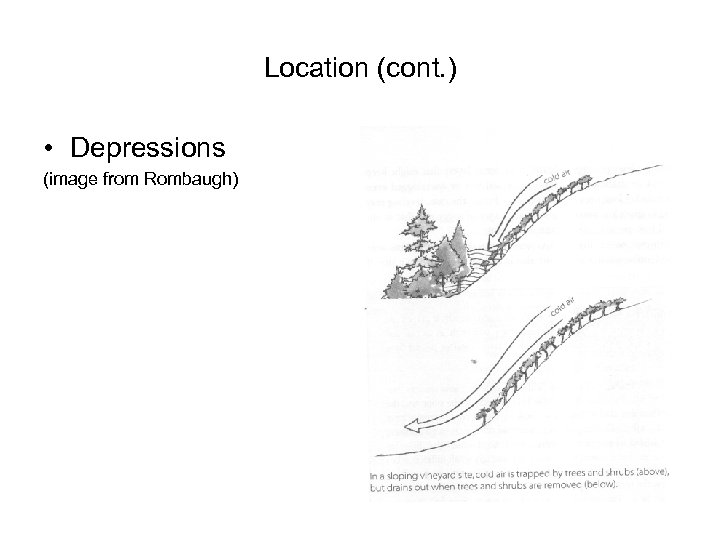
Location (cont. ) • Depressions (image from Rombaugh)
Soil • Must drain well (grapes don’t like wet feet) • Rocky: – – Grapes don’t really mind. Is hard on equipment. Many French vineyards are very rocky. Rocks help hold daytime warmth into evening • Only useful as long as the sun is shining as the plant does not photosynthesize in the dark. • Deep sand requires irrigation and ongoing nutrient additions. • Have a soil test done! – Procedure in addendum. – Attend Art Chippendale’s talk later today.
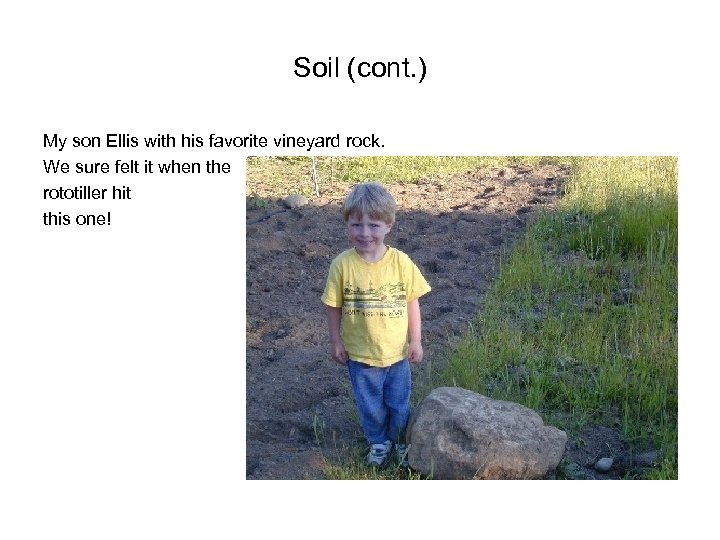
Soil (cont. ) My son Ellis with his favorite vineyard rock. We sure felt it when the rototiller hit this one!
Slope direction • Slope facing downward towards: – – – South: very good South. West: ideal West: good East: tolerable South. East: reasonable North: not so good • Only Madeleine Sylvaner or Siegerrebe are likely to ripen well on a North slope in PS AVA
Slope aspect (angle) • Ideal angle is perpendicular to sun which maximizes reflected warmth. – Slope angle too steep cannot be worked by machine. – Possible to terrace steep slope: • Tons of initial work. • Very expensive. – Compromise is about 10 -15 degree angle.
Layout - row angle • North-South to North. East-South. West if possible. You want sun to get to both sides of canopy: – – Slope may dictate otherwise. Warm grapes ripen sooner. Air temp is higher in afternoon. Grapes on west side usually reach overall higher temp.
Layout - row spacing • Ideally, the wider the better – more heat from reflected sun. • Each row shades its neighbor early and late in the day (low sun angle) – Reduces ripening time. • Wider rows maximize morning/evening sun. – Tradeoff is less fruit per acre. – Important with expensive PS AVA land.
Layout - row spacing (cont. ) • Canopy should have 12 -16 buds above the fruiting wire; if plants have long internodes (e. g. vigorous) this height may force wider rows due to greater height. • This can be counteracted by having low fruiting wire which also gains warmth from the ground. • Compromise ratio: aisle width to row height should be about 1. 0 x 1. 1.
Layout - row spacing (cont. ) • However, aisle width is often dictated by equipment width. • I use 7’ row spacing. – Rototiller is 5’. – Tradeoff is 2 passes when tilling (1 up, 1 down). – Rows are never perfectly straight.
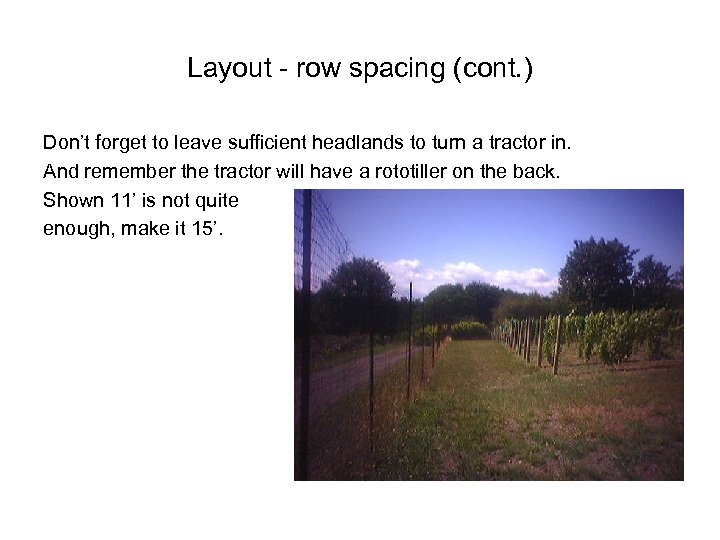
Layout - row spacing (cont. ) Don’t forget to leave sufficient headlands to turn a tractor in. And remember the tractor will have a rototiller on the back. Shown 11’ is not quite enough, make it 15’.
Layout – plant spacing • BIVW recommends: – Pinot Noir – 3’ – Madeleine Angevine – 5’ – Most others – 4’ • Closer plants, more root competition, less vigor. – May be problematic if long internodes (e. g. MA) • Burgundy, France uses "meter square": – Must be hand managed, or expensive specialized “over-row” equipment.
Vineyard floor • To maximize heat, use bare soil in summer: – Shallow rototilling achieves this and controls weeds. – Under grapevines too – shallow roots undesirable. • Sow a winter cover crop to prevent erosion: – Many simply mows the native weeds in late summer. – See Mercy Olmstead’s paper: WSU EB 2010; bear in mind paper is intended for E WA dry climate. – I use annual rye.
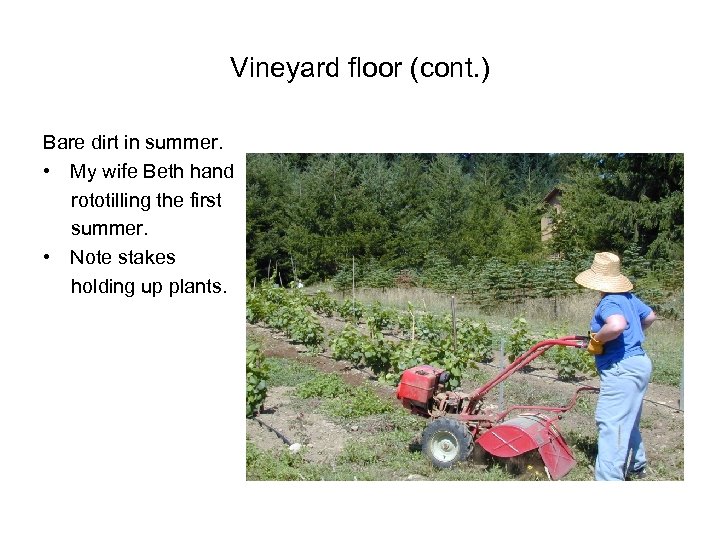
Vineyard floor (cont. ) Bare dirt in summer. • My wife Beth hand rototilling the first summer. • Note stakes holding up plants.
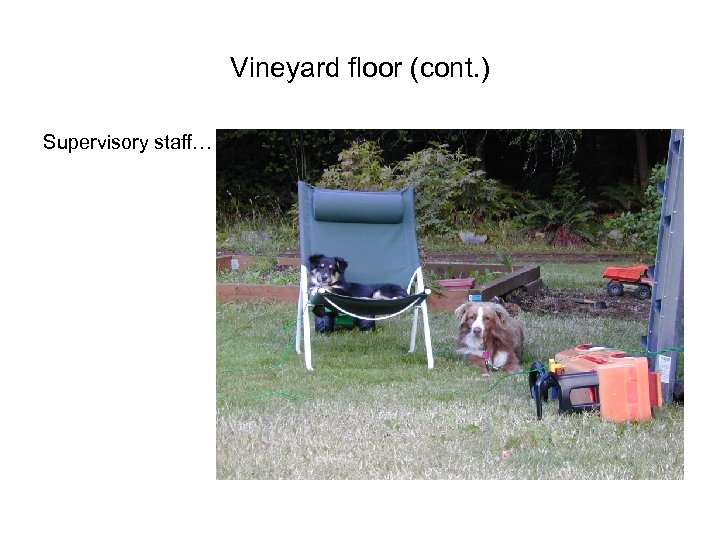
Vineyard floor (cont. ) Supervisory staff…
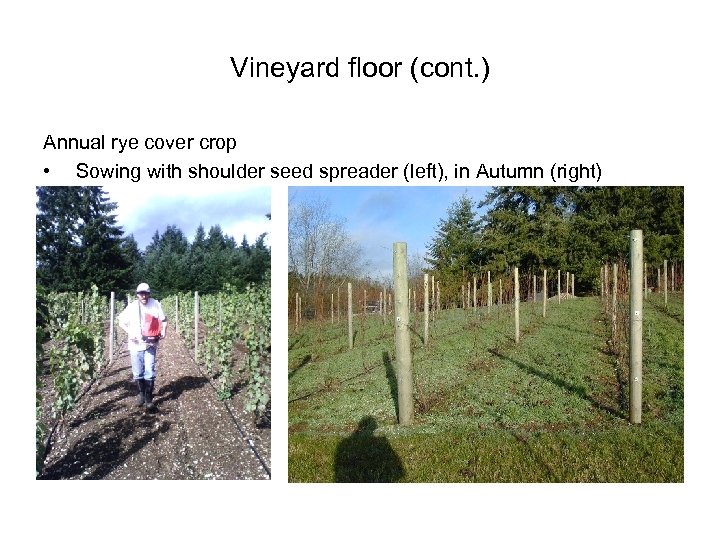
Vineyard floor (cont. ) Annual rye cover crop • Sowing with shoulder seed spreader (left), in Autumn (right)
Vineyard pests • PS AVA tends more to vertabrate pests – Deer – eat new shoots in spring preventing plant from growing. – Birds – eat grapes at ripening. – Mice – especially with snow, will eat bark of trunks “ringing” to avoid starving. – Moles/Voles – dig around root system, killing plant. – Rabbits – nibble leaves off young plants preventing growth. – Raccoons – eat grapes at ripening.
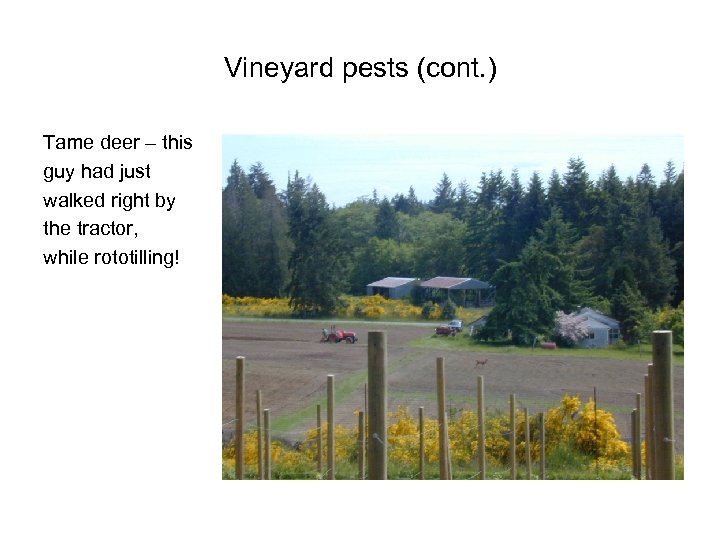
Vineyard pests (cont. ) Tame deer – this guy had just walked right by the tractor, while rototilling!
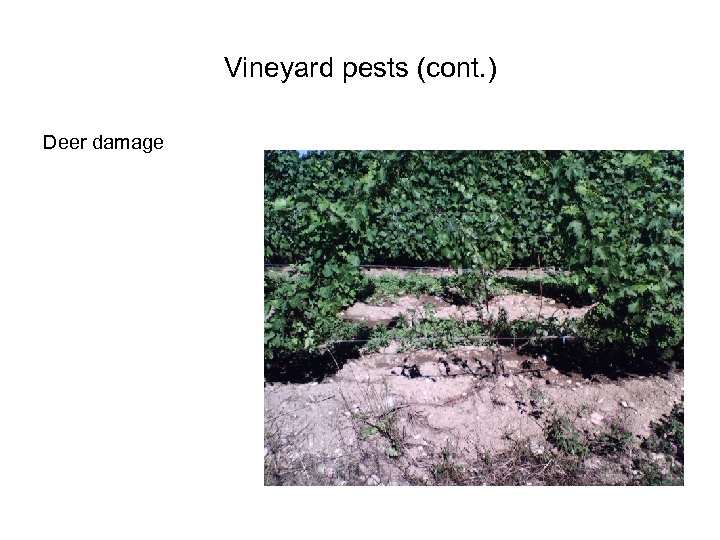
Vineyard pests (cont. ) Deer damage
Vineyard pests (cont. ) • I recommend keeping a dog and a cat. – Dog presence discourages deer, raccoons, rabbits, coyotes (which would prey on cats). – Cats control other small vermin, mice, rats, moles/voles. • Plastic “grow tubes” or old milk cartons around new plants for the first year – Protect from rabbits. – Protects from spray, allowing herbicide weed control.
Vineyard pests • You will almost certainly need deer fencing in PS AVA. I recommend: – – 10’ “T” posts 8’ plastic mesh (black or transparent) You’ll need 3 wires, top, middle and bottom Use UV-safe black cables to mount mesh to wire
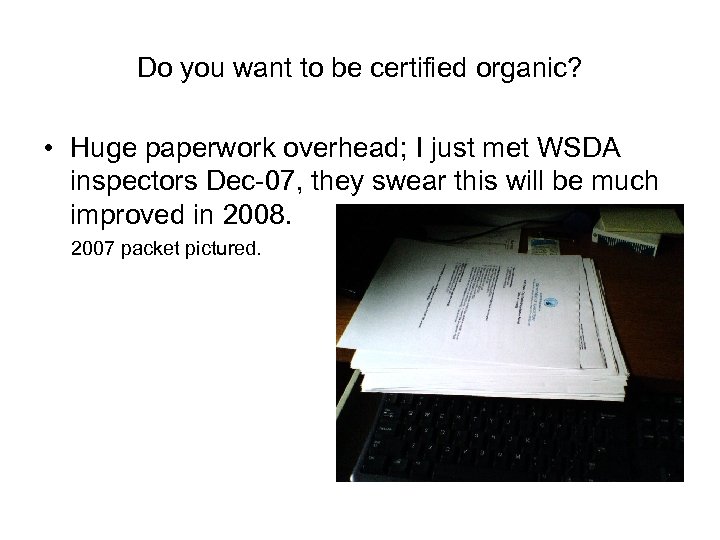
Do you want to be certified organic? • Huge paperwork overhead; I just met WSDA inspectors Dec-07, they swear this will be much improved in 2008. 2007 packet pictured.
Organic? (cont. ) • Organic takes more work, e. g. manual or machine weeding vs. easy glyphosate spray (“Roundup”). • It will cost more money to maintain vineyard; e. g. organic alternative to Roundup “Burn-out II”: – – Is really expensive. Requires far heavier dose to be effective. May require multiple applications. Alternative is mechanical or flame. • “Carbon footprint”?
Organic? (cont. ) • However – Grapes/wine bring in more money • You can choose your organic certifier: – WA state (WSDA) organic certification website: http: //agr. wa. gov/Food. Animal/Organic/ – There may be label considerations for nongovernment based certifiers. • Attend Brent Charnleys talk later today.
Trellising Many trellising styles, most common you’ll see: • Vertical Shoot Positioning (VSP) – – Simple trellis (no cross braces, just posts and wires). Simple means less expensive and easier to maintain. Proven effective in PS AVA. Strong recommendation for this method.
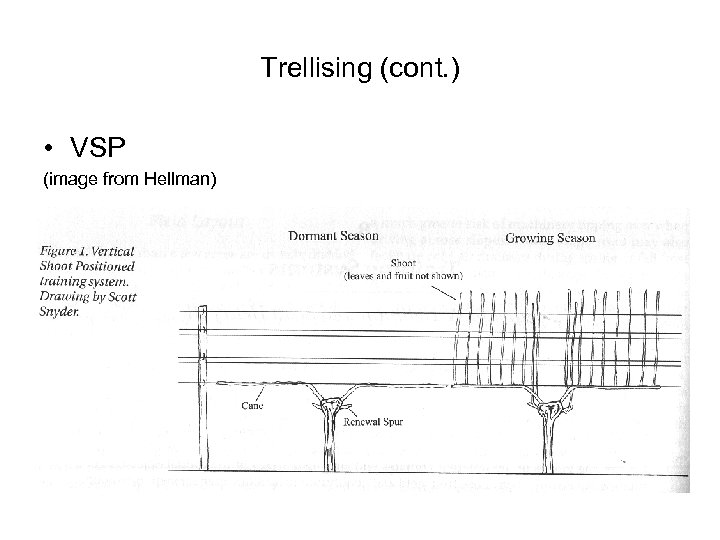
Trellising (cont. ) • VSP (image from Hellman)
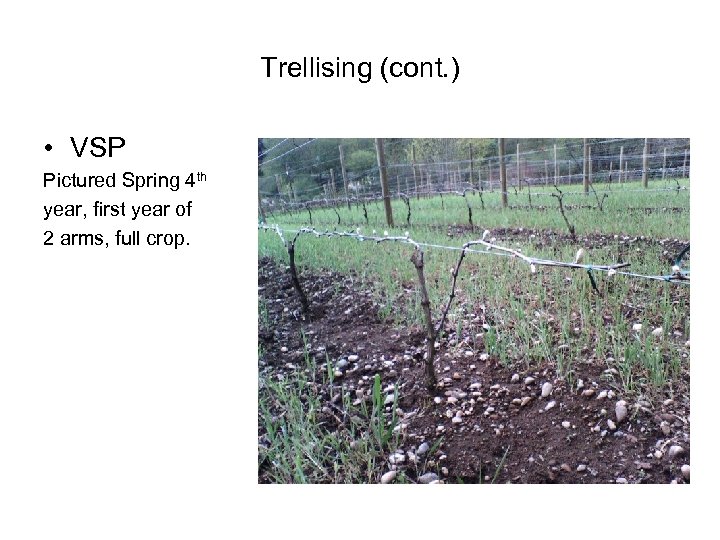
Trellising (cont. ) • VSP Pictured Spring 4 th year, first year of 2 arms, full crop.
Trellising (cont. ) • Geneva Double Curtain (GDC) – Gerard Bentryn’s 1980’s experiments showed that double-canopy systems, e. g. Lyre and GDC lose their devigorating tendency over time; the plant eventually will come into balance. – Are consistently harder to maintain. – Works well for American varieties which tend to grow downwards; it’s a struggle for Vinifera that want to grow upwards. – Not recommended for vinifera in PS AVA.
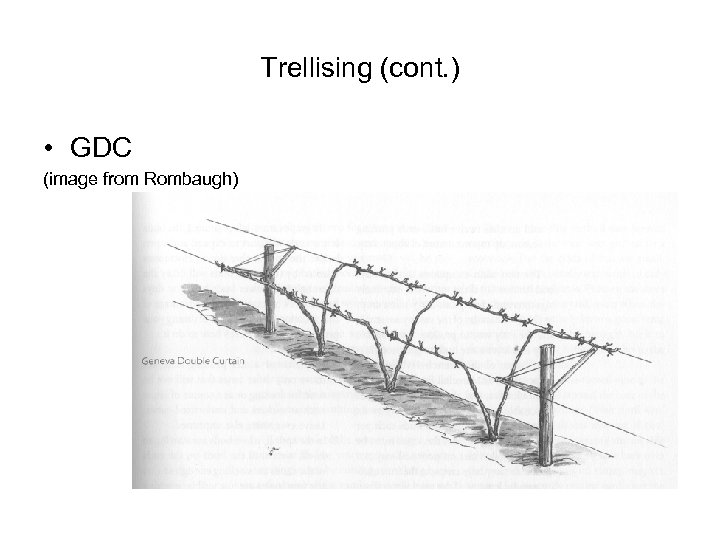
Trellising (cont. ) • GDC (image from Rombaugh)
Trellising (cont. ) • Scott Henry – Edward Hellman is an advocate. – This appears to be a lot more work to me. – As with GDC, you’re fighting the plant, it wants to grow up, but you’re forcing it down. – Does have track record in OR, but not in PS AVA. – Not recommended. • Additional discussions and styles in Sunlight Into Wine, Richard Smart.
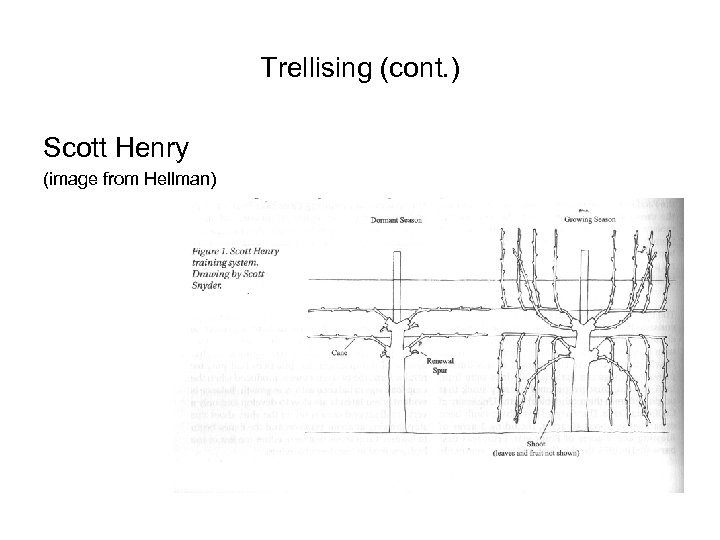
Trellising (cont. ) Scott Henry (image from Hellman)
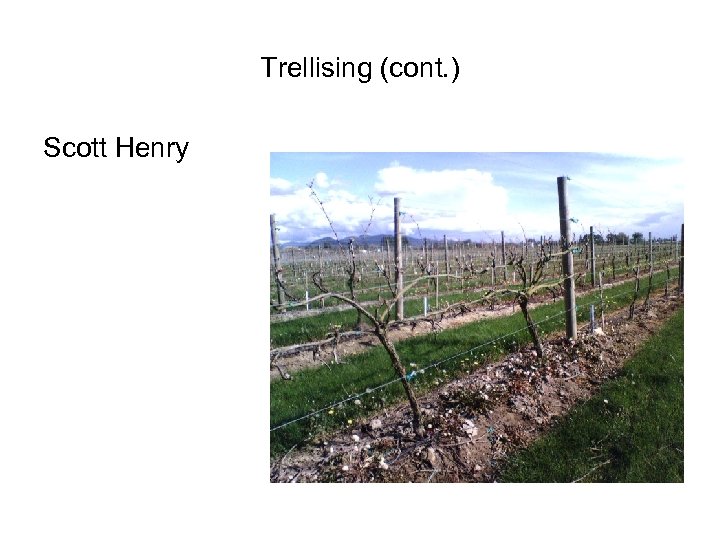
Trellising (cont. ) Scott Henry
Trellising - posts • "CCA" (treated) posts: – CCA = Chromated Copper Arsenate – Organic certification precludes their use. Fear is that Arsenic can be passed on contact. – However, an existing vineyard with them may be "grandfathered in". – In this event you must drop any fruit that touches posts; more manual work. – Modern “treated” posts may be free of arsenic.
Trellising - posts • New plastic "vinposts" would need anchoring: – http: //www. patentedposts. com/ – Wire anchors take up too much space. – Alternative is internal metal/wood frame at ends. • “T-posts” (same as for deer fence): – Ok for organic. – Would also need end reinforcement. – Need only be 8’.
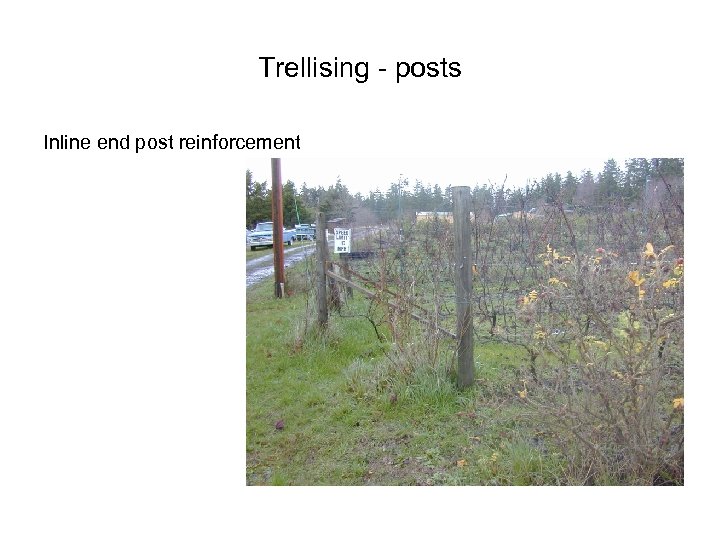
Trellising - posts Inline end post reinforcement
Trellising - posts • Rolled steel posts may be available and should be Ok for organic. • Consider making your own posts of concrete with re-bar: – Would not break down with time. – Are certainly Ok for organic.
Trellising - posts • I used: – 3"-4" CCA 8’ for mid posts. – 5"-6" CCA 9’ posts for ends. – In hard BI soil I did not need endpost supports. • Beach driftwood cedar: – Can work well (long lived). – Is Ok for organic. – May be illegal to remove material from WA beach.
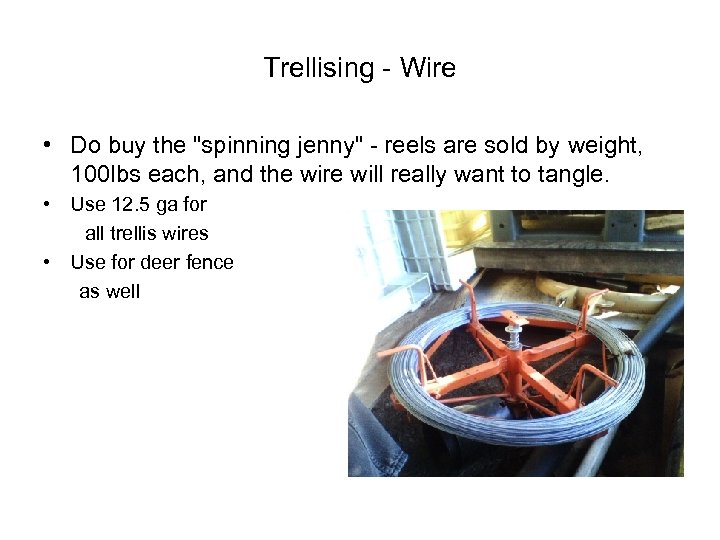
Trellising - Wire • Do buy the "spinning jenny" - reels are sold by weight, 100 lbs each, and the wire will really want to tangle. • Use 12. 5 ga for all trellis wires • Use for deer fence as well
Irrigation • Required first 3 years until plants have built good root system. • After that, only in drought years. • Low overall water use in PS AVA. • If small scale, use quick disconnect fittings.
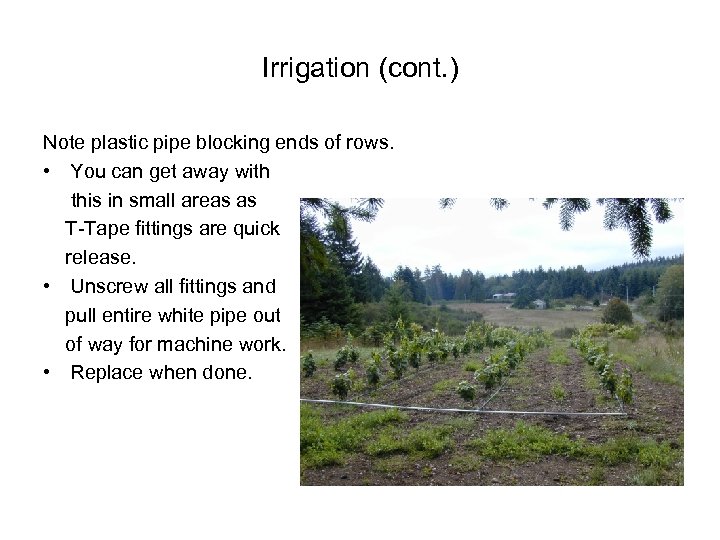
Irrigation (cont. ) Note plastic pipe blocking ends of rows. • You can get away with this in small areas as T-Tape fittings are quick release. • Unscrew all fittings and pull entire white pipe out of way for machine work. • Replace when done.
Grape varietal selection • DO NOT BRING IN E WA GRAPE PLANTS without going through a certified grower. • It is illegal to bring grape plants into WA from out of state, there is a state quarantine. http: //winegrapes. wsu. edu/virology/ – Gary Grove, WSU Vine. Web http: //winegrapes. wsu. edu/ (click Faculty). – Gary Ballard (also WSU IAREC).
Grape varietal selection (cont. ) • Bringing in out-of-state grape plants could be vineyard suicide; you could bring in: – Phyloxerra, nematodes, leafroll virus, insect vector eggs – these are just the likely candidates. – There are dozens of less likely bad things. – A certified nursery should know if/what they can ship to WA state.
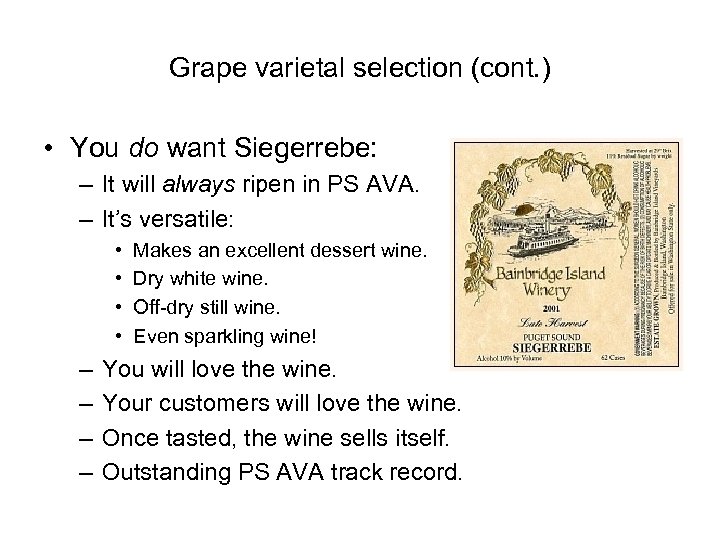
Grape varietal selection (cont. ) • You do want Siegerrebe: – It will always ripen in PS AVA. – It’s versatile: • • – – Makes an excellent dessert wine. Dry white wine. Off-dry still wine. Even sparkling wine! You will love the wine. Your customers will love the wine. Once tasted, the wine sells itself. Outstanding PS AVA track record.
Grape varietal selection (cont. ) • Madeleine Angevine: – – – Very prolific heavy cropper. It will ripen very reliably in PS AVA. The wine can be quite good, most customers like it. Fragrant and aromatic, and goes well with food. Highly recommeded.
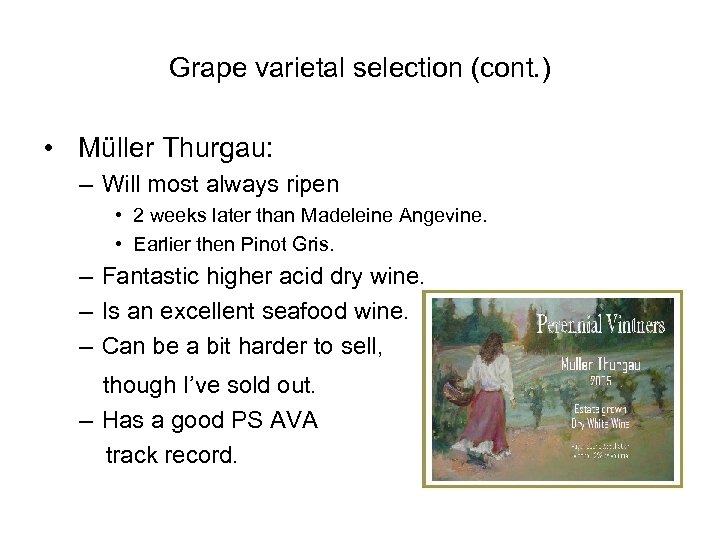
Grape varietal selection (cont. ) • Müller Thurgau: – Will most always ripen • 2 weeks later than Madeleine Angevine. • Earlier then Pinot Gris. – Fantastic higher acid dry wine. – Is an excellent seafood wine. – Can be a bit harder to sell, though I’ve sold out. – Has a good PS AVA track record.
Grape varietal selection (cont. ) • Pinot Gris: – – – May be marginal on ripening in some sites. May be earlier clones available now. Easy sell due to the familiar name Makes a wonderful wine. Popularity is on the upswing. Most competition is warmer climate CA-like as opposed to cooler climate Alsatian, so you’re in a smaller market niche.
Grape varietal selection (cont. ) • Pinot Noir: – More work in vineyard (e. g. excess laterals, more spraying as it’s more susceptible to mildew). – Some years it won’t ripen – 2007 was one of those. – Many customers won’t like the wine, even in years that it ripens well. – It’s known as “The Heartbreak Grape” for a reason. – Also known as “The especially grape”. – I do not recommend PN.
Grape varietal selection (cont. ) • Gary Moulton, of WSU Ag Ext: http: //pubs. wsu. edu/ in search box, enter "grapes", click on EB 2001. – – Has a varietal chart broken down by GDD. Some have difficult-to-pronounce names. Some may not be available due to patent restrictions. Most of these selections have not been commercially produced yet – you’d be a pioneer… – If available, probably Cloud Mt. Nursery. – Ignores some previous PS AVA successes. – Attend Gary’s presentation later today.
Grape varietal selection (cont. ) • Greg Jones (OSU Climatologist) – Olympic Cellars commissioned a study in 2007 of the Olympic Penninsula for potential vineyard sites. – Recommends mostly the same grapes as Gary Moulton, plus Riesling. – In conversation he has also suggested Alabarino. – Attend Greg & Steve’s session later today.
Grape varietal selection (cont. ) • Riesling: – BIVW tried this in the early 1980’s. • Did not ripen for 3 years; was pulled out. • Is not known exactly what clone they had. – Germany (where Riesling excels) has a later and drier Autumn than we have – critical for ripening this grape. – Earlier ripening clones may be available now. – Nuetral recommendation.
Grape varietal selection (cont. ) • Melon de Bourgogne: – Is notably more susceptible to mildew than PN. – Is marginal ripening in this area. – I'd suggest avoiding it, but I'm biased towards continuing my monopoly. . . http: //www. perennialvintners. com/
Grape varietal selection (cont. ) • Regent: – Makes a huge, tannic "big red“. – Needs no spraying - this alone makes it worthwhile! – There a few examples to try, BIVW, Hollywood Hill, WSU Mt. Vernon experimental lots.
Grape varietal selection (cont. ) • Dornfelder: – May be a good alternative to Pinot Noir; not as fussy. • Dunklefelder, Agria: – Individually not great, but together should make a nice "big red" blend. • Watch BIVW with these in the next year or two. • Zwiegelt: – Merlot-like red, should ripen here • Watch BIVW on this one too. • Austrian examples. • I recommend this.
Grape varietal selection (cont. ) • Chardonnay: – – Earlier ripening clone 76 may be worthwhile. Otherwise is too marginal on ripening. Every WA winery has Chard; tons of competition. Yours would be cool climate: • More like an OR/France (minerally, high acid). • vs. a CA (warm climate soft/buttery) style. • American taste tends more towards CA style. – Popularity is on downturn; industry phrase "ABC Anything But Chardonnay". – I don’t recommend this.
Grape varietal selection (cont. ) • Muscat: – There may be early ripening clones that would be worthwhile, e. g. “Norway Muscat”. – I haven’t tasted this, but if it ripens, muscat wines can be lovely and are an easy sell. – Let me know if it works for you – I want it!
Grape varietal selection (cont. ) • Cabernet franc: – There may be an earlier ripening clone available (ENTAV/INRA? ), but I haven’t seen one yet. – It would certainly be a very marginal grape. – It may be better than PN as it just doesn’t have the reputation for being so finicky. – I’d love to make a cool climate CF – if you manage it, let me know! – Not recommended
Grape varietal selection (cont. ) • Cabernet, Merlot, Syrah, etc. – – – Don't even think about it They wouldn't ripen. The wine would be lousy. You wouldn't like your wine. You wouldn't be able to sell the wine.
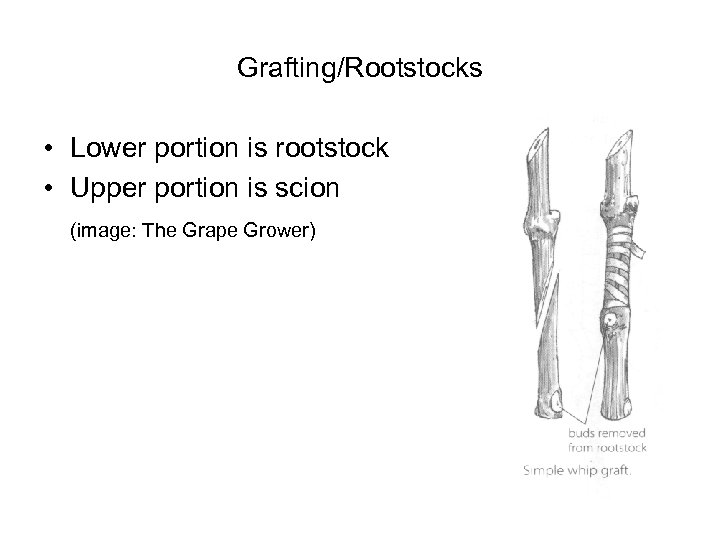
Grafting/Rootstocks • Lower portion is rootstock • Upper portion is scion (image: The Grape Grower)
Grafting/Rootstocks (cont. ) • Grapes are joined to rootstock by grafting desired plant on top (scion). • Resultant wine from grafted plant almost indescernably different than self rooted. • Much debate on rootstocks, main considerations are resistance to pests and climate/soil compensation.
Grafting: • Can be done "on bench" or "in field". • Benchgrafting is easier: – Indoors. – Less time kneeling/bending. • If the plant is already in the ground, you can do it in the field. – Plan on a less than 100% success rate -- 50% or less your first time out.
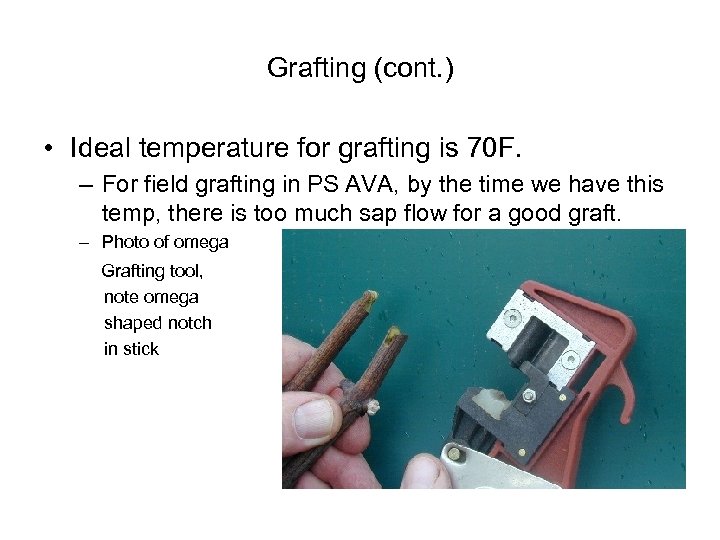
Grafting (cont. ) • Ideal temperature for grafting is 70 F. – For field grafting in PS AVA, by the time we have this temp, there is too much sap flow for a good graft. – Photo of omega Grafting tool, note omega shaped notch in stick
Rootstocks (cont. ) • Some rootstocks are immune to certain pests, e. g. phyloxerra (root louse). • If you want plants on rootstock, you'll have to buy from a nursery, possibly with a year advance notice. • Climate change may have rootstock considerations: – In the past, drought tolerant was desirable in PS AVA. – Some recent predicitions indicate wetter summers. – Reduce vigor, typically good in PS AVA.
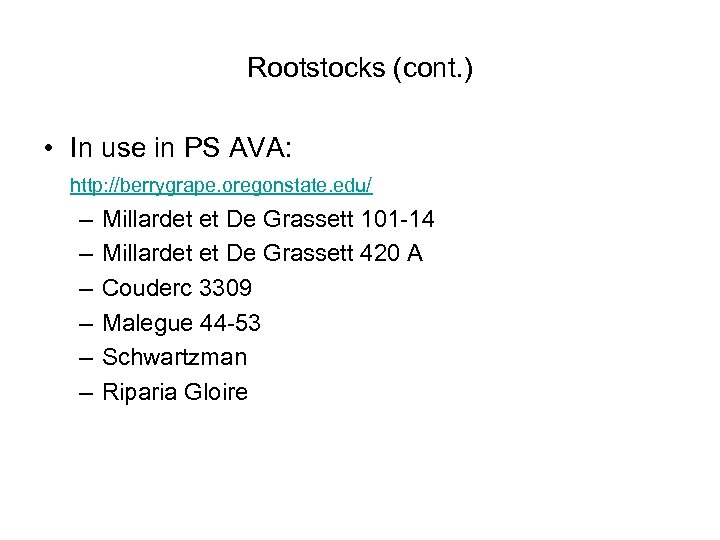
Rootstocks (cont. ) • In use in PS AVA: http: //berrygrape. oregonstate. edu/ – – – Millardet et De Grassett 101 -14 Millardet et De Grassett 420 A Couderc 3309 Malegue 44 -53 Schwartzman Riparia Gloire
Plant material: • Grape plants are propagated by cuttings. • Plants grown from seed will not grow true to parent. • Winegrape plants are self/wind pollinating – Beehive collapse syndrome is not an issue for winegrapes.
Acquiring plant material (cont. ) • Propagation by cuttings is much safer than by plant as many pests are carried in dirt. Even so: – – Bag up all acquired cuttings with an Orthene solution. Need not be immersed in liquid. Leave for 24 hrs. (More details on making/propogating by cuttings below. )
Acquiring plant material (cont. ) – It is probably safe to get cuttings from existing PS AVA vineyards. • BIVW – 30 year history of no pesticide use. – $0. 25 -$1. 00/cutting, free if you're willing to come learn some pruning and make your own cuttings. – Free with their grapegrowing class! – Madeleine Angevine, Siegerrebe, Muller Thurgau. • Hollywood Hill – Newer Chardonnay, Pinot Noir clones. • Perennial Vintners – Melon de Bourgogne.
Acquiring plant material (cont. ) • Cuttings must be made from fresh prunings – Start rooting within a couple of weeks. – The longer you wait, the fewer plants will survive. – Pruning season may start in early January, will be done by mid-March.
Acquiring plant material (cont. ) • For grafted or baby plants, use a certified nursery. Nursery purchased plants: – – Should come bare root, or wood shavings, not in dirt. Inland Desert Nursery: http: //www. idnursery. com/ Cloud Mountain Farm: http: //www. cloudmountainfarm. com/ Any plant order may need to be in by November the preceding year. – Grafted plant orders may need a year advance planning!
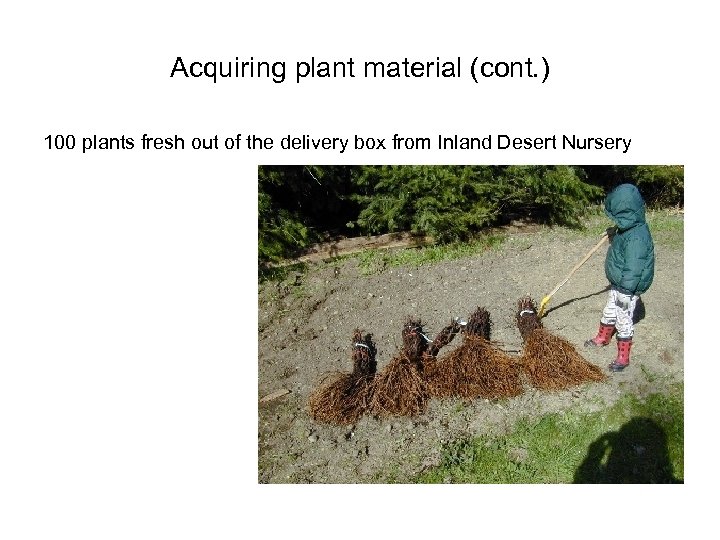
Acquiring plant material (cont. ) 100 plants fresh out of the delivery box from Inland Desert Nursery
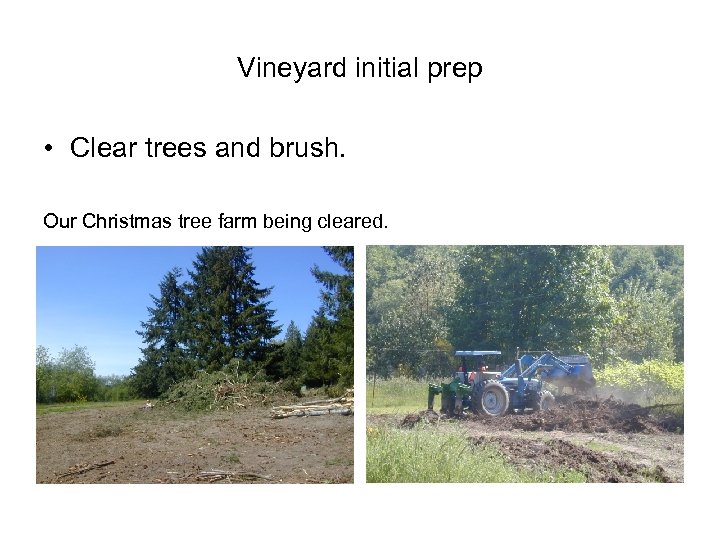
Vineyard initial prep • Clear trees and brush. Our Christmas tree farm being cleared.
Vineyard initial prep (cont. ) • Bear in mind that organic certification takes 3 years: – If area was farmed organically or neglected, you may be able to consider it organic immediately. – If you have no way of certifying organic for the past 3 years, you’re starting the clock now. – You could choose start the clock later and use Glyphosate now. • If possible, Glyphoste several times through the year to kill each generation coming up from seeds.
Vineyard initial prep (cont. ) • Start in spring when the soil is firming up (April. May): • Pay someone with a big tractor (50 hp or better) to deep rip the area. – On Bainbridge we have a serious hardpan about 16" down that must be broken up this way. • Rototill in compost (you'd like a one inch layer across entire area).
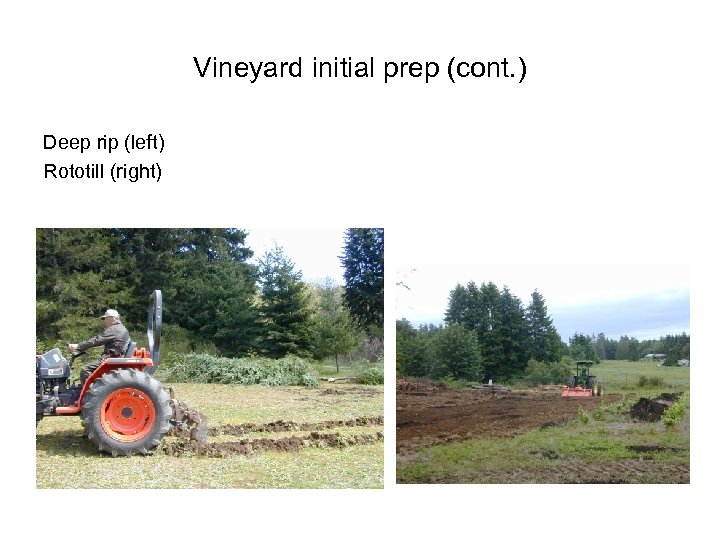
Vineyard initial prep (cont. ) Deep rip (left) Rototill (right)
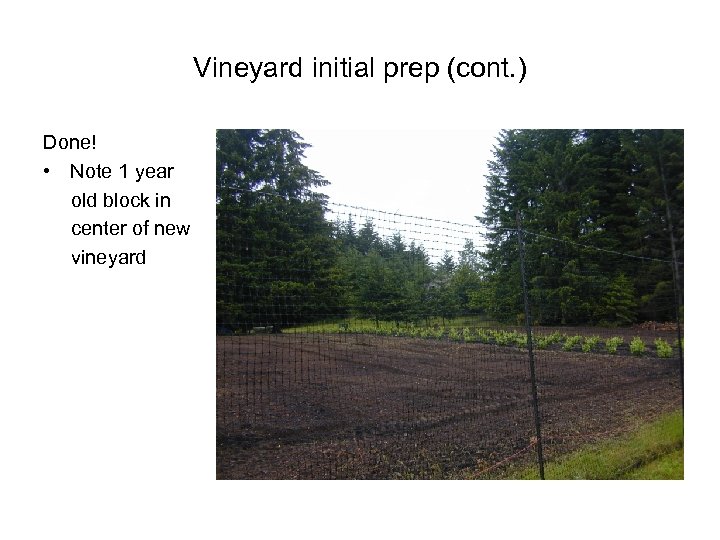
Vineyard initial prep (cont. ) Done! • Note 1 year old block in center of new vineyard
Planting • I recommend installing posts first, but you can put off posts for a year or even two if necessary. • Choose a corner. Square up with 60’/80’/100’. • Tie knots in a string at plant intervals using measuring tape. • Stretch string and mark posts/plants with upsidedown spray paint can. • If you’re doing posts, rent a tractor with a 3 -point hitch posthole digger.
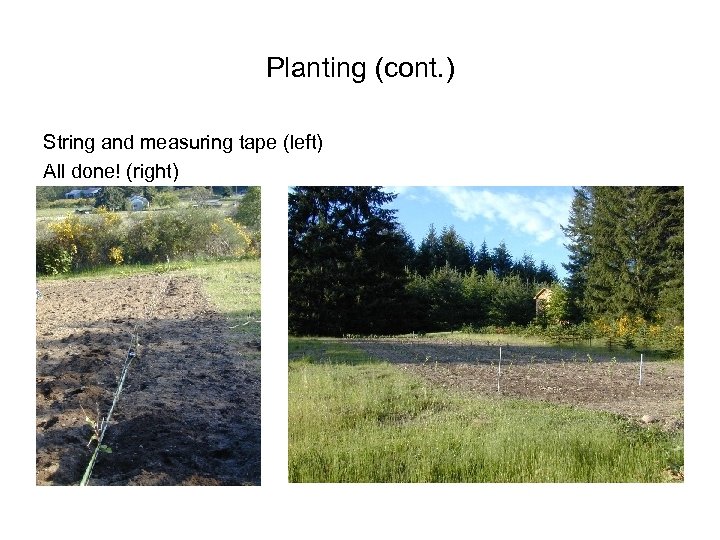
Planting (cont. ) String and measuring tape (left) All done! (right)
Planting (cont. ) • Dig a much deeper hole than necessary and backfill before putting plant into ground. – Plant will have an easier time establishing deep roots. – Deep roots give more immunity to drought conditions • Can be a real problem in PS AVA if not irrigating. • (E WA must always irrigate). – You may want to use a tractor posthole digger with a broad auger for the plant holes. • Be careful not to glaze edges of hole.
Planting (cont. ) • Mix in moisture preserving crystals (Soil. Moist, Zeba Quench) and additional compost. – This will help keep the baby plant moist but will be broken down long before the plant fruits. – It also keeps the soil open, allowing for better root travel.
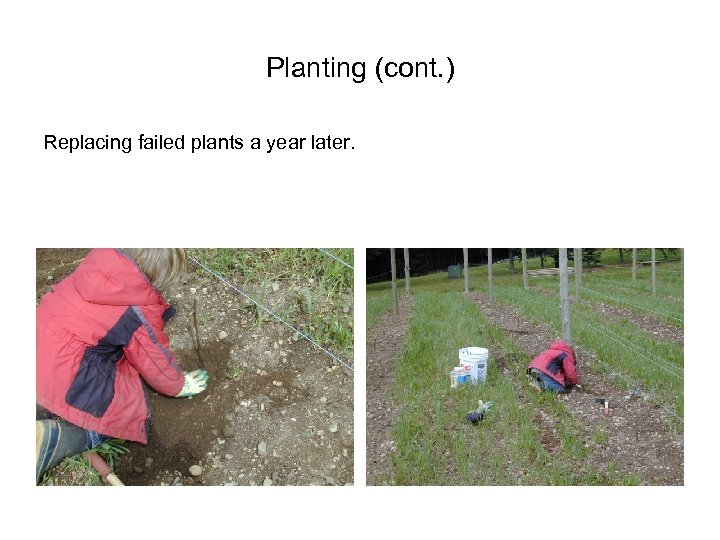
Planting (cont. ) Replacing failed plants a year later.
Installing posts: • Either the planting year or the following year you can install the posts. • Do this in Spring before the soil hardens. • I'd recommend pulling the wires at this time – Could be put off, you don’t need wires this year. – However, next year while installing the wires you’d snag some the young plants and break them. • If waiting posts for a year, tractor must be tall enough to straddle baby plants.
Options: • • Cloche - to accelerate budburst - see EB 2001. Bird netting to ensure crop isn’t eaten. Bird squawker box as alternative. Grow tubes – may encourage faster stem growth to first wire. • Predatory bird habitat nearby – hawks that will discourage crop-stealing birds. • Consider WSU on-line certificate course: http: //winegrapes. wsu. edu/
Reminder • Do not mimic what you see or learn about from E WA vineyards. Although in PS AVA we have some things in common, our cool climate means we must do many things differently. You’ve done the right thing by attending this talk.
Money • To make a very crude estimate, it will cost about $8, 000/acre to establish a vineyard: – Posts, wire, fencing, some hired tractor work. – Hand tools, fittings, etc. – If you don’t have a reliable tractor source throughout the year, you will need to buy one, with: • Rototiller, mower, posthole auger. • You’re spending the money, I’d strongly recommend getting the frontloader and fork attachments too. • May be in the $20, 000 range. – This assumes you’re propogating plants from inexpensive cuttings, not buying plants.
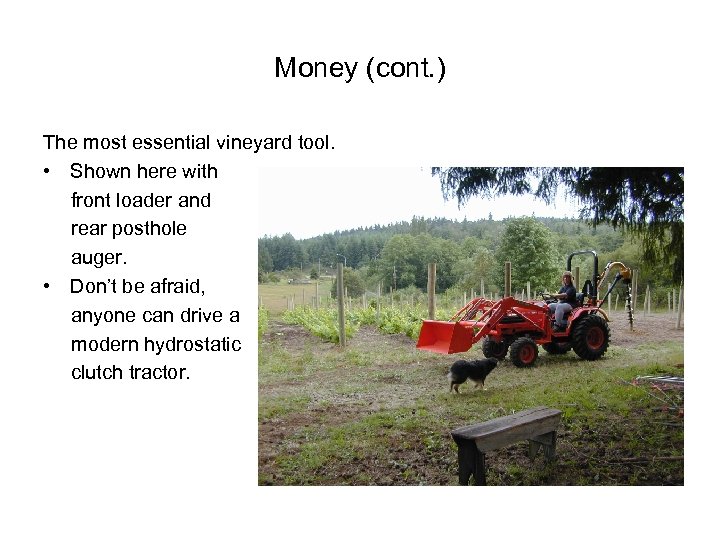
Money (cont. ) The most essential vineyard tool. • Shown here with front loader and rear posthole auger. • Don’t be afraid, anyone can drive a modern hydrostatic clutch tractor.
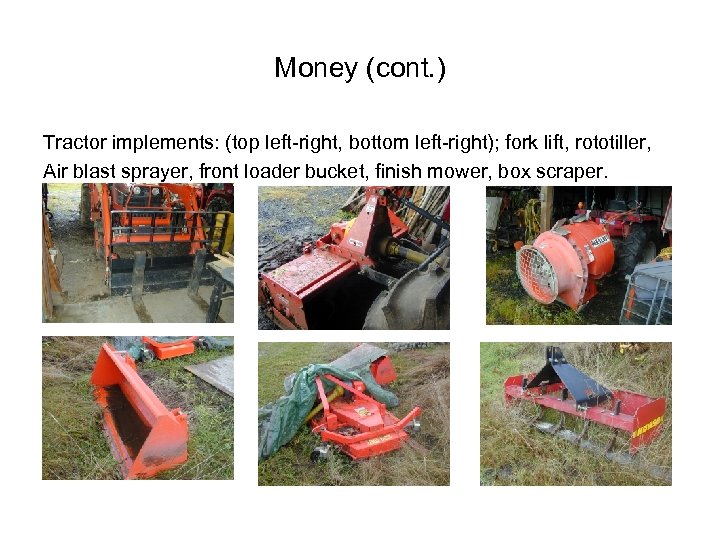
Money (cont. ) Tractor implements: (top left-right, bottom left-right); fork lift, rototiller, Air blast sprayer, front loader bucket, finish mower, box scraper.
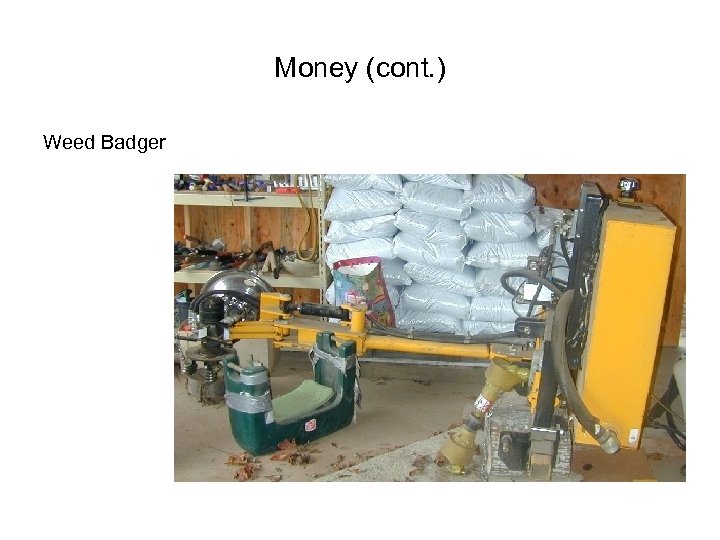
Money (cont. ) Weed Badger
Recommended organizations: • Puget Sound Winegrape Growers (PSWG): http: //www. pswg. org/ – The best expertise you’ll find on growing grapes in the Puget Sound AVA.
Organizations (cont. ) • Washington Association of Wine. Grape Growers (WAWGG) http: //www. wawgg. org/ – Attend their annual trade show, 6, 7, 8 -Feb-2008, Tricities: • You’ll see tons of equipment • There also several sessions on new vineyards and especially sustainability. – Their Vine. Wise program looks like it could be useful, especially for the business side. http: //www. vinewise. org/
Organizations (cont. ) • Washington Wine Commission (WWC): http: //www. Washington. Wine. org/ – This is a marketing organization. – Focus is primarily on out-of-state markets. • Washington Wine Institute (WWI): http: //www. Washington. Wine. Institute. org/ – Directly represents the interests of grape growers and wineries to government. – Price is steep (starts at $250) but is in your interest.
Thanks! • I didn’t think we’d actually make it to this slide! • Mike Lempriere • mike@Perennial. Vintners. com • 206 -780 -2146 • The following slides are reference material. Find them on the web at http: //www. pswg. org/
Скачать презентацию Establishing a vineyard in the Puget Sound Appellation
ac88fd221bfa8b86fb9e90bf2603421d.ppt