


 Скачать презентацию Essential Question Question How did the U
74bade299de1623424d080b4c86a2efd.ppt
- Количество слайдов: 31
 ■ Essential Question: Question –How did the U. S. mobilize civilians at home to help win World War 2 & what impact did this have on American society? ■ Warm-Up Question: Question –What other major American war is most similar in its resemblance to the U. S. entrance into WW 2?
 Mobilizing an “Arsenal of Democracy”
 The Home Front ■ WW 2 impacted all aspects of American life: –FDR hoped the U. S. would be the great “arsenal of democracy” –The boost of wartime industry ended the Great Depression –The war altered the lives of women, African-Americans, Japanese-Americans, & Mexican-Americans
 The Office ofto create The Office of War The power War to censor Mobilization the press Information new gov’t agencies. Mobilization coordinated ■ To win wars into limit& Europe & & Asia civil liberties directed press, the draft, consumer prices, personal print, meet & film demands, theproperty radio, civilian seizethe labor force U. S. & propaganda gov’t grew to its largest size ever: The Office of Strategic Services gathered –The War Powers Act espionage enemy intelligence & conductedgave the president unprecedented power The bureaucracies were formed –New. U. S. gov’t spent $250 million per day from 1941 to 1945 to direct the economy, create This is 2 x as much war bonds, propaganda, sellas all previous & gov’t spending combined prevent enemy subversion
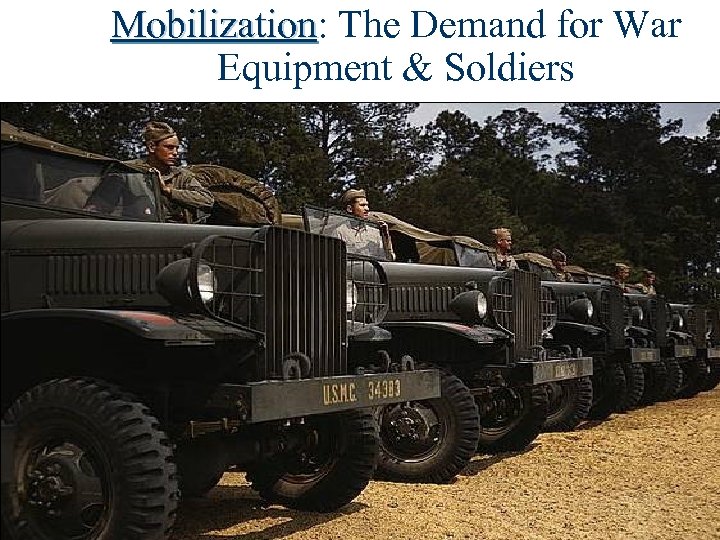 Mobilization: The Demand for War Mobilization Equipment & Soldiers
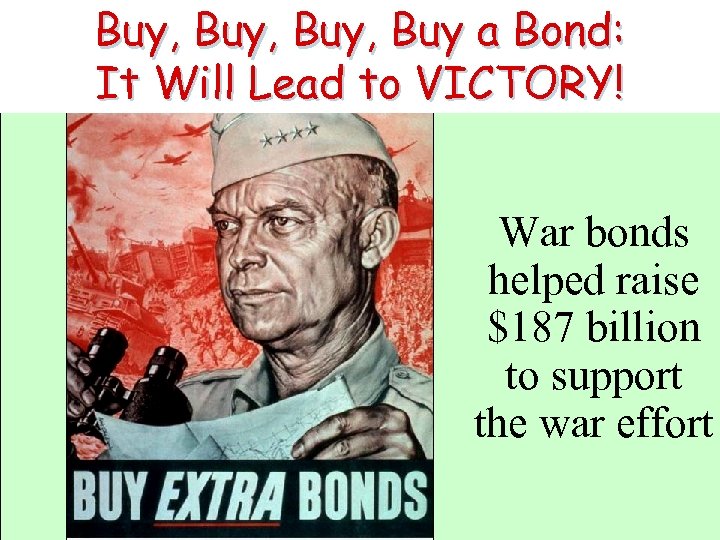 Buy, Buy a Bond: It Will Lead to VICTORY! War bonds helped raise $187 billion to support the war effort
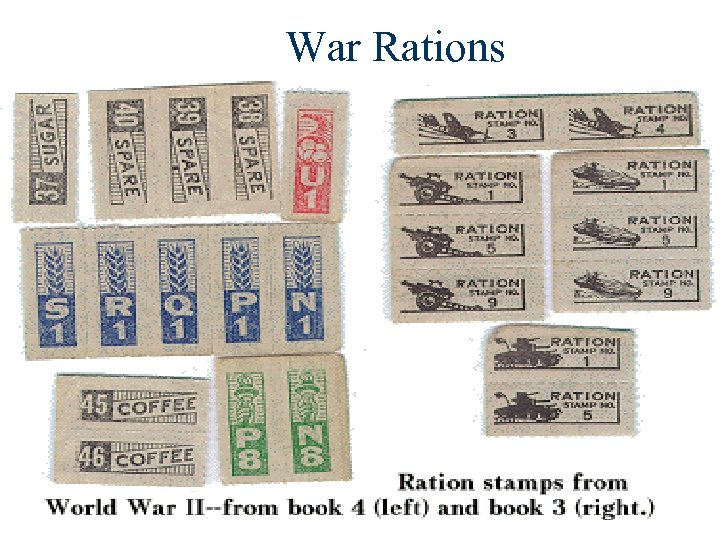 War Rations
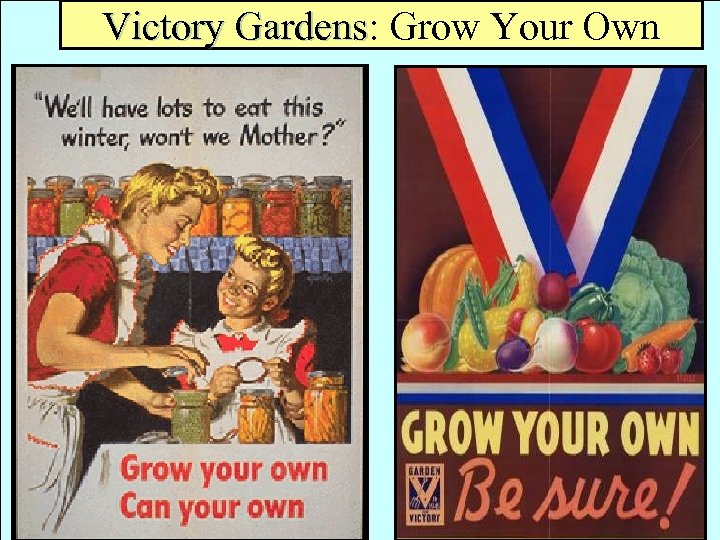 Victory Gardens: Grow Your Own Gardens
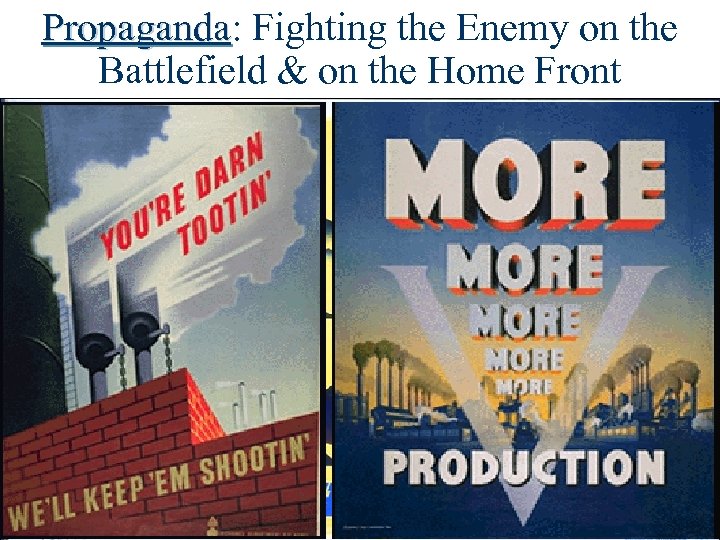 Propaganda: Fighting the Enemy on the Propaganda Battlefield & on the Home Front
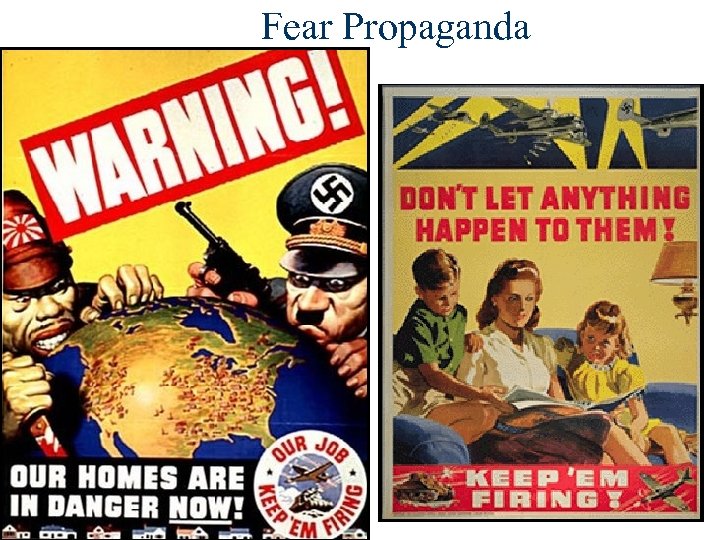 Fear Propaganda
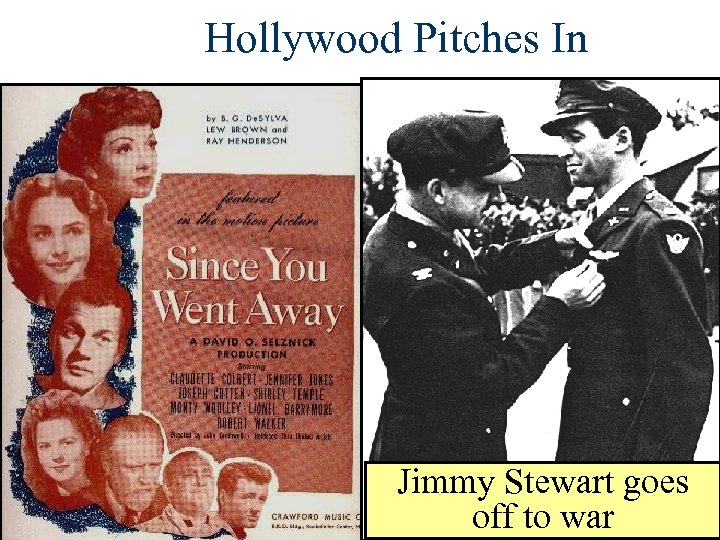 Hollywood Pitches In Jimmy Stewart goes off to war
 The Wartime Economy U. S. made 2 x more goods than ■ Germany & decisive factor for Allied The most 5 x more than Japan victory was America’s ability to outproduce both Germany & Japan –Heavy industry was converted to war & was directed by the War Production Board (WPB) – 15 million U. S. soldiers fought but 60 million workers & farmers supplied them with supplies
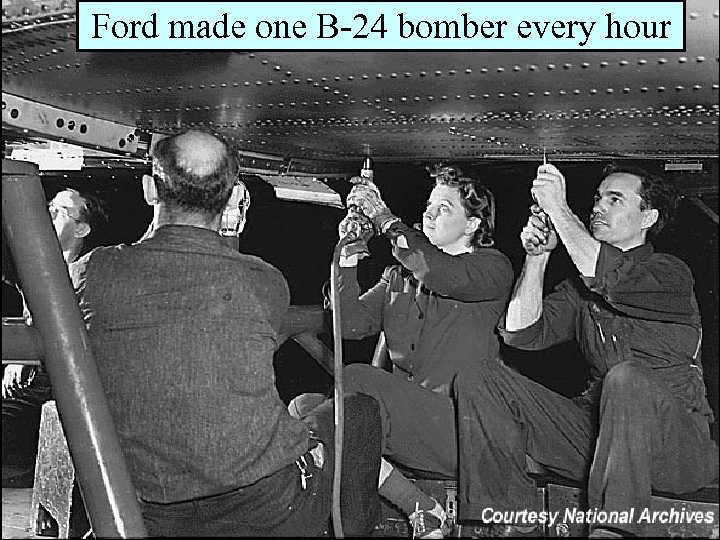 Ford made. Willow Run Factory hour Ford’s one B-24 bomber every
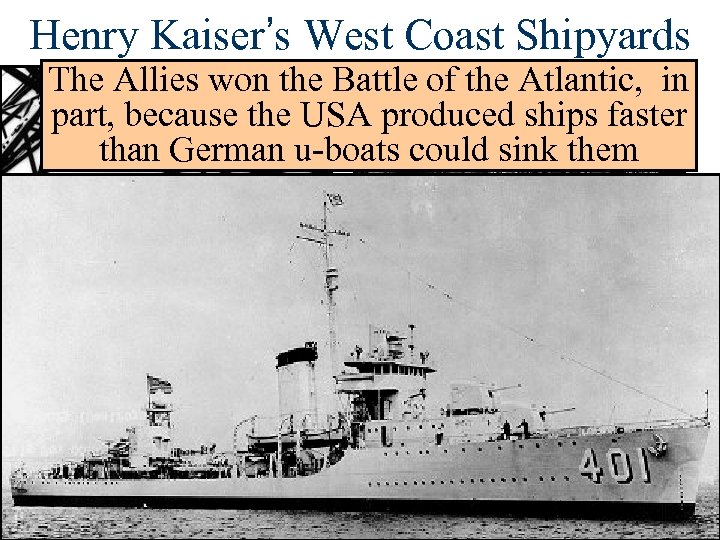 Henry Kaiser’s West Coast Shipyards The Allies won the Battle of the Atlantic, in part, because the USA produced ships faster than German u-boats could sink them Kaiser standardized battleship building & reduced the time it took to make a battleship from 355 days to 14 days
 ■ Essential Question: Question –How did the U. S. mobilize civilians at home to help win World War 2 & what impact did this have on American society? ■ Reading Quiz Ch 25 B (904 -922)
 WW 2 Changed American Society FDR Video #2
 Regional Changes ■ The war effort transformed the Western & Southern U. S. : –California became the major 9 million defense workers moved to new center for industry South & West factories & shipyards in to support the war effort in the Pacific – 60 of the 100 new military based were built in the South –Southern textile factories & industrial jobs helped end sharecropping & tenant farming
 Women ■ The war presented new economic opportunities for women: –Dramatic rise in employment (14 million to the life I have had. “To hell with 19 million by 1945) This war is too [serious], and it –Most too [important] to win it. ”were new female workers is married, many middle-aged –Entered “exclusively male” fields –Temporarily redefined “woman’s sphere” from “just at home”
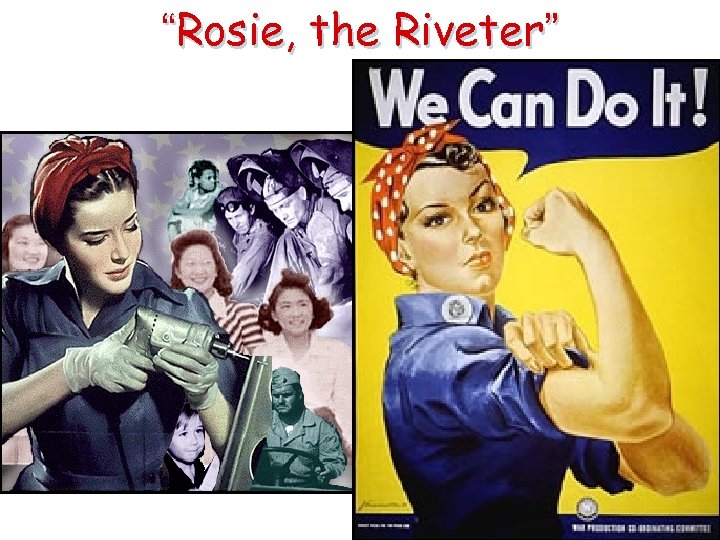 “Rosie, the Riveter”
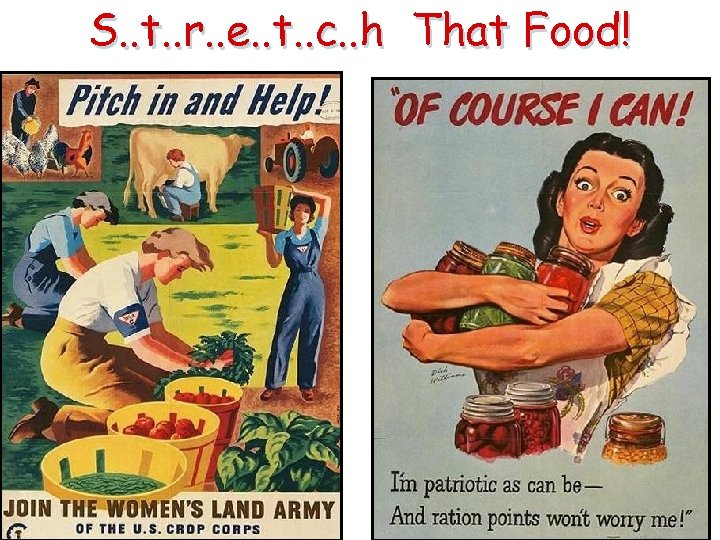 S. . t. . r. . e. . t. . c. . h That Food!
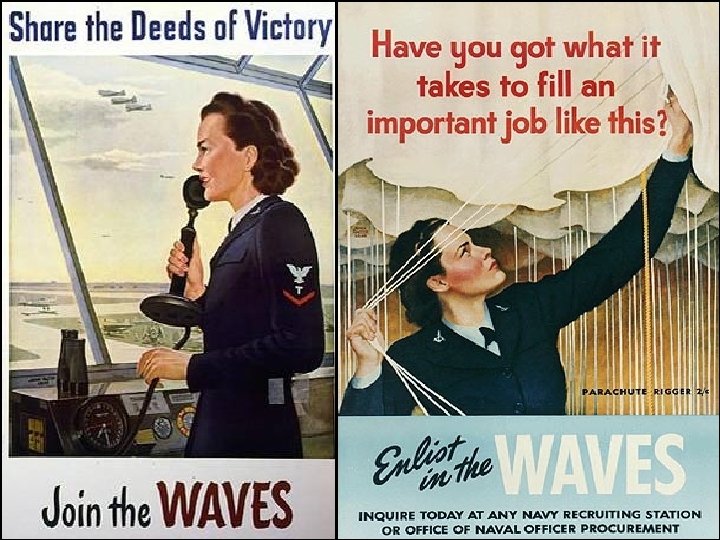 Women Accepted for Volunteer Join the Women’s Army Air Emergency Service (WAVES) Corps Pilots Army Corps (WACs)
 Families …and high of war & divorce rates ■ The uncertainties economic affluence of the 1940 s led to a dramatic rise in marriage ■ The influx of women into the workforce led to a new demand for daycare centers & to an increase in child delinquency ■ Public health improved as more families had access to doctors, dentists, & prescription drugs
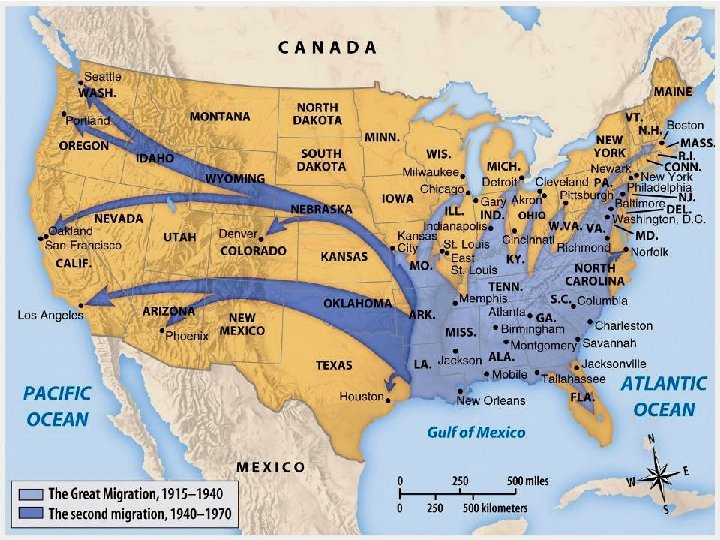
 African-Americans Banned discrimination in ■ 1 million blacks served in U. S. defense industries & gov’t military but few saw combat ■ Discrimination in the workforce led A. Philip Randolph to pressure FDR to create a Fair Employment Practices Committee ■ Continued black migration into the North & West made race relations a national issue
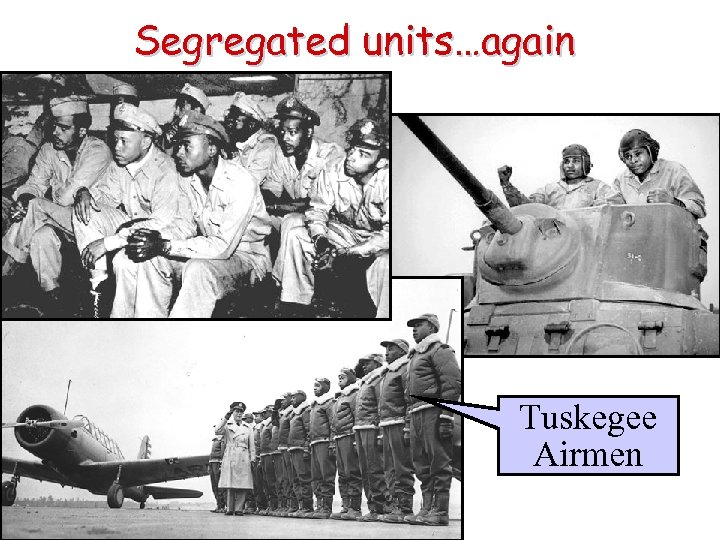 Segregated units…again Tuskegee Airmen
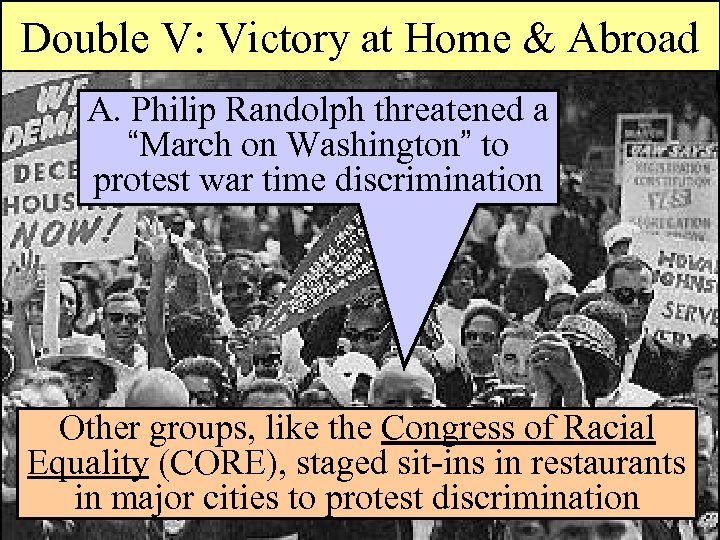 Double V: Victory at Home & Abroad A. Philip Randolph threatened a “March on Washington” to protest war time discrimination Other groups, like the Congress of Racial Equality (CORE), staged sit-ins in restaurants in major cities to protest discrimination
 Mexican-Americans ■ Mexican-Americans: –Served in quasi-segregated military units, often in the most hazardous branches –Mexican-American workers found jobs in SW agriculture & west coast industry –Faced discrimination, especially during the Zoot Suit Riots
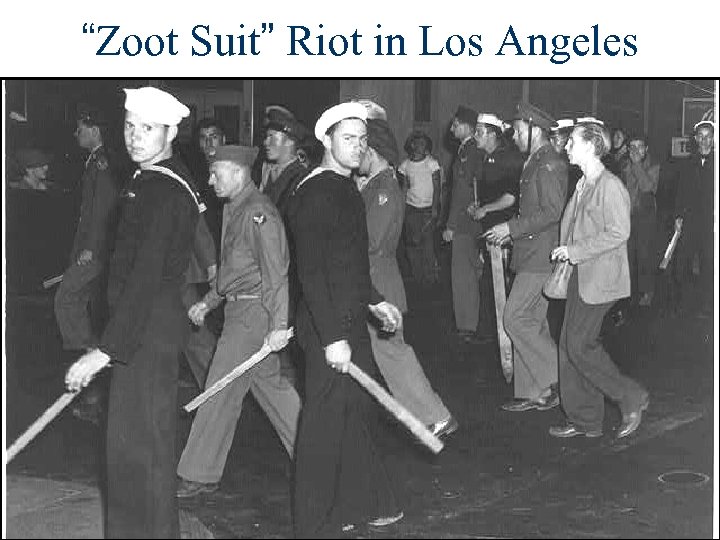 “Zoot Suit” Riot in Los Angeles
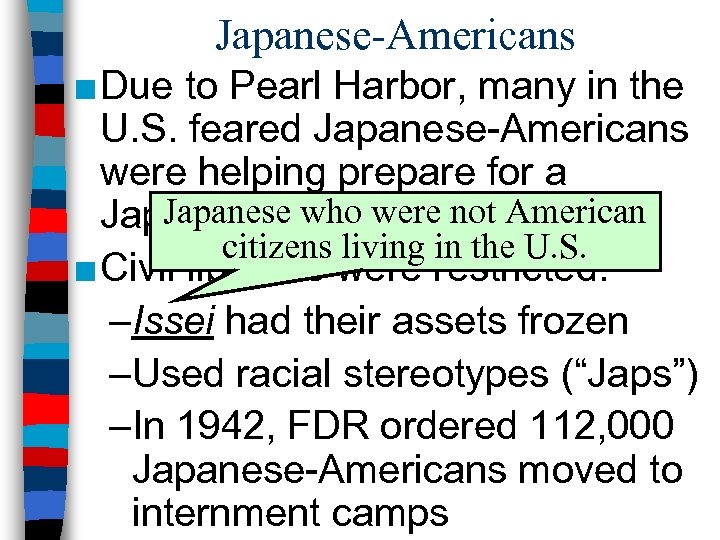 Japanese-Americans ■ Due to Pearl Harbor, many in the U. S. feared Japanese-Americans were helping prepare for a Japanese who were not American Japanese invasion in the West citizens living in the U. S. ■ Civil liberties were restricted: –Issei had their assets frozen –Used racial stereotypes (“Japs”) –In 1942, FDR ordered 112, 000 Japanese-Americans moved to internment camps
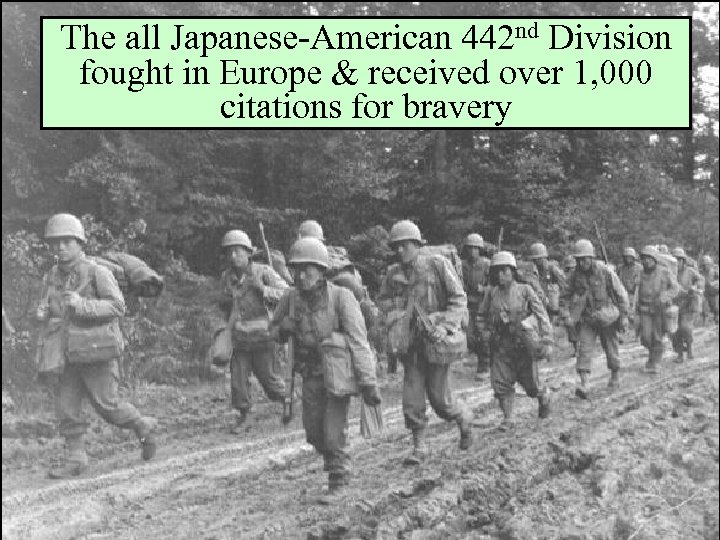 Families were given one week nd The all Japanese-American 442 to Division close their businesses & homes fought in Europe & received over 1, 000 citations for bravery Japanese. American Internment Camps
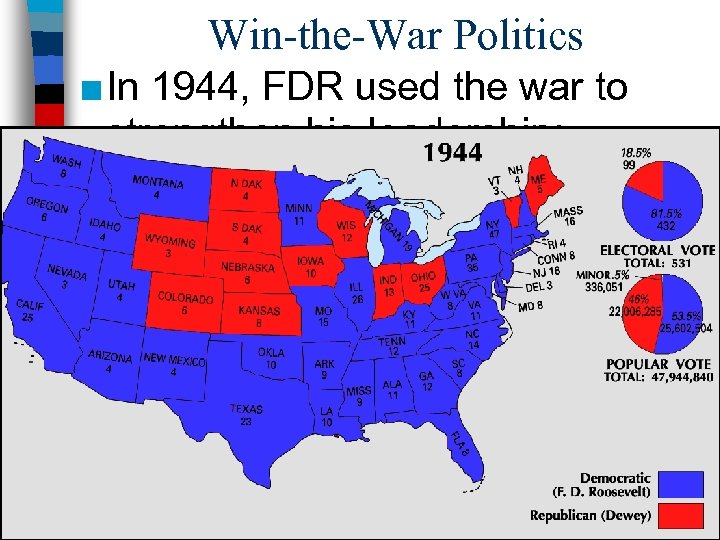 Win-the-War Politics ■ In 1944, FDR used the war to strengthen his leadership: –“Mr. New Deal” had shifted to “Mr. Win the War” –Opponent Thomas Dewey made communism & FDR’s health the focus of the election –FDR switched VPs from liberal Henry Wallace to moderate Harry Truman to gain appeal