


 Скачать презентацию Essential Question Champion of the Common Man OR
46f704aa65e4e99c9d1f71404297d517.ppt
- Количество слайдов: 50
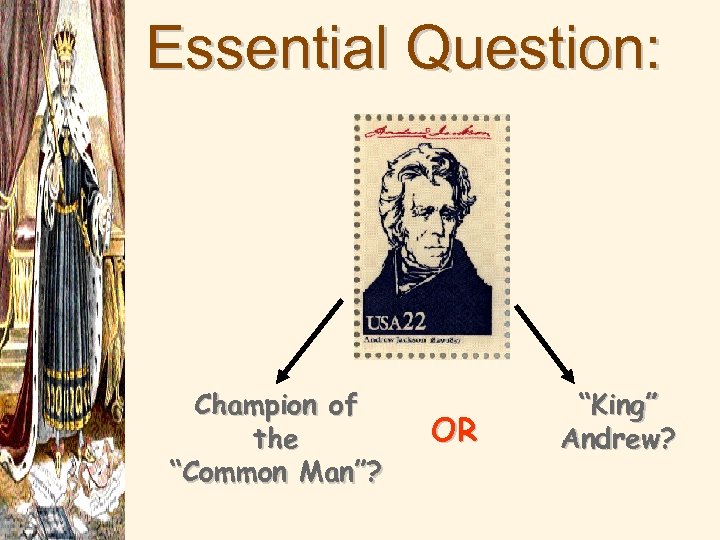 Essential Question: Champion of the “Common Man”? OR “King” Andrew?
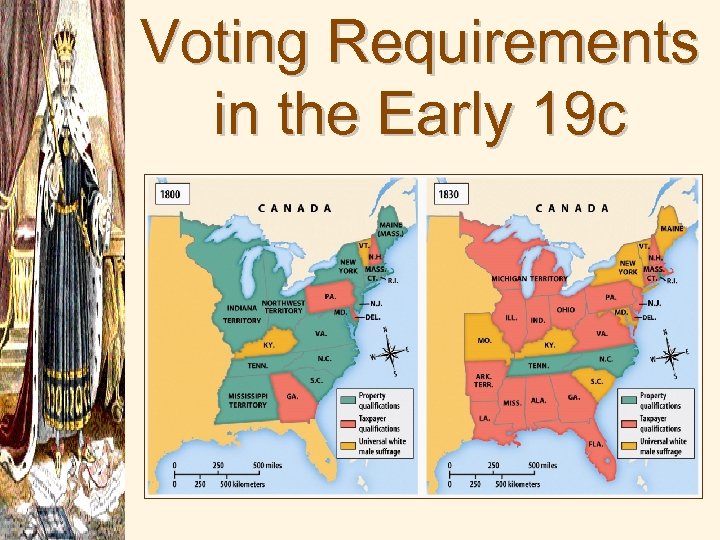 Voting Requirements in the Early 19 c
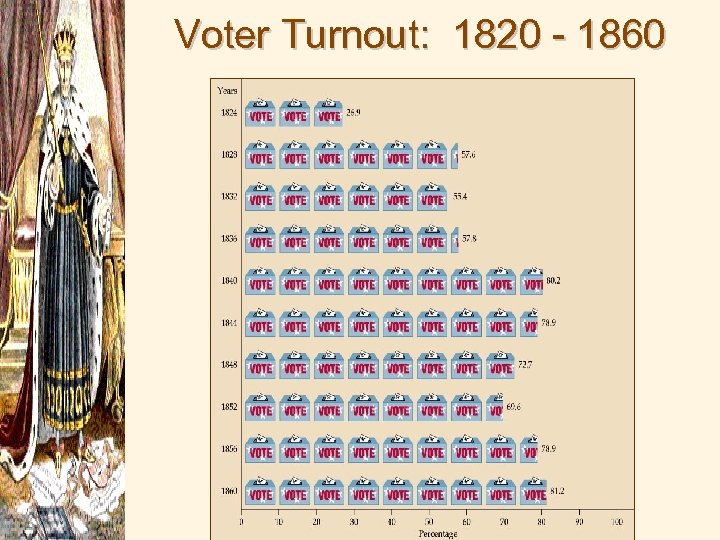 Voter Turnout: 1820 - 1860
 Why Increased Democratization? 3 White male suffrage increased 3 Party nominating committees. 3 Voters chose their state’s slate of Presidential electors. 3 Spoils system. 3 Rise of Third Parties. 3 Popular campaigning (parades, rallies, floats, etc. ) 3 Two-party system returned in the 1832 election: § Dem-Reps Natl. Reps. (1828) Whigs (1832) Republicans (1854) § Democrats (1828)
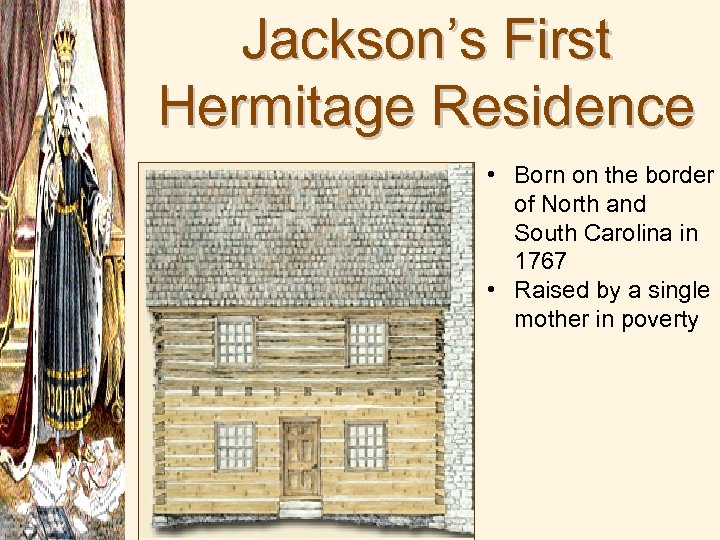 Jackson’s First Hermitage Residence • Born on the border of North and South Carolina in 1767 • Raised by a single mother in poverty
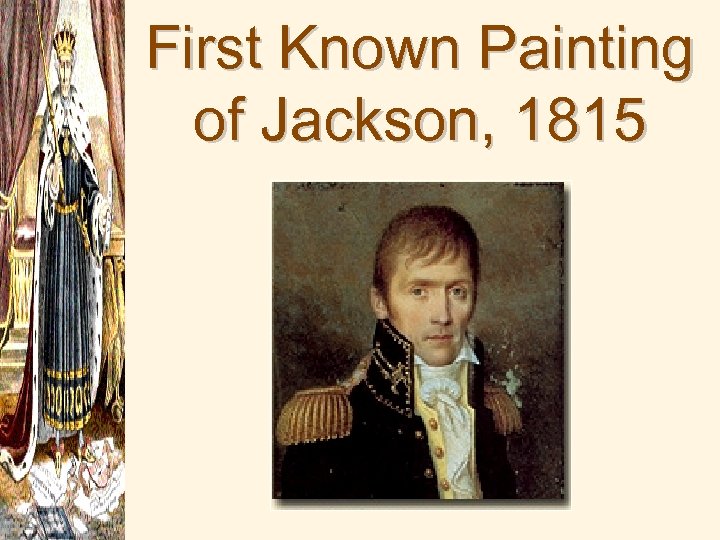 First Known Painting of Jackson, 1815
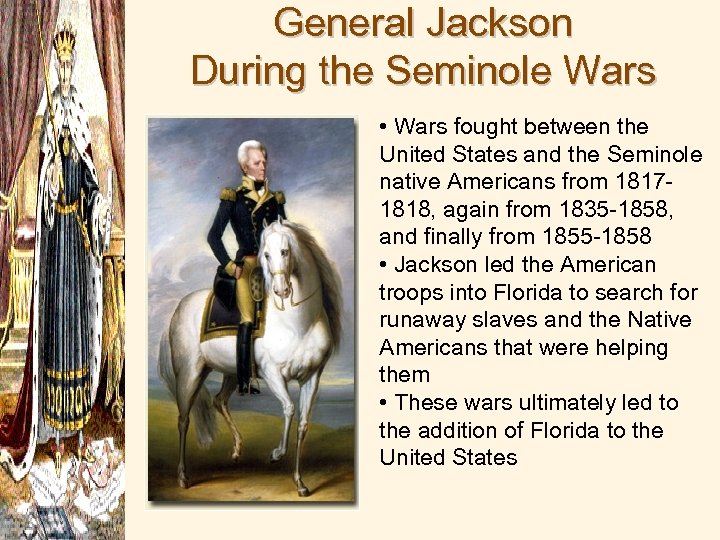 General Jackson During the Seminole Wars • Wars fought between the United States and the Seminole native Americans from 18171818, again from 1835 -1858, and finally from 1855 -1858 • Jackson led the American troops into Florida to search for runaway slaves and the Native Americans that were helping them • These wars ultimately led to the addition of Florida to the United States
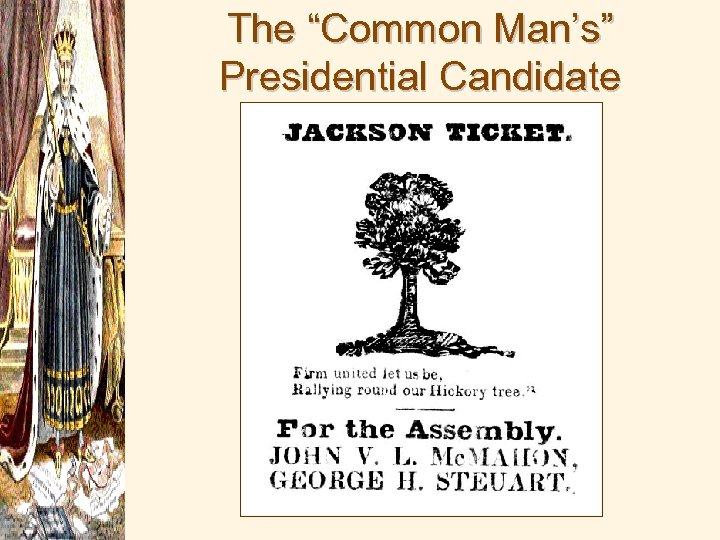 The “Common Man’s” Presidential Candidate
![Jackson’s Opponents in 1824 Henry Clay [KY] John Quincy Adams [MA] William H. Crawford](https://present5.com/presentation/46f704aa65e4e99c9d1f71404297d517/image-13.jpg "Jackson’s Opponents in 1824 Henry Clay [KY] John Quincy Adams [MA] William H. Crawford") Jackson’s Opponents in 1824 Henry Clay [KY] John Quincy Adams [MA] William H. Crawford [GA] John C. Calhoun [SC]
Jackson’s Opponents in 1824 Henry Clay [KY] John Quincy Adams [MA] William H. Crawford [GA] John C. Calhoun [SC]
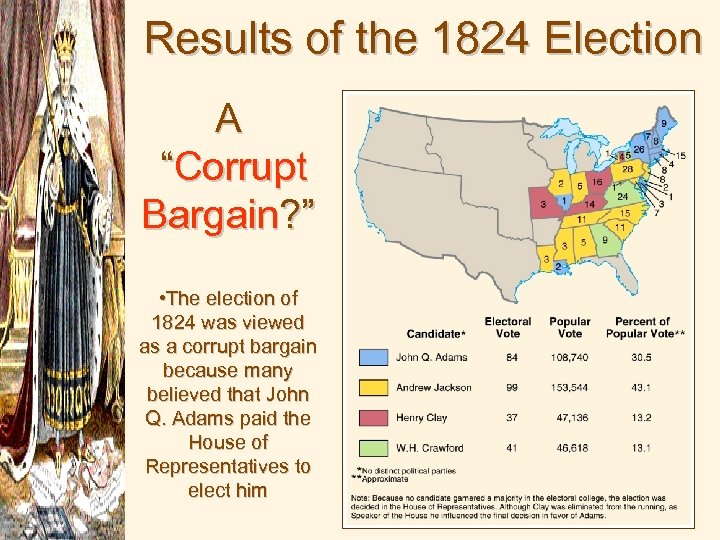 Results of the 1824 Election A “Corrupt Bargain? ” • The election of 1824 was viewed as a corrupt bargain because many believed that John Q. Adams paid the House of Representatives to elect him
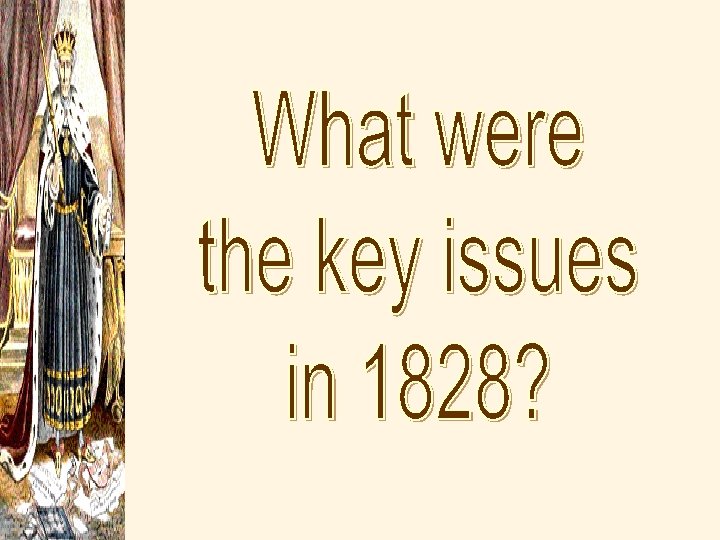
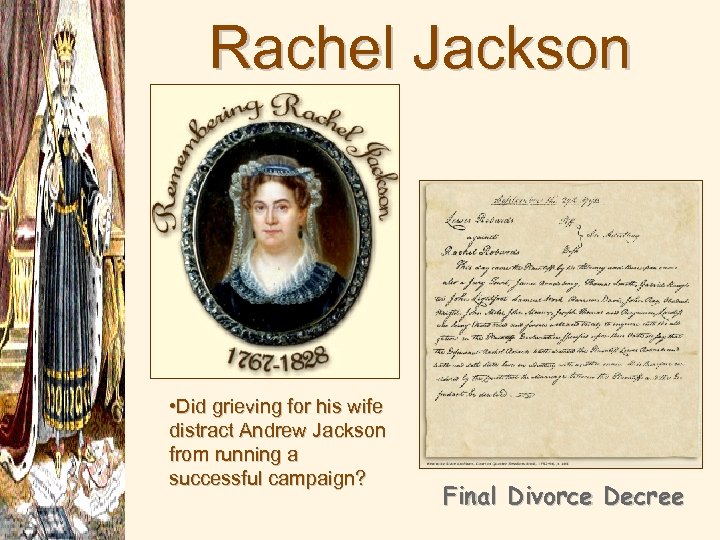 Rachel Jackson • Did grieving for his wife distract Andrew Jackson from running a successful campaign? Final Divorce Decree
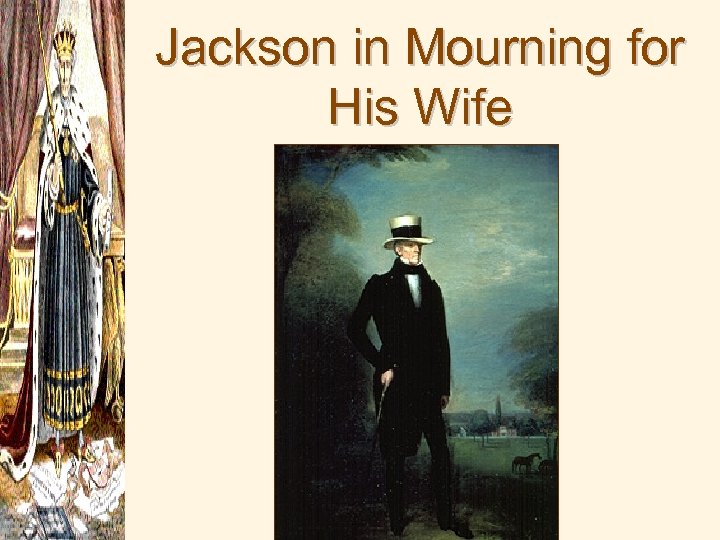 Jackson in Mourning for His Wife
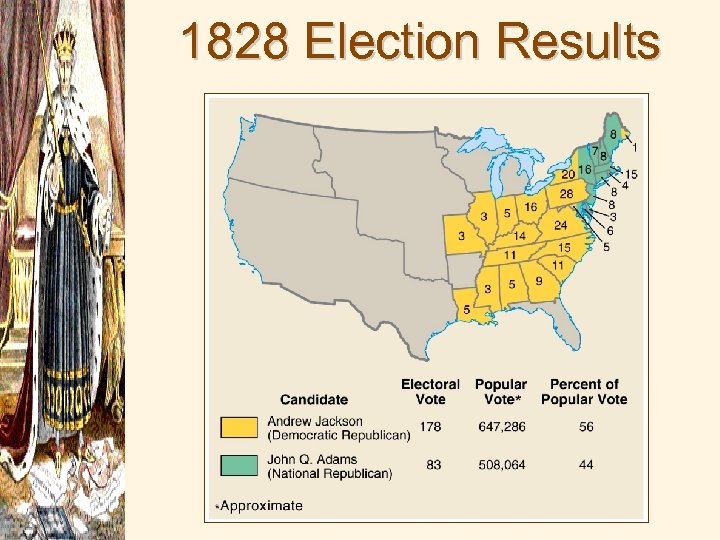 1828 Election Results
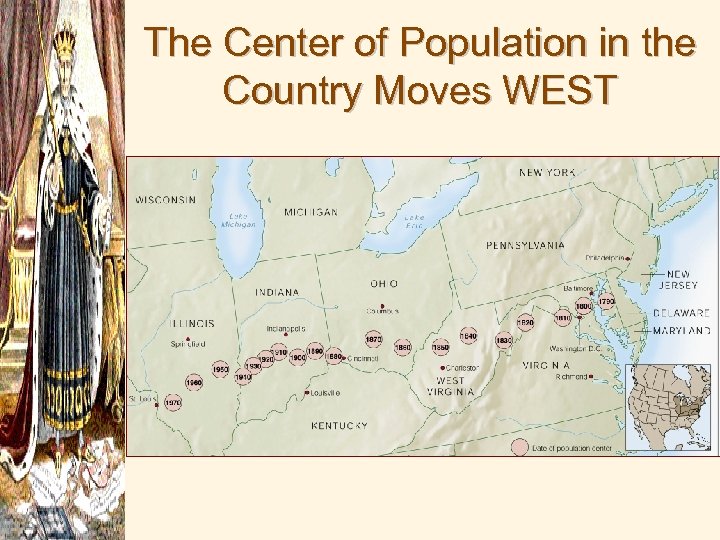 The Center of Population in the Country Moves WEST
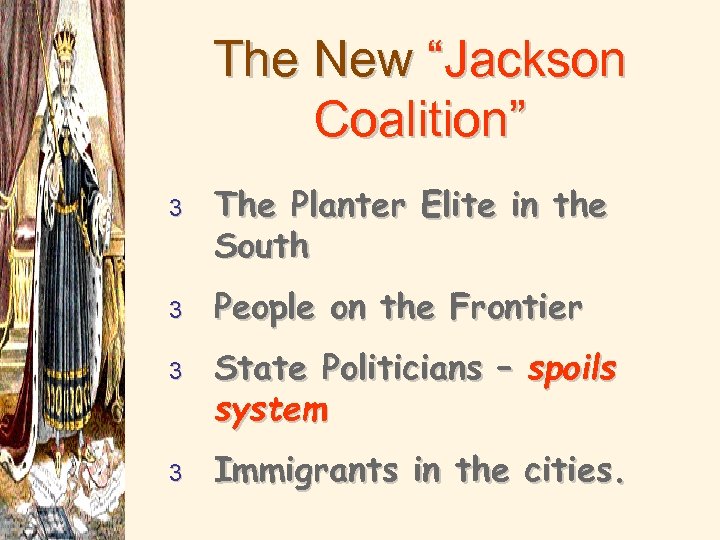 The New “Jackson Coalition” 3 3 The Planter Elite in the South People on the Frontier State Politicians – spoils system Immigrants in the cities.
 Jackson’s Faith in the “Common Man” 3 Intense distrust of Eastern “establishment, ” monopolies, & special privilege. 3 His heart & soul was with the “plain folk. ” 3 Belief that the common man was capable of uncommon achievements.
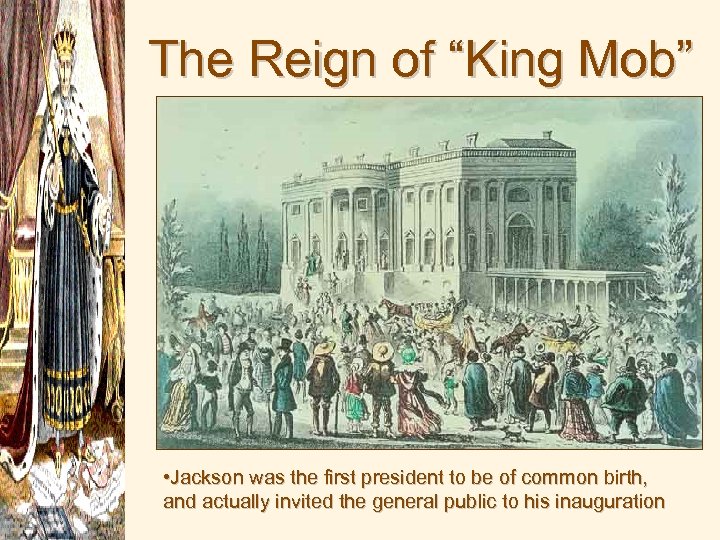 The Reign of “King Mob” • Jackson was the first president to be of common birth, and actually invited the general public to his inauguration
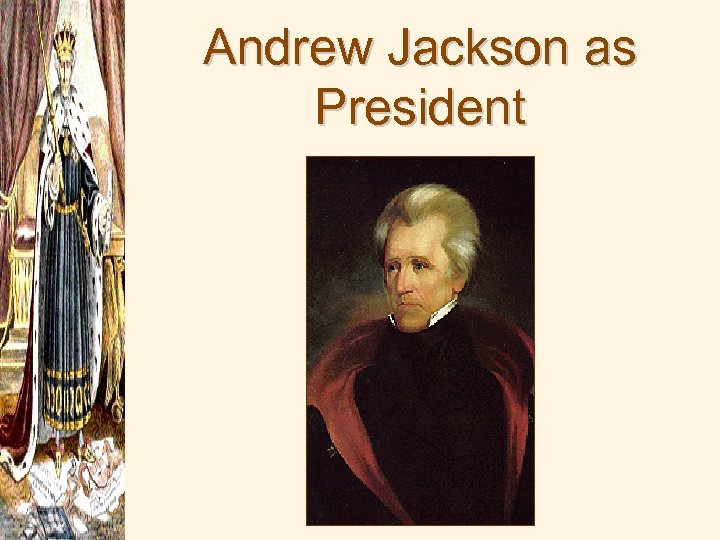 Andrew Jackson as President
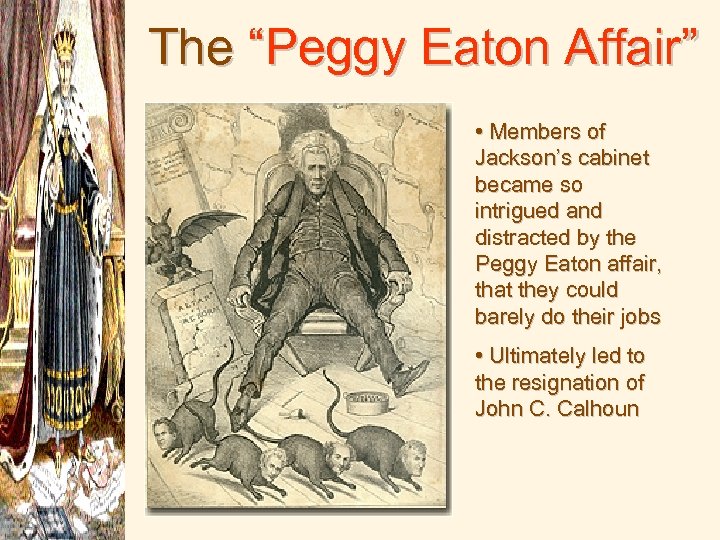 The “Peggy Eaton Affair” • Members of Jackson’s cabinet became so intrigued and distracted by the Peggy Eaton affair, that they could barely do their jobs • Ultimately led to the resignation of John C. Calhoun
![The Webster-Hayne Debate Sen. Daniel Webster [MA] Sen. Robert Hayne [SC]](https://present5.com/presentation/46f704aa65e4e99c9d1f71404297d517/image-26.jpg "The Webster-Hayne Debate Sen. Daniel Webster [MA] Sen. Robert Hayne [SC]") The Webster-Hayne Debate Sen. Daniel Webster [MA] Sen. Robert Hayne [SC]
The Webster-Hayne Debate Sen. Daniel Webster [MA] Sen. Robert Hayne [SC]
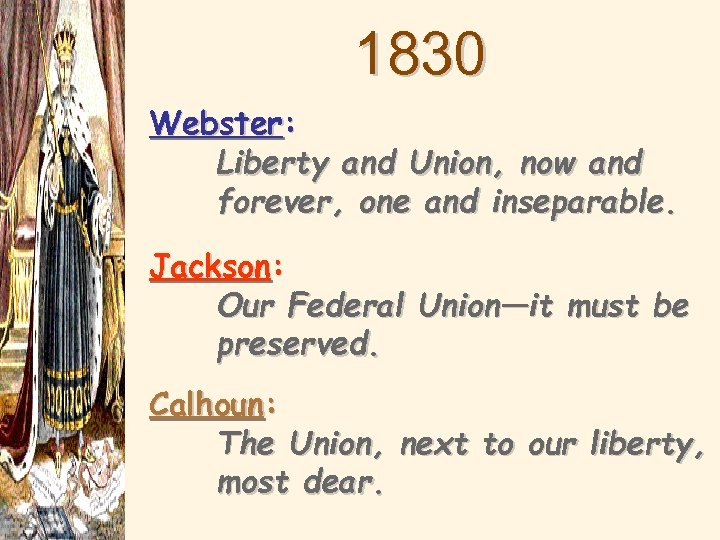 1830 Webster: Liberty and Union, now and forever, one and inseparable. Jackson: Our Federal Union—it must be preserved. Calhoun: The Union, next to our liberty, most dear.
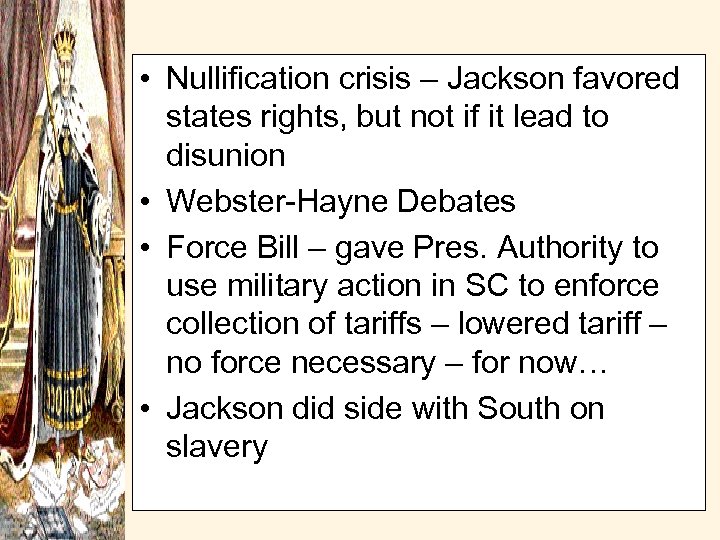 • Nullification crisis – Jackson favored states rights, but not if it lead to disunion • Webster-Hayne Debates • Force Bill – gave Pres. Authority to use military action in SC to enforce collection of tariffs – lowered tariff – no force necessary – for now… • Jackson did side with South on slavery

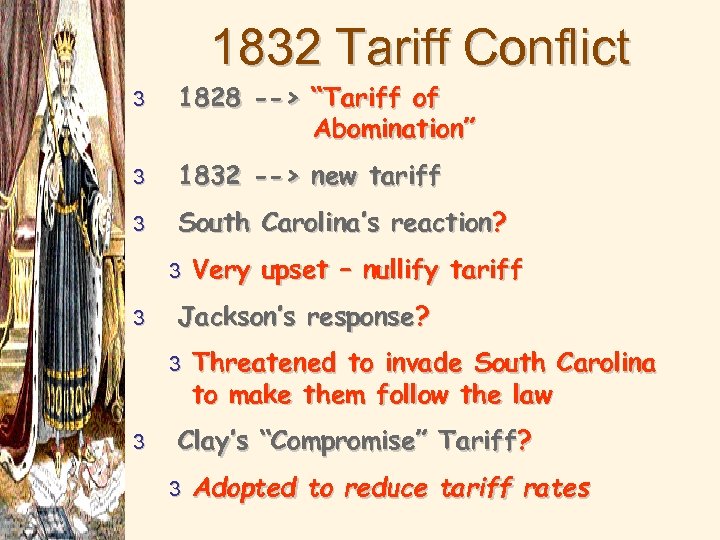 1832 Tariff Conflict 3 1828 --> “Tariff of Abomination” 3 1832 --> new tariff 3 South Carolina’s reaction? 3 3 Jackson’s response? 3 3 Very upset – nullify tariff Threatened to invade South Carolina to make them follow the law Clay’s “Compromise” Tariff? 3 Adopted to reduce tariff rates
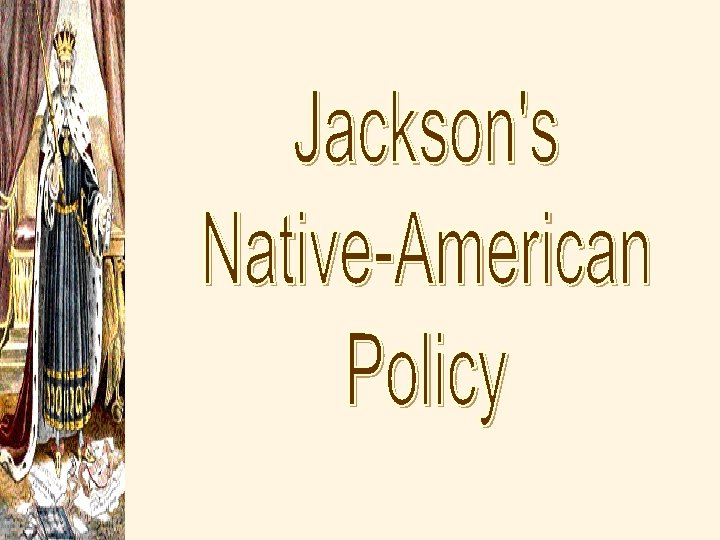
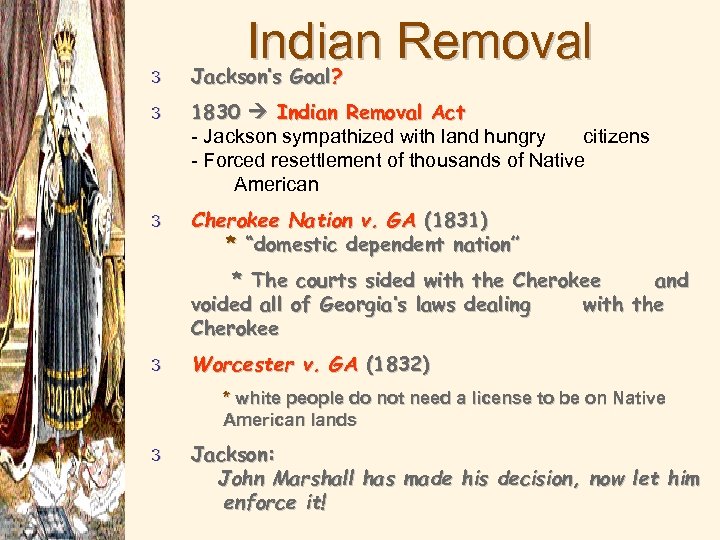 Indian Removal 3 Jackson’s Goal? 3 1830 Indian Removal Act - Jackson sympathized with land hungry citizens - Forced resettlement of thousands of Native American 3 Cherokee Nation v. GA (1831) * “domestic dependent nation” * The courts sided with the Cherokee and voided all of Georgia’s laws dealing with the Cherokee 3 Worcester v. GA (1832) * white people do not need a license to be on Native American lands 3 Jackson: John Marshall has made his decision, now let him enforce it!
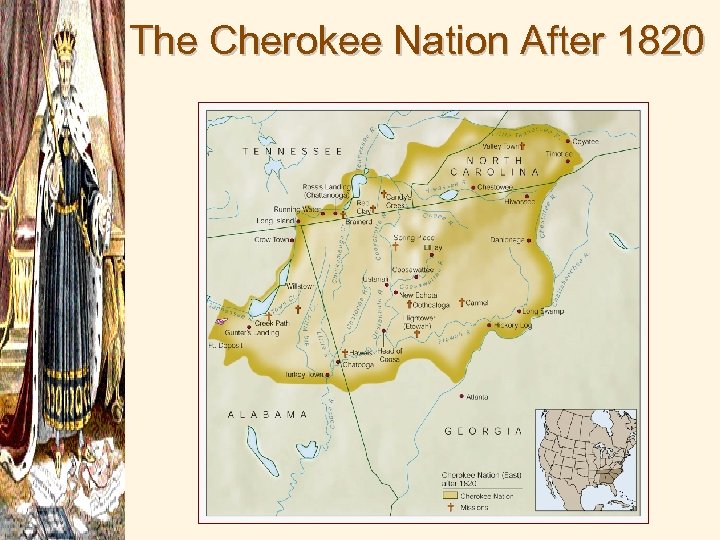 The Cherokee Nation After 1820
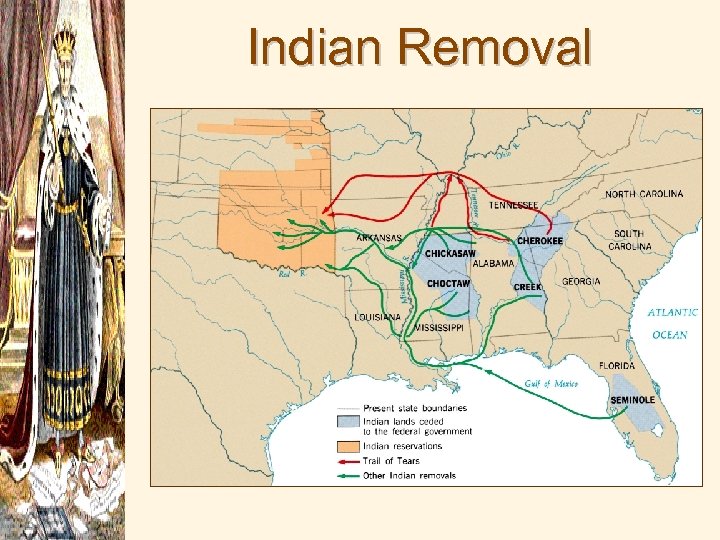 Indian Removal
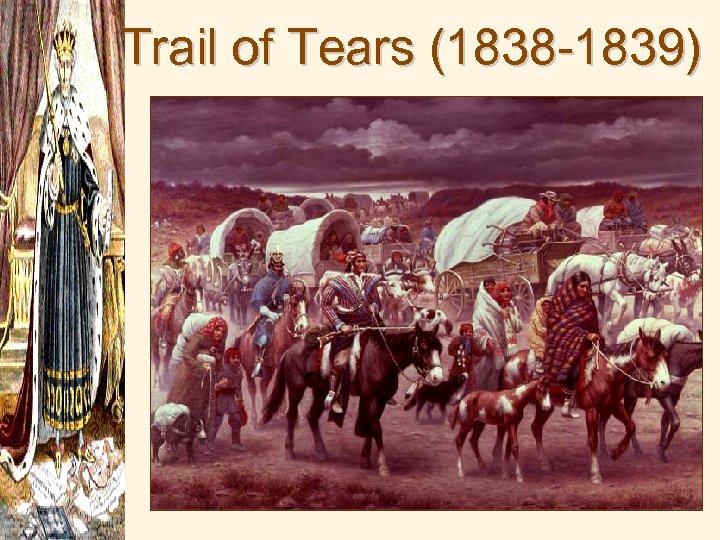 Trail of Tears (1838 -1839)
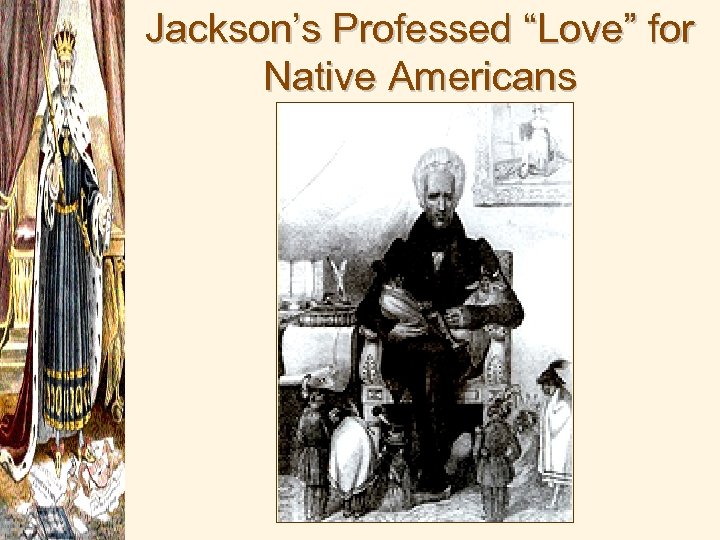 Jackson’s Professed “Love” for Native Americans
 Jackson’s Use of Federal Power VETO 1830 Maysville Road project in KY [state of his political rival, Henry Clay]
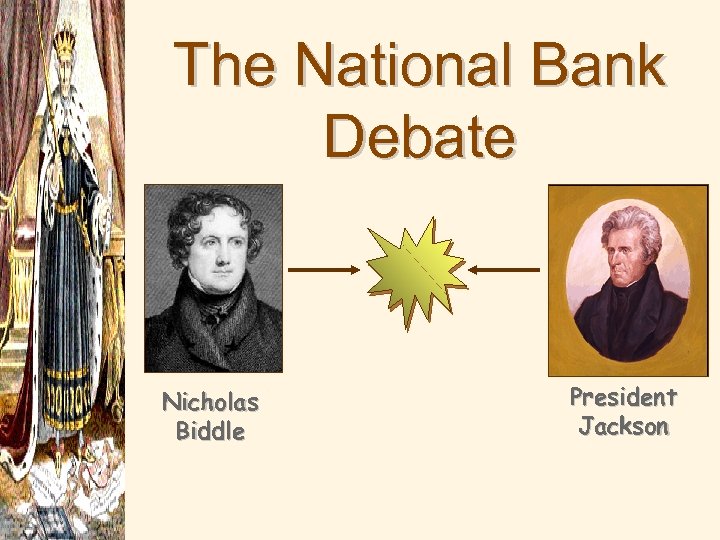 The National Bank Debate Nicholas Biddle President Jackson
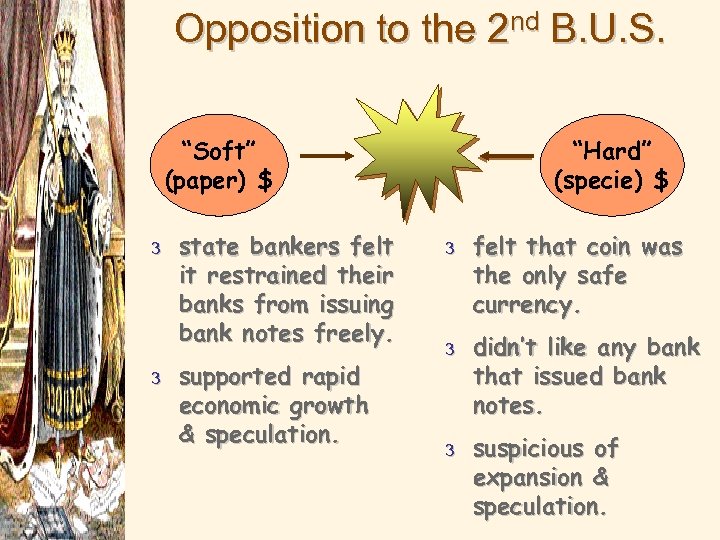 Opposition to the 2 nd B. U. S. “Soft” (paper) $ 3 3 state bankers felt it restrained their banks from issuing bank notes freely. supported rapid economic growth & speculation. “Hard” (specie) $ 3 3 3 felt that coin was the only safe currency. didn’t like any bank that issued bank notes. suspicious of expansion & speculation.
 The “Monster” Is Destroyed! 3 “pet banks”? 3 1832 Jackson vetoed the extension of the 2 nd National Bank of the United States. 3 1836 the charter expired. 3 1841 the bank went bankrupt!
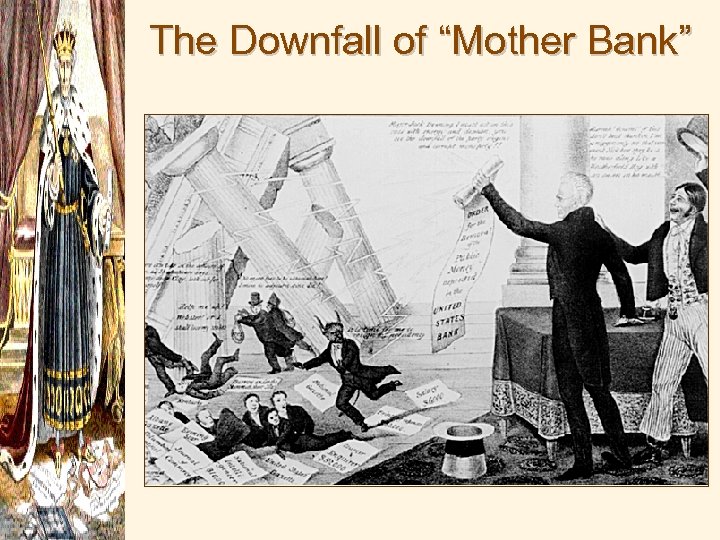 The Downfall of “Mother Bank”
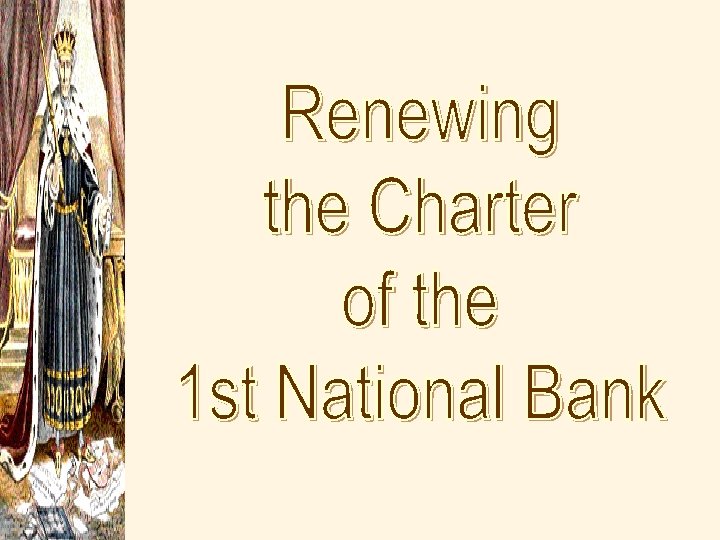
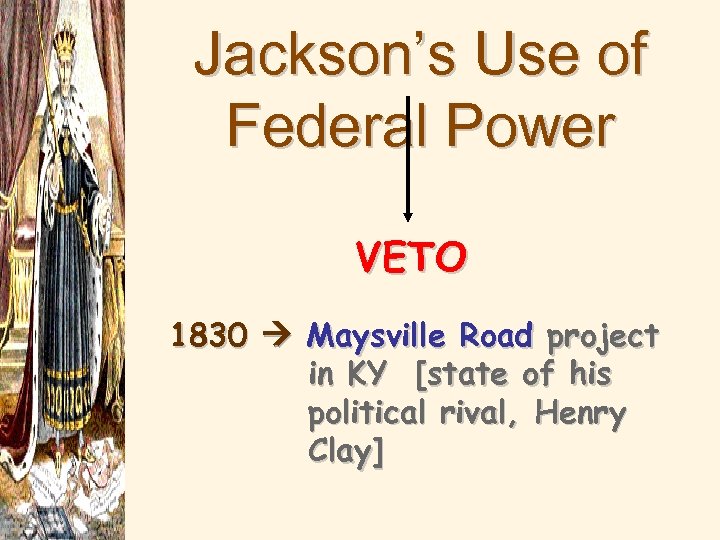
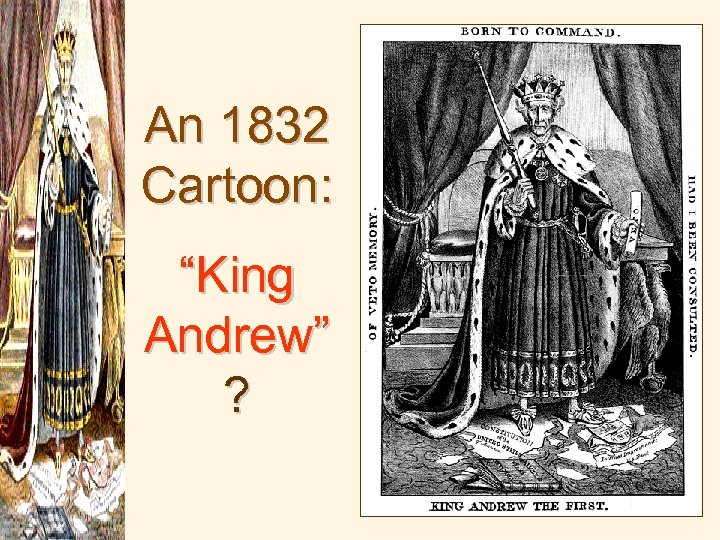 An 1832 Cartoon: “King Andrew” ?
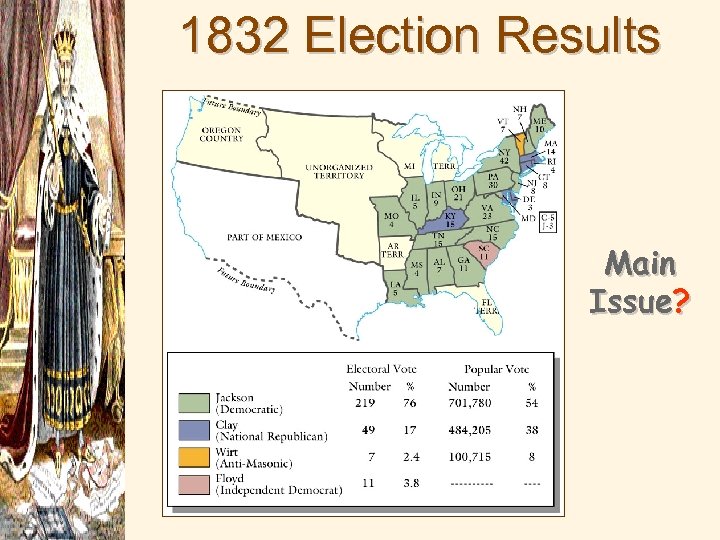 1832 Election Results Main Issue?
 The Specie Circular (1836) 3 “wildcat banks. ” 3 buy future federal land only with gold or silver. 3 Jackson’s goal?
 Results of the Specie Circular $ Banknotes loose their value. $ Land sales plummeted. $ Credit not available. $ Businesses began to fail. $ Unemployment rose. The Panic of 1837!
![The 1836 Election Results Martin Van Buren “Old Kinderhook” [O. K. ]](https://present5.com/presentation/46f704aa65e4e99c9d1f71404297d517/image-47.jpg "The 1836 Election Results Martin Van Buren “Old Kinderhook” [O. K. ]") The 1836 Election Results Martin Van Buren “Old Kinderhook” [O. K. ]
The 1836 Election Results Martin Van Buren “Old Kinderhook” [O. K. ]
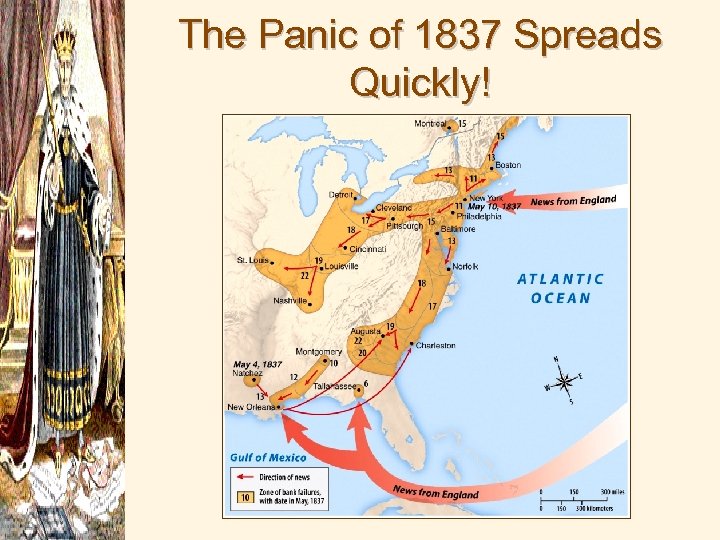 The Panic of 1837 Spreads Quickly!
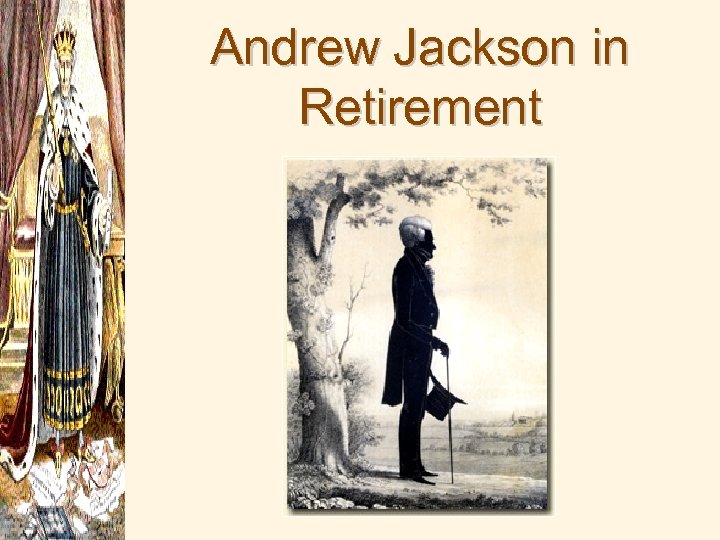 Andrew Jackson in Retirement
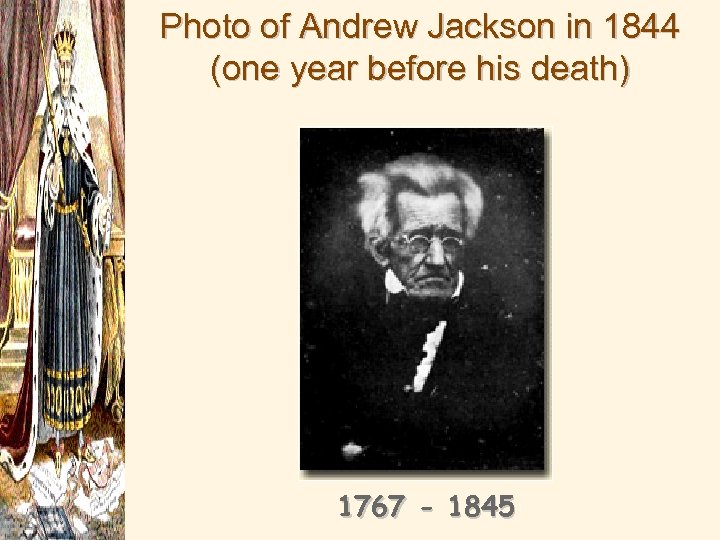 Photo of Andrew Jackson in 1844 (one year before his death) 1767 - 1845