


 Скачать презентацию ESS 202 This lecture Dams
d4fa55985120fbbd4ed055cde8ad3d35.ppt
- Количество слайдов: 125
 ESS 202
 This lecture • Dams • Buildings • Proper response to a quake • Real odds in a quake
 Manmade hazards • Certain structures present a hazard to neighboring or nearby buildings, including – Dams and reservoirs – Dikes and levees – Water tanks – Neighboring buildings
 Dams and reservoirs • Dams are structures most hazardous to populated areas • Heavily populated urban areas like LA and SF contain many small reservoirs within city limits
 Dam collapses • Sheffield Dam in Santa Barbara • St. Francis Dam near Saugus • Baldwin Hills Reservoir • Van Norman Dam near San Fern.
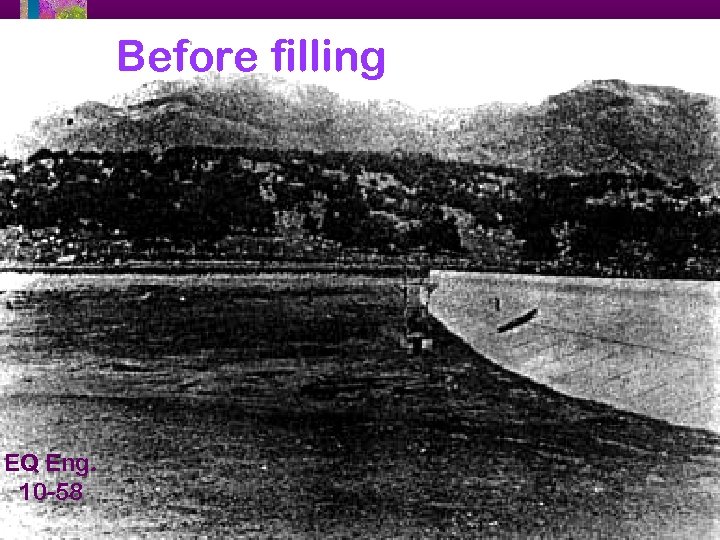
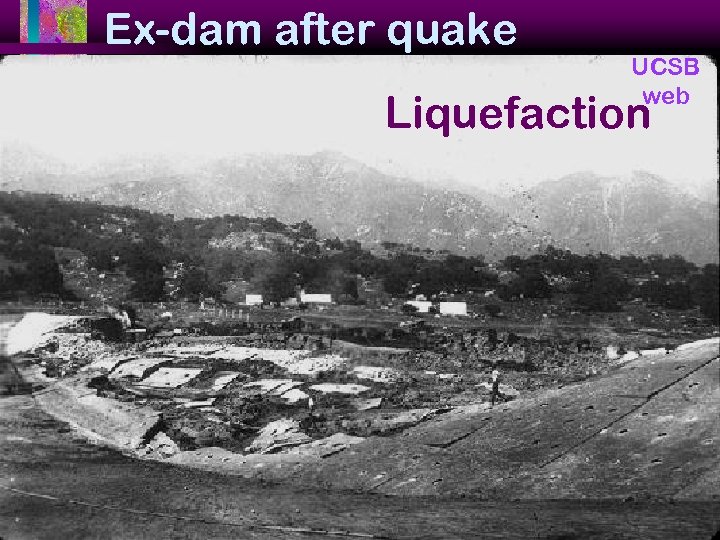
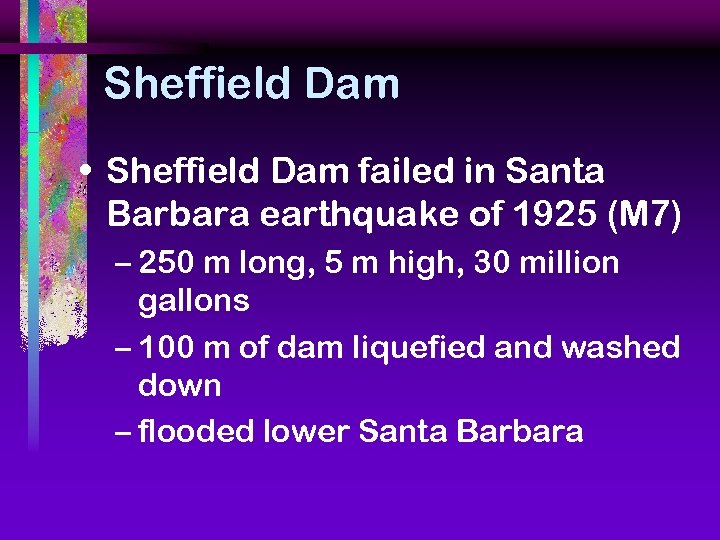 Sheffield Dam • Sheffield Dam failed in Santa Barbara earthquake of 1925 (M 7) – 250 m long, 5 m high, 30 million gallons – 100 m of dam liquefied and washed down – flooded lower Santa Barbara
 Before filling EQ Eng. 10 -58
 Ex-dam after quake UCSB web Liquefaction
 St. Francis Dam Keller, 3 -24
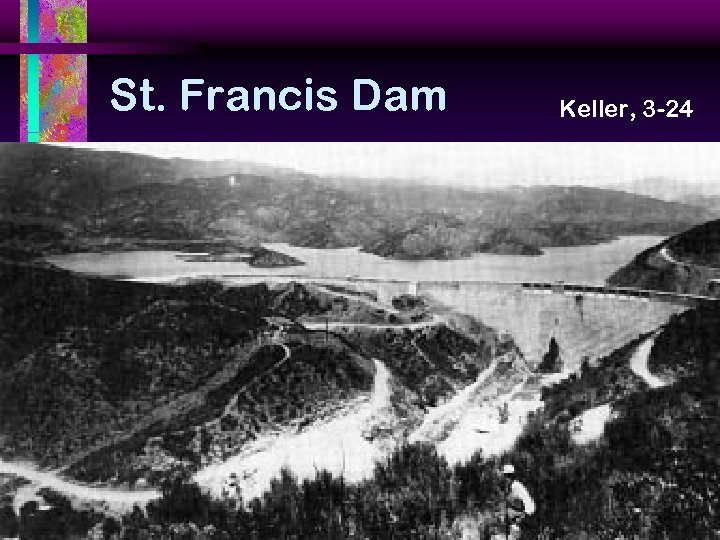
 St. Francis • St. Francis Dam near Saugus, CA – Failed March 12, 1928 at night – 500 people killed, $10 million is damage • Problem complicated – Rocks softened when wet – Fault zone carried water • Dam sprung a leak – Then softened rock slipped, dam failed
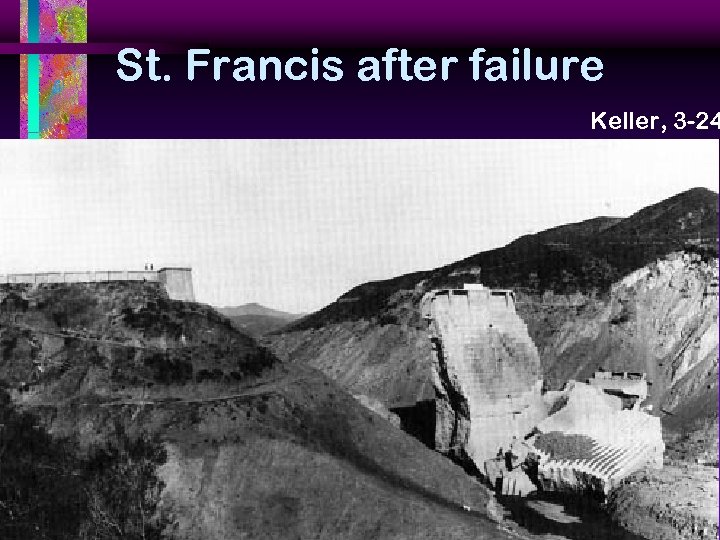 St. Francis after failure Keller, 3 -24
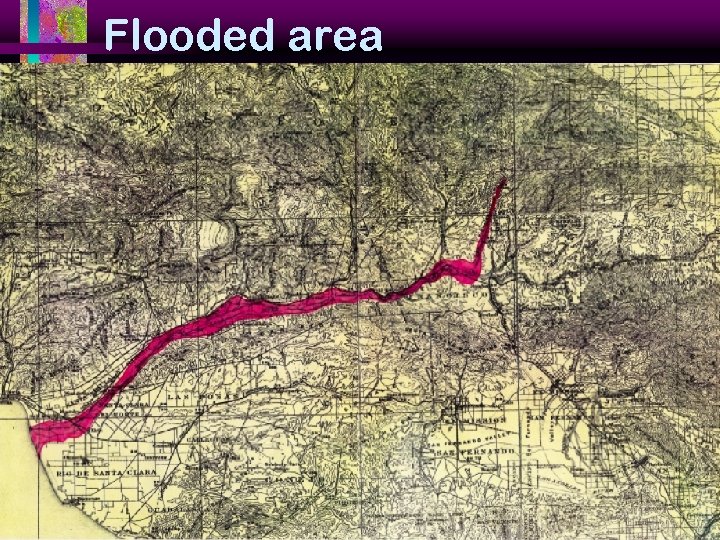 Flooded area
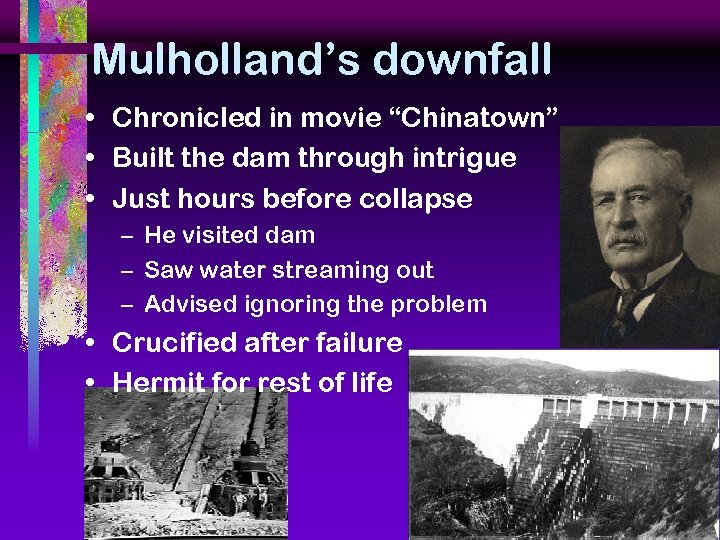 Mulholland’s downfall • Chronicled in movie “Chinatown” • Built the dam through intrigue • Just hours before collapse – He visited dam – Saw water streaming out – Advised ignoring the problem • Crucified after failure • Hermit for rest of life
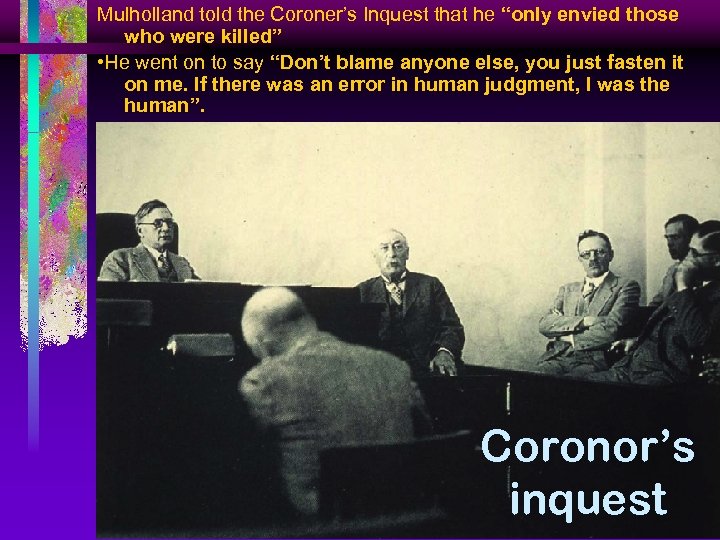 Mulholland told the Coroner’s Inquest that he “only envied those who were killed” • He went on to say “Don’t blame anyone else, you just fasten it on me. If there was an error in human judgment, I was the human”. Coronor’s inquest
 Another dam collapse • Baldwin Hills Reservoir – December 14, 1963 – failed after weakening by several years of creep on Newport-Inglewood fault – Constructed in 1951, but built on the fault zone responsible for 1933 Long Beach earthquake – Claimed 5 lives despite quick evacuation of area below reservoir, 2 hours of warning, $15 million in property damage – Fault creep may have been related to withdrawal of oil underneath from 1923 to 1963
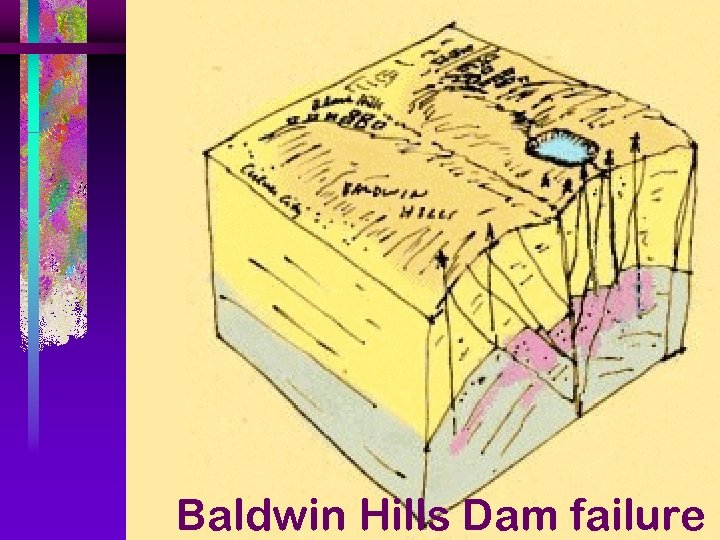 Baldwin Hills Dam failure
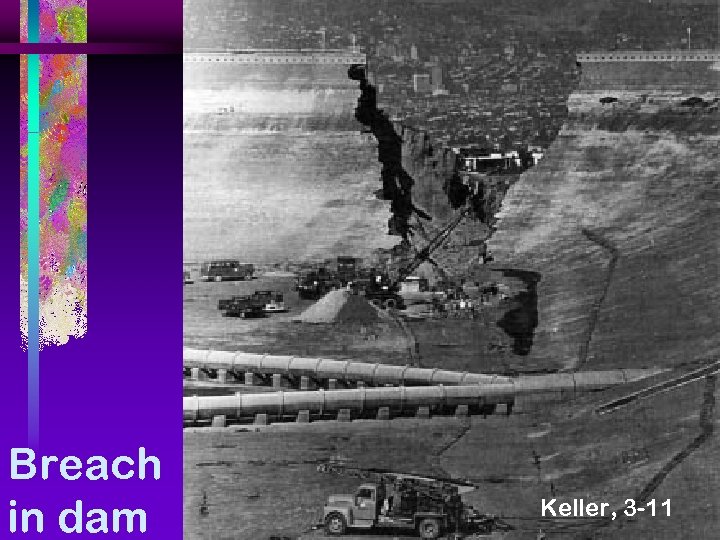 Breach in dam Keller, 3 -11
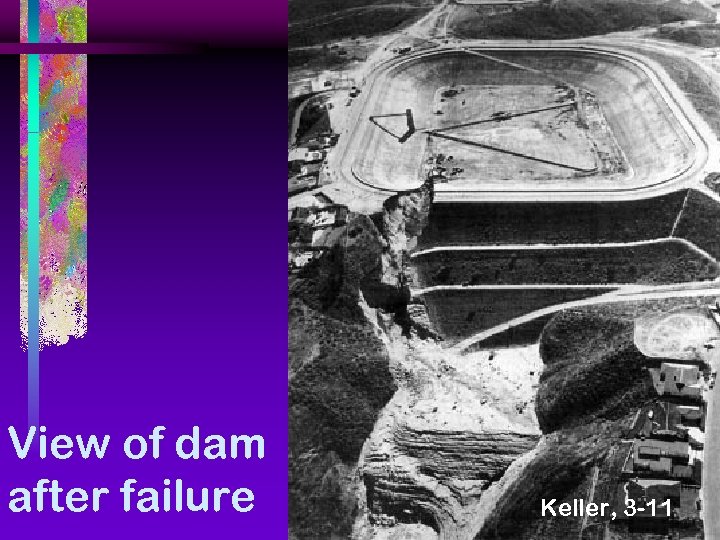 View of dam after failure Keller, 3 -11
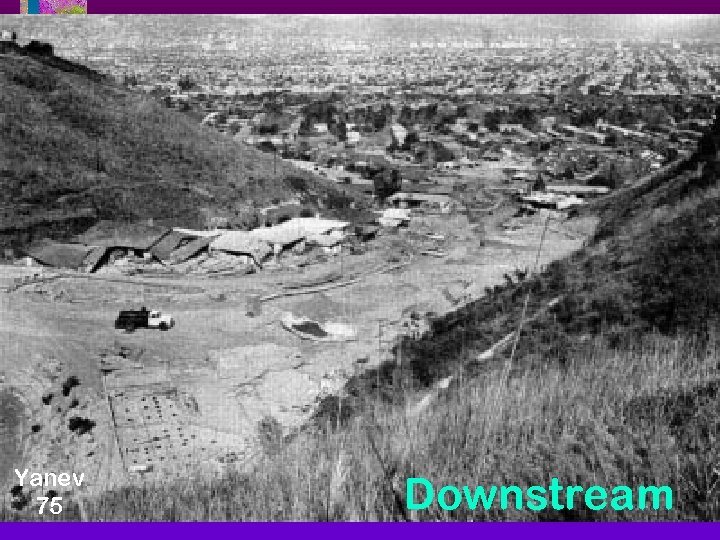 Yanev 75 Downstream
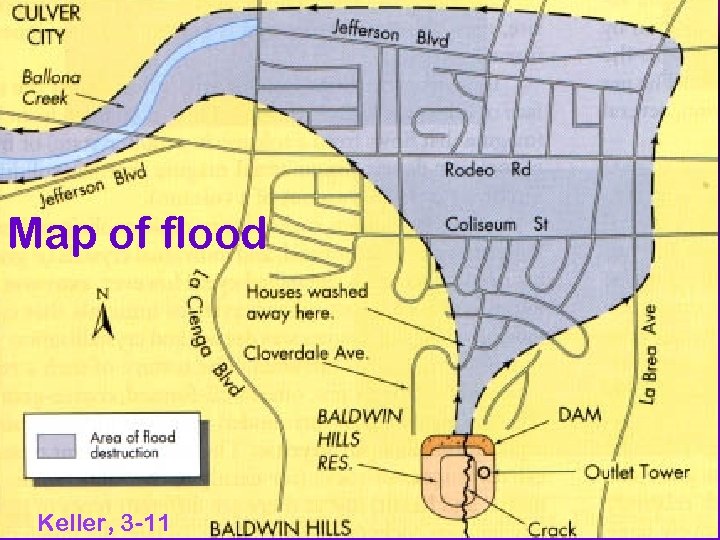 Map of flood Keller, 3 -11
 Near collapse of dam • Lower Van Norman Dam in San Fernando earthquake of 1971 – Constructed in 1915, reinforced several decades later – Quake shook upstream surface into reservoir, left only 5 ft margin above water – Threatened 12 square miles with 80, 000 sleeping residents
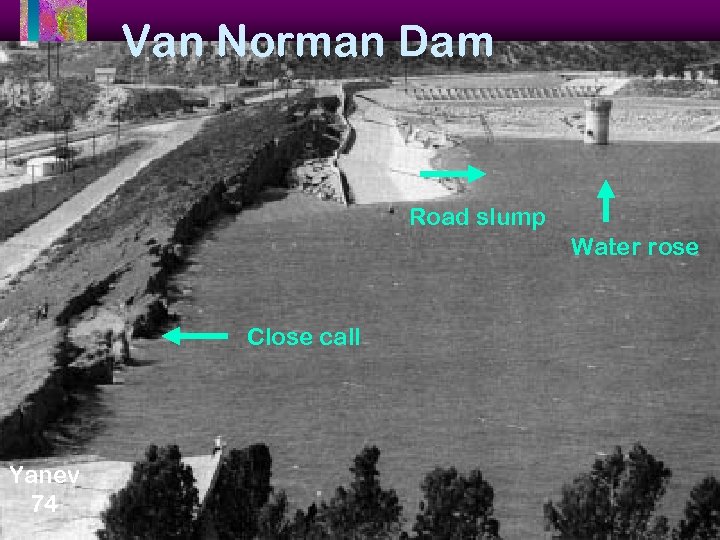 Van Norman Dam Road slump Water rose Close call Yanev 74
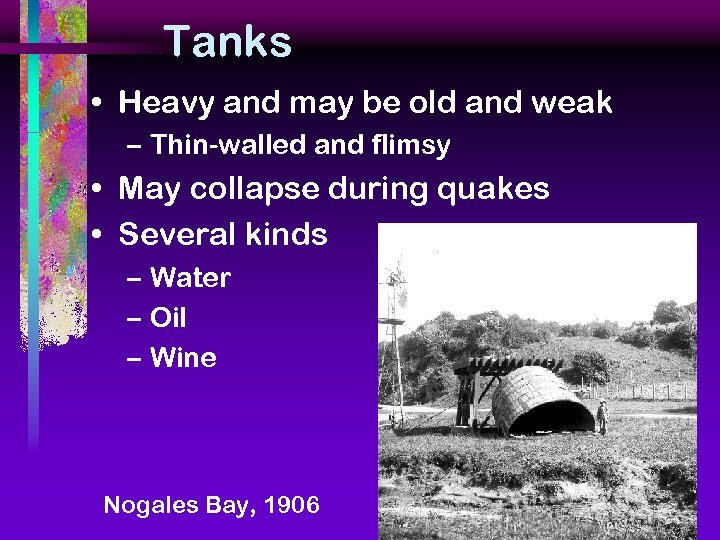 Tanks • Heavy and may be old and weak – Thin-walled and flimsy • May collapse during quakes • Several kinds – Water – Oil – Wine Nogales Bay, 1906
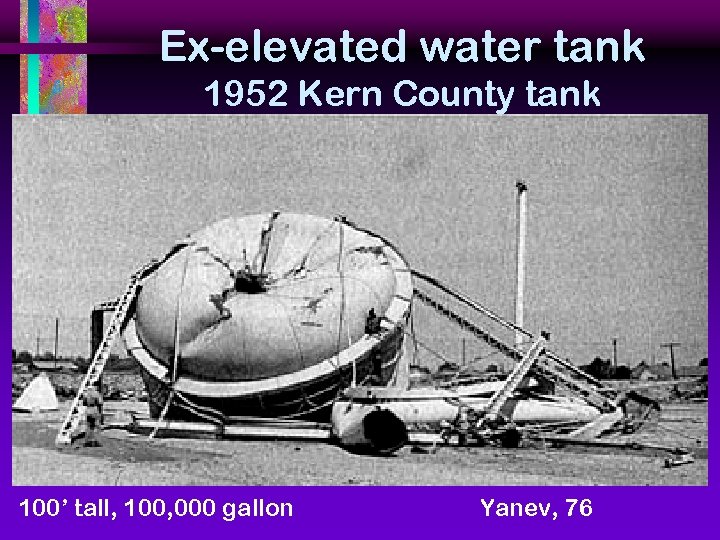 Ex-elevated water tank 1952 Kern County tank 100’ tall, 100, 000 gallon Yanev, 76
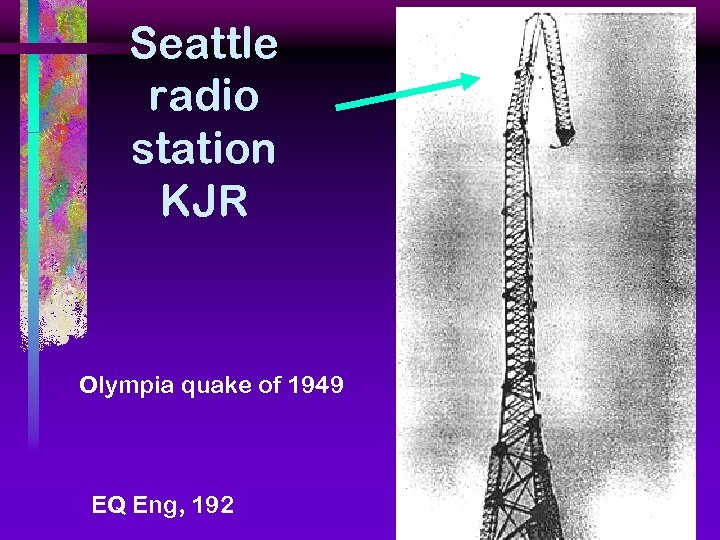 Seattle radio station KJR Olympia quake of 1949 EQ Eng, 192
 Neighboring buildings • Two adjacent buildings usually respond to earthquake vibrations in different ways and therefore may pound against each other – especially bad for higher building at roof level of lower one • Or one may fall on another • Or corner buildings may flop out
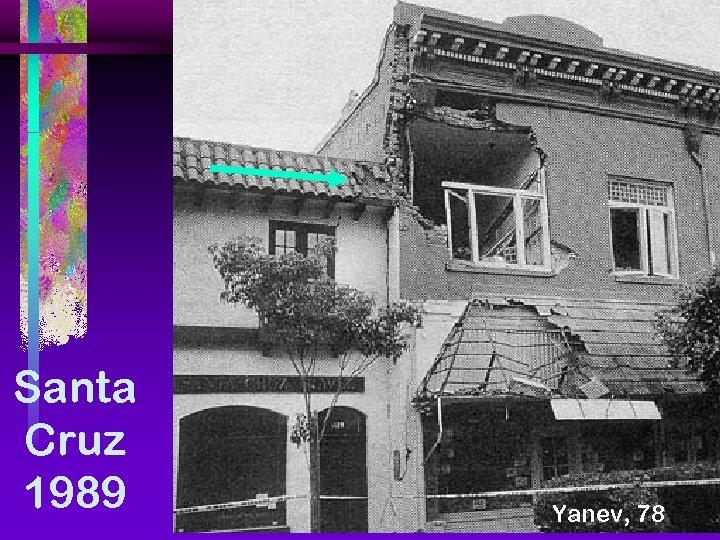 Santa Cruz 1989 Yanev, 78
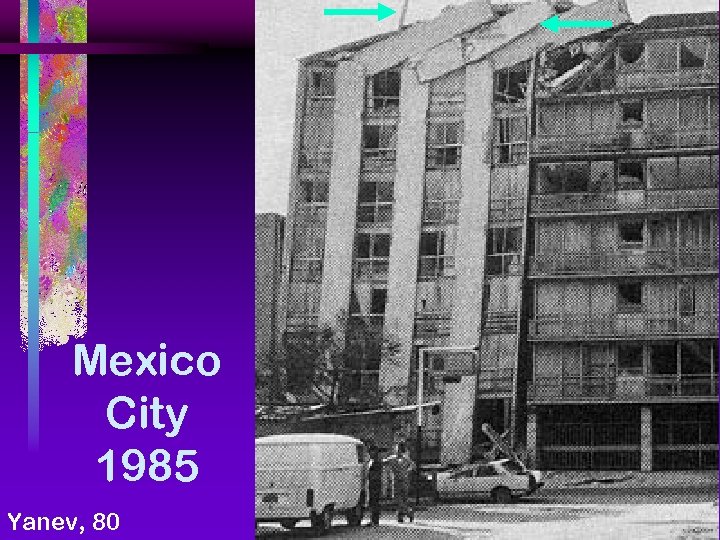 Mexico City 1985 Yanev, 80
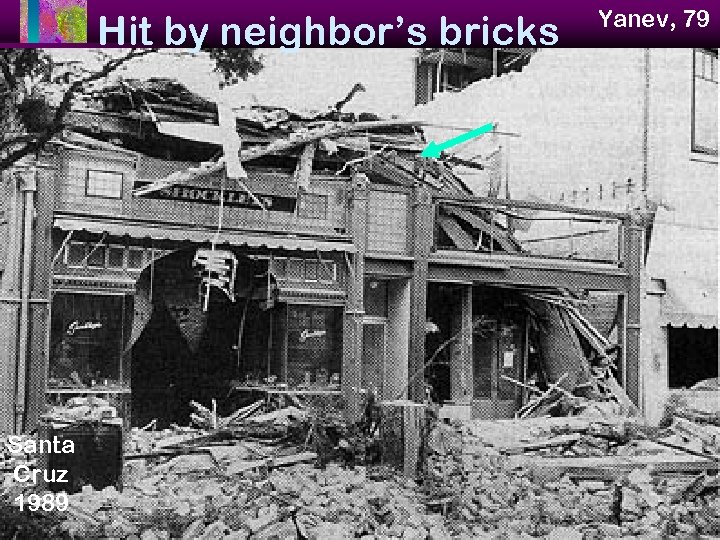 Hit by neighbor’s bricks Santa Cruz 1989 Yanev, 79
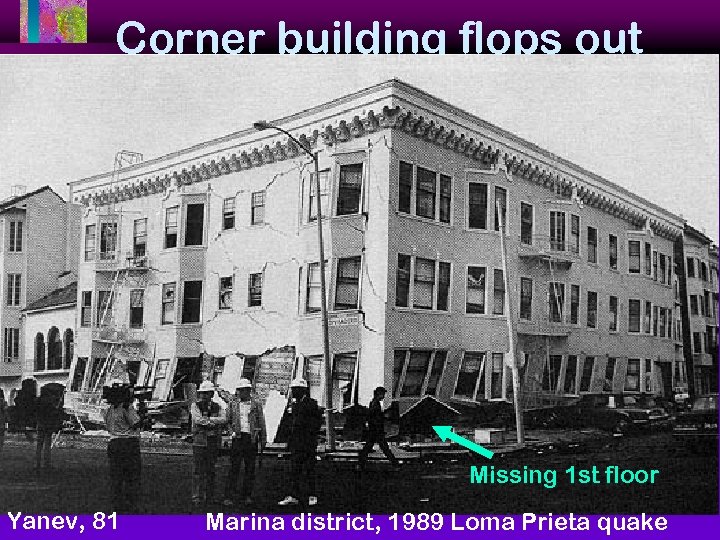 Corner building flops out Missing 1 st floor Yanev, 81 Marina district, 1989 Loma Prieta quake
 Structural components of a building • Distributing elements – are horizontal – consist of floors and roof • Resisting elements – are vertical – consist of walls, columns, bracing • Foundation • Connections
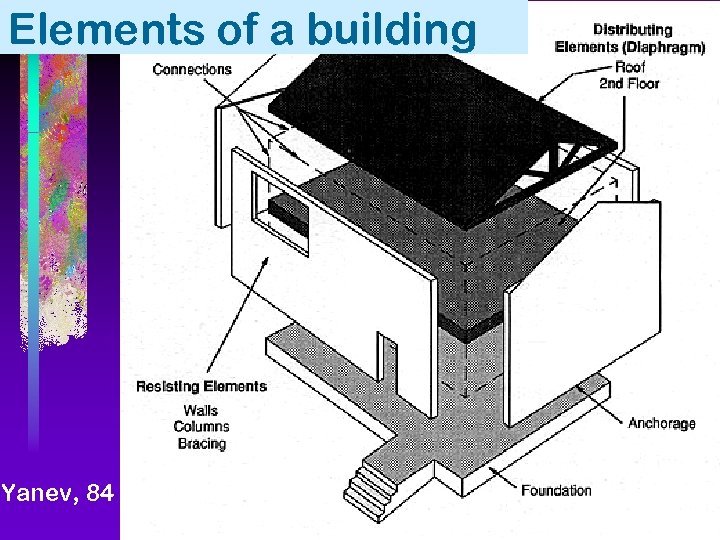 Elements of a building Yanev, 84
 How do earthquake forces affect buildings? • Structural elements designed to support weight – of building, furnishings, occupants • Therefore, vertical forces of earthquake are usually resisted effectively by buildings • However, lateral bracing needed to resist horizontal forces (ground shaking or wind)
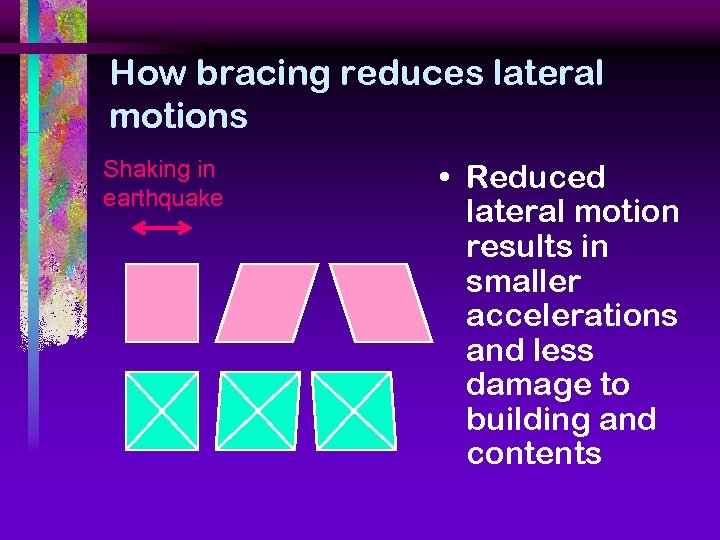 How bracing reduces lateral motions Shaking in earthquake • Reduced lateral motion results in smaller accelerations and less damage to building and contents
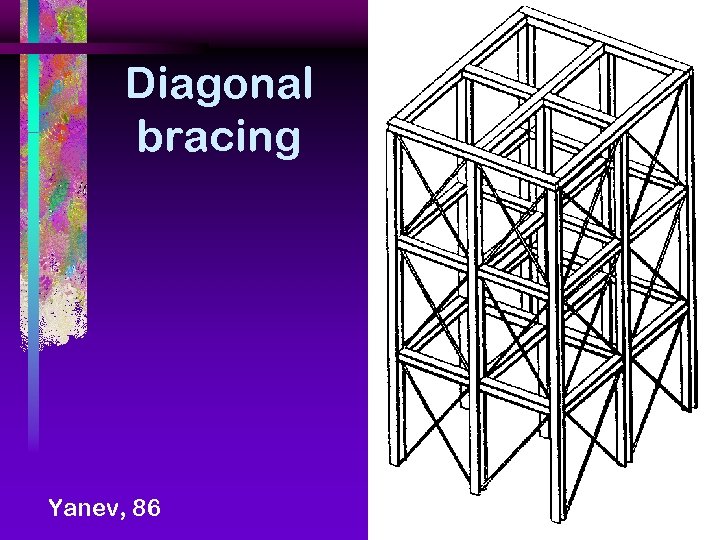 Diagonal bracing Yanev, 86
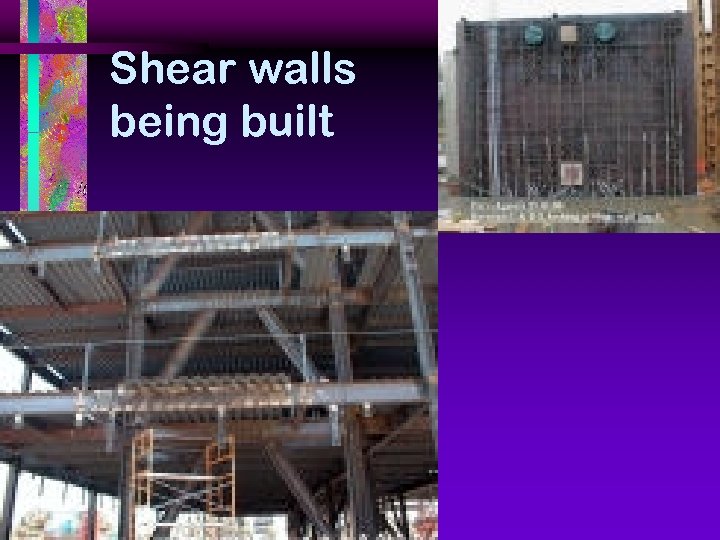 Shear walls being built
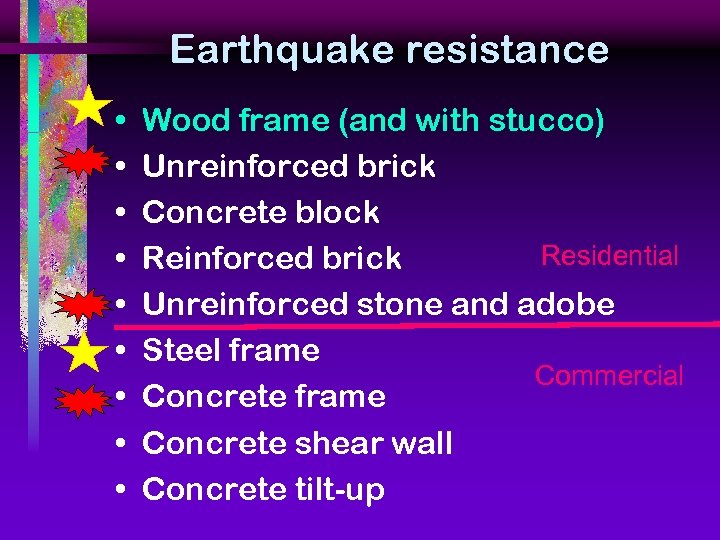 Earthquake resistance • • • Wood frame (and with stucco) Unreinforced brick Concrete block Residential Reinforced brick Unreinforced stone and adobe Steel frame Commercial Concrete frame Concrete shear wall Concrete tilt-up
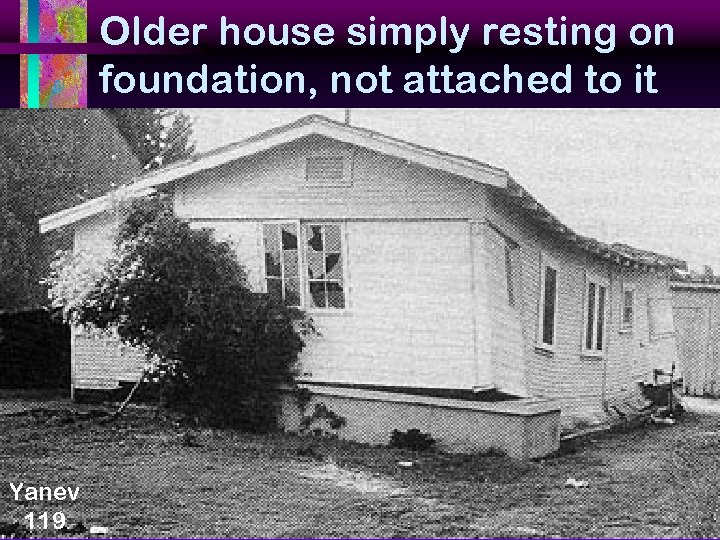
 Wood-frame buildings • If well-built, safest structures due to lightness and flexibility of wood • May still have damage if – On unstable ground – Not well fastened to foundation – Inadequate lateral bracing – Poorly maintained – Weak foundation
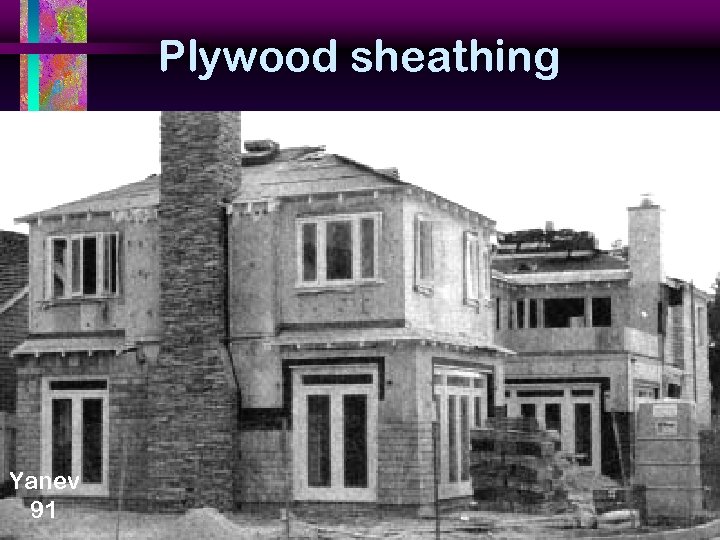 Plywood sheathing Yanev 91
 Concept of soft story • Large openings reduce shear strength of walls – openings include garage, windows, doors – often but not always at ground level
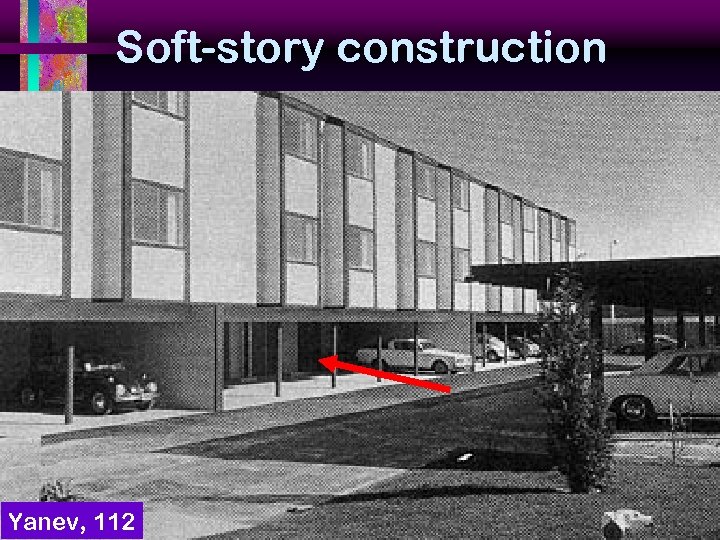 Soft-story construction Yanev, 112
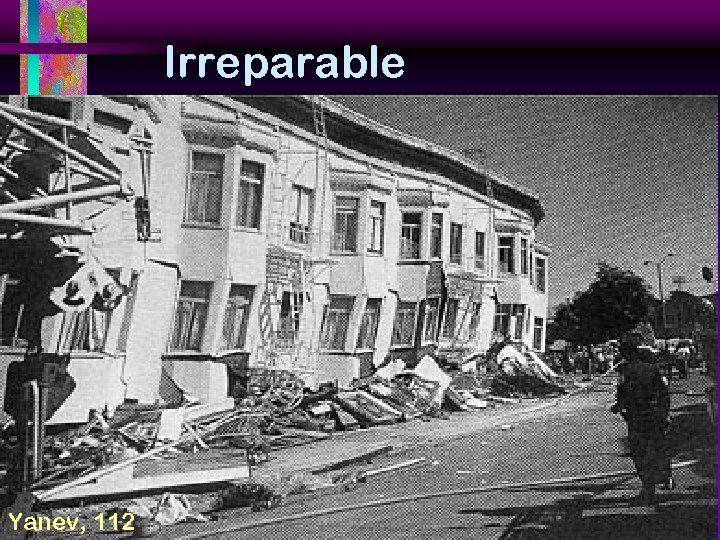 Irreparable Yanev, 112
 Wood-frame with stuccoed walls • Stucco adds weight, therefore makes building weaker • 1 " of stucco strong as 1/4 " plywood • Stucco damage is around openings where stresses concentrate
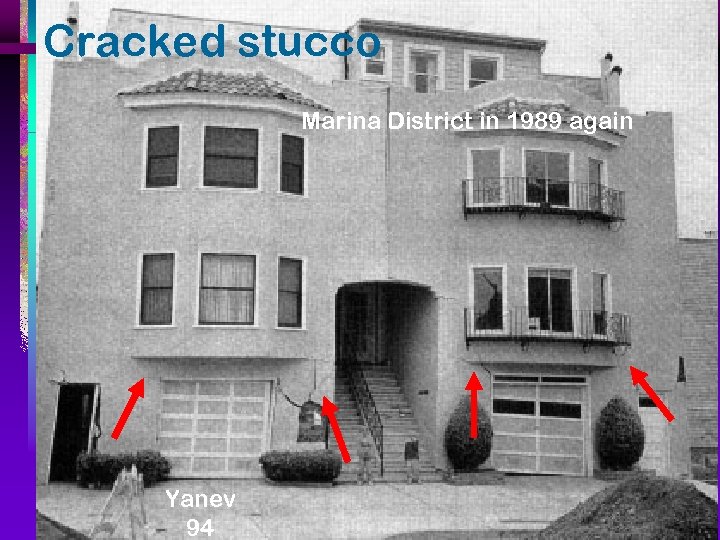 Cracked stucco Marina District in 1989 again Yanev 94
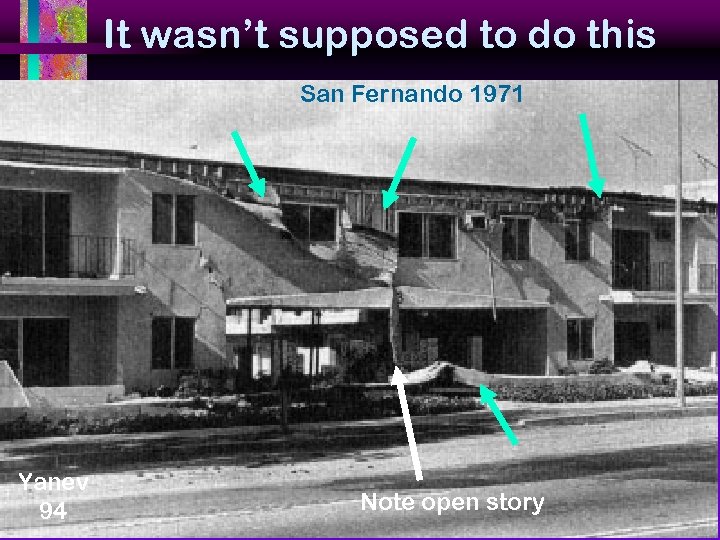 It wasn’t supposed to do this San Fernando 1971 Yanev 94 Note open story
 Unreinforced brick buildings • Most dangerous type in earthquake – suffer most severe damage – cause majority of deaths • Difficult and costly to repair and strengthen • 9500 brick buildings in Los Angeles area
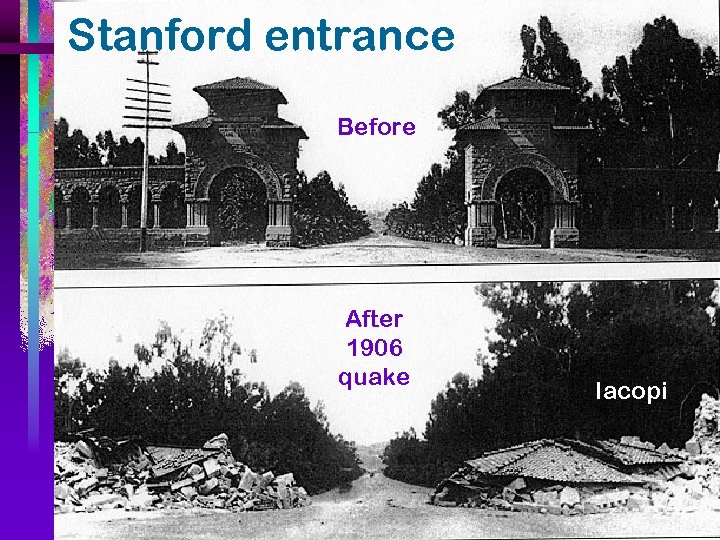 Stanford entrance Before After 1906 quake Iacopi
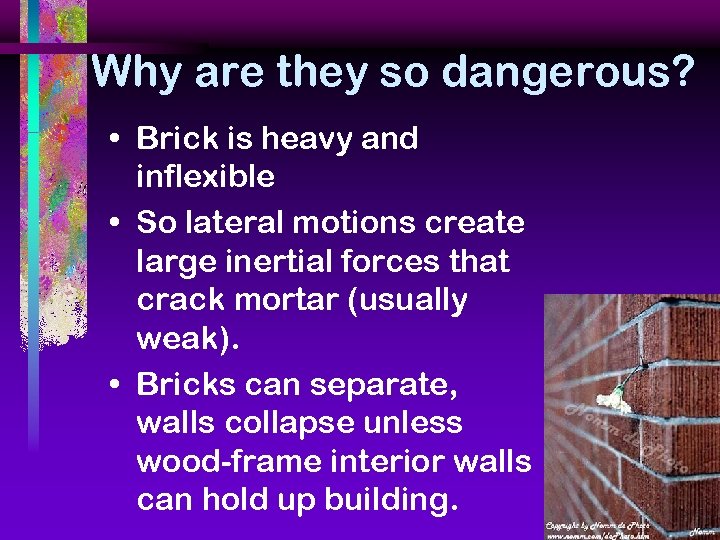 Why are they so dangerous? • Brick is heavy and inflexible • So lateral motions create large inertial forces that crack mortar (usually weak). • Bricks can separate, walls collapse unless wood-frame interior walls can hold up building.
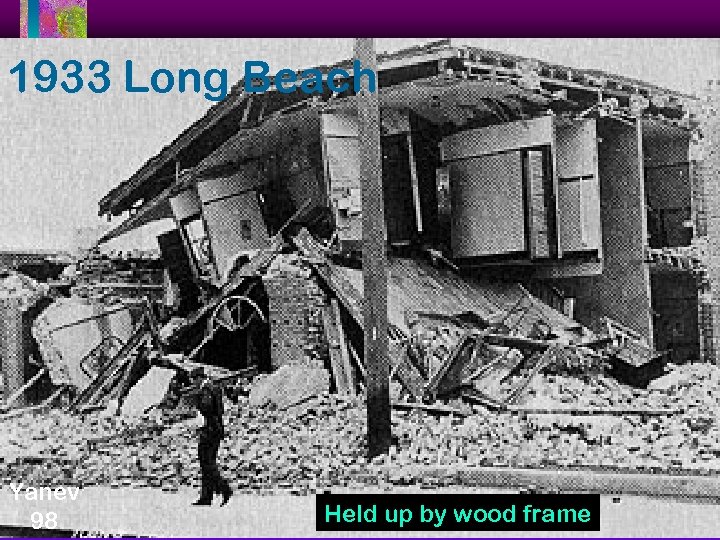 1933 Long Beach Yanev 98 Held up by wood frame
 Examples of problems with brick structures • In 1952 Kern Co. quake, only 1 of 71 brick buildings in Bakersfield survived undamaged • In 1983 Coalinga quake most of 90 brick buildings removed • Most of 64 killed in 1971 San Fernando died in collapse of a brick hospital • Most of deaths in 1989 Loma Prieta not due to collapsed freeway were caused by falling bricks
 Hard to reinforce URM buildings • Strengthening is inhibited by – High retrofit costs – Trend toward historical preservation – Budget cutting – Lack of landlord concern
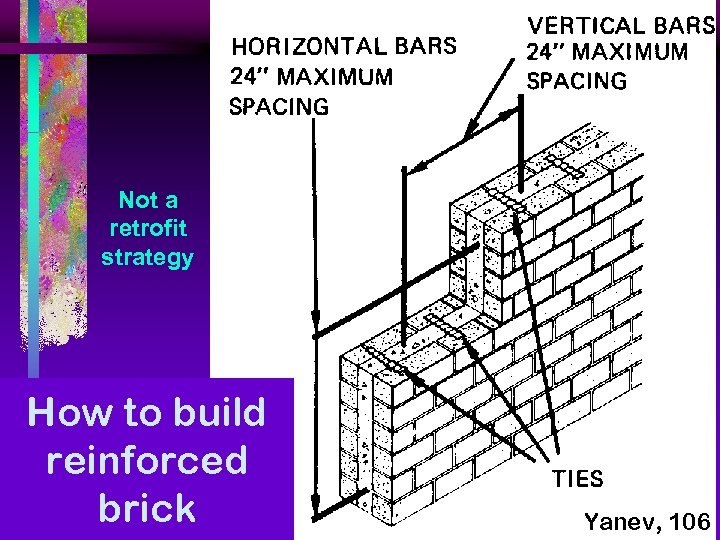 Not a retrofit strategy How to build reinforced brick Yanev, 106
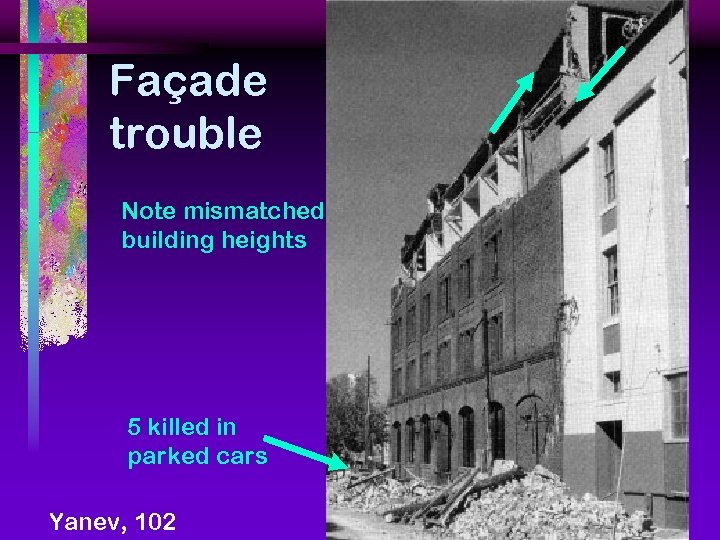 Façade trouble Note mismatched building heights 5 killed in parked cars Yanev, 102
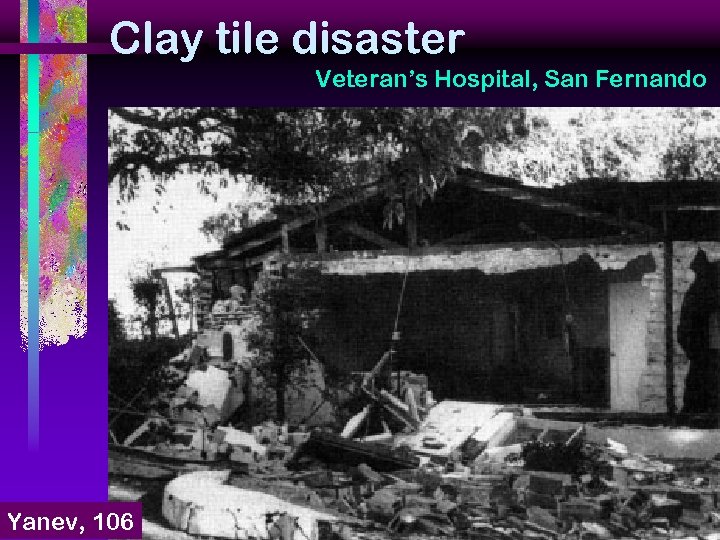 Clay tile disaster Veteran’s Hospital, San Fernando Yanev, 106
 Unreinforced stone and adobe • Have practically no strength for resisting lateral forces of earthquakes • Difficult to strengthen – Not feasible except for historical monuments • Many such buildings in Central and South America, Southern Europe, and Asia • Responsible for numerous casualties
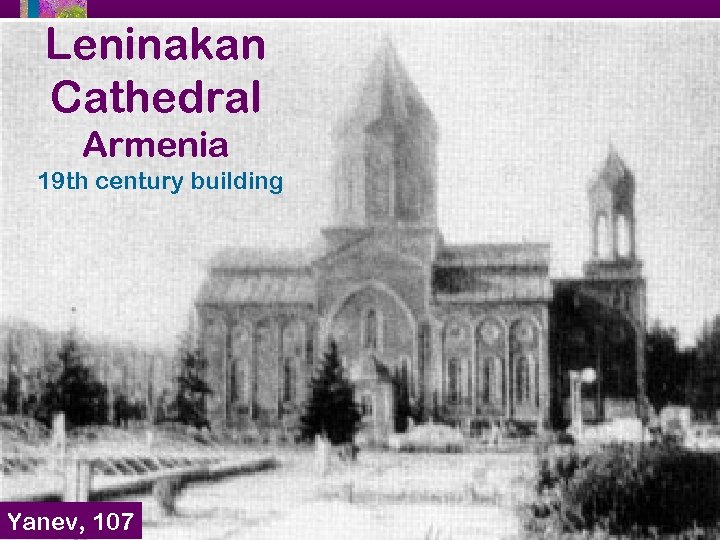 Leninakan Cathedral Armenia 19 th century building Yanev, 107
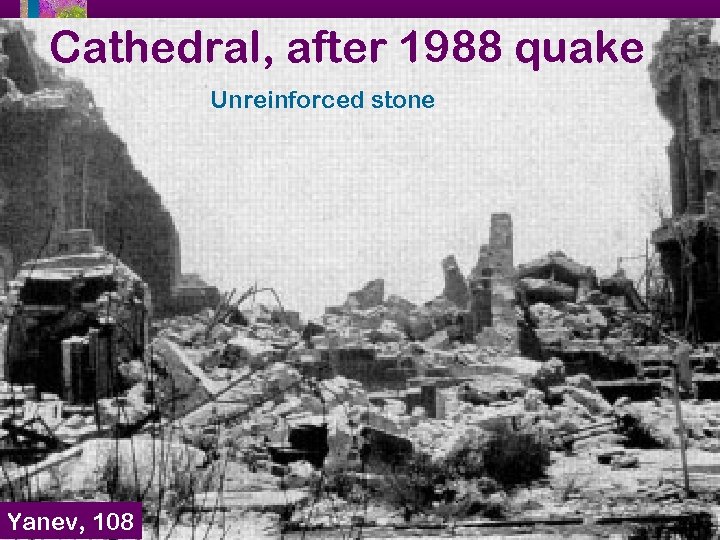 Cathedral, after 1988 quake Unreinforced stone Yanev, 108
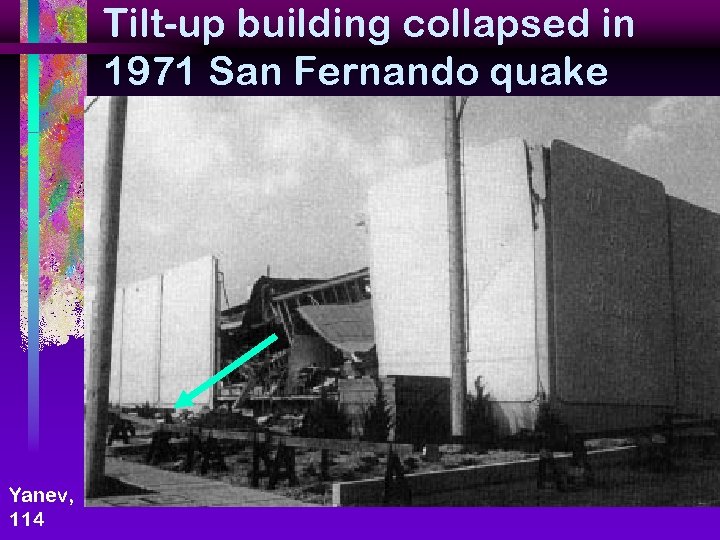
 Commercial buildings • • • Steel-frame buildings Unreinforced masonry Concrete-frame Concrete shear wall Concrete tilt-up
 Welds in steel frames serious business • Example: St. John’s Medical Plaza in Santa Monica – 5 -story office space and exam rooms for doctors built in 1986 • Damaged in 1994 Northridge quake – No visible problems – Inside walls, vital welds were broken – $10, 000 lawsuit
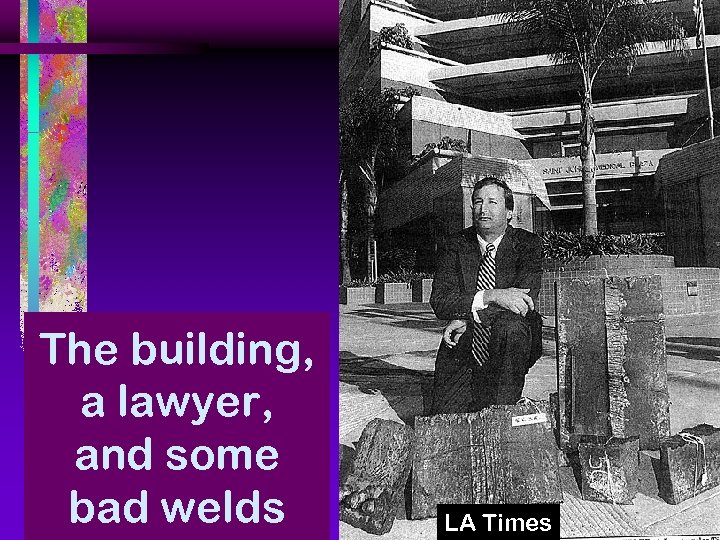 The building, a lawyer, and some bad welds LA Times
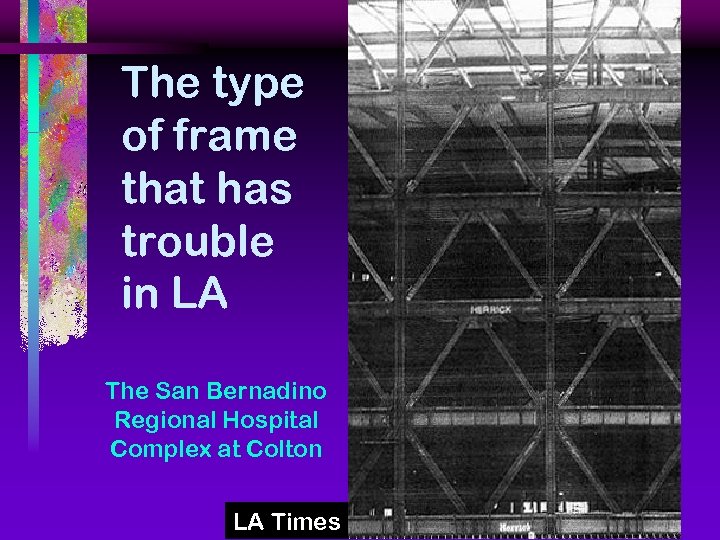 The type of frame that has trouble in LA The San Bernadino Regional Hospital Complex at Colton LA Times
 Larger issue • Metal used in welding is weak – “ 120” or “E 70 T-4” – This metal has been used across western US for decades – 1500 LA buildings use this welding metal – 150 had cracks in Northridge – Which was only an M 7 quake • Was outlawed in LA in July 1996 – For new construction only, of course
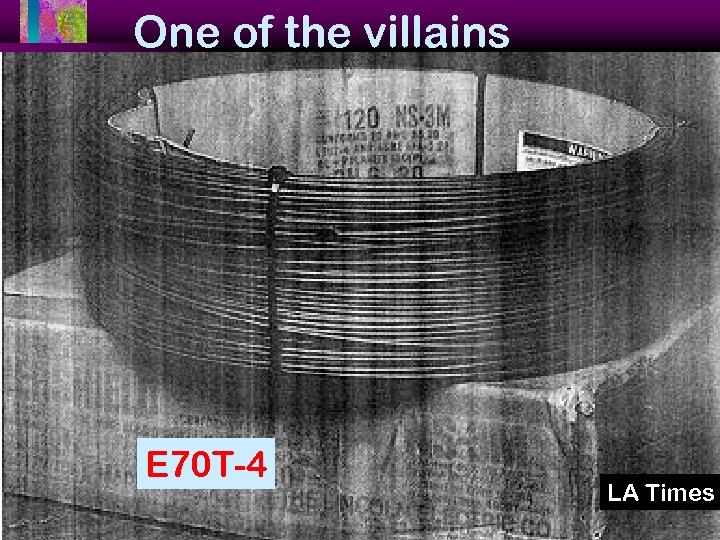 One of the villains E 70 T-4 LA Times
 Technical details • About as strong as other welds • But, 1/4 as resistant to cracks as other welding metals – Difficult to measure • Can be applied from thicker wire at higher temperature – So using this metal speeds up welders by 20 -30% – Which saves money
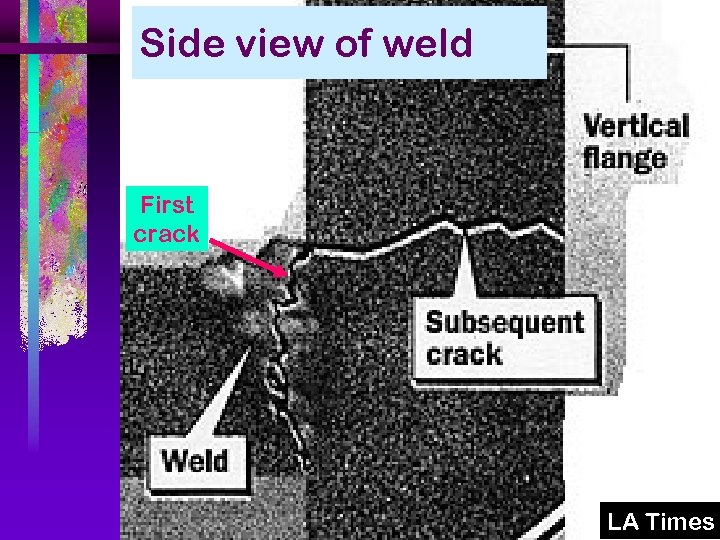 Side view of weld First crack LA Times
 Whose fault was (is) it? • Company that made it (Lincoln) – Know welding material best • City of LA – Style of construction should have been outlawed • Engineers that designed buildings – Their job to make building that works • Welders who assembled buildings – Establishes standards for welding
 History is murky • Lincoln people claim not to know what metals they tested and when • University researchers paid by Lincoln also developing faulty memories • Easy for LA to claim ignorance
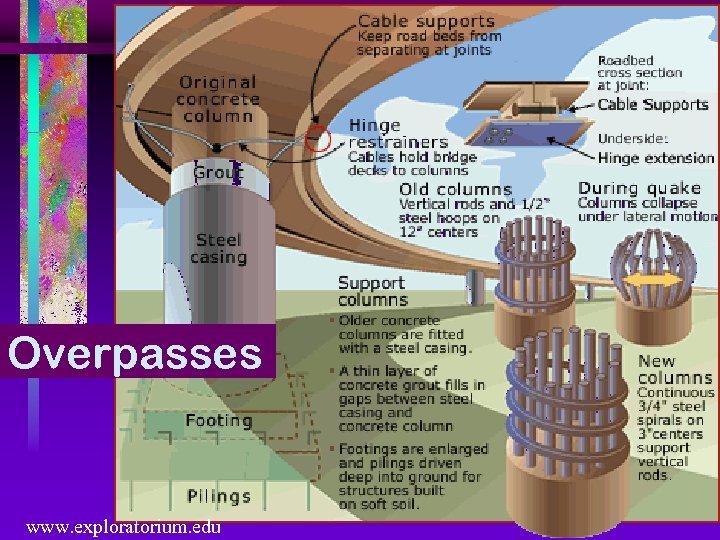
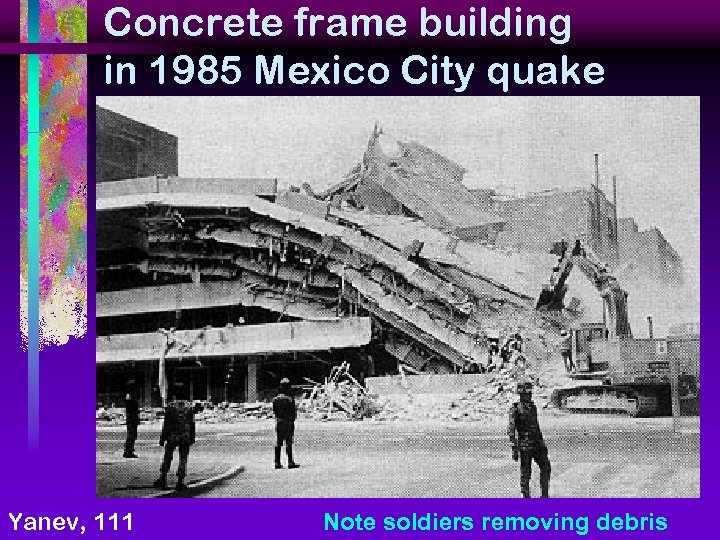
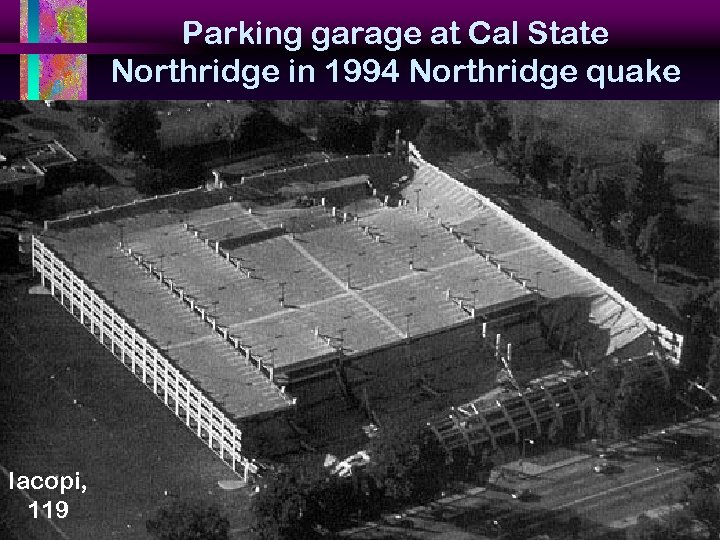
 Concrete-frame structures • Second most dangerous structure • Uses concrete beams and columns in same manner as steel beams are used on steel frame buildings – but more brittle and much heavier • Cypress freeway (I-880) had this type of construction • Many collapsed in Mexico City in 1985 M~8 quake (10, 000 deaths)
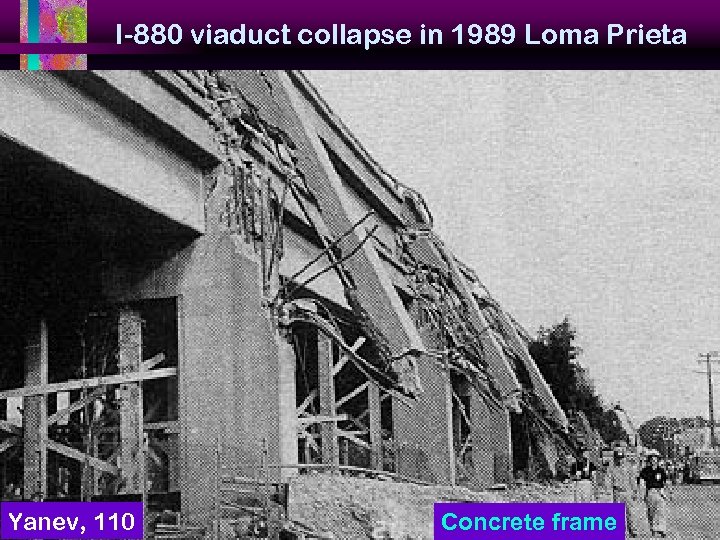 I-880 viaduct collapse in 1989 Loma Prieta Yanev, 110 Concrete frame
 Overpasses www. exploratorium. edu
 Concrete frame building in 1985 Mexico City quake Yanev, 111 Note soldiers removing debris
 Parking garage at Cal State Northridge in 1994 Northridge quake Iacopi, 119
 Tilt-up building collapsed in 1971 San Fernando quake Yanev, 114
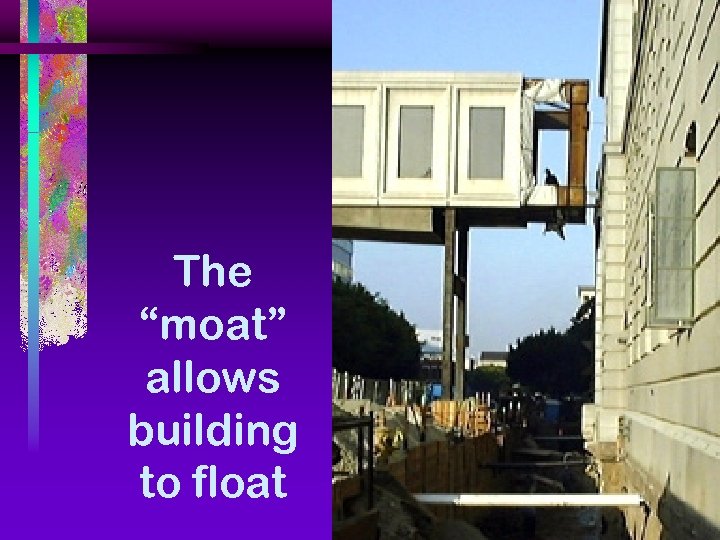
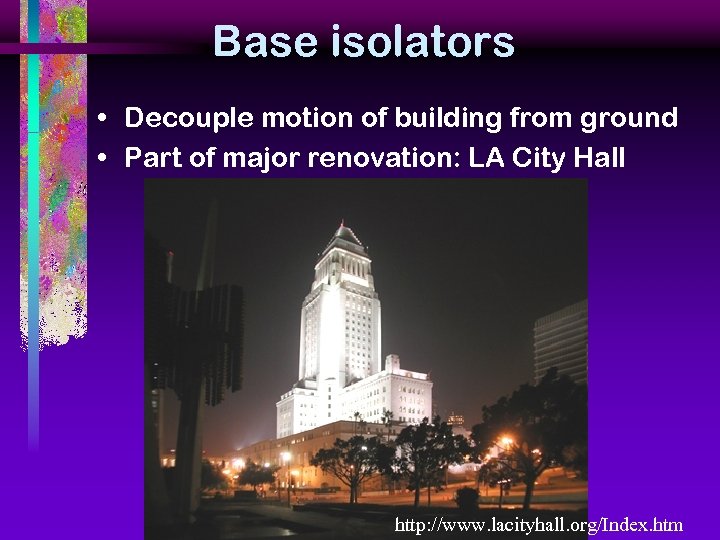 Base isolators • Decouple motion of building from ground • Part of major renovation: LA City Hall http: //www. lacityhall. org/Index. htm
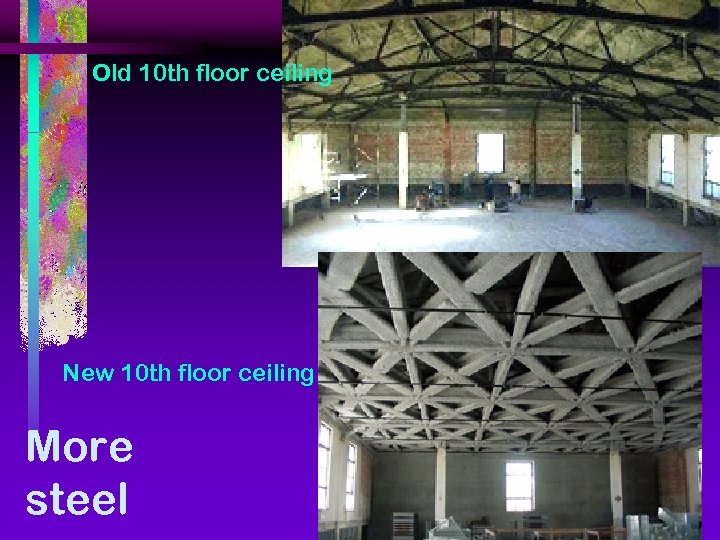
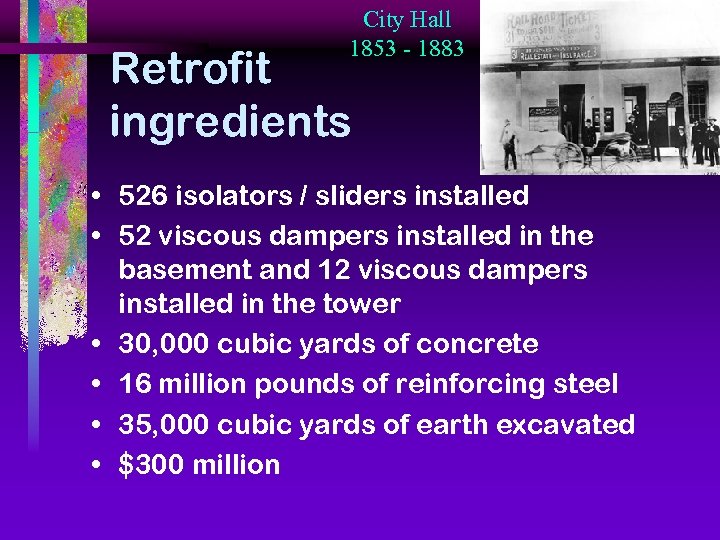 City Hall 1853 - 1883 Retrofit ingredients • 526 isolators / sliders installed • 52 viscous dampers installed in the basement and 12 viscous dampers installed in the tower • 30, 000 cubic yards of concrete • 16 million pounds of reinforcing steel • 35, 000 cubic yards of earth excavated • $300 million
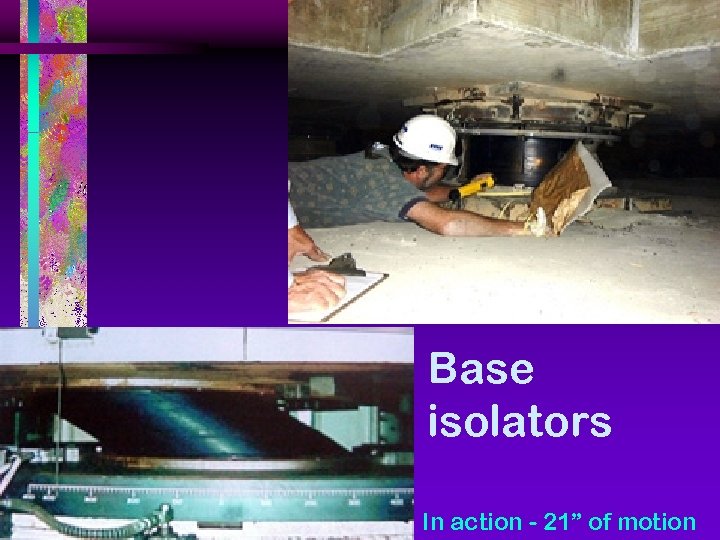 Base isolators In action - 21” of motion
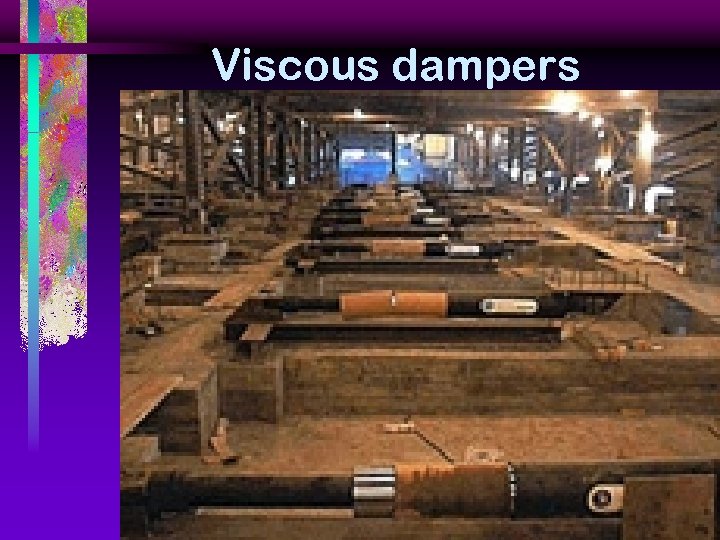 Viscous dampers
 The “moat” allows building to float
 Old 10 th floor ceiling New 10 th floor ceiling More steel
 Particular problems • • • Foundations Cripple walls Stilts and pilings First-floor garages Parapets Chimneys
 Older house simply resting on foundation, not attached to it Yanev 119
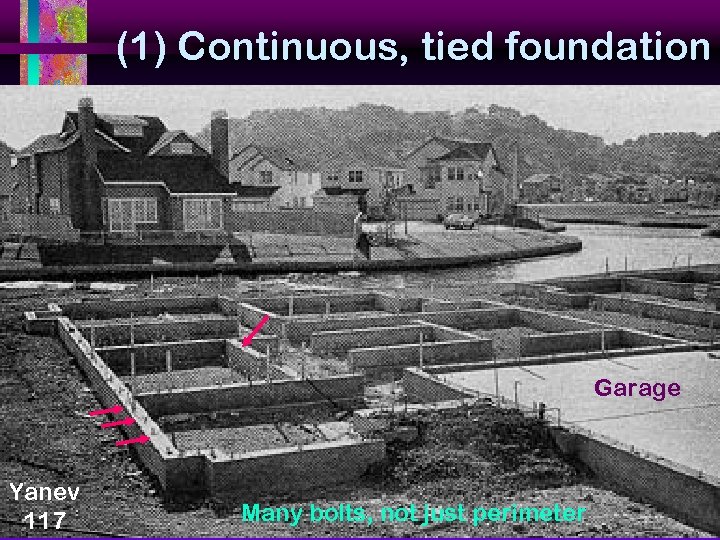 (1) Continuous, tied foundation Garage Yanev 117 Many bolts, not just perimeter
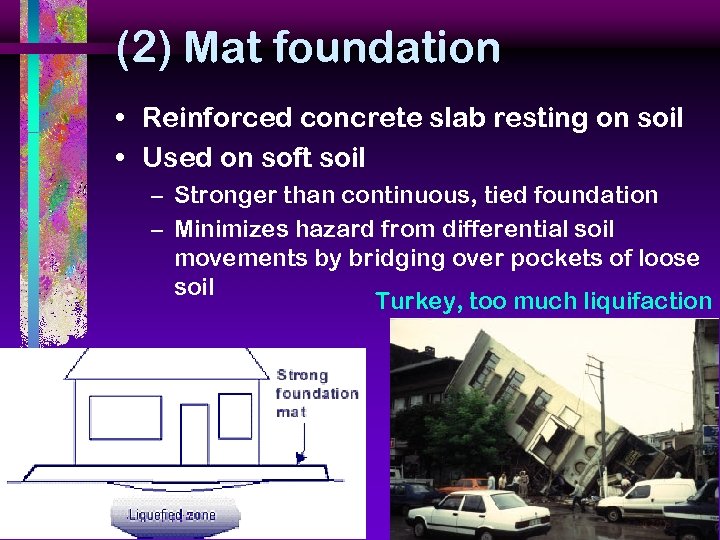 (2) Mat foundation • Reinforced concrete slab resting on soil • Used on soft soil – Stronger than continuous, tied foundation – Minimizes hazard from differential soil movements by bridging over pockets of loose soil Turkey, too much liquifaction
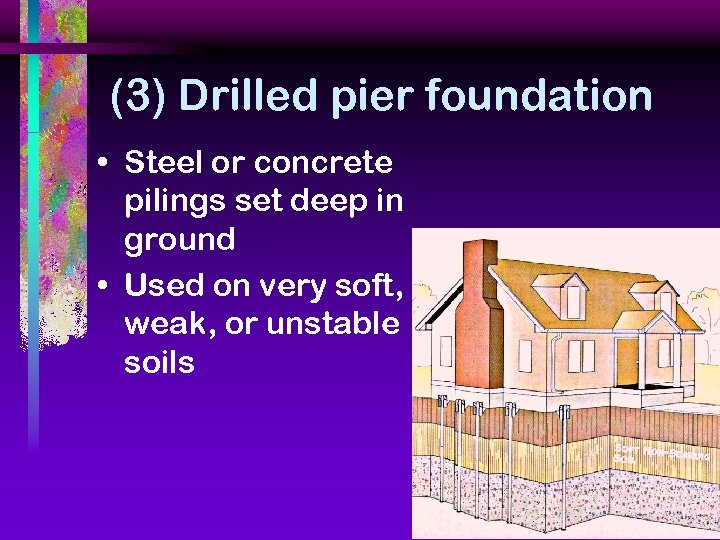 (3) Drilled pier foundation • Steel or concrete pilings set deep in ground • Used on very soft, weak, or unstable soils
 Cripple walls • Walls of crawl space – Short wood walls used to elevate house above ground – Access to substructure and utility lines • Often a weak zone in older house – Because a crawl space has only peripheral walls but no interior walls to absorb the force of shaking – Badly braced cripple walls 2 nd most common weakness of older houses • Next to chimneys
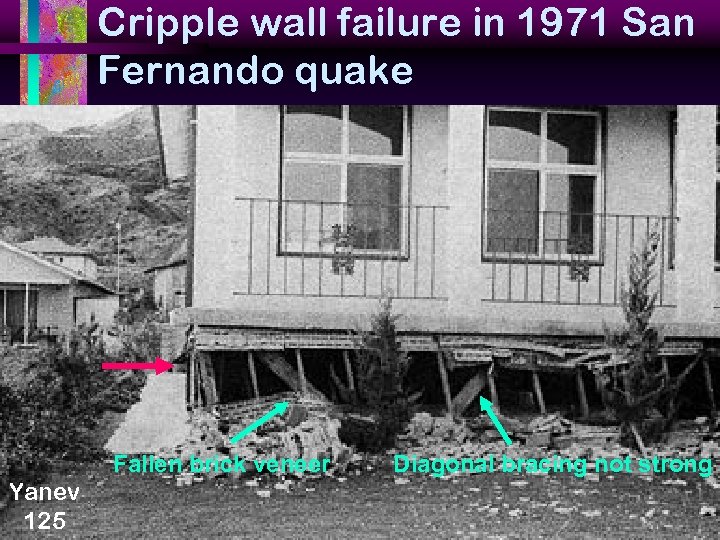 Cripple wall failure in 1971 San Fernando quake Fallen brick veneer Yanev 125 Diagonal bracing not strong
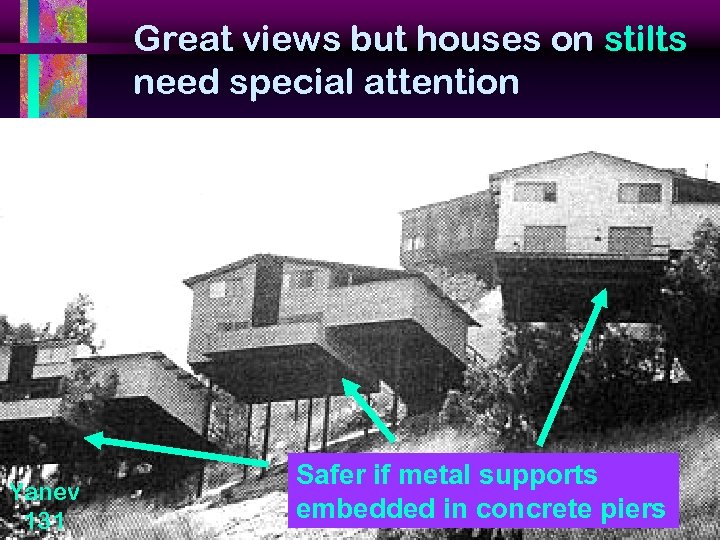 Great views but houses on stilts need special attention Yanev 131 Safer if metal supports embedded in concrete piers
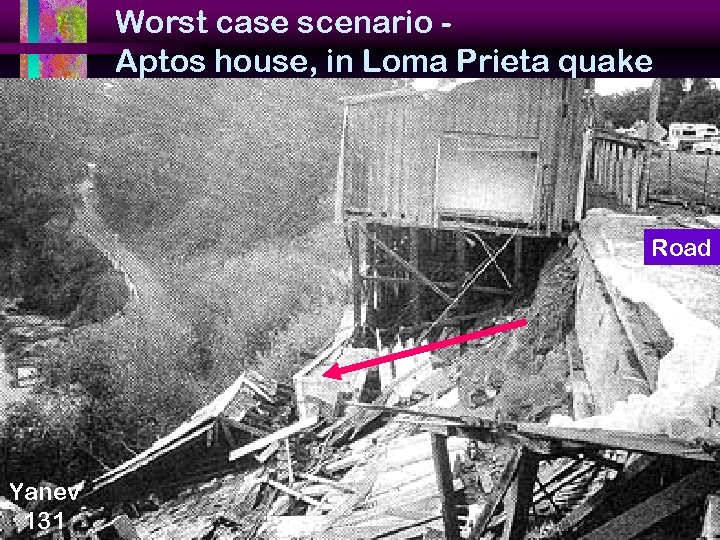 Worst case scenario Aptos house, in Loma Prieta quake Road Yanev 131
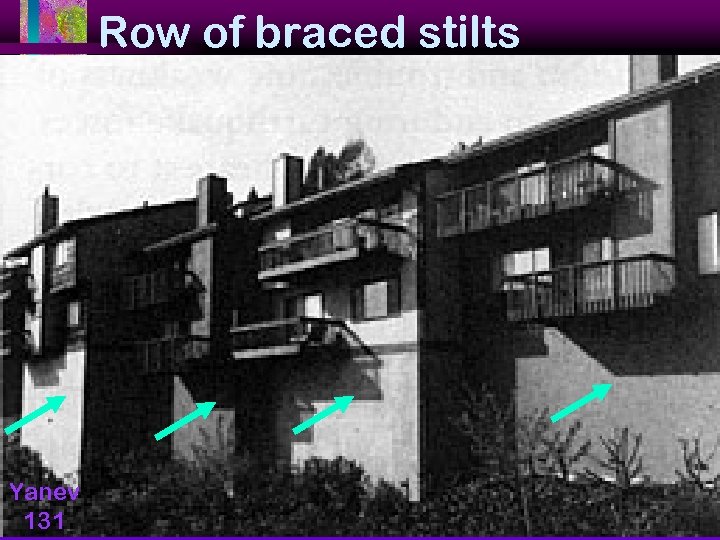 Row of braced stilts Yanev 131
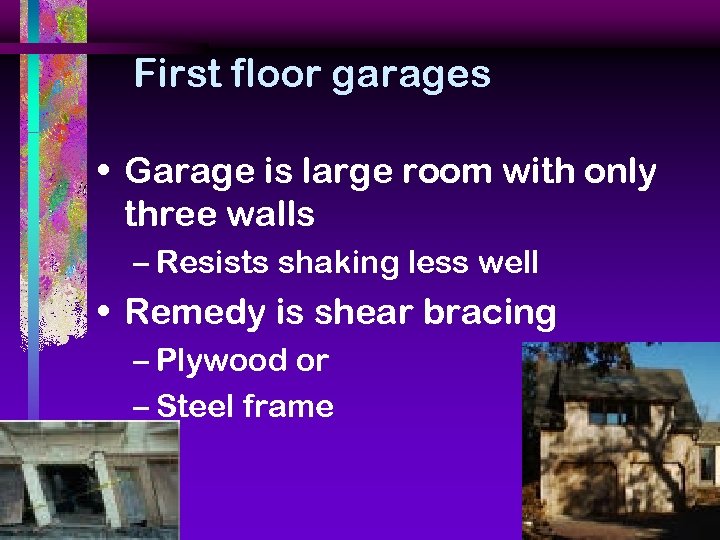 First floor garages • Garage is large room with only three walls – Resists shaking less well • Remedy is shear bracing – Plywood or – Steel frame
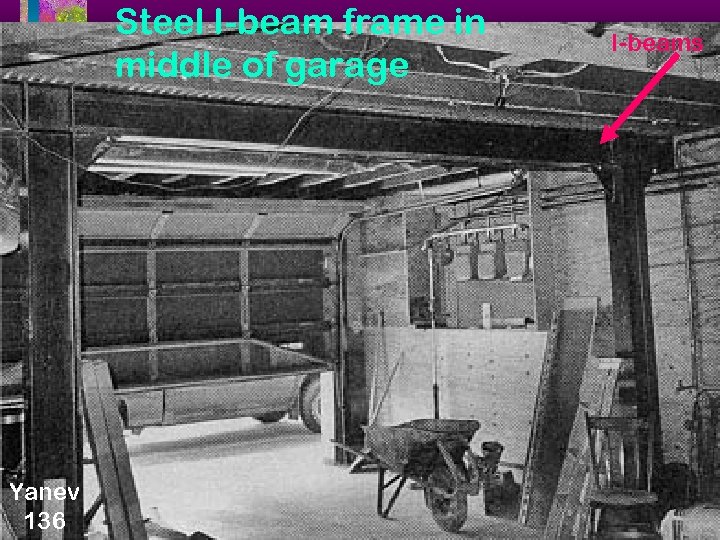 Steel I-beam frame in middle of garage Yanev 136 I-beams
 Parapets • Masonry parapets often first components to fail in quake – Building top undergoes highest amplitude shaking – Parapet may be poorly connected or weakened by weathering – Often out of sight, so poorly maintained – Often located above entrances – Danger to people running out of building • May need to be shortened, anchored, and capped with reinforced concrete
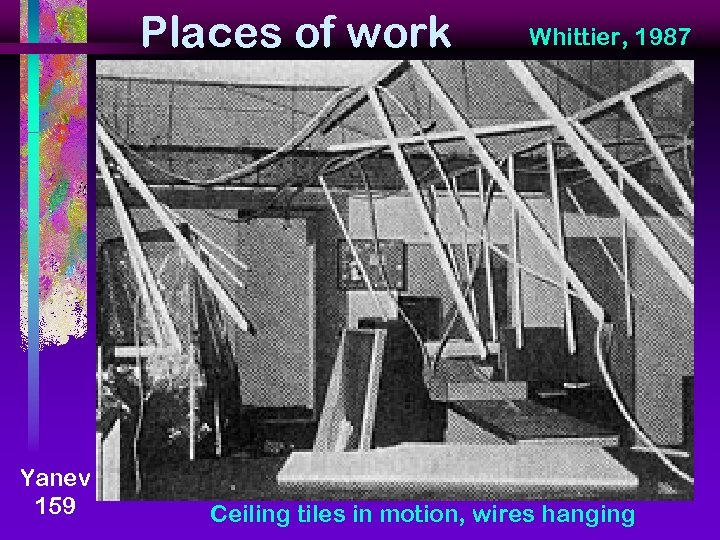
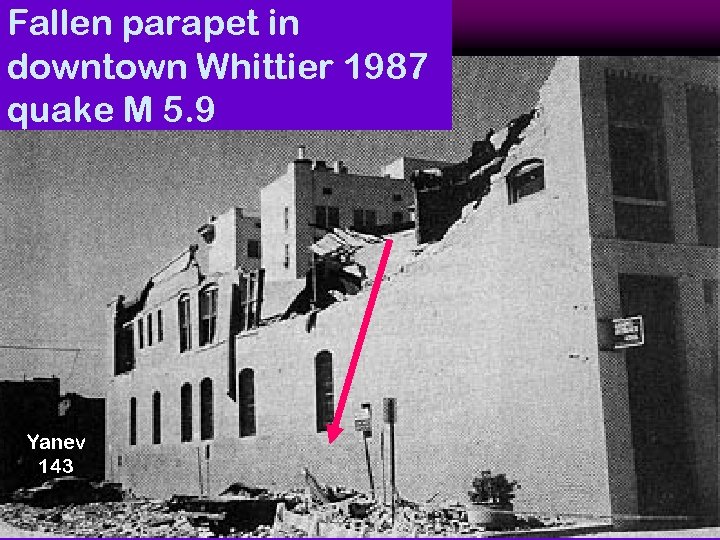 Fallen parapet in downtown Whittier 1987 quake M 5. 9 Yanev 143
 Chimneys • Heavy and high up, subject to strong forces during quakes • Often damaged – 75% of chimneys fell in Bay Area in 1906 quake • Masonry (brick or stone) chimney pre-1960 is unlikely to be tied to structure adequately and may collapse in quake – Can fall through roof or break away from house – the higher it rises above roof, the greater is hazard • Often breaks at roofline
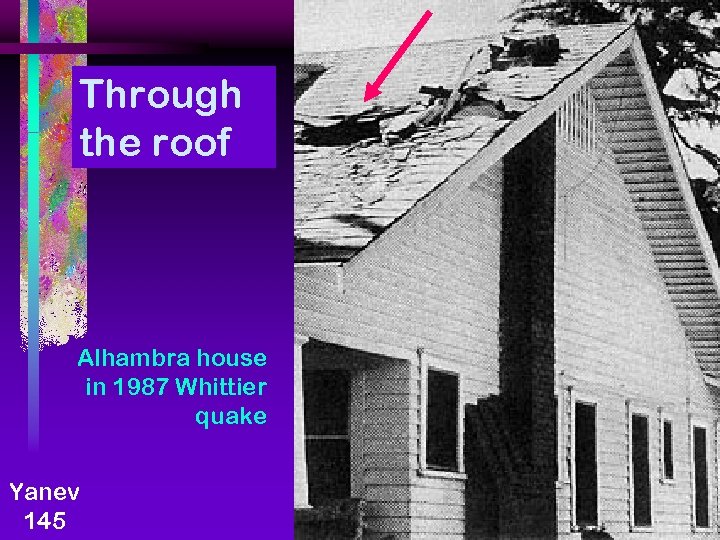 Through the roof Alhambra house in 1987 Whittier quake Yanev 145
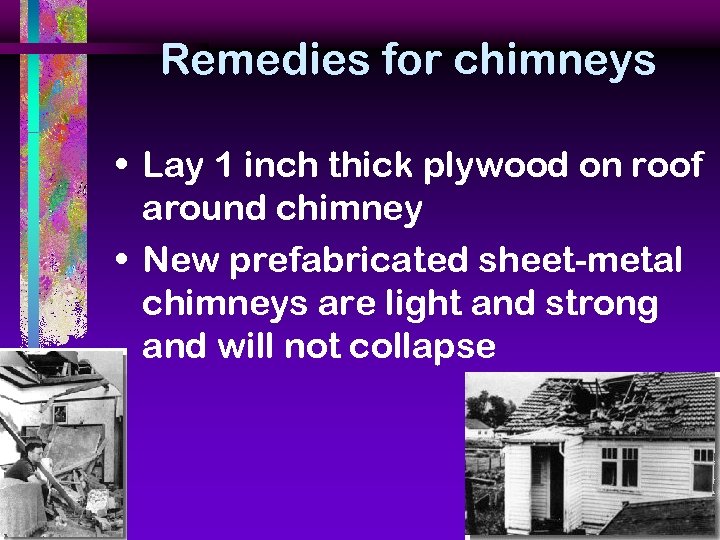 Remedies for chimneys • Lay 1 inch thick plywood on roof around chimney • New prefabricated sheet-metal chimneys are light and strong and will not collapse
 Rest of lecture • Interior damage – How to be prepared for quakes – How to behave during quake • Insurance • Risk in earthquakes
 Anchor tall furniture Yanev 155 Note railings on shelves
 Kitchens amazing mess 1971 San Fern, mine looked worse in 1989 Yanev 158
 Use positive latches Yanev 157 For fragile valuables and dangerous chemicals
 Places of work Yanev 159 Whittier, 1987 Ceiling tiles in motion, wires hanging
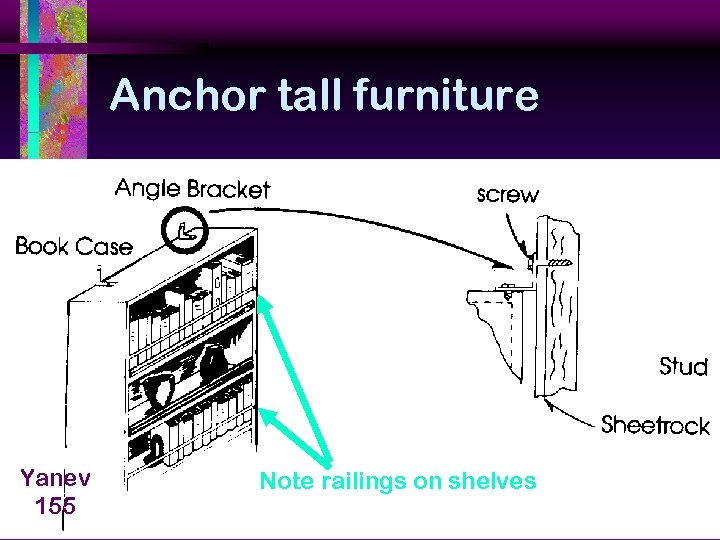
 Planning for quakes • Consider safe and dangerous places in your house • Consider how to get to exits • Learn how to shut off utilities • Anchor water heater
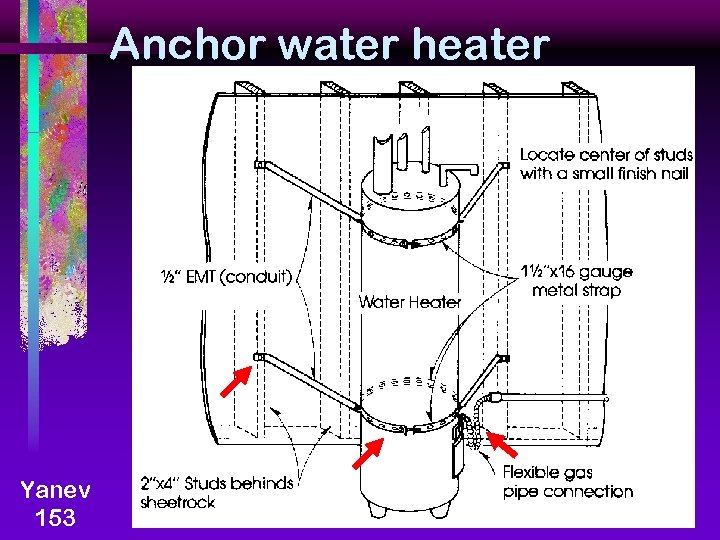 Anchor water heater Yanev 153
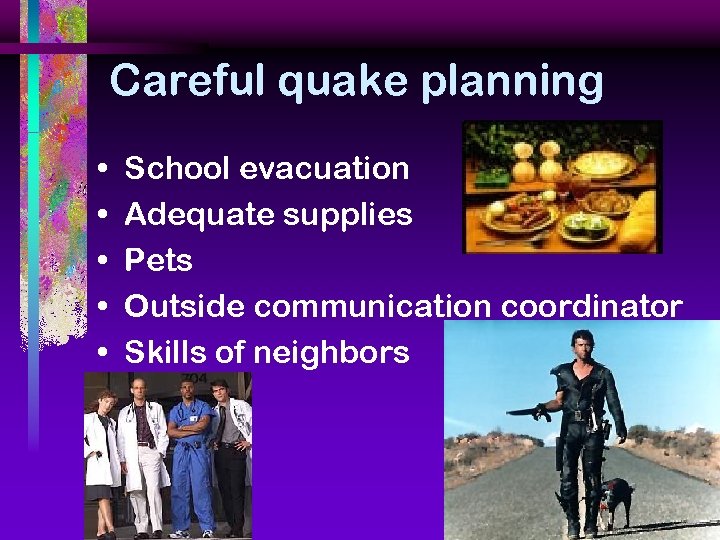 Careful quake planning • • • School evacuation Adequate supplies Pets Outside communication coordinator Skills of neighbors
 Adequate supplies • Water – Water heater and toilet tanks • Purification tablets helpful • Food – Usually several day’s food around – Use refrigerated food first Wax Baywatch figures • First aid kit – And a book on first aid – Useful to take first aid course as well • Fire extinguisher – Needs periodic checks or servicing
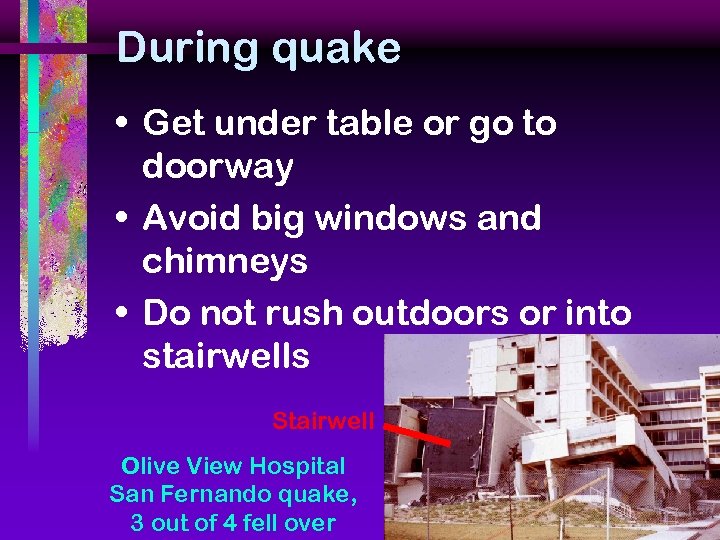 During quake • Get under table or go to doorway • Avoid big windows and chimneys • Do not rush outdoors or into stairwells Stairwell Olive View Hospital San Fernando quake, 3 out of 4 fell over
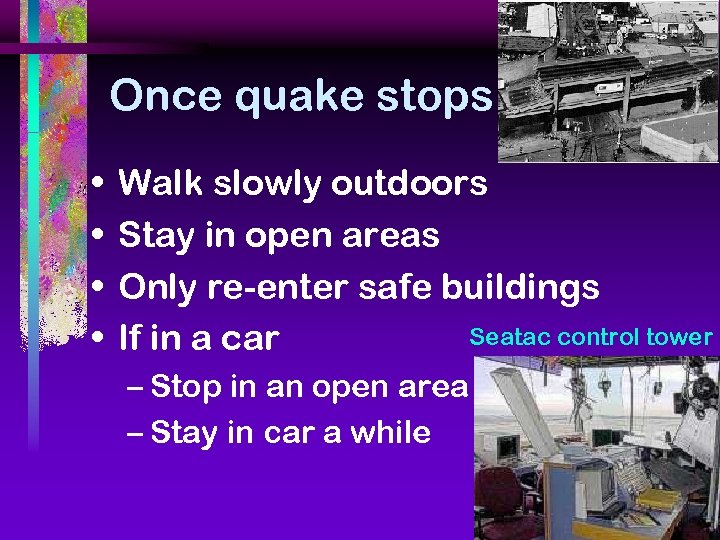 Once quake stops • • Walk slowly outdoors Stay in open areas Only re-enter safe buildings Seatac control tower If in a car – Stop in an open area – Stay in car a while
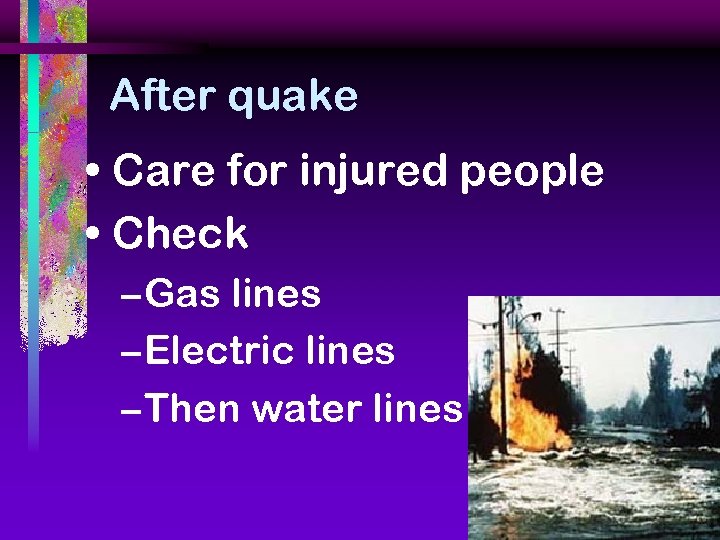 After quake • Care for injured people • Check – Gas lines – Electric lines – Then water lines
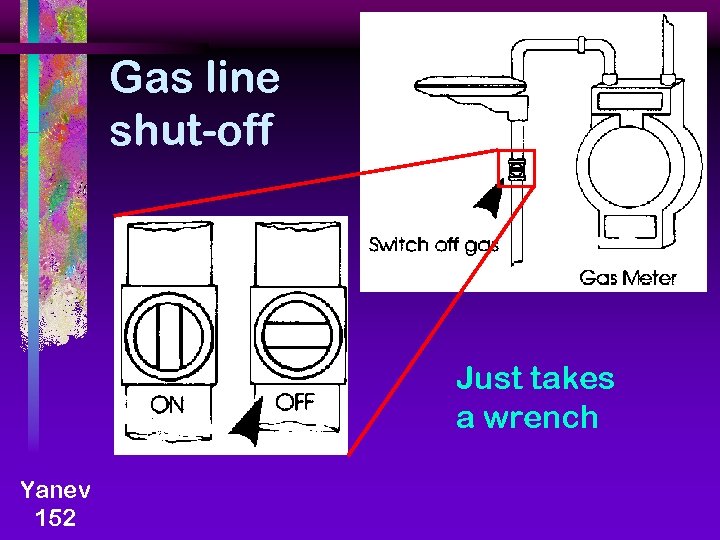 Gas line shut-off Just takes a wrench Yanev 152
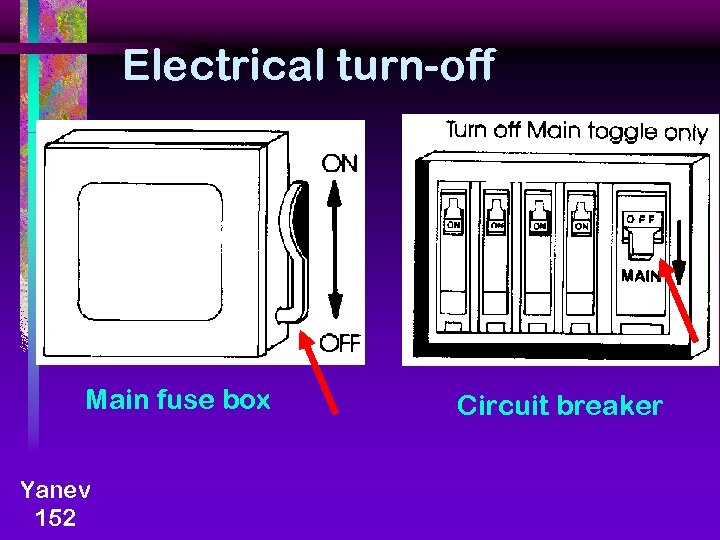 Electrical turn-off Main fuse box Yanev 152 Circuit breaker
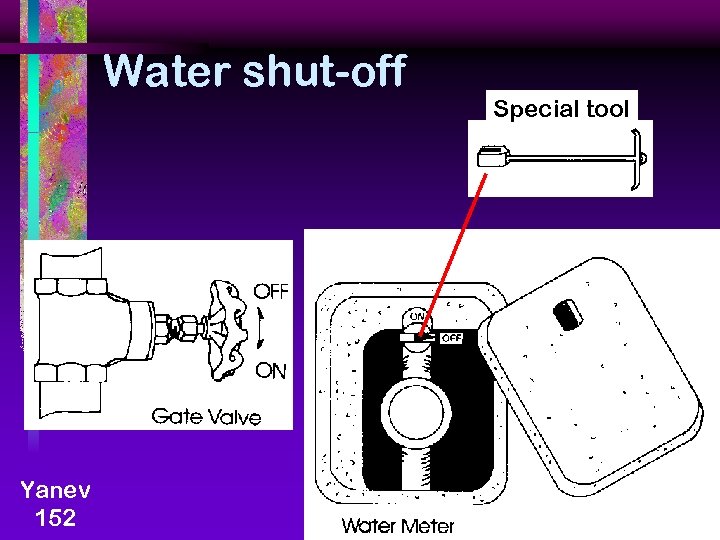 Water shut-off Yanev 152 Special tool
 Then • Remember – Try to minimize phone use – Tsunamis are possible – Aftershocks are certain and may be dangerous – Landslides are possible
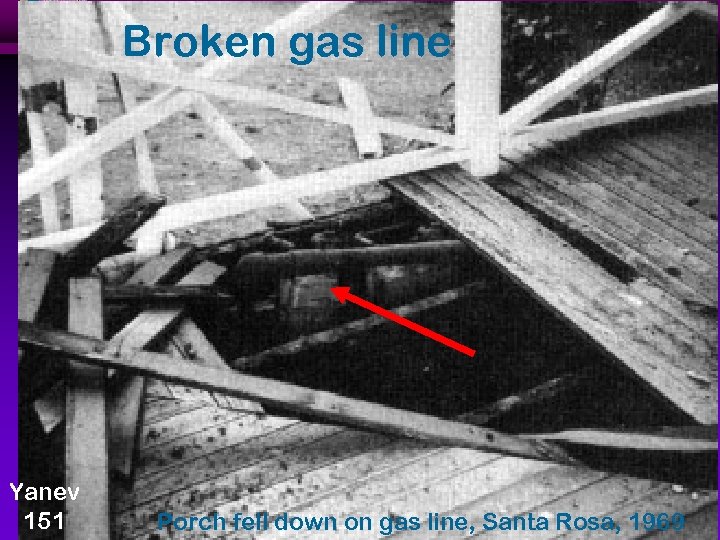 Broken gas line Yanev 151 Porch fell down on gas line, Santa Rosa, 1969
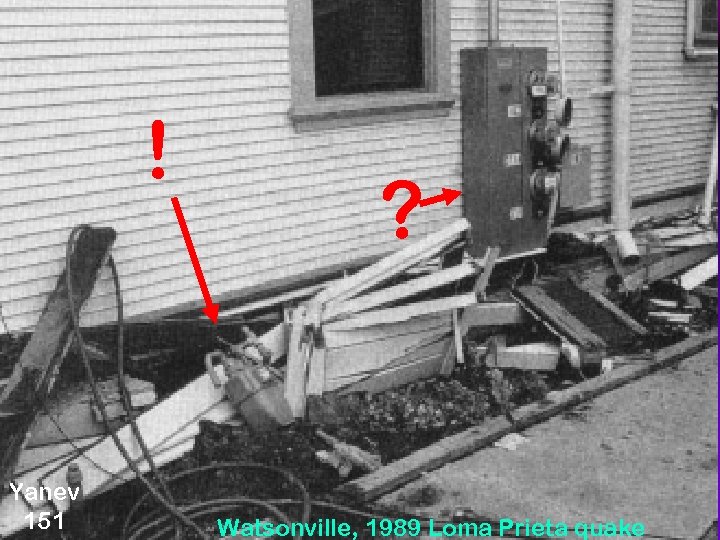 Fell off foundation ! Yanev 151 ? Watsonville, 1989 Loma Prieta quake
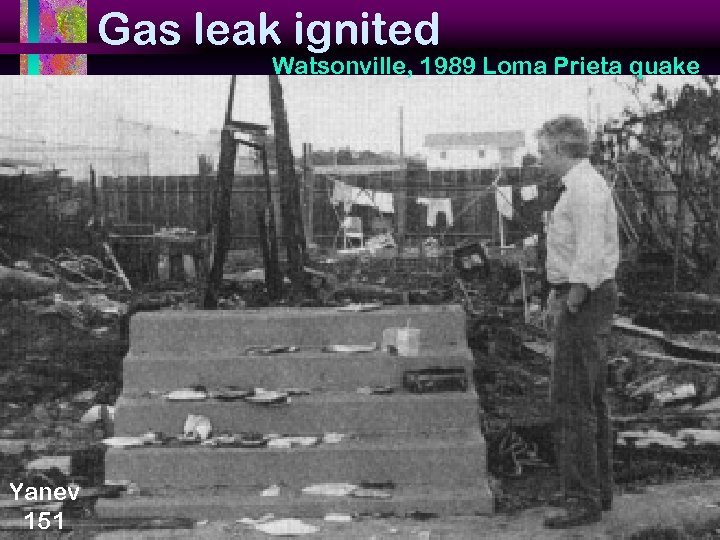 Gas leak ignited Watsonville, 1989 Loma Prieta quake Yanev 151
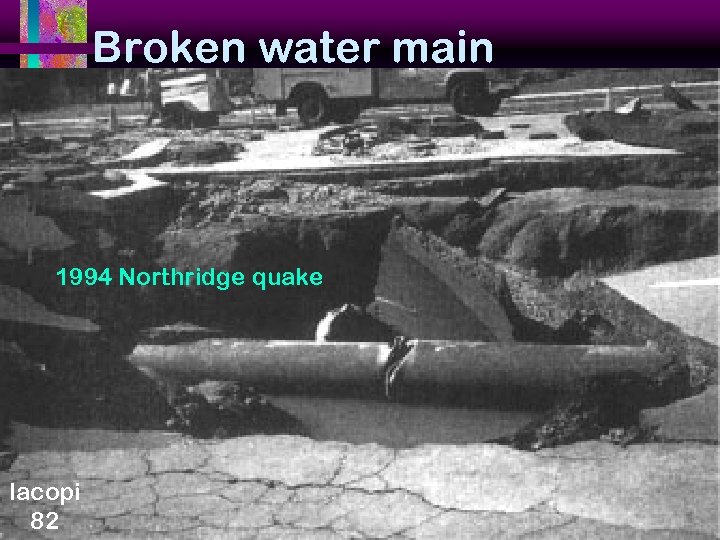 Broken water main 1994 Northridge quake Iacopi 82
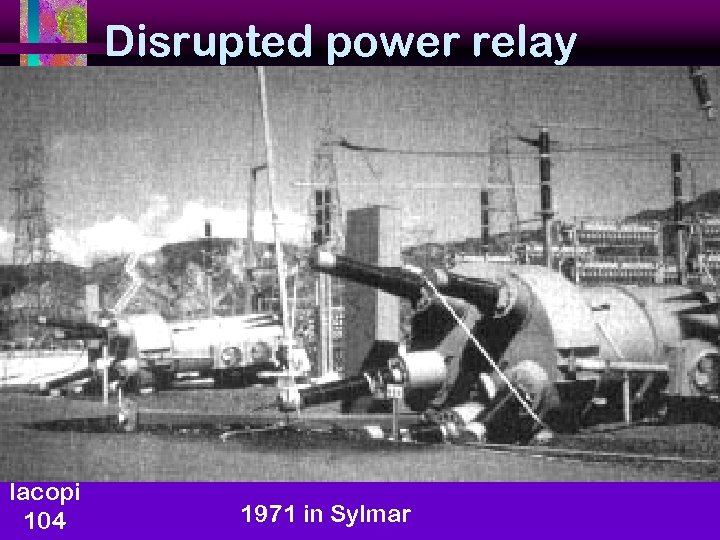 Disrupted power relay Iacopi 104 1971 in Sylmar
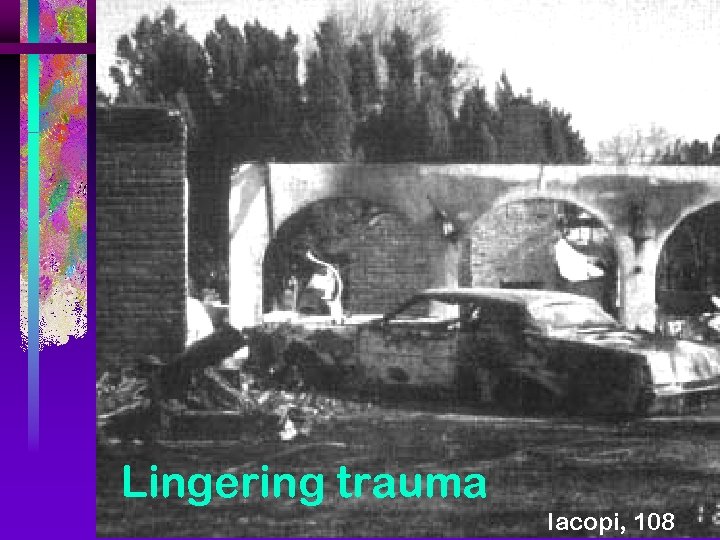 Lingering trauma Iacopi, 108
 Earthquake insurance • • • No simple strategy Changing state regulations Deductibles Vulnerability of insur. co. FEMA (Federal Emergency Management Agency) as back-up for insurance • Should make house safe, in any case
 Real risk from quakes • Standard unit of risk – 1 in a million chance of death in a year – In other words, a person loses 30 minutes of life expectancy • Math – 30, 000 sec in a year – 1/1, 000 risk – Average person has 60 yr life ahead – Thus, cost of 30 minutes on average
 Langston Hughes Example • Cigarette smoking – Each cigarette adds about 1 in a million chance of death – So smoking a cigarette shortens life, on average, by half an hour, or several times longer than the cigarette takes to smoke
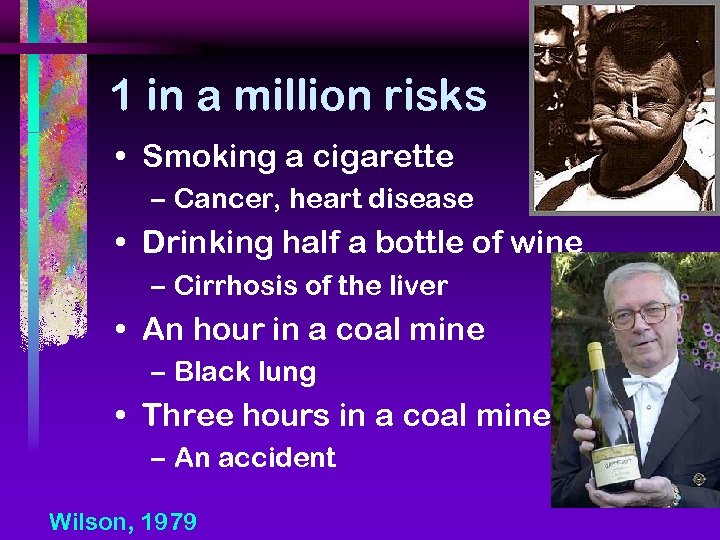 1 in a million risks • Smoking a cigarette – Cancer, heart disease • Drinking half a bottle of wine – Cirrhosis of the liver • An hour in a coal mine – Black lung • Three hours in a coal mine – An accident Wilson, 1979
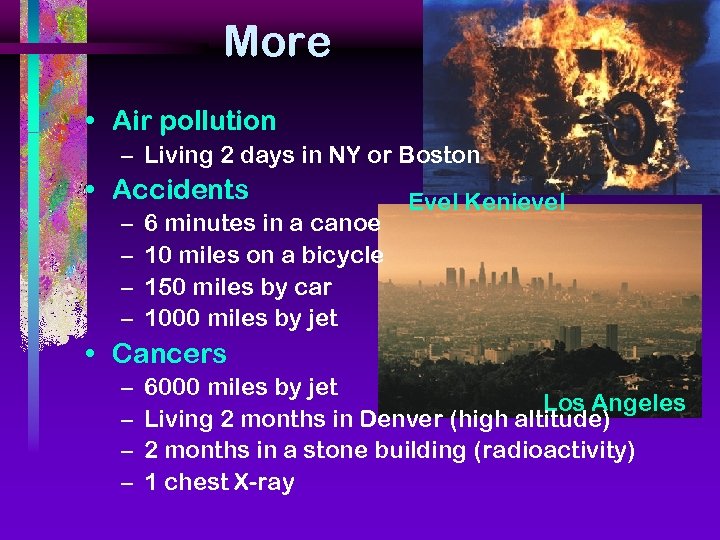 More • Air pollution – Living 2 days in NY or Boston • Accidents – – 6 minutes in a canoe 10 miles on a bicycle 150 miles by car 1000 miles by jet Evel Kenievel • Cancers – – 6000 miles by jet Los Angeles Living 2 months in Denver (high altitude) 2 months in a stone building (radioactivity) 1 chest X-ray
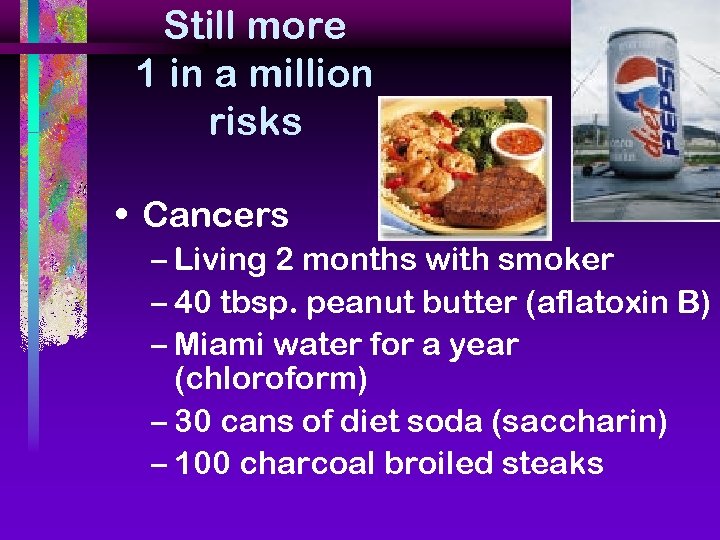 Still more 1 in a million risks • Cancers – Living 2 months with smoker – 40 tbsp. peanut butter (aflatoxin B) – Miami water for a year (chloroform) – 30 cans of diet soda (saccharin) – 100 charcoal broiled steaks
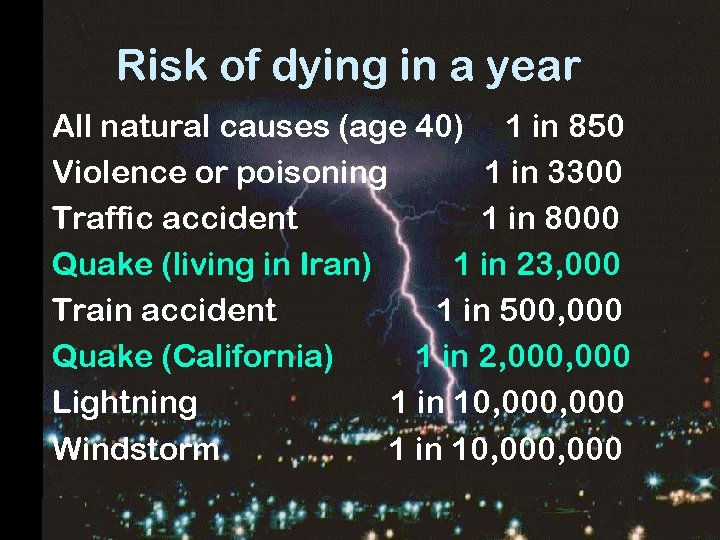 Risk of dying in a year • • All natural causes (age 40) 1 in 850 Violence or poisoning 1 in 3300 Traffic accident 1 in 8000 Quake (living in Iran) 1 in 23, 000 Train accident 1 in 500, 000 Quake (California) 1 in 2, 000 Lightning 1 in 10, 000 Windstorm 1 in 10, 000