 Скачать презентацию Esperimento OPERA Commissione II INFN Roma 28 Settembre
410b7107b88c731b920f84b135a26c4c.ppt
- Количество слайдов: 39



Esperimento OPERA Commissione II INFN Roma 28 Settembre 2010 n n CNGS beam Detector operation Run 2008, 2009, 2010 Richieste finanziarie S. Simone Università di Bari e INFN
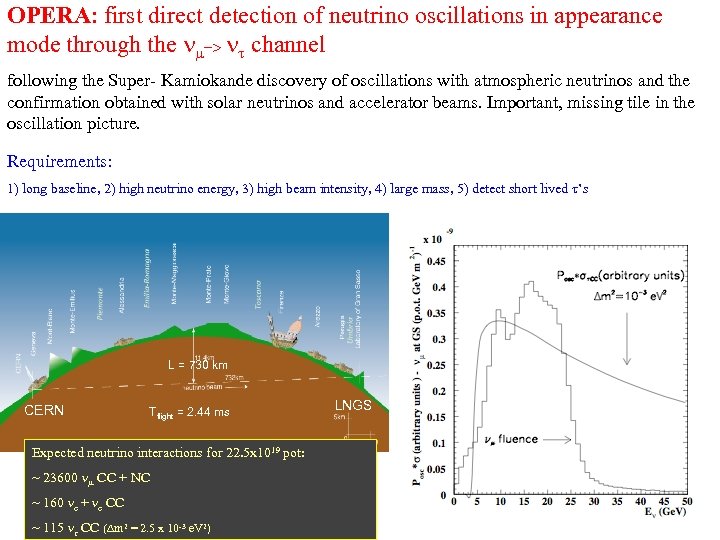
OPERA: first direct detection of neutrino oscillations in appearance mode through the -> channel following the Super- Kamiokande discovery of oscillations with atmospheric neutrinos and the confirmation obtained with solar neutrinos and accelerator beams. Important, missing tile in the oscillation picture. Requirements: 1) long baseline, 2) high neutrino energy, 3) high beam intensity, 4) large mass, 5) detect short lived ’s L = 730 km CERN Tflight = 2. 44 ms Expected neutrino interactions for 22. 5 x 10¹⁹ pot: ~ 23600 CC + NC ~ 160 e + e CC ~ 115 CC ( m 2 = 2. 5 x 10 -3 e. V 2) LNGS
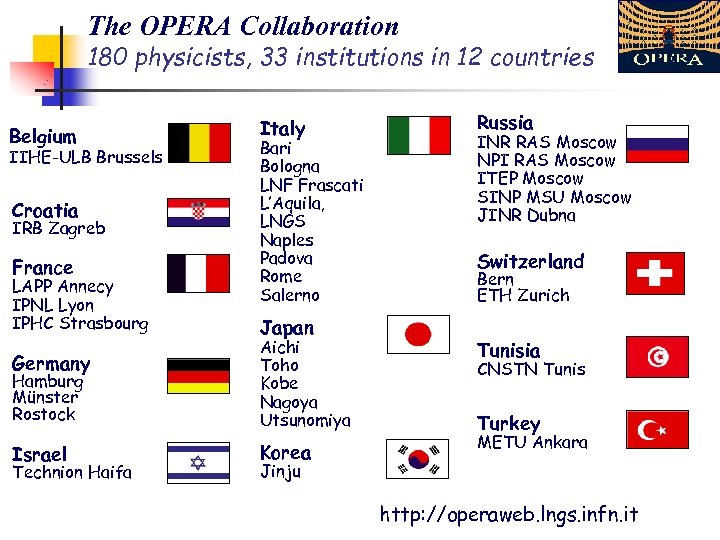
The OPERA Collaboration 180 physicists, 33 institutions in 12 countries Belgium IIHE-ULB Brussels Croatia IRB Zagreb France LAPP Annecy IPNL Lyon IPHC Strasbourg Italy Bari Bologna LNF Frascati L’Aquila, LNGS Naples Padova Rome Salerno Japan Hamburg Münster Rostock Aichi Toho Kobe Nagoya Utsunomiya Israel Korea Germany Technion Haifa Russia INR RAS Moscow NPI RAS Moscow ITEP Moscow SINP MSU Moscow JINR Dubna Switzerland Bern ETH Zurich Tunisia CNSTN Tunis Turkey METU Ankara Jinju http: //operaweb. lngs. infn. it
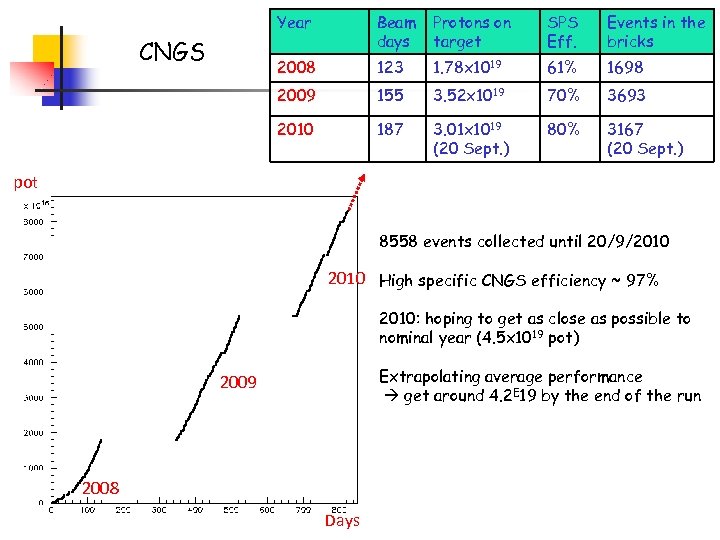
Year Protons on target SPS Eff. Events in the bricks 2008 123 1. 78 x 1019 61% 1698 2009 155 3. 52 x 1019 70% 3693 2010 CNGS Beam days 187 3. 01 x 1019 (20 Sept. ) 80% 3167 (20 Sept. ) pot 8558 events collected until 20/9/2010 High specific CNGS efficiency ~ 97% 2010: hoping to get as close as possible to nominal year (4. 5 x 10¹⁹ pot) Extrapolating average performance get around 4. 2 E 19 by the end of the run 2009 2008 Days
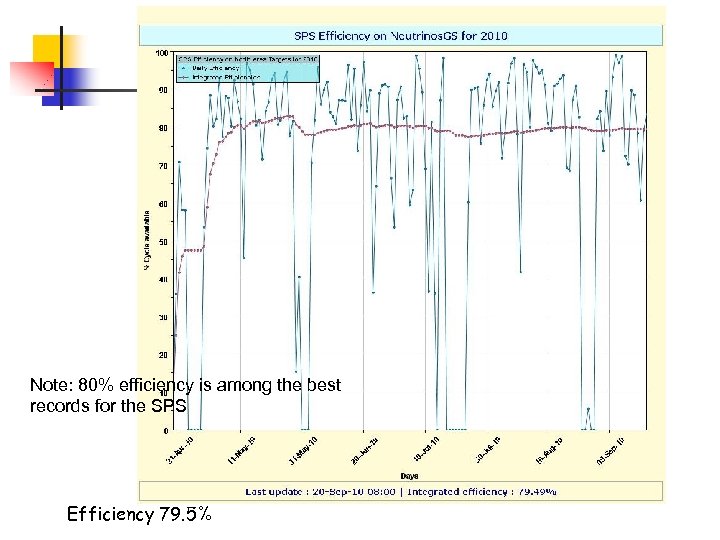
Note: 80% efficiency is among the best records for the SPS Efficiency 79. 5%
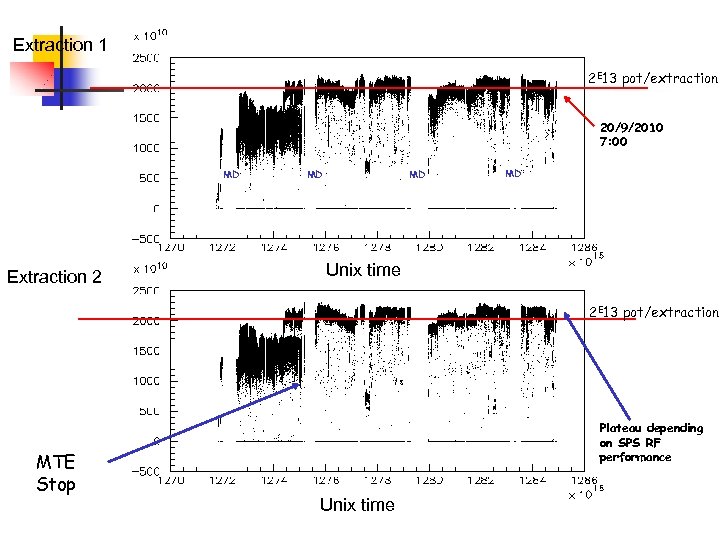
Extraction 1 2 E 13 pot/extraction 20/9/2010 7: 00 MD Extraction 2 MD MD MD Unix time 2 E 13 pot/extraction Plateau depending on SPS RF performance MTE Stop Unix time

WHAT ABOUT RUN 2011 and RUN 2012 ? ?
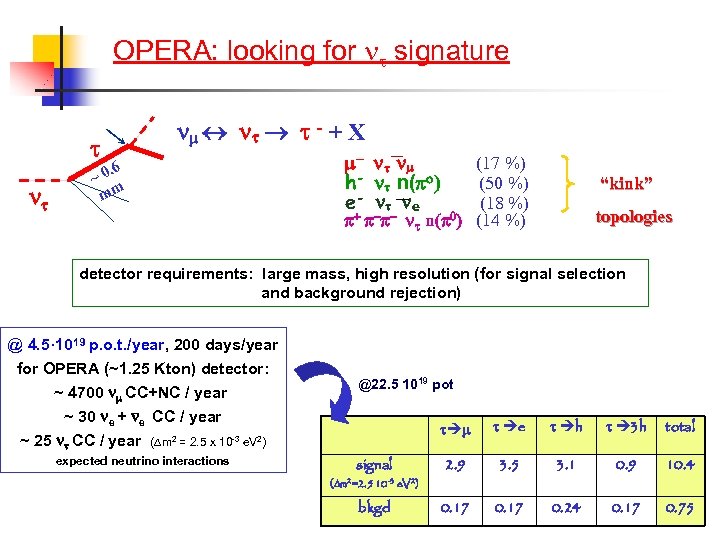
OPERA: looking for signature - + X . 6 ~0 mm - h- n( o) e- e (17 %) (50 %) (18 %) + - - n( 0) (14 %) “kink” topologies detector requirements: large mass, high resolution (for signal selection and background rejection) @ 4. 5· 1019 p. o. t. /year, 200 days/year for OPERA (~1. 25 Kton) detector: ~ 4700 CC+NC / year _ ~ 30 e + e CC / year ~ 25 CC / year ( m 2 = 2. 5 x 10 -3 e. V 2) expected neutrino interactions @22. 5 1019 pot signal (Dm 2=2. 5 10 -3 bkgd e. V 2) e h 3 h total 2. 9 3. 5 3. 1 0. 9 10. 4 0. 17 0. 24 0. 17 0. 75
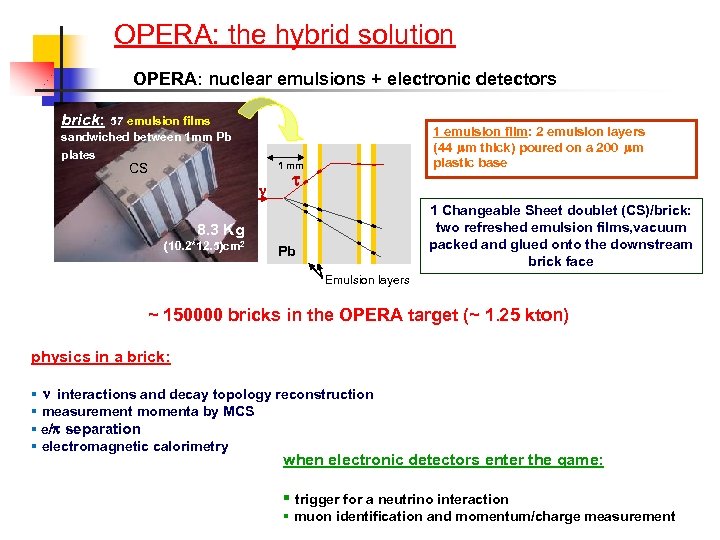
OPERA: the hybrid solution OPERA: nuclear emulsions + electronic detectors brick: 57 emulsion films sandwiched between 1 mm Pb plates 1 emulsion film: 2 emulsion layers (44 m thick) poured on a 200 m plastic base 1 mm CS 1 Changeable Sheet doublet (CS)/brick: two refreshed emulsion films, vacuum packed and glued onto the downstream brick face 8. 3 Kg (10. 2*12. 5)cm 2 Pb Emulsion layers ~ 150000 bricks in the OPERA target (~ 1. 25 kton) physics in a brick: interactions and decay topology reconstruction measurement momenta by MCS e/ separation electromagnetic calorimetry when electronic detectors enter the game: trigger for a neutrino interaction muon identification and momentum/charge measurement
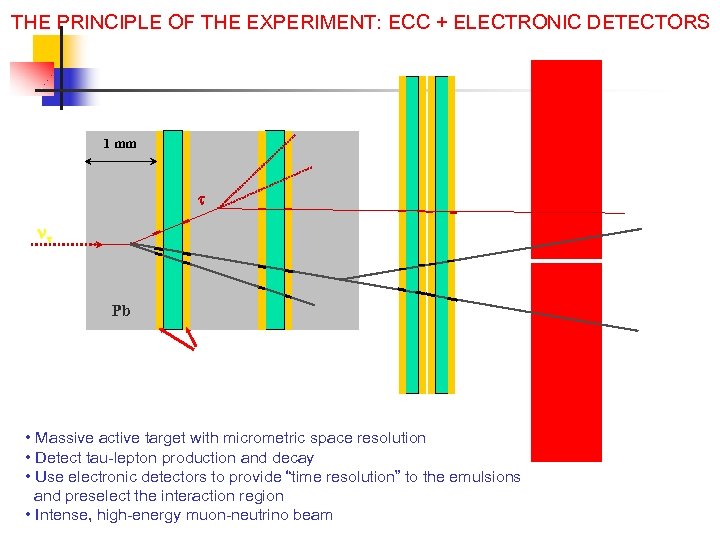
THE PRINCIPLE OF THE EXPERIMENT: ECC + ELECTRONIC DETECTORS ECC brick 1 mm electronics trackers Pb emulsion layers interface films (CS) • Massive active target with micrometric space resolution • Detect tau-lepton production and decay • Use electronic detectors to provide “time resolution” to the emulsions and preselect the interaction region • Intense, high-energy muon-neutrino beam A. Ereditato - CERN - 4 June 2010 10
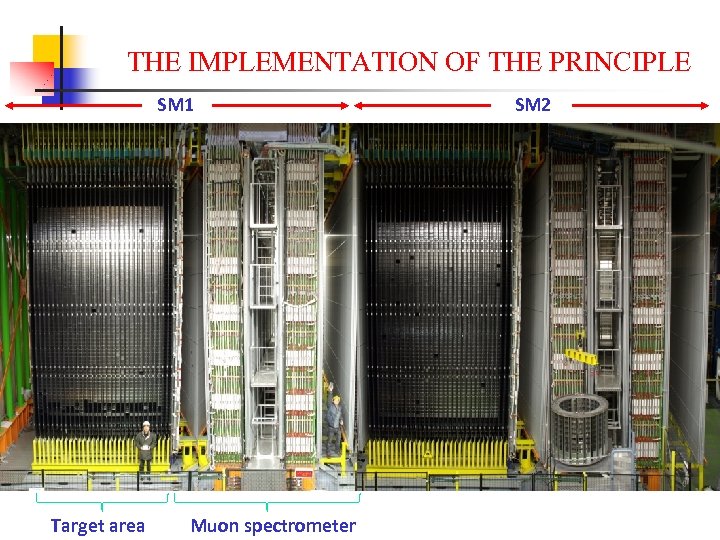
THE IMPLEMENTATION OF THE PRINCIPLE SM 1 Target area Muon spectrometer SM 2
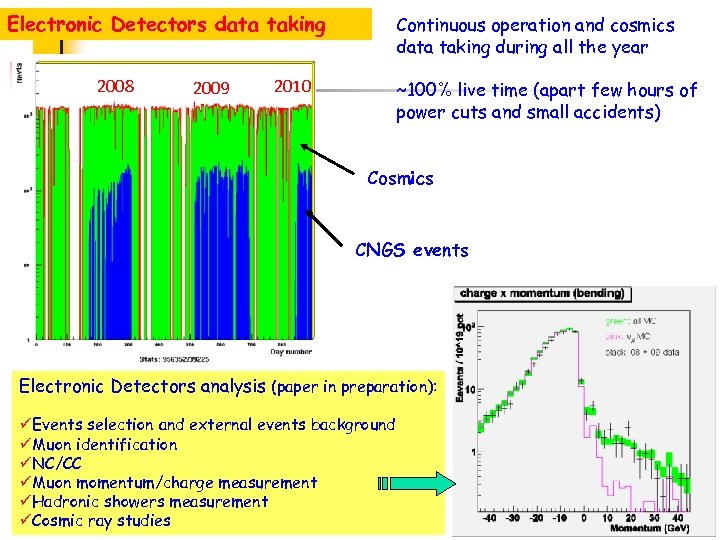
Electronic Detectors data taking 2008 2009 2010 Continuous operation and cosmics data taking during all the year ~100% live time (apart few hours of power cuts and small accidents) Cosmics CNGS events Electronic Detectors analysis (paper in preparation): üEvents selection and external events background üMuon identification üNC/CC üMuon momentum/charge measurement üHadronic showers measurement üCosmic ray studies
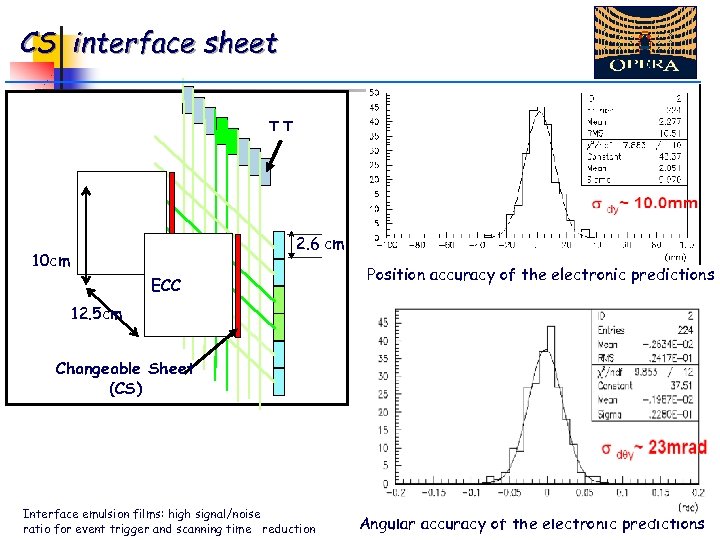
CS interface sheet TT 2. 6 cm 10 cm ECC Position accuracy of the electronic predictions 12. 5 cm Changeable Sheet (CS) Interface emulsion films: high signal/noise ratio for event trigger and scanning time reduction Angular accuracy of the electronic predictions
![[2009 JINST 4 P 04018] OPERA: steps to reach the goal • on-line analysis](https://present5.com/presentation/410b7107b88c731b920f84b135a26c4c/image-14.jpg "[2009 JINST 4 P 04018] OPERA: steps to reach the goal • on-line analysis")
[2009 JINST 4 P 04018] OPERA: steps to reach the goal • on-line analysis of electronic data • brick finding algorithm for events ‘on time’ with the beam • remove brick and scan CS: the interface between brick and TT (spos ≈ 10 mm, sq ≈ 20 mrad) • confirmation of the extracted brick • development of the brick to be sent in a scanning Lab for ‘CS to brick connection’ (spos ≈ 70 m, sq ≈ 8 mrad), event location, decay search studies, etc. .
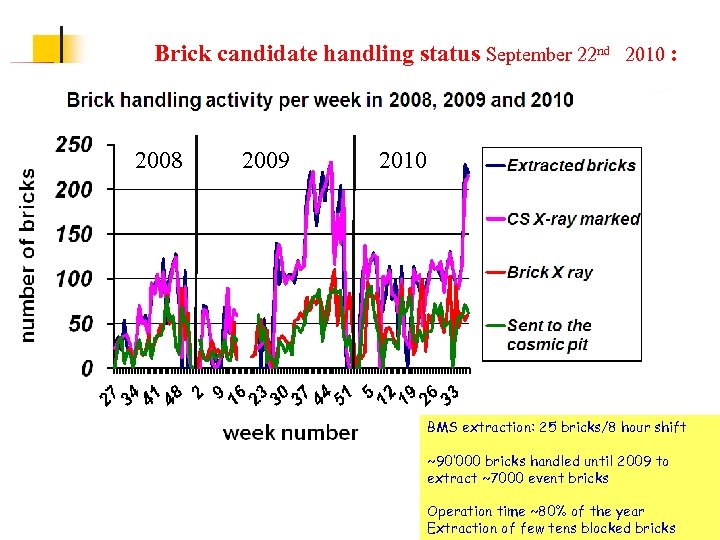
Brick candidate handling status September 22 nd 2010 : 2008 2009 2010 BMS extraction: 25 bricks/8 hour shift ~90’ 000 bricks handled until 2009 to extract ~7000 event bricks Operation time ~80% of the year Extraction of few tens blocked bricks 15
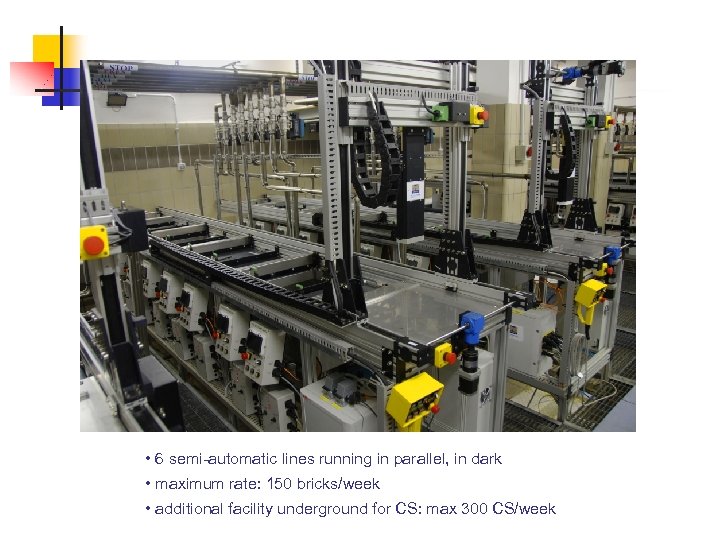
FILM DEVELOPMENT FACILITY • 6 semi-automatic lines running in parallel, in dark • maximum rate: 150 bricks/week • additional facility underground for CS: max 300 CS/week A. Ereditato - CERN - 4 June 2010 16
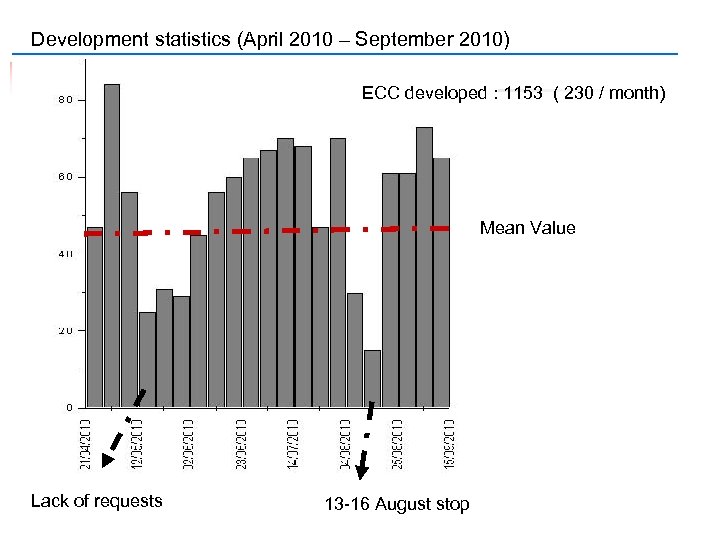
Development statistics (April 2010 – September 2010) ECC developed : 1153 ( 230 / month) Mean Value Lack of requests 13 -16 August stop
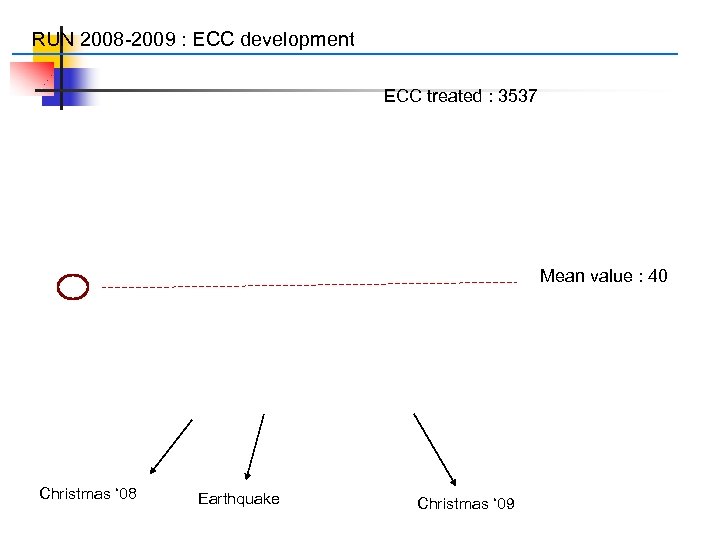
RUN 2008 -2009 : ECC development ECC treated : 3537 Mean value : 40 Christmas ‘ 08 Earthquake Christmas ‘ 09
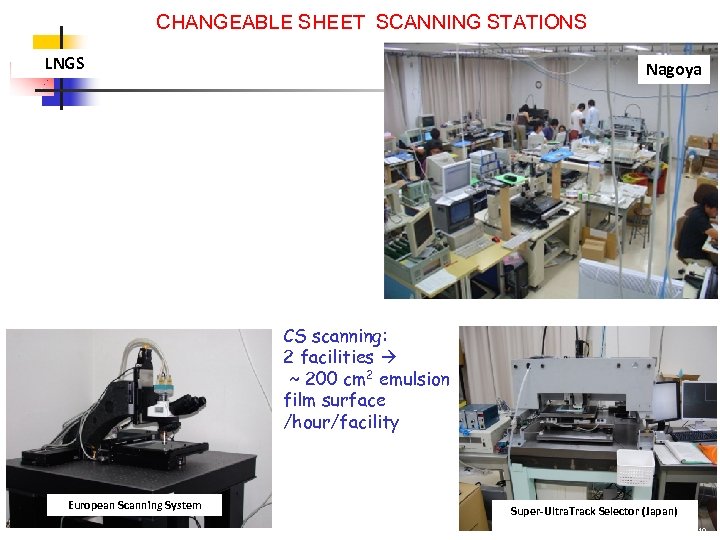
CHANGEABLE SHEET SCANNING STATIONS LNGS Nagoya CS scanning: 2 facilities ~ 200 cm 2 emulsion film surface /hour/facility s: European Scanning System A. Ereditato - CERN - 4 June 2010 precision mechanics, stepping motors, CCD readout, pattern recognition, image analysis, … Super-Ultra. Track Selector (Japan) 19
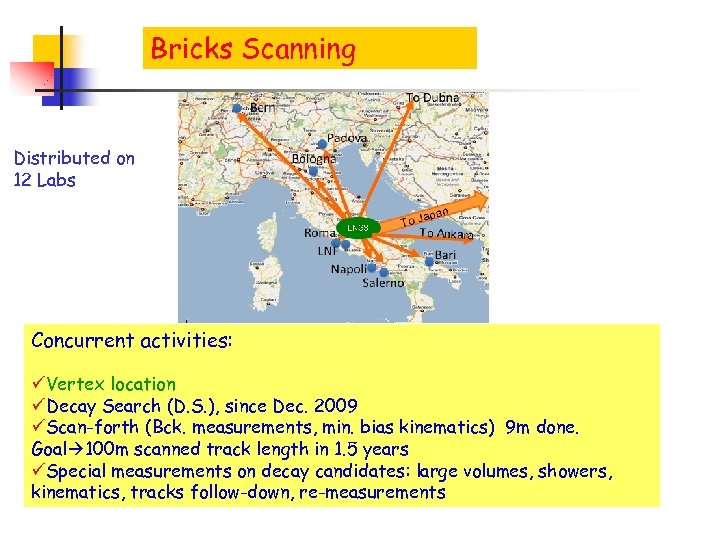
Bricks Scanning Distributed on 12 Labs Concurrent activities: üVertex location üDecay Search (D. S. ), since Dec. 2009 üScan-forth (Bck. measurements, min. bias kinematics) 9 m done. Goal 100 m scanned track length in 1. 5 years üSpecial measurements on decay candidates: large volumes, showers, kinematics, tracks follow-down, re-measurements
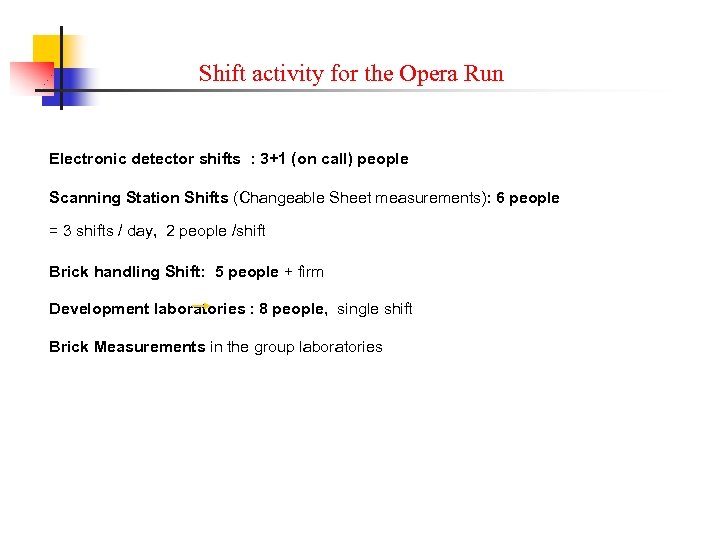
Shift activity for the Opera Run Electronic detector shifts : 3+1 (on call) people Scanning Station Shifts (Changeable Sheet measurements): 6 people = 3 shifts / day, 2 people /shift Brick handling Shift: 5 people + firm Development laboratories : 8 people, single shift Brick Measurements in the group laboratories
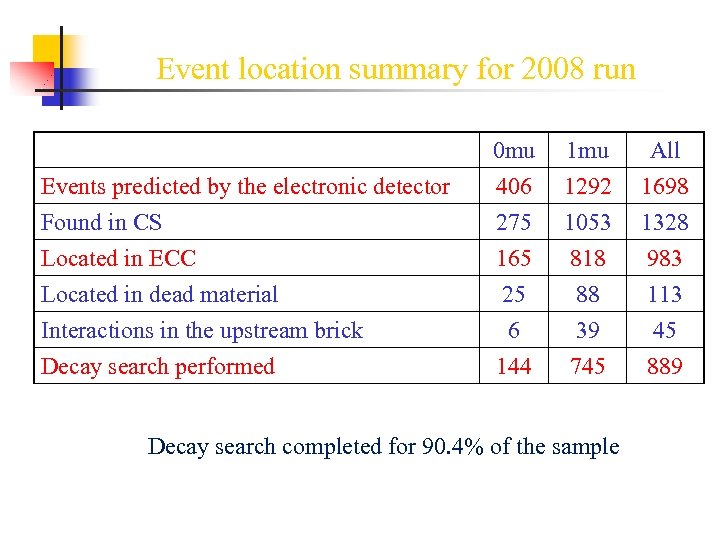
Event location summary for 2008 run Events predicted by the electronic detector Found in CS Located in ECC 0 mu 406 275 165 1 mu 1292 1053 818 All 1698 1328 983 Located in dead material Interactions in the upstream brick Decay search performed 25 6 144 88 39 745 113 45 889 Decay search completed for 90. 4% of the sample
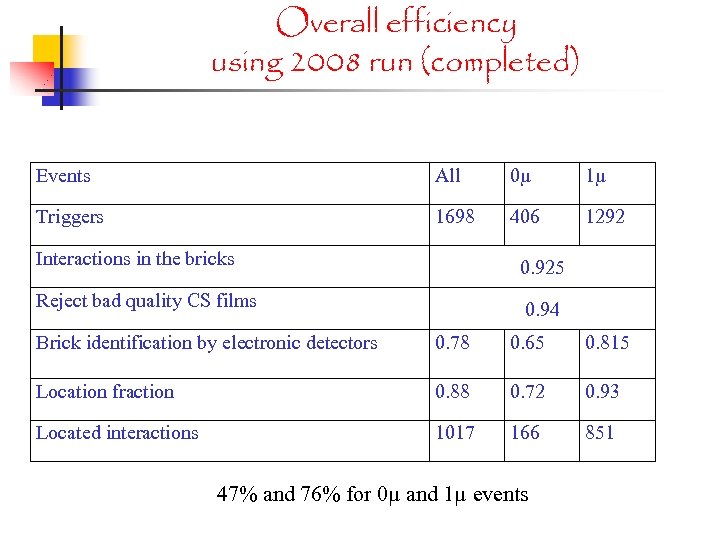
Overall efficiency using 2008 run (completed) Events All 0µ 1µ Triggers 1698 406 1292 Interactions in the bricks 0. 925 Reject bad quality CS films 0. 94 Brick identification by electronic detectors 0. 78 0. 65 0. 815 Location fraction 0. 88 0. 72 0. 93 Located interactions 1017 166 851 47% and 76% for 0µ and 1µ events
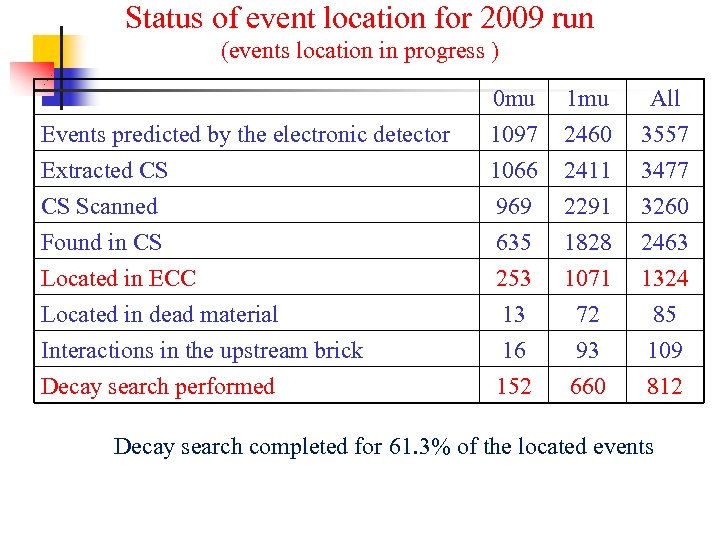
Status of event location for 2009 run (events location in progress ) Events predicted by the electronic detector Extracted CS CS Scanned 0 mu 1097 1066 969 1 mu 2460 2411 2291 All 3557 3477 3260 Found in CS Located in ECC Located in dead material Interactions in the upstream brick Decay search performed 635 253 13 16 152 1828 1071 72 93 660 2463 1324 85 109 812 Decay search completed for 61. 3% of the located events
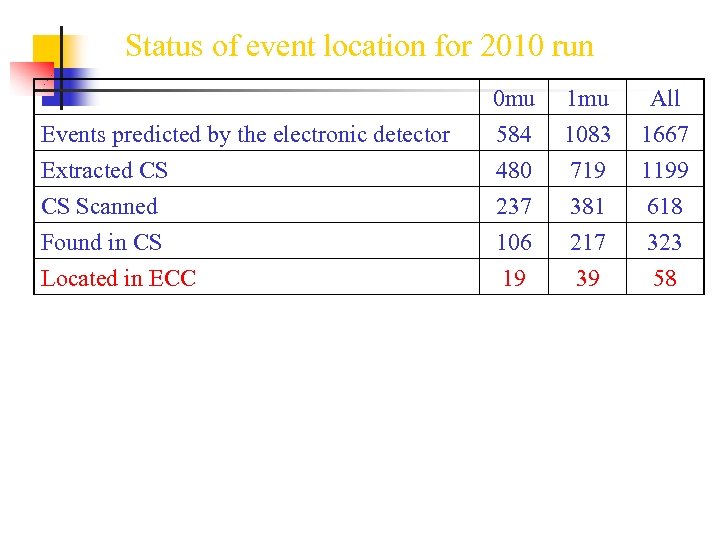
Status of event location for 2010 run Events predicted by the electronic detector Extracted CS CS Scanned 0 mu 584 480 237 1 mu 1083 719 381 All 1667 1199 618 Found in CS Located in ECC 106 19 217 39 323 58
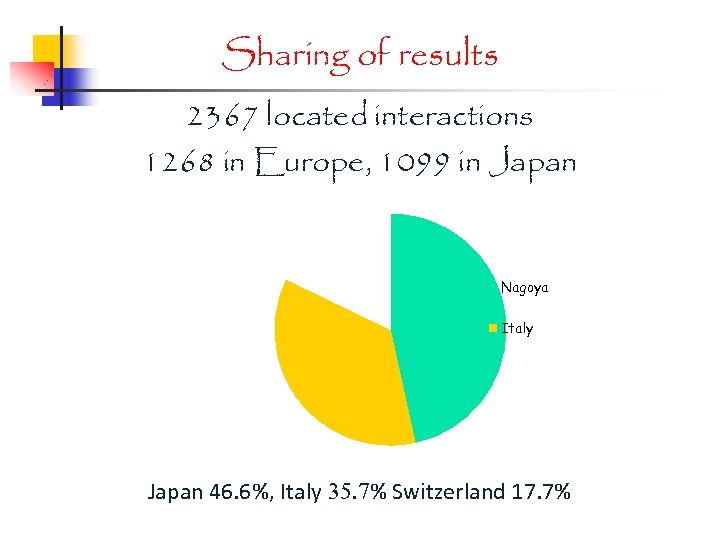
Sharing of results 2367 located interactions 1268 in Europe, 1099 in Japan Nagoya Italy Japan 46. 6%, Italy 35. 7% Switzerland 17. 7%

GLOBAL ANALYSIS PERFORMANCE
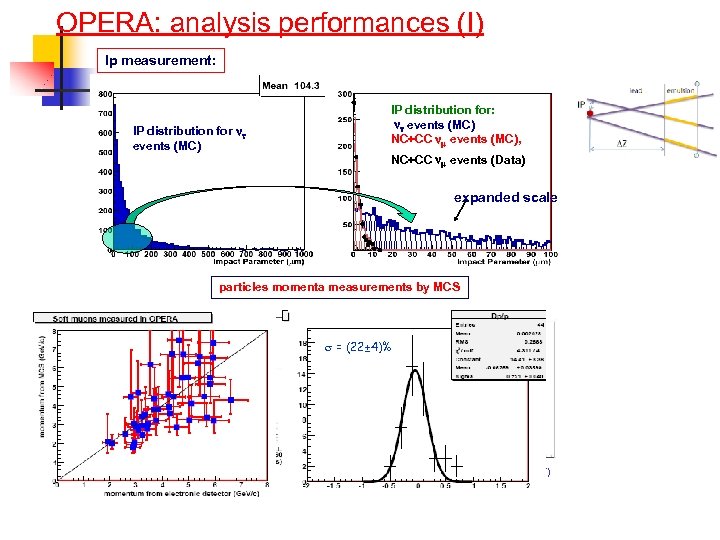
OPERA: analysis performances (I) Ip measurement: IP distribution for: events (MC) NC+CC events (MC), IP distribution for events (MC) NC+CC events (Data) expanded scale Prec (Ge. V) particles momenta measurements by MCS 9 8 7 s = (22± 4)% 6 5 4 3 2 1 1 2 3 4 5 6 7 8 Pbeam (Ge. V)
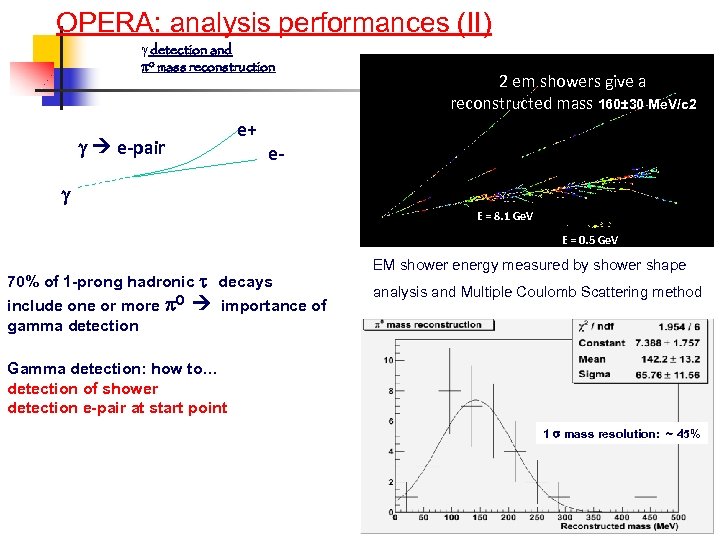
OPERA: analysis performances (II) g detection and 0 mass reconstruction e-pair e+ 2 em showers give a reconstructed mass 160± 30 Me. V/c 2 e- E = 8. 1 Ge. V E = 0. 5 Ge. V 70% of 1 -prong hadronic decays include one or more 0 importance of gamma detection EM shower energy measured by shower shape analysis and Multiple Coulomb Scattering method Gamma detection: how to… detection of shower detection e-pair at start point 1 s mass resolution: ~ 45%
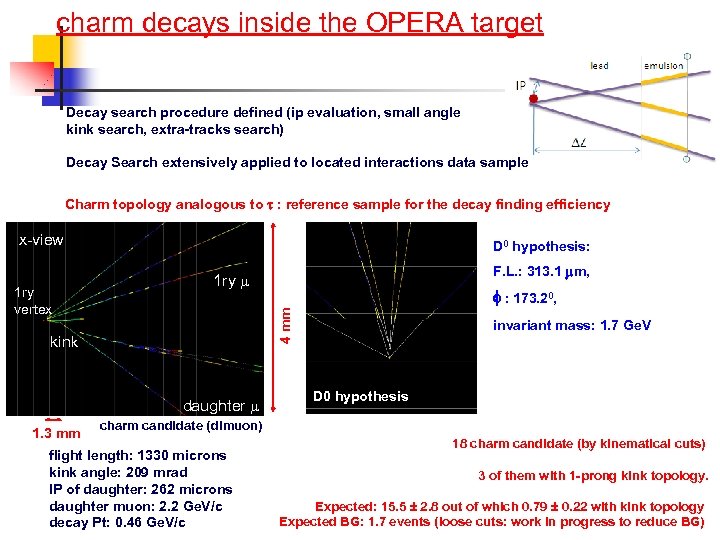
charm decays inside the OPERA target Decay search procedure defined (ip evaluation, small angle kink search, extra-tracks search) Decay Search extensively applied to located interactions data sample Charm topology analogous to : reference sample for the decay finding efficiency x-view kink daughter 1. 3 mm F. L. : 313. 1 m, 1 ry f : 173. 20, 4 mm 1 ry vertex D 0 hypothesis: invariant mass: 1. 7 Ge. V D 0 hypothesis charm candidate (dimuon) flight length: 1330 microns kink angle: 209 mrad IP of daughter: 262 microns daughter muon: 2. 2 Ge. V/c decay Pt: 0. 46 Ge. V/c 18 charm candidate (by kinematical cuts) 3 of them with 1 -prong kink topology. Expected: 15. 5 ± 2. 8 out of which 0. 79 ± 0. 22 with kink topology Expected BG: 1. 7 events (loose cuts: work in progress to reduce BG)
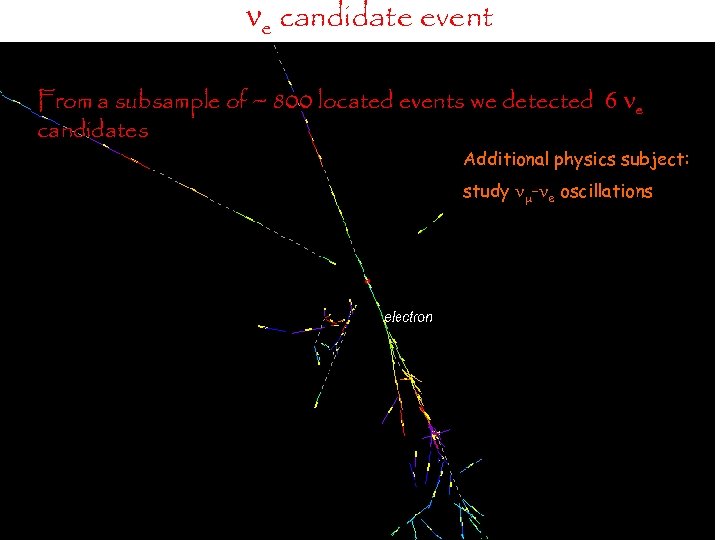
e candidate event From a subsample of ~ 800 located events we detected 6 e candidates Additional physics subject: study - e oscillations
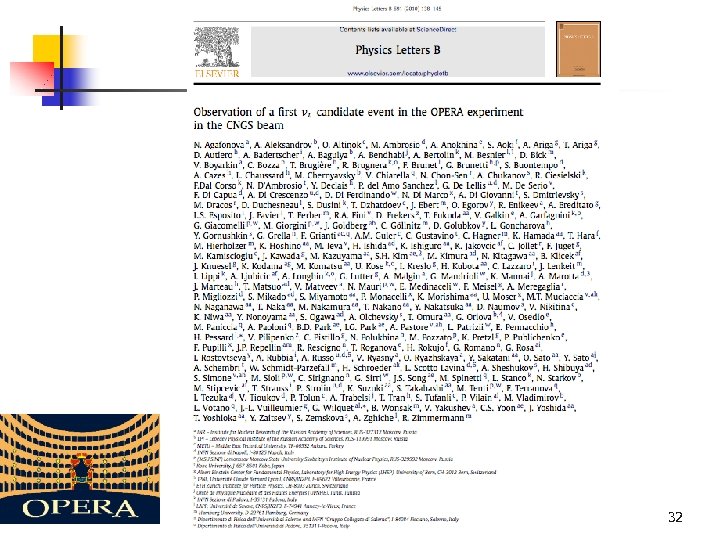
32
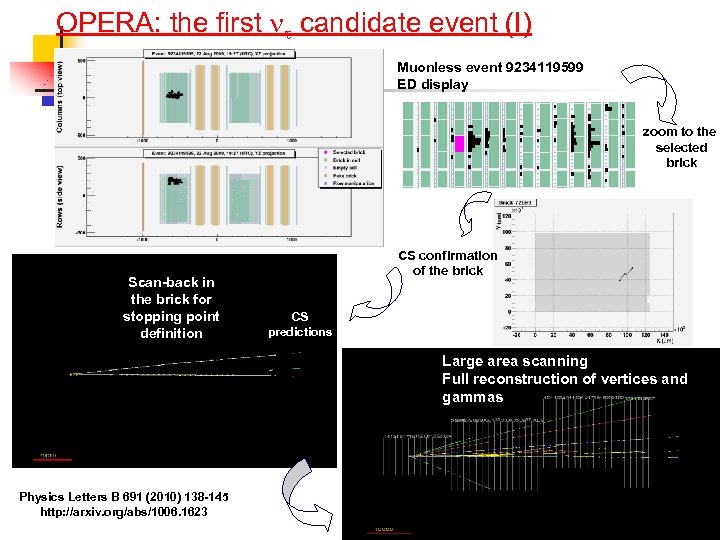
OPERA: the first candidate event (I) Muonless event 9234119599 ED display zoom to the selected brick Scan-back in the brick for stopping point definition CS confirmation of the brick CS predictions Large area scanning Full reconstruction of vertices and gammas Physics Letters B 691 (2010) 138 -145 http: //arxiv. org/abs/1006. 1623
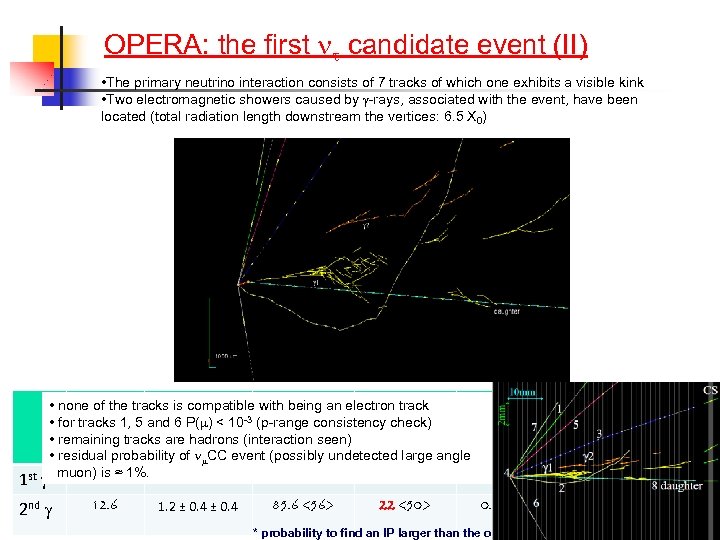
OPERA: the first candidate event (II) • The primary neutrino interaction consists of 7 tracks of which one exhibits a visible kink • Two electromagnetic showers caused by g-rays, associated with the event, have been located (total radiation length downstream the vertices: 6. 5 X 0) Distance IP to 1 ry IP track Prob. of Energy (Ge. V) • none of the tracks is compatible with being an electronto 2 ry from 2 ry vertex consistency check) vertex ( m) attach. to • for tracks 1, 5 and 6 P( ) < 10 -3 (p-range( m) vertex <resolution> 1 ry vtx* • remaining tracks are hadrons (interaction seen) <resolution> (mm) • residual probability of CC event (possibly undetected large angle is 45. 0 <11> 7. 5 <7> <10 -3 1 st g muon)2. 2≈ 1%. 5. 6 ± 1. 0 ± 1. 7 2 nd g 12. 6 1. 2 ± 0. 4 85. 6 <56> 22 <50> 0. 10 Prob. of attach. to 2 ry vtx* Attachment hypothesis 0. 32 2 ry vertex 0. 82 2 ry vertex (favoured) * probability to find an IP larger than the observed one
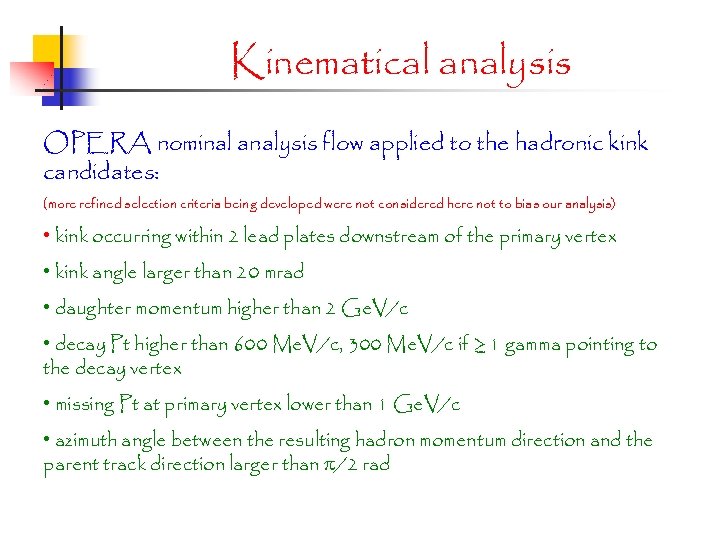
ANALYSIS Kinematical analysis OPERA nominal analysis flow applied to the hadronic kink candidates: (more refined selection criteria being developed were not considered here not to bias our analysis) • kink occurring within 2 lead plates downstream of the primary vertex • kink angle larger than 20 mrad • daughter momentum higher than 2 Ge. V/c • decay Pt higher than 600 Me. V/c, 300 Me. V/c if ≥ 1 gamma pointing to the decay vertex • missing Pt at primary vertex lower than 1 Ge. V/c • azimuth angle between the resulting hadron momentum direction and the parent track direction larger than p/2 rad
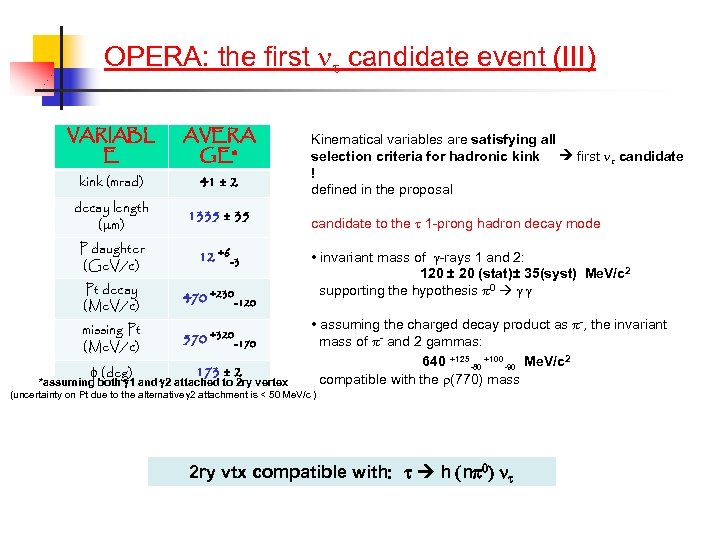
OPERA: the first candidate event (III) VARIABL E AVERA GE* kink (mrad) 41 ± 2 decay length ( m) 1335 ± 35 P daughter (Ge. V/c) 12 +6 -3 Pt decay (Me. V/c) 470 +230 -120 missing Pt (Me. V/c) +320 -170 ϕ (deg) 570 173 ± 2 *assuming both 1 and 2 attached to 2 ry vertex Kinematical variables are satisfying all selection criteria for hadronic kink first candidate ! defined in the proposal candidate to the 1 -prong hadron decay mode • invariant mass of g-rays 1 and 2: 120 ± 20 (stat)± 35(syst) Me. V/c 2 supporting the hypothesis p 0 g g • assuming the charged decay product as p-, the invariant mass of p- and 2 gammas: 640 +125 -80 +100 -90 Me. V/c 2 compatible with the r(770) mass (uncertainty on Pt due to the alternative g 2 attachment is < 50 Me. V/c ) 2 ry vtx compatible with: h (n 0)
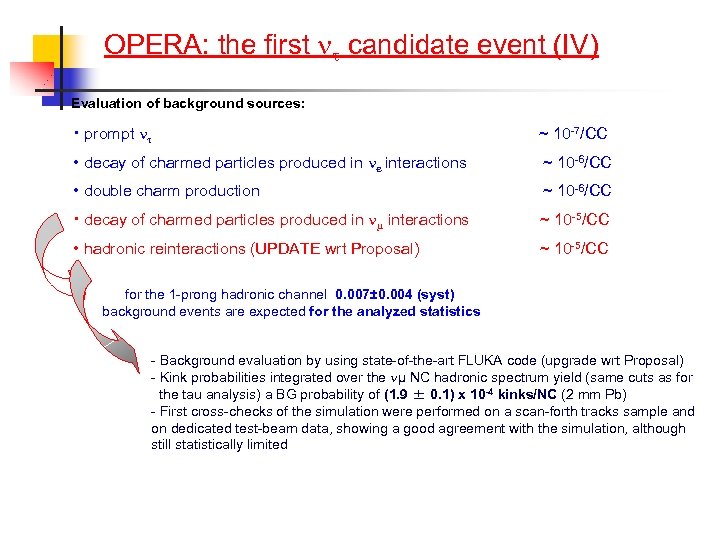
OPERA: the first candidate event (IV) Evaluation of background sources: • prompt ~ 10 -7/CC • decay of charmed particles produced in e interactions ~ 10 -6/CC • double charm production ~ 10 -6/CC • decay of charmed particles produced in interactions ~ 10 -5/CC • hadronic reinteractions (UPDATE wrt Proposal) ~ 10 -5/CC for the 1 -prong hadronic channel 0. 007± 0. 004 (syst) background events are expected for the analyzed statistics - Background evaluation by using state-of-the-art FLUKA code (upgrade wrt Proposal) - Kink probabilities integrated over the μ NC hadronic spectrum yield (same cuts as for the tau analysis) a BG probability of (1. 9 ± 0. 1) x 10 -4 kinks/NC (2 mm Pb) - First cross-checks of the simulation were performed on a scan-forth tracks sample and on dedicated test-beam data, showing a good agreement with the simulation, although still statistically limited
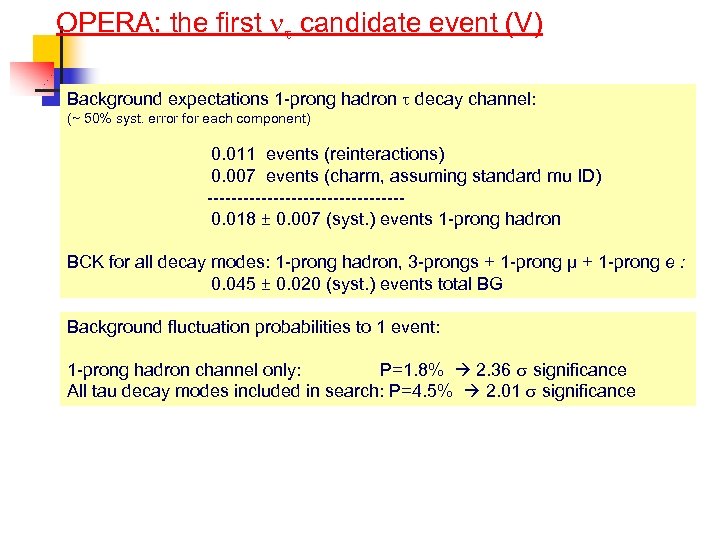
OPERA: the first candidate event (V) Background expectations 1 -prong hadron decay channel: (~ 50% syst. error for each component) 0. 011 events (reinteractions) 0. 007 events (charm, assuming standard mu ID) ----------------0. 018 ± 0. 007 (syst. ) events 1 -prong hadron BCK for all decay modes: 1 -prong hadron, 3 -prongs + 1 -prong μ + 1 -prong e : 0. 045 ± 0. 020 (syst. ) events total BG Background fluctuation probabilities to 1 event: 1 -prong hadron channel only: P=1. 8% 2. 36 s significance All tau decay modes included in search: P=4. 5% 2. 01 s significance
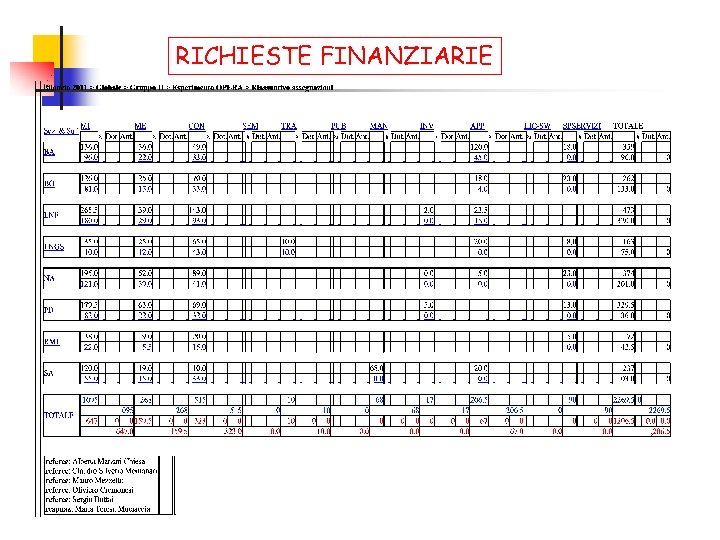
RICHIESTE FINANZIARIE
Скачать презентацию Esperimento OPERA Commissione II INFN Roma 28 Settembre
410b7107b88c731b920f84b135a26c4c.ppt