


 Скачать презентацию ESOPHAGEAL CANCER Semenisty Valeriya MD 01 10 2017
пищевод.pptx
- Количество слайдов: 22
 ESOPHAGEAL CANCER Semenisty Valeriya, MD 01. 10. 2017
 Esophageal Cancer Epidemiology and Risk Factors Diagnosis — signs, symptoms, and tests Work-up Treatment Overview Future Directions
 Epidemiology Over 15, 000 patients per year in the United States and 7 th leading cause of cancer death in men. 8 th most common cancer worldwide. Most cases are squamous cell, related to tobacco and alcohol exposure. In Western countries, adenocarcinoma increasing thought due to Barrett’s esophagus. Approximately 50% present with advanced disease, which is incurable.
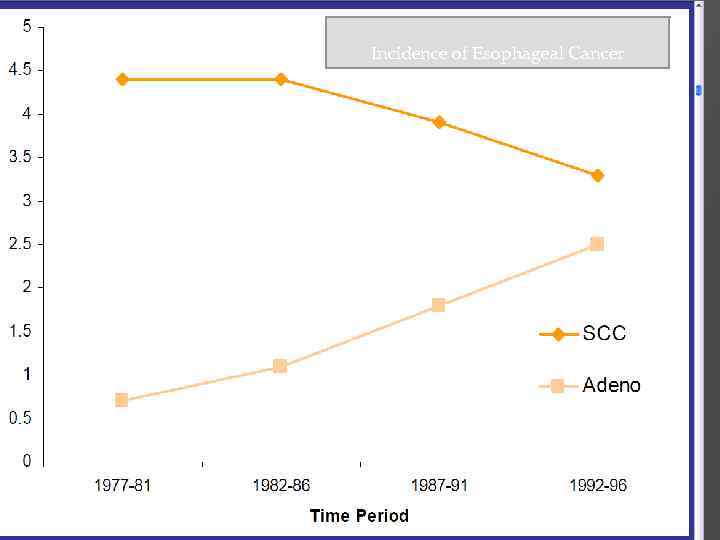 Incidence of Esophageal Cancer
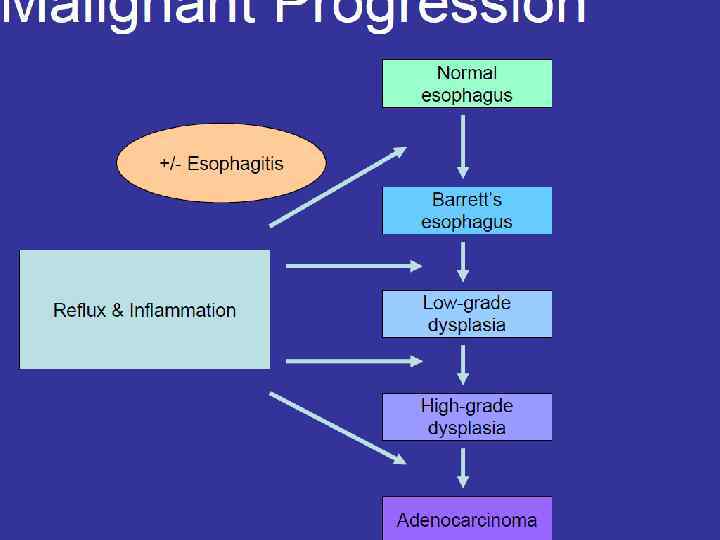
 Adenocarcinoma: Barrett’s Esophagus Likely related to chronic GERD, obesity. Pathway of malignant progression. 40 to 125 times relative risk of adenocarcinoma. Incidence of cancer is approximately 0. 5% per year in patients with BE. No known effective screening tool. Usually Lower esophagus/GE junction.
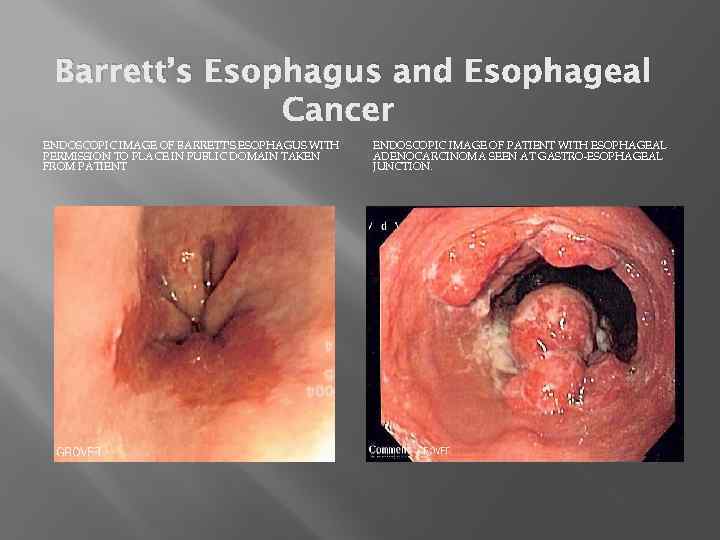 Barrett’s Esophagus and Esophageal Cancer ENDOSCOPIC IMAGE OF BARRETT'S ESOPHAGUS WITH PERMISSION TO PLACE IN PUBLIC DOMAIN TAKEN FROM PATIENT ENDOSCOPIC IMAGE OF PATIENT WITH ESOPHAGEAL ADENOCARCINOMA SEEN AT GASTRO-ESOPHAGEAL JUNCTION.
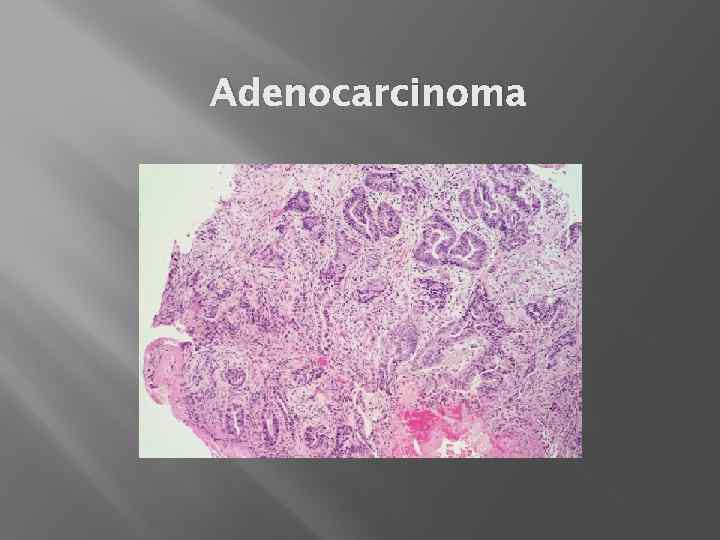 Adenocarcinoma
 Squamous Cell Carcinoma Usually upper and middle esophagus. Tends to be a local problem—less metastases. Most common worldwide histology. Carcinogens present in tobacco and alcohol.
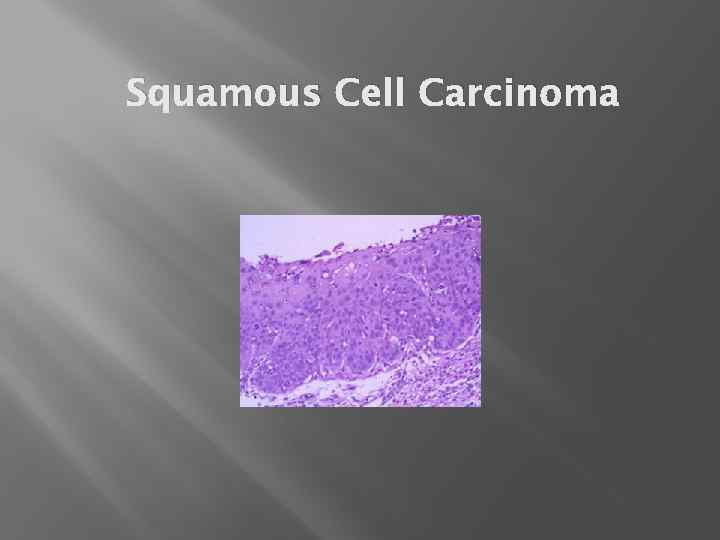 Squamous Cell Carcinoma
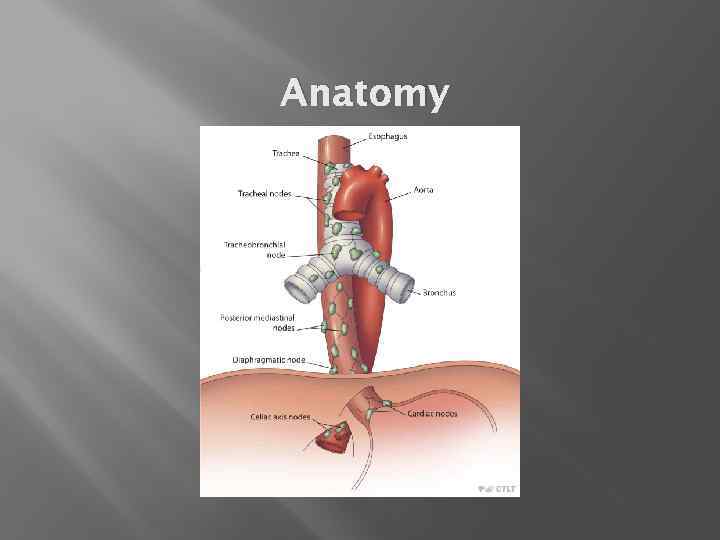 Anatomy
 Clinical Presentation Signs: weight loss, palpable lymph nodes, usually non-specific. Symptoms: dysphagia, loss of appetite, pain with swallowing, fatigue, cough, retrosternal and abdominal pain. Lab Data: no tumor markers.
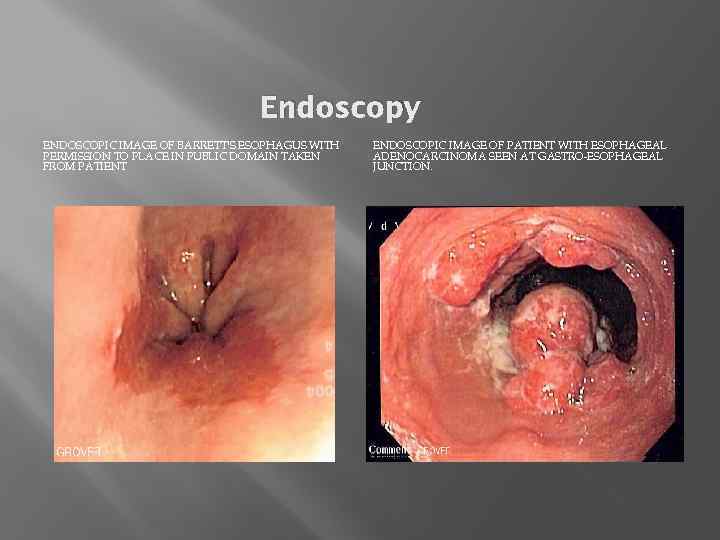 Endoscopy ENDOSCOPIC IMAGE OF BARRETT'S ESOPHAGUS WITH PERMISSION TO PLACE IN PUBLIC DOMAIN TAKEN FROM PATIENT ENDOSCOPIC IMAGE OF PATIENT WITH ESOPHAGEAL ADENOCARCINOMA SEEN AT GASTRO-ESOPHAGEAL JUNCTION.
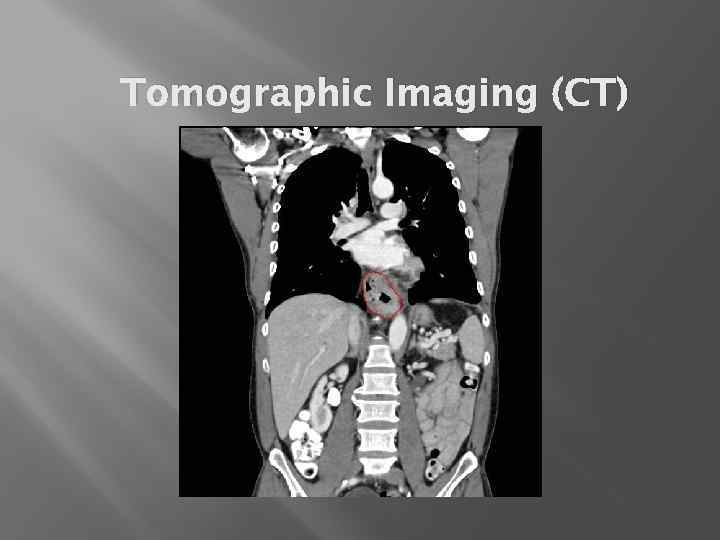 Tomographic Imaging (CT)
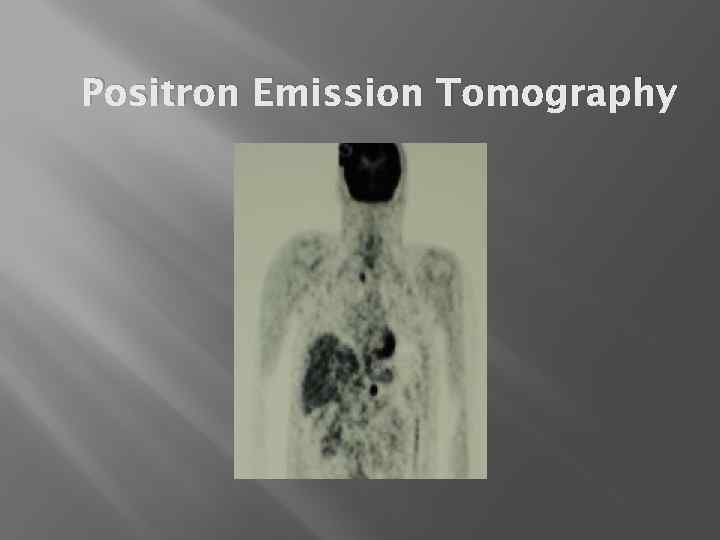 Positron Emission Tomography
 Staging Two basic groups Locally Advanced (primary tumor and regional lymph nodes): - potentially curable Metastatic (distant spread) -Incurable -survival increased with chemotherapy
 Locally Advanced Stage “Best” treatment approach is controversial and continually evolving. Concepts to consider: Local control (primary tumor) Distant disease (“micrometastases”) Modes of treatment include surgery, radiation and chemotherapy in various sequences and combinations
 Chemotherapy & Radiation Without Surgery 5 y survival: radiation therapy only - 0% Combination treatment – 26% Survival and Pathologic Response
 Pattern of Recurrence Almost always at a distant site. Approaches to this problem. Adjuvant chemotherapy Newer chemotherapy Induction chemotherapy Intensified chemotherapy Result: nothing is much better…
 Treatment of Metastatic Disease Palliative No standard chemotherapy approach Combination of two drugs based on 5 -FU, platins, taxanes. -Cisplatin/CPT-11, FOLFOX Median survival ~ 9 months Clinical trial
 Palliation For swallowing trouble: stent most common For pain: narcotics, radiation For Cachexia: appetite stimulants, feeding tubes
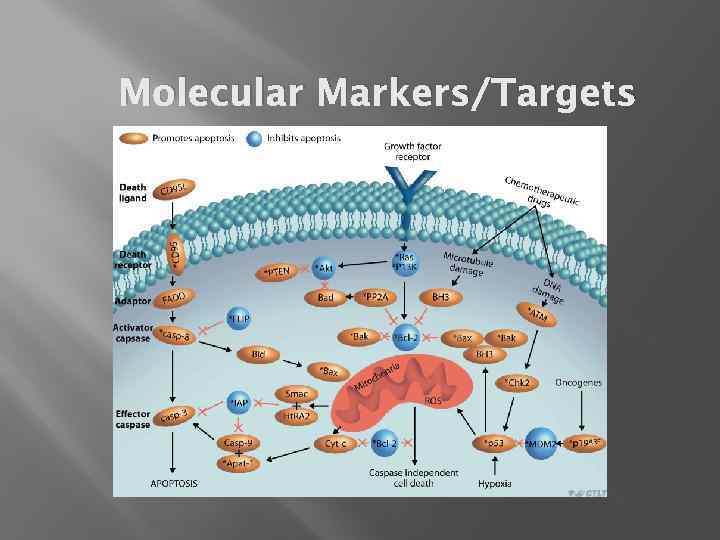 Molecular Markers/Targets